
与世无争的佛家圣地五台山
Wutai Mountain, located in central part of Shanxi Province, is one of the most revered Buddhist sites in the world and a UNESCO World Heritage Site. Known as the “Five Terrace Mountain” due to its unique topography of five flat peaks, it has been a center of Buddhist worship and pilgrimage for over a thousand years. The mountain is dedicated to Manjushri, the Bodhisattva of Wisdom, and is home to a series of ancient temples surrounded by stunning natural beauty.
五台山位于山西省中部,是世界上最受敬仰的佛教圣地之一,也被评为联合国教科文组织世界文化遗产。它因其独特的五座类似平台的山峰地貌而被称为“五台山”,一千多年来一直是佛教徒朝圣的目的地。这座名山供奉着象征智慧的文殊菩萨,山上有许多古老的寺庙,周围环绕着令人神往的自然美景。

Wutai Mountain is the transition stop in my voyage of Shanxi. It is not far away from Tai Yuan. I arrived at the entrance of this mountain at the noon of July 3rd,2024. The duration of this trip of pilgrim by bus is over two hours. It was a cloudy day, and from far view, the greenery of this mountain is shrouded by the white thick clouds which dim the sunlight.
五台山是本人此次山西之行的中转站,距离太原并不远。我于2024年7月3日中午到达这座山的入口。这趟朝圣之旅从太原乘坐巴士需要的时间大致刚超过两个小时。初抵五台山的时分阴云密布,远远眺望,山峰上郁郁葱葱的绿色植物被白色的厚厚云层笼罩,完全遮蔽了阳光。
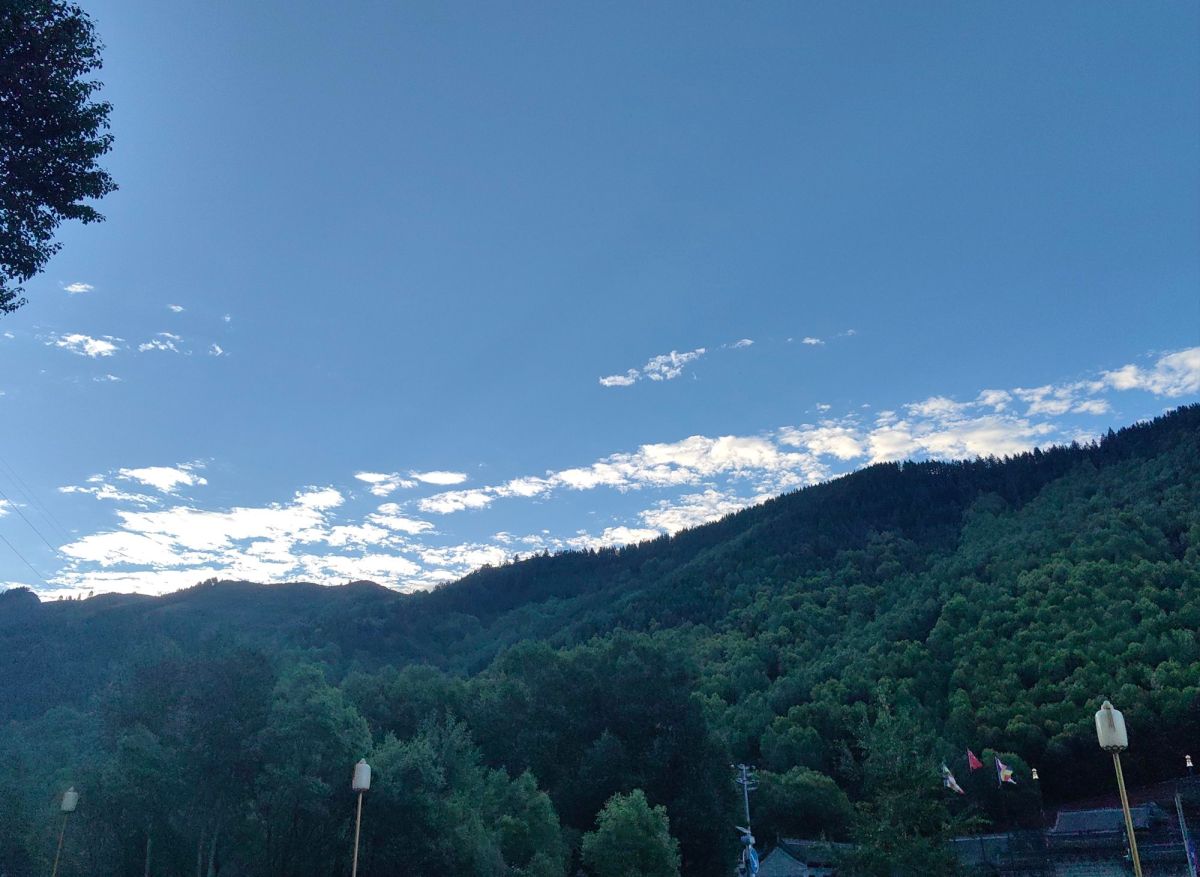
I stayed for two days at the scenic spot center, Tai Huai Town from where the mountains stretch endlessly along the only road connecting outside. Their vastness is awe-inspiring, a tranquil realm where time seems suspended. The clouds drift and swirl as though the mountains are whispering secrets to the sky. The scene evokes a sense of mystery, where the boundless expanse of nature feels both humbling and infinite.
我在风景区中心台怀镇待了两天,这里的山势绵延不绝,只有一条与外界相连的道路。大山的浩瀚令人叹为观止,这里如此寂静,时间似乎停止了流动。云彩悬浮飘动,群山仿佛在向天空低声寄语。这一切不由地令我感到了一丝神秘感,在广阔无垠的大自然面前任何人都显得如此渺小。

There are numerous temples in the scenic area of Wutai Mountain since it is too famous of Buddhism. At the first day, the weather in the mountain was bad, and I only visited some temples near the places I lived. The Nanshan Temple was located on the southern slopes of Wutai Mountain. It is one of the mountain’s most magnificent and historically rich temples. Originally constructed during the Yuan Dynasty, the temple was renowned for its unique architectural layout, which ascends in three tiers, symbolizing the Buddhist concept of spiritual elevation.
五台山因佛教名胜的盛名,景区内寺庙林立。第一天山上的天气极差,我只参观了住处附近的一些寺庙。南山寺位于五台山南坡可谓是最宏伟、历史最为丰富的寺庙之一。该寺始建于元代,以其独特的建筑布局而闻名,寺庙分三层以阶梯式上升,象征着佛教精神世界的升华。

The White Tower in the Nanshan Temple is a striking and iconic structure that embodies the essence of Tibetan Buddhist architecture. Rising majestically within the temple complex, the tower is shaped like an inverted lotus, symbolizing purity and enlightenment in Buddhist tradition. Its smooth, white exterior contrasts beautifully with the surroundings, creating a serene and sacred ambiance. This kind of tower, known as a stupa, serves as a reliquary and is said to house sacred Buddhist relics. It is topped with decorative elements such as prayer flags or bronze finials.
南山寺白塔是一座引人注目的标志性建筑,体现了藏传佛教建筑的精髓。该塔雄伟地矗立在寺庙建筑群内,形状像一朵倒立的莲花,象征着佛教的纯洁和开悟。其光滑的白色外观与周围环境形成鲜明对比,营造出宁静而神圣的氛围。这种佛塔据说存放着舍利子等佛教圣物。它的顶部有祈祷旗帜或青铜尖顶等装饰元素。
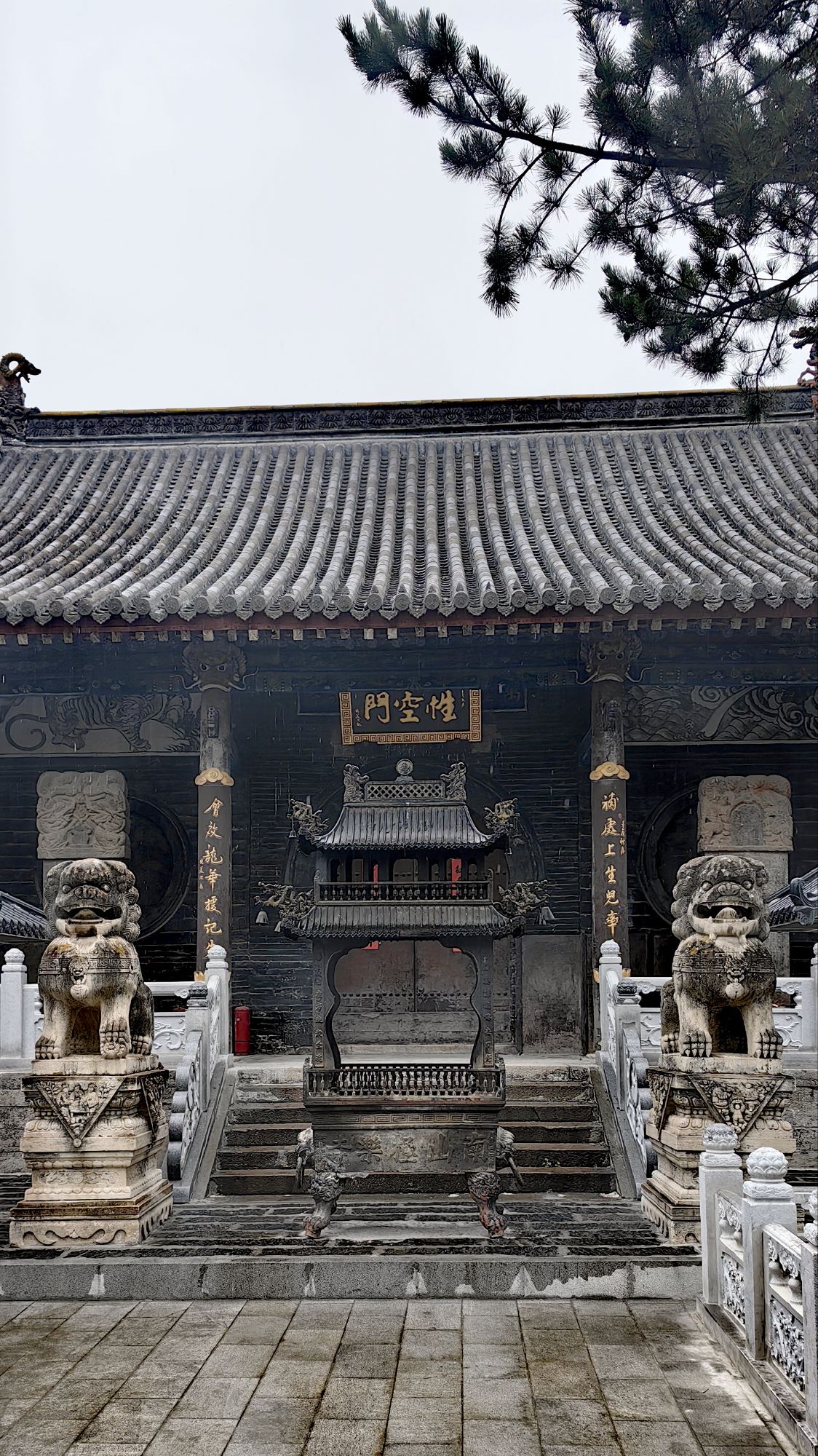
The halls within the temple showcase classic Chinese architectural features, such as curved eaves, painted beams, and intricate wood carvings. Guarding the entrances to the temple are pairs of stone lions, symbols of protection and power in Chinese culture. Carved with meticulous detail, these lions represent balance and symmetry. At the heart of the temple courtyard stands a large incense burner, an essential feature of Buddhist temples. Made of bronze, the burner is adorned with the name of the temple, Buddhist symbols, and auspicious motifs. Pilgrims and visitors light incense sticks here, offering prayers and seeking blessings as fragrant smoke wafts upward.
寺庙内的殿堂展现了如弧形飞檐、画梁和精美的木雕等中国古典建筑的特色。寺庙入口处有一对石狮,在中国文化中象征着庇护。这些石狮子雕刻细节丰富代表着中国传统对称平衡的观念。寺庙庭院的中心矗立着在普通佛教寺庙内都能见到的大型香炉。青铜制成的香炉饰有寺庙名称、佛教符号和吉祥图案。香客和游人在炊烟袅袅的香炉前焚香祈福。
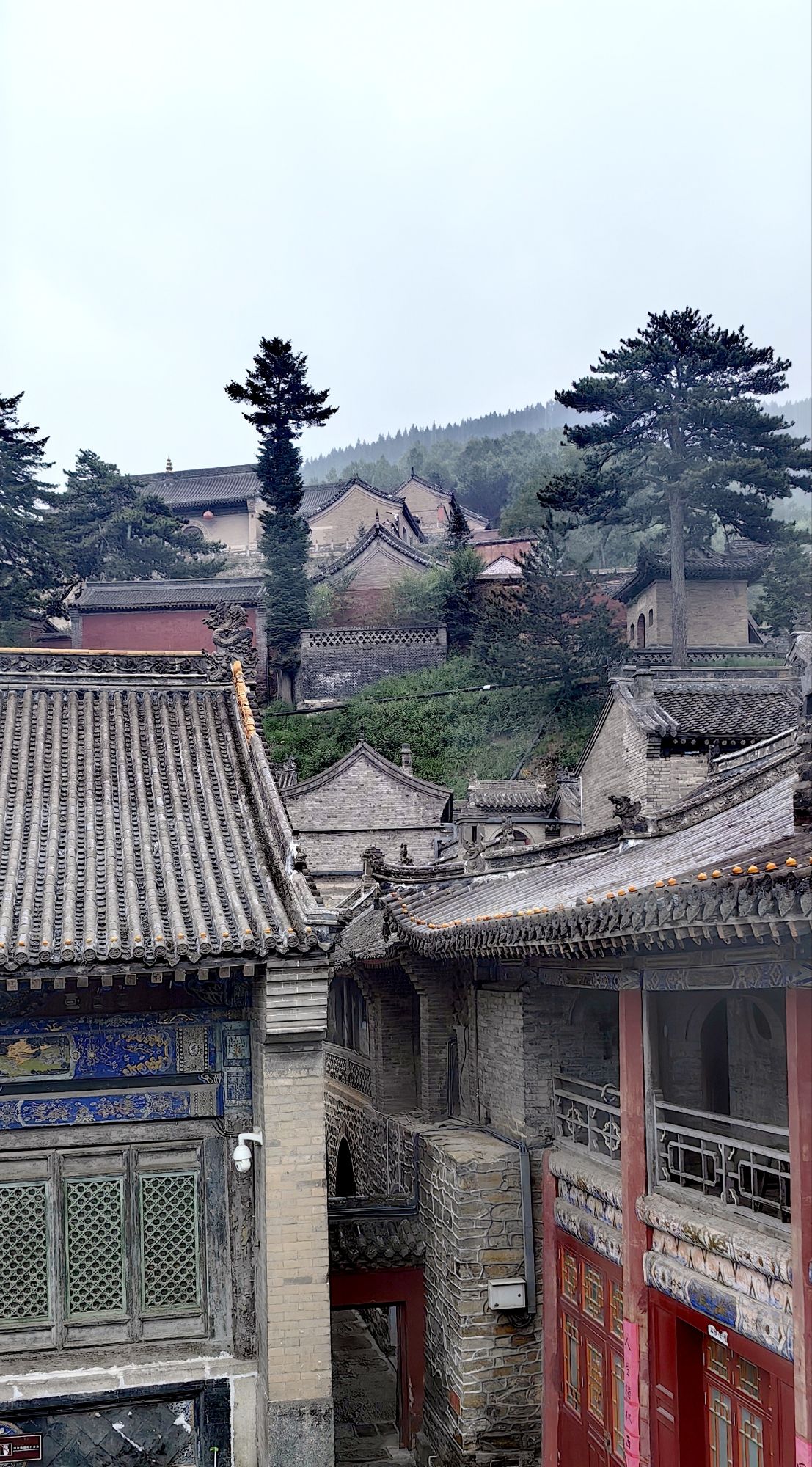
The grey-colored old houses in the temple stand as quiet in the , weathered witnesses to centuries of history and devotion. These buildings, with their muted, stone-gray façades, blend seamlessly into the rocky terrain and lush pine forests surrounding. The old stone and brick walls, softened by time carry a serene, almost ethereal quality. The grey hues of the houses, worn by the winds and seasons, create a feeling of peaceful solitude, perfectly suited to the sacred atmosphere of the mountain. The steep, tiled roofs with their curves and edges softened by years of exposure to the mountain’s mist and rain. The tiles, some slightly chipped or moss-covered, tell a story of time’s quiet passage.
寺庙里灰蒙蒙的老房子在细雨中静静地屹立在山边,它们饱经风霜见证了几个世纪的历史和信仰。这些建筑由柔和的石灰色外墙建成,与周围的岩石地形和茂密的松树林完美地融为一体。古旧的石砖墙随着时间的流逝而磨平了棱角,呈现出一种与世无争空灵的品质。抑郁的灰色色调经过风雨的洗涤显出依稀的孤独感,却与佛教超脱世俗的氛围完美契合。陡峭的瓦片屋顶由于长年暴露在山上的雾气和雨水中,其曲线和边缘也磨损严重。这些略有残缺的砖瓦布满青苔,静静地诉说着往事。

In front of these old simple houses, one monk rested quietly on wooden benches. His simple robes blend with the natural color palette of the temple. His faces are calm and contemplative. The monks in this temple are not in a rush; they move slowly, embracing the tranquility of their surroundings. The gentle rustling of the wind through the pine trees and the occasional chant or bell sound from the temple add to the mystery of the scene. Every element, whether man-made or natural, exists in perfect balance and harmony.
古朴的老房子前,一位僧人静静地端坐在木凳上。简单的僧袍与寺庙的色调融为一体。僧人的表情平静而略带思绪。这座寺庙里的僧人不急不躁节奏舒缓,享受这周围的宁静。微风吹过松树的轻柔沙沙声,以及寺庙里偶尔传来的诵经声或钟鸣声是如此的神秘令人浮想联翩。这里的一切元素,一切景物无论是人工的还是自然的,都如此浑然天成。
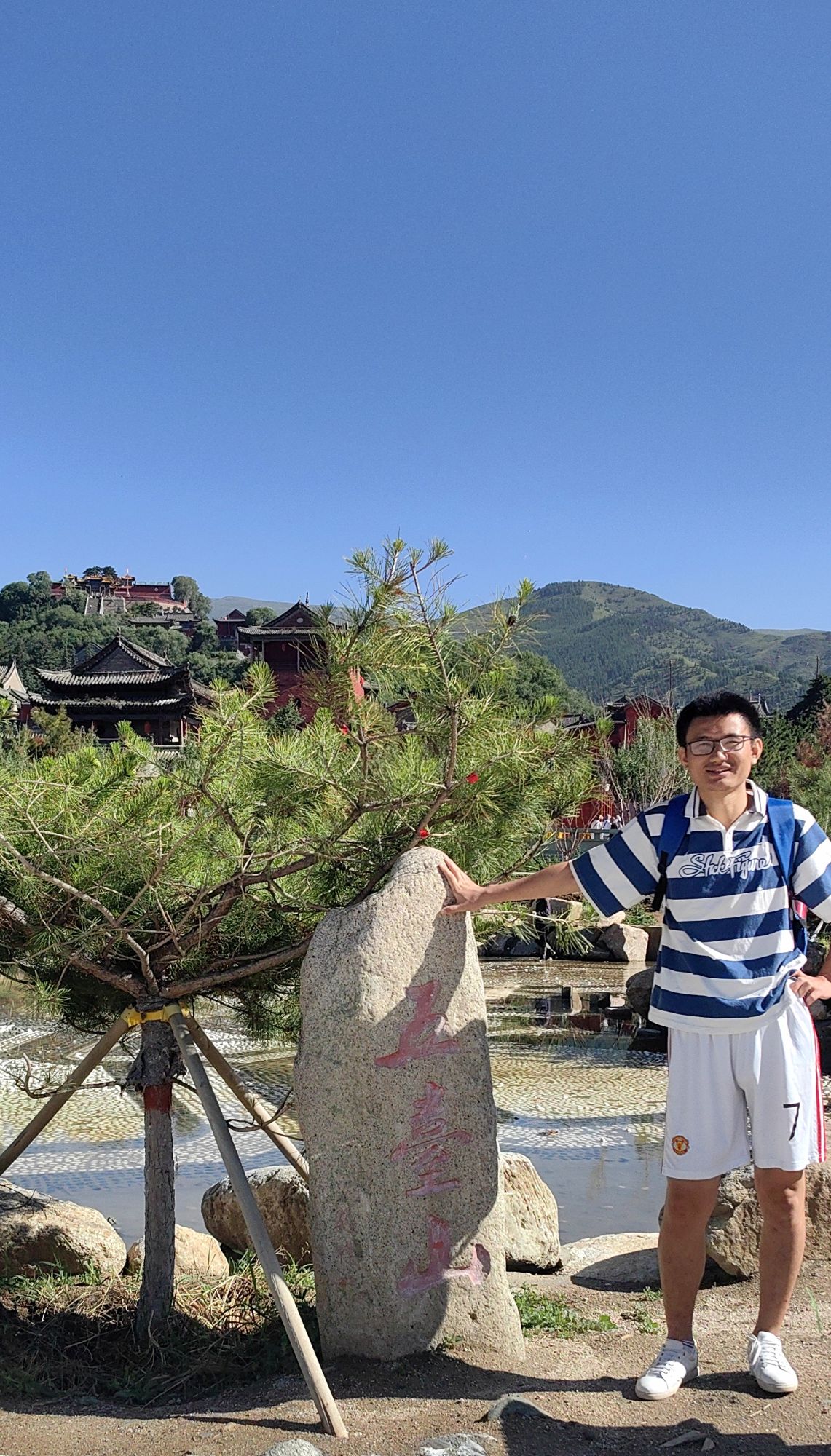
The first day in the mountain was rainy and I did not go to a lot of places due to the bad weather. Fortunately, the second day was sunny. I spent most of the time in traveling the temples in this mountain. This is a good point to take the photo including temples of different layers. The temples of Wutai Mountain are renowned for their unique layout, arranged in layers. The mountain’s sacred sites are distributed across its five main peaks—East, West, South, North, and Central. The temples like Shuxiang Temple and Tayuan Temple serve as main sites to the sacred journey. They are usually accessible at lower level. The higher layer of Wutai Mountain hosts some of the most significant temples, like Pusading Temple in the background of this photo. It is one of the highest-ranking monasteries on the mountain. These temples are situated along winding paths that ascend higher into the mountain, offering panoramic views of the landscape.
进山的第一天下雨,很多地方遗憾没去。幸运的是老天有眼,第二天天气晴朗。这一天大部分时间都在逛这座山上的几座寺庙。这里是拍摄五台山不同层次寺庙的照片的好地方。五台山寺庙以其布局独特、层层排列而闻名。这座山的圣地分布在东、西、南、北、中五座主峰上。像殊像寺塔院寺这样的寺庙是拜佛的主要目的地。它们交通便利,位于较低的山层。五台山的较高层还有一些最重要的寺庙,例如这张照片背景中的菩萨顶寺,它是山上等级最高的寺庙。这些寺庙坐落在通向高处的蜿蜒的小路上,在那里可以欣赏到五台山全景。
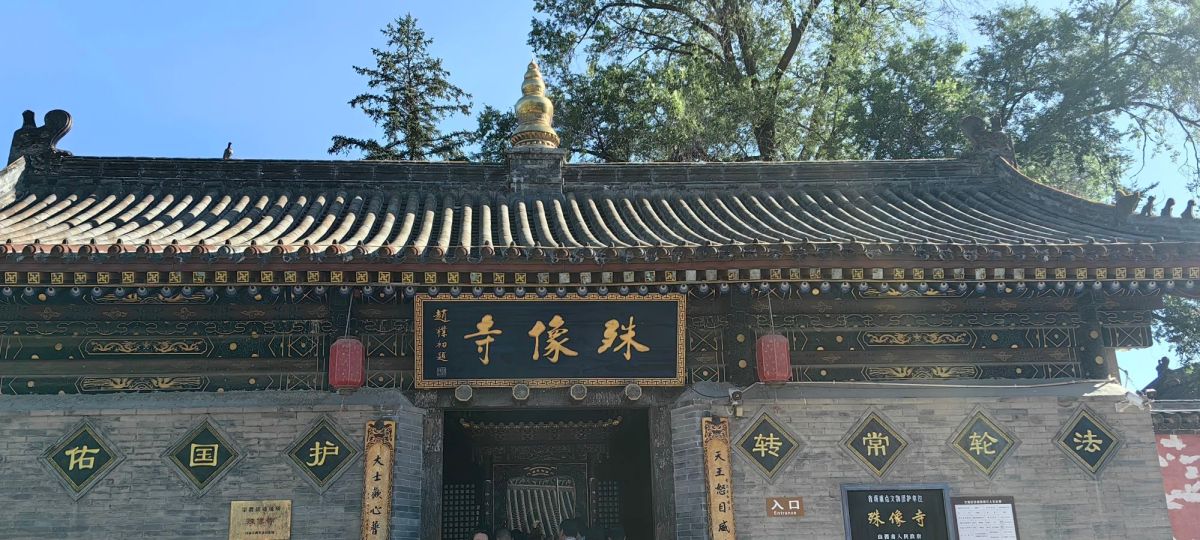
Shuxiang Temple is one of the most famous and significant temples in the area, renowned for its rich history and extraordinary cultural and spiritual importance. Its name, “Shuxiang,” translates to “Exquisite Image,” which reflects its dedication to Manjushri, the Bodhisattva of Wisdom, whose exquisite statues and imagery are a centerpiece of the temple.
殊像寺是该地区最著名最重要的寺庙之一,以其丰富的历史文化和宗教意义而闻名。它的名字“殊像”文言文翻译过来就是“精美的形象”,反映了对文殊菩萨的崇拜,寺中文殊菩萨的精美雕像和画像则是寺庙的核心。

Shuxiang Temple dates back to the Northern Wei Dynasty, making it one of the oldest temples on Wutai Mountain. Over the centuries, it has undergone several renovations and expansions. The main hall of the temple houses a grand, intricately carved statue of Manjushri riding a lion, symbolizing ultimate wisdom and fearlessness. The statue is surrounded by depictions of Buddhist deities and disciples. The statue is richly adorned with vibrant colors, dazzling gold leaf, and detailed features that reflect the artistic brilliance of the time.
殊像寺始建于北魏,是五台山最古老的寺庙之一。几个世纪以来,它经历了多次翻新和扩建。寺庙的正殿供奉着一尊雕刻精美的文殊菩萨骑狮像,象征着至高智慧和无畏精神。雕像周围有佛教神灵和佛家弟子的描像。这座雕像装饰华丽,色彩鲜艳,闪亮的金箔和精细制作细节特征反映了当时的艺术辉煌。
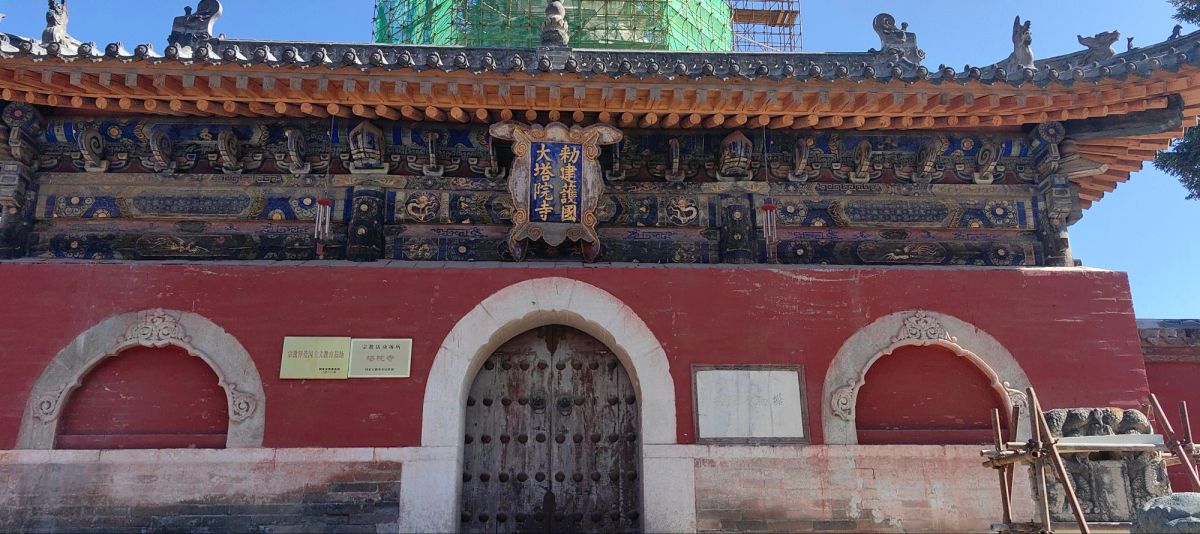
Tayuan Temple is one of the most iconic and revered Buddhist temples in the area. Its history can be dated back to the Yuan Dynasty (1271–1368) and was later expanded during the Ming and Qing dynasties. Many people come to this temple to burn incense, show their devotions to Manjushri, symbolizing a prayer for wisdom, clarity, and enlightenment. Pilgrims hope to receive blessings for intellectual and spiritual growth.
塔院寺是五台山地区标志性和最受敬仰的佛教寺庙之一。其历史可以追溯到元朝,后来在明清时期得到扩建。许多人来到这座寺庙烧香,表达对文殊菩萨的虔诚信仰,象征着人们祈求智慧和开悟的决心。朝圣者希望通过祈福获得智力和精神成长的加持。

The towering Great White Pagoda, standing over 50 meters is the defining feature of Tayuan Temple and the tallest structure on Wutai Mountain. The pagoda is built in the Tibetan stupa style, symbolizing the unity of heaven and earth. Its body is smooth and white, representing purity, and it is topped with a gilded spire adorned with delicate bronze ornaments. This white pagoda is the symbol of this mountain, which picture is really impressive in the travel brochure of Wutai Mountain. Unfortunately, when I arrived, it was under reparation.
高达50多米的大白塔是塔院寺的标志性建筑,也是五台山最高的建筑。该塔采用藏族佛塔风格建造,象征天地合一。它的身体光滑洁白,代表着佛家信仰的纯洁,顶部有一个镀金的尖顶,上面装饰着精致的青铜饰物。这座白塔是五台山的代表,总是会出现在五台山的旅游手册里。可惜在我来这里希望一睹它风采的时候却正在修缮中。

This is the main hall of Tayuan Temple. It is a rectangular structure set on a raised stone platform. It is surrounded by a spacious courtyard, allowing pilgrims to gather and perform rituals such as incense burning. There are numerous tourists assembling here even in the early morning. The hall’s roof is a classic example of a hip-and-gable style. The curved eaves sweep upward at the corners. The ridges are adorned with decorative figures, such as dragons and phoenixes, believed to ward off evil and invite blessings. This hall houses a grand statue of Manjushri as well.
这是塔院寺的正殿。它是一个设置在凸起的石头平台上的长方形结构,周围有一个宽敞的庭院,可供香客聚集并进行烧香等仪式。即使清早这里也聚集着太多的游客。大殿的屋顶是歇山顶风格,弯曲的屋檐在拐角处向上略过。屋脊上饰有龙凤等装饰物,人们相信可以用它辟邪招福。正殿内还供奉着一尊宏伟的文殊菩萨雕像。

I arrived at the temple at 7 am and I was shocked that so many people came here to burn the first incense in the morning and knelt in front this hall in the photo to get the blessing. The first incense of the day is believed to be the most powerful and auspicious, as it symbolizes a fresh start and the first connection between the human and divine realms. Pilgrims and devotees wake up so early and cluster here to offer incense, hoping to be the first to receive blessings from the Manjushri.
我一大早7点就抵达寺庙,令我震惊的是,有太多人来这里烧头香,并在照片中的这座殿堂前跪下祈福。当天的第一缕香通常被认为是最有祝福力以及最吉祥的,它象征着一个新的开始以及人与神域之间的第一次共鸣。众香客和信众们早早起床聚在这里就为了上这头注香,希望能够第一个得到文殊菩萨的保佑加持。

The center area of Wu Tai Mountain hosts many temples. Luo Hou Temple is a Tibetan Buddhist temple surrounded by towering pine trees and enclosed by striking red walls. As one of the significant Tibetan Buddhist sites on the mountain, it embodies the deep influence of Tibetan Buddhism in this holy region. Tibetan Buddhism, commonly known as Lamaism, developed in Tibet and has unique practices and rituals distinct from Chinese Buddhism. The most prominent school of Tibetan Buddhism is the Gelug Sect, founded by the revered monk Tsongkhapa during the Ming Dynasty. Monks of the Gelug Sect traditionally wear yellow robes, which is why they are often referred to as the “Yellow Sect.” Luo Hou Temple has rich Tibetan architectural elements inside.
五台山中心地区有许多寺庙。罗喉寺是一座藏传佛教寺庙,周围环绕着高耸的松树以及引人注目的红墙。作为山上重要的藏传佛教寺庙,它代表了藏传佛教在这一圣地的深厚影响。藏传佛教,俗称喇嘛教,发源于西藏,具有与汉传佛教不同的独特习俗和仪式。藏传佛教最著名的教派是格鲁派,由明代高僧宗喀巴大师创立。格鲁派僧侣传统上身穿黄色袈裟,因此又被称为“黄教”。罗喉寺内部具有浓郁的藏族建筑元素。

Prayer wheels are an integral part of Buddhist practice. They can be found in the Tibetan temples. These wheels, inscribed with sacred texts, mantras, and symbols, hold deep spiritual significance. They are made of bronze and wood, often adorned with intricate carvings and Buddhist imagery. Some larger ones are made of metal and stand on beautifully crafted pedestals. The most common mantra found on these wheels is “Om Mani Padme Hum”, a powerful Tibetan Buddhist chant associated with wisdom and compassion. Pilgrims turn the prayer wheels in a clockwise direction, following Buddhist tradition. This movement symbolizes the cycle of karma and spiritual purification.
转经轮是佛教修行中不可或缺的一部分。它们可以在藏传佛教的寺庙中经常就能看到。这些轮子上刻有神圣的文字、咒语和符号,具有深刻的精神象征意义。它们由青铜或木材制成,通常装饰有复杂的雕刻和佛教图像。一些较大的转轮由金属制成,放置在制作精美的基座上。这些轮子上最常见的咒语是“唵嘛呢贝美吽”,这是一种与智慧和慈悲相关的强大藏传佛教圣歌。朝圣者遵循佛教传统,顺时针方向转动转经筒。这个动作象征着业力的循环和精神的净化。

This is the pavilion of ‘Doushuai’. In Chinese culture, Doushuai is known as Tuṣita in Sanskrit which is a heavenly realm where Bodhisattva resides before their final rebirth into the human world to attain Buddhahood. It holds great significance in Buddhist cosmology. It is one of the Six Heavens of the Desire Realm in Buddhist cosmology. This celestial realm is believed to be a place of bliss and enlightenment, where bodhisattvas cultivate wisdom before descending to the human world. This pavilion is dedicated to Maitreya Bodhisattva, the future Buddha who currently resides in Tuṣita Heaven. It is a multi-storied structure, a rare architectural feature in Buddhist temples, symbolizing the celestial nature of Tuṣita Heaven.
这里是兜率阁。在中国文化中,兜率在梵文中被称为兜率天,是菩萨在最后转世成佛之前居住的天国。它在佛教宇宙论中具有重要意义。是佛教宇宙观中欲界六天之一。这个天界被认为是极乐和开悟的地方,菩萨在下降到人间之前在这里修养智慧。这座阁楼供奉的是现居住在兜率天的未来佛弥勒菩萨。它是一座多层建筑,在佛教寺庙中是比较罕见,象征着兜率天的仙性。

The tiered golden roof is adorned with dharma wheels, lotus motifs, and small golden pagodas, symbolizing wisdom and enlightenment. The curved eaves sweep upward in the traditional Chinese style. The golden tower is a small, gilded stupa. The Dharma Wheel is one of the most sacred symbols in Buddhism, representing the Buddha’s teachings and the path to enlightenment.
层层叠叠的金色屋顶上装饰着法轮、莲花图案和小金塔,象征着智慧和开悟。弧形屋檐向上微微翘起,颇具中国传统风格。金塔其实就是一座微型镀金的小佛塔。而法轮是佛教最神圣的象征之一,代表着佛陀的教义和觉悟之道。

In the scenic spot of Wutai, Dai Luoding is one of the most important temples, known as the “Small Wutai” because it is home to five Manjushri Bodhisattva statues, symbolizing the five major peaks of Mount Wutai. It is a revered pilgrimage site where devotees come to worship, ascend the sacred steps, and seek wisdom from Manjushri Bodhisattva. Of course, visitors can choose cable car to the top, but it lost the sacred meaning.
五台风景区里,黛螺顶是最重要的寺庙之一,因供奉着象征五台山五大山峰的五尊文殊菩萨像,被称为“小五台” 。这里是一处备受尊崇的朝圣地,信徒们登上具有象征意义的台阶前来朝拜,向文殊菩萨寻求指点迷津。当然,游客也可以选择缆车登顶,但这样就失去了象征意义。

It is situated on a small peak, offering a panoramic view of the surrounding temples and landscapes of Mount Wutai. It is regarded as a miniature version of the Five Terraces of Wutai, allowing pilgrims who cannot visit all five peaks to complete their worship in one place. Devotees believe that climbing Dai Luoding and worshiping the five Manjushri statues brings the same blessings as visiting all five mountain peaks. To reach the temple at the summit, I climbed the 108 steep stone steps, symbolizing the 108 afflictions in Buddhism that one must overcome to attain enlightenment. It was really an exhausting trip of spirits.
黛螺顶坐落在一座小山峰上,可以将周围的寺庙和五台山的风景尽收眼底。它被视为五台的缩小版,让无法游览五台山五座山峰的香客能够在这一处完成朝拜。信众们相信,登上黛螺顶、朝拜五尊文殊菩萨像,就可以得到与游览五座山峰同样的信仰加持。为了登顶寺庙,我也努力爬了108级陡峭的石阶。它们象征着佛教中必须克服108种烦恼才能获得开悟的必经之路。这确实是一段令人筋疲力尽的修行之旅。

The Tianwang Hall is the first major hall that pilgrims encounter when they ascend the 108 sacred steps leading to the temple. It serves as the entrance to the sacred realm of Manjushri Bodhisattva. The Tianwang Hall follows a classic Chinese temple layout, with a grand double-eaved roof supported by intricately carved wooden beams. The roof ridges are adorned with mythical creatures and Buddhist symbols.
天王殿是香客登上通往寺庙的108级台阶时遇到的第一个大殿。它是进入文殊菩萨圣界的入口。天王殿遵循中国古典寺庙布局,宏伟的重檐屋顶由雕刻精美的木梁支撑。屋脊上装饰着神话生物和佛教符号。

In front of the main hall, many Buddhists and pilgrims burn incense outside the hall and offer prayers in front of the Manjushri statues in the main hall. It is believed that circumambulating (walking around) the incense burner in prayer brings wisdom and enlightenment. incense burning is not allowed inside the halls. Many temple halls are constructed with ancient wooden architecture, making them highly flammable. The smoke from incense can damage murals, ancient statues, and wooden structures as well.
大雄宝殿前,许多佛教徒和香客在殿外烧香祈福。游客们还相信,绕香炉一圈祈福后进香可以获得文殊菩萨保佑并给他们带来智慧和启迪。佛家殿堂内一般不准烧香。许多寺庙殿堂都是古老的木结构建筑,非常易燃。焚香产生的烟雾也会损坏壁画、古代雕像和木结构。

Standing atop Dai Luoding, I was greeted with a breathtaking panoramic view of Mount Wutai’s sacred landscape, where ancient temples, rolling peaks, and mist-covered valleys create a scene of profound serenity and spiritual grandeur. Although I have a bit fear of height, I still enjoy climbing to top of mountains. It will bring me a sense of conquest. From the elevated position of Dai Luoding, I could gaze down upon the cluster of ancient temples. During summer, the mountain comes alive with lush greenery and vibrant flowers. The surrounding pine trees, cypress groves, and meadows make the scene fresh and full of life. Whether admiring the golden temples below, the misty peaks beyond, or the ever-changing sky above, I could not help but feel a deep sense of cleansing of the soul.
站在黛螺顶上,五台山神圣威严的景观尽收眼底,古老的寺庙、连绵的山峰、云雾缭绕的山谷,营造出一种深沉的宁静和宏伟的精神寄托。虽然我一直有点恐高,但还是挺喜欢爬山,登顶会给我带来一种征服感。从黛螺顶的高处,我可以俯视那群古老的寺庙。夏季时分,山上绿树成荫,鲜花盛开,生机勃勃。周围的松柏树林、绿油油的草地使这里一切显得生机盎然。无论是欣赏下面的金色寺庙,远处云雾缭绕的群山,还是穹顶不断变化的天空,我都情不自禁地感受到一种心灵的洗涤。

In Wutai Mountain, I have seen many temples of Tibetan style. Mount Wutai is believed to be the bodhimaṇḍa (道场, sacred site) of Manjushri Bodhisattva. Manjushri is highly revered in both Han Chinese Buddhism and Tibetan Buddhism, making the mountain a common pilgrimage destination for both traditions. Tibetan Buddhists also consider it a sacred place where Manjushri appears in various forms.
五台山的历程中我看到了很多藏式风格的寺庙。五台山被尊为文殊菩萨的道场。文殊菩萨在汉传佛教和藏传佛教中都受到高度尊崇,使这座山成为汉传佛教和藏传佛教共同的朝圣地。同时藏传佛教徒也认为它就是文殊菩萨显圣的圣地。

During the Yuan Dynasty, Tibetan Buddhism (Lamaism) gained imperial support. The rulers built Tibetan-style temples on Mount Wutai to establish religious unity and strengthen ties with Tibetan Buddhist leaders. The Qing Dynasty actively supported Tibetan Buddhism to maintain control over Tibet, Mongolia, and other Tibetan Buddhist regions. Emperor Kangxi and Emperor Qianlong frequently visited Mount Wutai and ordered the construction of Tibetan-style temples like the Guanghua Temple in this photo to promote harmonious coexistence between Han and Tibetan Buddhists.
元朝时期,藏传佛教(喇嘛教)得到了皇帝的支持。当时的统治者在五台山修建了藏式寺庙,确立宗教统一并加强与藏传佛教领袖的联系。后来清朝积极扶持藏传佛教,为了维持对西藏、蒙古等藏传佛教地区的控制。康熙和乾隆皇帝经常游览五台山,并下令修建像照片中的广化寺这样的藏式寺庙,以促进汉藏佛教的和谐共处。

The colorful stupa is the symbol of Tibetan Buddhism temple. It has multiple layers stacked in a gradually tapering form, representing the spiritual ascent toward enlightenment. It is adorned with bright reds, yellows, blues, purple and greens, which symbolize the Five Wisdom Buddhas. The spire begins with a lotus-shaped base, symbolizing purity and spiritual awakening. Above the lotus base, the spire features thirteen golden rings, symbolizing the thirteen stages of Buddhist enlightenment. A golden umbrella-shaped structure sits atop the rings, signifying royal dignity. At the very top of the spire is a flaming jewel, representing the highest state of spiritual awakening.
色彩缤纷的佛塔是藏传佛教寺庙的标志。它有多层以逐渐变细的形式堆叠,代表着精神世界向启蒙的提升。它以鲜艳的红、黄、蓝、紫、绿五色装饰,象征五明佛。尖顶以莲花形基座开启,象征纯洁和精神觉醒。莲花底座之上,塔尖有十三道金环,象征着佛教启蒙的十三重境界。金色的伞形结构坐落在圆环的顶部,象征着皇室的尊严。尖塔的最顶端有一颗燃烧的宝石,代表着精神觉醒的最高境界。

I spent nearly one day in visiting most of the famous temples. Pusading temple was the last one visited in the afternoon. Perched on a high ridge overlooking the valley. During the Ming and Qing Dynasties, it became a Tibetan Buddhist monastery where Dalai Lamas and Panchen Lamas would stay when visiting Mount Wutai.
This mountain was intertwined with the legend of Lu Zhishen. The Wenshu Monastery in Pusading templeis is where he took refuge as a monk. He is my favorite characters from the classic Chinese novel Water Margin. He’s a man of contradictions — a powerful warrior with a tender heart. I admire his unwavering sense of justice and it is a great honor for anyone to have a friend like him.
我花了将近一天的时间参观了五台山大多数所有著名的寺庙。菩萨顶寺是下午参观的最后一座寺庙。它坐落在高高的山脊上,俯瞰着整个山谷。明清时期,这里成为达赖班禅喇嘛游览五台山时下榻的寺院。
这座山亦与鲁智深有所羁绊。菩萨顶寺的文殊院就是他出家避难的地方。他是中国古典小说《水浒传》中我最喜欢的人物。剑胆琴心的鲁智深可以说是一个非常矛盾的人。不过我特别钦佩他坚定不移的正义感,有他这样的朋友对任何人来说都是莫大的荣幸。

Pusading Temple is famous for its dazzling golden-roofed halls of Manjushri, which shimmer in the sunlight, symbolizing divine imperial honor. The roofs are built in the Tibetan Buddhist style, featuring layered eaves and upturned corners, similar to the Potala Palace in Lhasa. Pair of deer is placed atop the main hall’s roof, these sacred symbols represent Buddha’s first sermon at Deer Park. The gold-plated tiles and finials symbolize spiritual enlightenment and the wisdom of Manjushri.
菩萨顶寺以其金顶大文殊殿而闻名,这个大殿在阳光下闪闪发光,象征着皇家的荣耀。屋顶采用藏传佛教风格,重檐翘角,与拉萨的布达拉宫类似。主殿屋顶上放置着一对鹿,这种神圣的符号代表佛陀在鹿野苑首次步道说法。镀金的瓷砖和尖顶则象征着精神启蒙和文殊菩萨的智慧。

From the Hall of Manjushri, visitors can enjoy a breathtaking panoramic view of Mount Wutai’s temple-studded landscape. It was one of the most memorable experiences of my trip. From the terraces of Pusading, my eyes are drawn to the countless temples scattered across the mountain slopes. In the distance, Tayuan Temple’s Great White Stupa rises majestically, its pristine silhouette standing out among the temple clusters.
从文殊殿,游客可以欣赏到五台山中寺庙林立的壮丽全景。这也是我此次旅行中印象最为深刻的场景之一。从菩萨顶的观景台上,我的目光被散布在山坡上的无数寺庙所吸引。远处,塔院寺的大白塔巍然耸立,其古朴的轮廓在寺庙群中格外醒目。
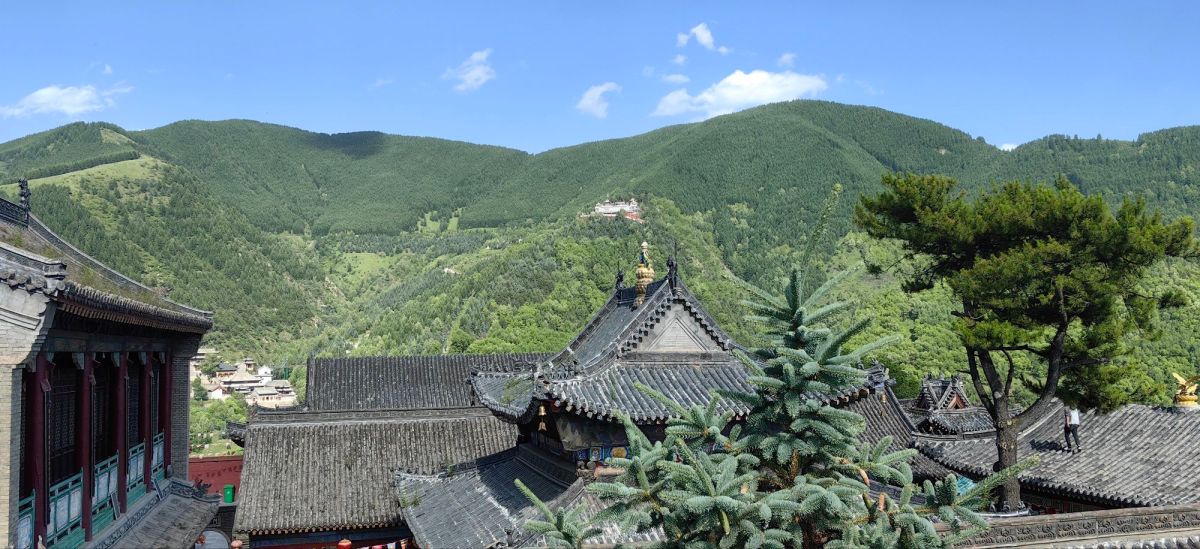
Looking beyond the temple complex, the vast five sacred peaks of Mount Wutai—stretch into the horizon, each bathed in golden sunlight under the blue sky. The rolling green valleys and deep ravines carve through the landscape. The distant echoes of Buddhist chants and the rhythmic ringing of temple bells float through the air, blending seamlessly with the gentle rustling of pine trees in the breeze.
向寺庙群外远眺,五台山五座雄伟的圣峰蜿蜒伸向地平线,在蓝天下沐浴着金色的阳光。连绵起伏的绿色山谷和深邃的沟壑贯穿天地。远处传来佛门吟唱的细密回声和寺院钟声的韵律在空中飘荡,与微风松树轻柔的沙沙声融为一体。
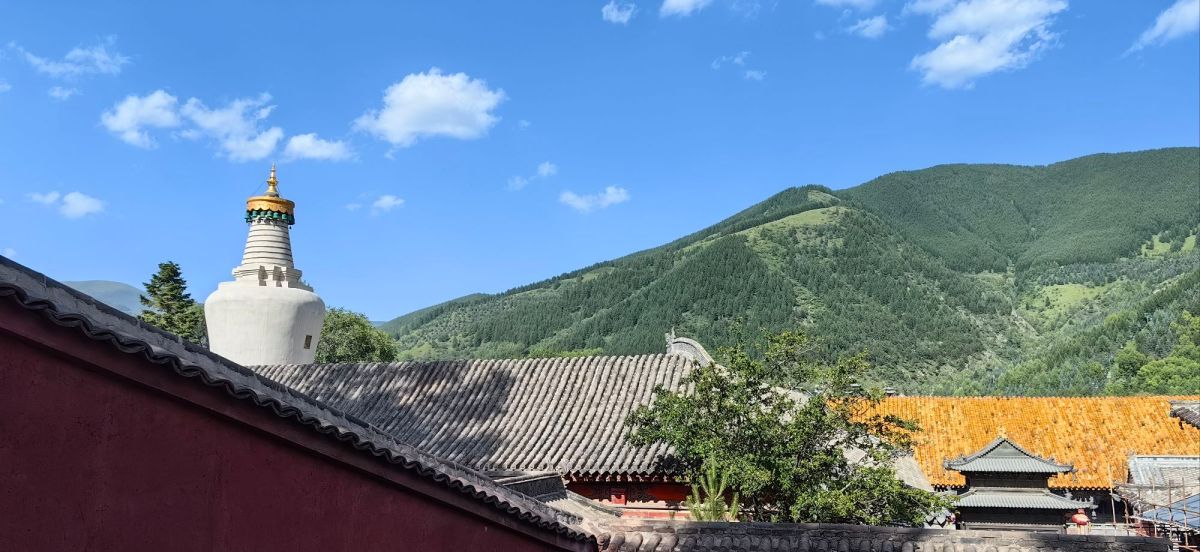
For my trip in Wutai Mountain, I cannot help but feel a profound sense of reverence and awe. The golden stupa tops, endless mountain peaks, and tranquil monastic life create a view that is not only visually stunning but deeply spiritual. Whether bathed in morning light or embraced by twilight mist, the soothing scenes capture the essence of Buddhist devotion and the eternal beauty of nature, making it an unforgettable experience for all who visit.
对于这次五台山之行,回忆之初不禁怀有深深的敬畏之情。金色的塔顶、连绵不断的山峰、宁静的寺院生活,一笔一划营造出的景色不仅令人惊叹而且颇具宗教精神意义。无论是沐浴在晨曦还是暮色薄雾中,这些舒缓兼具信念的画卷都体现了佛教虔诚的精髓和自然的永恒之美,为所有游客带来难忘的体验。
 Gone like the wind