平遥:再现明清时期街道的古城
Pingyao, located in Shanxi Province, China, is one of the best-preserved ancient walled cities in the country, with a history that spans over 2,700 years. Established during the Western Zhou Dynasty (1046–771 BCE), it rose to prominence during the Ming (1368–1644) and Qing (1644–1912) dynasties as a vital center for commerce and finance.
平遥位于中国山西省,是中国保存最完好的古城墙城市之一,拥有2700多年的历史。平遥始建于西周时期,明清时期成为重要的商业和金融中心。

Famed for its well-preserved city walls, traditional courtyard houses and paved streets, Pingyao offers visitors a rare glimpse into ancient Chinese urban life. The city played a pivotal role in China’s financial history, becoming the epicenter of banking during the late Qing Dynasty. It was home to the country’s first bank, Rishengchang, which laid the foundation for modern banking in China.
平遥以其保存完好的城墙、传统的四合院和板石铺成的街道而闻名,游客可以在这里一窥中国古代的城市生活。这座城市在中国金融史上也发挥了举足轻重的作用,成为晚清银行业的中心。这里是中国第一家银行日升昌的所在地,为中国现代银行业奠定了基础。

Pingyao’s architectural layout, including its impressive city walls, ancient temples, government offices, and merchant residences, remains largely intact, reflecting the urban planning and aesthetics of old China. In 1997, it was designated a UNESCO World Heritage Site for its significant contribution to Chinese history and culture. Today, Pingyao stands as a living museum of China’s ancient civilization, drawing travelers who seek to immerse themselves in the rich tapestry of history and tradition. I travelled in this city on Juin 29,2023 and stayed here experiencing the life here for two days.
平遥的建筑布局,包括令人印象深刻的城墙、古老的寺庙,县衙和民宅,基本完好无损,反映了中国古代的城市规划和建筑美学。1997年,它被列为联合国教科文组织世界文化遗产,以表彰其对中国历史和文化的重大贡献。如今,平遥是中国古代城市文明的活化石,吸引着那些想要沉浸在丰富的历史和传统中的旅行者。我于2023年 6 月 29 日来到这座城市,并在这里住了两天体验了当地的生活。
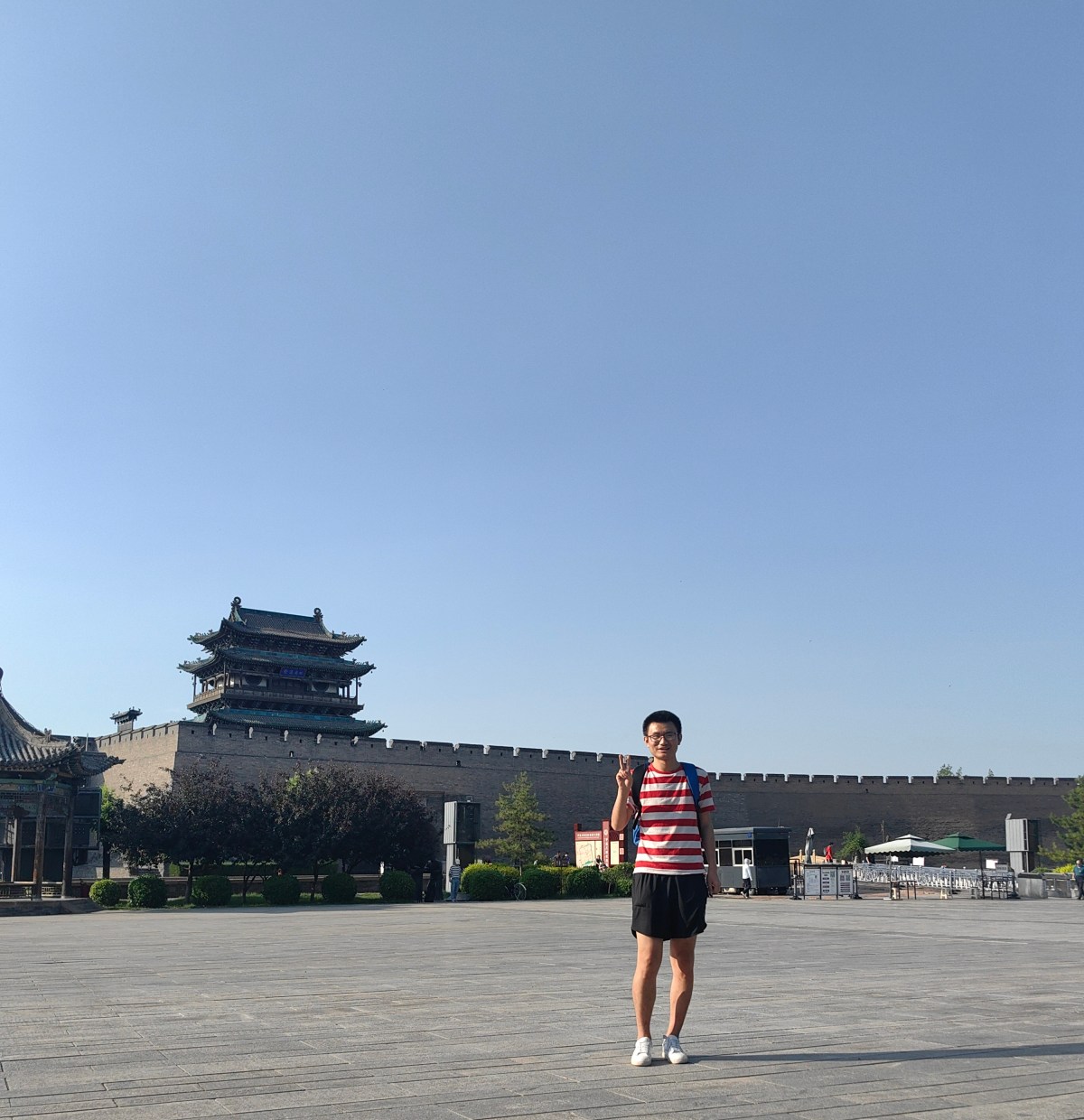
Pingyao’s ancient city walls are perhaps its most defining feature. It was the starting point of my trip. Constructed in 1370 during the Ming Dynasty, they stretch approximately 6 kilometers in length and stand about 10 meters high. The walls are punctuated by 72 watchtowers, which symbolize the 72 wise men in Confucian philosophy, and 3,000 battlements, representing the disciples of Confucius. The walls are made of rammed earth and faced with brick, forming an imposing defense system that still surrounds the old city. I was standing at the south gate of the city, wondering the old history of this city. There is an open space outside of the gate for taking photo.
平遥古城墙也许是其最具特色的景点。这是我此行的起点。古城墙建于明朝1370年,长约6公里,高约10米。城墙上有72座瞭望塔,象征着儒家思想中的72位智者,城墙上还有3,000个城垛,代表着孔子的三千弟子。城墙主体由夯土砌成,外墙用砖砌成,形成了一个雄伟的防御体系,至今仍环绕着古城。我此刻站在南城门惊叹于这里悠久的历史。城门外有一大片空地非常适合游客拍照。
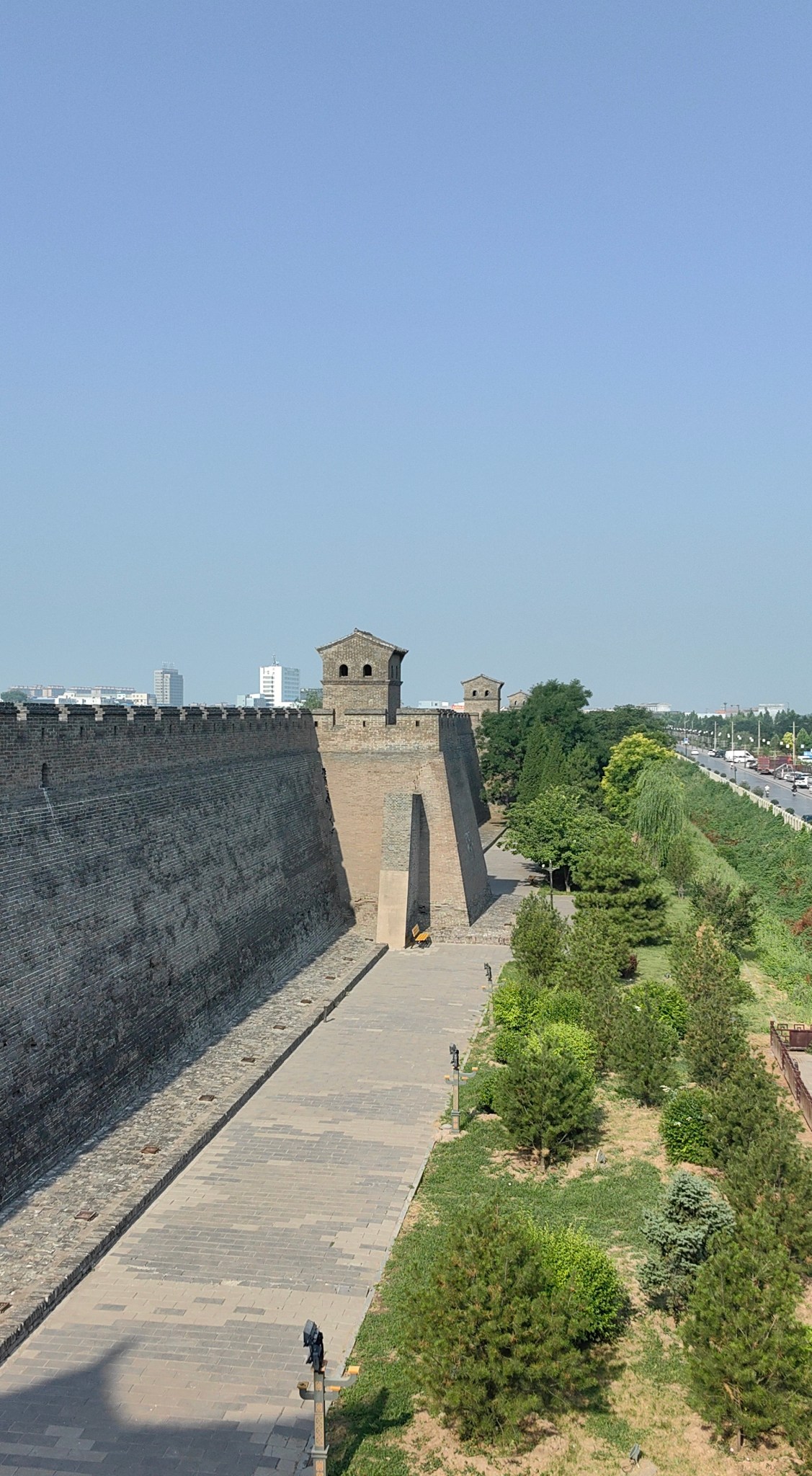
Its 72 watchtowers are positioned at regular intervals along the perimeter. These towers were crucial to the city’s defense, serving as observation points from which guards could keep watch over the surrounding landscape and detect approaching threats. The number 72 representing the 72 wise disciples of Confucius. These watchtowers are small, square-shaped structures that protrude slightly from the wall, offering archers and soldiers a vantage point from which to observe and attack enemies without being exposed. Each watchtower is designed with arrow slits—narrow vertical openings in the walls that allow defenders to shoot arrows while remaining protected from incoming fire. The towers also provided storage for weapons and supplies during times of conflict.
城墙上均匀分布着72座瞭望塔。这些塔楼对城市的防御至关重要,它们是监视周围地形和发现敌方的哨所。72这个数字代表传承孔子思想的七十二哲。这些瞭望塔是小型的方形建筑,略微突出于城墙,为弓箭手射击提供了一个有利位置,从瞭望塔观察攻击敌人不会暴露。每座瞭望塔都设计有箭眼—就是城墙墙壁上狭窄的垂直开口,这种设计可让防御者可以自由射箭,同时又能免受敌方火力的伤害。在战争时期,这些塔楼还可用于储存武器和物资。

The walls have six main gates—two on the east and west, one on the north, and one on the south—symbolizing the ancient belief in balancing the cosmos. This reflects the traditional Chinese view of a symmetrical and ordered universe. Each of the six gates is guarded by a gate tower that serves both as a defensive stronghold and a symbol of power. These towers are larger and more elaborate than the watchtowers, featuring multiple stories with sloping, tiled roofs and intricate wooden beams. The gate towers also serve as observation points and house weapons for defending the city entrances.
平遥城墙共有六座大门,东西两座,南北面各一座,它们象征着古代宇宙平衡的思想,反映了中国历史上传统的宇宙对称的信仰。六座大门均有城楼镇卫,城楼既是防御堡垒,也是权力的象征。这些城楼比瞭望塔更大更精致,有多层楼结构构成,屋顶倾斜铺有瓦片,木梁错综复杂。城楼也可作为观察点,并存放用于防御的武器。

Along the top of the wall are battlements, which include crenelations (the alternating high and low sections along the wall’s edge). These crenelations are designed to give archers and soldiers cover as they moved along the top of the wall. The high sections of the battlements protected the defenders, while the gaps allowed them to fire arrows or projectiles at approaching enemies. Today, Pingyao’s city walls, along with its watchtowers, remain well-preserved. Visitors can walk along the top of the wall, providing panoramic views of the ancient city below and the surrounding countryside.
城墙顶部有城垛,城垛上分布者垛口(城墙边高低交替的部分)。这些垛口的设计是为了给沿城墙顶部移动的弓箭手和士兵提供掩护。城垛的高墙保护着守军,而城垛低处的空隙则让他们可以向接近的敌人射箭或投掷重物。如今平遥的城墙和瞭望塔仍然保存完好。游客可以沿着城墙顶部行走,欣赏下方古城和周围乡村的全景。

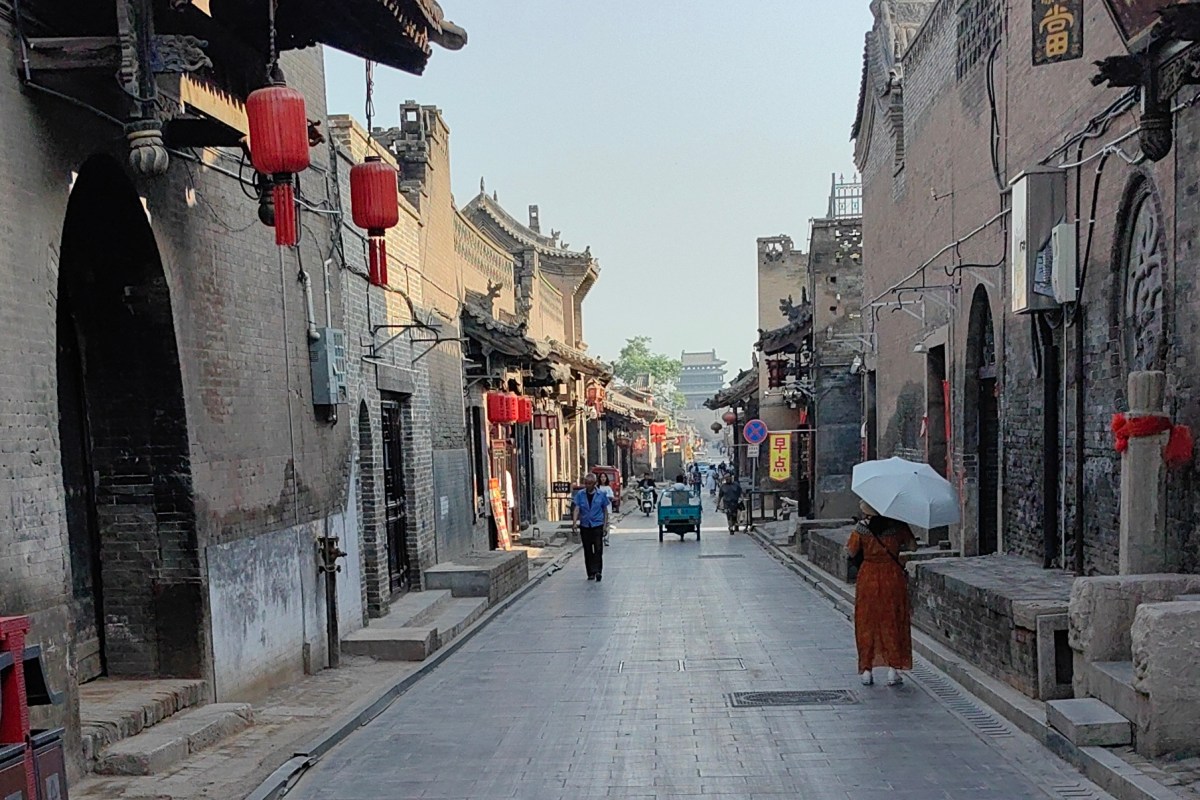
Pingyao’s street grid is a prime example of traditional Chinese urban planning, heavily influenced by Confucian principles and feng shui. The layout reflects harmony, order, and balance, both in terms of functionality and symbolic meaning. The overall street grid forms a rectangular pattern, with the city walls enclosing the grid and the four main city gates positioned in alignment with the cardinal directions—north, south, east, and west. This arrangement follows traditional Chinese feng shui principles, which emphasize the alignment of human structures with natural forces, such as wind and water, to maintain harmony and balance. The South Avenue also known as Mingqing Street, in this photo runs from the southern gate toward the city center, forming the main artery of the city.
平遥的街道布局是中国传统城市规划的典范,深受儒家思想和风水的影响。无论是在功能性方面还是在象征意义方面,这种布局都体现了和谐、秩序和平衡。这种整体街道网格呈矩形,城墙围绕着网格,四个主要城门指向正东、南、北、西四个方向。这种布局遵循了中国传统的风水原理,强调人体结构与风水等自然力量的协调,以保持和谐与平衡。这张照片中的南大街也被称为明清街,从南门延伸到市中心,形成了城市的主干道。

The grid pattern of Pingyao’s streets also reflects the city’s historical role as a major commercial hub, especially during the Ming and Qing Dynasties. The main streets are lined with ancient shops, merchant houses, and businesses that once thrived during the city’s golden age of trade. At the heart of Pingyao’s grid layout is the Market Tower (Shilou), a tall and iconic structure located at the intersection of South Avenue and West Avenue. Every tourist will take a photo here. The Market Tower served as both a watchtower and a symbol of the city’s commercial prosperity. Its central position reflects the idea that commerce was the lifeblood of Pingyao, and the tower also offers an elevated vantage point from which guards could oversee the city’s activities. The streets radiating from the Market Tower were the busiest areas of the city, bustling with merchants, traders, and customers.
平遥街道的网格状布局也反映了这座城市作为明清时期主要商业中心的历史地位。主要街道两旁林立着古老的商店、商铺和曾经在城市贸易黄金时代蓬勃发展的企业。这种网格布局的核心是图中的市楼,这是一座高大的标志性建筑,位于南大街和西大街的交汇处。每位游客都会在这里拍照留念。市楼既是瞭望塔,也是这座城市商业繁荣的象征。它所处的中心位置反映了商业是平遥命脉的理念,塔楼还提供了居高临下的有利位置,警卫可以从那里监督城市的活动。从这个市楼向外辐射的街道是这座城市最繁忙的地区,到处都是熙熙攘攘的商人和顾客。
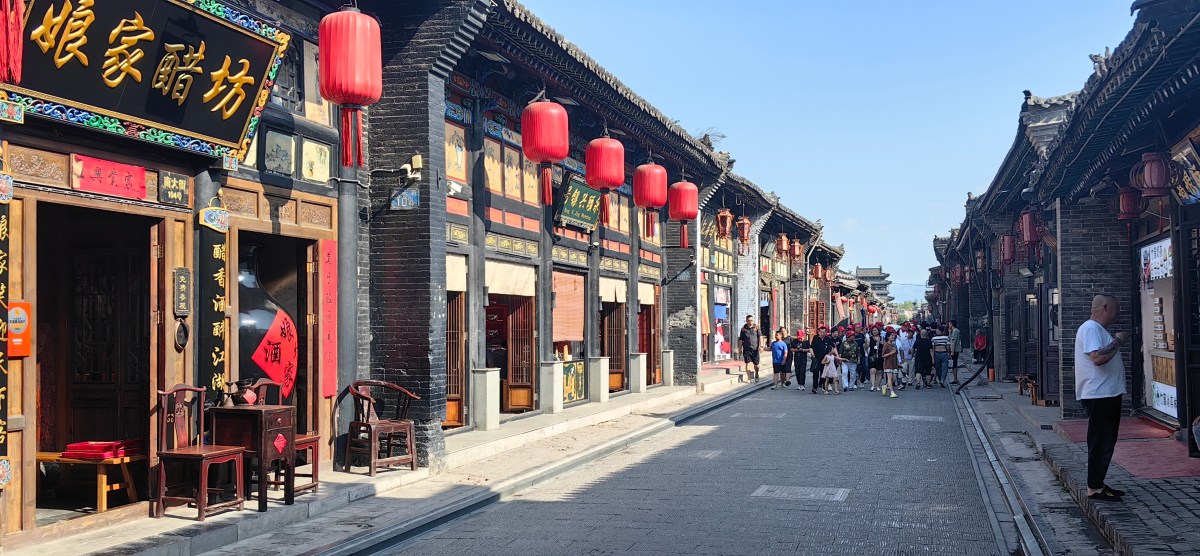
The street grid of Pingyao also reflects the Confucian social hierarchy that governed life in ancient China. The most important and wealthiest families typically lived in houses close to the main streets, while less prominent families lived in smaller alleyways farther from the city center. The north-facing homes along South Avenue were reserved for the wealthiest merchants and officials, reflecting their higher status in society. These residences are larger and more ornate, often featuring intricately carved woodwork and stone decorations. Smaller shops and homes for artisans, craftsmen, and lower-class families were located along the side streets and alleys, away from the main thoroughfares.
平遥的街道网格也反映了古代中国儒家社会等级制度。最显赫和最富有的家庭通常住在靠近主要街道的房子里,而普通家庭则住在远离市中心的小巷里。南大街沿线朝北的房屋是为最富有的商人和官员保留的,反映了他们在社会中较高的地位。这些住宽敞华丽,通常以精雕细琢的木制品和石饰为特色装饰而成。工匠、手艺人和下层家庭的小商店和住宅则位于远离主干道的小街小巷。

Traditional siheyuan (courtyard homes) dominate the residential areas of Pingyao. These homes feature a central courtyard surrounded by rooms on all four sides, with the main hall at the north facing south. The symmetry of the courtyard homes mirrors the Chinese cultural emphasis on family hierarchy and social order, with the head of the family occupying the northernmost rooms. Many of these homes are intricately designed with stone carvings, wooden beams, and painted murals. From the architectural elements, tourists could know some Chinese traditional culture. Many of the houses have been transformed into hostels so tourists can experience the lives here.
平遥的住宅区以传统的四合院为主。这些住宅有一个中央庭院,四面环绕着房间,北面的主厅朝南讲究一个坐北朝南。庭院住宅的对称性反映了中国文化对家庭等级和社会秩序的重视,一家之主通常住在最北边的房间。这样的房子设计精巧,装饰有石雕、木梁和彩绘壁画。从建筑元素中,游客可以了解一些中国传统文化。这里许多房子已经改造成民宿,让游客可以体验这里的生活。

The old houses are built primarily from gray brick and wood, common materials in traditional Chinese architecture. The roofs are gabled, with elegant and curved eaves that sweep upward at the corners, which is a distinct feature of Ming and Qing architecture. The curved eaves are not only aesthetically pleasing but also serve a practical purpose by channeling rainwater away from the walls of the house.
老房子主要用中国传统建筑常用的灰砖和木材建造。屋顶为人字形,屋檐优雅而蜿蜒,拐角处向上弯曲,这是明清建筑的显著特征。弯曲的屋檐不仅美观,而且具有将雨水从房屋墙壁引流出去的实用功能。

Wooden beams and brackets are often intricately carved with floral patterns, mythical animals, or auspicious symbols like the dragon and phoenix, symbolizing wealth, protection, and good fortune.
The doors and windows are often decorated with latticework, featuring intricate geometric or floral patterns. In many cases, the windows have red paper or wooden screens behind them, which adds a traditional Chinese aesthetic while providing privacy.
房屋木梁和支架上通常精雕细琢,雕刻着花卉图案、神话动物或龙凤等吉祥符号,象征着财富、庇佑和好运。门窗通常装饰有格子图案,具有复杂的几何或花卉图案。通常窗户后面都设有红纸或木屏风,这既增添了中国传统美感保护了个人隐私。

The facades of many of these houses are adorned with stone carvings that reflect the status and wealth of the families who once lived there. These carvings often depict scenes of daily life, religious motifs, or symbols of prosperity and longevity, such as cranes, peonies, and dragons. The doorways of these old houses are often framed with large stone lintels engraved with auspicious characters or symbols. The thresholds (the wooden bar across the entrance) are usually raised, which in Chinese culture is believed to prevent evil spirits from entering the house. High thresholds also represents the high social status. Stone lintels are horizontal architectural elements placed above doors or windows, designed to bear the load of the structure above them. In traditional Chinese architecture, especially in cities like Pingyao, stone lintels often served both a structural and decorative purpose.
许多这种房子的外墙都装饰着石雕,反映了曾经居住在那里的家庭的地位和财富。这些雕刻通常描绘日常生活场景、宗教图案或例如如鹤、牡丹和龙等繁荣和长寿的象征。这些老房子的门房上方镶有大石楣,上面刻有吉祥的文字或符号。在中国文化中,大户人家的门槛都特别高代表着更高的社会地位。人们也认为这样可以防止恶灵进入房子。石楣是放置在门或窗上方的水平建筑元素,作用是承受上方结构的重量。在中国传统建筑中,尤其是在平遥这样的城市,石楣通常既起到构造又起到装饰作用。

When the dragon and phoenix are carved as round stone reliefs and placed on both sides of a doorway, they together represent a harmonious balance of yin and yang, the two complementary forces in Chinese cosmology. This balance is seen as essential for maintaining a harmonious home and ensuring a prosperous life for the inhabitants.
当龙和凤被雕刻成圆形浮雕并放置在门的两侧时,它们共同代表着阴阳之间的和谐平衡,阴阳是道家宇宙观中两种互补的力量。这种平衡被视为维持家庭和谐和确保居民生活富足的必要条件。
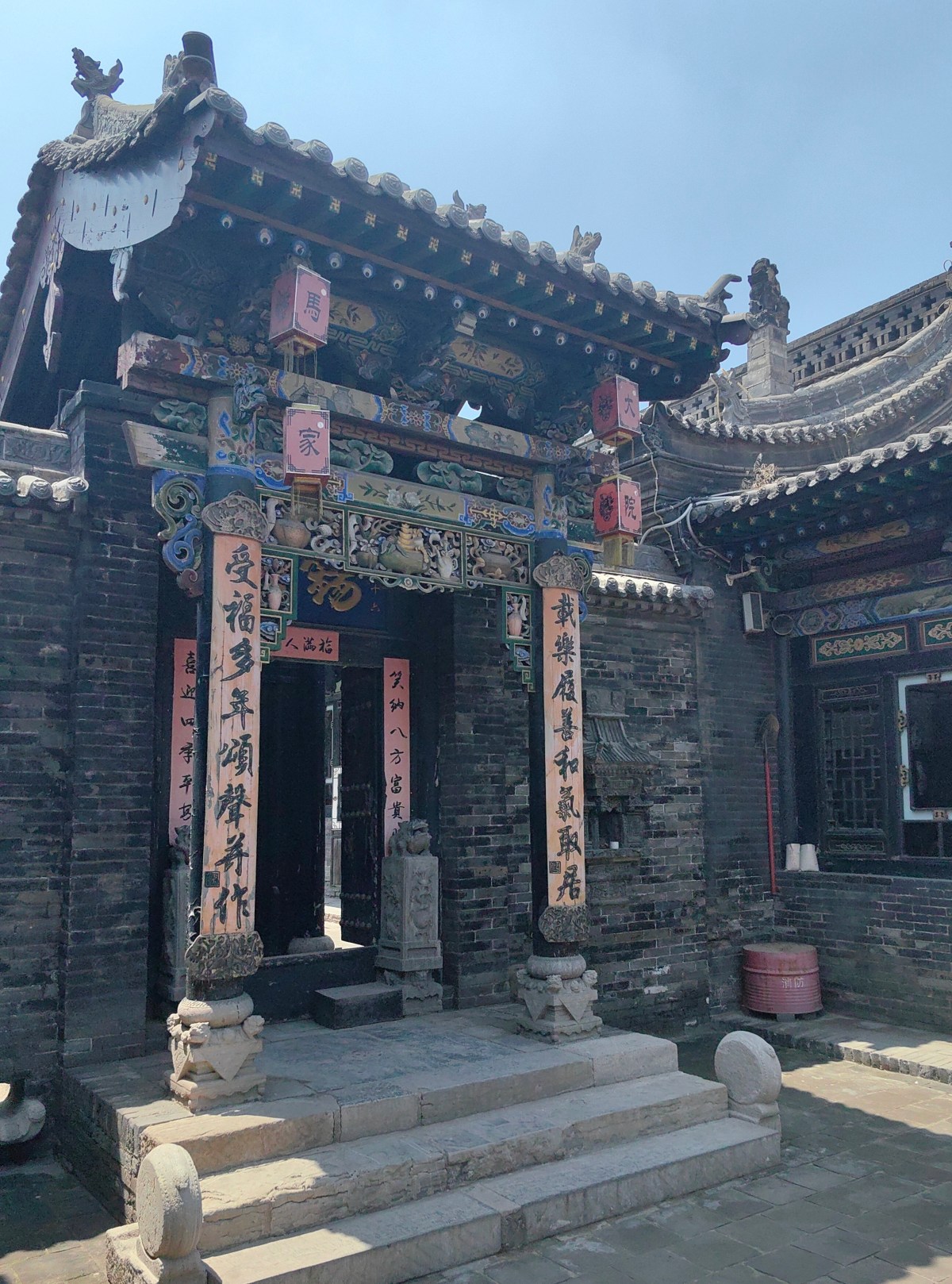
Dui lian (对联), or couplets, are traditional Chinese poetic inscriptions that are often written on the red papers and displayed on the both sides of doorways of homes, temples, and other important buildings. It is the traditional Chinese culture that is gradually forgotten by new generations.In Pingyao, I can find them on the doorways of many of the old houses. The content of dui lian often reflects the values, aspirations, and beliefs of the homeowner. They are traditionally written in classical Chinese and composed with strict attention to balance and symmetry in both meaning and tone. For example the dui lian in this photo represents prosperity and harmony of living in the houses for many years. If foreign tourists want to learn Chinese culture during the visit, it is important to learn Chinese character and the language first.
对联是中国传统诗文的一种文化形式,对联通常隽写在红纸上,贴在家里、寺庙和其他重要建筑的门口两侧。这种中国传统文化正逐渐被新一代人遗忘。在平遥我在很多老房子的门口都看到了对联。对联的内容往往反映了房主的价值观、愿望和信仰。对联传统上用文言文书写,在含义和语调上都严格注重平衡和对称。例如,这张照片中的对联代表着多年来住在房子里的繁荣与和谐。如果各国游客想在游览期间了解中国文化,那么首先学习汉字和语言是及其重要的。

In the traditional old houses of Pingyao, the spaces above windows often feature paintings and poetry that serve both decorative and cultural purposes. These artistic elements reflect the aesthetic tastes, values, and intellectual pursuits of the homeowners, while also incorporating symbols meant to bring good fortune and harmony to the household. In ancient China, poetry and painting were considered the pinnacle of scholarly achievement and refined taste. The presence of these artistic elements above the windows of old houses in Pingyao indicates the cultural sophistication of the residents or owners. Displaying poetic couplets or paintings was a way for the homeowner to showcase their literary and artistic sensibilities, as these forms of art were deeply admired in traditional Chinese society.
平遥的传统老房子里,窗户上方的一片空间通常以绘画和诗歌为特色,既具有装饰作用,又具有文化意义。这些艺术元素反映了房主的审美、价值观和知识追求,同时也融入了为家庭带来好运和和谐的象征。在中国古代,诗歌和绘画被认为是学术成就和高雅品味的顶峰。平遥老房子窗户上方的这些艺术元素表明了大院主人的文化修养。在传统中国社会中诗词曲赋深受文人推崇,窗上展示诗句或绘画亦是房主展示其文才和艺术观的一种方式。

The poem ‘Mansion in the Bamboo Forest’ in this photo is written by one of the great poets of the Tang Dynasty, Wang Wei.
Alone, I sit in the bamboo forest,
Playing my zither, then humming along.
Deep in the forest, no one knows I’m here,
Only the bright moon comes to shine on me.
Wang Wei’s poetry often reflects his Buddhist beliefs, particularly in the idea of quiet reflection and the search for enlightenment through detachment from material concerns. The serene solitude of the bamboo forest, where he communes with nature and the moon, suggests an ideal state of meditative tranquility.
The poem also touches on Taoist philosophy, which emphasizes living in accordance with nature and finding harmony in simplicity.
照片中的《竹里馆》是唐代大诗人王维的作品。
独坐幽篁里,弹琴复长啸。
深林人不知,明月来相照。
王维的诗作常常反映出他的佛教信仰,尤其是静思和通过脱离物质追求寻求启迪的理念。竹林的宁静与孤独,他与自然和月亮交流,暗示着一种理想的冥想宁静状态。这首诗还涉及道家哲学,强调顺应自然,在朴素中寻找和谐。

In Pingyao, I noticed that many of the old houses and shops throughout the ancient city still hang red lanterns as part of their traditional decor. These lanterns are typically placed above doorways or at the entrance to homes and shops or in courtyards. In Chinese culture, the color red is associated with good fortune, joy, and prosperity. Red lanterns are believed to attract good luck to the home and ward off misfortune. They are often hung during significant occasions, such as festivals, weddings, or the Lunar New Year, to invite happiness and success into the household.
在平遥,我发现古城里许多老房子和商店仍然挂着红灯笼。作为传统装饰的一部分这些灯笼通常挂在家门口或庭院里。在中国文化中,红色与好运、欢乐和繁荣有关。人们相信红灯笼能给家里带来好运,避开厄运。通常在节日、婚礼或农历新年等重要场合人们会挂上红灯笼,以祈求幸福和成功。
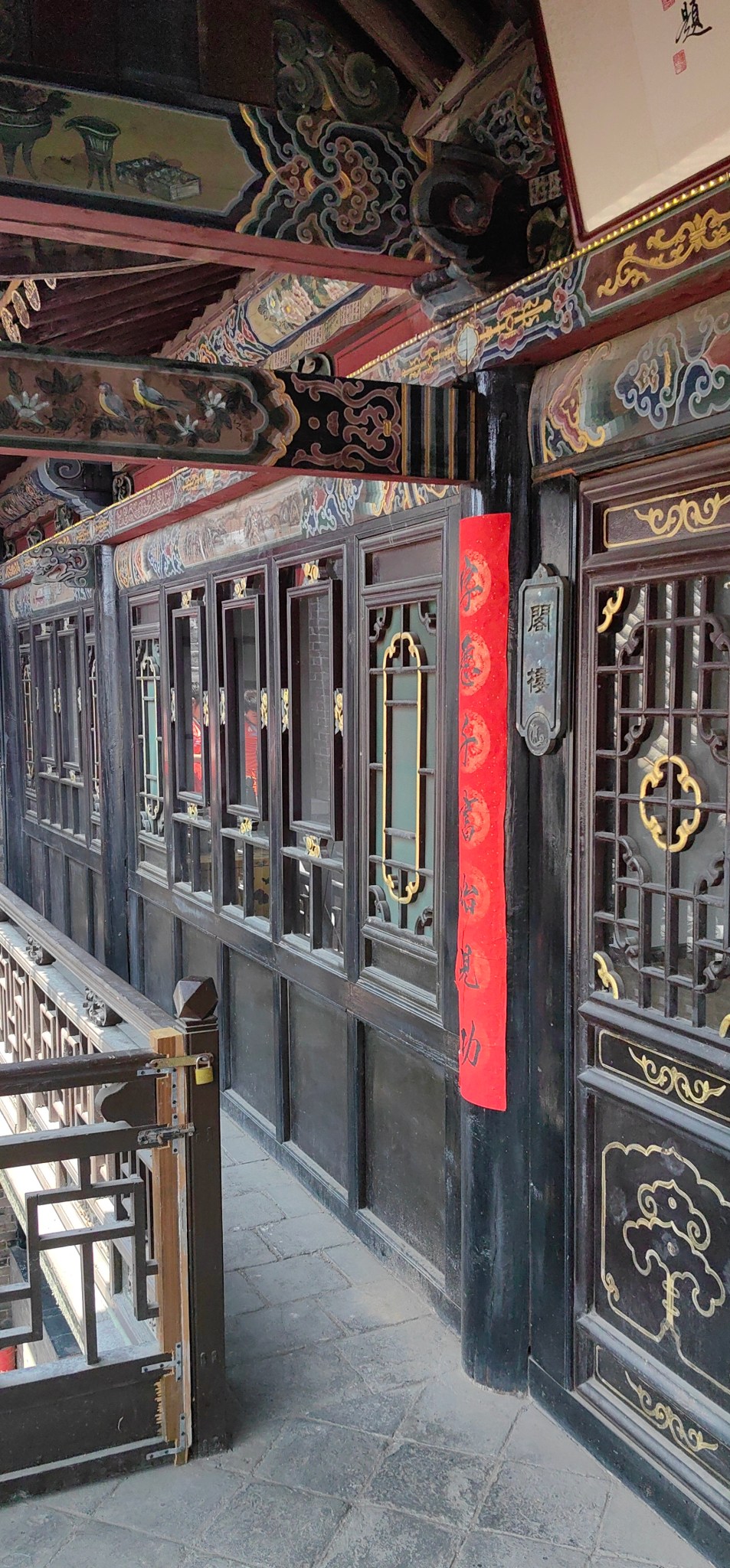
The well-preserved attic architecture in the old houses of Pingyao reflects traditional Chinese design principles. The structural framework of attics in Pingyao’s old houses is primarily composed of wood, reflecting traditional Chinese timber construction techniques. The use of wooden beams, posts, and brackets was essential for building upper floors and attics, as timber was both sturdy and flexible, ideal for withstanding the weight of the roof and additional stories. Interlocking joinery techniques were used without nails, relying on precise carpentry to ensure the attic’s structural integrity. These techniques allowed for the natural expansion and contraction of wood, making the buildings more resistant to weather changes. It is one of the greatest innovations in the history of Chinese traditional architecture.
平遥古民居保存完好的阁楼建筑体现了中国传统的设计思路。平遥古民居阁楼的结构框架主要由木材构成,体现了中国传统的木结构建筑技术。木梁、木柱和木托架是建造上层和阁楼的必备材料,木材既坚固又柔韧,非常适合承受屋顶和额外楼层的重量。阁楼采用榫卯技术,无需使用钉子,仅依靠精确的木工连接来确保结构的完整性。这种技术允许木材自然膨胀和收缩,使建筑物更能抵抗天气变化。这也是中国传统建筑史上最伟大的创新之一。
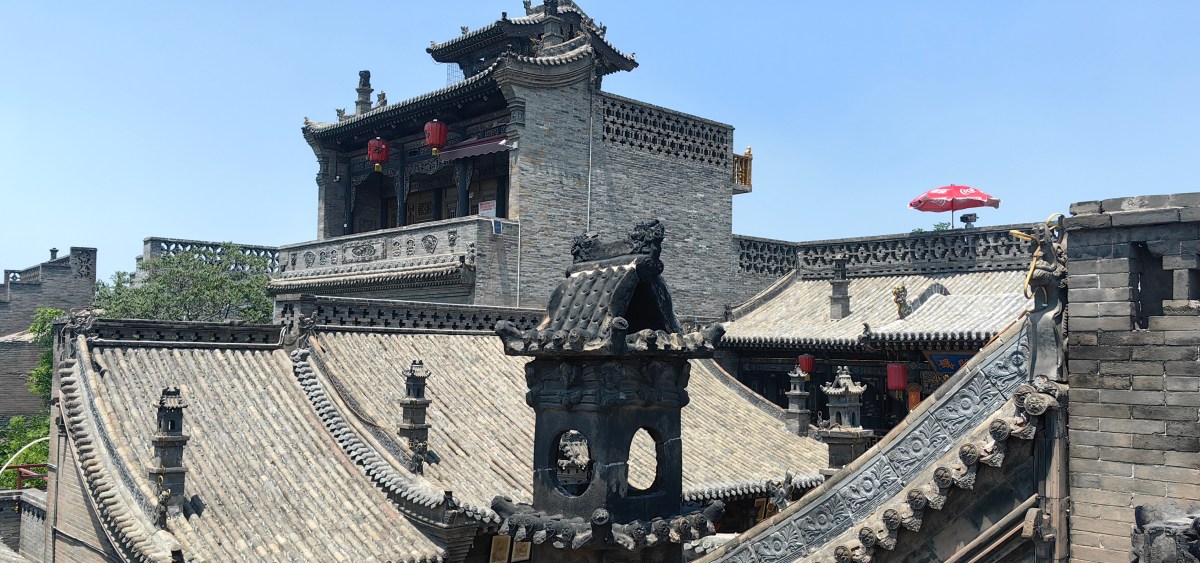
The roof structure often featured gabled roofs (硬山顶) or hipped roofs (悬山顶). The sloping roofs of traditional Chinese architecture created enough height for an attic space while maintaining the overall aesthetic harmony of the building. The eaves of the roof often extended outward from the attic, creating an overhang that protected the walls from rain and provided shade. In Pingyao’s old houses, these extended eaves were not only functional but also served as decorative elements, with elaborate carvings or tiled patterns beneath them. The use of decorative wooden brackets known as dougong (斗拱) is a prominent feature in the attics of traditional Chinese houses. These brackets were placed beneath the eaves or supporting the beams of the attic, helping distribute the weight of the roof while adding visual interest.
In Pingyao’s old houses, dougong elements were often intricately carved with symbolic motifs such as dragons, flowers, or clouds, enhancing the attic’s aesthetic appeal and imbuing the architecture with cultural significance.
屋顶结构通常为硬山顶或悬山顶。中国传统建筑的斜屋顶为阁楼空间创造了足够的高度,同时保持了建筑整体的美学和谐。屋檐通常从阁楼向外延伸,形成一个悬垂部分,保护墙壁免受雨水侵袭并提供遮荫。在平遥的古民居中,这些延伸的屋檐不仅具有实用性,而且作为装饰元素,其下方有精美的雕刻或瓷砖图案。使用装饰性木制支架(斗拱)是中国传统民居阁楼的一大特色。这些支架放置在屋檐下或支撑阁楼的横梁,有助于分散屋顶的重量,同时增加视觉趣味。在平遥的古民居中,斗拱元素通常精雕细琢,雕刻有龙、花或云等象征性图案,增强了阁楼的美感,赋予了建筑文化意义。
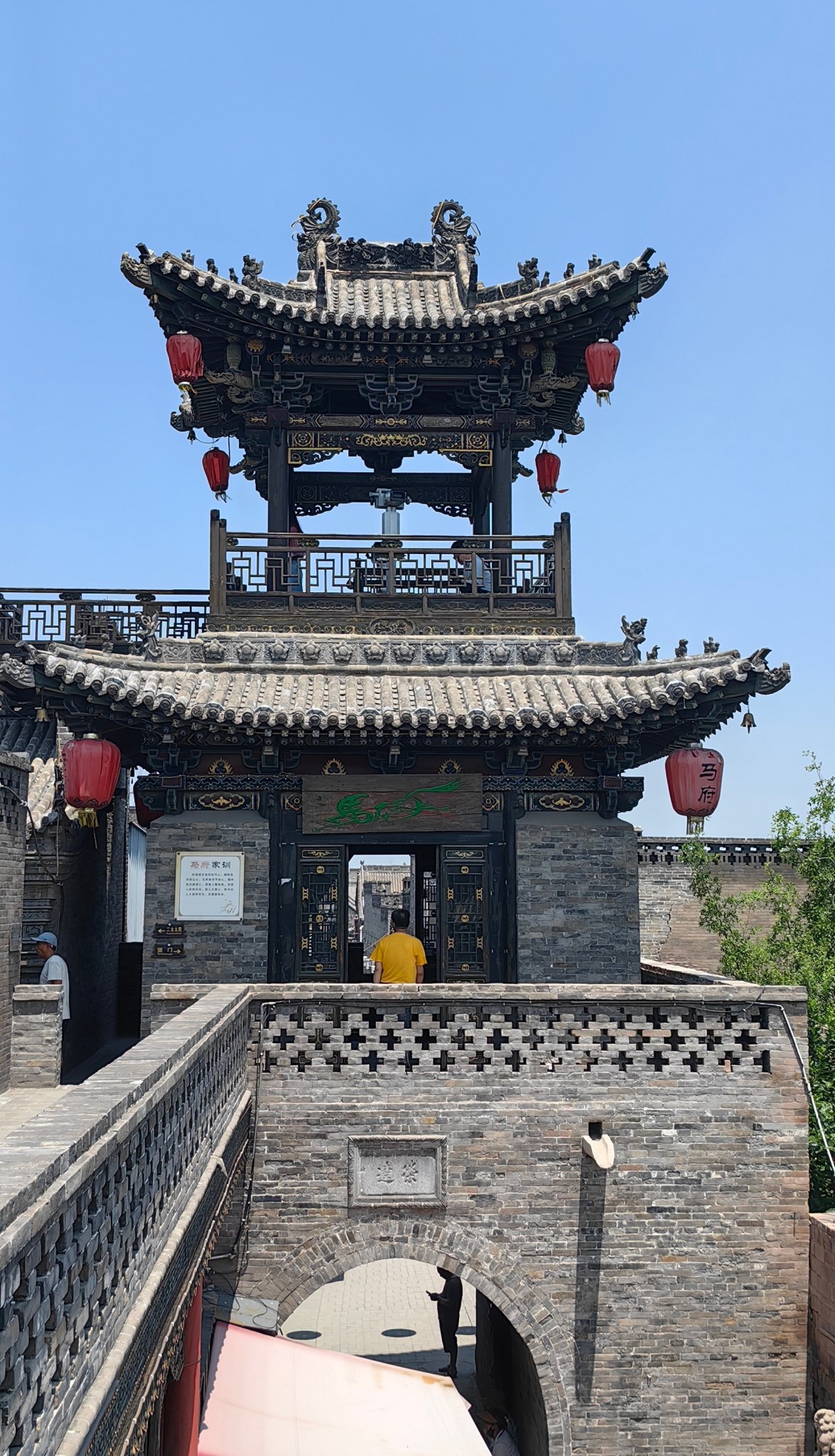
In some wealthier homes, the attic might include a small balcony or viewing platform extending from the upper floor. These platforms, often facing the courtyard, allowed residents to enjoy views of the surrounding landscape. In traditional Chinese society, the height of a building was often associated with social status. The inclusion of an attic or upper story was a sign of wealth and prestige, as not every family could afford to build multi-level homes. The attics of old Pingyao houses combine practical functionality with rich cultural symbolism and aesthetic beauty. Built using traditional Chinese timber construction techniques, these attics serve as important extensions of the home, providing additional space for storage and living.
在一些富户的住宅中,阁楼也包括从上层延伸的小阳台或观景台。这些平台通常面向庭院,让居民可以欣赏周围的景观。在传统的中国社会中因为并非每个家庭都能负担得起建造多层住宅,建筑的高度通常与社会地位有关。阁楼或向上的楼层是财富和声望的象征。平遥古民居的阁楼将实用功能与丰富的文化象征和美学融为一体。这些阁楼采用中国传统的木结构建筑技术建造,是住宅的重要延伸,为储藏、居住提供了额外的空间。
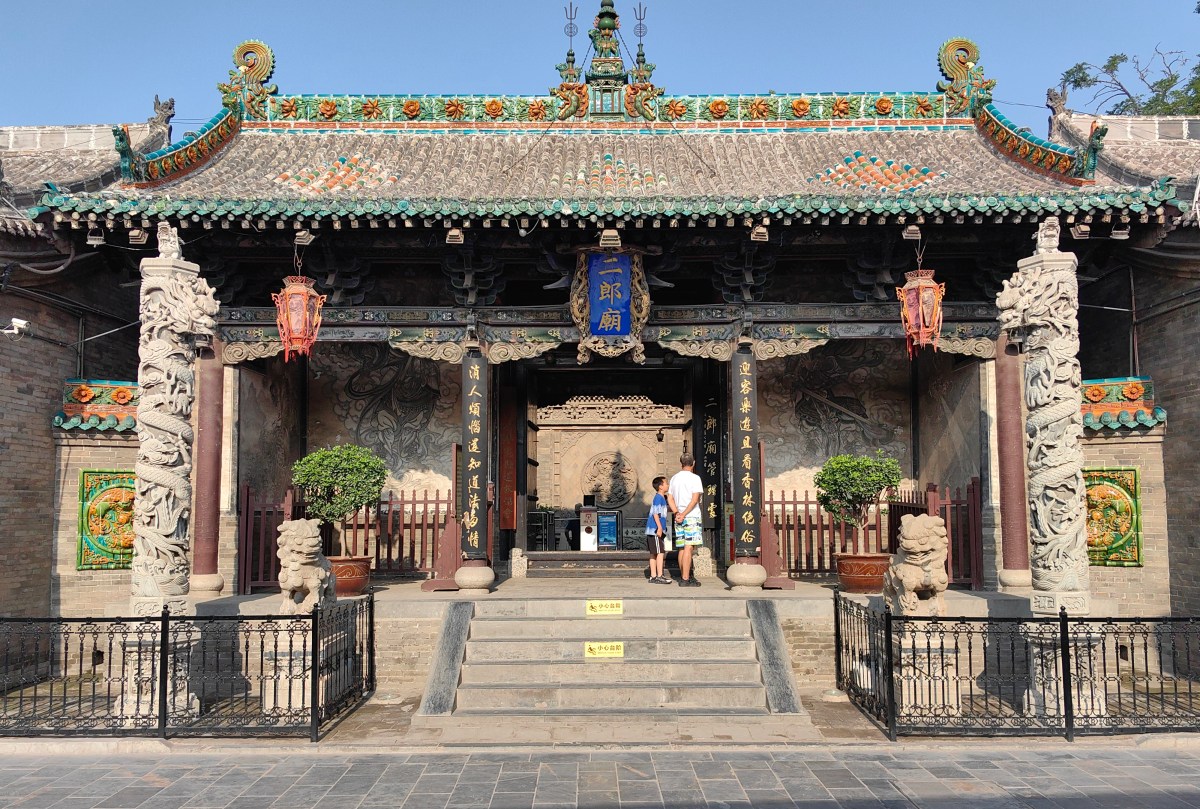
Pingyao also boasts a wealth of temples and civic buildings for visit. Er Lang Temple, dedicated to the Chinese deity Er Lang Shen is a traditional Taoist temple. Er Lang Shen is a powerful deity in Chinese folklore, known as the God of Justice or a divine warrior. He is usually depicted as a man with three eyes, the third eye located in the middle of his forehead, symbolizing his spiritual insight and ability to see through deception. The main entrance to the Er Lang Temple features an ornate gate, flanked by stone lions which is a frequently used Chinese architecture element. Above the gate, there is a blue plaque with the temple’s name in traditional Chinese calligraphy.
除了民宅平遥还有大量的寺庙和公共建筑供游客参观。图中的二郎庙是传统的道教寺庙。 二郎神是中国民间传说中的强大神灵,被称为正义之神。他被描绘成拥有三只眼睛的躯体,第三只眼睛位于额头的中间,象征着洞察一切的能力。 二郎庙的主入口有一个华丽的大门,两侧装饰的是石狮子,这是一种经常使用的中国建筑元素。大门上方有一个蓝色牌匾,上面以传统的中国书法镌刻出寺庙的名称。

The main hall of an Er Lang Temple houses a large statue of Er Lang Shen, often in a central position, surrounded by other deities or Taoist figures. Traditional Chinese temple architecture often includes a courtyard with side halls dedicated to other deities, including Taoist immortals, ancestral figures, or other protective gods. Inside the courtyard, a large incense burner is placed for worshipers to make offerings of incense. The burner is often made of bronze or stone, and feature intricate designs such as dragons. Such kind of incense burner can always be found in the Chinese temple.
二郎庙的主厅中央位置立者二郎神的大雕像,周围是其他神灵或道教人物。中国传统的寺庙建筑通常包括一个庭院,以及敬奉包括道教的神仙或其他保护性神的侧厅。在庭院内放置了一个大的香炉,信徒们在这里进行供奉或者上香。这种香炉采用龙形的复杂的设计通常由青铜或石头制成。在中国的寺庙中这种香炉可以说随处可见。
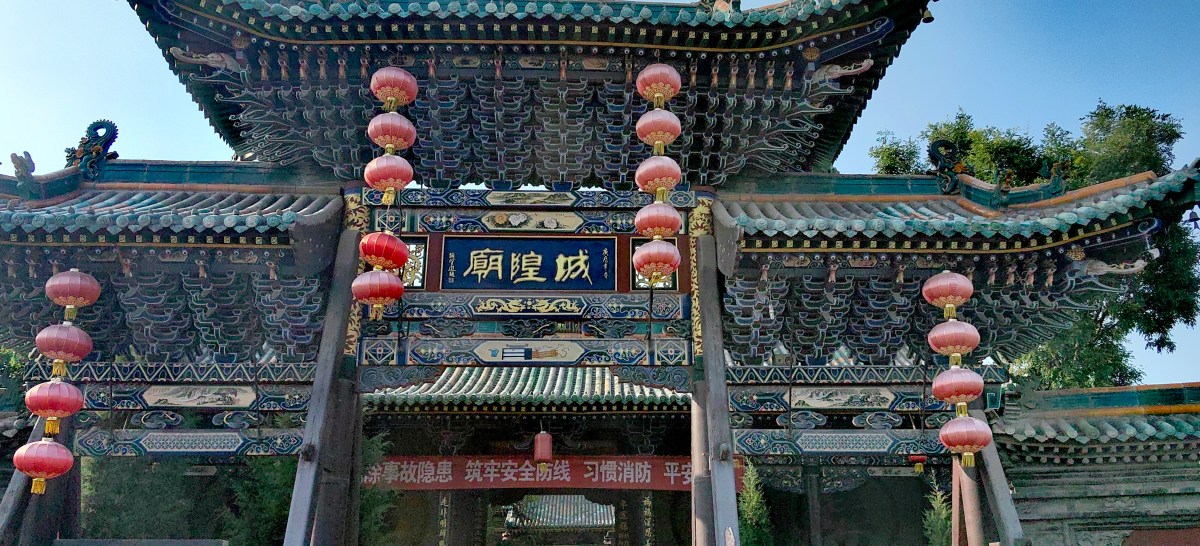
Another traditional Chinese temple is the Chenghuang temple, dedicated to a deity responsible for protecting the city and its inhabitants. Such similar Temples of the City God can be found in many Chinese towns and cities but the temple in Pingyao is one of the most well-preserved and richly decorated examples of this type of temple, reflecting the importance of the City God in traditional Chinese urban life.
另一座中国城市传统的庙宇是城隍庙,这里供奉着守护城市和城中居民的神灵。中国许多城镇都有类似的城隍庙,但平遥城隍庙是此类庙宇中保存最完好、装饰最华丽的,它也反映了城隍在中国古代传统城市生活中的重要性。

The temple’s entrance is called mountain gate. It is the first point of entry and often a symbol of the boundary between the secular world and the sacred realm. The gate is decorated with stone carvings or calligraphy. Guardian statues, often of deities or mythical creatures like turtle and snake stand by the entrance to ward off evil spirits and protect the sanctity of the temple.
寺庙的入口称为山门。它是进入寺庙的第一道门,通常也是世俗世界和神域之间的界限。山门上装饰着石雕或书法。入口处矗立着通常是例如龙神龟蛇等神灵或神话生物的守护神像,以驱赶邪灵并保护寺庙的神圣性。

A large incense burner is positioned outside the main hall. Worshipers place sticks of incense here while praying for protection, good fortune, and justice from the City God. Inside the main hall, there is an altar where offerings such as fruit, flowers, and paper money are placed before the City God. Like many traditional Chinese temples, the Chenghuang temple adheres to feng shui principles, ensuring that the flow of energy (which is called qi) is harmonious throughout the temple complex. The temple is typically oriented to align with the city’s key geographical features, such as rivers or mountains, to enhance its spiritual efficacy. The layout of the buildings, doorways, and altars is designed to ensure a balance of yin and yang, promoting health, harmony, and protection for the city’s inhabitants.
大殿外安置着一个大香炉。信徒们在这里焚香,祈求城隍保佑和好运势。大殿内有一座祭坛,供奉城隍的供品包括水果、鲜花和纸钱。与许多中国传统寺庙一样,城隍庙遵循风水原则,确保整个寺庙建筑群的能量(称为气)流动和谐。寺庙的朝向通常与城市的主要地理特征(如河流或山脉)保持一致,以增强其精神功效。建筑物、门道和祭坛的布局确保阴阳平衡,促进城市居民的健康和谐。
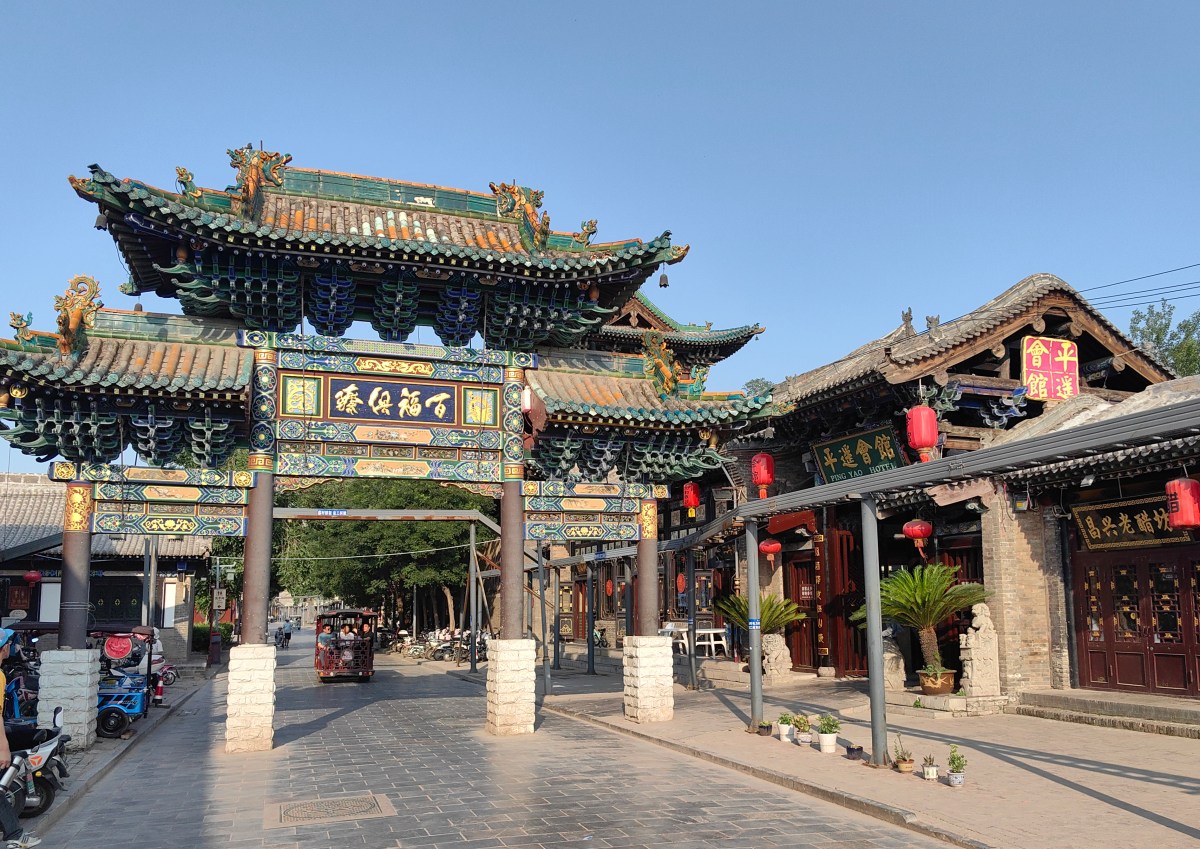
When I walked in the Chinese old cities or China towns all through the world, I can always see this kind of gate, called Paifang or Pailou, a traditional culture heritage. They are usually erected to serve as gateways marking the entrance to sacred or important spaces, such as temples and tombs. They are also commonly built in honor of historical figures or to celebrate events like military victories. The design of a Pai Fang include archways and multi-tiered structures with several roofed sections and pillars. The roof of the Pai Fang is often built in a traditional hip-and-gable (歇山顶) style, with upturned eaves, adding a graceful curve to the structure. These roofs can be made of glazed tiles or decorated with ceramic figurines of mythical animals like dragons or phoenixes. The Pai Fang’s pillars are an essential part of the structure. These pillars are often ornately carved with symbols of prosperity, longevity, or good fortune, such as dragons, cloud motifs, or auspicious plants. At the top of the Pai Fang, there is typically a horizontal plaque with an inscription, usually written in calligraphy.
当我漫步在中国古城或世界各地的唐人街时,总能看到这种牌坊或牌楼,这是一种非常传统的文化遗产。它们通常作为通往例如寺庙和陵墓等神圣或重要场地的入口,也常常是为了纪念历史人物或庆祝军事胜利等事件而建造。牌坊的设计包括拱门和多层结构,包括多层顶和柱子。牌坊的屋顶通常采用传统的歇山顶风格,带有上翘的屋檐,为建筑增添了优美的曲线。这些屋顶可以用釉面瓦片制成,也可以用龙或凤凰等神话动物的陶瓷雕像装饰。牌坊的柱子是该建筑的重要组成部分。这些柱子上通常雕刻着例如龙、云朵图案或吉祥植物等象征繁荣、长寿或好运的华丽图案。牌坊顶部有一块横匾,上面通常用传统书法书写铭文。

The pai fang in the diagram above marks the entrance of the Confucian Temple. It is one of the oldest and largest surviving Confucian temples in China, reflecting the deep reverence for Confucian ideals in the region. It dates back to the Northern Wei Dynasty (386–534 AD) and has been expanded and renovated throughout the centuries. The layout of a Confucian temple also follows a central axis design, with buildings arranged symmetrically along this axis to symbolize balance and harmony, core principles of Confucian thought.
上图的牌坊就是文庙的入口。它是中国现存最古老规模最大的文庙之一,反映了该地区对儒家思想的崇敬。它的历史可以追溯到北魏(公元386-534年),几个世纪以来不断扩建和修缮。文庙的布局也采用中轴线设计,建筑物沿轴线对称排列,象征着平衡与和谐,这是儒家的核心思想。
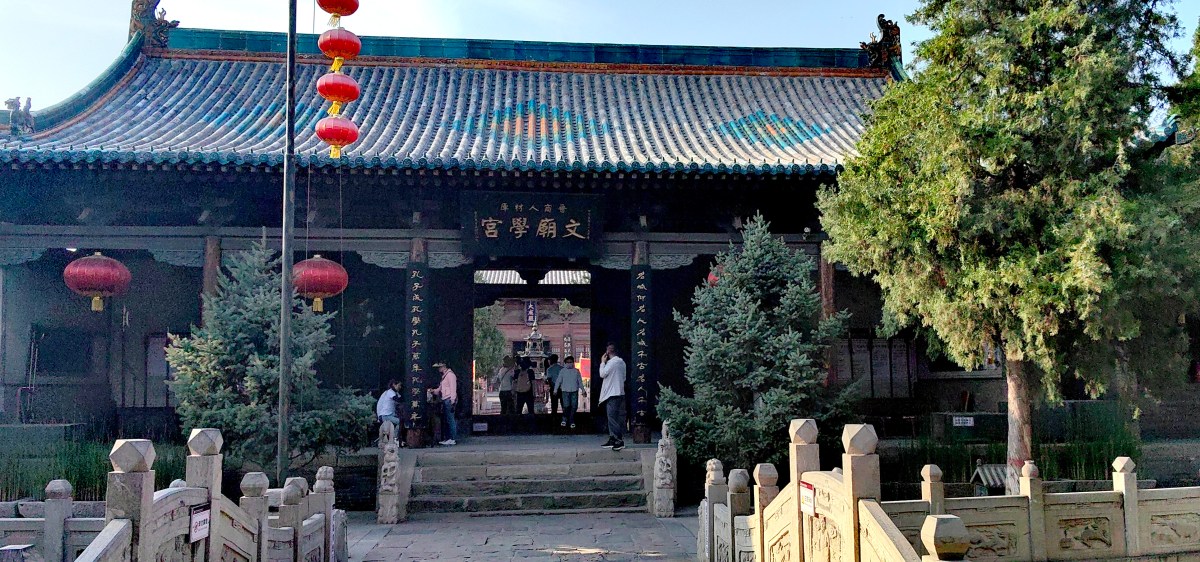
The Lingxing Gate is a symbolic gateway in Confucian temples. The gate is named after a star and symbolizes the connection between heaven and Confucian ideals. Passing through this gate signifies entering a place of elevated thought and moral instruction. The gate is typically constructed in an ornate style with wood carvings and painted beams that reflect the temple’s importance as a center of education.
棂星门是文庙的标志性大门。棂星门以一颗上天的星命名,象征着天道与儒家理想的联系。穿过这扇门意味着进入一个崇高的思想和道德教育之地。棂星门通常采用华丽的风格建造,带有木雕和彩绘横梁,反映了文庙作为当地教育中心的重要性。

The Dacheng Hall, or Hall of Great Accomplishment, is the central and most important building in the temple complex. It is dedicated to Confucius and his 72 disciples, who played a key role in spreading his teachings. The hall is often the site of ceremonies and sacrificial offerings made to honor Confucius. Many people think that Chinese don’t believe in any religions however the ideas of Confucius has affected Chinese for thousands of years and can be regarded as a religion. Confucius’s ideas laid the foundation for Confucianism, a system of thought that has profoundly shaped Chinese culture, politics, and education for over two millennia. His teachings focus on ethics, morality, social harmony, and the proper conduct of individuals within society. Confucius emphasized the importance of personal development through education and self-cultivation, as well as the need for a well-ordered society governed by virtuous leaders.
大成殿是文庙建筑群的中心和最重要的建筑。它供奉孔子和他的72位弟子,他们在传播孔子的教义方面发挥了关键作用。大成殿经常是举行纪念孔子的仪式和祭祀的场所。很多人认为中国人不信仰任何宗教,但孔子的思想影响了中国人几千年,儒家思想在中国可以被视为一种宗教。孔子的理论为儒家思想奠定了基础。儒家思想体系在两千多年的时间里在各方面都深刻地影响了中国文化、政治和教育。他的教义注重伦理、道德、社会和谐以及个人在社会中的正确行为。孔子强调通过教育和自我修养实现个人发展的重要性,以及由有德之士统治有序社会的必要性。

Inside the hall, there is a large statue of Confucius, along with smaller statues of his followers or tablets inscribed with their names. The statue often portrays Confucius seated in a dignified manner, symbolizing wisdom and authority. The hall is often ornately decorated with calligraphy, wood carvings, and paintings that reflect Confucian ideals such as filial piety (孝), benevolence (仁), and righteousness (义). In front of Confucius’ statue, there is an altar where offerings such as fruits, incense, and wine are placed. These offerings are part of the rituals that honor Confucius and show respect for his teachings.
大殿内有孔子大塑像,以及一些刻有孔子弟子名字的小塑像。塑像上孔子以庄严的姿态端坐,象征智慧和权威。殿内装饰华丽,有各种书法作品、木雕和绘画,反映孝、仁、义等儒家思想。孔子塑像前有祭坛,供奉着水果、熏香、清酒等祭品。这些祭品是纪念孔子和尊重其教诲的仪式的一部分。
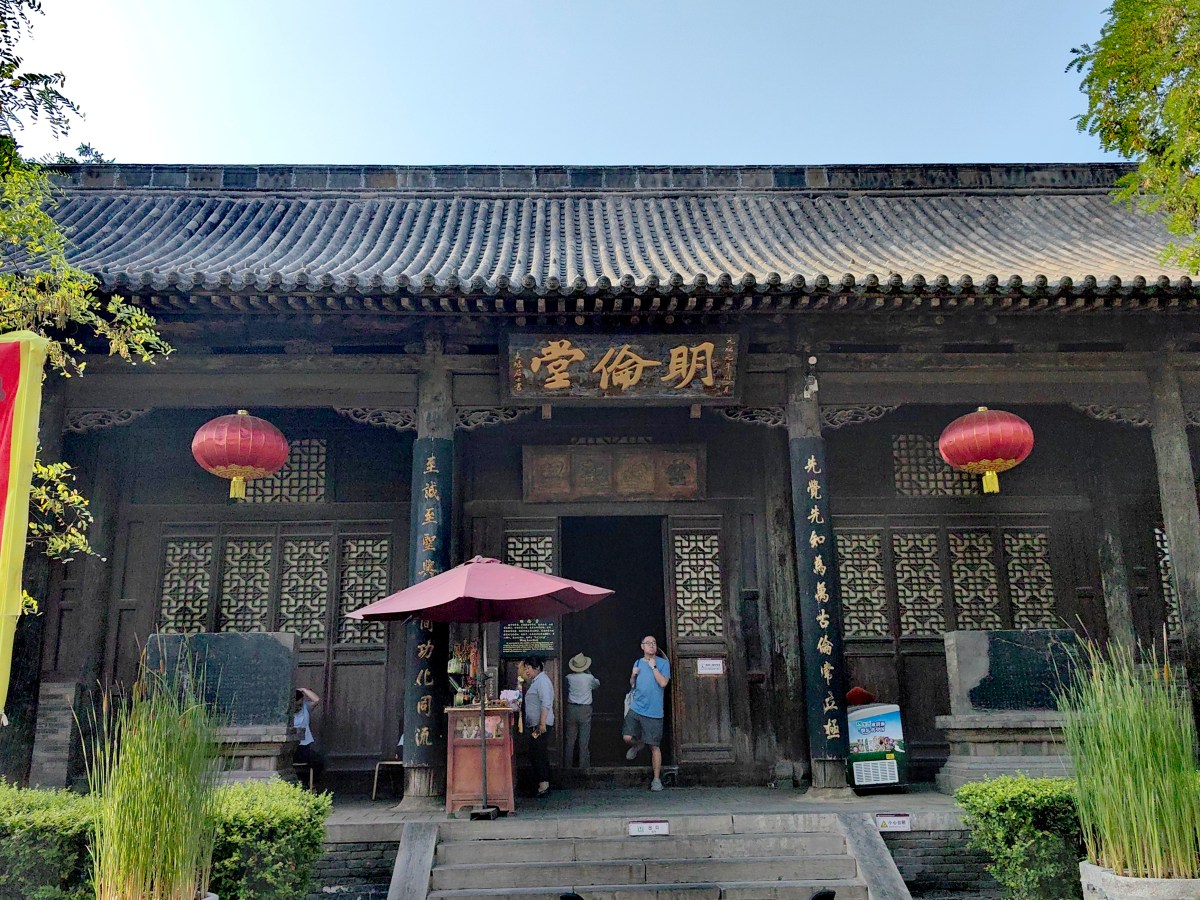
The Minglun Hall, or Hall of Moral Enlightenment, is a key feature of many Confucian temples. This building is used for lectures, debates, and the study of Confucian classics. The hall is often designed with simple elegance, reflecting the Confucian values of moderation and practicality. Inside, scholars and students would gather to discuss the Five Classics and Four Books, foundational texts in Confucian thought. The Confucian temple also served as a school or academy for scholars in the ancient times. Students and officials would come to study the Confucian texts, discuss philosophy, and prepare for the Imperial Civil Service Examinations (科举), which were based on Confucian teachings.
明伦堂是许多文庙都有的特色建筑。这座建筑用于讲学、辩论和研究儒家经典。大厅通常设计简洁优雅,反映了儒家适度和实用的价值观。在里面学者和学生会聚集在一起讨论四书五经等儒家思想的基础文献。文庙也是古代的学院。学生和官员会来这里学习儒家经典,讨论哲学,并为以儒家教义为科举做准备。

In Chinese history, the Confucian Temple (Wen Miao) and the Temple of the Martial God (Wu Miao) are present in every ancient city. The Wu Miao in Pingyao is dedicated to Guan Yu, a legendary general from the Three Kingdoms period (220–280 AD) who has been deified as a symbol of loyalty, righteousness, and bravery in Chinese culture. The temple reflects the deep respect for Guan Yu as a martial deity who protects the people and upholds justice, making it an important cultural and religious site in Pingyao. The dui lian at the entrance is very famous which means Confucious and Guanyu are both saints who are born in the west and east of Tai Hang mountains and the saint of liberal art Confucious wrote the book ‘Chunqiu’ and the saint of martial art Guanyu read the book ‘Chunqiu’ .
中国历史上,每座古城都有文庙和武庙。平遥武庙供奉关羽,他是三国时期的一位传奇将军,在中国文化中被尊为忠诚、正义和勇敢的象征。这座庙宇反映了人们对关羽作为保护人民和主持正义的武神的深深敬意,使它成为平遥重要的文化和宗教场所。入口处的对联非常有名将孔子和关羽并列提出, 山别东西前夫子后夫子,圣分文武著春秋读春秋 。

Upon passing through the gate, visitors enter a spacious front courtyard, a common feature in Chinese temples. This open space serves both as a ceremonial area and a place for worshippers to gather before approaching the inner sanctum. The courtyard is usually lined with stone steles, statues, or altars where offerings of incense, fruits, and wine can be made to Guan Yu.
穿过大门,游客进入宽敞的前院,这种构造在可谓是司空见惯。这片开放空间既是举行仪式的地方,也是信徒在进入内殿之前聚集的地方。庭院里通常排列着石碑、雕像或祭坛,人们可以在那里向关羽供奉通常向神敬奉的香、水果和酒。

The main hall of the Wu Miao is dedicated to Guan Yu himself. Inside, a grand vivid statue of Guan Yu is the central focus of worship. The general is depicted in his traditional green martial attire. The hall features richly decorated beams, intricate wood carvings. Guan Yu is one of the most famous character in the novel of ‘The Romance of three kingdom’. In the novel his steadfast loyalty to his sworn brothers Liu Bei and Zhang Fei during the turbulent Three Kingdoms period made him a symbol of unwavering fidelity.
武庙主殿供奉着关羽本人。殿内中央关羽的塑像栩栩如生。关将军身着传统的绿色武服。殿内横梁装饰华丽,木雕精巧,壁画生动逼真。关羽是小说《三国演义》中最著名的人物之一。在小说中动荡的三国时期,玉可碎而不可损其白,竹可破而不可毁其节,他对结拜兄弟刘备和张飞的忠厚情谊使他成为忠义的化身。

‘The Romance of three kingdom’ is well-known to every Chinese and also affect my life and values. It is my favorite book. In modern times, Guan Yu is also worshipped as a guardian deity of wealth and is revered by businesspeople for his loyalty and honesty. At the side hall, the statues of Zhang Fei and Zhao Yun are set up. Guan Yu and they are called Five Tiger Generals in the novel. These five legendary warriors were known for their incredible loyalty, martial prowess, and contributions to Liu Bei’s military campaigns. Their stories, popularized through “Romance of the Three Kingdoms,” have become an integral part of Chinese folklore.
《三国演义》是每个中国人都熟悉的一本书,它也影响了我的生活和价值观。这也是我最喜欢的书。现代,关羽也被崇拜为财富的守护神,商界人士因其信义而特别尊崇他。在侧厅,竖立着张飞和赵云的雕像。关羽和他们在小说中被称为五虎将。这五位传奇大将以其忠诚、极高的武艺和对刘备军事战役的贡献而闻名于世。他们的轶闻也通过《三国演义》广为流传,已成为中国民间传说不可或缺的一部分。
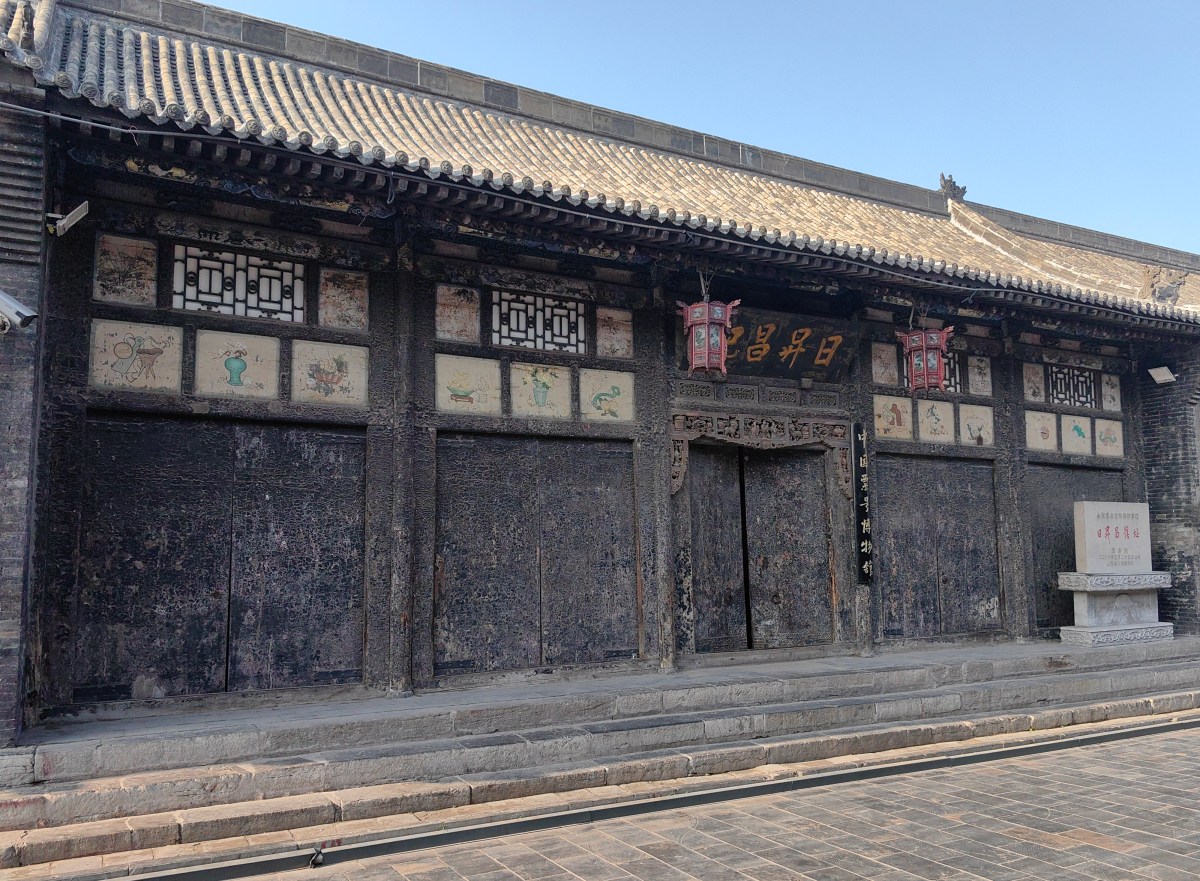
Pingyao is very important in the Chinese history of finance. One of the most significant structures in the ancient city is the Rishengchang Draft Bank, founded in 1823, which was the first private financial institution in China. This building served as the precursor to modern banks, pioneering the use of draft remittances, allowing merchants to transfer large sums of money safely across China. The bank’s offices are laid out like a fortress, with thick walls and heavy doors for security, underscoring the importance of commerce in Pingyao’s history. Visitors do not need to pay anything visiting the old city but it is necessary to buy tickets for visiting this kind of museum.
平遥在中国金融史上占有重要地位。古城中最重要的建筑之一是日升昌票号,成立于1823年,是中国第一家私人金融机构。这座建筑是现代银行的前身,率先使用汇票,使商人能够安全地将大笔资金转移到中国各地。银行的办公室布局像一座堡垒,墙壁厚重,门扉沉重,以保证安全,凸显了商业在平遥历史上的重要性。游客参观古城不需要支付任何费用,但参观这种博物馆则需要购买门票。
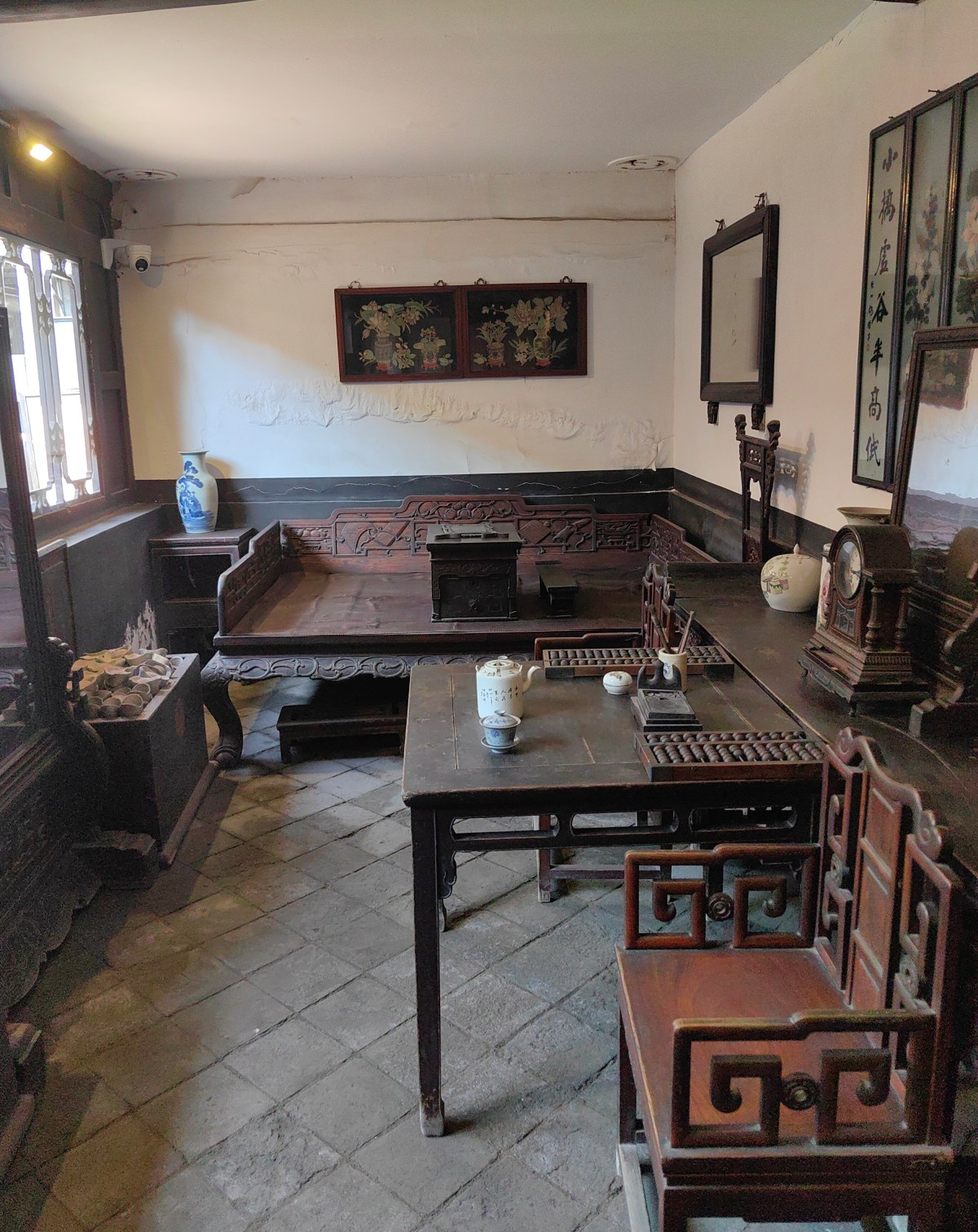
Today, the Rishengchang Bank has been transformed into a museum, allowing visitors to explore the site where China’s first draft banking system began. The museum provides detailed displays about the bank’s history, operations, and the broader role it played in the development of commerce and banking in China. In the rooms, I could see the old ledgers, drafts, and accounting books used by the bank’s clerks and the traditional abacuses and tools used in money counting and accounting. Before I visited here, I have never known that this city has such an important status in the monetary system of Chinese history.
如今,日升昌钱庄已改建成博物馆,让游客可以探索了解中国第一个票号银行制度的发源地。博物馆详细展示了该银行的历史、运营以及它在中国商业和银行业发展中发挥的更广泛作用。在房间里,我可以看到银行职员使用的旧账簿、票号和会计账簿,以及用于点钞和记账的传统算盘和工具。在我游览之前,我从不知道这座城市在中国历史货币体系中占有如此重要的地位。

After I visited the residential houses and the religious buildings, I also visited the Pingyao County Government Office. It was built during the Northern Song Dynasty and in continuous use for nearly 600 years, it served as the administrative and judicial center of Pingyao County. The Xian Ya (county office) not only represents traditional Chinese governance but also offers valuable insights into the workings of local government, law enforcement, and the justice system during ancient China.
参观完民居和宗教建筑后,我还参观了平遥县衙。它建于北宋时期,连续使用了近600年,是平遥县的行政和司法中心。县衙不仅代表了中国传统的政府治理制度,而且还为游客了解古代地方政府、执法和司法系统的运作提供了宝贵的见解。
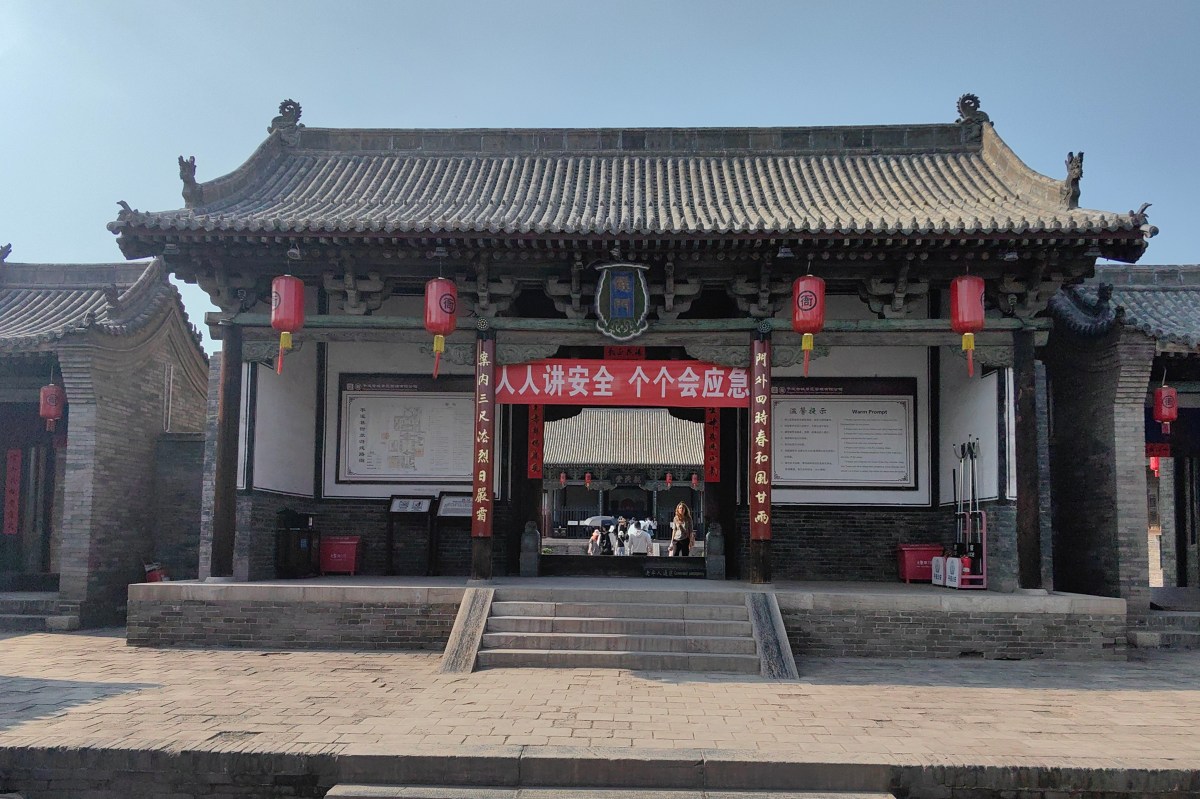
The Pingyao County Government Office was the official workplace of the county magistrate, who was the highest local official appointed by the imperial government. This magistrate was responsible for a variety of functions, including maintaining law and order, collecting taxes, administering justice, and managing public works within the county. The magistrate’s office was a crucial link between the central government and the local population.
平遥县衙是县令的官方办公地点,县令是朝廷任命的当地最高地方官员。县令负责多种职能,包括维持法律和秩序、征收税款、执行司法、管理县内的公共工程。县衙是中央政府与当地民众之间的重要纽带。

One of the most notable parts of the Xian Ya is the Judicial Hall, where the magistrate presided over trials and administered justice. This hall was the core of the judicial functions of the office, where criminal cases, civil disputes, and other legal matters were heard. The hall is decorated with wooden plaques and couplets emphasizing justice, fairness, and the moral integrity expected of the magistrate. The magistrate’s seat, elevated to convey authority, was positioned in the center of the hall, with defendants and plaintiffs facing him. To the side of the Judicial Hall are displays of torture instruments and other tools used in the judicial process. Although harsh by modern standards, these instruments were common in the history of China and were used to extract confessions or enforce punishments.
县衙最引人注目的部分就是判官堂,县令在此主持并执行正义。该堂是官署司法职能的核心,审理刑事案件、民事纠纷和其他法律事务都在此处。大厅装饰有木匾和对联,强调公正公平和县令应有的道德操守。县令的座位位于大厅中央,位置更高以传达权威,被告和原告在下方面对着知县。判官堂的一侧展示了司法过程中使用的刑具和其他工具。虽然以现代标准来看这些工具很严酷,但在中国历史上这些工具很常见,一般用于逼供或执行惩罚。
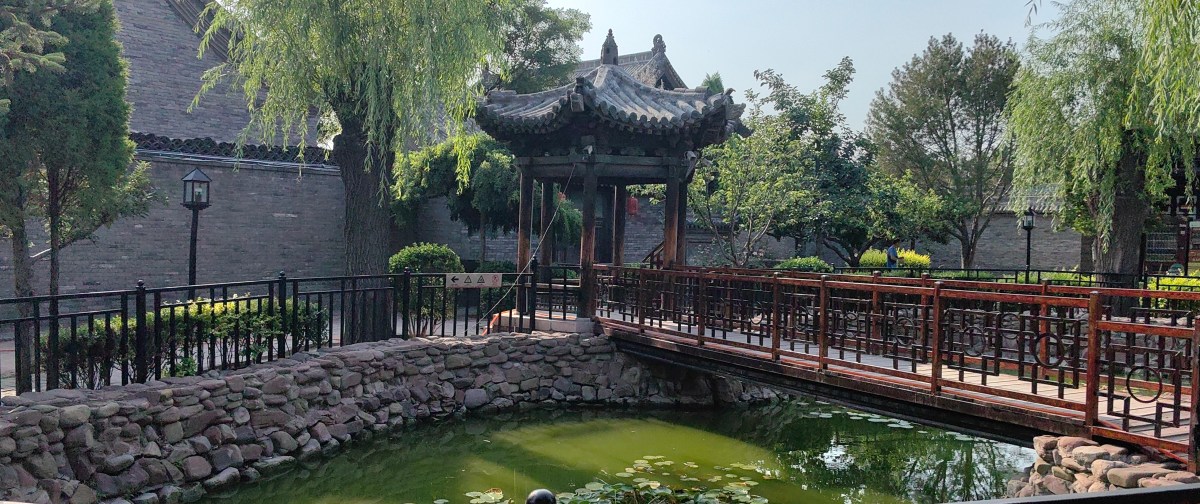
Behind the judicial and administrative sections of the compound is the residential area where the magistrate and his family lived. This area is more private and secluded, reflecting the separation between the official’s public duties and personal life. The residential quarters are simple yet elegant, with traditional Chinese furniture, and garden spaces that offer a serene atmosphere for the magistrate to relax.
司法和行政部门的后堂是县令及其家人居住的住宅区。这个区域更加私密和隐蔽,体现了官员的公务和个人生活的分离。住宅区简朴而优雅,配有传统中式家具和花园,为县令提供了宁静的氛围,供其放松身心。
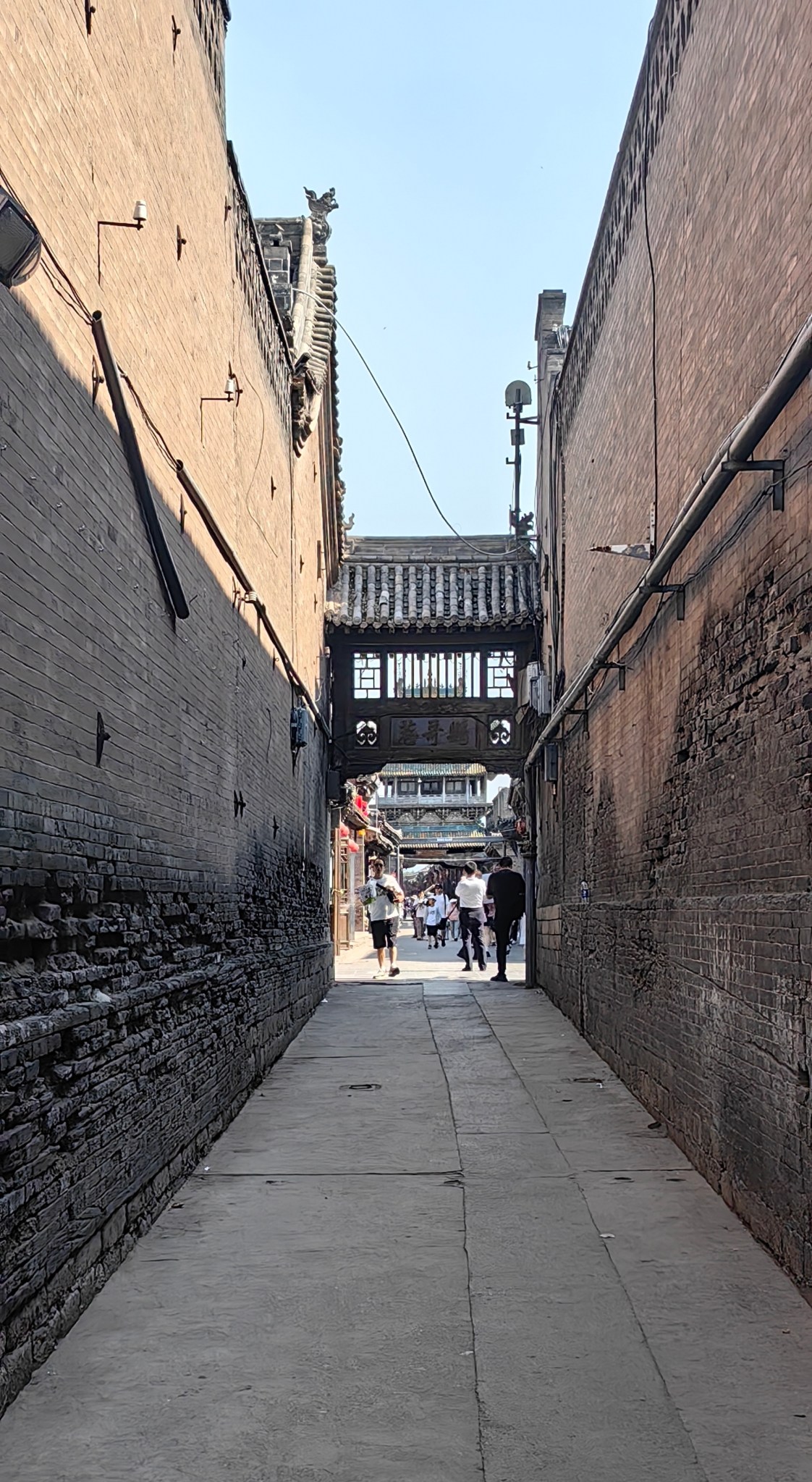
Along Pingyao’s main streets, the centuries-old merchant shops remain largely unchanged. Many of these buildings have been repurposed as museums, restaurants, or souvenir shops, but they retain the architectural features of traditional Chinese businesses like wooden facades, stone doorways, and intricate roof designs. These shops evoke the bustling trade atmosphere that once filled Pingyao’s streets. There are also some small alleys are often quiet, lined with old stone walls, creating an atmosphere that feels largely untouched by time. Walking through these alleys provides a deeper sense of the town’s structure, reflecting the urban planning and lifestyle of the past.
沿着平遥的主要街道,百年历史的店面很多基本保持原样。这些建筑中有许多已被改建为博物馆、餐馆或纪念品商店,但它们仍然保留了如木质门面和复杂的屋顶设计等中国传统商业建筑的特色。这些商店令人想起了曾经遍布平遥街道的繁华商业氛围。其实城中还有一些很安静的小巷,两旁是古老的石墙,营造出一种悠久的氛围。漫步在这些小巷中,游客可以更深入地了解城市的布局以及过去的城市规划和生活方式。

This is quite a meaningful trip for me. Nowadays most of the old buildings and traditions in China have been destroyed. However, I could know more deeply about Chinese history, culture, and old architectures through deploying the essence of this ancient city where time seems to stand still. The echoes of history reverberate through the stone-paved streets, the towers, and the alleys, all of which tell the story of Pingyao’s grandeur and its pivotal role in China’s past. Each step here has brought me closer to understanding the cultural and architectural heritage.
对我来说,这是一次意义非凡的旅行。如今中国大多数古老的建筑和旧传统已不复存在。然而通过探索这座仿佛穿越时空的古城,我却可以更深入地了解中国的历史文化和古老的建筑。旧日的回声回荡在石板街道、塔楼和小巷中,所有这些都在讲述了平遥的灿烂过去及其在中国历史上的关键作用。在这里踏出的每一步都让我更进一步地了解了平遥的文化和建筑遗产。

As I reflected on the quiet beauty of the courtyard houses, the intricate details of the pai fang, and the centuries-old traditions that still thrive in this town, I realized that Pingyao is more than just a destination—it’s a journey of immersing in the old ways of life which cultural influence of thousands of years is deeply rooted in every corner of this city. The well conserved city wall, the flicker of red lanterns, and the timeless elegance of the architecture will always leave an indelible mark on my memories.
当我如今回想起平遥四合院的静谧之美、牌坊的精致细节以及从古至今延续百年的传统时,不禁感概到这不仅是一次走马观花的旅行—它更像是一次体验古老生活的丰富经历,千年的文化影响深深扎根于这座城市的每个角落。保存完好的城墙、风中摇曳的红灯笼和古朴的建筑将永远在我的记忆中留下一抹挥之不去的痕迹。
 Gone like the wind