
从乔家大院一窥十八世纪中国文化
Situated in the heart of Shanxi Province, the Qiao Family Compound is a stunning testament to China’s rich cultural and architectural heritage. Built during the Qing Dynasty, this huge estate once belonged to the influential Qiao family, a symbol of wealth, power, and status in 18th-century China. With its intricate courtyards, beautifully carved woodwork, and grandiose halls, the compound offers a glimpse into the lifestyle of a prosperous merchant family in the Qing Dynasty. Often referred to as “the finest folk house in North China,” the Qiao Family Compound has not only preserved centuries of history but has also become a popular destination for travelers seeking to immerse in the grandeur of traditional Chinese culture.
乔家大院位于山西省中部,是中国丰富文化和建筑遗产的有力见证。这座巨大的庄园建于清朝,曾属于颇具影响力的乔家,乔家是18世纪中国财富权力和地位的象征。这座大院拥有错综复杂的庭院、精美的木雕和宏伟的大厅,令游客可以一窥清朝富裕商人家庭的生活方式。乔家大院通常被称为 “华北最好的民居”,不仅保留了数百年的历史,而且已成为寻求中国传统文化旅行者的热门目的地。
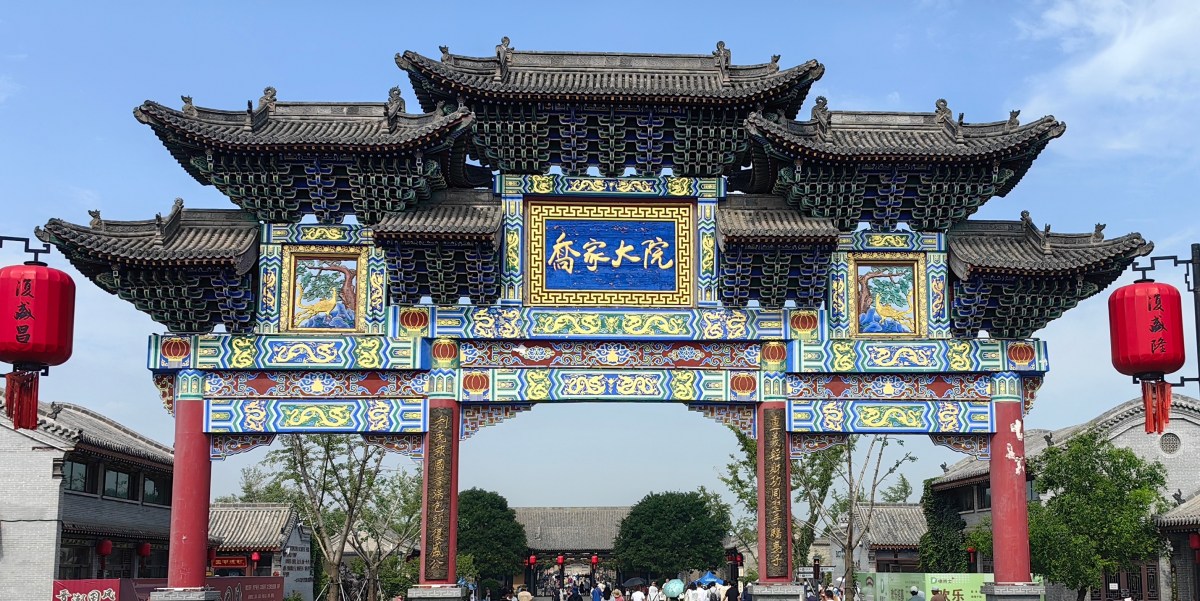
I visited this historical site on July 1st 2023 during my summer trip in Shan Xi. This place is far away from the city and the travelers can only choose taxi to get there. At the entrance of the Qiao Family Compound, there is an iconic feature that immediately captivates my eyes with its traditional Chinese design and symbolic meaning. The pai fang reflects the wealth and prestige of the Qiao family during the Qing Dynasty. Made of stone and intricately carved with traditional motifs such as dragons, phoenixes, and auspicious symbols, it shows the family’s deep connection to Chinese culture.
2023年7月1日,我在山西的夏季旅行中参观了这个历史遗迹。这个地方远离城市,旅行者只能选择出租车前往那里。在乔家大院的入口处,有一个标志性建筑,这种传统的中国设计立即吸引了我的眼球。大门入口的牌坊反映了清朝乔家的财富和威望。它由石头制成,上面精雕细刻着龙、凤凰和吉祥符号等传统图案,展示了乔家与中国文化的深厚联系。
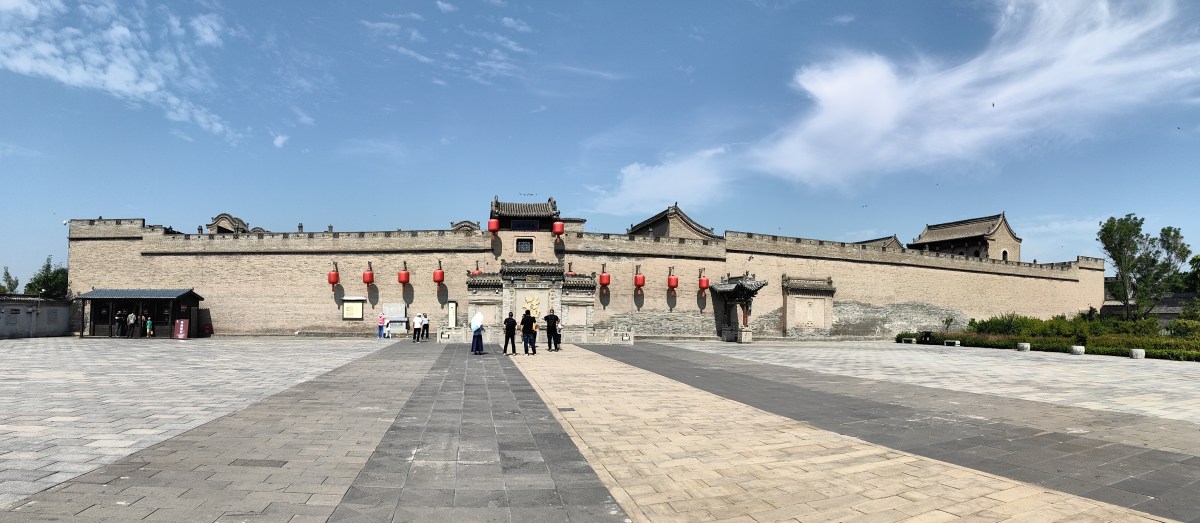
Surrounding the entire Qiao Family Compound is a high, solid brick wall that adds to the estate’s fortification. In ancient China, these walls were essential not just for privacy, but also for security, protecting the household from intruders. The walls of the Qiao Family Compound are thick and sturdy, made from gray bricks, which were common materials in northern China due to their strength and durability. In traditional Chinese architecture, the placement and design of entrances, as well as certain protective elements, play a crucial role in symbolizing status, ensuring good fortune, and warding off evil. There is a small stele engraved with “泰山石敢当” (“Taishan Stone dares to be”). This inscription, which refers to the legendary protective power of Mount Tai, is believed to suppress negative forces and ward off evil spirits. On the other hands, most of the courtyard doors in Shanxi compounds are positioned in the southeast corner. This design aligns with Feng Shui principles, where the southeast is considered an auspicious direction, allowing the home to “capture sunlight” or “grab sun,” ensuring warmth and prosperity.
整个乔家大院四周环绕着高大的坚固砖墙,这增加了庄园的防御力。在古代中国,这些墙不仅对于保护隐私而且对于安全也至关重要,可以保护大户家庭免受他人侵扰。乔家大院的墙壁厚实坚固,由灰砖砌成,灰砖因其强度和耐用性而成为中国北方的常用材料。在传统的中国建筑中,入口的位置和设计以及某些保护元素在象征地位、确保好运和驱除邪恶方面起着重要的作用。这里有一块小石碑,上面刻着“泰山石敢当”。这句铭文指的是泰山的传奇保护力量,人们相信它可以抑制负面力量并驱除恶灵。另外山西大院的大多数庭院门都位于东南角。这种设计符合风水原理,东南被古人认为是一个吉祥的方向,面向东南可以“捕捉阳光”,确保房间温暖和事业繁荣。

Every visitor will see this wall when entering the entrance. The screen wall called zhaobi (照壁)in Chinese, is an essential architectural feature in traditional Chinese buildings. It is located directly in front of the gate of the Qiao Family compound. The wall is placed to block the view from the outside, ensuring that those entering do not immediately see into the private areas of the home. It is also believed to block negative energy and prevent evil spirits or bad fortune from entering the home. We can see an inscribed calligraphy with characters that express blessings, such as 福 (fortune) on the wall. It presents wealth preservation.
每位游客一进门就会看到这面叫做照壁的墙。照壁是中国传统建筑中必不可少的特色。它位于乔家大院大门正前方。这面墙的作用是阻挡外界视线,确保进入的人不会立即看到房子里的私人区域。人们还认为,照壁可以阻挡负能量,防止恶灵或厄运进入家中。我们还可以看到墙上刻着 “福”字的书法。它代表着财富永存。
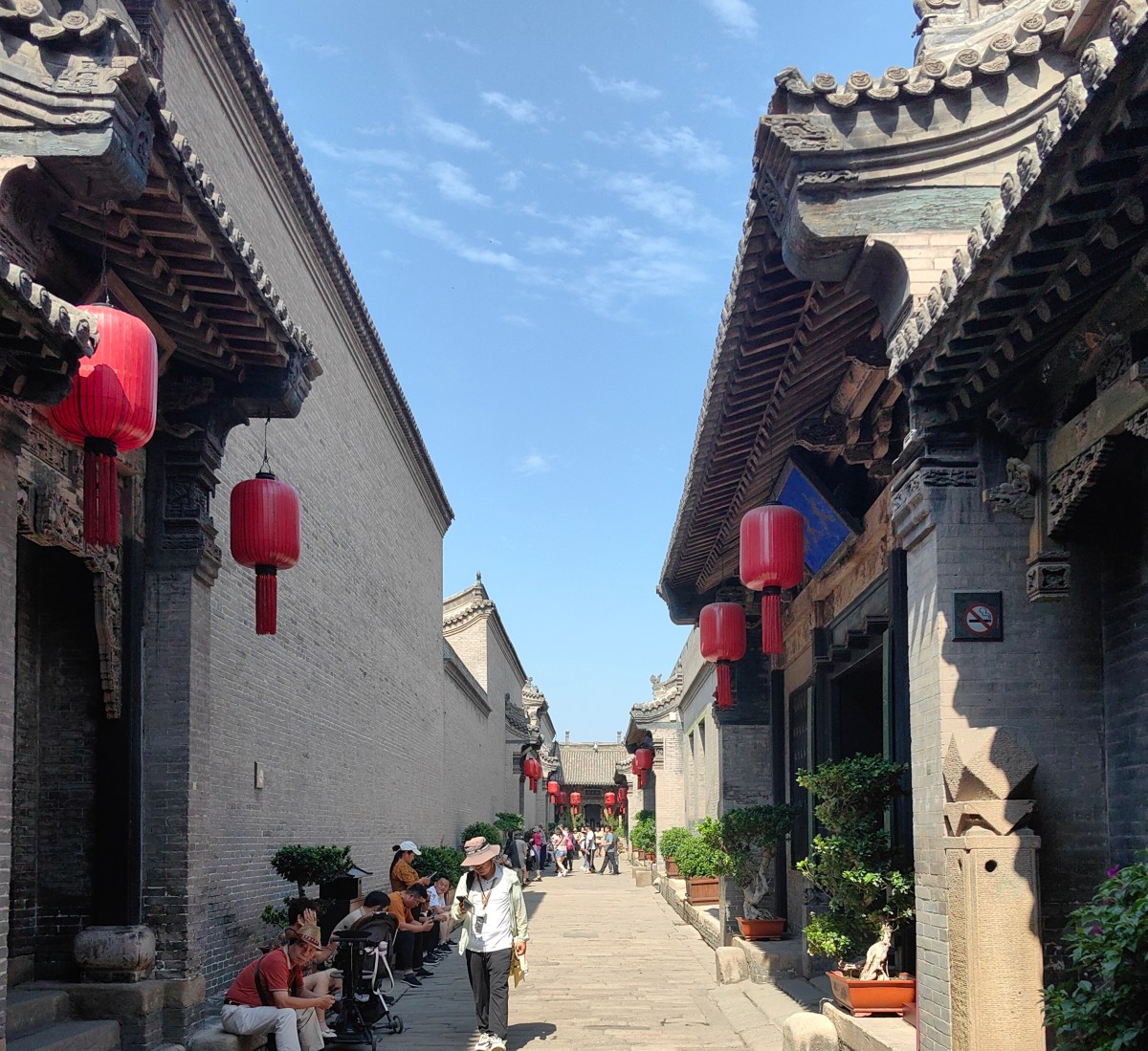
I was standing at the entrance and to take this photo. The compound has a typical north-south orientation, with the main entrance facing south, adhering to traditional Chinese Feng Shui principles. The layout is symmetrical and organized into six large courtyards connected by smaller courtyards and passageways. The design of the compound follows Confucian principles, reflecting hierarchy and status. The central axis and main courtyard were reserved for the highest-ranking family members. Each courtyard is enclosed by walls, giving it a sense of privacy and protection.
我站在入口处拍了这张照片。这座大院为典型的南北向,正门朝南,符合中国传统风水原则。布局对称,分为六个大院落,由小院落和通道连接。大院的设计遵循儒家原则,体现了等级地位。中轴线和主院落是为最高级别的家庭成员保留的。每个院落都被墙包围,给人一种安全感。

Most traditional houses in Shanxi adopt a symmetrical layout. The main house is always the tallest and most spacious structure in the compound. The main house is where the most important family members reside. The main house is almost always south-facing, which is considered the ideal orientation in traditional Chinese architecture. A south-facing house maximizes exposure to sunlight, particularly during the colder months, which helps to keep the house warm. The wing houses flank the main courtyard on both sides and are smaller and lower in height compared to the main house. These houses are left for the younger generations, servants, or less important family members.
山西传统民居大多采用对称布局。图中的主屋总是院落中最高、最宽敞的建筑。主屋是最重要的家庭成员居住的地方。主屋坐北朝南,这是传统中国建筑的理想朝向。朝南的房屋可以最大限度地接受阳光照射,特别是在寒冷的冬月,有助于保持房屋温暖。厢房位于主庭院两侧,与主屋相比更小更矮。这些房屋是为年轻一代、仆人或不太重要的家庭成员准备的。


All traditional houses or courts in China have a special character at the doorway which is called door god. They serve as protective deities placed on doors to guard homes from evil spirits and misfortune. The most common representations of Door Gods are Qin Shubao and Yuchi Jingde, two famous generals from the Tang Dynasty who were deified due to their loyalty and bravery in protecting the emperor. For a wealthy family like the Qiaos, the craftsmanship of these Door Gods would have been of high quality, and the figures would likely be designed with great attention to detail, reflecting the family’s affluence and dedication to cultural heritage.
中国所有传统的民宅或庭院门口都有一个特殊的人物就是门神。他们是守护神,放置在门上保护家庭免受恶灵侵扰。最常见的门神形象是秦叔宝和尉迟敬德。他们是唐代两位著名的将军,因忠勇护国而被神化。他们经常被描绘在成对的门板上,仿佛面对面站立着拱卫入口。对于像乔家这样富裕的家庭来说,这些门神的制作工艺精湛,人物形象的设计也非常注重细节和色彩渲染。

In traditional Chinese architecture, particularly in grand estates like the Qiao Family Compound, plagues (or plaques) are inscribed with auspicious phrases, moral teachings, or family mottos. These plaques are most times prominently displayed in key locations such as entrance gates, main halls, or ancestral rooms, serving both decorative and didactic purposes. The phrase “毋不敬” (wú bù jìng) can be found on a plaque in this courtyard. Its purpose would be to remind family members and visitors to always act with respect and reverence.
在传统中国建筑中,尤其是在乔家大院这样的大宅中,匾额上会刻有吉语、道德教诲或家训。这些匾额通常醒目地悬挂在大门、主厅或祖上老屋等关键位置,既具有装饰作用,又具有教育意义。这座庭院的匾额上写着 “毋不敬”。其目的是提醒家庭成员和访客始终保持尊重和敬畏。

Above the lintel of one courtyard, there is a special plaque carved from a whole piece of walnut wood. The shape of the plaque is a lotus leaf, which symbolizes the pursuit of elegance by the Qiao family. The lotus leaf has curled edges and clear veins. The two characters “Hui Fang” are inscribed on it, which means that virtuous people gather together.
其中一院门楣上方,悬挂着一块用整块核桃木雕刻而成的匾额,匾额形状为荷叶,象征乔家追求高雅,匾额整体有荷叶边卷边,叶脉清晰,上面铭刻着“汇芳”二字,寓意有德之人汇聚。

When I travelled in the courtyards, I noticed that there were always many swallows hovering in the sky. The design of courtyards, with open central spaces and surrounding buildings, creates a sheltered environment where swallows can nest safely. The walls and eaves of the buildings provide ideal spots for swallows to build their nests. The courtyards, with their gardens and water features, attract a variety of insects, which are the primary food source for swallows. The natural abundance of food in the form of insects makes these courtyards a favorable environment for swallows to return to year after year. In Chinese tradition, swallows are seen as symbols of good luck, happiness, and prosperity. Seeing swallows building nests in a home or courtyard is believed to bring good fortune and positive energy to the family.
当我在庭院中穿行时,我注意到天空中总有许多燕子在盘旋。这种庭院的设计,有开放的中央空间和周围环绕的建筑,创造了一个燕子可以安全筑巢的环境。建筑物的墙壁和屋檐为燕子筑巢提供了理想的地点。庭院的花园和水景吸引了各种各样的昆虫,这些昆虫则是燕子的主要食物来源。燕子年复一年返回食物丰富的庭院。在中国传统中,燕子被视为好运和繁荣的象征。人们相信,看到燕子在家里或庭院里筑巢会给家庭带来好运和正能量。

Entering the house, I could see clearly the furniture used at the Qing Dynasty. The furniture in this grand estate was carefully designed to reflect the family’s wealth, status, and adherence to Confucian ideals. The primary material used for furniture in the Qiao Compound was high-quality hardwood, such as rosewood, red sandalwood, and huanghuali (a rare and valuable wood from the Hainan region). These types of wood were prized for their durability, beauty, and rich grain patterns. The armchairs were some of the most important pieces of furniture in traditional Chinese homes. Their high backs and grand design symbolized authority and were often used by the family elders or important guests. Square tables were used for a variety of purposes, from dining to playing chess. These tables were designed with clean lines and sometimes featured intricately carved aprons or legs. They were placed in the center of rooms or courtyards for gatherings. Traditional furniture was often adorned with intricate inlays made of materials like mother-of-pearl, jade, marble, or ivory. These inlays often depicted nature scenes, animals, or auspicious symbols and were considered a sign of luxury. Lacquered surfaces were used to protect the wood and give the furniture a glossy, polished appearance. The lacquer was a deep red or black, and sometimes decorated with gold leaf or painted motifs. In traditional Chinese interiors, furniture was arranged according to principles of symmetry and Feng Shui. Rooms were designed to be orderly, with furniture placed to ensure a balanced flow of energy.
进入大宅后我可以清楚地看到清朝时期使用的家具。这座大宅中的家具经过精心设计,反映了家族的财富地位和对儒家理想的坚持。乔家大院家具的主要材料是如玫瑰木、紫檀木和黄花梨(海南地区的一种稀有珍贵木材)等优质硬木。这些木材因其耐用美观性和丰富的纹理图案而备受推崇。图中的扶手椅是传统中国家庭中最重要的家具之一。它们的高背和宏伟的设计象征着权威,通常家里的长辈或重要的客人才能使用。低矮的方桌用于从用餐到下棋各种用途。这些桌子设计线条简洁,有时还配有精雕细琢的围裙或桌腿。它们经常被放置在房间或庭院的中央,供聚会使用。传统家具通常饰有复杂的镶嵌物,这些镶嵌物由珍珠母、玉石、大理石或象牙等材料制成。它们通常描绘自然景观、动物或吉祥符号,在当时被认为是奢华的象征。漆面用于保护木材,并使家具具有抛光的外观。漆通常是深红色或黑色,有时用金箔或彩绘图案装饰。在传统的中国室内装饰中,家具是根据对称和风水原则布置的。这样的房间设计得井然有序,家具的摆放位置根由讲究为了确保风水能量的平衡流动。

In the Qiao Family Compound, I can find many traditional Chinese decorative details which are totally different from what I have seen in Europe. In this picture, brick carving of turtle back pattern on the wall is a process of carving intricate designs, patterns, or images directly into bricks. The bricks are made of gray or black fired clay and are carefully shaped and carved by skilled craftsmen. Brick carvings are commonly found above doorways, especially at the main entrance of the compound and other wall panels. The motifs in brick carvings found in the Qiao Family Compound are rich in symbolism, derived from Chinese mythology, folklore, and Confucian values. Most of the intricate designs are carved by hand using specialized tools. These carvings not only serve as decorative elements but also carry cultural and symbolic meanings, reflecting the wealth, status, and values of the family.
在乔家大院,我到处都能发现了许多传统的中国装饰细节,它们与我在欧洲看到的完全不同。在这幅照片中,墙上的龟背砖雕是一种将复杂的图案样式直接雕刻在砖块上的工艺。砖块由灰色或黑色的烧制粘土制成,并由熟练的工匠精心塑造和雕刻。砖雕通常出现在门廊上方,特别是在大院的正门和其他墙板上。乔家大院砖雕中的图案富有象征意义,来源自中国神话、民间传说和儒家价值观。大多数复杂的图案都是用专门的工具手工雕刻的。这些雕刻不仅作为装饰元素,还具有文化和象征意义,反映了乔家的财富地位和价值观。

The doors in traditional Chinese architecture, especially in grand family compounds are carefully designed. Doors are often composed of two large hinged panels, usually made of solid wood, such as mahogany or rosewood. These panels are decorated with carved patterns or reliefs. The door frame, typically made of wood, is thick and heavy. The lintel (horizontal beam above the door) is inscribed with auspicious phrases or patterns meant to bring good fortune to the household. Traditional Chinese doors must have a high threshold preventing water or dust from entering the courtyard. A small, curved eave is placed above the doorway to protect it from rain and sunlight.
中式建筑尤其是像宏伟的大院的门也都是精心设计的。如图中的门通常由两个大型铰链面板组成,并由桃花心木或玫瑰木制成。这些面板以雕刻的图案或浮雕装饰。木制门框厚重。门上方的水平梁上刻有吉祥的词语或图案,为家庭带来好运。传统的中式门一定有很高的门槛,防止水或灰尘进入庭院。小巧而弯曲的屋檐位于门口上方,保护室内免受雨水和阳光的侵害。

In traditional Chinese houses, potted plant is one frequent used decorative element. Potted plants are arranged symmetrically in courtyards, doorways or along pathways to create a sense of harmony and balance. Potted plants are often planted in clay, stone, or porcelain pots. These containers might feature intricate designs, such as blue-and-white porcelain patterns or hand-painted scenes of nature, further enhancing the aesthetic appeal of the plants. Bamboo, Pine and Plum blossoms are the most common plants used by the scholars.
传统的房屋中,盆栽植物是一种经常使用的装饰元素。盆栽植物在庭院或门庭对称放置,营造一种和谐平衡感。盆栽植物通常种植于粘土,石头或瓷盆中。这些容器也会有例如蓝白色瓷器图案或手绘等复杂的设计,增添了艺术美感。松竹梅是文人墨客最偏爱的盆栽植物。
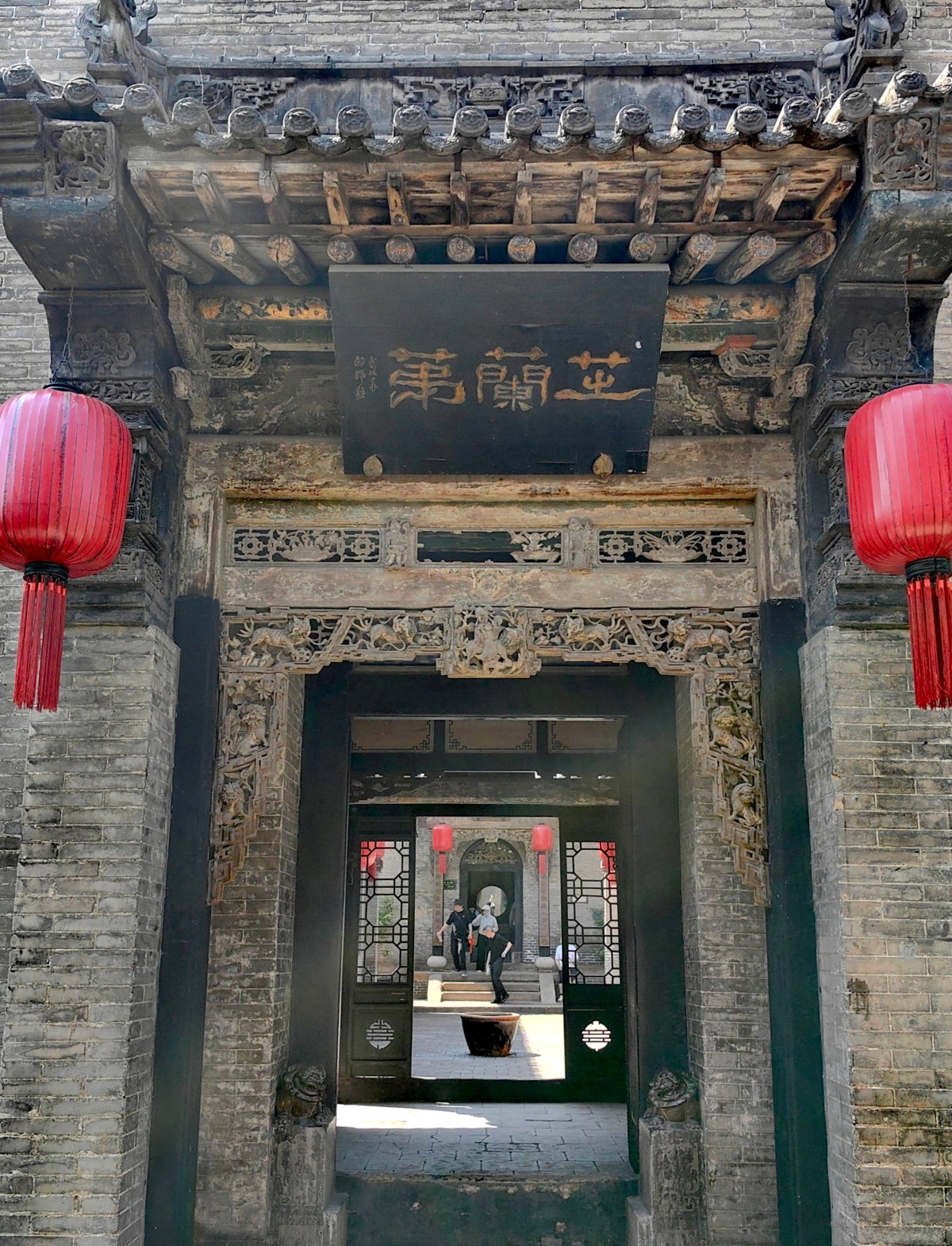
Stone carving is another significant decorative and architectural feature in traditional Chinese buildings. This picture is a typical showcase of stone carving in the courtyards. The doorways feature intricate stone carvings on the lintel (an horizontal beam above the door). These carvings depict auspicious symbols like dragons and phoenixes. Carvings of guardian lions are placed at the both sides of the main entrance. These carvings symbolize strength and protection, warding off evil spirits and ensuring the safety of the home and its inhabitants.
石雕则是中国传统建筑中的另一个重要装饰元素和建筑特征。这张照片是大院中石头雕刻的典范。门上方的水平梁上装饰着复杂的石雕刻。这些雕刻描绘了麒麟和凤凰等吉祥符号。石狮子的雕刻则被安置在正门的两侧。这些雕刻象征着力量和庇护,阻止邪灵进入,并确保房屋及其居民的安全。
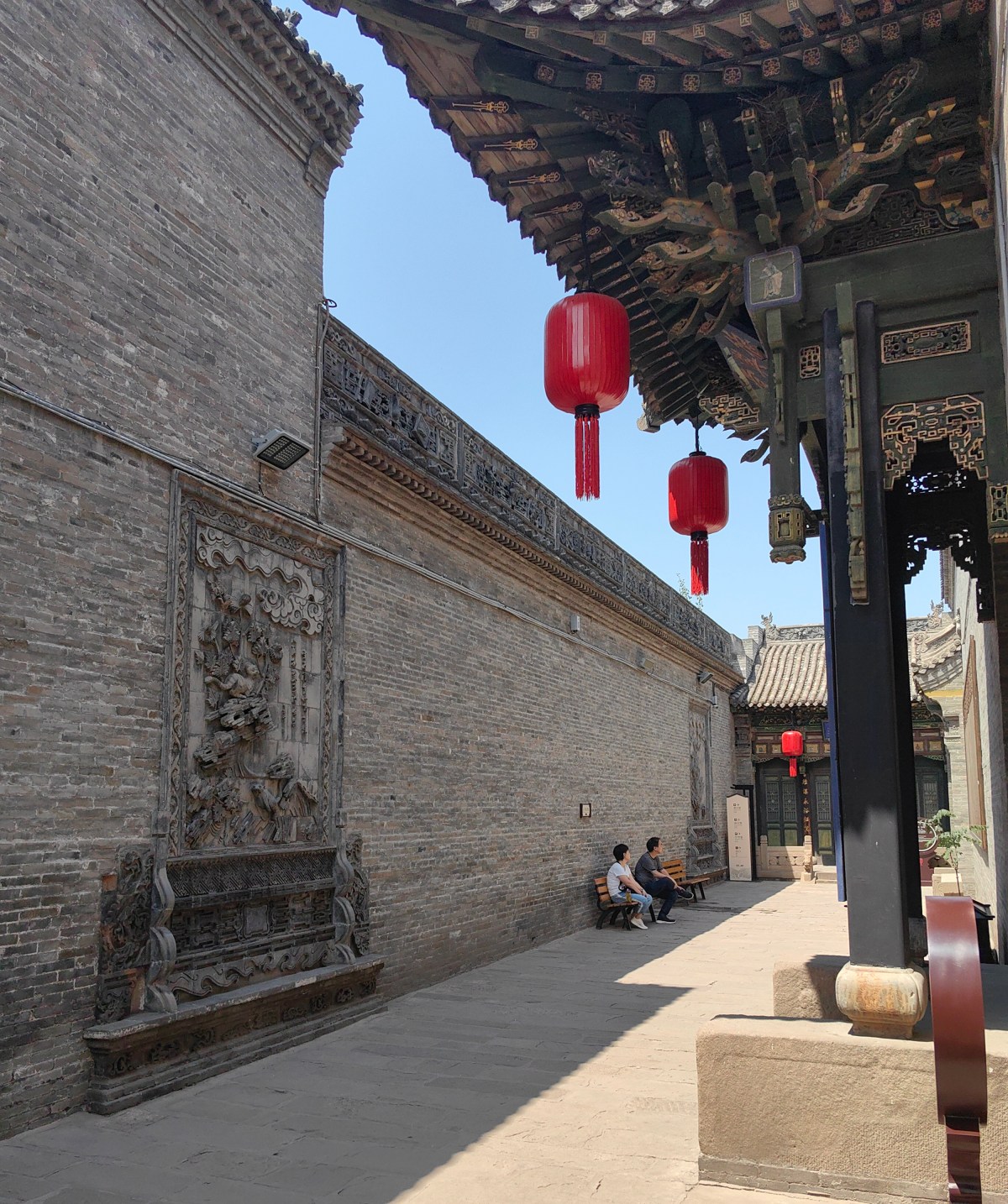
Courtyard walls include carved stone panels depicting scenes from nature, such as pine trees, plum blossoms, and cranes, which symbolize longevity and renewal. These panels not only enhance the visual appeal of the walls but also serve to balance the energy within the space according to Feng Shui principles. The stone panels are embedded into the exterior walls or side walls of the compound, creating beautiful focal points within the outdoor spaces.
庭院的墙壁可见精雕细琢的石板,石板描绘了象征长寿以及万物再生的仙鹤松树等场景。这些石板不仅增强了视觉吸引力,还可以根据风水原则来平衡大院空间内的能量。这种石板嵌入大院的外墙或侧壁中的独特设计着实令游客回首驻足。
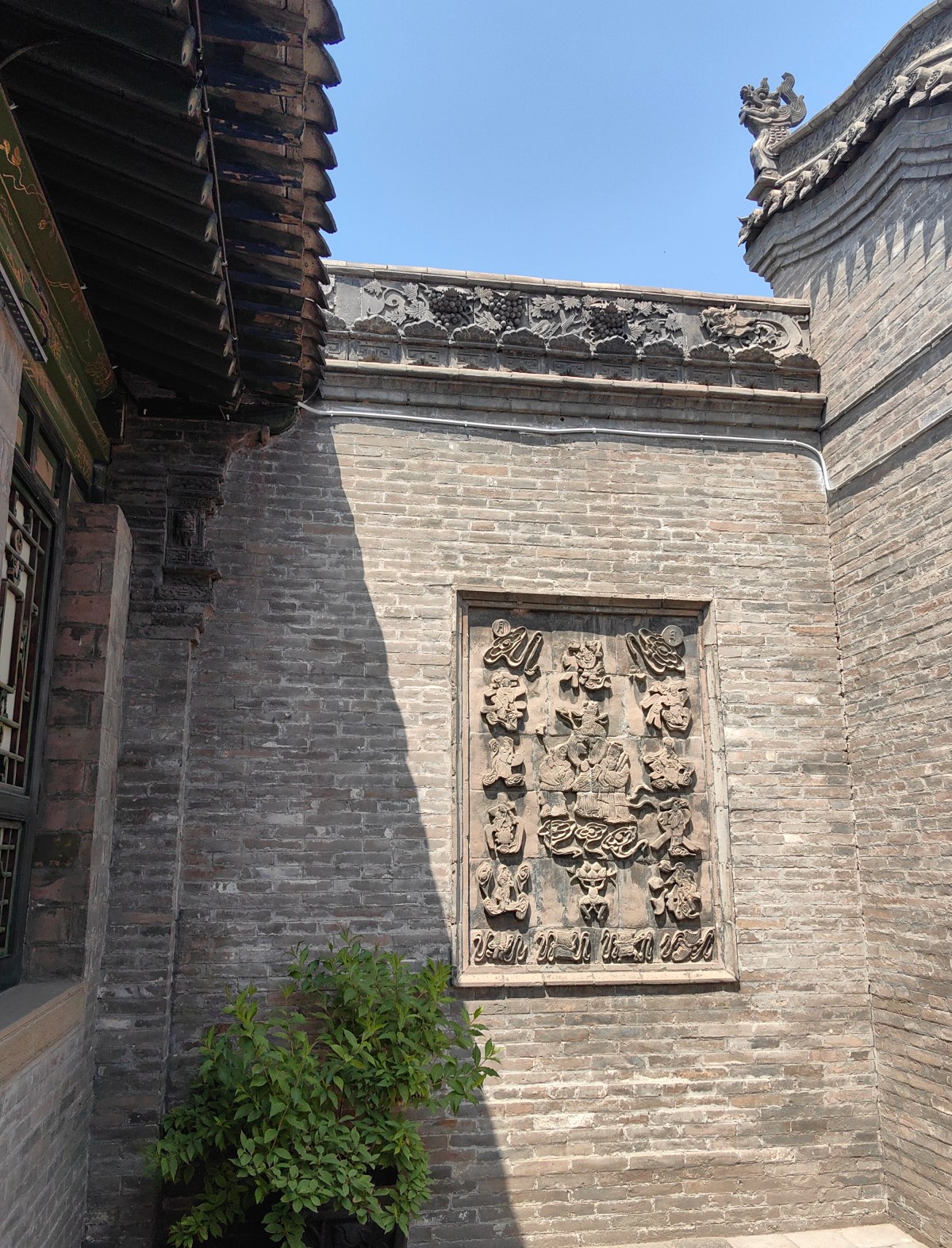
The artistry of stone carving is a highly skilled craft, involving several techniques to achieve different visual effects and textures. Relief carving is the most common technique used in stone panels. In bas-relief, the images or motifs are slightly raised from the background, creating a subtle, elegant effect. Whether depicting nature, mythology, or abstract patterns, the carved stone panels add a layer of sophistication and cultural depth to the architecture, showcasing the artistry and cultural richness of traditional Chinese estates.
石雕是一种高技能的工艺,涉及几种实现不同视觉效果和纹理的技术。照片中这种浅浮雕雕刻是最常见的技术。浮雕中刻画的图案从背景中略微突起,从而产生了优雅的视觉效果。无论是描述自然,神话故事还是抽象艺术,雕刻的石板都增添了一层精致和文化深度,也展示了中国传统庄园的文化艺术。

For the traditional architecture design, colorful painting cannot be ignored. The colorful paintings found on the lower part of the eaves in traditional Chinese architecture are known as caisson paintings. These paintings are designed to enhance the overall beauty and visual appeal of the structure. The eaves, being the lower edge of the roof and often visible to visitors and residents, provide a perfect canvas for artisans to showcase their intricate designs and vibrant colors. Cloud motifs, peonies, birds and flowers often swirling or stylized in abstract forms, are common in eave paintings. The vibrant colors used in eave paintings are derived from mineral pigments, which are long-lasting and resistant to weathering.
传统的建筑设计有一个绝不容忽视的元素就是彩绘。在传统的屋檐下,游客很容易就能发现五颜六色的绘画。这些绘画充分增强结构的整体美感。屋顶的下边缘的空间为工匠师傅提供了完美的画布,在这里大展身手描绘出复杂的色彩鲜艳的图案。云彩,牡丹,鸟类和各种花卉通常以抽象风格展现出来。屋檐彩绘中使用的鲜艳颜色源自矿物色素,这些矿物质持久且可抵抗风化。
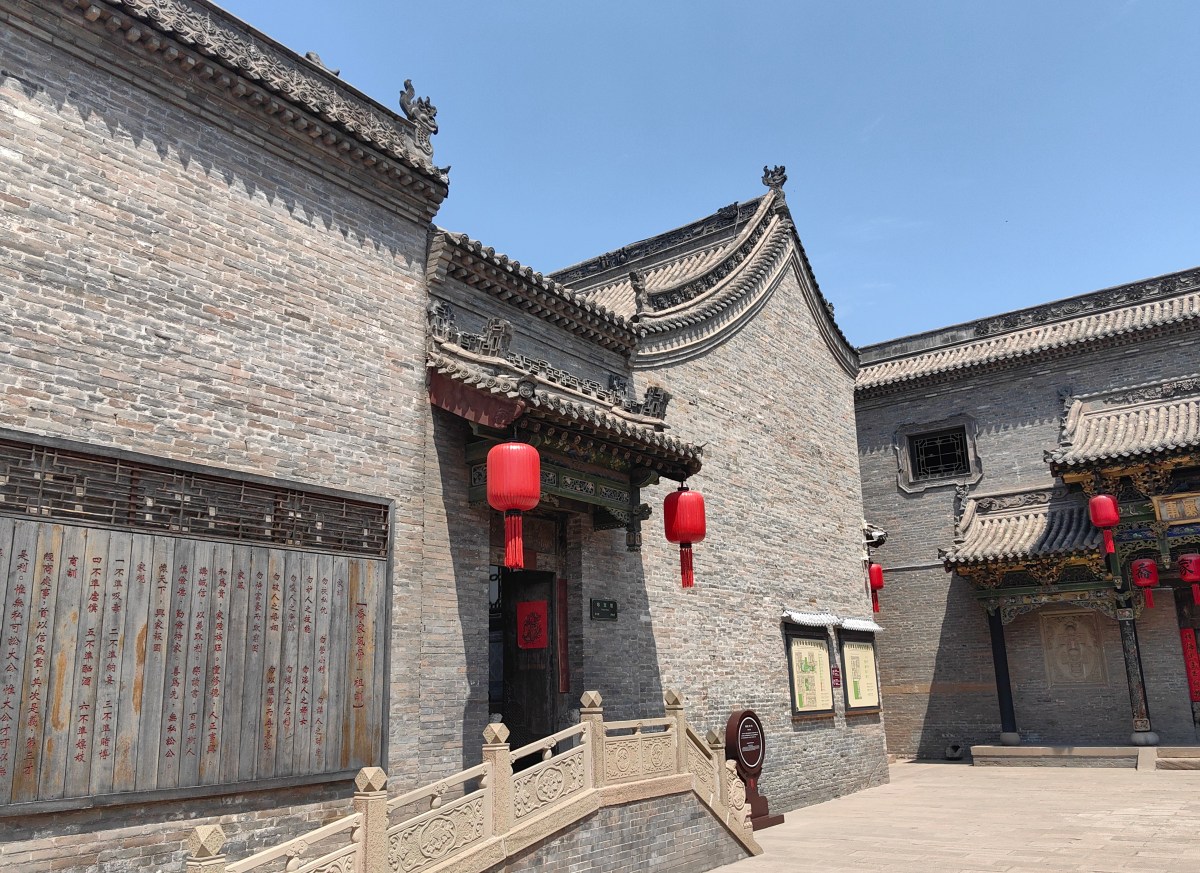
In Chinese palaces, houses or gardens, railings and balustrades are important architectural elements. The designs carved into the railings and balustrades often carry deep symbolic meanings, representing prosperity, protection, harmony, and other auspicious elements. These symbols serve to bring good fortune to the household and reflect the cultural values of the family. Marble or limestone is commonly used for balustrades in this photo. Their ends include decorative elements such as dragon heads, cloud patterns, or lotus flowers, all of which carry auspicious meanings.
中式宫殿,房屋或花园中,栏杆也是重要的建筑要素。雕刻到栏杆上的设计通常具有深厚的象征意义,代表繁荣,庇护,和谐和其他吉祥元素。这些符号会带来了好运,并反映了文化价值。大理石或石灰石通常用于制作照片中这种栏杆。栏杆的末端则装饰有例如龙头,云图或莲花等带有吉祥的含义的饰物。
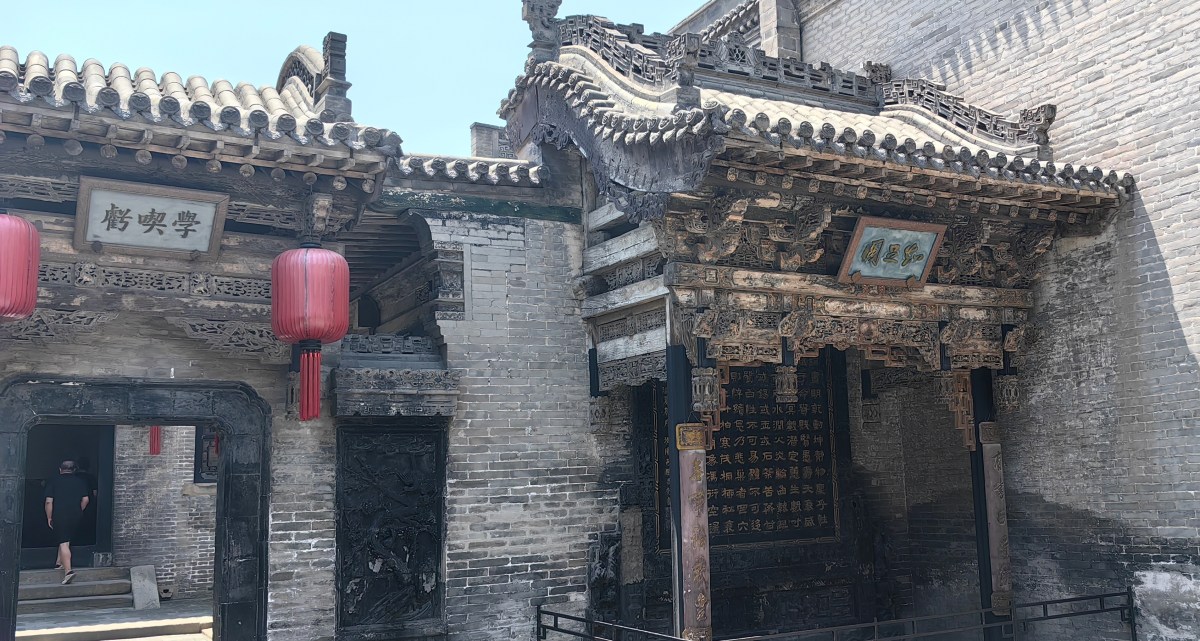
Chinese calligraphy is another form of Chinese culture as well. Opposite the main gate of the new courtyard at the Qiao Family Compound stands a brick-carved zhaobi. The wall is 3.10 meters high and 3.13 meters wide, with an exquisitely crafted open pavilion on top. The pavilion features a single-sloped roof and beautifully detailed Ming-style columns. The central part of the wall displays a 128-character inscription in clerical script (隶书). The inscription is the text of the “Shěngfēn Zhēn” (Admonition of Self-Restraint), a philosophical passage carved into brick. The content of the text is taken from the Songwenjian (宋文鉴), a literary anthology compiled by the Southern Song Dynasty philosopher and scholar Lü Zuqian. The passage illustrates the natural laws that govern all things by listing examples of natural phenomena.
中国书法也是中国文化的一种形式。乔家大院新庭院的主门对面是砖砌雕刻的照壁。墙壁高3.10米,宽3.13米,顶部是一座精美的单斜顶开放式凉亭,凉亭装饰着明朝风格的立柱。照壁中央部分是以隶书撰写的告诫自己的省分箴,这是一篇刻在砖块中的哲学经文。文本的内容取自宋文鉴,这是一部由南宋哲学家和学者吕祖谦编写的文学选集。这段经文说明了通过列举自然现象来解释所有事物的自然定律。
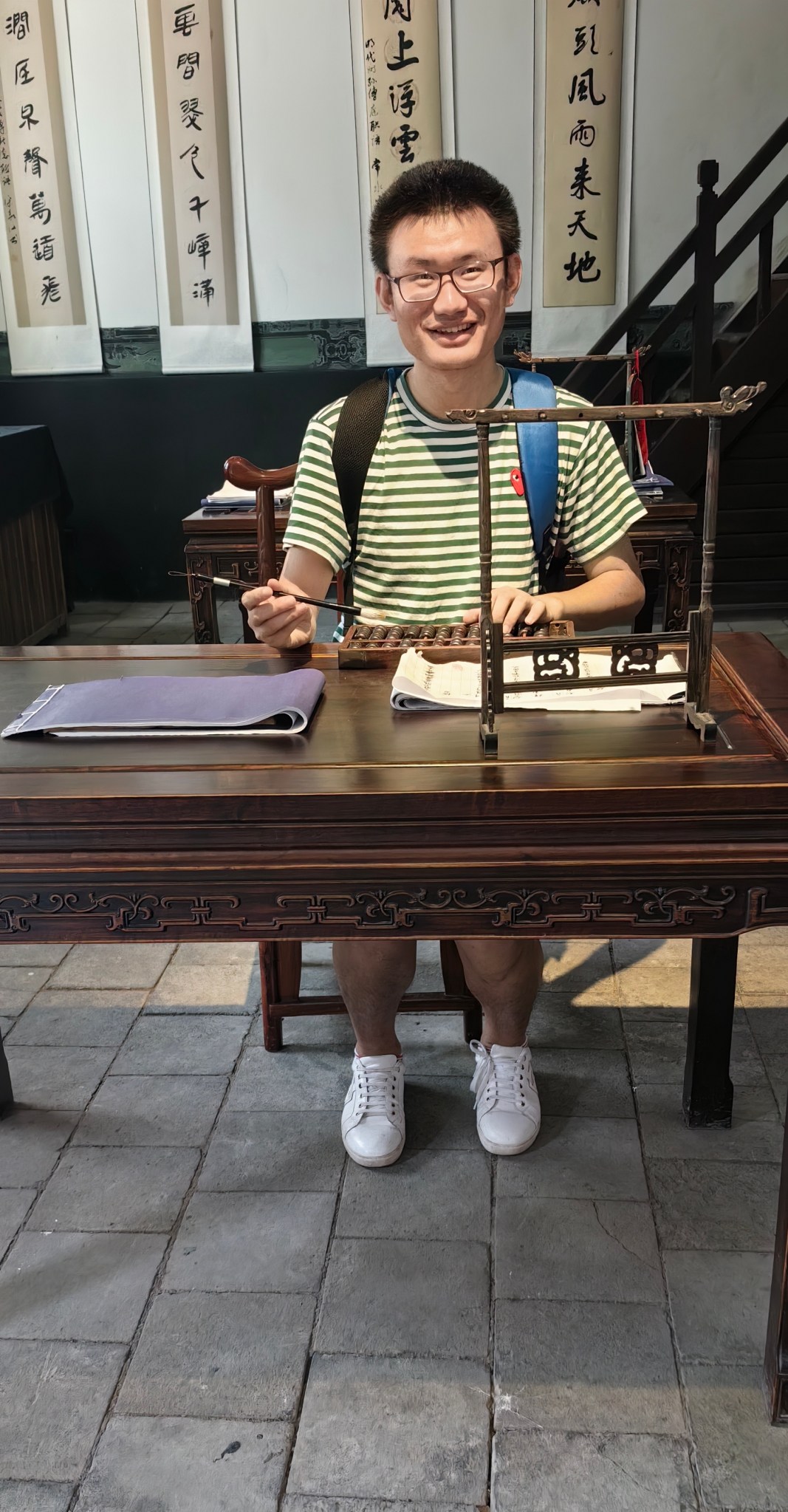
One of the rooms is used to display Chinese calligraphy and traditional Chinese tools. On the table, the abacus was a vital tool in traditional Chinese business, particularly for calculating profits, losses, and handling complex financial transactions. The Qiao family, being wealthy merchants, must have relied heavily on the abacus for their day-to-day operations. I was holding a writing brush with a right hand. The writing brush is a traditional Chinese tool used for calligraphy and painting, with a history spanning thousands of years. The tip of the writing brush is typically made from animal hair, such as goat and wolf. The handle is crafted from bamboo or wood. Nowadays, the writing brush remains a treasured symbol of Chinese culture and continues to be used by artists and calligraphers.
大院的一个房间用于展示中国书法和传统工具。在这个桌子上,算盘是中国传统用于计算利润,亏损和处理复杂的金融交易业务的重要工具。 乔家是富裕的商人,一定频繁依靠算盘来进行日常运营。我此时右手手执毛笔。这是一种传统的中国书写绘画工具,其历史涵盖了数千年。毛笔的尖端通常由动物毛(例如山羊和狼毫)制成。笔杆是用竹子或木头制成的。如今毛笔仍然是中国文化的象征,广大传统艺术家和书法家仍在使用。

The most valuable treasure in the Qiao’s compound is this mirror of ‘Rhinoceros gazing at the moon’. A bronze mirror in Chinese tradition serves as a tool for self-reflection and purification. Mirrors were often placed in prominent areas of wealthy households to protect against bad fortune and invite positive energy. The mirror features detailed bronze casting and engraving techniques, showcasing the artistry of Chinese metalwork during the era.
乔家大院中最有价值的珍宝就是图中的犀牛望月镜。中国传统中的青铜镜子是自我反省的工具,以铜为镜,可以正衣冠;以古为镜,可以知兴替;以人为镜,可以知得失。镜子经常被放置在富裕家庭的最显眼的地方积攒能量和运气。这面镜子采用细致的青铜铸造雕刻技术,展示了该时代中国金属制品的工艺。
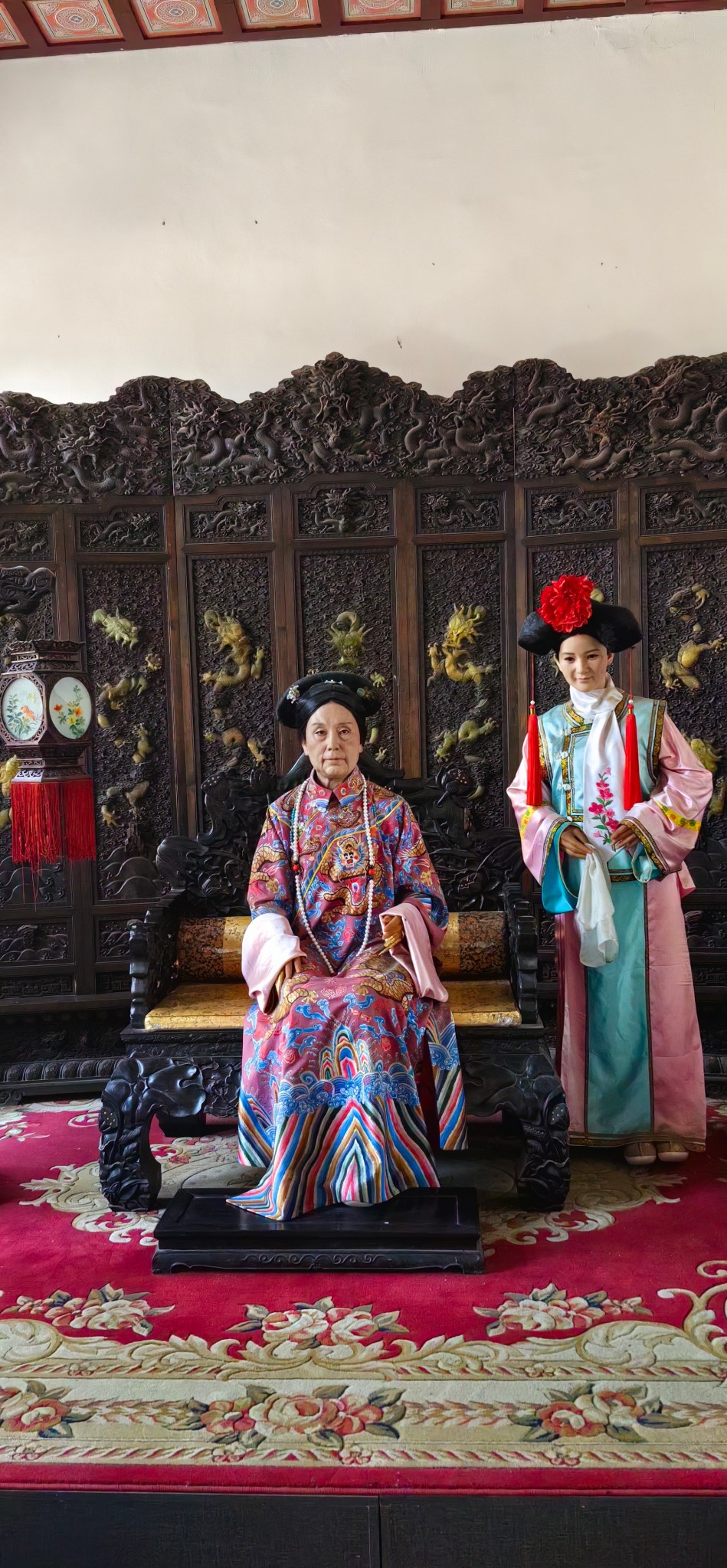
Apart from the interior decorations, I noticed one statue of Empress Dowager Cixi in one room. The Qiao family were wealthy merchants who made their fortune through trade, including tea, silk, and medicinal herbs. By the late Qing Dynasty, the family had amassed significant wealth and influence, becoming one of the most prominent merchant families in China. Due to their wealth and social standing, the Qiao family had connections with influential political figures in the Qing court, including Empress Dowager Cixi, who was the de facto ruler of China during the latter part of the 19th century. According to local legends, Empress Dowager Cixi is said to have stayed at the Qiao Family Compound during her retreat to Xi’an in 1900. This occurred during the Boxer Rebellion, when foreign forces captured Beijing, forcing Cixi and the Guangxu Emperor to flee the capital. During my trip here, I can know more knowledge and history at that period.
除了室内装饰外,我还注意到一个房间里的慈禧雕像。乔家是富甲一方的商人,通过贸易赚钱。到清朝末期,该家庭积累了巨大的财富和影响力,成为中国最杰出的商人家庭。由于他们的财富和社会地位,乔家在清庭上与慈禧等有影响力的政治人物搭上关系。根据当地传说,慈禧在1900年撤退到西安的路途期间曾居住在乔家大院。这时正值义和团暴乱期间,八国联军攻入北京,迫使慈禧光绪皇帝这一对卧龙凤雏仓惶逃离首都。通过这次的旅行,我可以管中窥豹了解更多当时的知识和历史。
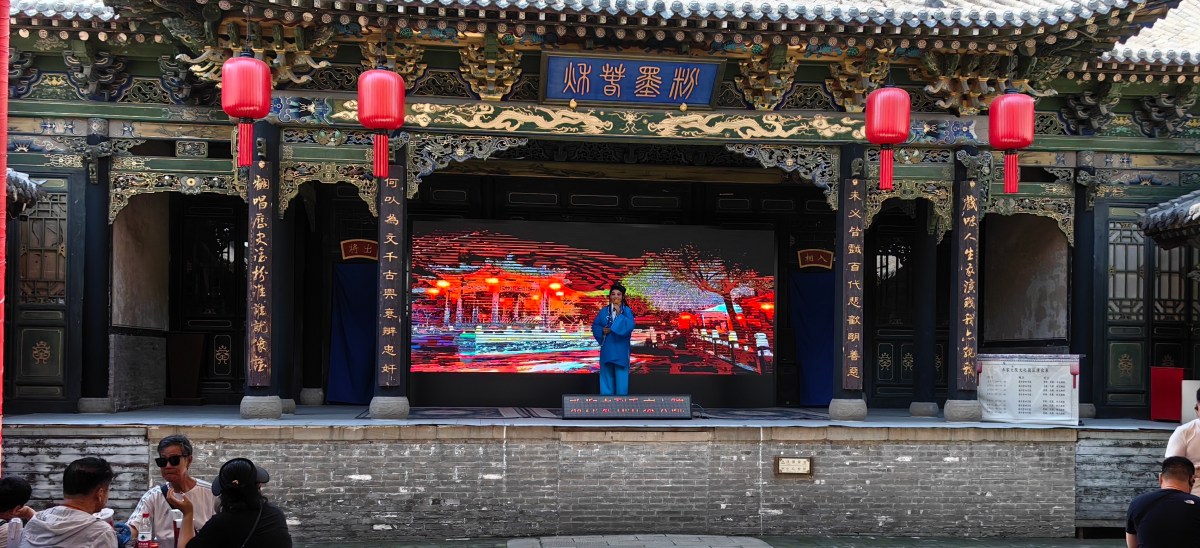
In the modern China, traditional drama is a form of art that gradually is forgotten by people. Only in this kind of old house, we can find this kind of drama stage which is designed in the traditional Chinese architectural style, featuring a raised platform with a roof supported by elaborately carved wooden columns. Traditional Chinese opera, known as Xiqu (戏曲), was a vital part of Chinese culture, and it was often performed during celebrations, festivals, and religious ceremonies. The Qiao family would invite professional opera troupes to perform for guests and family members, particularly during important holidays. The drama stage still kept its original form and visitors can watch the performance here.
在现代中国,传统戏剧是一种逐渐失传的艺术形式。只有在这种老房子中,我们才能看到这种戏剧舞台,这种凸起的平台以中国传统的建筑风格设计,上方是由精心雕刻的木柱支撑的屋顶。中国传统的歌剧戏曲是中国文化的重要组成部分,通常是在庆祝活动,节日和宗教仪式中进行的。 乔家会在这种重要时候邀请专业戏曲团为客人和家人表演。如今的戏曲舞台仍然保留当时风貌,游客也可以在这里观看表演。

Before I left, I visited the last attraction site, the garden. The traditional Chinese garden design prioritizes harmony with nature and creating a serene, secluded space amidst the grandeur of the estate. Stone pathways, small rockeries, bonsai plants, and small waterfall can always be seen here. Small pavilions within the garden offered me a place to rest and enjoy the surroundings, a spot for me to take in the garden’s serene beauty and look at the family’s cultural heritage.
离开之前,我参观了最后一个景点乔府花园。传统的中式花园设计优先考虑与大自然的和谐,在宏伟的大院之中开辟了一个宁静的空间。在花园中总是会点缀石路,假山,盆景和小瀑布。花园内的小凉亭为我提供了一个休息和享受环境的地方,这里可以在临别之际最后欣赏它的美。

The visit of the Qiao Family compound took me around 3 hours since it was really large. As I reached the end of our journey, I really immersed in the grandeur of traditional Chinese architecture which is totally different from what I have seen in Europe. Walking through its courtyards and halls has offered a glimpse into the life of an elite merchant family during the Qing Dynasty. It was a journey of real eye-opener, into the heart of Chinese culture, where tradition, art, and philosophy converge to create a lasting legacy.
乔家大院规模浩大足足花了我三个小时才堪堪游完。最后我的思绪仍然沉浸在这片中式建筑文化中,这里和我在法国留学时看到的欧洲建筑截然不同。在繁杂的结构里穿庭过院也让我充分领略到了清朝富家大户的生活。和儒家传统哲学相结合的中国文化艺术确实给后人留下了丰富的遗产,令我大开眼界。
 Gone like the wind