
世界文化艺术遗产的瑰宝:云冈石窟
The Yungang Grottoes stand as one of China’s most magnificent examples of ancient Buddhist art, carved into the sandstone cliffs near Datong in Shanxi Province. This UNESCO World Heritage Site, dating back to the 5th and 6th centuries during the Northern Wei Dynasty, showcases a remarkable fusion of art, religion, and cultural exchange. Comprising 45 main caves and over 51,000 intricate statues, the Yungang Grottoes reflect the early spread of Buddhism along the Silk Road, blending Indian, Central Asian, and traditional Chinese artistic styles. The towering Buddha statues, detailed reliefs, and carvings within these caves transport visitors back to an era of profound spiritual devotion and artistic achievement.
云冈石窟是中国古代佛教艺术最恢弘的典范,这个世界文化遗产的历史可以追溯到五世纪和六世纪的北魏时期。它开凿于山西省大同附近的砂岩悬崖上,展示了艺术、宗教和文化交流的非凡融合。云冈石窟由 45 个主要洞窟和 51,000 多尊精美雕像组成,反映了佛教沿着丝绸之路的早期传播历史,并且融合了印度、中亚和中国各地的传统艺术风格。这些高耸的佛像、细致的浮雕和雕刻仿佛将游客带入了一个充满虔诚和艺术感的神奇世界。

Set against a rugged natural backdrop, the grottoes not only capture the essence of ancient craftsmanship but also tell the story of a pivotal period in Chinese history when Buddhism flourished as a unifying force. The Northern Wei Dynasty (386–534 CE) was a pivotal period in Chinese history, marking a significant cultural and political transformation. Initially established by the Tuoba clan, a nomadic people of Xianbei origin, the dynasty later underwent a comprehensive process of Sinicization (adoption of Chinese culture) to consolidate its rule over a predominantly Han Chinese population. Over centuries, intermarriage between Xianbei and Han Chinese resulted in the genetic assimilation of the Xianbei people. The Xianbei were absorbed into the Chinese ethnic and cultural identity gradually.
云岗石窟背靠崎岖的自然山脉,它不仅体现了中国古代工艺的精髓,还讲述了历史上佛教作为一股统一力量蓬勃发展的故事。北魏王朝(公元 386-534 年)是中国历史上的一个关键时期,标志着重大的文化和政治转型。该王朝最初由鲜卑游牧民族拓跋氏建立,后来经历了全面的汉化,以巩固其对以汉族人口为主的统治。几个世纪以来,鲜卑人和汉人的通婚导致了鲜卑人的同化。鲜卑人也逐渐融入中华的民族文化认同之中。
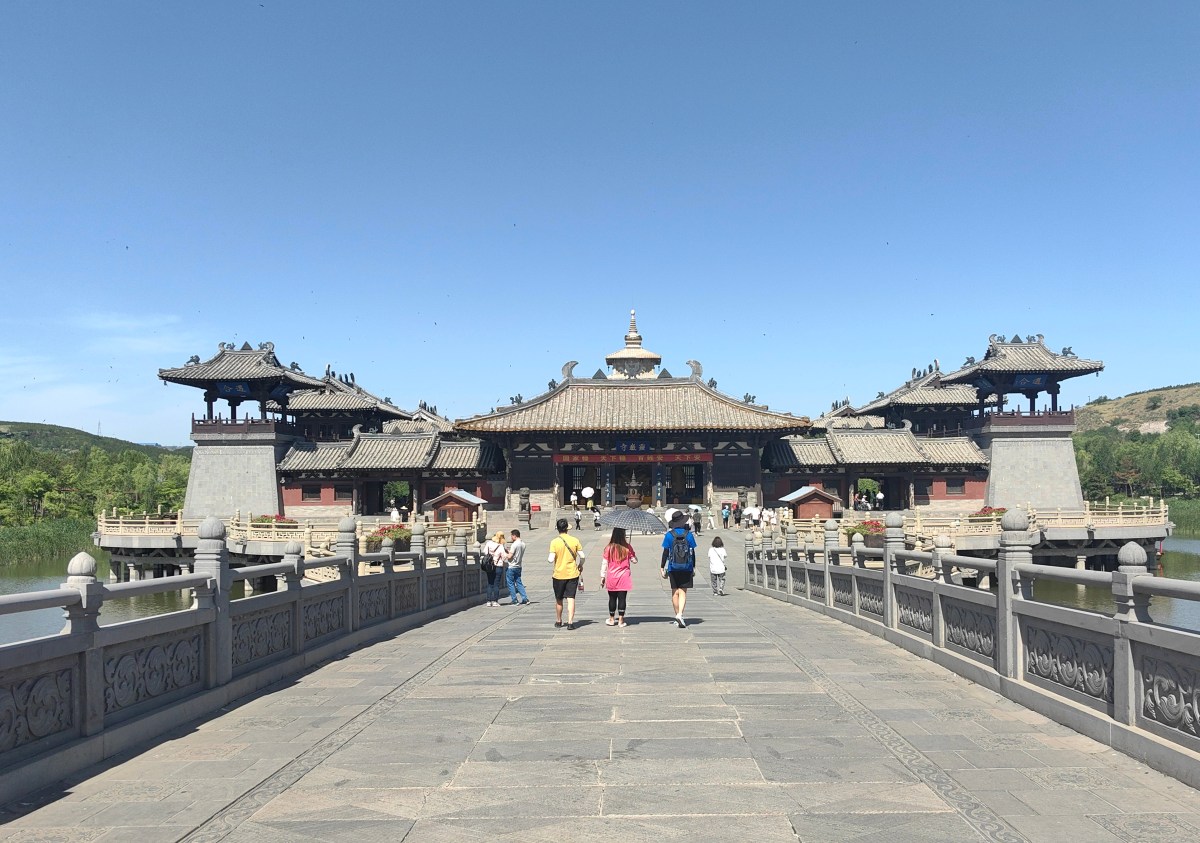
The Yungang Grottoes are located near the city of Datong, in Shanxi Province. They are situated about 16 kilometers west of Datong’s city center, along the southern foothills of the Wuzhou Mountains. I visited this famous world cultural heritage by bus on July 6th, 2023. The public transport system in China is well established and most attractive sites are easily accessible by public transport. This is the entrance of this monument, a specially designed hall with ancient architectural style.
云冈石窟景区位于山西省大同市附近。它们位于大同市以西约16公里处,沿着武州山脉南麓而建。 2023年7月6日,我乘坐公交车就轻松参观了这个著名的世界文化遗产。如今中国的公共交通系统十分完善,大多数极具吸引力的景点都可以通过公共交通轻松到达。这里就是景区的入口,一个专门设计的颇具古风的大厅。
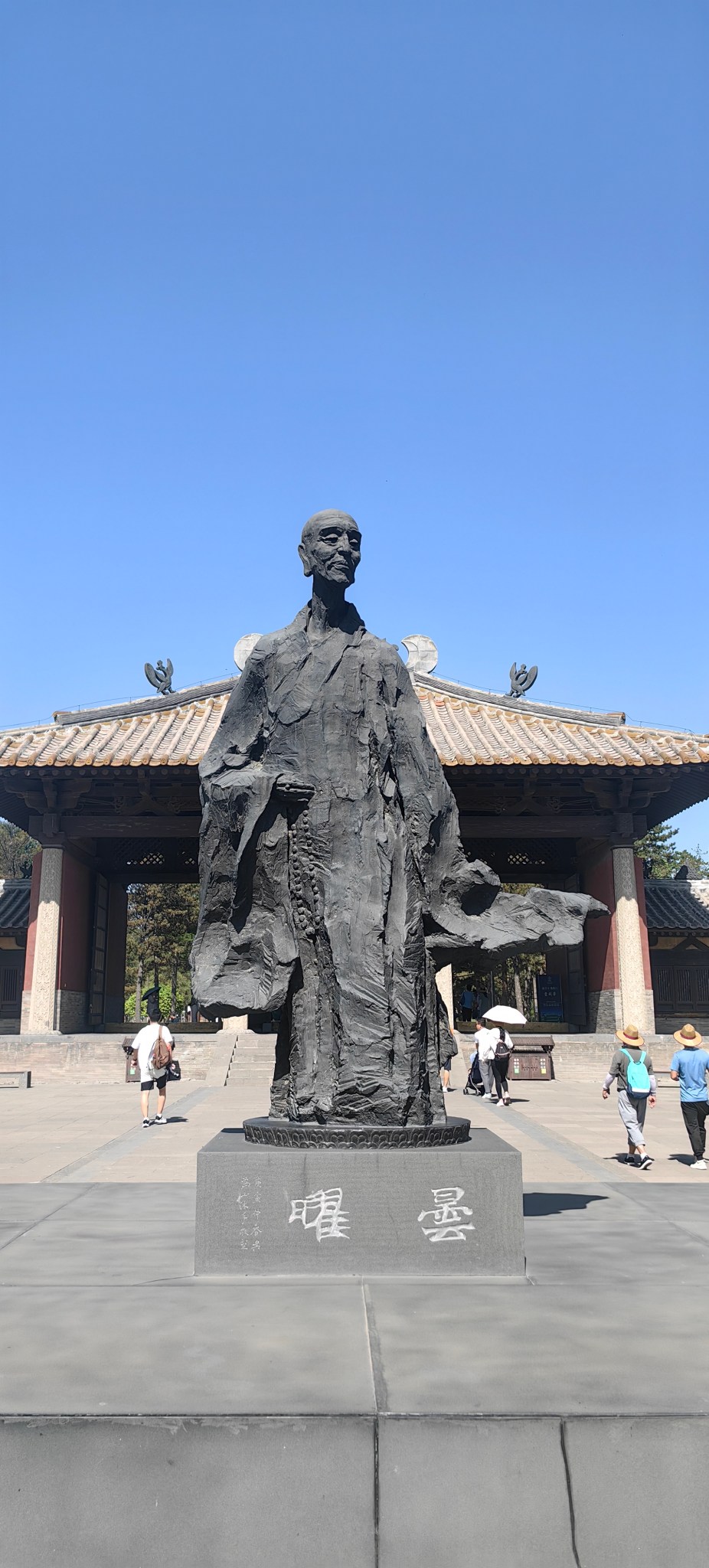
At the entrance, there is statue of Yun Yao. He was a key figure in the construction and artistic direction of the Yungang Grottoes during the Northern Wei Dynasty. As a prominent Buddhist monk, he played a leading role in promoting and overseeing the carving of the grottoes. The Yungang Grottoes were constructed as an imperial initiative under the Northern Wei Dynasty to demonstrate devotion to Mahayana Buddhism which was introduced to China via the Silk Road.
入口处有云曜师傅的雕像。他是北魏时期云冈石窟建设和艺术指导的关键人物。作为佛教高僧,他在推动和监督石窟开凿方面发挥了主导作用。云冈石窟是北魏皇帝为了表达对通过丝绸之路传入中国的大乘佛教的虔诚信仰而兴建的。
After the Northern Wei court officially embraced Buddhism, Yunyao was entrusted with the task of coordinating the creation of these massive cave temples. His influence is reflected in the grandeur and spiritual essence of the grottoes, as well as their intricate carvings and statues.
北魏王朝正式皈依佛教后,云曜师傅被委以协调建造这些大型石窟的任务。他的影响体现在石窟的宏伟规模以及复杂的雕刻和雕像上的精神象征意义。

This is the example of one tower sculpture during the Northern Wei Dynasty. The Northern Wei Dynasty rulers used Buddhism to legitimize their authority, presenting themselves as Chakravartins (wheel-turning monarchs). Supporting Buddhism aligned the dynasty with divine and moral authority, reinforcing their position as rightful rulers.
这是北魏时期的塔雕。北魏统治者例如胡太后利用佛教来使自己的权威合法化,统治者自称为转轮圣王。支持佛教则使王朝的神圣和道德权威保持一致,巩固了他们作为合法统治者的地位。
The construction of pagodas became a significant expression of Buddhist devotion. Pagodas in this era were influenced by Indian stupa designs, but they gradually adopted a more vertical, multi-tiered structure to align with Chinese aesthetic preferences. Some pagodas had octagonal bases, a design seen as both practical and symbolic in Buddhist cosmology.
佛塔的建造成为对佛教虔诚信仰的重要体现。这个时代的佛塔受到印度佛塔设计的影响,但逐渐采用更加垂直、多层的结构,以符合中国人的审美偏好。一些宝塔有八角形底座,这种设计在佛教宇宙论中被视为既实用又具有象征意义。

On the route towards the grotto, there is a small man-made lake, providing reflective surfaces that mirror the grottoes and surrounding cliffs. The lake is surrounded by gardens, walking paths, and wooden bridges, offering visitors picturesque spots for relaxation and photography. Pagodas, pavilions, and stone carvings are strategically placed near the water, enhancing the Buddhist cultural theme of the area.
在通往石窟的路上,有一个人工小湖,湖面的反光反射着石窟和周围的悬崖。湖周围环绕着花园、步道和木桥,为游客提供风景如画的休息场所和摄影点。塔、亭、石雕巧妙地临水而建,彰显景区的佛教文化主题。

The grottoes are carved directly into the sandstone cliffs along a stretch of approximately 1 kilometer.
The cliff side is uneven and natural, but it has been transformed by the carved entrances, niches, and facades that house the caves, creating a dramatic visual effect. The grottos appear to rise from the mountain, with the larger caves recessed deep into the rock, while smaller niches dot the cliff face like a honeycomb.
这些石窟居然直接开凿在砂岩悬崖上,悬崖总共绵延约 1 公里。自然形成的悬崖起伏不平,面貌已被精细雕刻的壁龛和洞穴外墙所替换,产生了千疮百孔般奇特的视觉效果。这些石窟似乎从山中拔地而起,大型的石窟完全深入岩石中,而较小的壁龛则像蜂窝一样点缀在悬崖表面。
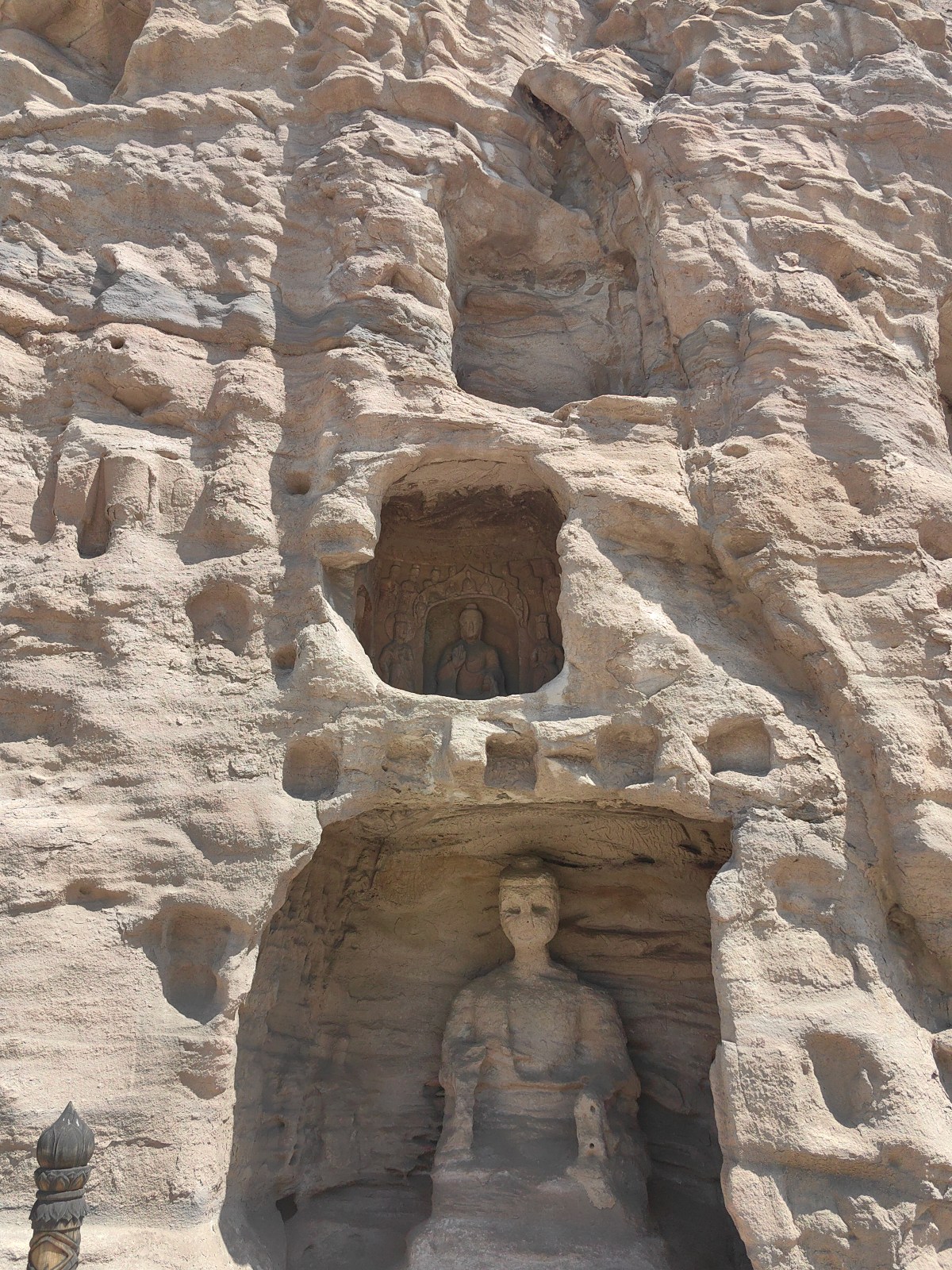
As I moved closer to the wall, I could observe clearly many caves with stone reliefs and ornamental carvings, including niches housing small Buddha statues. These carvings highlight the spiritual significance of the grottoes and showcase a fusion of Indian, Central Asian, and early Chinese Buddhist art styles. The sandstone cliffs have been weathered over time, giving the exterior an aged look now.
当我慢慢靠近墙壁时,我可以清楚地观察到众多带有石制浅浮雕和装饰的洞穴以及装有小佛像的壁龛。这些雕刻凸显了石窟的宗教象征意义,展示了印度、中亚和早期中国佛教艺术风格的融合。随着时间的推移,这些砂岩悬崖大多已经风化,现在的外观呈现出沧桑的历史感。

There are more than 20 caves in this scenic area and travelers can go through them slowly one by one. The Linyan Temple Cave is the third cave. It is named after the temple that once existed in its vicinity. The main Buddha statue of 10 meters height in this cave is a central focus, flanked by smaller figures of bodhisattvas, disciples, and guardian deities. This statue looked friendly and seemed to say hi to all the visitors. The carvings display a transition in artistic style, blending Indian Gandharan influences with early Chinese Buddhist art. Unfortunately the color of the surface has been eroded severely.
景区内有20多个洞窟供游客一一慢慢游览。临岩寺洞为第三洞。它以其附近曾经存在的寺庙而得名。洞内的主佛像高 10 米,占据C位,两侧是较小的菩萨、弟子和护法神像。这座大雕像看上去很友善,似乎在向所有的游客行礼。这些雕刻充分展示了魏晋时代艺术风格的转变,将印度犍陀罗的影响与中国早期佛教艺术融为一体。遗憾的是这些表面颜色已被严重侵蚀。
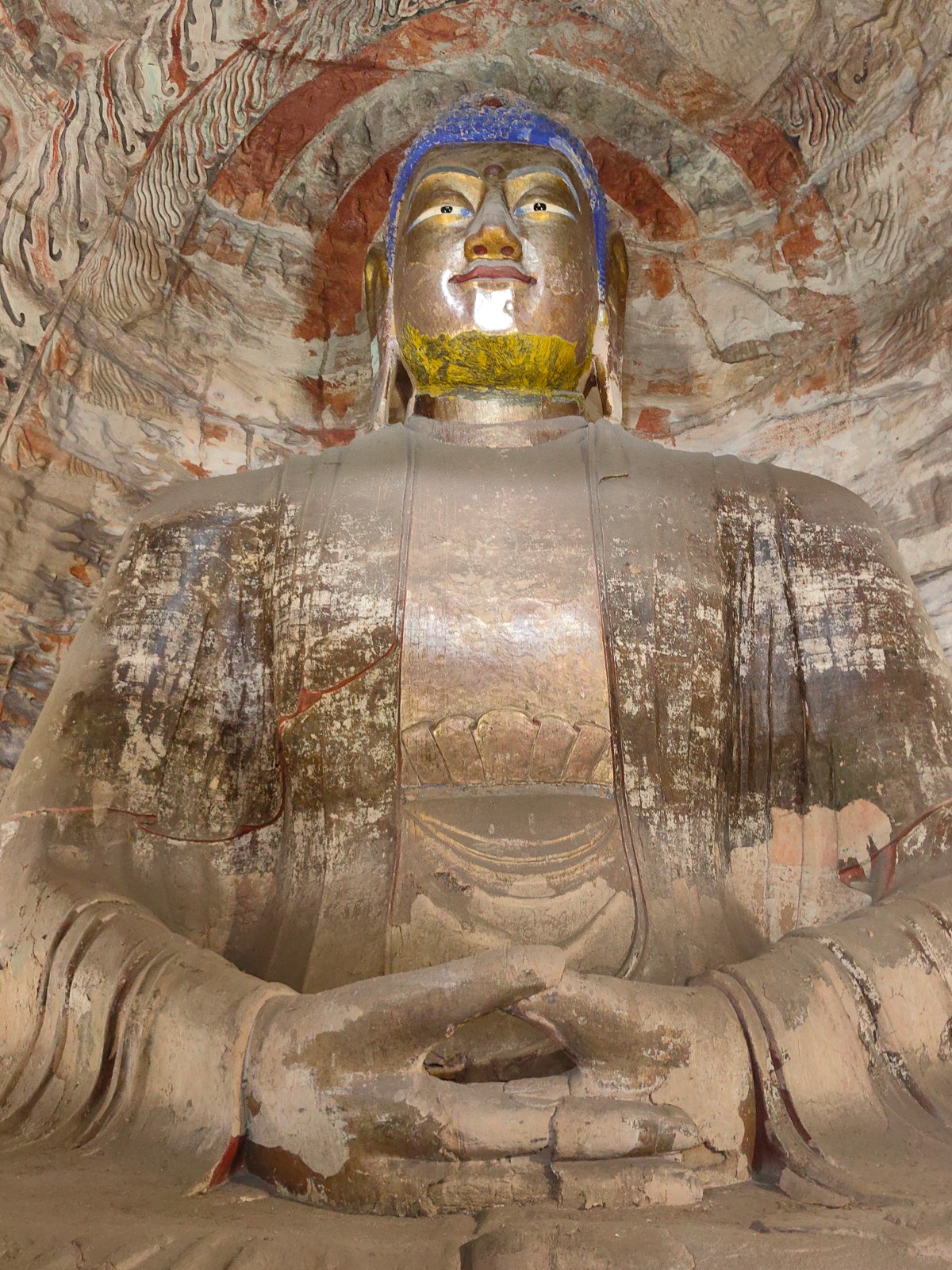
The Cave 5 is a very impressive cave. It has a rectangular layout, with the main Buddha of height 17 meters seated at the center facing the entrance. The Buddha of Gandharan style is depicted in a serene, meditative posture, embodying compassion and enlightenment. Surrounding the main Buddha are several bodhisattvas, disciples, and heavenly kings carved into the walls, each symbolizing different aspects of Buddhist philosophy. The open space within the cave is designed to inspire awe, allowing me to fully absorb the spiritual and artistic significance of the Buddha statue. This is the highest and largest Buddha statue of the Yungang grotto.
五号洞窟是一个非常令人印象深刻的洞穴。它的平面呈长方形,主佛高17米,端坐正中,面向入口。犍陀罗风格的佛陀以安详、冥想的姿势呈现,体现了我佛慈悲和心灵觉悟。主佛周围的墙壁上刻有几位菩萨、佛家弟子和天王,分别象征着佛教哲学的不同层次。洞内如此开阔的空间令人心生敬畏,让我充分领略佛像的宗教和艺术意义。这也是云冈石窟最高大的佛像。
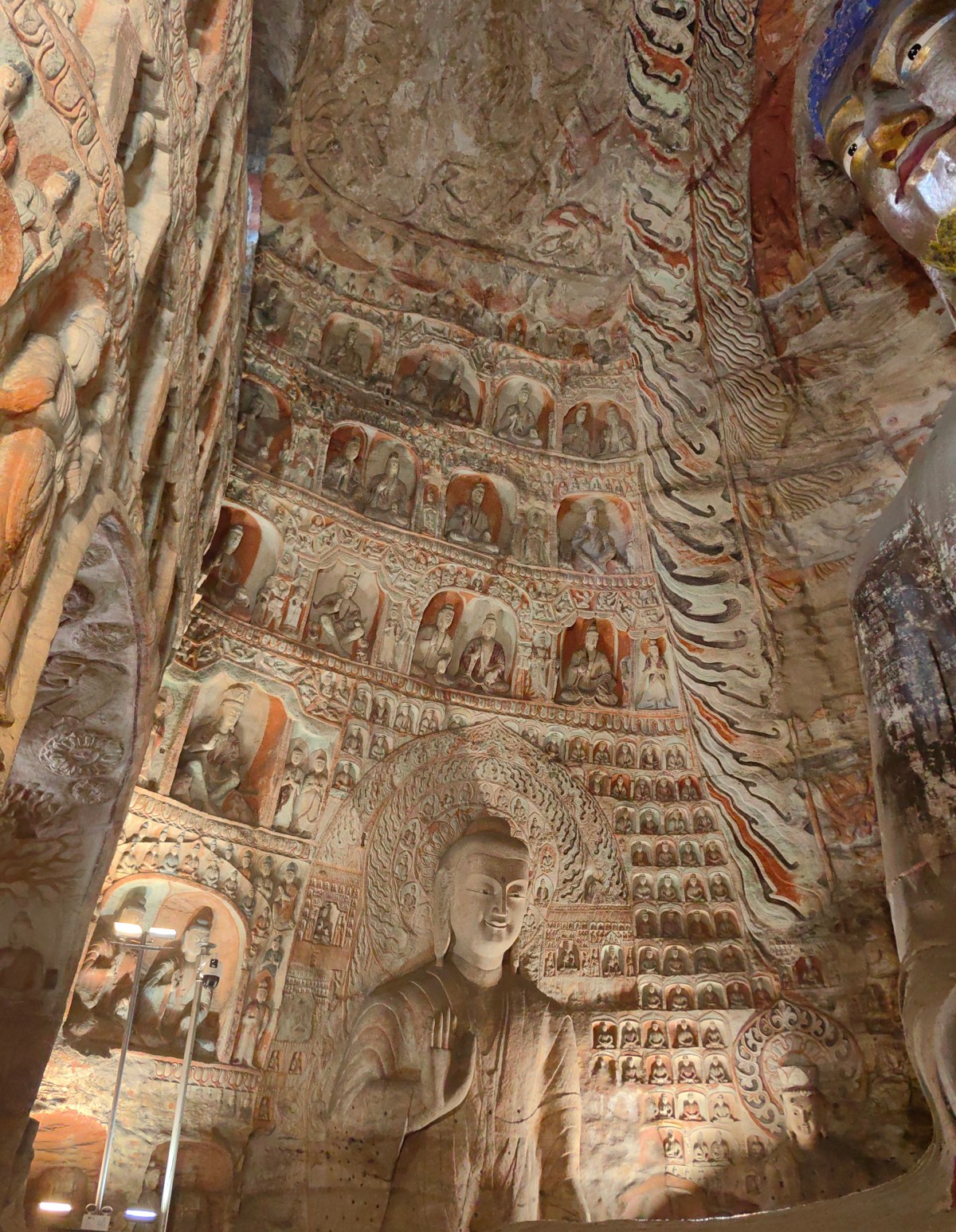
The statues inside remain remarkably intact. The art style and the color combination really left me a deep impression. The ceiling was intricately decorated with lotus motifs and flying apsaras (celestial beings) in dynamic poses, symbolizing joy and divine presence. The cave walls are adorned with vivid bas-reliefs depicting Buddhist sutras and stories from the life of the Buddha, such as his enlightenment and teaching journeys.
洞穴里面的雕像保存十分完好。美术风格和各种色彩组合给我留下了深刻的印象。洞顶装饰着精美的莲花图案和动态的飞天像,象征着佛家欢乐和神圣的存在。而洞壁上装饰着生动的浅浮雕,描绘了佛经轶事和佛陀一生的启蒙和传法之旅的故事。
It shows the exceptional craftsmanship, with innovations in stone carving and iconography. Techniques such as high-relief carving, detailed mural painting, and layered sculptural arrangements illustrate the advanced artistry of the period.
这里也展示了当时卓越的工艺以及石雕和图像绘画方面的创新。高浮雕、细致的壁画、分层的雕塑排列等技术展现了这一时期先进的艺术水平。

This is the entrance cave 6. There are some elaborate carvings adorning the entrances of the larger caves like cave 5 and 6. These carvings depict guardians and heavenly kings. The walls are painted with images of the Eighteen Arhats, nine on each wall, holding different instruments and standing among the sea of clouds. The guardians are often depicted with fierce expressions, dynamic postures, and ornate armor, contrasting with the calm demeanor of the Buddha. Cave 6 has been well-preserved compared to other caves in the complex, thanks to its relatively sheltered location.
这是第 6 窟的入口。第 5 窟和第 6 窟等较大洞穴的入口处陈列有一些精美的雕刻。这些雕刻描绘了佛家守护者和护法天王。墙壁上另外绘有十八罗汉的图像,每面九个罗汉,各个手持不同的法器,立在云海之中。护法天王雕刻通常表情凶猛,姿势动感,盔甲华丽,与佛陀平静的神态形成鲜明对比。由于位置相对隐蔽,与整个建筑群中的其他洞穴相比,第 6 窟保存特别完好。
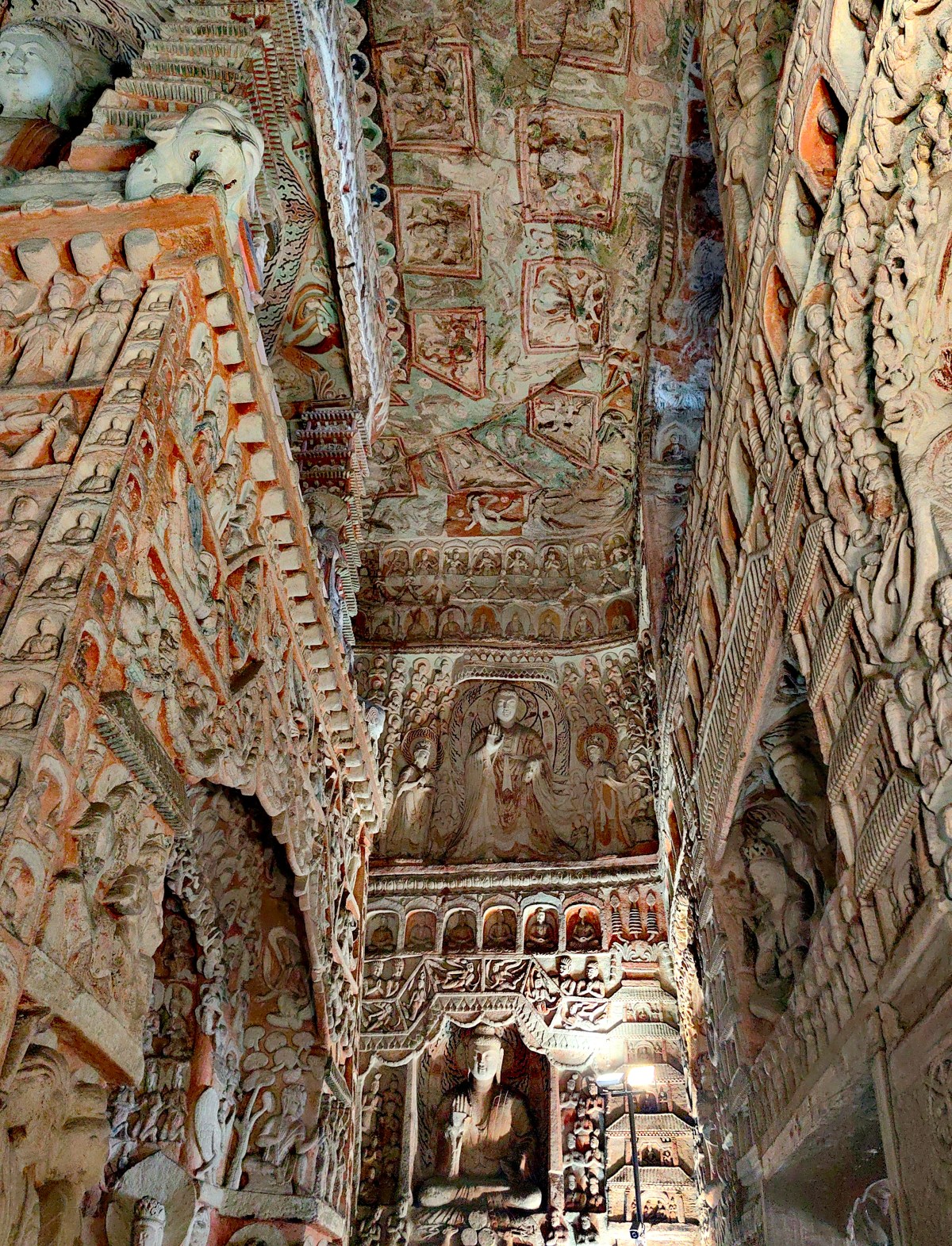
The figure in the cave 6 is a large, seated statue of Shakyamuni Buddha, radiating an air of wisdom and compassion. The Buddha is depicted in the teaching mudra (gesture), symbolizing his role as a spiritual teacher who imparts the path to enlightenment. The bas-reliefs and carvings are extremely extraordinary. They cover nearly every surface of the cave, depicting key moments from the life of Shakyamuni Buddha. Bodhisattvas stand alongside the Buddha, symbolizing compassion and the aspiration to help all sentient beings achieve enlightenment. They are elaborately adorned with jewelry, crowns, and flowing robes, reflecting their role as semi-divine beings who bridge the human and celestial realms.
第六窟内供奉释迦牟尼佛的大坐像,它的全身都散发着智慧与慈悲的气息。佛陀雕塑以传教手势雕刻,象征着他作为传授觉悟之道的精神导师的角色。这些浅浮雕华丽非凡,它们几乎覆盖了洞穴的每个表面,描绘了释迦牟尼佛一生的重要时刻。菩萨与佛并肩而立,象征着佛家的慈悲心和普度众生成佛的祈愿。精心装饰着珠宝、王冠和飘逸的长袍,鲜明地体现他们作为连接人类和天界的半神人物的独特性。

At the left side of this photo, it is a massive central pillar. Visitors walked around this pillar in admiration of the statues. They were carved on all sides of walls, richly decorated with scenes of Buddhist cosmology and stories. The reliefs depict dozens of stories about the life of Sakyamuni. They narrate the story of Siddhartha Gautama, a prince of the ancient Indian Sakya clan, who was born with extraordinary intelligence. He was deeply troubled by meaning of life, and decided to become a monk to look for personal liberation. He overcame all kinds of difficulties, defeating the demon army, and finally attained enlightenment and became the Sakyamuni.
在这张照片的左侧,有一个巨大的中央石柱。游客们绕着这座柱子走来走去,欣赏着这些雕像。墙壁的四面都雕刻着佛教宇宙观和佛经的场景。浮雕描绘了数十个有关释迦牟尼一生的故事。它们讲述了古印度释迦族王子悉达多·乔达摩的故事,他天生具有非凡的智慧同时对生命的意义深感困扰,便决定出家寻求个人精神解脱。后来他克服了种种困难,打败了魔军,最终证悟成佛,成为释迦牟尼。
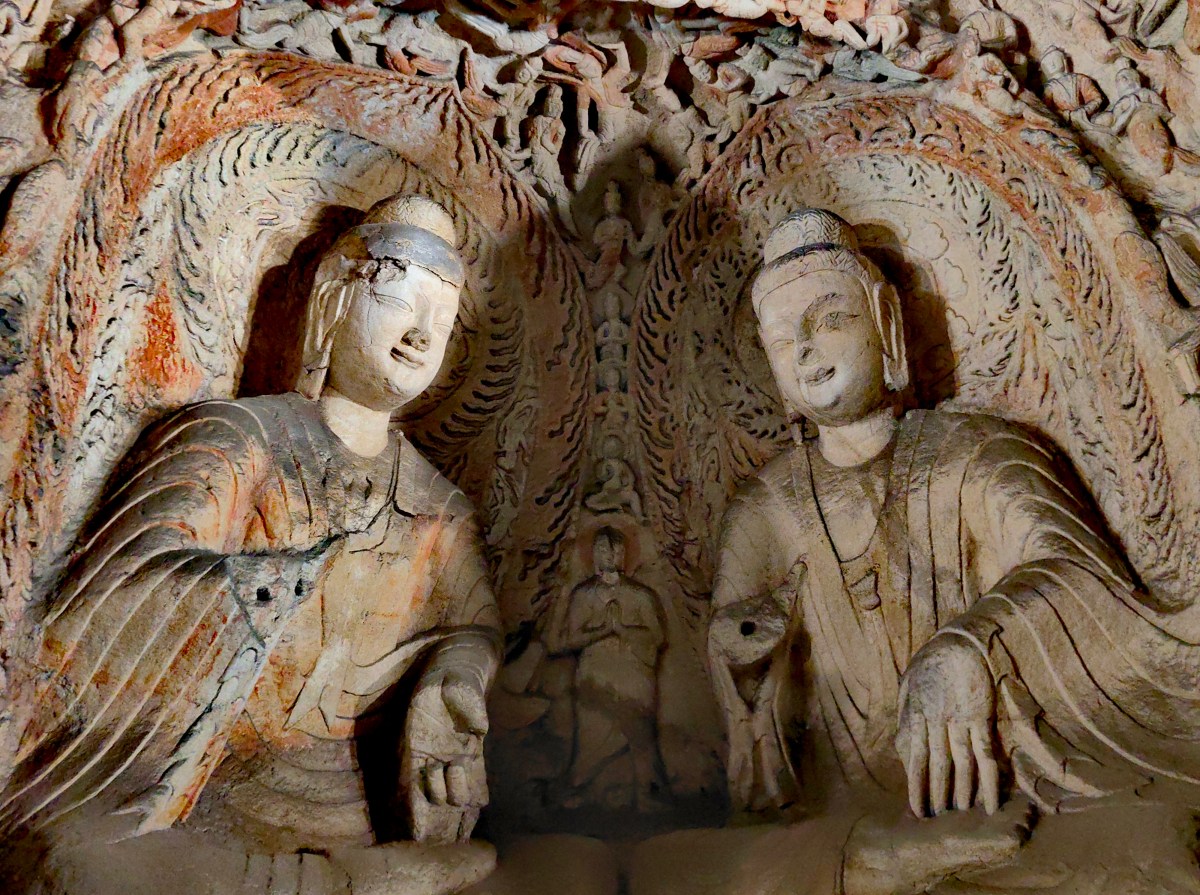
The cave walls are covered with rows of small Buddha statues, known as thousand-Buddha motifs.
These figures are arranged in orderly tiers, symbolizing the omnipresence of the Buddha and the infinite nature of his teachings. Each figure is meticulously carved, despite their small size, and their uniformity emphasizes the collective spiritual power of the Buddhist community.
洞壁上还布满了成排的小佛像,它们被称为千佛图。这些人物排列有序,象征着佛陀的无所不在和佛法的无边本质。每尊佛像虽小,但都经过精心雕刻,其统一性强调了佛教界的集体精神力量。

The walls and ceilings of the cave feature numerous apsaras, or celestial beings, in mid-flight. These figures, often carved in dynamic poses, appear to float above the central statues, scattering flowers and playing musical instruments. In addition to apsaras, the cave features lokapalas (world protectors) and devas (celestial beings), depicted in graceful poses. For people who are interested in art of Buddhism, this place is really a treasure-house.
洞穴的墙壁和天花板上有许多飞天。这些人物通常以动态姿势雕刻,似乎漂浮在中央雕像上方,洒落鲜花并演奏乐器。除了飞天之外,洞穴中还有洛卡帕拉斯(世界保护者)和优雅的天神的雕塑。对于对佛教艺术感兴趣的人来说,这里真是一个宏大的宝库。

The Yungang Grottoes feature a wide array of niches, from tiny alcoves to large, open niches housing monumental statues. Early niches were influenced by Indian and Central Asian styles, emphasizing simplicity and symmetry. Later the niches evolved to include Chinese aesthetic elements, such as pagoda-inspired frames and detailed ornamentation. The integration of local culture led to unique styles, blending Indian iconography with Chinese craftsmanship. These niches are unique artist element. They are small but profound architectural and artistic features that encapsulate the spiritual essence of Buddhist devotion.
云冈石窟里有各种各样的壁龛,从微小的壁龛到装有纪念性雕像的大型开放壁龛。早期的壁龛受到印度和中亚风格的影响,强调简洁和对称。后来,壁龛演变为例如宝塔风格等包含中国美学元素的形式。文化的融合形成了这种独特的风格,将印度风格图案与中国工艺融为一体。这些壁龛是一种独特的艺术家元素。它们虽小,但意义深远且据艺术特色,浓缩了佛教的精神信仰。
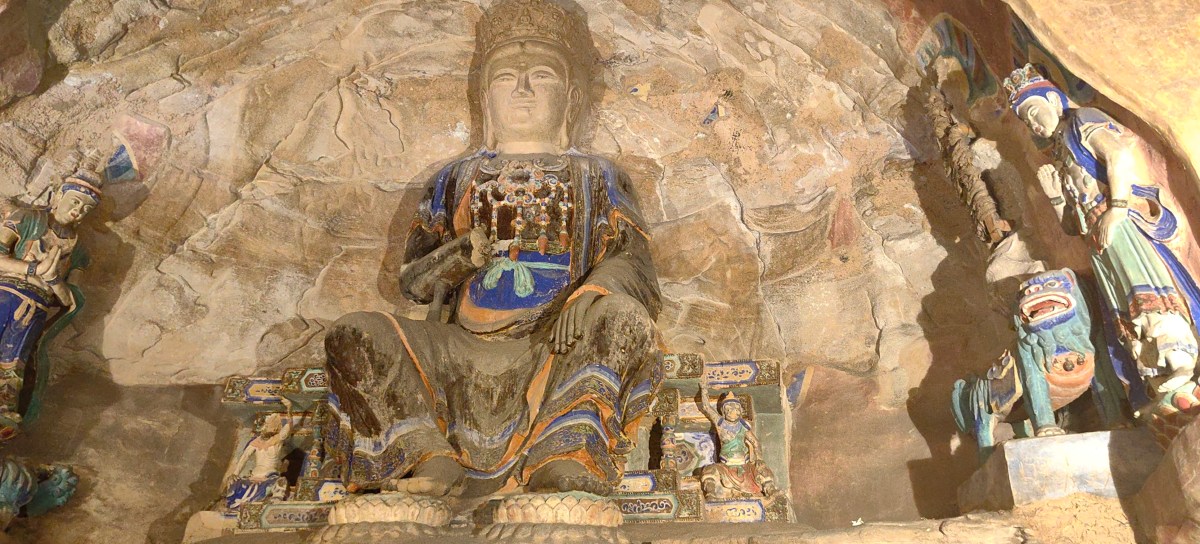
There are many colored Buddhist statues in the Yungang Grottoes. The statues were painted with natural pigments, including red and yellow ochres derived from iron oxide, white kaolin clay for highlights.
azurite and malachite for blue and green tones. In that period, people could not manufacture dyes using chemical methods. Purple and gold are rare pigments, so they are not used so much in Yungang Grotto. In Chinese culture, red symbolized vitality and sacred energy, blue was associated with calmness and the infinite nature of the cosmos. Colors brought lifelike qualities to the statues, making them more relatable and engaging for devotees.
云冈石窟内有许多彩色佛像。这些雕像是用天然颜料绘制的,这些土颜料包括从氧化铁中提取的红色和黄色赭石,以及白色高岭土。蓝铜矿和孔雀石可呈现蓝色和绿色色调。那个时期,人们还不能用化学方法制造染料。紫色和金色在古代一直是稀有颜料,所以在云冈石窟中使用得不多。在中国文化中,红色象征着活力和神圣,蓝色则与平静和宇宙的无限本质相关。这些颜色为雕像带来了栩栩如生的品质,使它们对信徒来说更容易产生共鸣和吸引力。
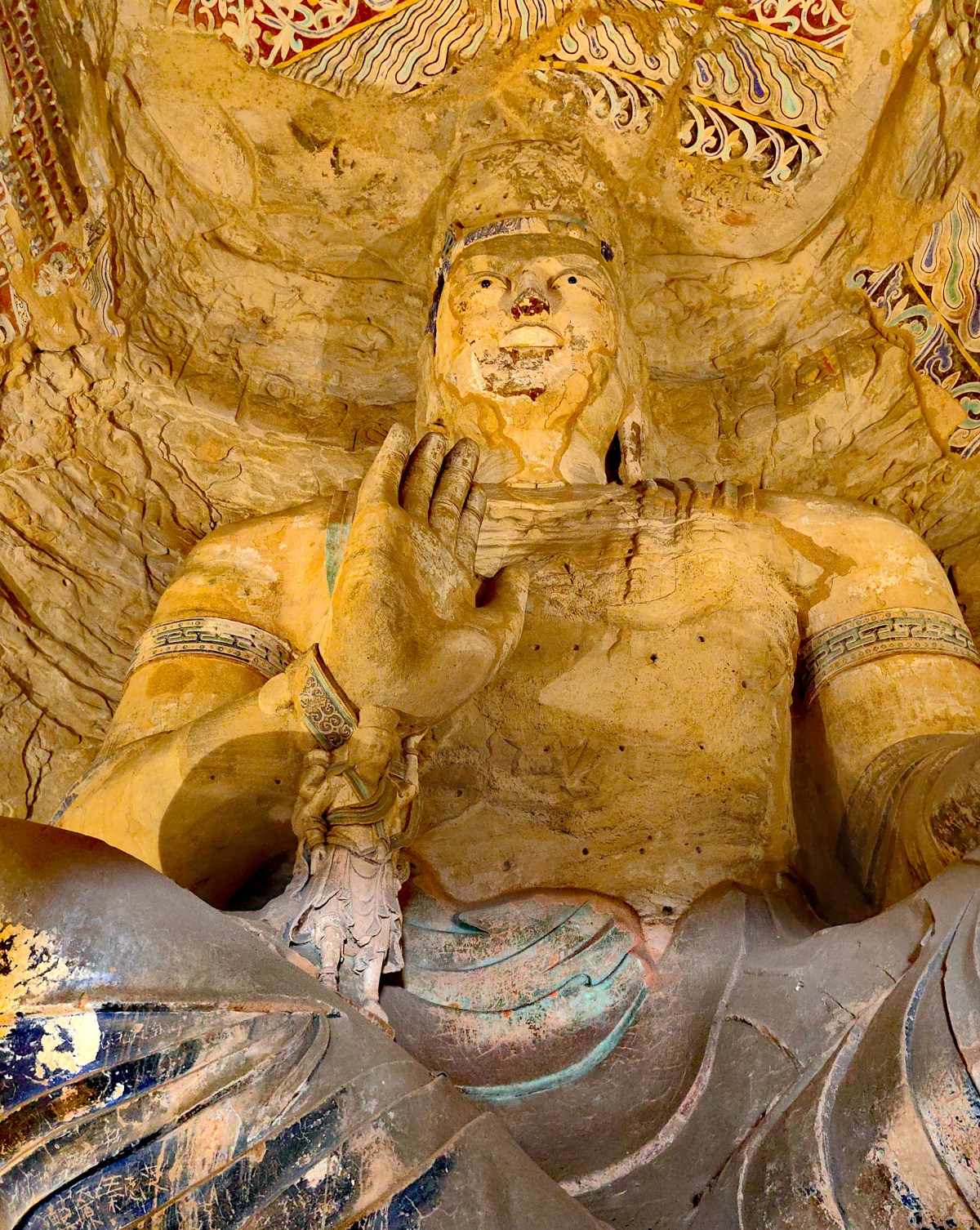
I have visited more than 20 caves and I will only highlight the caves with most impressive statues. Cave 13 is dedicated to Manjushri Bodhisattva, the embodiment of wisdom in Buddhism. The central figure is Manjushri which is often depicted riding a lion, representing the power of wisdom to overcome ignorance. The statue is elegantly proportioned, with a serene expression, intricately carved robes, and elaborate adornments that reflect the high artistic standards of the Northern Wei period. Due to the huge size of the main statue, the Bodhisattva’s raised right hand could not be suspended in the air, so the Yungang craftsmen “tailor-made” a four-armed warrior to hold up the huge arm. This design solved the problem of supporting the huge arm.
我总共游览了超过20 个洞穴,此文只会重点介绍那些拥有令人印象深刻的洞穴。云岗第13窟供奉着佛教智慧的化身文殊菩萨。文殊菩萨在佛家典籍里经常被描绘成骑着狮子,代表着智慧战胜无知的人物形象。这座造像比例优雅,神态安详,衣袍雕工精细,装饰精美,体现了北魏时期的高艺术水平。由于主像体型巨大,菩萨举起的右手无法悬浮在空中,于是云冈工匠“量身定做”了一个四臂武士来托起巨大的手臂。这样的设计解决了支撑巨大手臂的问题。
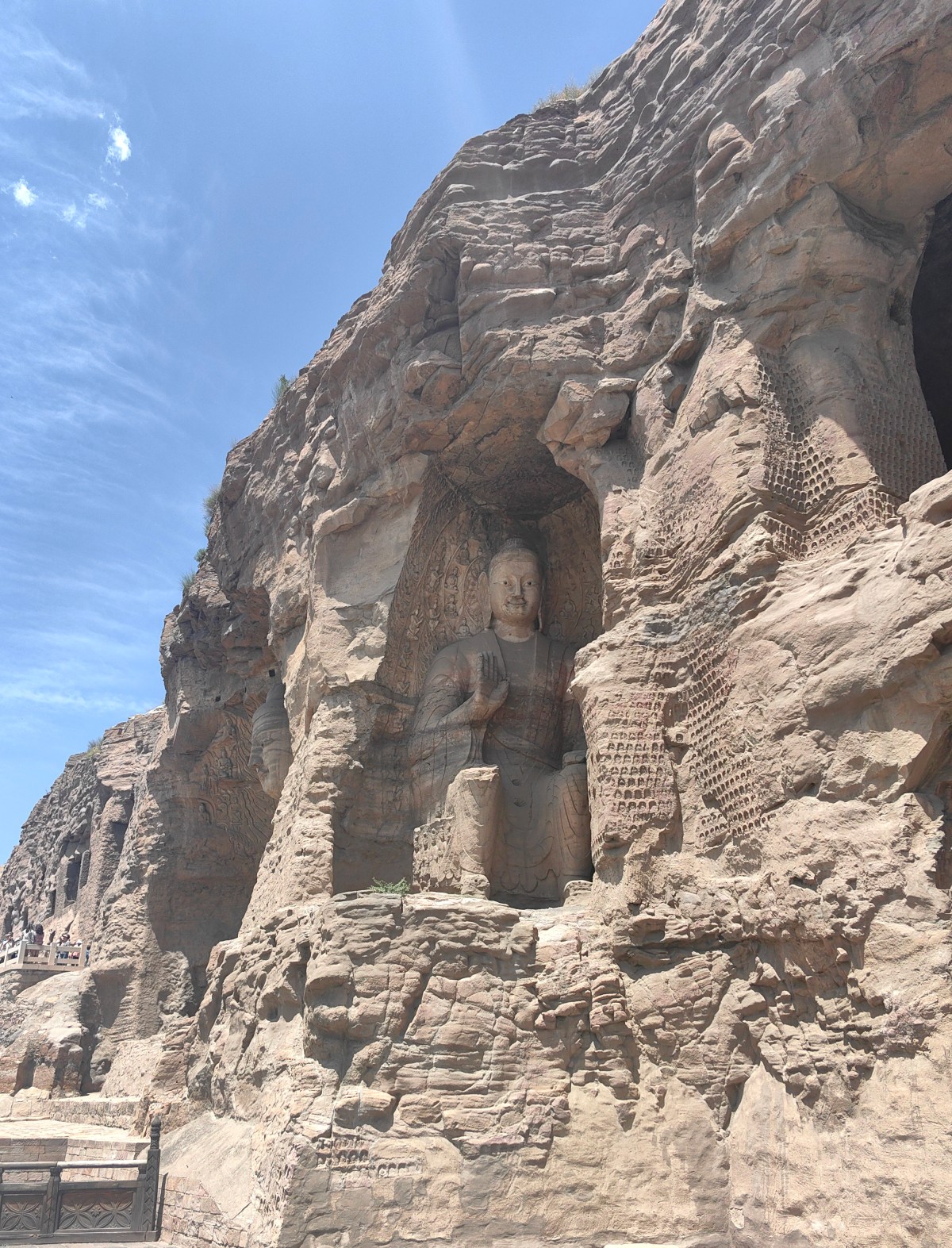
Several huge caves are exposed directly in air. Cave 19, known as the Baosheng Buddha Cave houses the second-largest Buddha statue in the entire complex. The Buddha statue of height 16.8 meter is colossal, with their serene faces and intricate details still visible despite centuries of exposure. It is carved directly into the cliff face. Exposed statues face greater risks of damage from natural elements and human activities. Efforts are ongoing to protect and preserve these cultural treasures, including stabilization of the cliff face and protective measures to prevent further degradation.
还有几个巨型洞穴则直接暴露在露天。第 19 窟被称为宝胜佛洞,供奉着整个建筑群中第二大的佛像。这座佛像高 16.8 米,体态巨大,尽管经历了几个世纪的风吹雨打,但其宁静的面容和复杂的雕塑细节仍然清晰可见。这个佛像直接雕刻在悬崖面上。裸露的雕像面临着更大的自然因素和人类活动损坏的风险。目前专家正在通过稳定悬崖面努力保护这些文化宝藏并采取保护措施防止风化。
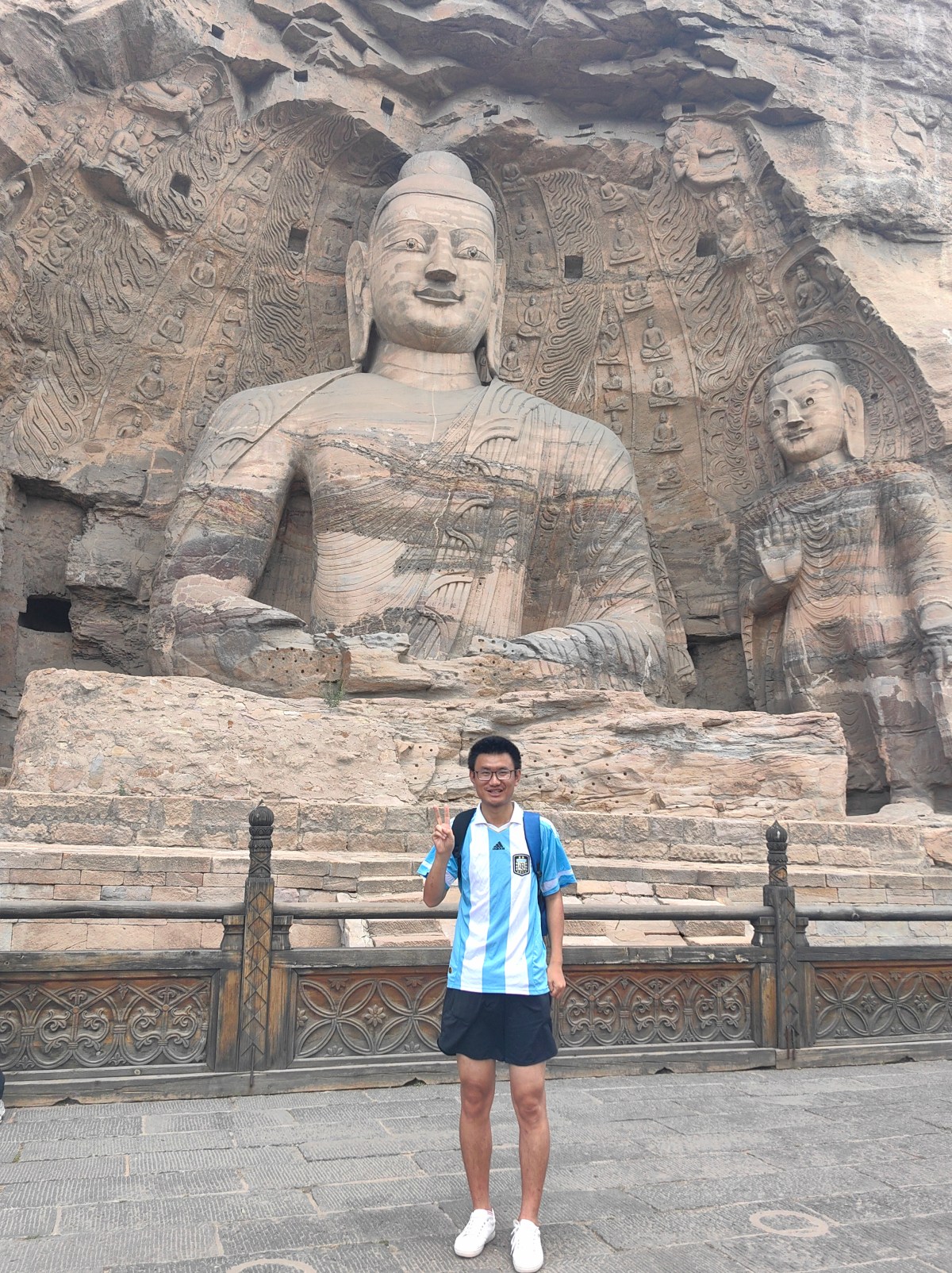
The most magnificent, iconic and representative statue must be the one in the cave 20. The seated Buddha is monumental, standing approximately 13.7 meters tall, with a serene expression. The Buddha’s face exudes tranquility and compassion, characterized by an elongated, oval shape, narrow eyes, and a slight smile. The both hands rest on the lap, symbolizing meditation and inner peace. The Buddha is framed by a carved halo (aureole) adorned with intricate patterns of lotus flowers and celestial motifs, symbolizing divinity and enlightenment.
整个云冈石窟最宏伟、最具标志代表性的雕塑当属第20窟的造像。整个佛像气势磅礴,高约13.7米,神态安详。佛陀的脸庞呈椭圆形,眼睛细长,面带微笑,散发着宁静和慈悲的气息。双手放置在腿上如同打坐的姿势,象征着冥想和内心的平静。佛陀的周围是雕刻的光环,装饰着复杂的莲花图案和星体图案,象征着神性和启蒙。
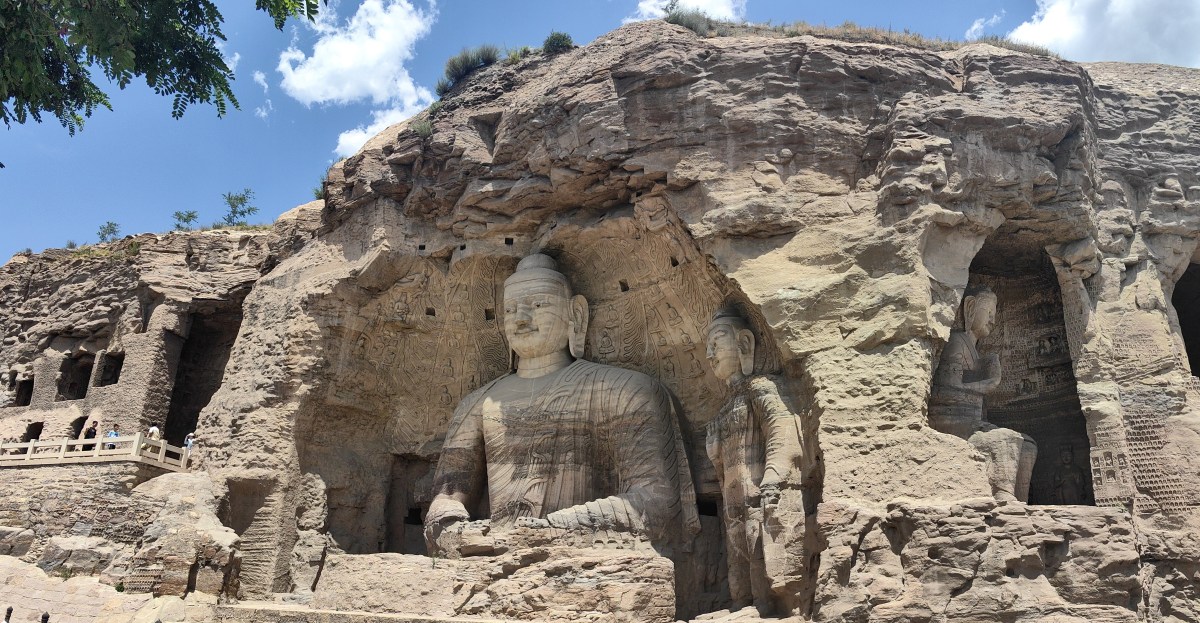
This is the panoramic view of the Buddha statue. Flanking the central Buddha are smaller statues of disciples, depicted with detailed robes and jewelry. The robe is really an artistic marvel, with finely carved folds that flow naturally over the body, showcasing the sculptor’s attention to detail and mastery of stone-carving techniques. The cave appears as an extension of the rock itself, seamlessly blending human artistry with the natural world.
这是佛像的全景图。中央佛像的两侧是较小的佛家弟子雕像,这些雕像清晰描绘出精致的袈裟和珠宝。佛像上的袈裟雕刻确实是一件艺术瑰宝,雕刻精美的褶皱在身体上自然流动,展示了雕塑家对细节的关注和对石雕技术掌握的如火纯青。这座洞窟如同岩石的延伸,将人类艺术与自然世界无缝地融合在一起。
Walking through this area felt like stepping into a living history book. The moment I oberseved it, the grandeur of the carved cliff face took my breath away. Towering statues of serene Buddhas gazed down with an air of wisdom, their expressions calm yet commanding. It was as if the past was alive, speaking silently through these ancient masterpieces.
漫游至此就如同卷入一本活生生的青史竹简。当我注视到它的那一刹那,雕像的的宏伟让我惊叹不已赞不绝口。如此高大的佛像安详地俯视众生,神情平静而威严依存。这一刻仿佛已逝去的岁月重新复活,依托在这些古老的杰作中无声地诉说着北魏王朝的昔日时光。
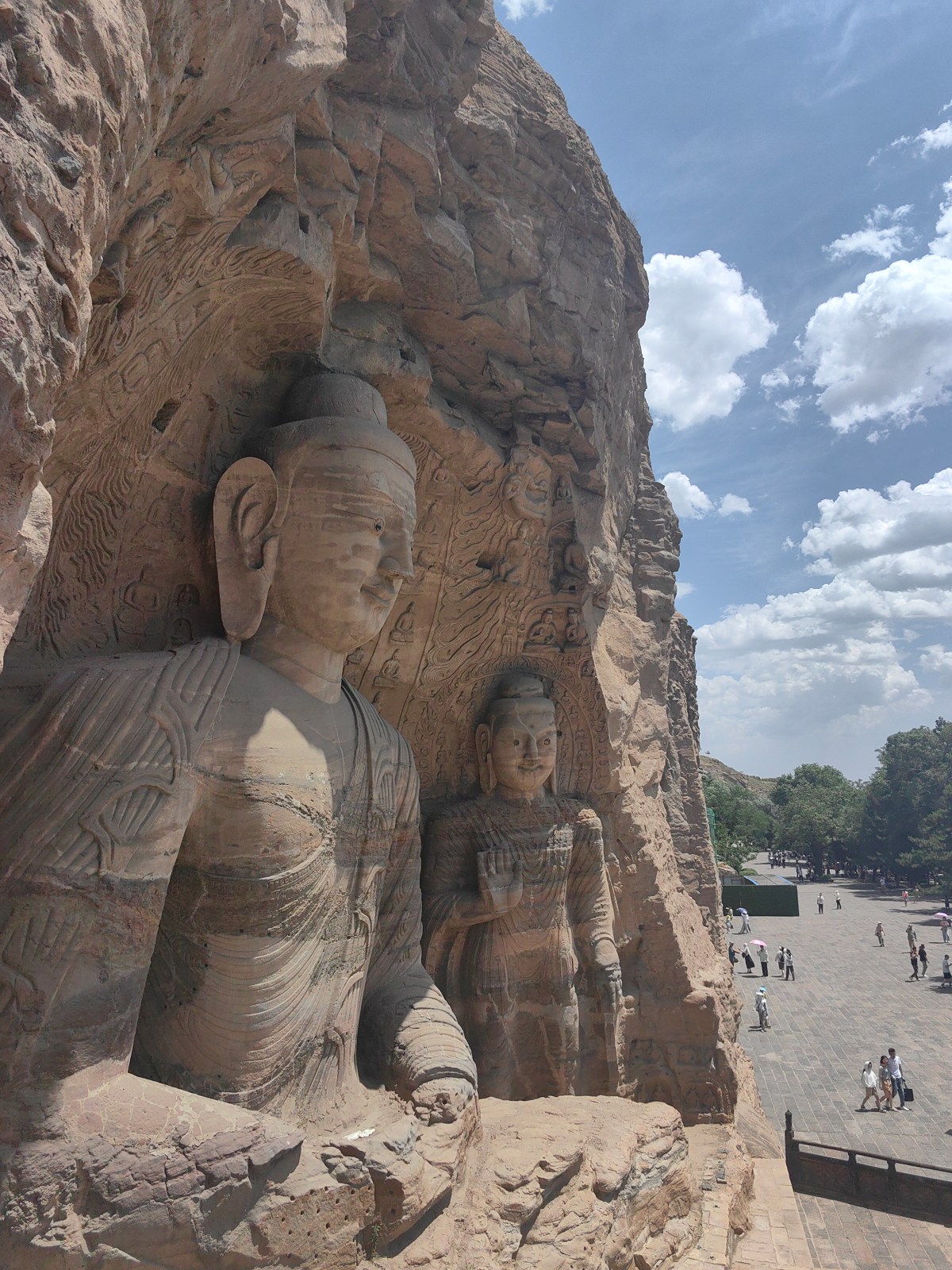
The artistic style of Cave 20 reflects a fusion of Indian Gupta influences (rounded faces, gentle expressions) and early Chinese aesthetics (elongated features, focus on symbolism). Its open structure allows natural light to illuminate the statues, creating dynamic shadows that enhance the sense of depth and divine radiance. Every visitor will take a memorable photo at the platform in front of the statues. Standing before the Grand Buddha was really a stunning experience, as its immense scale and intricate details create an overwhelming sense of spiritual awe. Human being looked so tiny at this moment.
第20窟的艺术风格体现了印度笈多王朝对中原文化的影响,这座雕像圆润的脸庞、温柔的表情和早期中国美学特征拉长的五官、注重象征意义等融合。另外其开放式结构使自然光充分照亮局部雕像,产生动态阴影,并增强深度和神性光辉。每位参观云岗石窟的游客都会在雕像前的平台上留下难忘的照片。站在大佛前确实是一种震撼的体验,它巨大的规模和错综复杂的细节营造了一种压倒性的精神敬畏感,人类在这一刻显得是如此的渺小。
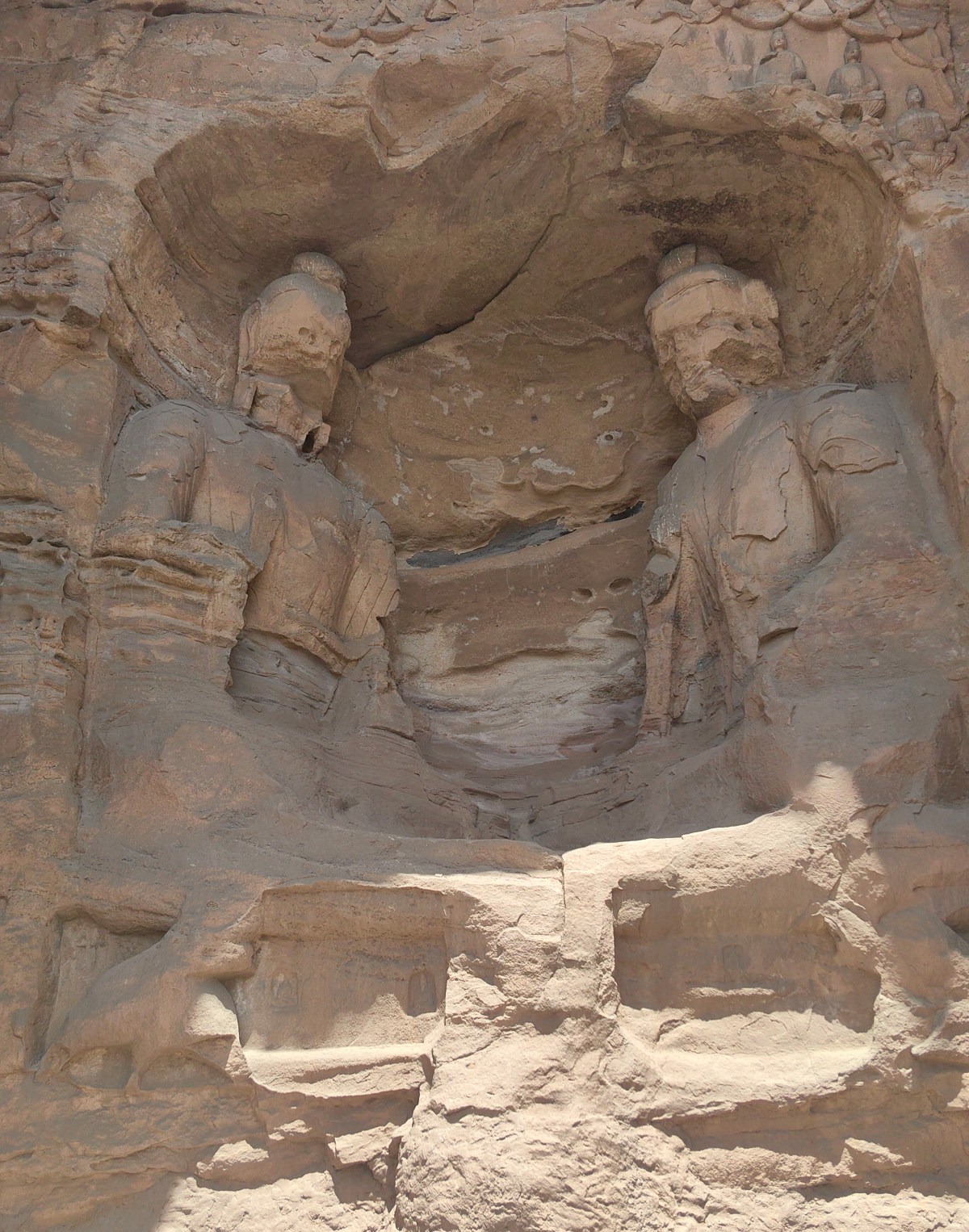
In the west of cave 20, there are some small caves which were built in the later period of North Wei Dynasty. Many of them were not conserved very well. Unlike the earlier caves adorned with intricate reliefs and detailed carvings, the small caves often feature minimalist designs. Due to their smaller scale, many of these caves have suffered significant erosion and degradation over time. The sandstone of the Yungang Grottoes is inherently soft and porous, making the smaller caves particularly vulnerable to erosion. Some caves have small side niches or inscribed panels, but they lack the complex architectural elements and spatial divisions seen in earlier caves. The small caves reflect a localization of Buddhist art as the religion became more integrated into Chinese society.
第20窟西侧有一些北魏后期所建的小窟。其中许多都没有得到很好的保存。与早期的洞穴装饰着复杂的浮雕和细致的雕刻不同,这些小洞穴通常采用简约的设计。由于规模较小,许多洞穴随着时间的推移遭受了严重的侵蚀和风化。云冈石窟的砂岩本质上柔软且多孔,使得较小的洞穴特别容易受到侵蚀。有些小洞穴里有小的侧壁龛或石刻板,但缺乏早期建造的洞穴中复杂的建筑元素和详细的空间划分。随着北魏后期佛教越来越融入中国社会,这些小洞穴则反映了佛教艺术的本土化。
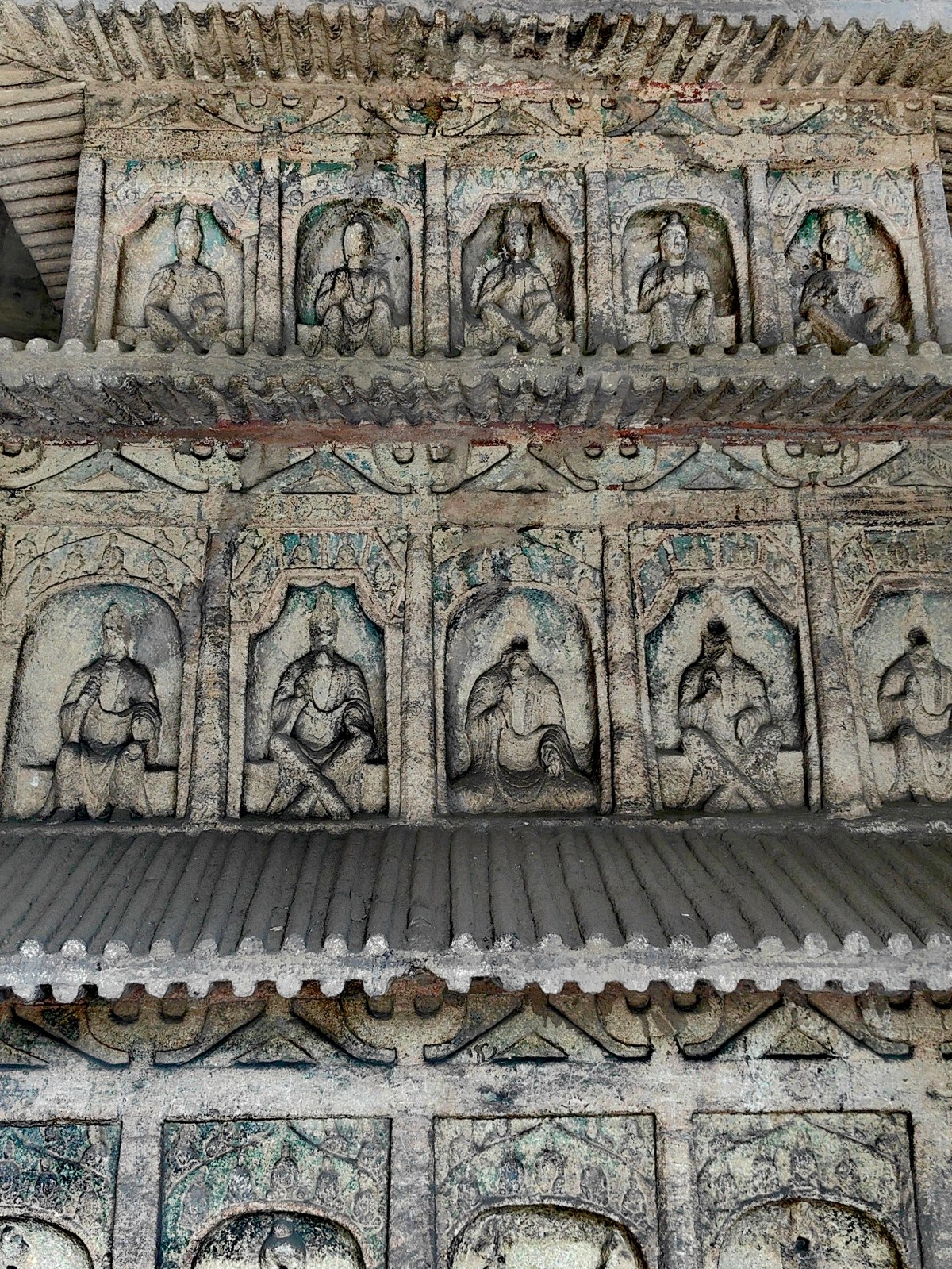
There are totally 40 caves here and needs around 2 to 3 hours to finish all of them. At the heart of the cave 39 is a five-level stone pagoda carved entirely from the rock, symbolizing Mount Sumeru, the cosmic center in Buddhist cosmology. These pagodas are often multi-tiered with overhanging eaves, mimicking the design of wooden pagodas. The five levels represent spiritual ascension and the five elements in Buddhist philosophy: earth, water, fire, wind, and space. As I walked around it, I could see the miniature Buddha reliefs seated in niches. The delicate carvings and faded traces of paint really invited closer observation.
云冈石窟景区共有40个洞穴,大约需要2至3个小时才能全部游览完。第39窟的中心是一座完全由岩石雕刻而成的五层石塔,象征着佛教宇宙学的中心须弥山。这些塔通常是多层的,有悬檐,模仿传统木塔的设计。这五个层次代表了精神境界的逐步提升和佛教哲学中的五种元素:地、水、火、风和空。我绕它一周清晰看到壁龛里端坐着的微型佛像浮雕。这些精致的雕刻和褪色的油墨痕迹需要细品。

An upper-level platform allows visitors to explore the smaller caves after number 20 that is carved higher up along the cliff face. These caves were built as Buddhism spread and became more localized. Smaller caves catered to individual or small group meditation rather than grand communal ceremonies. The initial construction of the Yungang Grottoes involved significant state resources, reflecting the Northern Wei court’s commitment to promoting Buddhism. Over time, as the dynasty’s priorities shifted to the new capital Luo Yang, the scale of cave construction decreased, leading to smaller and simpler designs.
景区还搭建了一个上层平台供游客探索 20 号洞穴之后的较小洞穴,这些洞穴沿着悬崖面开凿,地势更高。这些洞穴是随着佛教的传播而后建造,并且风格变得更加本地化。较小的洞穴适合个人冥想,而不适用盛大的官方仪式。云冈石窟的初期建设动用了大量的国家资源,体现了北魏王朝弘扬佛教的决心。随着时间的推移,以及王朝的重点逐步转移到新都洛阳,洞穴建筑群的规模逐渐缩小。

As my journey through the Yungang Grottoes came to an end, the overwhelming sense of wonder remained etched in my heart. Each cave and each statue told a story of the spread of Buddhism along the Silk Road, the political aspirations of the Northern Wei Dynasty, and the universal human pursuit of enlightenment. Beyond their artistic splendor, the Yungang Grottoes is also a symbol of resilience of Chinese culture, which have endured the ravages of time, weather, and human impact, still standing proudly as a UNESCO World Heritage Site for travellers from all around the world to visit.
当我的云冈石窟之旅结束时,那份震撼人心的感官刺激仍深深地萦绕在我的心头。这里每一个洞窟、每尊雕像都细致阐述了佛教沿着丝绸之路传播的故事、北魏王朝的政治诉求以及佛家子弟追求启蒙的故事。除了艺术的辉煌,云冈石窟也是中华文明顽强的象征,它经历了时间的洗礼、风雨的摧残和人类的影响,如今仍然顶天立地作为世界文化遗产供全世界游客顶礼膜拜。
 Gone like the wind