
探索泰国文化遗产大城府历史公园
Ayutthaya, the old capital of the Kingdom of Siam, stands as a testament to the grandeur and historical significance of Southeast Asia’s rich culture. Ayutthaya flourished as a major trading hub from the 14th to the 18th century, drawing merchants from all corners of the world. Today, the city is celebrated for its remarkable ruins and ancient temples, which have been meticulously preserved within the Ayutthaya Historical Park, a UNESCO World Heritage Site. Visitors to Ayutthaya are transported back in that glorious time as they explore the intricately designed wats, towering prangs, and serene Buddha statues that dot the landscape.
暹罗王国的旧都大城府见证了东南亚丰富的文化和宏伟的历史。这座城市曾经作为从14世纪到18世纪的主要贸易中心蓬勃发展吸引了来自世界各地的商人。如今这座城市因其巨大的历史遗迹和古老的寺庙而闻名,这些遗址和寺庙在联合国教科文组织世界遗产的大城府历史公园内被精心保存。当游客徜徉在精心设计的寺庙群,高耸的尖塔和宁静的佛陀雕像中时,仿佛回到了那个辉煌的时代。
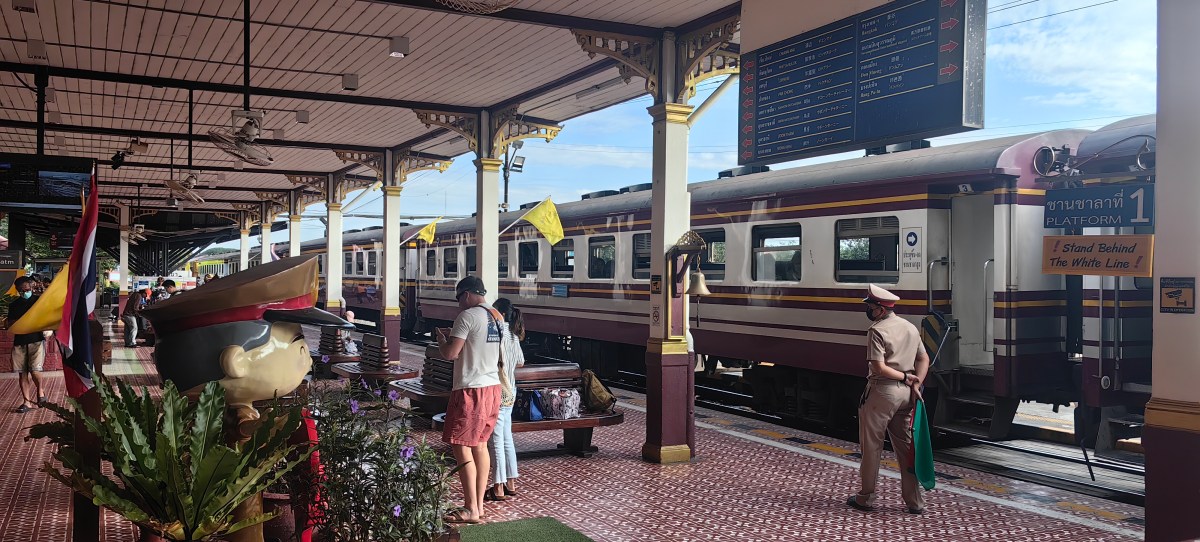
I took the train connecting Bangkok to Chiang Mai from Bang Sue Station in Bangkok to the Ayutthaya train station on December 4th, 2023. There is no highspeed train in Thailand. The speed of train is around 80-90km/ hour and each tram of the train has many open windows for ventilation. It is a short trip taking around 1.5 hours.
我于2023年12月4日从曼谷的Bang Sue 火车站乘坐连接曼谷到清迈的火车抵达大城府火车站。泰国没有高速火车。普通火车的速度约为每小时80-90公里,火车的每节列车都有许多开放式的通风窗口。这是一段大约需要1.5小时的短途旅行。

Ayutthaya train station is very small station. Upon arrival, visitors can easily access the historical sites, either by renting a bicycle, or hiring a tuk-tuk stopped in front of the station. Tuk-tuks are three-wheeled motorized vehicles, usually in green or red colors, and typically open-air. It is a popular and iconic mode of transportation in Ayutthaya, offering a convenient and enjoyable way to explore this historic park.
大城府火车站是一座很小的车站。到达后游客可以通过租用自行车或者雇用一辆停在火车站前的突突车便可轻松抵达历史遗址。突突车是一种通常是绿色或红色敞篷的人力三轮车。这是大城府的一种流行标志性的交通方式,为游客提供了一种方便而愉快的方式来探索这座历史悠久的遗址公园。

Ayutthaya Historical Park represents the history of the ancient city of Ayutthaya. Founded in 1350 by King U Thong, Ayutthaya swiftly became the capital of the Kingdom of Siam and one of the most prosperous cities in Southeast Asia. For over four centuries, it thrived as a political, economic, and cultural hub until its destruction by the Burmese army in 1767. After that, the capital was moved to Bangkok. This is the entrance of the park, and the visitors need to pay 200 Baht to visit four major attractions in this park.
大城府历史公园代表了这座古城的历史。大城府由乌通国王于1350年建立,之后迅速成为暹罗王国的首都,它也是当时东南亚最繁荣的城市。四个世纪以来,它一直是一个政治经济和文化枢纽,直到1767年被缅甸军队彻底摧毁。此后泰国首都就搬到了曼谷。这里是公园的入口,游客需要支付200泰铢才能参观公园的四个主要景点。
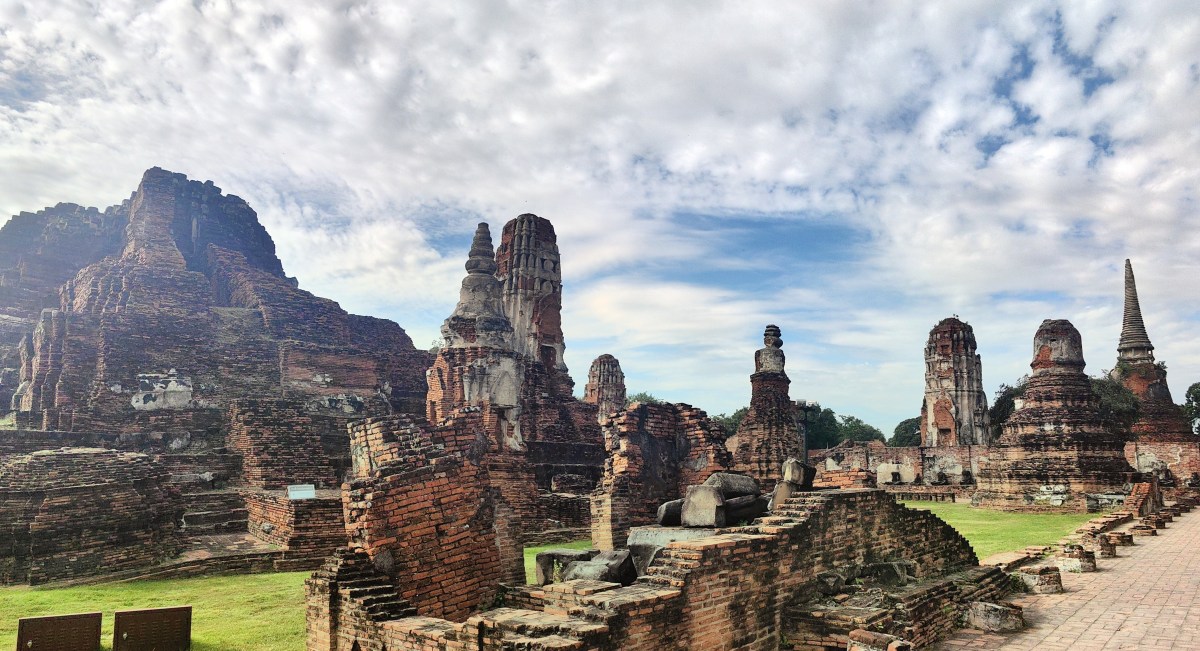
Recognized as a UNESCO World Heritage Site in 1991, Ayutthaya Historical Park includes the ruins of this once-magnificent city, offering visitors a glimpse into its storied past. The park covers an area of approximately 289 hectares and includes a multitude of impressive temples, palaces, and monuments, reflecting a blend of various architectural styles influenced by different cultures such as Khmer, Sukhothai, and Lopburi.
大城府历史公园在1991年联合国教科文组织列入世界遗产名录,这个曾经无比辉煌的城市遗址如今另游客能够一瞥它曾经的历史。该公园覆盖了大约289公顷的区域,其中包括许多令人印象深刻的寺庙,宫殿和古迹,反映了受包括高棉,素可泰等不同文化影响的各种建筑风格的融合。

The visual impact of my first sight of these relics was striking. The towering prangs and chedis, though weathered by time, stand majestically against the blue sky, their intricate details still visible despite centuries of exposure to the air. The golden hues of sunlight play on the ancient bricks and stone, casting long shadows that add to the sense of timelessness. I felt that I took a time machine and travelled back to the past.
看到这些文物的第一眼着实令人震撼。高耸的主塔和周围的小尖塔虽然随着时间的流逝而风化,但仍朝蓝天高傲矗立。尽管几个世纪漫长的磨损,它们表面的错综复杂的雕刻细节仍然可见。金色的晨光照耀在古老的砖石上,修长的阴影留下一种永恒的感觉让我觉得我仿佛乘坐时间机器回到了几百年之前的过去。

The first place I visited was the Wat Mahathat, also known as the Temple of the Great Relic. It was a royal monastery and one of the most important temples in Ayutthaya. It was established during the reign of King Borommaracha I (1370-1388). It is characteristic of Khmer-style architecture.
我参观的第一个地方是马哈特寺(Wat Mahathat),也称为大遗物寺庙。这是一座皇家寺庙,也是大城府中最重要的寺庙之一。它是在国王Borommaracha 一世(1370-1388)统治期间建立的,也是经典的高棉风格建筑。
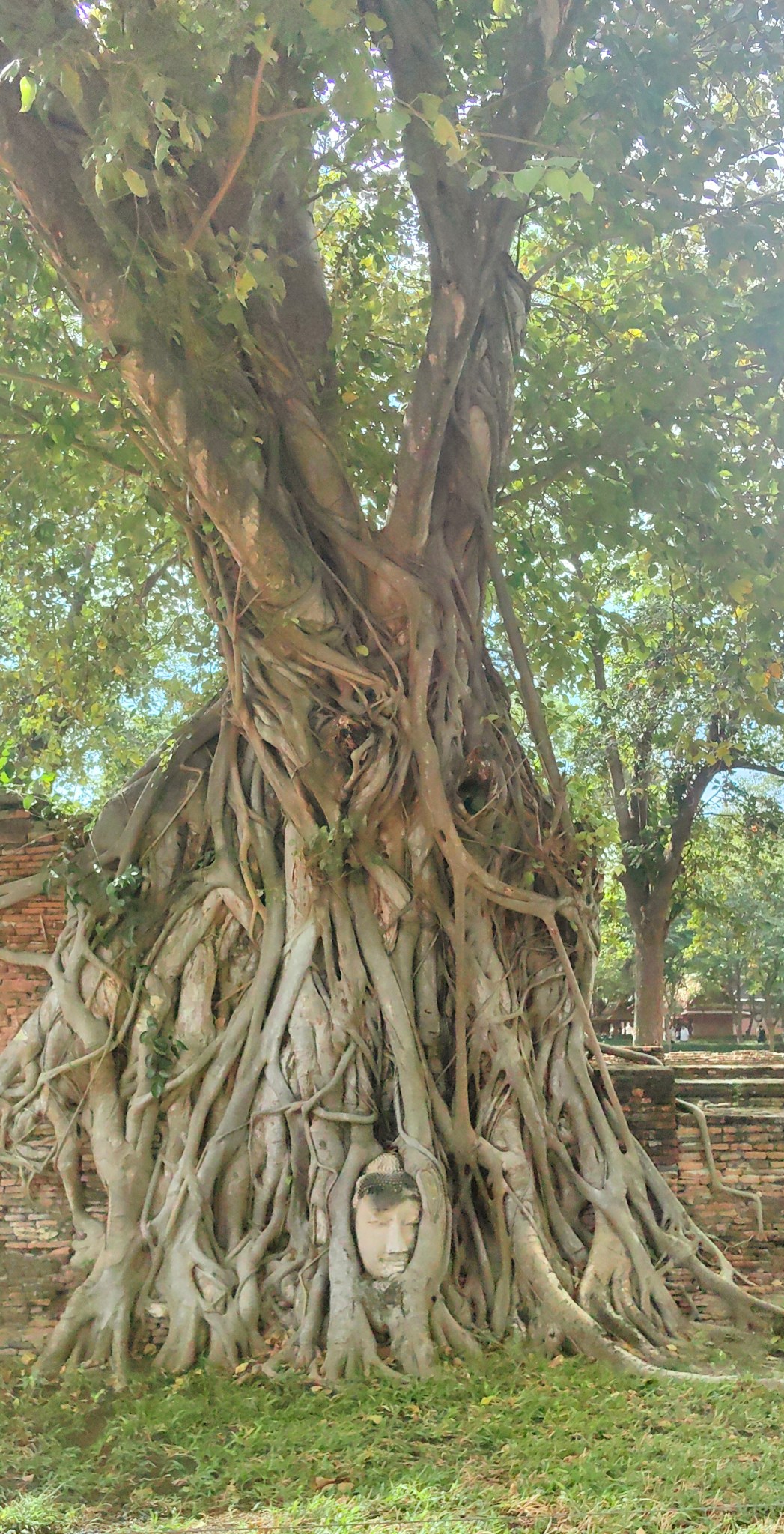
The iconic Buddha head entwined in tree roots at Wat Mahathat caught my eyes immediately, a poignant symbol of the enduring spirit of the place. This unique feature originated during the Burmese invasion when the temple was destroyed, and the head fell to the ground, later embraced by the tree’s roots.
这座寺庙里缠绕在树根中的标志性佛陀头立即吸引了我的目光,它也是这个地方历史悠久长存的象征。这一独特的景观起源于缅甸入侵时期,当寺庙被摧毁时,佛陀头部落在地面上,后来被树根所包围。

Each Buddha statue scattered throughout Ayutthaya Historical Park tells a story, reflecting different styles, periods, and the deep devotion of the people who created them. Ayutthaya style of Buddha statue combines elements of Sukhothai and Khmer styles. These statues often have a broad, smiling face and a distinctive flame-like finial atop the head. For me, the unique element of Buddhism was the most attractive point to be explored when travelling in Thailand.
每个散布在大城府历史公园中的佛陀雕像都讲述了一个故事,它们也反映了创造者的不同风格以及对佛教深厚的笃信精神。这里佛陀雕像的风格结合了素可泰和高棉的建筑元素。这些雕像通常具有宽阔的笑脸,头顶上有特别的火焰般的端饰。对我来说独特的佛教元素是泰国旅游最有吸引力的地方。

The prangs of Ayutthaya are among the most distinctive architectural elements in the ancient city. These prangs are characterized by their tall, tower-like structure, often built on a square or rectangular base. The surfaces of prangs are often decorated with intricate stucco work, featuring floral patterns, mythical creatures, and scenes from Buddhist mythology.
图中这种高塔是古城最独特的建筑元素之一。这些建筑的特征是它们高大的塔式结构,通常建在正方形或矩形底座上。它们的表面通常装饰有包括花卉图案,神话生物和佛教神话中的场景等复杂的灰泥制品。
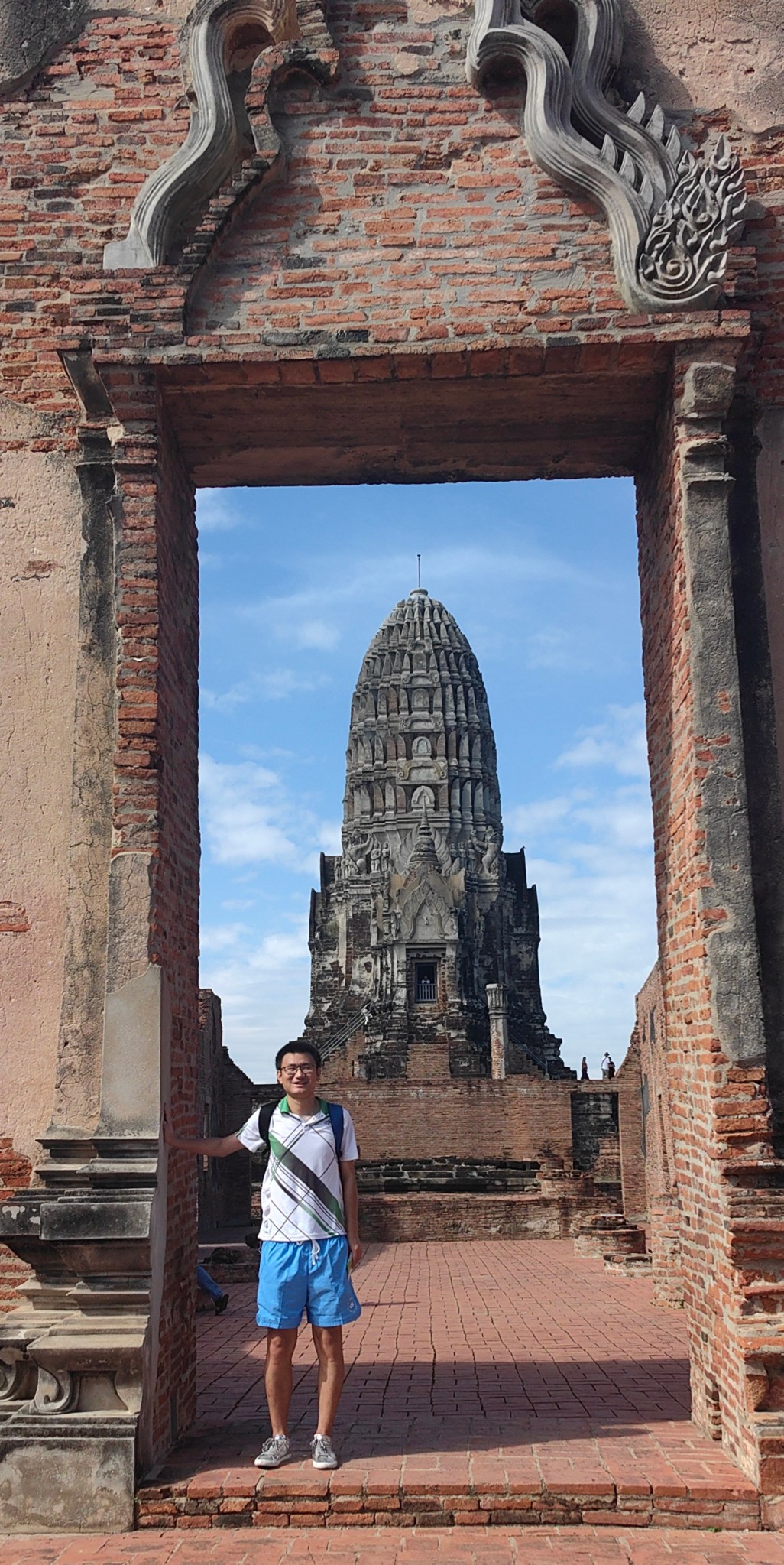
The prangs of Ayutthaya are not just architectural wonders but also reflections of the rich cultural heritage and religious devotion of the Ayutthaya Kingdom. Wat Ratchaburana was one of the most impressive temple in this park. The prang at Wat Ratchaburana is one of the best-preserved in Ayutthaya. Wat Ratchaburana was established by King Borommaracha II in 1424 to honor his two elder brothers, Chao Ai Phraya and Chao Yi Phraya, who died in a duel for the throne.
大城府的高塔不仅是建筑奇观也是一种对Ayutthaya王国丰富文化遗产和宗教崇拜的传承。Ratchaburana寺庙是公园中最具有震撼力的寺庙之一。它的高塔也是这里保存最完好的。它是由Borommaracha 二世于1424年建立的,以纪念为了争夺王位决斗而死的两个哥哥Chao Ai Phraya和Chao Yi Phraya。
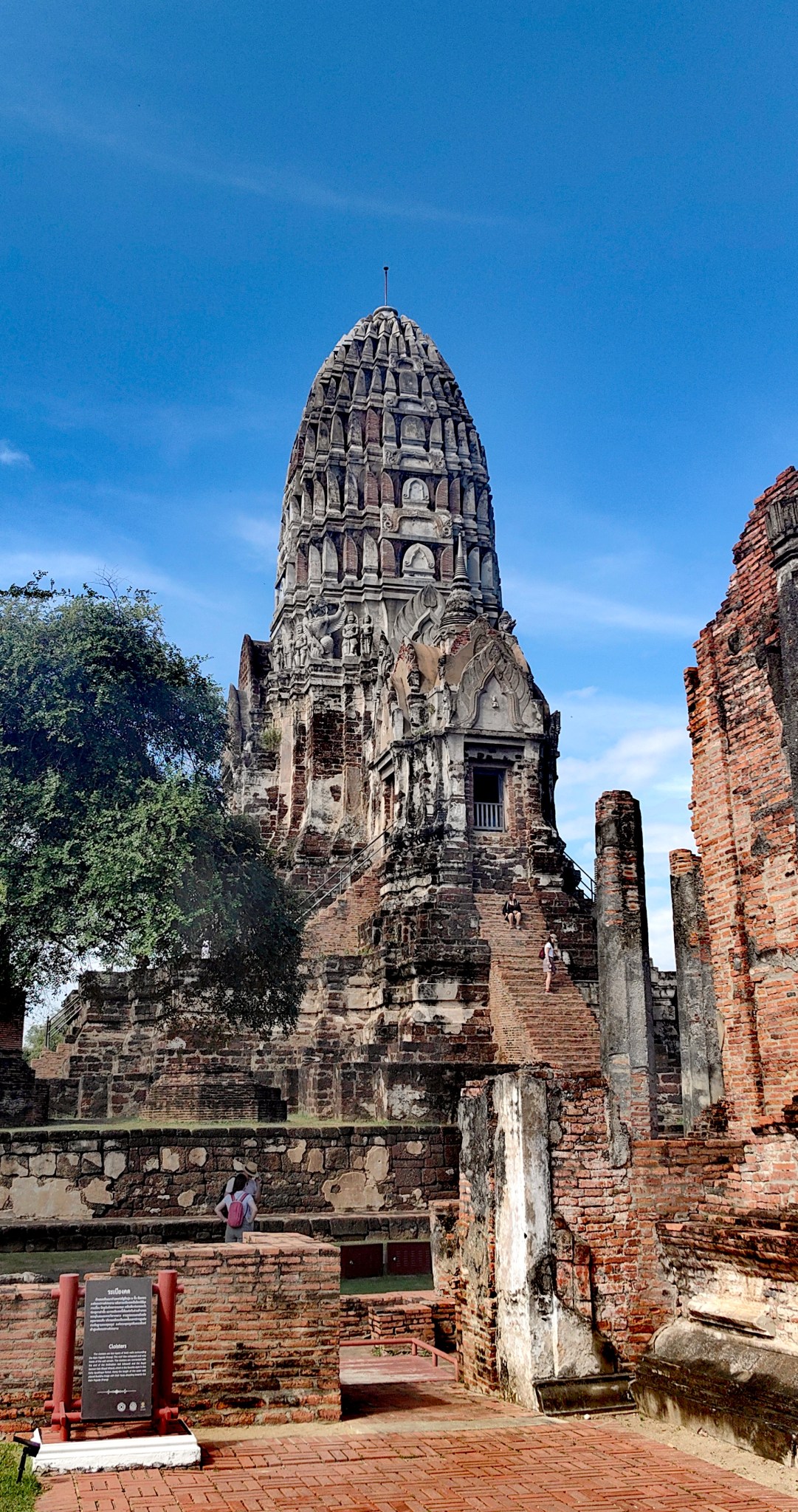
The prang is built in the traditional Khmer style, with a tall, tapering tower rising from a square base. It is adorned with stucco reliefs and ornamental details, showcasing the craftsmanship of the Ayutthayan artisans. The prang represents Mount Meru, the sacred mountain at the center of the universe in Hindu and Buddhist cosmology. It serves as a spiritual axis connecting the earthly realm with the heavens. Standing before this prang, I couldn’t help but feel a sense of awe and reverence. It dominates the landscape and serves as a visual and symbolic connection between the earthly and the divine.
图中的高塔以传统的高棉风格建造,是一座从正方形的底座上升而起的高锥塔。它装饰有灰泥的浮雕和众多建筑细节,展示了大城府工匠的工艺。这座高塔代表梅鲁山,它是印度教和佛教宇宙中心的圣山。也是将凡尘与高天神国联系起来的精神线。站在这个高塔之前,我不禁感到一丝敬畏和崇敬。它一览众世小,如同尘世与神之间的联系桥梁。
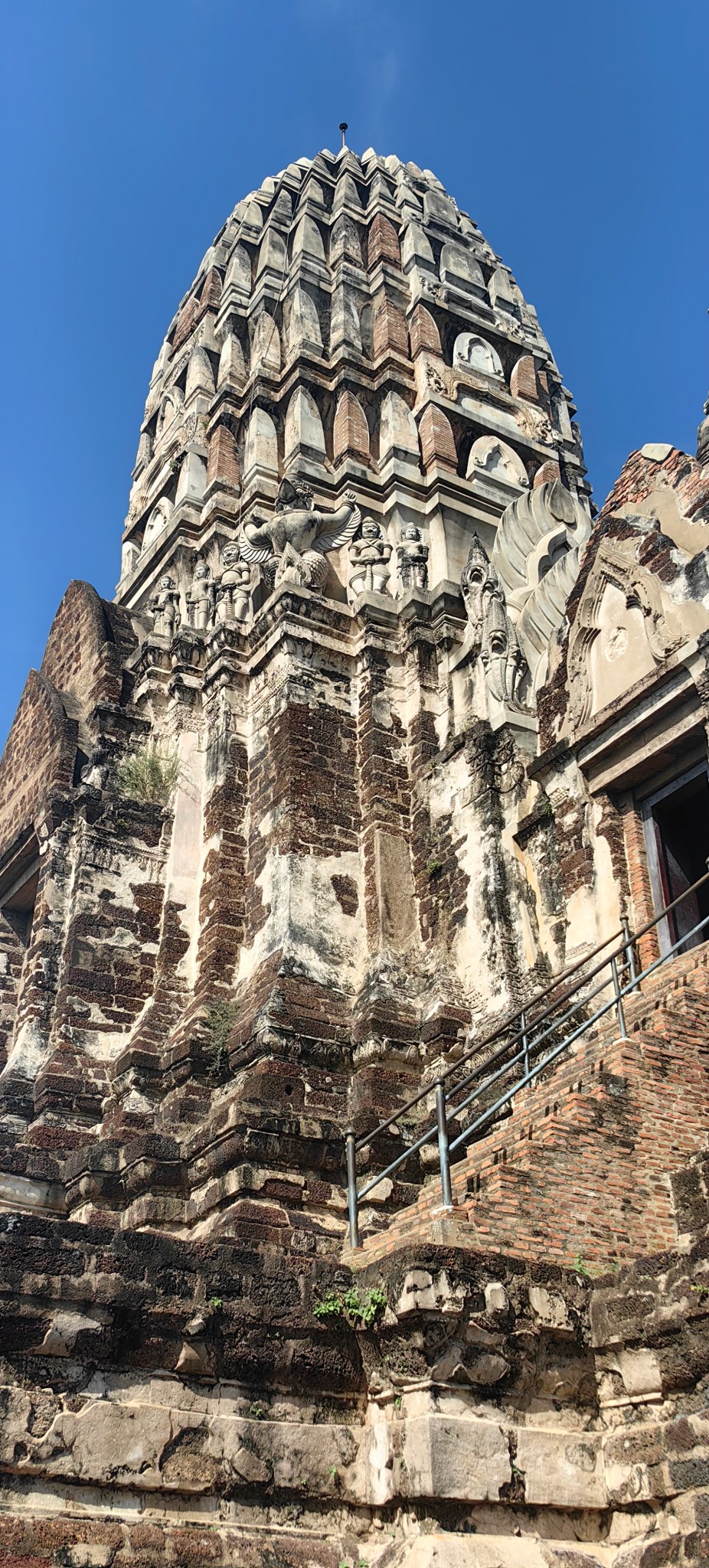
The prang of Wat Ratchaburana is adorned with a multitude of statues and sculptural elements that drew my attention when I climbed up the brick steps. I could see clearly the statues of dvarapalas. These statues are typically depicted in a standing position, holding weapons such as clubs or swords. They serve as protectors of the temple, warding off evil spirits and guarding the sacred space within. There are statues of devatas (deities) and thewada (celestial beings). These figures are often portrayed in elegant, flowing attire, with serene expressions and graceful poses. Devatas and thewadas represent divine beings who inhabit the celestial realms.
Ratchaburana寺庙的高塔还装饰着许多雕像和雕塑元素令人侧目,当我爬上砖制台阶时我可以清楚地看到德瓦拉帕拉斯的雕像。这些雕像通常以站立姿势呈现,手执拿着大棒或长剑等武器。他们充当圣殿的保护者,驱赶邪灵并守护着内在的神圣区域。这里还有devatas和Thewada的雕像。这些人物通常以优雅飘逸的服装造型进行描绘,有着镇静的表情和优美的姿势。 Devatas和Thewadas代表了居住在天神领域的神圣生物。

Ayutthaya Historical Park is super large. The lake in the center of Ayutthaya Historical Park is a tranquil and adds a natural element to the ancient city’s landscape. Surrounded by lush greenery and dotted with historical ruins, it is a good place to have a rest or stroll.
这个历史公园实在太大了。历史公园的中心有一个宁静的湖泊,在古城的历史景观中增添了自然的元素。周围都是郁郁葱葱的绿色植物,上面散布着历史遗迹,是休息或漫步的好地方。

The Ayutthaya Palace has been destroyed totally in the war. Now I could only see the remnants of Throne Halls and ruins of residential areas. The whole area is covered by weeds. Standing among the ruins of the Ayutthaya Palace, I felt a profound sense of awe at the grandeur and historical transition of the ancient kingdom. The remnants evoke reflections on the speedy passage of time and the cruelty of wars.
大城府的王宫早已在战争中被彻底摧毁。现在我只能看到王座大厅废墟的残垣断壁。整个区域都被杂草覆盖。我站在这片废墟中,对古代王国的宏伟和历史变迁不由地深感敬畏。这些遗迹残骸令我感慨时间流逝的飞快和战争的残酷。

The Wat Phra Si Sanphet located within the palace grounds is well conserved fortunately. This temple served as the royal chapel. The temple was a central place for royal religious activities, highlighting the close connection between the monarchy and Buddhism.
位于宫殿区域内的Phra Si Sanphet寺所幸被完整保留。这座寺庙是皇家教堂,也是皇家宗教活动的中心地点,凸显泰国君主制与佛教之间的紧密联系。

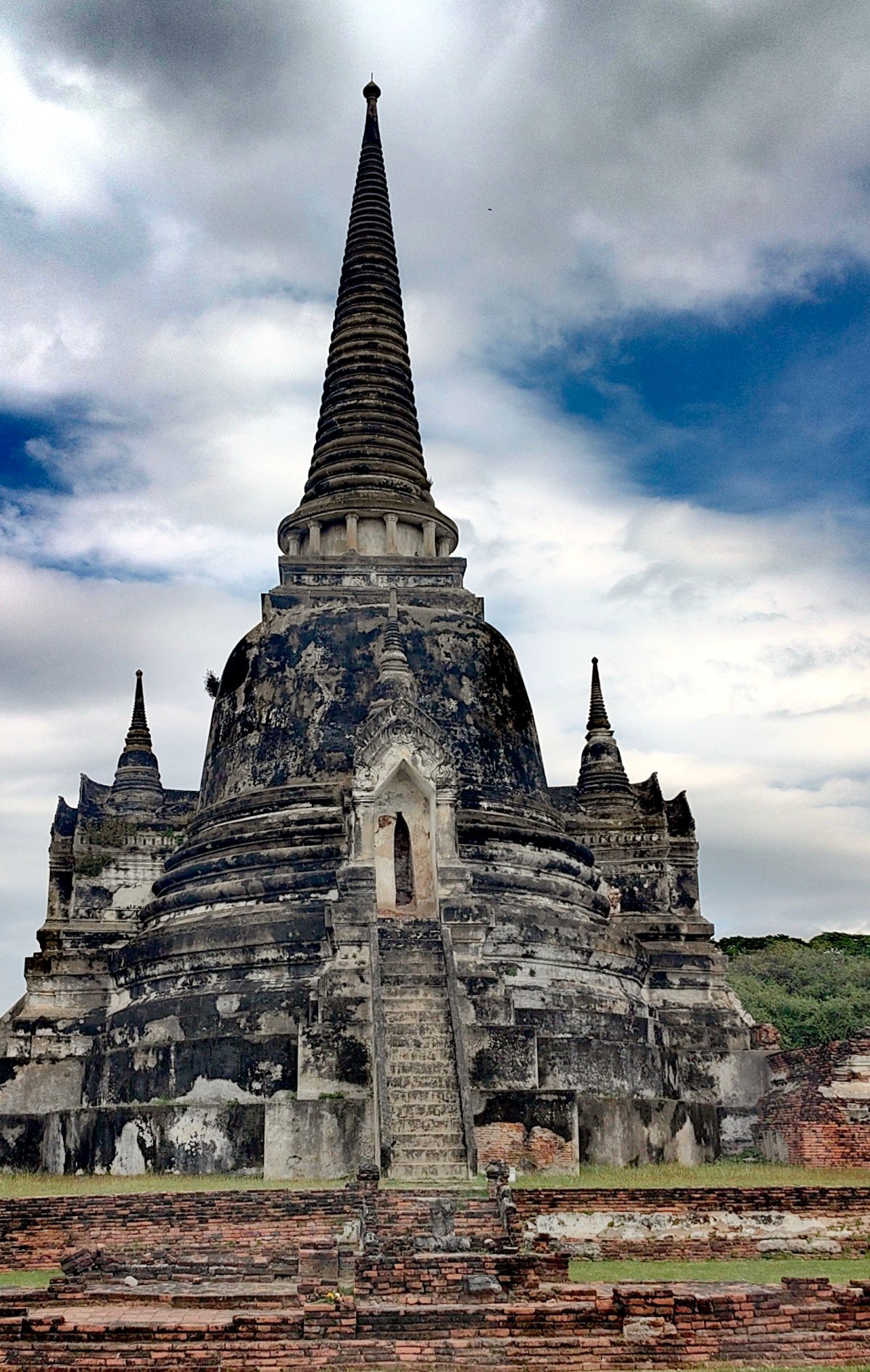
Established in the 14th century during the reign of King Ramathibodi I, it was part of the royal palace complex. Its three large chedis, which still stand today, housed the ashes of three Ayutthayan kings. The three large chedis perfectly aligned is the most impressive and iconic architectures in this historic park. The chedis are bell-shape with intricate stucco reliefs. They are surrounded by smaller stupas and other structures.
建立于14世纪拉马西博迪一世统治期间,这座寺庙是皇家宫殿的一部分。它的三个大尖塔(Chedis)如今仍然屹立不倒,分别保存了三个国王的骨灰。三个巨大的尖塔完美地对齐排列是这个历史悠久的公园中最令人印象深刻的建筑。这种大尖塔一般是钟形,装饰有复杂的灰泥浮雕。它们被较小的佛塔和其他建筑结构包围。

The architectural style of Ayutthaya is affected by both Sukhothai and Khmer. The Sukhothai architectures are characterized by the small stupas which are typically bell-shaped or in the form of miniature chedis. These structures mirror the design of the larger chedis but on a more modest scale. The stupas often feature detailed stucco reliefs depicting lotus motifs, mythological creatures, and religious motifs.
大城府的建筑风格受素可泰和高棉两种风格的影响。素可泰建筑的特征是这种钟形或类似于上图大尖塔(Chedis)形式的微型小佛塔。这些结构复制了的大尖塔(Chedis)的设计,但总体规模较小。这种佛塔经常呈现莲花图案,神话生物和宗教图案的细腻浮雕装饰。

Sukhothai is renowned for its elegant Buddha statues, characterized by a flame-like ushnisha (a protuberance on the top of the head symbolizing wisdom) and a serene, meditative expression. Ayutthayan Buddha statues often replicate the Sukhothai style, with smooth, flowing lines and a focus on the spiritual tranquility of the Buddha.
素可泰以其优雅的佛像而闻名,其特征是头顶上如同火焰般的象征着智慧的突起和冥思的表情。 大城府的佛像通常复制素可泰的风格,这里的佛像有着平滑流动的线条并且似乎全神专注于佛陀的精神宁静。

Some small stupas contain niches that once held votive tablets or small Buddha statues. These items were often placed as offerings or to gain spiritual merit. The small stupas are strategically placed around the larger chedis and main temple structures, contributing to the overall harmony and balance of the temple complex.
一些小佛塔还包含者收纳小佛陀雕像或者印有佛陀拓片的龛。这些物品通常被放置在这里以获得精神上的升华。这些小佛塔在建筑排列上一般布置在更大的尖塔和主庙宇周围,这有助于达到一种整体的和谐与平衡。

Visitors were able to take the time to closely inspect the small stupas scattered all around the historical park. Their intricate decorations and architectural details are best appreciated up close. They are typically bell-shaped, a common form in Thai Buddhist architecture. This shape symbolizes the union of heaven and earth. They have an octagonal base, representing stability and the foundation of the spiritual path. Intricate floral motifs, such as lotus flowers and vines, adorn the surfaces. The spire is typically multi-tiered, each tier representing the ascent through the realms of existence towards enlightenment. It often culminates in a small, gilded umbrella-like structure, symbolizing protection and honor.
游客可以花些时间仔细观察散布在历史公园各处的小型佛塔, 近距离欣赏它们精致的装饰和建筑细节。它们的整体轮廓通常是钟形的,这是泰国佛教建筑的常见形式,这种形状象征着天地合一。它们有一个八角形底座,代表着稳定和精神的基础。表面装饰着如莲花和藤蔓等复杂的花卉图案。塔尖通常是多层的,每一层都代表着从肉体存在走向精神开悟的飞升。塔顶通常以一个小的镀金伞状结构收尾,象征着保护和荣誉。
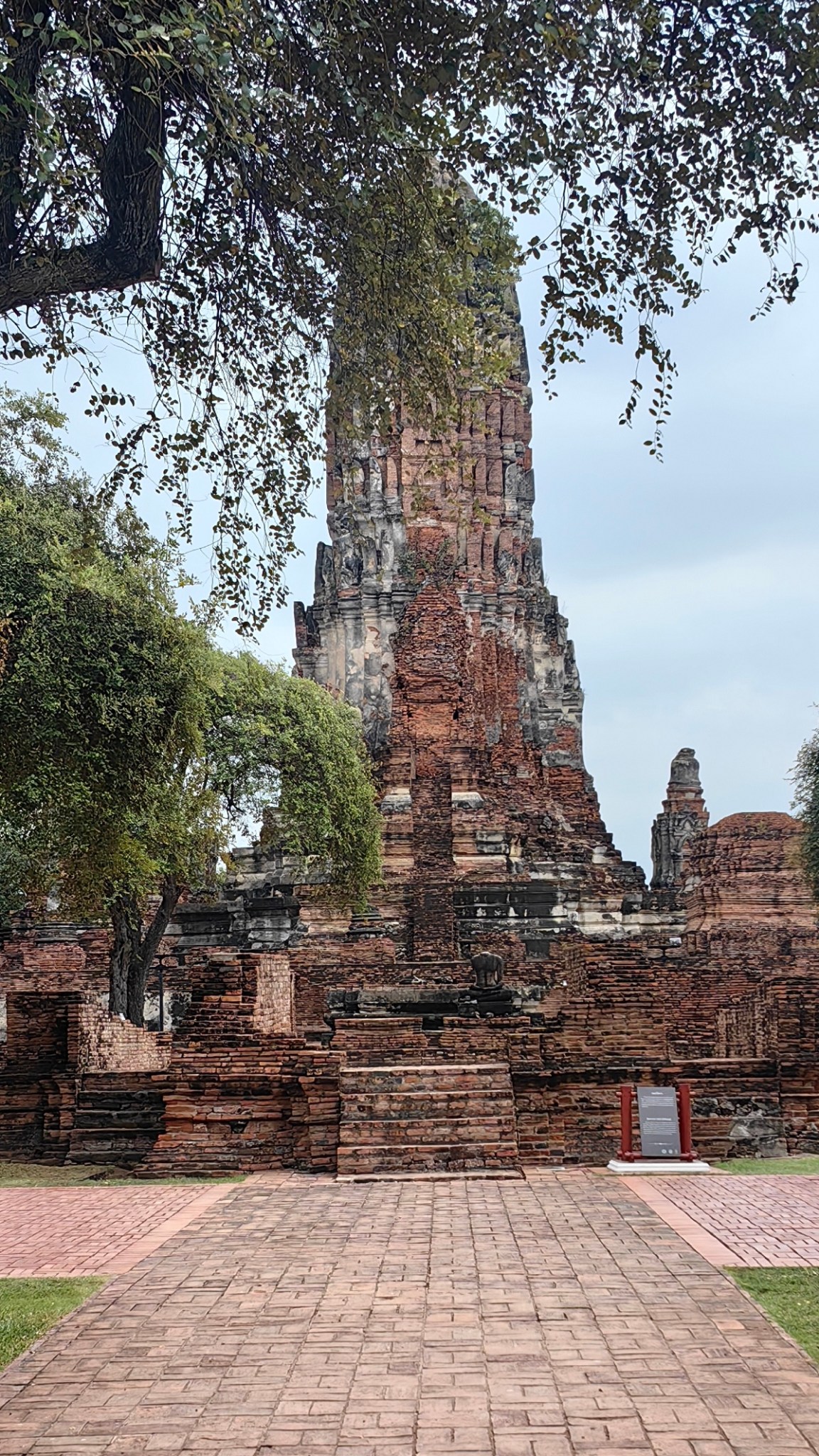
Wat Phra Ram is another significant temple which was constructed in the late 14th century by King Ramesuan on the cremation site of his father, King U-Thong, the first king of Ayutthaya. The towering central prang is the most prominent feature of Wat Phra Ram. I could see many this kind of Khmer-style tower here. The influence of Khmer architecture on the architecture of Ayutthaya is profound in several key features within the Ayutthaya Historical Park. The Khmer Empire, which flourished in Southeast Asia from the 9th to the 15th centuries, left a lasting impact on the region.
帕拉姆寺是另一座重要的寺庙,由拉梅苏安国王于14世纪末在其父亲乌通国王(大城府第一任国王)的葬礼所在地上修建。高耸的中央主塔是帕拉姆寺最显著的特征。我在这个公园里看到了很多这种高棉风格的塔。高棉建筑对大城府建筑的影响在大城府历史公园中体现得淋漓尽致。高棉帝国在9世纪至15世纪在东南亚实力强大,对该地区产生了持久的影响。

Khmer architects often used sandstone and laterite in their constructions, materials that were also adopted in Ayutthayan architecture. These materials are durable and suitable for intricate carvings and large-scale structures. The stucco reliefs on the prang of Wat Phra Ram and other temples in Ayutthaya feature detailed carvings that echo the artistic style of Khmer bas-reliefs found at Angkor.
高棉建筑师经常在建筑中使用砂岩和红土,大城府的建筑也借鉴采用了这些材料。这些材料经久耐用,适合制作精美的雕刻品和大型建筑。帕拉姆寺和大城府其他寺庙的灰泥浮雕雕刻精细,与吴哥窟的高棉浅浮雕艺术风格相呼应。

There is an artificial lake located adjacent to Wat Phra Ram. The calm waters of the lake create a stunning mirror effect, reflecting the nearby temples towers and greenery. The lake planted with blooming lotus flowers looked like the Western Lake of Hangzhou.
帕拉姆寺旁边有一个人工湖,湖水平静如镜般倒映着附近的高阁塔楼和绿植,湖中种满了盛开的莲花,仿若杭州西湖。
Walking through the trail covered with gravel, I could not help to contemplate the history of Thailand one thousand year ago. The first centralized country Sukhothai Kingdom was founded in 1238 by King Sri Indraditya, marking the beginning of what is considered the first independent Thai kingdom. Sukhothai was a mandala state, where the central power radiated outward, and local rulers paid tribute to the king. Sukhothai became a center for Theravada Buddhism, with the construction of numerous temples in this style.
走在铺满碎石的小径上,我不禁回想起一千年前悠久的泰国历史。历史上第一个集权国家素可泰王国由因陀罗帝王于1238年建立,标志着泰国第一个独立王国的开端。素可泰是一个曼荼罗国家,中央权力向外辐射,地方统治者向国王进贡。素可泰成为上座部佛教的中心,当时就建造了许多这种风格的寺庙。
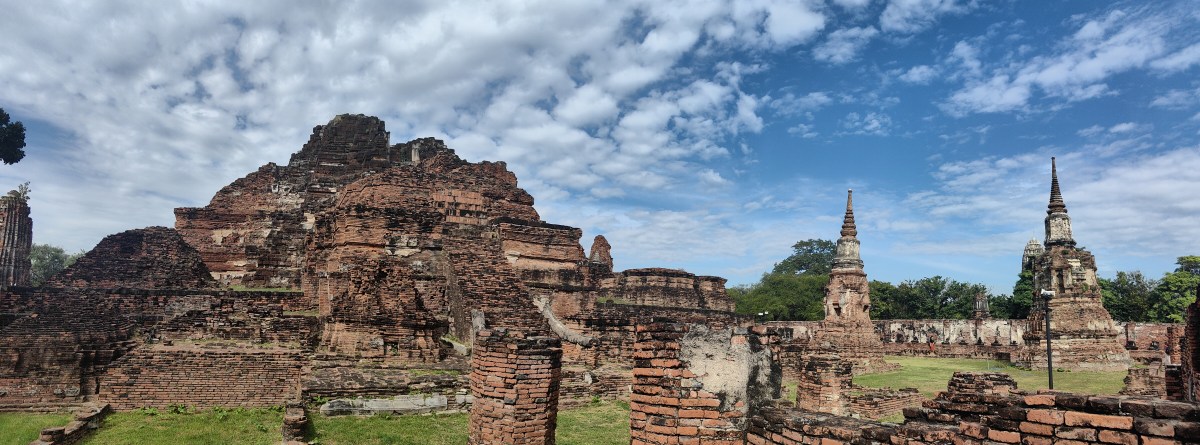
In 1438, Sukhothai was officially annexed by the Ayutthaya Kingdom. Ayutthaya was founded in 1350 by King U Thong. The kingdom expanded through military conquests and alliances, eventually controlling much of present-day Thailand, Laos, Cambodia, and parts of Myanmar. Ayutthaya continued to promote Theravada Buddhism. Ayutthaya engaged in numerous conflicts with neighboring states, particularly Myanmar. These wars were a source of eventual downfall. In 1767, after years of intermittent warfare, Burmese forces captured and sacked Ayutthaya, leading to the kingdom’s collapse. The whole city was destroyed, and many buildings were ruined.
1438年,素可泰王国被大城王国正式吞并。大城王国由乌通国王于1350年建立。王国通过军事征服和联盟不断扩张,最终控制了现在的泰国、老挝、柬埔寨和缅甸部分地区的大部分地区。大城王国继续推广上座部佛教并与邻国尤其是缅甸发生了多次冲突。这些战争最终导致了大城王国的衰落。1767年,经过多年的断断续续的战争,缅甸军队攻占并洗劫了大城王国,导致王国灭亡。整座大城府被摧毁,许多建筑物被毁。
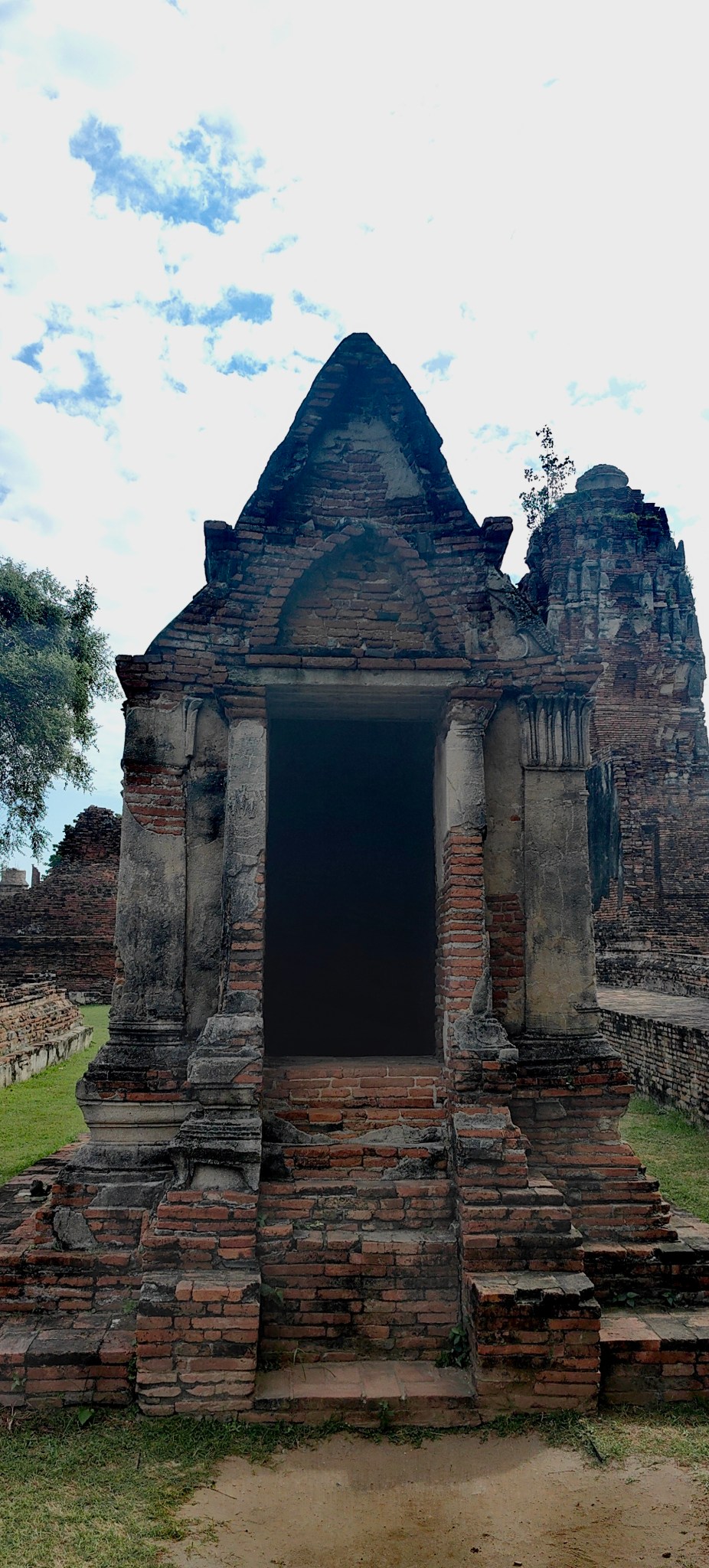
Wat Nok is one of the lesser-known temples in Ayutthaya. It has a quieter presence, often overlooked by the mainstream tourist trail. Unlike other temples, its main building is well conserved. It is enclosed by a wall, with a gate serving as the entrance. It includes a courtyard and a tranquil garden area. Visitors could know how the complete temple of Ayutthaya looked like after visiting it.
诺克寺是大城府鲜为人知的寺庙之一。它比较安静,经常被大众游客忽略。与其他寺庙不同,它的主建筑保存完好。它被一堵墙包围,有一扇门作为入口,其中包括一个庭院和一个宁静的花园。游客参观后就能知道一座完整的大城府寺庙的概况。
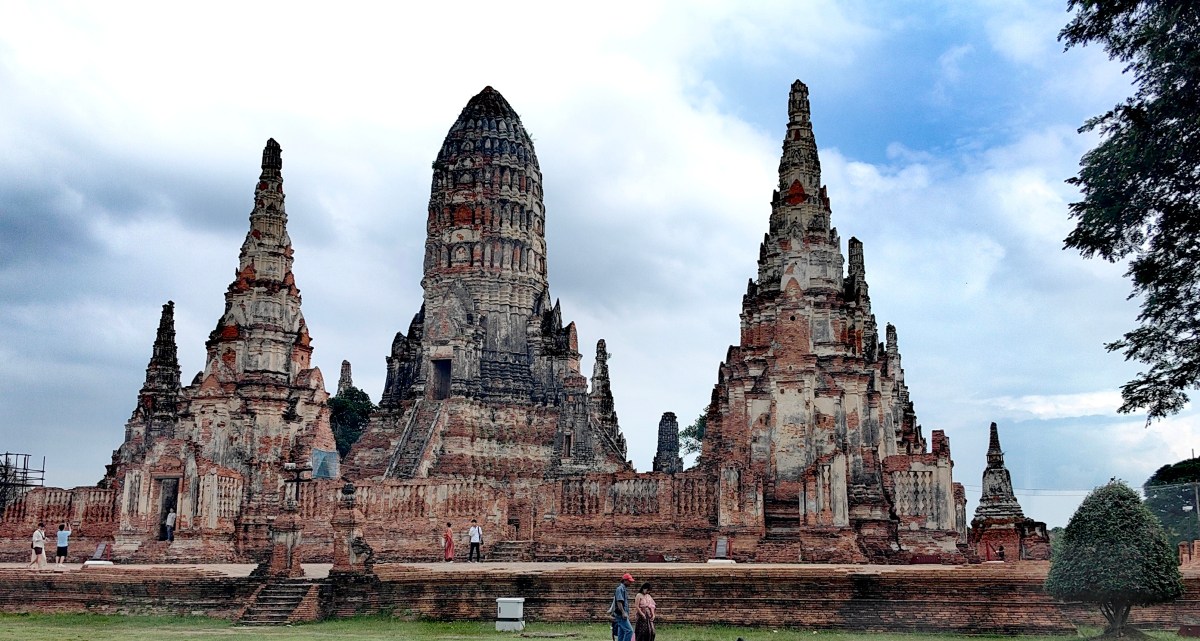
The last site visited was the Wat Chaiwatthanaram, which was built in 1630 by King Prasat Thong. It was constructed in honor of his mother and to commemorate his victory over the Khmer kingdom. It is a monument similar to the Arc de Triomphe and symbolizes the power and influence of the Ayutthaya Kingdom. Like the design of many temples in Ayutthaya, the central prang stands at 35 meters and is the most prominent feature of Wat Chaiwatthanaram. It is surrounded by smaller prangs and chedis. The three towers, standing majestically against the sky, inspired my appreciation for the historical and cultural achievements. There is a large piece of lawn behind the temple providing excellent panoramic photography opportunities, especially during sunset when the light enhances the details and colors.
这次旅行参观的最后一处景点就是柴瓦塔那兰寺,该寺由 Prasat Thong 国王为了纪念他的母亲和战胜高棉王国于1630年修建。它是一座类似于凯旋门的纪念碑,象征着大城王国的权力和影响。与大城府许多寺庙的设计一样,中央的塔高达35米,这是柴瓦塔那兰寺最突出的特征。它周围环绕着较小的佛塔。三座壮观的高塔巍然耸立在蓝天之下令我对泰国历史和文化成就感到由衷的赞赏。寺庙后面有一大片草坪,尤其是在日落时分,光线增强了景物的细节和色彩,为游客提供拍摄绝佳全景的机会。

Surrounding the central prang is a rectangular gallery lined with numerous Buddha statues. Most of the stuccos, bas-reliefs and architectures are well conserved. Continuous restoration and preservation efforts are undertaken by Thai government to maintain the structural integrity and aesthetic beauty of this temple. Such an impressive cultural heritage really needs people to protect it well in the long run.
中央佛塔周围是长方形的画廊,两旁摆放着许多佛像。大部分的灰泥浅浮雕和建筑如今都保存完好。泰国政府一直以来不断进行修复和保护工作,以保持这座寺庙的结构完整性和美感。如此令人印象深刻的文化遗产确实需要人们永远好好保护。

My trip in Ayutthaya historic park lasted a whole day. As the sun dipped low, casting golden hues across ancient stones, Ayutthaya this mystical land seemed to whisper tales of old stories and, kings and temples. Through ruins vast where echoes of history resided, I returned back to train station in wonder. Beneath tall and grand prangs, I felt the pulse of this sacred land. The memories of this journey will linger and always be etched in my mind.
我在大城府历史公园的旅行持续了一整天。当太阳渐渐落下,金色的光芒洒在古老的琢石上时,大城府这片神秘的土地似乎在低声诉说着古老的故事,讲述着国王和寺庙的依稀往事。穿过这片回荡历史的广阔遗迹,我满心惊奇地回到了火车站。在高大宏伟的佛塔下,我感受到了这片神圣土地的脉搏。这次旅行的记忆也将永远铭刻在我的脑海里。
 Gone like the wind