The Stone Forest, located in Yunnan Province, is a breathtaking natural wonder renowned for its towering limestone formations that resemble a vast forest made of stone. Formed over 270 million years ago through erosion and geological activity, this UNESCO World Heritage site is rich in history and culture. The local Sani people, a branch of the Yi ethnic group, add to the forest’s allure with interesting folklore. Exploring labyrinth-like pathways and dramatic rock pillars was really an extraordinary experience for every traveler.
The Stone Forest was classified as a UNESCO World Heritage site in 2007 because of its outstanding geological significance and unique karst landscape. It’s one of the world’s best examples of karst formations with limestone pillars shaped by millions of years of erosion and tectonic activity. The site is part of the South China karst, a vast region recognized for its exceptional biodiversity, intricate cave systems, underground rivers, and limestone features.
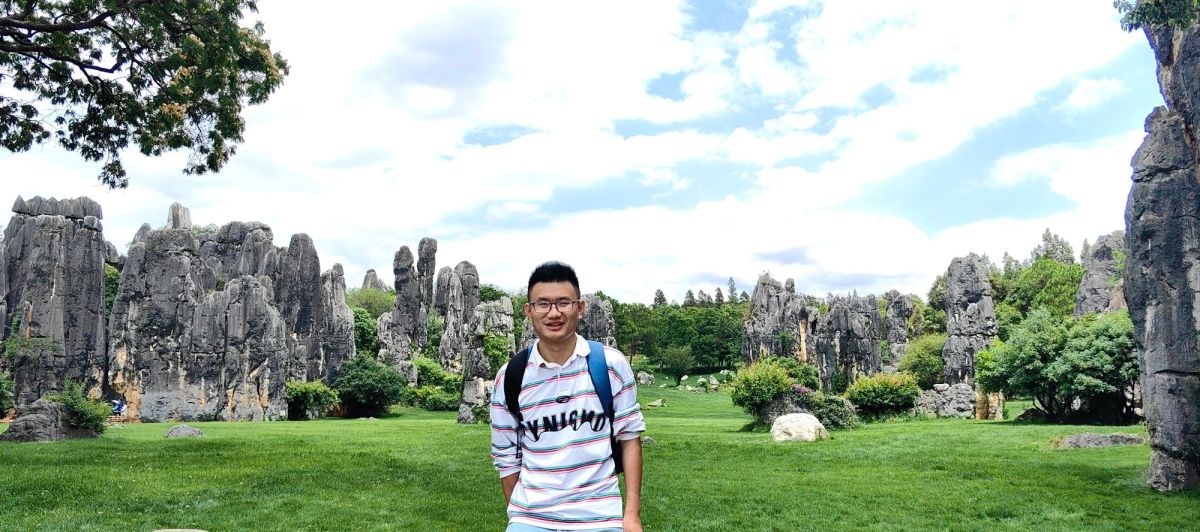
I visited this famous scenic point on May 19th, 2024, during my summer trip in Yun Nan. Upon arrival of the entrance, I was attracted by the numerous stones of different forms. Despite its rugged, rocky landscape, the Stone Forest is home to a rich variety of plant life that thrives in the crevices and soil within the limestone formations. Begonias, bamboos, and Yunnan Pine can be seen in every corner of this park.
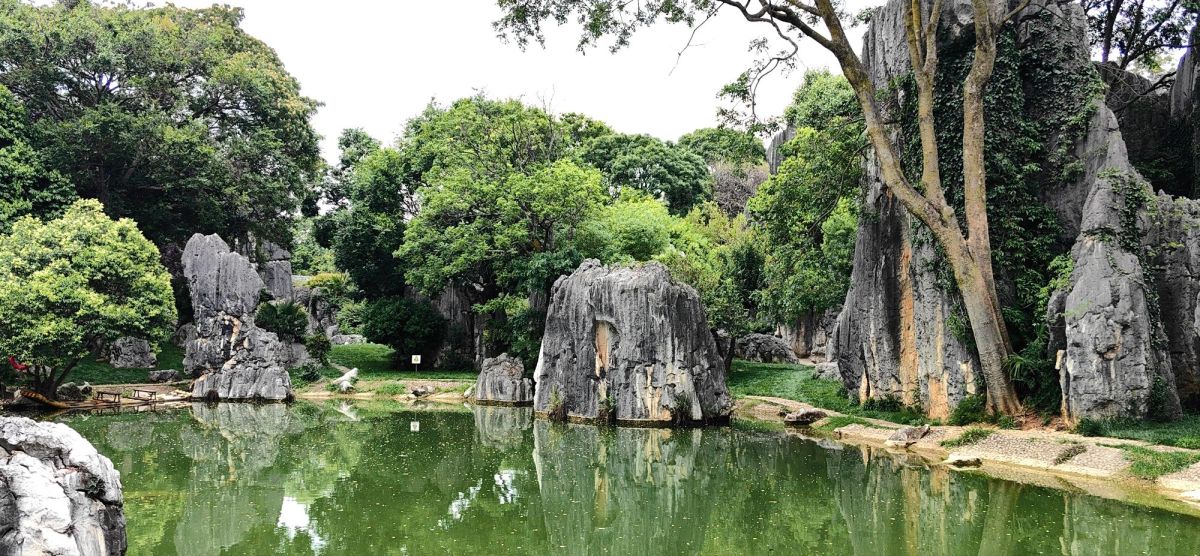
All visitors need to cross one bridge on the Shilin Karst Lake. It is a tranquil and elegant lake which still waters create a mesmerizing mirror effect, reflecting the limestone pillars that surround it. The lake is fringed with unique rock formations, some of which seem to rise directly out of the water like natural sculptures. There are some viewpoints allowing visitors to wander along the shore, offering peaceful spots to rest.
During the Permian Period, the area that is now the Stone Forest was covered by a shallow tropical sea. Over millions of years, marine organisms like corals, shellfish, and algae thrived in this environment, leaving behind thick layers of limestone as they died and accumulated on the seabed. Due to tectonic movements, the seabed gradually rose above sea level, exposing the limestone deposits to air.
Karst landscapes are formed through a process of erosion, where soluble rocks, like limestone are gradually dissolved by water over long periods of time. The presence of soluble limestone is made primarily of calcium carbonate (CaCO3). Rainwater is slightly acidic due to dissolved carbon dioxide and forms carbonic acid (H2CO3), which chemically erode the rock. Over time, the acidity of rainwater or groundwater slowly reacts with the calcium carbonate, creating small cracks in the rock. Over long periods of time, the Karst landscape can evolve into a complex system of geological features, including limestone plateaus, sharp peaks, isolated columns, and underground caverns.
Many huge stones are composed of various layers of limestone, which have eroded over millions of years. This erosion has created unique shapes and textures, from sharp edges to smoother, rounded forms. The intricate patterns on the stone surfaces resemble layers of barky and natural folds, and some wrinkles. At times, I felt like an explorer uncovering hidden treasures, each new path revealing a different formation that sparked my imagination—some stones looked like a giant’s face, while others resembled delicate spires rising toward the sky.
Between the stone columns, there are small gaps, crevices, and caves, some of which visitors can explore. These openings form narrow passageways and hidden corners, creating a sense of mystery and discovery. Visitors can rest on the stone stools for a while when they felt tired. Over a long time, moss, lichen, and other small plants have grown on the stones, adding a touch of green to the monotonous grey and brown landscape.
The Major Stone Forest is the main and most famous scenic point, attracting numerous visitors. It is a labyrinth of jagged rock formations, shaped over millions of years by the forces of wind and water. The limestone pillars, some towering as high as 30 meters, stretch in all directions, creating a dense, maze-like environment where it’s easy to lose yourself in the twists and turns of the landscape.
The limestone spires are thin and elongated, resembling tall spikes. These formations reach upward, as though they are trying to touch the sky. Walking through these sections feels like wandering through a vast, jagged city of stone, with towering buildings rising up from the ground on all sides. The stone pathways can be uneven and rocky, so it’s important to wear sturdy, comfortable shoes for walking.
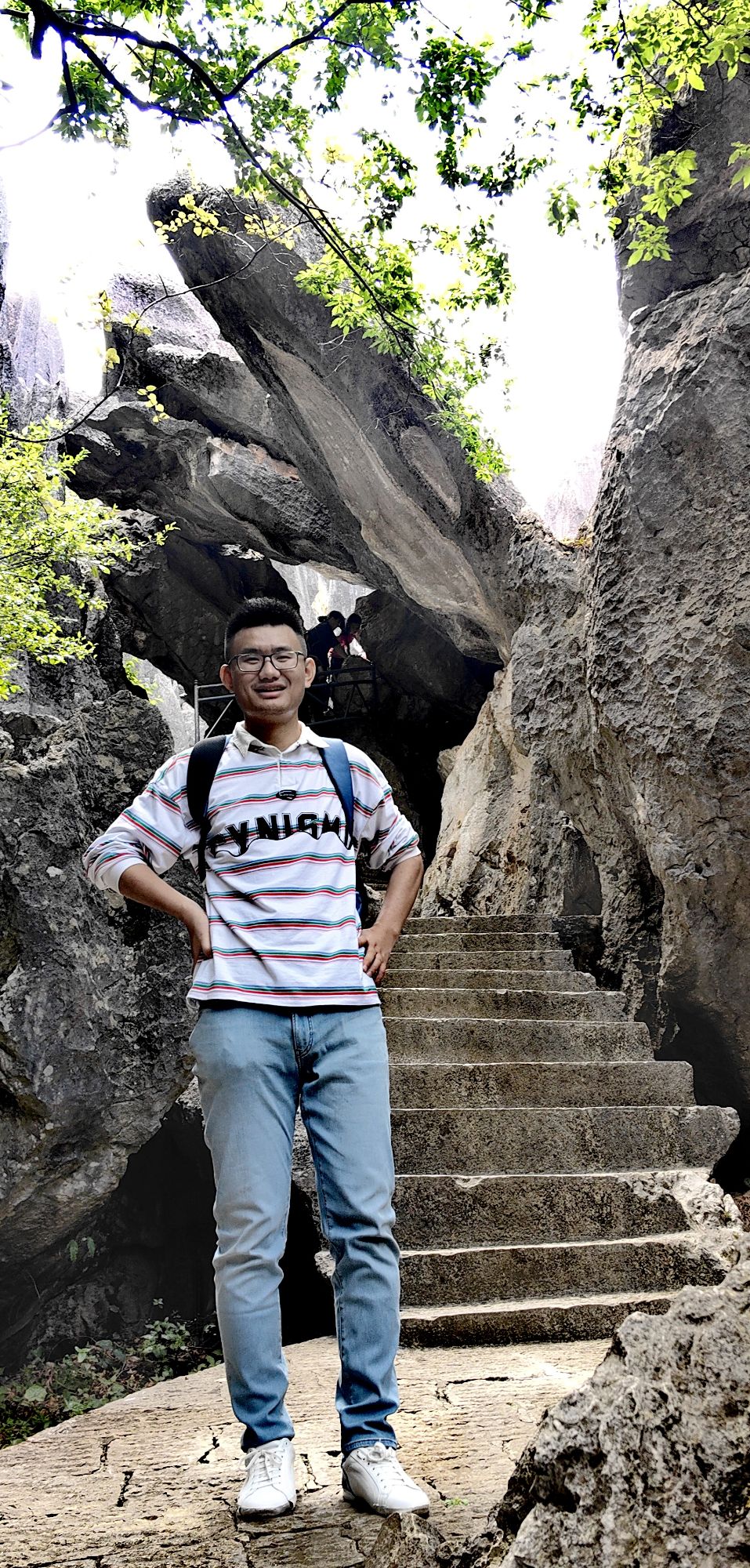
Narrow paths wind through the stone pillars, leading visitors on a journey of discovery. These winding routes allow me to get up close to the stones and appreciate their unique shapes and textures closely. Stone steps leading up to the top of stones, are worn smooth by countless visitors. I liked to think deeply during my trip. Walking through these paths in the labyrinth made me think the meaning of life. Our life is like a labyrinth and we are always looking for the exit which path is the journey of our life.
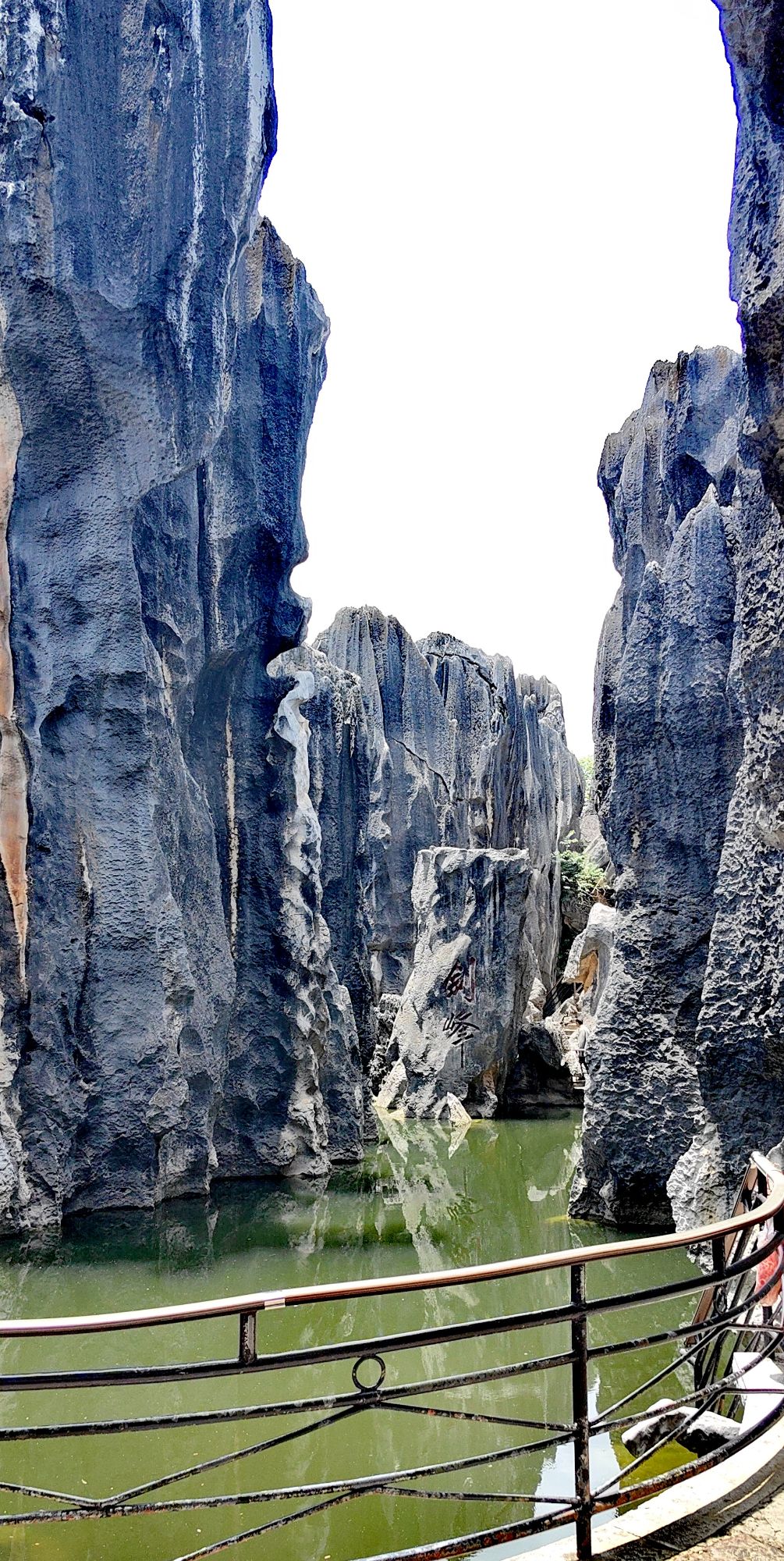
Sword Peak Pool is a beautiful, tranquil spot known for its stunning natural scenery and crystal-clear waters. The name refers to the shape of the surrounding peaks that resemble the sharp edge of a sword. It reflects the surrounding stone peaks, creating a picturesque view. It is a result of millions of years of natural erosion and geological processes.
The Stone Forest is interspersed with various smaller pools and streams that dot the landscape, each with its own charm. Some of these are tucked into crevices between rocks, while others sit in open clearings. I really marveled at these stone erected in the water, which silently create an almost fortress-like setting, giving the pond a hidden and mystical feel. It looks like an isolated environment far away from the mundane world.
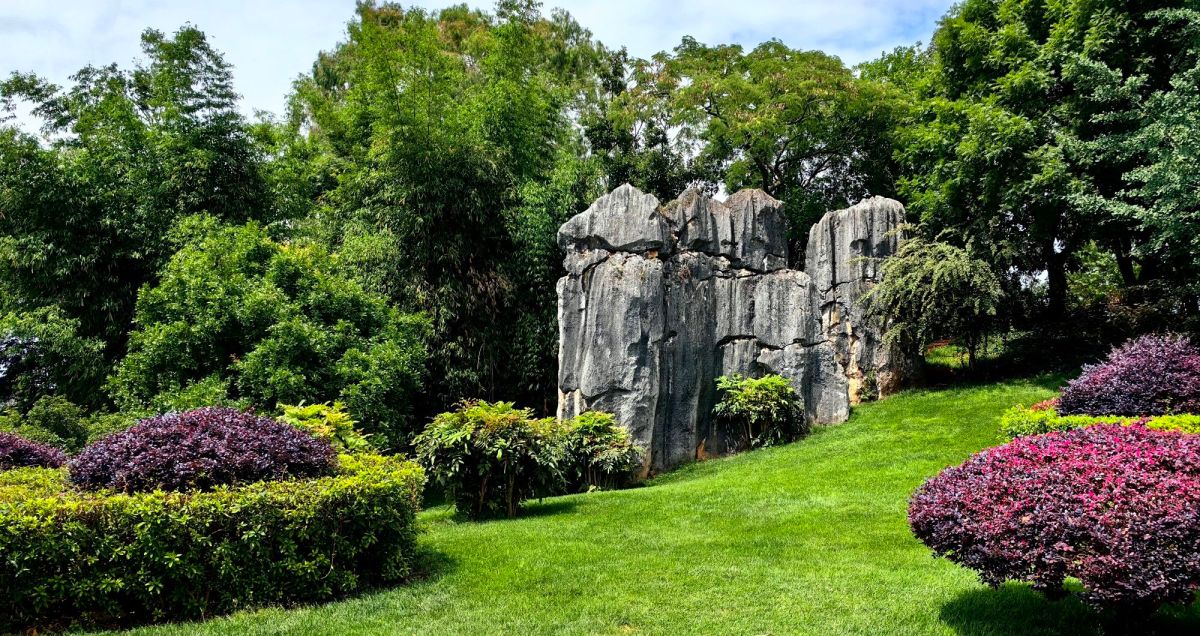
The whole park of stone forest is super large, and most visitors only have time to visit the Major and Minor Stone Forest within one day. The Minor Stone Forest consists of a smaller yet equally intricate collection of karst limestone formations. Unlike the towering 30-meter pillars of the Major Stone Forest, the rock formations here are relatively shorter and more clustered together.
Unlike the more crowded Major Stone Forest, this area is quieter and less touristy, making it an ideal spot for visitors who prefer a more serene experience. The stones here are weathered into unusual shapes, resembling animals and mythical creatures, sparking the imagination of visitors. Every jagged rock peak with smooth, eroded surfaces tells a story of millions of years of natural sculpting. The scenes in this area have more greeneries and look more spacious and poetic.
The Minor Stone Forest is deeply connected to the Yi ethnic group, particularly the Sani people. This area is associated with local myths and legends, and some rocks are believed to be sacred, linked to ancient spirits and ancestors. Perhaps the most iconic rock is this stone which resembles a young woman in traditional Yi dress. According to local legend, it represents Ashima, a young and beautiful girl who fell in love with a man named Ahei, but their love was forbidden by Ashima’s family, who had arranged for her to marry a wealthier suitor. Desperate to be together, Ashima and Ahei fled and looked for their love. In the legend, Ashima was tragically turned into stone by the gods as a symbol of her devotion and sacrifice. Nowadays, the stone is a symbol of eternal love and unwavering faith which is rare in our society with fast rhythm.
The trip in the stone forest needs half days’ time. As the sun set and ligntened the towering limestone spires of the Stone Forest, it’s hard not to feel a sense of awe and wonder. It was indeed a wonderful place where the natural world and ancient myths came together. When I was on the way of leaving the park, I took with me more than just memories of the stunning landscape — also carried the echoes of legendary sad love stories touching my heart.
Nestled in the heart of Yunnan Province, Kunming is a city where spring never fades away. Known as the “City of Eternal Spring” for its mild climate and blooming flowers year-round, this fascinating destination offers a perfect blend of natural beauty, rich history, and diverse culture. Beyond its scenic charm, Kunming is a gateway to Yunnan’s ethnic diversity, home to 26 ethnic minorities whose traditions and cuisine add a unique flavor to the city.
I arrived at the Kunming airport in the morning of 15th May 2024 and started my summer holiday in Yunnan province. Upon arrival, this skeleton of dinosaur displayed at the arrival hall drew my attention immediately. Yunnan is one of the richest places in China for dinosaur fossils. During the Jurassic and Cretaceous periods, Yunnan had a warm, humid climate with vast lakes, rivers, and lush vegetation. This environment provided an ideal habitat for dinosaurs to thrive. This is the model of skeleton of Lufengosaurus, one of China’s earliest known dinosaurs.
This was one photo of street view taken on the way to the Dianchi lake. There is one Chinese poem verse’ 春城无处不飞花 ‘ which means ‘Blossoms drift in every corner of the Spring City’ . It could best describe how Kunming’ street looks like. Kunming’s streets in spring and summer are a breathtaking sight, where blossoms cascade like pink falls, painting the city in soft and romantic hues. Lush trees, heavy with bougainvillea and jacarandas, line the sidewalks, their petals swirling gently in the breeze. When the wind stirs, a shower of petals flutters down, covering the ground in a delicate floral carpet.
Located on the northeastern shore of Dianchi Lake, Haigeng Park is one of Kunming’s most beautiful natural spots, offering stunning lake views, lush greenery, and a peaceful retreat from the city’s bustle. Often called “the lakeside garden of Kunming”, this park is famous for its willow-lined walkways, golden sunsets, and flocks of migratory seagulls in winter.
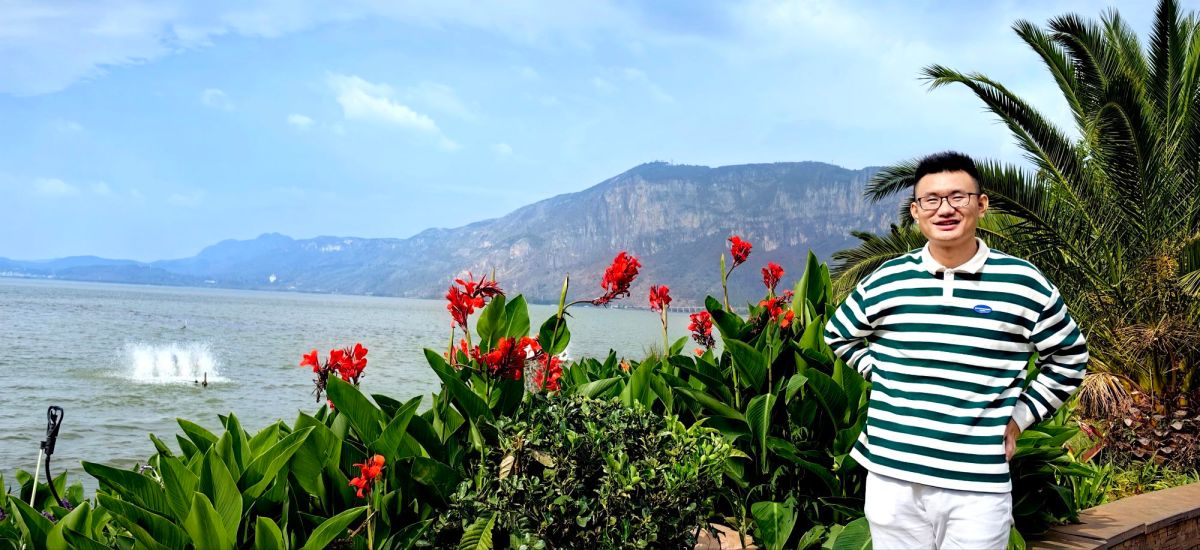
The park stretches along the edge of Dianchi Lake. Walking along its banks, visitors can enjoy reflections of the Western Hills lying beside the water. Dianchi Lake, often called the “Pearl of the Plateau”, is the largest freshwater lake in Yunnan Province. It is the most representative scene spot in Kunming. Huge amounts of visitors came here to take a perfect photo beside the lake. The deep blue of Dianchi Lake contrasts beautifully with the emerald green of Western Hills. Gentle waves ripple under the light breeze, and migratory seagulls soar between the lake and the hills. This is the most memorable memory in my trip of Kun Ming.
Shaded paths lined with weeping willows and vibrant flowers make Haigeng Park an ideal place for a leisurely stroll, jogging, or cycling. The gentle swaying of willow branches over the water adds a poetic charm. Across the shimmering waters of Dianchi Lake, it is the Western Hill rising on the opposite shore, their green slopes gently rolling like the silhouette of an elegant sleeping beauty resting beneath the sky.
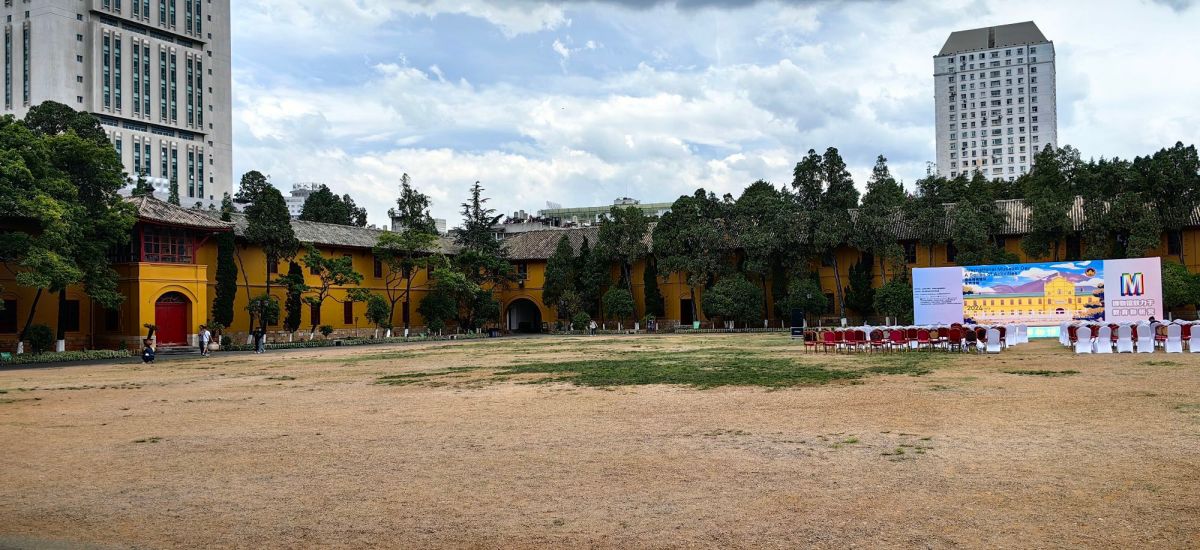
Kun Ming is an ancient city full of history. I stayed here for three days. In the first day afternoon, I visited the Yunnan Military Academy which was one of China’s most prestigious military institutions during the late Qing Dynasty and early Republic of China. Founded in 1909, the academy played a crucial role in shaping modern Chinese military history, producing many influential military leaders who contributed to key historical events, including the Xinhai Revolution (1911), the War of Resistance Against Japan (1937-1945), and the Chinese Civil War.
Often referred to as the “Cradle of Generals”, the academy trained thousands of officers, including notable figures like Zhu De and Ye Jianying. This is the training ground of soldiers in the history. Today, the Yunnan Military Academy Museum preserves its rich history. The well-preserved European-style architecture, along with exhibitions of historical documents, weapons, and uniforms, offers visitors a glimpse into the military evolution of contemporary China.
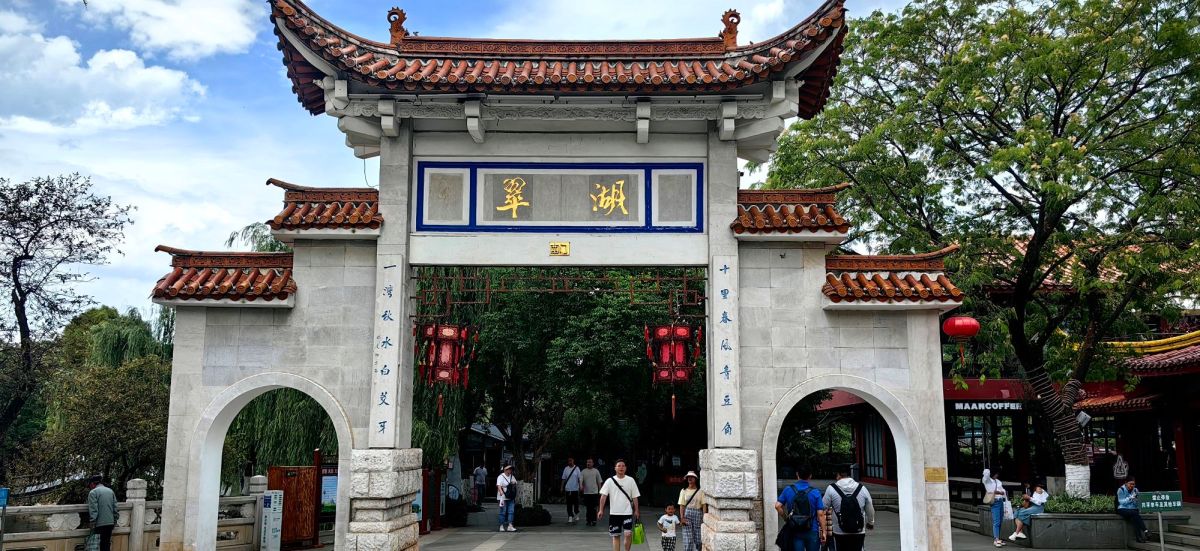
Opposite to the Yunnan Military Academy, it is the Cui Lake which is one of Kunming’s most beautiful and historic parks. Often called the “Jade of Kunming”, this scenic lake is famous for its lush willow trees, lotus-covered waters, and flocks of migratory red-beaked seagulls in winter. Originally part of Dianchi Lake, Cui Lake was formed over centuries as water levels receded, leaving behind a collection of smaller interconnected lakes and ponds. During the Yuan and Ming Dynasties, it became a favored spot for scholars and poets, who often gathered here for inspiration. In the Qing Dynasty, Cui Lake was expanded and developed into a formal park with pavilions and gardens, further enhancing its beauty.
Stepping into Cui Lake Park, I was greeted by a scene of serene beauty. The emerald-green waters of the lake gently rippled under the breeze, reflecting the swaying weeping willows that line its banks. Their delicate branches trailed over the water, forming a natural curtain that dances with the wind. As I strolled along the stone bridges and wooden pavilions, I could find traditional bonsai trees and flowering plants arranged in elegant pots, showcasing the artistry of Chinese gardening. The cozy air was filled with the light fragrance of camellias and azaleas.
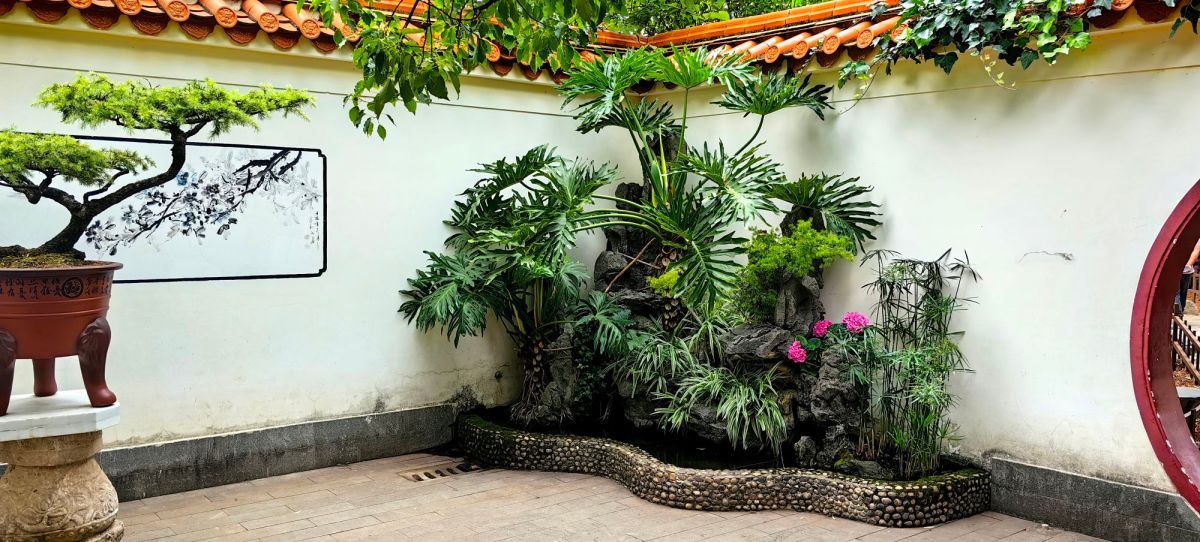
The gardens surrounding Cui Lake are not only famous for their serene landscapes and willow-lined pathways, but also for their exquisite traditional potted plants. These miniature landscapes, meticulously cultivated by skilled gardeners, reflect the elegance of Chinese horticulture and Kunming’s mild, spring-like climate that allows a rich variety of plant species to thrive. Lucky Bamboo is arranged in artistic formations, with intricate rock carvings, symbolizing peace, harmony, and prosperity.
In summer, lotus flowers bloom across the lake’s surface, their pink and yellow petals contrasting against the deep green leaves. I took this poetic photo with super macro lens. This kind of lotus is called Nelumbo lutea, also known as the American Yellow Lotus. It is a rare species of lotus with soft pale-yellow petals. In the quiet after the rain, dragonflies hover above the water. A light breeze stirs the willow trees along the shore, sending tiny ripples across the lake. The lotus remains a symbol of purity and resilience, standing gracefully in the water.
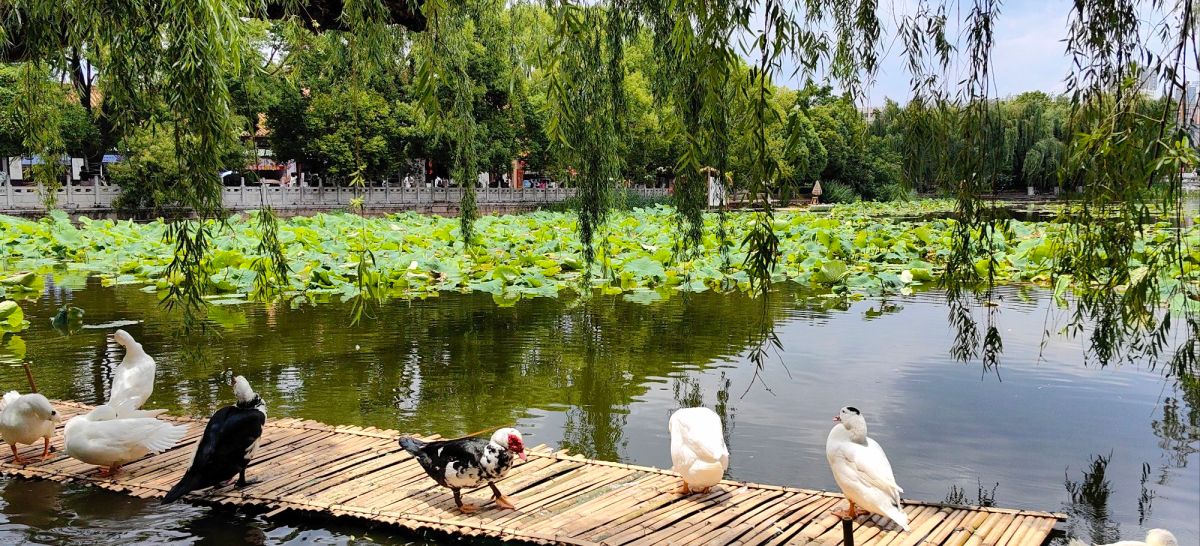
The birds hopped and fluttered across the park, pecking at the crumbs scattered by visitors. Some sat serenely beneath the willows, ruffling their feathers as they relaxed in the warmth of the sun. Their soft and rhythmic calls blended with the sounds of rustling leaves. There was a quiet beauty in watching the birds cozily eating together, as they were savoring the simple pleasures of life.
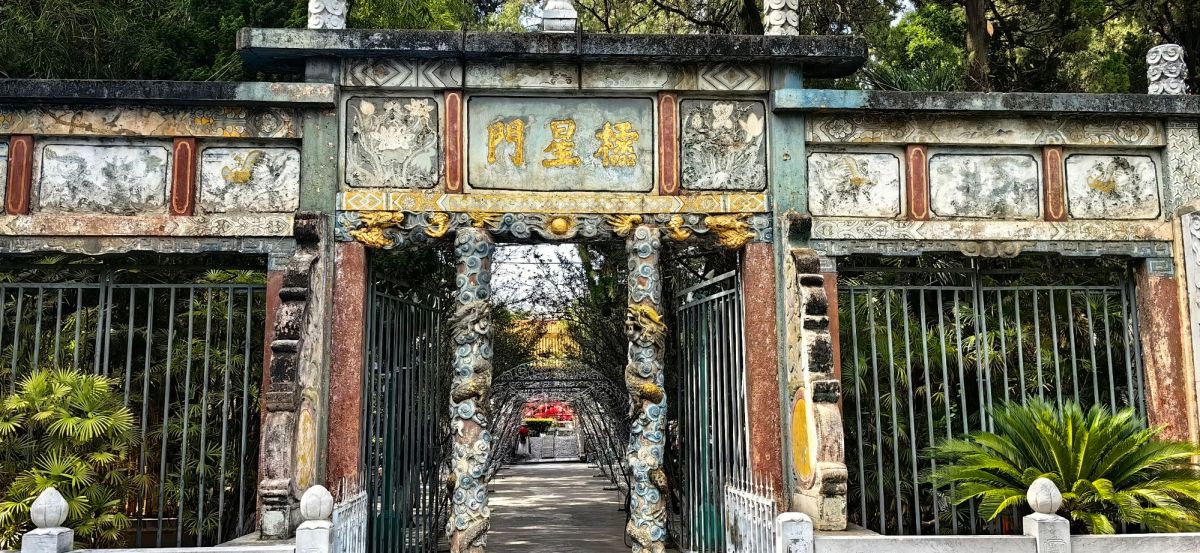
When I walked through the street of Kunming, I passed several ancient buildings which were not tourist sites but having some historic meaning. The Confucious temple was originally built during the Yuan Dynasty and later expanded in the Ming and Qing Dynasties. The Lingxing Gate serves as the grand entrance to the Confucius Temple, embodying both spiritual significance and architectural beauty. As the first structure one encounters when approaching the temple, this ornate gate symbolizes respect for knowledge, wisdom, and Confucian ideals. Lingxing originates from ancient Chinese astronomy, referring to a mythical star believed to govern wisdom and intellect.
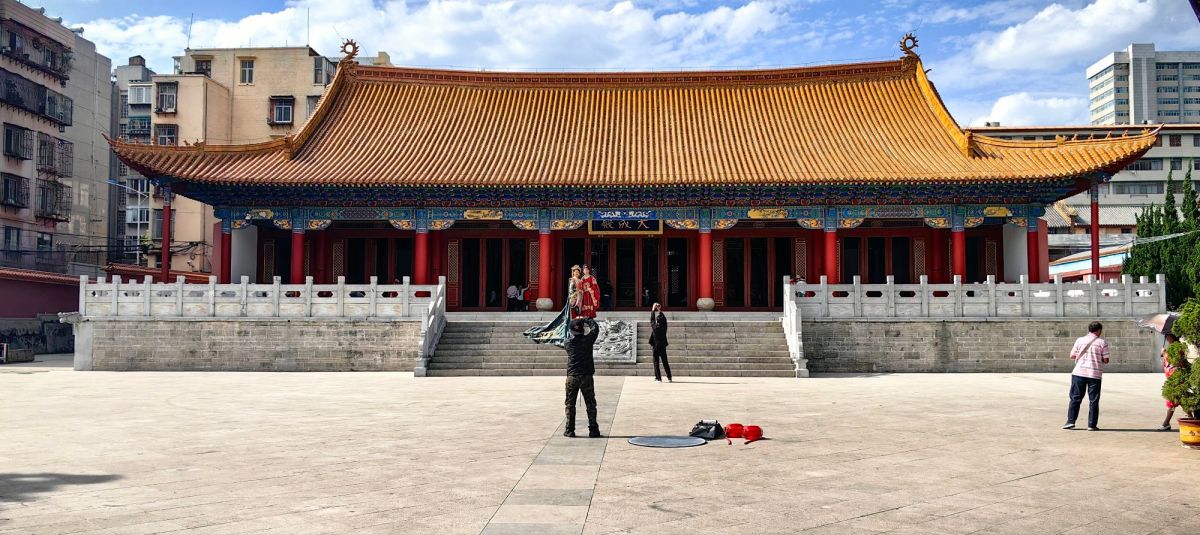
Kunming’s Confucius Temple served as an important educational and ceremonial center, where scholars and students would gather to study Confucian classics and take imperial exams in the history. The temple reflects the deep respect for Confucianism, embodying principles of morality, discipline, and scholarly pursuit. Dacheng Hall in this photo is the main hall, dedicated to Confucius, features elegant wooden beams, golden inscriptions, and a solemn statue of the Confucius. Many girls studying in school came here to take beautiful photos wearing traditional Chinese clothes, characterized by wide sleeves, layered robes, crossed collars and delicate embroidery.
This monument near a simple street is very small but it recorded the most miserable and sore history for Chinese. Usually, people will not notice it even if pass by. However, I visited it purposely and took this photo. Everyone who is familiar with Chinese history will feel a stabbing pain in the chest when visiting this monument.
Three hundred years ago, the last Dynasty led by Chinese – Ming fell when the Manchu-led Qing Dynasty captured Beijing in 1644. However, remnants of the Ming loyalists like Zheng Chenggong, refusing to accept Qing rule, formed a series of Southern Ming governments across the south, with Zhu Youlang becoming one of the last claimants to the Ming throne. Finally, the military force of Qing pushed deep into Yunnan which was the last territory of Ming and the emperor Yongli was strangled with a bowstring near the Cui Lake, marking the end of the Ming imperial bloodline. This monument stands as a solemn reminder of the fall of the Ming Dynasty and the resistance against the Qing conquest in the 17th century. Afterwards, the whole China was under the control of Manchu until the revolution in 1911.
When I read this story, I felt a deep sorrow since Ming dynasty had controlled a larger piece of territory and how did they lose? I think that there are several reasons. Firstly, The Ming Dynasty had been facing serious internal problems by the early 17th century. Corruption, economic mismanagement, and factionalism of Donglin party weakened the central authority. Secondly, the Ming military was weakened seriously by inadequate funding since the central government could not collect enough tax from local authorities. Thirdly, the emperor Chongzhen was really a poor leader and could not believe candidly in his generals like Yuan Chonghuan and every prime ministers. Finally, the fall of the Ming was caused by a combination of internal decay, poor leadership, and external pressures. In contrast, the Qing were more unified, militarily superior, and able to rule the whole China.
Of course it is important keep a better mood during travel. Afterwards I got rid of the bad memory immersed in the history three hundred years ago and continued my travel of second day in the old town of Guandu. The earliest historical records of Guandu date back to the Nanzhao kingdom. Guandu acted as a ferry and also a linking point in the region. I liked the paifang at the entrance. It could best represent the Chinese culture. The roof is curved with eaves that flare upwards and the columns of the paifang are adorned with detailed carvings, depicting dragons.
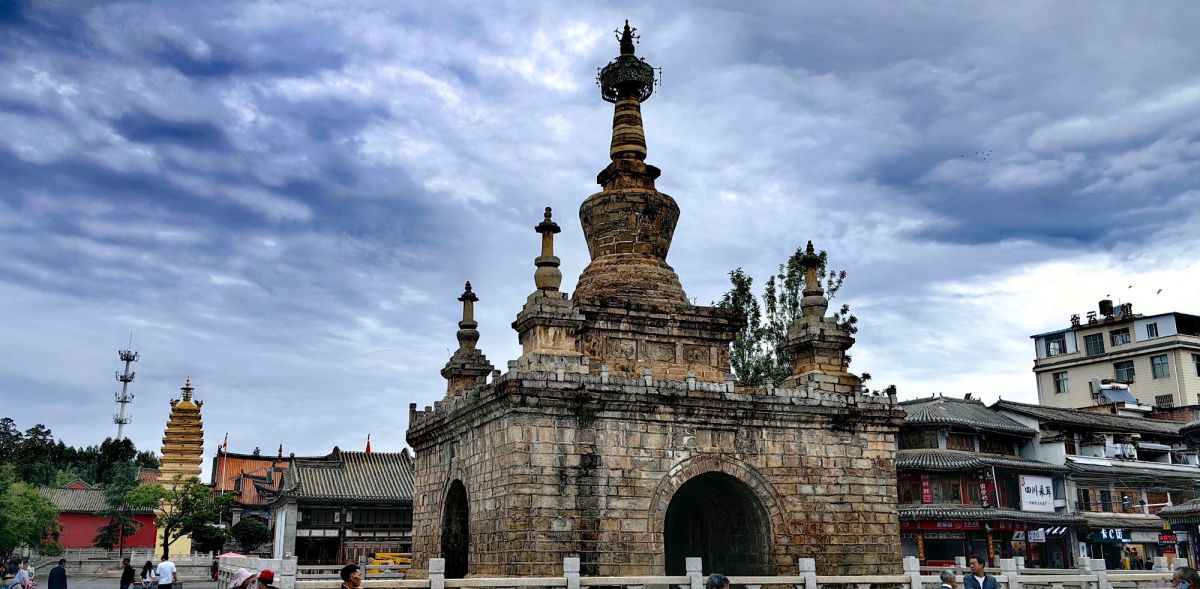
When I arrived at the town in the morning, this historic building of unique style drew my attention. The Vajra Pagoda at Miaozhan Temple is really a historically significant Buddhist structure. The Vajra meaning “diamond” is a sacred symbol in Buddhism, represents indestructible strength and spiritual power. The Vajra Pagoda is over 700 years old. Its construction reflects the fusion of Han Chinese and Indian Buddhist architectural styles, which is spread along the ancient Tea Horse Road. The layout of the pagoda includes its central tower surrounded by smaller stupas.
Many restaurants in this old town sells the local delicacies and street food. Among them the most famous food must be Yunnan’s signature dish, crossing-the-bridge noodles.
古镇里有很多餐厅出售当地特色小吃。其中最著名的美食当属云南的招牌美食——过桥米线。
The dish’s poetic name comes from a heartwarming folk tale. Long ago, a scholar studied in seclusion on an island pavilion, preparing for the imperial exams. His wife brought him meals daily, but the food often turned cold by the time she crossed the bridge to reach him. One day, she discovered that boiling chicken fat could seal the heat of the broth. She carried the hot soup, noodles, and ingredients separately, assembling the dish on-site so her husband could enjoy a fresh, hot meal. Afterwards, the dish was called “Crossing-the-Bridge Noodles”, symbolizing love, dedication, and nourishment.’
The soul of the dish is the scalding broth, often made from chicken bones, pork bones, and ham, simmered for hours. Soft, silky rice noodles are served separately and added to the soup just before eating. A variety of ingredients like chicken, pork, fish, quail eggs, tofu skin, bean sprouts, spinach, Chinese chives, lettuce are served raw on small plates, ready to cook in the hot broth.
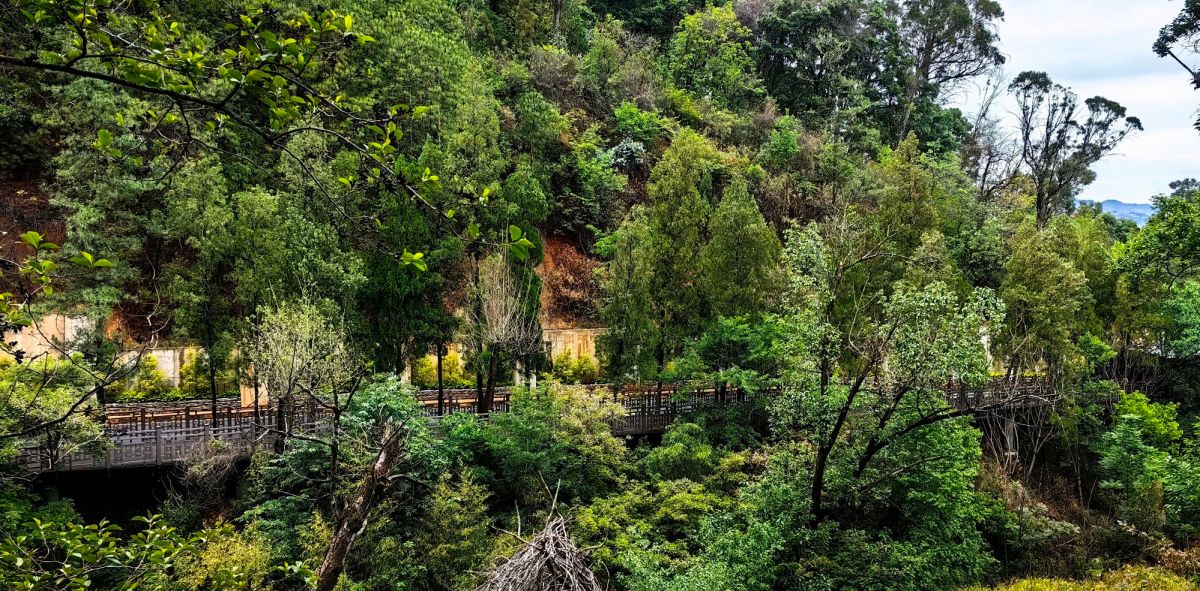
In the afternoon, I had a trek in the Western Hill Park. The park is a green paradise with dense forests, winding trails, and vivid wildflowers. This hill is not so tall. This kind of scenic paths made of wood wound through the forest, leading me to temples and caves uphill. It was a cloudy day, and the temperature is suitable for hike in the mountains.
Travelers can choose to take bus or walk towards the top of hill. However, if they take bus, they will miss the beauties along the hill way. For me, I tried to discover every point on the way. The Taihua Temple founded in Yuan Dynasty in the photo is a tranquil Buddhist sanctuary. Surrounded by ancient trees, blooming flowers, and misty mountain air, Taihua Temple offers visitors a serene escape from the city’s bustle.
Taihua Temple is famous for its beautiful courtyard gardens. Walking through the temple grounds feels like stepping into a living painting. Towering cypresses and pines, some over 600 years old, shade the stone pathways. Small pools with lotus flowers and koi fish add to the temple’s sense of tranquil harmony.
I enjoyed the gentle rustle of leaves and chirping of birds. When I gazed at the lotus in the pond, my minds were scattered like the droplets of rain sprinkled on the leaves. My brain was filled by one famous Chinese poetry: 骤雨过,似琼珠乱撒,打遍新荷。人生百年有几,念良辰美景,休放虚过。It means: After the sudden rain, like scattered jade pearls, beating upon the fresh lotus leaves. In a fleeting life of a hundred years, how many such moments remain? Treasure these beautiful times — let them not slip away in vain.
For me, travel is like a way of relaxation after tedious work. Treasure these beautiful moments on the way of travel and treasure what I have owned is so important.
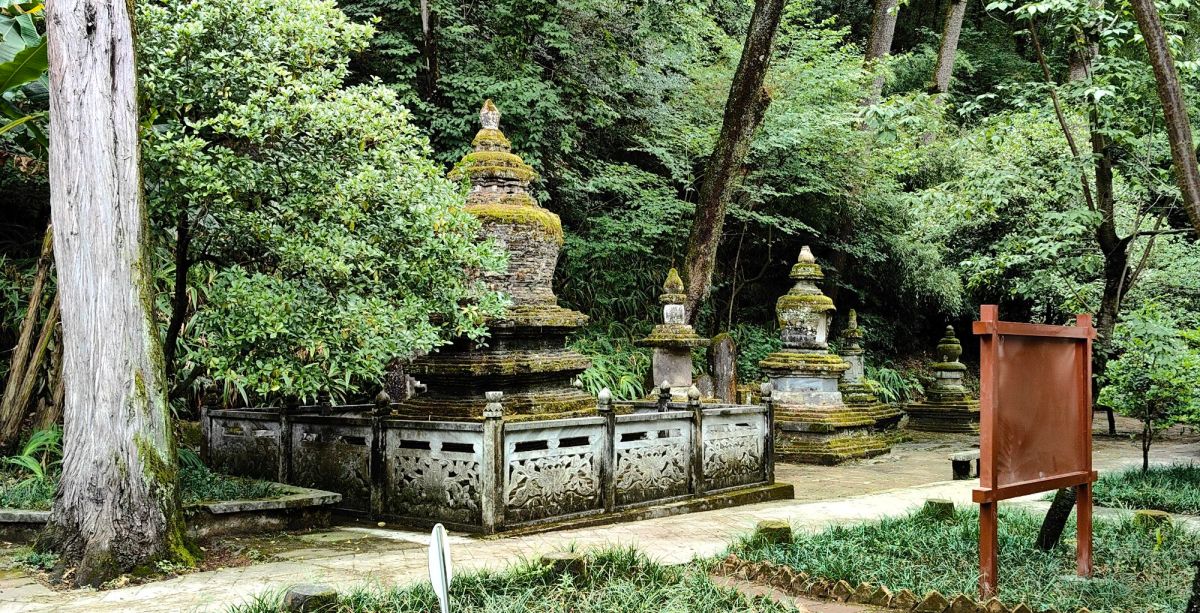
Hidden among the ancient trees and serene courtyards of Taihua Temple, a cluster of weathered stupas rises quietly, their surfaces draped in soft green moss. Overhanging ancient pines and cypress trees filter the sunlight, casting a dappled glow on the stupas. Dewdrops after rain bead on the moss, shimmering like pearls. The moist air fills with the earthy fragrance of soil, stabbing my nose.
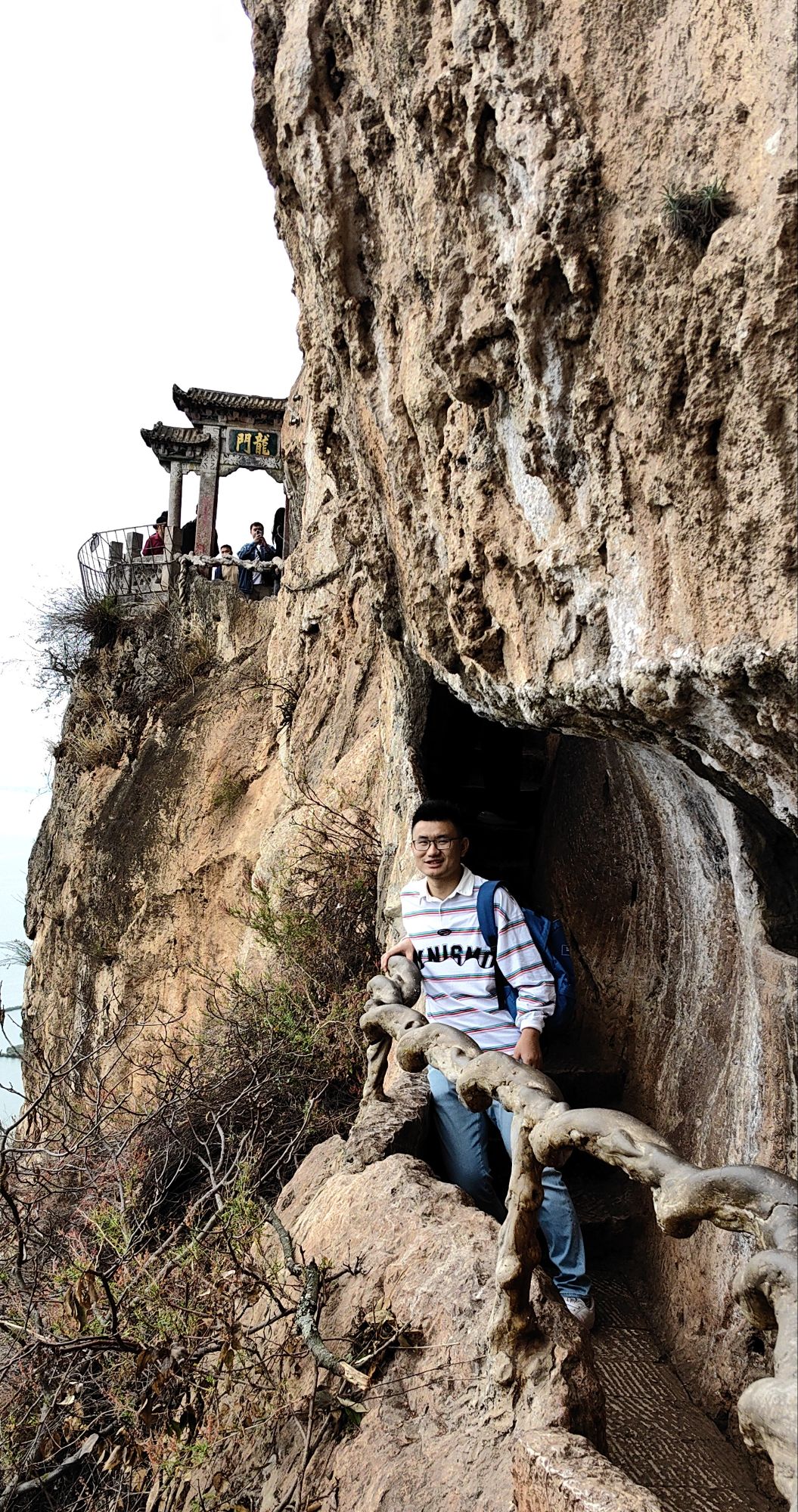
Perched high on the summit of Western Hills, the Dragon Gate is a breathtaking stone-carved grotto and archway. This was the destination of my trip. The path to Dragon Gate is an adventurous climb, with steep staircases and stone steps hugging the cliff. I took this memorable photo on the narrow passageways winding along the cliff, and behind me it was the inscription of two words Dragon Gate.
Stepping through the Dragon Gate feels like walking into the sky. The ledge juts out over the mountainside. Dianchi Lake at the bottom stretches out like a giant mirror, reflecting the changing hues of the sky. The landscape seems to merge with the horizon, making it feel as if I was standing at the edge of the world.
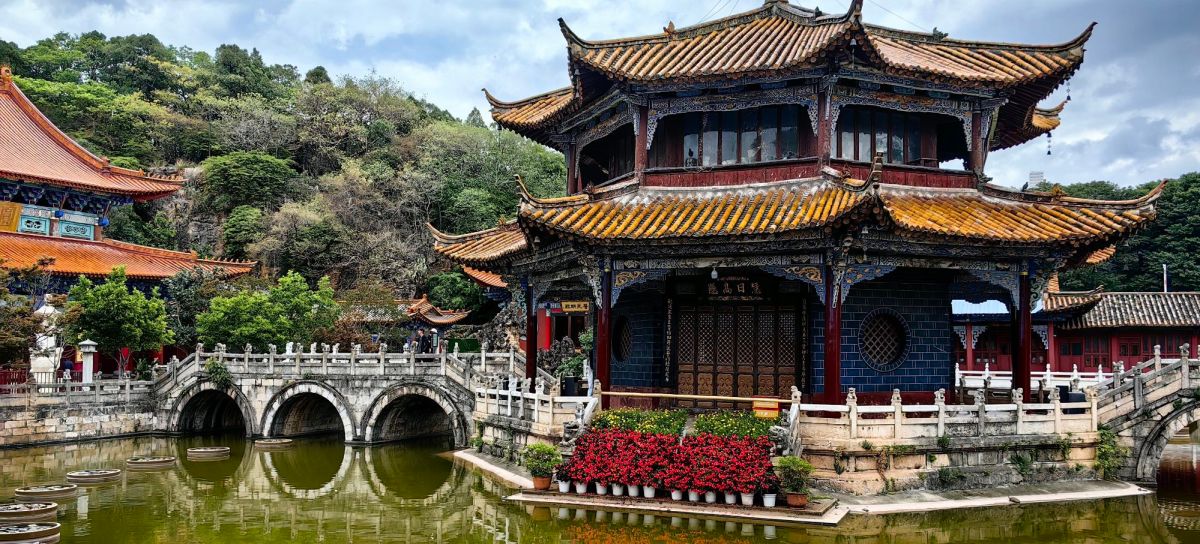
For my trip of third day, I visited this Yuantong temple which is the oldest and largest Buddhist temple in the city, with a history spanning over 1,200 years. I liked its tranquil atmosphere, ornate architecture, and harmonious integration with nature. Located in the city center, it is a nice place for relaxation.
Unlike many temples built on mountain peaks, Yuantong Temple sits at a low point. The landscape here left me a deep impression. A large pond with blooming lotus flowers surrounds the main hall, connected by stone bridges that lead visitors over the water. The temple courtyards are adorned with ancient trees, meticulously pruned bonsai, and stone lanterns. Like other places in Kunming, the temple is adorned with many beautiful flowers of different colors.
Yuantong Temple has blend of architectural styles, where traditional Chinese temple design meets the graceful elegance of Thai influences. This fusion reflects Yunnan’s historical connection with Southeast Asia through trade, religion, and cultural exchange. The intricate carvings on the walls and mutiple upward-curving eaves, resembling the multi-tiered roofs of Thai temples.
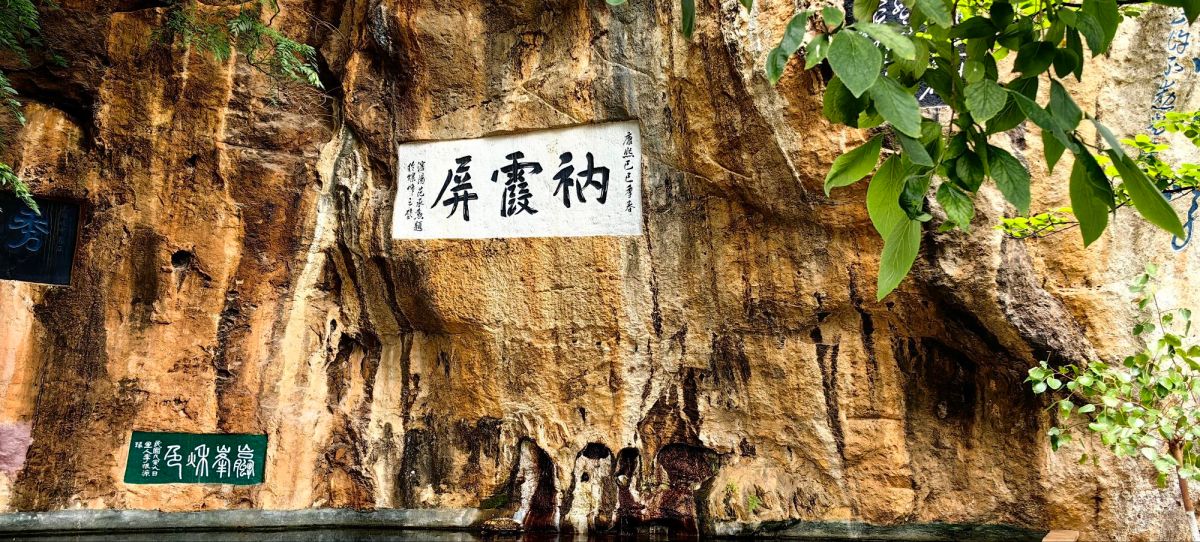
There is a natural rock formation located within the grounds of Yuantong Temple. Its poetic name means screen embracing the sunset. The Danxia-style cliffs behind the main hall serve as a natural backdrop, glowing in colorful hues as if the mountain itself is a celestial canvas capturing the changing colors of the sky. Danxia Landform is a kind of red sandstone formations shaped by millions of years of weathering and erosion, creating steep cliffs, layered ridges, and vivid colors. The landscape is extraordinary with the colors of nature blended seamlessly with the calm elegance of this temple.
The weather of Kun Ming is capricious, with clear skies turning into thunderstorms within minutes. Sometimes it is common to see the sky being split, with half bathed in golden light and half shadowed by drifting clouds. This photo was taken in the park of Daguan Tower which was the last scenic spot visited in Kun Ming.
The Daguan Tower is a historical pavilion standing proudly on the shores of Dianchi Lake. It was first constructed during the Kangxi reign in the Qing Dynasty. Sun Ranweng, a Qing Dynasty scholar, wrote a 180 characters couplet that immortalized the tower in Chinese literary history.
Couplet is a form of traditional Chinese literature, a pair of lines in poetry that usually rhyme and have the same or similar length and rhythm. This couplet is known as the first long couplet in the long history of 3000 years. It captures the grand scale of the landscape, while also reflecting on the rise and fall of previous dynasties — blending natural beauty of Kun Ming with historical contemplation.
The tower offers a sweeping view of the lake’s shimmering waters, with boats gliding across the surface. The gardens surrounding the tower are dotted with lotus ponds, which bloom in summer. Graceful willow trees hang over the stone-paved paths, their branches dipping into the water, creating a poetic atmosphere. It is a perfect place where poets mused, scholars sighed, and travelers pondered life’s impermanence.
As the sun set over Dianchi Lake, casting golden reflections on the water, and the Western Hills faded into soft silhouettes, it’s hard not to feel a gentle tug at the heart. Now when I write this blog, every photo is more like a souvenir of beauty and wonder of this extraordinary voyage. This is the meaning of travel, snapshot of every moment of passing with memorable photo. Kunming, with its blossoming flowers, ancient histories, and amazing landscapes, is a city that lingers in my soul long even after I have left.























 Gone like the wind