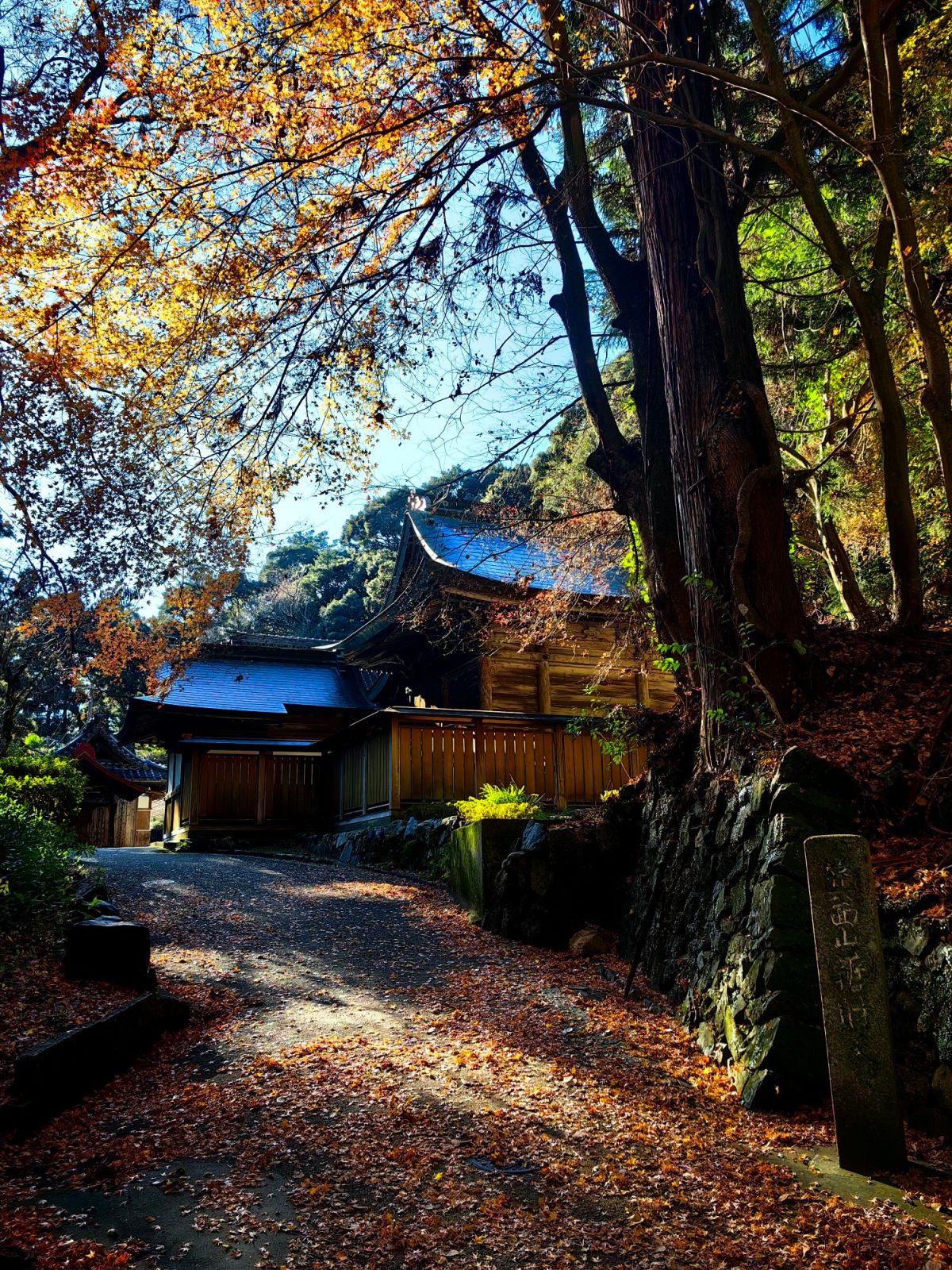
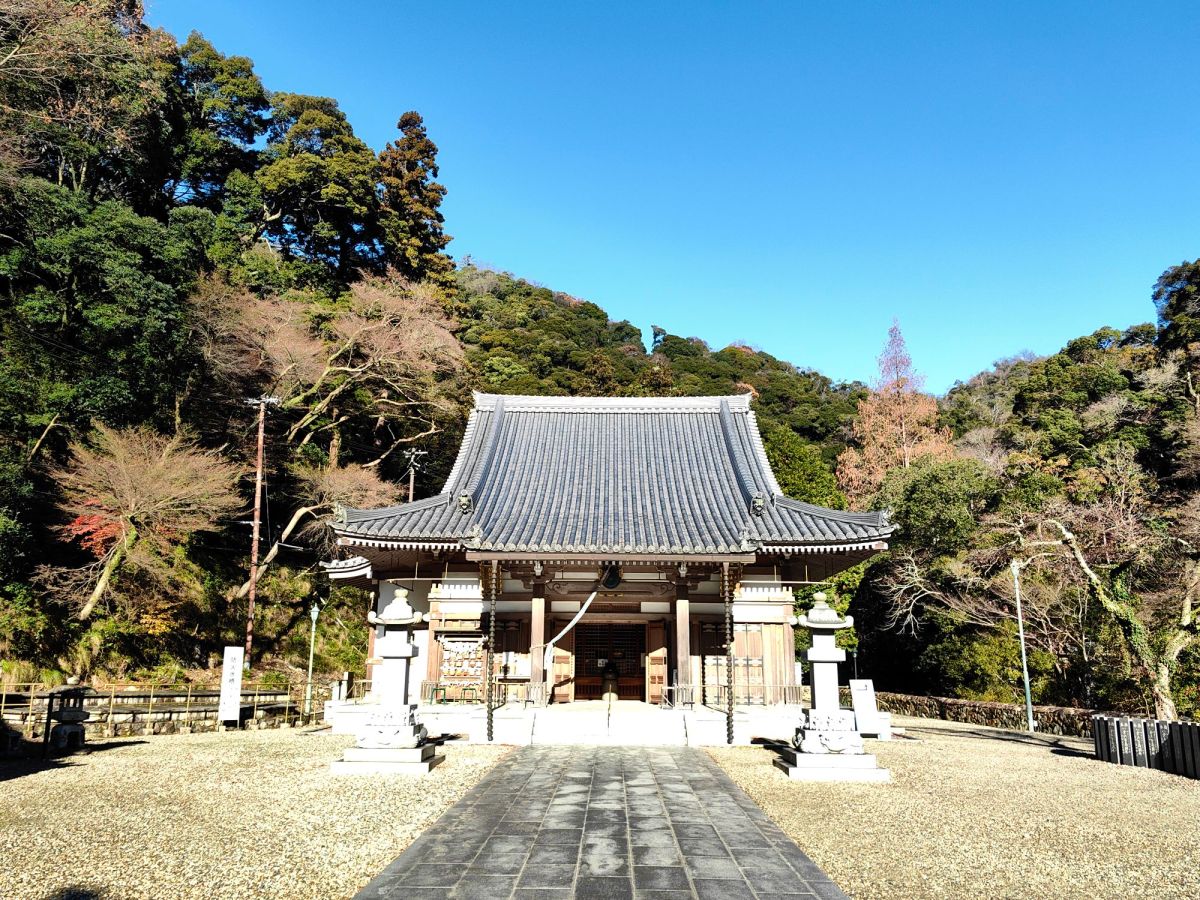
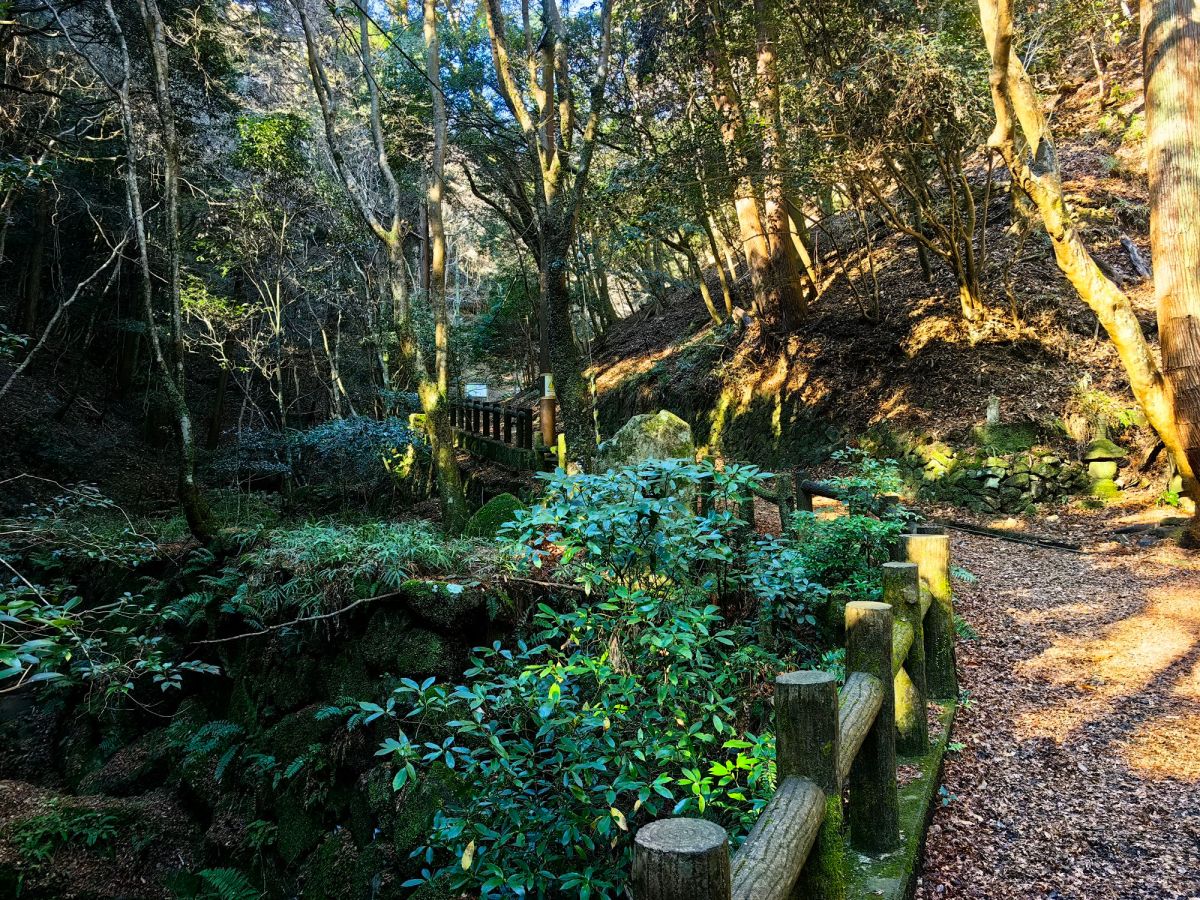
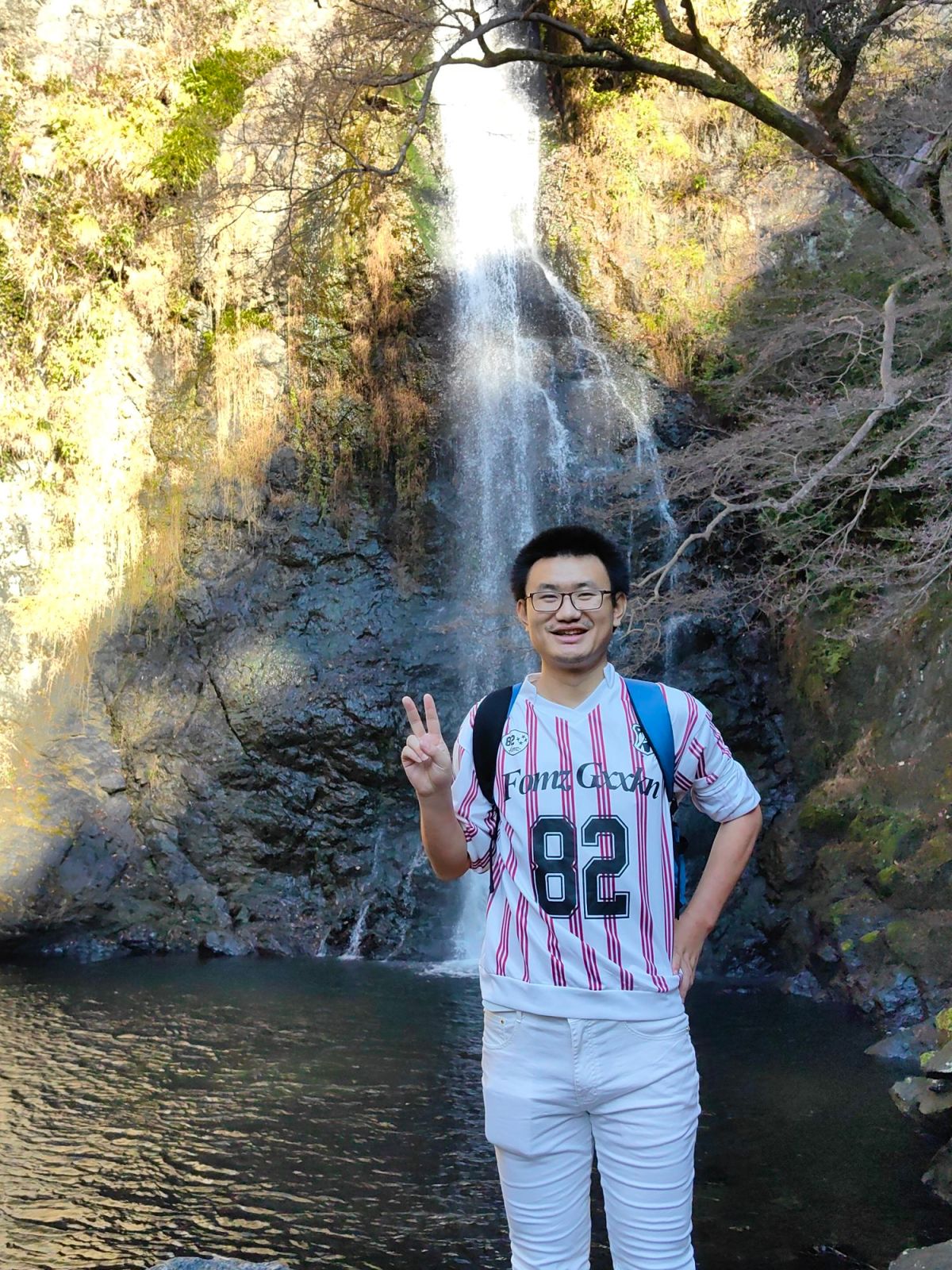
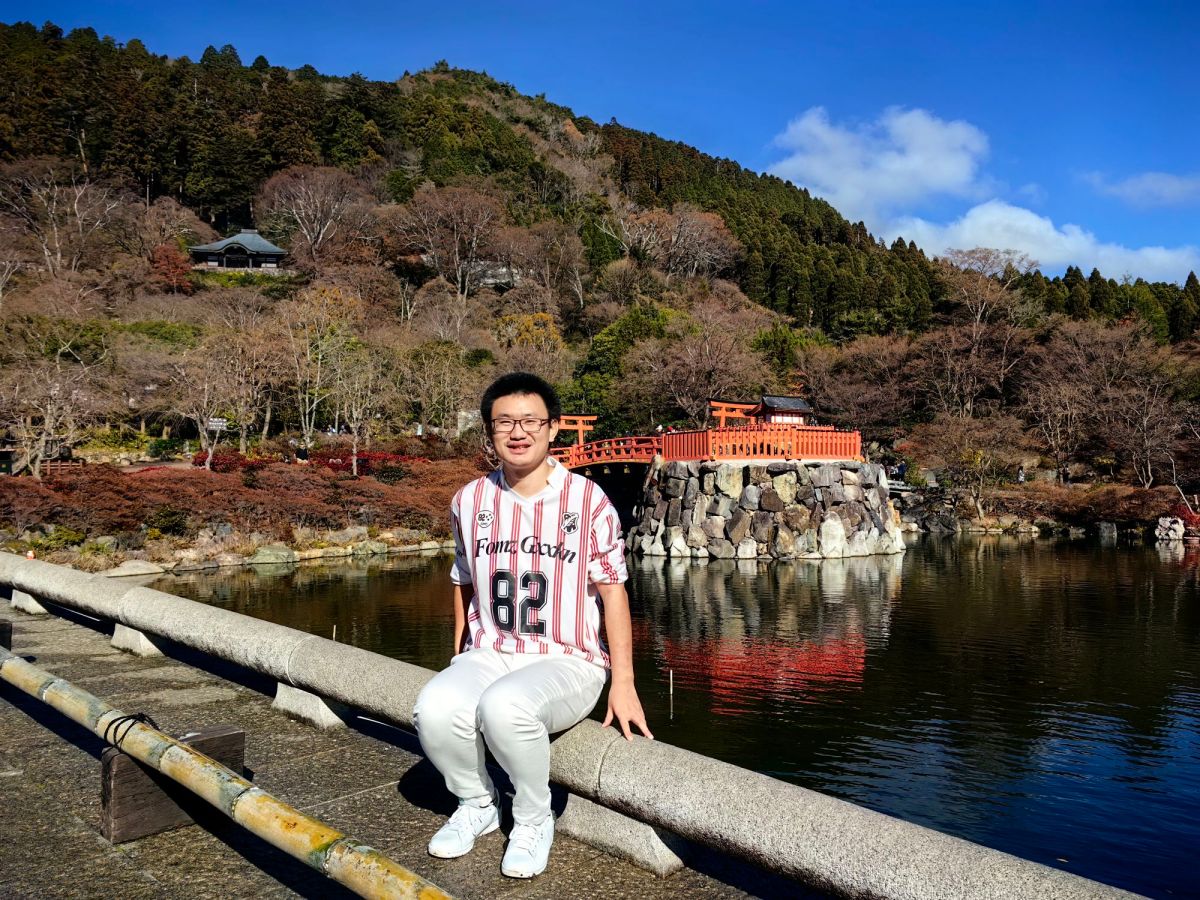
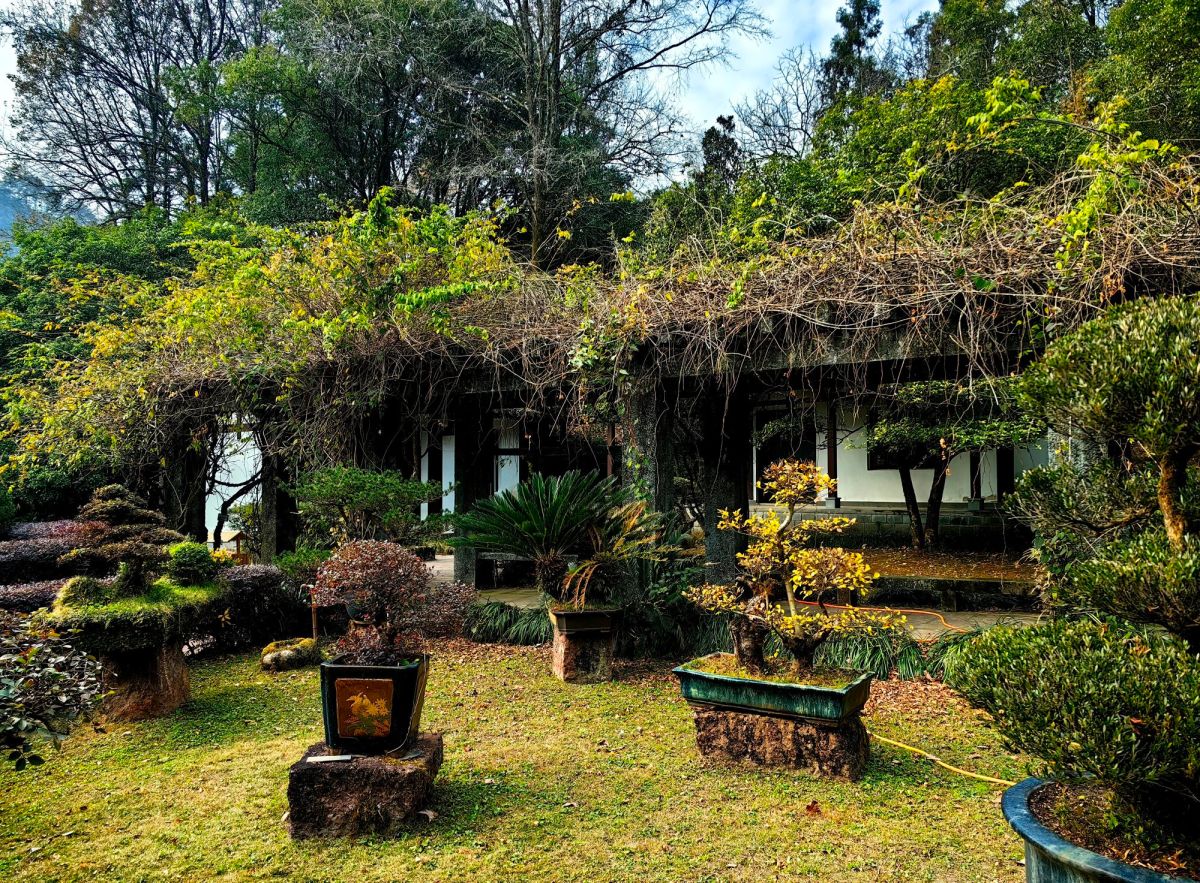
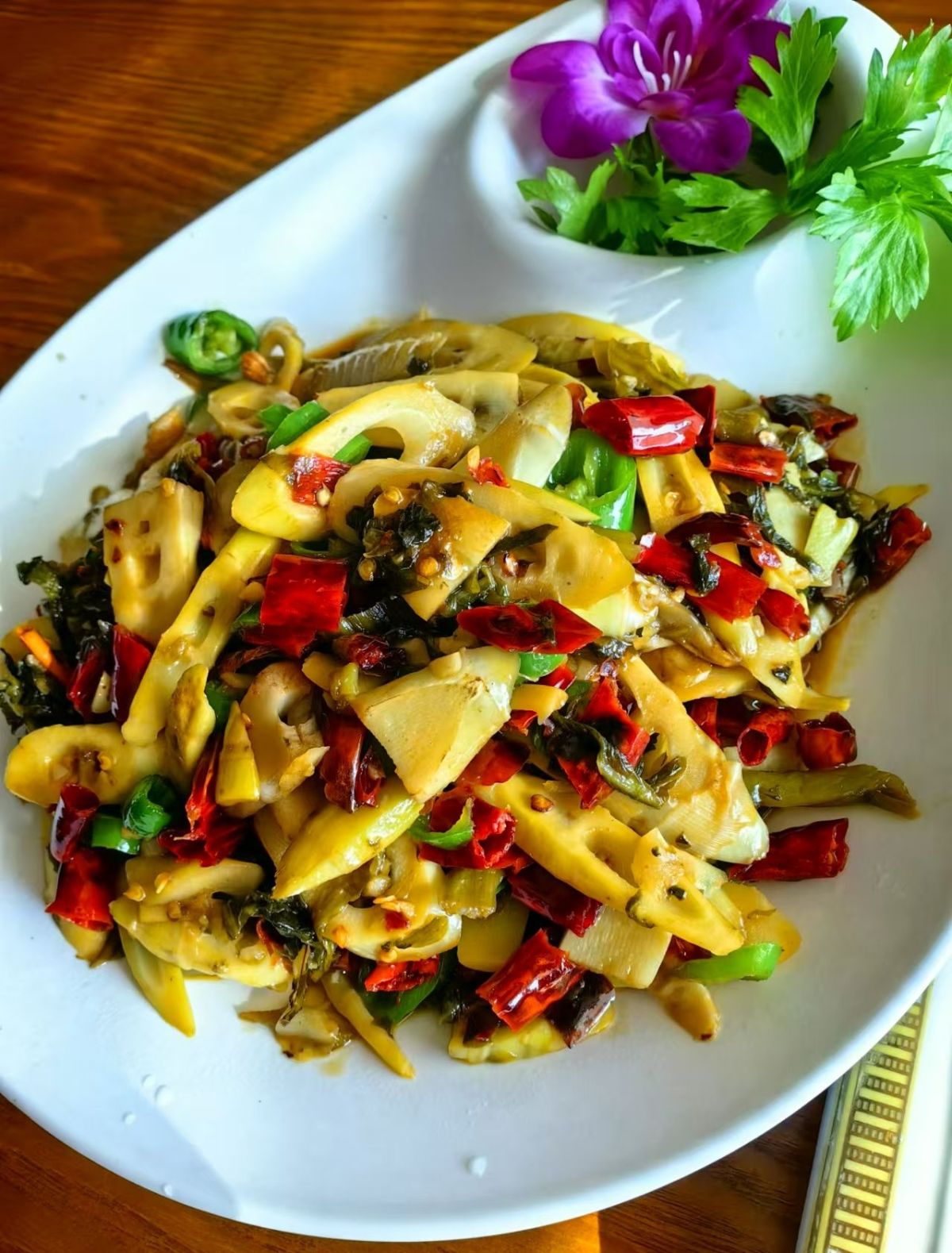
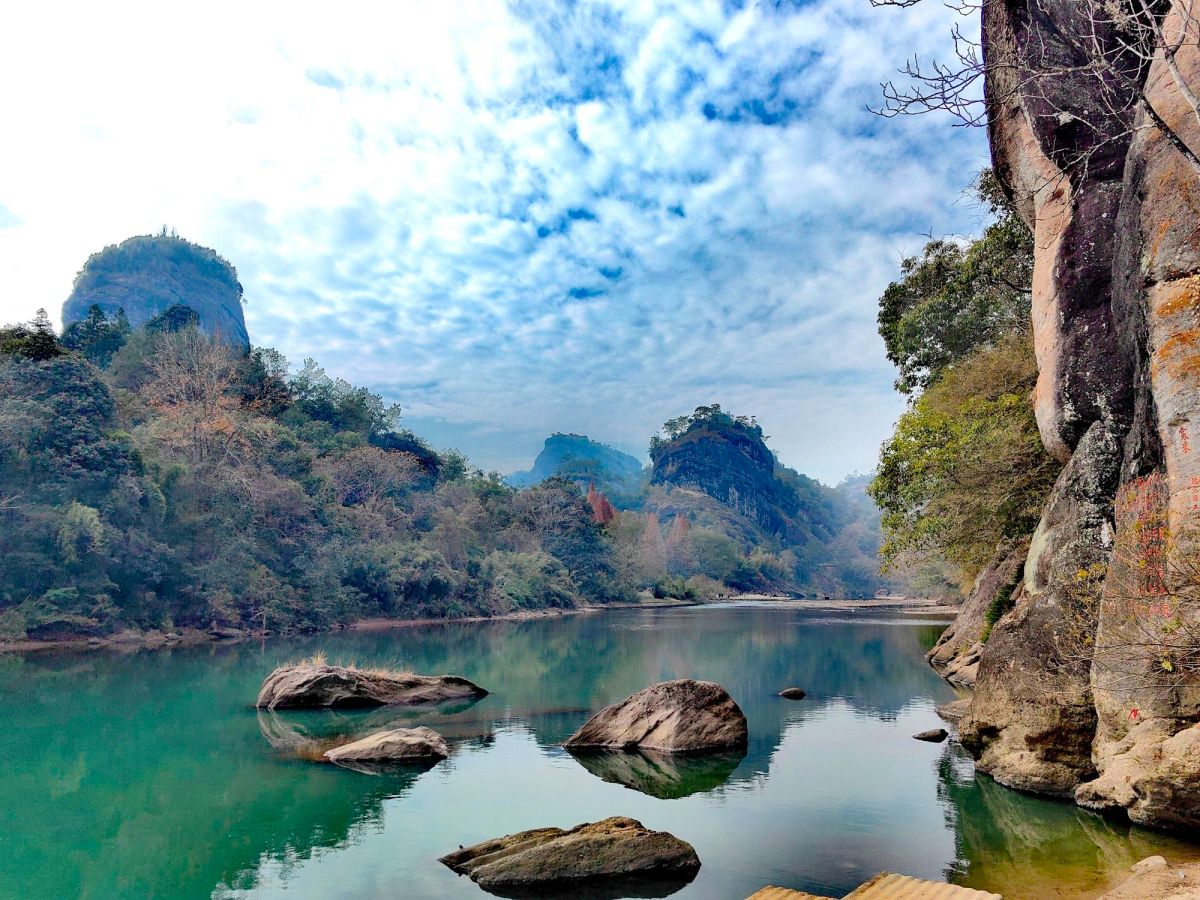
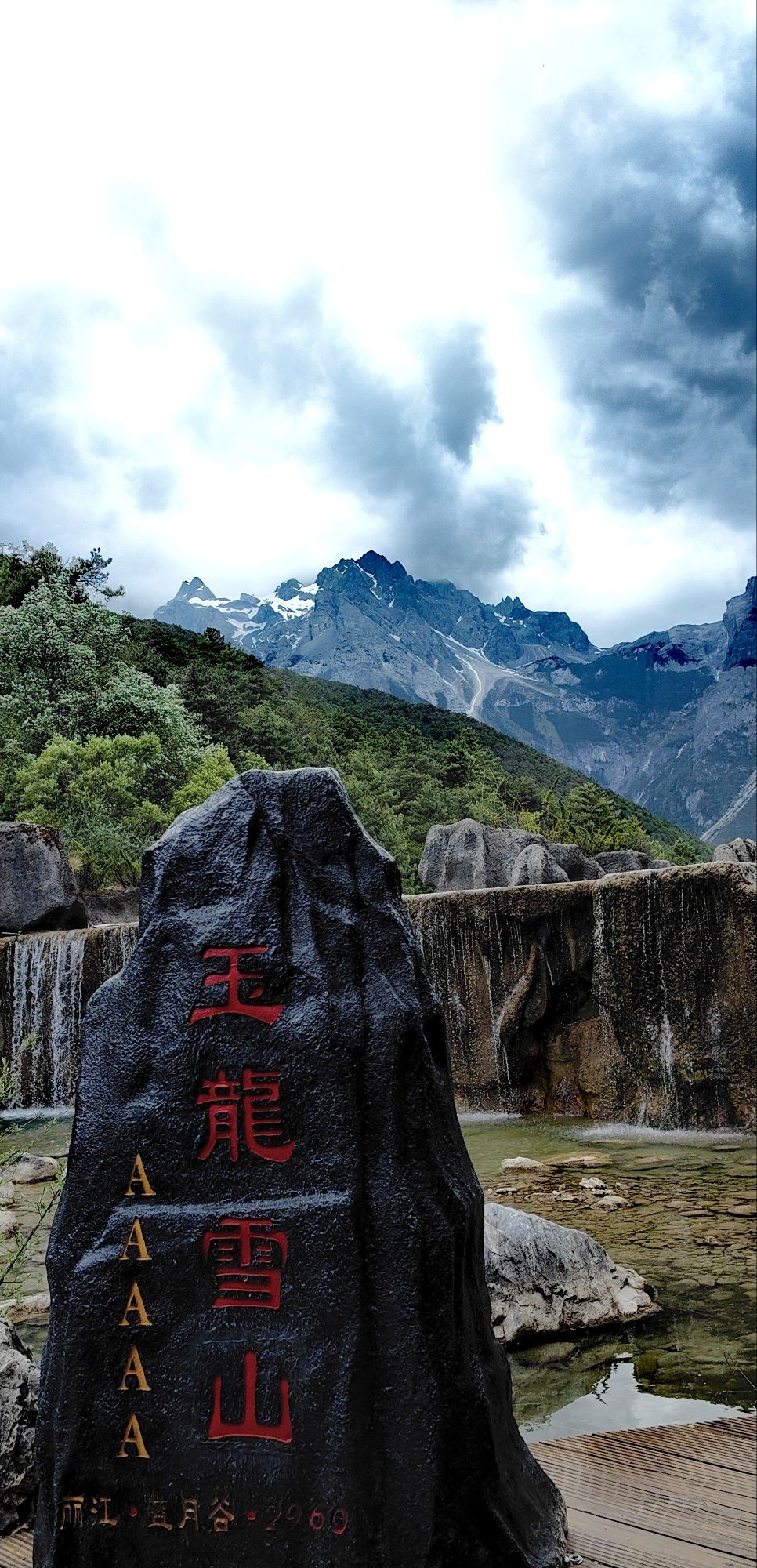
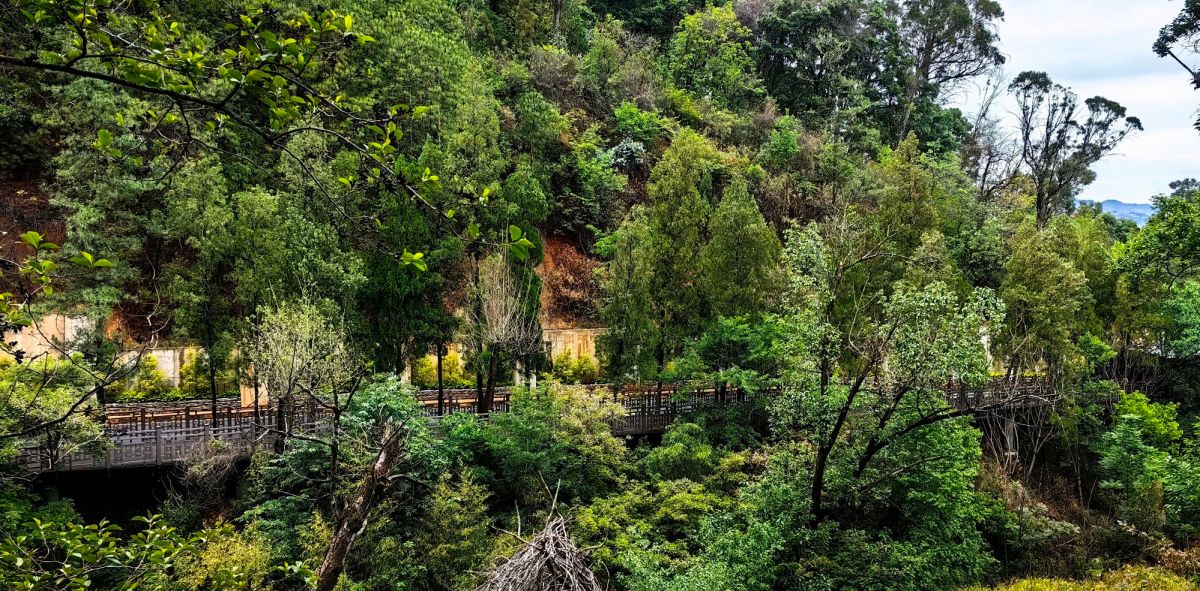
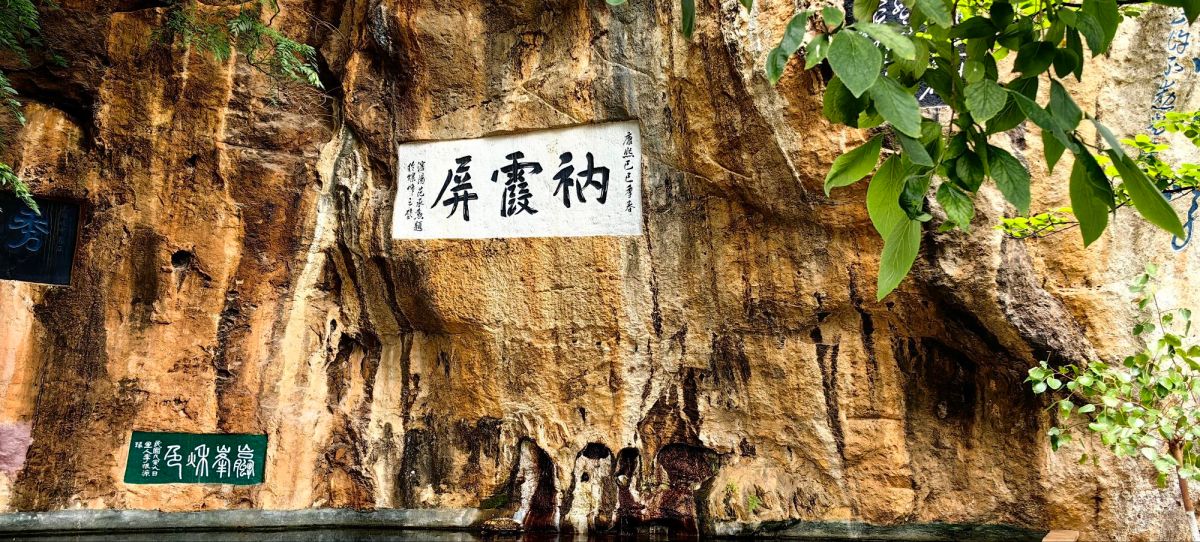
After spending time in the lively streets of Osaka, I decided to take a break from the crowds and travel to Minoh, a peaceful town surrounded by forested hills just outside the city. Compared to the vibrant streets of Namba and Dotonbori, it felt like another world. My pace slowed, the air became fresher, and the city noise gradually faded away, replaced by the rustling of leaves in the wind and the tranquility of nature.
After I get off from the train, I arrived at this small town in the north of Osaka. What I particularly enjoyed about Minoh was its tranquility. Compared with Osaka’s famous tourist attractions, Minoh receives far fewer international travelers, and even the popular walking trail can feel surprisingly peaceful. There were moments when I could simply walk along the forest path without being surrounded by tour groups or crowds, but only the swaying shadows of the trees and the rustling sound of foot accompanying me.
The journey to Minoh was not about checking off famous landmarks. Instead, it was about enjoying the simple experience of walking through the forest, listening to the flowing water, watching the leaves move gently in the breeze, and taking my time to appreciate the scenery. Sometimes, the most memorable places on a journey are not the ones filled with people, but the quiet ones where I can slow down and truly feel my surroundings.
By December, I had already missed the best time to see Minoh’s famous maple leaves. The brilliant reds and oranges of autumn had largely disappeared from the trees, leaving only memories of the season that had just passed. The ground was covered with a thick carpet of fallen leaves, their faded reds, oranges and browns scattered across the forest path.
The December morning was a little cold. I could feel the crispness of winter in the air, but the sunlight was warm. Golden rays filtered through the remaining green leaves above me, falling softly onto the path and warmed my face. Looking down at the leaves beneath my feet, I felt that each step made a soft, gentle sound, as if the forest was quietly accompanying my walk. Without the crowds of the autumn season, I could walk slowly and listen to the water, the rustling leaves and the occasional sound of birds.
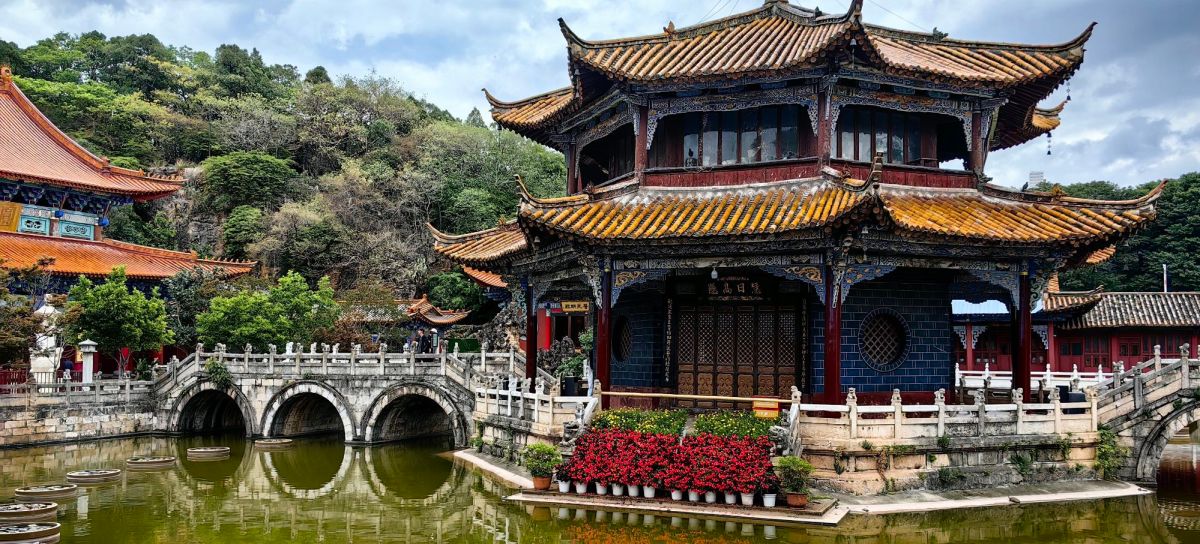
As I walked through Minoh Park, I passed several old temples that were quiet and almost empty, with very few tourists around. The peaceful surroundings made the journey feel unbothered and unhurried. Being able to walk alone through the temples and forest gave me a sense of solitude and allowed me to fully appreciate the beauty of nature.
Hidden deep within the forest, the ancient temple seems to belong to an isolated world. The weathered wooden beams, etched by time, stood silently beneath the pale winter sky. Moss-covered stones were scattered throughout the woods, quietly disappearing into the dense undergrowth. A thin mist swirled among the treetops and blurred the boundary between heaven and earth, immersing the entire forest in a tranquil and mysterious atmosphere.
I walked all through the main walking route follows the Minoh River through the forest. The path was gentle and enjoyable, making it possible to appreciate the scenery without the feeling of a difficult mountain hike. Along the way, the sound of running water accompanied the walk, while tall trees created a cool and refreshing canopy overhead.
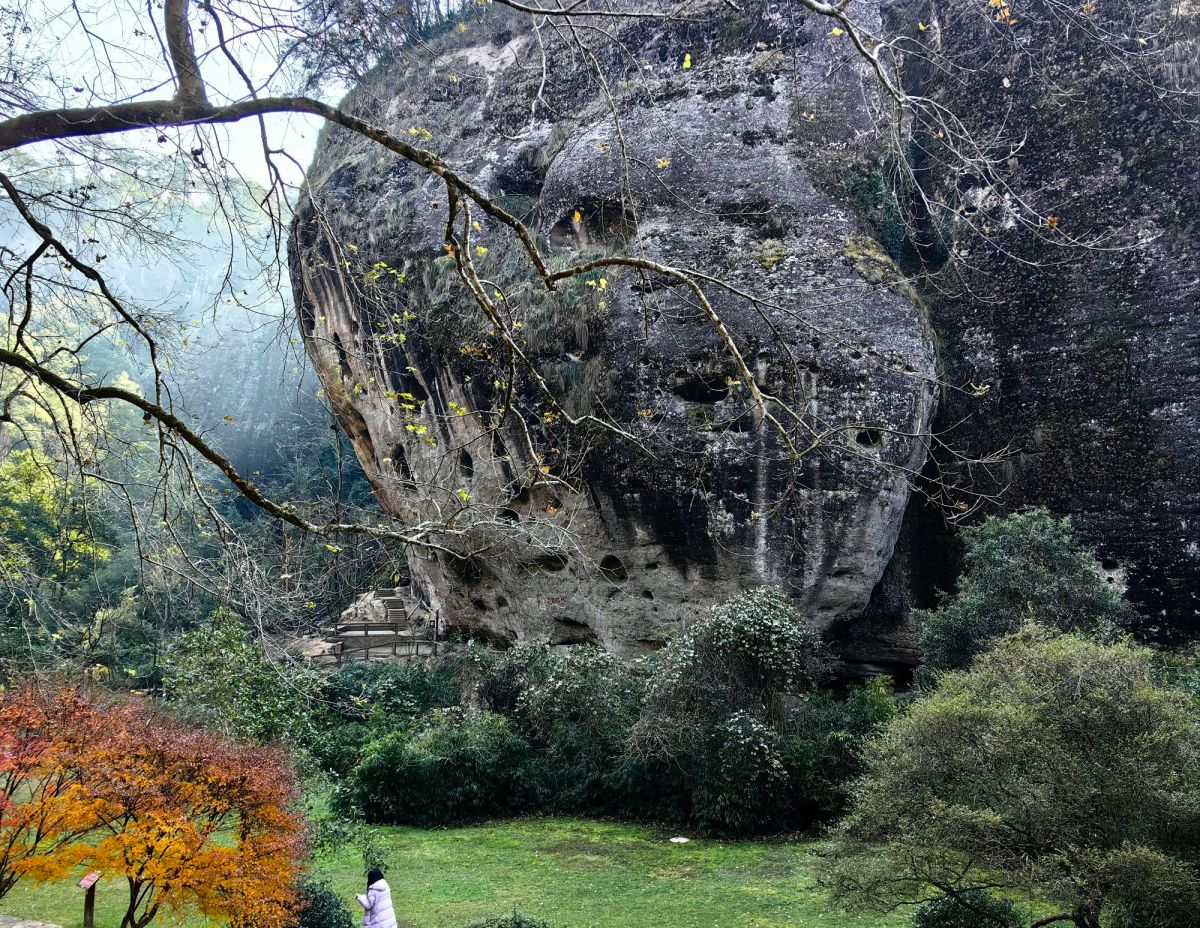
Along the forest trail in Minoh Park, there is a remarkable giant rock known as Himeiwa. Unlike an ordinary boulder, Himeiwa looks as though it has been dramatically cut in half by a giant blade. A narrow passage runs between the two enormous pieces of rock, just wide enough for a person to squeeze through. There is also a charming local belief associated with Himeiwa. Passing through the narrow opening is traditionally said to bring the blessing of children, giving the rock a spiritual meaning beyond its unusual appearance.
One of the highlights of Minoh Park is Minoh Waterfall, a beautiful 33-metre cascade at the end of the trail. The waterfall is especially impressive after walking quietly through the forest for some time. It is not an enormous waterfall, but its setting makes it particularly beautiful. Surrounded by tall trees and steep forested slopes, the falling water was perfectly integrated into the landscape rather than standing apart from it. I stood there for a while, listening to the continuous sound of water falling over the rocks. The walk through the forest made the waterfall feel like a natural reward at the end of the trail.
After spending some time at Minoh Waterfall, I continued my journey toward Katsuoji Temple, one of the most famous temples in the Minoh area. Instead of returning along the same forest trail, I climbed up from the steps of waterfall toward the main road. The change in scenery was gradual. The narrow forest path gave way to a wider mountain road lined with tall trees. The road gradually led me deeper into the mountains toward Katsuoji. Although the walk was uphill in places, I enjoyed taking my time and appreciating the changing landscape.
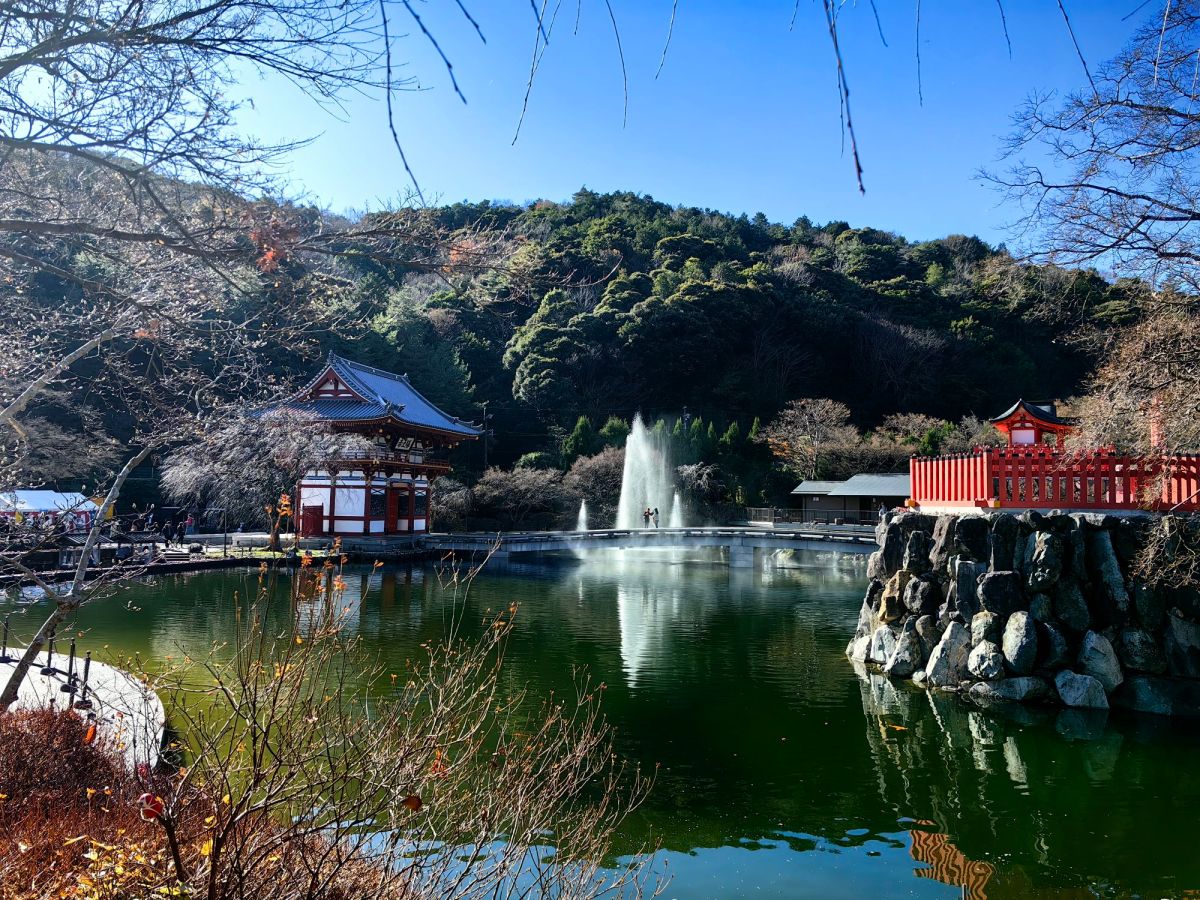
Eventually, I arrived at the Sanmon of Katsuoji Temple, famous for its thousands of Daruma dolls and its long history of being associated with victory and good fortune. Surrounded by dense forest and carefully landscaped gardens, the temple felt peaceful and secluded, despite being one of the best-known places to visit in the Minoh area.
Ponds, bridges, stone paths and carefully maintained gardens blend naturally with the forested mountains. In December, the atmosphere was particularly peaceful. Many of the maple leaves had already fallen, covering the ground with a layer of autumn color. According to temple tradition, the temple was founded in 727 by two brothers, Zenchū and Zensan, who built a small hermitage in the mountains. The temple’s connection with victory also has an interesting origin. During the reign of Emperor Seiwa, the emperor was seriously ill, and prayers were offered at the temple for his recovery. According to tradition, the emperor eventually recovered, and the temple’s spiritual power became associated with victory and overcoming difficulties.
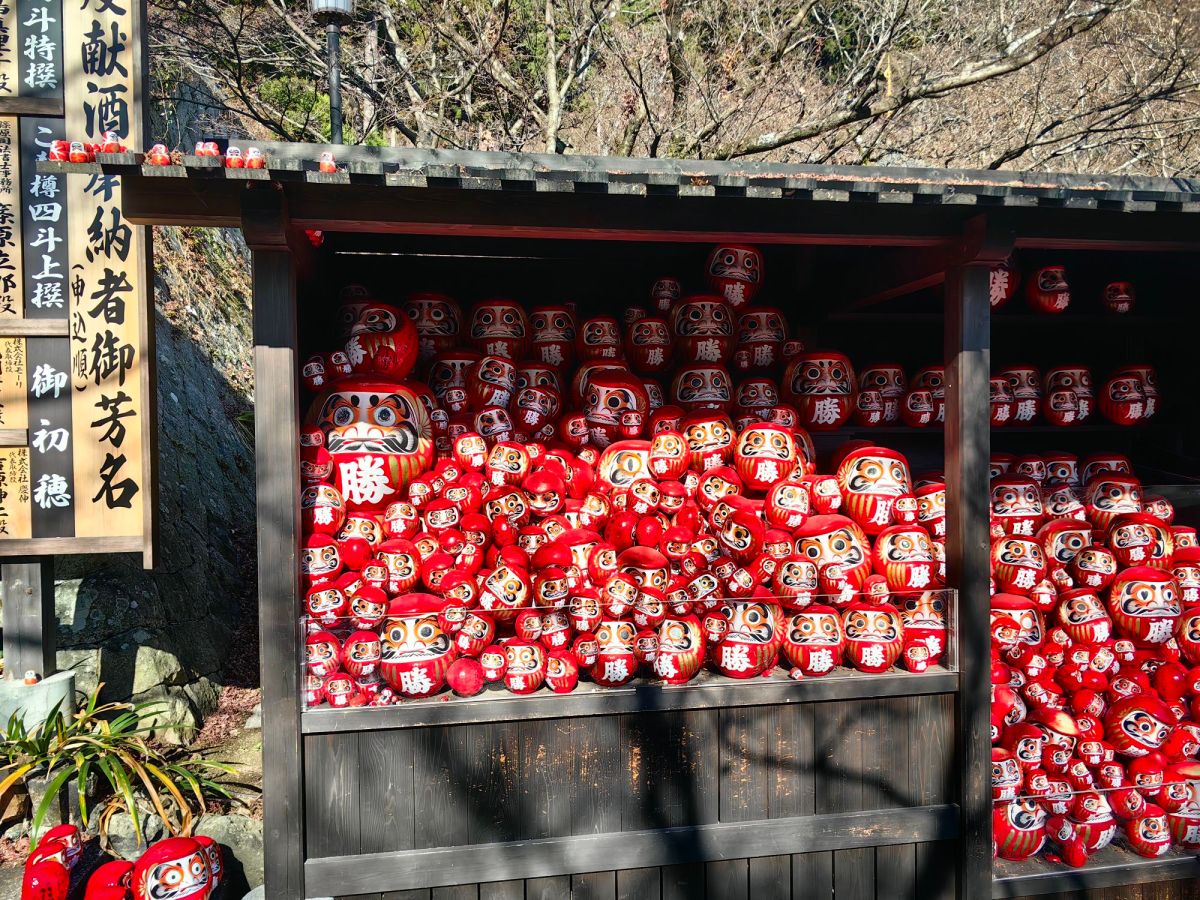
What immediately caught my attention was the extraordinary number of Daruma dolls throughout the temple grounds. These traditional Japanese dolls are symbols of determination and perseverance. Their round bodies and striking faces can be seen sitting on steps, beside pathways, on shelves and among the gardens. Some are large and impressive, while others are tiny enough to fit in the palm of a hand. Walking through the temple grounds felt almost like entering a world of Daruma. Instead of seeing just a few traditional ornaments, I encountered them everywhere I looked. Their presence gave the temple a playful character that contrasted beautifully with its quiet mountain setting.
The Daruma has large eyes, thick eyebrows and moustache which are traditionally associated with Bodhidharma (Daruma). At Katsuoji Temple, it has a special connection with the temple’s reputation for victory and success. Visitors often buy Daruma when praying for success in an examination, or a competition. What makes Katsuoji particularly fascinating is the sheer number of Daruma scattered throughout the temple grounds. Visitors offered Daruma in designated areas, so the dolls gradually accumulate across the gardens, steps and temple buildings. This creates a very distinctive scene: hundreds or even thousands of red Daruma seemingly watching over the temple from every corner. It is one of the things that makes Katsuoji unlike most other traditional temples in Japan.
One of the other things that caught my attention at Katsuoji was the vivid red colour of its traditional architecture. Against the deep green of the surrounding mountains, the vermilion buildings, gates and bridges stood out with remarkable intensity, creating a scene that felt both elegant and almost dreamlike. I particularly enjoyed the way Katsuoji combines architecture with nature. The buildings are not isolated monuments surrounded by concrete; they are woven into the mountains, gardens, ponds and forests.
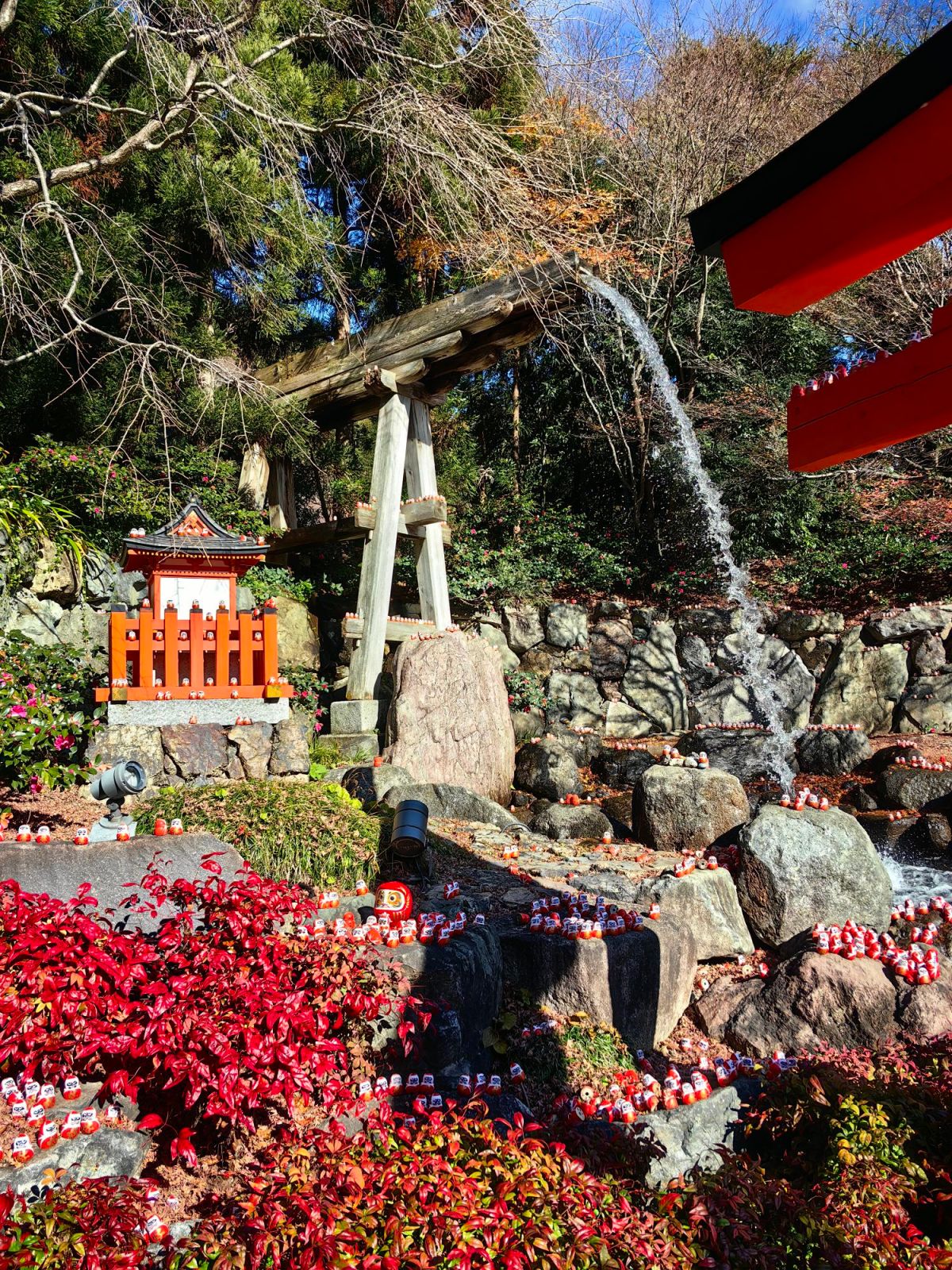
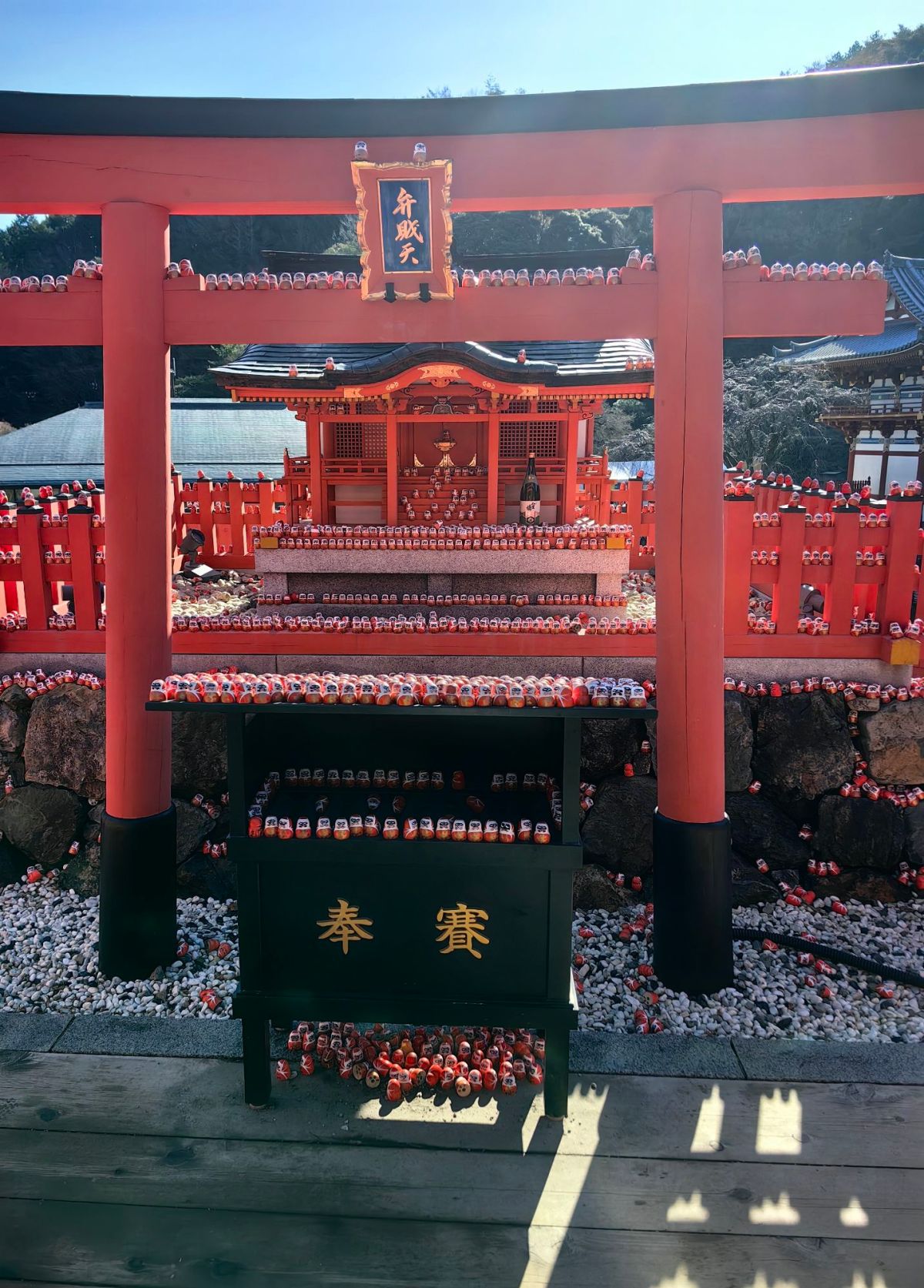
Among the rocks and greenery, I noticed a miniature vermilion shrine surrounded by red railings. A series of bright red traditional torii gates led toward it, creating a striking contrast with the natural landscape. This was Benzaiten Shrine, dedicated to Benzaiten, a deity associated with water, wisdom, music and the arts. I have found many similar things in the garden. Torii are traditionally associated with Shinto shrines, while Katsuoji itself is a Buddhist temple. Historically, however, Buddhism and Shinto were deeply intertwined in Japan for centuries. Before the Meiji period, it was common for Buddhist temples to contain Shinto shrines and for Buddhist and Shinto practices to coexist.
Benzaiten has a fascinating origin. She developed in Japan from Saraswati, an ancient Indian goddess associated with water, knowledge, music and the arts. When Buddhism spread to Japan, this deity was incorporated into Japanese religious traditions and gradually took on additional associations. She is worshipped in many different forms across Japan. Some places have grown into large religious complexes devoted to her, while other, like this little shrine at Katsuoji, was simply a small sacred corner within a much larger temple.
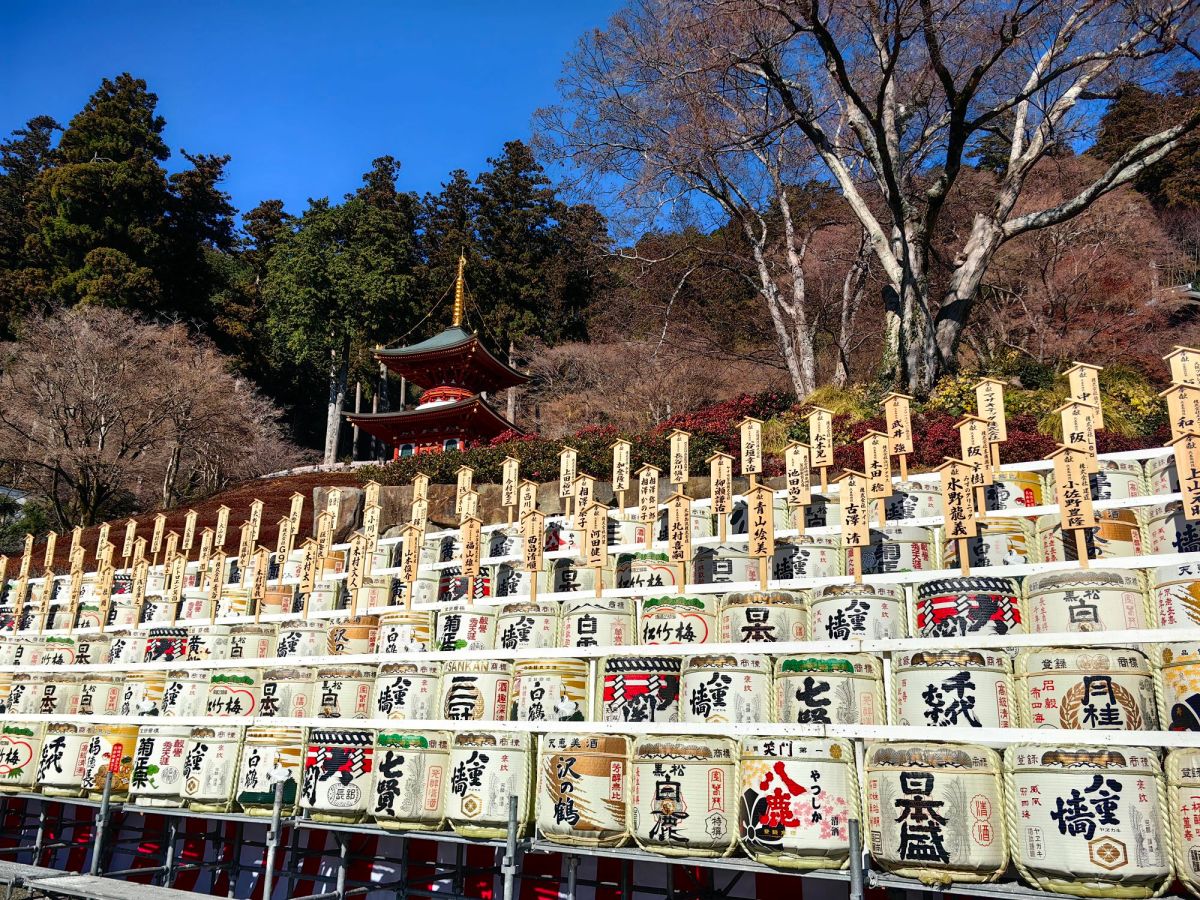
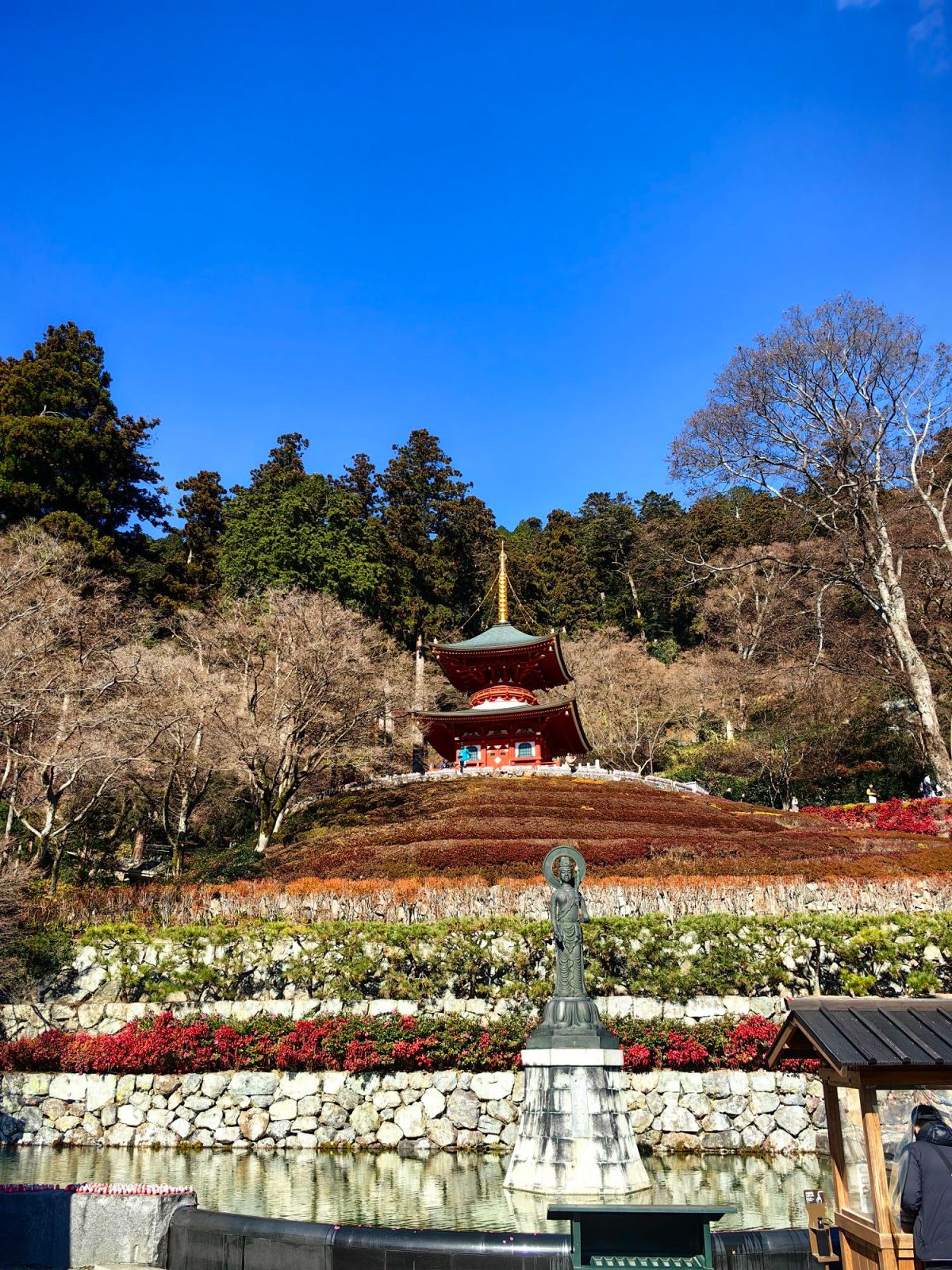
As I walked through Katsuoji, I came across a remarkable display of sake barrels stacked in rows along the hillside. Each barrel carried different Japanese characters, names and colorful logos, representing different sake breweries and producers. These were not simply decorations; sake has long played an important role as a religious offering in Japan, and breweries often donate sake to temples and shrines. The scene was particularly striking at Katsuoji. Hundreds of barrels formed a wall of white, black and red, while the elegant vermilion pagoda rose above them among the trees. This creates a scene with a distinctly Japanese character.
The pagoda called Tahōtō originated in ancient India as the stupa, a structure associated with the Buddha and used to preserve sacred relics. As Buddhism spread through Asia, the stupa gradually evolved into different architectural forms. Japanese pagodas are usually built with three or five storeys, with the five-storey pagoda being particularly iconic. The number five has Buddhist and cosmological significance, traditionally representing the five elements: earth, water, fire, wind and space.
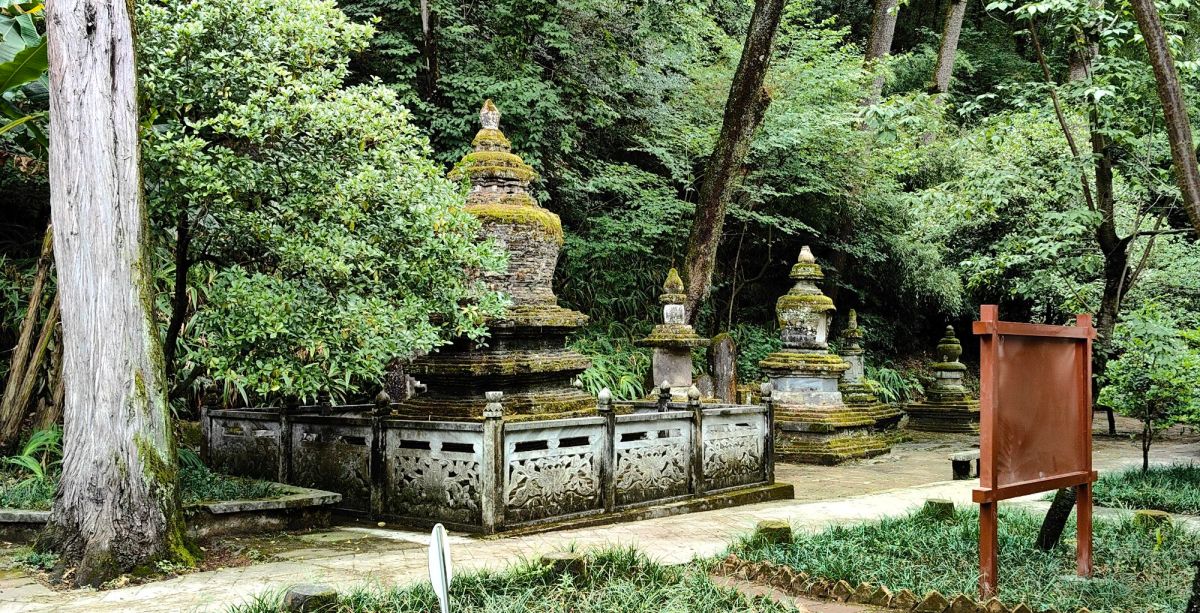
During my trip, I noticed a series of unusual stone towers standing beside the old pilgrimage route. These were Gorintō, not simply memorial stones but Chōishi, distance markers for pilgrims and it shew directions for the pilgrims. The oldest surviving ones date back to 1247, to the Kamakura period. Standing beside them with hundred years history, I imagined the pilgrims who had walked this same route more than seven hundred years ago. They would have passed these stones one by one like me. The stones therefore felt like more than historical objects. They were silent witnesses to generations of journeys, prayers and footsteps.
In this temple, I have seen many ancient-looking Buddhist monuments. A weathered stone pagoda rose on one side, while a tall inscription pillar stood like a silent marker beside the path. The large structure on the left is a stone pagoda, built in the traditional Buddhist architectural form. It has multiple levels with projecting roofs, giving it the appearance of a miniature stone version of pagoda. It is quite different from the Tahōtō behind it. The large stone pillar is an inscription monument with the Japanese name of the mountain Ocho-san (応頂山) and the Japanese name of the temple Katsuō-ji(勝尾寺). Japanese character is similar to the Chinese character even I don’t know any Japanese but I could still recognize them. This sense of familiarity that transcends language and culture makes my travels particularly enjoyable.
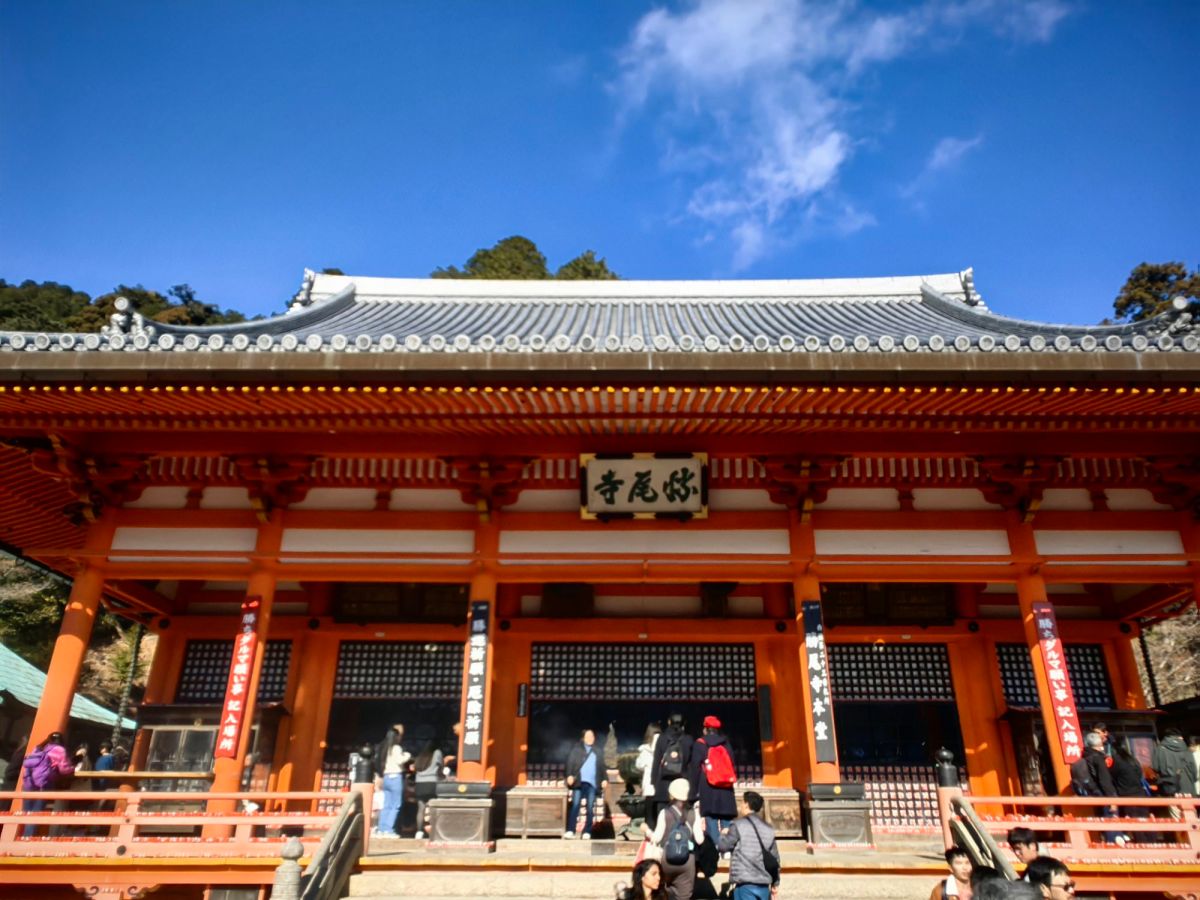
The Hondō(main hall) of Katsuō-ji is a traditional wooden Buddhist main hall characterized by its broad tiled roof, deep eaves, and simple wooden structure. The structure is mainly natural wood, with dark brown and muted tones that blend into the mountain setting. Many people visit the Hondō to pray for success, good fortune, and the fulfillment of their wishes. Standing in front of it, I could feel a solemn and peaceful atmosphere.
In winter, Katsuō-ji offers a peaceful panoramic view of the surrounding mountains and forests. The bare trees and evergreen foliage create a quiet, subdued landscape immersed in the clouds, giving the scenery a calm and misty appearance. From the elevated temple grounds, I could appreciate the beauty and tranquility of the winter mountains.
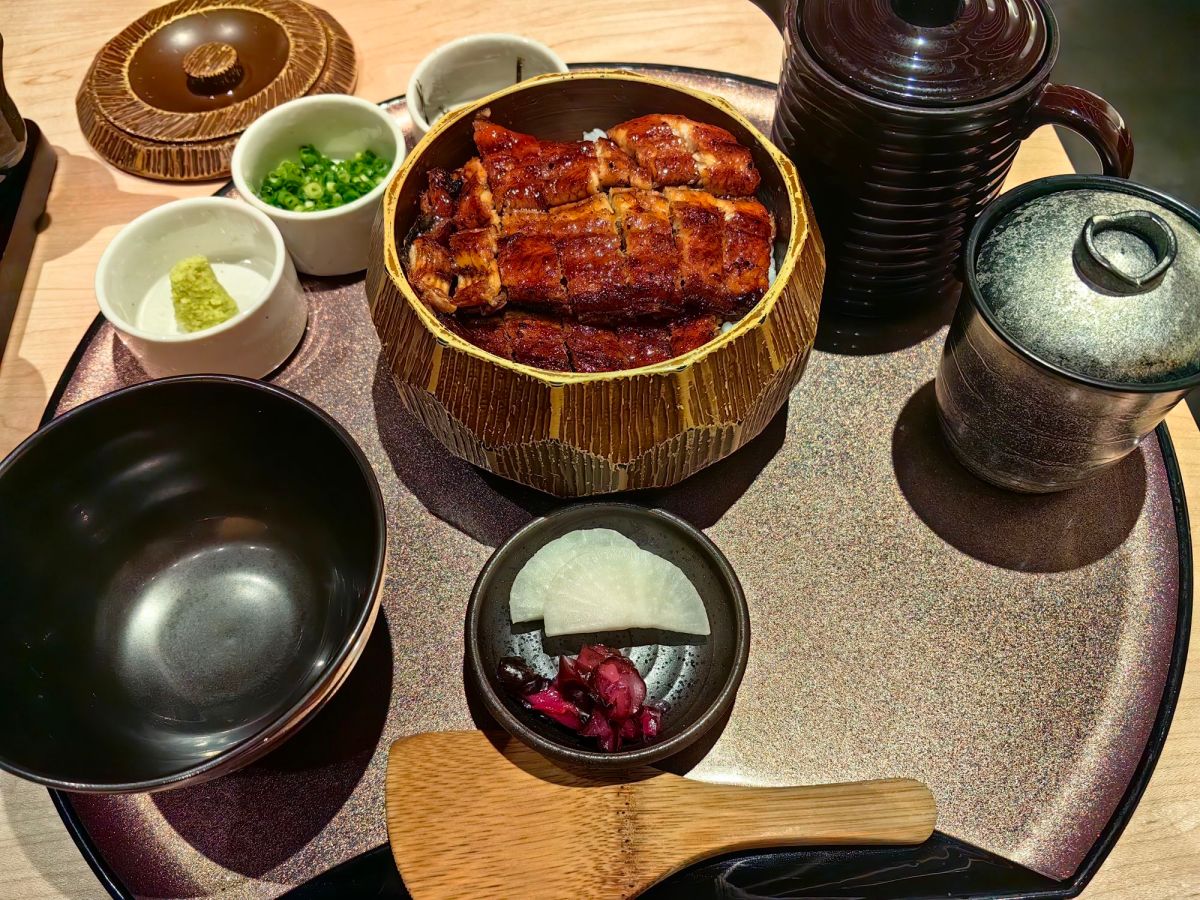
After leaving Katsuō-ji, I stopped at a small local restaurant and had unadon for lunch. The dish consisted of tender grilled eel served on a bowl of warm, fluffy rice and covered with a rich, sweet and savory sauce. The plating of the Japanese food was beautifully arranged and visually appealing. It looked simple, but I could feel the chef’s attention to details. The ingredients were carefully placed in the dish, creating a balanced combination of colors, textures, and shapes. The eel had a slightly smoky flavor from the grilling, while the sauce added a delicious balance of sweetness and saltiness. The simple presentation and cozy atmosphere of the small restaurant made the meal feel especially authentic and comforting after visiting the temple.
By the time I returned to Osaka, I felt refreshed by my brief escape to Minoh. Although it was only a short journey, the quiet forests, mountains, hidden temples, and crisp winter air created a peaceful distance from the bustle of the city. Walking alone through the tranquil landscape, pausing at old temples, enjoying the scenery and a simple Japanese meal, I found myself slowing down and appreciating the moment. Minoh reminded me that a journey does not have to be long to be meaningful; sometimes, a few hours surrounded by nature are enough to relax, clear the mind, and continue my jourmey with a renewed sense of calm.
In December 2025, I embarked on my very first journey to Japan. For years, I had dreamed of exploring a country where ancient traditions coexist with cutting-edge modernity, and the Kansai region was the destination I chose to begin that dream. As the largest city in western Japan and the gateway to the Kansai region, Osaka was the perfect introduction to the country and was the perfect place to experience my first glimpse of Japan. when I arrived, the city welcomed me with its vibrant energy, dazzling streets, and warm, down-to-earth atmosphere.
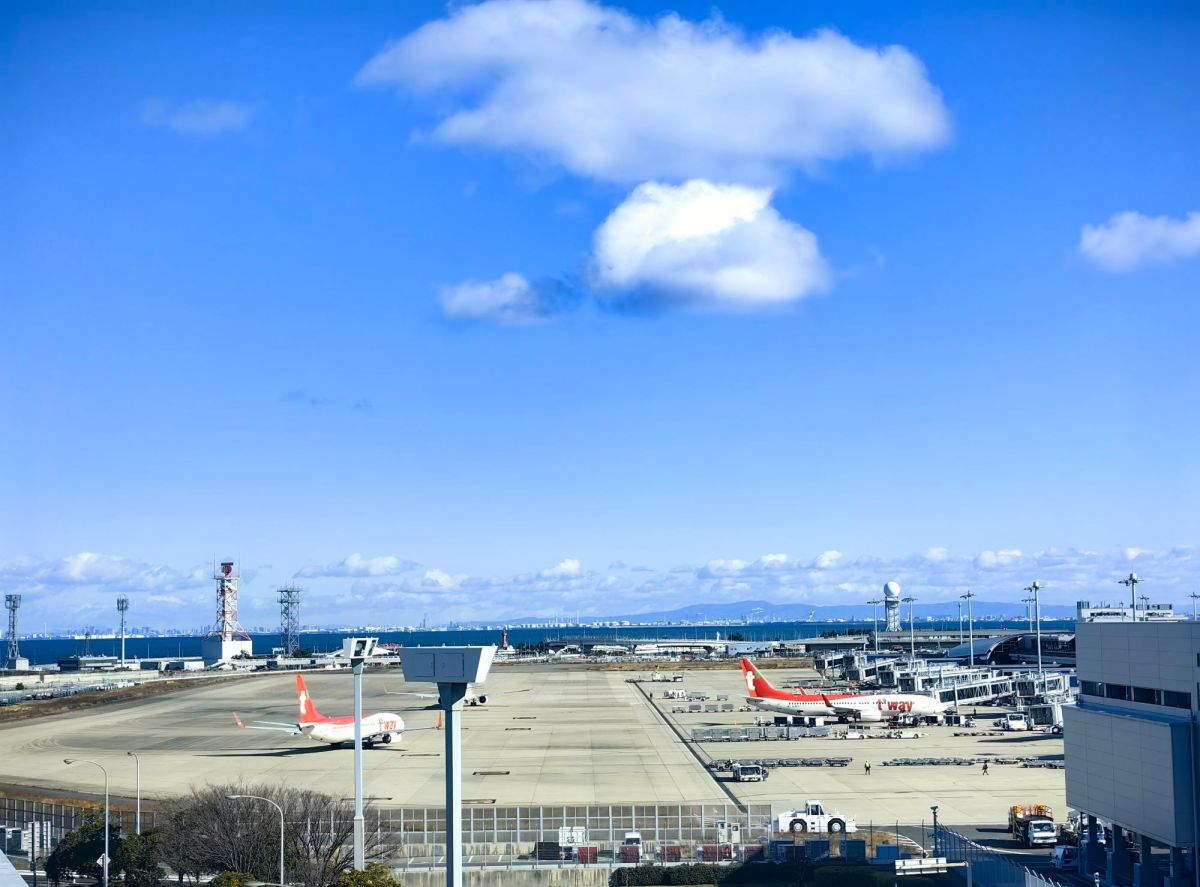
On 19 December 2025, I arrived at Osaka’s Kansai International Airport, the gateway to my first journey in Japan. Even before stepping outside the terminal, the airport itself left a lasting impression. Built entirely on a man-made island in the heart of Osaka Bay, it appears to rise gracefully from the sea, surrounded by water in every direction. As the aircraft began its descent, I gazed out of the window and watched the long, slender runway emerge from the shimmering bay, linked to the mainland by a bridge that seemed to stretch endlessly across the water.
Stepping out of the airport, I was filled with a quiet sense of excitement and anticipation. For my stay in Osaka, I chose a hotel within walking distance of Dotonbori, the city’s most iconic entertainment and shopping district. Staying in the heart of the city meant that everything was only a short stroll away from lively shopping arcades and elegant department stores to countless restaurants serving Osaka’s celebrated local specialties.
The canal that winds through the district was first excavated in the early Edo period, and over the centuries it has grown into one of Osaka’s most recognizable landmarks. Today, people from every corner of the world gather along its lively waterfront, soaking in the city’s infectious energy and colorful street life. Standing beside the historic canal on my very first evening in Japan, I felt that there could hardly have been a better place to begin my journey.
No visit to Osaka would be complete without tasting takoyaki, the city’s most iconic street food and a dish that perfectly captures its lively culinary culture. As I wandered through the bustling streets of Dotonbori, the irresistible aroma of batter sizzling on hot iron griddles filled the air, drawing people towards the countless food stalls lining the streets. Freshly prepared before my eyes, the takoyaki emerged as perfectly round, golden-brown balls with a crisp, lightly toasted exterior. Each one was filled with tender pieces of octopus, finely chopped green onions and crunchy tempura flakes, then generously topped with savory takoyaki sauce, creamy Japanese mayonnaise, a sprinkle of seaweed powder, and delicate bonito flakes that danced in the rising heat. It looked really delicious.
From the very first bite, I understood why takoyaki has become synonymous with Osaka. I instantly fell in love with it. The crisp outer layer has a soft, creamy centre that was almost molten. The tender octopus added a satisfying chewiness, while the savory sauce and fragrant toppings brought every bite together in a perfect harmony.
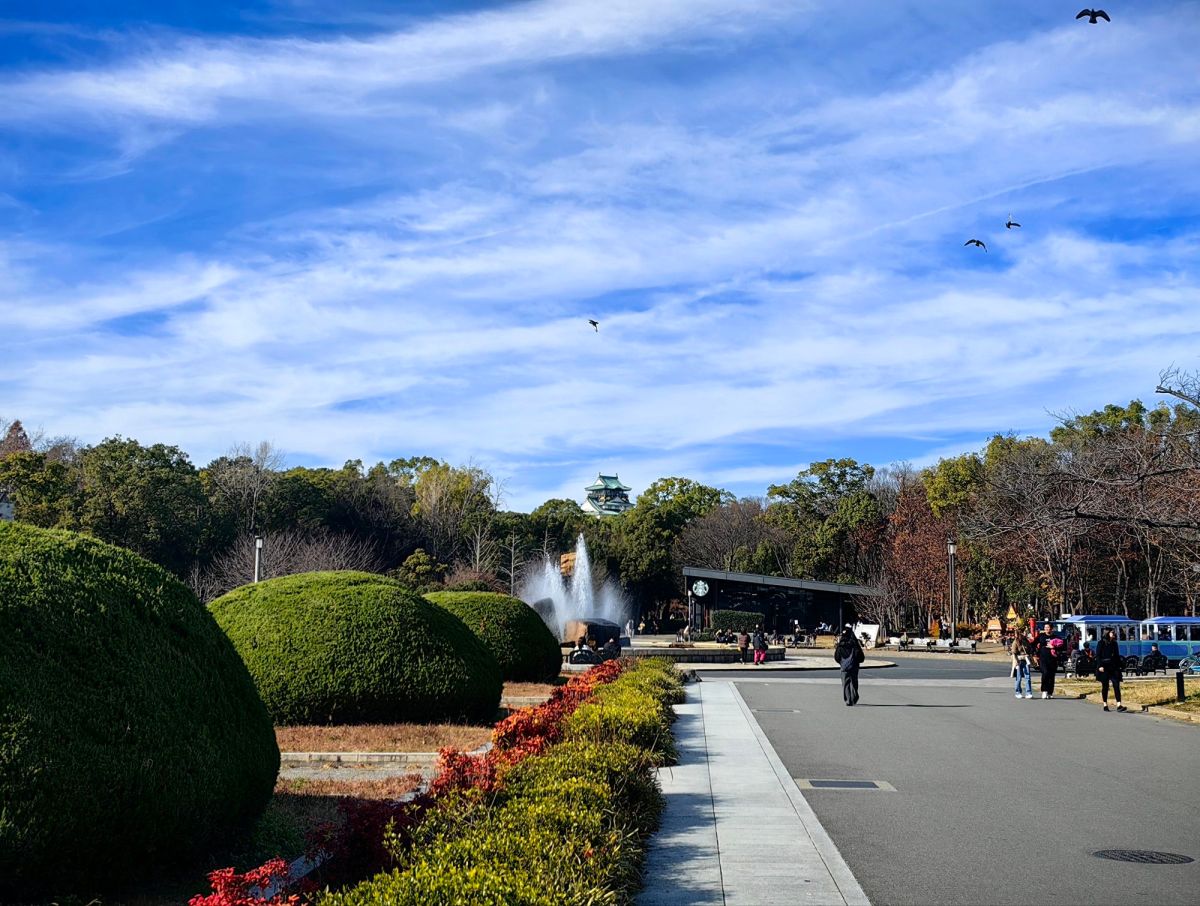
One of the highlights of my journey was my visit to Osaka Castle Park, a vast green oasis surrounding one of Japan’s most celebrated landmarks. In the heart of the bustling city, the park offered a welcome sense of tranquility. Although it was winter, the park possessed a quiet charm of its own. The crisp air, the stillness of the grounds, and the gentle rustle of bare branches invited me to slow my pace and savor the moment. As I approached the castle, the magnificent white-and-green keep gradually emerged above the treetops. Framed by the surrounding greenery and rising proudly above its massive stone foundations, it was an unforgettable sight.
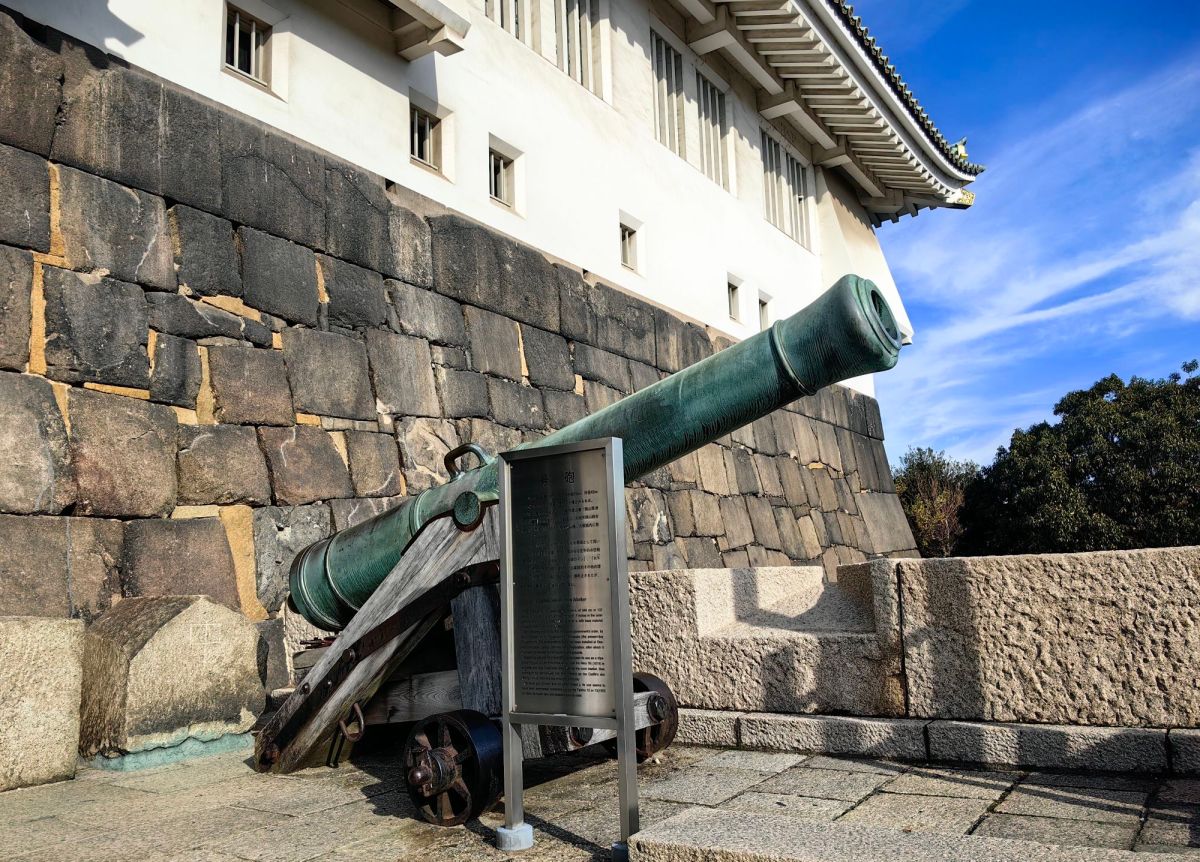
The exterior of Osaka Castle is both elegant and majestic, making it one of Japan’s most recognizable landmarks. Rising above its immense stone foundations, the castle’s brilliant white walls stand in striking contrast to its emerald-green roofs, which are adorned with shimmering gold decorations that gleam in the sunlight. Perched at the corners of the rooftops are magnificent gilded shachihoko (mythical creatures with the head of a tiger and the body of a carp). According to Japanese tradition, these legendary guardians possess the power to summon water and protect buildings from fire.
Beyond its beauty, Osaka Castle occupies a central place in Japanese history. It was originally built in 1583 by the powerful warlord Toyotomi Hideyoshi, who sought to unify Japan after more than a century of civil war during the Sengoku Period (1467–1615). Designed as the political and military headquarters of the Toyotomi clan, the castle became one of the largest and most formidable fortresses in the country. Its massive stone walls, broad moats, and strategic location reflected Hideyoshi’s ambition to establish a unified Japan under his rule. Although the present castle is a modern reconstruction completed in 1931 and later restored, it faithfully preserves the appearance of Toyotomi Hideyoshi’s original masterpiece.
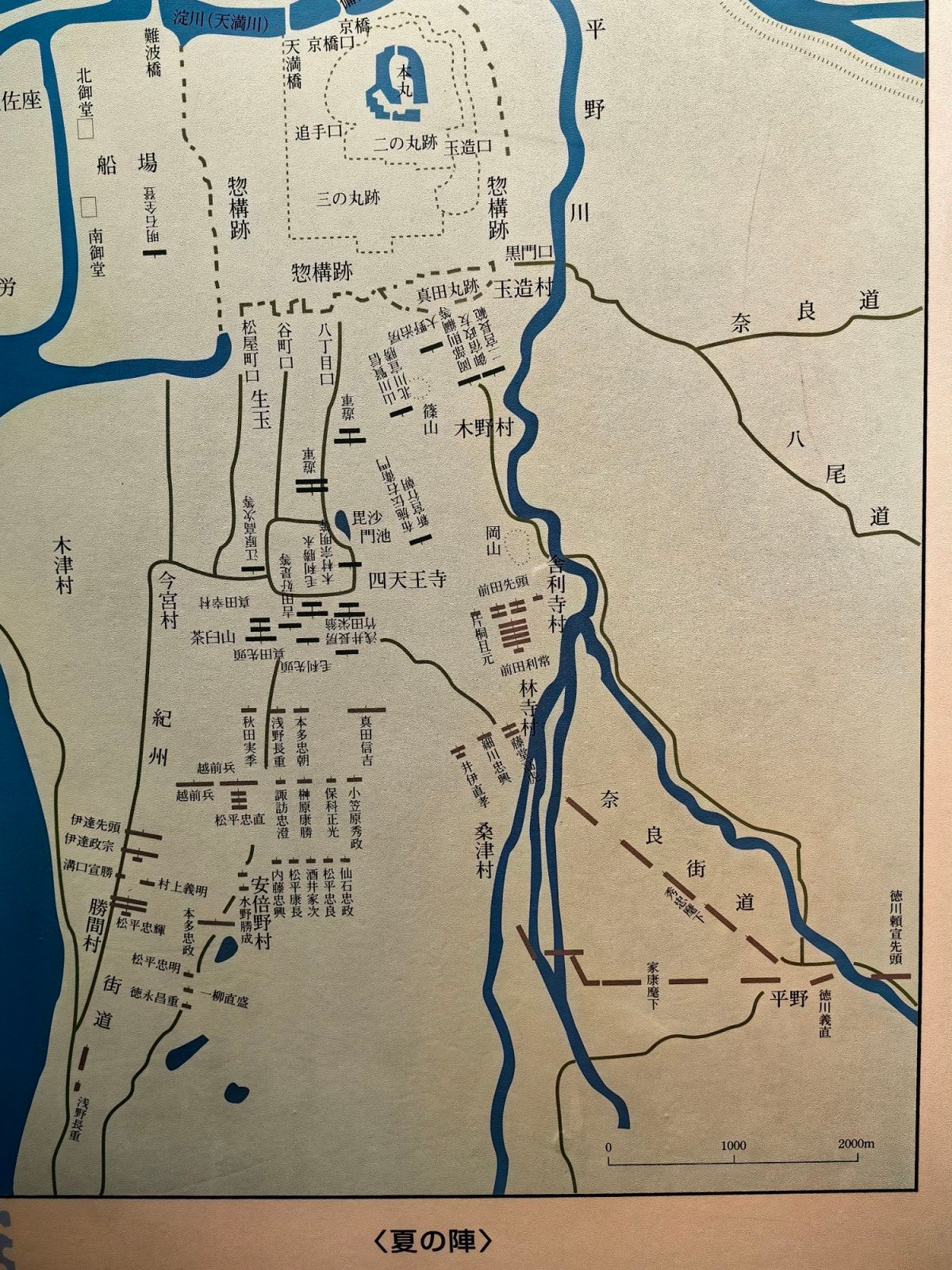
The castle now becomes a museum displaying the model of this castle and the history of that period and narrating the ebb and flow of that period. I like to play games like Nobunaga’s Ambition and familiar with the history of Sengoku Period so I really enjoyed the immersive travel experience here as if I visited that period by myself. The castle also witnessed the dramatic conclusion of the Sengoku era. Following Hideyoshi’s death, tensions between the Toyotomi clan and Tokugawa Ieyasu escalated into the Siege of Osaka in 1614 and 1615. Standing on this castle, I could observe clearly the outline of the whole war field around this castle. I imagined the decisive battle determining Japan’s fate, once took place fiercely here.
Following the death of Toyotomi Hideyoshi, his young son and heir, Toyotomi Hideyori, remained in Osaka Castle, while Tokugawa Ieyasu, victorious at the Battle of Sekigahara in 1600, had already emerged as the most powerful political figure in Japan. Although the Toyotomi clan still possessed immense wealth and the formidable defences of Osaka Castle, Ieyasu regarded them as the final obstacle to bringing the entire country under Tokugawa rule. This rivalry would ultimately culminate in the Siege of Osaka, one of the most decisive conflicts in Japanese history, marking the end of the Toyotomi clan and the beginning of more than two and a half centuries of Tokugawa shogunate rule.
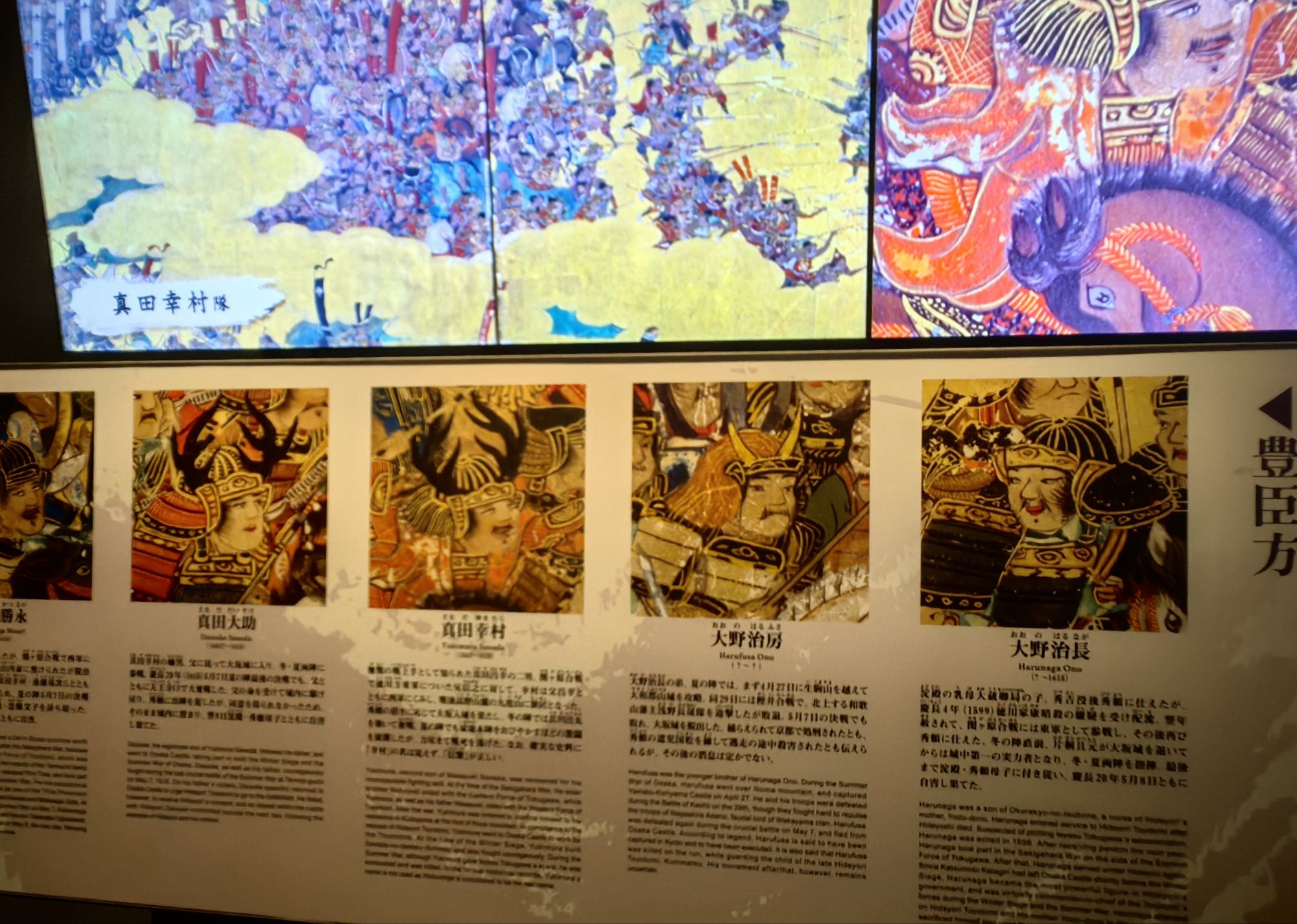
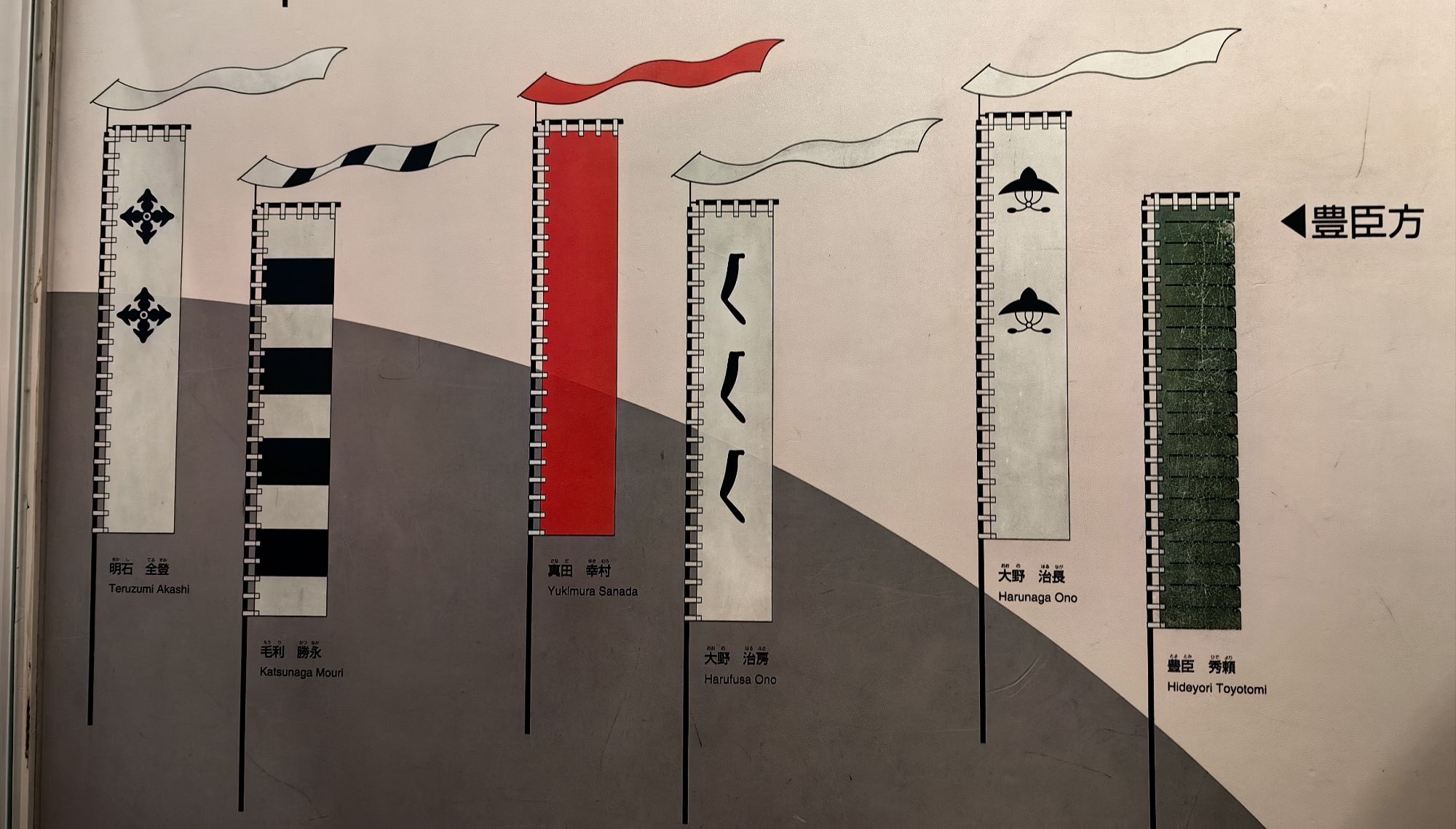
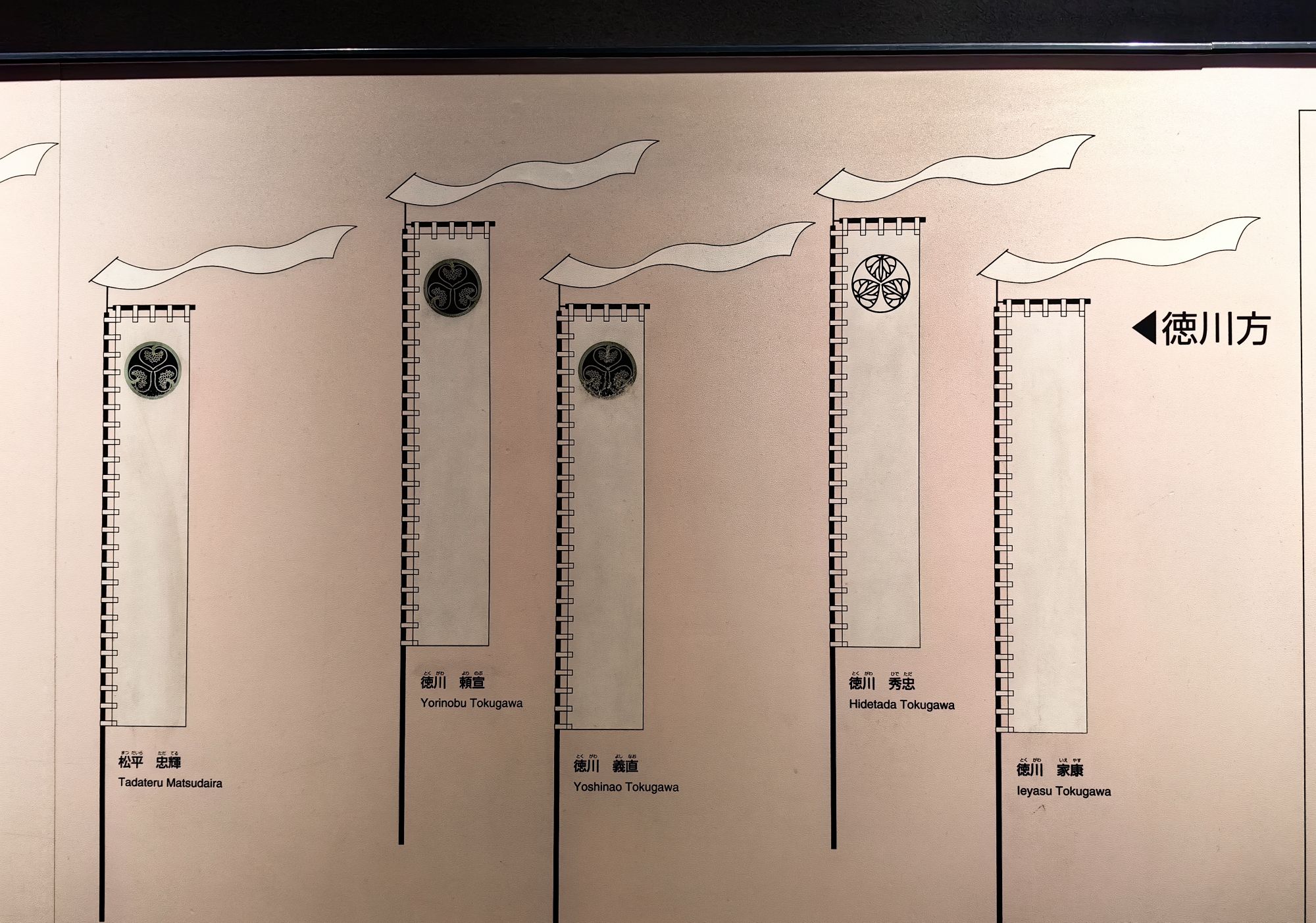
Today, the castle serves not only as one of Osaka’s most famous landmarks but also as a fascinating museum that brings this dramatic chapter of history to life. As I explored its galleries, I found detailed exhibits dedicated to Hideyori’s loyal generals, their armour and weapons, and the distinctive battle standards that once identified their armies on the battlefield.
In the winter of 1614, Tokugawa Ieyasu personally led a vast army to lay siege to Osaka Castle. Rather than relying solely on brute force, he combined overwhelming military strength with calculated strategy to break down the defenders’ resistance. The Winter Campaign ended in a negotiated truce, but the agreement came at a heavy cost for the defenders. Under its terms, the Tokugawa forces dismantled much of the castle’s outer fortifications and filled in large sections of its protective moats, leaving what had once been an impregnable fortress dangerously exposed.
When hostilities resumed during the Summer Campaign of 1615, the balance of power had shifted decisively. Tokugawa’s forces launched a final offensive that overwhelmed the Toyotomi defenders. Osaka Castle fell, and Toyotomi Hideyori died within the castle, bringing the Toyotomi lineage to an end. With that victory, Tokugawa Ieyasu secured control of Japan, ushering in more than 260 years of peace and stability under the Tokugawa shogunate.
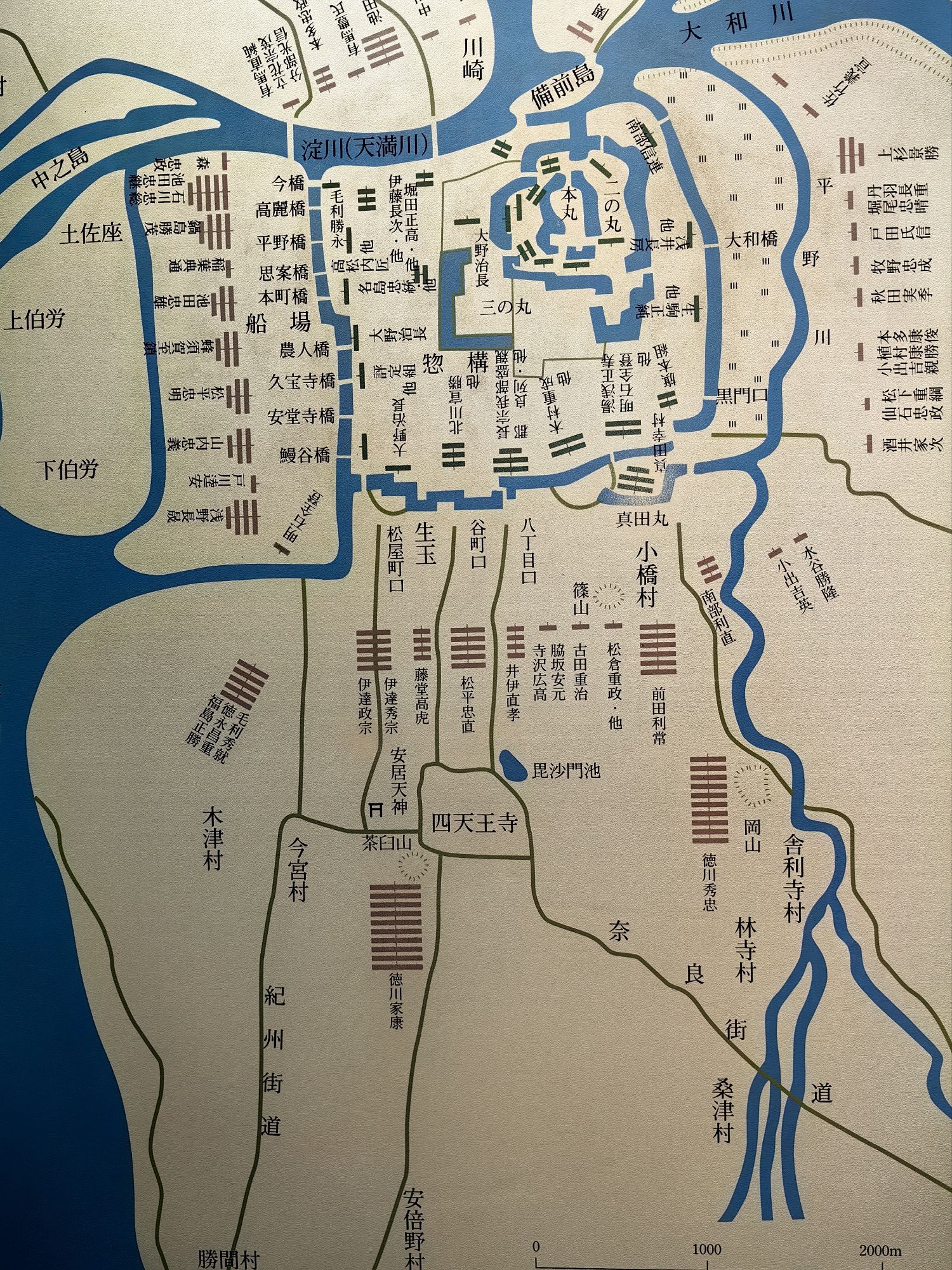
The third floor of the castle museum vividly recounts these two historic campaigns. Through detailed battle maps, scale models, and illustrated displays, I could follow the movements of both armies and understand how the siege unfolded step by step. The historical maps depicted Osaka as it appeared more than four hundred years ago, yet many familiar place names have survived to the present day. Among them was Shitennō-ji, one of Japan’s oldest Buddhist temples. Seeing a name that still exists on a map from the early seventeenth century made history feel remarkably tangible.
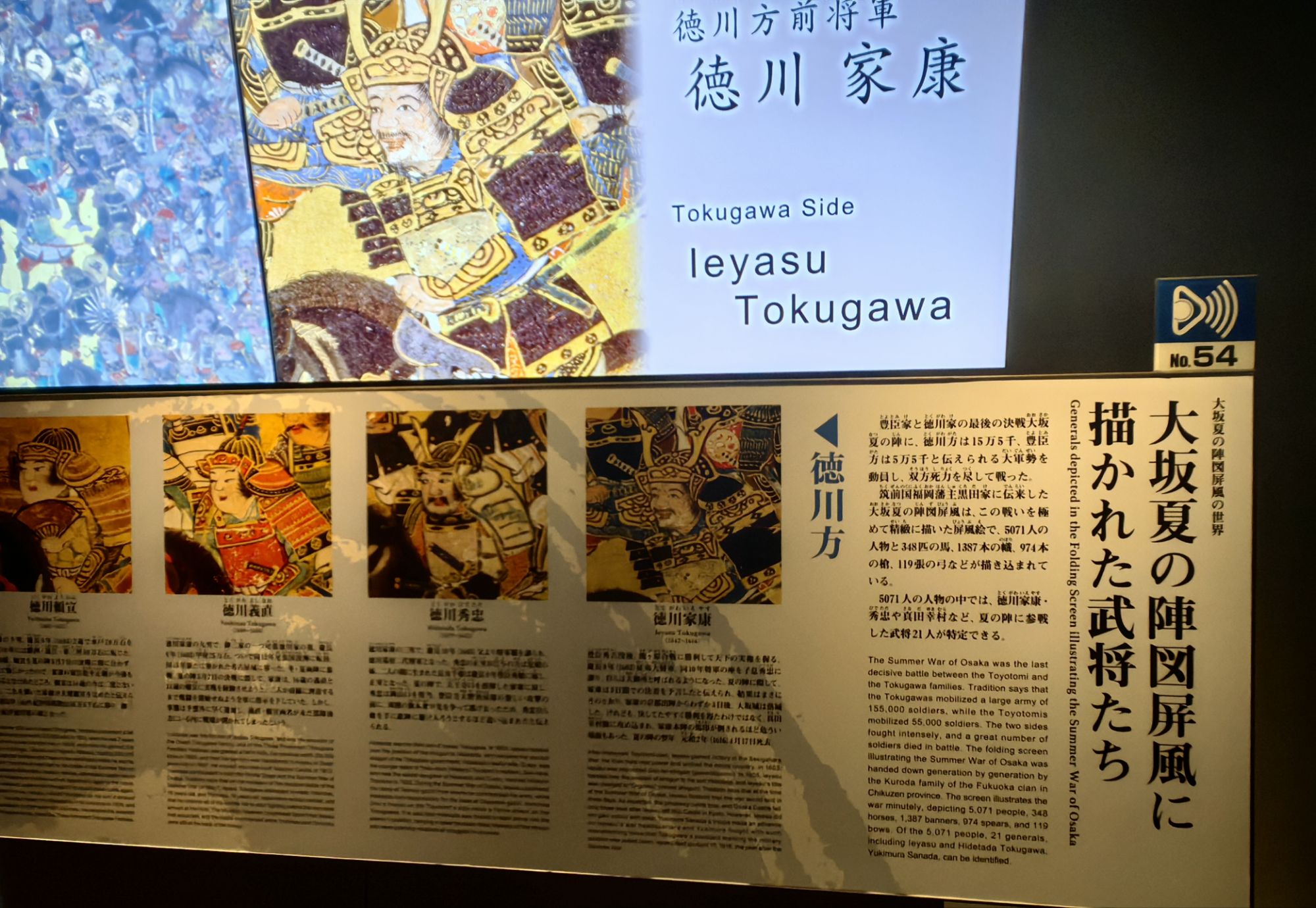
Several renowned Tokugawa commanders played pivotal roles in the Siege of Osaka. Among them was Ii Naotaka, commander of the legendary “Red Devils” cavalry. Famed for the striking crimson armor worn by his warriors, he led his troops with distinction during the campaign and later became one of the Tokugawa shogunate’s most trusted daimyō. Another prominent figure was Honda Tadatomo, the son of the celebrated warrior Honda Tadakatsu, who was widely regarded as one of the greatest generals of his age. Tadatomo earned recognition for his courage and capable leadership on the battlefield, continuing the military legacy of his distinguished family.
Also fighting on the Tokugawa side was Date Masamune, the powerful lord of Sendai. Easily recognized in portraits by his distinctive crescent-moon helmet, Masamune contributed a substantial force to the Tokugawa coalition while maintaining his reputation as one of the most charismatic and influential daimyō of the era. Seeing these familiar names in the museum exhibits brought the history of the siege vividly to life, transforming what I had once known only from books into the stories of real people who chose their fate in the course of Japan’s history.
This is the portrait of Tokugawa Ieyasu who was the winner of this war. The victory at Osaka eliminated the final military challenge to Tokugawa authority. With the Toyotomi clan destroyed, Tokugawa Ieyasu secured the foundation of the Tokugawa Shogunate, which would govern Japan for more than 250 years. Walking through Osaka Castle today, it is remarkable to think that these peaceful grounds once witnessed the battle that ended the Age of Warring States and ushered in one of the longest periods of peace in Japanese history.
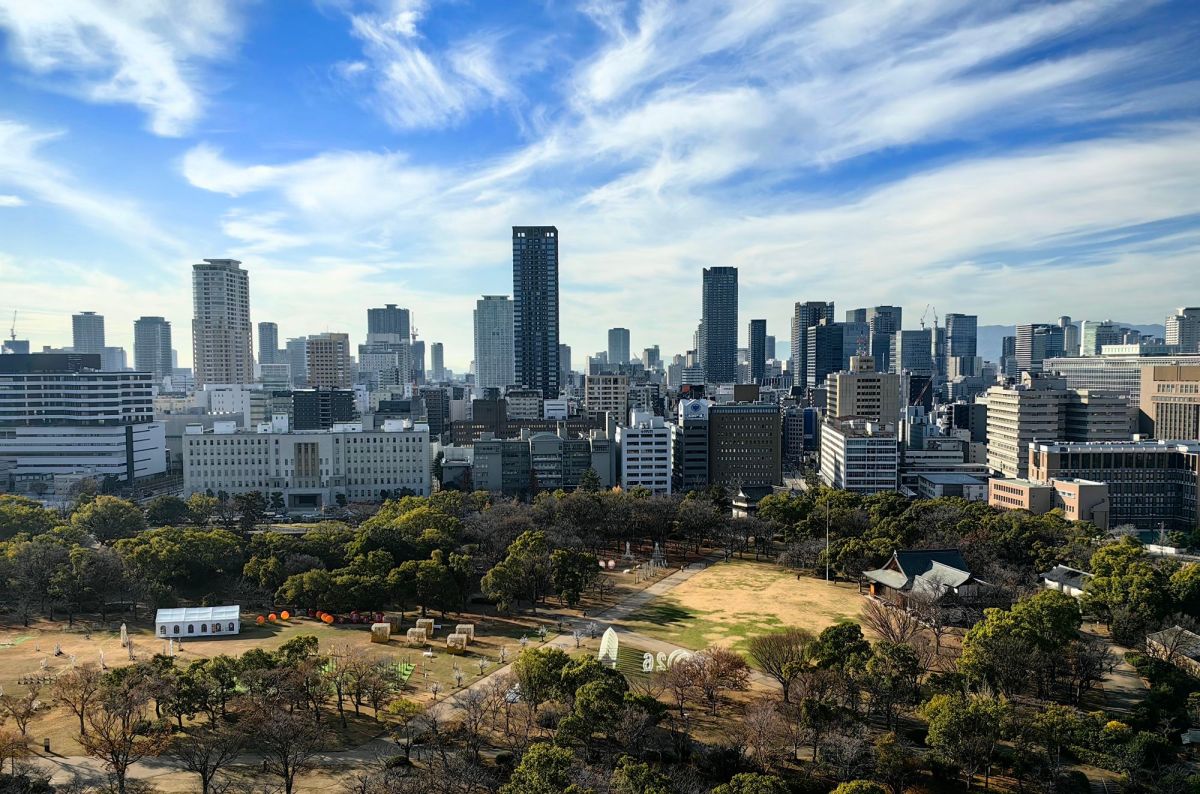
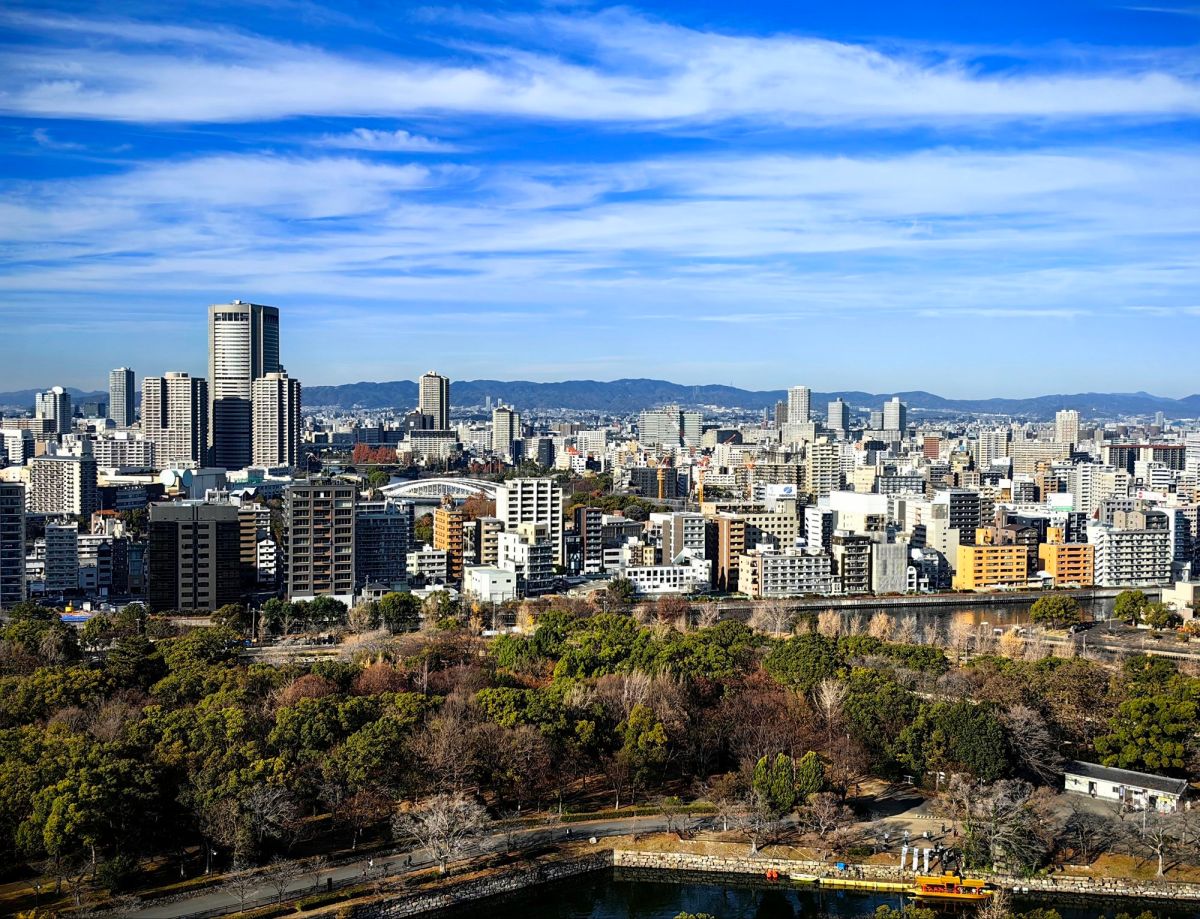
After exploring the castle museum, I made my way to the observation deck at the top of Osaka Castle. From there, a breathtaking panorama unfolded in every direction. The skyline stretched endlessly towards the horizon, where countless skyscrapers, office towers, apartment blocks, and commercial buildings formed a vast sea of steel and glass. The city seemed to pulse with life, its modern skyline standing in striking contrast to the centuries-old castle beneath my feet.
Looking out across the sprawling cityscape, I could truly appreciate how Osaka has evolved over the centuries. What was once a castle town of samurai residences, merchant quarters, and narrow streets has grown into one of Japan’s largest and most dynamic metropolitan centres, home to millions of people. Yet despite its remarkable transformation, Osaka Castle still stands proudly at the heart of the city, serving as a timeless reminder of the events that shaped its history.
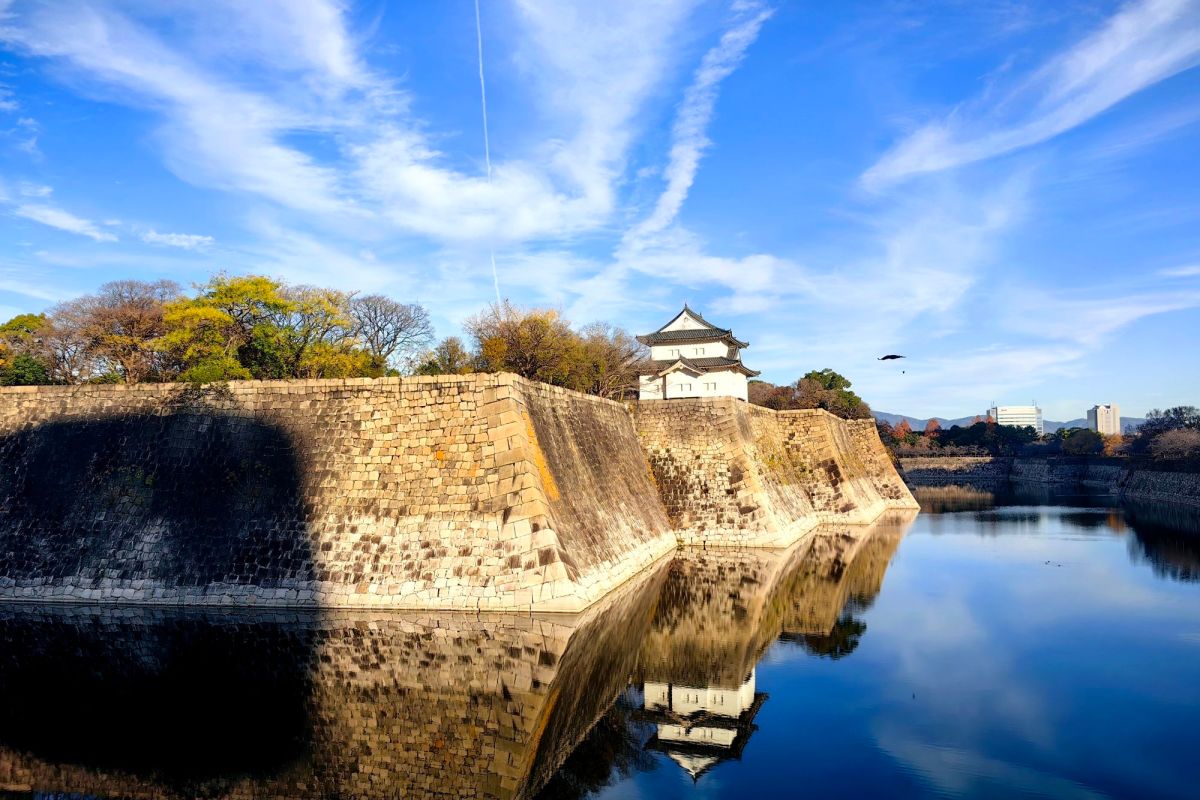
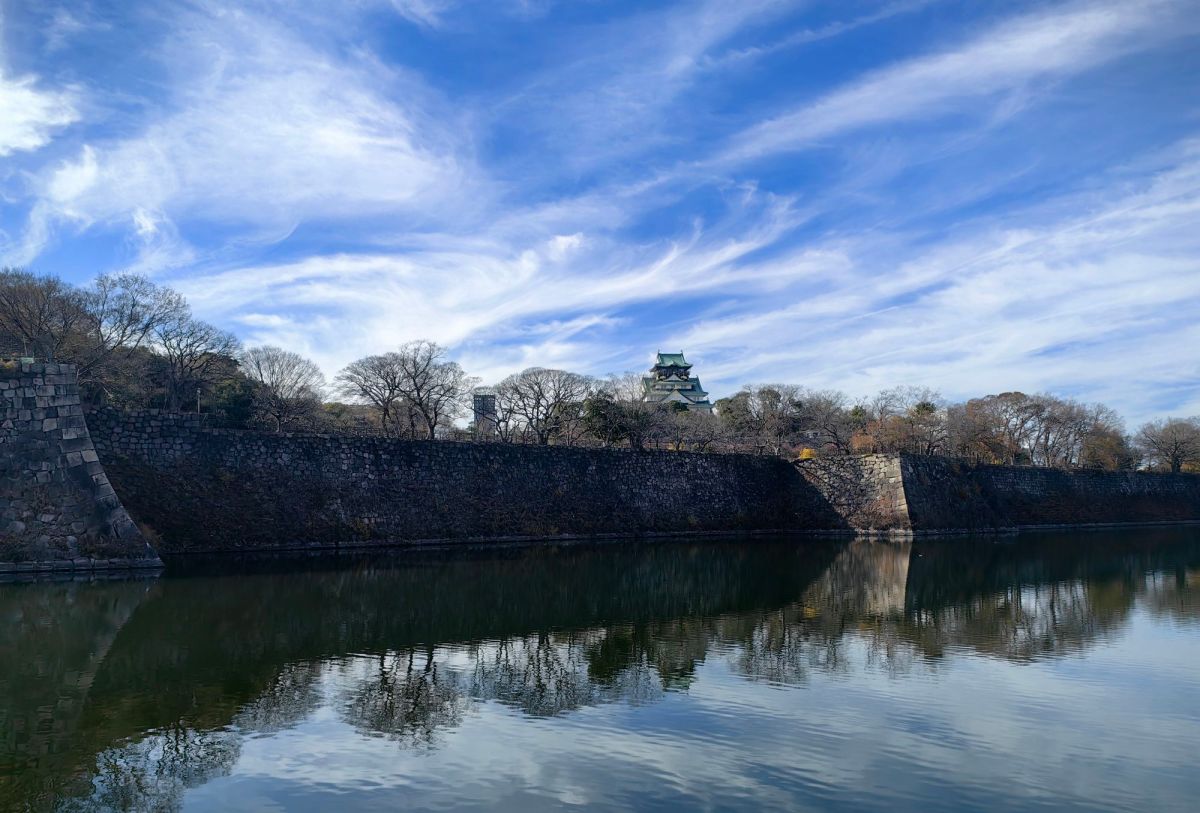
Standing within Osaka Castle Park today, it was difficult to imagine that these peaceful grounds had once witnessed some of the most decisive battles in Japanese history. I also walked around the outer grounds of the castle, where its immense scale became even more apparent. The keep rises from an enormous stone foundation encircled by broad moats that once formed a formidable line of defence. Many of the granite blocks used to construct the massive walls are among the largest ever quarried, transported, and assembled in Japan.
Viewed from across the moat, the castle appeared especially magnificent. It seemed to emerge naturally from its colossal granite base, while its brilliant white walls and emerald-green roofs, adorned with gleaming gold ornaments, shone vividly beneath the pale winter sky. The calm water reflected the castle’s graceful silhouette, creating a scene of quiet beauty.
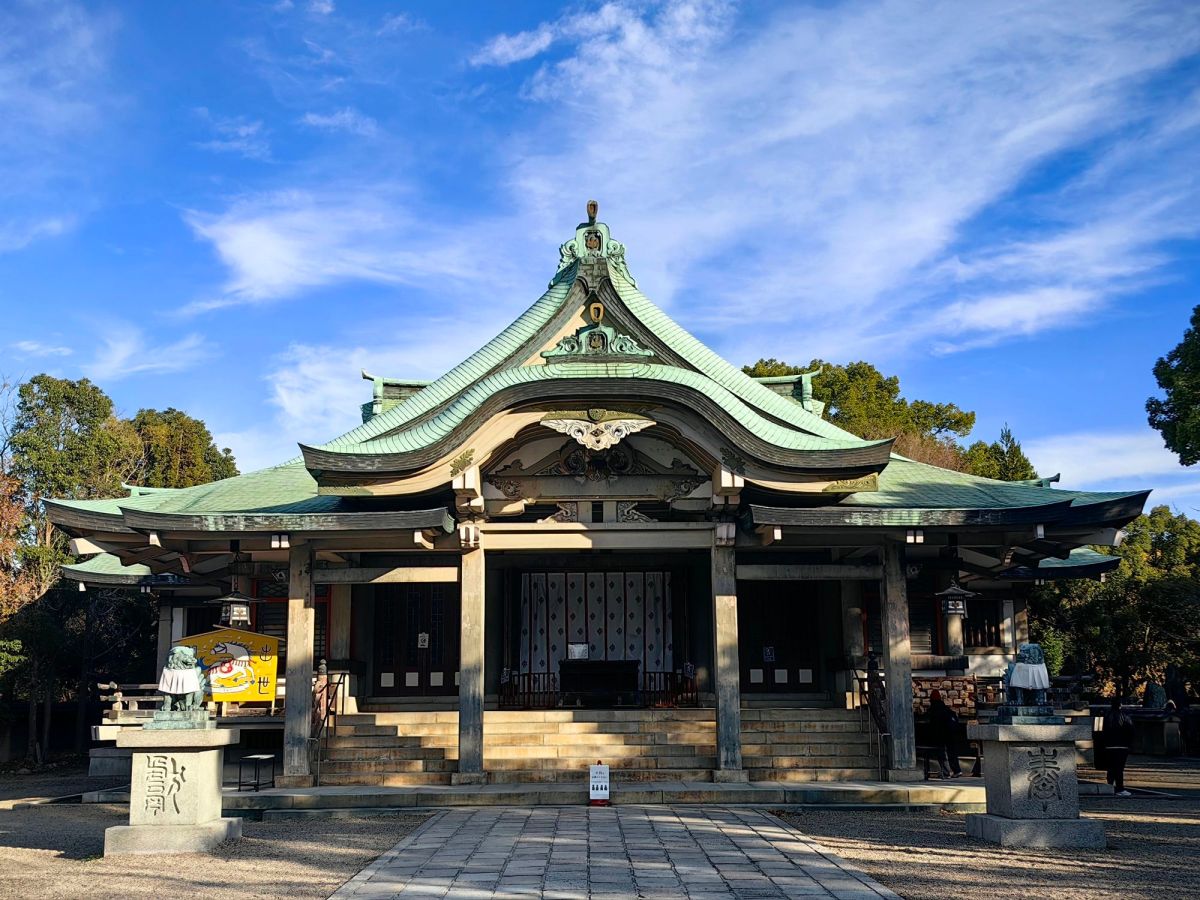
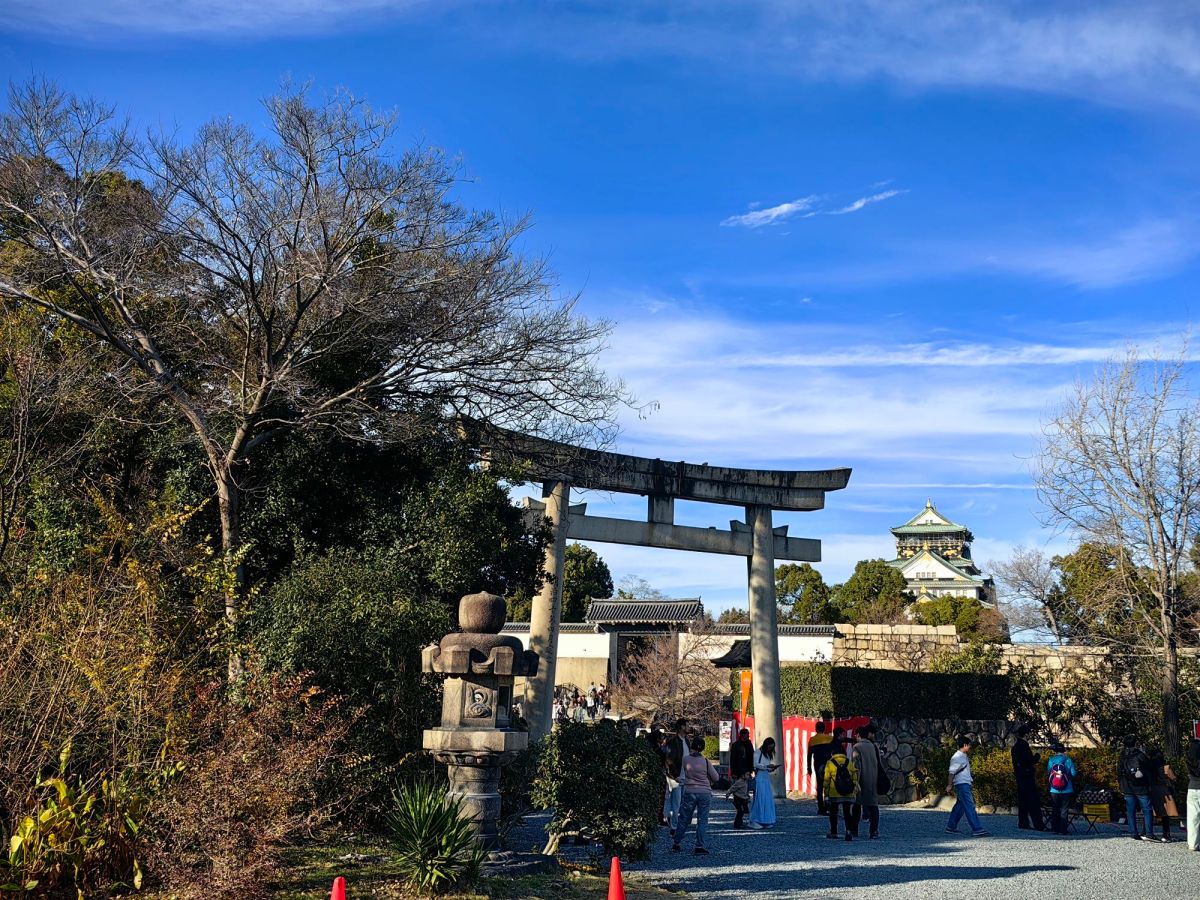
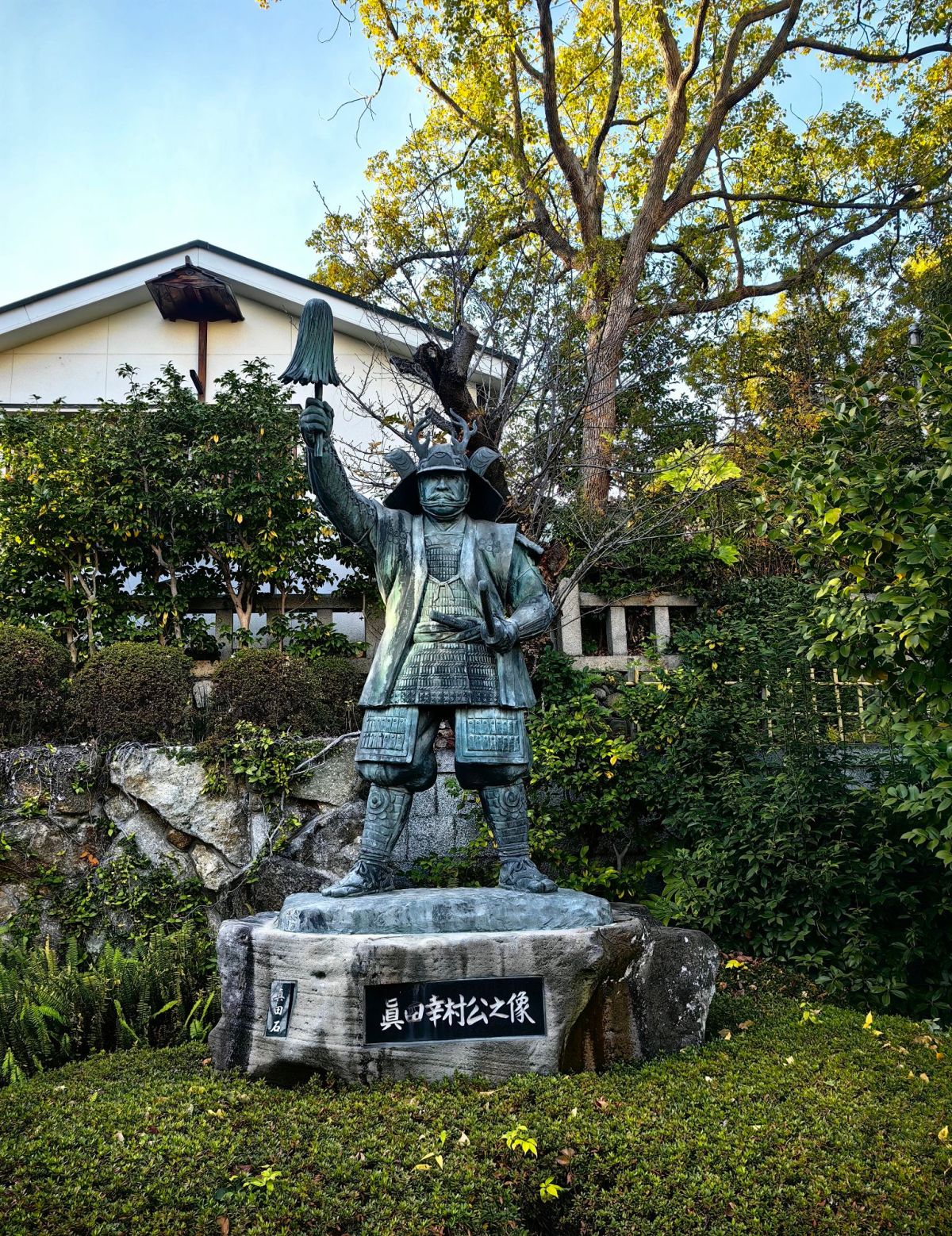
A short walk from Osaka Castle stands Hokoku Shrine, a peaceful Shinto shrine dedicated to Toyotomi Hideyoshi. In front of the shrine stands a striking bronze statue. He is portrayed in formal samurai attire, standing confidently with one hand resting on the hilt of his sword and the other holding a military command baton, symbolizing his authority as one of Japan’s greatest strategists and unifiers. Toyotomi Hideyoshi is a real legend in Japanese history. He rises from humble origins as the son of a peasant to become the most powerful man in Japan. Few figures in Japanese history experienced such a remarkable ascent and obtained such an achievement.
The shrine commemorates not only Toyotomi Hideyoshi, but also members of the Toyotomi family whose efforts contributed to the unification of Japan. Although the Toyotomi political legacy came to an end with the fall of Osaka Castle during the Siege of Osaka, Hideyoshi’s influence on the course of Japanese history remains profound. His military achievements brought an end to more than a century of civil war and laid the foundations for the peaceful Edo period that followed. As I stood before the shrine, I found myself reflecting on the fate of the Toyotomi clan.
In my view, Toyotomi Hideyori’s defeat was not simply the result of a single mistake made during the Siege of Osaka. Rather, its roots can be traced to decisions made years earlier by his father. Although Hideyoshi succeeded in unifying Japan, he did not establish a political system strong enough to endure after his own death. His heir, Hideyori, was still a child and lacked an effective institutional framework to protect his position. At the same time, Tokugawa Ieyasu remained the most powerful daimyō in the country, commanding unrivalled military resources and political influence. Hideyoshi’s costly invasions of Korea also placed a heavy burden on the nation and weakened support for the Toyotomi government. Finally, the stability of his regime depended largely on the personal loyalty of the Council of Five Elders rather than on enduring political institutions. Once Hideyoshi was gone, those personal bonds quickly unraveled, allowing Ieyasu to consolidate power.
History rarely turns on a single battle or a single decision. As I left the shrine, I felt that the fall of the Toyotomi clan was the culmination of choices made over many years. It’s a reminder that lasting political success depends not only on military brilliance, but also on building a mature institution capable of surviving the ambitions and lifetimes of individual leaders.
After leaving Osaka Castle Park, I made my way to Sankō Shrine, a quiet shrine best known for its association with the legendary samurai Sanada Yukimura, one of the most celebrated warriors of Japan’s Sengoku era. The shrine is dedicated to the Shinto deities Amaterasu, Tsukuyomi, and Susanoo. Yet for many visitors, its greatest attraction is the “Sanada’s Escape Tunnel.” According to local tradition, this mysterious underground passage once connected the Sanada Maru which is the fortified stronghold defended by Yukimura during the Siege of Osaka.
The shrine also features a bronze statue of Yukimura and is a popular destination for visitor like me who is interested in Japan’s Sengoku-era history. Born into the Sanada clan, Yukimura was the son of Sanada Masayuki, a skilled strategist. After the decisive Battle of Sekigahara in 1600, Yukimura was defeated for supporting the Western Army (Toyotomi clan) and were exiled to Kudoyama at the foot of Mount Koya, where they spent more than ten years in seclusion.
In 1614, the Siege of Osaka broke out. At the invitation of Toyotomi Hideyori, Sanada Yukimura left his exile and entered Osaka Castle, joining the Toyotomi army and shouldering the heavy responsibility of resisting Tokugawa Ieyasu. In the Siege of Osaka from 1614 to 1615, he led the defending troops in valiant fighting, becoming one of the most representative heroes of the Toyotomi clan’s last resistance against the Tokugawa Shogunate.
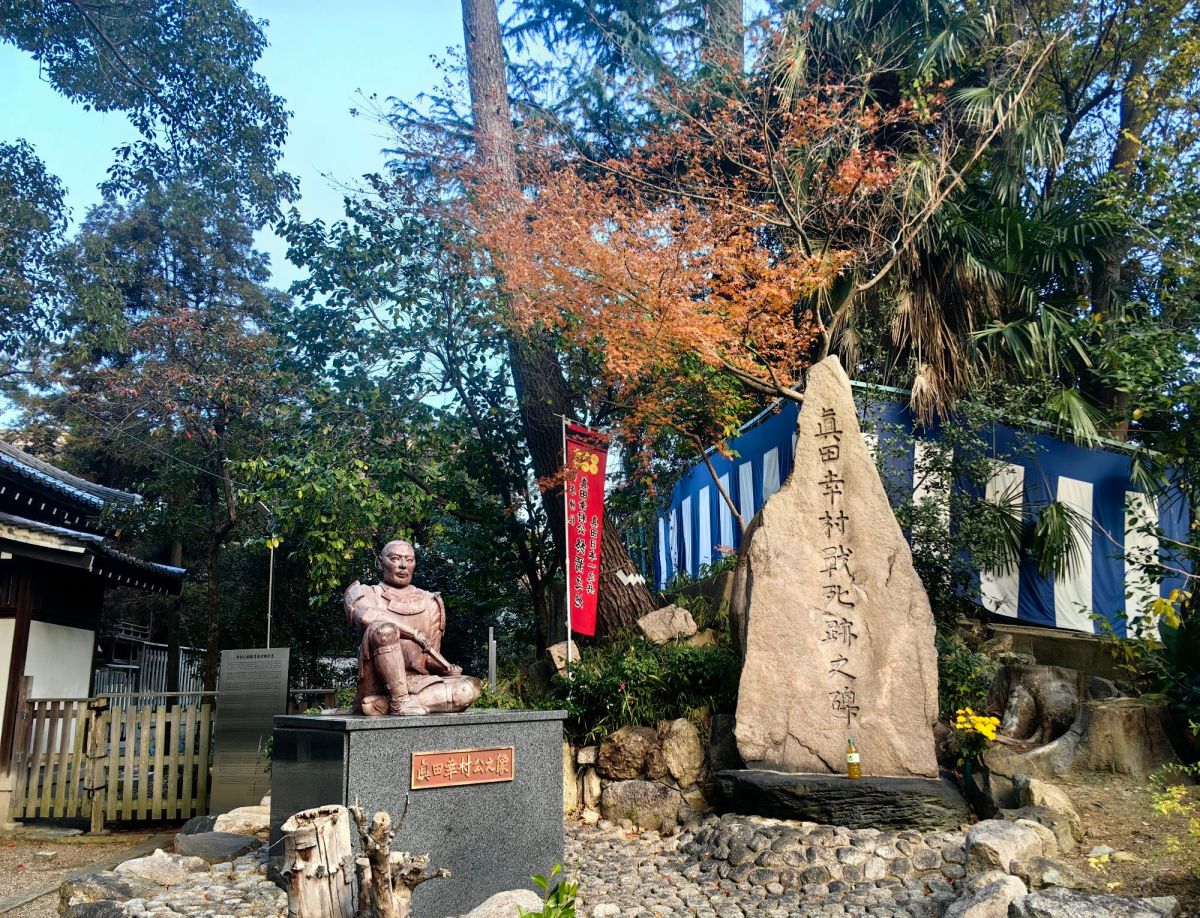
This photo was taken in the place near Yasui Shrine where Yukimura Sanada lost the final battle. He earned lasting fame through his brilliant leadership during the Siege of Osaka. He designed and defended the Sanada Maru, a fortified outwork that successfully repelled repeated Tokugawa attacks during the Winter Siege of 1614. During the Summer Siege in 1615, he led a bold and desperate cavalry charge that came close to reaching Tokugawa Ieyasu himself before being overwhelmed and killed in battle.
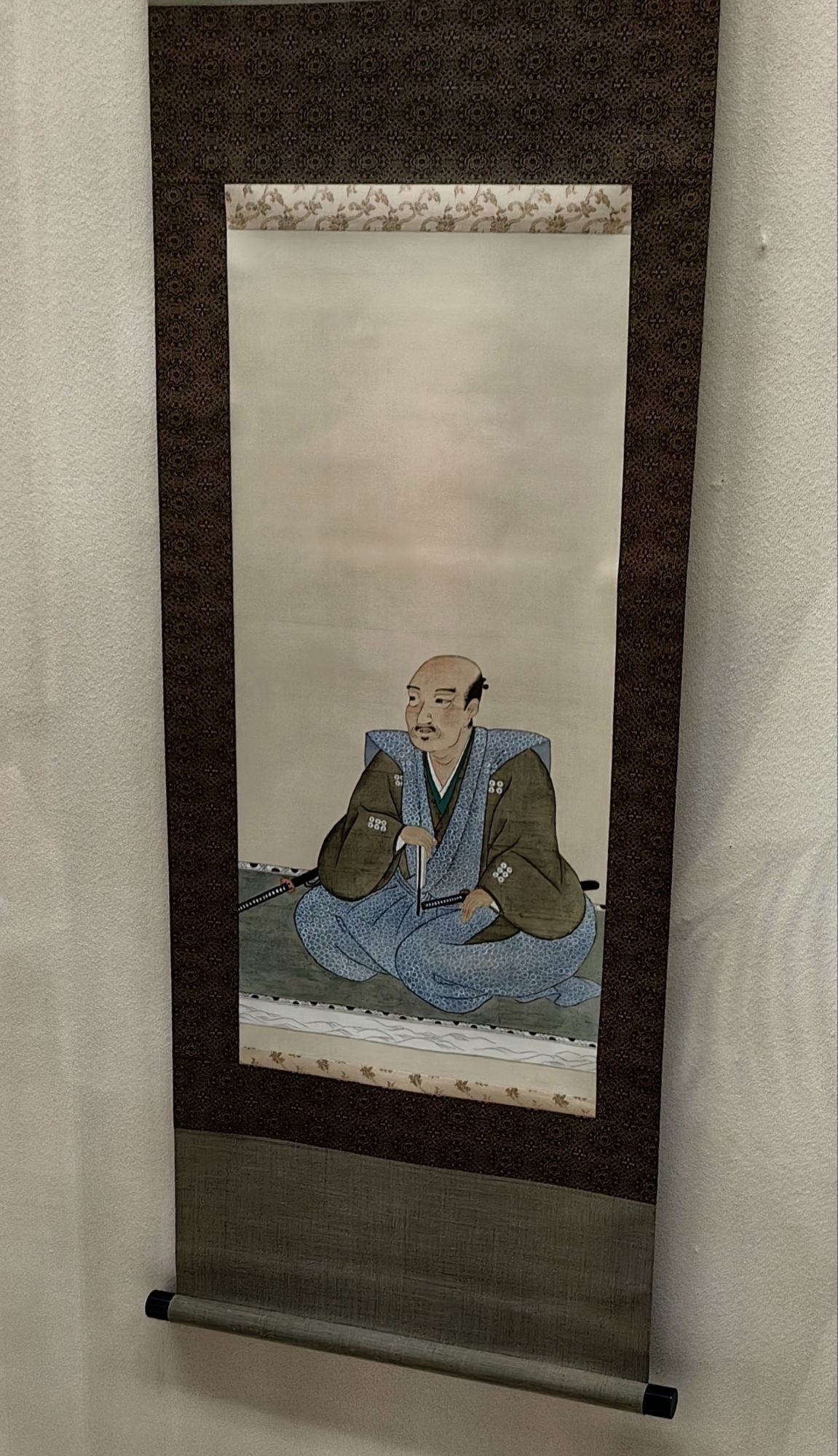
The portrait of Yukimura Sanada in the Osaka castle museum
I found his portrait in the Osaka castle museum. Although the Toyotomi forces supported by Yukimura were finally defeated, his courage, tactical skill, and unwavering loyalty turned him into a legendary figure. Often called “the greatest warrior in Japan”, he has been immortalized in literature like ‘The Sanada Gunki’, television dramas like ‘Sanada Maru’, video games like Nobunaga’s Ambition, and local legends, making him one of the most famous and admired samurai in Japanese history.
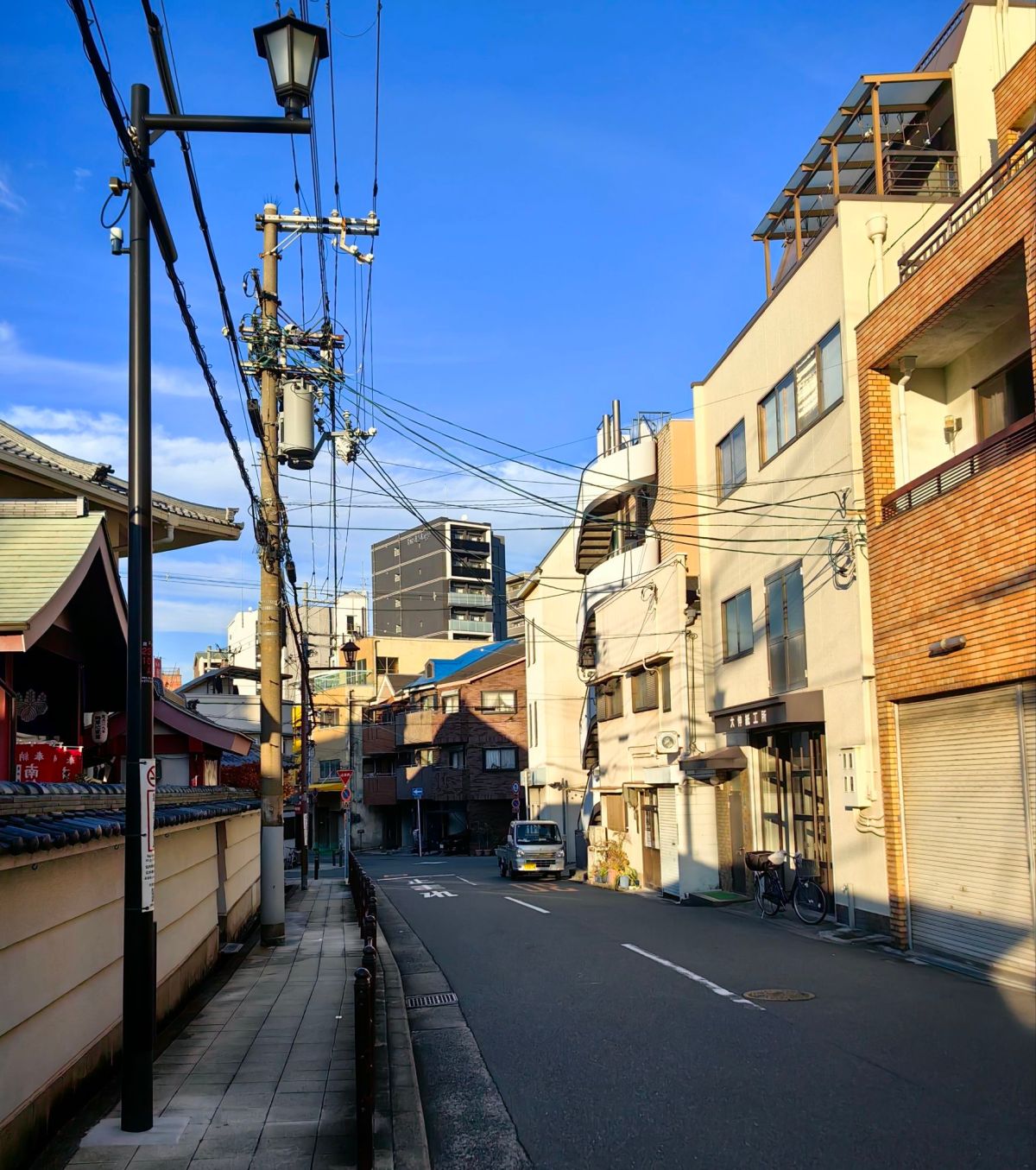
As I wandered through the suburban streets of Osaka, I discovered a quieter side of the city, where everyday life unfolded at an unhurried pace. A network of narrow lanes, often barely wide enough for a single car, wound between rows of modest three-storey houses standing shoulder to shoulder. Small balconies were decorated with potted plants, bicycles rested casually against walls, and neatly arranged entrances reflected the quiet routines of daily life.
Walking through them felt like catching a glimpse of the Osaka that local residents experience every day, far removed from the bright lights and bustling crowds of the city centre. Towering utility poles lined the streets, forming one of the most distinctive features of Japanese residential neighborhoods. Countless power lines stretched from pole to pole, hanging in gentle curves overhead and weaving an intricate pattern against the sky. At first, the dense web of cables seemed almost chaotic, but the longer I looked, the more it became part of the city’s unique visual identity.
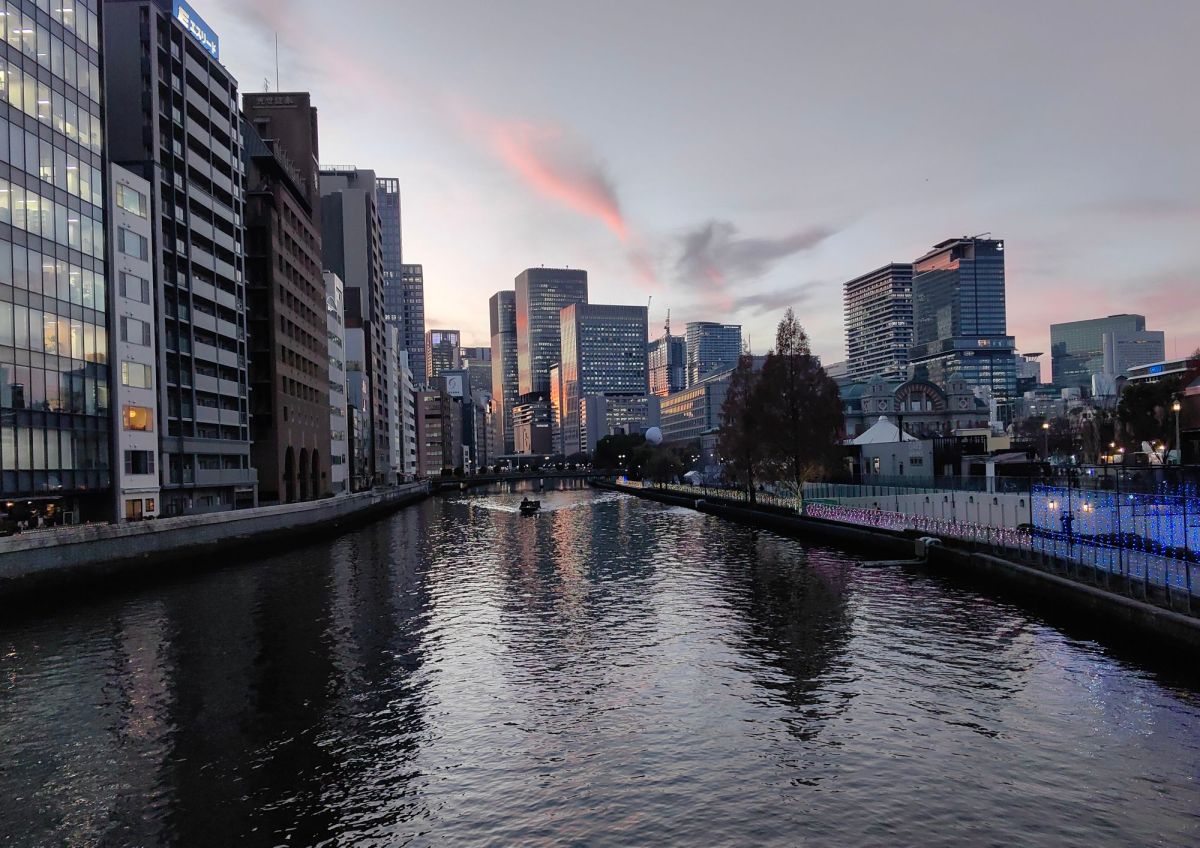
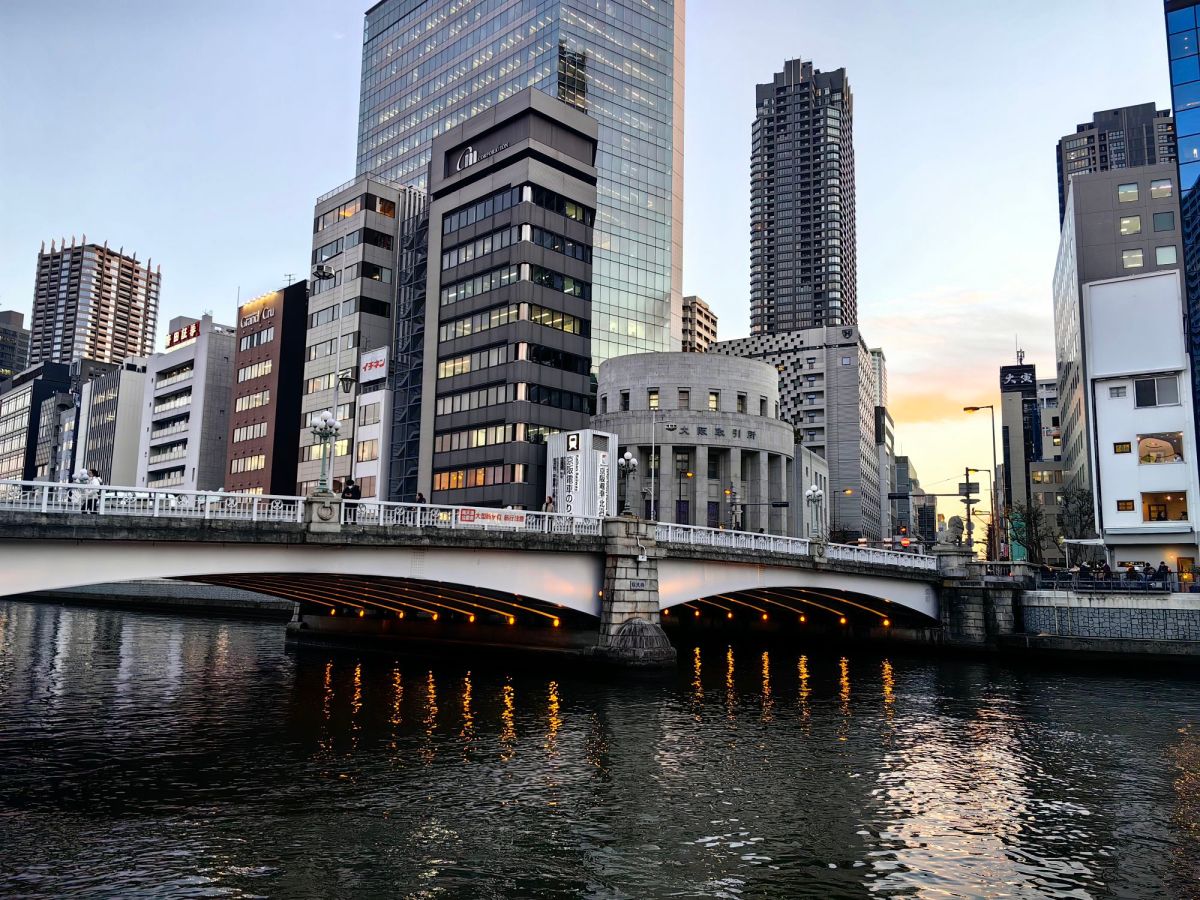
As evening approached and I made my way back to my hotel, Nakanoshima revealed a strikingly different side of Osaka from the quiet residential neighborhoods I had explored earlier. Situated on a long island between the Dojima and Tosabori Rivers, Nakanoshima is one of the city’s principal business and cultural districts, where broad boulevards, graceful bridges, and sleek skyscrapers combine to create a sophisticated urban skyline. Towering glass office buildings rose above the waterfront, their façades reflecting the fading colors of the winter sky as daylight gradually gave way to evening. The rivers mirrored the city lights, while the silhouettes of bridges stretched elegantly across the water, lending the district a calm yet cosmopolitan atmosphere.
Unlike the narrow lanes of the suburbs, Nakanoshima offered wide, tree-lined promenades and spacious riverside parks that invited me to slow down and enjoy the scenery. I strolled along the riverbanks, watching office workers, joggers, and couples passing by as the city settled into the evening. Within a single day, I had experienced the city’s historic heart, its peaceful residential streets, and its modern financial centre. Each revealed a different character of Osaka.
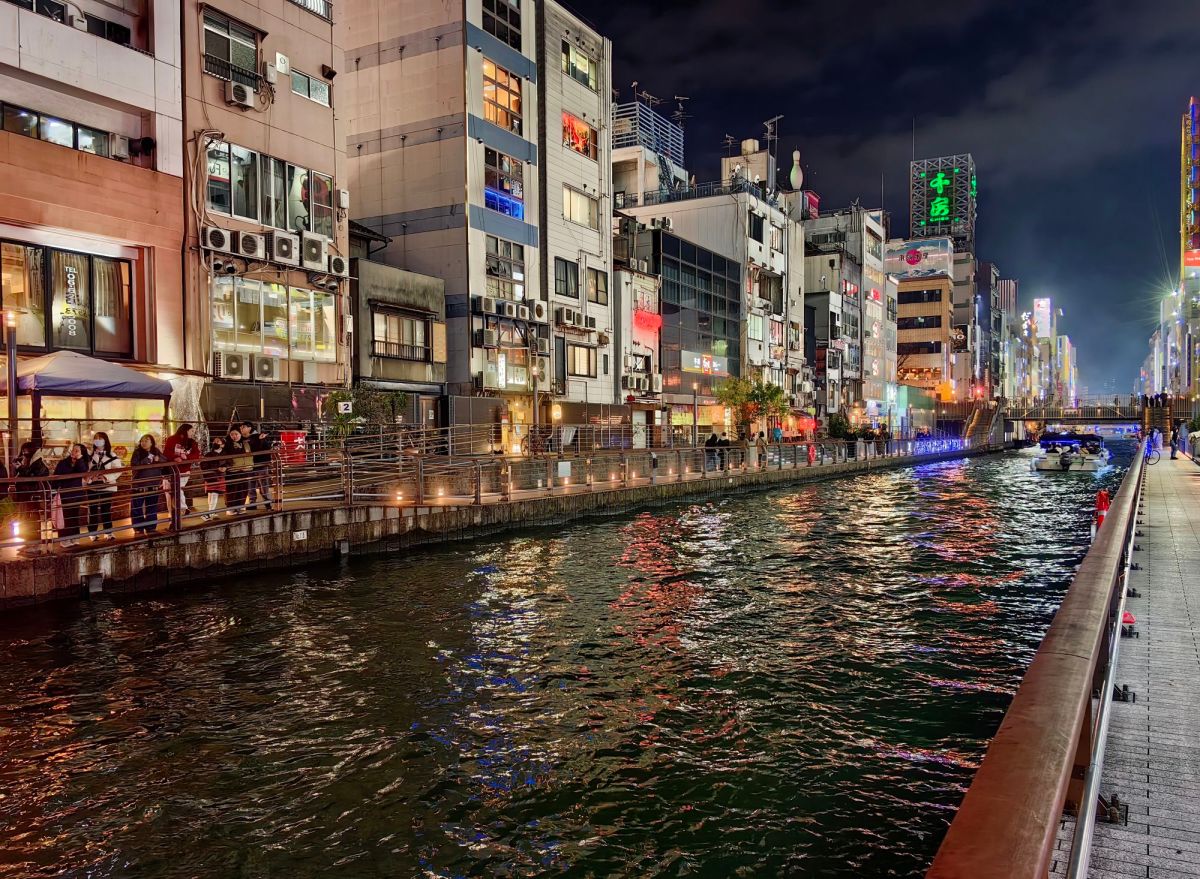
At night, the Dōtonbori Canal became one of Osaka’s most vibrant and recognizable urban landscapes. The waterway was bordered by a continuous wall of illuminated buildings, where enormous LED billboards, animated signs, and colorful advertisements reflected across the gently rippling surface of the canal. Both banks of the canal are lined with wide pedestrian promenades crowded with locals and visitors. Restaurants, izakayas and cafés spilled light and laughter onto the waterfront, while the enticing aromas of grilled seafood, ramen and freshly made takoyaki drifted through the air.
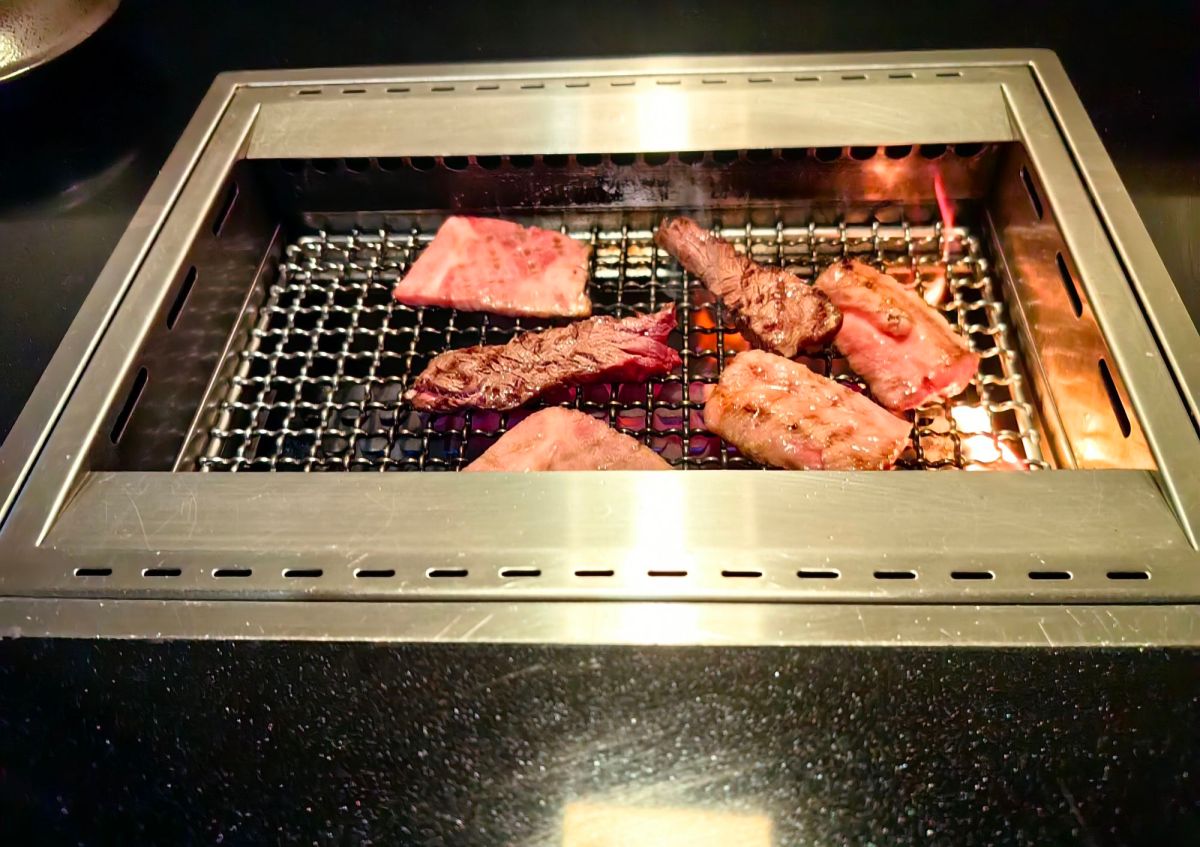
I enjoyed dinner at a restaurant by the canal, savoring Japan’s famous Wagyu beef yakiniku. Wagyu is renowned for its fine and marbling, melt-in-mouth tenderness, and rich, full-bodied flavor. Unlike Western steaks, Wagyu yakiniku is typically not served in whole, but rather sliced into thin pieces or bite-sized chunks, which diners grill themselves slowly over charcoal at their tables.
As the beef sizzled on the charcoal, the fine fat gradually melted, giving the slices an enticing sheen and releasing a rich aroma. When the outer layer slightly caramelized and turned golden brown, the inside remained tender and juicy. The grilled Wagyu, served with garlic, onions, and other vegetables, and dipped in a flavorful Japanese yakiniku sauce, offered a multi-layered and unforgettable experience with every bite.
Sitting by the canal, admiring the city lights reflected on the water’s surface while enjoying the steaming Wagyu yakiniku, I found a perfect way to conclude one day’s trip. On a cold winter night, this warm and sumptuous dinner became one of my most unforgettable culinary experiences upon arriving in Japan.
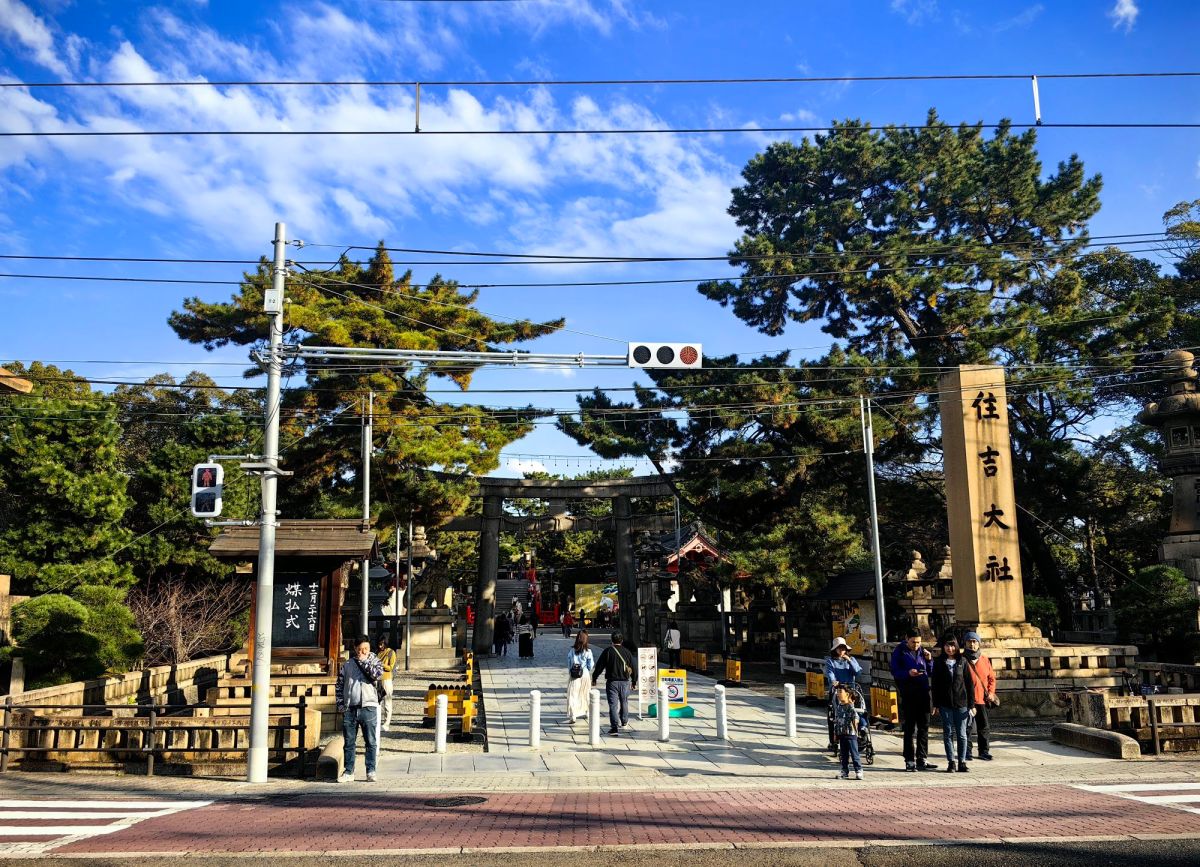
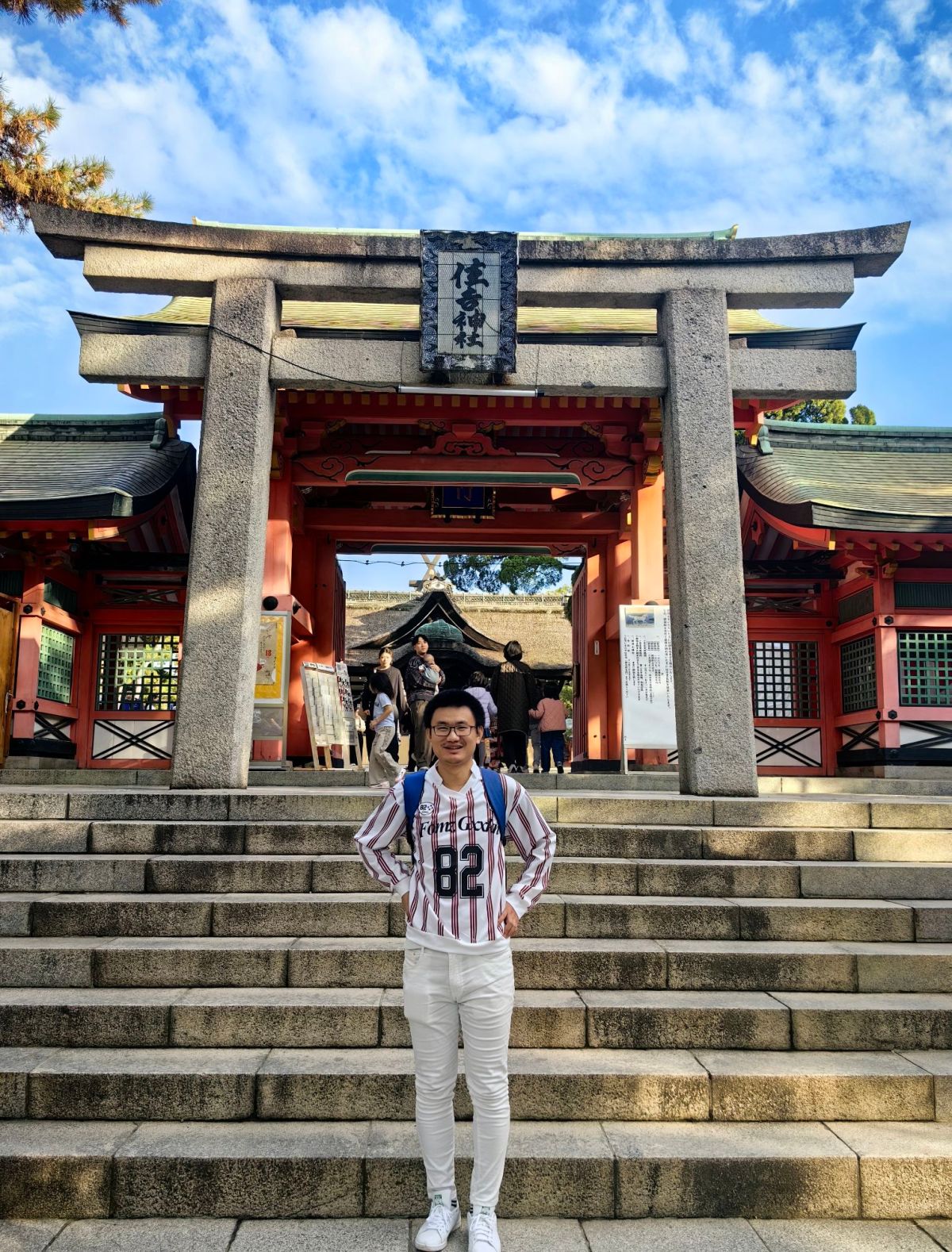
I stayed in Osaka for two days and visited several cultural places on the second day. Sumiyoshi Taisha is one of Japan’s oldest and most revered Shinto shrines. Founded in the 3rd century, before the introduction of Buddhism to Japan, the shrine is dedicated to the Sumiyoshi Sanjin, three deities believed to protect travelers, sailors, fishermen, and all who journey by sea. Because Osaka developed as an important port city, Sumiyoshi Taisha became a spiritual guardian for merchants, seafarers, and imperial envoys. Today, it remains the head shrine of more than 2,000 Sumiyoshi shrines across Japan.
The shrine is internationally renowned for its distinctive Sumiyoshi-zukuri architectural style, one of the oldest surviving forms of Japanese shrine architecture. Unlike many later shrines that incorporated Chinese and Buddhist influences, Sumiyoshi-zukuri preserves a purely indigenous and simple Japanese design. The four main sanctuary buildings stand in a straight line at the central axis, with elevated wooden floors, straight gabled roofs covered in cypress bark, crossed finials (chigi) projecting above the roof, and horizontal log weights (katsuogi) running along the ridge. The simple lines, natural wood, and elegant colors combine to create a rustic and dignified aesthetic, making one feel as if they have traveled back to the beginning of Japanese Shinto culture.
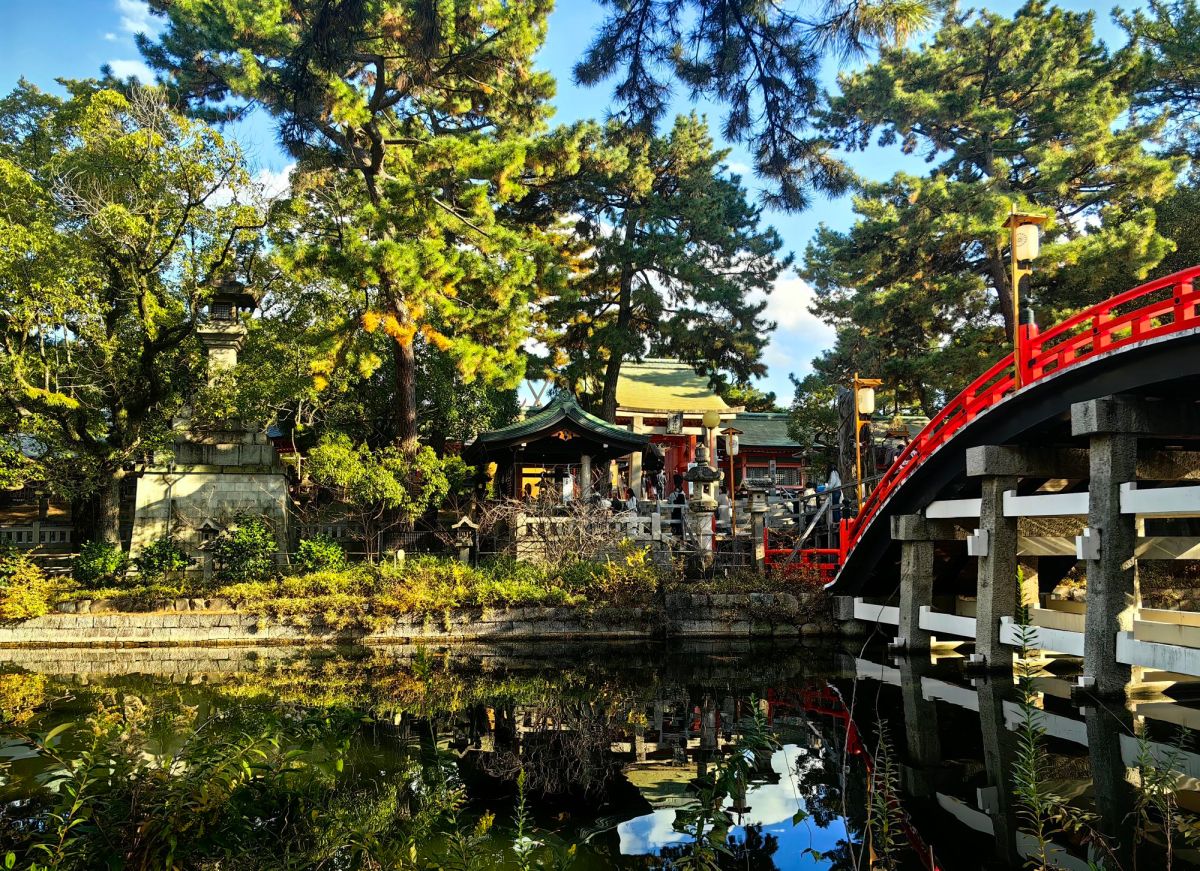
Among the shrine’s most recognizable landmarks is the graceful Sorihashi Bridge, often known as the Taiko Bridge because its elegant arch resembles the curved profile of a traditional Japanese drum. Spanning a tranquil pond before the shrine entrance, the bridge forms one of Osaka’s most picturesque and frequently photographed scenes. Its vivid vermilion railings stand in beautiful contrast to the surrounding greenery and the still waters below, creating a composition of remarkable balance and serenity. As I paused to admire the bridge, its gentle curve seemed to invite visitors to leave the bustle of the outside world behind and enter the sacred precincts of the shrine with a calm and reflective mind.
Culturally, Sumiyoshi Taisha has played a central role in Japanese religious life for nearly two millennia. Throughout its long history, emperors, samurai, merchants, sailors, and ordinary citizens have come here to offer prayers for safe journeys, prosperous businesses, family well-being, and good fortune. As one of Japan’s oldest and most revered Shinto shrines, it continues to be a place where ancient traditions remain an active part of everyday life. When I visited, the shrine was filled with local worshippers with devout solemn expressions, quietly making their way from one shrine building to another. Some people bowed gently before the worship hall, threw incense money, and rang the bell rope according to the shrine’s etiquette, the crisp sound of the bell echoing in the courtyard; others put their hands together and prayed silently, hoping to convey their wishes to the Sumiyoshi Sanjin.
The shrine is also deeply woven into Japanese literature, poetry, and classical art, often appearing as a symbol of longevity, protection, and divine blessing. The main hall is also one of the most sought-after venues for traditional Japanese Shinto wedding ceremonies. Many Japanese couples choose the shrine because marriage in Shinto is regarded as a sacred union witnessed by the kami (deities), with the blessings extending not only to the couple but also to their families and future generations.
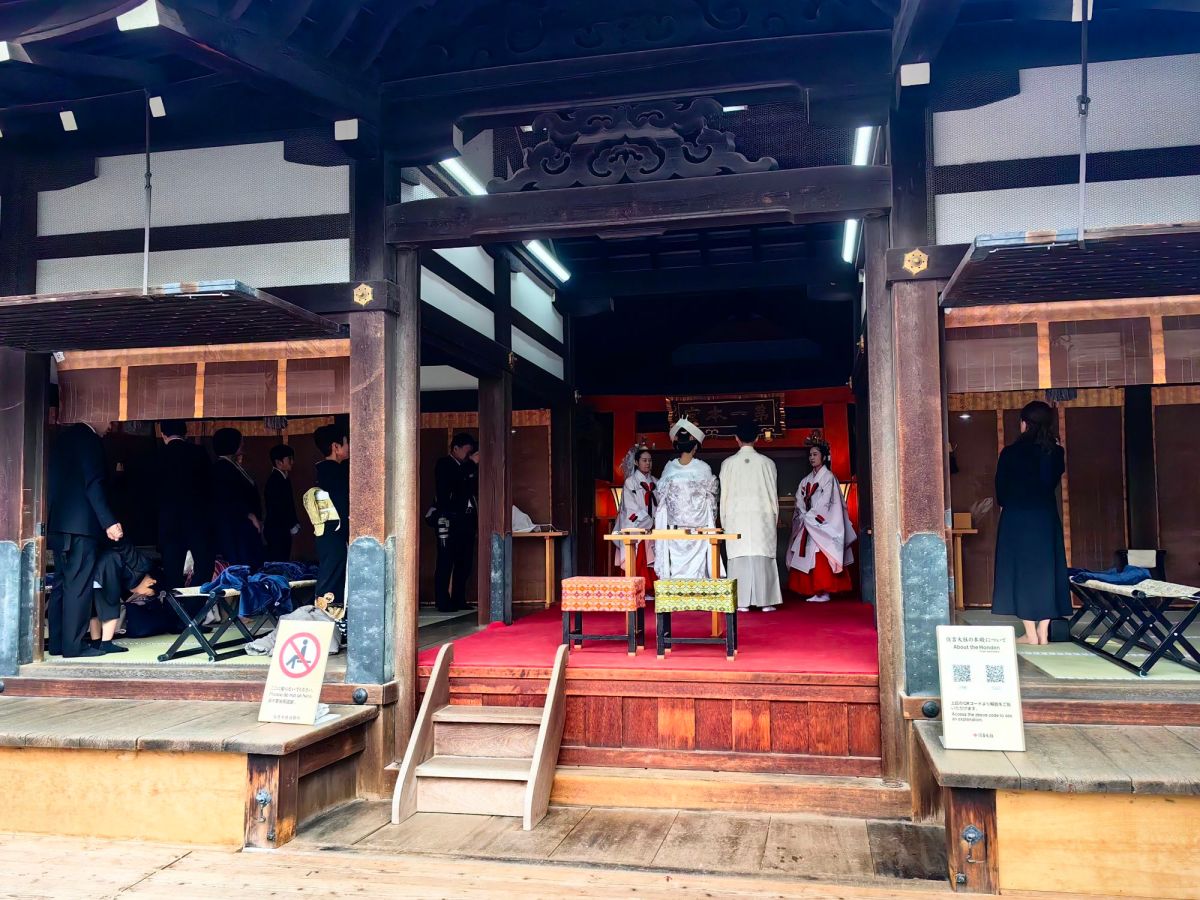
I spent nearly an hour at the shrine observing the wedding ceremony, fascinated by this important expression of Japanese culture and tradition. Unlike the grand celebrations often seen elsewhere, the ceremony unfolded with quiet dignity and there was not loud music, nor any grand ceremony. A traditional Shinto wedding at Sumiyoshi Taisha typically begins with a solemn procession led by Shinto priests, followed by purification rituals to symbolically cleanse the couple before the gods. Afterwards, the bride and groom then make offerings to the deities, exchange cups of ceremonial sake in the ancient san-san-kudo ritual, recite their wedding vows, and present sacred evergreen branches, known as tamagushi, as offerings of gratitude and sincerity.
The bride was dressed in an elegant white silk shiromuku, the traditional bridal kimono whose pure white color symbolizes purity and sincerity. Beside her, the groom wore a formal white montsuki haori hakama, the classic ceremonial attire reserved for important occasions. Surrounded by close family members, the couple exchanged their vows in an atmosphere of quiet reverence. Their presence highlighted an important aspect of Japanese culture: marriage is regarded not only as the union of two individuals, but also as the coming together of two families. The ceremony emphasized harmony, mutual respect, and the bonds that extend beyond the bride and groom themselves. As I quietly watched the ceremony unfold, I realized that I was witnessing more than a wedding. It was a living tradition that has been passed down through generations.
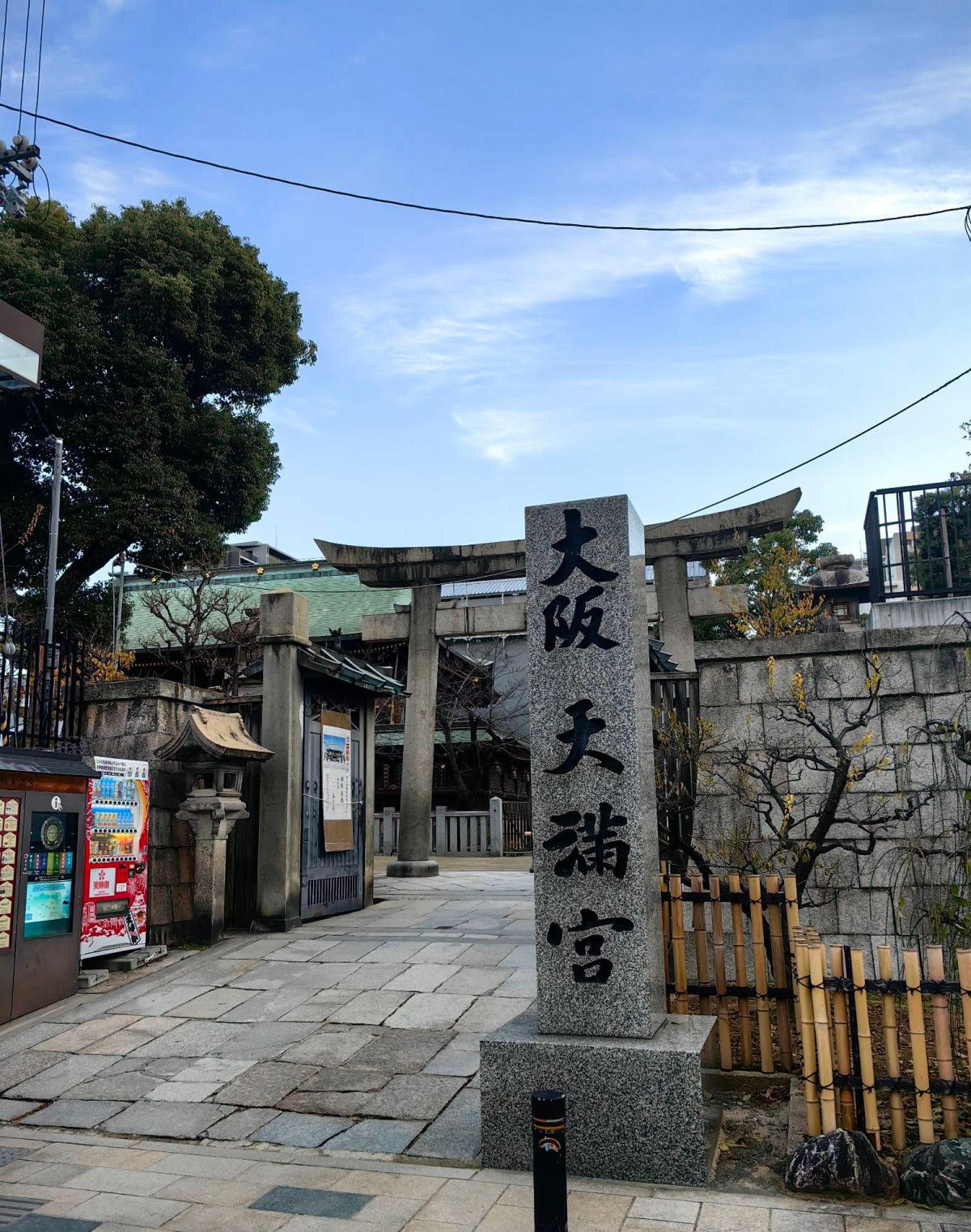
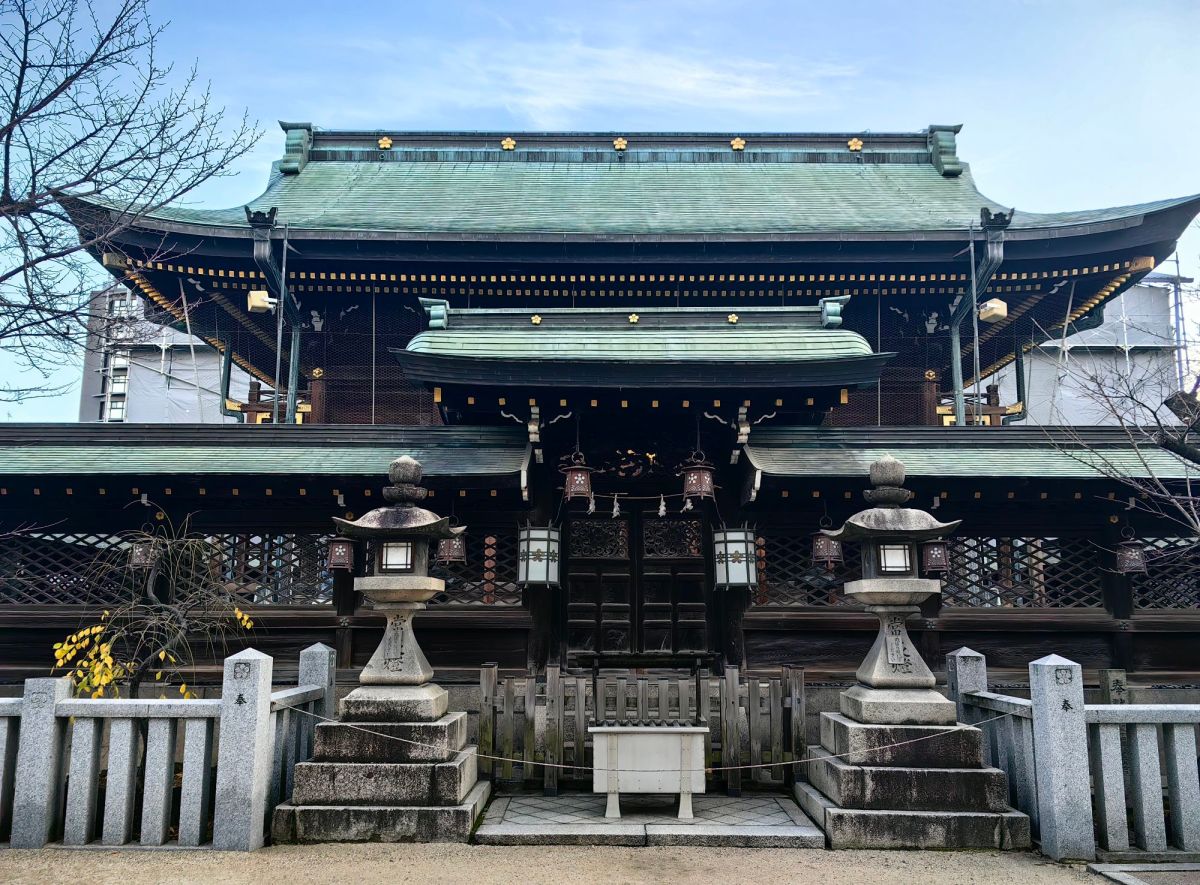
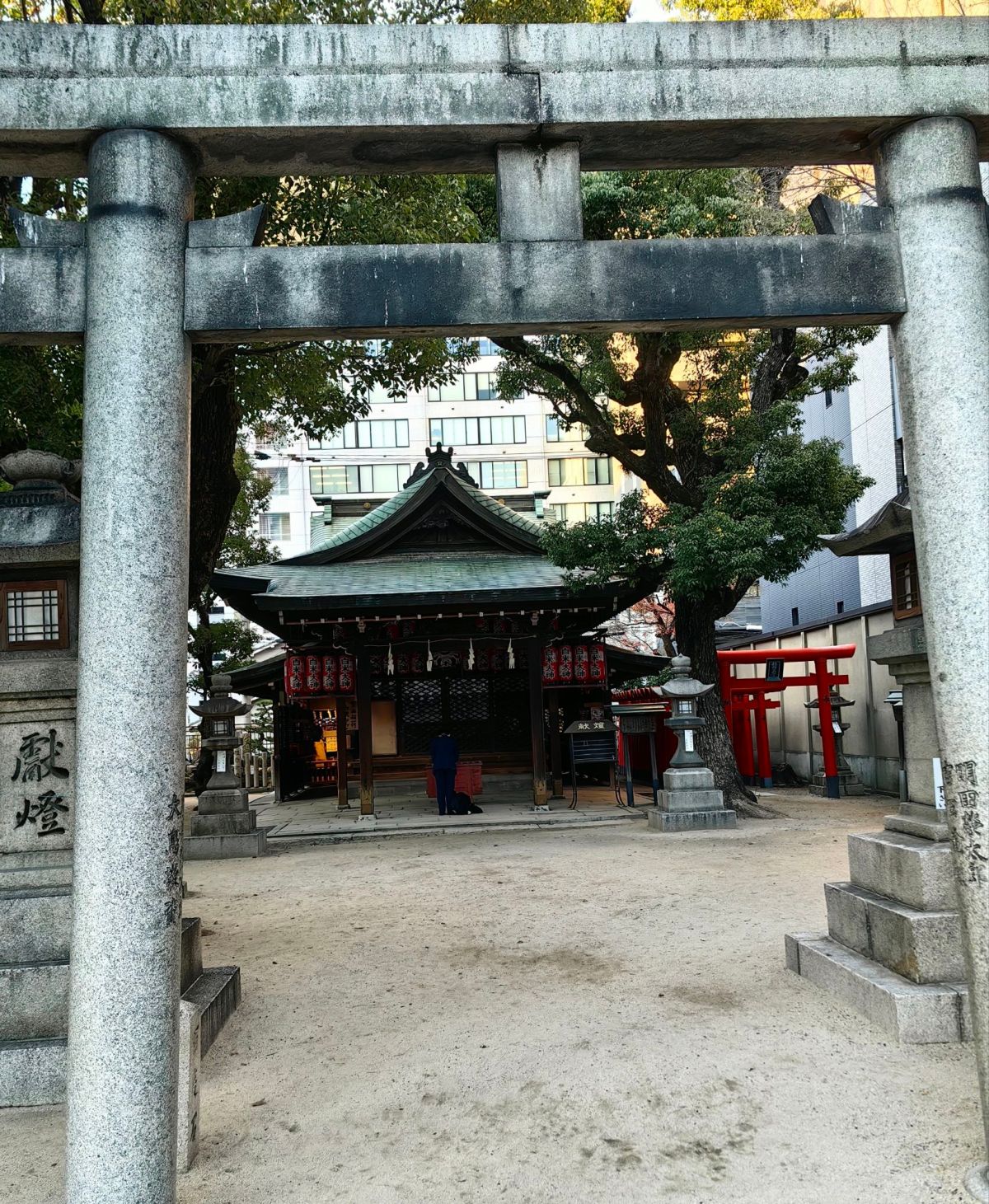
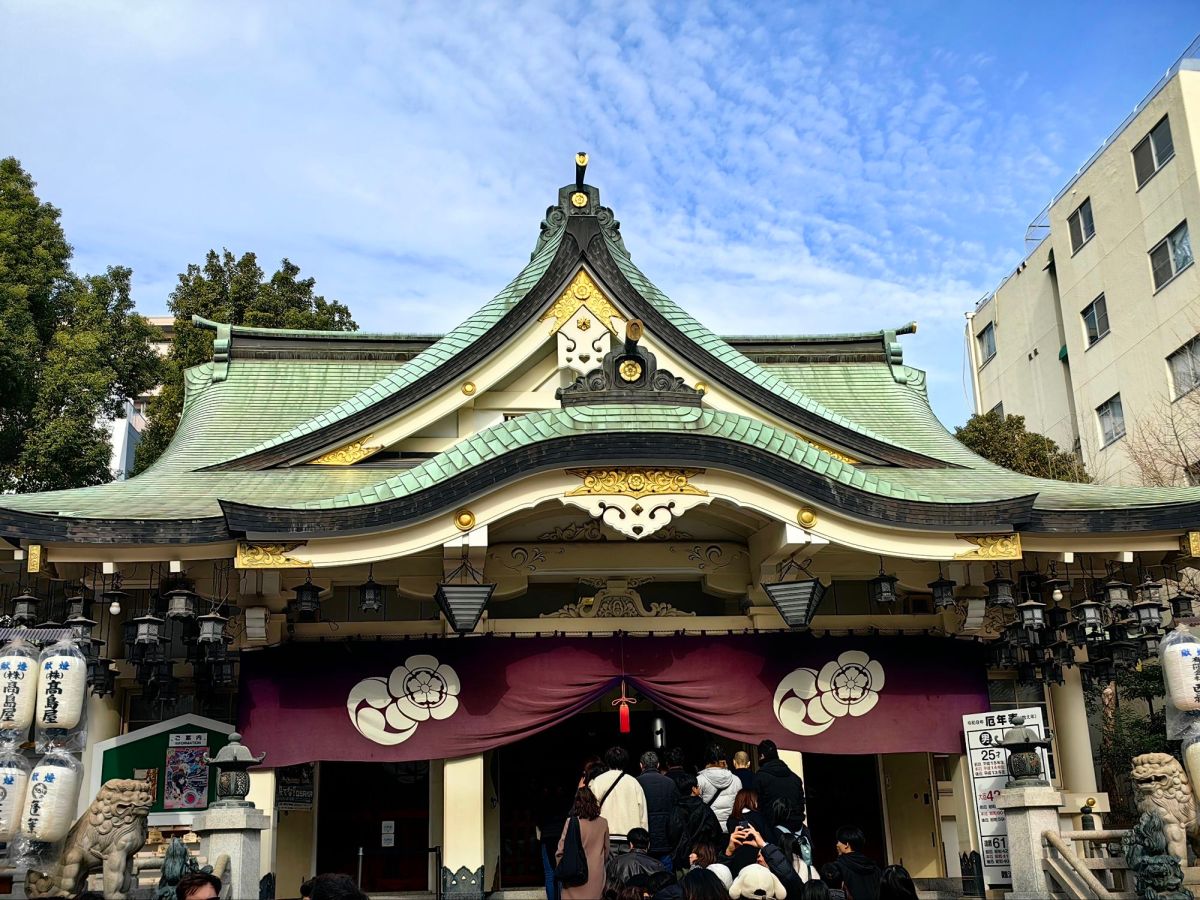
Ōsaka Tenman-gū is another shrine that I visited. It is one of Osaka’s most important religious and cultural landmarks. While Sumiyoshi Taisha is dedicated to the deities who protect travelers and the sea, Ōsaka Tenman-gū is dedicated to Sugawara no Michizane, the Heian-period scholar, poet, and statesman who was later deified as Tenjin, the Shinto deity of scholarship, learning, and the arts.
Osaka Tenmangu Shrine’s architecture perfectly embodies the elegant charm of Edo-period shrine architecture. Although the shrine has been destroyed by fire and war multiple times, and most of the current buildings are reconstructed. The exquisitely decorated halls, intricately carved wooden components, vibrant vermilion architecture, and tranquil gardens still perfectly preserve the solemn and rustic atmosphere of a traditional Japanese shrine. The plum trees within the shrine are also renowned. This is because Sugawara no Michizane, who was enshrined here, was deeply fond of plum blossoms, and the plum blossom thus became one of his symbols. It is a legend when Michizane was exiled from Kyoto, the plum tree in his home, longing for its master, flew to his side overnight. This is the famous Japanese legend of the “Flying Plum Blossom.”
It plays an especially important role in the lives of students. Before school entrance examinations, university admissions, or professional certification exams, thousands of people visit the shrine to pray for success. Many purchaseema (wooden prayer plaques) on which they write their academic wishes, or protective amulets (omamori) believed to bring good fortune in examinations. This tradition has made the shrine one of Japan’s most significant centers for educational blessings.
Hidden among the bustling streets of central Osaka, Namba Yasaka Jinja is relatively small compared with Osaka’s more famous historical sites. As I approached the shrine, I was attracted by its extraordinary Shishiden, an enormous lion’s head standing approximately twelve meters high. Its fierce golden eyes, flared nostrils, and wide-open mouth created a dramatic and unforgettable sight. According to local tradition, the lion’s open mouth is believed to swallow evil spirits and bad fortune while attracting good luck, prosperity, and success.
Although it is in the city center, the wooden shrine buildings, stone lanterns, and carefully maintained grounds reflect the quiet elegance of traditional Shinto architecture. The contrast between the ancient shrine and the surrounding high-rise buildings perfectly captures the character of Osaka, where centuries-old traditions continue to thrive within a vibrant modern city.
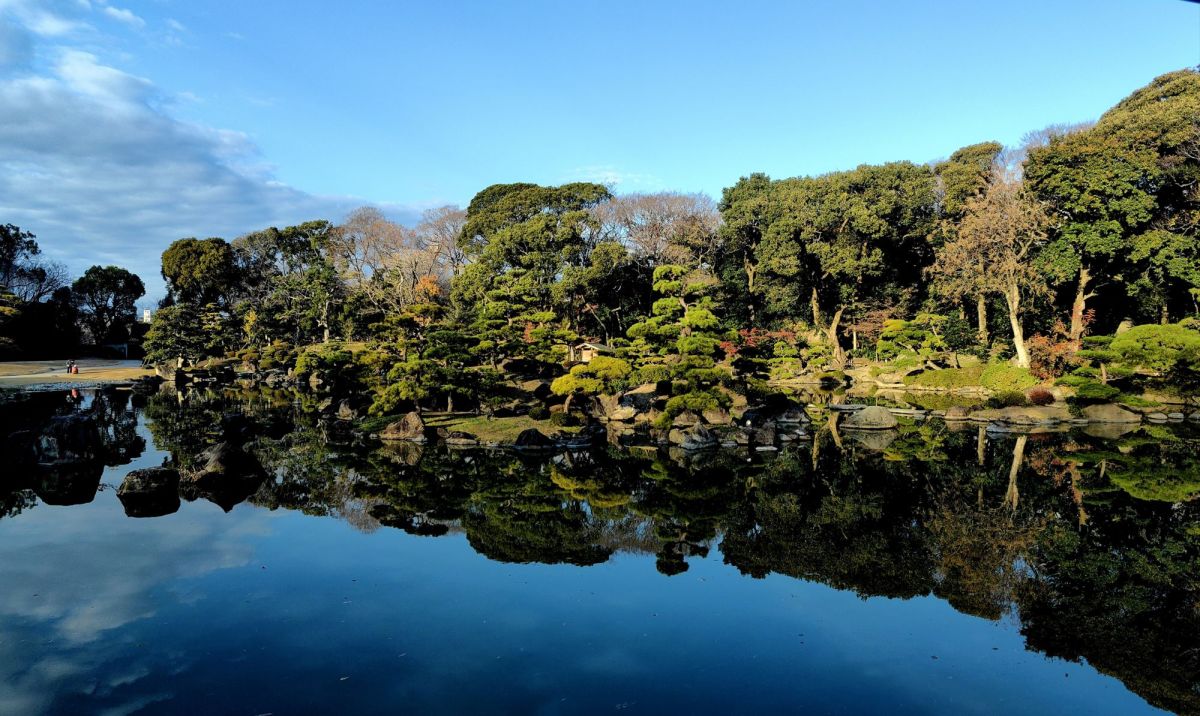
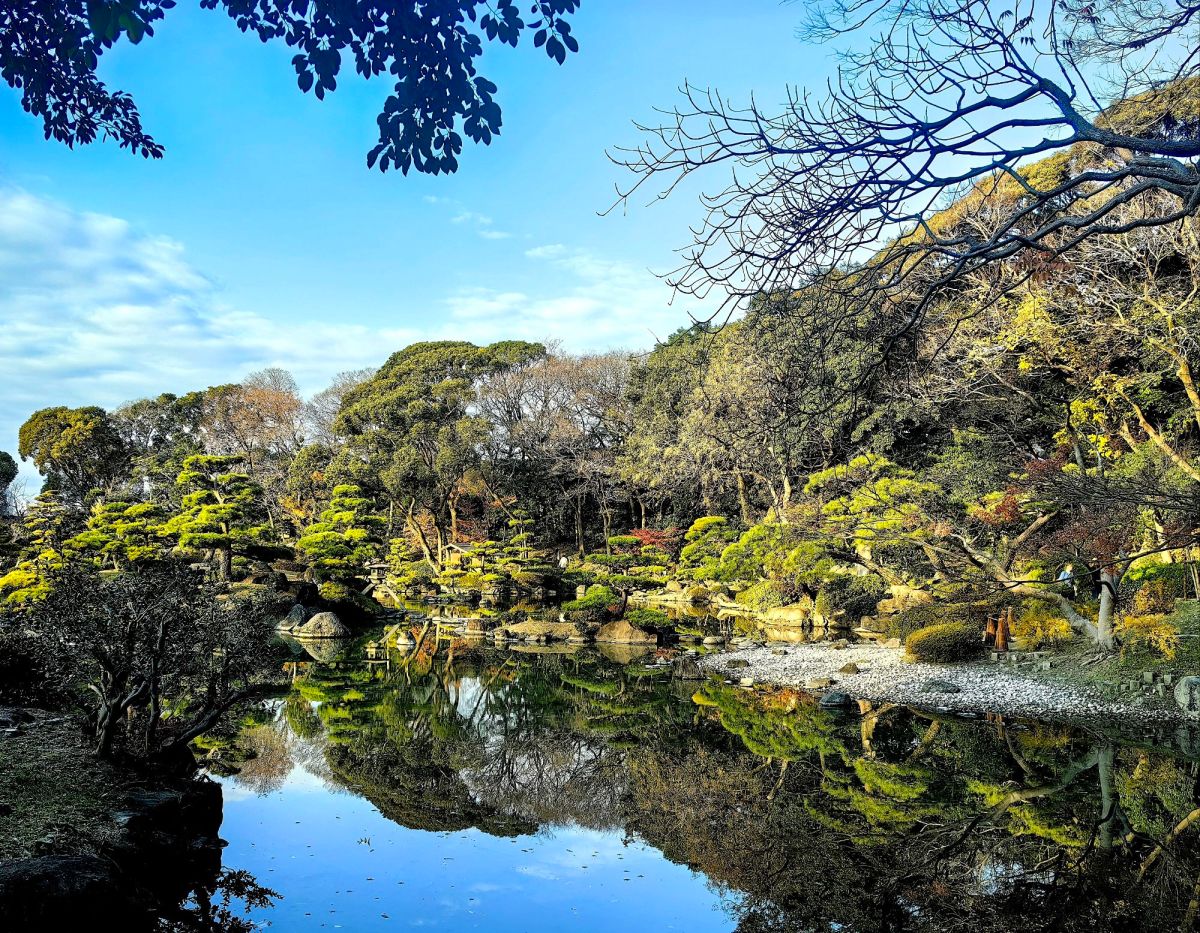
Osaka is a very modern city but there are still some traditional houses and gardens for me to visit. Within Tennoji Park, Keitakuen Garden is one of Osaka’s finest examples of a traditional Japanese landscape garden. Originally completed in 1908 as part of the residence of the distinguished merchant Sumitomo Kichizaemon, the garden was designed according to the principles of traditional Japanese landscape architecture, recreating the beauty of nature in miniature. Every winding path, carefully placed stone, tranquil pond, and gently shaped hill was arranged with meticulous care to evoke the scenery of mountains, rivers, and forests within a relatively compact space. The concept of miniature landscapes is to encompass an infinite range of mountains and rivers within a limited space.
At the heart of the garden lies a tranquil pond, its surface reflected the surrounding pines, maples, and carefully sculpted shrubs. Winding paths led me around the water, revealing a different perspective at every turn. Small stone bridges span narrow inlets, while natural rock formations and gentle slopes are arranged to resemble mountains and valleys. Every element has been meticulously positioned to create a balanced composition.
Keizei-en Garden was the last stop on my trip to Osaka. There, I sat in a traditional wooden house built beside a pond, quietly admiring the garden view from the wooden-framed window. Ripples spread across the pond, a gentle winter breeze rustled the trees, and a serene tranquility enveloped me. Sitting there quietly, savoring this moment of peace, I couldn’t help but reflect on my journey.
Just the day before, I had arrived at Kansai International Airport, embarking on my first trip to Japan with anticipation; and now, I found myself in a traditional garden that embodies over a century of garden art and Japanese aesthetics, experiencing a completely different side of Japan. In just two days, I witnessed the Sengoku Period history of Osaka Castle, strolled through the vibrant streets and alleys, wandered through the dazzling nightscape of the modern city, and experienced the traditional culture that continues to this day in shrines and gardens. That peaceful winter afternoon ultimately became one of my most precious memories of Osaka. I gradually understood that what truly moves me is not just its world-famous landmarks, but also the moments that allow me to slow down and quietly feel the passage of time.
This blog is my 100th blog which is dedicated to Singapore where I have been living for more than twenty years. I will narrate in the view of a resident but not a tourist.
In 2005, I arrived in Singapore as a secondary school student carrying little more than curiosity, uncertainty, and expectations for a new life. At that time, I never imagined that this small island would eventually become my second hometown. Over these two decades, Singapore has become more than a place where I studied and worked, it has become the backdrop of my youth and adulthood. Here, I learned to adapt to unfamiliar cultures, make friendships across different backgrounds, and find my own place in a fast-moving society. There were moments of excitement and achievement, but also periods of loneliness, pressure, self-doubt, and quiet persistence that few people could see.
Life in Singapore has never felt one-dimensional to me. It tasted sweet in moments of growth and belonging; sour when plans did not go as expected; spicy in the intensity and competition that pushed me forward; and bitter in missed opportunities, and the distance from what once felt like home. Yet looking back, every stage became part of the person I am today.
For many people arriving in Singapore, the first memory begins at the airport. Mine did too. The moment I stepped out of Changi Airport, I still remember the sensation vividly. Before I had time to notice the surroundings, I felt the warm, humid air wrapping around me instantly. It was so different from where I had come from. There was no dramatic welcome, no grand moment, just that quiet realization that I had entered a completely different climate, a different rhythm of life, and perhaps the beginning of a different version of myself.
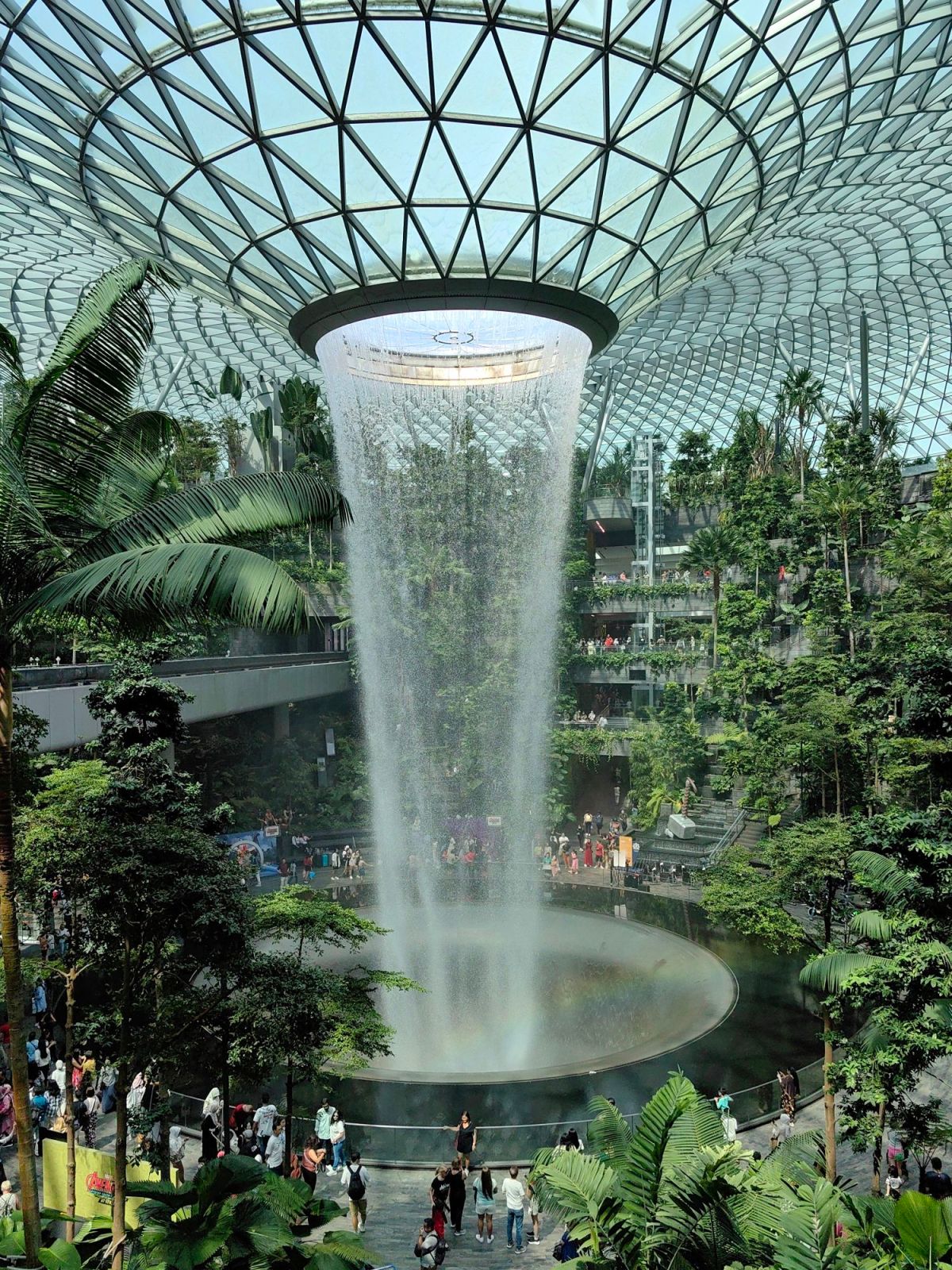
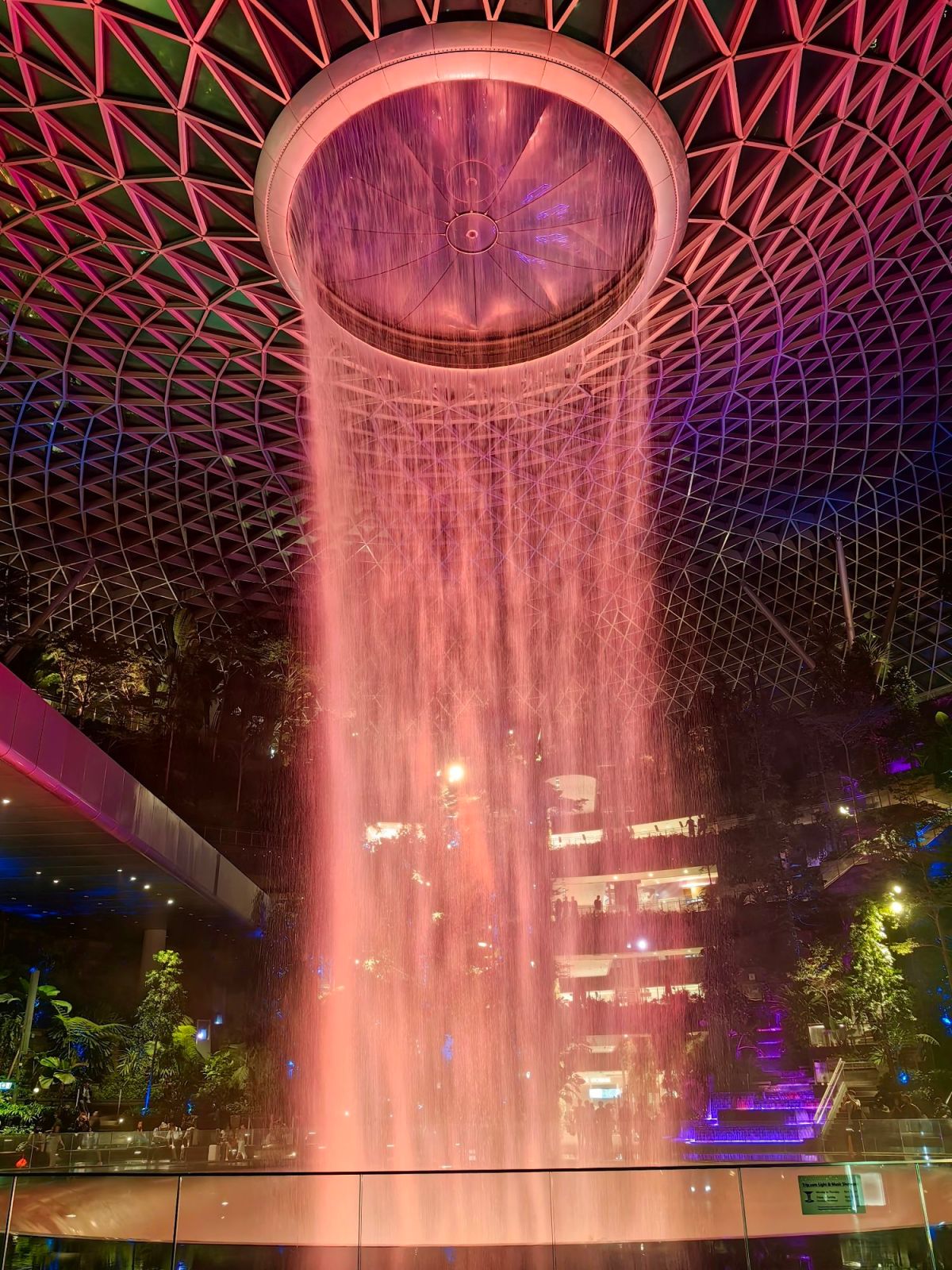
Changi Jewel was the landmark which was built years after I arrived in Singapore. What impressed me most was the vast glass dome filled with natural light and tropical greenery. At its center, water falls continuously from above. At night, streams of coloured light begin to move across the falling water while music fills the vast glass dome. The waterfall becomes a shifting curtain of light, changing from deep blue to warm gold, from soft waves to bursts of color and motion. Every time when I passed through and hear the sound of falling water beneath the glass roof, I am reminded of that first arrival many years ago.
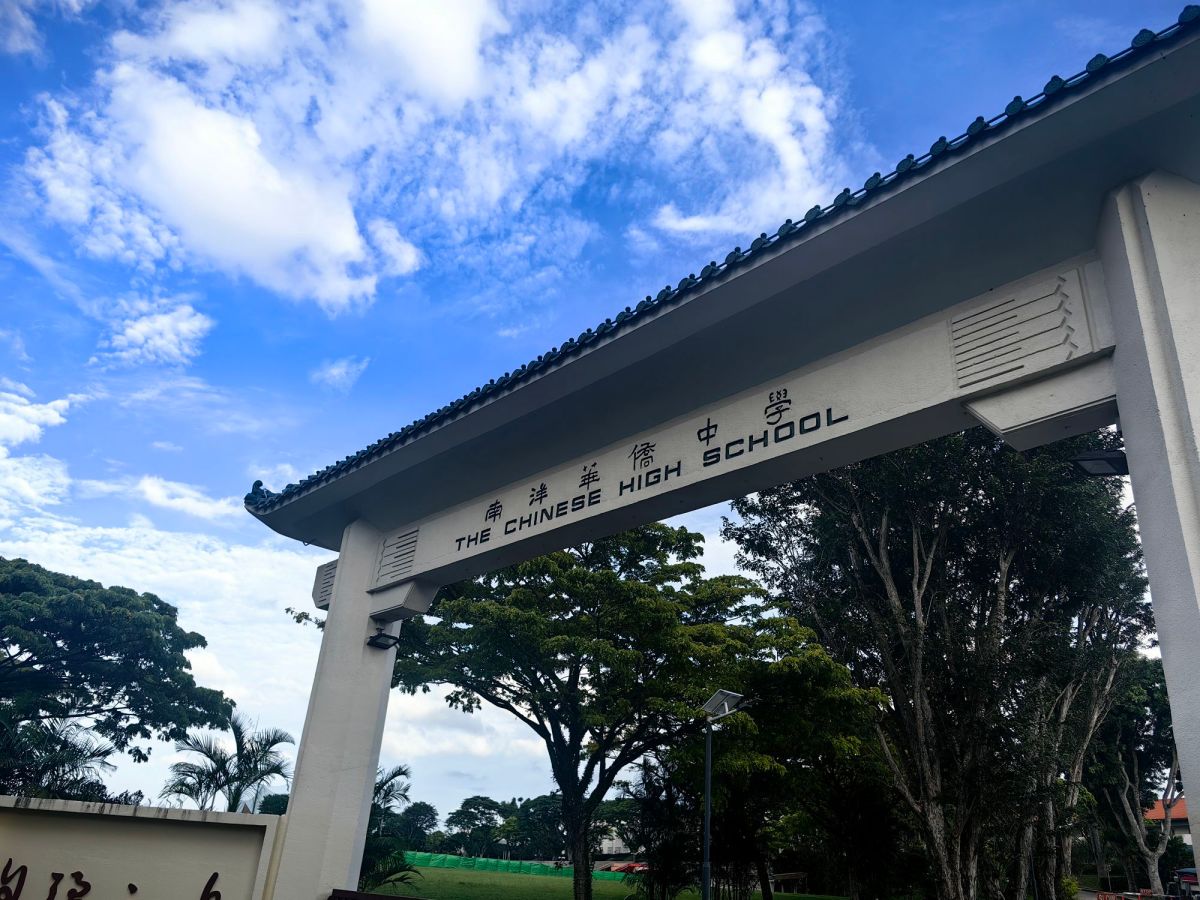
The first place I called home in Singapore was the Hwa Chong boarding school. Looking back now, it feels strange to realize that my understanding of Singapore did not begin in the city center, among skyscrapers, but in a school campus. In the mornings, birds would begin singing before the day fully started. Throughout the day, insects buzzed among the trees, creating a constant background soundtrack that made the environment feel alive.
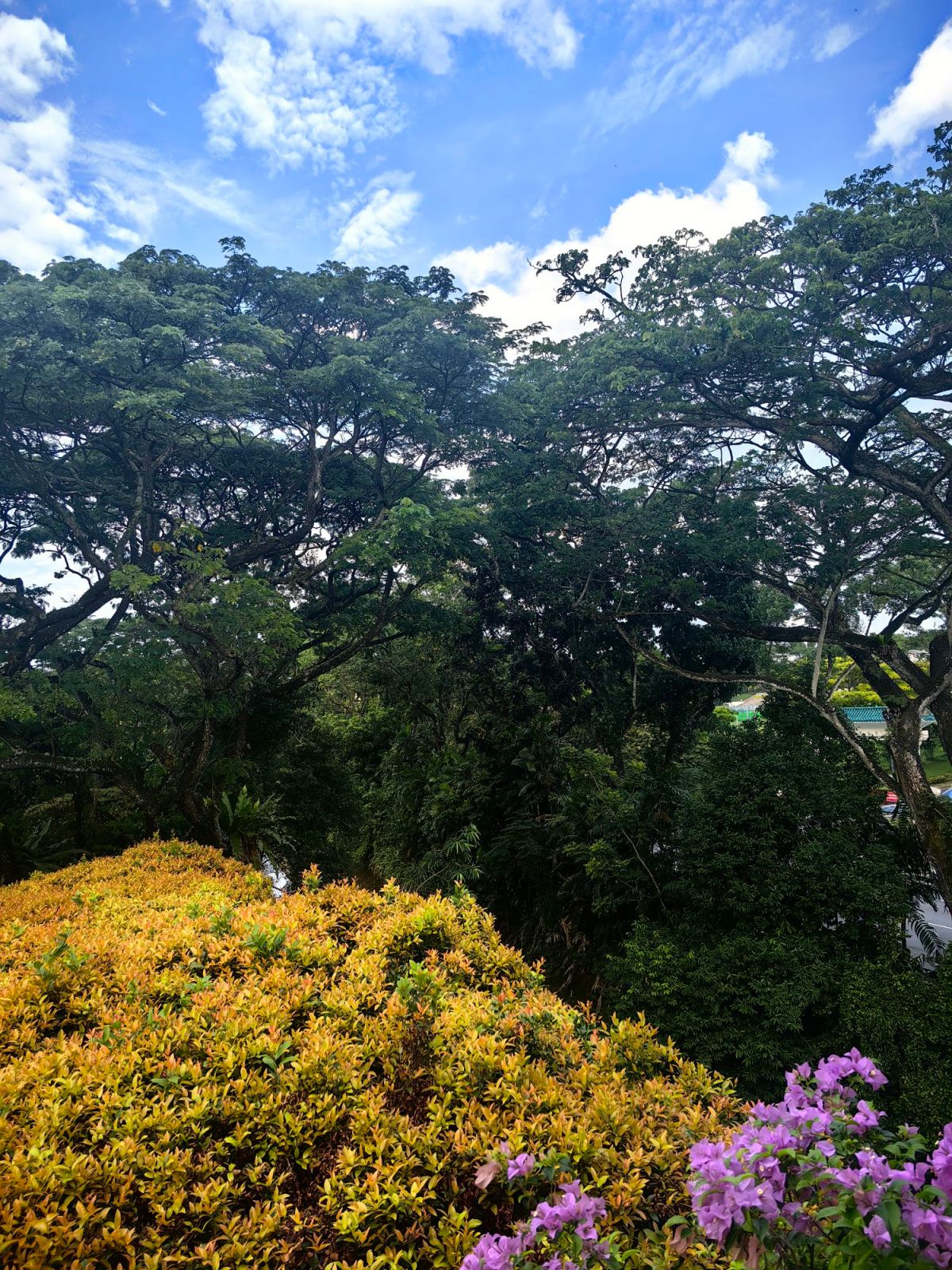
Coming from a different place, I was surprised that a highly developed city could still feel so green and so connected to nature. The sky seemed so blue, brighter than I expected. Everywhere was greenery. Trees lining the roads, lawns stretching between buildings, and tropical plants appeared dense and full of life. Angsana trees grow so tall and elegant with dense foliage and are planted extensively along the Bukit Timah Road.
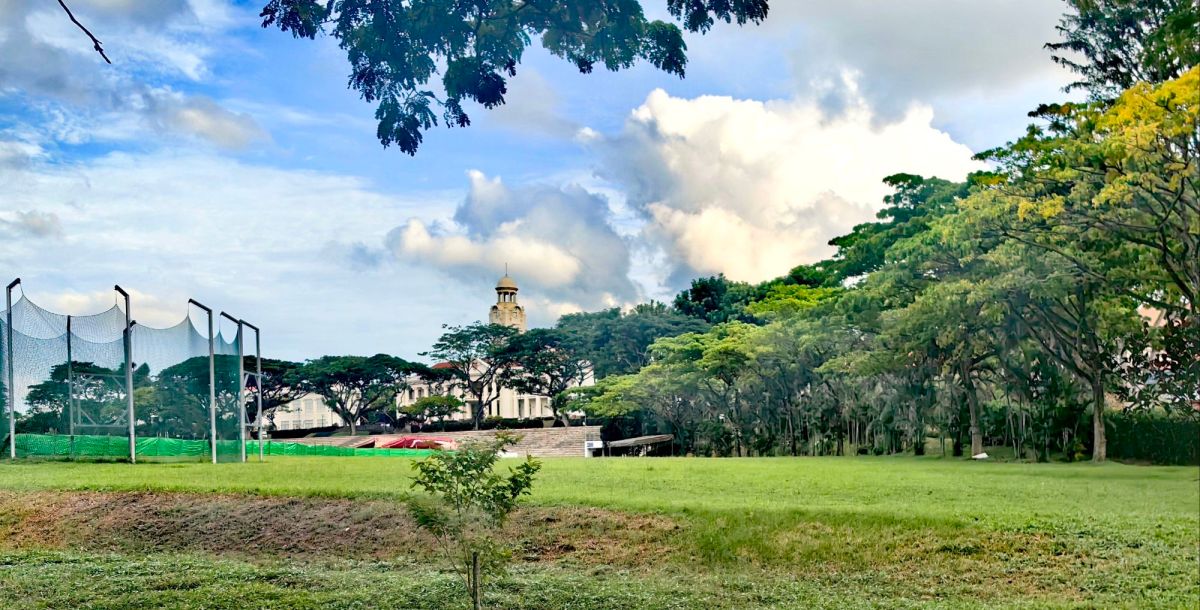
Although so many years passed, the memory of the campus still lingered in my memory. The campus was spacious, with broad roads, old buildings, soccer fields, and mature trees. The iconic clock tower standing above the grounds gave the place a certain solemnity. The school traces its origins to The Chinese High School, founded in 1919 by Tan Kah Kee, one of the most influential overseas Chinese philanthropists and educators. Years later, when I visited Jimei School Village in Xiamen, I experienced an unexpected sense of familiarity. Both were created through Tan Kah Kee’s educational vision and developed into a complete educational community.
Life at the boarding school was also my first lesson in independence. Everything suddenly became my own responsibility: waking up on time, managing schoolwork, adjusting to new food, making friends, and learning how to live away from family. Not far from the boarding school was a place that quietly became part of my first memories of Singapore: the Singapore Botanic Gardens.
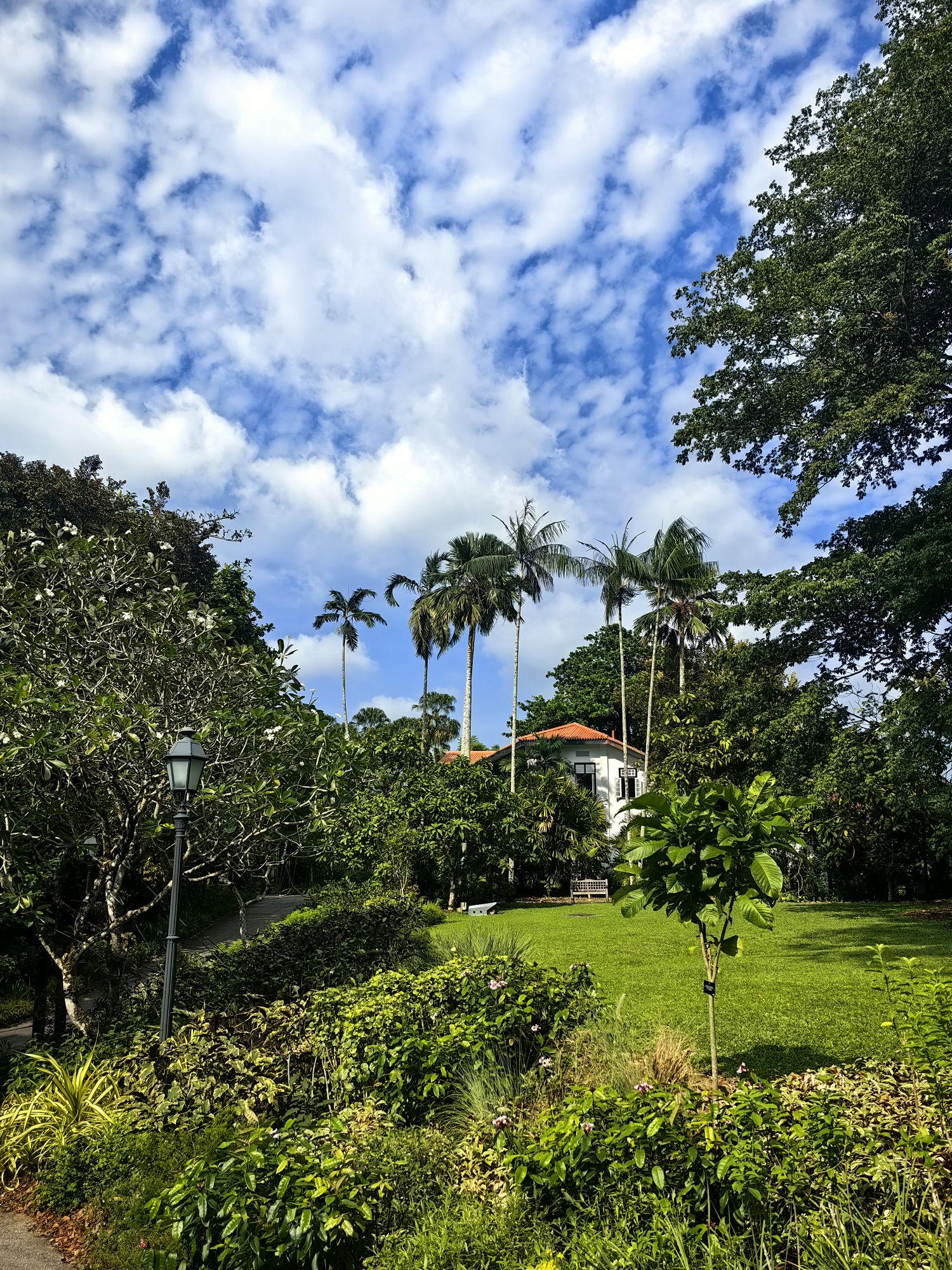
Whenever I visited it on weekends, I was struck by how natural everything felt. Tall rain trees stretched their branches across wide lawns, tropical plants grew in layers of green, and shaded paths curved gently instead of following rigid lines. The air always seemed cooler, softened by the dense vegetation. After a sudden tropical rain, the scent of wet soil would linger in the air. Many families would come here for a picnic on the lawns.
It has extraordinary historical significance. Founded in 1859, it became Singapore’s only UNESCO World Heritage Site in 2015. The gardens played an important role in the cultivation and distribution of rubber across Southeast Asia in the late nineteenth and early twentieth centuries, shaping the economic development of the region. UNESCO also recognized it as an exceptionally well-preserved example of a British tropical colonial botanic garden whose original landscape have remained remarkably intact over time.
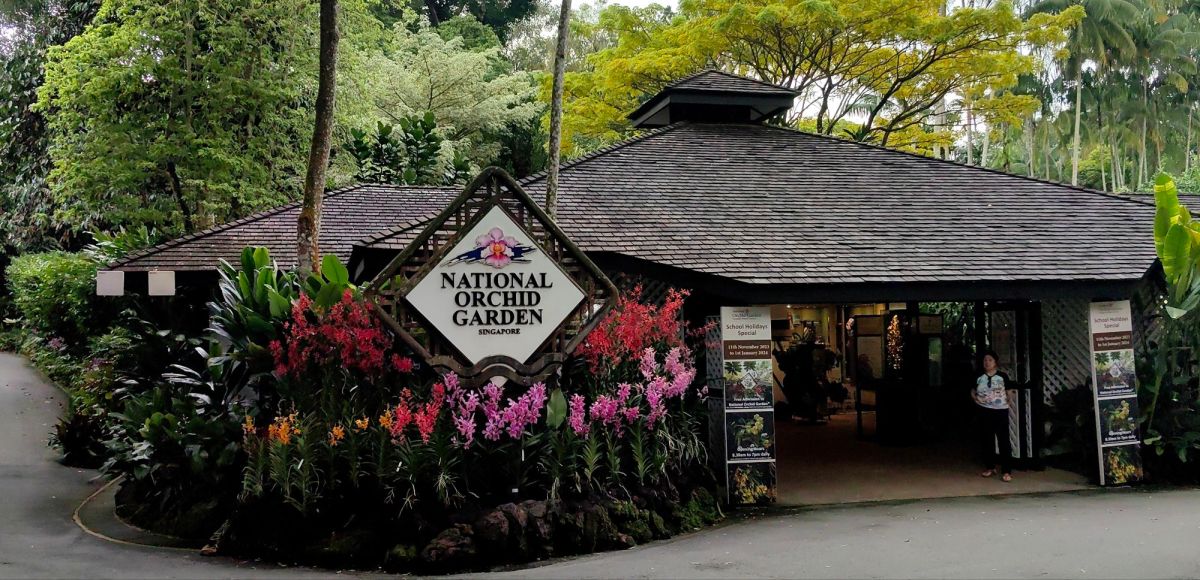
Unlike the wider Botanic Gardens, where greenery stretches quietly and naturally across the landscape, the Orchid Garden feels more curated. Walking through its entrance, I felt being greeted by layers of color. Against the tropical backdrop of palms, old trees, and filtered sunlight, the garden was like a living gallery.
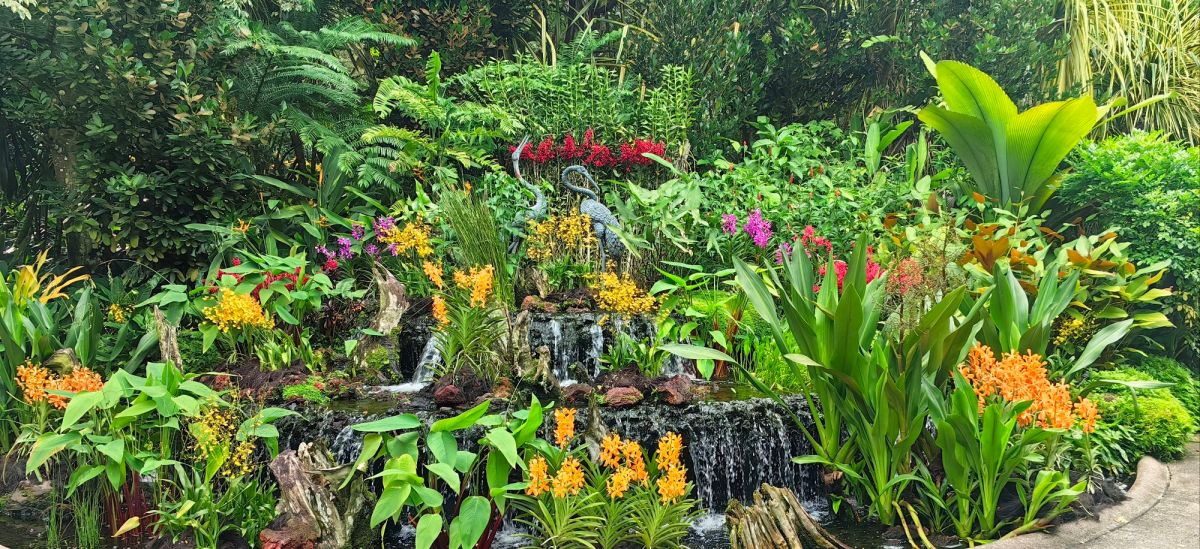
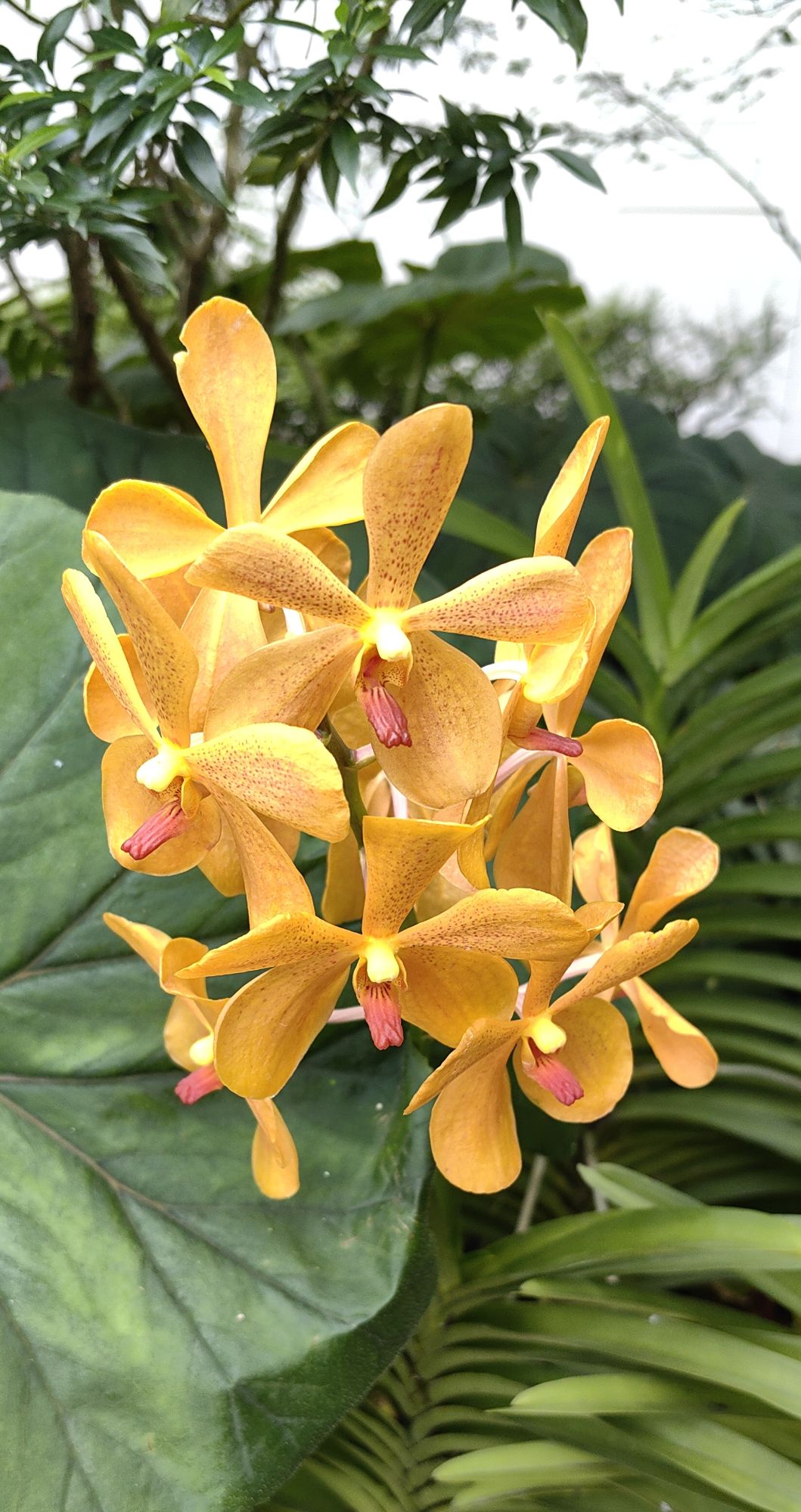
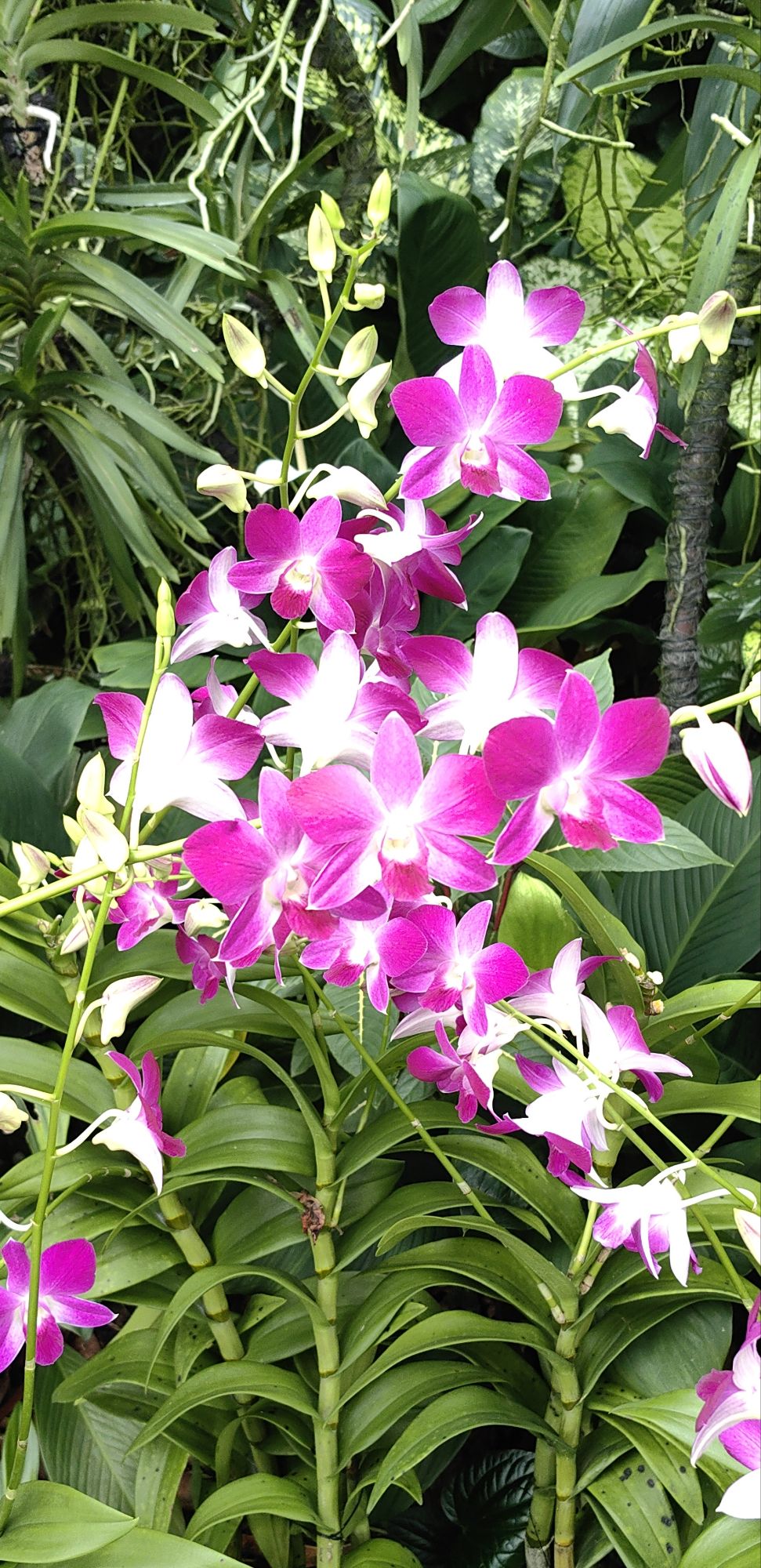
Before visiting it, I thought that orchids were elegant but simple flowers. Inside, I discovered how different they could be, tiny and delicate, large and sculptural, pure white, vivid purple, spotted and striped. The garden was designed with different sections with different color and landscape.
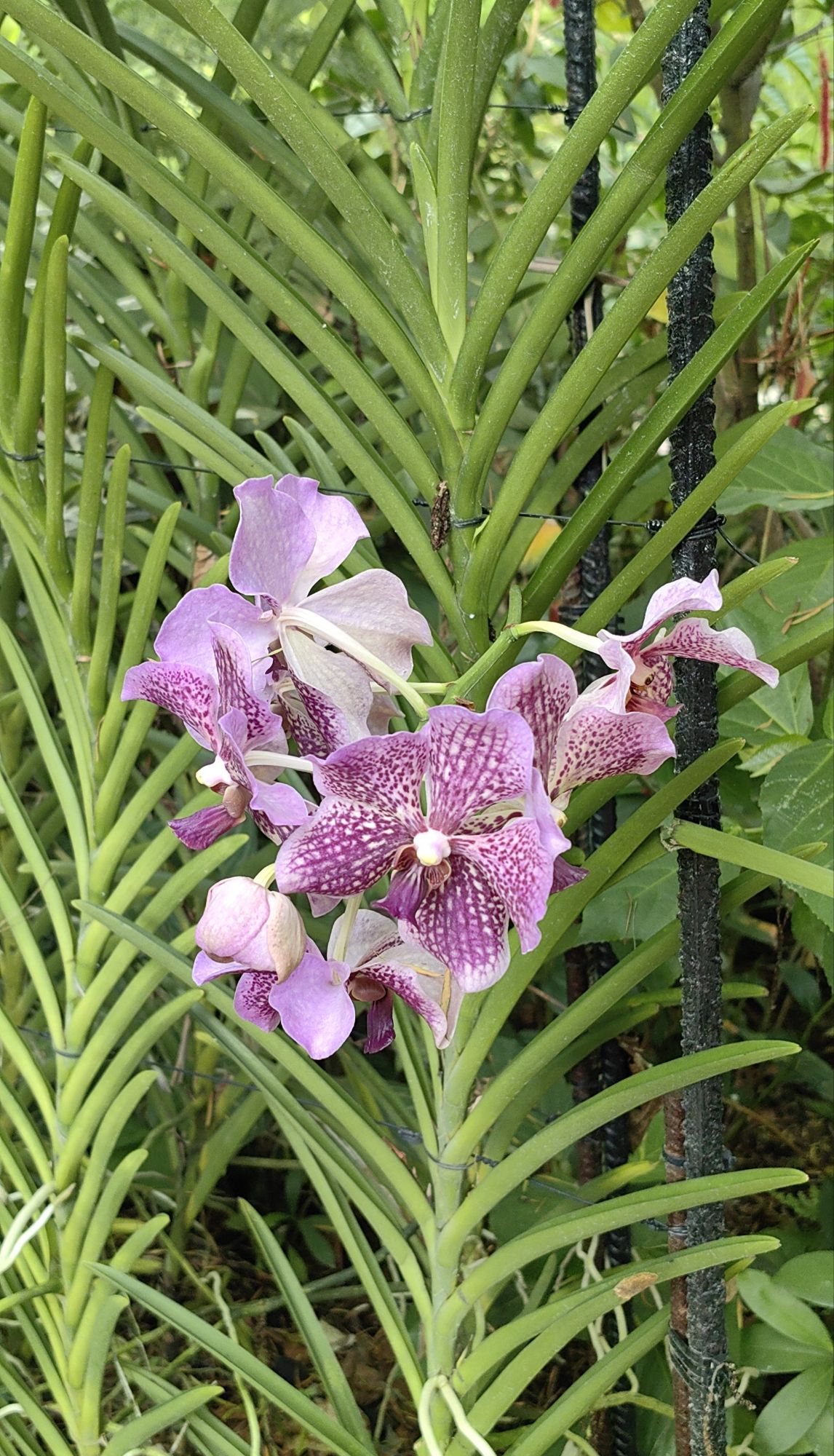
Orchids are more than ornamental flowers. They became part of the country’s identity, national flower of Singapore. The beautiful Vanda orchid is very commonly displayed in the garden. It has thick strap-like leaves growing along an upright stem and large flat flowers with the characteristic purple or pink tessellated pattern. They looked really elegant with long and wide petals and soft colors.
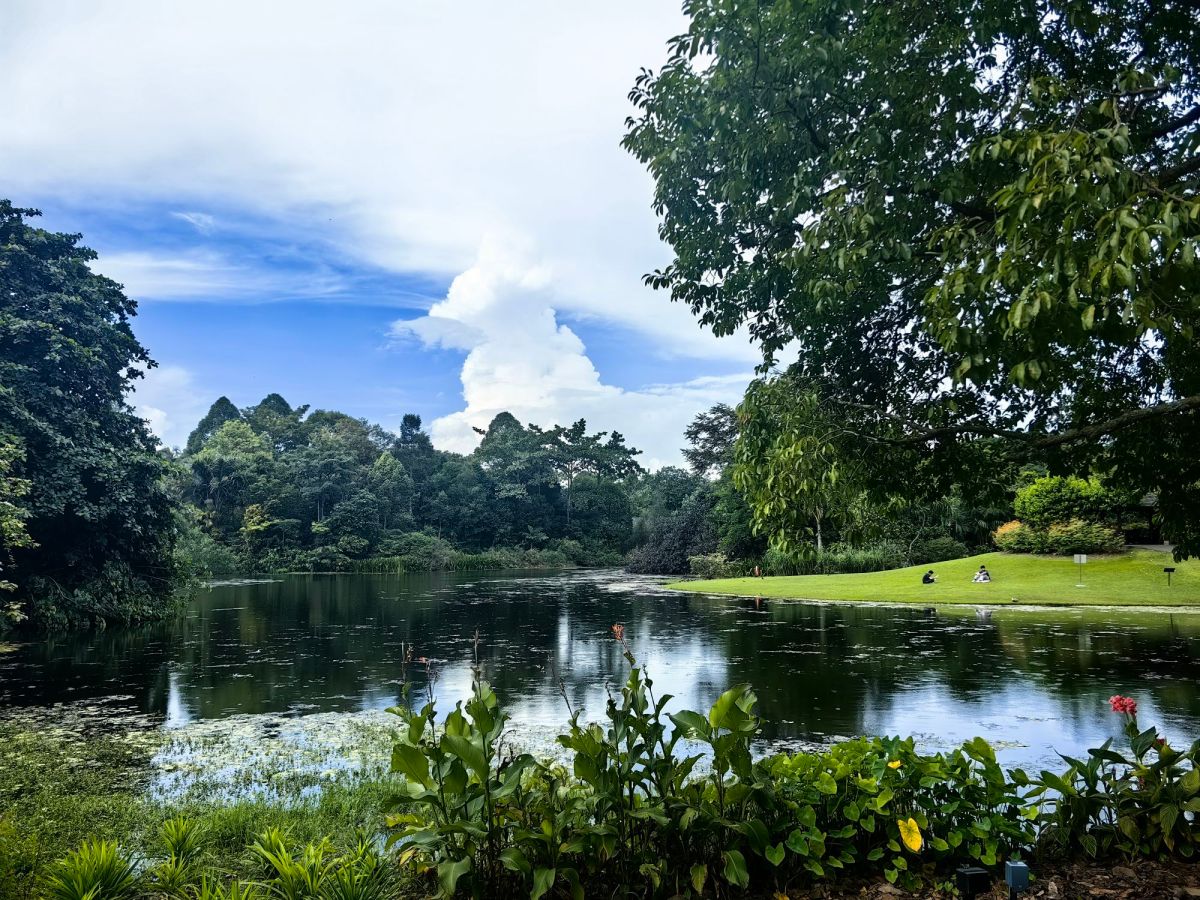
I enjoyed the atmosphere around lakes in the garden. Early in the morning, the water is as smooth as glass, perfectly reflecting the surrounding rainforest trees, elegant palms, and the blue sky. A gentle breeze occasionally ripples the surface, causing the reflections to shimmer like an impressionist painting. Walking along the lakeside paths, I could hear birds singing and leaves rustling in the wind and felt completely removed from the pressures of school.
I spent two years in Xinmin Secondary School (my first school in Singapore) preparing for the O Level examinations, but looking back, the examinations themselves were only part of the challenge. The greater test was learning how to begin in a completely unfamiliar environment. The school system was different, and I must improve my English to adapt to it. The teaching methods were different, and I suddenly found myself surrounded by classmates who had grown up in a culture that was still new to me. Every day brought something unfamiliar, from the way lessons were conducted to the conversations happening around me. I gradually learnt to adapt to this international and multicultural environment.
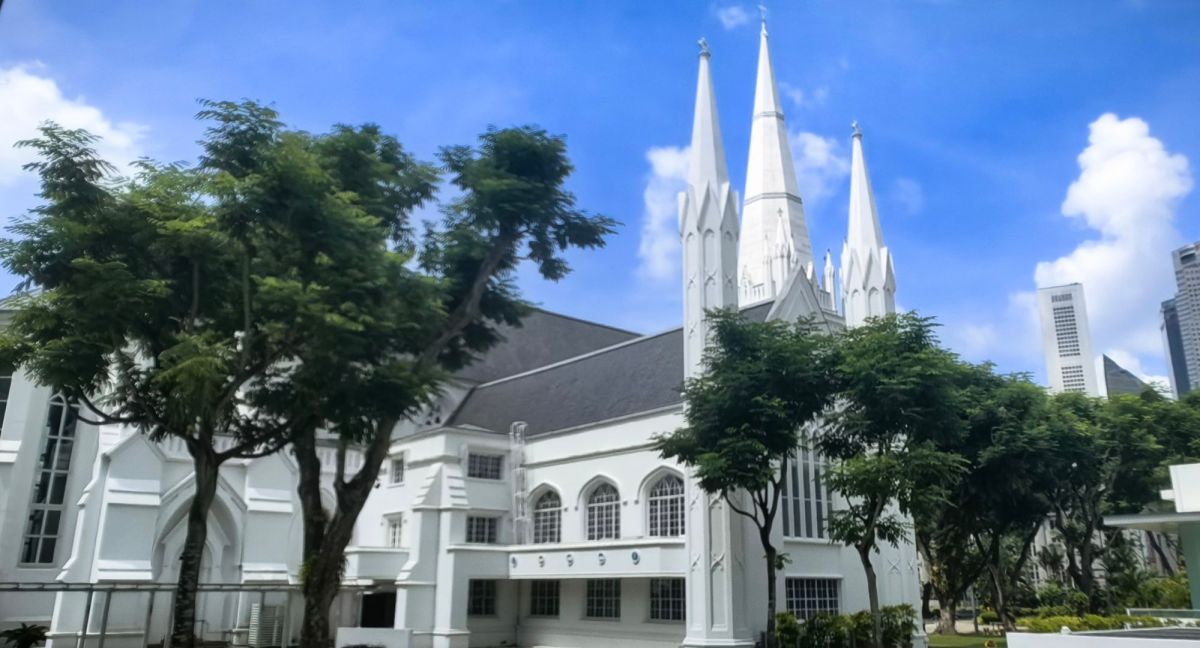
The first thing that Singapore left me deep impression was the co-existence of different cultures. Although Singapore is a small island, it is home to people of many different ethnicities and religions. Chinese, Malays, Indians, and Eurasians have lived together for generations, each contributing to the country’s identity while preserving their own traditions. Christian churches form an important part of Singapore’s architectural landscape. Historic buildings such as St Andrew’s Cathedral, with its elegant white Gothic Revival architecture, stand as reminders of Singapore’s past.
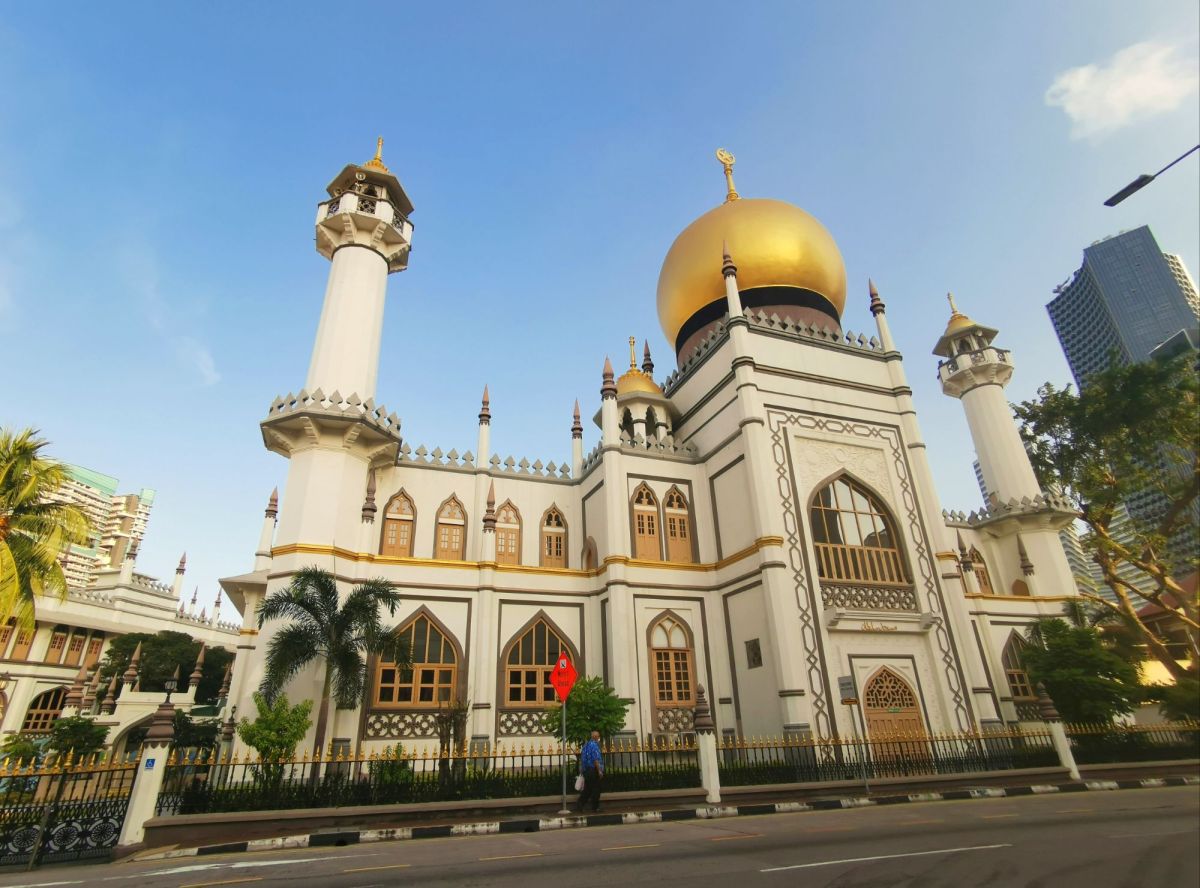
In Kampong Glam, the golden dome of Sultan Mosque rises above rows of restored shophouses. The district reflects Singapore’s rich Malay and Arab heritage, where traditional architectures and historic streets coexist with contemporary art and design, forming the unique charisma of this city.
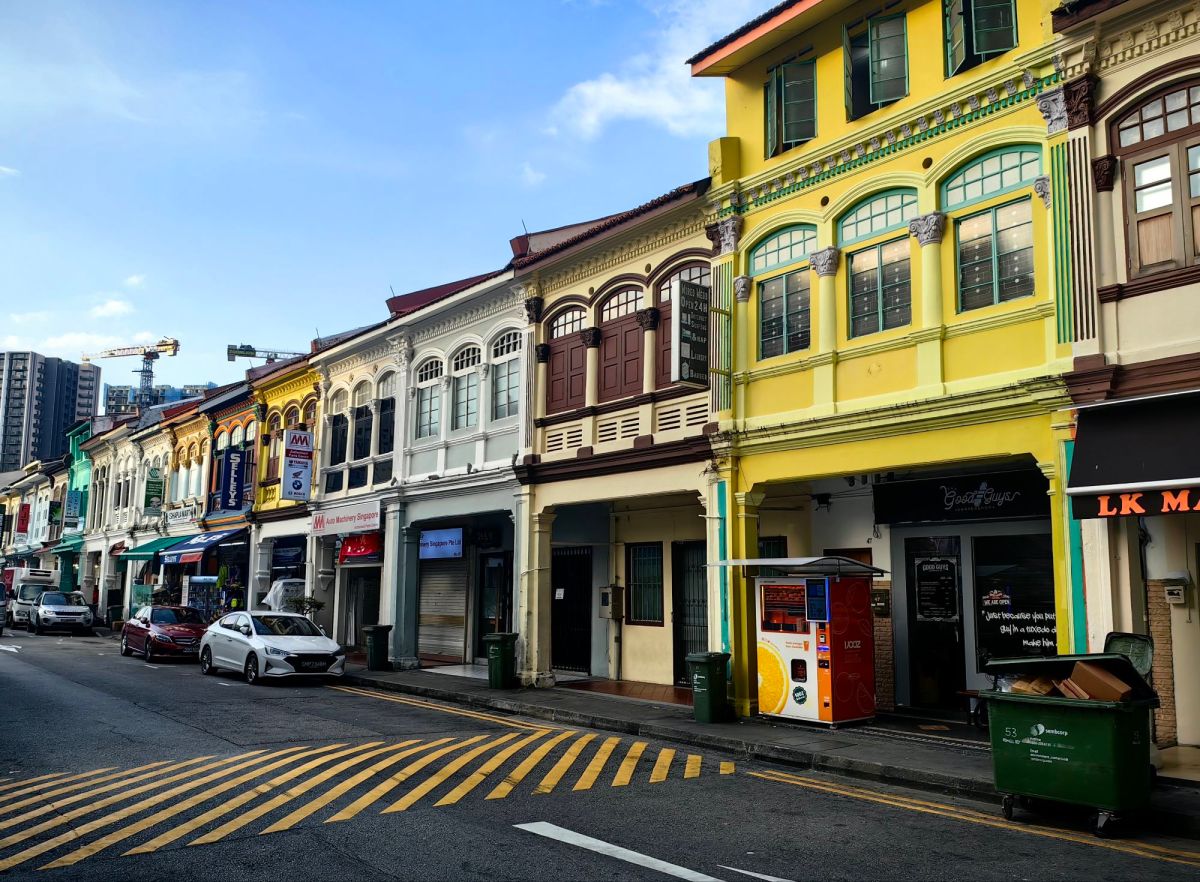
I passed by many traditional shophouses with colorful wooden shutters and decorative windows near Chinatown. Some of these historic streets, especially along Telok Ayer Street reminded me of the old streets of Quanzhou. Their rows of narrow shophouses, timber window shutters, and pastel-coloured façades share a similar architectural heritage, reflecting the influence of Southern Chinese migrants who settled throughout Southeast Asia in the nineteenth century.
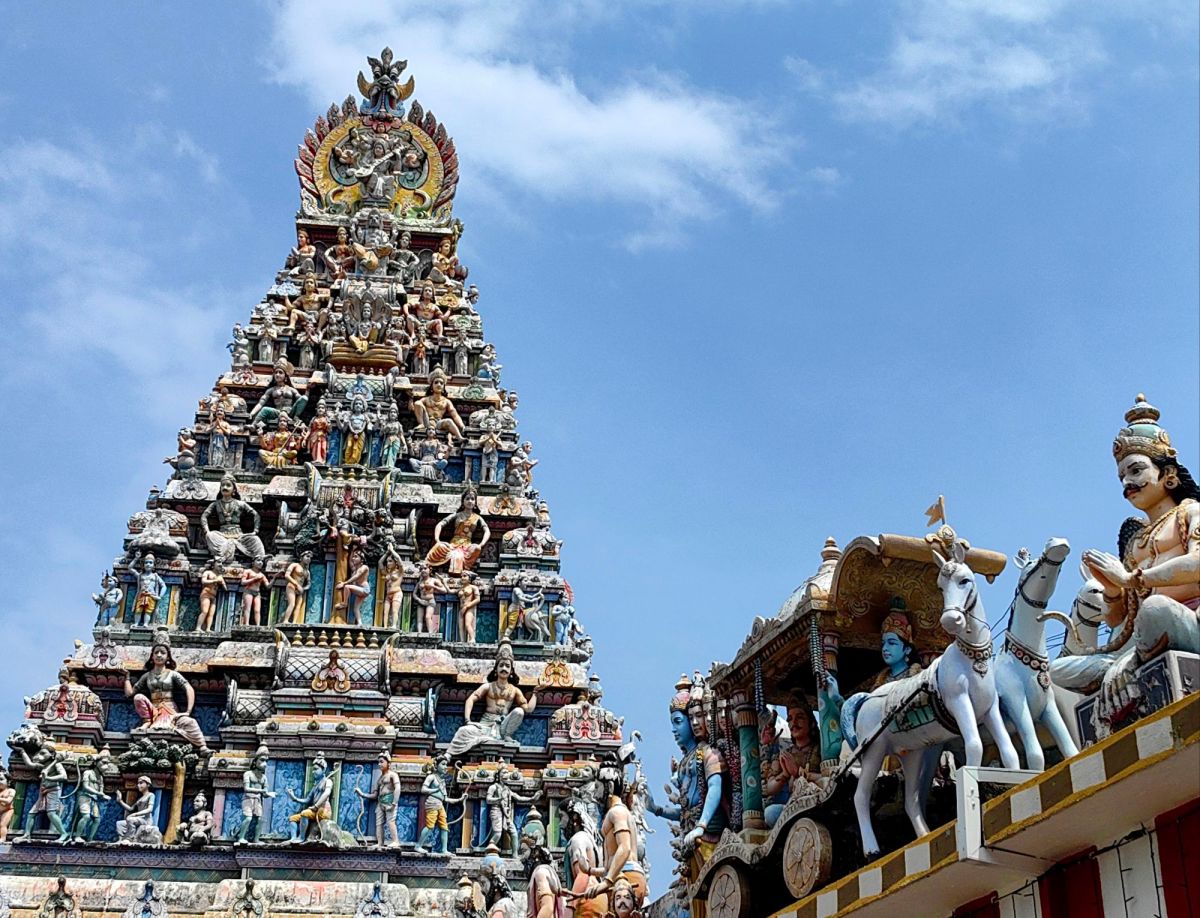
A short distance away lies Little India, where brightly painted buildings, colorful murals, and the magnificent Indian Temple create an atmosphere entirely different from Chinatown. Singapore places great importance on racial harmony and mutual respect. The architectures of different styles and neighborhoods quietly demonstrate how different cultures can preserve their own identities while contributing to a shared national community.
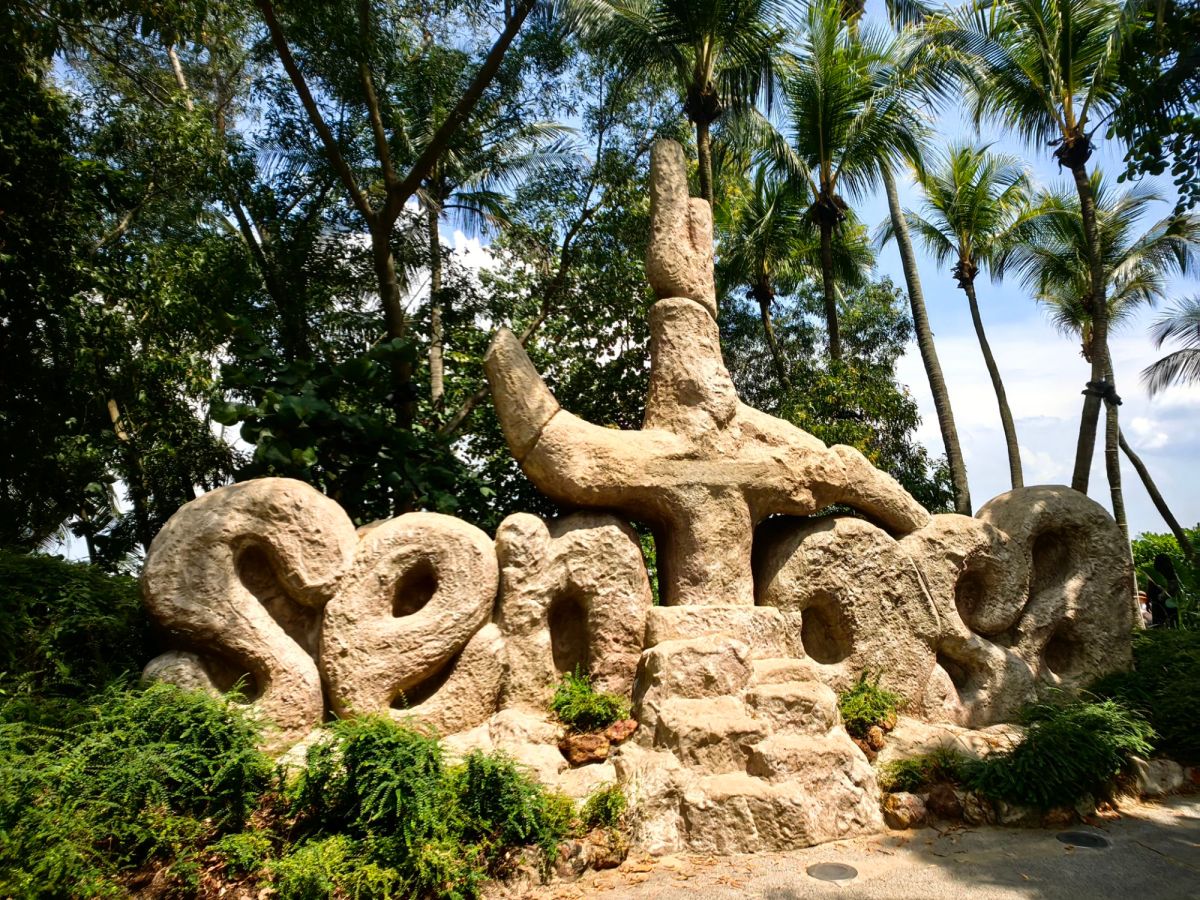
Although adapting to school demanded most of my time and energy, I also wanted to discover the country that had suddenly become my new home. Whenever I had a free weekend or during school holidays, I would visit different parts of Singapore. Everything was new to me. I remember taking my first trip to Sentosa, where the beaches and relaxed atmosphere made it feel like a tropical resort.
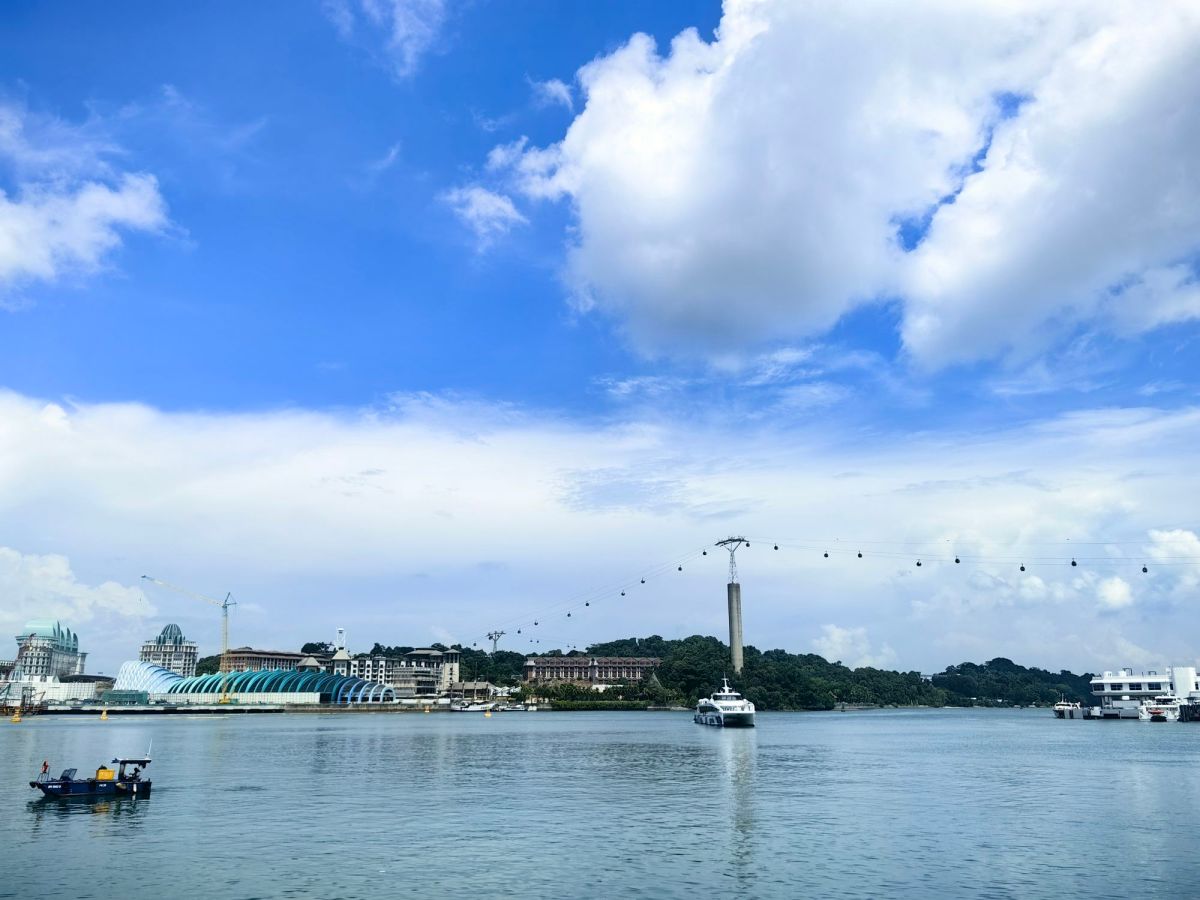
Most of the time, I did not take the monorail to Sentosa. Instead, I preferred to walk from HarbourFront along the Sentosa Boardwalk. Although it took a little longer, the journey itself became part of the experience. The promenade stretches gently over the water, connecting the mainland to the island. Walking there, I was accompanied by the sea breeze, the sound of waves lapping against the shore, and the warm tropical sunshine. On one side lay the calm blue waters of Keppel Harbour, where yachts rested quietly in the marina. On the other side, Sentosa’s beaches and lush greenery gradually came into view, making the island feel closer with every step. Above me, the cable car glided silently across the sky. Its colorful cabins looked almost like small floating lanterns moving steadily between HarbourFront and Sentosa.
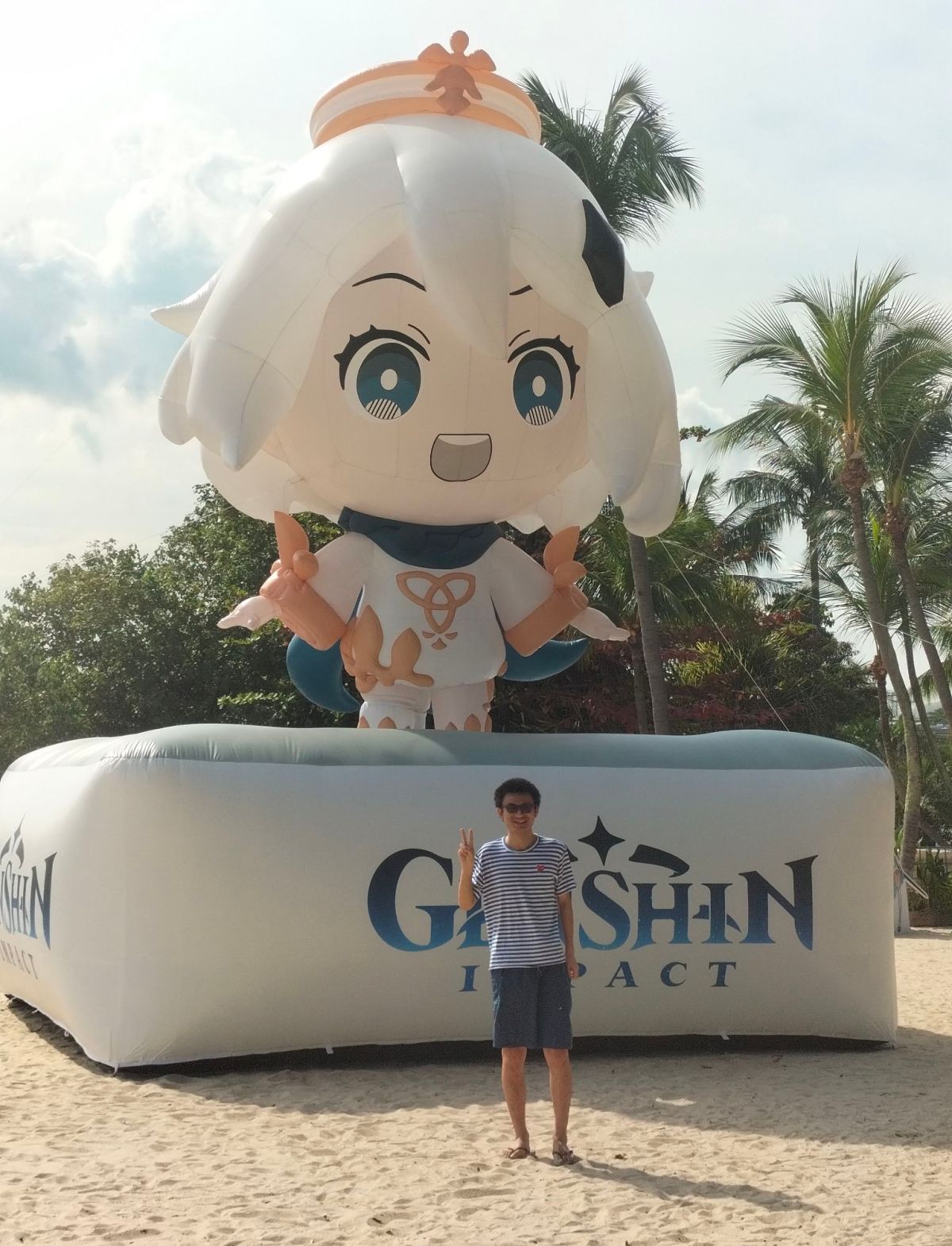
Sentosa feels like a place designed for leisure and escape. Surrounded by the sea, the island offers sandy beaches, tropical forests, waterfront promenades, and attractions that invite people to slow down and enjoy the outdoors. Over the years, I encountered several joint events of collaboration held on the island. This picture was taken on 2022 when Genshin Impact gained great reputation internationally and its main character and also my favorite character Paimon arrived at Sentosa.
These days, Disney brought its beloved characters and stories to the waterfront through family-friendly events. Familiar beaches that I had walked along countless times suddenly took on an entirely different atmosphere. What impressed me was how naturally these events blended with the tropical surroundings. Instead of feeling like temporary exhibitions placed on a beach, the colorful installations stood among coconut trees, against the backdrop of blue skies and the sea.
When I first arrived in Singapore, Sentosa was already a popular destination, but over the years I witnessed its remarkable transformation. New attractions, hotels, and entertainment facilities continued to emerge. One of the most significant additions was Resorts World Sentosa, an integrated resort that transformed the northern part of the island. At its heart stands Universal Studios Singapore, the first Universal Studios theme park in Southeast Asia. Walking beneath the iconic rotating globe at its entrance always feels like stepping into another world.
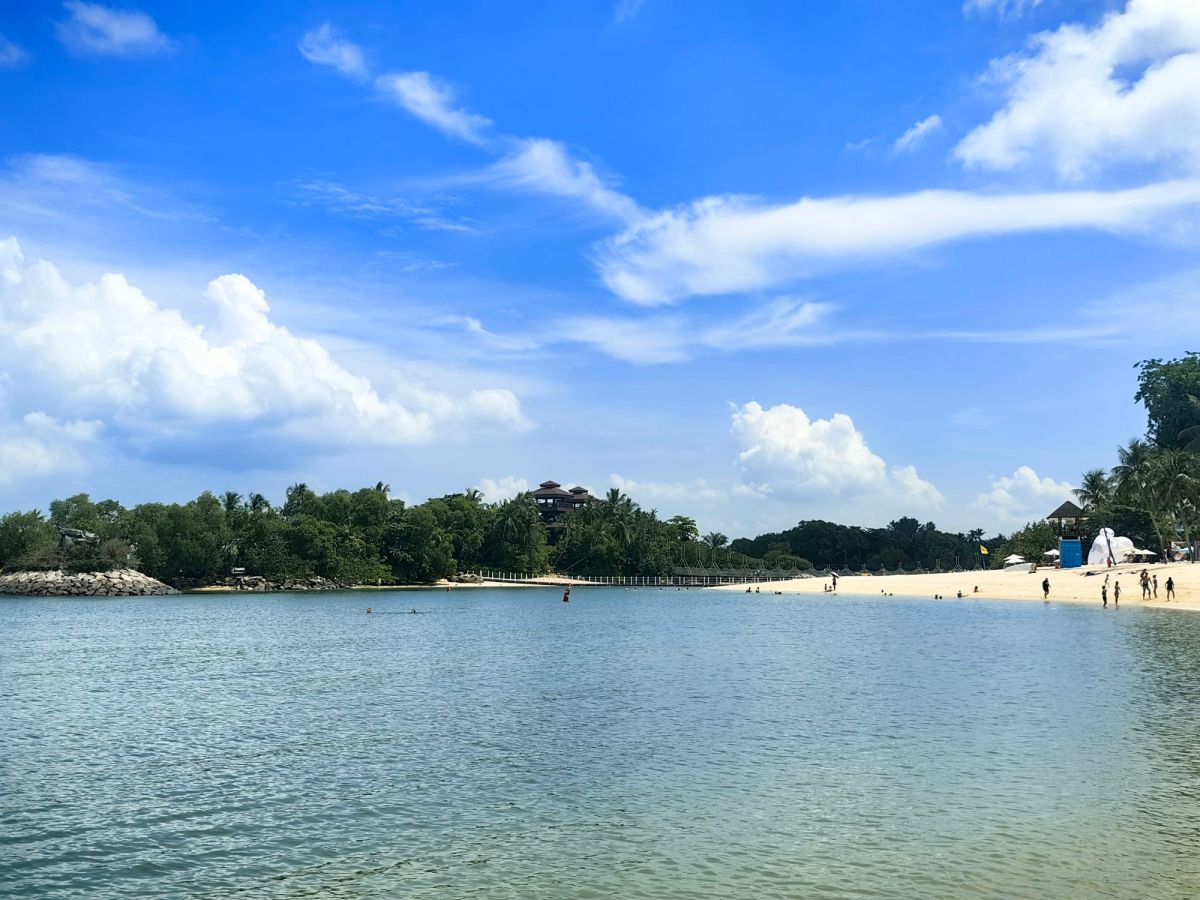
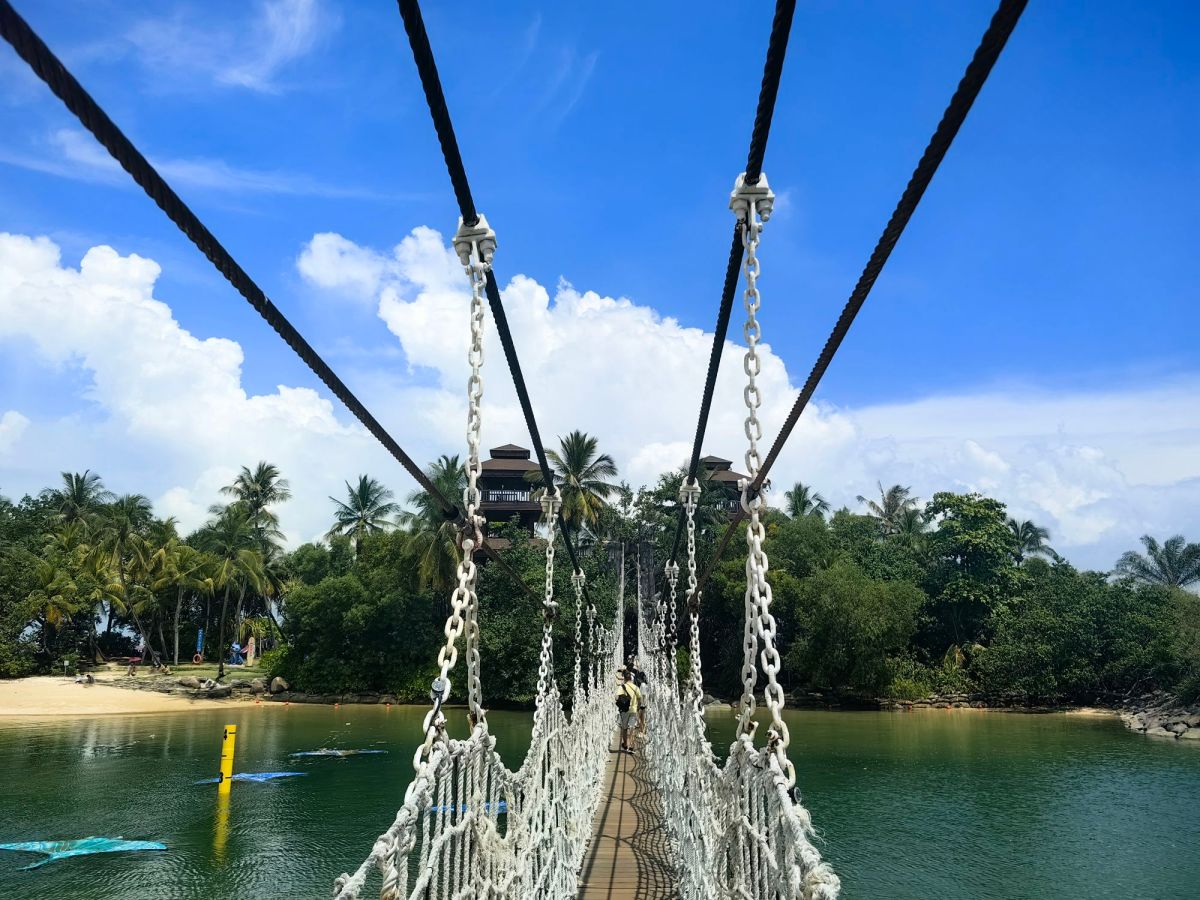
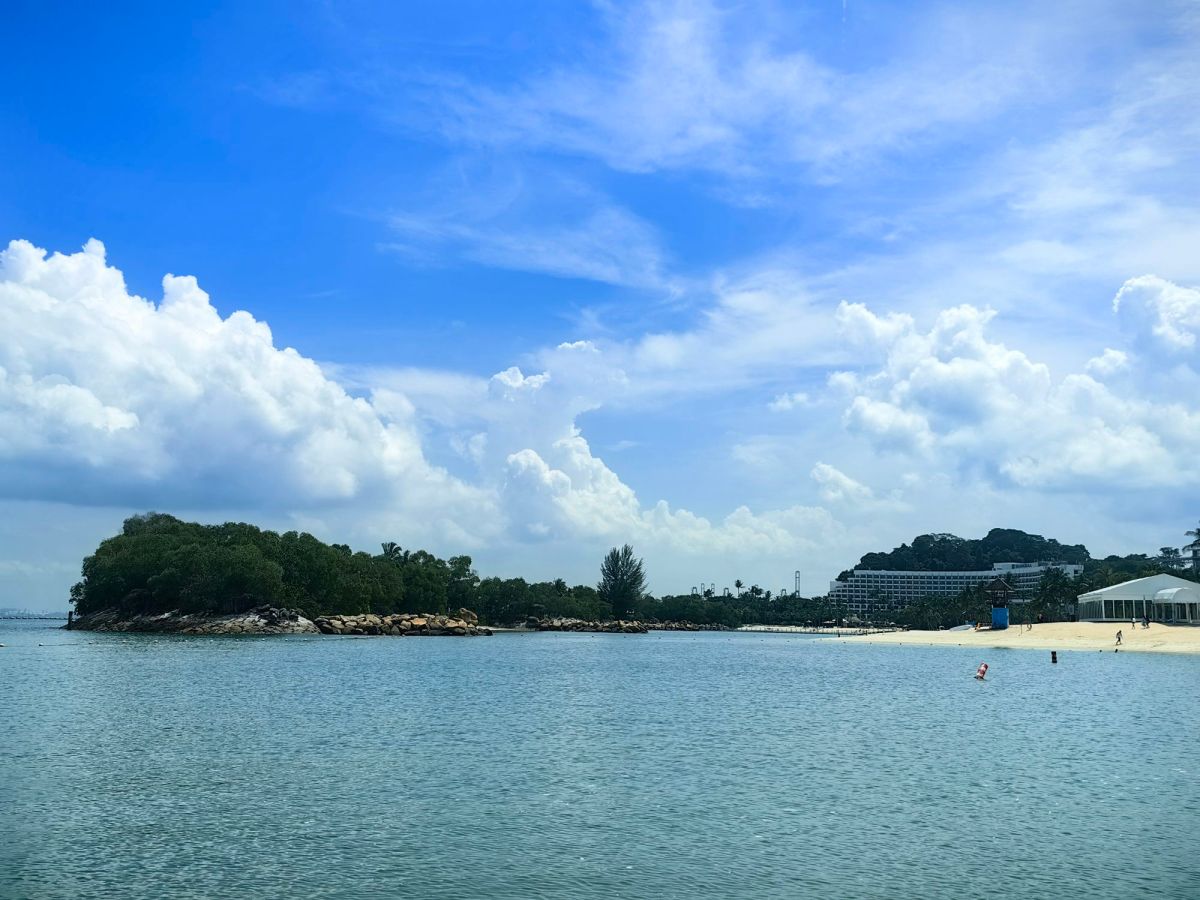
For me, I prefer beach more than those entertainment facilities. I enjoy the moment of stepping onto the soft sand of Palawan Beach. The white sandy shore curves gently around clear blue water, making it an ideal place for a leisure walk. The iconic suspension bridge leading to the small offshore islet has become one of Sentosa’s most recognizable landmarks. Standing there, surrounded by the sea and looking towards the horizon, I often felt far away from the bustling city.
After crossing the suspension bridge. I was fascinated by the sign marking it as the “Southernmost Point of Continental Asia.” Standing there, surrounded by the sea on all sides, I felt as though I had reached the edge of a vast continent and was connected to the remoteness in an interesting way.
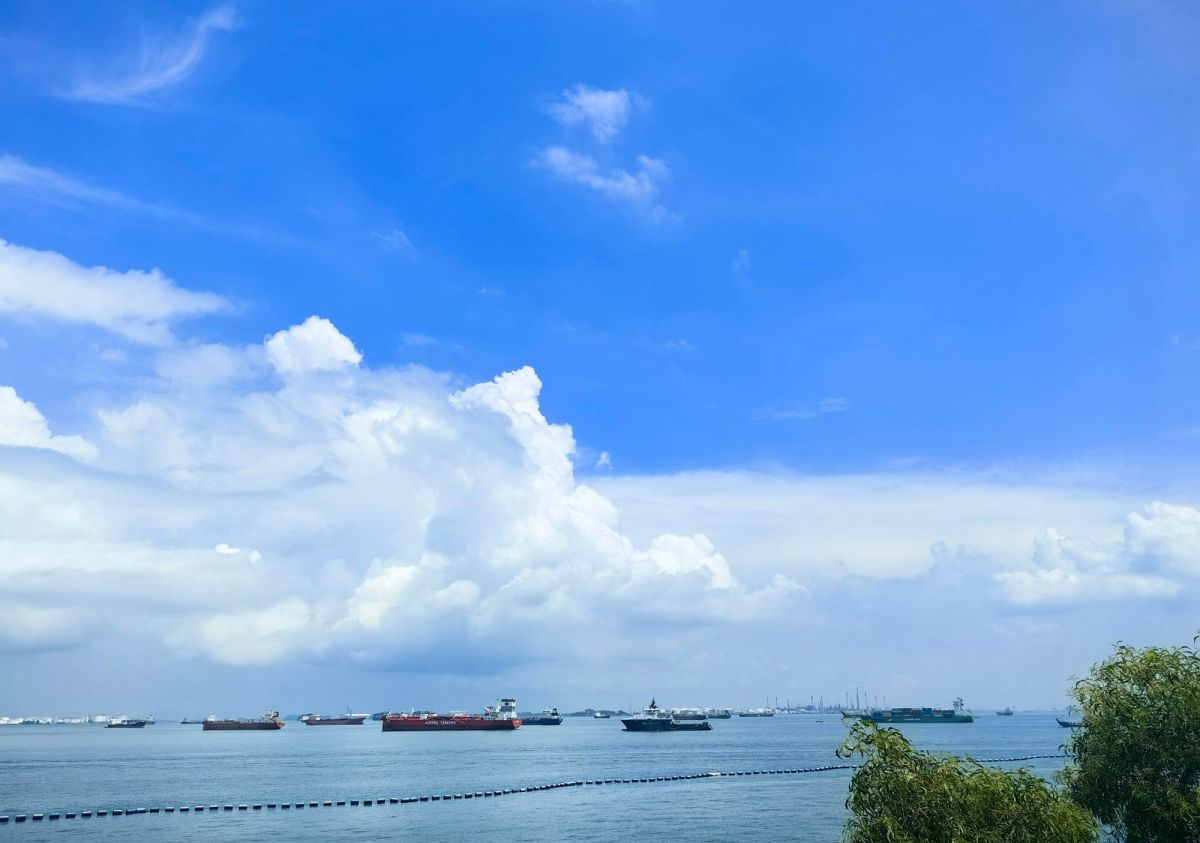
The observation towers offered panoramic views of the Malacca Strait. Every day, thousands of vessels pass through this narrow gateway linking the Indian Ocean with the South China Sea and the Pacific Ocean. Standing on the southern shore of the island, my eyes were always drawn towards the vast expanse of water stretching into the distance. On clear days, the sea and the sky seemed to merge into a single line at the horizon. Looking back toward the island, palm trees, beaches, and the skyline of Singapore appeared in the distance.
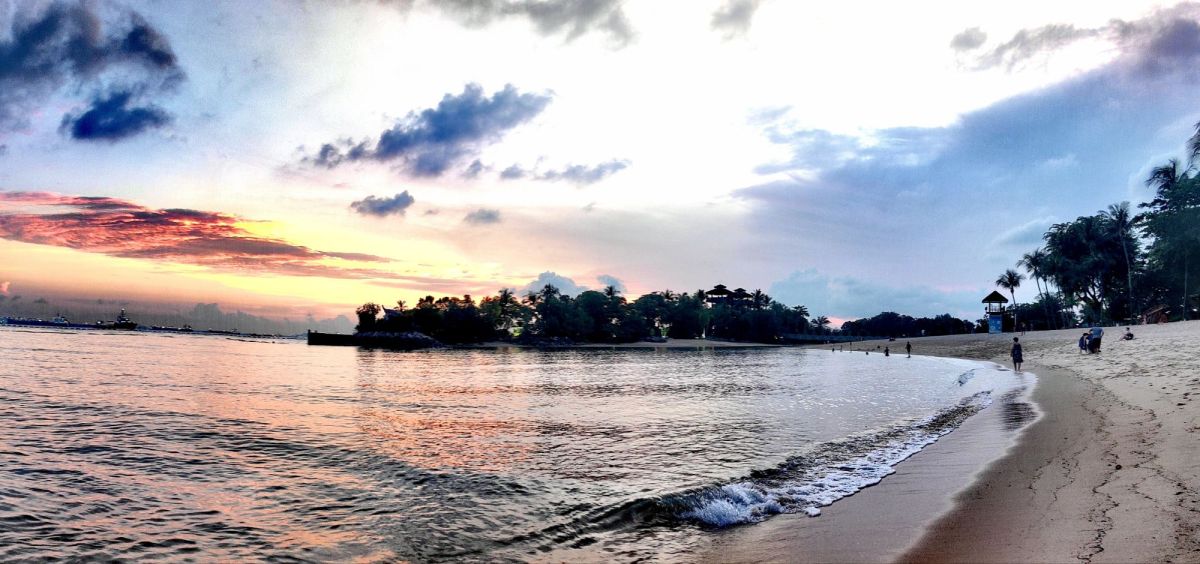
What I loved most was staying here until sunset. As evening approached, the tropical heat gradually softened, and the sea breeze became cooler. The sky transformed from brilliant blue to shades of gold, orange, pink, and finally deep purple. The sunlight shimmered across the calm water, creating a path of light that seemed to stretch endlessly toward the horizon. The silhouettes of coconut trees stood against the glowing sky, while small waves rolled gently onto the shore with a soothing rhythm. I walked barefoot along the beach, leaving footprints that disappeared with the next wave. I listened to the sound of the waves and felt the warm sea breeze brushing against my cheek. After days filled with studying and adapting to a new life, those evenings by the sea brought a rare sense of peace.
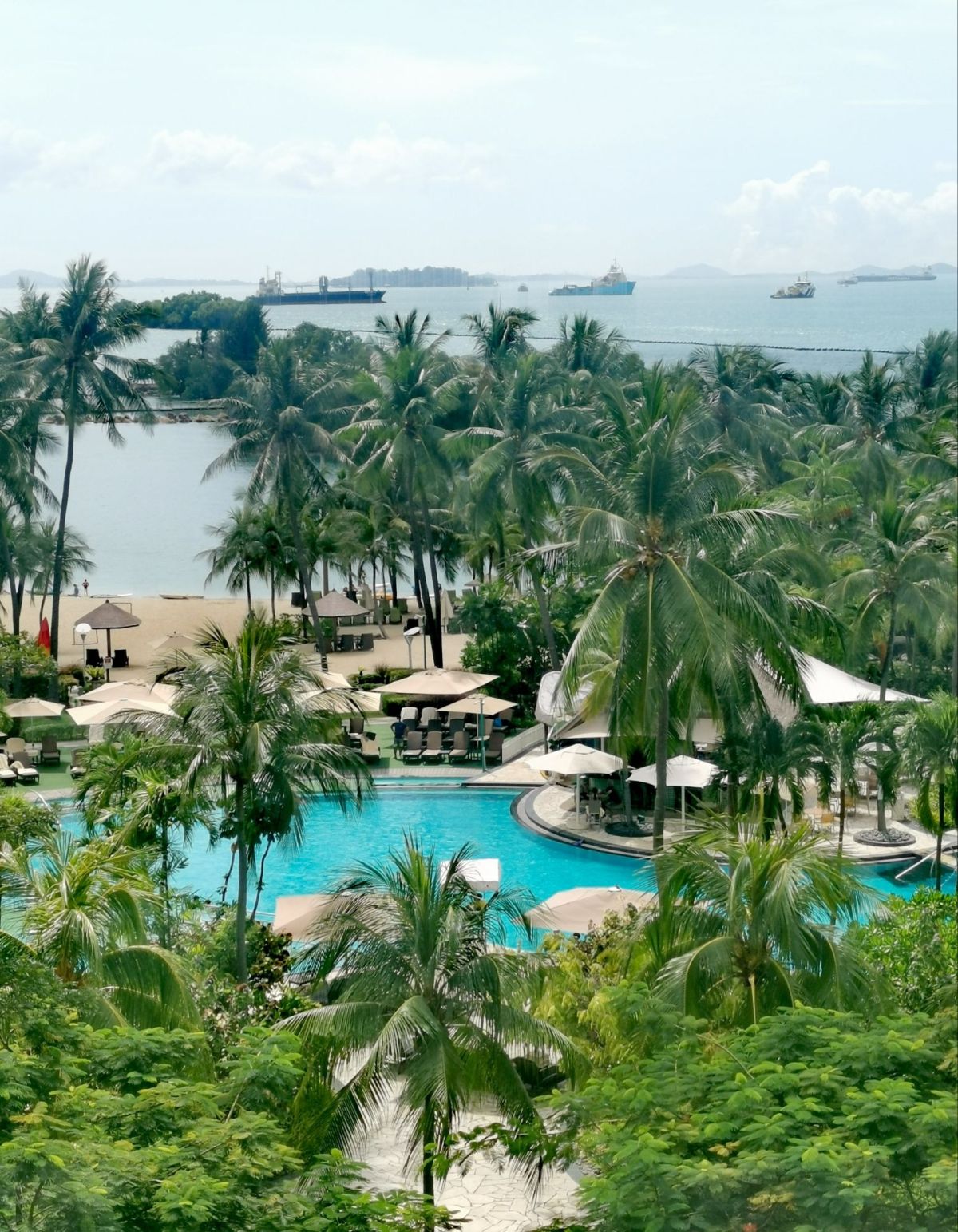
Compared with Palawan Beach, the Siloso Beach is livelier and more energetic, with beach volleyball courts, cafés, and people enjoying water sports or simply gathering with friends. Music drifts through the air, and the promenade is always full of joggers, cyclists, and families strolling beneath rows of palm trees. The background is the Shangri-la Sentosa hotel which is popular place for tourists.
Unlike most luxury hotels in the city centre, which overlook skyscrapers and busy streets, this hotel faces the sea. Tucked away at the western end of Siloso Beach and surrounded by tropical greenery, it feels like a quiet sanctuary where the pace of life slows down. What I loved most was the view from the room’s balcony. Looking out through the floor-to-ceiling windows, the first thing that caught my attention was the endless blue sea stretching towards the horizon. Sunlight danced across the water, creating countless sparkling reflections that changed with every passing cloud. Rows of coconut palms swayed gracefully in the warm tropical breeze.
In my school weekends, I would visit the famous sites in the city center. For me, the city centre of Singapore is more than a collection of famous landmarks. It is a place where the country’s history, which I first learned in social studies lessons, comes alive. As a student, I memorized dates and events for examinations. Years later, walking through these same places, I realized that the lessons were no longer just words in a textbook. They had become part of the landscape around me.
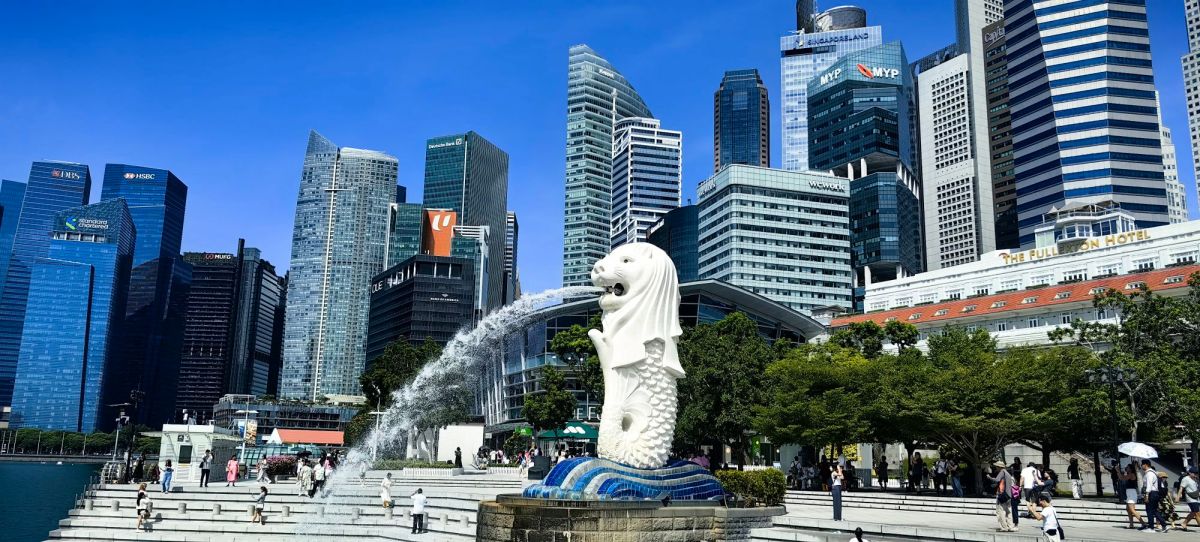
Whenever my friends or relatives visited Singapore, I would often take them on the same route. I usually began at Merlion Park. Standing beside the Merlion, with water continuously flowing from its mouth into Marina Bay. The lion represents the legendary story of discovery when explorer first landed in Singapore, while the fish body reflects the country’s humble origins as a fishing village known as Temasek. Behind the statue rose the gleaming skyline of the financial district, creating a striking contrast between Singapore’s distant past and its modern identity.
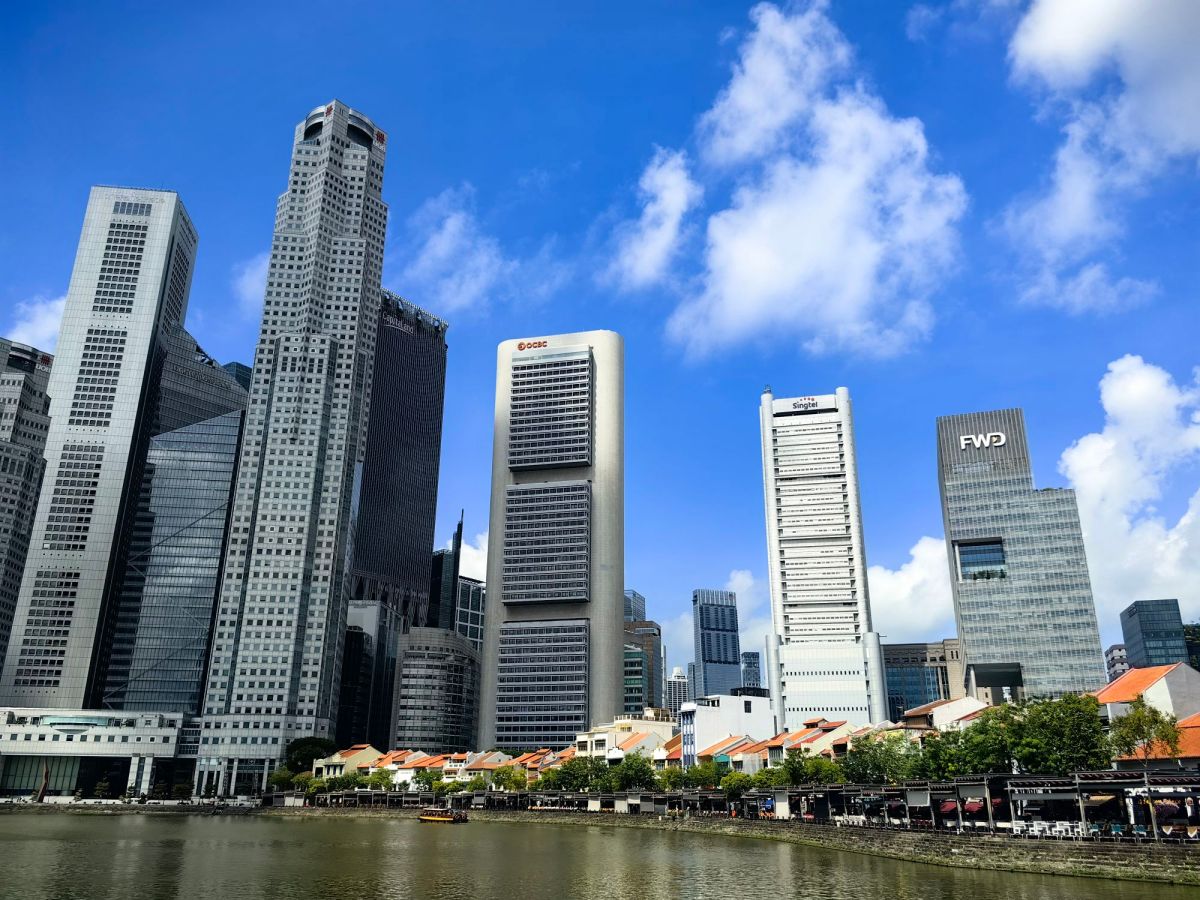
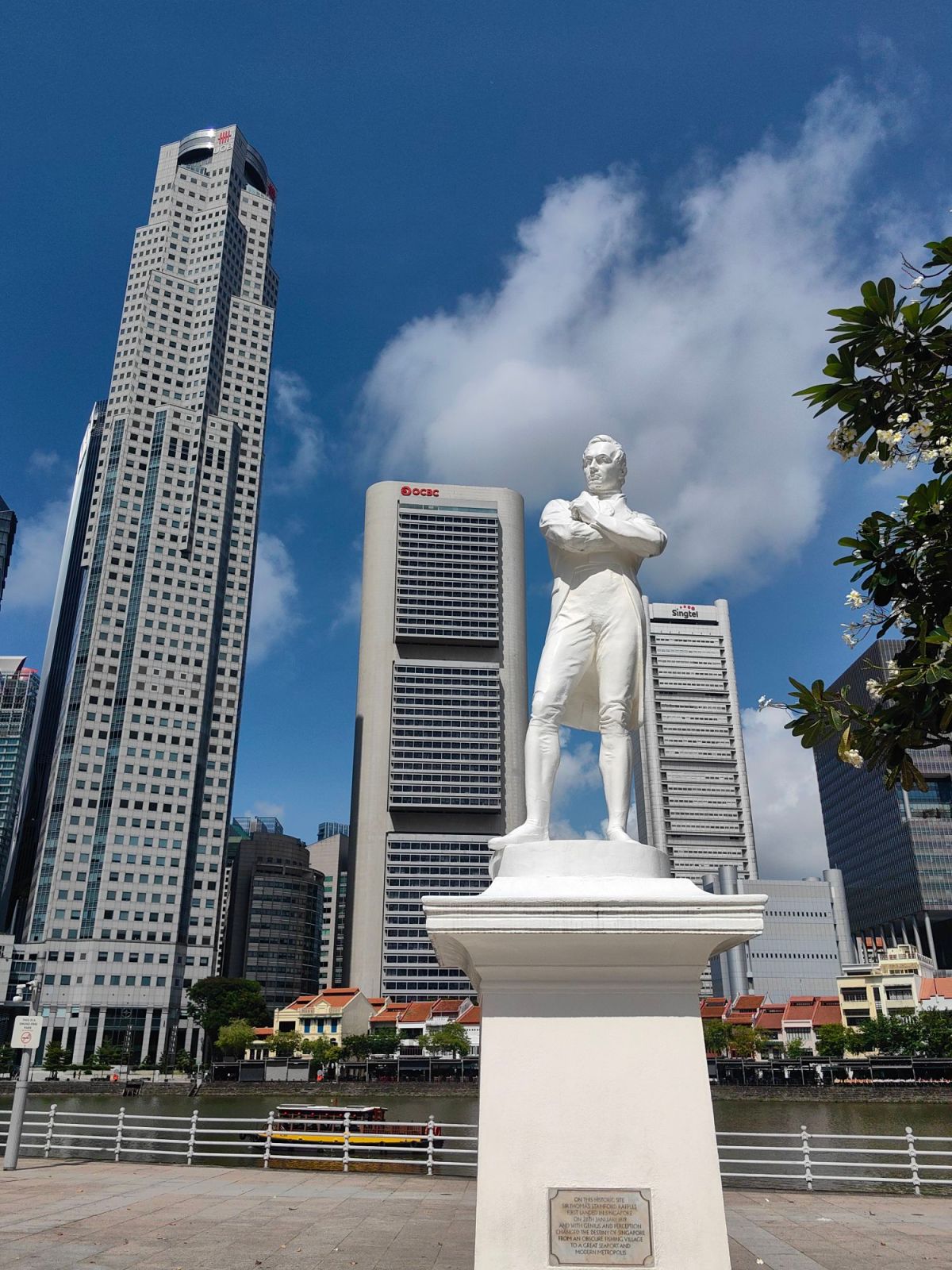
From there, the view naturally led towards Raffles Place, the heart of Singapore’s financial centre. Glass skyscrapers now dominate the skyline, housing banks, multinational corporations, and global financial institutions. Yet beneath this modern landscape lies the foundation laid by Sir Stamford Raffles in 1819, when Singapore was established as a British trading port.
In my social studies and history classes, I learnt that Sir Stamford Raffles introduced the first town plan for Singapore, later known as the Jackson Plan. It organized the young settlement into districts for different communities. In 19th century, Singapore was a sparsely populated island at the Strait of Malacca, but Raffles recognized its extraordinary geographical advantage. His policy of free trade attracted traders from China, the Malay Archipelago, and the Middle East, laying the foundation for the multicultural society that defines Singapore today.
Walking through the Civic District today feels like stepping into that chapter of history. Along the Singapore River stand elegant white colonial buildings whose architecture contrasts sharply with the surrounding glass skyscrapers. Their tall columns, wide verandas, symmetrical façades, and high ceilings were designed not only to reflect British architectural traditions but also to adapt to Singapore’s tropical climate by encouraging natural ventilation.
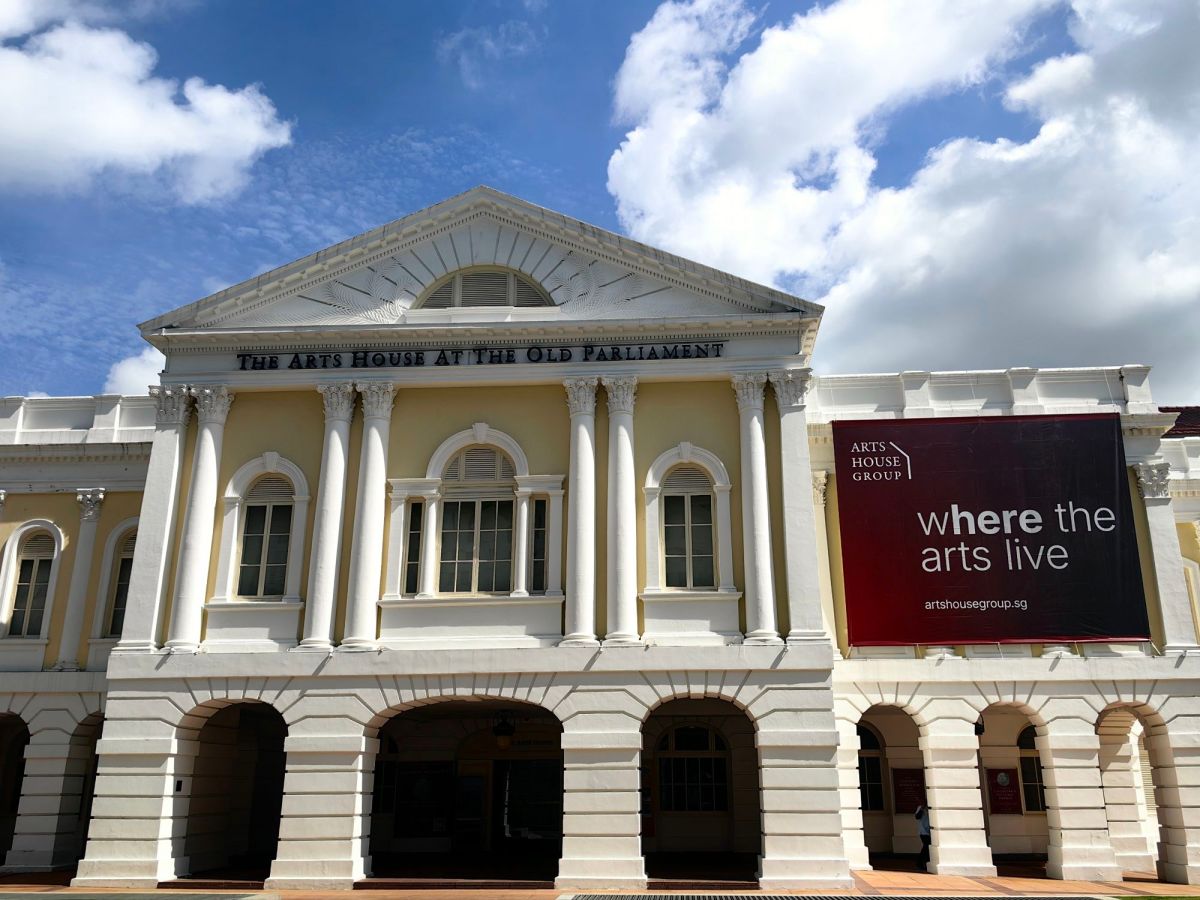
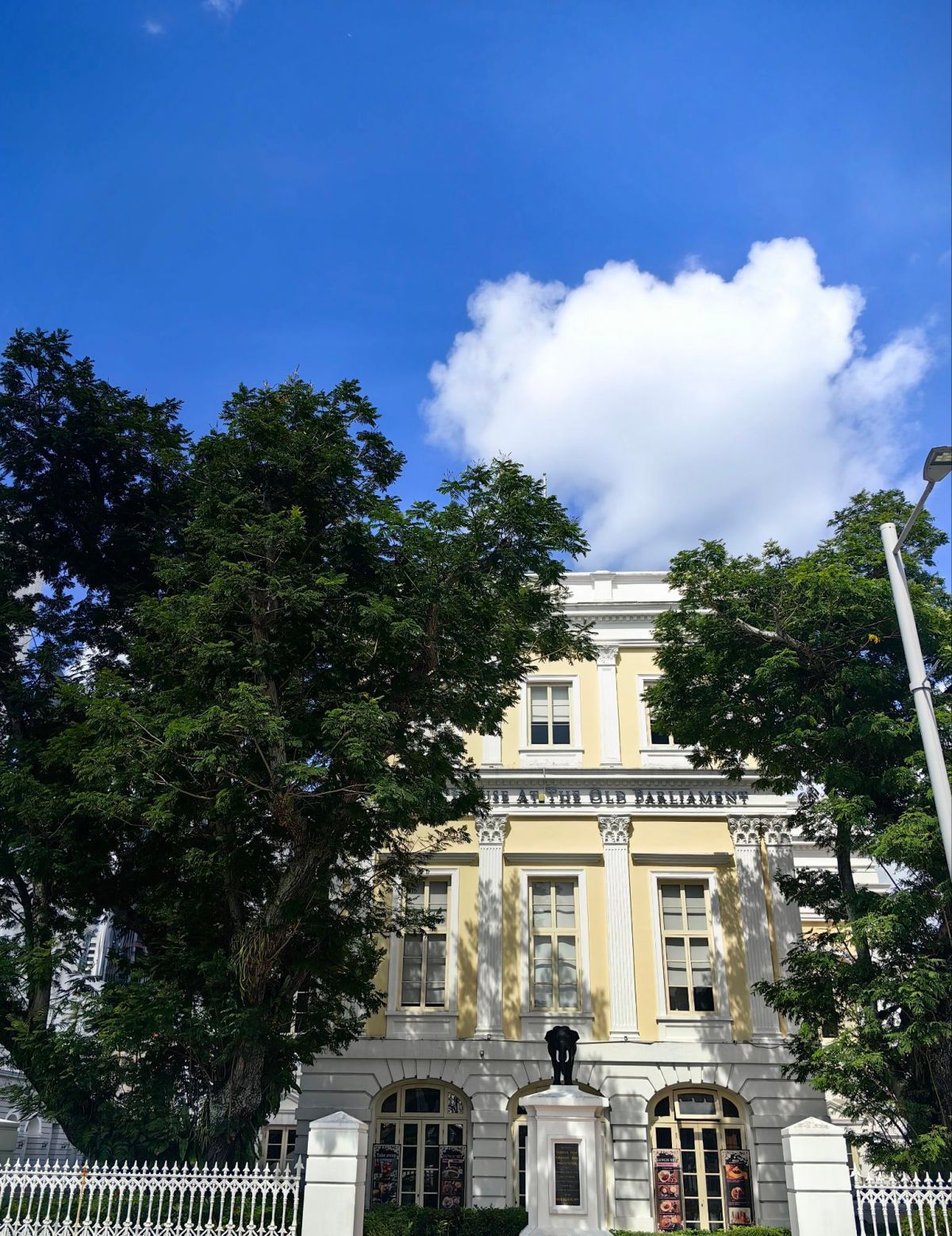
Among the most impressive is the former Parliament House, one of Singapore’s oldest surviving government buildings. It has a beautiful neoclassical facade. This building witnessed some of the country’s most important moments, from the Japanese surrender at the end of the Second World War to the political developments that eventually led to Singapore’s independence.
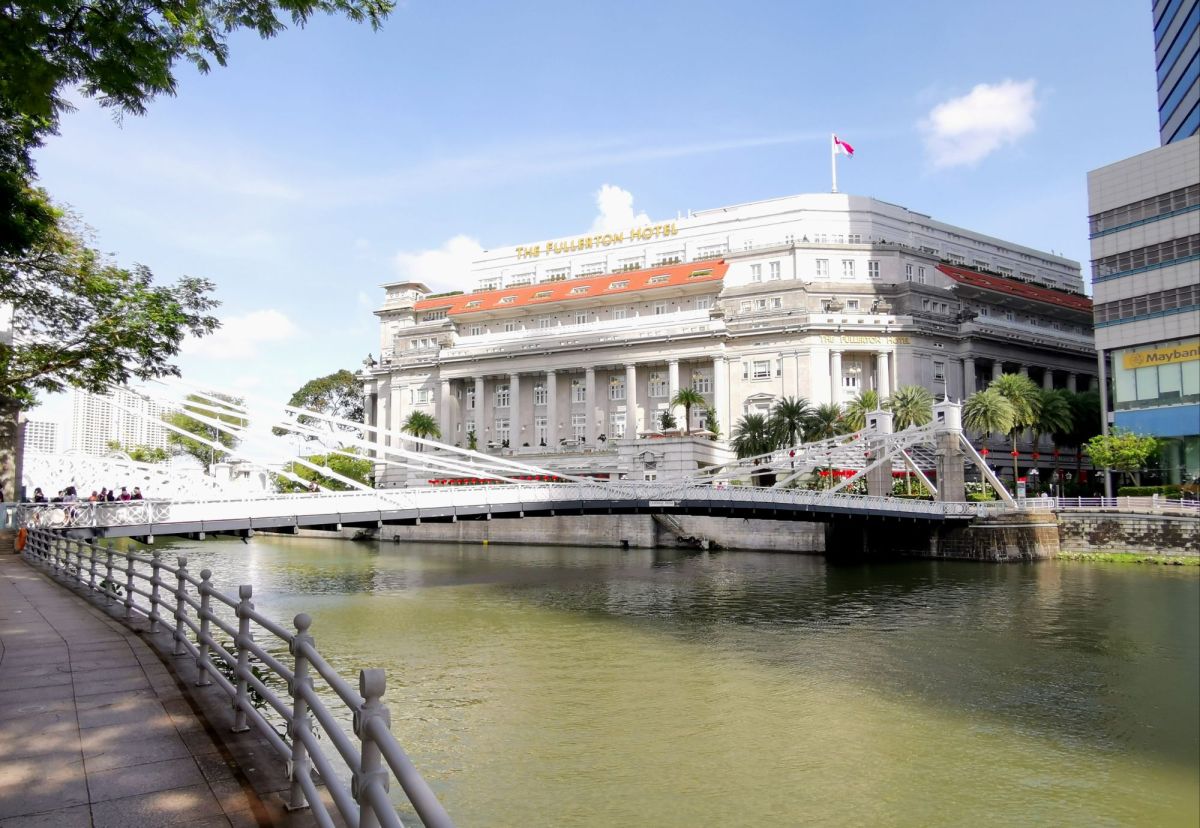
Further along the river is the former Fullerton Building. Once the General Post Office and an important administrative centre during the colonial era, it now serves as the luxurious Fullerton Hotel. Its transformation reflects Singapore’s approach to development: preserving historical architecture while giving old buildings new life.
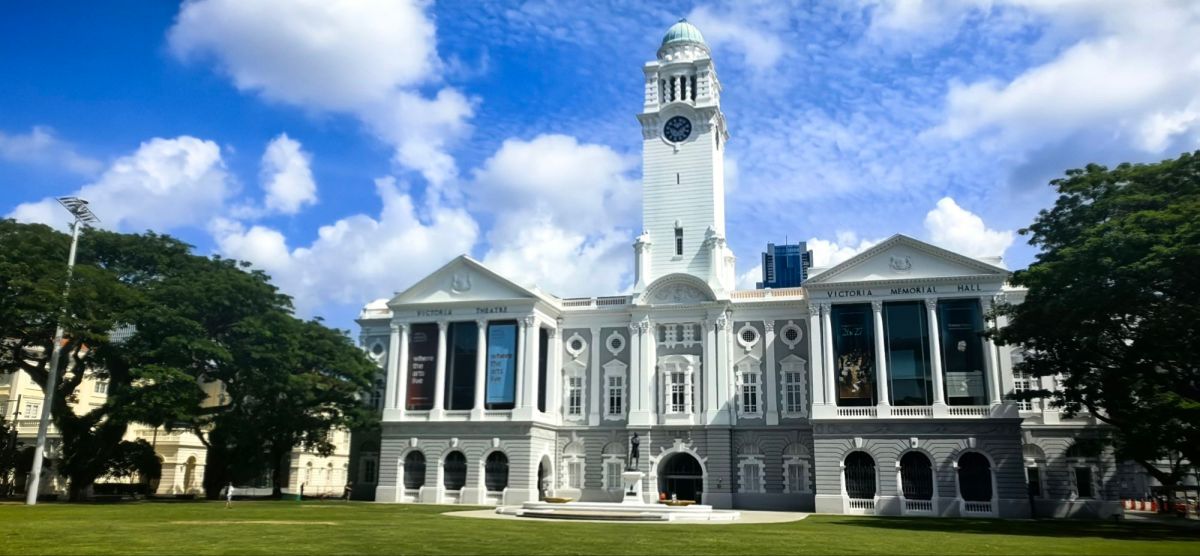
Not far away, Victoria Theatre and Victoria Concert Hall continue to host performances more than a century after they were built in 1905 as the Victoria Memorial Hall, which was erected to commemorate the death of Queen Victoria. The name “Victoria” appears throughout Singapore because of its history as a British colony. The clock tower remains one of the familiar landmarks along the river, quietly linking the colonial past with the cultural life of present-day Singapore.
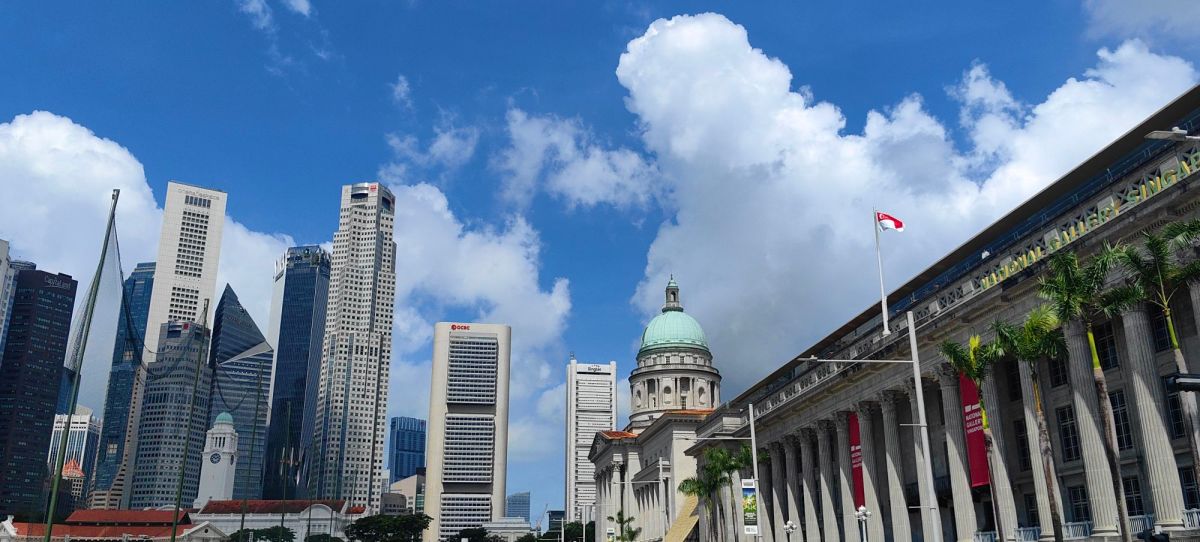
What fascinates me most is the contrast. Within a few minutes’ walk, I can move from nineteenth-century colonial buildings to some of the most futuristic skyscrapers in Asia. When I stand in front of the lawn in City Hall, I had a panoramic view of the city. On one side stand the grand colonial buildings: the Old Supreme Court and the former Parliament House which are reminders of the British era. On the other side rises a completely different Singapore: a skyline of glass, steel, and ambitious architecture built after the nation became independent in 1965.
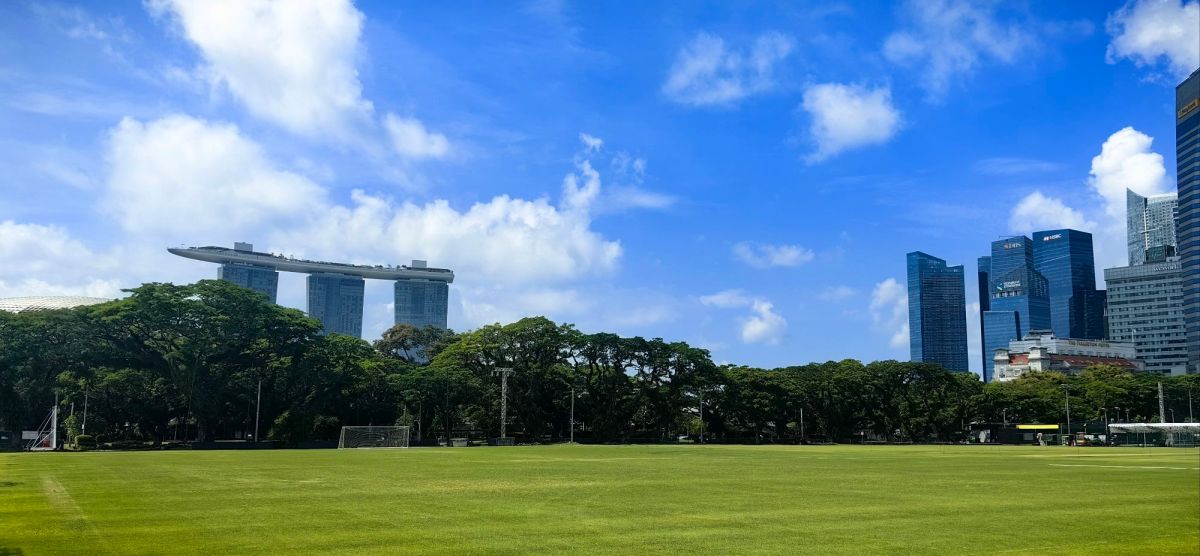
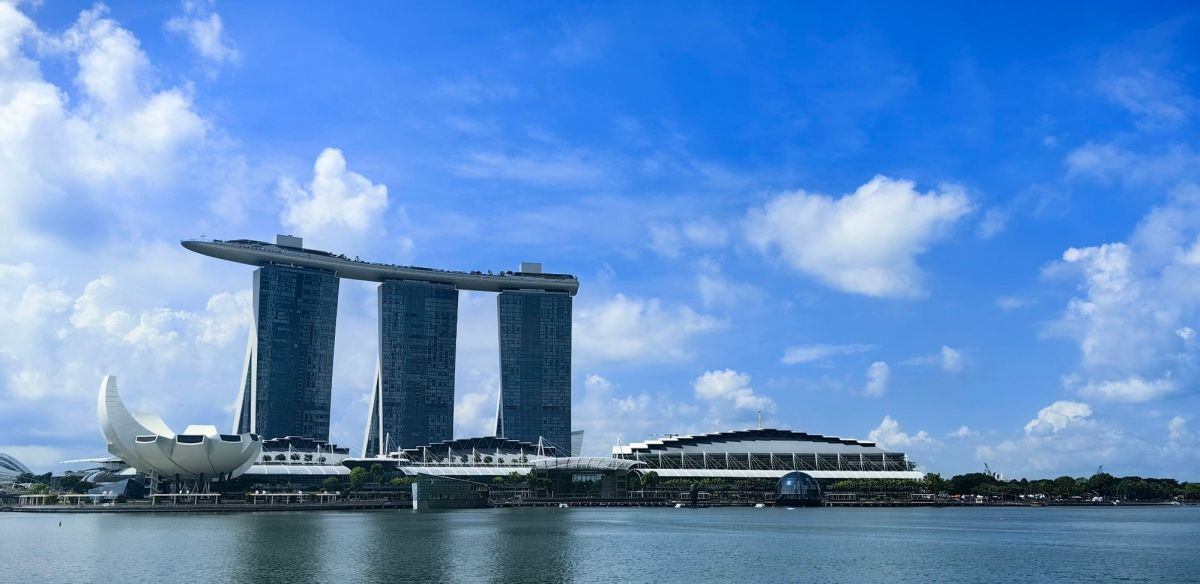
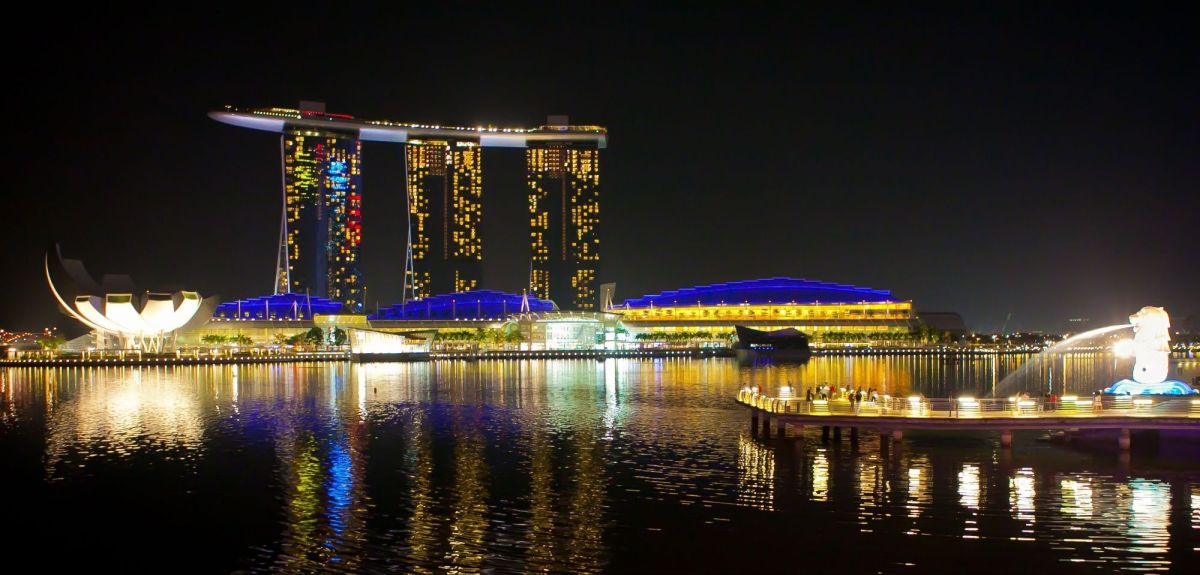
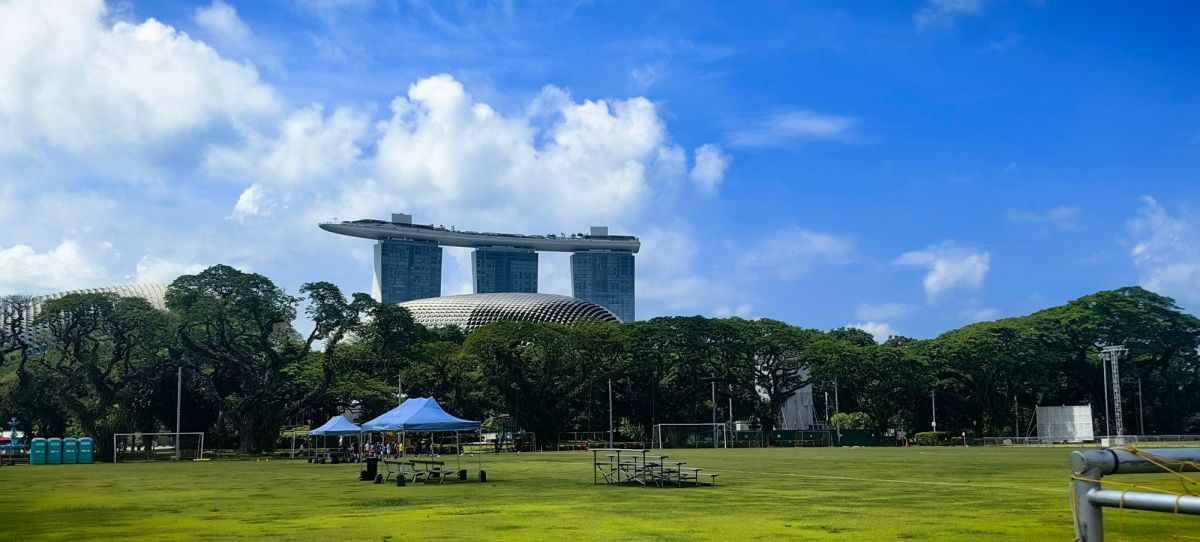
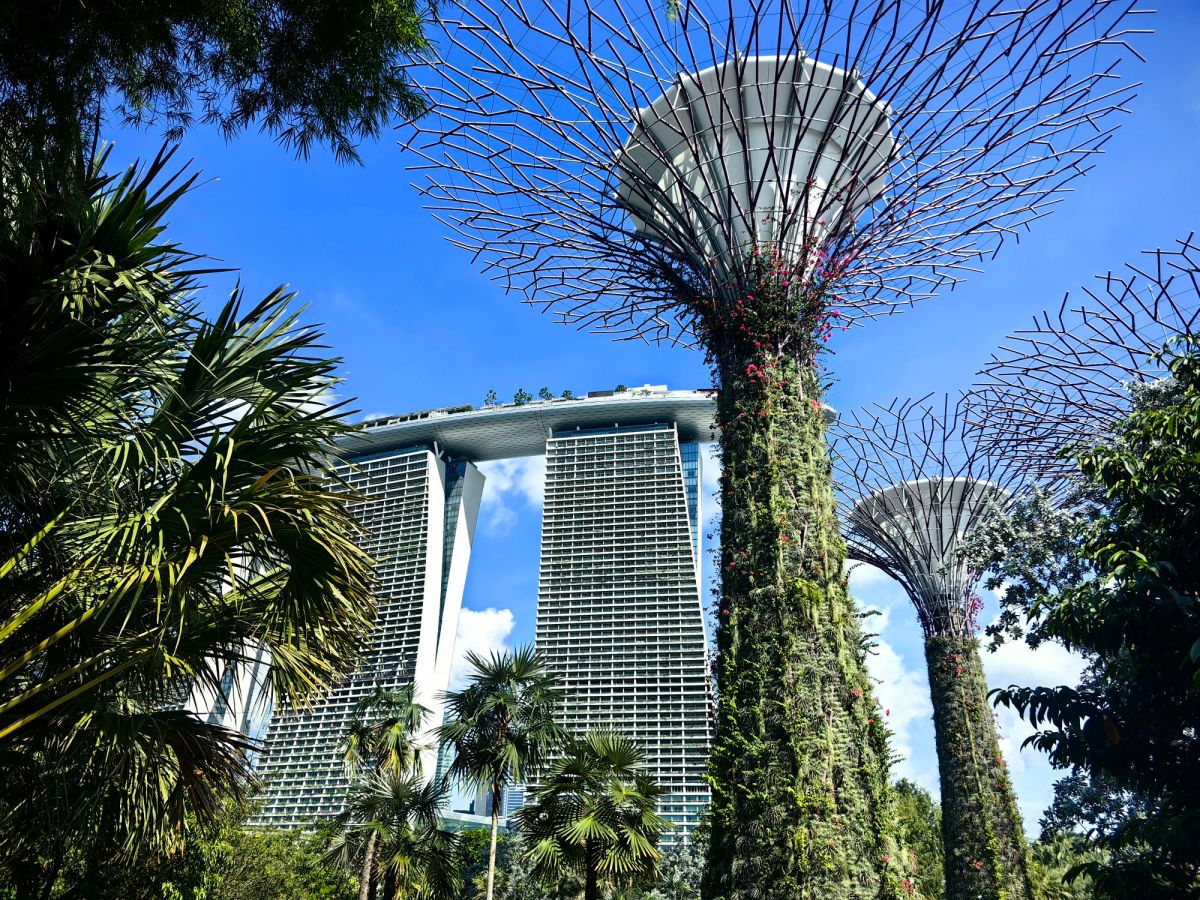
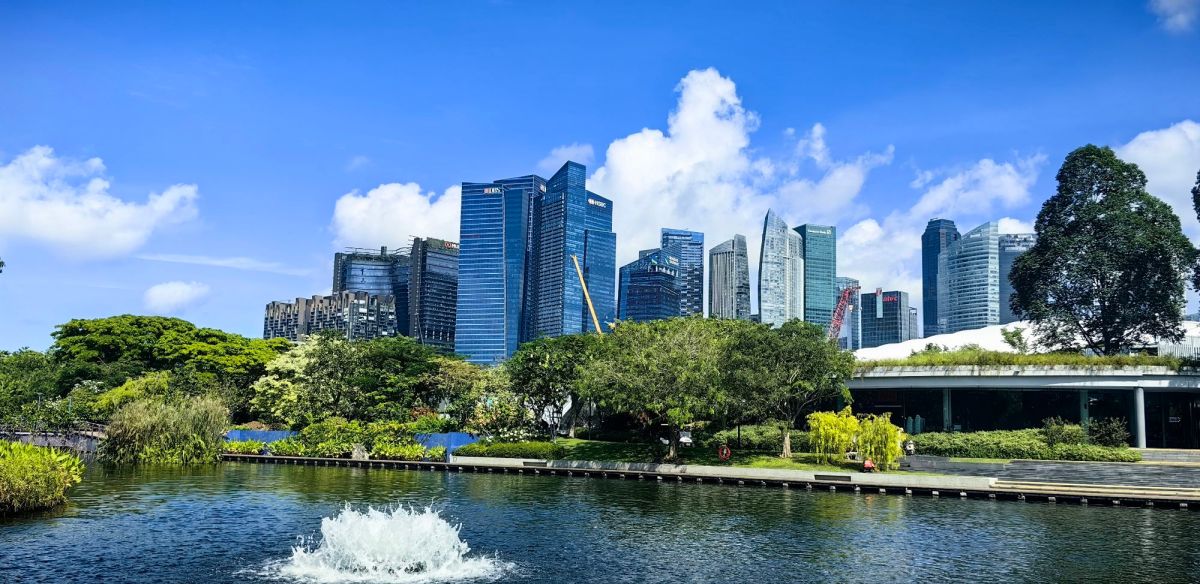
Once upon time, Marina Bay was far less developed. Some of today’s most famous landmarks did not exist. Over the years, I watched new buildings rise, new parks appear, and the waterfront gradually become recognizable cityscapes in the world. One of the most striking symbols of this transformation is the Marina Bay Sands built around 2010. Rising above the skyline of Marina Bay, it is one of Singapore’s most recognizable architectural masterpieces. Three elegant glass towers stand side by side, appearing like giant pillars reaching toward the sky. Resting across their summits is a remarkable structure that resembles a sleek ship floating high above the city. Every tourist will take a photo together with this building to memorize their trips of Singapore.
Standing along Marina Bay, the view is especially striking at night. Its illumination shimmer against the skyline, while music often drifts from the outdoor stages. From the seaside promenade, visitors can enjoy sweeping views of the bay, the illuminated city’s skyscrapers, and the sparkling surrounding landmarks.
The Esplanade (Theatres on the Bay) has the nick name “Durian” due to its shape. The building is so recognizable because of its two distinctive domes covered with more than 7,000 triangular aluminum sunshades. Opened in 2002 along the Marina Bay waterfront, it makes the arts accessible to everyone. Throughout these years, it hosts hundreds of free performances ranging from local bands and traditional music to dance and school performance.
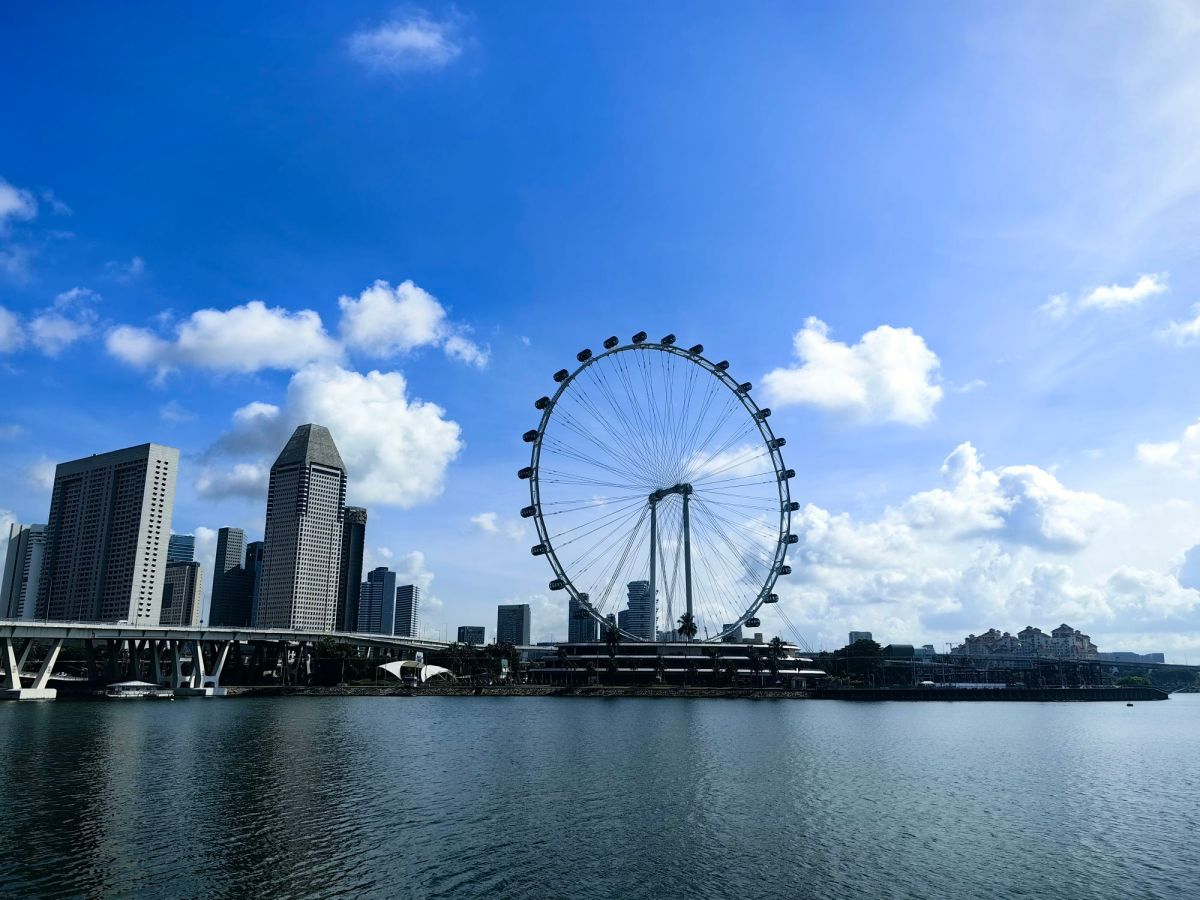
The Singapore Flyer which looks like the London Eyes is another quite recognizable landmarks and one of the world’s tallest observation wheels, standing 165 meters high. Completed in 2008, the Singapore Flyer was designed to symbolize the nation’s ambition and confidence as a modern global city. From a distance, its elegant circular form has become an iconic feature of the Marina Bay skyline.
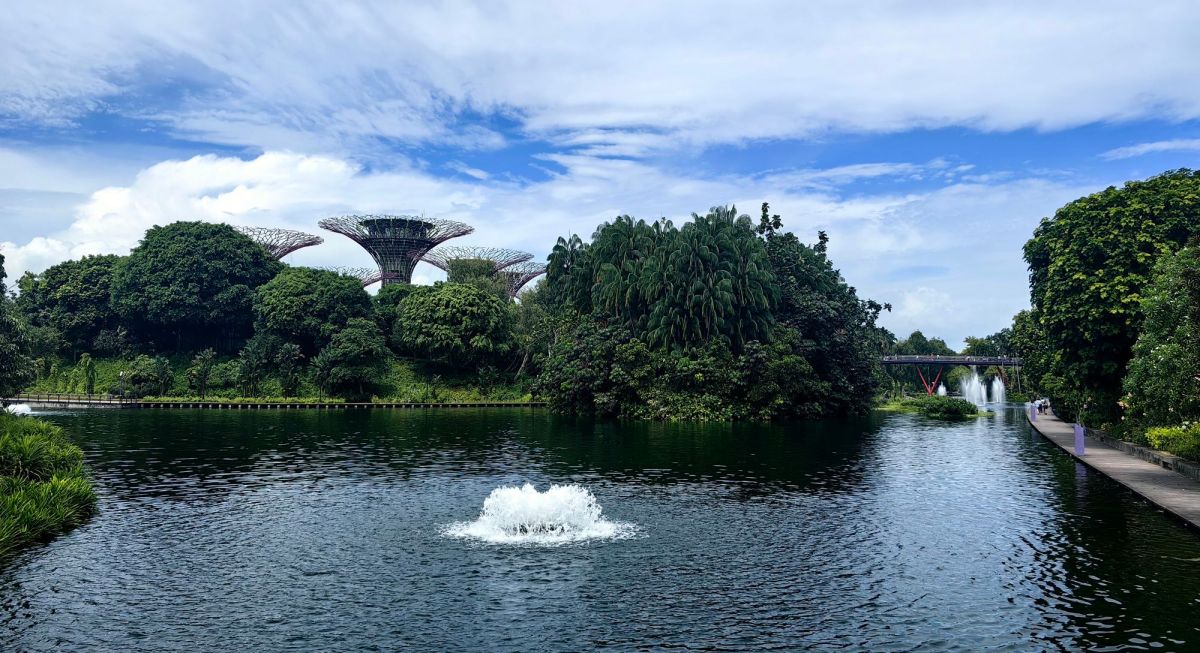
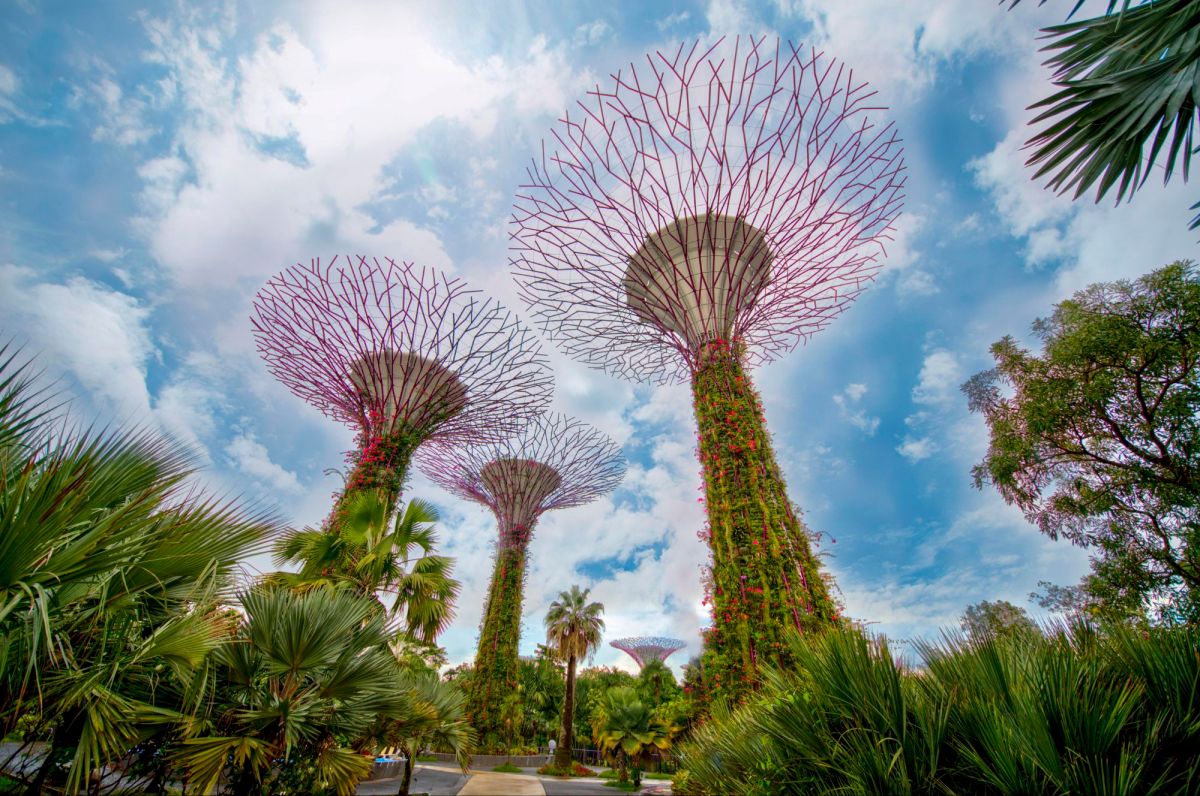
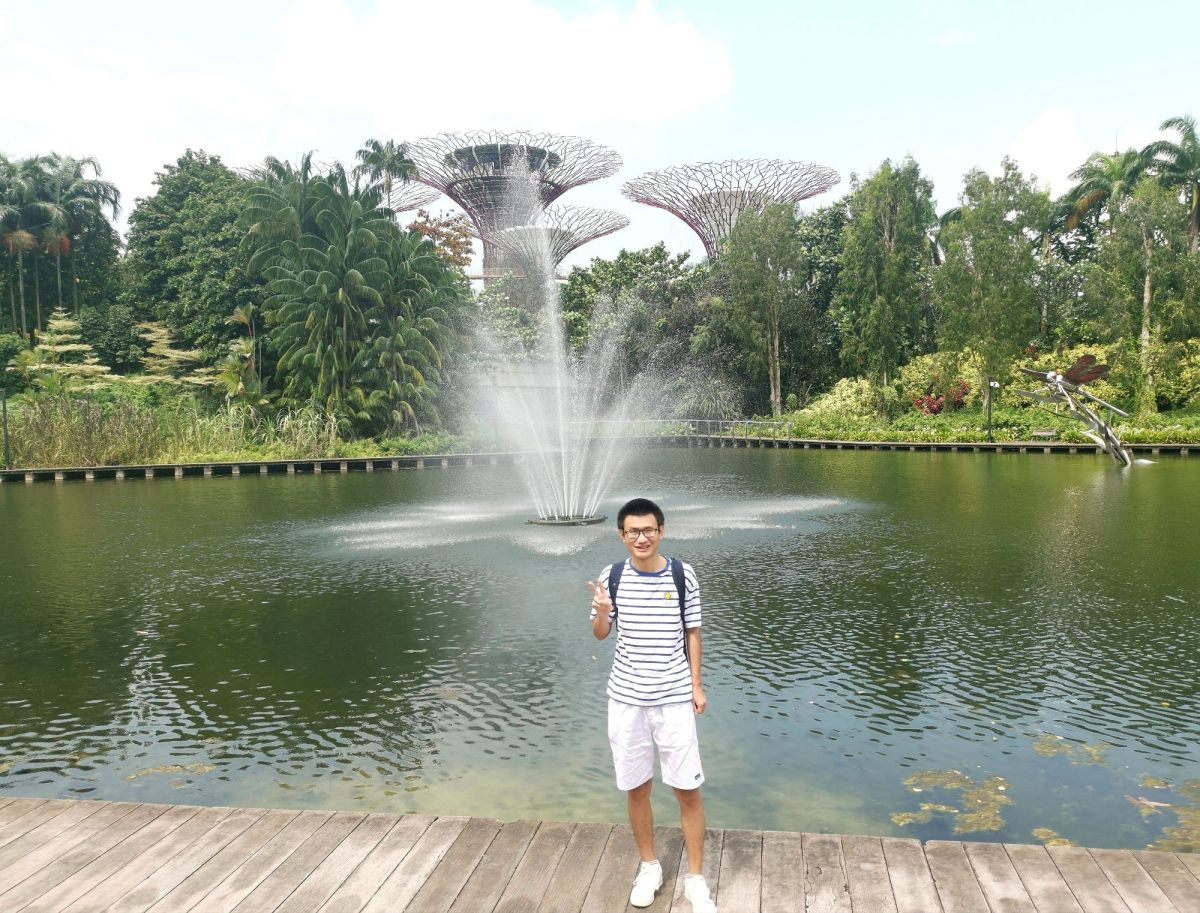
On the opposite side of Marina Bay stands the Garden by the Bay. The giant Supertrees, futuristic conservatories, and waterfront gardens show a vision of Singapore that goes beyond simple urban development. Instead of choosing between a modern city and nature, Singapore tried to combine both. This was one of the things that impressed me most over the years. Even as new skyscrapers appeared in the city center, greenery remained an essential part of the city.
Whenever I walk through the gardens today, I think about how much Singapore has changed since my first arrival. Every time I raised my head, and I would watch new landmarks rise, new buildings emerge, and the skyline continually evolve. Gardens by the Bay is perhaps the clearest symbol of that transformation.
The most iconic feature in this garden is undoubtedly the Supertree Grove. Rising between 25 and 50 meters above the ground, these towering steel structures resemble giant trees from a science-fiction world. Covered with thousands of orchids, ferns, bromeliads, and other tropical plants, they are not merely sculptures but living vertical gardens.
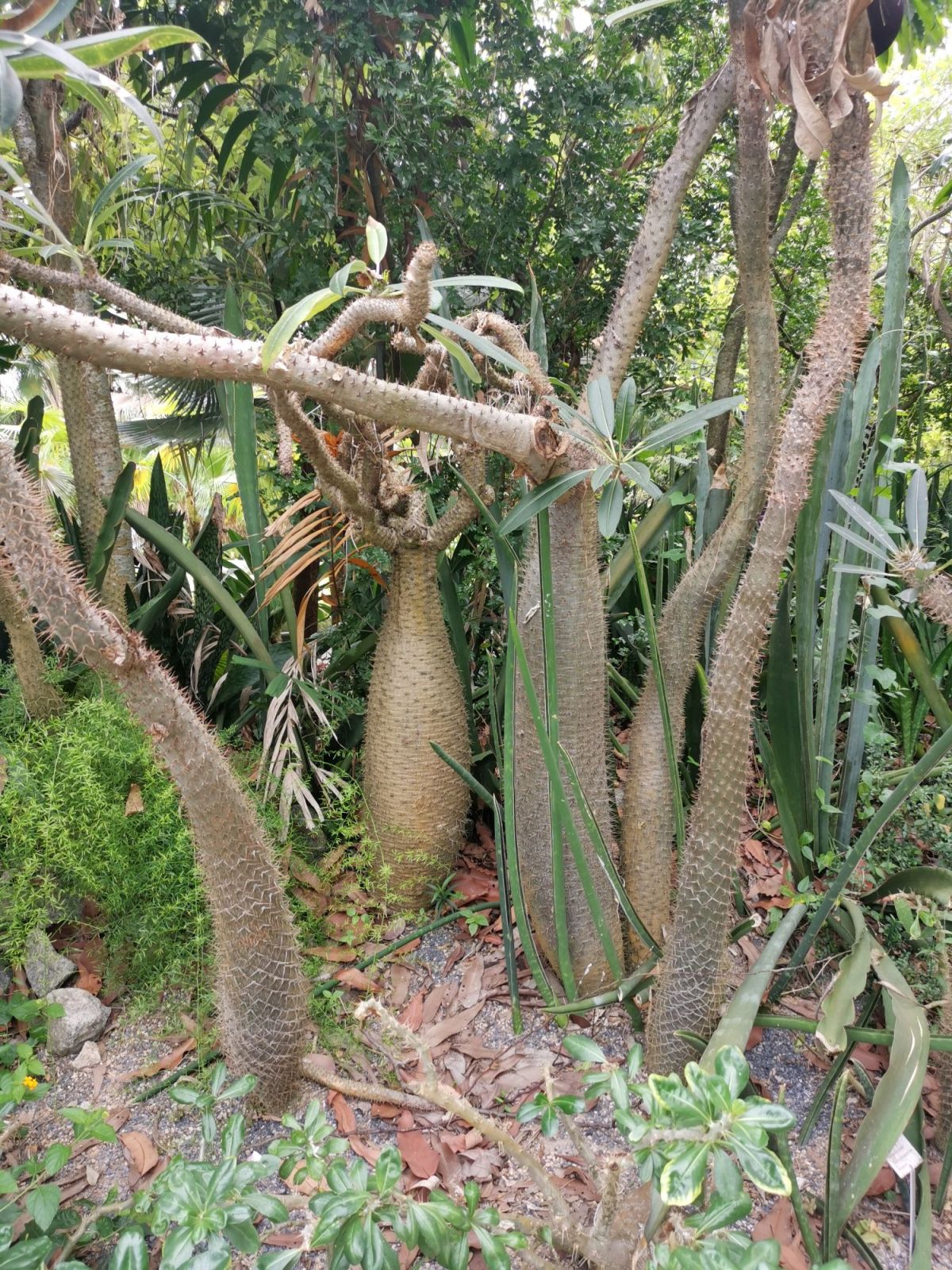
The extraordinary diversity of plants fascinated me as well. I had never imagined that a single garden could bring together vegetation from so many different climates and continents. I felt like walking through a living museum of the world’s most unusual plants like Madagascar Palm, Baobab Trees, Nepenthes…
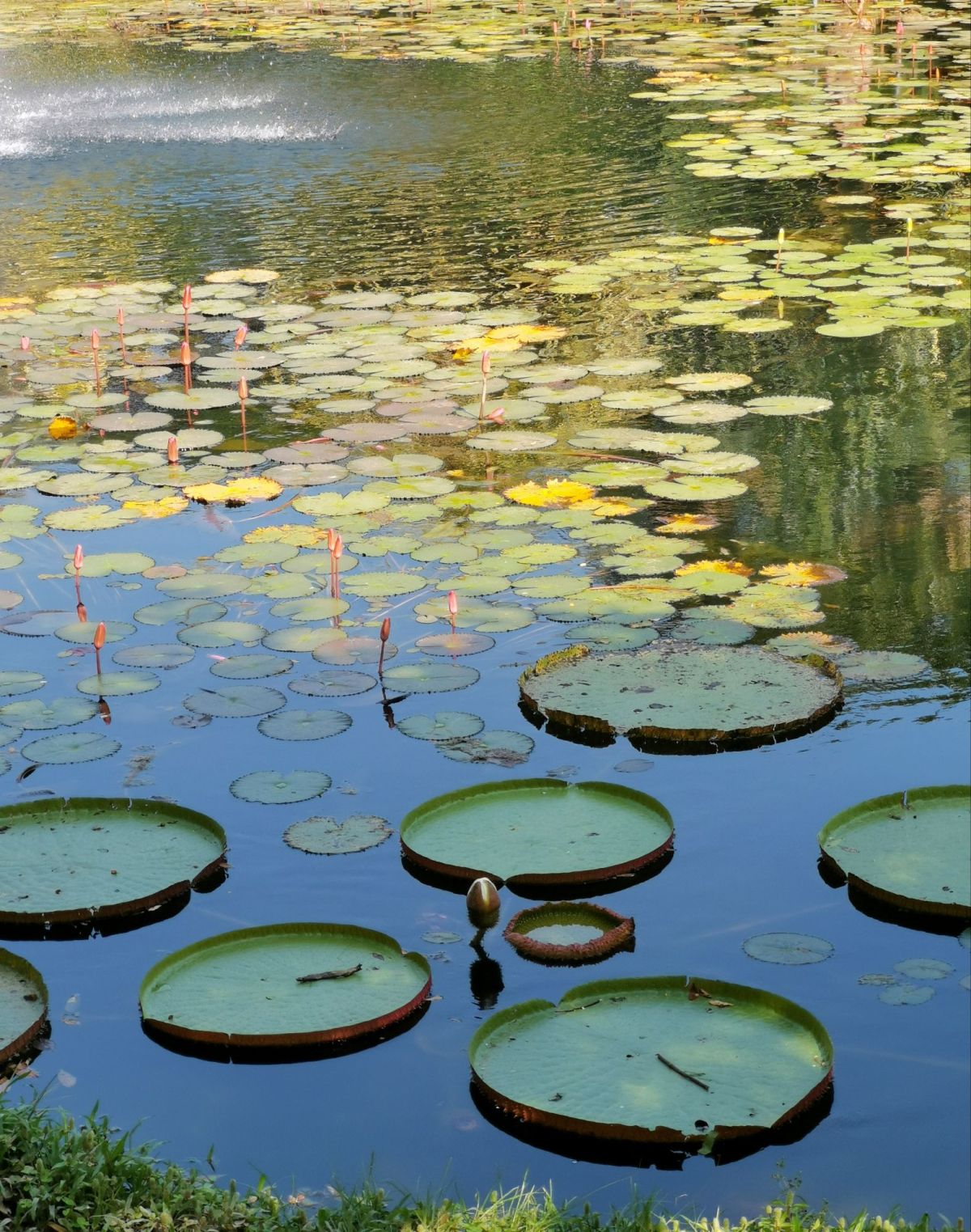
The outdoor gardens and lakes are home to elegant Amazon water lilies, one of my favorite sights. They are the most eye-catching aquatic plants. Their broad, circular leaves float effortlessly on the still water, while delicate flowers bloom in shades of white and pink. On calm mornings, the flowers are perfectly reflected on the water’s surface, creating a scene that feels almost like a landscape painting of Claude Monet.
I enjoy walking along the seaside of Marina Bay. The skyline changed continuously during the years that I was growing up here. As a secondary school student, I learned Singapore’s history from textbooks. As an adult, I saw those chapters reflected in the city itself, from the colonial buildings around City Hall to the futuristic towers of Marina Bay. That is why these areas remains one of my favorite places. Within a single walk, I can move through more than two centuries of history and, at the same time, see a glimpse of the future that the city is still trying to build.
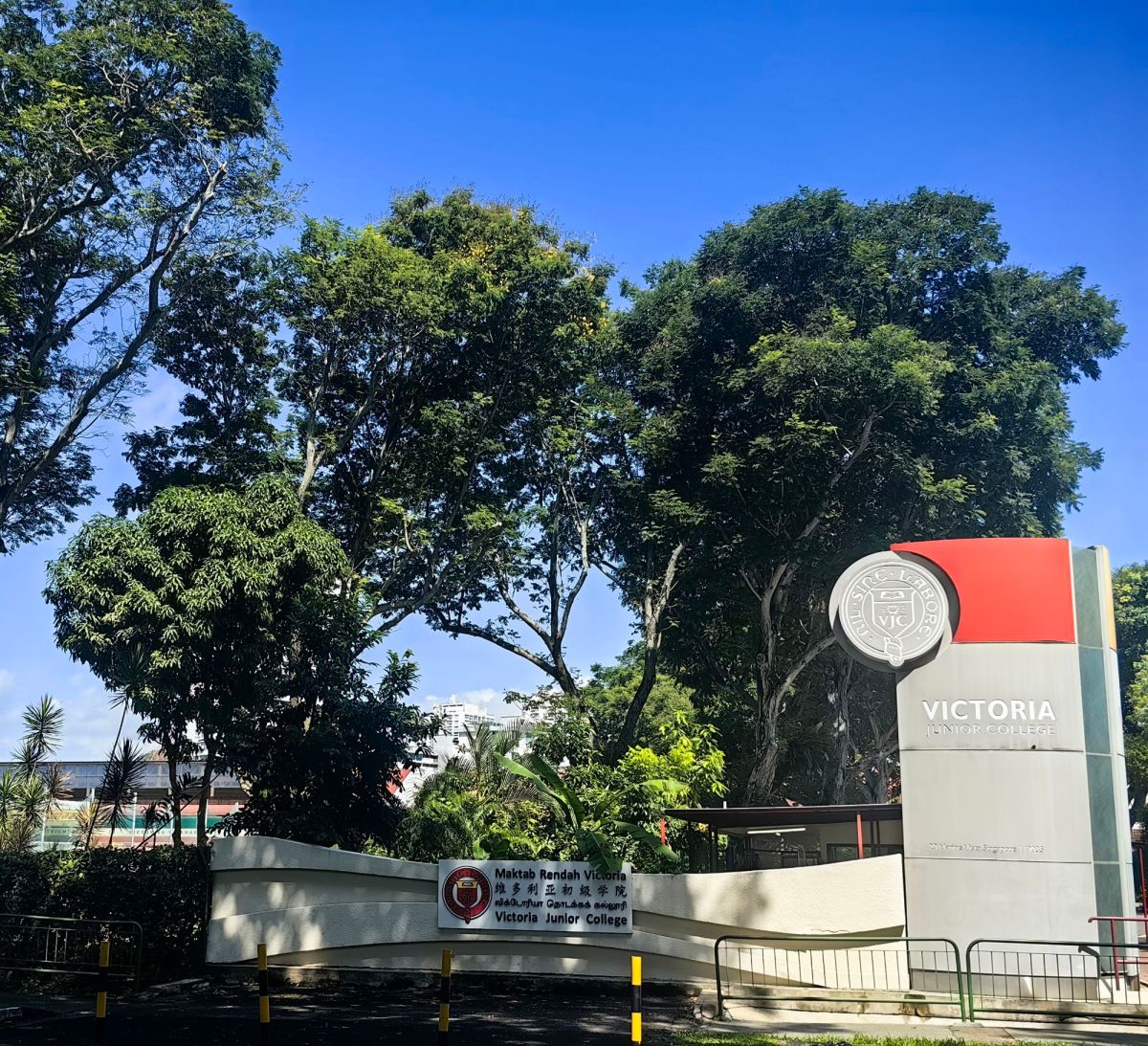
After O level exam, I entered the Victoria Junior College in 2008. For many students in Singapore, junior college is one of the next stages of education similar to pre-university school. The two years preparing for the A Levels often feel intense, because the results influence which university and path may open afterward. Looking back, my time at Victoria Junior College was one of the most demanding periods of my student life, but also one of the most memorable.
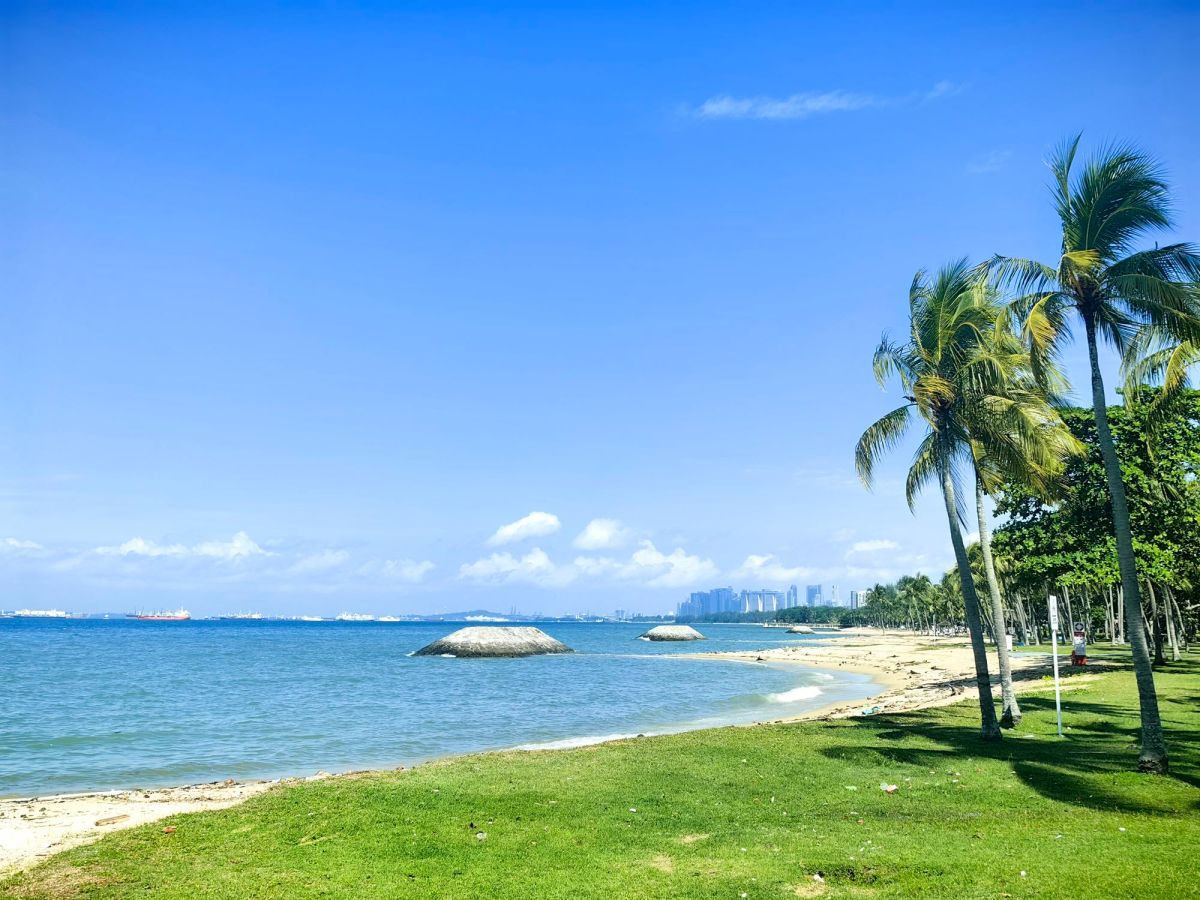
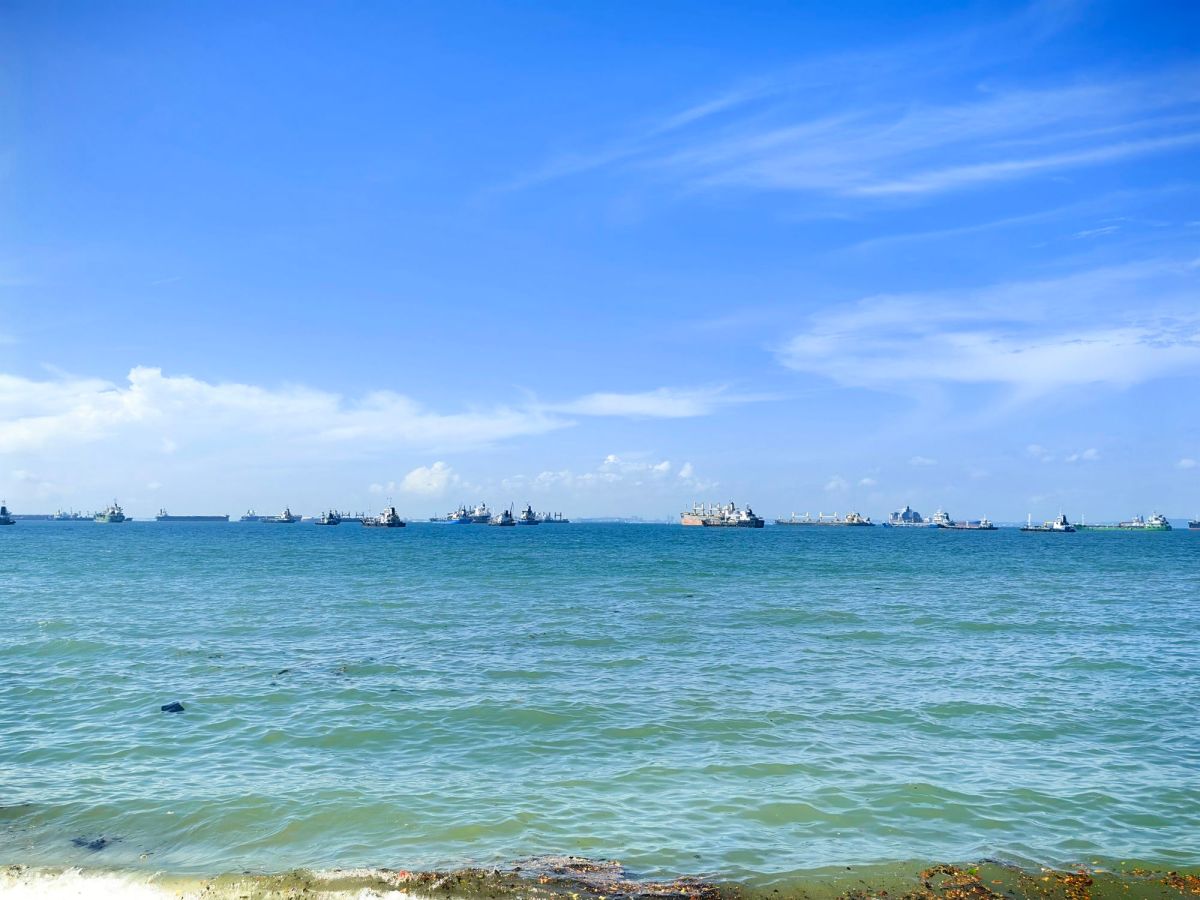
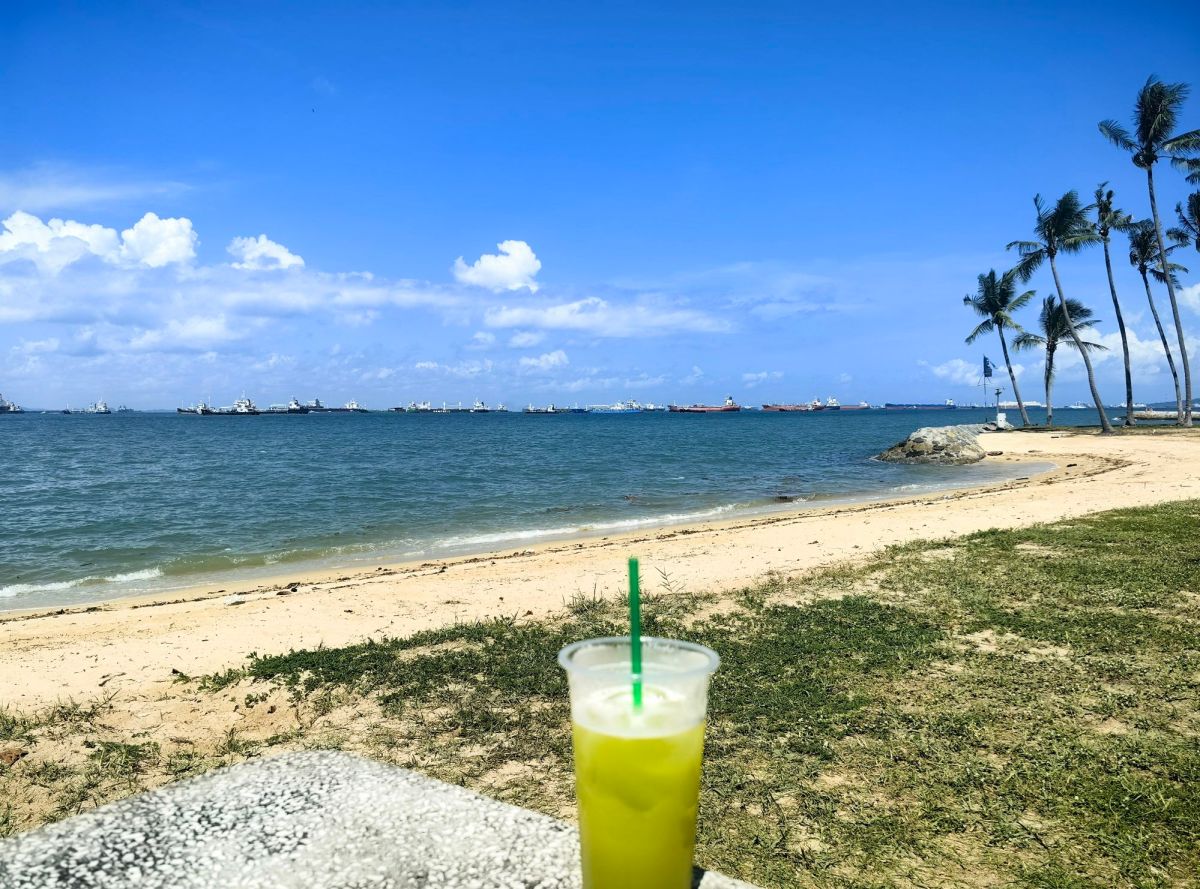
The campus was just five minutes’ walk distance from the East Coast, and that proximity changed the rhythm of life. Unlike the dense urban image many people have of Singapore, my memories of those school days are filled with open skies and the blue sea which is always my favorite landscape.
Life there required discipline and persistence. Weekdays were filled with lectures, tutorials, assignments. On some afternoons, after classes ended, I could see the blue water stretching into the distance. I would walk along the East Coast promenade beneath rows of coconut trees. The sea breeze softened the heat of the day, and for a while the pressure of studying seemed to drift away with the sound of the waves.
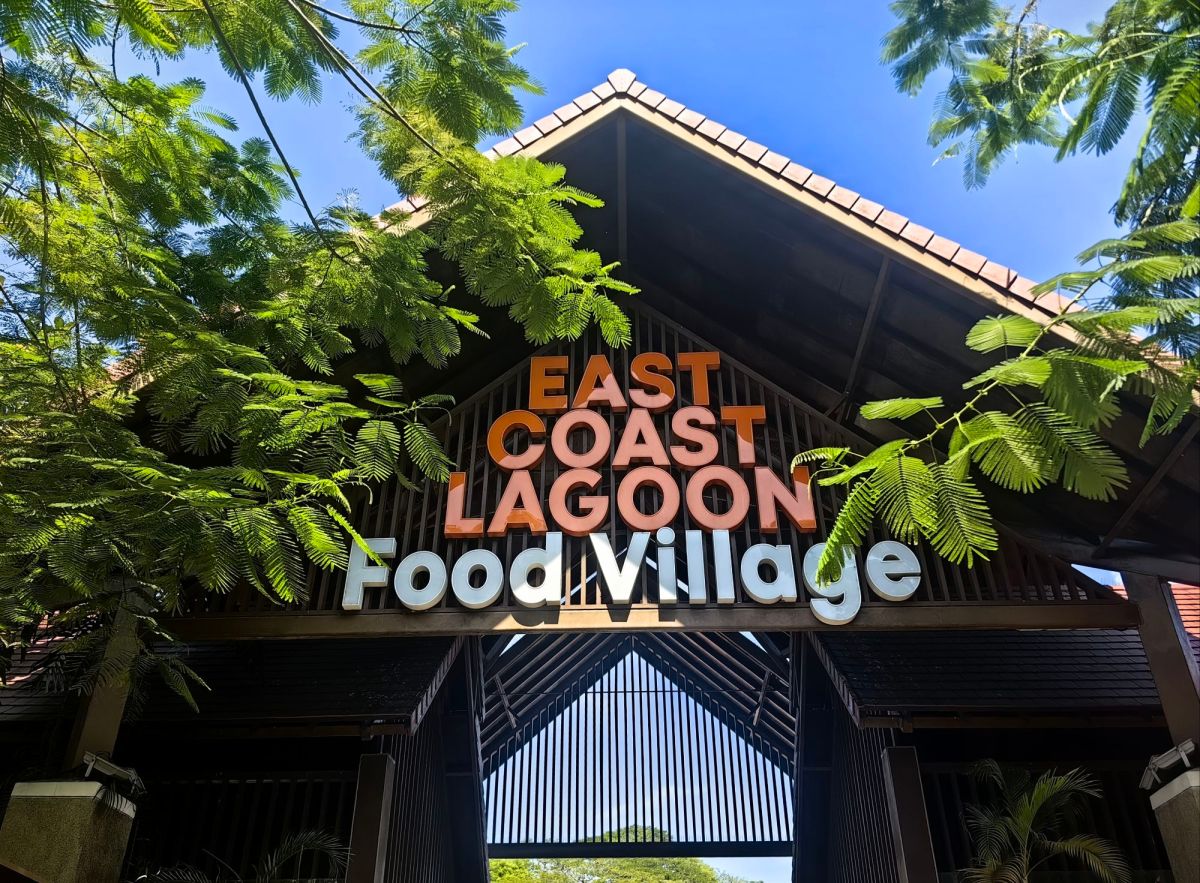
Weekends felt like small rewards after a week of studying. Sometimes I went with friends to the East Coast food village. We would sit together eating freshly fried chicken wings and drinking cold coconut juice while talking about school, exams and future plans. Other times, we rented bicycles and rode along the coastline. With the sea breeze greeting me and the wheels rolling along the coastal path, those simple, carefree moments remain to this day among my most cherished memories of my junior college years.
At the time, those moments felt ordinary. We rarely thought they would become memories worth keeping. But now, even years after graduation, when I think back to that period, what returns first is not exam scores. I remember the sea reflecting the evening light, the rows of coconut trees, the laughter of friends over simple food, and the feeling of freedom hidden inside a busy student life.
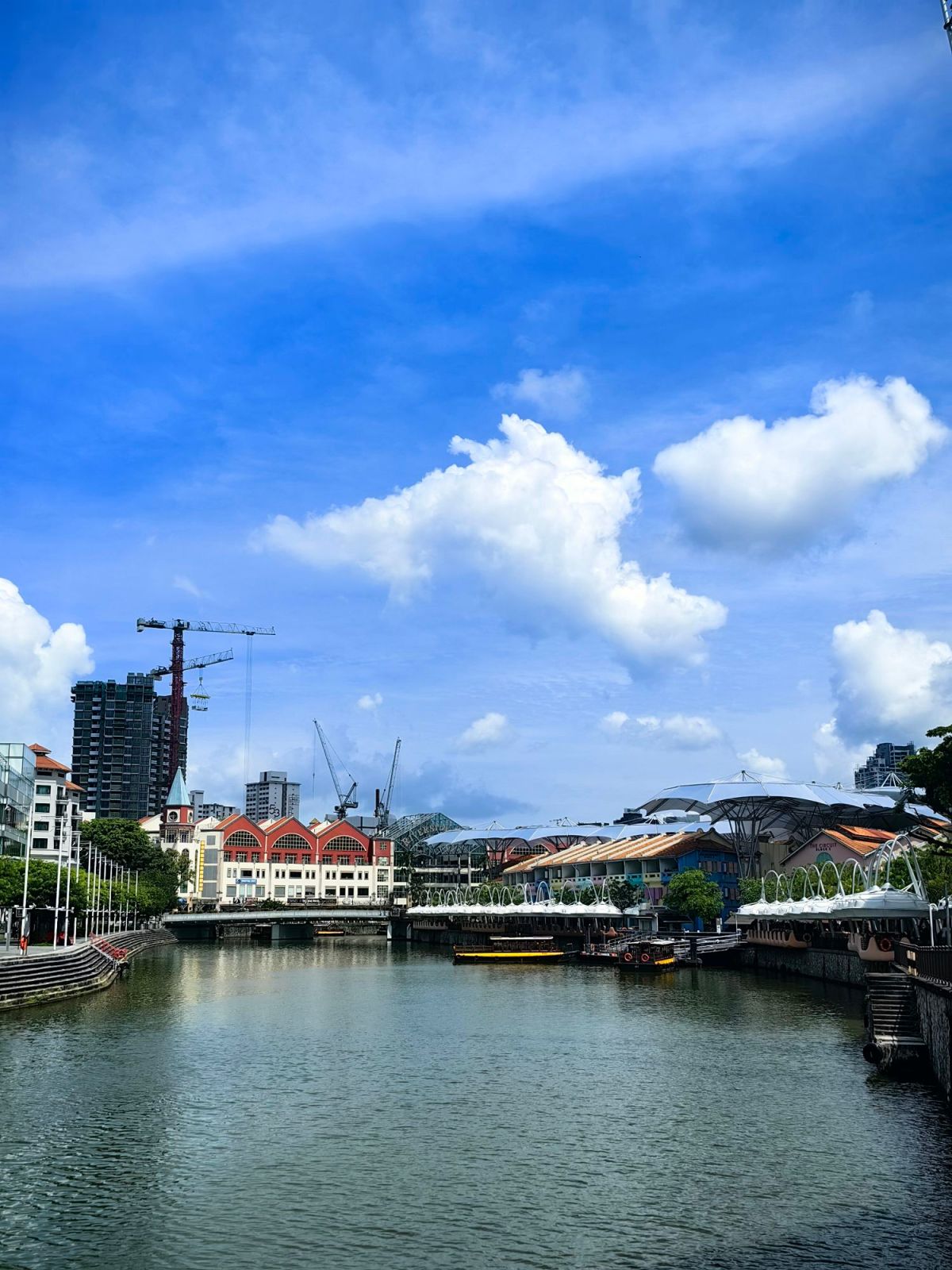
After the end of A-Level examinations in Dec 2009, life suddenly slowed down. There was 7 months gap before university started. Like many students, I took the opportunity to experience working life. I found a part-time job as a waiter in a hotel at the Clarke Quay, serving guests from all over the world. It was my first taste of earning my own salary and learning what it meant to be responsible in a professional environment. Standing for long hours, carrying trays, and serving customers was tiring, but it taught me lessons that could never be learned in a classroom.
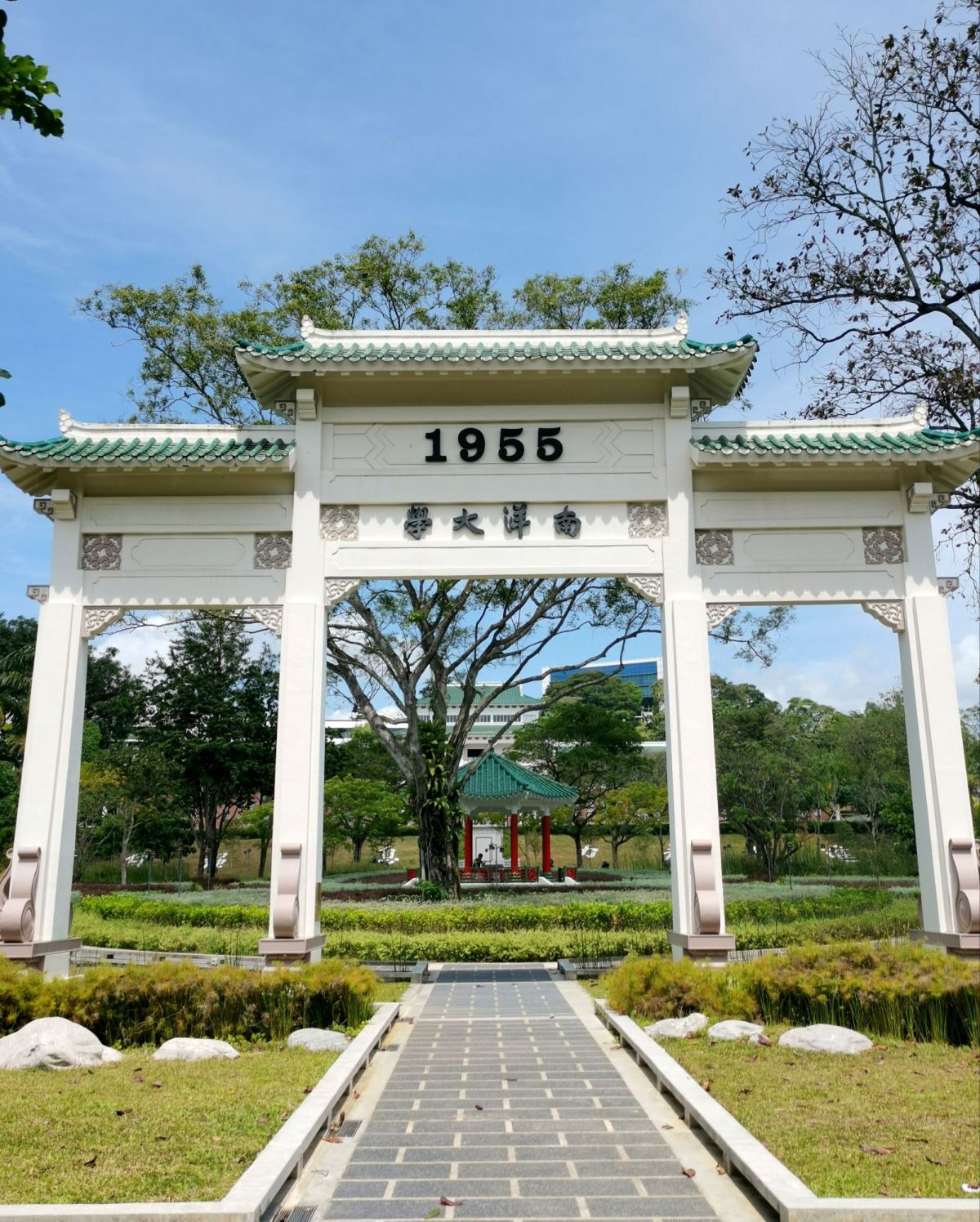
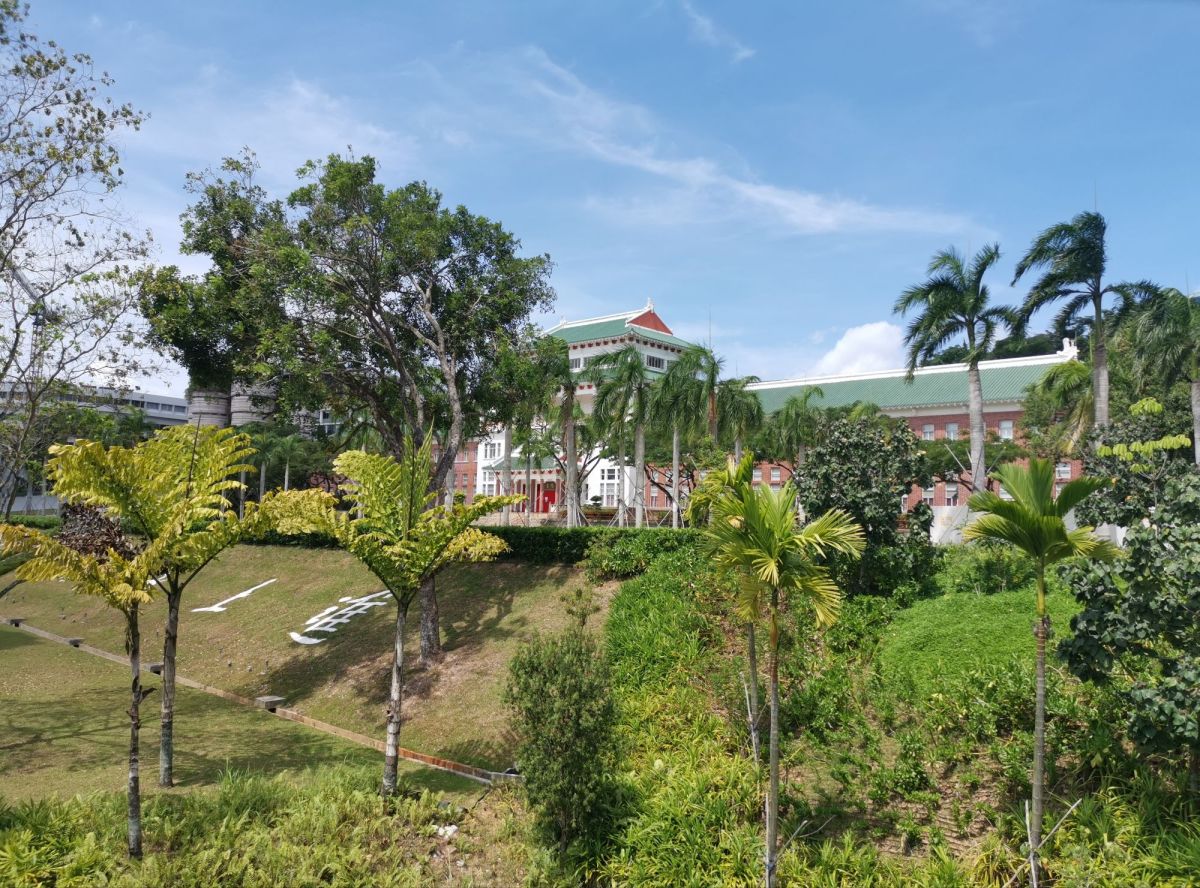
Looking back, those months formed a bridge between school and adulthood. In July 2020, I started my university life in Nanyang Technological University. Among all the places I studied in Singapore, it remains the most beautiful in my eyes. At the Yunnan garden stands the iconic memorial gate, one of the symbols linking the university to its origins. It traces back to Nanyang University, founded in 1955 through the vision and support of the Chinese community in Southeast Asia. The gate quietly connects the modern university with its historical roots.
Yunnan Garden carries a different atmosphere from the rest of the university. Designed in the style of a traditional Chinese landscape garden, it combines water, stone, bridges, trees, and carefully arranged spaces to create a sense of calm and balance. Walking there in the evening felt like stepping into another world. There were flowering plants throughout the seasons, quiet ponds reflecting the sky, shaded paths, and corners where students sat to read or simply enjoy the silence.
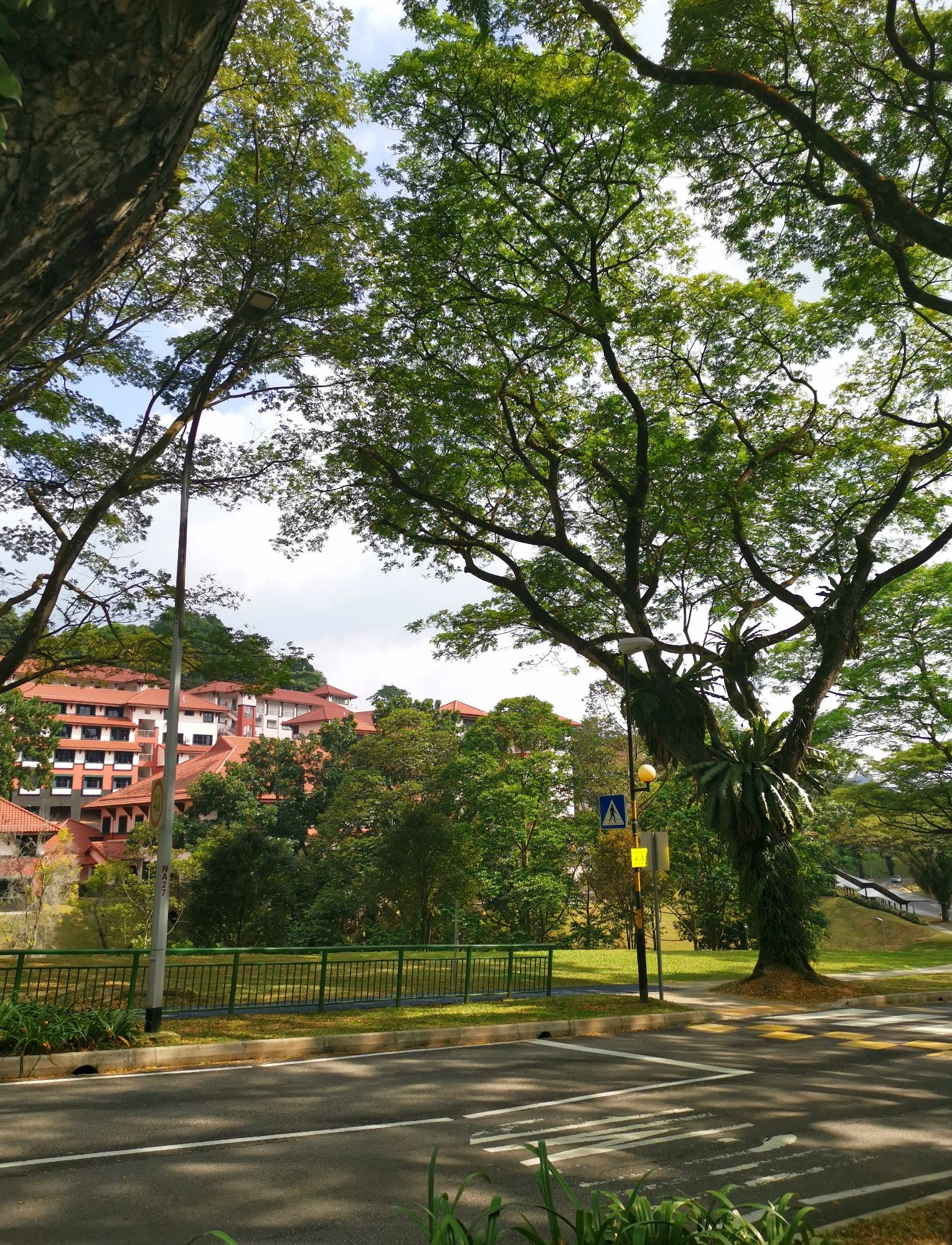
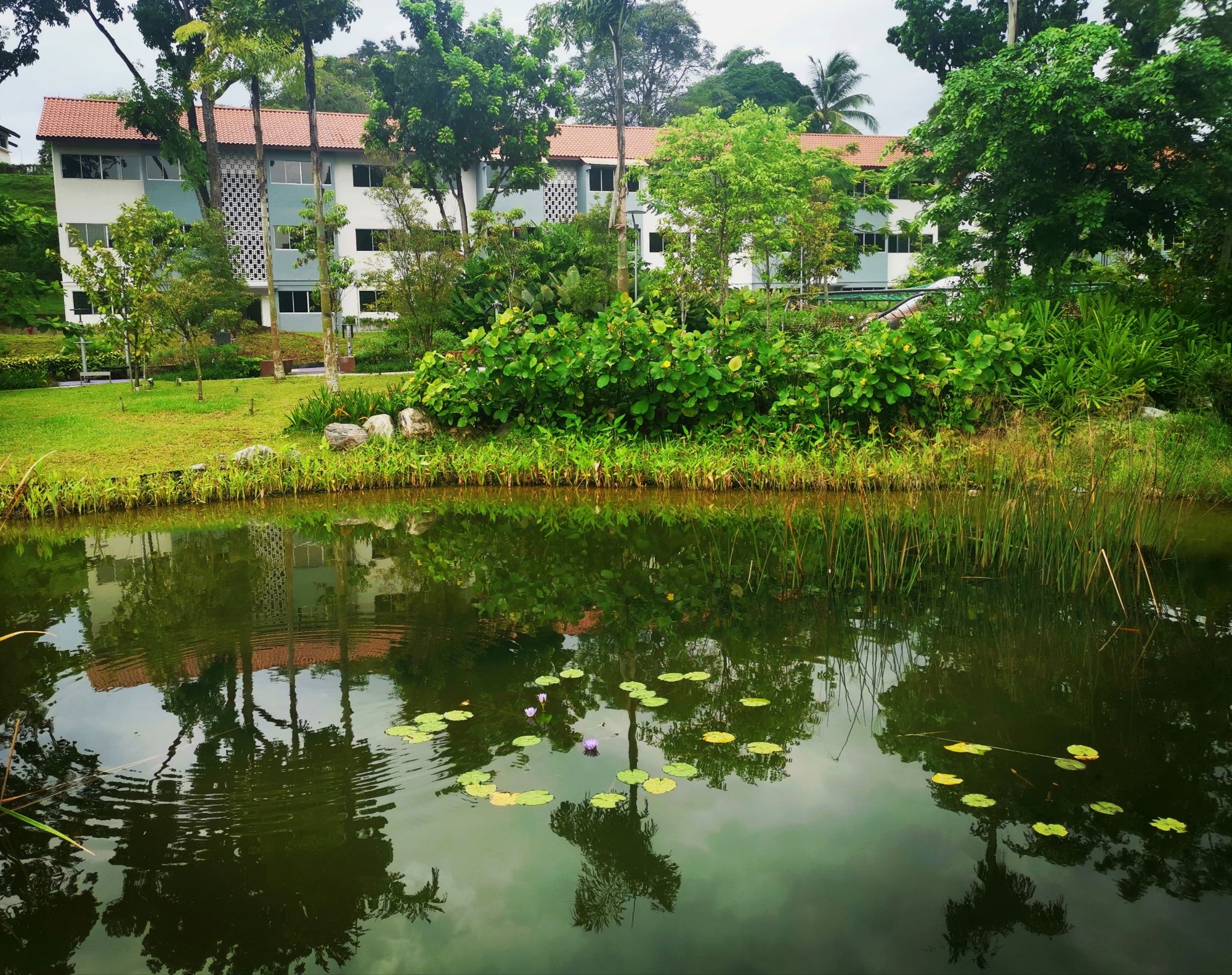
Unlike the dense urban landscape that many people associate with Singapore, the campus felt open and almost retreat-like. It was built on rolling land and surrounded by greenery. There were red-roofed residential halls scattered across the hills, small lakes reflecting the changing sky, tropical forests preserved between buildings, and gardens woven naturally into daily student life. In the mornings, the air often felt fresher than in the city, and after rain the scent of wet grass and trees lingered on the pathways.
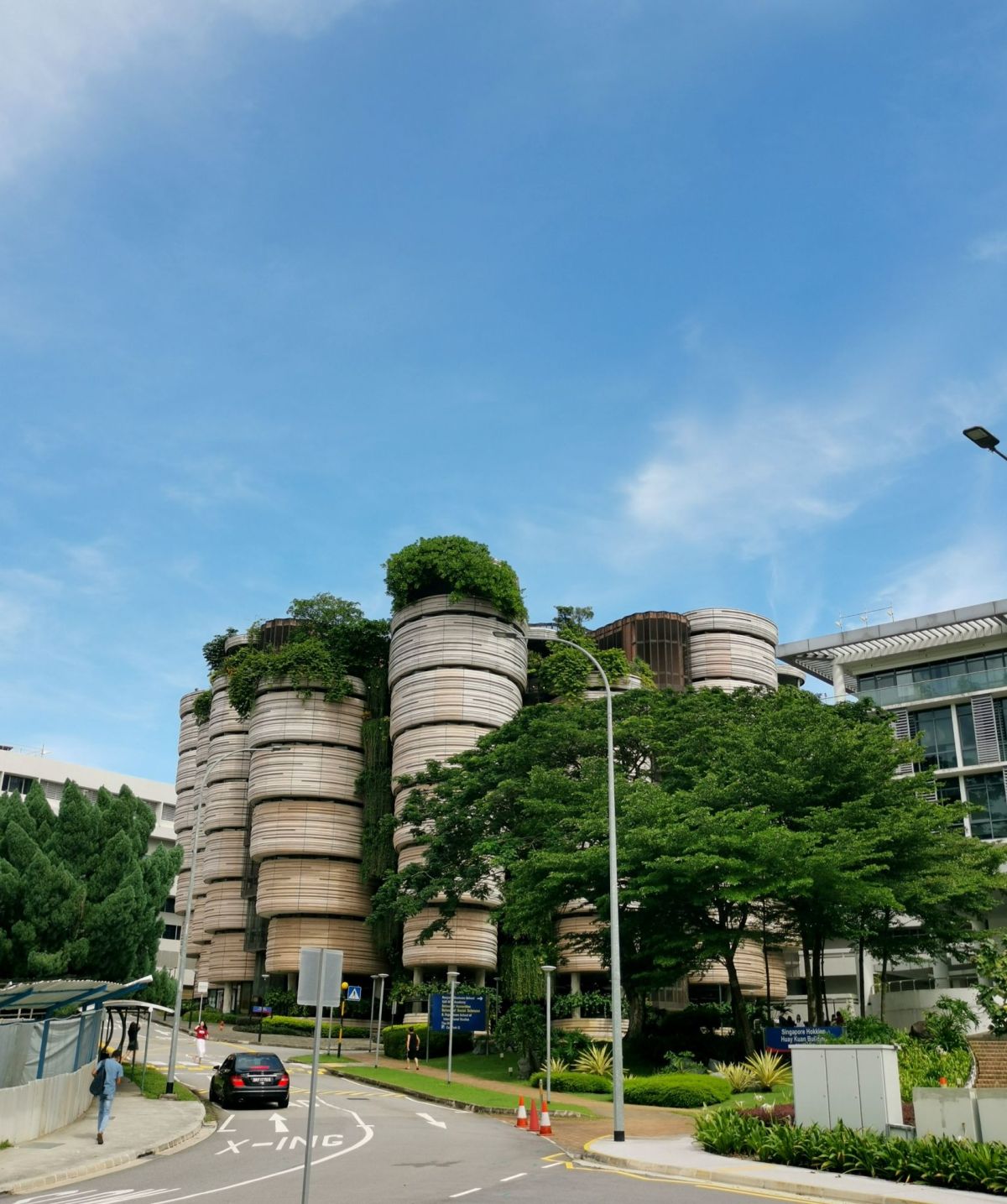
Today, many people associate NTU with The Hive which is the famous learning hub with its distinctive rounded towers that resembles beehives. It has surname ‘Xiaolongbao’ because it really looks like bamboo steamers of xiaolongbao stacked together. It has become one of the university’s most recognizable landmarks and appears in countless photographs. Yet it was completed after I had already graduated, so my memories belong to an earlier NTU. When I return and see The Hive standing there now, it feels like seeing a younger generation’s version of the university.
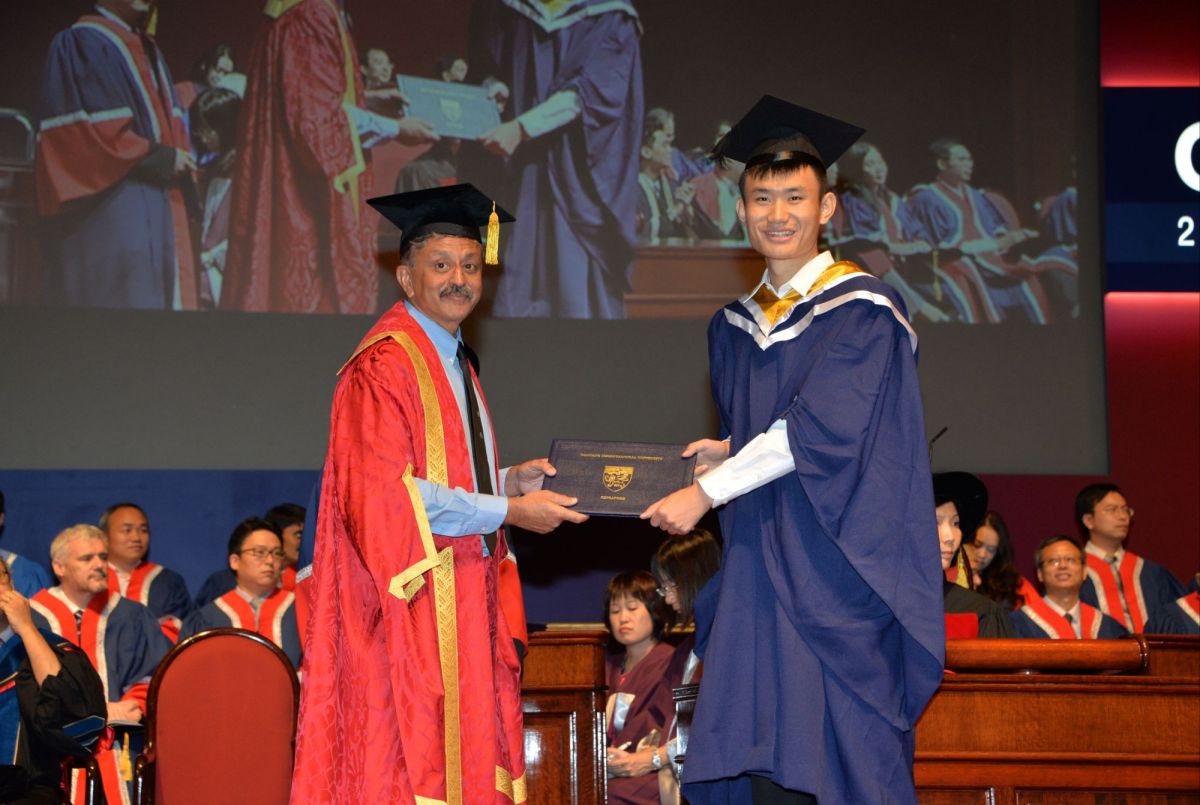
For me, I spent 8 years studying in Singapore. Finishing secondary school led to junior college, finishing A Levels led to university. But graduation in NTU marked something more final, it marked the transition from adolescence into adulthood. It was the end of nearly a decade of studies and the beginning of working life. Standing at the graduation ceremony in July 2014 in graduation robes, I realized that Singapore had quietly become more than a place where I came to study. It had become the place where I grew up.
Graduating from Nanyang Technological University marked the end of my years as a student, but it also marked the beginning of a new chapter in my life. For the first time, I entered the workforce and began building a career in Singapore. The island that had once been a place of study gradually became the place where I lived, worked, and planned my future. As the years passed, I became a Singapore Permanent Resident, and later, a Singapore citizen. For so many years, what impresses me most is its environment.
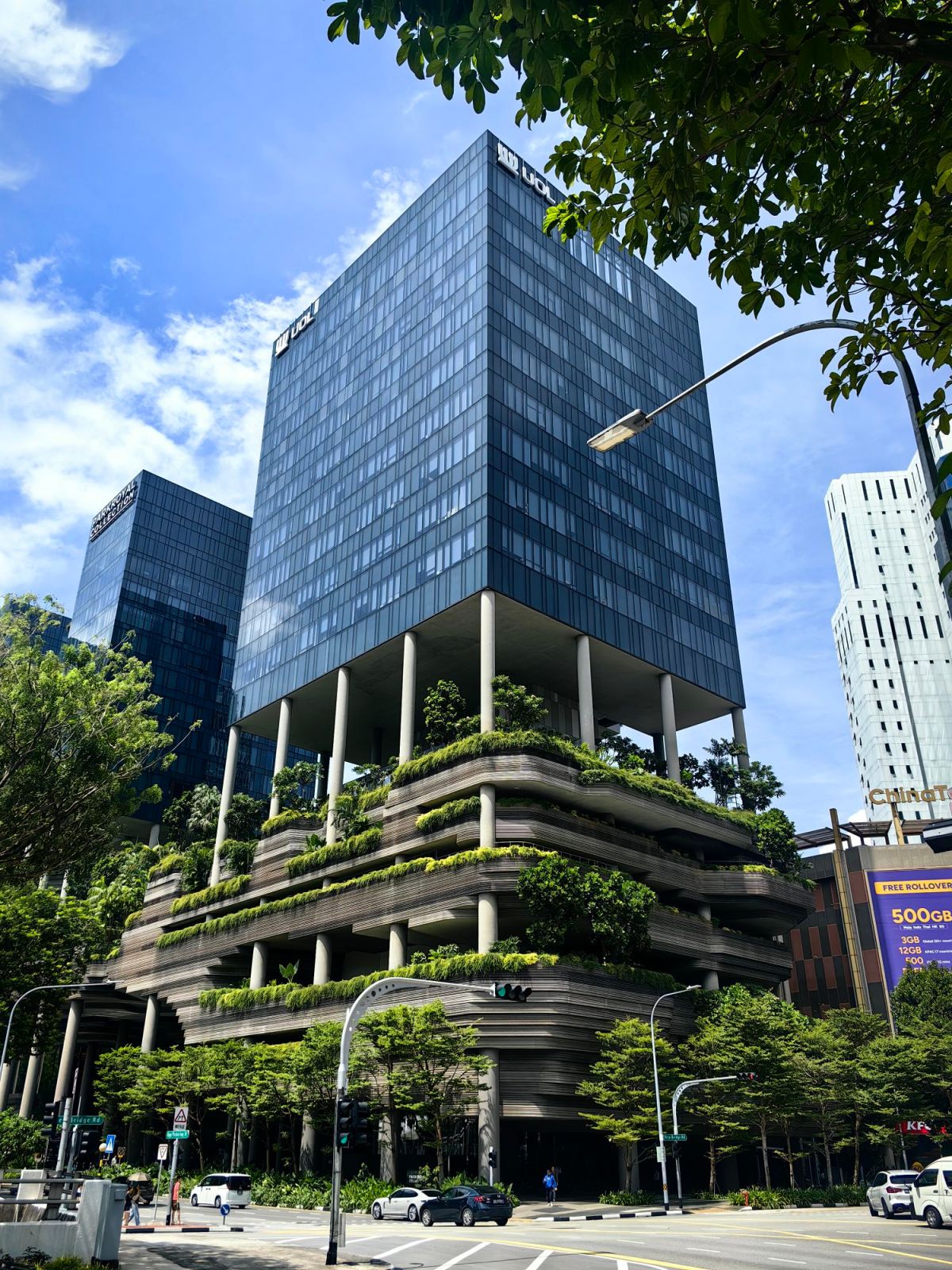
Singapore is often described as a “City in a Garden”. One of the most remarkable aspects of Singapore is the way nature coexists with urban life. In the Central Business District, towering skyscrapers of glass and steel rise above streets lined with rain trees and tropical palms. Vertical gardens climb the façades of office buildings, rooftop parks create green spaces high above the city.
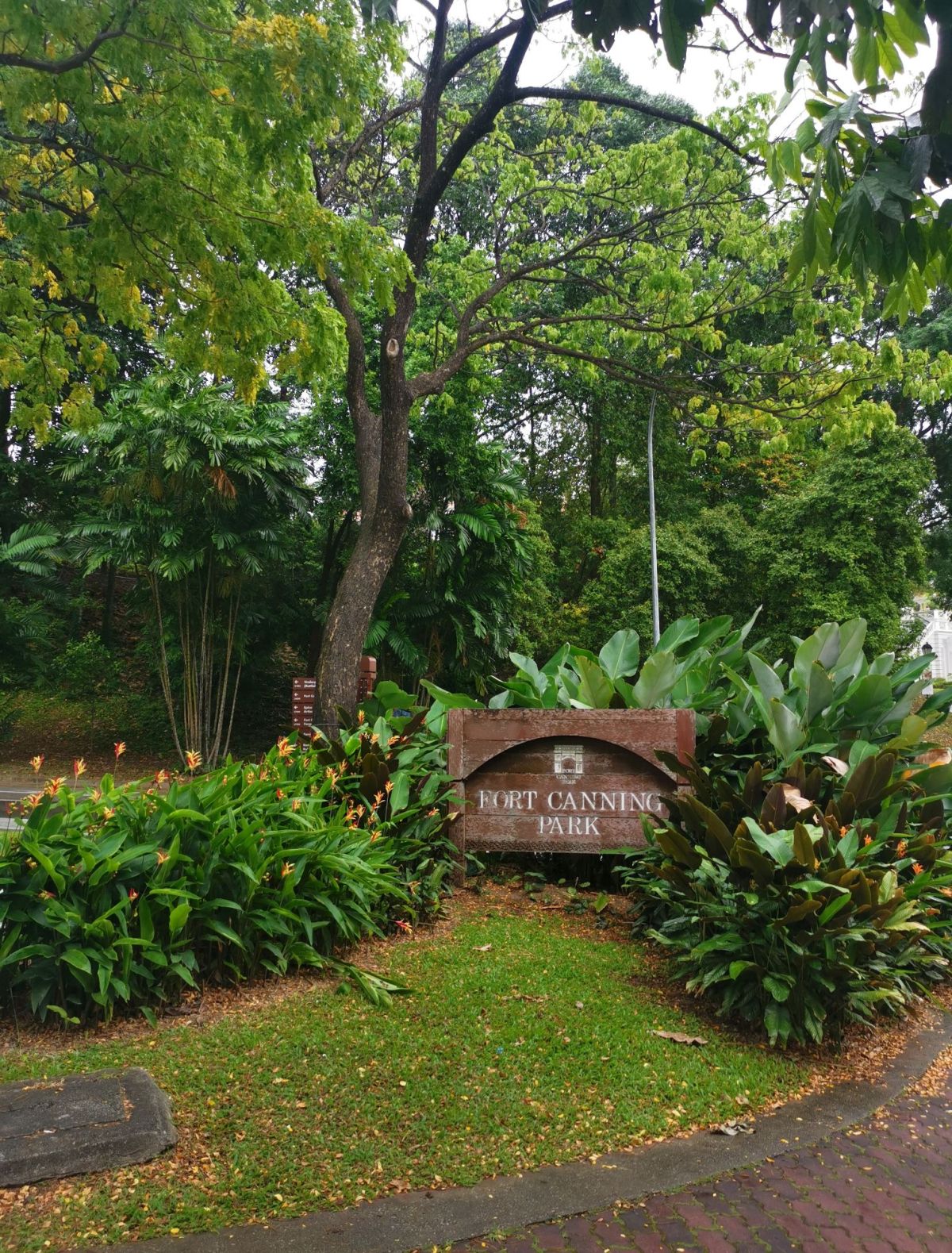
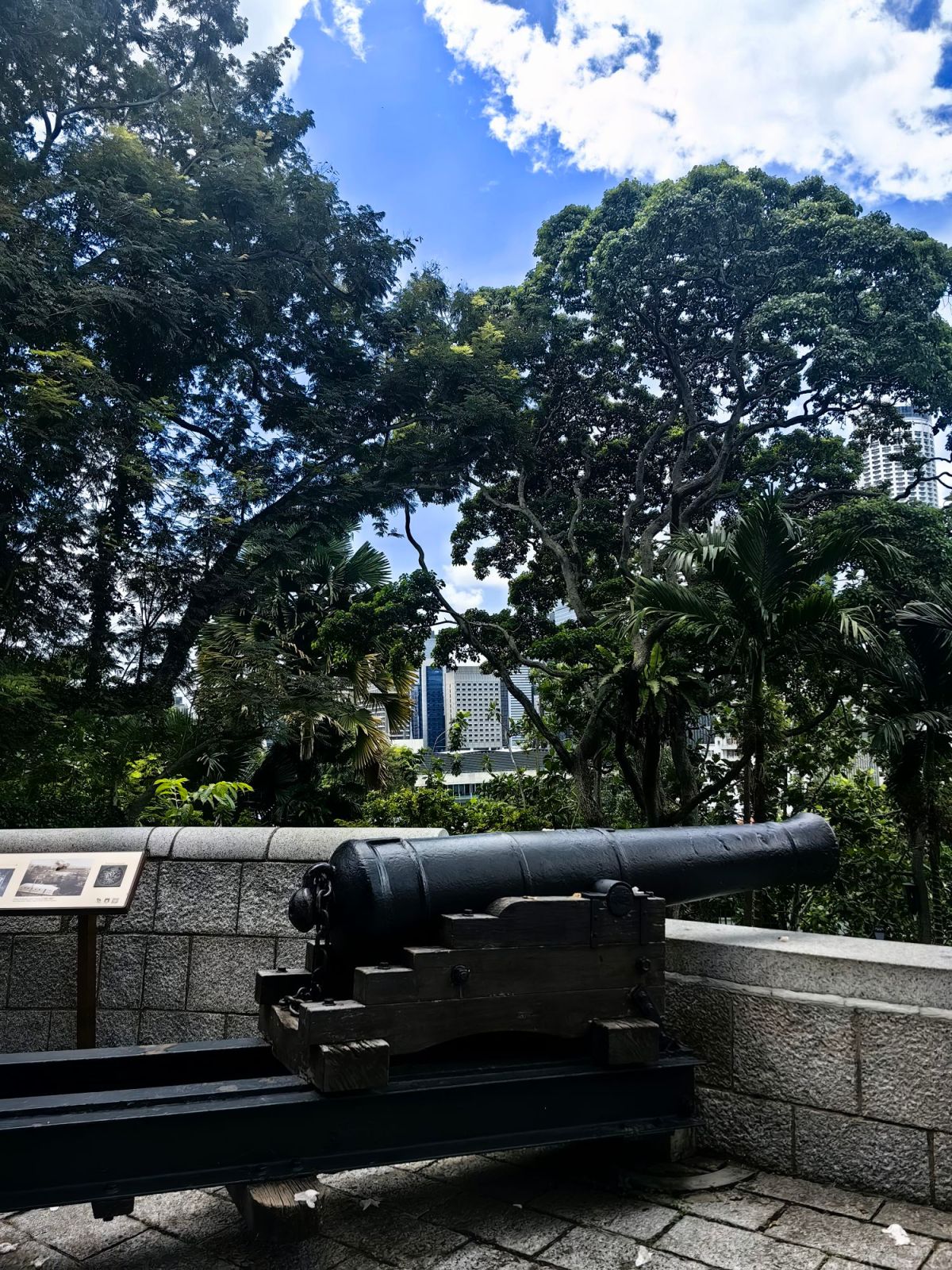
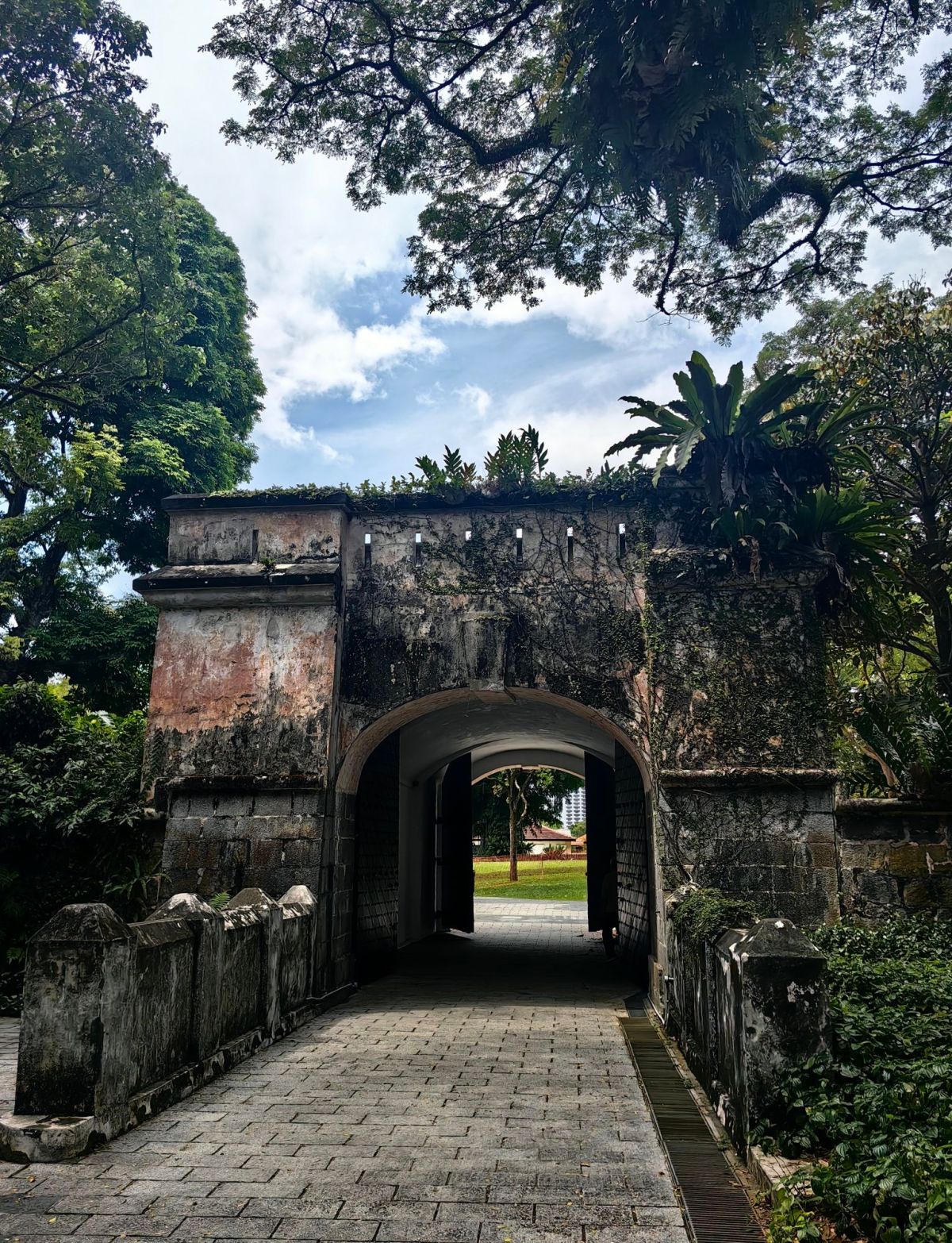
As a resident, I became interested in a different side of the country. Instead of rushing to the most popular tourist destinations, I found myself enjoying places where Singaporeans spend their everyday lives. I walked through the quiet trails of Fort Canning Park, where history is hidden beneath lush greenery and ancient trees. Standing on a hill in the heart of the city, the park offers a peaceful escape from the surrounding skyscrapers. It is hard to imagine that just beyond the trees lie Orchard Road, Clarke Quay, and the busy Central Business District.
Walking through the park, I often felt as though I was travelling through different periods of Singapore’s history. Long before the arrival of the British, this hill was believed to be the seat of the Malay kings of ancient Singapura. This Pancur Larangan garden on the way to the hilltop means “Forbidden Spring” in Malay. According to historical accounts and local legend, this was once a sacred spring reserved exclusively for the royal family of the ancient Kingdom of Singapura. Ordinary people were forbidden from using its waters, giving rise to the name that has survived for centuries.
In the nineteenth century, Sir Stamford Raffles chose the hill as the site of his residence because of its commanding view over the Singapore River and the harbour. Later, the hill became an important military stronghold, and during the Second World War it served as the headquarters of the British Malaya Command. It was here that British commanders made the difficult decision to surrender Singapore to the Japanese in 1942.
Now the park has wide lawns stretching beneath towering rain trees, and shaded pathways wind through tropical gardens, and colorful flowering plants brighten every corner. Ancient trees stand beside archaeological sites, while historic gates, stone walls, and colonial relics quietly blend into the landscape.
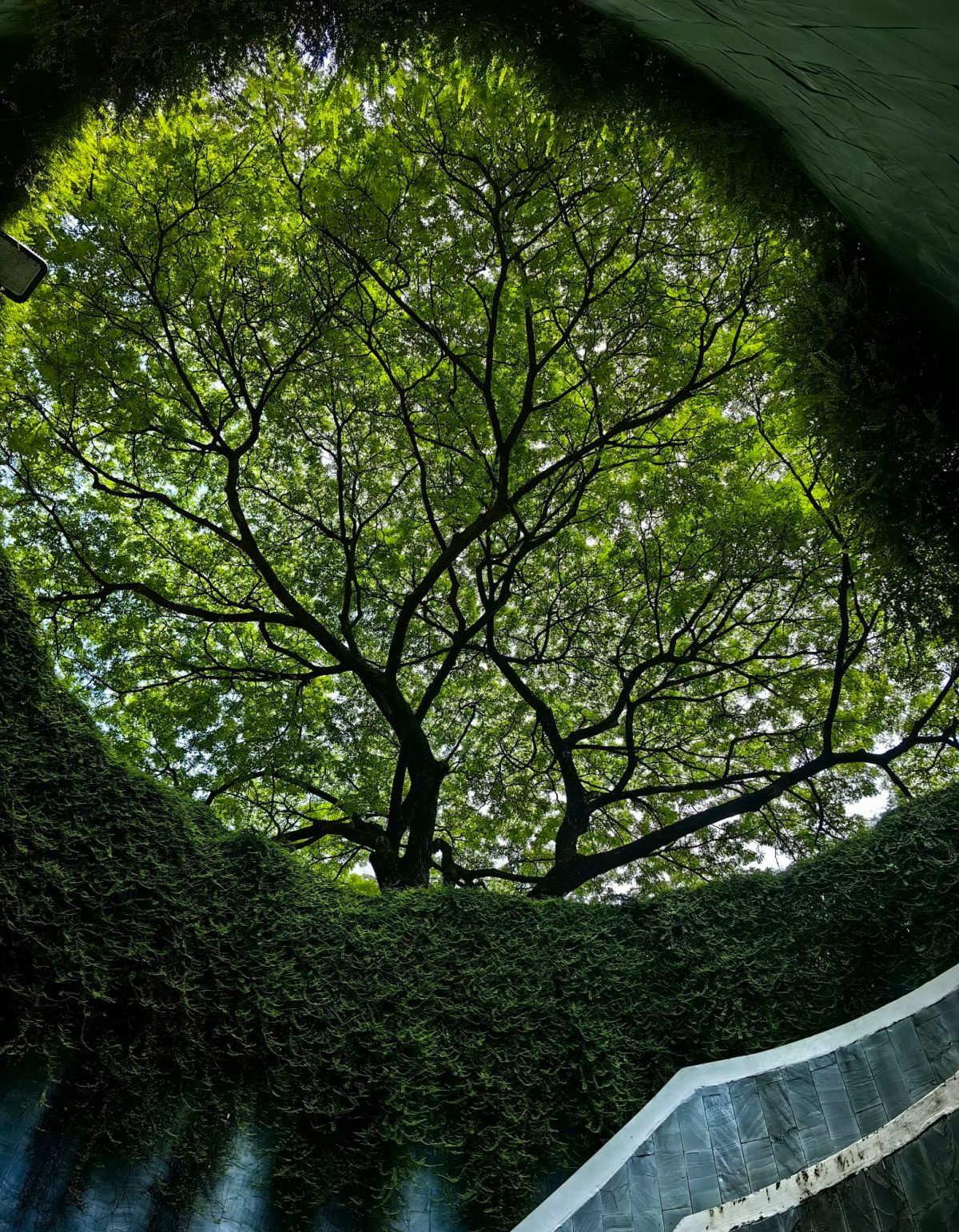
The famous spiral staircase at the exit of the park descends through a circular opening surrounded by enormous rain trees. Looking upward from the bottom, the layers of branches and leaves frame the sky like a natural cathedral. It has become one of Singapore’s most photographed locations.
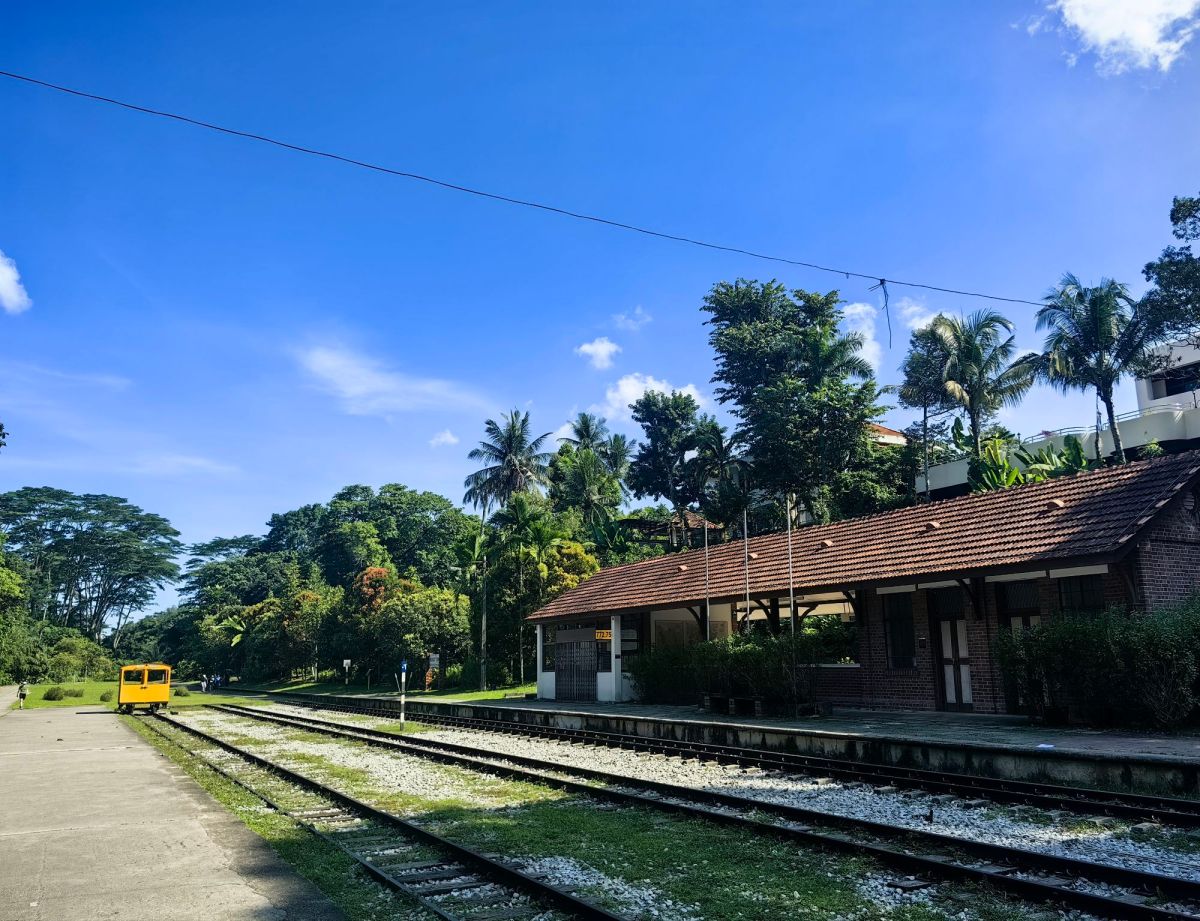
Singapore feels so different from many other global cities. Despite its high population density, the city rarely feels dominated by concrete. Instead, tropical trees, flowering shrubs, lakes, and parks create a sense of openness and calm. In many cities, disused railway lines are demolished and quickly replaced by new buildings. In Singapore, the former railway was preserved and transformed into a continuous ecological corridor that connects parks, forests, and nature reserves across the island. It is a perfect place for residents to have a jogging and approaching nature in the weekend.
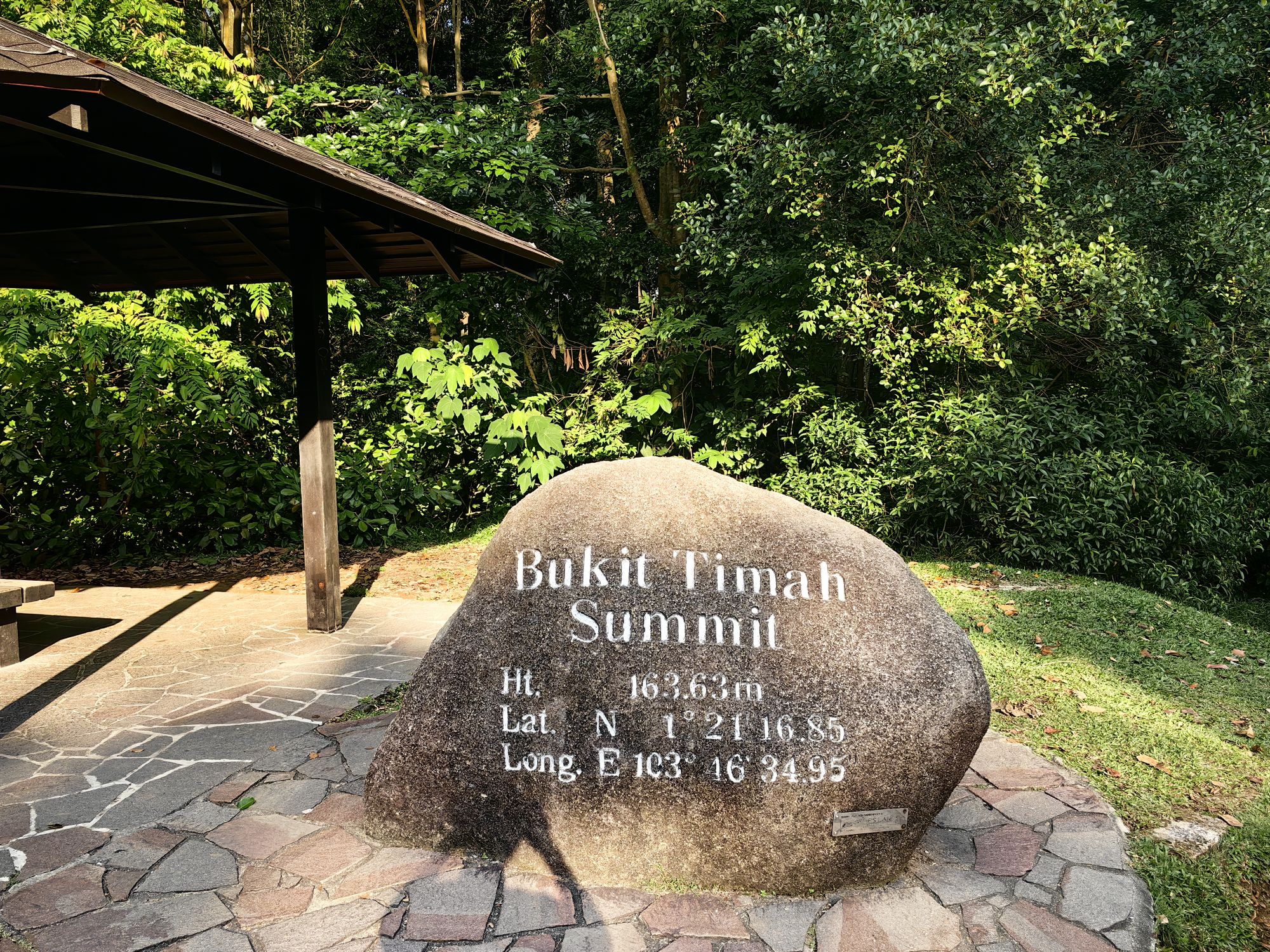
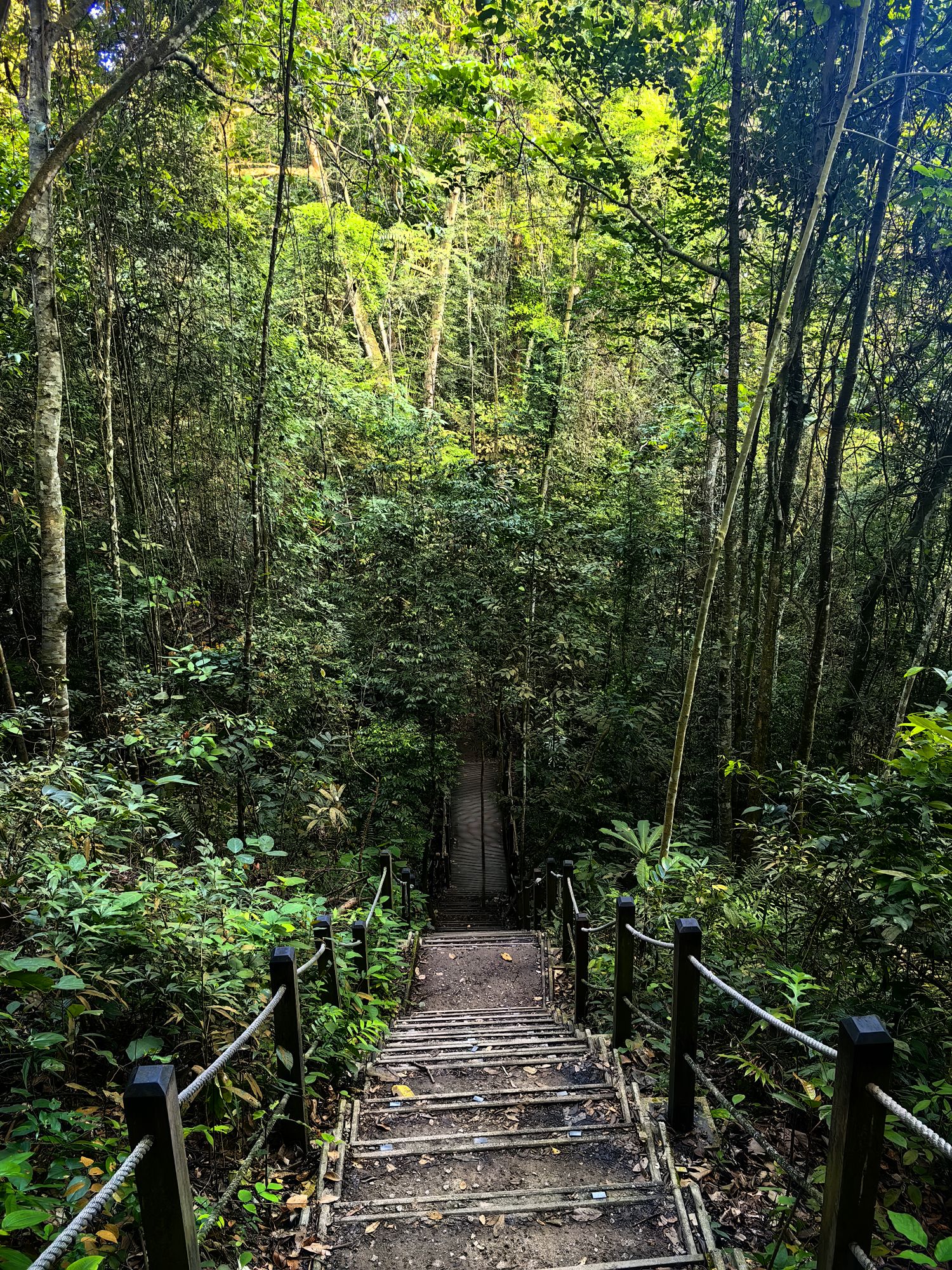
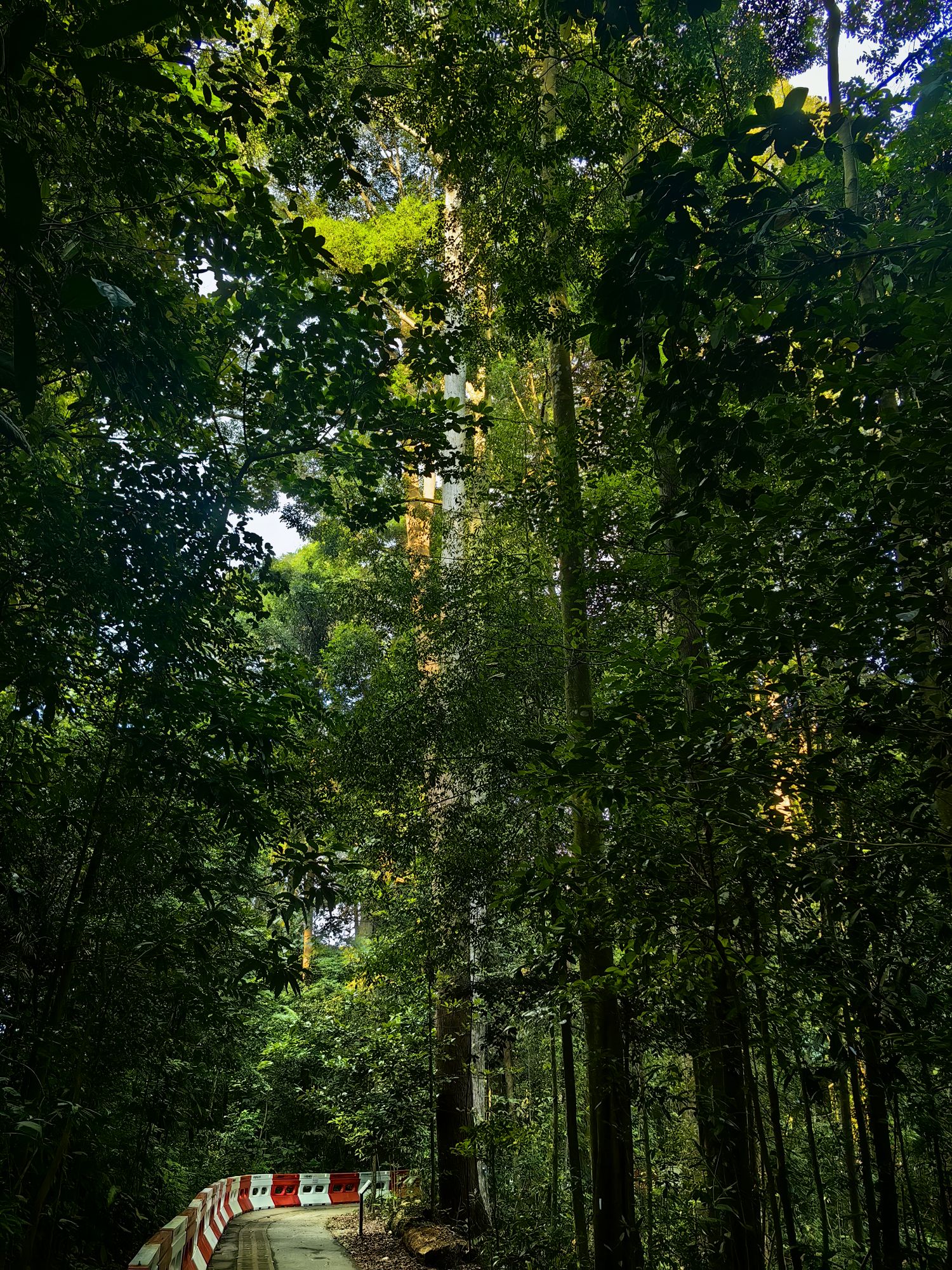
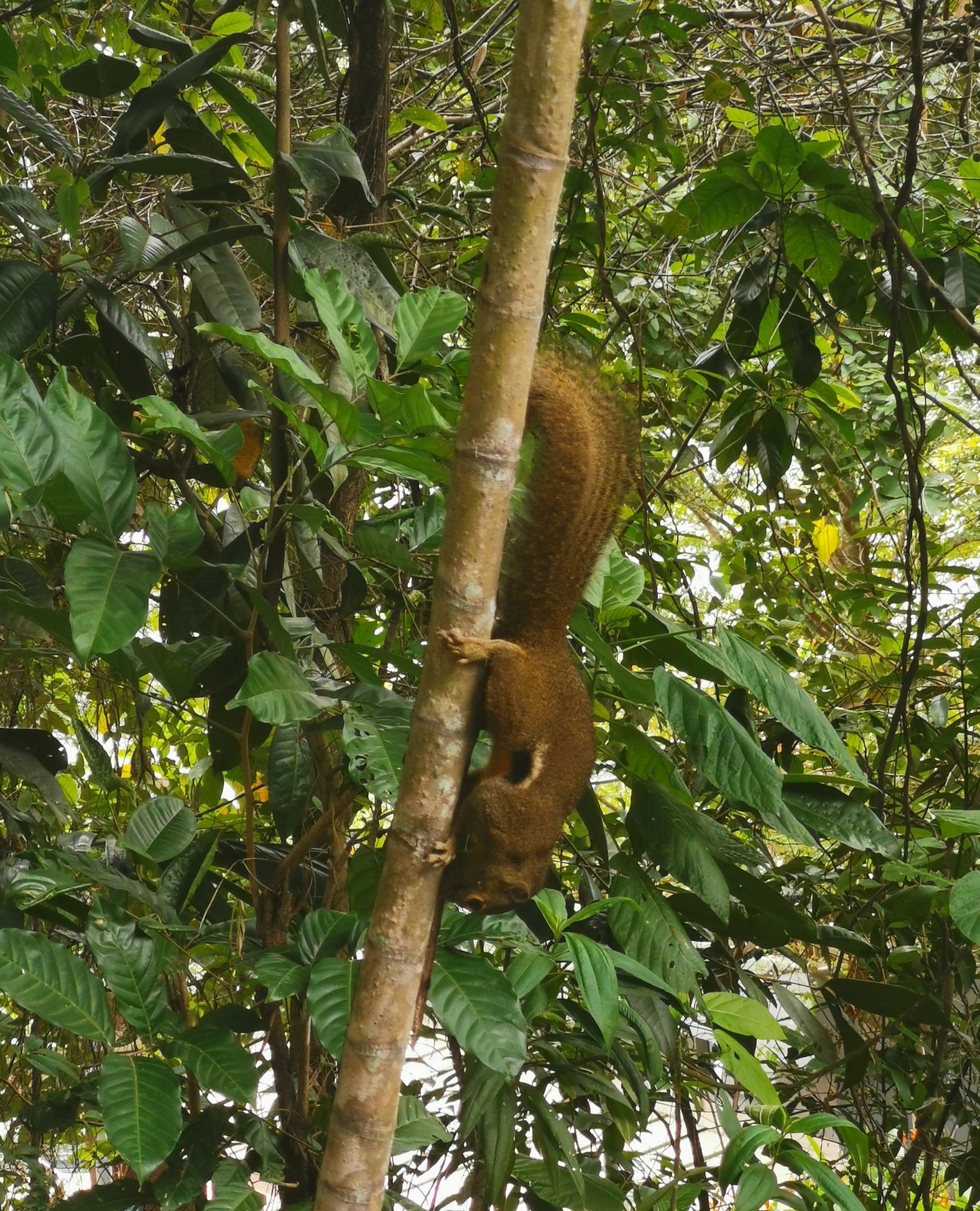
Nowadays, I live in the neighborhood not far away from Bukit Timah Nature Reserve, one of Singapore’s oldest and most important, protected rainforests. Whenever I have free time at the weekend, I enjoy walking through the reserve to the summit of Bukit Timah Hill, the highest natural point in Singapore, standing at just 163 meters above sea level. Although the hill is modest in height compared with mountains in other countries, the journey is surprisingly rewarding. The trail winds through one of the few remaining patches of primary rainforest in Singapore, where towering trees form a dense canopy overhead, allowing only scattered rays of sunlight to reach the forest floor.
One of the things I have to appreciate most is how well the natural environment is protected inSingapore. Even near my home, I often encounter animals that remind me how closely the city and nature coexist. During my walks through nearby parks and nature reserves, it is common to see squirrels darting effortlessly between tree branches, pausing for a moment before disappearing into the canopy. Large lizards move slowly along the edges of lakes and streams. Elegant swans and other water birds glide across the reservoirs, their reflections mirrored on the still water.
Singapore was the first foreign country I ever visited, and it became the gateway that opened my eyes to the wider world. Looking back over the past twenty years, my relationship with Singapore has evolved alongside my own life. It is the place that gave me the confidence to begin every journey that followed and also becomes my second hometown. Each time I walked through those arrival halls of Changi Airport with words ‘Welcome home’ and felt the familiar humid air again, there was always a quiet thought in my mind: I’m back home!
Fujian Tulou are traditional communal residences built by the Hakka and other Han Chinese people in the mountainous areas of Fujian Province. These large, earthen buildings are circular or square, designed to house multiple families, functioning both as homes and fortresses. Constructed between the 12th and 20th centuries, tulou structures are made from rammed earth, mixed with stones, bamboo, wood, and other natural materials. Their thick walls provide insulation and protection from bandits and natural disasters. Inside, the buildings are arranged around a central courtyard, with rooms for storage, cooking, sleeping, and socializing.
I visited the Nanjing area in the end of 2024. The village scene in this region is a picturesque blend of traditional architecture, lush nature, and communal rural life. Rolling hills and mountains surround the villages, covered with bamboo groves, pine forests, and terraced tea fields. Clear streams run through the valleys, beside narrow stone paths. Fog settles over the mountains in the early morning, creating a mystical, tranquil atmosphere.
Life in these villages follows the rhythm of nature. The air is filled with the scent of wood smoke, fresh soil, and steaming food. Stone-paved paths wind through the village, often lined with moss and wildflowers. Several tulous are grouped together, forming a cluster of earthen castles amidst the green backdrop.
My travel in Fujian was really refreshing for me. As I stepped away from the fast-paced, high-rise rhythm of life in Singapore, I felt a deep wave of relief and excitement wash over me. It was as if the noise, the deadlines, and the constant rush melted away the moment I arrived in this serene village. The tranquil rhythm of rural life: the slow mornings, the sound of roosters, the sight of villagers tending to their fields awakened something in me. I felt no longer tethered to my phone or the clock and found the meaning of life.
Hegui Lou is one of the most remarkable and unique tulou structures. It was my first tulou visited in this area. Built in 1732, Hegui Lou is a square-shaped building, with four stories and over 200 rooms. The name “Hegui” means “Harmony and Nobility”, symbolizing unity and high moral values of the clan. I was standing at the entrance set within thick rammed earth walls. The wooden door panels are thick and reinforced with iron studs and metal strips. Over the door, I found a solemn and ancient wooden plaque bearing its name as well as poetic couplets written on red scrolls.
What makes it especially unique is that it was built on a marshland, an uncommon choice for such heavy structures. Its foundation is made of wooden stakes, driven deep into the soft soil. The building’s rammed earth walls, more than a meter thick, have withstood floods, earthquakes, and wars for nearly 300 years. Above the entrance are some small observation windows, used historically to monitor approaching visitors or defend against intruders. Red lanterns hang along the eaves and add a splash of color and warmth to the austere and simple appearance.
Behind the towering earthen walls of Hegui Lou, at the edge of a gently sloping field, lies a lush patch of sugar cane. The tall, green stalks sway lightly in the breeze. The field is small but thriving, a reminder of the self-sufficient lifestyle the residents have upheld for generations. A local resident fed long stalks of sugar cane into a hand-cranked press. The machine groans slightly as the stalks are crushed, releasing a stream of cool, pale green juice.
I lived in the small town called Yun Shuiyao for two days. Its name, which translates to “Ballad of Cloud and Water”, perfectly captures the town’s dreamlike atmosphere. It is surrounded by lush green hills and rice paddies. The streets of Yunshuiyao are paved with smooth river stones, worn by time and footsteps. Traditional wooden houses line the narrow lanes and their dark tiled roofs and red lanterns show the town’s historic charm.
The most iconic feature of the town is the meandering river that flows gently through it, reflecting the sky and the trees on its calm surface. Along its banks, there are massive ancient banyan trees, some over 800 years old, with their gnarled roots sprawling across stone paths and their branches forming a canopy overhead. I really enjoyed the life here, listening to the soft murmur of the stream and the whisper of wind through bamboo. Time seemed to slow down here.
Yunshuiyao became well-known after it was featured in the Chinese romantic film “The Knot”. Scattered throughout Yunshuiyao are several well-preserved tulous, which have been home to generations of Hakka families. These earthen fortresses blend beautifully into the natural landscape, offering a sense of community, security, and tradition.
Huaiyuan Lou is the most well-preserved and architecturally representative tulou in Fujian Province. Built in 1905 during the late Qing Dynasty, it was constructed by the Jiang family, who were prosperous tea merchants and landowners. The name means ‘Cherishing Distant’ in Chinese. The structure is made with rammed earth walls, over 1 meter thick, supported by a wooden framework that has stood firm for over a century. There is only one heavily fortified gate connecting inside and outside.
It has two concentric rings. The outer ring is four stories high, with 32 rooms per floor, housing sleeping quarters and storage. The timber beams, columns, and staircases are arranged in concentric rings to create tiers of rooms stacked three to five stories high. The upper structures are capped with tiled, slightly upturned eaves, supported by a web of timber rafters. Rainwater is efficiently drained into the inner courtyard. Wooden columns are joined by horizontal beams using traditional mortise-and-tenon techniques without nails.
The inner ring is smaller and contains ancestral halls and communal spaces. Central to Hakka belief is the idea that deceased ancestors continue to watch over and protect their descendants. Showing respect through rituals ensures family prosperity and avoids misfortune. Ancestral hall with an altar, ancestral tablets, and painted couplets is the most important building. Wells, kitchens, and storerooms are placed in this area for communal use.
This is the panoramic view. The central courtyard is paved with cobblestones, where daily life and communal events unfold. The interior reflects a highly organized lifestyle, with rooms assigned by generation and seniority. Decorative wooden carvings, ancestral tablets, and red lanterns enhance the cultural richness of the space.
Unlike some older tulou, Huaiyuan Lou remains largely intact and still functions as a living residence. Residents still live in the building, maintaining traditional Hakka customs, such as ancestral worship, communal cooking, and shared farming. I was able to climb up the floors and see the local life. Outside wooden railings, freshly washed clothes are hung out to dry. Shirts, pants, and towels flap gently in the mountain breeze, swaying against the red backdrop of the wooden walls.
Along sunny spots, residents have laid out trays filled with vegetables like sliced radishes, chili peppers, and bamboo shoots to dry under the afternoon sun. The air is filled with a subtle mix of earthy, sun-baked scents. Homemade sausages or strips of cured meat are also strung up on wooden poles, slowly aging in the open air. It was really an interesting and unique trip to see the Hakka’s life that I have never experienced. The Hakka is a subgroup of the Han Chinese people with their own distinct language, culture, and traditions. They traced their roots to northern China, but over centuries, they migrated southward due to wars, famine, and social unrest. They settled mainly in southern provinces such as Guangdong, Fujian, and Jiangxi. Because they often arrived as migrants or newcomers, they were called “guest families” by local populations.
In the courtyard stands an ancient stone well, a silent witness to centuries of life unfolding within the earthen walls. The inside of well is surrounded by a simple stone curb, its surface now softened by a thick blanket of green moss. Tiny droplets of water glisten on the moss in the morning light. The well still provides clear and deep water to the local residents who lower a metal bucket on a rope, drawing water with a slow rhythm in the same way their ancestors did a hundred years ago.
I took two days to travel all the scenic areas. On the second day, I visited the Tianluokeng which is the most iconic and most photographed tulou sites. Located on a terraced hillside, the cluster is called the “Four Dishes and One Soup” because of its unique layout. One square tulou (the “soup”) sits in the middle. Surrounding it are four round tulous (the “four dishes”). There is a platform on the roadside for travelers to take photos.
Afterwards, I went down the staircases and visited them one by one. Built between the 15th and 20th centuries, these tulous with similar thick rammed-earth walls showcase the Hakka people’s communal living as well but they are smaller than the Huaiyuan Lou I visited the last day.
This cluster sits in a valley, surrounded by layer upon layer of rice terraces that climb the slopes of the green mountains. From above, the terraces look like rippling steps carved into the hillside. Traditionally, these terraces were cultivated with rice as the staple crop, sustained by ingenious irrigation systems that channel mountain spring water down through the fields.
In Hakka and Fujian villages, it’s very common to see foods being sun-dried for preservation. These colorful trays containing food are set out in courtyards and rooftop around tulou walls. Most of these foods are corn kernels which are golden yellow, often filling the whole tray, soybeans dried for making tofu, sweet potatoes which are sliced into thin pieces to make dried snacks, and scented tea leaves.
In late winter, when the air is crisp and less humid, families hang long strings of sausages across bamboo poles, or on wooden racks in open courtyards. The sight of these dark red sausages glistening in the sunlight is a hallmark of traditional Hakka villages. The sausage is made by fresh pork. The meat is mixed with salt, rice wine, soy sauce, sugar, and sometimes five-spice powder or peppercorns. The seasoned meat is stuffed into natural casings, then tied into uniform lengths. The sausages are hung outdoors to dry naturally for 1–2 weeks. Deeply savory with a balance of saltiness and gentle sweetness from rice wine and sugar.
The central square tulou called Buyunlou is the oldest structure of the cluster, built first by the ancestor of the family. Later generations expanded around it with round tulou. The square form is structurally simpler and sturdier to build, especially in earlier times when techniques were less advanced. Once wealth and skills grew, round tulou became more common. The square tulou in the middle acted like a fortified core, with the outer round tulou forming an additional layer of protection. Together, the cluster functioned almost like a miniature walled city.
In the afternoon, I took bus and continued the travel in the Taxia Village which is part of the Tianluokeng Scenic Area. It’s a well‑preserved example of Hakka culture and architecture. I enjoyed the scene of a “water town” combined with tulou architecture. When I walked among rural terrain, small bridges, cobblestones, I could see local everyday life.
The houses are constructed from blue-gray bricks, which age into a weathered, darker tone over time. Roofs are made with traditional gray clay tiles, sometimes glazed in deeper tones for water resistance. They are rectangular and one to two stories tall. Most of them are built closely along the stone-paved lanes or beside the winding stream. From a distance, I felt that the rooftops formed a soft ripple across the valley, framed by green mountains.
I visited one house compound belonging to Zhang Family. It has stone steps at door, small walled courtyards, and wooden window frames. It was built along the central stream, with bridges connecting them. Its layout includes gate, front hall, main sacrificial hall, with left-side and right-side chambers.
This is used as the clan shrine of the Zhang family, used for ancestor worship, clan ceremonies, rituals, and as a symbol of the Zhang clan’s history and status in the village. Built in the late Ming dynasty, over 400 years old. The gate is decorated with vivid motifs, notably “two dragons playing with a pearl”, inlaid with colored ceramic chips. Roof ridges, eaves, and parapets are ornate, with porcelain reliefs or ceramic decorations depicting legends.
One of the most striking features in front of the hall are the stone flagpoles rising from the stone slab near the pond. There are many of them and they are over 10 meters high. They are richly carved and serve as memorials to clan members who achieved official or civil/military ranks or otherwise made contributions. The latest family member carved on the pole is one student went overseas, studying in MIT.
During my trip, I found that the Hakka people have a culture deeply shaped by migration, resilience, and unity. Though historically considered “guests” , they forged strong, close-knit communities wherever they settled. At the heart of Hakka culture lies a powerful sense of clan. This isn’t just about bloodline but it’s a living, breathing system of values, rituals, and responsibilities. In every generation, Hakka people honor their ancestors through ancestral halls. Family histories are remembered. Even those who’ve migrated abroad trace their roots back to the clan village.
As night fell over Yunshui Yao, the village transformed into a quiet world. Lanterns glowed softly along cobbled paths, and the sound of flowing water echoed through the ancient alleys. The tulous stood silently in the moonlight, their thick earthen walls holding centuries of Hakka stories. In that stillness, I felt the heart of Hakka culture. It was a life rooted in simplicity and connection, so different from the pace I’m used to. This cultural journey of slower rhythm was more about experiencing a way of life that’s rare for me.
Rising gently from the waves of Xiamen’s coast, Kulangsu is an island where sea breezes carry the echoes of pianos and the scent of frangipani drifts through winding stone lanes. It is a place where cultures once met across the ocean, leaving behind villas with red-tiled roofs, colonial consulates, and quiet courtyards shaded by banyan trees. It is celebrated by UNESCO as a World Heritage Site for its rare tapestry of architecture and culture. From the European-inspired mansions of returning overseas Chinese to the fusion styles born of East and West, every building tells a story of global exchange in the 19th and early 20th centuries.
Kulangsu island is always a romantic place for travelers to explore. On December 27th 2024, the morning ferry skimmed across the waters of Xiamen, carrying me toward Nei Cuoao Ferry Point, the gateway to Kulangsu. As the city skyline softened behind me, the island slowly revealed its red rooftops and leafy hills, bathed in the gentle light of dawn. The sea breeze grew cooler, carrying with it a sense of anticipation—of slower rhythms, hidden gardens, and the music-filled streets waiting just beyond the pier.
After I arrived at the island in the morning, the first glimpse of it was the beach. Beach on Kulangsu is not the selling point of this island but it is still beautiful enough. It stretched like a pale ribbon along the edge of the island, its sand soft and fine beneath bare feet. The waves lap gently, leaving fleeting patterns of foam that glisten under the sun, while children’s laughter drifts across the breeze. Here the horizon was wide, the sea was calm, and the soft sand was a quiet comfort for travelers who came to rest by the water’s edge.
Automobile is not allowed on this island, so the only option is to walk along the sea slowly. This long curling bridge built on the sea seems to dance with the sea breeze, their arches tracing elegant curves above the tides. From the railing, I watched the waves rushing in from the horizon and breaking against the rugged cliffs below. Each crash of white foam is a rhythm, echoing like nature’s drumbeat against the stone, while the bridges carry me forward as if floating between sky and sea. It is a place where footsteps slow, and the vast power of the ocean meets the quiet beauty of human design.
Towering trees at the seaside rose like silent guardians of the island, their trunks weathered yet steadfast, their crowns heavy with shimmering green. Sunlight filtered through the leaves in shifting patterns, dappling the stone paths and courtyards below. When the sea breeze drifted inland, the branches swayed gently, whispering as if carrying stories of travelers long past. Looking up from below, the Sunlight Rock seems impossibly high, like a natural monument etched with shadows and light.
My travel route is from the Nei Cuoao Wharf in the west to the Sunlight Rock in the south, then to the Haoyue Park in the east, finally to the residence area in the central part. Sunlight Rock, the highest point on Kulangsu Island offers travelers both a natural wonder and a historic landmark. Its rugged cliffs are composed of granite, weathered over centuries into jagged yet graceful forms. From below, it appears almost vertical and looks very impressive.
Near the summit of Sunlight Rock, the Sunlight Temple is a serene retreat that seems to float between sky and sea. Its crimson walls and green-tiled roofs stand in gentle contrast to the rugged granite cliffs, while the incense smoke drifting from its altars adds a fragrant softness to the salty sea breeze. It is one of Kulangsu’s oldest religious sites, with roots tracing back to the Ming and Qing dynasties.
Inside the courtyard, carefully carved wooden beams and delicate statues reflect traditional Chinese temple artistry. Potted plants and small trees are carefully arranged along the stone pathways. Fragrant flowers peek from ceramic pots, and miniature bonsai trees twist gracefully and elegantly in the gentle breeze in this tranquil courtyard.
The path to the summit winds through lush vegetation, shaded by tall palm trees and clusters of banyans, with small resting spots offering glimpses of the surrounding sea. The red roof-tops are one of the most distinctive features of Kulangsu’s landscape. In the late 19th centuries, many Chinese merchants and families who had lived in Southeast Asia or Europe returned to Kulangsu. They brought with them Western architectural styles, where red-tiled roofs were common. Red clay tiles were durable and well-suited to the island’s humid, coastal climate. They shed rain efficiently and resisted the salty sea breeze better than thatched or flat roofs.
The rock is a commanding position, allowing visitors to gaze across the island and the surrounding sea. At the top, the sea breeze is strong and refreshing, and the panoramic view is really breathtaking. I could see clearly the undulating coastline of Xiamen, the sparkling waters surrounding Kulangsu, and the red-roofed villas dotted across the island all unfold beneath my feet. The sea of red rooftops is like a mosaic of history: a blend of Chinese tradition, overseas influence, and the island’s role as a hub of cultural exchange.
After going down from the top of Sunlight Rock, next I visited the Shuzhuang Garden which is one of the island’s most beautiful places. Here classical Chinese landscape design meets the island’s coastal beauty. It was built in 1913 by Lin Erjia, a wealthy overseas Chinese merchant, as a private seaside villa in memory of his father. This is the statue of the owner Lin Erjia.
The garden is famed for its clever use of space, following the traditional Chinese principle of “借景” (borrowing scenery). Pavilions, winding corridors, and moon gates frame the shifting views of the sea, distant islands, and the garden’s own bridges and rockeries. Every turn seems to reveal a new scene—quiet ponds reflecting the sky, bamboo groves whispering in the wind, or stone steps leading down to the shore where waves gently lap against the rocks. It seamed that I was placed in a flowing Chinese landscape painting.
In this limited area, it includes many artificial hills, winding paths, and groves of bamboo and pine which reproduce the feeling of mountain landscapes within a compact space. Small waterfalls, rockeries, and ponds complete the miniature world of hills and streams, inviting visitors to wander as if in nature itself.
From within Shuzhuang Garden, slender stone bridges curve outward like graceful arms reaching toward the sea. Their paths are never straight; instead, they twist and turn in gentle zigzags, following the classical garden tradition of slowing one’s pace and revealing scenery step by step. Low railings frame the edges, allowing the sound of waves and the salty breeze to flow freely across the walkway like spirits.
As I crossed the bridge, the view shifted constantly. One moment was framed by a round moon gate, the next opening wide to the endless horizon. The bridges seemed to hover between two worlds: behind me, the calm rockeries, bamboo groves, and pavilions of the garden; ahead, the vast, untamed sea which tide was high, and waves surged and crashed beneath the arches.
Walking through Shuzhuang Garden, I felt as if I had stepped into a living painting that slowly revealed itself with every turn. The zigzagging bridges drew me closer to the sea, and when the horizon suddenly appeared through a moon gate, it felt like a surprise being revealed. Standing on a bridge where the garden meets the ocean with Sunlight Rock at the backdrop, I felt that all noise and worry seemed to dissolve into the rhythm of the sea, leaving only a quiet joy.
The Piano Museum near the Shuzhuang Garden is the first of its kind in China. Opened in 2000, the museum reflects the island’s reputation as the “Island of Music” and its deep-rooted love for piano culture. The museum is housed in elegant garden pavilions surrounded by flowers and plants.
The hall displays more than a hundred pianos from around the world. Many of them are rare and antique instruments, some dating back centuries. Walking through the museum, I saw some famous pianos from the 18th century like Blüthner and Steinway & Sons. They are decorated with delicate carvings, and grand pianos once played in concert halls and noble salons. Each piece tells a story of craftsmanship, artistry, and the journey of music.
In the afternoon, I walked along the seaside of Kulangsu which felt alive with energy. The sea sparkled under the sun, waves rolling gently toward the stone promenade. At the far end, Xiamen’s skyline gleamed in the distance. Walking further along the curve of the shore, the huge statue of Zheng Chenggong came into view, standing tall on the rocks above the sea. His gaze was fixed firmly toward the horizon. Beneath him, the waves crashed against the cliffs, as if echoing his determination.
When I looked up at the statue, I imagined that he set sail from these shores in 1661, driving out the Dutch and reclaiming Taiwan, turning Xiamen into a stronghold of resistance and hope. I began to reminisce the history at the end of Ming Dynasty. Although fighting against Qing Dynasty all through his life, Zheng Chenggong gained high recognition from his enemy due to extraordinary loyalty and courage and after his death, the Kangxi Emperor of Qing praised him with the famous couplet:
“四镇多异心,两岛屯师,敢向东南争半壁。诸王无寸土,一隅抗志,方知海外有孤忠。”
The emperor’s words recognize Zheng as a singular figure of steadfast loyalty and daring, acting alone in defense of the Ming cause while much of the empire wavered. Zheng’s courage and strategic vision marked him as a “solitary loyalist” whose deeds would endure in history. Standing today on Kulangsu, gazing at his towering statue facing the sea, I felt the weight of his loyalty and the determination.
From the shores of Kulangsu, the view across the water feels like looking into another world. Beyond the gentle rhythm of waves and the red-tiled roofs of the island, Xiamen rises in shimmering glass and steel. Sleek high-rises and soaring towers stretch toward the sky. The contrast is striking. On one side, it’s Kulangsu’s quiet gardens, winding lanes, and echoes of history; on the other, it’s the bold skyline of a modern metropolis. It made me feel as though past and present are meeting in a single frame.
From the late 19th to early 20th century, luxurious villas and mansions in style like Mediterranean, Baroque, Rococo, and Art Deco were built on this island. Missionaries from Europe built churches, schools, and hospitals, adding Gothic spires, stained glass windows, and European-style chapels to the landscape. Meanwhile, traditional Chinese temples and gardens continued to flourish, preserving local spiritual and aesthetic traditions. Nowadays, Kulangsu retained most of its historic buildings. I wandered through the small lanes and wondered at the mixed cultures here.
‘Amoy Deco’ is the name given to a unique style that blossomed on this island during the early 20th century. It evolved as returning overseas Chinese merchants and students brought back Western influences, fusing them with Fujianese tradition. The name Amoy comes from the local Hokkien dialect pronunciation of Xiamen. Inspired by the global Art Deco movement, these buildings often feature streamlined facades, angular designs, and decorative motifs such as hexagonal patterns roof, symmetry, and zigzags. Unlike pure Western Art Deco, Amoy Deco integrates local craftsmanship, brick masonry techniques, and Chinese symbolic decorations. Wide verandas, open balconies, and shaded courtyards designed for ventilation in the humid subtropical climate.
Constructed in 1934, the Trinity Church was built jointly by three Christian congregations to cater to the growing number of worshipers on the island. The church showcases architectural influences rooted in Western ecclesiastical design like brick walls accented by cross motifs, arched windows and a steeply pitched white roof. Its first Sunday service in the renewed sanctuary was held in 2019, marking its restored role as a house of worship for the island’s community.
The Former British Consulate is a distinguished example of colonial architecture that reflects the island’s rich international heritage. The building is constructed from ancient Minnan red bricks and granite. The structure showcases a veranda style, which was prevalent in port cities during the 19th and early 20th centuries. In 1843, Xiamen opened to foreign trade, and the British government established a consular office on Kulangsu. Today, it has been repurposed and serves as the Kulangsu Historical and Cultural Exhibition Hall. This transformation allows visitors to explore the island’s rich history and the architectural heritage of its colonial past.
The Former Japanese Consulate stands as a testament to Kulangsu’s rich history as an international settlement. Constructed in 1879, it remains the only 19th-century embassy building still intact on the island. The building is primarily constructed using ancient Minnan red bricks and granite as well like most buildings in this island. The structure exhibits Victorian-style elements with a veranda-style layout, common in cities with open ports, and incorporates wood trusses, I-beams, and concrete slabs in its interior.
This building does not allow visiting inside so I could only take some photos surrounding it. Its façade, adorned with arched windows and a distinctive red-brick exterior, stands in contrast to the surrounding European-style buildings. Its well-preserved structure offers me a glimpse into the architectural diversity that characterizes the island.
In my opinion, the Huang Rongyuan Villa must be the most elegant and beautiful mansion in this island. The villa built in 1920 reflects a fusion of European classical style and Chinese aesthetics. Its massive granite columns and formal symmetry evoke Roman grandeur. Four giant Tuscan-style granite columns support a semi-circular portico. Rich ornamental details in column capitals, eaves, windows, balconies, and a rooftop adorned with grapevine motifs and balustrades really attract my eyes.
The villa stands within a lush courtyard, over 3,000 m² in size. In the courtyard, the garden is an exquisite fusion of Chinese and Western elements. One highlight is the use of traditional Chinese garden elements like Taihu rocks, winding paths, a pavilion, and a cloud-style rock wall. In contrast, the geometry and symmetry reflect Western villa gardens especially decorated with curved porch and grand Ionic columns. Now, it is home to the China Record Museum, preserving both architecture and musical heritage.
This Fanpo Mansion is celebrated for its rare blend of Chinese craftsmanship and European Rococo style. The gatehouse is particularly notable. It’s the tallest and largest on the island. Rococo influences surface in flourishes of curving lines and decorative sculptures. The gatehouse is crowned with a sculpture of two golden birds holding copper coins, symbolizing wealth and good fortune. The mansion was built in 1927 by a prosperous Chinese-Filipino entrepreneur, in honor of his mother, known as ‘Fan Po’. The exterior is composed of richly hued red bricks contrasted with white trims. The ground floor features a two-story red-brick cloister with graceful arches forming a shaded walkway. A set of elegant stairs ascends to the main entrance.
There are still some local residents in this island. I could even go to the second floor of the new residential house taking some photos. Life on Kulangsu may unfold under the gaze of countless tourists, but for its local residents, the rhythm is gentler, rooted in routines that have little to do with sightseeing. At dusk, when most tourists have left, the island grows peaceful. Residents stroll along the seaside promenade, and children chase each other under the glow of streetlamps.
Travel in this small island is tiring since I needed to continue walking up and down without rest. Chuncao Tang is situated on the cliff of Pen Holder Hill, offering expansive views of the surrounding landscape. Built in 1933, Chuncao Tang was designed by Xu Chuncao, the president of the Xiamen Construction Association. The villa resembles a Western-style nursing house. Its structure utilizes granite for the wall base, wall pillars, and corridor column. The villa includes a wide corridor outside the living room, providing a space for viewing and cooling off, enhancing the living experience with panoramic views of the surrounding area.
One of the most amazing buildings on this island must be the HSBC Bank Mansion. It is a three-leaf clover shaped English style villa, completed in 1876, and distinguished by its placement atop the cliff of Pen Holder Hill. I looked up at the high and straight cliff. This building sits solidly on a granite foundation anchored into the cliff’s rock. The mansion’s cliff-top location was purposefully chosen to offer sweeping sea views during both day and night. A colonnaded cloister runs alongside, opening to sea breezes and panoramic views of Xiamen’s Twin Towers and the iconic Bagua Mansion.
Before the sun set, the Bagua Mansion revealed itself like a beacon among Kulangsu’s green hills and tiled rooftops. Its bright red dome, rounded and regal, rose above the treetops, immediately catching my eyes. Against the soft sky and glittering sea, the dome shone with a warm glow in the winter chill, resting like a crown on the island’s outline. This distinct profile makes the mansion one of the most recognizable landmarks of Kulangsu. Founded in 1907, the Bagua Mansion was commissioned by Taiwanese businessman. Nowadays, the refurbished mansion became theOrgan Museum, housing Chinese most notable collections of pipe organs.
After eight hours of exploring this island on foot, my legs were utterly exhausted. Sauntering through the winding lanes was like stepping into a living museum, where each street and building tells a story of hybrid cultures and architectural fusion. Though time constraints meant I missed many remarkable structures, the glimpses I caught and these intricate details blending East and West made every step worthwhile. This UNESCO site is not just a place to see but a place to feel, where history and artistry coexist in the most vivid way.
Xiamen was my last stop in the Christmas trip 2024. It a beautiful city where the sea whispers to the shore draped in sunlight and sea breeze. Here, waves kiss the white sands of Huandao Road, and Kulangsu’s winding alleys hum with stories of a bygone era. Palm trees sway over seaside cafés, and each sunset spills gold into the harbor. Between the scent of salt in the air and the melody of the tides, Xiamen invites me to slow my pace, breathe deeply, and let the ocean’s rhythm guide me finish the whole journey.
When I just arrived, I found that Xiamen and Singapore share quite a few similarities, especially from a travel and lifestyle perspective. Both are island-based cities connected to the mainland by bridges. Surrounded by the sea, they have a strong maritime character and a history shaped by trade. Xiamen’s Kulangsu Island and old neighborhoods reflect a fusion of Chinese, Western, and Southeast Asian styles. Singapore also blends Chinese, Malay, Indian, and colonial heritage into its urban fabric.
Xiamen’s story is written by the sea. Once a small fishing settlement, it rose to prominence in the 17th century as a key port for maritime trade along China’s southeastern coast. During the Ming and Qing dynasties, its deep-water harbor made it a gateway for merchants, tea exports, and cultural exchange. In the 19th century, Xiamen became one of China’s earliest treaty ports, opening to foreign trade after the signing of Treaty of Nanjing in the First Opium War. Nowadays, it is very modern city. The beautiful skyline rises beside palm-lined boulevards, and large ships share the horizon with ferries bound for nearby islands. Both mark a new chapter of this garden city on sea.
In the 17th century, long before Xiamen became a modern port city, it was the stronghold of Zheng Chenggong, the Ming loyalist who resisted the Manchu conquest. Xiamen’s natural harbor and island setting made it a perfect marine base. From here, Zheng built a powerful naval force, controlling trade and defending the coast. In 1661, it was from Xiamen’s shores that his fleet set sail across the Taiwan Strait, launching the campaign that expelled the Dutch from Taiwan and established Chinese rule there.
Today, the central district of this city called ‘Siming’ recall Zheng Chenggong’s presence. He renamed the island’s name to “Siming”. The name, meaning “remembering the Ming Dynasty” reflected his loyalty to the fallen Ming dynasty and his opposition to the Qing conquerors. Standing by the water and staring at the powerful warships faraway, it’s easy for me to imagine the sails of his fleet catching the wind and fighting in the waves.
My trip started from the seaside promenade which stretched like a silver ribbon along the sea, with palm trees swaying gently above the turquoise waves. The salty breeze brushed against my face, carrying the faint scent of the ocean and the sound of gulls overhead. Each step felt lighter, as if the rhythm of the waves was syncing with my heartbeat.
The horizon seemed endless, and the air felt so fresh that every breath is a quiet celebration: cool, clean, and alive. Walking here, the bustle of the city slipped away, replaced by the soft music of the tide interwined with the simple joy of being by the sea. With each step along seaside promenade, the weight of the year’s work begins to loosen, like sand slipping through my fingers. Sunlight danced on the water, and I felt as though the tide is quietly washing my mind clean. By the time I reached the curve of the bay, the fatigue of whole year has dissolved into the horizon, leaving only a lightness.
Although it was December, the temperature on noon could reach 23 Celsius. I walked on the wide, sun-warmed sand of Huangcuo Beach and touched the coldness of sea water with my bare feet. The wave hit me like soft applause, greeting me with their gentle rhythm, as if reminding me to slow down. Out on the horizon, the sky melted into the sea. I let the breeze wrap around me, cool and salt sweet.
Huangcuo Beach is more than just a stretch of golden sand—it’s a stage for quiet romance. At sunset, the sky blushes over the sea, and the soft hiss of the waves becomes a gentle backdrop for whispered promises. Here, couples stroll hand in hand, leaving footprints side by side, some pausing to write Marry me in the sand or to embrace beneath a sky turning gold and rose. The openness of the sea seems to bless each moment, carrying it far beyond the horizon.
The main seaside promenade in Xiamen is along Huandao Road, which circles much of Xiamen Island’s coastline. I walked along the section that was most popular with walkers and cyclists. The section in the south of island, stretching from Xiamen University through Hulishan to Xiang’an Bridge is about 20 km long. The most iconic building on the way must be the Xiamen Twin Towers. Their glass façades curving like giant sails catching the sea breeze. This skyline creates a striking contrast. The calm rhythm of waves in the foreground, and the confident silhouette of a modern city just beyond. Walking here, I felt Xiamen’s unique blend of ‘la isla bonita’ and a metropolis.
There are not so many historical buildings in Xiamen. Hulishan Fort is one living reminder of the city’s history. It was on the seaside promenade. Built in 1894 during the Qing Dynasty, the fort was designed to guard against foreign naval threats and overlooks the Taiwan Strait from a commanding seaside cliff. Its thick granite and red-brick walls enclose military tunnels and a watchtower. They are still intact and high although eroded by wind and rains of hundred years.
The main attraction is the world’s largest surviving 19th-century coastal cannon, a German-made Krupp cannon stretching over 13 meters long. Its dark iron barrel stretches toward the Taiwan Strait, a silent giant that once promised both power and protection. Standing before it, I could feel the tension of history, the urgency of Qing dynasty arming itself against foreign fleets. Krupp was a leading German industrial and steel company in the 19th–20th century, renowned for heavy artillery. Qing Dynasty purchased many cannons from this company in the history.
Another site marking the history of Xiamen is Zengcuoan. Once a quiet fishing village, it is now Xiamen’s lively “sea-side snack town,” where every narrow lane is scented with something tempting. Under strings of warm lights, stalls sizzle with local flavors. Vendors call out cheerfully, offering skewers of grilled squid, cups of mango shaved ice, and steaming bowls of satay noodles. In Zengcuoan, eating is the heart of the experience, a delicious stroll through Xiamen’s coastal soul.
There are many snacks here, but few delights could be compared to biting into a steaming crab roe soup bao. The thin, delicate wrapper trembles as I lifted it from the bamboo steamer. With one careful sip, the rich broth bursts forth. The taste is sweet and briny, infused with the essence of fresh crab and a hint of ginger. Then comes the filling itself and leaves a lingering savoriness that feels both indulgent and comforting. With a dash of vinegar and a hint of ginger, the flavor feels lighter and less greasy.
In the afternoon, after I finished the stroll along the seaside promenade, I visited the South Putuo Temple which is one of the most celebrated Buddhist temples in Fujian Province, located at the southern foot of Wulao Peak. With its back to the mountains and facing the sea, the temple enjoys a harmonious natural setting that has made it both a spiritual sanctuary and a major cultural landmark.
The temple’s history dates back to the Tang dynasty, but it gained its present name during the Ming dynasty, when it became associated with Guanyin (the Bodhisattva of Compassion). Since then, South Putuo temple has been regarded as the southern counterpart of Putuo mountain, one of the four sacred Buddhist mountains of China. The temple complex covers a large area and is built in a traditional symmetrical layout, with halls aligned along the central axis.
This is the entrance hall, Heavenly King Hall guarded by the Four Heavenly Kings and Maitreya Buddha. Because South Putuo is one of the most important Buddhist temples in southern China, people believe that incense offerings here carry special merit and spiritual power. I came here to burn incense on the last day of the year, seeking blessings for the upcoming New Year. Lanterns swayed gently in the breeze. The air was thick with the fragrance of sandalwood incense, mingling with the faint sound of chanting monks inside the grand halls.
In the temple, there is a canteen selling local food. I ordered one bowl of Shacha noodles, one of the most iconic street foods of Xiamen. At first glance, the dish looks simple: yellow wheat noodles served in a steaming bowl of broth. But the soul of Shacha noodles lies in the shacha sauce — a deep, rich paste made from soybean oil, garlic, shallots, chilies, and especially dried seafood like shrimp. This sauce, with its smoky, slightly spicy, umami-packed taste, gives the dish its unforgettable character. The sip of broth is savory and aromatic, carrying the warmth of spices and the depth of seafood.
Jimei School Village, located on the northern side of Xiamen Island is a landmark of education, culture, and history founded by the famous overseas Chinese philanthropist Tan Kah Kee in the early 20th century. He established Jimei Primary School first, and over the years expanded it into a full educational complex that included middle schools, vocational schools, and eventually colleges. Today, it has grown into a network of institutions with a reputation that extends across China and overseas.
The campus architecture is one of its most striking features. Buildings here combine magnificent Western-style structures with traditional Southern Fujian architectural elements with red brick walls, swallowtail eaves, decorative tiles, and stone carvings. This unique blend creates a setting that is both scholarly and culturally distinctive, often described as “the Tan Kah Kee style.” I was sitting beside a large, scenic pool where dragon boat races are held during traditional festivals and enjoyed the tranquil environment which brought me back to the memory of my university life.
A museum and a park are dedicated to Tan Kah Kee’s life and contributions, filled with historical documents, photographs, and personal belongings. Tan Kah Kee was a legendary overseas Chinese entrepreneur and educator. Born in Jimei, he migrated to Singapore as a teenager to help with his father’s business. Believing education was the foundation of national strength, he established Xiamen University, the first university in China founded entirely by overseas Chinese funds. He played a decisive role in founding Nanyang University, the first Chinese-language university outside of China, which later became part of Nanyang Technological University.
The turtle Garden includes garden and cemetery where Tan Kah Kee himself is buried, facing the sea. It is filled with stone carvings and sculptures that narrate episodes of history and culture. Now people still memorize how he poured his fortune into education for the Chinese community both at home and abroad after visiting this place.
The Nanyang-style architectures here left me a deep impression. It combines red brick and swallowtail roof ridges of Minnan houses with arched windows, colonnades, and verandas from Western colonial architecture. Roman columns, and Gothic-style arches are used as well, creating a cultural mix. When I visited Xiamen, I always felt that I seemed to visit Singapore. These school buildings and their styles reminded strongly of The Chinese High School in Singapore. There’s a real sense of déjà vu.
Outside of the Jimei school village, it is the Ten Miles Long Causeway which is one of the most romantic places in Xiamen as the sun dips low over the horizon. It connects the island to mainland China. High speed train and metro tram pass over the bridges over the long causeway. I arrived at this place nearly at 6 pm and this was my last travel destination in this city.
Stretching gracefully between the sea and the sky, the causeway was bathed in golden light, its stone path glowing softly under the warmth of dusk. On one side, the water shimmered with the reflection of the fading sun, rippling like liquid fire; on the other, the distant skyline slowly melted into silhouettes against the pastel sky. Couples strolled hand in hand along the path, and the evening breeze carried the scent of the ocean and the gentle waves lapped against the shore. As twilight deepened, the sky turned to orange, painting a canvas that seems endless above the causeway.
Xiamen was my last stop of travel in Fujian. As I lingered by the shore for another time, the waves rolled in gently, carrying away the noise of my thoughts, returning only a calm that feels rare in the rush of everyday life. Xiamen’s seaside doesn’t overwhelm like Cote D’Azur, but it soothes my soul. Sitting by the water, I felt my worries dissolve, replaced by the simple joy of watching the horizon blur between sea and sky. Perhaps that is the true gift of this city: a quiet reminder that peace in my heart can be found not in grand monuments, but in the gentle embrace of the ocean.
In the quiet cradle of northwest Fujian lies a sacred land called Wuyi Mountain. This UNESCO World Heritage site is like a living poem, etched in cliffs and whispered by waters, where Taoist sages, Confucian scholars, and tea masters once walked in reflection. Wuyi is not only known for its breathtaking landscapes — crimson cliffs, emerald rivers, and cloud-kissed peaks — but for its legendary rock tea and the graceful balance between culture and nature. I spent three days in this beautiful place during my Christmas trip in 2024 and caught its most splendid moment from morning to evening using my camera.
As the first rays of morning pierced the veil of winter mist, the tea fields of Wuyi Mountain began to stir. The golden sun poured its light across the terraced slopes like warm honey. It spilled over the ridges with a quiet generosity, wrapping the emerald bushes in a soft glow. Shadows retreated behind stone ridges, and the winter chill that once clung to the earth began to ease. In that moment, under the golden winter sun, the tea fields breathe again — calm, green, and alive.
By midday, the sun stood high above its jade-carved ridges, the sunlight was no longer gentle, but bright and steady — like a lantern held by heaven itself. The mist of morning has melted away, revealing the full grandeur of the mountain’s contours. Below, the Nine-Bend Stream flowed with tranquil rhythm, its surface catching fragments of sunlight like broken mirrors. The river bends reflected the sky and mountain, turning blue and green into liquid silk. At this moment, the mountains basked in the warmth cozily.
As the sun began its descent behind the distant ridge lines, Xiannü Peak caught the day’s final light. Her gentle silhouette, carved with grace and quiet dignity, stood bathed in a golden radiance, as if she herself is aglow from within. Pale rose, soft gold, and lavender hues wrapped around her like flowing robes of silk. The surrounding peaks darkened, but Xiannü Peak remained luminous and serene, like a goddess suspended between heaven and earth.
I lived in the hotel not far away from the scenic area. From the streets of Wuyi City, the mountains rose not far away, their green silhouettes etched clearly against the sky. Standing on this bridge, I could easily catch sight of the rolling ridges and majestic cliffs. The boundary between city and mountain here feels soft.
It is really a sanctuary for the weary heart, a place where every breath feels lighter, every step slower. Here, the pace of life softens naturally. Even while walking along the quiet streets, relaxation comes easily. The sky stretched wide and endlessly blue, like a silk canopy unfurled above. The green peaks stood nearby, calm and ever-present. They seemed close enough to touch, always within sight, as if the mountains were quietly keeping company with the town below. As I strolled through the city, the scene was like a living painting—crystal-clear waters meandering through town, their surfaces shimmering under the sunlight, mirroring the sky and cliffs above. The river glided slowly, and its calm flow seemed to carry away every worry.
There are four major scenic spots in Wuyi Mountain: Tianyou Mountain, The One-Line Sky, Tiger Roaring Rock, and Xiannü Peak. Visitors can go to each place by buses connecting every scenic spot. The travel infrastructure in the area is perfect. Travelers can choose any ways they want like strolling quietly along the stream, direct buses, rugged mountain paths or a romantic trip of bamboo rafts.
Hailed as the most iconic peak of Wuyi Mountain, Tianyou Mountain — meaning “Heavenly Tour Peak” — is a place where the earth seems to merge with the sky. Rising to an elevation of about 408 meters, it is known as the “First Wonderland of Wuyi” and is a must-visit for those seeking the essence of Wuyi’s beauty. The mountain is straight and steep like a very tall wall raised in front of me.
The climb to the summit winds through 888 steep stone steps, ancient pines, and dramatic cliffs. Along the way, travelers are very tired but greeted by stunning views of emerald peaks and the famous Nine-Bend Stream curling gracefully below like a jade ribbon. As I ascended higher, the morning mist thinned, the beauty of Wuyi unfolded in my eyes gradually.
At the summit, the reward is breathtaking — a panoramic view of the entire Wuyi landscape. Tea fields ripple across the hills, the transparent and clear winding stream glistens like silk, and distant ridges stand in layered blues and greens. On clear days, the sky feels close enough to touch, and the clouds drift past at eye level, creating the sensation of walking through the heavens.
The tea terraces represent centuries of craftsmanship and culture of Wuyi. Layer upon layer, the terraces ripple across the slopes like emerald waves, following the curves of the mountains. Here, the famous rock tea grows and is nourished by the mineral-rich soil and the unique mountain mist that drifts through the air. The tea bushes cling to the rugged terrain, their deep roots reaching into cracks of ancient stone. In the early morning, the terraces were veiled in soft fog. As the sun rises, its light gradually melt away the mist, revealing glistening leaves covered with tiny dew droplets, shimmering under the golden glow.
Da Hong Pao is called the “King of Rock Teas”. The name Da Hong Pao, meaning “Big Red Robe,” originates from a centuries-old legend. It is said that during the Ming Dynasty, a scholar traveling to the imperial exams fell gravely ill while passing through Wuyi Mountain. Local monks brewed him tea from a special bush growing on the cliffs. After drinking it, he recovered miraculously, went on to excel in his exams, and became a high-ranking official. In gratitude, the emperor sent great red robes to cover the bushes that had produced the miraculous tea.
In this photo, the six mother trees of Da Hong Pao preserved in the red rails are regarded as national treasures. Due to their extreme rarity and cultural value, harvesting leaves from these ancient bushes has been strictly forbidden since 2006 to preserve them for future generations.
Wuyi Mountain is laced with countless winding paths, inviting travelers to explore its hidden corners. As I wandered through its serene valleys, it wasn’t just the towering cliffs and emerald waters that drew my gaze. Scattered across moss-covered walls and carved into the rugged cliffs are hundreds of stone inscriptions—some weathered and fading with time, others still strikingly vivid. These ancient etchings feel like whispers from the past. Walking past them, I felt as though I were retracing the footsteps of explorers like Xu Xiake, following the trails they once walked.
Winter is better time to visit Wuyi. Most of the evergreen trees—such as pine and bamboo—remain lush and steadfast, their deep green needles and leaves standing firm against the cool air. They blanket the slopes and line the streams. Some maples and sweet gum trees blush with lingering shades of amber, gold, and soft crimson, their leaves fluttering lightly in the wind. The colors are not as fiery as autumn.
I was heading towards the next destination. As sunlight filtered through the thin winter clouds, the mountain glowed with a quiet radiance—green pines, yellow flowers and golden-brown leaves weave a soft, peaceful tapestry. The air is fresh, cool, and still, and every step through the mountain feels like walking through an ink-wash painting, immersing into nature.
The One-Line Sky was the second scenic spot during my visit in Wuyi. It is a narrow gorge formed by the shifting and splitting of massive rock layers over countless years. It stretches for about 100 meters between two towering stone walls that lean so closely together that, in many parts, only a sliver of sky is visible overhead. I was really scary walking through it since the narrowest sections are barely wide enough for me to pass through, with only a faint band of light high above. The passage twisted and wound, revealing unexpected turns and I paused and looked up at the sliver of blue sky above. the air feels thick and cool. With every step deeper into the gorge, there was a growing sense of suffocation due to the overwhelming closeness of the space. The echo of footsteps reverberates eerily, amplifying the isolation.
I quickened my pace, drawn forward by the unspoken desire to escape the closing grip of the rocks. As I finally emerged from the tightest stretch, the gorge widened and light flooded back in. There is an undeniable sense of being safe and free as if the wideness and warmness of world has returned to me.
Among the many peaks that grace Wuyi Mountain, Xiannü Peak — also known as Fairy Maiden Peak stands out with its graceful beauty and timeless legend. Rising quietly by the riverbanks, this peak is famed for its elegant silhouette, said to resemble a celestial maiden wrapped in flowing robes, gazing softly over the landscape like a guardian.
Local legend tells of a celestial fairy who descended from heaven to help tame the floods and protect the people of Wuyi. She fell in love with the land and chose to remain, watching over the valleys and rivers below. Her spirit, as the story goes, became forever entwined with the mountain, her compassion and beauty eternally preserved in the stone.
I took a rest basked under the warm sunlight on the riverbanks to admire her from below. From this vantage point, the Fairy Maiden appears to watch over the winding Nine-Bend Stream , her reflection is visible in the shimmering waters. This must be the most iconic scene of Wuyi. On midday, when the sun cast clear shadows on the cliffs, her figure grew more distinct, standing tall and poised against the blue sky. In this quiet space, surrounded by mountains and clear stream, I simply sat — no rush, just basking in the sunlight. It felt as though the mountain itself was sharing its timeless serenity with me.
I enjoyed spending free time on the riverbank and looked at the bamboo rafts passing by one by one. The water here is as clear as glass, flowing gently over smooth stones and pebbles that glimmer beneath the surface like hidden jewels. In the quiet bends, the stream appears almost motionless, perfectly mirroring the surrounding cliffs, forests, and blue sky above. Lean closer and I could see right to the bottom—tiny fish dart between stones, leaves drift gracefully by, and the soft sands seems to glow with light.
For every traveler, drifting on a bamboo raft along the Nine-Bend Stream is an experience not to be missed on a journey through Wuyi. As the raft gently sets off from the riverbank, the world seems to quiet. The only sounds are the soft splash of water against bamboo and the occasional call of a distant bird echoing through the valley.
My trip of bamboo raft started in the very early morning with chill. The raft itself was simple — long bamboo poles lashed together, guided by a skilled boatman who stood at the stern, using a slender pole to steer. With each push, the raft glided smoothly over the crystal-clear waters, moving as effortlessly as a cloud drifting across the sky. The boatman paused halfway, allowing me to take beautiful photos while on the raft.
The scenery unfolded slowly, like a painting in motion. On both sides, towering cliffs rose steeply, their faces marked by ancient stone inscriptions and streaked with moss. Above, emerald peaks pierced the sky, some shrouded in mist, others basking in sunlight. Pine trees and bamboo groves leaned over the banks, their reflections swaying gently in the water below.
As the raft rounds each bend of the meandering stream, new vistas appeared—sometimes a narrow passage where cliffs almost touched. At that moment, I felt completely immersed in the landscape—half drifting, half dreaming. The mountain breeze brushed my face, carrying the faint scent of winter leaves. I enjoyed such a trip of around two hours. My boatman shared legends of the peaks like tales of immortals and lovers. As I glided along, there was no rush, only the soft rhythm of water and the endless unfolding of beauty.
Wuyi mountain is a perfect place for travelers to spend holidays. I enjoyed the moment when I walked alone the winding mountain path, surrounded by towering cliffs and whispering forests. The stone trail twisted ahead, empty and quiet—no voices, no footsteps, only the soft rustling of leaves and the distant murmur of water tumbling over rocks.
There were no other travelers in sight; it felt as though the entire mountain had been reserved just for me. With no one around, I unlocked my phone and switched on the music player. Soon, my favorite song filled my ears, wrapping me in its familiar melody. As the music played, every step seemed lighter, every turn in the path more magical. The rhythm of the song blended with the sounds of nature. In that moment, the whole world seemed to belong to me alone.
After ascending winding stone steps shaded by bamboo and ancient pines, I reached one ancient temple called Zhizhi An (止止庵), one of the mountain’s oldest and most secluded temples. Along the way, I could hear the sound of trickling springs and bird calls, as if leading me deeper into the mountain’s heart.
Unlike grand, ornate temples found elsewhere, Zhizhi An is modest, blending gracefully into its mountain setting. Its old stone walls are weathered and moss-covered. Built during the Song Dynasty, the temple has long been associated with Zhu Xi (朱熹), one of China’s most renowned Confucian scholars. It is said that Zhu Xi once practiced quiet meditation here, finding inspiration amid its peaceful surroundings.
When I arrived, I was greeted not by grandeur, but by quiet simplicity: a small courtyard framed by old trees and delicate pot plants, and I could smell the faint scent of incense drifting through the air. The tranquility here reminded me the name of this temple which means “Stop and Stop”—a phrase that speaks of halting both physical steps and restless thoughts. When I visited it, my travel in Wuyi would end soon and this will be my last stop of this journey in Wuyi.
Before I left, I tasted the local dishes in Wuyi Mountain. This region is close to the Jiangxi province and the food is quite spicy. The spicy bamboo shoots fried with sauerkraut is a dish that perfectly captures the bold, rustic flavors of the region. Fresh bamboo shoots, harvested from the thick groves surrounding the cliffs, are prized for their crisp texture. They are stir-fried together with local sauerkraut. The bamboo shoots soak up the rich, spicy flavors of dried chili peppers and fragrant oil, creating a satisfying contrast between crunchy, sour, and spicy. It pairs perfectly with a bowl of freshly steamed rice.
Wuyi Smoked Duck is one of the region’s most iconic dishes, known for its rich, smoky fragrance and tender meat. Every visitor should try it. The duck is first marinated with local spices and salt, then slowly smoked over a fire fueled by tea leaves, pinewood, and camphor branches—a method unique to the Wuyi region. The result is a beautifully bronzed duck with crisp skin and juicy, flavorful meat, infused with a subtle hint of tea and mountain herbs. It’s a dish that perfectly embodies Wuyi’s culinary style.
As a solo traveler, I found a rare kind of freedom here. Whether wandering the secluded mountain trails with only the sound of my footsteps or simply sitting by the river, letting the winter sun warm my face, I felt completely at ease. In Wuyi, there is no need to chase sights or rush between attractions. The beauty here is best savored slowly, like a fine cup of rock tea—letting the flavors unfold naturally, each moment revealing something new. For me, the best journeys are the ones where I can travel in my favorite rhythm and experience with my heart!
Jade Dragon Snow Mountain or called Yulong is a breathtaking mountain located just north of Lijiang in Yunnan Province. Towering at 5,596 meters, it’s the southernmost snow-capped mountain in the Northern Hemisphere and a sacred peak in Naxi culture, often associated with the guardian deity Sanduo. The mountain is named for its resemblance to a jade dragon lying gracefully among the clouds.
In the sunny morning of June, standing on the charming cobblestone streets of Baisha Old Town, I could observe the majestic Jade Dragon Snow Mountain rising dramatically into the clouds. Beyond the tiled rooftops and faded murals of this ancient Naxi village, the sacred snow mountain showed its snow-covered peaks glowing in the sunlight. The journey from Lijiang to the mountain usually takes about 1.5 hours by bus, winding through scenic countryside and small villages. As I left the city behind, the snow-capped peaks began to dominate the horizon gradually.
As I arrived at the entrance of scenic spot and gazed upwards, the mountain emerged like a silent colossus, its jagged, snow-dusted peaks piercing through a veil of drifting mist. The clouds curled around the mountain’s flanks like flowing silk, revealing glimpses of gleaming ice and ancient rock. Sunlight filters through the clouds, casting a silvery glow on the snow-covered ridges. The contrast between the dark pine forests at the base and the glittering whiteness above is striking, heightening the sense that this is a place touched by the divine.
The snow mountain is not only known for its towering snow-capped peaks but also for its rich variety of scenic spots like Spruce Meadow, Blue Moon Valley, and Yak Meadow. Separate from the Glacier Park cable car towards the peak, the cable car at mid-level altitude leads visitors to forested trails and open meadows, where they can stroll under tall evergreens with the snowy peaks in the distance.
Spruce Meadow, is a serene alpine pasture nestled on the eastern slope of Jade Dragon Snow Mountain, about 3,240 meters above sea level. Surrounded by towering spruce trees and backed by the majestic snow-capped peaks, it is often described as a “natural oxygen bar”.
Spruce is a type of coniferous evergreen tree that belongs to the genus Picea. These trees are commonly found in cool or mountainous regions of the Northern Hemisphere. The tall and straight trees have sharp, four-sided needles that grow individually from the branches and keep their green needles year-round, making them a symbol of endurance and vitality.
This peaceful meadow holds deep cultural significance for the local Naxi people, who believe it to be a sacred land—a place where lovers pledge eternal devotion and spirits find peace. The area is shrouded in mystery mist. A wooden boardwalk allows me to wander gently through the forest and meadow, soaking in the crisp mountain air.
As I wandered through Spruce Meadow, it’s not just the towering spruces and misty mountain backdrop that captured my heart. It’s the quiet presence of the animals that call this alpine pasture home. Grazing cattle and gentle lambs moved slowly across the open fields, their dark silhouettes a peaceful contrast against the soft green of the grass and the distant silver peaks. I was totally immersed in the beaty of nature and forgot the elapse of time.
Life moves at a slower and more peaceful rhythm—not just for visitors, but for the local cattle that roam freely through the open fields and forest edges. These animals, often a mix of local mountain breeds and Tibetan yak hybrids, are well adapted to the high-altitude environment and cooler climate. These animals live in harmony with the land, tended by local Naxi herders who have practiced traditional grazing here for generations.
At the foot of Jade Dragon Snow Mountain, Blue Moon Valley is a place of breathtaking, otherworldly beauty. Its scene mixed of mountain and water is similar to Jiu Zhaigou. With its turquoise-blue glacial waters, terraced limestone pools, and surrounding forests, the valley looks like a scene lifted from a fairy tale—or a moonlit dream, which is exactly how it got its name.
The pure color of the water comes from the mountain’s glacial runoff. Water tumbles down a series of natural white stone steps, forming gentle waterfalls and quiet lagoons. The cleanness of the water is due to its content rich in calcium carbonate, which gives the pools their signature jade and sapphire hues, really mesmerizing.
On clear days, the lagoon reflects the sky like a mirror, creating a glowing crescent shape that resembles a blue moon resting in the valley. Its surface is so still and clear that it reflects clearly the surrounding forests and cliffs like a painting, creating a perfect blend of sky, mountain, and water. I really enjoyed the gentle sound of cascading water. The natural environment made me relax.
The astonishing sapphire hue of the water really captured my breath. It was so vivid and felt almost unreal. The color glowed under the sunlight, a deep, crystalline blue that shifted and shimmered with every ripple. It’s not the ordinary blue of lakes or rivers, but a gem-like brilliance, as if someone had poured liquid sapphire across the land, giving it eternal glory.
The calm water became a flawless mirror—so smooth and undisturbed like polished glass. What’s most striking was the sharp, almost surreal line that divides the reflection—the point where blue met green, where sky and forest kissed across the water’s face.
Walking around the lake was definitely an enjoyable trip like stepping into a living watercolor painting. A well-kept path wound gently along the shoreline, guiding me past a series of glacial-blue pools and cascading waterfalls. The only sounds were the soft murmur of water and the occasional rustle of wind through the trees. As I circled the lake, I passed some scenic viewing platforms where I could stop to take in the full grandeur of the valley and experience the miracle of the nature.
On the top of Jade Dragon Snow Mountain, Glacier Park offers one of the most thrilling and unforgettable encounters with alpine beauty. Reached via a dramatic cable car ride that lifts visitors to an altitude of 4,500 meters, the park is a realm of icy wonder—where jagged peaks pierce the clouds and ancient glaciers glisten under the open sky. Standing in this vast world of ice and snow, it feels like entering an isolated world. The surroundings are silent, with only the fresh air and the whistling cold wind. It reminded me of the lyric from’ Let it go’ : The snow glows white on the mountain tonight /Not a footprint to be seen/A kingdom of isolation.
玉龙雪山的山顶上,冰川公园为游客提供了最惊险刺激、最令人难忘的高山美景体验。乘坐缆车,游客将直达海拔4500米的冰川公园,这里宛如一片冰雪奇境——嶙峋的山峰直插云霄,古老的冰川在湛蓝的天空下闪闪发光。站在这片广袤的冰雪天地中,仿佛进入了一个人迹罕至的秘境,周围寂静无声,只有清冽的空气和呼啸的寒风。这一刻,我不禁想起了动画片《Let it go》中的歌词:“今夜山上积雪皑皑,不见一丝足迹,宛如与世隔绝的王国。”
Glacier Park
The landscape spread out in a vast expanse of white. Glacial formations, frozen crevices, and snow-covered cliffs create a powerful, otherworldly scene. The high altitude and low temperature make every step feel like a small triumph—and each pause offers breathtaking panoramic views of the surrounding peaks and valleys. Visitors of the park commonly experience high altitude sickness symptoms like dizziness and shortness of breath. It is recommended to carry a portable oxygen canister, which is widely available in Lijiang and at the mountain entrance and wear or rent a thick down jacket. It’s a place where we stand face-to-face with the irresistible power of nature.
As I descended from the towering heights of Jade Dragon Snow Mountain, I felt as though I was stepping out of a dream. This journey wasn’t just about breathtaking views or stunning photos—it was about the raw, humbling power of nature. The quiet reflections on sapphire waters and the clouds dance around the peaks both left me a deep impression. I could embrace nature closely. Standing in the shadow of the snow-capped ridges, I was reminded how small we are, and how deeply we can feel when nature opens its arms.
Between the misty peaks of Cangshan and the shimmering waters of Erhai, Dali is a place where time slows down, and nature whispers stories of the past. With its ancient town’s cobblestone streets and the scent of jasmine tea in the air, Dali exudes an eternal charm that captivates the wandering soul. Here, the mountains breathe tranquility, and the lake reflects the poetry of the blue sky. Whether strolling along Erhai’s shores, hiking Cangshan’s winding trails, or simply sipping tea in a sun-drenched courtyard, Dali invites travelers to embrace its leisurely rhythm, where every moment feels like a verse in a lyric poetry.
Dali has a mild, spring-like climate year-round due to its location on a plateau in Yunnan Province. I spent three days in this romantic and poetic city in May 2024. The spring of Dali has pleasant temperatures ranging from 10–22°C, with blooming flowers and clear skies. The day of my arrival was a cloudy day with occasional showers. My first destination is the Jinsuo Island where visitors can take the travel boat around the island. The photo taken in the cloudy day can not show the beauty and charm of this city at all.
Erhai Lake was veiled in soft mist that blurred the boundaries between water and sky. The lake’s vast expanse shimmered under the delicate drizzle, its surface rippling like silk brushed by the wind. As the mist thickened, the distant shores faded into a gloomy haze. In the background, Cangshan Mountain rose like a frozen ocean waves crashing against the sky. The interplay of mist and mountain created a shifting and alternating landscape, where peaks appeared and vanished like illusions.
In the afternoon, when the sun got rid of gloomy clouds and clear blue sky showed its bright face to the visitors, the Erhai was like a dream land. Under the golden embrace of the sun, Erhai Lake sparkled like a vast sapphire, stretching endlessly beneath the boundless blue sky. Its crystal-clear waters shimmered with gentle waves, reflecting the sunlight and blue sky like a mirror.
The photo was taken in the Erhai Park before the sun set. The horizon was painted with soft hues where the lake seems to meet the sky at the limit of earth. It created an illusion of infinity—a landscape where nature’s brilliance unfolded in its purest form. I always dreamed of visiting Dali. At this moment, what struck me most was how the landscape existing in my mind felt alive now.
When I walked on the promenade along the south of Erhai, I could enjoy the most beautiful scene of this city. Along the lake’s shores, colorful flowers bloomed in dazzling arrays, their petals swaying in the breeze like delicate strokes on a painter’s canvas. Cherry blossoms, azaleas, and wild daisies burst into color, the pink, purple, and yellow petals forming a striking contrast against the deep blue of Erhai.
Gazing at the opposite side of lake, Cangshan Mountain stood majestically in the distance, its towering peaks stretching toward the heavens like a guardian of Dali. Cloaked in emerald forests and rugged cliffs, the mountain exuded an air of grandeur and mystery, its ridges undulating like the ocean waves. As the sun set, golden light spilled over the peaks, casting long shadows. There is no doubt it is an iconic symbol of Dali’s natural beauty.
Spanning the shimmering waters of Erhai Lake, this sleek and elegant Xingsheng Bridge connects the two shores, offering breathtaking panoramic views of the surrounding landscape. Its streamlined structure and sturdy pillars reflect in the tranquil waters below, creating a mirror-like image. At dusk, golden hues bathe it in a warm glow, making it a stunning sight against the distant silhouette of Cangshan Mountain.
It was a short trip across the bridge to view the scenery along the both sides of Erhai. Traditional Bai-style pavilions and elegant lakeside buildings dot the shoreline, their white walls and dark-tiled roofs reflecting in the tranquil waters like an ink painting. As I stood on the bridge hearing the whisper of wind, I felt an unexpected sense of calm, as if the lake was inviting me to just be—no rush, no worries just the quiet rhythm of nature unfolding around me.
The Bai style pavilion has intricate wood carvings adorning its pillars, and delicate blue-and-white motifs. Beneath the pavilion, a young couple posed for a photograph, dressed in exquisite traditional Chinese attire. The woman wore a flowing hanfu, its silk fabric embroidered with delicate floral patterns, fluttering gently in the breeze. Her long sleeves draped elegantly and were adorned with pearls and gold filigree. The man, dressed in a dignified robe with intricate patterns, gazed at her with admiration. Dali is really a place where love lingers in the air, where romance is woven into the fabric of nature and tradition.
As the day faded, the sunset over Erhai was an unforgettable sight—flaming red and golden streaks reflected in the water, turning the lake into a glowing masterpiece. It was really a pleasant experience to go on a holiday at the lakeshore of Erhai. That was a memorable moment when I gazed at the expanse of Erhai, where fishing boats drifted lazily and gentle waves lap against the shores slowly. The soft wind, cool and refreshing, carries the delicate scent of the lake. When the darkness fell gradually, a sense of eternal tranquility washed over my heart and all the worries seemed to dissolve into the vast and open sky.
Dali is a place with rich history. The Ancient City stands as a testament to centuries of history, and culture. With its well-preserved architecture, and stone-paved streets, Dali is more than just a scenic town—it is a living chronicle of the past. Dali’s history dates back over 1,000 years, flourishing as the capital of the Nanzhao Kingdom. Later, the Dali Kingdom, ruled by the Duan family, continued this legacy, spreading Buddhism and fostering a golden age of art, philosophy, and architecture. In 1253 AD, the Mongols, conquered the Dali Kingdom, integrating it into the expanding Yuan Dynasty.
The ancient city is enclosed by brick walls. It is a masterpiece of traditional Bai architecture. The Bai ethnic group is one of China’s 56 officially recognized ethnic minorities, with a population of over two million. Renowned for their rich cultural heritage and deep connection to tea, the Bai people have lived in harmony with the stunning landscapes of Cangshan Mountain and Erhai Lake for centuries.
Dali thrived as a major stop on the Ancient Tea Horse Road, where merchants traded Pu’er tea and silk with Tibet and India. The Three-Course Tea Ceremony is a unique and deeply symbolic tradition of the Bai ethnic people in Dali. More than just a tea-drinking ritual, it embodies the philosophy of life, teaching that one must experience bitterness, sweetness, and reflection—just like the journey of life itself. The first tea is strong, bitter, brewed from local roasted tea leaves in an earthenware pot, symbolizing the hardships and struggles that everyone faces at the beginning of their journey. The second tea is brewed with walnuts, rock sugar, and milk, creating a creamy, sweet flavor, symbolizing the rewards of hard work—happiness, love, and the sweetness of life. The final tea is the most complex, made with honey, Sichuan peppercorns, and cinnamon, creating a mix of spicy, numbing, sweet, and bitter flavors, symbolizing life’s wisdom and reflections.
This is the relic of Taihe City which is the first capital of the Nanzhao Kingdom. During the Tang Dynasty, a powerful Bai leader named Piluo Ge united the tribes of Bai ethnic groups and established the Nanzhao Kingdom, choosing Taihe as its first capital. This marked the beginning of a golden age for the region, as Nanzhao developed into a formidable kingdom that engaged in trade. In the 750 AD, the Tang Dynasty launched a massive military campaign against Nanzhao, aiming to reassert Chinese control over Yunnan. The Tang army, led by the general Xianyu Zhongtong marched toward Taihe City. The harsh conditions, combined with Nanzhao’s effective tactics, led to heavy Tang casualties. After this battle, Nanzhao emerged as a fully independent kingdom, no longer under Tang influence.
The Nanzhao Dehua Stele is one of the most significant historical inscriptions in the Taihe city. It is 3.3 meters tall and 1 meter wide, featuring over 3,000 Chinese characters inscribed on a stone slab. The stele traces the history of the Bai people and the founding of the Nanzhao Kingdom. It emphasizes the divine right of Nanzhao’s rulers and their contributions to the stability of the region. It acknowledges the past conflicts between Nanzhao and the Tang but portrays Nanzhao as a loyal vassal state. The wording of the stele presents Nanzhao as a civilized and benevolent kingdom rather than a rebellious power. This reflects the political strategy of King Shilong, who sought to maintain diplomatic ties with the Tang while solidifying Nanzhao’s regional dominance.
Outside the city, the Three Pagodas of Chongsheng Temple, built over 1,000 years ago, stand as enduring symbols of Dali’s Buddhist heritage. When I was young, I enjoyed reading the martial arts novel written by Mr Jin Yong. In the novel Tianlong Babu, the Three Pagodas are not only a historical landmark but also a place of martial arts encounters. Dali is portrayed as a Buddhist kingdom, where the ruling Duan family possess the Six Meridians Divine Sword (六脉神剑), an extreme powerful martial art based on internal Buddhist energy. This martial art allows the user to project sword-like energy from their fingertips, capable of slicing through metal and stone. The script of this martial art is said to be stored in this temple. That is why I was so excited to visit it.
The Three Pagodas were built during the Nanzhao Kingdom as part of Chongsheng Temple, which was once the royal Buddhist temple of Dali. Despite earthquakes and wars, the Three Pagodas have stood for over 1,000 years, making them one of the most durable ancient structures in China. The Three Pagodas are arranged in a triangular formation. The central tower called Qianxun Pagoda is similar to the Giant Wild Goose Pagoda in Xi’an. It is made of bricks covered in white mud, giving it a bright, elegant appearance against the green Cangshan Mountain.
The two side towers were built about 100 years after Qianxun Pagoda. Unlike the main pagoda, these two have an octagonal shape and Bai ethnic architectural influences. They are slightly tilted due to centuries of natural shifting.
Inside the pagodas, archaeologists have discovered Buddhist scriptures, statues, and relics, revealing the deep spiritual connection between Dali and Buddhism. Ancient Bai people believed that dragons and evil spirits caused floods, so the pagodas were built to suppress them. Despite multiple earthquakes in Dali, the pagodas have survived, strengthening their reputation as a divine guardian of the region.
From the Three Pagodas, the view of green Cangshan Mountain immersed in a sea of clouds is a sight of breathtaking beauty. Standing tall in the distance, Cangshan’s emerald-green peaks rise above the mist, their rugged slopes veiled in layers of shifting clouds. The mist rolls like gentle ocean waves. The scene is one of serene grandeur, where nature and history blend seamlessly. When I gazed at the mountains shrouded by clouds, I could not stop to have a sense of awe.
The beautiful Cangshan must be another icon of this city. I can observe its grand and extended silhouette in every corner of Dali. Under the vast azure sky, it stands like a majestic guardian, draped in a robe of emerald green. Looking up, the sky is a boundless canvas of brilliant blue, where fluffy clouds drift lazily. The scene is a portrait of pure serenity and romance painted by Pierre-Auguste Renoir, as if nature itself has woven a love story between the sky and the mountains, where every leaf and every gust of wind sings a tender ballad of eternal beauty.
At the foot of Cangshan Mountain, white-walled, blue-tiled Bai-style houses stand in harmony with the surrounding lush greenery. Winding stone paths lead through the ancient villages, shaded by ancient camphor trees, their leaves whispering softly in the wind. Crystal-clear streams, fed by Cangshan’s pure mountain springs, weave through the fields, nourishing rice paddies and tea plantations. I aimlessly walked through the small trek and smelled the aroma of soil and experienced the tranquility of rural life.
At the end of the villages, the Longkan Wharf is a serene and picturesque spot on the western shore of Erhai Lake, just a short distance from Dali Ancient City. It is one of the best places to experience the tranquil beauty of Erhai.
At Longkan Wharf, the crystal-clear waters of Erhai Lake stretch out endlessly, mirroring the blue sky and drifting clouds. Traditional Bai-style pavilions and arched stone walkways extend gracefully over the water, offering spots to sit and watch the gentle ripples, white egrets gliding across the lake. Here, many couples wore wedding dress to take perfect photos representing their eternal loves.
It is recommended to spend one day in this old town Shuanglang if visitors spent multiple days in Dali. Known as the “Pearl of Erhai,” this ancient lakeside village is a blend of Bai ethnic charm, and stunning water landscapes, making it one of the most romantic destinations in Dali. It was my last stop in Dali.
I took the local bus towards the Shuanglang old town which is quite far from the city area of Dali. The scenery on the way reminded me of one Chinese poem ‘ 绿树村边合,青山郭外斜’. It combined a unique blend of natural beauty and cultural charm. Faraway, a small and traditional village nestled against the backdrop of rolling and green hills. The lush and dense greenery of the trees stretched along the edges of the village, their dense leaves shimmering in the sunlight, creating a green canopy.
Shuanglang is blessed with breathtaking views of Erhai Lake and Cangshan Mountain. The town’s white-walled, blue-roofed Bai-style houses line the waterfront, their reflections shimmering on the lake’s surface. Small stone alleys wind through the town, leading to hidden courtyards and tea houses. I enjoyed the atmosphere here. It is really a wonderful place where time slows down, and beauty lingers in every breeze.
The feeling in Dali especially alongside Erhai was really magnificent and unparalleled. Like Manarola, it was a dreamy escape where the sound of waves, the scent of blooming flowers, and the slow rhythm of village life create an atmosphere of romance and nostalgia. Whether I was watching the sunrise from a lakeside pavilion, exploring the charming alleys, or simply soaking in the peaceful elegance of Erhai, Dali is definitely a place that lingers in the heart long after I left.
The Stone Forest, located in Yunnan Province, is a breathtaking natural wonder renowned for its towering limestone formations that resemble a vast forest made of stone. Formed over 270 million years ago through erosion and geological activity, this UNESCO World Heritage site is rich in history and culture. The local Sani people, a branch of the Yi ethnic group, add to the forest’s allure with interesting folklore. Exploring labyrinth-like pathways and dramatic rock pillars was really an extraordinary experience for every traveler.
The Stone Forest was classified as a UNESCO World Heritage site in 2007 because of its outstanding geological significance and unique karst landscape. It’s one of the world’s best examples of karst formations with limestone pillars shaped by millions of years of erosion and tectonic activity. The site is part of the South China karst, a vast region recognized for its exceptional biodiversity, intricate cave systems, underground rivers, and limestone features.
I visited this famous scenic point on May 19th, 2024, during my summer trip in Yun Nan. Upon arrival of the entrance, I was attracted by the numerous stones of different forms. Despite its rugged, rocky landscape, the Stone Forest is home to a rich variety of plant life that thrives in the crevices and soil within the limestone formations. Begonias, bamboos, and Yunnan Pine can be seen in every corner of this park.
All visitors need to cross one bridge on the Shilin Karst Lake. It is a tranquil and elegant lake which still waters create a mesmerizing mirror effect, reflecting the limestone pillars that surround it. The lake is fringed with unique rock formations, some of which seem to rise directly out of the water like natural sculptures. There are some viewpoints allowing visitors to wander along the shore, offering peaceful spots to rest.
During the Permian Period, the area that is now the Stone Forest was covered by a shallow tropical sea. Over millions of years, marine organisms like corals, shellfish, and algae thrived in this environment, leaving behind thick layers of limestone as they died and accumulated on the seabed. Due to tectonic movements, the seabed gradually rose above sea level, exposing the limestone deposits to air.
Karst landscapes are formed through a process of erosion, where soluble rocks, like limestone are gradually dissolved by water over long periods of time. The presence of soluble limestone is made primarily of calcium carbonate (CaCO3). Rainwater is slightly acidic due to dissolved carbon dioxide and forms carbonic acid (H2CO3), which chemically erode the rock. Over time, the acidity of rainwater or groundwater slowly reacts with the calcium carbonate, creating small cracks in the rock. Over long periods of time, the Karst landscape can evolve into a complex system of geological features, including limestone plateaus, sharp peaks, isolated columns, and underground caverns.
Many huge stones are composed of various layers of limestone, which have eroded over millions of years. This erosion has created unique shapes and textures, from sharp edges to smoother, rounded forms. The intricate patterns on the stone surfaces resemble layers of barky and natural folds, and some wrinkles. At times, I felt like an explorer uncovering hidden treasures, each new path revealing a different formation that sparked my imagination—some stones looked like a giant’s face, while others resembled delicate spires rising toward the sky.
Between the stone columns, there are small gaps, crevices, and caves, some of which visitors can explore. These openings form narrow passageways and hidden corners, creating a sense of mystery and discovery. Visitors can rest on the stone stools for a while when they felt tired. Over a long time, moss, lichen, and other small plants have grown on the stones, adding a touch of green to the monotonous grey and brown landscape.
The Major Stone Forest is the main and most famous scenic point, attracting numerous visitors. It is a labyrinth of jagged rock formations, shaped over millions of years by the forces of wind and water. The limestone pillars, some towering as high as 30 meters, stretch in all directions, creating a dense, maze-like environment where it’s easy to lose yourself in the twists and turns of the landscape.
The limestone spires are thin and elongated, resembling tall spikes. These formations reach upward, as though they are trying to touch the sky. Walking through these sections feels like wandering through a vast, jagged city of stone, with towering buildings rising up from the ground on all sides. The stone pathways can be uneven and rocky, so it’s important to wear sturdy, comfortable shoes for walking.
Narrow paths wind through the stone pillars, leading visitors on a journey of discovery. These winding routes allow me to get up close to the stones and appreciate their unique shapes and textures closely. Stone steps leading up to the top of stones, are worn smooth by countless visitors. I liked to think deeply during my trip. Walking through these paths in the labyrinth made me think the meaning of life. Our life is like a labyrinth and we are always looking for the exit which path is the journey of our life.
Sword Peak Pool is a beautiful, tranquil spot known for its stunning natural scenery and crystal-clear waters. The name refers to the shape of the surrounding peaks that resemble the sharp edge of a sword. It reflects the surrounding stone peaks, creating a picturesque view. It is a result of millions of years of natural erosion and geological processes.
The Stone Forest is interspersed with various smaller pools and streams that dot the landscape, each with its own charm. Some of these are tucked into crevices between rocks, while others sit in open clearings. I really marveled at these stone erected in the water, which silently create an almost fortress-like setting, giving the pond a hidden and mystical feel. It looks like an isolated environment far away from the mundane world.
The whole park of stone forest is super large, and most visitors only have time to visit the Major and Minor Stone Forest within one day. The Minor Stone Forest consists of a smaller yet equally intricate collection of karst limestone formations. Unlike the towering 30-meter pillars of the Major Stone Forest, the rock formations here are relatively shorter and more clustered together.
Unlike the more crowded Major Stone Forest, this area is quieter and less touristy, making it an ideal spot for visitors who prefer a more serene experience. The stones here are weathered into unusual shapes, resembling animals and mythical creatures, sparking the imagination of visitors. Every jagged rock peak with smooth, eroded surfaces tells a story of millions of years of natural sculpting. The scenes in this area have more greeneries and look more spacious and poetic.
The Minor Stone Forest is deeply connected to the Yi ethnic group, particularly the Sani people. This area is associated with local myths and legends, and some rocks are believed to be sacred, linked to ancient spirits and ancestors. Perhaps the most iconic rock is this stone which resembles a young woman in traditional Yi dress. According to local legend, it represents Ashima, a young and beautiful girl who fell in love with a man named Ahei, but their love was forbidden by Ashima’s family, who had arranged for her to marry a wealthier suitor. Desperate to be together, Ashima and Ahei fled and looked for their love. In the legend, Ashima was tragically turned into stone by the gods as a symbol of her devotion and sacrifice. Nowadays, the stone is a symbol of eternal love and unwavering faith which is rare in our society with fast rhythm.
The trip in the stone forest needs half days’ time. As the sun set and ligntened the towering limestone spires of the Stone Forest, it’s hard not to feel a sense of awe and wonder. It was indeed a wonderful place where the natural world and ancient myths came together. When I was on the way of leaving the park, I took with me more than just memories of the stunning landscape — also carried the echoes of legendary sad love stories touching my heart.
Nestled in the heart of Yunnan Province, Kunming is a city where spring never fades away. Known as the “City of Eternal Spring” for its mild climate and blooming flowers year-round, this fascinating destination offers a perfect blend of natural beauty, rich history, and diverse culture. Beyond its scenic charm, Kunming is a gateway to Yunnan’s ethnic diversity, home to 26 ethnic minorities whose traditions and cuisine add a unique flavor to the city.
I arrived at the Kunming airport in the morning of 15th May 2024 and started my summer holiday in Yunnan province. Upon arrival, this skeleton of dinosaur displayed at the arrival hall drew my attention immediately. Yunnan is one of the richest places in China for dinosaur fossils. During the Jurassic and Cretaceous periods, Yunnan had a warm, humid climate with vast lakes, rivers, and lush vegetation. This environment provided an ideal habitat for dinosaurs to thrive. This is the model of skeleton of Lufengosaurus, one of China’s earliest known dinosaurs.
This was one photo of street view taken on the way to the Dianchi lake. There is one Chinese poem verse’ 春城无处不飞花 ‘ which means ‘Blossoms drift in every corner of the Spring City’ . It could best describe how Kunming’ street looks like. Kunming’s streets in spring and summer are a breathtaking sight, where blossoms cascade like pink falls, painting the city in soft and romantic hues. Lush trees, heavy with bougainvillea and jacarandas, line the sidewalks, their petals swirling gently in the breeze. When the wind stirs, a shower of petals flutters down, covering the ground in a delicate floral carpet.
Located on the northeastern shore of Dianchi Lake, Haigeng Park is one of Kunming’s most beautiful natural spots, offering stunning lake views, lush greenery, and a peaceful retreat from the city’s bustle. Often called “the lakeside garden of Kunming”, this park is famous for its willow-lined walkways, golden sunsets, and flocks of migratory seagulls in winter.
The park stretches along the edge of Dianchi Lake. Walking along its banks, visitors can enjoy reflections of the Western Hills lying beside the water. Dianchi Lake, often called the “Pearl of the Plateau”, is the largest freshwater lake in Yunnan Province. It is the most representative scene spot in Kunming. Huge amounts of visitors came here to take a perfect photo beside the lake. The deep blue of Dianchi Lake contrasts beautifully with the emerald green of Western Hills. Gentle waves ripple under the light breeze, and migratory seagulls soar between the lake and the hills. This is the most memorable memory in my trip of Kun Ming.
Shaded paths lined with weeping willows and vibrant flowers make Haigeng Park an ideal place for a leisurely stroll, jogging, or cycling. The gentle swaying of willow branches over the water adds a poetic charm. Across the shimmering waters of Dianchi Lake, it is the Western Hill rising on the opposite shore, their green slopes gently rolling like the silhouette of an elegant sleeping beauty resting beneath the sky.
Kun Ming is an ancient city full of history. I stayed here for three days. In the first day afternoon, I visited the Yunnan Military Academy which was one of China’s most prestigious military institutions during the late Qing Dynasty and early Republic of China. Founded in 1909, the academy played a crucial role in shaping modern Chinese military history, producing many influential military leaders who contributed to key historical events, including the Xinhai Revolution (1911), the War of Resistance Against Japan (1937-1945), and the Chinese Civil War.
Often referred to as the “Cradle of Generals”, the academy trained thousands of officers, including notable figures like Zhu De and Ye Jianying. This is the training ground of soldiers in the history. Today, the Yunnan Military Academy Museum preserves its rich history. The well-preserved European-style architecture, along with exhibitions of historical documents, weapons, and uniforms, offers visitors a glimpse into the military evolution of contemporary China.
Opposite to the Yunnan Military Academy, it is the Cui Lake which is one of Kunming’s most beautiful and historic parks. Often called the “Jade of Kunming”, this scenic lake is famous for its lush willow trees, lotus-covered waters, and flocks of migratory red-beaked seagulls in winter. Originally part of Dianchi Lake, Cui Lake was formed over centuries as water levels receded, leaving behind a collection of smaller interconnected lakes and ponds. During the Yuan and Ming Dynasties, it became a favored spot for scholars and poets, who often gathered here for inspiration. In the Qing Dynasty, Cui Lake was expanded and developed into a formal park with pavilions and gardens, further enhancing its beauty.
Stepping into Cui Lake Park, I was greeted by a scene of serene beauty. The emerald-green waters of the lake gently rippled under the breeze, reflecting the swaying weeping willows that line its banks. Their delicate branches trailed over the water, forming a natural curtain that dances with the wind. As I strolled along the stone bridges and wooden pavilions, I could find traditional bonsai trees and flowering plants arranged in elegant pots, showcasing the artistry of Chinese gardening. The cozy air was filled with the light fragrance of camellias and azaleas.
The gardens surrounding Cui Lake are not only famous for their serene landscapes and willow-lined pathways, but also for their exquisite traditional potted plants. These miniature landscapes, meticulously cultivated by skilled gardeners, reflect the elegance of Chinese horticulture and Kunming’s mild, spring-like climate that allows a rich variety of plant species to thrive. Lucky Bamboo is arranged in artistic formations, with intricate rock carvings, symbolizing peace, harmony, and prosperity.
In summer, lotus flowers bloom across the lake’s surface, their pink and yellow petals contrasting against the deep green leaves. I took this poetic photo with super macro lens. This kind of lotus is called Nelumbo lutea, also known as the American Yellow Lotus. It is a rare species of lotus with soft pale-yellow petals. In the quiet after the rain, dragonflies hover above the water. A light breeze stirs the willow trees along the shore, sending tiny ripples across the lake. The lotus remains a symbol of purity and resilience, standing gracefully in the water.
The birds hopped and fluttered across the park, pecking at the crumbs scattered by visitors. Some sat serenely beneath the willows, ruffling their feathers as they relaxed in the warmth of the sun. Their soft and rhythmic calls blended with the sounds of rustling leaves. There was a quiet beauty in watching the birds cozily eating together, as they were savoring the simple pleasures of life.
When I walked through the street of Kunming, I passed several ancient buildings which were not tourist sites but having some historic meaning. The Confucious temple was originally built during the Yuan Dynasty and later expanded in the Ming and Qing Dynasties. The Lingxing Gate serves as the grand entrance to the Confucius Temple, embodying both spiritual significance and architectural beauty. As the first structure one encounters when approaching the temple, this ornate gate symbolizes respect for knowledge, wisdom, and Confucian ideals. Lingxing originates from ancient Chinese astronomy, referring to a mythical star believed to govern wisdom and intellect.
Kunming’s Confucius Temple served as an important educational and ceremonial center, where scholars and students would gather to study Confucian classics and take imperial exams in the history. The temple reflects the deep respect for Confucianism, embodying principles of morality, discipline, and scholarly pursuit. Dacheng Hall in this photo is the main hall, dedicated to Confucius, features elegant wooden beams, golden inscriptions, and a solemn statue of the Confucius. Many girls studying in school came here to take beautiful photos wearing traditional Chinese clothes, characterized by wide sleeves, layered robes, crossed collars and delicate embroidery.
This monument near a simple street is very small but it recorded the most miserable and sore history for Chinese. Usually, people will not notice it even if pass by. However, I visited it purposely and took this photo. Everyone who is familiar with Chinese history will feel a stabbing pain in the chest when visiting this monument.
Three hundred years ago, the last Dynasty led by Chinese – Ming fell when the Manchu-led Qing Dynasty captured Beijing in 1644. However, remnants of the Ming loyalists like Zheng Chenggong, refusing to accept Qing rule, formed a series of Southern Ming governments across the south, with Zhu Youlang becoming one of the last claimants to the Ming throne. Finally, the military force of Qing pushed deep into Yunnan which was the last territory of Ming and the emperor Yongli was strangled with a bowstring near the Cui Lake, marking the end of the Ming imperial bloodline. This monument stands as a solemn reminder of the fall of the Ming Dynasty and the resistance against the Qing conquest in the 17th century. Afterwards, the whole China was under the control of Manchu until the revolution in 1911.
When I read this story, I felt a deep sorrow since Ming dynasty had controlled a larger piece of territory and how did they lose? I think that there are several reasons. Firstly, The Ming Dynasty had been facing serious internal problems by the early 17th century. Corruption, economic mismanagement, and factionalism of Donglin party weakened the central authority. Secondly, the Ming military was weakened seriously by inadequate funding since the central government could not collect enough tax from local authorities. Thirdly, the emperor Chongzhen was really a poor leader and could not believe candidly in his generals like Yuan Chonghuan and every prime ministers. Finally, the fall of the Ming was caused by a combination of internal decay, poor leadership, and external pressures. In contrast, the Qing were more unified, militarily superior, and able to rule the whole China.
Of course it is important keep a better mood during travel. Afterwards I got rid of the bad memory immersed in the history three hundred years ago and continued my travel of second day in the old town of Guandu. The earliest historical records of Guandu date back to the Nanzhao kingdom. Guandu acted as a ferry and also a linking point in the region. I liked the paifang at the entrance. It could best represent the Chinese culture. The roof is curved with eaves that flare upwards and the columns of the paifang are adorned with detailed carvings, depicting dragons.
When I arrived at the town in the morning, this historic building of unique style drew my attention. The Vajra Pagoda at Miaozhan Temple is really a historically significant Buddhist structure. The Vajra meaning “diamond” is a sacred symbol in Buddhism, represents indestructible strength and spiritual power. The Vajra Pagoda is over 700 years old. Its construction reflects the fusion of Han Chinese and Indian Buddhist architectural styles, which is spread along the ancient Tea Horse Road. The layout of the pagoda includes its central tower surrounded by smaller stupas.
Many restaurants in this old town sells the local delicacies and street food. Among them the most famous food must be Yunnan’s signature dish, crossing-the-bridge noodles.
古镇里有很多餐厅出售当地特色小吃。其中最著名的美食当属云南的招牌美食——过桥米线。
The dish’s poetic name comes from a heartwarming folk tale. Long ago, a scholar studied in seclusion on an island pavilion, preparing for the imperial exams. His wife brought him meals daily, but the food often turned cold by the time she crossed the bridge to reach him. One day, she discovered that boiling chicken fat could seal the heat of the broth. She carried the hot soup, noodles, and ingredients separately, assembling the dish on-site so her husband could enjoy a fresh, hot meal. Afterwards, the dish was called “Crossing-the-Bridge Noodles”, symbolizing love, dedication, and nourishment.’
The soul of the dish is the scalding broth, often made from chicken bones, pork bones, and ham, simmered for hours. Soft, silky rice noodles are served separately and added to the soup just before eating. A variety of ingredients like chicken, pork, fish, quail eggs, tofu skin, bean sprouts, spinach, Chinese chives, lettuce are served raw on small plates, ready to cook in the hot broth.
In the afternoon, I had a trek in the Western Hill Park. The park is a green paradise with dense forests, winding trails, and vivid wildflowers. This hill is not so tall. This kind of scenic paths made of wood wound through the forest, leading me to temples and caves uphill. It was a cloudy day, and the temperature is suitable for hike in the mountains.
Travelers can choose to take bus or walk towards the top of hill. However, if they take bus, they will miss the beauties along the hill way. For me, I tried to discover every point on the way. The Taihua Temple founded in Yuan Dynasty in the photo is a tranquil Buddhist sanctuary. Surrounded by ancient trees, blooming flowers, and misty mountain air, Taihua Temple offers visitors a serene escape from the city’s bustle.
Taihua Temple is famous for its beautiful courtyard gardens. Walking through the temple grounds feels like stepping into a living painting. Towering cypresses and pines, some over 600 years old, shade the stone pathways. Small pools with lotus flowers and koi fish add to the temple’s sense of tranquil harmony.
I enjoyed the gentle rustle of leaves and chirping of birds. When I gazed at the lotus in the pond, my minds were scattered like the droplets of rain sprinkled on the leaves. My brain was filled by one famous Chinese poetry: 骤雨过,似琼珠乱撒,打遍新荷。人生百年有几,念良辰美景,休放虚过。It means: After the sudden rain, like scattered jade pearls, beating upon the fresh lotus leaves. In a fleeting life of a hundred years, how many such moments remain? Treasure these beautiful times — let them not slip away in vain.
For me, travel is like a way of relaxation after tedious work. Treasure these beautiful moments on the way of travel and treasure what I have owned is so important.
Hidden among the ancient trees and serene courtyards of Taihua Temple, a cluster of weathered stupas rises quietly, their surfaces draped in soft green moss. Overhanging ancient pines and cypress trees filter the sunlight, casting a dappled glow on the stupas. Dewdrops after rain bead on the moss, shimmering like pearls. The moist air fills with the earthy fragrance of soil, stabbing my nose.
Perched high on the summit of Western Hills, the Dragon Gate is a breathtaking stone-carved grotto and archway. This was the destination of my trip. The path to Dragon Gate is an adventurous climb, with steep staircases and stone steps hugging the cliff. I took this memorable photo on the narrow passageways winding along the cliff, and behind me it was the inscription of two words Dragon Gate.
Stepping through the Dragon Gate feels like walking into the sky. The ledge juts out over the mountainside. Dianchi Lake at the bottom stretches out like a giant mirror, reflecting the changing hues of the sky. The landscape seems to merge with the horizon, making it feel as if I was standing at the edge of the world.
For my trip of third day, I visited this Yuantong temple which is the oldest and largest Buddhist temple in the city, with a history spanning over 1,200 years. I liked its tranquil atmosphere, ornate architecture, and harmonious integration with nature. Located in the city center, it is a nice place for relaxation.
Unlike many temples built on mountain peaks, Yuantong Temple sits at a low point. The landscape here left me a deep impression. A large pond with blooming lotus flowers surrounds the main hall, connected by stone bridges that lead visitors over the water. The temple courtyards are adorned with ancient trees, meticulously pruned bonsai, and stone lanterns. Like other places in Kunming, the temple is adorned with many beautiful flowers of different colors.
Yuantong Temple has blend of architectural styles, where traditional Chinese temple design meets the graceful elegance of Thai influences. This fusion reflects Yunnan’s historical connection with Southeast Asia through trade, religion, and cultural exchange. The intricate carvings on the walls and mutiple upward-curving eaves, resembling the multi-tiered roofs of Thai temples.
There is a natural rock formation located within the grounds of Yuantong Temple. Its poetic name means screen embracing the sunset. The Danxia-style cliffs behind the main hall serve as a natural backdrop, glowing in colorful hues as if the mountain itself is a celestial canvas capturing the changing colors of the sky. Danxia Landform is a kind of red sandstone formations shaped by millions of years of weathering and erosion, creating steep cliffs, layered ridges, and vivid colors. The landscape is extraordinary with the colors of nature blended seamlessly with the calm elegance of this temple.
The weather of Kun Ming is capricious, with clear skies turning into thunderstorms within minutes. Sometimes it is common to see the sky being split, with half bathed in golden light and half shadowed by drifting clouds. This photo was taken in the park of Daguan Tower which was the last scenic spot visited in Kun Ming.
The Daguan Tower is a historical pavilion standing proudly on the shores of Dianchi Lake. It was first constructed during the Kangxi reign in the Qing Dynasty. Sun Ranweng, a Qing Dynasty scholar, wrote a 180 characters couplet that immortalized the tower in Chinese literary history.
Couplet is a form of traditional Chinese literature, a pair of lines in poetry that usually rhyme and have the same or similar length and rhythm. This couplet is known as the first long couplet in the long history of 3000 years. It captures the grand scale of the landscape, while also reflecting on the rise and fall of previous dynasties — blending natural beauty of Kun Ming with historical contemplation.
The tower offers a sweeping view of the lake’s shimmering waters, with boats gliding across the surface. The gardens surrounding the tower are dotted with lotus ponds, which bloom in summer. Graceful willow trees hang over the stone-paved paths, their branches dipping into the water, creating a poetic atmosphere. It is a perfect place where poets mused, scholars sighed, and travelers pondered life’s impermanence.
As the sun set over Dianchi Lake, casting golden reflections on the water, and the Western Hills faded into soft silhouettes, it’s hard not to feel a gentle tug at the heart. Now when I write this blog, every photo is more like a souvenir of beauty and wonder of this extraordinary voyage. This is the meaning of travel, snapshot of every moment of passing with memorable photo. Kunming, with its blossoming flowers, ancient histories, and amazing landscapes, is a city that lingers in my soul long even after I have left.