
鼓浪屿的沉浸式旅行
Rising gently from the waves of Xiamen’s coast, Kulangsu is an island where sea breezes carry the echoes of pianos and the scent of frangipani drifts through winding stone lanes. It is a place where cultures once met across the ocean, leaving behind villas with red-tiled roofs, colonial consulates, and quiet courtyards shaded by banyan trees. It is celebrated by UNESCO as a World Heritage Site for its rare tapestry of architecture and culture. From the European-inspired mansions of returning overseas Chinese to the fusion styles born of East and West, every building tells a story of global exchange in the 19th and early 20th centuries.
鼓浪屿依偎在厦门海岸的碧波之间,海风轻拂,钢琴声在空气中悠扬回荡,缅栀花的清香随蜿蜒的石巷飘散。这里曾是多元文化的交汇之地,留下了红瓦洋楼、殖民时期的领事馆,以及榕树掩映下的静谧庭院。凭借其独特的建筑群与深厚的文化底蕴,鼓浪屿被联合国教科文组织列入世界遗产名录。从归侨的欧式宅邸到中西合璧的风格,每一座建筑都在低声讲述着19世纪至20世纪初这座岛屿与全世界交流的历史。
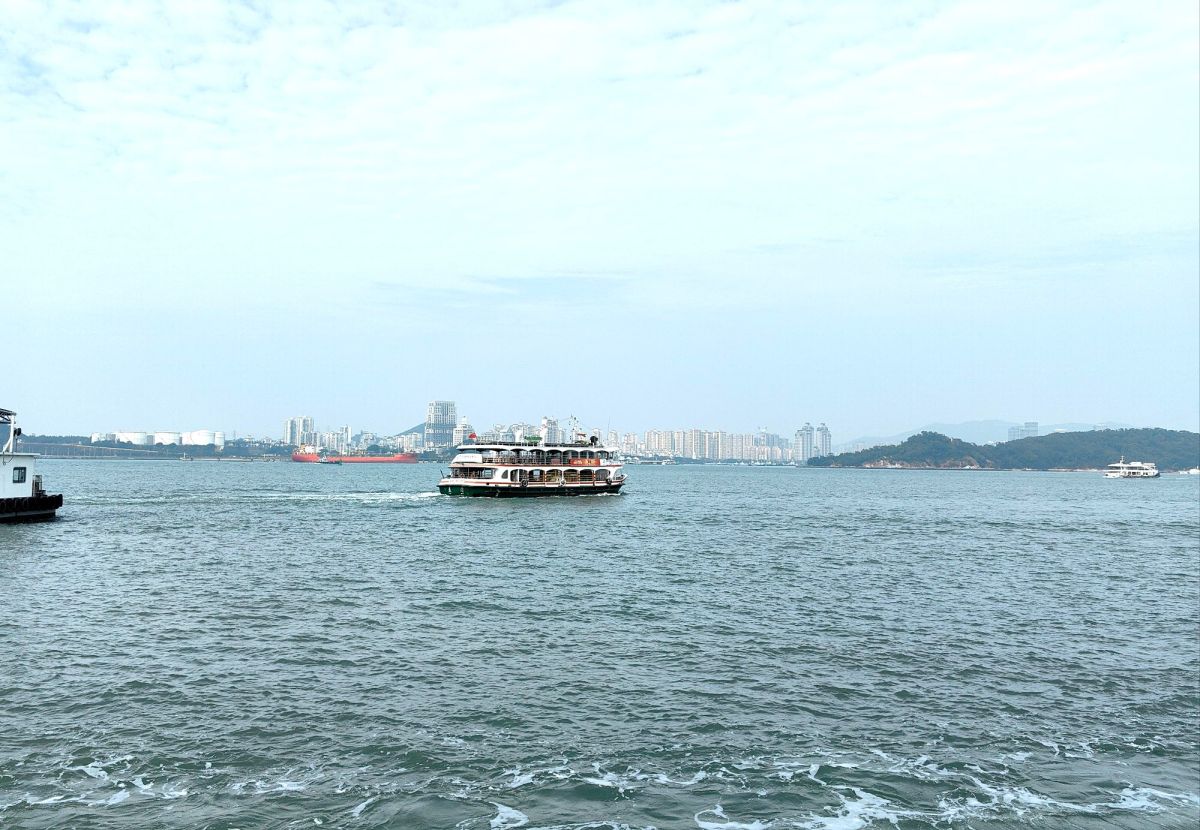
Kulangsu island is always a romantic place for travelers to explore. On December 27th 2024, the morning ferry skimmed across the waters of Xiamen, carrying me toward Nei Cuoao Ferry Point, the gateway to Kulangsu. As the city skyline softened behind me, the island slowly revealed its red rooftops and leafy hills, bathed in the gentle light of dawn. The sea breeze grew cooler, carrying with it a sense of anticipation—of slower rhythms, hidden gardens, and the music-filled streets waiting just beyond the pier.
鼓浪屿自古便是旅行者心中的浪漫归处。2024年12月27日清晨,渡轮划过厦门的海面,载着我驶向这座岛屿的门户内厝澳渡轮码头。身后的城市天际线渐渐退去成一抹柔影,前方的岛屿却缓缓浮现:红瓦屋顶点缀在葱郁的山丘间,尽情沐浴在温柔的晨曦里。清凉的海风拂面,吹来一缕期许——那是对码头彼岸缓慢的生活节奏、隐秘的花园,以及充盈着音乐的街巷的些须期待。

After I arrived at the island in the morning, the first glimpse of it was the beach. Beach on Kulangsu is not the selling point of this island but it is still beautiful enough. It stretched like a pale ribbon along the edge of the island, its sand soft and fine beneath bare feet. The waves lap gently, leaving fleeting patterns of foam that glisten under the sun, while children’s laughter drifts across the breeze. Here the horizon was wide, the sea was calm, and the soft sand was a quiet comfort for travelers who came to rest by the water’s edge.
清晨抵达鼓浪屿,最先映入眼帘的便是一片沙滩。它或许不是这座岛屿最耀眼的名片,却自有一份恬静之美。沙滩宛若一条浅色的缎带,环绕在岛屿的边缘,细腻柔软的沙粒在脚下温润舒适。海浪轻轻拍打岸边,散落的泡沫在阳光中闪烁着微光,伴随着孩子们随风传来的笑声,勾勒出一幅温柔的画面。这里视野辽阔,海面宁静,柔软的沙滩为徜徉水边的旅人带来片刻安宁与慰藉。

Automobile is not allowed on this island, so the only option is to walk along the sea slowly. This long curling bridge built on the sea seems to dance with the sea breeze, their arches tracing elegant curves above the tides. From the railing, I watched the waves rushing in from the horizon and breaking against the rugged cliffs below. Each crash of white foam is a rhythm, echoing like nature’s drumbeat against the stone, while the bridges carry me forward as if floating between sky and sea. It is a place where footsteps slow, and the vast power of the ocean meets the quiet beauty of human design.
岛上禁止汽车通行,唯一的方式便是沿着海岸缓缓漫步。那条横跨海面的蜿蜒长桥,似乎随着海风轻舞,桥拱在潮汐之上勾勒出优雅的弧线。我伫立于栏杆旁,望着海浪自天际奔涌而来,拍击下方崎岖的悬崖。每一次白色浪花的炸裂,都是大自然的鼓点,敲击在岩石之上,而桥梁则承载着我的脚步,仿佛将我引向漂浮于海天之间的境界。在这里,步伐放缓,浩瀚的海洋与人类匠心的静美交织成一曲和谐的乐章。
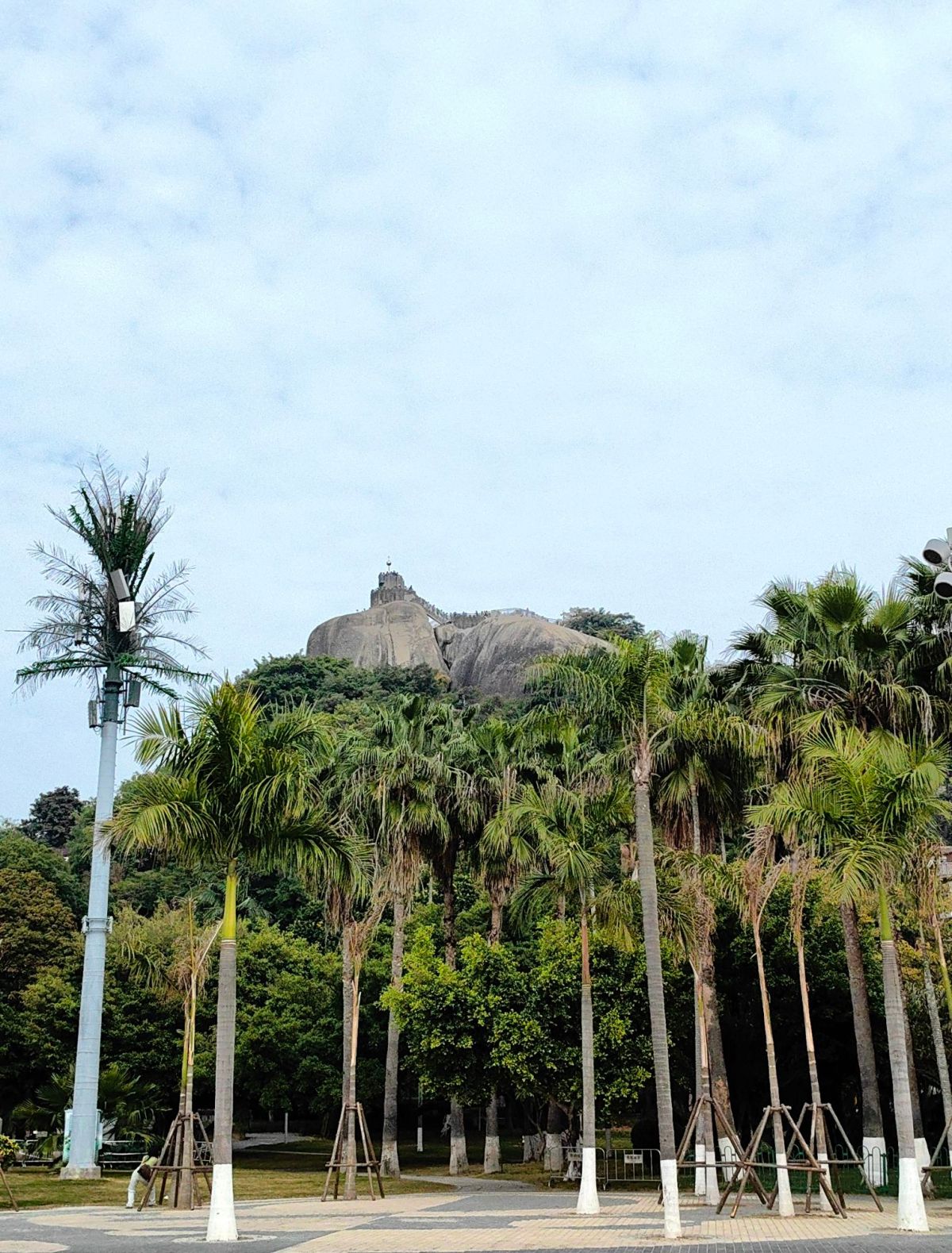
Towering trees at the seaside rose like silent guardians of the island, their trunks weathered yet steadfast, their crowns heavy with shimmering green. Sunlight filtered through the leaves in shifting patterns, dappling the stone paths and courtyards below. When the sea breeze drifted inland, the branches swayed gently, whispering as if carrying stories of travelers long past. Looking up from below, the Sunlight Rock seems impossibly high, like a natural monument etched with shadows and light.
海边的参天大树静静矗立,如同守护岛屿的巨人。它的树干历经风霜,依旧坚韧挺拔;繁茂的树冠生机盎然,散发出深沉而浓烈的绿意。阳光穿透叶隙,在石板路与庭院间洒下斑驳的光影。海风轻拂,枝叶摇曳,仿佛在低声诉说远古旅人的故事。抬头仰望,日光岩巍然耸立,宛若一座由光与影雕琢而成的天然纪念碑。

My travel route is from the Nei Cuoao Wharf in the west to the Sunlight Rock in the south, then to the Haoyue Park in the east, finally to the residence area in the central part. Sunlight Rock, the highest point on Kulangsu Island offers travelers both a natural wonder and a historic landmark. Its rugged cliffs are composed of granite, weathered over centuries into jagged yet graceful forms. From below, it appears almost vertical and looks very impressive.
我的行程自西面的内厝澳码头启程,向南攀至日光岩,再东行至皓月园,最终抵达岛屿中央的居民区。日光岩是鼓浪屿的至高点,不仅是自然的杰作,更是历史的丰碑。它由花岗岩嶙峋堆叠而成,历经数百年风化,雕琢出峥嵘而秀美的姿态。从山脚仰望,其岩壁几近垂直,气势巍峨。
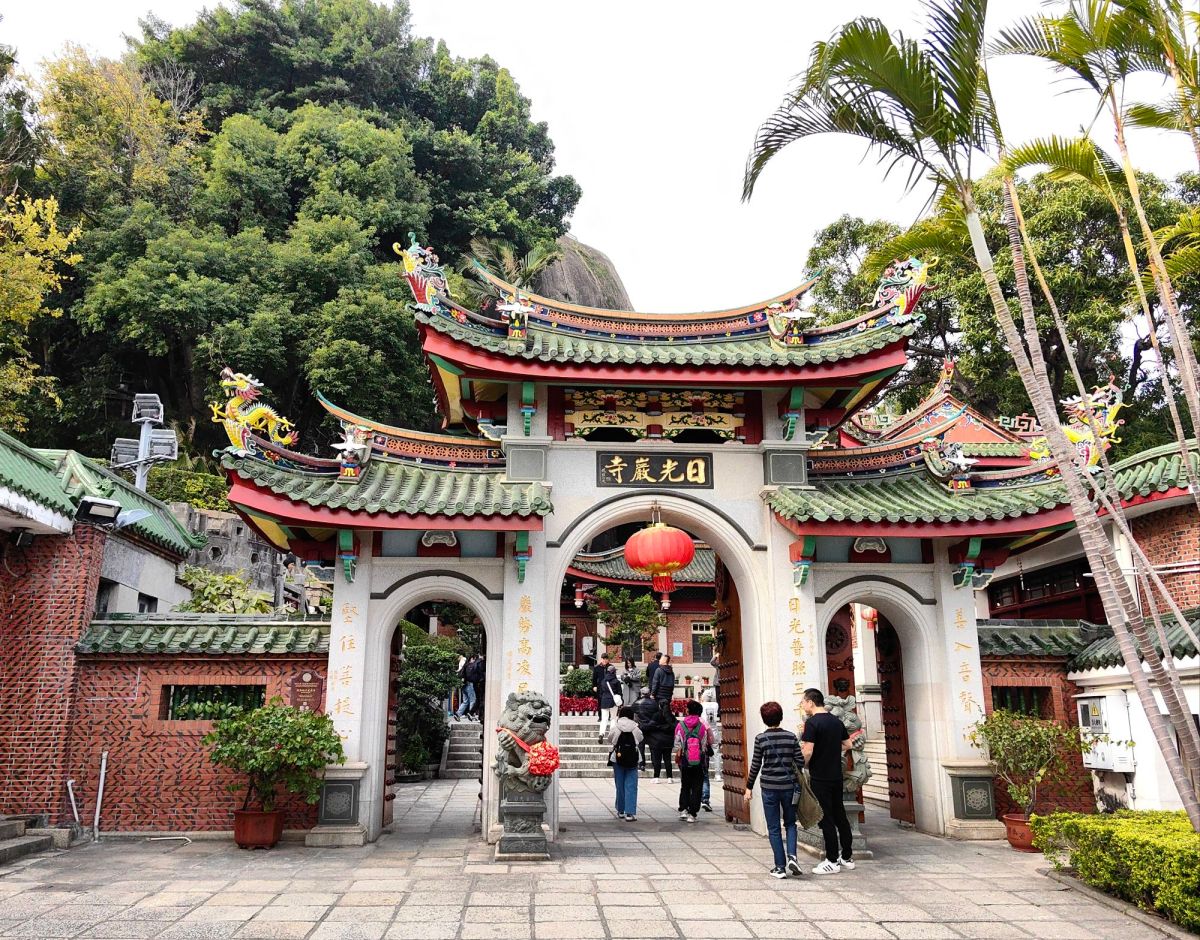
Near the summit of Sunlight Rock, the Sunlight Temple is a serene retreat that seems to float between sky and sea. Its crimson walls and green-tiled roofs stand in gentle contrast to the rugged granite cliffs, while the incense smoke drifting from its altars adds a fragrant softness to the salty sea breeze. It is one of Kulangsu’s oldest religious sites, with roots tracing back to the Ming and Qing dynasties.
日光寺位于日光岩顶峰附近,静谧幽远,仿佛悬浮于海天之间。深红的寺墙与碧绿的琉璃瓦,与嶙峋的花岗岩峭壁相映成趣;自祭坛缭绕而出的袅袅香烟,与咸润的海风交织,添上一缕清芬。作为鼓浪屿最古老的宗教圣地之一,它的渊源可追溯至明清时期。

Inside the courtyard, carefully carved wooden beams and delicate statues reflect traditional Chinese temple artistry. Potted plants and small trees are carefully arranged along the stone pathways. Fragrant flowers peek from ceramic pots, and miniature bonsai trees twist gracefully and elegantly in the gentle breeze in this tranquil courtyard.
庭院之中,木梁雕饰精美,神像玲珑雅致,尽显中国传统寺庙的艺术气韵。石径两侧,盆栽与小树错落有致,仿佛静候来客。陶罐里,馥郁的花朵探首而出,微型盆景随风轻摇,流露出一份静谧与雅趣。

The path to the summit winds through lush vegetation, shaded by tall palm trees and clusters of banyans, with small resting spots offering glimpses of the surrounding sea. The red roof-tops are one of the most distinctive features of Kulangsu’s landscape. In the late 19th centuries, many Chinese merchants and families who had lived in Southeast Asia or Europe returned to Kulangsu. They brought with them Western architectural styles, where red-tiled roofs were common. Red clay tiles were durable and well-suited to the island’s humid, coastal climate. They shed rain efficiently and resisted the salty sea breeze better than thatched or flat roofs.
通往山顶的小径蜿蜒穿过葱郁的植被,高耸的棕榈与成片的榕树交织掩映,沿途设有小憩之处,可远眺一望无际的海景。鼓浪屿最具代表性的风貌之一,便是点缀在绿意之间的红色屋顶。自19世纪末起,许多曾旅居东南亚或欧洲的华商与家族陆续归来,他们将西方建筑风格融入岛上的传统环境,使红瓦屋顶随处可见。由红粘土烧制的瓦片坚固耐久,极为适合潮湿的海岛气候,不仅能有效遮挡雨水,更能比茅草或平屋更好地抵御扑面的咸湿海风。
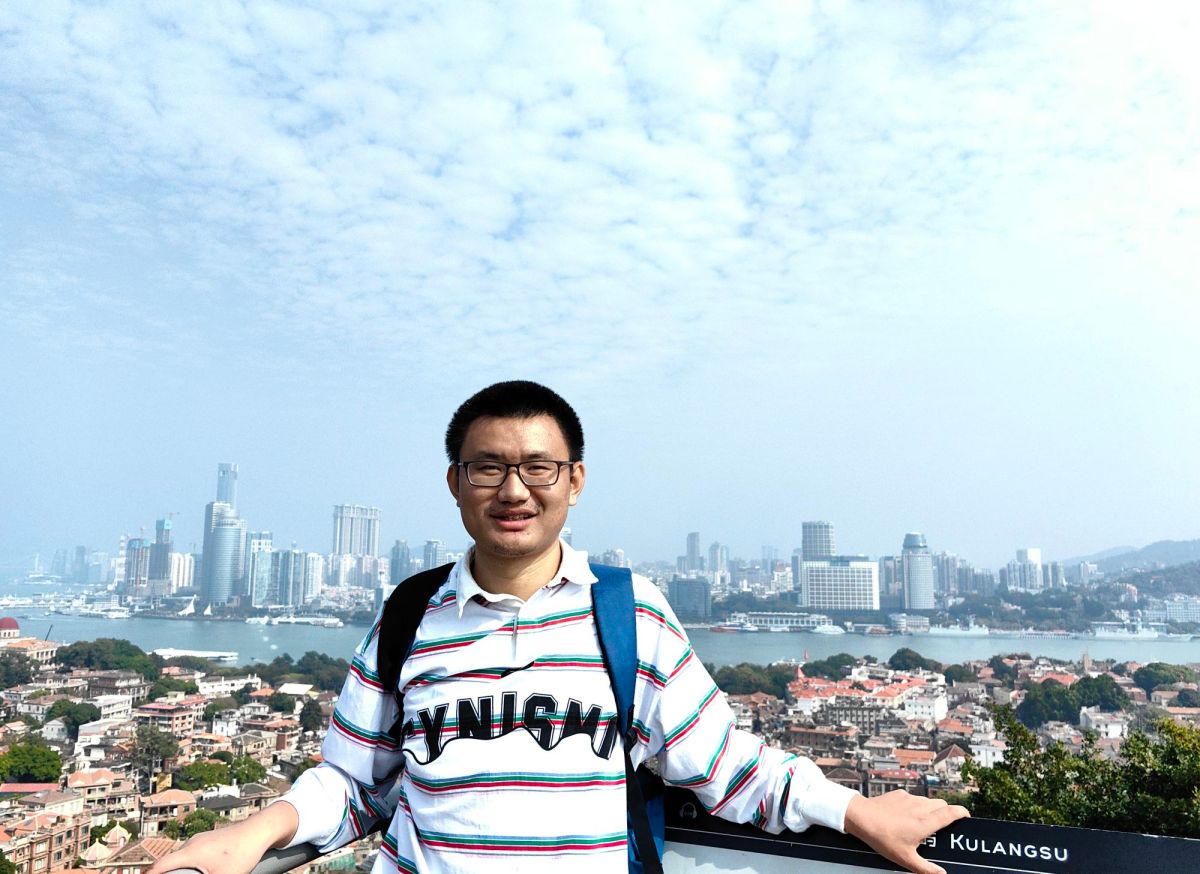
The rock is a commanding position, allowing visitors to gaze across the island and the surrounding sea. At the top, the sea breeze is strong and refreshing, and the panoramic view is really breathtaking. I could see clearly the undulating coastline of Xiamen, the sparkling waters surrounding Kulangsu, and the red-roofed villas dotted across the island all unfold beneath my feet. The sea of red rooftops is like a mosaic of history: a blend of Chinese tradition, overseas influence, and the island’s role as a hub of cultural exchange.
日光岩居高临下,俯瞰整座岛屿与四周蔚蓝的大海。登上山顶,海风清冽劲爽,眼前的全景令人屏息:厦门起伏的海岸线尽收眼底,鼓浪屿周围的海面波光粼粼,岛上星罗棋布的红顶别墅一一展现。这片红顶别墅群宛如一幅历史的马赛克画卷,将中国传统建筑、海外风格与岛屿作为文化交流枢纽的独特身份巧妙融合。

After going down from the top of Sunlight Rock, next I visited the Shuzhuang Garden which is one of the island’s most beautiful places. Here classical Chinese landscape design meets the island’s coastal beauty. It was built in 1913 by Lin Erjia, a wealthy overseas Chinese merchant, as a private seaside villa in memory of his father. This is the statue of the owner Lin Erjia.
从日光岩顶下来后,我接下来参观了菽庄花园,它是岛上最美的地方之一。这里融合了中国古典园林设计与岛上的海滨美景。它是由富豪华侨林尔嘉于1913年建造的一座私人海滨别墅,以纪念他的父亲。这张照片是别墅主人林尔嘉的雕像。

The garden is famed for its clever use of space, following the traditional Chinese principle of “借景” (borrowing scenery). Pavilions, winding corridors, and moon gates frame the shifting views of the sea, distant islands, and the garden’s own bridges and rockeries. Every turn seems to reveal a new scene—quiet ponds reflecting the sky, bamboo groves whispering in the wind, or stone steps leading down to the shore where waves gently lap against the rocks. It seamed that I was placed in a flowing Chinese landscape painting.
这座园林以巧妙的空间布局著称,完美体现了中国传统的“借景”理念。亭台楼阁、蜿蜒曲折的回廊与幽雅的月门,将海景、远方岛屿以及园内的小桥流水、假山巧妙串联。每一次转角,仿佛都会呈现新的画面——静谧的池塘映照着天空,竹林在微风中轻轻低语;沿着石阶走向岸边,海浪温柔地拍打着岩石,恍若置身一幅流动的山水画卷。

In this limited area, it includes many artificial hills, winding paths, and groves of bamboo and pine which reproduce the feeling of mountain landscapes within a compact space. Small waterfalls, rockeries, and ponds complete the miniature world of hills and streams, inviting visitors to wander as if in nature itself.
在这有限的空间里,错落有致的假山、蜿蜒曲折的小径、竹林松林,在紧凑的空间中重现了山峦叠嶂的景象。小瀑布、假山、池塘,构成了山水的微缩世界,让游客仿佛置身于大自然之中。

From within Shuzhuang Garden, slender stone bridges curve outward like graceful arms reaching toward the sea. Their paths are never straight; instead, they twist and turn in gentle zigzags, following the classical garden tradition of slowing one’s pace and revealing scenery step by step. Low railings frame the edges, allowing the sound of waves and the salty breeze to flow freely across the walkway like spirits.
从菽庄花园内眺望,纤细的石桥如同伸向大海的优雅手臂,缓缓蜿蜒而出。桥面并非笔直,而是曲折回环,恰似古典园林中“步步缓行,景致渐现”的意趣。低矮的栏杆轻轻环绕,任海浪的吟唱与咸风的拂面自由流淌在桥上,增添几分闲适与灵动。
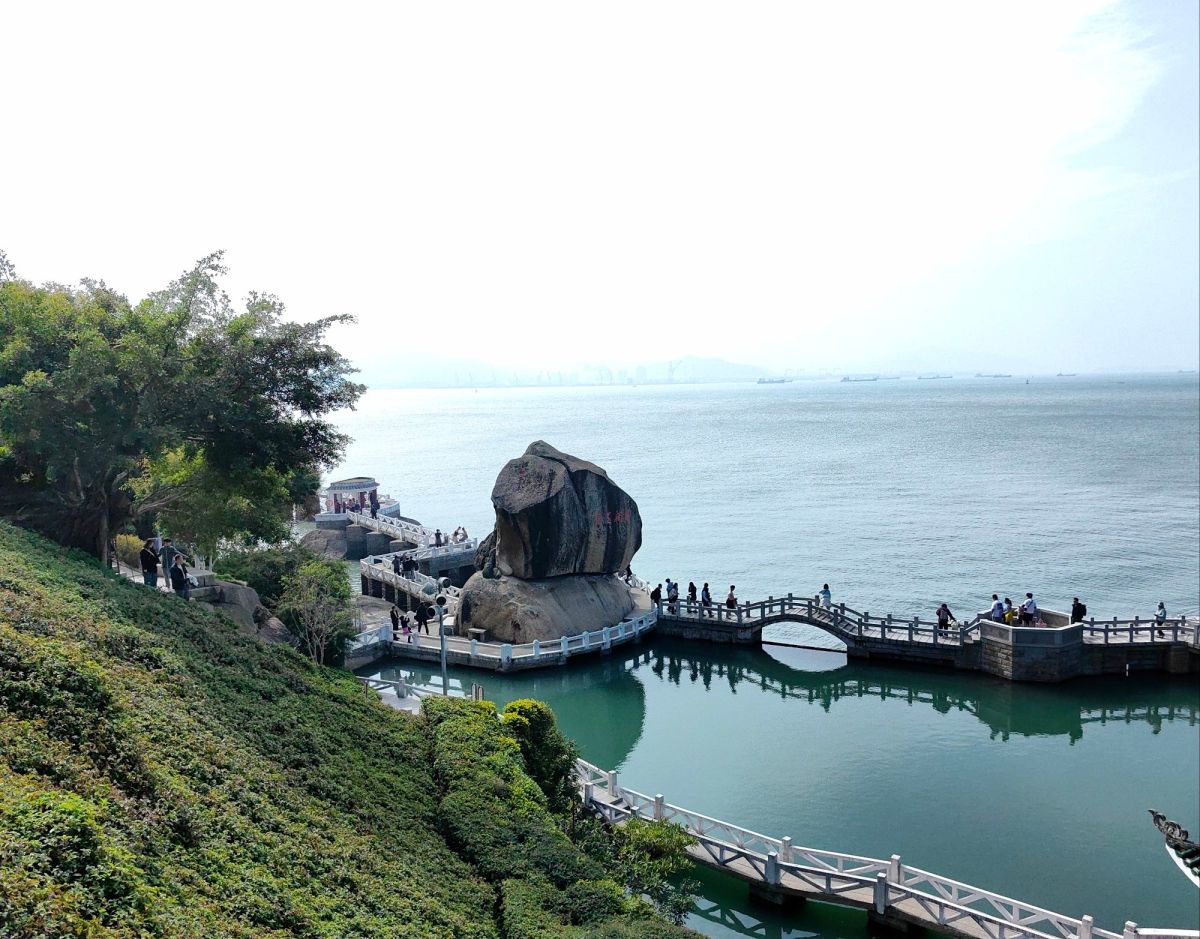
As I crossed the bridge, the view shifted constantly. One moment was framed by a round moon gate, the next opening wide to the endless horizon. The bridges seemed to hover between two worlds: behind me, the calm rockeries, bamboo groves, and pavilions of the garden; ahead, the vast, untamed sea which tide was high, and waves surged and crashed beneath the arches.
走过桥,眼前的景色不断变幻:忽而是一道圆形月门,忽而又豁然开朗,直通无垠的地平线。栈桥仿佛悬浮在两个世界之间。身后是花园中静谧的假山、竹林与亭台楼阁;前方是浩瀚的大海,潮水涌动,波涛翻滚,在桥下奔腾不息。
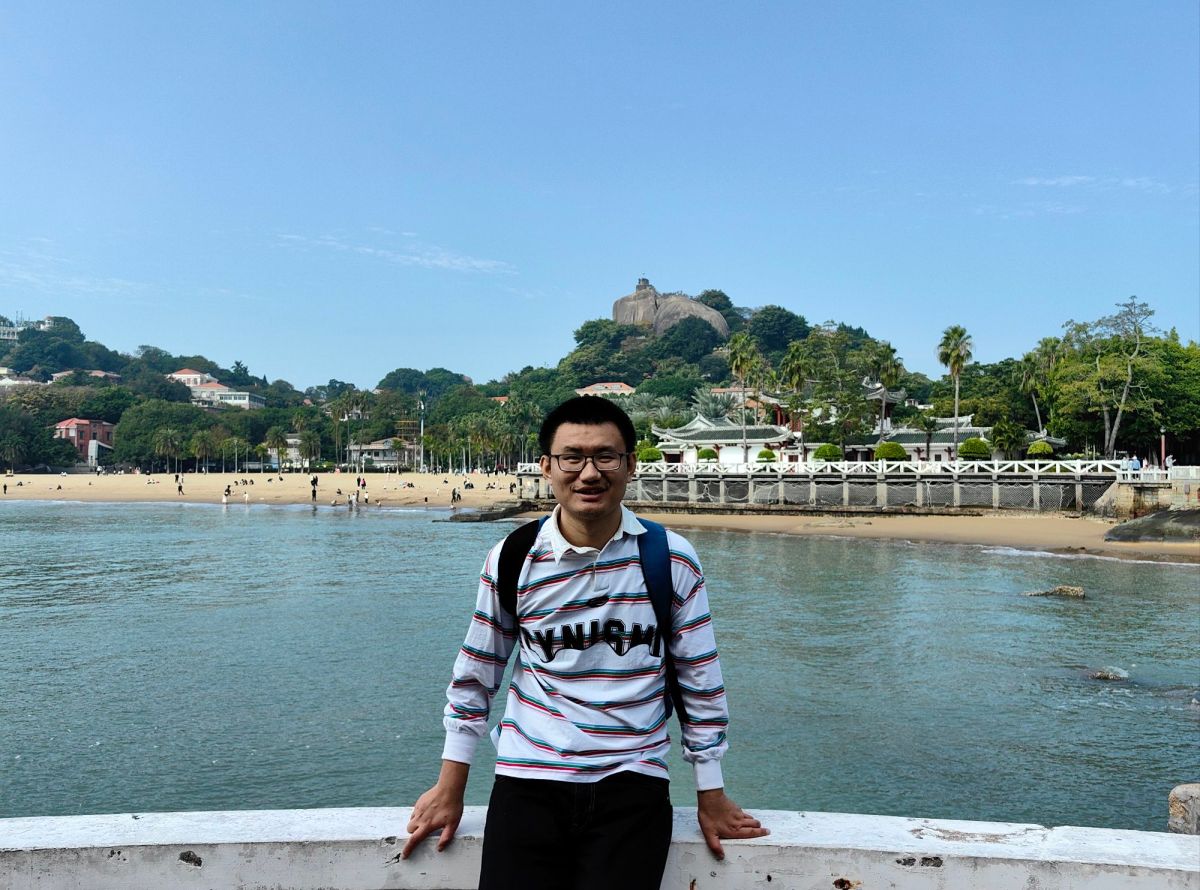
Walking through Shuzhuang Garden, I felt as if I had stepped into a living painting that slowly revealed itself with every turn. The zigzagging bridges drew me closer to the sea, and when the horizon suddenly appeared through a moon gate, it felt like a surprise being revealed. Standing on a bridge where the garden meets the ocean with Sunlight Rock at the backdrop, I felt that all noise and worry seemed to dissolve into the rhythm of the sea, leaving only a quiet joy.
漫步于菽庄花园,仿佛步入一幅鲜活的画卷,随着每个转角的延展,画卷徐徐展开。蜿蜒的桥将我引向大海,当地平线透过月门突然显现,如同一份悄然揭开的惊喜。站在花园与海水交汇的桥上,以日光岩为背景,所有喧嚣与烦恼仿佛随波逐流,只留下静谧而纯粹的喜悦。

The Piano Museum near the Shuzhuang Garden is the first of its kind in China. Opened in 2000, the museum reflects the island’s reputation as the “Island of Music” and its deep-rooted love for piano culture. The museum is housed in elegant garden pavilions surrounded by flowers and plants.
菽庄花园附近的钢琴博物馆是中国首家钢琴博物馆。该博物馆于2000年开馆,体现了这座岛屿 “音乐之岛”的美誉以及当地民众对钢琴文化的深厚热爱。博物馆坐落在雅致的花园亭阁之中,周围环绕着鲜花绿植。

The hall displays more than a hundred pianos from around the world. Many of them are rare and antique instruments, some dating back centuries. Walking through the museum, I saw some famous pianos from the 18th century like Blüthner and Steinway & Sons. They are decorated with delicate carvings, and grand pianos once played in concert halls and noble salons. Each piece tells a story of craftsmanship, artistry, and the journey of music.
大厅里展出了来自世界各地的一百多架钢琴。其中许多都是稀有的古董乐器,有些甚至可以追溯到几个世纪以前。漫步博物馆,我看到了例如步吕特纳和施坦威等一些18世纪的著名钢琴。它们装饰着精美的雕刻,还有一些曾经在音乐厅和贵族沙龙中演奏的三角钢琴。每一架钢琴都向我讲述着各自的工艺、艺术和音乐之旅的故事。
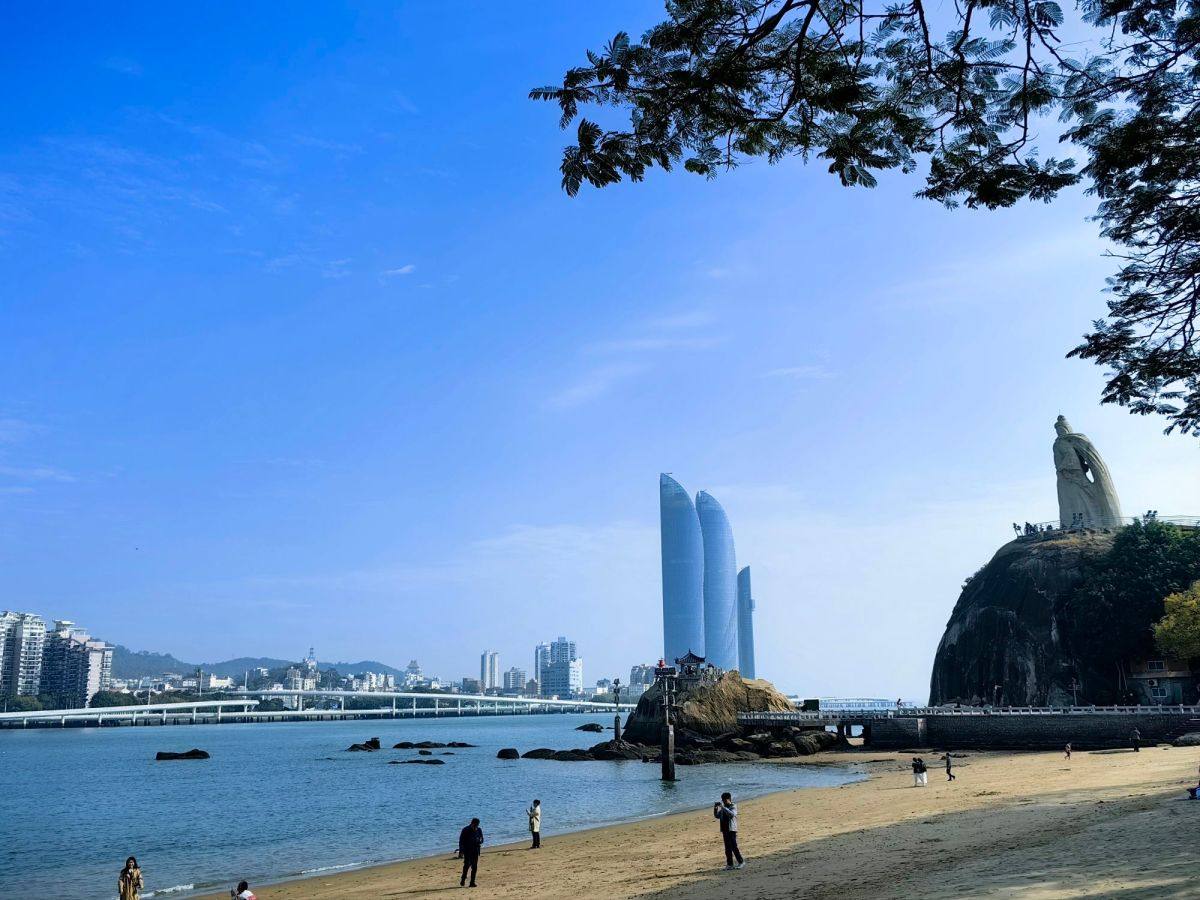
In the afternoon, I walked along the seaside of Kulangsu which felt alive with energy. The sea sparkled under the sun, waves rolling gently toward the stone promenade. At the far end, Xiamen’s skyline gleamed in the distance. Walking further along the curve of the shore, the huge statue of Zheng Chenggong came into view, standing tall on the rocks above the sea. His gaze was fixed firmly toward the horizon. Beneath him, the waves crashed against the cliffs, as if echoing his determination.
午后,我漫步在鼓浪屿的海滨,感受着这里洋溢的生机与活力。阳光洒在海面上,波光粼粼,海浪轻柔地拍打着石板路。远处,厦门的天际线闪烁着迷人的光芒。沿着海岸线缓缓前行,郑成功的巨大雕像映入眼帘,矗立于海面之上的岩石之上。他的目光坚定而深邃,凝视着遥远的地平线。海浪拍打着岩石,在他身下激起阵阵回响,仿佛回应着这位民族英雄不屈的意志。

When I looked up at the statue, I imagined that he set sail from these shores in 1661, driving out the Dutch and reclaiming Taiwan, turning Xiamen into a stronghold of resistance and hope. I began to reminisce the history at the end of Ming Dynasty. Although fighting against Qing Dynasty all through his life, Zheng Chenggong gained high recognition from his enemy due to extraordinary loyalty and courage and after his death, the Kangxi Emperor of Qing praised him with the famous couplet:
“四镇多异心,两岛屯师,敢向东南争半壁。诸王无寸土,一隅抗志,方知海外有孤忠。”
The emperor’s words recognize Zheng as a singular figure of steadfast loyalty and daring, acting alone in defense of the Ming cause while much of the empire wavered. Zheng’s courage and strategic vision marked him as a “solitary loyalist” whose deeds would endure in history. Standing today on Kulangsu, gazing at his towering statue facing the sea, I felt the weight of his loyalty and the determination.
当我仰望这座雕像,脑海中浮现他于1661年从这片海岸起航的场景——驱逐荷兰人、收复台湾、将厦门化作抵抗与希望的据点。思绪随之回溯至明末岁月。郑成功一生与清廷为敌,却凭卓越的忠诚与勇气赢得敌方尊重。其逝世后,清康熙皇帝仍题下名联以示赞誉:“四镇多异心,两岛屯师,敢向东南争半壁。诸王无寸土,一隅抗志,方知海外有孤忠。”
康熙皇帝的挽联承认郑成功的忠义无畏、勇敢坚强。在明朝风雨飘摇、举国动荡之际,他独自肩负捍卫江山的重任。凭借非凡的勇气与卓越的战略眼光,郑成功被尊为“孤胆忠臣”,其丰功伟绩必将载入史册。今日,伫立于鼓浪屿,凝视他那面向大海、巍然矗立的雕像,我深切感受到了这位南明义士忠诚为国的分量与坚定抗清的决心。

From the shores of Kulangsu, the view across the water feels like looking into another world. Beyond the gentle rhythm of waves and the red-tiled roofs of the island, Xiamen rises in shimmering glass and steel. Sleek high-rises and soaring towers stretch toward the sky. The contrast is striking. On one side, it’s Kulangsu’s quiet gardens, winding lanes, and echoes of history; on the other, it’s the bold skyline of a modern metropolis. It made me feel as though past and present are meeting in a single frame.
从鼓浪屿的岸边眺望,对岸的景色仿佛属于另一个世界。轻柔的海浪拍打着岸边,岛上红瓦屋顶在阳光下温暖映衬,而厦门的玻璃与钢铁建筑在光影中拔地而起,现代高楼直冲云霄,光鲜亮丽。两者形成鲜明对比:一边是鼓浪屿静谧的花园、曲折的小巷和历史的回响;另一边是现代都市的雄伟天际线。此刻,我仿佛看到过去与现在在同一画面中交汇。

From the late 19th to early 20th century, luxurious villas and mansions in style like Mediterranean, Baroque, Rococo, and Art Deco were built on this island. Missionaries from Europe built churches, schools, and hospitals, adding Gothic spires, stained glass windows, and European-style chapels to the landscape. Meanwhile, traditional Chinese temples and gardens continued to flourish, preserving local spiritual and aesthetic traditions. Nowadays, Kulangsu retained most of its historic buildings. I wandered through the small lanes and wondered at the mixed cultures here.
19世纪末至20世纪初,岛上陆续兴建起兼具地中海、巴洛克、洛可可及装饰艺术风格的豪华别墅与庄园。来自欧洲的传教士则建造了教堂、学校与医院,为岛屿增添了哥特式尖顶、彩色玻璃窗以及精致的小教堂风貌。与此同时,中国传统的寺庙与园林依旧生机勃勃,承载着当地独特的精神与审美传统。如今,鼓浪屿大部分历史建筑依然完好保存。我漫步于曲径幽巷之间,仿佛置身于一座多元文化交融的时光画卷之中
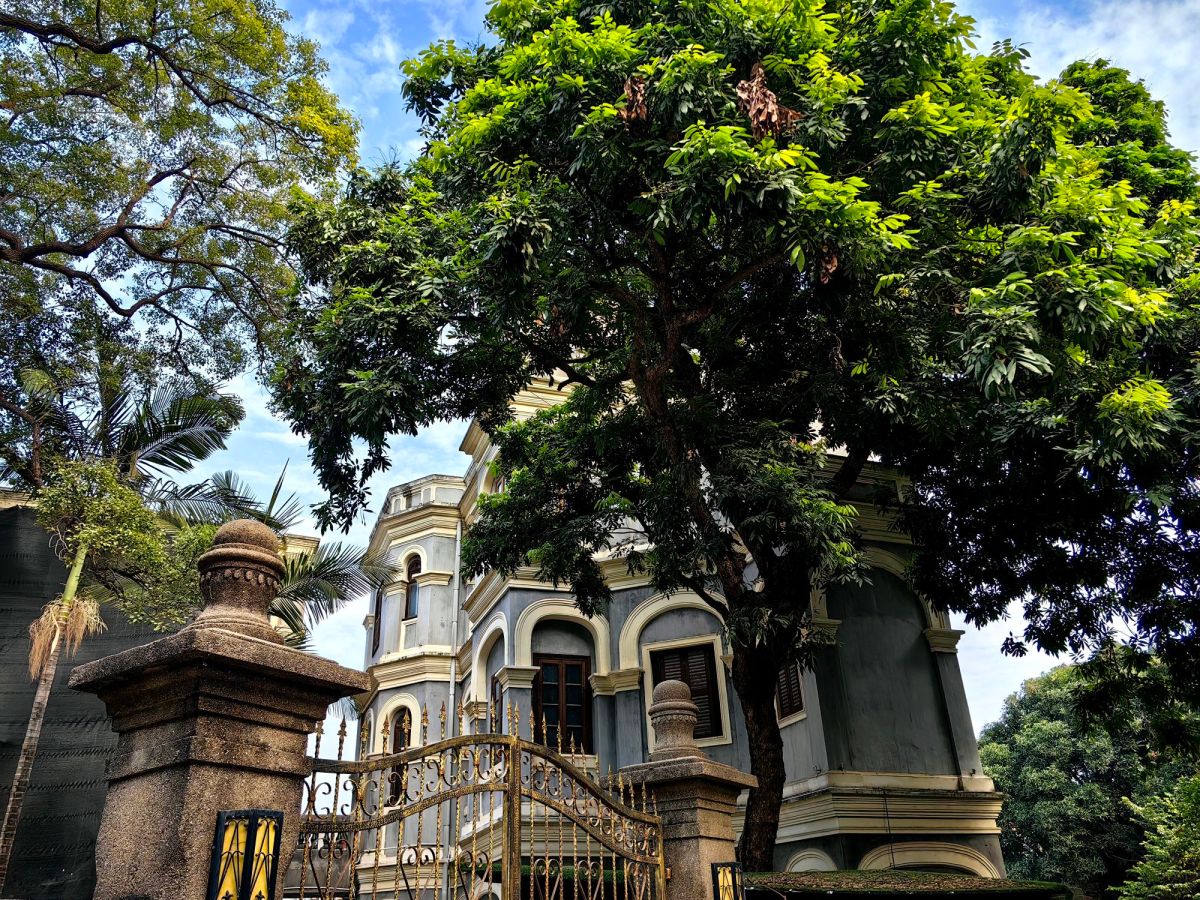
‘Amoy Deco’ is the name given to a unique style that blossomed on this island during the early 20th century. It evolved as returning overseas Chinese merchants and students brought back Western influences, fusing them with Fujianese tradition. The name Amoy comes from the local Hokkien dialect pronunciation of Xiamen. Inspired by the global Art Deco movement, these buildings often feature streamlined facades, angular designs, and decorative motifs such as hexagonal patterns roof, symmetry, and zigzags. Unlike pure Western Art Deco, Amoy Deco integrates local craftsmanship, brick masonry techniques, and Chinese symbolic decorations. Wide verandas, open balconies, and shaded courtyards designed for ventilation in the humid subtropical climate.
“Amoy Deco”指的是20世纪初在这座岛屿上兴起的一种独特建筑风格。这一风格由归国的海外华商与留学生将西方艺术元素带回中国,并与福建本土传统相融合而发展而成。“Amoy”源自当地闽南语对“厦门”的发音。受全球Art Deco运动影响,这类建筑常呈流线型外墙、棱角分明,并装饰有六边形屋顶、对称布局以及锯齿形等图案。不同于纯粹的西方装饰艺术,Amoy Deco巧妙融合了本地工艺、砖砌技术及中国传统装饰元素。宽敞的走廊、开放式阳台与幽静庭院的设计,有效适应了潮湿亚热带气候下的通风需求。

Constructed in 1934, the Trinity Church was built jointly by three Christian congregations to cater to the growing number of worshipers on the island. The church showcases architectural influences rooted in Western ecclesiastical design like brick walls accented by cross motifs, arched windows and a steeply pitched white roof. Its first Sunday service in the renewed sanctuary was held in 2019, marking its restored role as a house of worship for the island’s community.
这座三一教堂建于1934年,由三家基督教会联合兴建,旨在满足岛上日益增长的信徒需求。教堂的设计汲取了西方教会建筑的风格特色,砖墙上点缀着十字图案,拱形窗户高耸典雅,陡峭的白色屋顶更显庄重。2019年,翻新后的圣殿迎来了首场主日礼拜,宣告教堂重新成为岛上社区的精神图腾与礼拜中心。
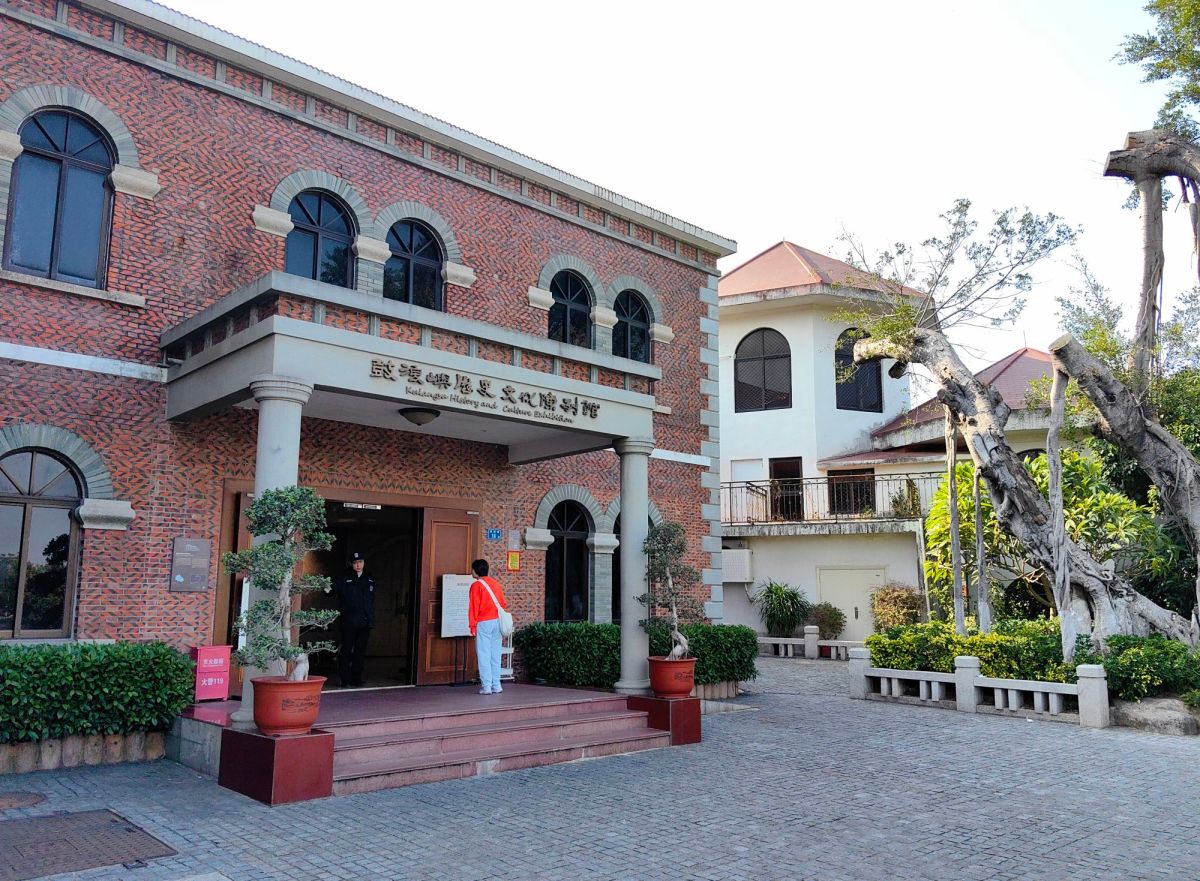
The Former British Consulate is a distinguished example of colonial architecture that reflects the island’s rich international heritage. The building is constructed from ancient Minnan red bricks and granite. The structure showcases a veranda style, which was prevalent in port cities during the 19th and early 20th centuries. In 1843, Xiamen opened to foreign trade, and the British government established a consular office on Kulangsu. Today, it has been repurposed and serves as the Kulangsu Historical and Cultural Exhibition Hall. This transformation allows visitors to explore the island’s rich history and the architectural heritage of its colonial past.
前英国领事馆是殖民时期建筑的杰出典范,体现了鼓浪屿丰富的国际文化遗产。建筑以传统闽南红砖和花岗岩砌成,呈现19世纪至20世纪初港口城市盛行的廊架式风格。自1843年厦门开港通商以来,英国政府便在鼓浪屿设立了领事馆。如今,这座建筑经过改造,成为鼓浪屿历史文化展览馆,让游客得以深入探索岛上的历史风貌与殖民时期的建筑遗产。
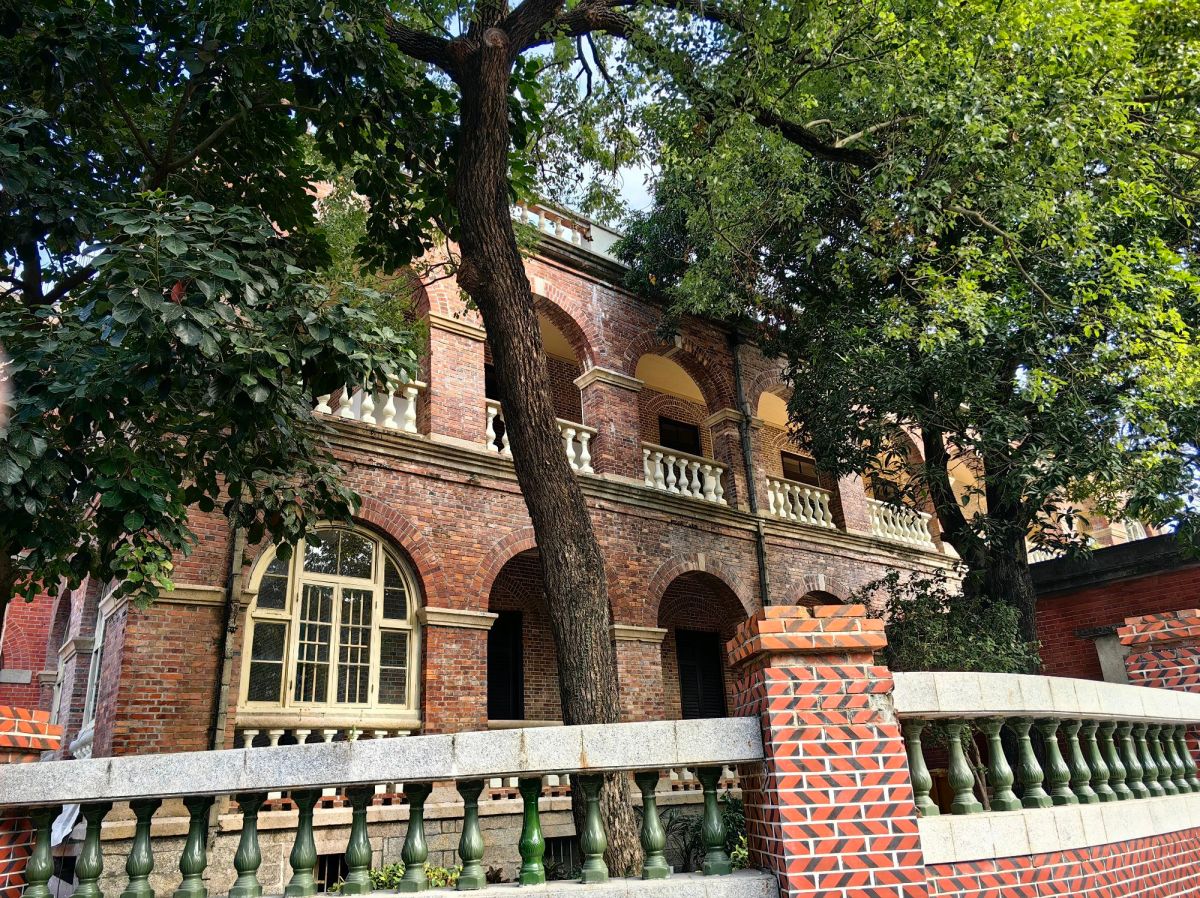
The Former Japanese Consulate stands as a testament to Kulangsu’s rich history as an international settlement. Constructed in 1879, it remains the only 19th-century embassy building still intact on the island. The building is primarily constructed using ancient Minnan red bricks and granite as well like most buildings in this island. The structure exhibits Victorian-style elements with a veranda-style layout, common in cities with open ports, and incorporates wood trusses, I-beams, and concrete slabs in its interior.
前日本领事馆见证了鼓浪屿作为国际殖民地的悠久历史。建于1879年,它是岛上唯一保存完好的19世纪使馆建筑。如同岛上其他建筑一样,整座建筑以古老的闽南红砖与花岗岩砌成,结构中融入了维多利亚风格的元素,采用港口城市常见的廊式布局;内部则巧妙结合了木桁架、工字梁与混凝土板,展现出独特的历史风貌。
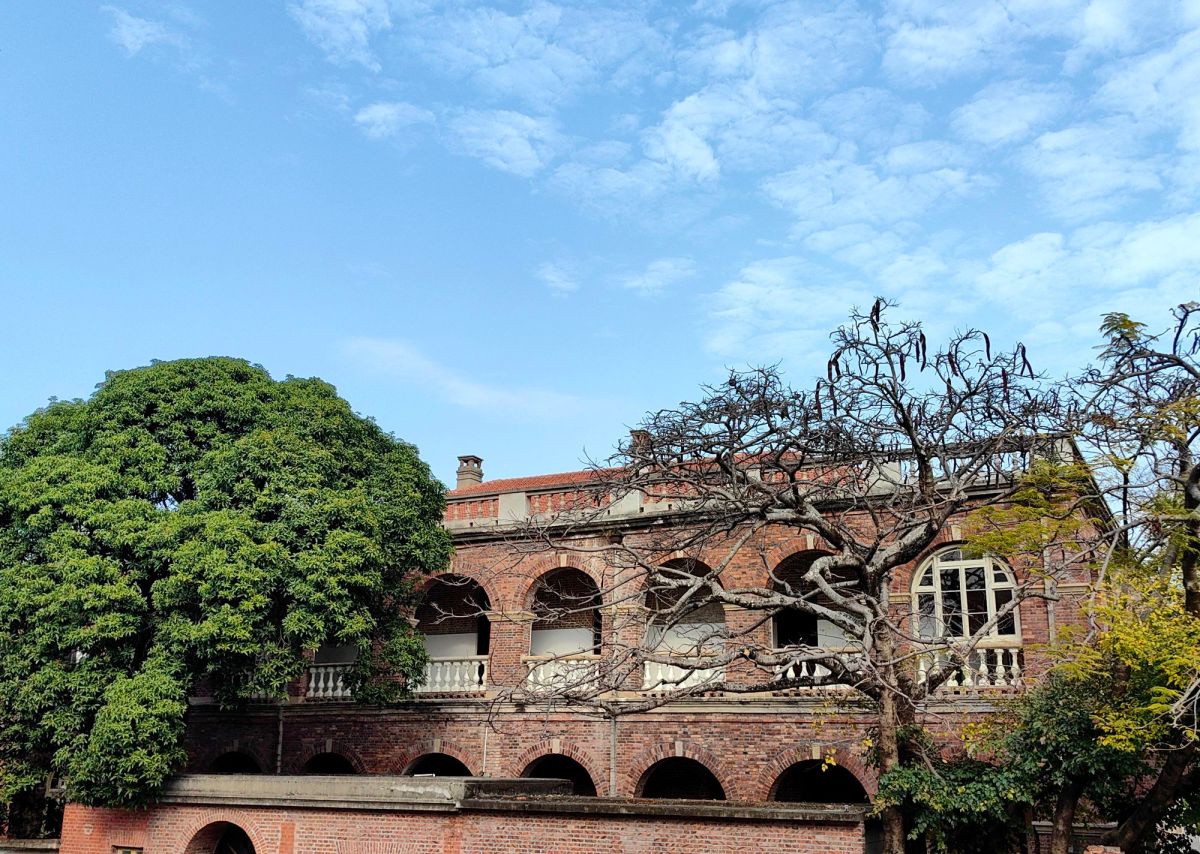
This building does not allow visiting inside so I could only take some photos surrounding it. Its façade, adorned with arched windows and a distinctive red-brick exterior, stands in contrast to the surrounding European-style buildings. Its well-preserved structure offers me a glimpse into the architectural diversity that characterizes the island.
由于这栋建筑不对内部开放,我只能在周围拍几张照片。正面装饰着拱形窗户,外墙由独特的红砖砌成,在周围的欧式建筑群中格外醒目。它保存完好的结构,让我得以一瞥岛上建筑风格的丰富多样。
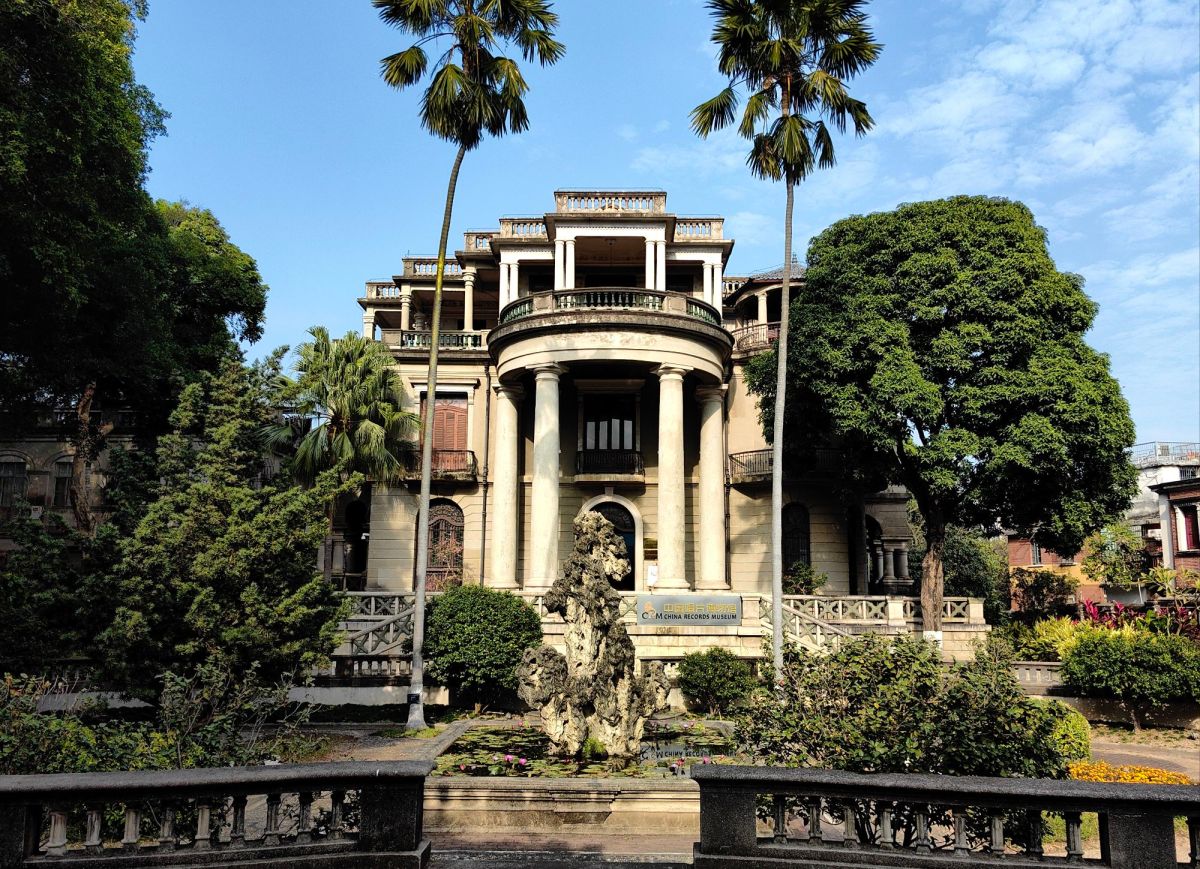
In my opinion, the Huang Rongyuan Villa must be the most elegant and beautiful mansion in this island. The villa built in 1920 reflects a fusion of European classical style and Chinese aesthetics. Its massive granite columns and formal symmetry evoke Roman grandeur. Four giant Tuscan-style granite columns support a semi-circular portico. Rich ornamental details in column capitals, eaves, windows, balconies, and a rooftop adorned with grapevine motifs and balustrades really attract my eyes.
在我眼中,黄荣远别墅无疑是这座岛上最优雅、最迷人的宅邸。建于1920年的它,将欧洲古典风格与中国美学完美融合。巨大的花岗岩柱与对称布局,让人联想到古罗马的宏伟气势。四根雄伟的托斯卡纳风格花岗岩柱支撑着半圆形门廊,而柱头、屋檐、窗户、阳台以及装饰着葡萄藤图案与精美栏杆的屋顶,其繁复细致的装饰着实吸引了我的眼球。

The villa stands within a lush courtyard, over 3,000 m² in size. In the courtyard, the garden is an exquisite fusion of Chinese and Western elements. One highlight is the use of traditional Chinese garden elements like Taihu rocks, winding paths, a pavilion, and a cloud-style rock wall. In contrast, the geometry and symmetry reflect Western villa gardens especially decorated with curved porch and grand Ionic columns. Now, it is home to the China Record Museum, preserving both architecture and musical heritage.
别墅坐落于郁郁葱葱的庭院之中,占地逾3000平方米。庭院花园巧妙地融汇中西风格:一方面,太湖石、蜿蜒小径、雅致凉亭与云纹岩墙彰显中国传统园林的韵味;另一方面,别墅本身的几何造型与对称布局,配以弧形门廊和宏伟的爱奥尼式柱子,又散发出典型西方别墅花园的气度。如今,别墅内还设有中国唱片博物馆,珍藏着丰富的建筑与音乐遗产。

This Fanpo Mansion is celebrated for its rare blend of Chinese craftsmanship and European Rococo style. The gatehouse is particularly notable. It’s the tallest and largest on the island. Rococo influences surface in flourishes of curving lines and decorative sculptures. The gatehouse is crowned with a sculpture of two golden birds holding copper coins, symbolizing wealth and good fortune. The mansion was built in 1927 by a prosperous Chinese-Filipino entrepreneur, in honor of his mother, known as ‘Fan Po’. The exterior is composed of richly hued red bricks contrasted with white trims. The ground floor features a two-story red-brick cloister with graceful arches forming a shaded walkway. A set of elegant stairs ascends to the main entrance.
番婆楼以其罕见的中西工艺融合而闻名,将中国传统元素与欧洲洛可可风格巧妙结合。其门楼尤为引人瞩目,是岛上最高、最宏伟的门楼。洛可可风格的影响在门楼的曲线线条与精美雕塑中展露无遗。门楼顶部雕刻着两只衔铜钱的金鸟,象征财富与吉祥。这座府邸建于1927年,由一位富有的菲律宾华裔企业家建造,以纪念他被尊称为 “番婆”的母亲。外墙以色彩丰富的红砖砌成,辅以白色装饰,形成鲜明对比。一楼设有两层红砖回廊,优美的拱门连成绿荫步道。沿着典雅的楼梯拾级而上,即可通达正门。

There are still some local residents in this island. I could even go to the second floor of the new residential house taking some photos. Life on Kulangsu may unfold under the gaze of countless tourists, but for its local residents, the rhythm is gentler, rooted in routines that have little to do with sightseeing. At dusk, when most tourists have left, the island grows peaceful. Residents stroll along the seaside promenade, and children chase each other under the glow of streetlamps.
岛上仍住着一些本地居民。我甚至可以上到新建居民楼的二楼,拍下几张静谧的生活瞬间。鼓浪屿的日常,在游客的目光下缓缓展开,而对居民而言,却是另一种从容,根植于与观光无关的平凡生活。黄昏时分,当游客渐渐散去,岛上恢复了宁静。居民沿着海滨长廊缓步而行,孩子们在路灯下追逐嬉戏,脚步声与海风一同流淌在暮色中。

Travel in this small island is tiring since I needed to continue walking up and down without rest. Chuncao Tang is situated on the cliff of Pen Holder Hill, offering expansive views of the surrounding landscape. Built in 1933, Chuncao Tang was designed by Xu Chuncao, the president of the Xiamen Construction Association. The villa resembles a Western-style nursing house. Its structure utilizes granite for the wall base, wall pillars, and corridor column. The villa includes a wide corridor outside the living room, providing a space for viewing and cooling off, enhancing the living experience with panoramic views of the surrounding area.
这座小岛上旅行格外疲惫,因为我需要不断地上下攀爬,中途也不得不停下来休息。春草堂座落于笔架山的悬崖之上,视野开阔,能够尽览周围景致。建于1933年的春草堂,由厦门市建筑协会会长许春草设计,别墅仿照西式养老院建造,墙基、墙柱与廊柱皆采用花岗岩。别墅客厅外设有宽敞的走廊,既可观景,又可乘凉,将周围的风光尽收眼底,极大提升了居住的舒适体验。

One of the most amazing buildings on this island must be the HSBC Bank Mansion. It is a three-leaf clover shaped English style villa, completed in 1876, and distinguished by its placement atop the cliff of Pen Holder Hill. I looked up at the high and straight cliff. This building sits solidly on a granite foundation anchored into the cliff’s rock. The mansion’s cliff-top location was purposefully chosen to offer sweeping sea views during both day and night. A colonnaded cloister runs alongside, opening to sea breezes and panoramic views of Xiamen’s Twin Towers and the iconic Bagua Mansion.
岛上最令人叹为观止的建筑之一,非汇丰银行公馆莫属。这座建于1876年的英式三叶草形状的别墅,因矗立于笔架山悬崖之上而闻名。我仰望着笔架山高耸的悬崖,只见公馆稳稳地坐落在嵌入岩石的花岗岩基座上。选址于悬崖之巅,是为了让人无论白天还是夜晚,都能尽览壮阔海景。旁侧,带有柱廊的回廊在海风吹拂下轻轻摇曳,厦门双子塔与标志性的八卦楼尽收眼底。

Before the sun set, the Bagua Mansion revealed itself like a beacon among Kulangsu’s green hills and tiled rooftops. Its bright red dome, rounded and regal, rose above the treetops, immediately catching my eyes. Against the soft sky and glittering sea, the dome shone with a warm glow in the winter chill, resting like a crown on the island’s outline. This distinct profile makes the mansion one of the most recognizable landmarks of Kulangsu. Founded in 1907, the Bagua Mansion was commissioned by Taiwanese businessman. Nowadays, the refurbished mansion became the Organ Museum, housing Chinese most notable collections of pipe organs.
日落前,八卦楼宛如一座灯塔,矗立在鼓浪屿青山绿水与瓦片屋顶之间。那鲜红的穹顶圆润而庄重,耸立于树梢之上,瞬间捕获了我的目光。在柔和的天空与波光粼粼的海面映衬下,穹顶在冬日寒意中散发出温暖光芒,如同一顶皇冠,点缀着岛屿的轮廓。独特的造型让八卦楼成为鼓浪屿最易辨识的地标之一。八卦楼始建于1907年,由一位台湾商人委托建造,如今经过翻新,已成为管风琴博物馆,馆内收藏着中国最著名的管风琴藏品。
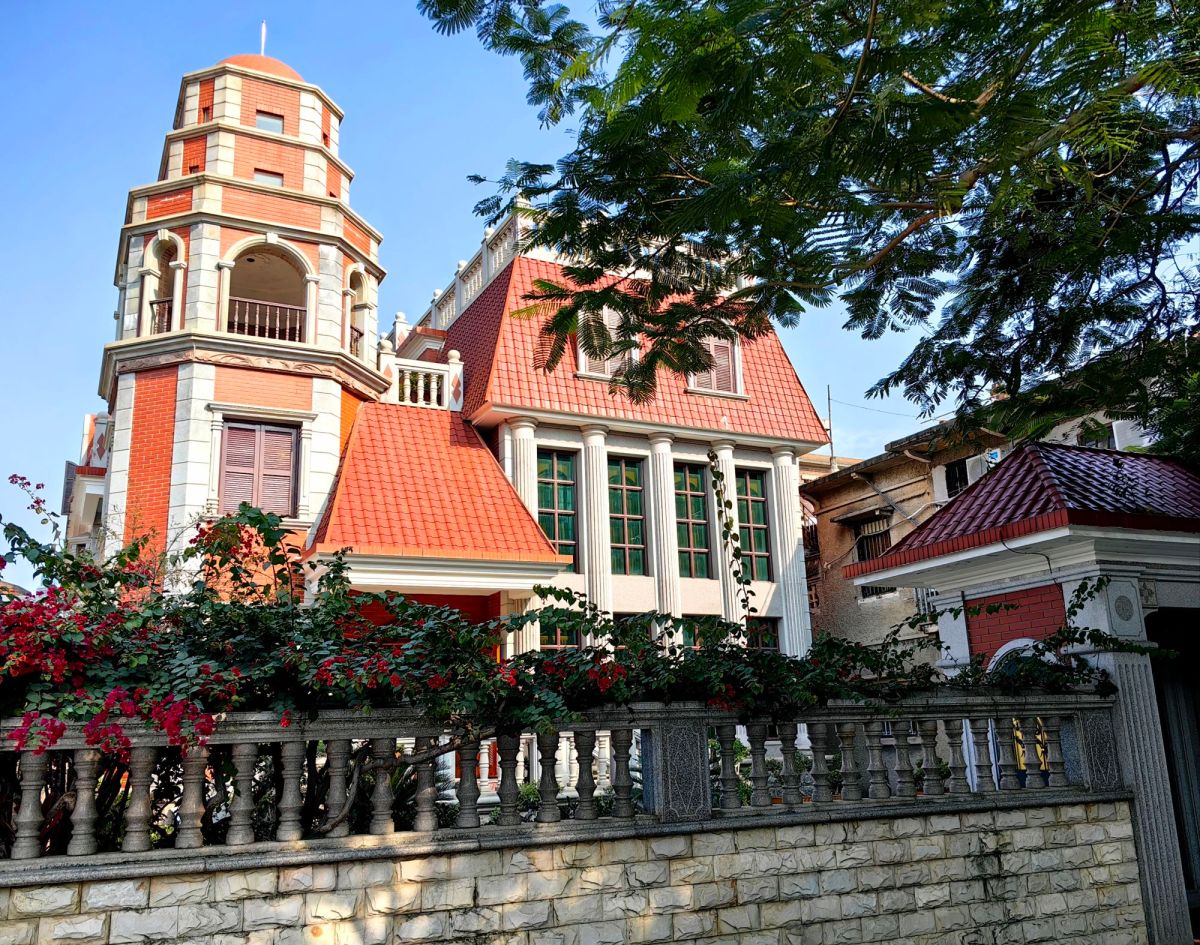
After eight hours of exploring this island on foot, my legs were utterly exhausted. Sauntering through the winding lanes was like stepping into a living museum, where each street and building tells a story of hybrid cultures and architectural fusion. Though time constraints meant I missed many remarkable structures, the glimpses I caught and these intricate details blending East and West made every step worthwhile. This UNESCO site is not just a place to see but a place to feel, where history and artistry coexist in the most vivid way.
徒步探索这座岛屿八小时后,我的双腿早已疲惫不堪。漫步于蜿蜒的小巷中,仿佛走进一座鲜活的博物馆。每条街道、每栋建筑都娓娓诉说着多元文化与建筑风格交融的故事。虽因时间有限错过了许多令人叹为观止的建筑,但那些短暂的瞥见,以及东西方交汇处的精致细节,让我此次旅行的每一步都充满价值。这座联合国教科文组织世界遗产,不仅值得观赏,更值得用心感受;历史与艺术在这里以最生动的方式交融共存。
 Gone like the wind