Before I travelled to Vietnam, I have read the semi-autobiographical novel “The Lover” (“L’Amant”) written by Marguerite Duras. The protagonist, a young French girl, meets her Chinese lover on a ferry crossing the Mekong River. It marks the beginning of their intense love story. The river is frequently mentioned throughout the novel. It reflects the transient nature of their relationship and the passage from adolescence to adulthood. The Mekong River symbolizes the fluidity and impermanence of life and relationships. It mirrors the inner turmoil and emotional currents of the characters, especially the young girl’s complex feelings towards her lover and her family. This novel has left me some light impressions of the Mekong River.
In 2018 December, I had chance to visit the Can Tho city in the south of Vietnam and viewed this river with my eyes. Can Tho is the largest city in the Mekong Delta region. The Mekong Delta is known for its intricate network of rivers, canals, and streams. Its extensive waterways are essential for irrigation, fisheries, and daily transportation. The river cross through Can Tho and flew into the South Sea. This area of water reminds me of the Fontaine in the game Genshin Impact which is surrounded by numerous rivers as well.
Life in Can Tho is deeply intertwined with the river. Many local residents live in stilt houses along the banks, and daily activities such as commuting and socializing often take place on the water. The Mekong River contributes to the region’s rich culinary traditions. Can Tho’s cuisine include fresh fish, shrimp, and an abundance of fruits and vegetables grown in the delta. One day’s trip could make me experience the local life fully.
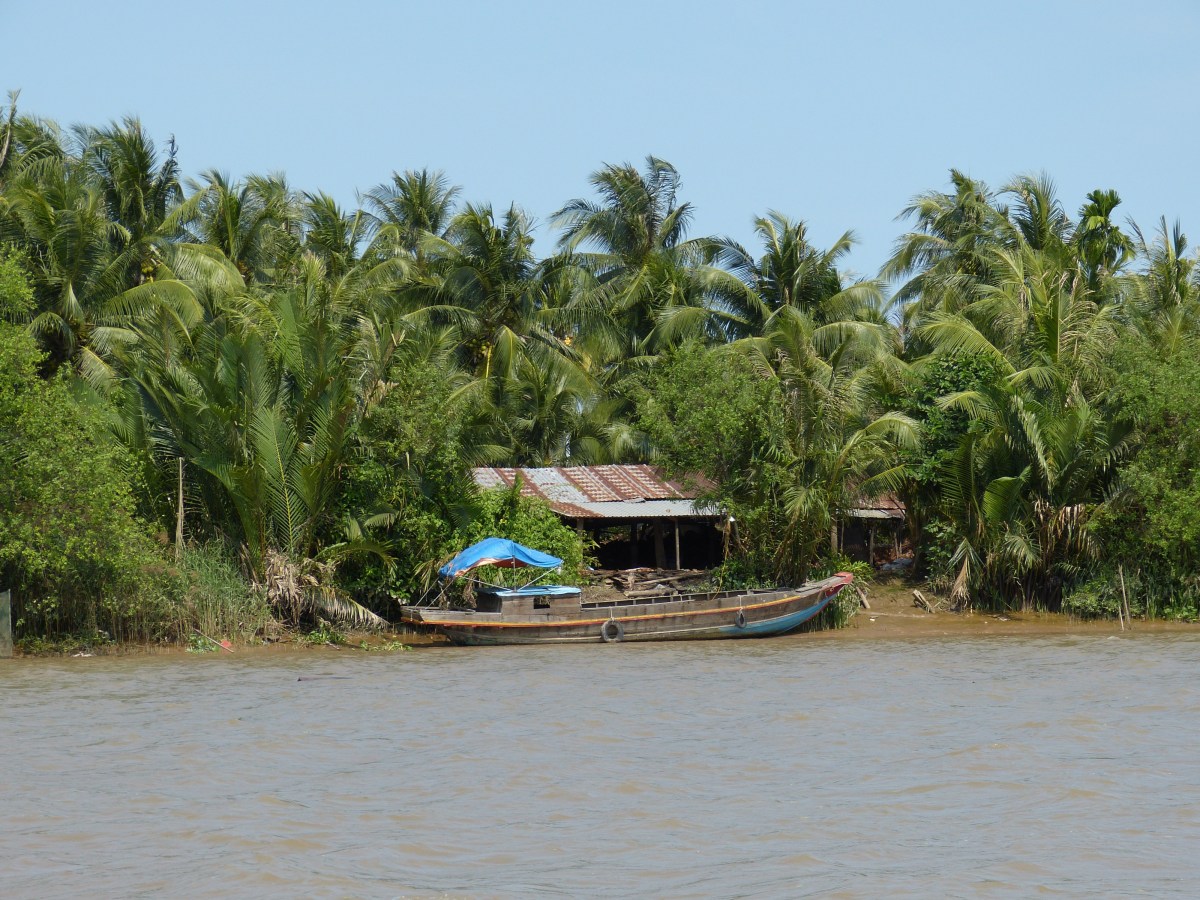
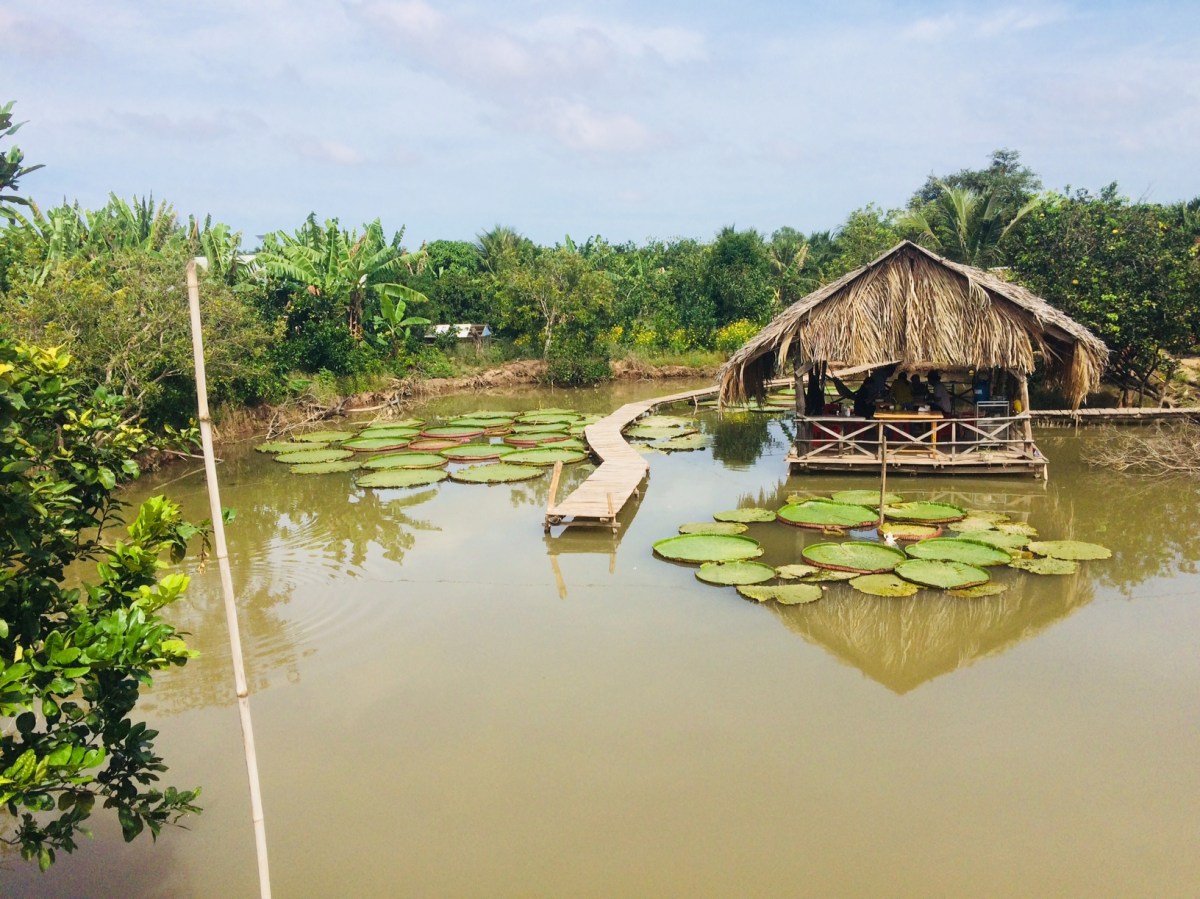
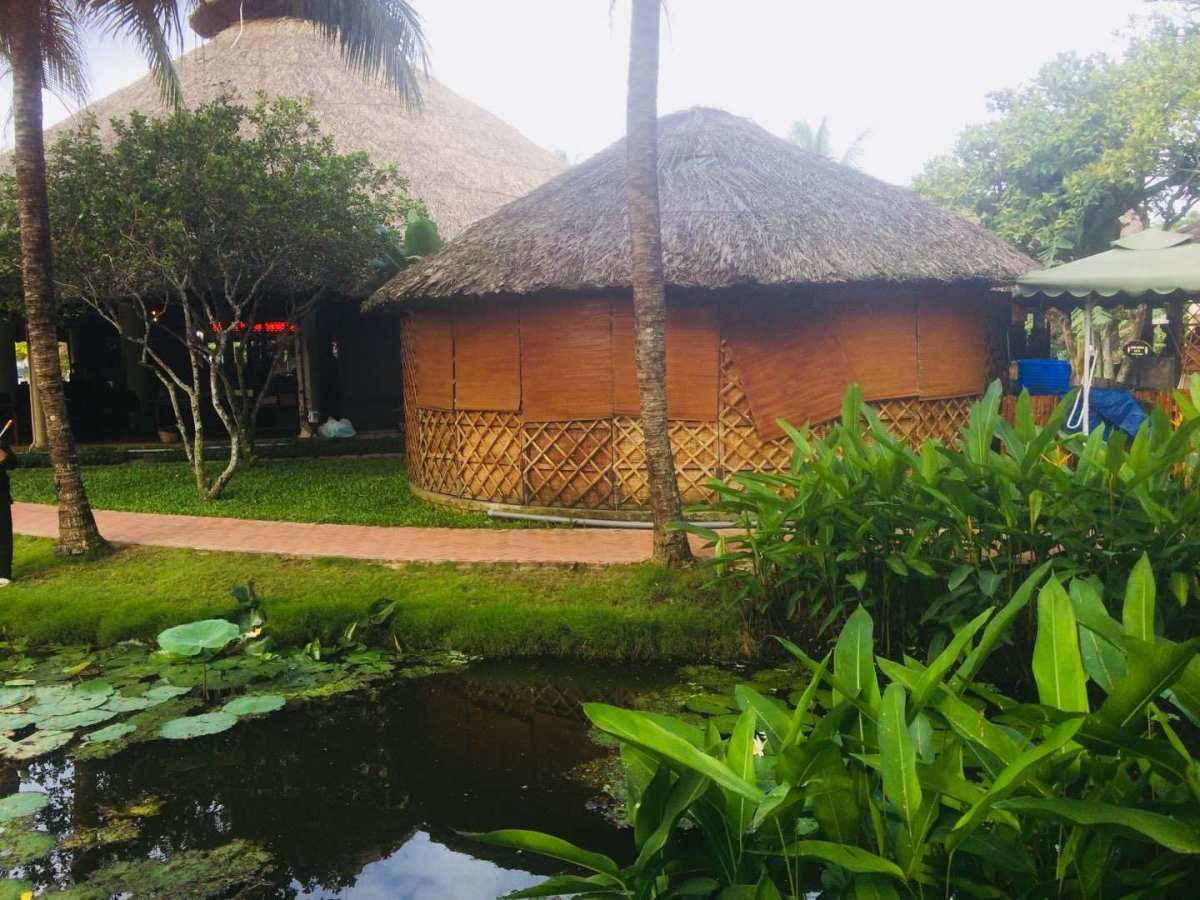
This is one outdoor restaurant on the way of my trip. The delta’s rich soil and extensive waterways create an ideal environment for a wide variety of plants. Lotus and water lily is widely grown in ponds. Its flowers, seeds, and roots are used in cuisine and traditional medicine. In the Mekong Delta, traditional huts are built in many areas. Roofs are typically made from thatch, using leaves from nipa palm or coconut palm. These huts are often built on stilts to protect against flooding.
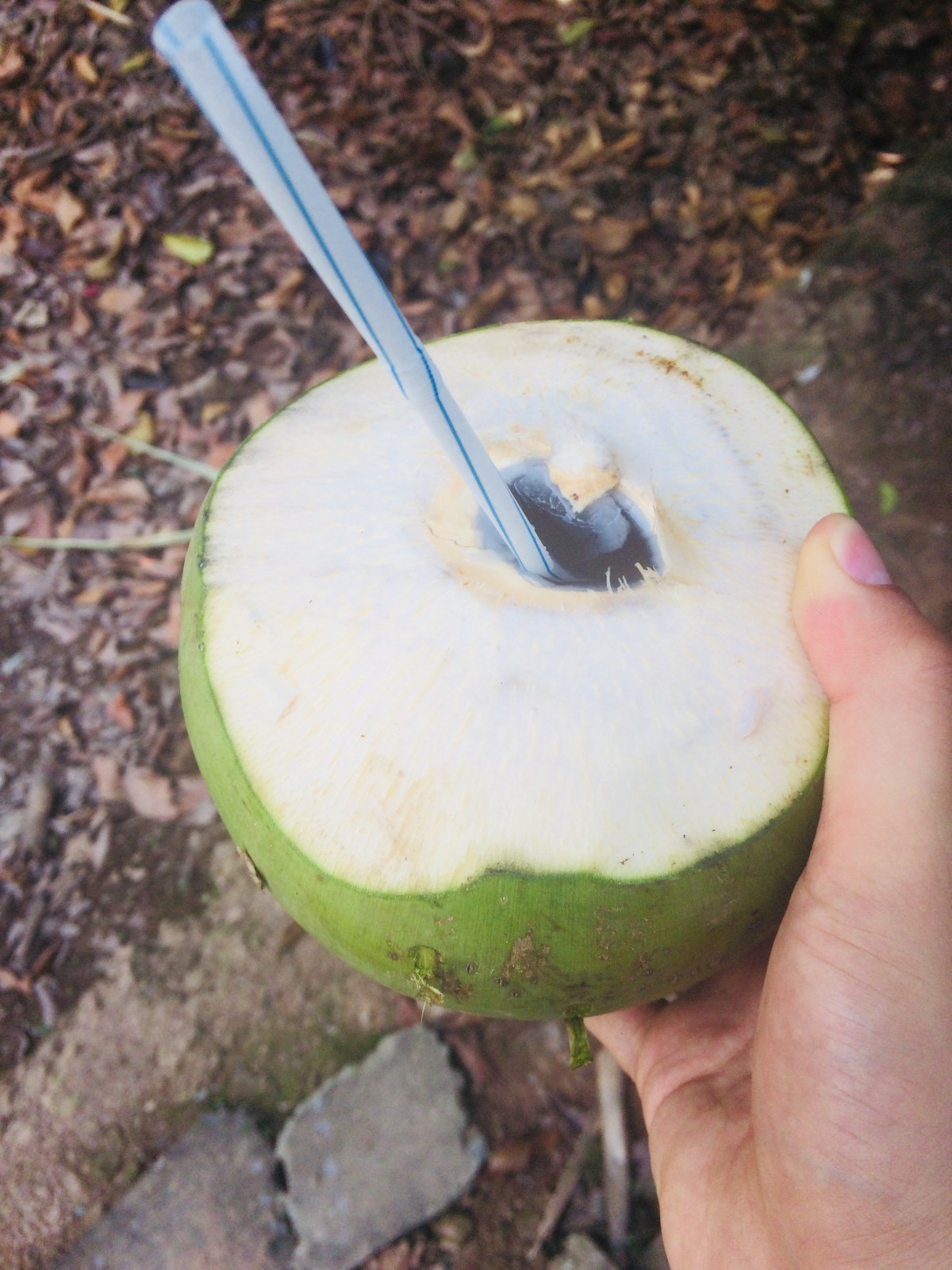
Coconut trees are cultivated extensively along the coastal areas. Coconut water is a popular drink in Vietnam. Street vendors and farmers often sell whole coconuts with a straw inserted. Young green coconuts have sweet and nutritious water. Coconuts in this region are big and have really good quality.
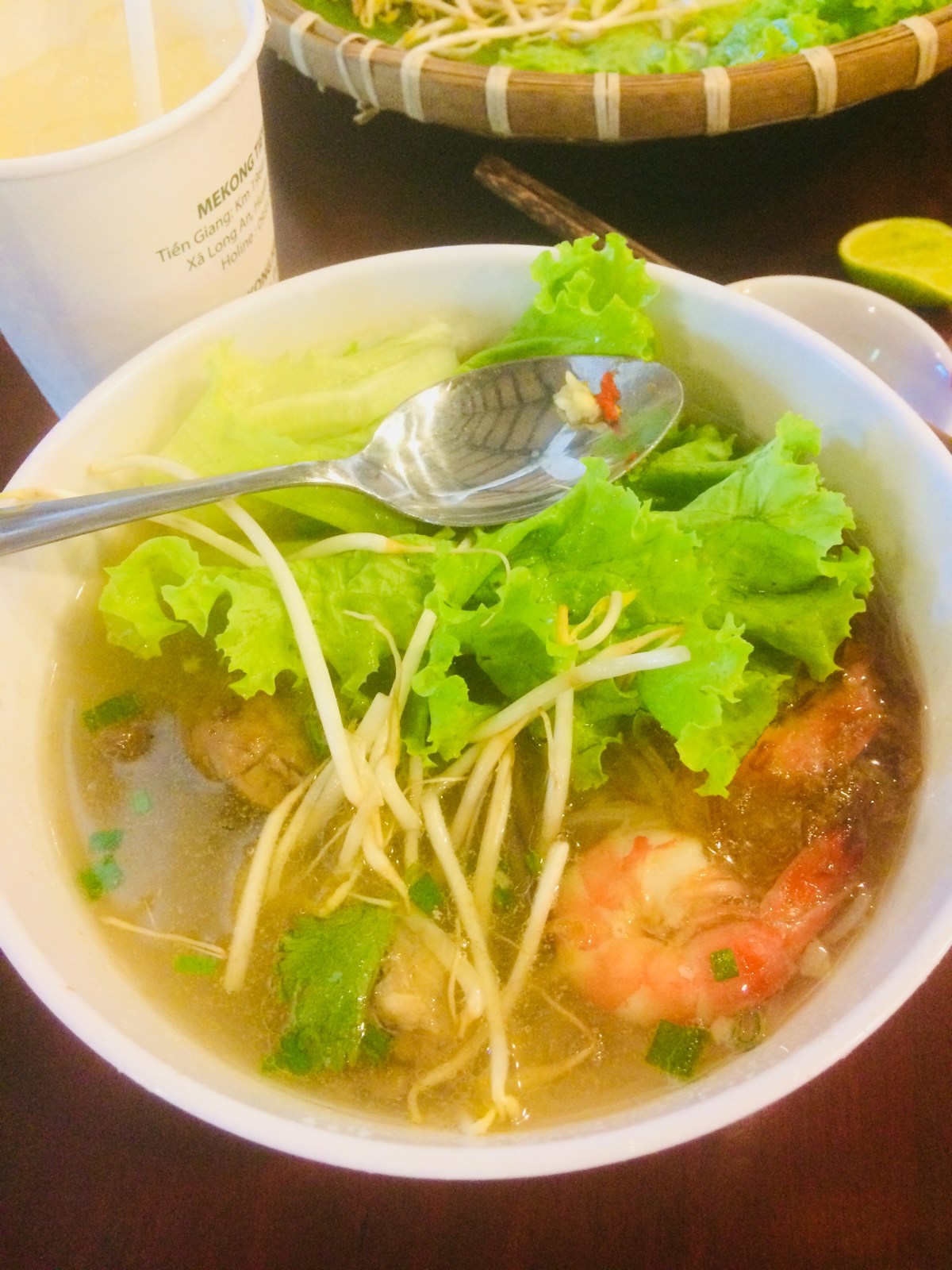
Pho is a traditional Vietnamese noodle soup. Originating in Northern Vietnam in the early 20th century, it has become a staple of Vietnamese cuisine. Pho is made with flat rice noodles. The broth made from beef bones or chicken is the heart of pho. Sliced or shredded chicken or beef are added together with special aromatics include ginger, star anise, cinnamon, cloves, and cardamom. Bean sprouts and sliced white onions are used as garnish. Lime wedges are served on the side for squeezing into the soup. Pho is a very popular food in Vietnam, and it is commonly found at street food stalls and small restaurants.
My boat trips last a few hours focusing on specific attractions of nearby villages and the small islands in the center of Mekong river. The best time to visit this river is during the dry season, from November to April, when the weather is cooler and more pleasant. Such a trip is a unique and enriching experience that offers a glimpse into the natural beauty of the Mekong Delta.
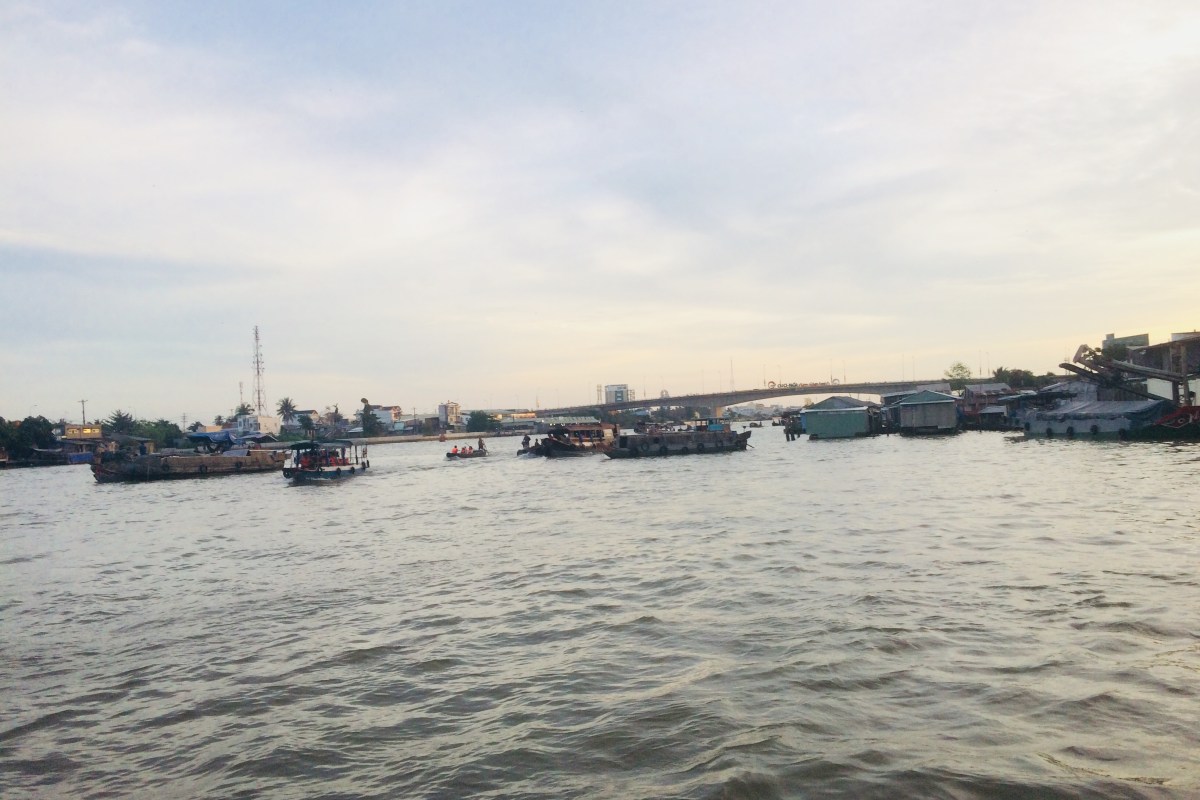
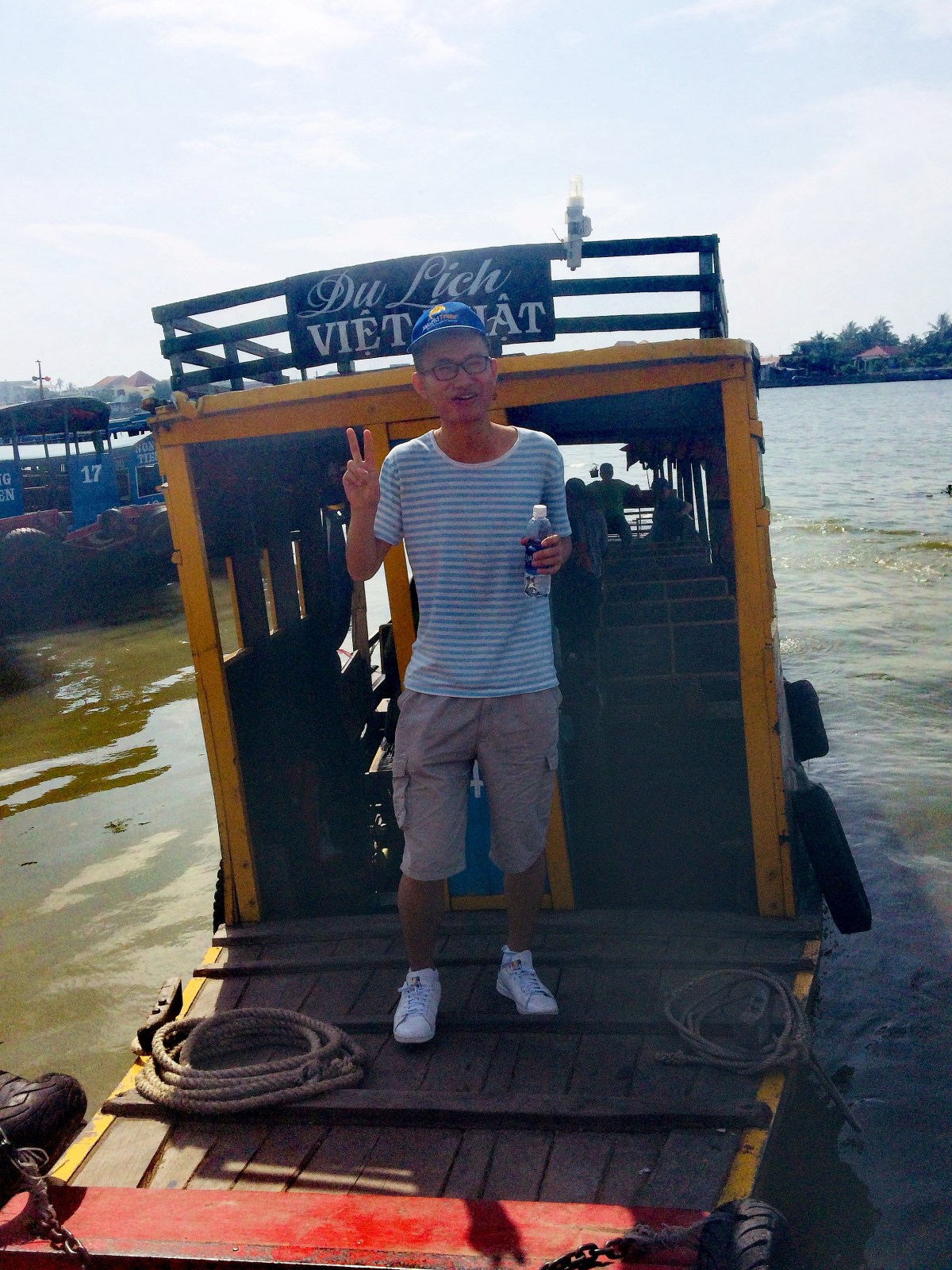
I took such a simple boat to the center island of Mekong Delta. On the east of the island is the South Sea. Although it was dry season, the water flow at the mouth of Mekong Delta was not reduced. There was a large distance between both sides of riverbanks and the wide river looked like a huge lake.
The island is surrounded by lush vegetation typical of the Mekong Delta, including mangroves, coconut palms, and various fruit trees. The island’s inhabitants are likely engaged in traditional livelihoods such as fishing, farming, and small-scale trade. Life here is closely tied to the rhythms of the river. There are many small canals on the island, and I rented a small boat to travel all through it.
Small-scale farming, particularly of rice and fruit, is common on islands in the delta. The fertile soil and abundant water supply make it an ideal location for agriculture. Visitors could taste local foods, especially fresh seafood and tropical fruits here.
This kind of street restaurants, often referred to as “quán ăn” or “street food stalls,” are a quintessential part of Vietnam’s culinary scene. Simple plastic stools and low tables are the norm. The ambiance is casual and lively, with the sounds of sizzling food and lively chatter filling the air.
When I returned to Can Tho in the afternoon, the sunset over the Mekong River was a breathtaking, offering a picturesque view of the river’s vast expanse landscapes. As the day drew to a close, the sky transformed into a canvas of golden hues. The calm waters of the Mekong River glisten with the last rays of the sun, and boats and riverbanks are silhouetted against the colorful backdrop.
I stayed in Can Tho for two days. The water market particularly the Cai Rang Floating Market, is one of the most famous and vibrant attractions in the Mekong Delta. This market offers a unique glimpse into the traditional way of life in southern Vietnam, where waterways are the main thoroughfares for commerce and daily activities. The market is only accessed by boat. The market starts as early as 5:00 AM and is most active around 7:00 AM. so I had to get up before sun rise to visit it.
我在芹苴总计呆了两天。Cai Rang 水上市场是湄公河三角洲最著名、最热闹的景点。这个市场让游客可以领略越南南部的传统生活方式,水路是当地商业和日常活动的主要通道。游客只能乘船前往水上市场。市场早上5:00就开始营业,最繁忙的时候通常是早上7:00,所以我必须在日出前就起床去游览这个地方。
Sellers operate from boats, which are packed with a variety of goods. Each boat typically specializes in a specific type of product, such as fruits, vegetables, rice, or household items. Sellers display their goods on long poles (called “cây bẹo”) to attract buyers from a distance. Some boats serve as floating kitchens, offering traditional Vietnamese breakfast dishes such as pho.
For me, the meaning of travel includes always exploring the new things. I wish to eat and visit every corner of this world like the traveler and Paimon in the game Genshin Impact. This time, visiting the riverside villages and water markets provided a stark contrast to the busy cities. Here, life moved at a gentler pace. These experiences offered me insight into the daily lives of the people who call the Mekong Delta home, who used to exist in my imagination from the novel ‘The Lover’.
Haiphong is a bustling port city in northern Vietnam, known for its rich history, vibrant culture, and strategic significance. As one of Vietnam’s major industrial centers, Haiphong boasts a blend of colonial architecture and modern city development. Haiphong is also a gateway to the stunning Cat Ba Island and the UNESCO-listed Halong Bay, making it an essential stop for travelers exploring northern Vietnam.
I visited this city in 2019 because of a business trip. In January, Hai Phong experiences cool and relatively dry weather with temperature around 19 °C. The city had shorter daylight hours with a mix of sunny and cloudy days. Obviously, it is not a good period for travel. I lived beside of the Hai Phong Museum. This yellow building itself is an architectural landmark, reflecting colonial influences that were prevalent during the French occupation of Vietnam. It houses an extensive collection of artifacts, photographs, and documents that chronicle the history, culture, and social development of Hai Phong.
When I travelled in Vietnam, I noticed that many buildings constructed during the French colonial period like this in the photo were painted yellow. The color gave buildings a distinguished and stately appearance that perhaps aligned with French colonial tastes. The yellow paint often used was lime-based, which was durable and provided a protective layer against the tropical weather. It reflects sunlight well and helps in keeping the buildings cooler.
This building is a good example of the architecture of French colonial period as well. The station’s architecture retains colonial influences, characterized by its classic yellow facade and functional design. ‘Ga’ represents the meaning of train station in Vietnamese. It is close to the French word ‘Gare’ which means train station as well. Hai Phong Train Station serves as the terminus for several important rail routes, including the Hanoi-Hai Phong line.
Hai Phong lies along the coast of the Gulf of Tonkin and it serves as a gateway to several popular tourist destinations, including Halong Bay. I hired a private car which took me directly to the harbor of Halong Bay. There are multiple ticket counters where visitors can purchase tickets for various cruises and one day boat tours. The best way to experience the beauty of Halong Bay is by taking a cruise.
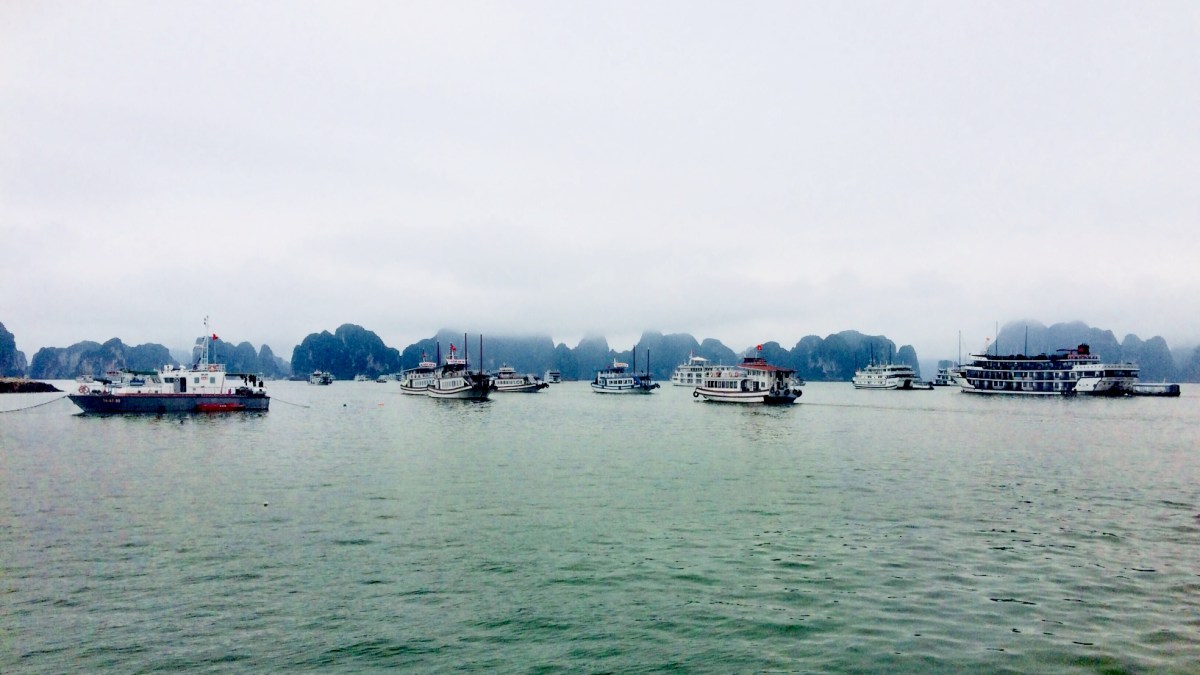
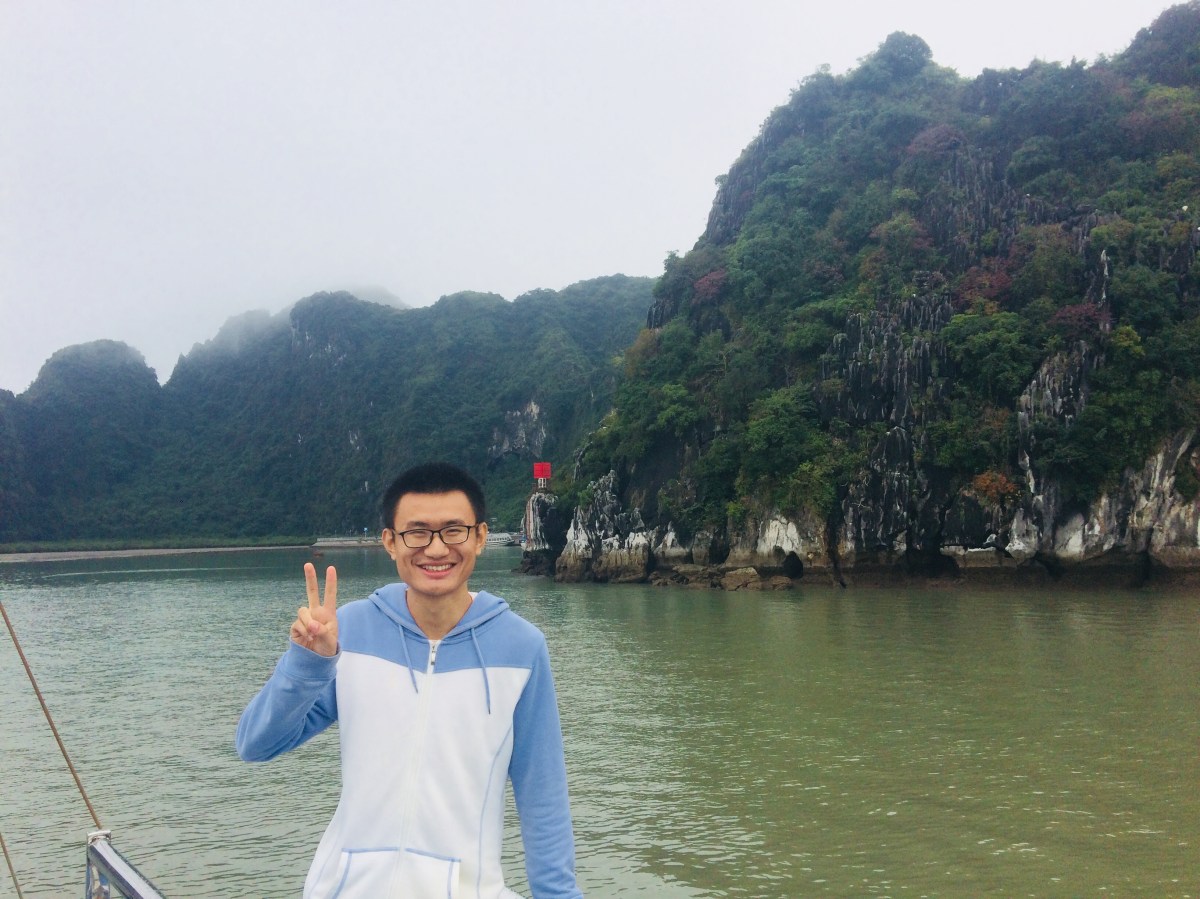
Halong Bay is a UNESCO World Heritage Site. It is renowned for its stunning natural beauty. The bay covers an area of approximately 1,553 square kilometers and features around 1,600 limestone islands and islets, many of which are topped with lush vegetation. The dramatic karst landscape, crystal-clear waters, and mysterious caves make Halong Bay a must-visit destination for travelers. It is so well-known for the tourists that even this day is super misty, many tourists still flock to the harbor and visit it by cruises.
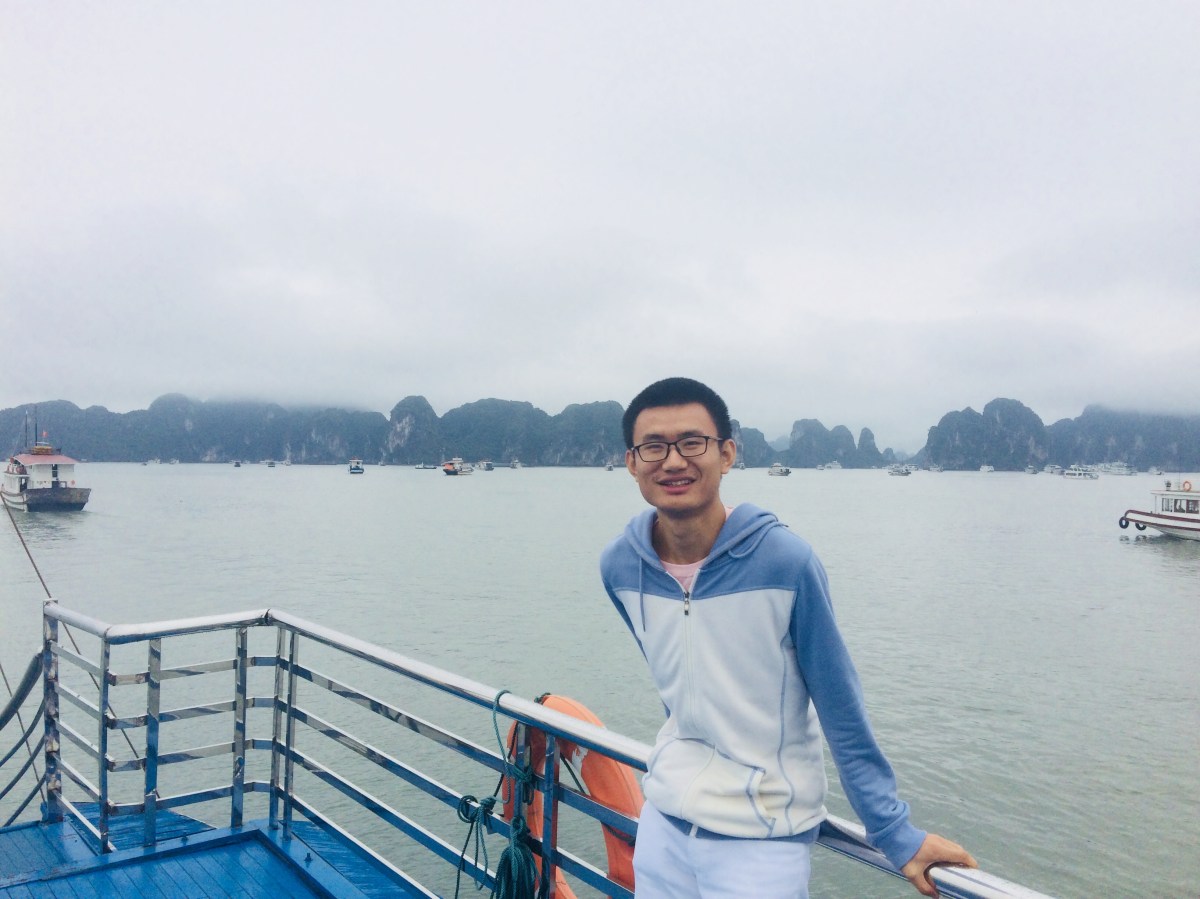
In the morning, the temperature is a bit lower, and the dense mists block most of my view but I think it is important to keep a good mood during the travel. I chose to take a cruise of half day trip. When the boat left the harbor and entered into the bay, gradually I could see the clear shape of the mountains.
The mountains of Halong Bay, primarily composed of limestone karsts, create a stunning and unique landscape that has captivated visitors for centuries. These formations are the result of millions of years of geological processes, making Halong Bay one of the most extraordinary natural wonders in the world.
The karsts here are extremely similar to the scene of Guiling in China. Karst is actually a type of landscape that is characterized by distinctive landforms and features resulting from the dissolution of soluble rocks, such as limestone, dolomite, and gypsum. These kind of small rock mountains are often blanketed in dense tropical vegetation, including shrubs, ferns, and flowering plants. The greenery clinging to the rocky surfaces adds a layer of vibrant color to the gray and white limestone.
Karst landscape consists of rocks and mountains of different sizes and strange shapes. It is formed primarily through the process of chemical weathering. When rainwater, which absorbs carbon dioxide from the atmosphere to become slightly acidic, percolates through the ground, it reacts with the soluble rocks and gradually dissolves them. Over time, the continued dissolution of the rock leads to the development of caves and mountains.
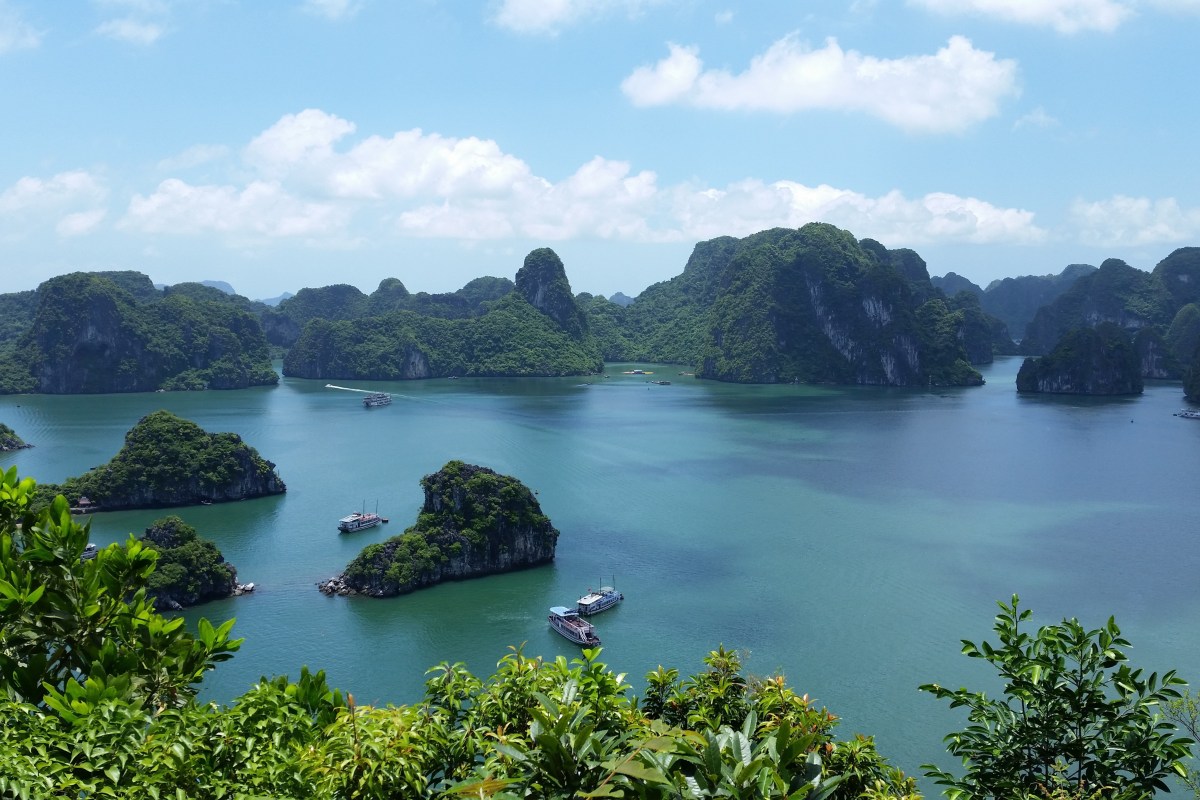
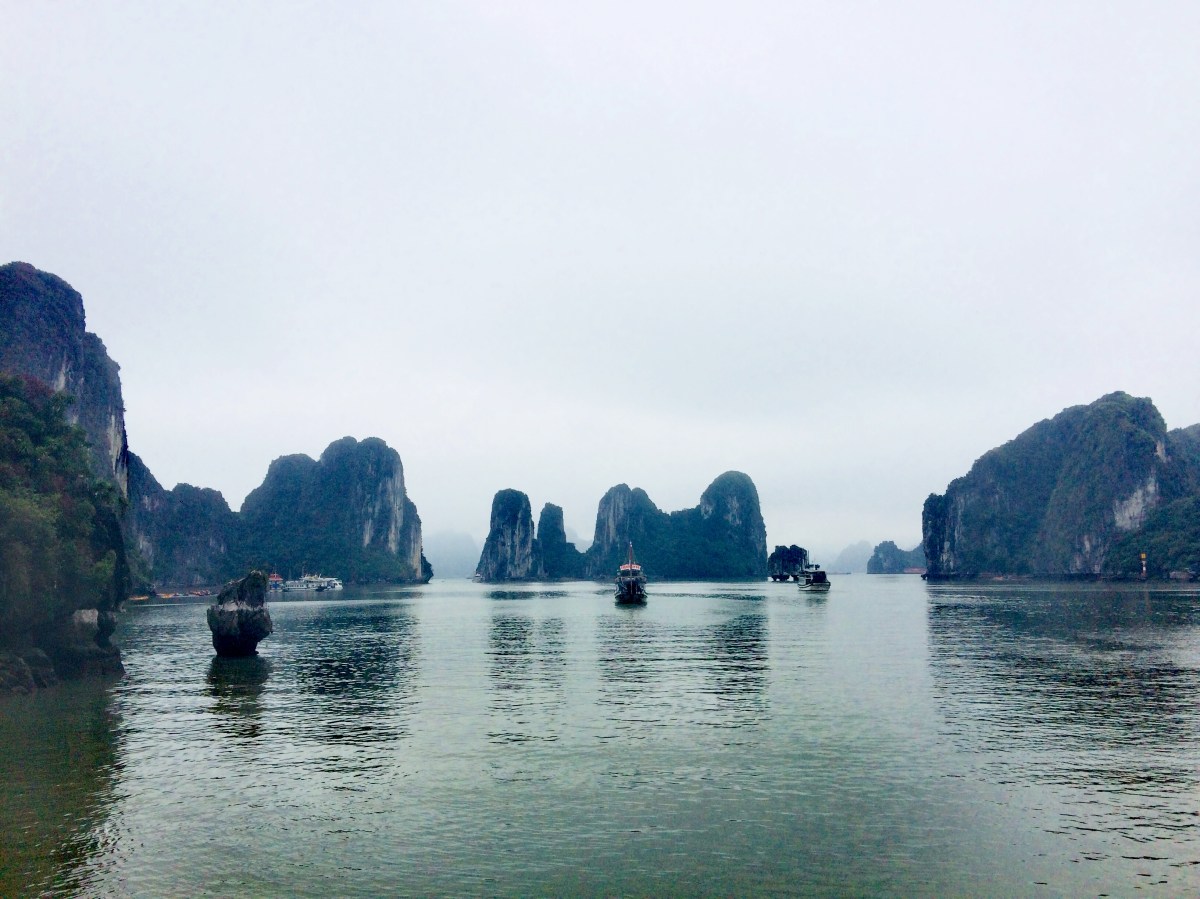
These karsts are characterized by their steep, rugged peaks that rise abruptly from the emerald waters. Their shapes vary from slender spires to massive, rounded mounds, creating a varied and dynamic landscape. The mountains are always shrouded in mist, creating a mystical and almost surreal atmosphere. Although I don’t like the misty day, I have to admit that the mist weavings through the karsts are really special, enhancing the otherworldly beauty. The scenery here was like an ink brush painting created by Chinese painter Mi Fu.
The waters of Halong Bay are renowned for their striking emerald green color. This kind of hue is a result of the bay’s shallow depths, the reflection of lush vegetation, and the high content of phytoplankton in the water. The bay is always protected from strong winds and waves by the surrounding limestone karsts and islands. The tranquil water surface was mirror-like, reflecting the towering karsts, creating a mesmerizing visual effect.
There are many small islands in the Halong Bay. Dau Go Island is situated in the southwestern part of Halong Bay. It is accessible by boat and is often included in Halong Bay cruise itineraries. The cruise took around 6 hours including the time to travel around this island.
下龙湾有许多小岛。Dau Go 岛位于下龙湾西南部,可乘船前往,也被列入下龙湾游轮行程中。我乘坐的游轮旅游总共需要6个小时,其中包括绕岛游览的时间。
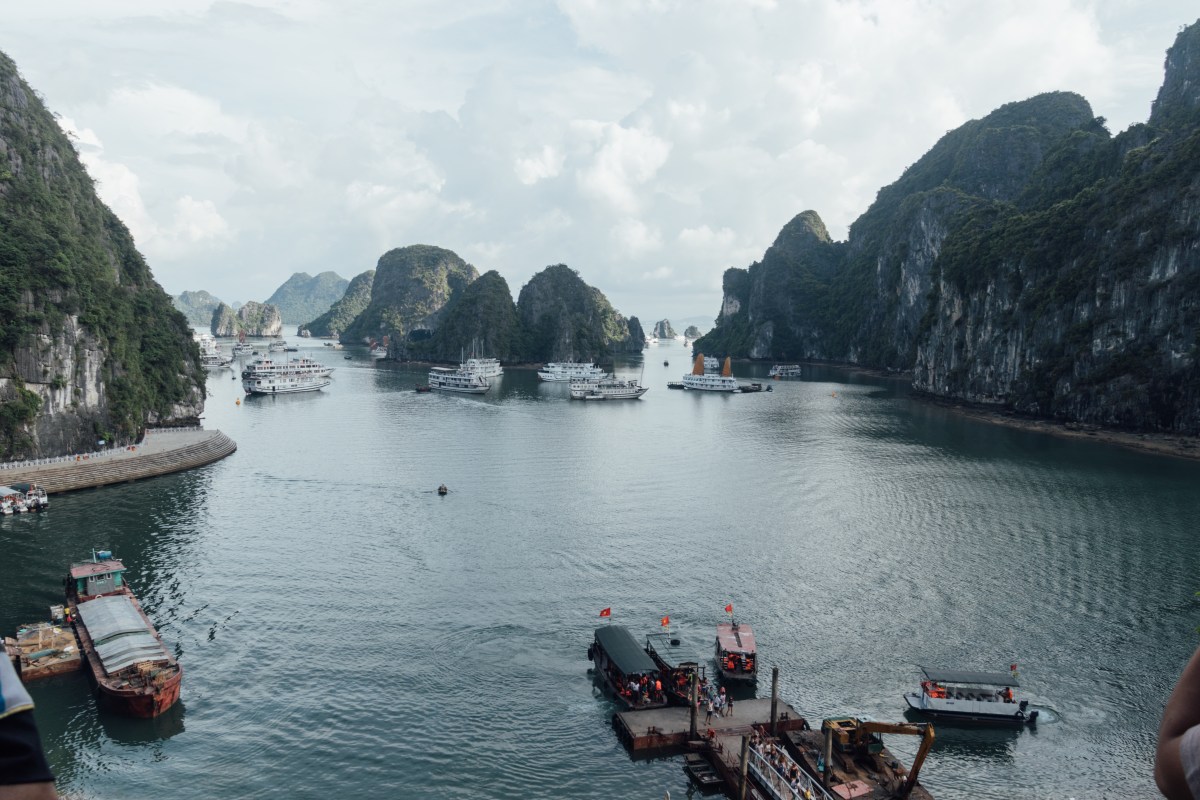
Dau Go Cave on this island is one of the largest and most historically significant caves in Halong Bay. It has significant historical importance. It is also named the “Cave of Wooden Stakes” because, according to legend, during the 13th century, General Tran Hung Dao hid wooden stakes in the cave. These stakes were later used in the famous Battle of Bach Dang River to defeat the invading Mongolian army by driving them into the riverbed to damage enemy ships. Dau Go Cave is well-lit with lights that highlight the most striking formations and impressive features of stalactites and stalagmites.
From the viewing platform, visitors can enjoy panoramic views of Halong Bay, including its emerald waters, surrounding islands, and iconic limestone karsts and took an unforgettable photo. Standing here, I really wondered at this kind of geological miracle.
Many rocks of unique shapes have become iconic symbols of the bay. These bizarre and unique rock formations are the result of complex geological processes over millions of year. The cruise took the visitors near the stone and stopped, leaving enough time to take photos. This is the Fighting Cock Rock. These twin rocks resemble two roosters facing off against each other. They are one of the most iconic images of Halong Bay and are often used in promotional brochures for the area.
This lonely stone is called Incense Burner. It is shaped like an incense burner, standing alone in the water, making it a striking sight against the backdrop of the bay. For most of the time of this trip, I was enjoying the landscape of the different rocks assembled in the bay which were the masterpiece of the nature.
The cruise provided visitors lunch as well. Vietnamese cuisine is close to Chinese food and is known for its fresh ingredients and special taste sauces. Rice is the most popular staple food and people prefer to use chop sticks. Fresh herbs like basil, mint, and lemongrass, along with vegetables such as bean sprouts, cucumbers, and lettuce, are essential for adding flavor and freshness. Fish Sauce known as nuoc mam, is a fundamental ingredient that adds a salty, savory depth to many dishes. Spring rolls and hotpot are the two popular dishes in Vietnam. It was a great pleasure to taste the local food together with viewing the beautiful sceneries outside of the windows.
The happy moments always passed extremely fast. The cruise returned back to the harbor in the afternoon. As my journey through Halong Bay came to a close, this serene bay with its unique charm have left a special mark on my heart. Each moment spent in this UNESCO World Heritage Site is a testament to the Earth’s unparalleled beauty and resilience. Visiting such a place of breathtaking natural wonders can be deeply restorative and spiritually uplifting.
Nestled along the banks of the winding Saigon River lies a city that pulsates with energy, history, and a unique blend of cultures. Ho Chi Minh City, a metropolis that serves as the beating heart of Vietnam’s southern region. Formerly known as Saigon, this dynamic city is a testament to the country’s resilience, having weathered centuries of colonialism, cruel wars, and rapid urbanization to emerge as a vibrant hub of commerce and culture.
I have visited this city several times when I worked in Vietnam for around half years during 2018 and 2019. I used to walk along the Saigon River in the weekend. As it flows through Ho Chi Minh City, the Saigon River is a dynamic presence, its waters reflecting the ever-changing skyline of the city. Along its banks, I can find a mix of modern skyscrapers representing the modernism of Vietnam and lush greenery, creating a picturesque backdrop for the hustle and bustle of urban life. The river plays a crucial role in the daily life of the city, serving as a transportation route for goods and people, as well as a source of livelihood for local fishermen and farmers.
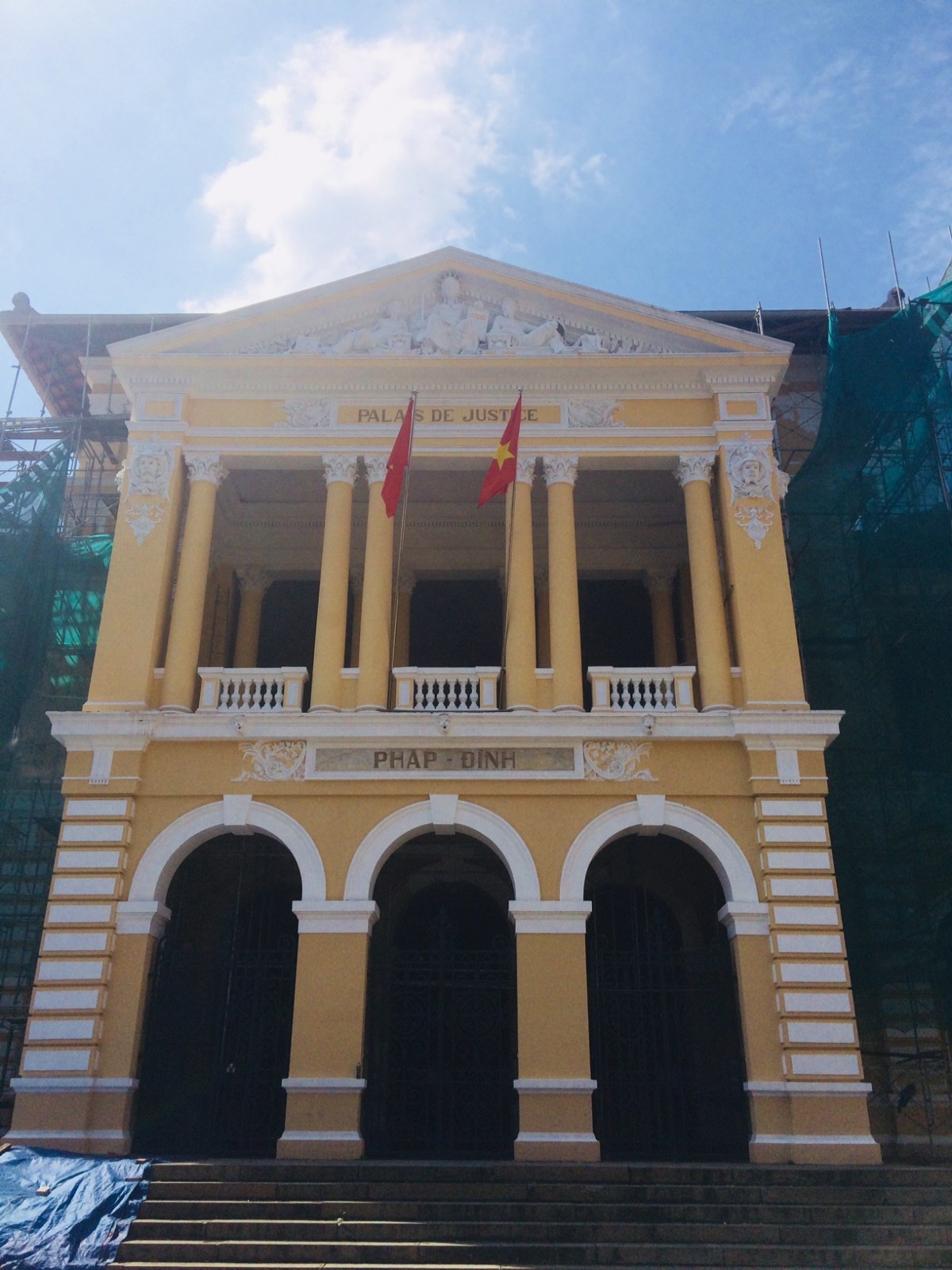
But beyond its modern facade, Ho Chi Minh City is a city rich in history and tradition. From the remnants of French colonial architecture to the scars of the Vietnam War, every corner of the city tells a story, inviting visitors to delve into its past and uncover the layers of its complex heritage. The Palais de Justice, of Saigon (now Ho Chi Minh City) stands as a striking testament to the city’s colonial past. Built during the French colonial era, this majestic building served as the seat of the judiciary and a symbol of French authority in Vietnam. Constructed between 1885 and 1890, the Palais de Justice was designed by the French architect Paul Gardès, who drew inspiration from classical French architectural styles. Its grand facade features neoclassical elements such as columns, arches, and intricate detailing, reflecting the opulence and grandeur of the time. Throughout its history, the Palais de Justice witnessed significant events, including trials during the colonial period and later during the Vietnam War era.
不过除了现代化的城市外观,胡志明市还是一座拥有丰富历史和传统的城市。从法国殖民时期建筑的遗迹到越南战争留下的伤痕,这座城市的每个角落都讲述着一个个故事,吸引游客深入了解它的过去,揭开其复杂的层层面纱。西贡的司法宫是这座城市殖民历史的生动见证。这座雄伟的建筑建于法国殖民时期,曾是司法机构的所在地,也是法国在越南权威的象征。司法宫建于1885 年至 1890 年间,由法国建筑师 Paul Gardès 设计,他从法国古典建筑风格中汲取灵感。其宏伟的外观采用了例如柱子、拱门和复杂的细节等新古典主义元素,反映了当时法式建筑的富丽堂皇。在其历史上,司法宫见证了包括殖民时期和后来越南战争时期的审判等重大事件。
The City Hall of Saigon, also known as Ho Chi Minh City Hall, is an iconic landmark that exudes grandeur and history in the heart of Ho Chi Minh City. Located at the end of Nguyen Hue Boulevard, the City Hall stands as a prime example of French colonial architecture. Designed by the French architect, Auguste Henri Vildieu, and completed in 1908, it served as the seat of the French colonial administration in Saigon. The building’s façade is adorned with elegant columns, ornate balconies, and a distinctive bell tower, reminiscent of the architectural styles of the late 19th and early 20th centuries.
西贡市政厅,又称胡志明市政厅,是胡志明市中心一座散发着宏伟和历史气息的标志性建筑。市政厅位于阮惠大道尽头,是法国殖民时期建筑的典范。它由法国建筑师奥古斯特·亨利·维尔迪厄 (Auguste Henri Vildieu) 设计,于1908年竣工,是法国在西贡的殖民政府所在地。该建筑的外墙装饰有优雅的柱子、华丽的阳台和独特的钟楼,让人联想到19世纪末和20世纪初的法国城市风格。
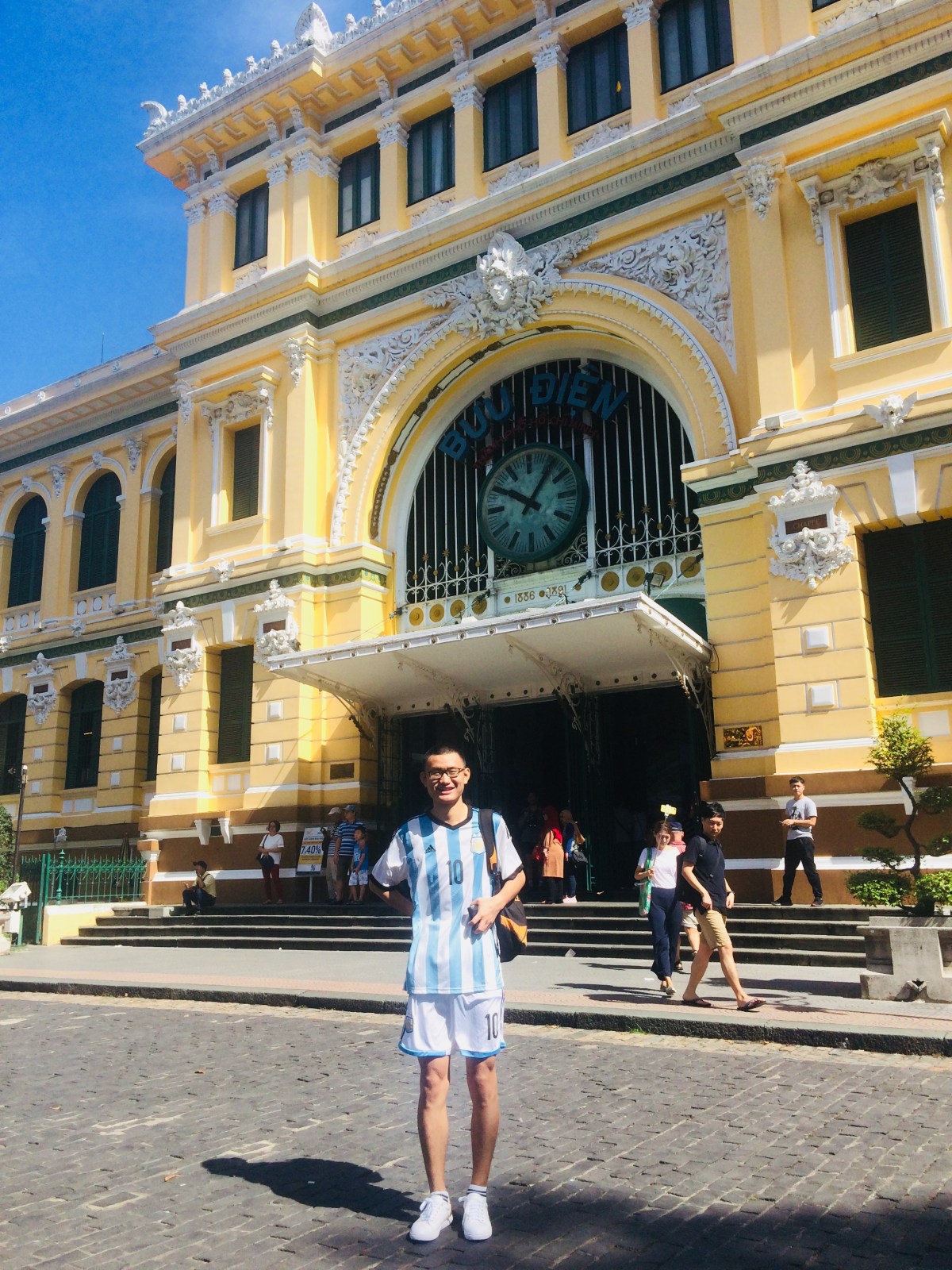
Many tourists will stand at this point to take a photo. Its creamy yellow exterior, punctuated by green shutters and a prominent clock tower, commands attention. Today, the City Hall continues to play a significant role as the headquarters of the People’s Committee of Ho Chi Minh City, overseeing the governance and administration of Vietnam’s largest city. While its function has evolved over the years, the building remains an enduring symbol of Saigon’s past and present, bridging the gap between history and modernity.
Many buildings here are influenced by French architecture style largely. The Saigon Central Post Office, constructed between 1886 and 1891 during the French colonial period, stands as a stunning example of neoclassical architecture. Designed by the renowned French architect Gustave Eiffel, the mastermind behind the Eiffel Tower in Paris, the building seamlessly blends European influences with local Vietnamese elements, creating a captivating fusion of styles.
As I stepped through its grand entrance, I was greeted by a cavernous interior hall adorned with intricate wrought-iron arches, elegant marble floors, and a soaring vaulted ceiling. Sunlight streams through the building’s large windows, emitting a warm glow on the rows of wooden counters and antique telephone booths that line the hall. Perhaps the most striking feature of the Saigon Central Post Office is its vast dome, which dominates the central hall and serves as a focal point for visitors. Decorated with delicate mosaic tiles depicting the planets and zodiac symbols, the dome is a breathtaking display of craftsmanship and artistry. Despite its age, the Saigon Central Post Office remains a bustling hub of activity, with tourists flocking to its counters to send postcards as souvenirs.
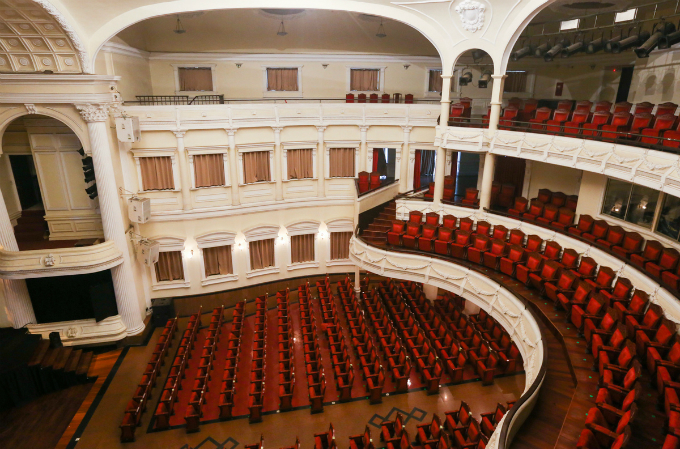
Inherited from the French culture, Saigon kept the building of opera house like all the French cities. Built in the late 19th century during the French colonial period, this majestic structure stands as a testament to the enduring legacy of European influence in Vietnam. Designed by French architect Eugène Ferret and inaugurated in 1897, the Saigon Opera House has a stunning façade characterized by neoclassical features, including graceful arches, intricate carvings, and ornate balconies. Its elegant exterior, adorned with statues and embellishments, exudes an air of luxury and grandeur, inviting passersby to marvel at its beauty. On the day of my visit, the opera played is the Nutcracker composed by Pyotr Ilyich Tchaikovsky.
Step inside, and I was transported to a world of opulence and refinement immediately. The interior of the opera house is a masterpiece of architectural design, with its sweeping staircase, gleaming marble floors, and sumptuous décor evoking the glamour of a bygone era. The main auditorium, adorned with sparkling chandeliers and plush seating, provides an exquisite setting for the world-class performances that grace its stage.
This is the street view along the opera house with a statue of Mozart playing flute. The weather of Ho Chi Minh City is characterized by a tropical climate that is generally hot and humid throughout the year. There are many tropical plants here like Coconut Palm and Rain Tree. I visited this city during the mild and dry winter without rain. The weather is suitable for travel.
The iconic landmark of Ho Chi Minh City must be the Saigon Notre-Dame Cathedral Basilica. Constructed between 1863 and 1880 by the French colonial authorities, it was designed by the French architect Jules Bourard in the neo-Romanesque style, with distinctively red brick walls imported from France. Its twin bell towers rise gracefully above the city skyline, while its façade features intricate rose windows, ornate carvings, and statues of saints, creating a striking contrast against the modern skyscrapers that surround it.
Throughout the exterior of the cathedral, smaller steel windows are placed to provide ventilation and natural light to the interior spaces. These windows are typically rectangular or arched in shape and are adorned with simple decorative grilles. Although they are not as elaborate as the rose window, these smaller windows contribute to the overall aesthetic of the cathedral’s facade。
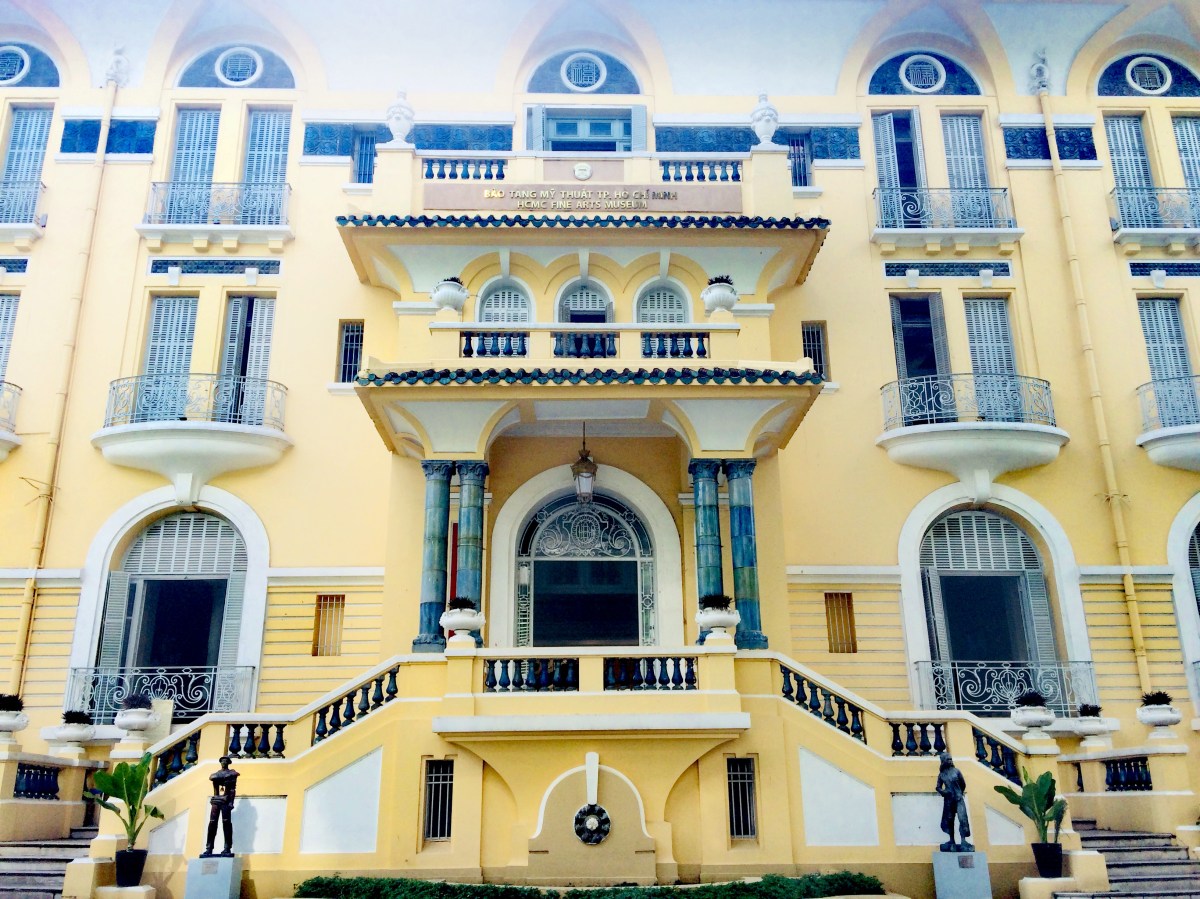
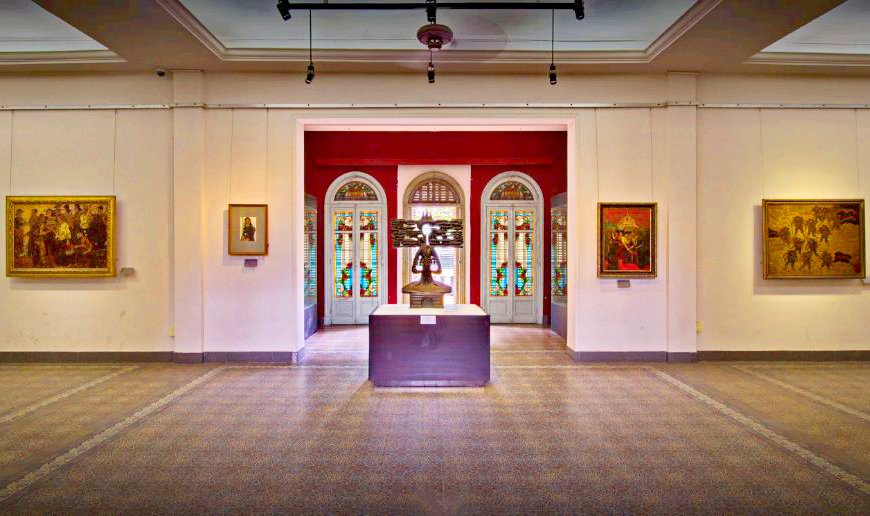
To know the history and culture of Vietnam, it is recommended to visit the Fine Arts Museum of Ho Chi Minh City. It has a blend of French colonial and Chinese architectural influences. Its graceful exterior features ornate balconies, arched windows, and intricate carvings, while its interior showcases spacious galleries adorned with elegant woodwork and furnishings.
The museum’s extensive collection spans various periods and styles of Vietnamese art, ranging from ancient artifacts to contemporary works. Visitors can admire traditional Vietnamese paintings, sculptures, ceramics, lacquerware, and folk art, as well as exhibits showcasing the influence of French colonialism and Chinese influences on Vietnamese art.
The influence of China on Vietnam spans thousands of years and has had a profound impact on various aspects of Vietnamese culture, society, language, and history. Vietnam was ruled by Chinese domination for over a millennium, starting with the Han Dynasty’s annexation of the territory in 111 BC and lasting until the Tenth Century. Chinese characters were introduced to Vietnam and became the basis for written communication and literature. While Vietnamese eventually developed its own script, chu Nom, based on Chinese characters, the influence of Chinese characters can still be seen in Vietnamese writing, particularly in formal and scholarly texts. This photo is a military appointment during the reign of Emperor Thiệu Trị, the third emperor of the Nguyễn dynasty. Chinese characters are still used at that time.
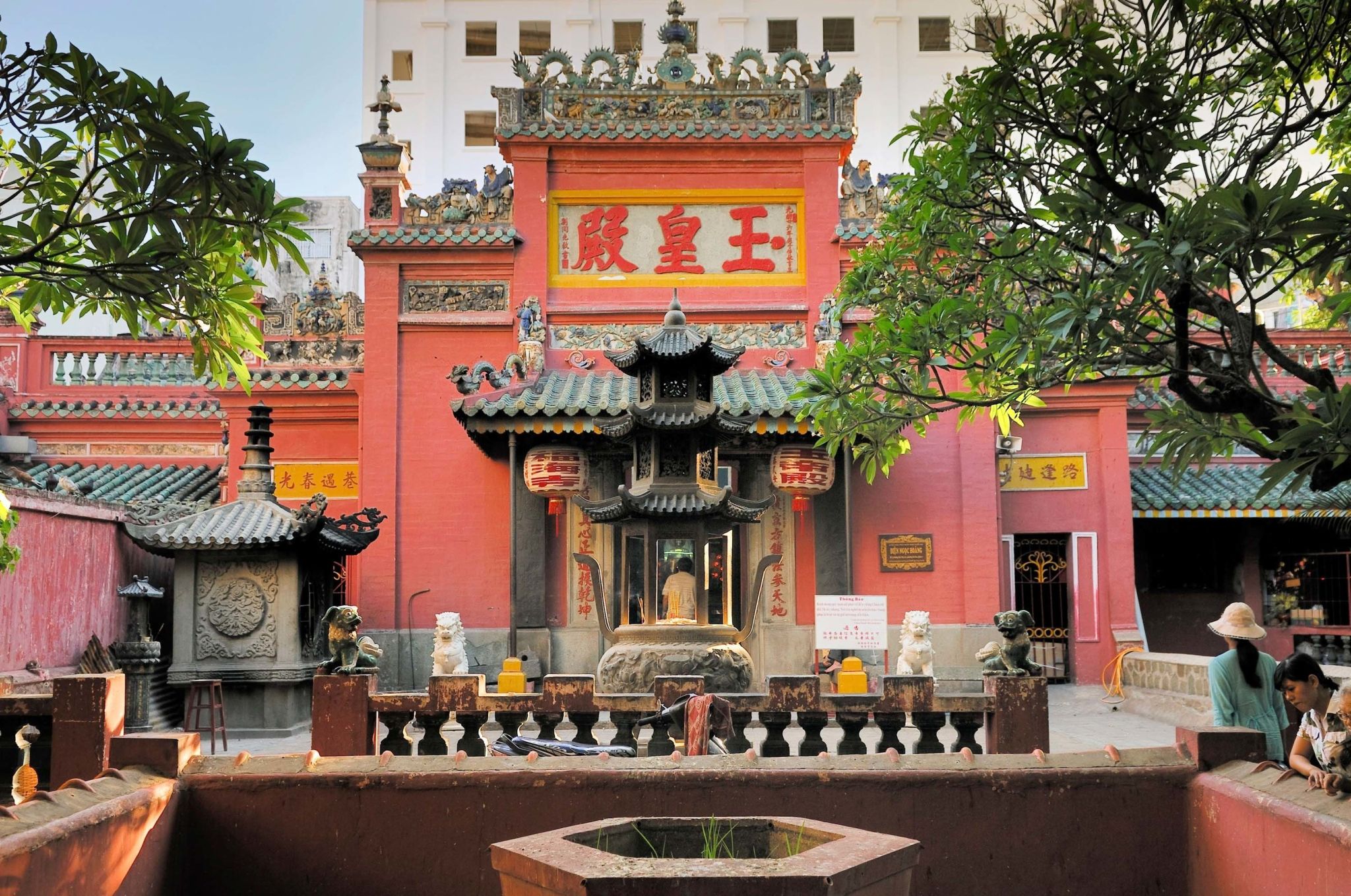
Some traditional buildings in this city with their architectural style, artwork, and religious practices bear witness to the enduring cultural connections between Vietnam and China. One of the pagodas in Ho Chi Minh City that bears important Chinese influence is the Jade Emperor Pagoda. While it is a Vietnamese Buddhist temple, it showcases architectural elements and cultural influences from Chinese Mahayana Buddhism. The pagoda’s architectural style is reminiscent of traditional Chinese temples, with curved roofs adorned with colorful ceramic tiles, intricate wood carvings, and ornate decorations. The layout of the pagoda follows the typical structure of Chinese temples, including a central hall, courtyards, and side halls. The pagoda hosts various festivals and religious ceremonies throughout the year, some of which are based on Chinese lunar calendar traditions. For example, the Lunar New Year (Tết Nguyên Đán) and the Mid-Autumn Festival (Tết Trung Thu) are celebrated with special rituals and performances.
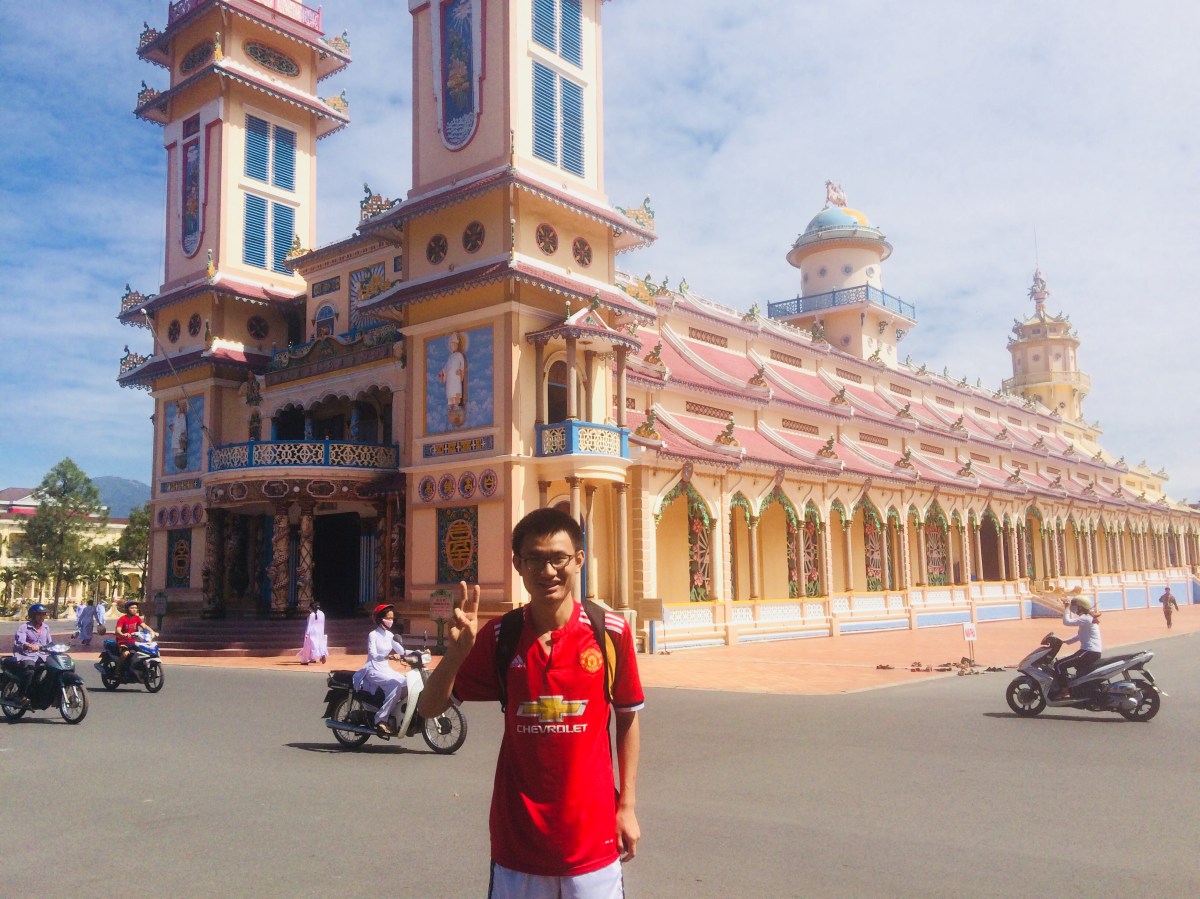
Mentioning the religion of Vietnam, I must highlight one characteristic religion called Cao Dai religion that I have never heard before. Located in Tay Ninh Province, approximately 90 kilometers northwest of Ho Chi Minh City, this Holy See Temple in this picture is the spiritual center of the Cao Dai religion. This religion was founded in 1926 by Ngo Van Chieu, a Vietnamese civil servant, and is based on a combination of elements from various world religions, including Buddhism, Taoism, Confucianism, Christianity, and Islam. The religion’s central tenet is the belief in a supreme deity known as Cao Dai, who governs the universe and embodies the principles of love, justice, and compassion.
The Tay Ninh Holy See is characterized by its distinctive architectural style, which combines elements of Eastern and Western design. The main temple complex features a large, ornate structure with colorful facades, intricate carvings, and decorative motifs symbolizing the diverse religious influences of the Cao Dai faith. This religion is inspired from the mixture of other religions. When I saw the Eye of Horus which serves as a protective symbol and a potent emblem of divine authority in ancient Egyptian mythology on the wall of the temple, I was really shocked.
The Holy See Temple serves as a place of worship and pilgrimage for Cao Dai adherents, who gather for daily rituals, ceremonies, and prayers. Worshipers dress in traditional white robes and participate in elaborate rituals that involve chanting and meditation. The Cao Dai religion incorporates a rich tapestry of religious symbolism, rituals, and beliefs that reflect its syncretic nature. Followers believe in the existence of a spiritual hierarchy, including saints, spirits, and divine beings, who serve as intermediaries between humanity and the supreme deity.
Vietnam is a resilient country in its history. It developed its own language and culture although influenced by China for nearly one thousand years. Later, it was colonized by France in the mid-19th century as part of French Indochina. Resistance against French colonial rule began to emerge in the early 20th century. One of the most influential figures in Vietnam’s fight for independence was Ho Chi Minh. He was a revolutionary leader who played a key role in founding the Vietnamese Communist Party (VCP) in 1930 and organizing resistance against both French colonial rule and Japanese occupation during World War II. The First Indochina War (1946-1954) was fought between the Viet Minh and French forces, culminating in the decisive Battle of Dien Bien Phu in 1954, where the Viet Minh successfully defeated the French, leading to the Geneva Accords and the partition of Vietnam into North and South. Following the partition of Vietnam, the communist-led government of North Vietnam, under Ho Chi Minh’s leadership, sought to reunify the country under communist rule. The Vietnam War (1955-1975) escalated into a protracted conflict between North Vietnam, supported by the Soviet Union and China, and South Vietnam, supported by the United States and its allies. In April 1975, North Vietnamese forces launched the Ho Chi Minh Campaign, leading to the capture of Saigon and the reunification of Vietnam under communist rule. The Reunification Palace is a symbol of Vietnam’s struggle for independence and reunification.
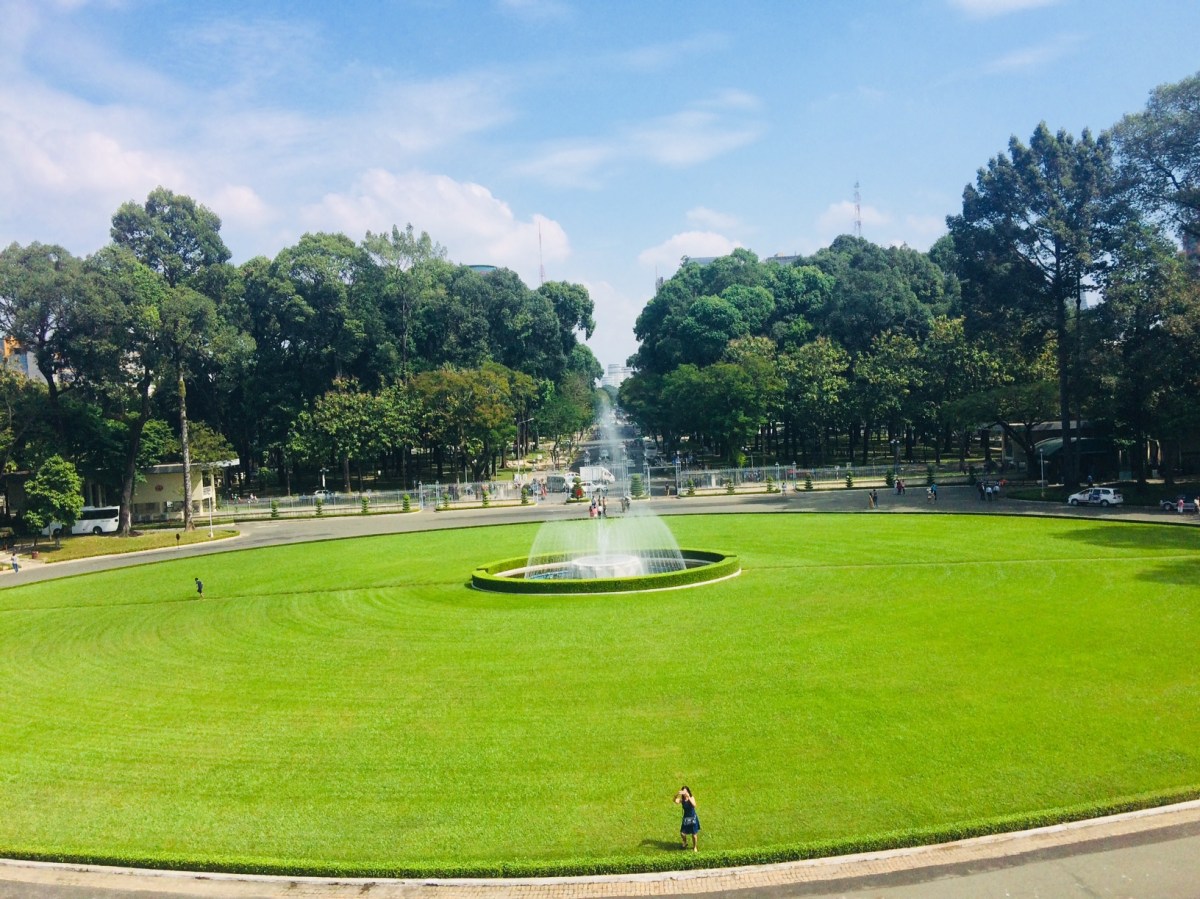
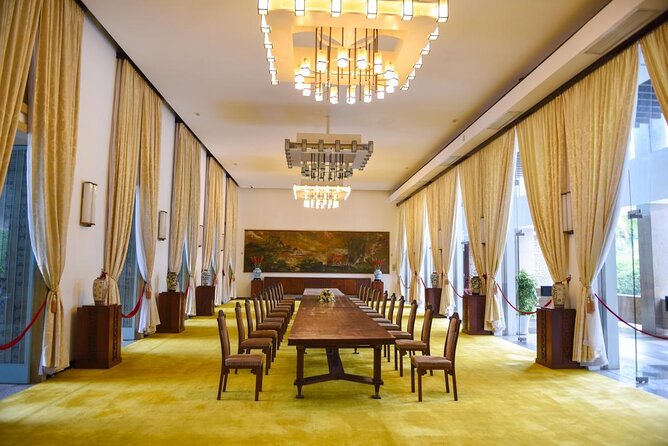
The palace surrounded by greenery is located in the city center with many people passing by. It has a large area of lawns and a fountain. It was originally constructed in the 1960s as the presidential residence and administrative headquarters of the South Vietnamese government. It replaced the former Norodom Palace, which was heavily damaged during a coup attempt in 1962. The new palace was designed by Vietnamese architect Ngô Viết Thụ and completed in 1966. The architecture of the Reunification Palace is a blend of modernist and traditional Vietnamese design elements. The building features clean lines, spacious halls, and minimalist decor, with an emphasis on functionality and efficiency.
The Reunification Palace witnessed several key events during the Vietnam War, including the Tet Offensive of 1968 and the Fall of Saigon in 1975. Today, it serves as a museum and tourist attraction, offering visitors the opportunity to explore its historic rooms, and hallways. The museum showcases artifacts, documents, and photographs related to the palace’s history and the events that took place there during the Vietnam War. As a symbol of national unity and independence, the Reunification Palace holds special significance for the Vietnamese people. It serves as a reminder of the country’s struggle for independence and sovereignty.
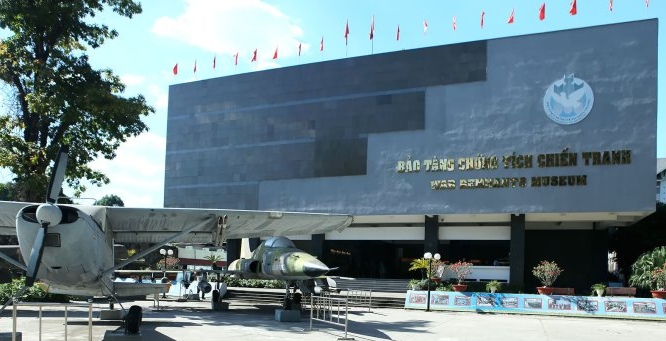
The War Remnants Museum stands as a testament to the resilience of the Vietnamese people as well. Established in 1975 shortly after the end of the Vietnam War, the War Remnants Museum was originally known as the “Exhibition House for US and Puppet Crimes.” Its primary mission was to document the atrocities committed by the United States and its allies during the war.
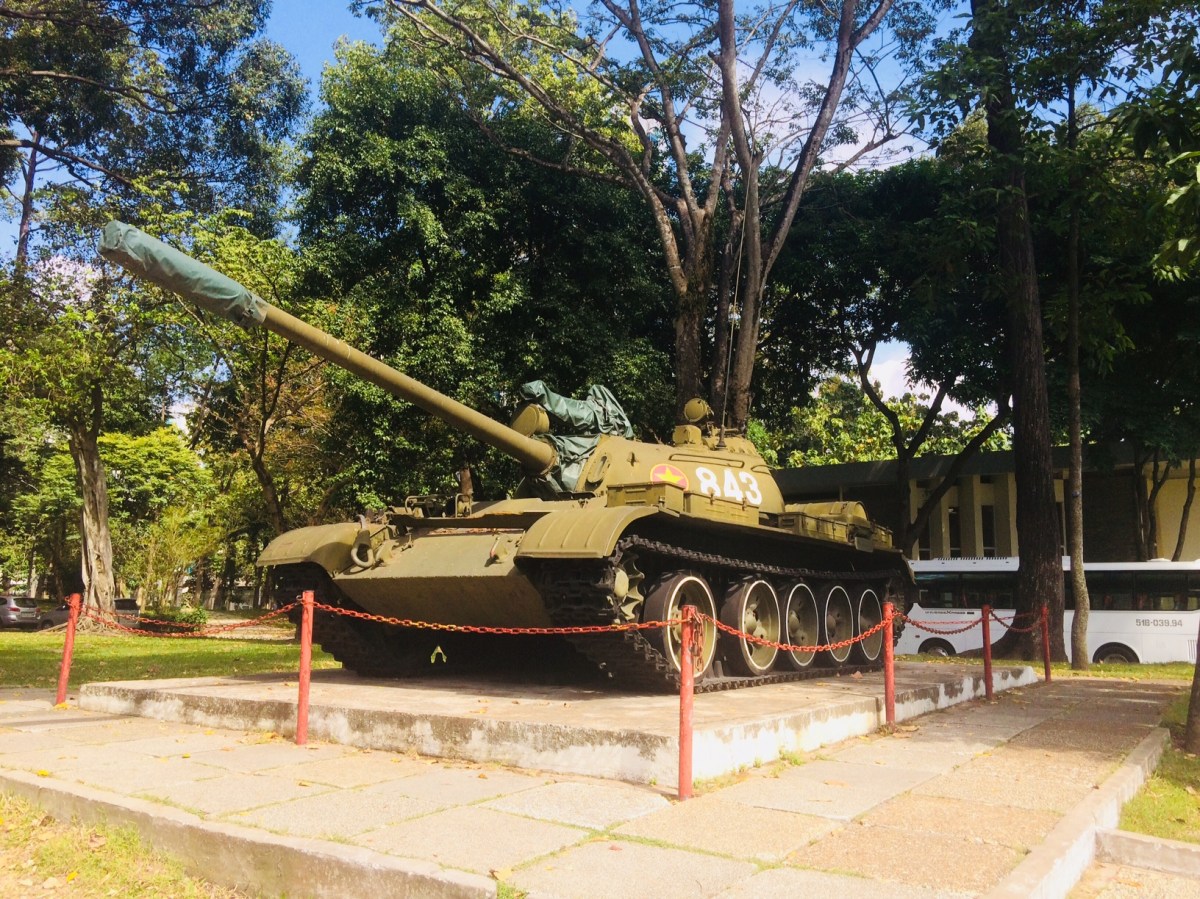
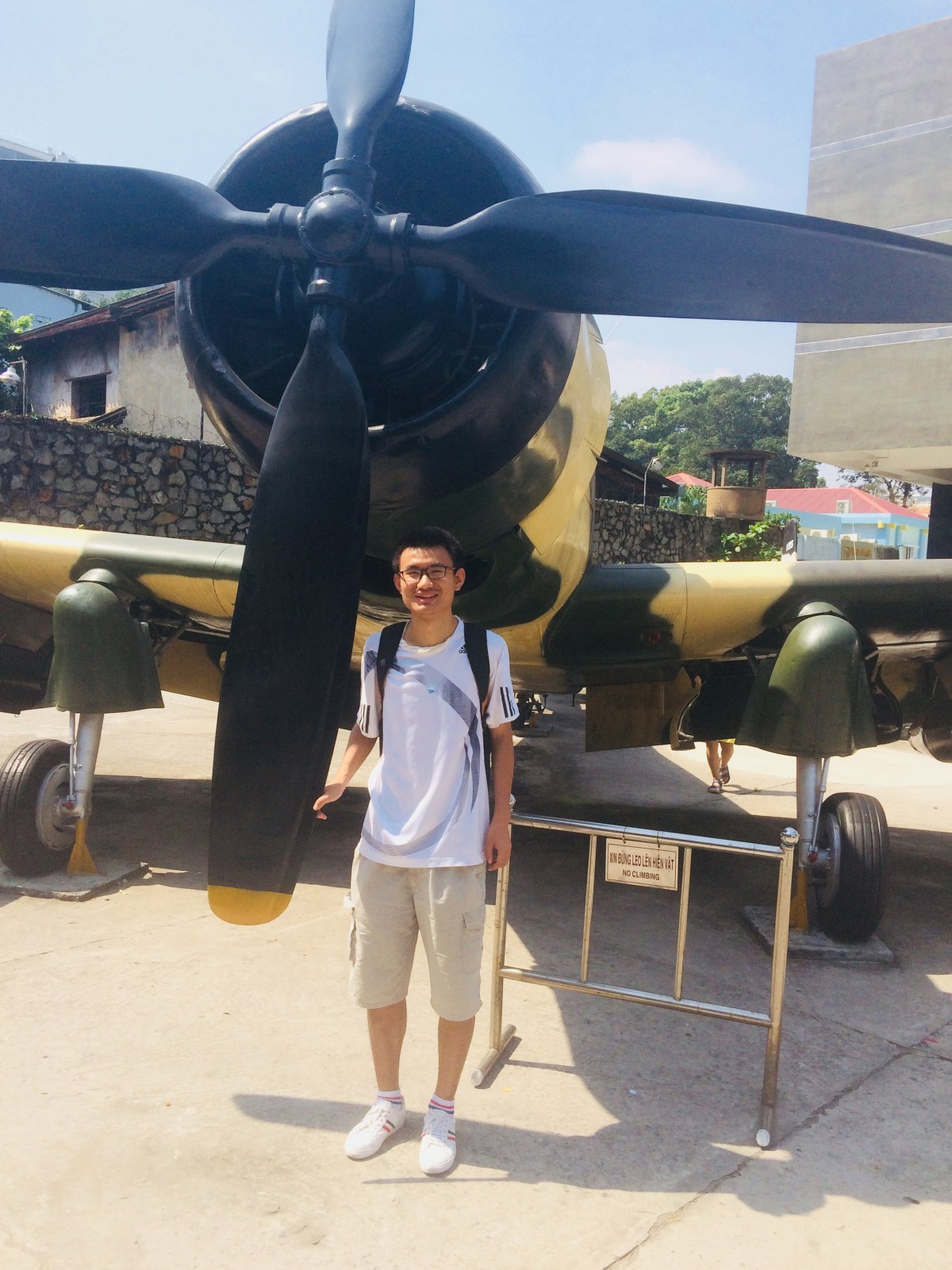
The museum’s outdoor area features a collection of military equipment, aircraft, tanks, and artillery used during the Vietnam War. These displays offer visitors a firsthand look at the machinery of war.
During the Vietnam War, the United States deployed a wide range of aircraft to support its military operations in Southeast Asia. These aircraft played a crucial role in various missions. The F-105 Thunderchief was a supersonic fighter-bomber used primarily for bombing missions over North Vietnam. Despite massive investments in military resources and escalating bombing campaigns, the United States was unable to achieve its strategic objectives in Vietnam. The conflict became increasingly bogged down in a stalemate, with neither side able to secure a decisive victory. The North Vietnamese demonstrated remarkable resilience and great determination and the war resulted in the eventual withdrawal of American forces finally.
The museum’s exhibits are divided into several thematic sections, each offering a comprehensive and harrowing portrayal of different aspects of the war, especially the cruelty. Exhibits include photographs, artifacts, documents, and multimedia presentations that depict the human cost of the conflict, including the suffering of civilians, the use of chemical weapons such as Agent Orange, and the experiences of prisoners of war. I am always a fun of military strategy and history, so this museum is a perfect place for me.
To know the history of this city, the visitors may visit the Ho Chi Minh City Museum established in 1975. The museum’s exhibits cover a wide range of topics related to the history, culture, and development of Ho Chi Minh City. Visitors can explore galleries dedicated to the city’s pre-colonial history, its role as a trading hub and colonial outpost, the impact of French colonialism, the struggle for independence, and the modernization and urbanization of Saigon in the 20th century.
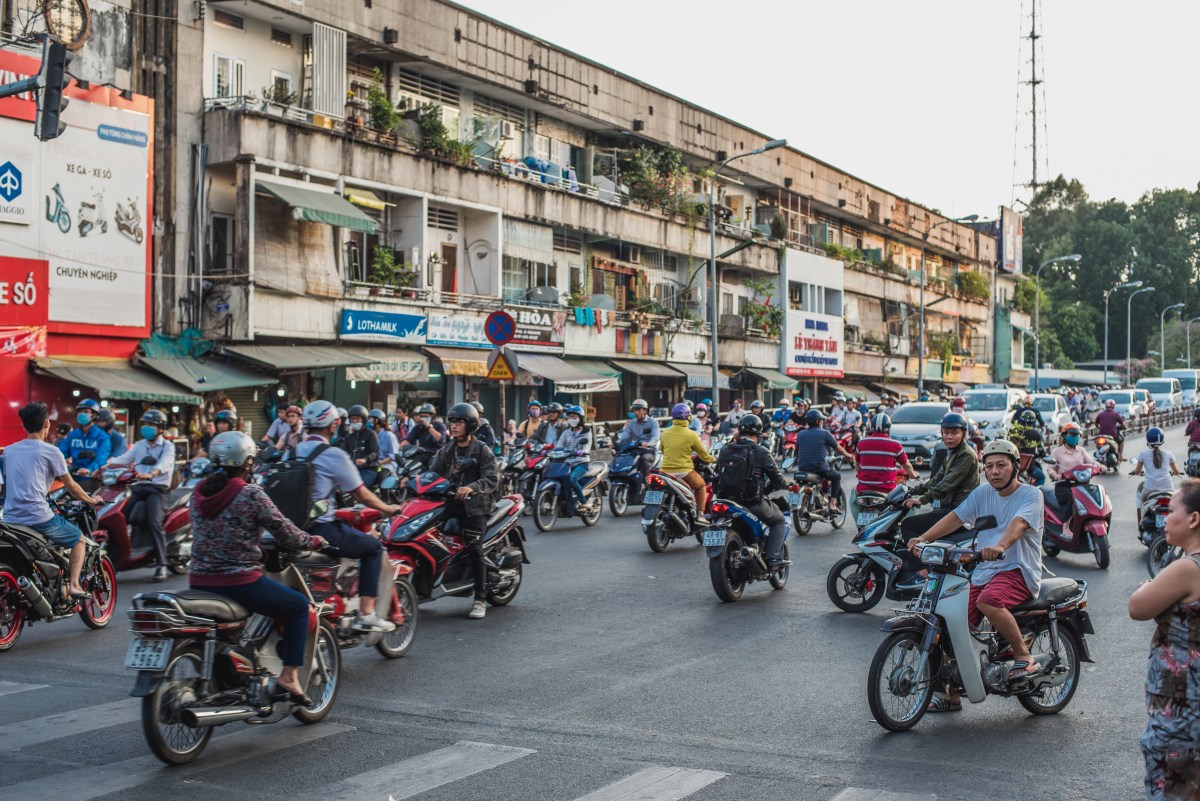
Although the Ho Chi Minh City is a quite modernized city with many skyscrapers. It lacks the facility of public transport like metro. Motorbikes play a significant role in Vietnam’s transportation landscape, serving as the primary mode of personal travel for millions of people across the country. On Vietnam’s roads, from bustling city streets to rural villages and scenic countryside, flocks of motorbikes always appeared in my eyes.
The night view of this city is splendid. It offers a vibrant and diverse nightlife scene from bustling night markets and lively bars that caters to a wide range of tastes and preferences. Ben Thanh Night Market is the place for people shopping for souvenirs, handicrafts, clothing, and local street food. These markets come alive with colorful lights, lively music, and the hustle and bustle of vendors and shoppers.
Before I went to France for studies, I have worked in this city for nearly half year. As I bid farewell to Ho Chi Minh City, I carry with me a treasure trove of memories and experiences that have broadened my horizons, deepened my appreciation for Vietnamese culture, and left me yearning for more adventures in this captivating corner of the world. When I embark on the next chapter of my journey, the time spent in this remarkable city will always be kept in my memory.





























 Gone like the wind