
漫步在福州老城
Fuzhou is the capital of Fujian Province along the Min River and facing the Taiwan Strait. With a history spanning over 2,200 years, Fuzhou was established during the Han Dynasty and later flourished as a prominent port city in the Tang and Song Dynasties. It played a key role in maritime trade and became one of China’s earliest gateways to the outside world.
福州是福建省省会,位于闽江沿岸,直面台湾海峡。福州建城于汉代,唐宋时期发展成为重要的港口城市,拥有长达2200多年的历史。它在海上贸易中发挥了重要作用,也是中国最早通向世界的门户之一。
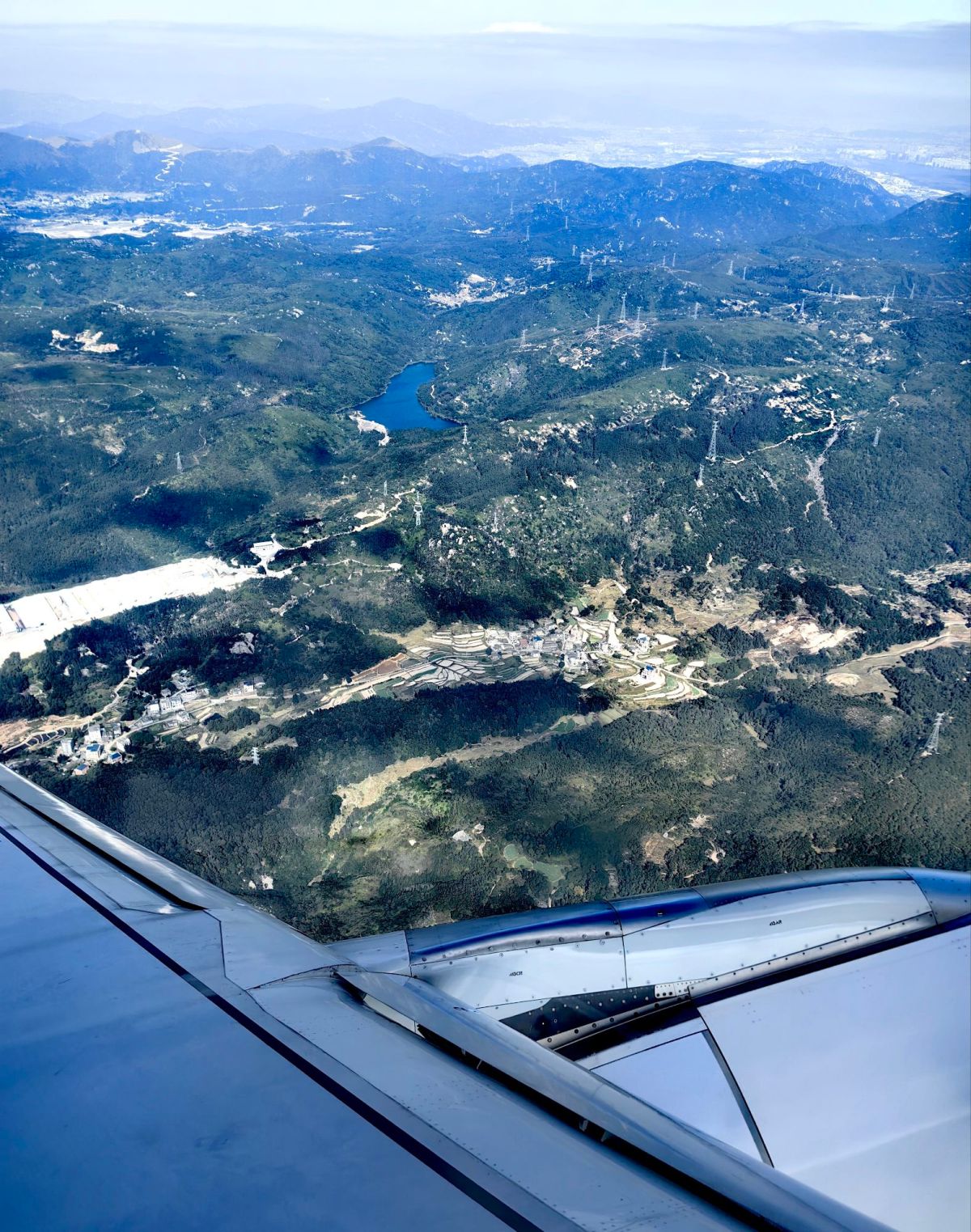
I started my trip of two weeks in Fujian province during my Christmas holiday 2024. The first impression of this place is this photo of rugged and mountainous landscape taken in flight. Nearly 90% of Fujian’s land is covered by hills and mountains, making it one of the most mountainous provinces in China.
2024年圣诞假期,我开启了为期两周的福建之旅。对这片土地的第一印象就是这张在飞机上拍摄的崎岖山地照片。福建全省近90%的土地被丘陵和山脉覆盖,是中国山地最多的省份。

The wide Min River is the lifeline of Fuzhou and the most important river in Fujian Province, winding like a silver ribbon through this city. The river also played a central role in the rise of Mawei Port, a key base of China’s modern navy, Fujian Naval force in the 19th century. The riverbanks nowadays have been transformed into parks, walkways, and resident zones.
宽阔的闽江是福州的生命线,也是福建省最重要的河流,它像一条银色的丝带蜿蜒流淌于这座城市。这条奔流的大河对马尾港的崛起也起到了至关重要的作用。马尾港是19世纪中国近代海军福建水师的重要基地。如今,河岸已被改造成公园、步道和住宅区。

The city is best known for its well-preserved historical neighborhoods, such as Three Lanes and Seven Alleys, where visitors can walk through centuries of architectural heritage. The Three Lanes and Seven Alleys is often called the “living fossil of China’s ancient city street system.” It showcases traditional Chinese urban planning, architecture, and social life from the Ming and Qing dynasties. The houses in this area are classic examples of Fujian-style residential architecture, featuring white walls and gray-tiled roofs. My trip started from this alley. Walking through it feels like stepping into a time capsule of Qing dynasty life.
这座城市以其保存完好的历史街区三坊七巷而闻名,游客可以漫步于拥有数百年历史的建筑遗产之中。三坊七巷被称为“中国古代城市街道体系的活化石”。它展现了明清时期中国传统的城市规划、建筑和社会生活。该地区的房屋是典型的闽式民居建筑,以白墙灰瓦为特色。我的旅程就是从这条巷子开始的。漫步其中,仿佛迈进了大清历史的时光隧道。
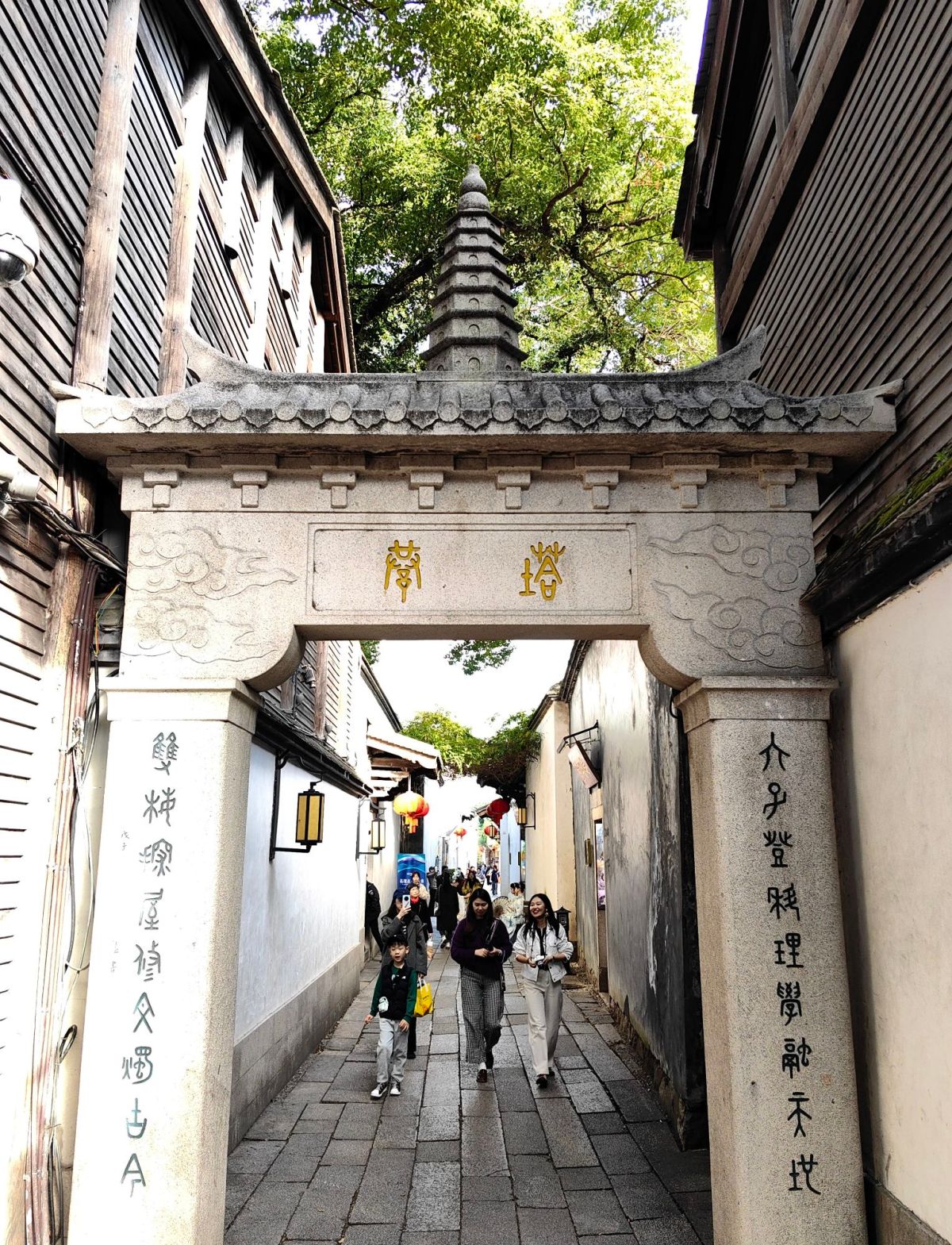
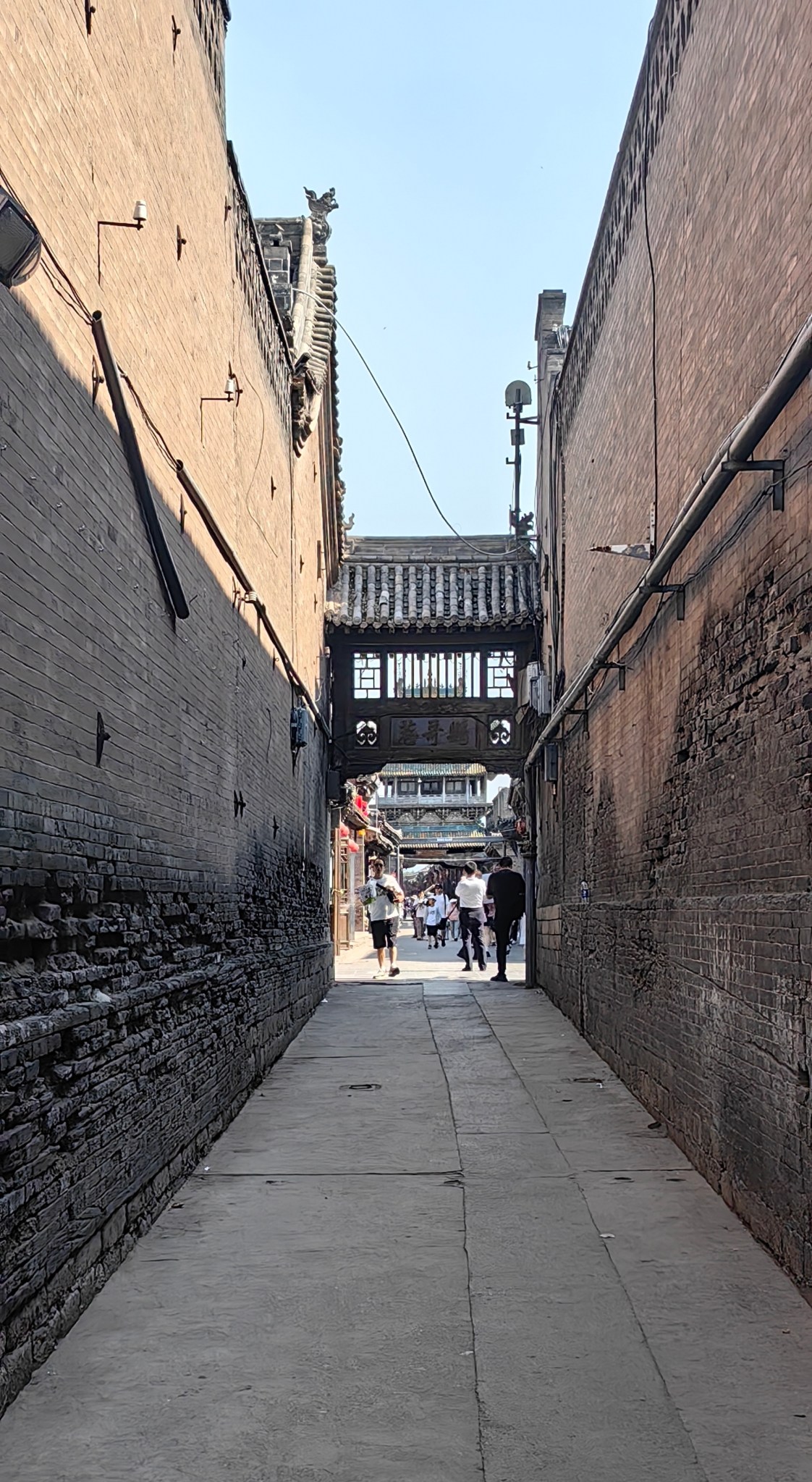
This neighborhood was home to over 500 notable historical figures, including Lin Zexu and Yan Fu. The area is named after its layout of three lanes (坊 ) and seven alleys (巷 ), arranged in a grid-like pattern running from west to east. These lanes and alleys were originally residential quarters for wealthy families, scholars, and high-ranking officials during the Ming and Qing dynasties. In the photo, this is the entrance of Pagoda Alley (塔巷) characterized by a small pagoda at the top of entrance.
这片街坊曾居住过包括林则徐和严复等500多位著名历史人物。因其有三个坊和七个巷的布局而得名,这些巷道呈东西走向,呈网格状分布。他们最初是明清时期富裕家庭、文人墨客和达官显贵的住宅区。图中这是塔巷的入口,其特点是入口上方有一座小塔。

Wang Qi’s residence is a fine example of traditional southern Chinese courtyard architecture. It exhibits many features typical of Fujian folk homes, while also displaying the elegance of an upper-class scholar’s estate. Wang Qi (王麒) was a prominent official during the Qing Dynasty. He came from a distinguished family of scholars and held high-ranking positions in the imperial bureaucracy. The residence follows a central axis, with rooms and halls arranged in balance on both sides.
王麒故居是中国南方传统庭院建筑的典范,既保留了福建民居的诸多特色,又不失上流士族宅邸的雅致。王麒是清朝一位杰出的官员,出身名门望族,在朝廷官僚体系中担任要职。故居沿中轴线布局,两侧房间和厅堂均衡分布。

Unlike the grand imperial gardens of Beijing, this garden of the residence is more subtle and scholarly in tone. A central stone-paved path winds through a small but well-planned green space and rockery feature (假山). Potted bonsai, flowering plants, and fragrant herbs are arranged with care, reflecting the taste of a cultured homeowner.
与北京的大型皇家园林不同,这处宅邸的花园更显精致典雅,散发着浓郁的文人气息。一条石板小路蜿蜒穿过一片面积虽小但精心规划的绿地和假山。盆栽、花卉和香草的摆放都经过精心布置,体现了主人的品味。

The presence of a water basin with koi fish in a traditional Chinese scholar’s residence is deeply rooted in Chinese culture. Koi fish symbolizes wealth and prosperity, making them popular in homes seeking a peaceful and auspicious atmosphere. There was an ancient legend of “Carp Leaping Over the Dragon Gate” , where a carp that successfully jumps a gate is transformed into a dragon—a metaphor for a scholar rising to official rank by passing the imperial exams.
传统的文人住宅中养锦鲤一直根植于中国文化中。锦鲤象征着富贵昌盛,因此在追求祥和祥瑞的家庭中颇受欢迎。古代有“鲤鱼跃龙门”的传说,鲤鱼成功跃过龙门后腾云化龙,象征着文人通过科举考试获得仕途。

Yan Fu’s Former Residence is another famous cultural heritage site in the Pagoda alley. Yan Fu was a renowned scholar, translator, and reform thinker during the late Qing Dynasty. He is best known for introducing Western ideas—such as liberty and democracy to Qing Dynasty through translations of influential works like The Wealth of Nations by Adam Smith. Yan Fu was one of the first Chinese intellectuals to realize the importance of modern science and Western political thought.
严复故居是塔巷另一处著名的文化遗产。严复是晚清著名的学者、翻译家和维新思想家。他最为人称道的是翻译了亚当·斯密的《国富论》等影响深远的著作,将自由和民主等西方思想引入清朝。严复是最早意识到现代科学和西方政治思想重要性的中国知识分子之一。
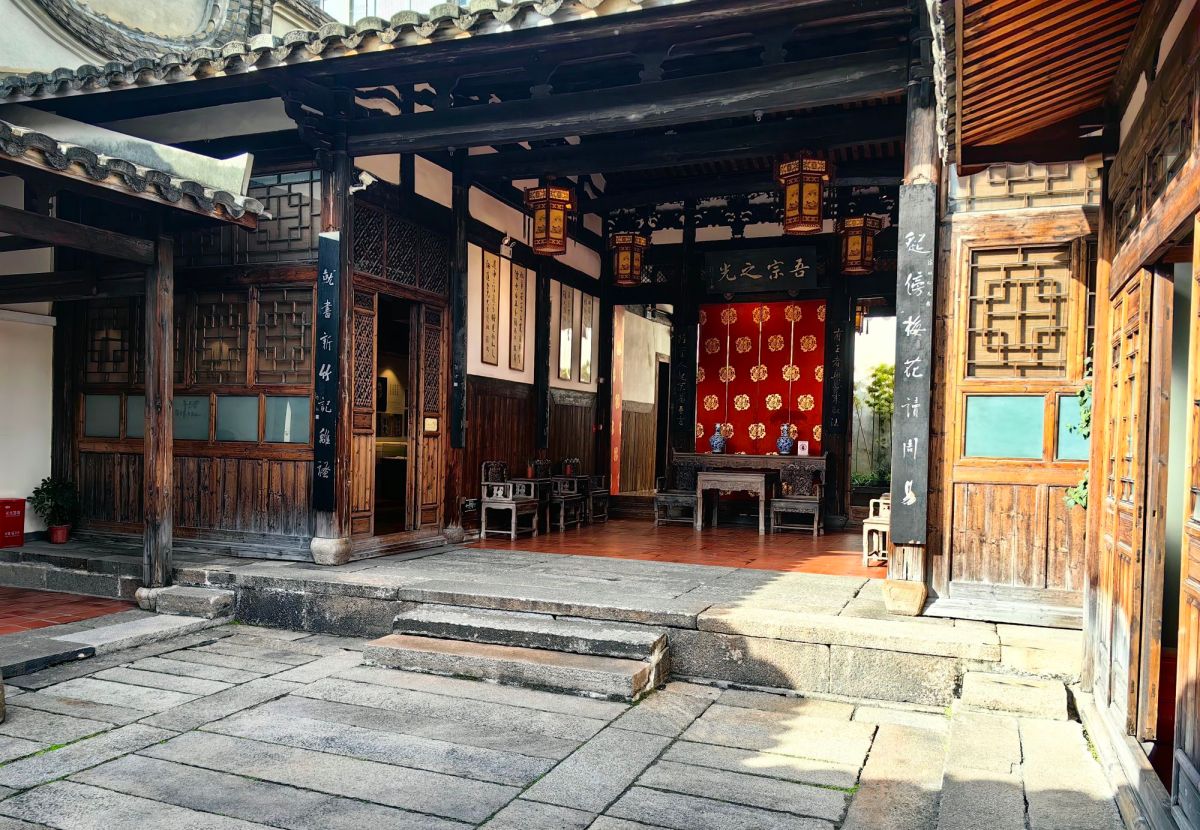
Yan Fu’s home is a typical late Qing scholar’s courtyard house, but it stands out for its simplicity and restrained elegance—reflecting Yan Fu’s own character and intellectual discipline. The woodwork, especially on door frames and windows, includes modest but refined carvings, with traditional motifs or calligraphic couplets.
严复故居是典型的晚清文人大院,以其简朴内敛的特点而引人注目,体现了严复的性格和学术严谨。门框和窗户上的木制雕刻尤为朴素精致,以传统图案以及书法对联为主。

The old wooden tables and chairs in Yan Fu’s residence reflect the scholar-official lifestyle of the late Qing dynasty. They are made of solid hardwood—likely elm, Chinese rosewood, or Red Sandalwood. These tables are sturdy and age-worn, rectangular with clean lines, mortise-and-tenon joints. High-backed armchairs are tall and upright, composed of a single, gently curved back splat, designed to support posture and encourage upright sitting—mirroring the scholar’s moral uprightness.
严复宅邸中的古旧木桌椅,体现了晚清士大夫的生活方式。它们由硬木的实木制成,木材料可能是榆木、花梨木或紫檀木。这些长方形桌子坚固耐用,饱经风霜,线条简洁,由传统的榫卯结构拼装而成。高背扶手椅高大挺拔,由一整块略微弯曲的靠背构成。这种椅子鼓励端正坐姿,良好的坐姿也体现了士人的正直品格。

I took a photo with Yan Fu’s statue in the garden planted with many bamboos. In Chinese culture, bamboo is a symbol of the gentleman-scholar (君子)—upright, resilient, and humble. It bends but does not break, reflecting strength with flexibility. This perfectly mirrors Yan Fu’s character: principled but open to reform, rooted in tradition yet responsive to change.
我在种满竹子的花园里与严复的雕像合影。在中国文化中,竹子象征着君子—以及正直、坚韧、谦逊的个性。它折而不挠,体现了力量与柔韧的双重性。这完美地体现了严复的性格:原则性强却又思想开放,根植于传统却又积极响应社会变化。

Tianhou Gong (天后宫), also known as the Temple of the Queen of Heaven, is a traditional Chinese temple dedicated to Mazu. This kind of religious building can be found most in Fujian province. Mazu is venerated as the protector of fishermen, sailors, and merchants. The Tianhou Temple is a place where people pray for safe voyages, favorable weather, and bountiful catches. Mazu’s worship spread with Chinese emigrants, so these Tianhou temples can be found in Taiwan and Southeast Asia like Singapore.
天后宫是一座供奉妈祖的传统中国庙宇。这类宗教建筑在福建省最为常见。妈祖被尊崇为渔民、水手和商人的守护神。天后宫则是人们祈求航海平安、风调雨顺、渔获丰收的地方。妈祖崇拜随着中国海外移民而在世界传播开来,因此在台湾、新加坡等东南亚地区都能找到这类天后宫建筑。

The quiet alleys without name just allow one person to pass through and really attract me to explore. They are narrow and winding, paved with aged stone slabs, polished smooth by centuries of foot traffic. They weave between whitewashed walls of ancient residences which are living museums of Chinese urban life—whispering with the voices of history. The saddle-shaped walls are characteristic of Fuzhou’s traditional architecture. These mud-plastered walls curve outward at the top, resembling the shape of a saddle.
那些静谧的小巷,没有名字,只容一人穿行,却深深吸引着我去探索。它们蜿蜒狭窄,铺着古老的石板,经过几个世纪的岁月磨得光滑平整。它们穿梭于古老民居的粉墙之间,这些民居如同中国城市生活的活博物馆,低声诉说着历史的韵味。马鞍形的墙体是福州传统建筑的特色。这些敷泥的墙体中间顶部向两侧弯曲,形似马鞍。

Lang Guan Alley is one of the seven major alleys. Its name literally means “Officials’ Alley,” reflecting its historical role as a residential area for government officials during the Ming and Qing dynasties. Shaded by ancient trees, the narrow flagstone path wound between stone door frames carved with calligraphy or age-old family mottoes.
郎官巷是七巷之一。它的名字反映了其在明清时期作为官府官员居住区的历史地位。狭窄的石板路蜿蜒在古树成荫的街道间,门框上雕刻着书法或古老的家训。

Shen Baozhen’s Former Residence is one of the most significant cultural and historical site. Shen Baozhen (1820–1879) was a prominent naval reformer, and diplomat during the late Qing Dynasty. A native of Fuzhou, he was one of the earliest Chinese officials to actively promote Westernization and modernization.
沈葆桢故居是当地重要的文化历史遗迹之一。沈葆桢(1820-1879)是晚清杰出的海军改革家和外交家。他出生于福州,是中国最早积极推动西化和现代化的官员之一。

His house is a spacious and well-preserved courtyard compound. The main hall with wooden beams, intricate lattice window was used for receiving guests and conducting family rituals. Now it is used to display his portrait, biography and personal achievements.
他的故居是一座宽敞且保存完好的大院。主厅采用木梁结构,格子窗造型繁复,这里曾用于接待宾客和举行家庭庆祝仪式。现在,这里陈列着他的画像、生平简介和个人事迹。
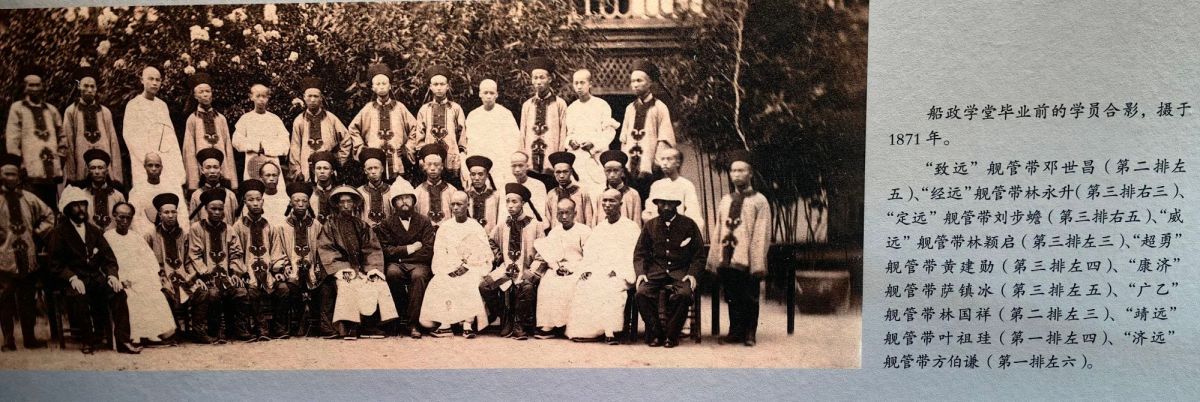
As a statesman, he founded Chinese first naval academy, the Fuzhou Naval Academy (船政学堂) in 1866 and oversaw the construction of China’s first modern navy. He also advocated for technological reform and industrial modernization during the Self-Strengthening Movement. This photo in the main hall shows the 1871 batch of students of navy academy in their graduation ceremony. Most of these students fought for their country in the Battle of the Yellow Sea between the Qing Dynasty of China and Meiji Japan.
作为一名政治家,他于1866年创办了中国第一所水师学堂——福州船政学堂,并监督建造了中国第一支现代海军。在洋务运动期间,他还倡导技术改革和工业现代化。主厅里这张照片展示了1871届水师学堂学生的毕业典礼。这些学生大多参加了清朝与明治日本在黄海的甲午海战,大多为国捐躯。

Within the Three Lanes and Seven Alleys, there is a distinct heart-shaped ficus tree. It is a popular photo spot for couples and travelers. The tree standing against the backdrop of gray-brick walls, ancient eaves, and blue sky make it a perfect place of photography.
三坊七巷内,有一棵造型独特的心形榕树,是情侣和游客的热门拍照地点。在灰砖墙、古老的屋檐和蓝天的映衬下,榕树显得格外醒目,是绝佳的拍照打卡地。
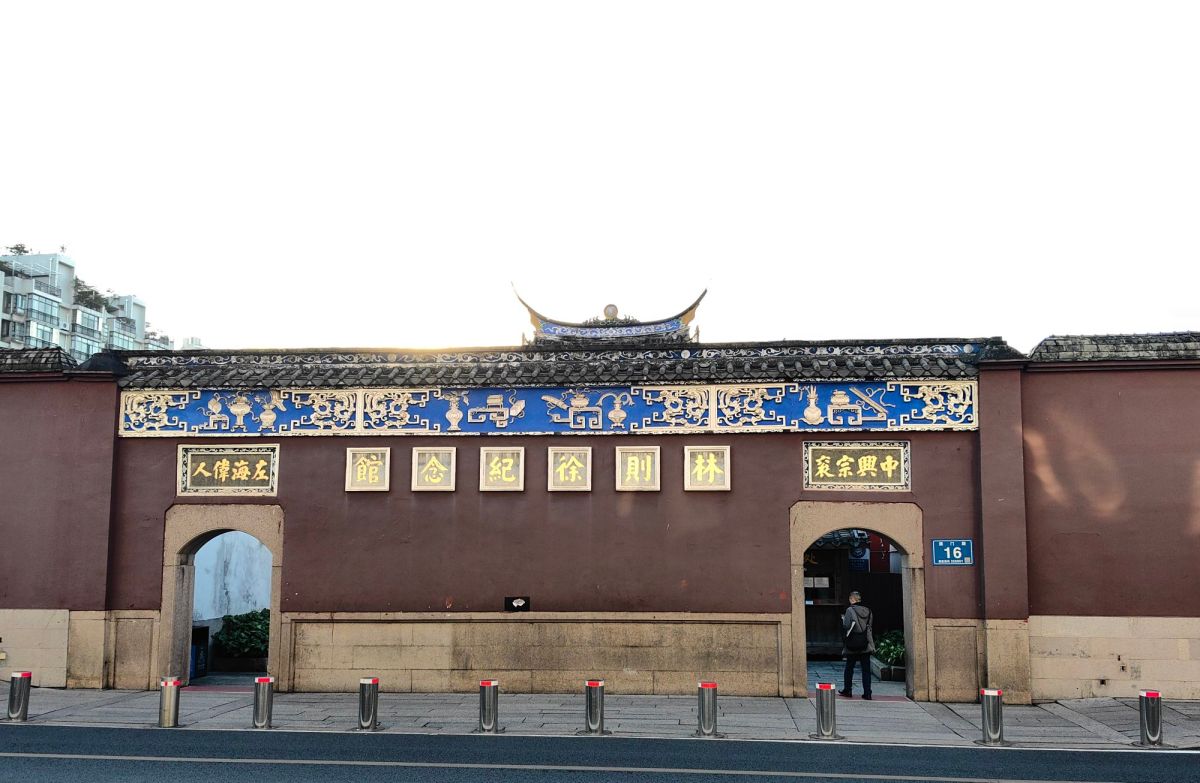
The most famous person lived in Three Lanes and Seven Alleys before must be Lin Zexu. He is one of the historical figures I respect most. He really did his best to help the country moving forward without considering self-interest. This is the historical museum of Lin Zexu and his former residence. He was a pioneer of China’s early modernization and anti-drug efforts. His life mark an effort in the nation’s struggle with foreign imperialism and internal reform.
三坊七巷以前住过最著名的人物当属林则徐。他也是我最敬重的历史人物之一。他不计个人私利,竭尽所能,推动国家进步。这里是林则徐故居及其历史博物馆。他是中国早期现代化和禁毒运动的先驱。一生标志着抗击外国帝国主义和内部改革的努力奋斗经历。
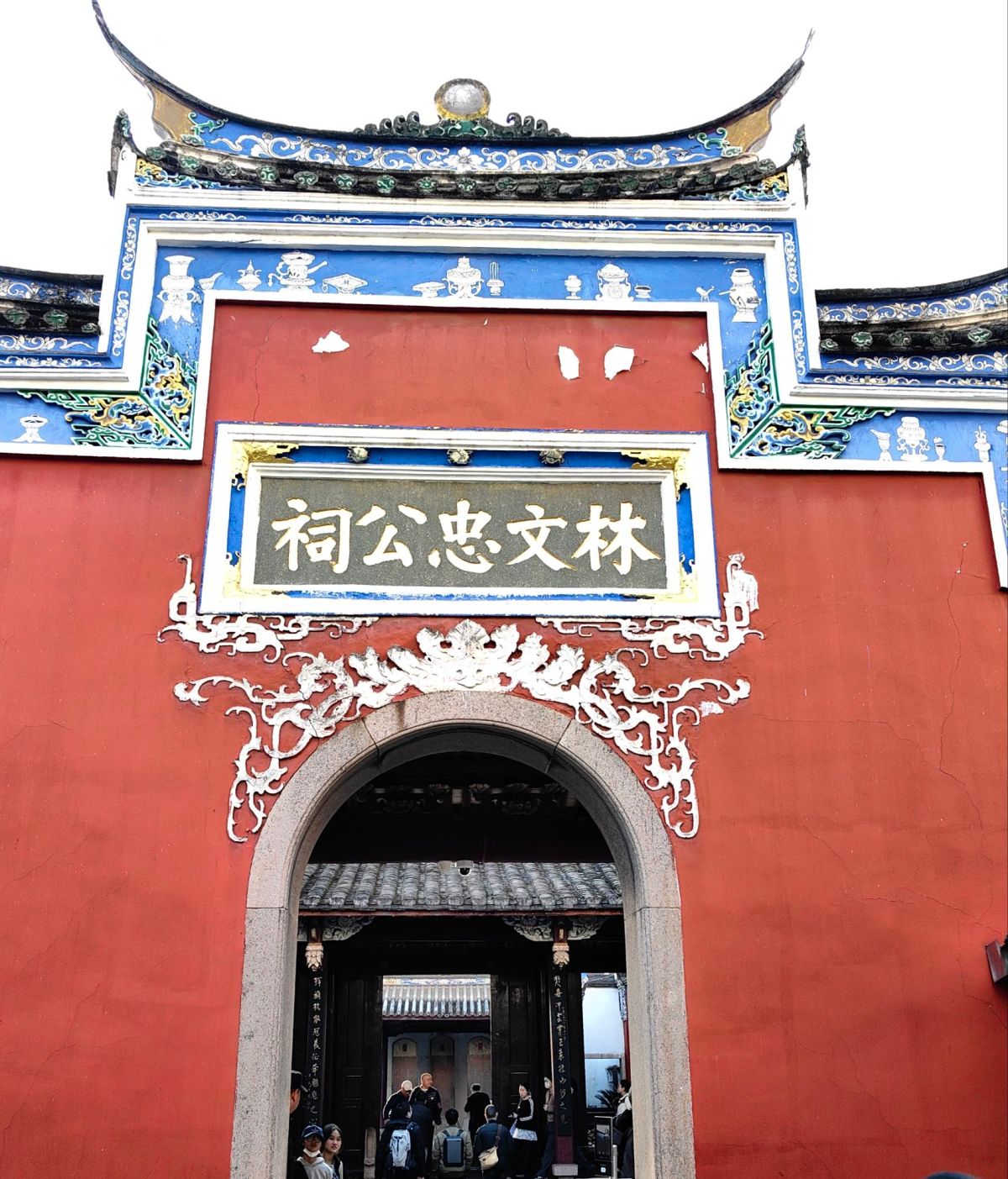
It is a traditional Fuzhou architecture, including wooden beams, stone courtyards, and ancestral halls. It displays Lin Zexu’s calligraphy, family history, and personal items and offers a glimpse into the daily life of a high-ranking Qing official. The Main Exhibition Hall displays the chronicles of Lin’s life and moral philosophy. It exhibits the history of Opium War, and artifacts such as imperial edicts, inks, and maps.
这是一座包括木梁、石砌庭院和祠堂等传统元素的福州建筑。馆内展出了林则徐的书法、家族史和个人物品,让游客得以一窥清朝高官的日常生活。主展厅则展示了林则徐的生平和价值观,并展出了鸦片战争的历史以及清朝的圣旨、墨迹和地图等文物。

These statues highlights Lin Zexu’s role as the founder of China’s anti-drug efforts. In 1839, Lin Zexu was appointed by the emperor as the Imperial Commissioner to eradicate the opium trade in Guangzhou. He famously ordered the confiscation and destruction of over 1,000 tons of opium at Humen, sending a clear message against foreign drug trade. His uncompromising stance brought him into direct conflict with British merchants who brought opium to China, becoming one of the catalysts for the First Opium War.
这些雕像彰显了林则徐作为中国禁毒运动奠基人的地位。1839年,林则徐受皇帝任命为钦差大臣,负责铲除广州的鸦片贸易。他下令没收并销毁虎门一千多吨鸦片,打响了反对外国毒品贸易的第一枪。他强硬的立场使他与将鸦片带入中国的英国商人发生了直接冲突,成为第一次鸦片战争的导火索。

The couplet “苟利国家生死以,岂因祸福避趋之” is one of the most famous quotes from Lin Zexu. It means ‘If it benefits the nation, I shall sacrifice my life without hesitation; How could I shrink away from it because of personal gain or loss?’ He wrote while serving as an imperial envoy during the Opium War. It has become a moral touchstone in Chinese history, frequently quoted to inspire courage and self-sacrifice.
这幅对联“苟利国家生死以,岂因祸福避趋之”是林则徐最著名的诗句。林则徐在鸦片战争期间出使钦差大臣时写下了这句名言。这句名言已成为中国历史上的道德试金石,经常被用来激励人们树立勇气和奉献精神。
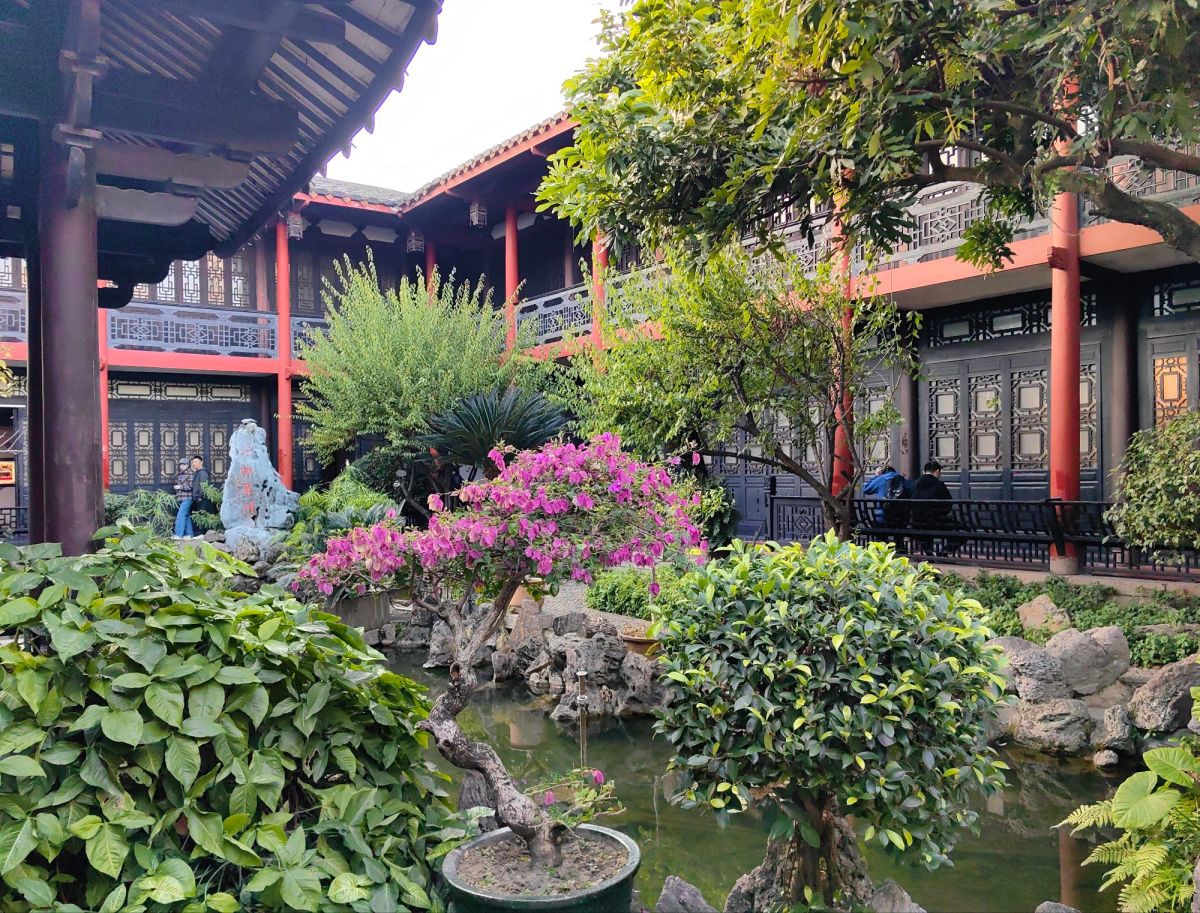
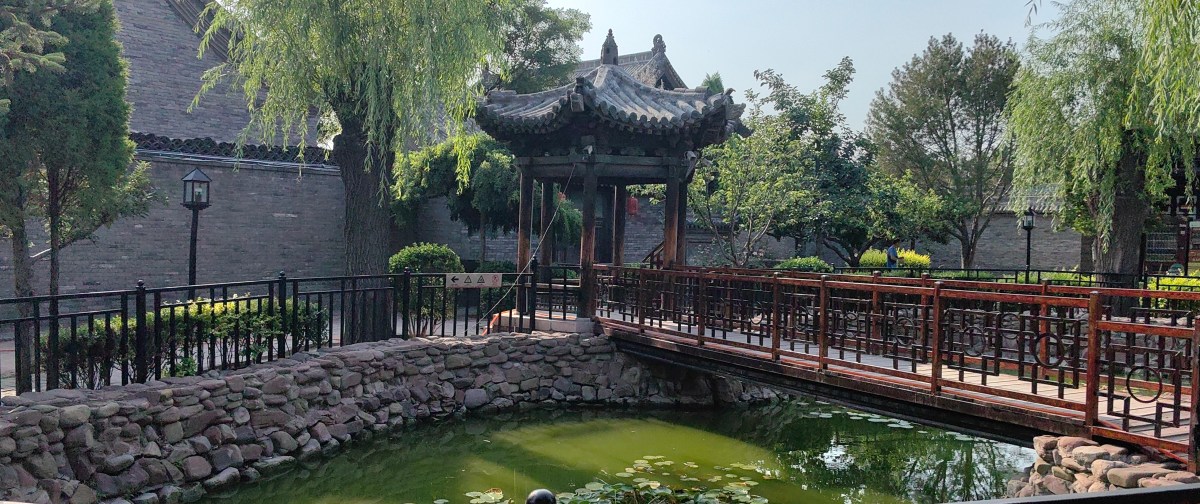
Tucked within the gray walls and wooden halls of Lin Zexu’s ancestral home lies a quiet and small garden. Winding stone paths guide visitors through small groves of bamboo, camellia, and osmanthus. A central pond mirrors the sky and soft eaves, adding a sense of stillness. A simple pavilion perhaps was once used by Lin Zexu himself to compose verses or study state affairs. Nowadays most people lived in the small and limited space within one apartment. The life will be wonderful if I can own such a small garden in my house!
林则徐祖宅灰墙木厅之间,藏着一座静谧的小花园。蜿蜒的石径引领游人穿过竹林、山茶和桂花的小树林。中央的池塘映照着天空和柔和的屋檐,更添一份静谧。一座简朴的亭子,或许是林则徐本人曾经吟诗作赋或研读国事的地方。如今,大多数普通人都挤在狭小的公寓里。如果我的家里也能有这样一个小花园,生活该有多美好啊!
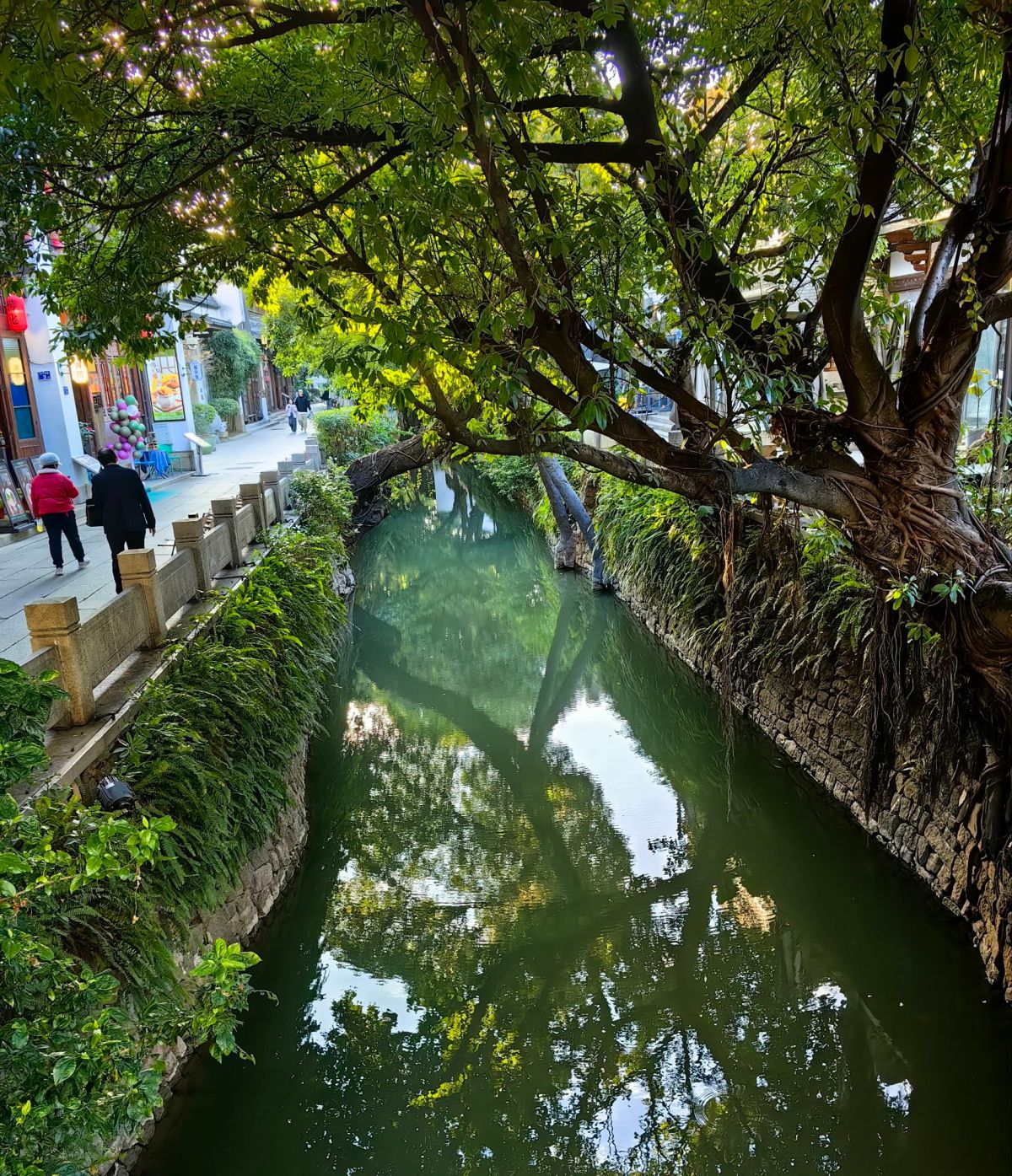
Behind Lin Zexu’s residence, there is a small river. This is a very representative street view of Fu Zhou. This city has a long history of ficus tree planting along the river so it is called “The City of Ficus”. In AD 940, the city Governor Zhang Boyu of the North Song Dynasty officially promoted the planting of ficus trees throughout the city. His goal was to provide shade, control floods, and beautify the environment. From then on, the ficus became inseparable from the city’s identity.
林则徐故居门后有一条小河。这是福州极具代表性的街景。福州沿河种植榕树的历史悠久,故有“榕城”之称。公元940年,北宋太守张伯玉正式在全城推广种植榕树,以达到遮荫、防洪、美化环境的目的。从此,榕树便成为福州这座城市不可分割的一部分。

The streets of Fuzhou are often described as green corridors where history and nature intertwine. Due to its subtropical climate and centuries of civic greening, the landscape is defined by lush vegetation that brings both aesthetic charm and practical comfort to daily life. Bougainvillea is planted along fences and garden walls. Palm Trees, Camphor Trees and Osmanthus are planted along wide boulevards and waterfront promenades.
福州的街道犹如历史与自然交织的绿色长廊。得益于亚热带气候和数百年来的绿化,这里植被茂盛,美观又舒适,为日常生活增添了便利。沿着篱笆和花园围墙种植着三角梅。棕榈树、樟树和桂花等热带植物则种植在宽阔的林荫大道和滨河长廊两旁。

The West Lake of Fuzhou is one of the city’s most cherished historical and scenic spots. It is not far away from the Three Lanes and Seven Alleys, and tourists can visit them all together within a whole day. Its history can be dated back to the Western Jin Dynasty (265–316 AD). When I arrived at 5:30 pm, the last light of the day spilled across the surface of the lake like melted gold, turning the still water into a mirror of warm amber. The sun dip slowly behind the distant pavilion rooftops and willow-covered banks.
福州西湖是这座城市最具历史意义的名胜之一。它与三坊七巷相距不远,游客可以在一天之内游览完所有景点。它的历史可以追溯到西晋时期。我下午5点半到达时,夕阳西下,金光洒落在湖面上,将平静的水面映照成一面温暖的琥珀色镜子,缓缓落入远处亭台楼阁和柳树掩映的湖岸之后。

The stone Nine-Bend Bridge glowed with a gentle fire. Overhead, a few egrets glide silently across the sky, their wings illuminated in the golden glow, leaving only ripples behind them. It was winter of Fuzhou, the cold air of evening settled gently over the city when darkness came. A faint mist began to rise from the lake’s surface, and the once-golden light gives way to shades of silver and soft indigo.
九曲石桥泛着柔和的余霞。头顶上,几只白鹭静静地滑过天空,它们的翅膀中闪闪发光,身后只留下几道涟漪。这是福州的冬天,夜幕降临,傍晚的冷空气轻轻地笼罩着这座城市。湖面上开始升起一层薄薄的薄雾,那刻冬日的金色光芒逐渐褪去,取而代之的是清冷的银色和柔和的靛蓝色。

At night, I tasted the local food in a small restaurant. Lychee Meat is one of Fuzhou’s most iconic traditional dishes. Despite its name, it does not contain any actual lychee fruit—instead, the dish is named for its appearance, which mimics the shape and color of ripe lychees. Lean pork with some fat is covered by starch, then adding vinegar, sugar, soy sauce, and tomatoes or ketchup inside. The pork is deep-fried and then stir-fried in a sweet-and-sour sauce. The cuisine in Fuzhou always has sweet and sour taste and I really don’t like it.
夜幕降临,我在一家小餐馆品尝了福州的特色菜。荔枝肉是福州最具代表性的传统菜肴之一。虽然名字叫荔枝肉,但这道菜的配料并非荔枝,而是模仿成熟荔枝的形状和颜色而得名。这道菜的配料是将带点肥的瘦猪肉裹上淀粉,再加入醋糖、酱油、番茄酱。肉先油炸,再用糖醋酱翻炒。福州本地的菜总是带有糖醋口味,我不太喜欢这样的酸甜口。

I stayed in Fuzhou for three days and traveled a historic neighborhood called Upper and lower Hang Street on the second day. It was once the economic and commercial center of ancient Fuzhou, especially during the Ming and Qing Dynasties.
我在福州呆了三天,第二天游玩了上下杭这个历史悠久的街区,这里曾经是古代福州尤其是明清的经济商业中心。

It was a key hub for maritime trade, especially along the Min River. The district used to be bustled with trading boats, merchant houses, ancestral halls, and courier stations, linking inland Fujian with ports in Southeast Asia. Now it’s a live storybook of Fuzhou’s past.
从这里到闽江沿岸曾是海上贸易的重要枢纽。这里曾经熙熙攘攘,商船穿梭,商厦林立,驿站星罗棋布,连接着福建内陆与东南亚的众多港口。如今,这片景区已成为福州历史的见证。

Today, this district has been restored and revitalized into a blend of living museum and modern lifestyle space. It has well-preserved Qing and Republican-era buildings with arched gateways, red-brick walls, and wooden lattice windows. Stone-paved lanes lined with tea houses, galleries, cafes, and boutiques. Old docks and riverfront views echoed its trading past.
如今,这片区域经过修复,已成为一个融合了生活气息的博物馆和现代生活方式的步行街景区。这里保存着清朝和民国时期的拱形门楼,红砖墙和木格窗交相辉映。石板小巷两旁林立着茶馆、画廊、咖啡馆和精品店。古老的码头和河畔景色,回荡着旧日往事。
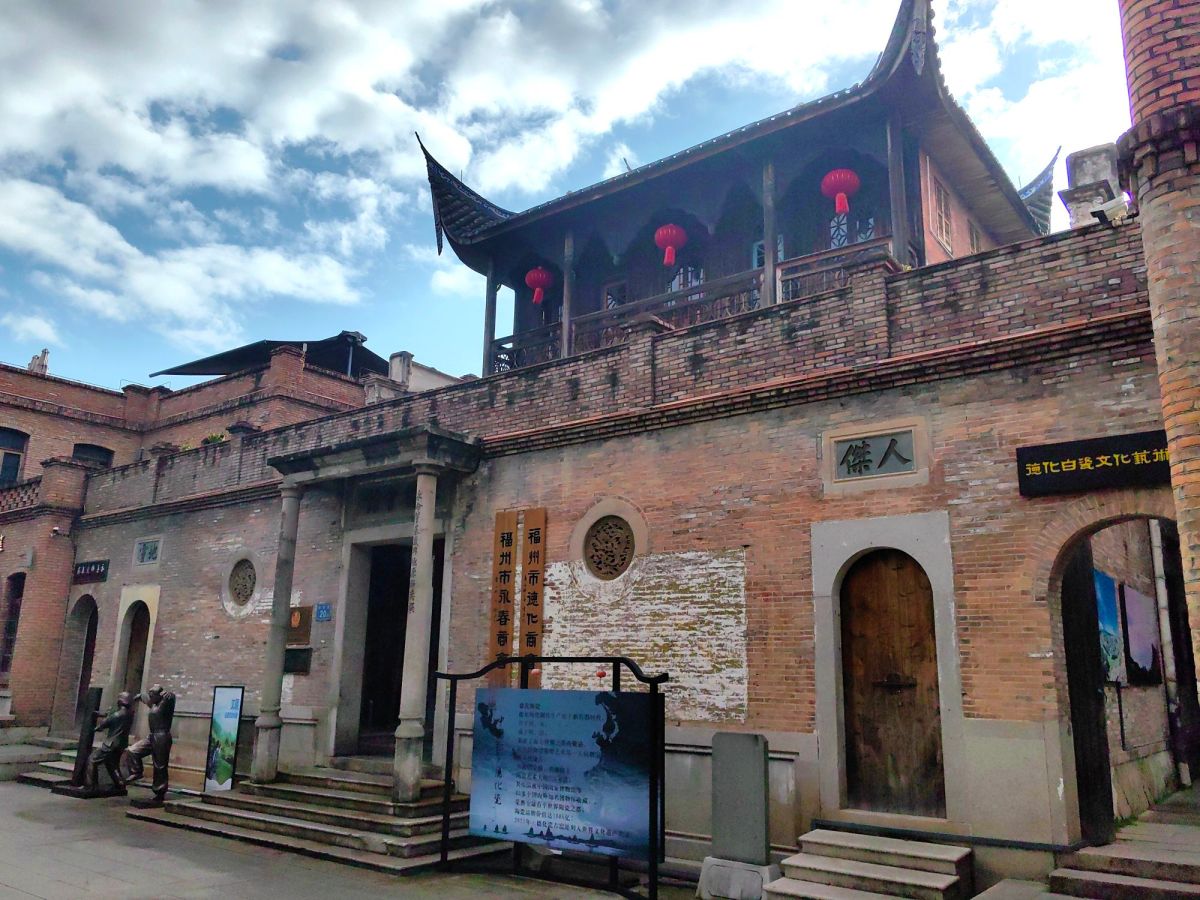
I could have a quiet walk along the historic lanes and looked at former residences of wealthy merchants and influential families. They were built with red brick, gray granite, and timber beams, these homes have an earthy dignity. Time has softened their sharp lines, and moss grows gently along shaded walls.
静静地漫步在历史悠久的小巷,欣赏富商显贵的故居。这些房屋用红砖、灰色花岗岩和木梁建造,散发着朴实庄重的历史感。时间磨平了它们棱角分明的线条,青苔在阴凉的墙壁上早已生根发芽。
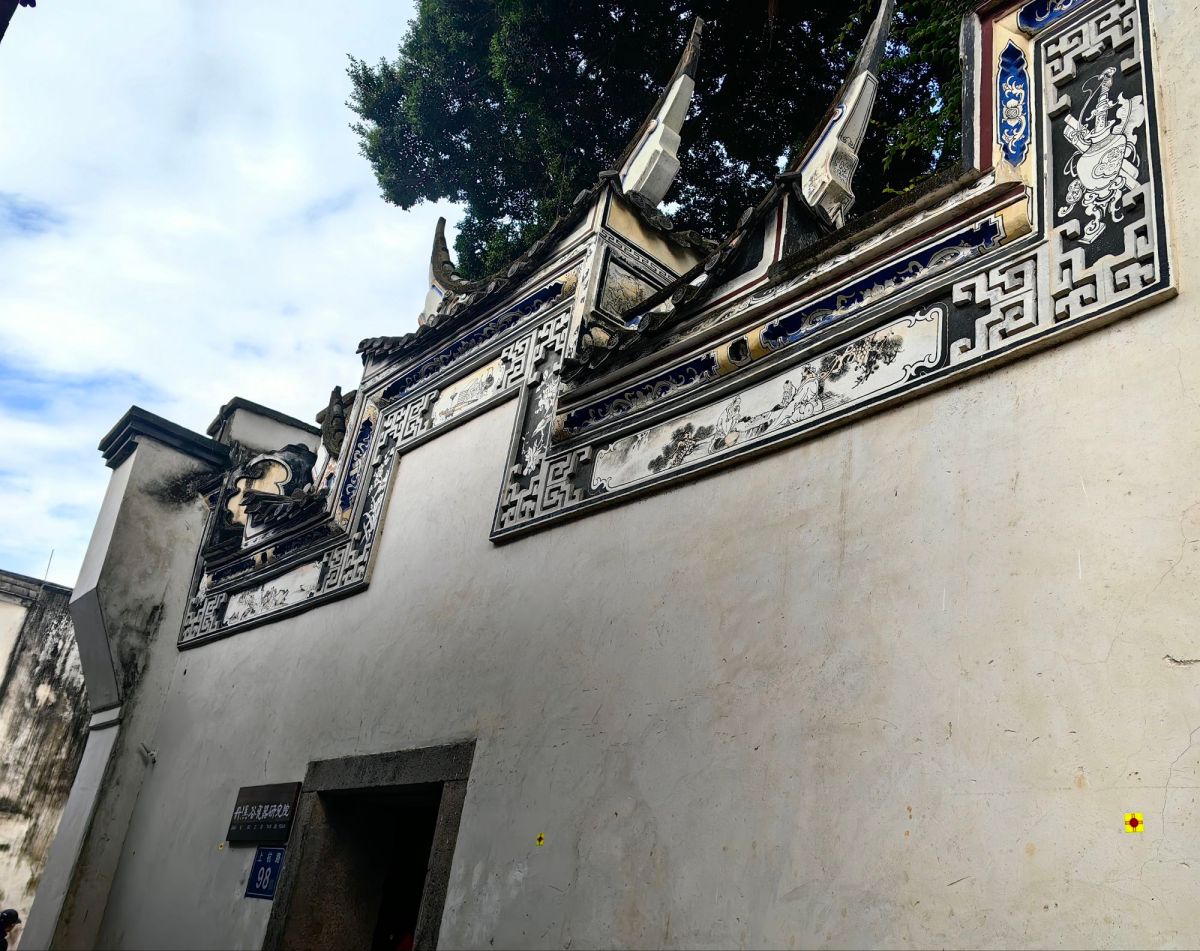
Carved lintels and stone door frames still bear inscriptions of family mottoes, trade names, or poetic couplets, now faded but still legible in the morning light. Against the weathered gray of Fuzhou’s traditional masonry, some vivid details stand out. Painted wooden panels and colorful relief carvings told story scenes from Chinese opera or classic literature. Towering over these walls are ancient banyan trees. Their long, arching branches embrace the houses, providing shade.
雕花的门楣和石框上依然刻着家训、商号或对联,虽然字迹已褪色,但在晨曦中依然清晰可辨。在传统砖石建筑饱经风霜的灰色衬托下,一些鲜活的细节格外醒目。彩绘木板和色彩斑斓的浮雕讲述着中国戏曲或古典文学的故事场景。古老的榕树高耸于这些白墙之上,它们修长拱起的枝干将房屋环抱,提供阴凉。
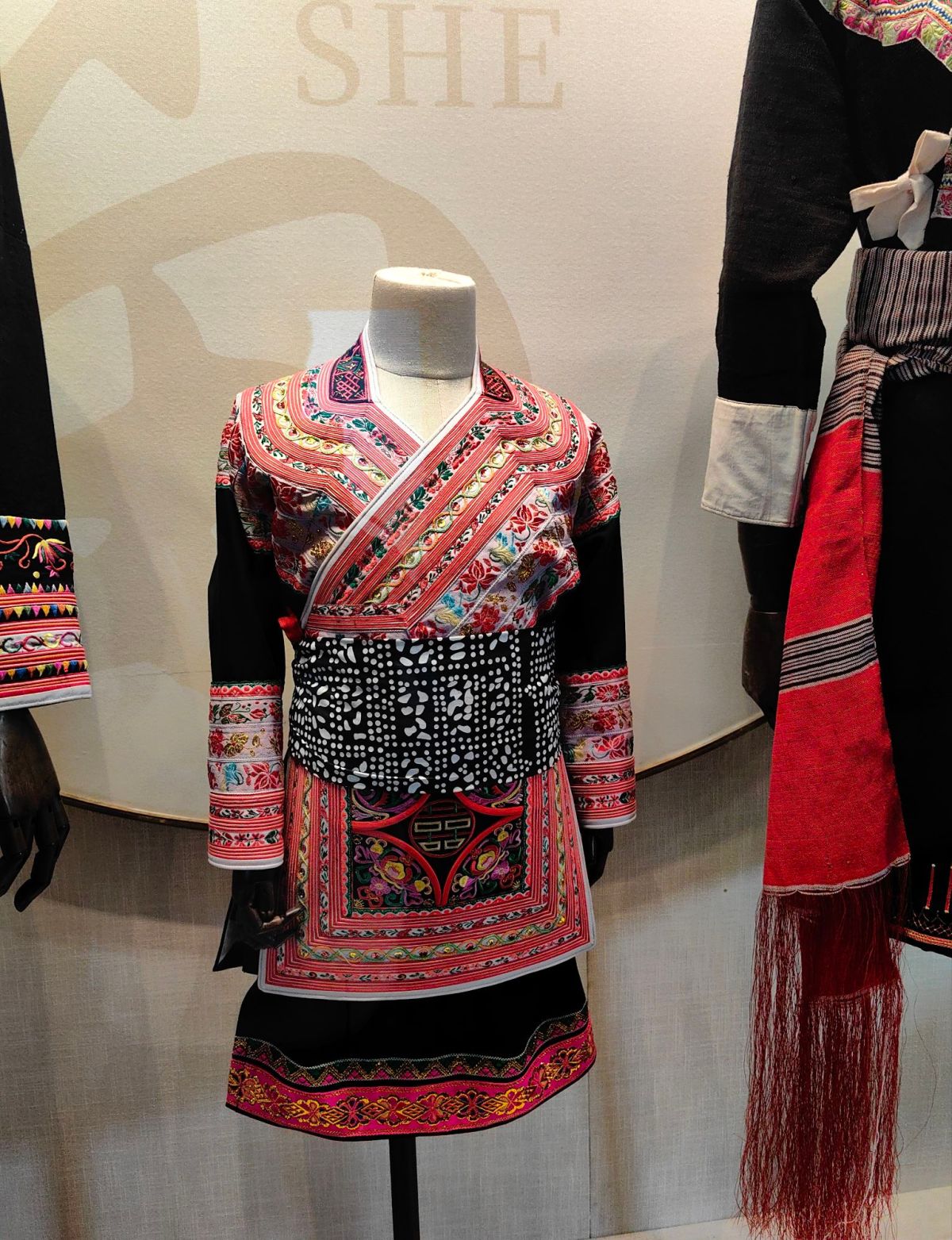
One museum here displayed the traditional clothing of the She ethnic group which is one of China’s officially recognized ethnic minorities, living in the mountainous regions of Fujian. The traditional attire for She women is colorful. The blouse is a black or dark blue long-sleeved top, cross-collared or with side-fastening buttons. It is embellished with bright trims, hand embroidery, and silver ornaments around the collar and sleeves.
一家博物馆展示了畲族的传统服饰。畲族是中国官方承认的少数民族之一,居住在福建山区。畲族女性的传统服饰色彩鲜艳。上衣是黑色或深蓝色的长袖上衣,有对襟或侧扣。上衣饰有鲜艳的饰边、手工刺绣,领口和袖口周围饰有银饰。

The Sui Gong Pavilion is a small but culturally rich pavilion tucked in one corner. Its dark-tiled roof is gently curved, typical of southern Chinese architectural style. The wooden beams are carved with subtle patterns and supported by sturdy timber pillars. A small wooden plaque bears the inscription “遂公亭” in graceful calligraphy. The space is small and simple but assembles the Chinese architecture details.
遂公亭,一座小巧却蕴含着浓郁文化气息的亭子,坐落在街边一隅。亭顶黑瓦微微拱起,是典型的江南建筑风格。木梁雕琢精妙,由坚固的木柱支撑。一块小木匾上,隶书书法优美地刻着“遂公亭”四个大字。亭子虽小,却简洁明了,凝聚了中式建筑的精髓。
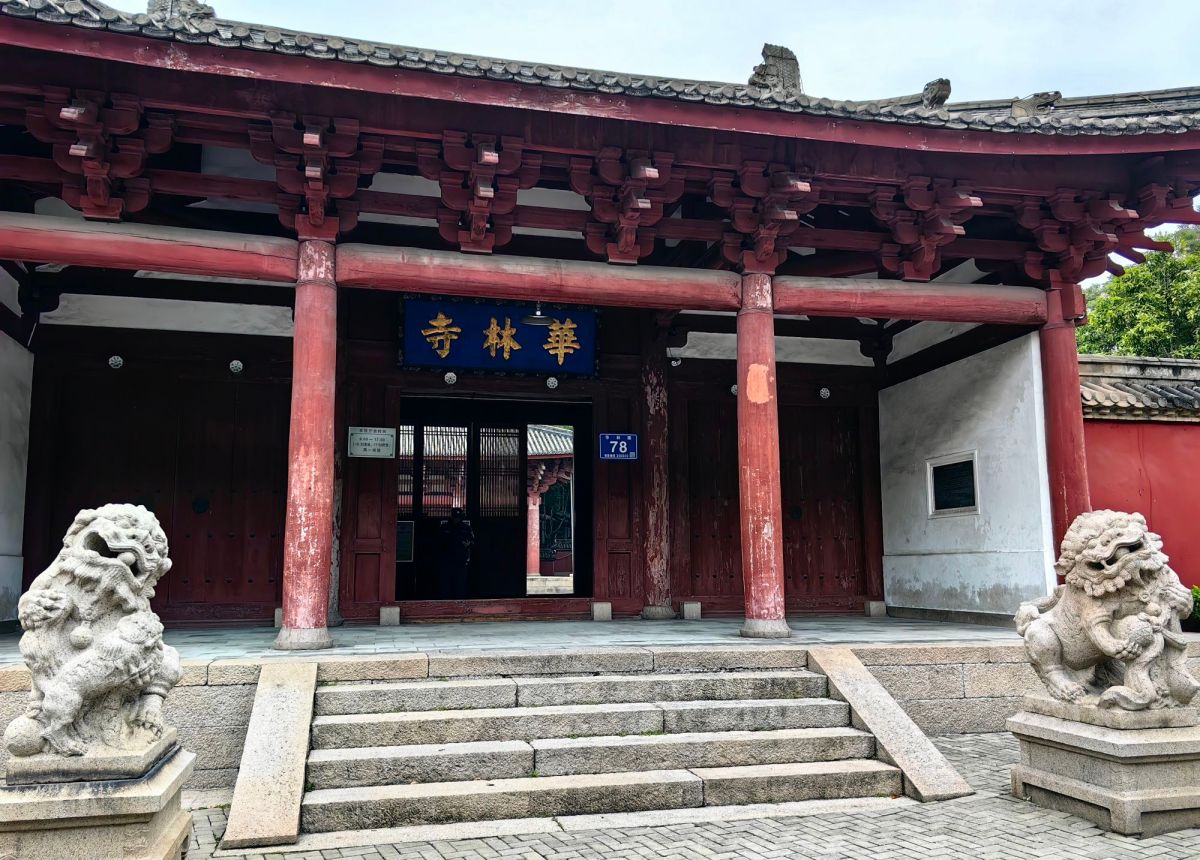
Fuzhou has many historical buildings. The most treasured monument must be the Hualin Temple. It is the oldest surviving wooden temples in southern China. It was first built during the Tang Dynasty, witness to over a thousand years of spiritual devotion.
福州还拥有众多历史建筑。其中最宝贵的古迹当属华林寺。它是中国南方现存最古老的木结构寺庙,始建于唐代,见证了千余年来人们的精神信仰。

The Main Hall was reconstructed during the Northern Song Dynasty and is the oldest wooden structure in Fuzhou. It is the only building remained in the temple, but indeed a Song dynasty masterpiece of dougong (bracket system) architecture. No nails or metal fittings were used to build it—only timber pieces are fitted together with precision. China once had an extraordinarily rich tradition of wooden architecture—some of the finest and most advanced in the ancient world—but relatively few ancient wooden structures have survived because they are vulnerable to time, nature, and war. This temple is a small number of ancient wooden buildings remain nowadays.
寺庙正殿重建于北宋,是福州最古老的木结构建筑。它是寺内唯一现存的建筑,堪称宋代斗拱结构的杰作。建造过程中未使用任何钉子或金属配件,仅将木块精准地拼合在一起。中国曾经拥有极其丰富的木结构建筑,其中一些在古代世界也是翘楚,但由于受时间、自然环境影响和战火的侵蚀,现存的古代木结构建筑非常稀少。这座寺庙是如今少数几座保存至今的古代木结构建筑之一。
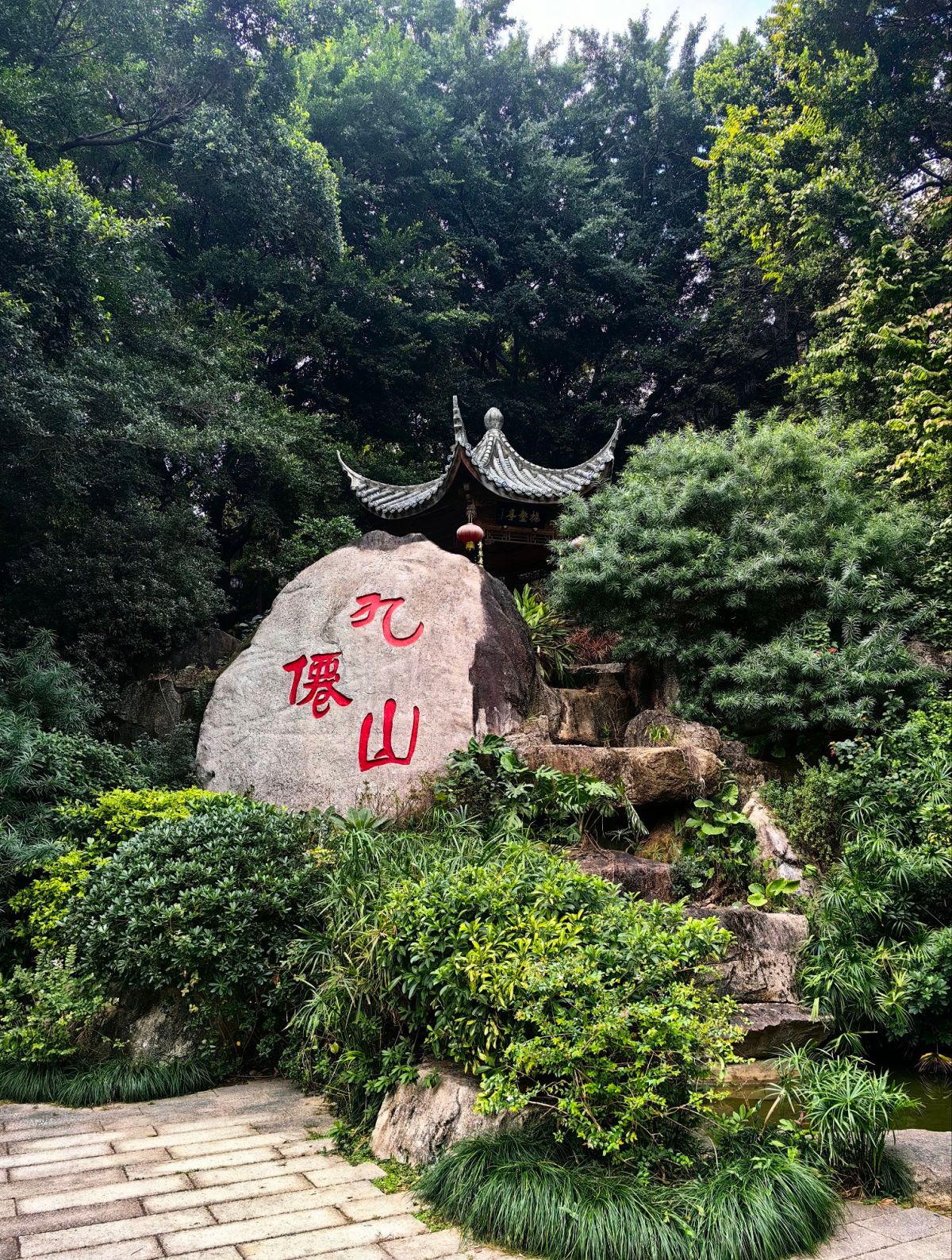
Fuzhou has many small hills and pagodas are built on these hills. The “Three Hills and Two Pagodas” are a poetic and historical symbol of Fuzhou, capturing the cultural, and architectural essence of the city. Yu Hill is one of the famous three hills and it has been a sacred and scholarly site since the Tang Dynasty. It was often visited by scholars, poets, and officials, who came here to write poetry.
福州山峦叠嶂,宝塔耸立于山上。著名的“三山两塔”是福州诗意而又充满历史的象征,浓缩了这座城市的文化和建筑精髓。于山是三山之一,自唐代以来一直是文人墨客的圣地。文人、仕宦们常常来此吟诗作赋。

The Qi Jiguang Memorial Shrine (戚公祠) was erected on its southern slopes to honor the Ming Dynasty general’s valiant battles against Japanese pirates in 1562. It was surrounded by scenic pavilions, engraved stones, and historic sites. At its heart stands a statue of Qi Jiguang in full armor, framed by murals depicting his naval battles.
戚公祠建于于山南坡,以纪念这位明朝将领于1562年英勇抗击倭寇的壮举。祠四周环绕着风景秀丽的亭台楼阁、石刻古迹和历史遗迹。祠堂中央矗立着一尊身着全副盔甲的戚继光塑像,周围环绕着描绘其海战的壁画。
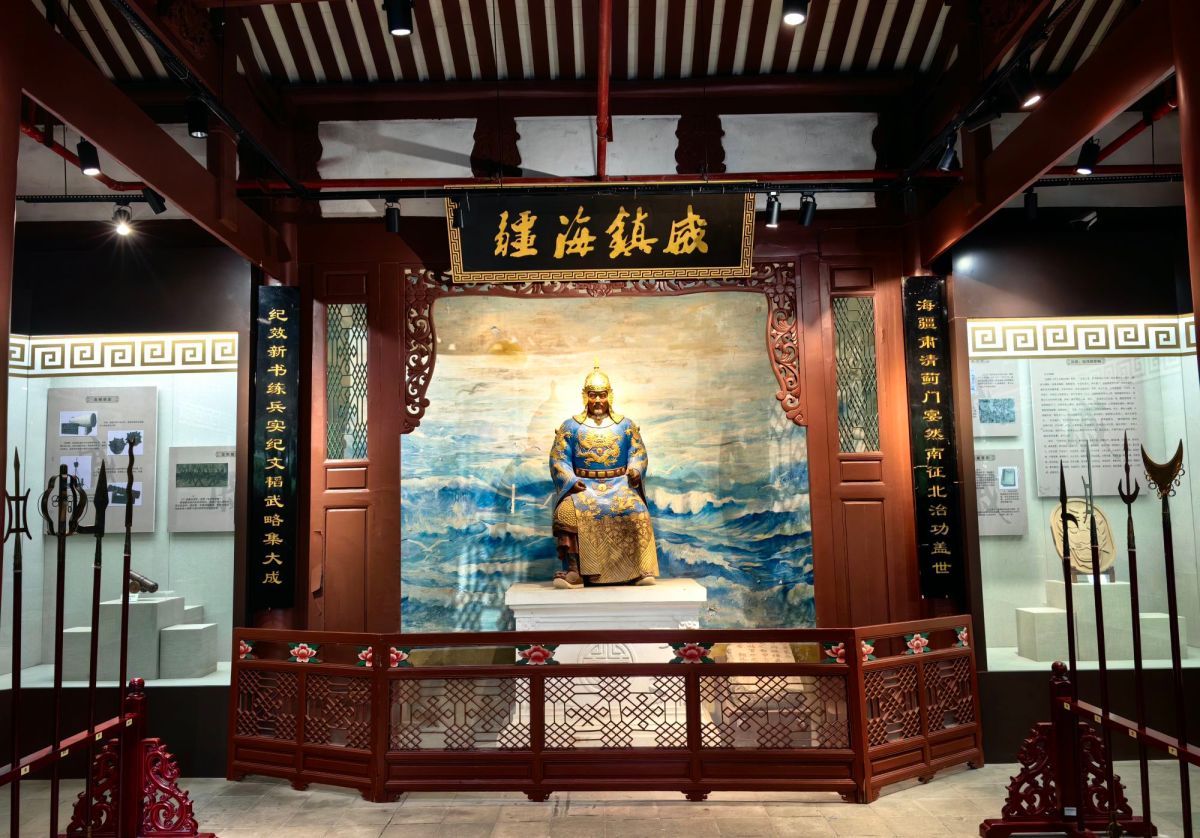
Qi Jiguang is a legendary general of the Ming Dynasty. In the mid 16th century, China’s southeastern coast, including Fujian, was plagued by wokou —Japanese pirates. In 1562, Fuzhou and its surrounding regions were under siege, suffering from looting and burning. Qi arrived in Fujian and quickly assessed the weaknesses of local defenses. He reorganized the military, improved training, built watchtowers, naval fleets, and coastal fortifications. He introduced a new disciplined army, including his famous “Mandarin Duck Formation” (鸳鸯阵)—a tactical arrangement that balanced long and short-range attacks. In his way, the major sea routes are cleared, enabling trade and peace to return to the region.
戚继光是明朝一位传奇将领。16世纪中叶,包括福建在内的中国东南沿海地区饱受倭寇的侵扰。1562年,福州及其周边地区被围困,城内烧杀抢掠,民不聊生。戚继光抵达福建后,迅速评估了当地防御的薄弱环节。他重组军队,加强训练,修建瞭望塔、水师舰队和海岸防御工事。他引入了一支纪律严明的新军队,令士兵操练著名的“鸳鸯阵”,这是一种兼顾远近攻势的战术。他率领戚家军打通了主要的海上航线,使该地区恢复了贸易与和平。

Located at the western foot of Yushan Hill, it is one of the oldest and best-preserved ancient Buddhist temples in Fuzhou, Dinguang Temple. Founded during the Late Tang Dynasty (circa 904–905) by Wang Shenzhi, the ruler of the Min Kingdom. He first built the White Pagoda to honor his deceased parents.
定光寺位于于山西麓,是福州现存最古老、保存最完好的古佛寺之一。该寺始建于晚唐(约904-905年),由当时割据政权闽国国王王审知创建。王审知最初为祭拜已故的父母而建造了寺中的白塔。

The original pagoda was struck by lightning and burned down in the Ming Dynasty. In 1548, the seven-story octagonal brick White Pagoda was rebuilt at that time. The 41 meter tall tower is a striking city landmark and forms part of the famous “Three Hills and Two Pagodas” landscape, facing the counterpart Black Pagoda across town.
原塔在明代遭雷击焚毁。1548年重建了图中这个七层八角砖砌的白塔。这座41米高的塔楼是这座城市引人注目的地标,与城对面的黑塔遥相呼应,构成了著名的“三山两塔”景观。

As part of the iconic “Three Hills and Two Pagodas” landscape, Wu Hill is opposite to the Yu Hill. It is a lush, quiet retreat nestled within the urban core. This hill’s altitude is only 84–87 meters but has many cliff inscriptions dating from Tang to Qing dynasties. Tourists can visit both cultural heritages together in one afternoon.
乌山是标志性的“三山两塔”景观的一部分,与于山遥相对望。它是一处郁郁葱葱、静谧的休憩胜地,坐落在城市核心地带。乌山海拔仅84至87米,却保留着许多唐代至清代的摩崖石刻。游客可以在一个下午同时游览两处文化遗产。

Daoshan Pavilion is one of the most historically and culturally significant buildings on Wu Hill. The pavilion is mentioned in Zeng Gong’s famous essay, which is record of a visit to Wu Hill, and made the Daoshan Pavilion a literary landmark. It has a description of the scene from this pavilion ‘From that spot, the splendor of the mountains and rivers, the vastness of the city, and the magnificence of the buildings—all could be taken in at a glance. Chancellor Cheng remarked that, situated above rivers and seas, this place for viewing the landscape could be compared to the Daoist fabled mountains of Penglai, Fangzhang, and Yingzhou. Thus, he named it the Pavilion of Daoshan.”
道山亭是乌山最具历史文化意义的建筑之一。唐宋八大家曾巩在游乌山的著名散文《道山亭记》中曾提及此亭,并描述了乌山的风景,使道山亭成为了一个文学地标。原文为‘为亭于其处,其山川之胜,城邑之大,宫室之荣,不下簟席而尽于四分。程公以谓在江海之上,为登览之观,可比于道家称蓬莱、方丈、瀛州之山,故名之曰“道山之亭”。
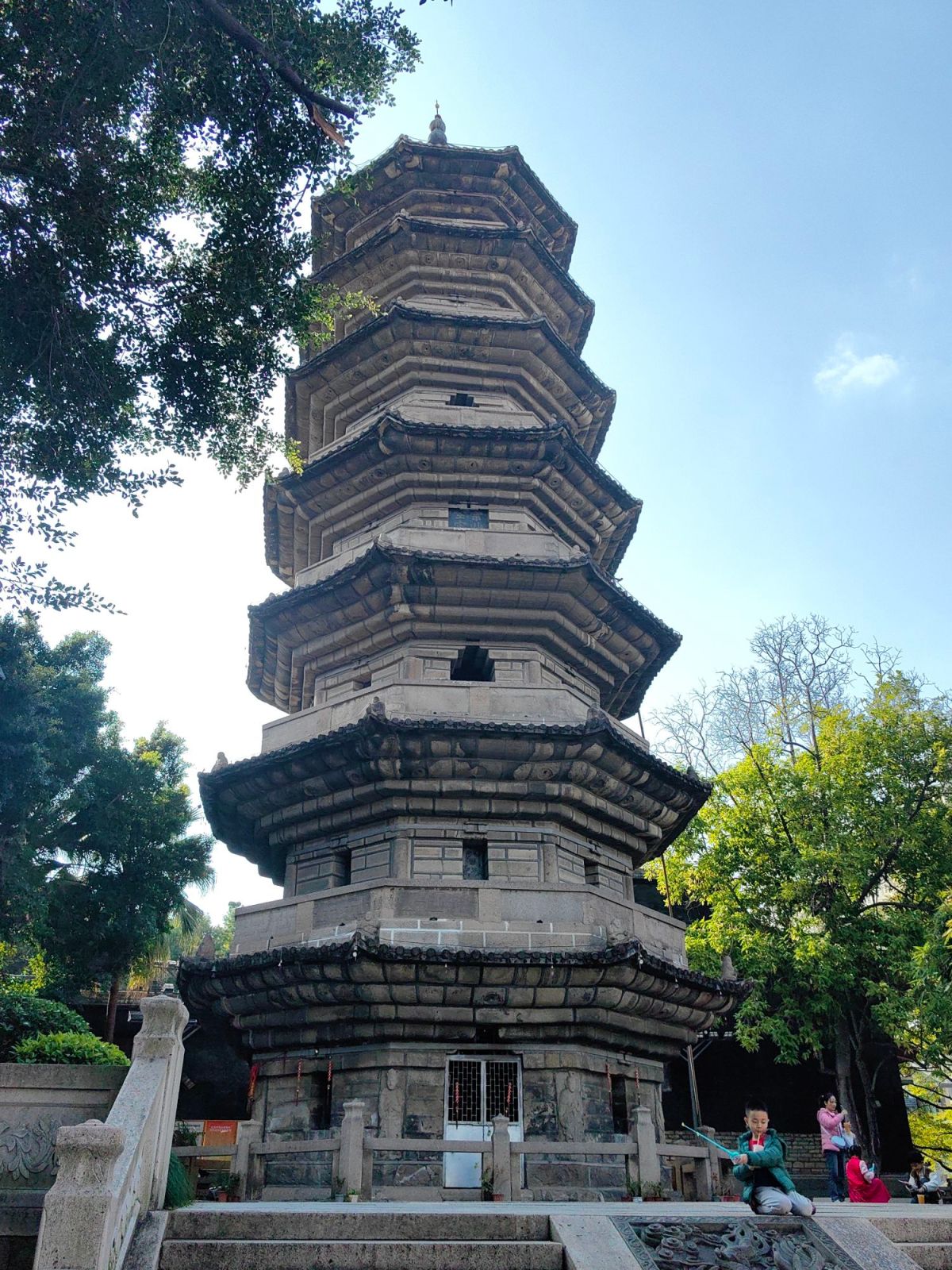
The Black Pagoda at the foot of Wu Hill is one of the city’s most iconic ancient landmarks, paired with the White Pagoda. This tower of height 30 meters was built of blackish granite during the Tang–Song transition period. In traditional Chinese feng shui, pagodas act as spiritual stabilizers, believed to ward off evil and bring cosmic balance. The two towers black and white, form an energetic yin-yang complement to protect the city.
位于乌山脚下的黑塔与白塔并列,是这座城市最具标志性的古代地标之一。这座高30米的塔建于唐宋之际,采用黑色花岗岩建造。在中国传统风水学中,宝塔能够辟邪去恶并带来风水平衡。这两座塔黑白相望,形成一种能量的阴阳互补,守护着这座城市。

My journey to Fuzhou unfolded in the quiet hush of winter, a season when few tourists wander its streets. Though it may not dazzle on the covers of glossy travel magazines or dominate influencer itineraries, Fuzhou holds an unusual authenticity. As I strolled through its lanes, the city’s enduring identity whispered through centuries-old architecture and timeworn traditions. Fuzhou did not seek to impress me—but that was its charm. It offered me a close encounter with a place deeply rooted in its own story.
我的福州之旅在静谧的冬日展开,此时的福州街头,游客寥寥无几。尽管福州或许不会登上光鲜亮丽的旅游杂志封面,也不会成为网红行程的主角,但它却拥有着独特的真实感。漫步于巷弄之间,这座城市的底蕴在百年建筑和悠久传统中悄然流露。福州并不会让我感到惊艳—但这正是它的魅力所在,让我与这座拥有绵长丰富历史的城市进行了一次亲密的邂逅。











































 Gone like the wind