
走进福建古土楼的烟火人生
Fujian Tulou are traditional communal residences built by the Hakka and other Han Chinese people in the mountainous areas of Fujian Province. These large, earthen buildings are circular or square, designed to house multiple families, functioning both as homes and fortresses. Constructed between the 12th and 20th centuries, tulou structures are made from rammed earth, mixed with stones, bamboo, wood, and other natural materials. Their thick walls provide insulation and protection from bandits and natural disasters. Inside, the buildings are arranged around a central courtyard, with rooms for storage, cooking, sleeping, and socializing.
福建土楼,是福建省山区由客家人及其他汉族群体共同建造的传统集体居所。这些宏伟的建筑多呈圆形或方形,可容纳众多家庭同住,既是安居之所,也是防御之堡。土楼自12世纪起兴建,延续至20世纪,主要以夯土筑成,并辅以石块、竹材、木料等天然材料。厚实的墙体既能隔热御寒,又可抵御盗匪侵扰与自然灾害。其内部空间环绕中央庭院而布置,庭院内设有储藏间、灶房、卧室与公共活动空间。

I visited the Nanjing area in the end of 2024. The village scene in this region is a picturesque blend of traditional architecture, lush nature, and communal rural life. Rolling hills and mountains surround the villages, covered with bamboo groves, pine forests, and terraced tea fields. Clear streams run through the valleys, beside narrow stone paths. Fog settles over the mountains in the early morning, creating a mystical, tranquil atmosphere.
2024年底,我来到南靖游览。这里的乡村景致宛如画卷,传统建筑与葱郁的自然风光、淳朴的乡村生活交织在一起。连绵起伏的丘陵环抱着村落,竹林、松林与层层梯田茶园点缀山野。清澈的溪流在谷间潺潺流淌,两旁蜿蜒着古老的石板路。清晨时分,薄雾弥漫群山,氤氲出一种静谧而神秘的气息。
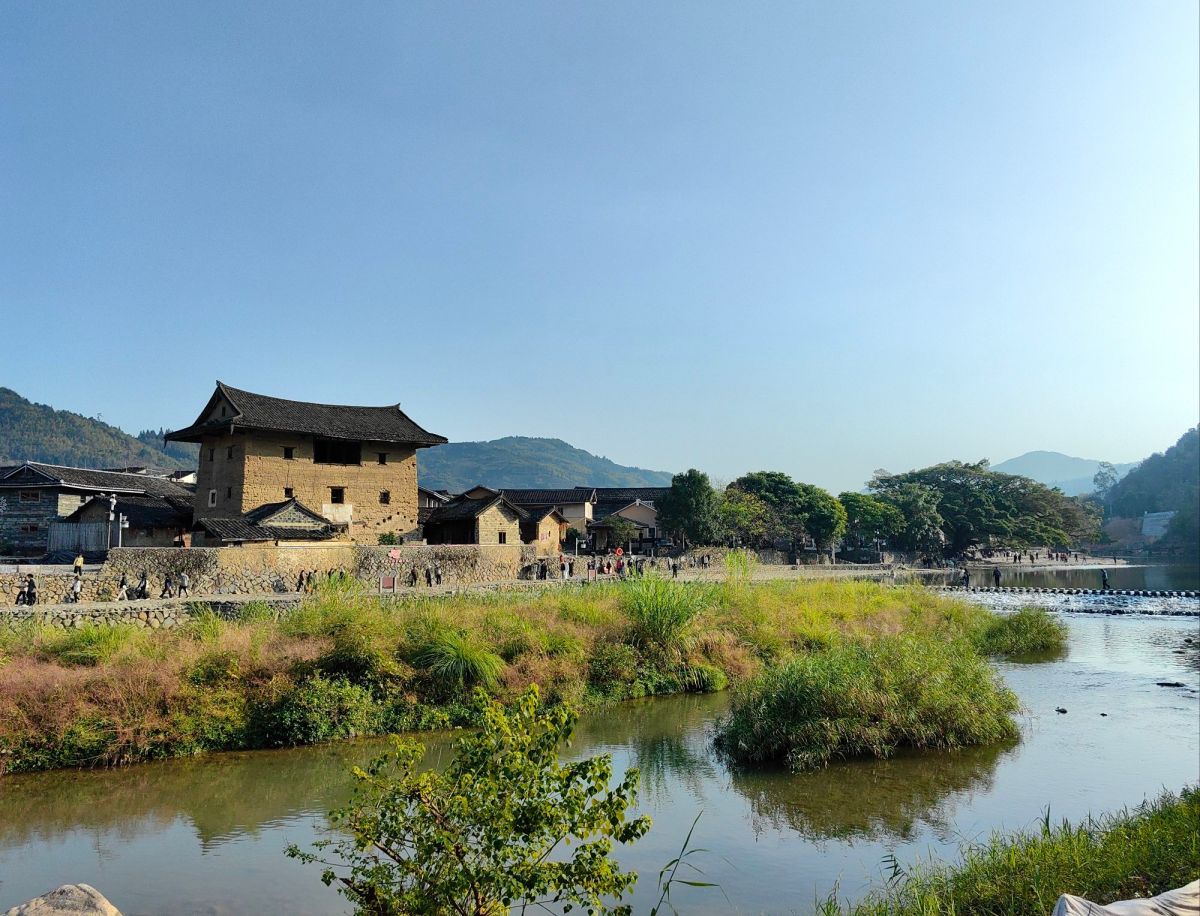
Life in these villages follows the rhythm of nature. The air is filled with the scent of wood smoke, fresh soil, and steaming food. Stone-paved paths wind through the village, often lined with moss and wildflowers. Several tulous are grouped together, forming a cluster of earthen castles amidst the green backdrop.
这些村庄的生活仿佛随自然的节拍缓缓展开。空气中弥散着柴火的余温、泥土的清新与热气腾腾食物的芬芳。石板小路蜿蜒穿行于村中,两侧常覆着青苔,点缀着野花。几座土楼错落而立,如同质朴的堡垒,静静镶嵌在层叠的绿意之间。
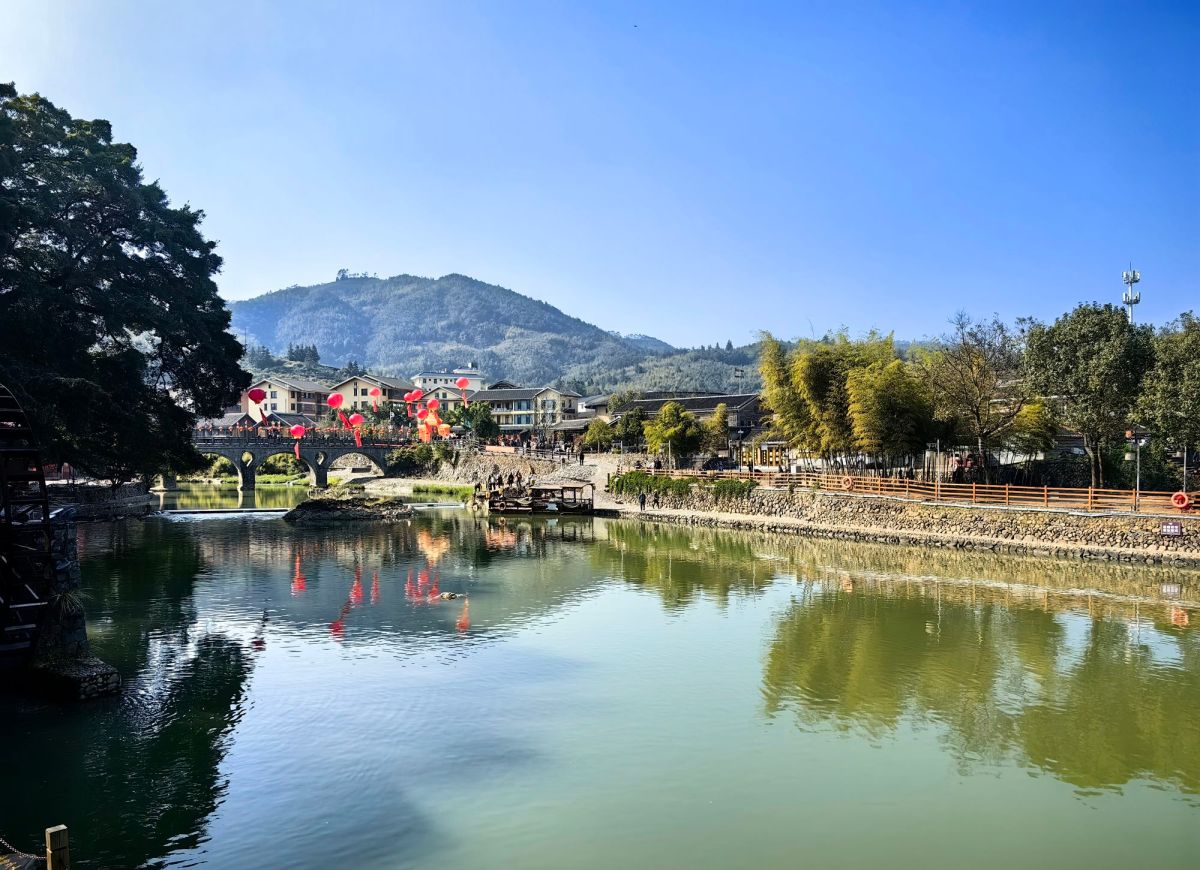
My travel in Fujian was really refreshing for me. As I stepped away from the fast-paced, high-rise rhythm of life in Singapore, I felt a deep wave of relief and excitement wash over me. It was as if the noise, the deadlines, and the constant rush melted away the moment I arrived in this serene village. The tranquil rhythm of rural life: the slow mornings, the sound of roosters, the sight of villagers tending to their fields awakened something in me. I felt no longer tethered to my phone or the clock and found the meaning of life.
福建之行让我身心焕然一新。远离新加坡快节奏、高楼林立的都市生活,我仿佛卸下了沉重的枷锁,一股久违的解脱与欣喜油然而生。所有的喧嚣、deadline与无休止的奔波,都在我踏入这片宁静村落的瞬间悄然消散。这里的生活节奏恬淡安然:清晨的微风伴着公鸡的啼鸣,田间劳作的身影映入眼帘,这一切唤醒了我内心深处的宁静与安定。我仿佛挣脱了手机与时钟的羁绊,重新找回了生活的意义。

Hegui Lou is one of the most remarkable and unique tulou structures. It was my first tulou visited in this area. Built in 1732, Hegui Lou is a square-shaped building, with four stories and over 200 rooms. The name “Hegui” means “Harmony and Nobility”, symbolizing unity and high moral values of the clan. I was standing at the entrance set within thick rammed earth walls. The wooden door panels are thick and reinforced with iron studs and metal strips. Over the door, I found a solemn and ancient wooden plaque bearing its name as well as poetic couplets written on red scrolls.
和贵楼是当地最引人注目极具特色的土楼之一,也是我在此参观的第一座土楼。始建于1732年,它呈方形结构,共四层,拥有两百余间房。楼名“和贵”,寓意和谐与高贵,象征着家族的团结与高尚品德。踏入厚实的夯土墙之内,首先映入眼帘的是以铁钉与金属条牢牢加固的沉重木门。门上悬挂着一方题有楼名的木匾,两侧则贴着写有红字的对联,庄重而古雅。
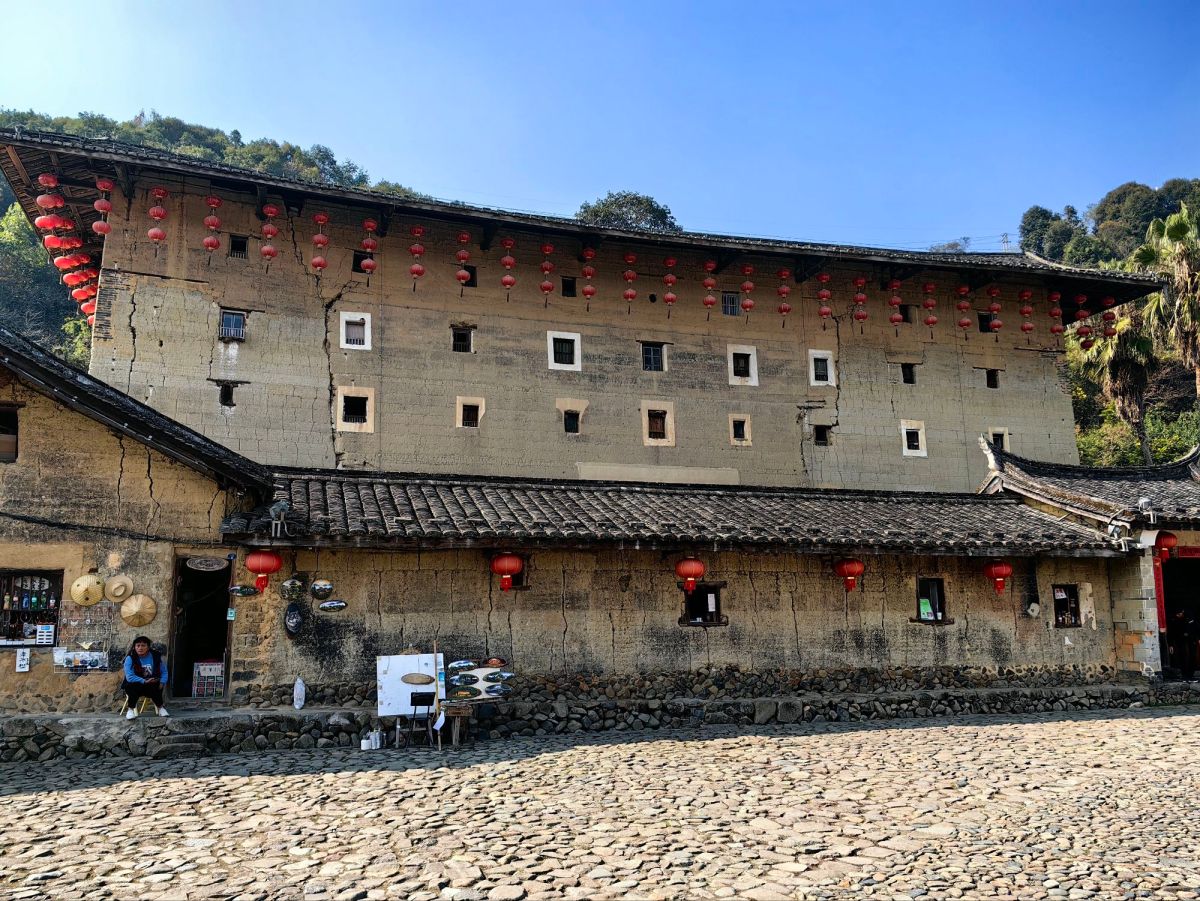
What makes it especially unique is that it was built on a marshland, an uncommon choice for such heavy structures. Its foundation is made of wooden stakes, driven deep into the soft soil. The building’s rammed earth walls, more than a meter thick, have withstood floods, earthquakes, and wars for nearly 300 years. Above the entrance are some small observation windows, used historically to monitor approaching visitors or defend against intruders. Red lanterns hang along the eaves and add a splash of color and warmth to the austere and simple appearance.
它的独特之处在于建于沼泽之上,这在如此厚重的建筑中极为罕见。地基由木桩深深扎入松软的泥土,以支撑整个庞然大物。厚逾一米的夯土墙,经受了近三百年的洪水、地震与战火的洗礼,依然巍然屹立。入口上方开有数扇小窗,昔日用于监视访客或抵御外敌。屋檐下悬挂的红灯笼,则为这素朴的外观平添一抹温暖与生气。

Behind the towering earthen walls of Hegui Lou, at the edge of a gently sloping field, lies a lush patch of sugar cane. The tall, green stalks sway lightly in the breeze. The field is small but thriving, a reminder of the self-sufficient lifestyle the residents have upheld for generations. A local resident fed long stalks of sugar cane into a hand-cranked press. The machine groans slightly as the stalks are crushed, releasing a stream of cool, pale green juice.
和贵楼高耸的土墙背后,在缓坡田野的尽头,生长着一片繁茂的甘蔗。高大而碧绿的甘蔗秆随微风轻轻摇曳。虽不成规模,却生机盎然,仿佛映照着当地人世代自给自足的生活。只见一位居民将长长的甘蔗送入手摇榨汁机,伴随轻微的嘎吱声,坚韧的蔗秆被慢慢压碎,涓涓淡绿色的汁液随之流出,清凉甘甜。

I lived in the small town called Yun Shuiyao for two days. Its name, which translates to “Ballad of Cloud and Water”, perfectly captures the town’s dreamlike atmosphere. It is surrounded by lush green hills and rice paddies. The streets of Yunshuiyao are paved with smooth river stones, worn by time and footsteps. Traditional wooden houses line the narrow lanes and their dark tiled roofs and red lanterns show the town’s historic charm.
我在云水谣小镇住了两天。小镇的名字完美地诠释了如梦似幻的氛围。周围环绕着郁郁葱葱的青山和稻田。云水谣的街道铺满了光滑的河石,饱经岁月和脚步的侵蚀。传统的木屋排列在狭窄的小巷里,深色的瓦片屋顶和红色的灯笼彰显着小镇的历史魅力。

The most iconic feature of the town is the meandering river that flows gently through it, reflecting the sky and the trees on its calm surface. Along its banks, there are massive ancient banyan trees, some over 800 years old, with their gnarled roots sprawling across stone paths and their branches forming a canopy overhead. I really enjoyed the life here, listening to the soft murmur of the stream and the whisper of wind through bamboo. Time seemed to slow down here.
小镇最具标志性的景观,莫过于那条蜿蜒流淌的河流。平静的水面如一面明镜,将天空与树木的倒影温柔地揽入怀中。河岸两旁矗立着参天古树,其中不少已有八百余年树龄,盘根错节的根须蜿蜒在石板路上,枝叶繁茂,织就一片片清凉的浓荫。在这里生活,我倍感宁静,耳畔萦绕着潺潺溪水与竹林间轻柔的风声,仿佛时光都慢了下来。
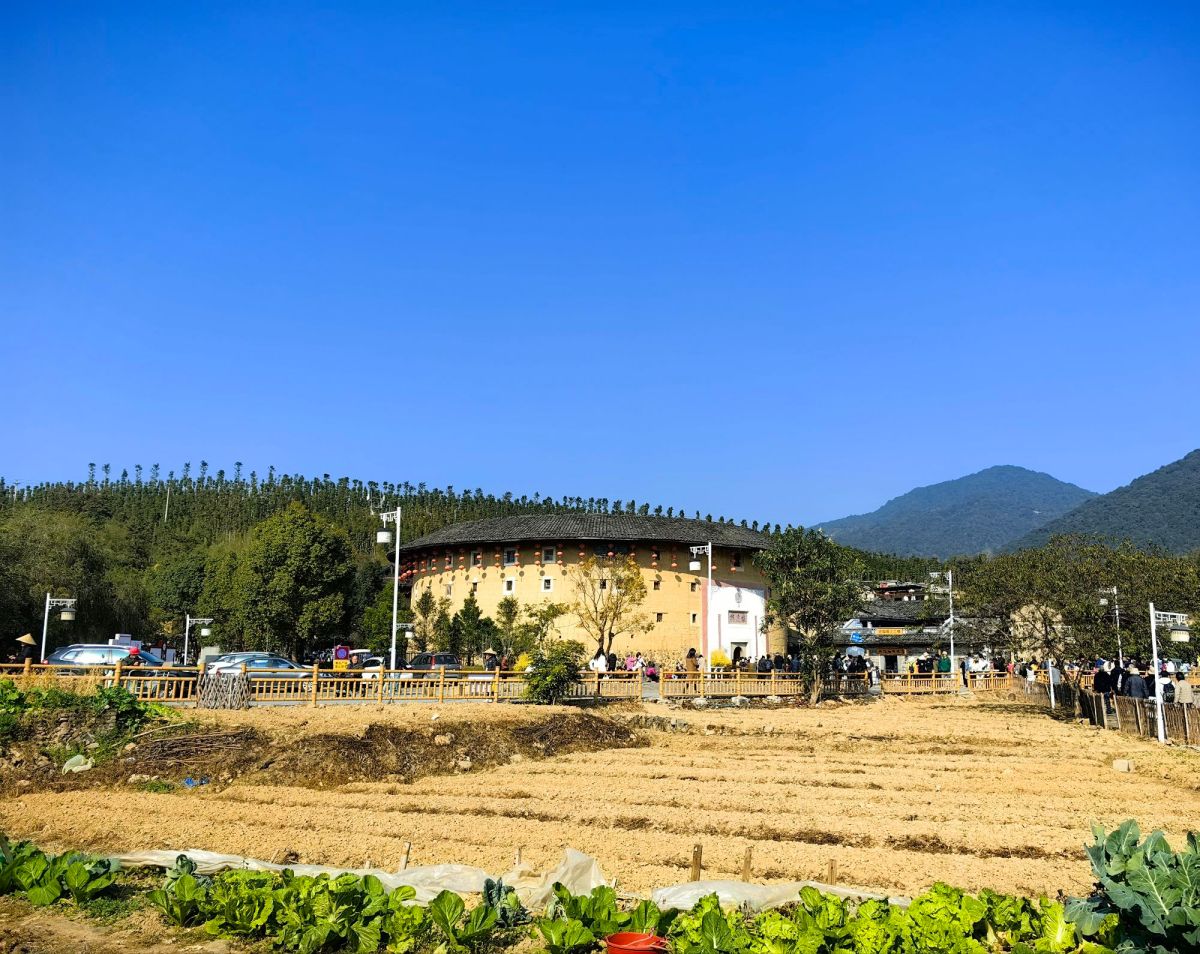
Yunshuiyao became well-known after it was featured in the Chinese romantic film “The Knot”. Scattered throughout Yunshuiyao are several well-preserved tulous, which have been home to generations of Hakka families. These earthen fortresses blend beautifully into the natural landscape, offering a sense of community, security, and tradition.
小镇因中国爱情电影《云水谣》的取景而名声远扬。云水谣田间点缀着几座保存完好的土楼,昔日是客家人世代安居的家园。土楼与周围的山水风光相映成趣,营造出浓厚的社区氛围、安宁的归属感与深厚的传统意蕴。
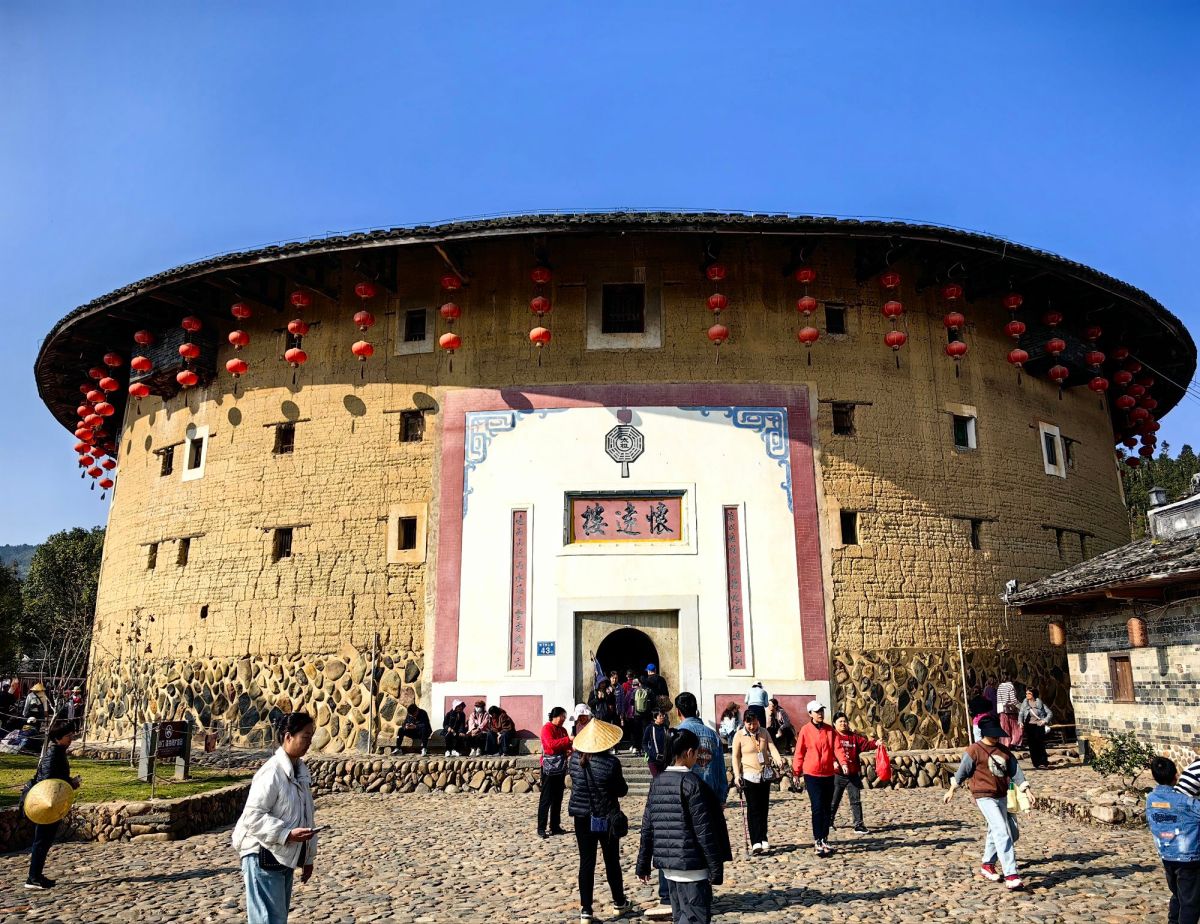
Huaiyuan Lou is the most well-preserved and architecturally representative tulou in Fujian Province. Built in 1905 during the late Qing Dynasty, it was constructed by the Jiang family, who were prosperous tea merchants and landowners. The name means ‘Cherishing Distant’ in Chinese. The structure is made with rammed earth walls, over 1 meter thick, supported by a wooden framework that has stood firm for over a century. There is only one heavily fortified gate connecting inside and outside.
怀远楼是福建省保存最完好、最具代表性的土楼。它建于清末民初的1905年,由富商兼地主蒋氏家族兴建,其名字意为“怀念远方”。楼体以夯土筑墙,厚逾一米,坚固的木构架支撑着整座建筑,百年风雨仍巍然屹立。楼内外仅开一扇坚固的大门供人们进出。

It has two concentric rings. The outer ring is four stories high, with 32 rooms per floor, housing sleeping quarters and storage. The timber beams, columns, and staircases are arranged in concentric rings to create tiers of rooms stacked three to five stories high. The upper structures are capped with tiled, slightly upturned eaves, supported by a web of timber rafters. Rainwater is efficiently drained into the inner courtyard. Wooden columns are joined by horizontal beams using traditional mortise-and-tenon techniques without nails.
它由两个同心圆环组成。外环高四层,每层设有32间房间,用作居舍和储藏室。木梁、木柱与楼梯环环相扣,形成三至五层高的层叠房间。上部结构铺以瓦片,屋檐微微翘起,由木椽稳稳支撑。雨水被巧妙地引入内院。木柱与横梁之间采用传统榫卯工艺,无需钉子即可紧密结合。

The inner ring is smaller and contains ancestral halls and communal spaces. Central to Hakka belief is the idea that deceased ancestors continue to watch over and protect their descendants. Showing respect through rituals ensures family prosperity and avoids misfortune. Ancestral hall with an altar, ancestral tablets, and painted couplets is the most important building. Wells, kitchens, and storerooms are placed in this area for communal use.
内环规模较小,内部设有祠堂与公共空间。客家人的信仰核心在于祖先会持续守护后代,当代人通过仪式对祖先表达敬意,以保家族兴旺、避祸免灾。祠堂是最为重要的建筑,内部设有祭坛、祖先牌位及对联。水井、厨房和储藏室亦位于此处,供居民日常使用。

This is the panoramic view. The central courtyard is paved with cobblestones, where daily life and communal events unfold. The interior reflects a highly organized lifestyle, with rooms assigned by generation and seniority. Decorative wooden carvings, ancestral tablets, and red lanterns enhance the cultural richness of the space.
这是庭院全景。中央庭院铺有鹅卵石,是日常生活和社区活动的场所。室内空间体现了高度有序的生活方式,房间按辈分和资历划分。装饰性的木雕、祖先牌位和红灯笼突现了这里的文化底蕴。
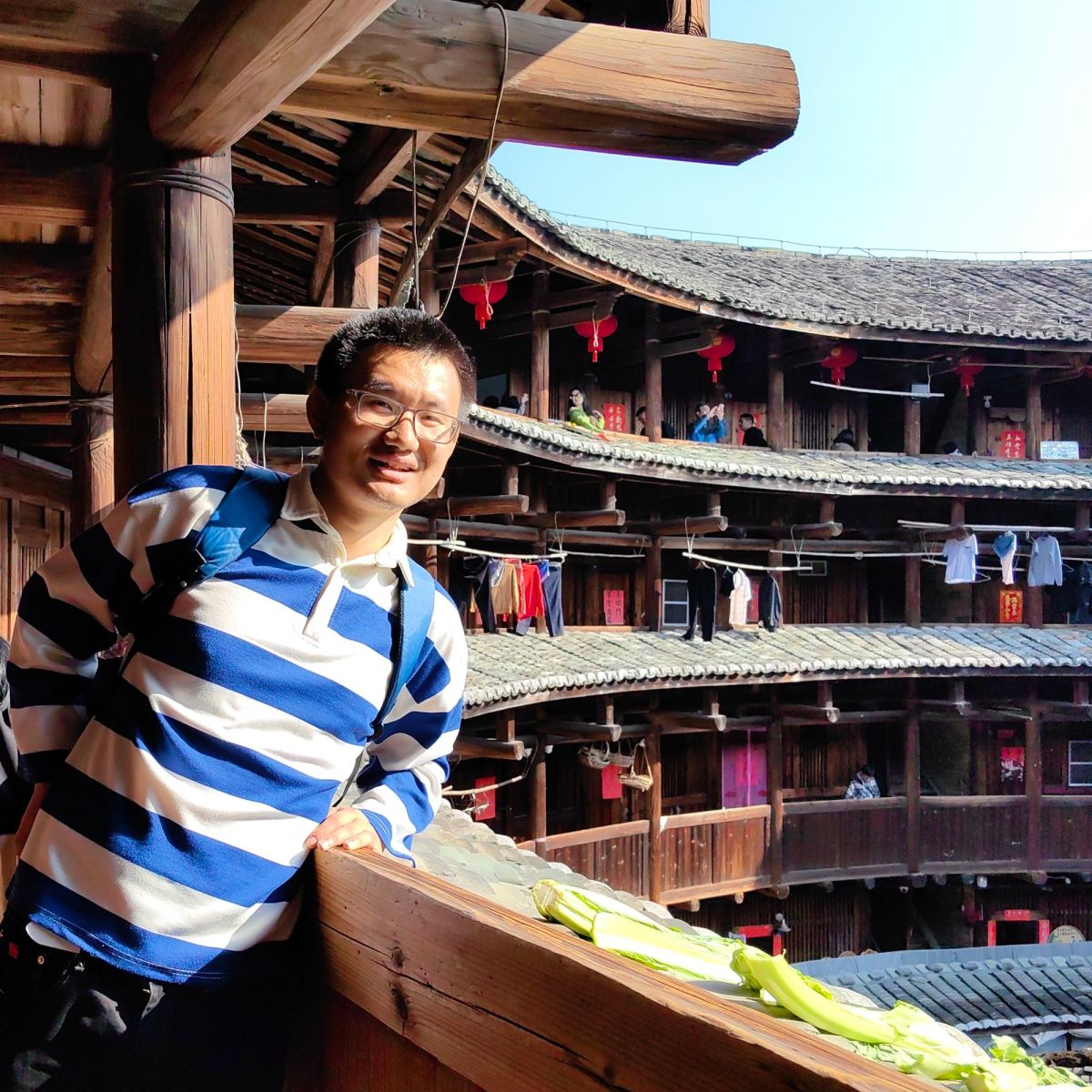
Unlike some older tulou, Huaiyuan Lou remains largely intact and still functions as a living residence. Residents still live in the building, maintaining traditional Hakka customs, such as ancestral worship, communal cooking, and shared farming. I was able to climb up the floors and see the local life. Outside wooden railings, freshly washed clothes are hung out to dry. Shirts, pants, and towels flap gently in the mountain breeze, swaying against the red backdrop of the wooden walls.
与一些年久失修的土楼不同,怀远楼几乎完好无损,如今仍作为民居使用。楼中的居民延续着传统客家习俗:祭祖、共炊、共耕,生活气息浓厚。我沿着几层楼梯缓缓而上,静静观察这里的日常。楼外的木栏杆上晾着刚洗净的衣物,衬衫、裤子和毛巾在山风中轻轻摆动,在红色木墙的映衬下,显得生动而富有韵律。

Along sunny spots, residents have laid out trays filled with vegetables like sliced radishes, chili peppers, and bamboo shoots to dry under the afternoon sun. The air is filled with a subtle mix of earthy, sun-baked scents. Homemade sausages or strips of cured meat are also strung up on wooden poles, slowly aging in the open air. It was really an interesting and unique trip to see the Hakka’s life that I have never experienced. The Hakka is a subgroup of the Han Chinese people with their own distinct language, culture, and traditions. They traced their roots to northern China, but over centuries, they migrated southward due to wars, famine, and social unrest. They settled mainly in southern provinces such as Guangdong, Fujian, and Jiangxi. Because they often arrived as migrants or newcomers, they were called “guest families” by local populations.
阳光充足的地方,居民们会将托盘摆放整齐,里面盛满了萝卜片、辣椒和竹笋等蔬菜,在午后的阳光下缓缓晾晒。空气中弥漫着泥土的芳香与阳光轻轻烘烤蔬菜的微妙气息。自制的香肠和腌肉条也被挂在木杆上,在露天中慢慢熟化。这次旅程既有趣又独特,让我得以深入了解客家人的生活,这是我此前从未体验过的。客家人是汉族的一个分支,拥有独特的语言、文化和传统。他们的祖源可追溯至中国北方,但几个世纪以来,由于战争、饥荒和社会动荡,他们不断南迁,最终主要定居在广东、福建和江西等南方省份。由于他们多为移民或新迁入的群体,当地人称他们为客居的人。

In the courtyard stands an ancient stone well, a silent witness to centuries of life unfolding within the earthen walls. The inside of well is surrounded by a simple stone curb, its surface now softened by a thick blanket of green moss. Tiny droplets of water glisten on the moss in the morning light. The well still provides clear and deep water to the local residents who lower a metal bucket on a rope, drawing water with a slow rhythm in the same way their ancestors did a hundred years ago.
庭院中央,矗立着一口古老的石井,静静守望着土墙内百年的光阴。井旁环绕着简朴的石栏,如今厚厚的绿色苔藓悄然覆盖其壁,表面柔和如绒。晨光洒下,细小的水珠在苔藓间闪烁微光。时至今日,这口井仍为村民提供清澈而深邃的水源。他们用绳索系着金属桶,缓缓汲水,仿佛与百年前的祖先在时间里默契相连。

I took two days to travel all the scenic areas. On the second day, I visited the Tianluokeng which is the most iconic and most photographed tulou sites. Located on a terraced hillside, the cluster is called the “Four Dishes and One Soup” because of its unique layout. One square tulou (the “soup”) sits in the middle. Surrounding it are four round tulous (the “four dishes”). There is a platform on the roadside for travelers to take photos.
我总共经历两天时间游遍了南靖土楼的所有景区。第二天,我参观了田螺坑景区,它是最具标志性、拍照最多的土楼群落。田螺坑土楼群坐落在梯田般的山坡上,因其独特的布局而被称为 “四菜一汤”。一座方形土楼(“汤”)坐落在中间,周围环绕着四座圆形土楼(“四菜”)。路边有一个平台,供游客拍照。

Afterwards, I went down the staircases and visited them one by one. Built between the 15th and 20th centuries, these tulous with similar thick rammed-earth walls showcase the Hakka people’s communal living as well but they are smaller than the Huaiyuan Lou I visited the last day.
之后我顺着楼梯走下,逐一参观。这些土楼建于15世纪至20世纪之间,同样有着厚实的夯土墙,展现了客家人的集体生活,但比我前一天参观的怀远楼要小一些。
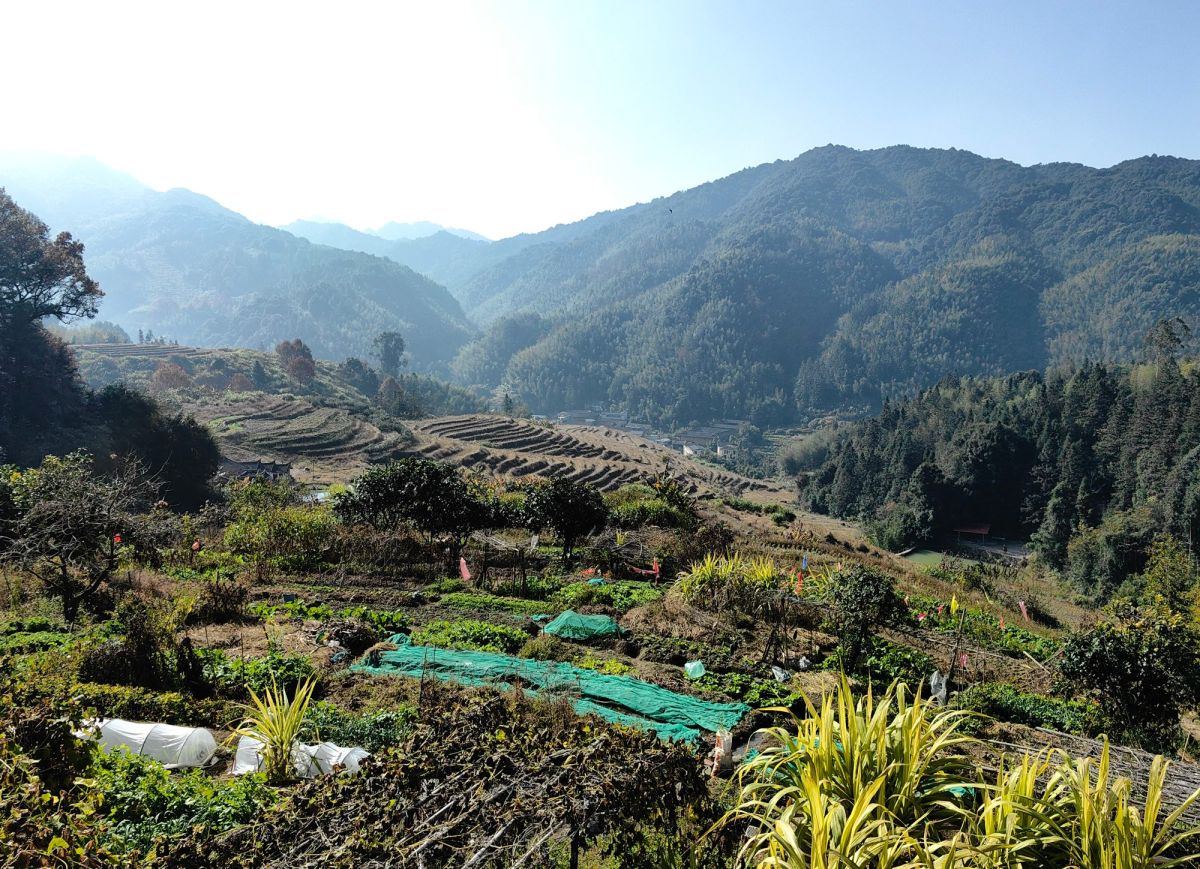
This cluster sits in a valley, surrounded by layer upon layer of rice terraces that climb the slopes of the green mountains. From above, the terraces look like rippling steps carved into the hillside. Traditionally, these terraces were cultivated with rice as the staple crop, sustained by ingenious irrigation systems that channel mountain spring water down through the fields.
这片梯田隐匿在山谷之间,层层叠叠,如同青山绿水间自然铺开的画卷。俯瞰之下,梯田宛若山坡上轻轻荡开的涟漪,随山势起伏。这里传统上种植水稻,巧妙的灌溉系统将清澈的山泉引入田间,滋养着每一层梯田,使其生机盎然。
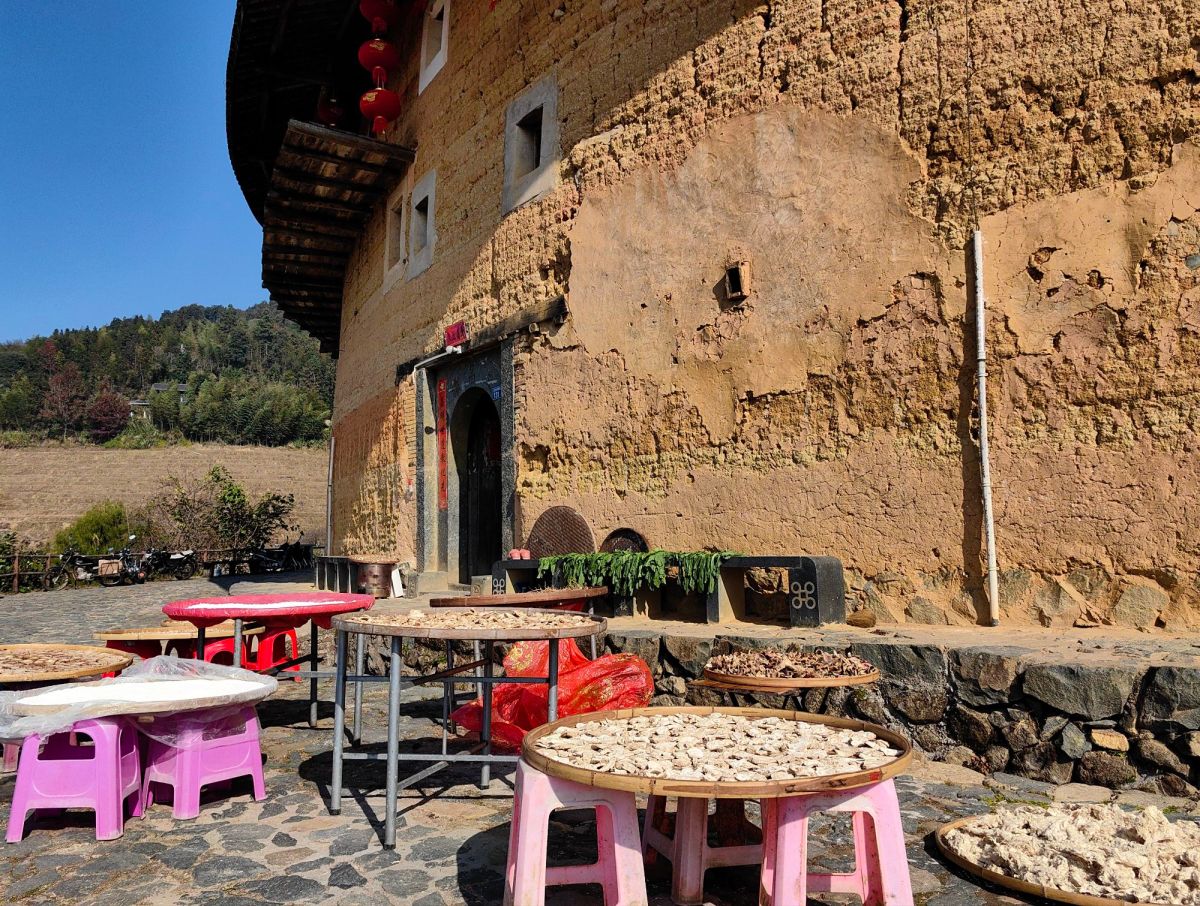
In Hakka and Fujian villages, it’s very common to see foods being sun-dried for preservation. These colorful trays containing food are set out in courtyards and rooftop around tulou walls. Most of these foods are corn kernels which are golden yellow, often filling the whole tray, soybeans dried for making tofu, sweet potatoes which are sliced into thin pieces to make dried snacks, and scented tea leaves.
在客家与福建的村落中,晒干食物以备保存是一种常见的习俗。五彩斑斓的托盘中盛满了各类食材,整齐地摆放在土楼的庭院和屋顶上。托盘里常见的有金黄饱满的玉米粒;用于制豆腐的大豆;切成薄片晾晒的红薯干;以及清香的茶叶。

In late winter, when the air is crisp and less humid, families hang long strings of sausages across bamboo poles, or on wooden racks in open courtyards. The sight of these dark red sausages glistening in the sunlight is a hallmark of traditional Hakka villages. The sausage is made by fresh pork. The meat is mixed with salt, rice wine, soy sauce, sugar, and sometimes five-spice powder or peppercorns. The seasoned meat is stuffed into natural casings, then tied into uniform lengths. The sausages are hung outdoors to dry naturally for 1–2 weeks. Deeply savory with a balance of saltiness and gentle sweetness from rice wine and sugar.
冬末,空气清爽,湿气渐消,家家户户都会把长长的香肠串挂在竹竿上,或放在露天庭院的木架上。这些深红色的香肠在阳光下闪闪发光,是传统客家村落的一大特色。香肠采用新鲜猪肉制成,肉中混合盐、米酒、酱油、糖,有时还会加入五香粉或花椒。将调味好的肉馅塞入天然肠衣,然后捆成均匀的长度。香肠会被悬挂在户外自然风干1-2周。咸香浓郁,米酒和糖带来的柔和甜味恰到好处。

The central square tulou called Buyunlou is the oldest structure of the cluster, built first by the ancestor of the family. Later generations expanded around it with round tulou. The square form is structurally simpler and sturdier to build, especially in earlier times when techniques were less advanced. Once wealth and skills grew, round tulou became more common. The square tulou in the middle acted like a fortified core, with the outer round tulou forming an additional layer of protection. Together, the cluster functioned almost like a miniature walled city.
位于中心的方形土楼被称为步云楼,是整个土楼群中最古老的建筑,最初由家族祖先建造。后世在其周围扩建,建造了圆形土楼。方形土楼结构更简单,也更坚固,尤其是在技术欠发达的早期。随着财富和技艺的提升,圆形土楼变得更加普遍。中间的方形土楼如同坚固的核心,外围的圆形土楼则构成了额外的保护层。整个土楼群就像一座微型城墙环绕的城市。

In the afternoon, I took bus and continued the travel in the Taxia Village which is part of the Tianluokeng Scenic Area. It’s a well‑preserved example of Hakka culture and architecture. I enjoyed the scene of a “water town” combined with tulou architecture. When I walked among rural terrain, small bridges, cobblestones, I could see local everyday life.
下午,我乘车前往田螺坑风景区的塔下村。这里保存着完整的客家文化建筑。我欣赏着“水乡”与土楼建筑的融合。漫步在乡村的田园风光、小桥流水、鹅卵石铺就的路面上,感受着当地人的日常生活。
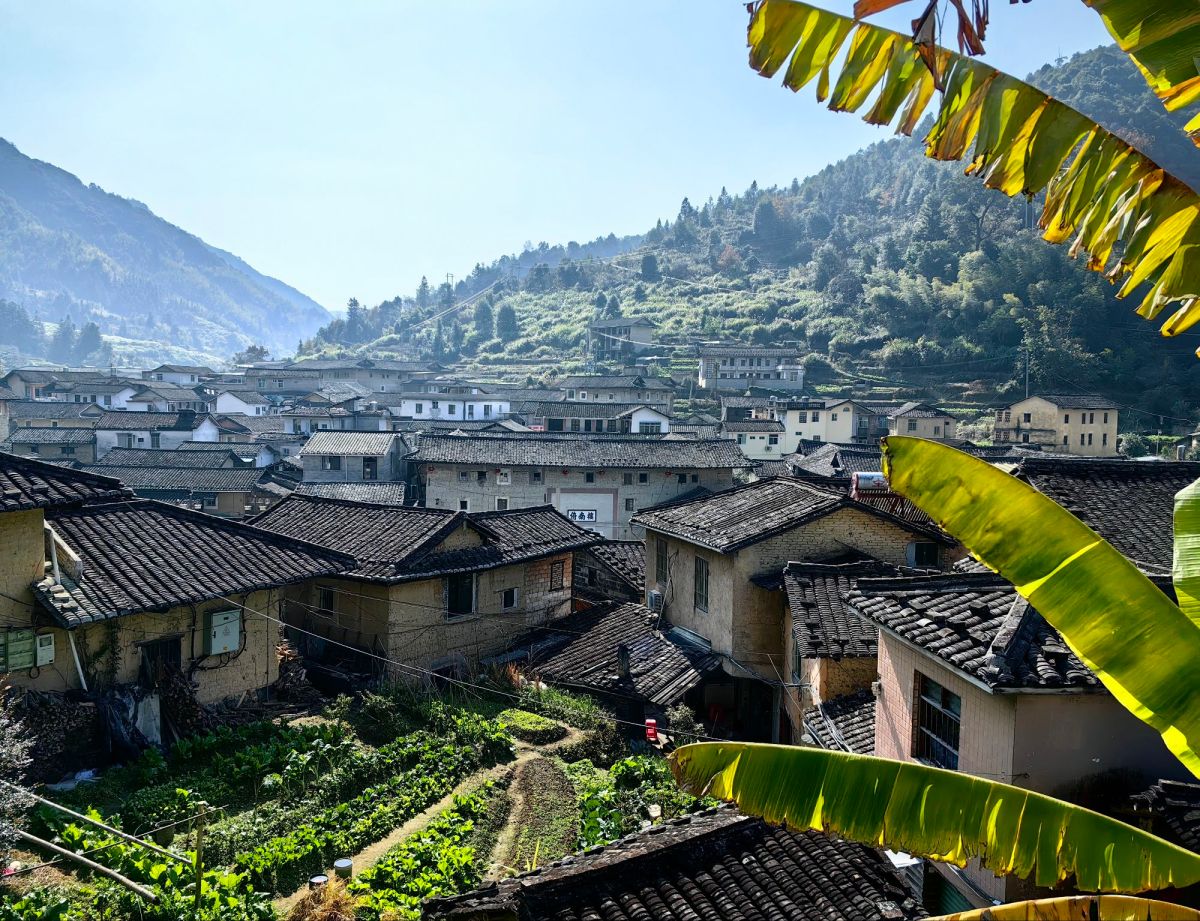
The houses are constructed from blue-gray bricks, which age into a weathered, darker tone over time. Roofs are made with traditional gray clay tiles, sometimes glazed in deeper tones for water resistance. They are rectangular and one to two stories tall. Most of them are built closely along the stone-paved lanes or beside the winding stream. From a distance, I felt that the rooftops formed a soft ripple across the valley, framed by green mountains.
这些房屋由蓝灰色的砖块砌成,岁月在砖面上留下斑驳的痕迹,使其愈发沉稳沧桑。屋顶覆以传统的灰色陶瓦,有时为了防水,还会施上一层深色釉面。房屋多为一至两层的长方形建筑,紧邻石板路或蜿蜒的小溪而立。远远望去,屋顶在山谷间宛如柔和的涟漪,群山翠绿环绕,景色静谧而悠远。
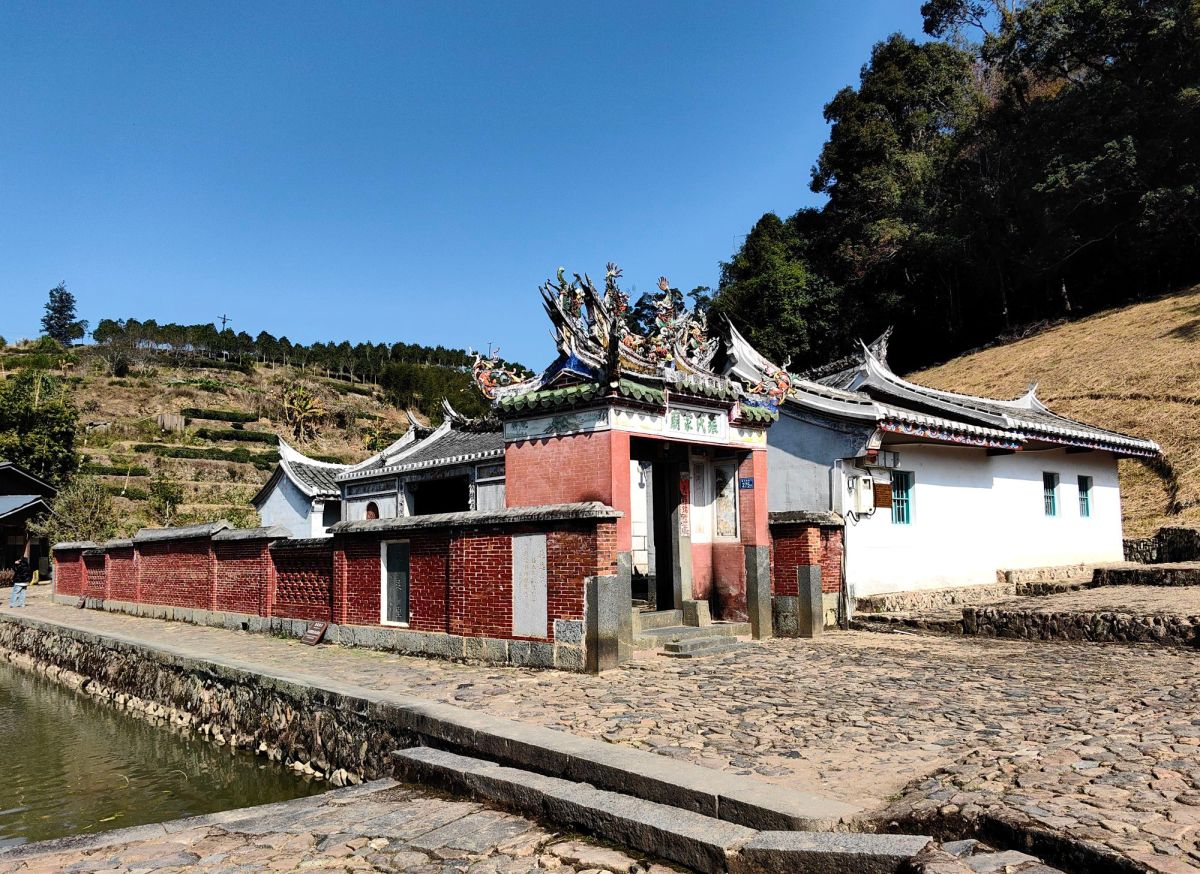
I visited one house compound belonging to Zhang Family. It has stone steps at door, small walled courtyards, and wooden window frames. It was built along the central stream, with bridges connecting them. Its layout includes gate, front hall, main sacrificial hall, with left-side and right-side chambers.
我参观了张家的一处古院。入口处铺着石阶,院内环绕着围墙,木框窗棂透着古朴气息。院落沿着中央的小溪而建,溪上有桥相连。整体布局井然,有大门、前殿和主祭殿,左右两侧则是对称的厢房。
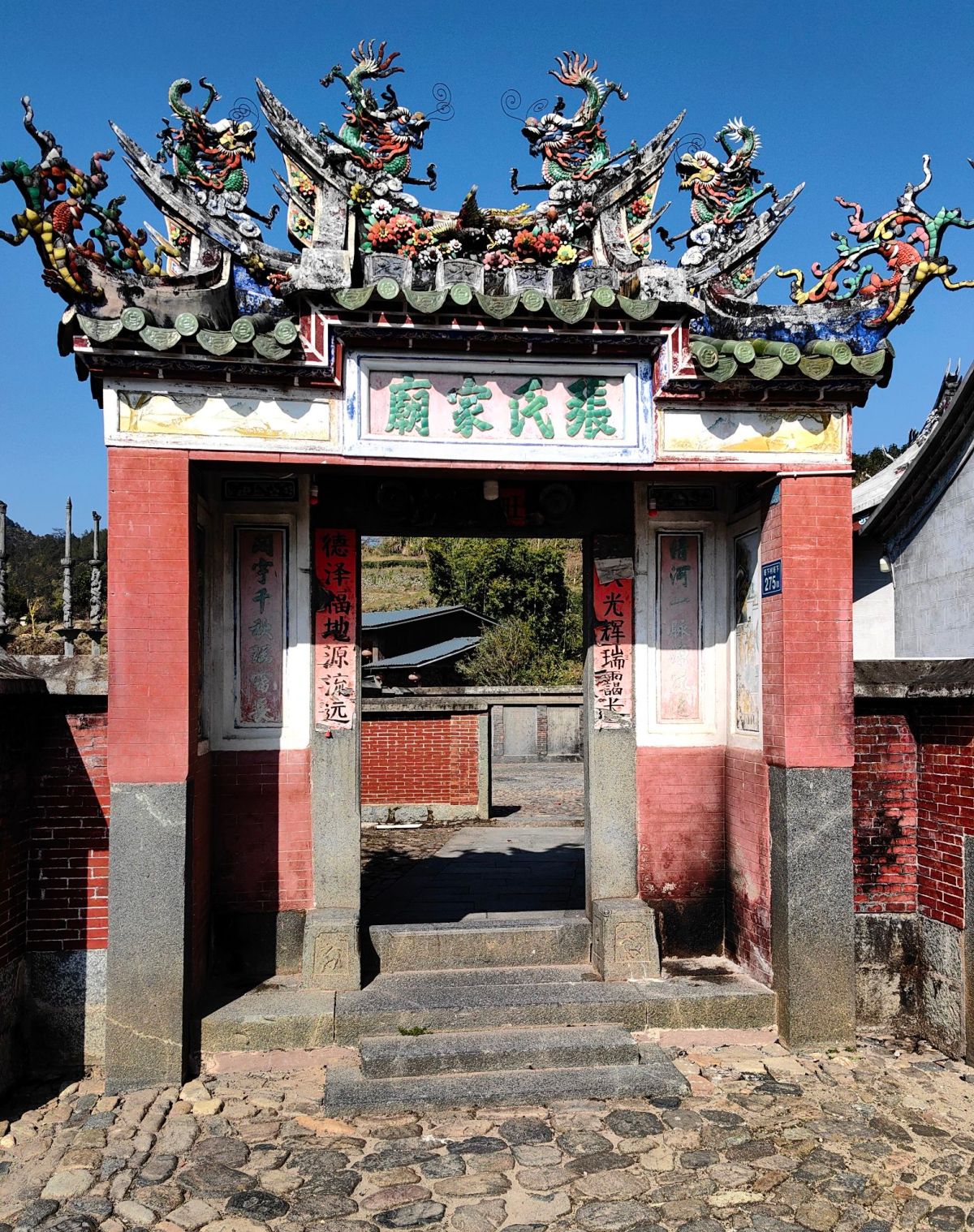
This is used as the clan shrine of the Zhang family, used for ancestor worship, clan ceremonies, rituals, and as a symbol of the Zhang clan’s history and status in the village. Built in the late Ming dynasty, over 400 years old. The gate is decorated with vivid motifs, notably “two dragons playing with a pearl”, inlaid with colored ceramic chips. Roof ridges, eaves, and parapets are ornate, with porcelain reliefs or ceramic decorations depicting legends.
这是张氏家族的宗祠,用于祭祀祖先、举行宗族仪式,同时象征着张氏家族在村落中的历史与地位。建于明末,已有四百余年历史。门楼装饰精美,尤其以“二龙戏珠”的图案最为生动,并镶嵌着色彩斑斓的陶片。屋脊、屋檐及女儿墙装饰华丽,点缀着描绘传说故事的瓷浮雕与陶瓷装饰,尽显古朴与雅致。

One of the most striking features in front of the hall are the stone flagpoles rising from the stone slab near the pond. There are many of them and they are over 10 meters high. They are richly carved and serve as memorials to clan members who achieved official or civil/military ranks or otherwise made contributions. The latest family member carved on the pole is one student went overseas, studying in MIT.
堂前最引人注目的景观之一是从池塘边石板上拔地而起的石旗杆。这些石旗杆数量众多,高达十多米。旗杆上雕刻着精美的图案,用于纪念家族中功成名就、文武双全或做出贡献的成员。旗杆上雕刻的最新一位家庭成员是一位留学生,目前就读于麻省理工学院。

During my trip, I found that the Hakka people have a culture deeply shaped by migration, resilience, and unity. Though historically considered “guests” , they forged strong, close-knit communities wherever they settled. At the heart of Hakka culture lies a powerful sense of clan. This isn’t just about bloodline but it’s a living, breathing system of values, rituals, and responsibilities. In every generation, Hakka people honor their ancestors through ancestral halls. Family histories are remembered. Even those who’ve migrated abroad trace their roots back to the clan village.
在我的旅程中,我感受到客家文化深受迁徙历程、坚韧精神与团结力量的熏陶。尽管历史上他们被称为“客家人”,但在落脚之地,却建立了紧密而坚固的社群。客家文化的核心,是深厚的家族意识。这不仅关乎血缘,更是一套鲜活的价值观、仪式与责任体系。每一代客家人都通过祠堂祭祀祖先,铭记家族历史。即便是远赴海外的后裔,也会追溯宗族村落的根源,以此延续那份血脉与文化的联结。

As night fell over Yunshui Yao, the village transformed into a quiet world. Lanterns glowed softly along cobbled paths, and the sound of flowing water echoed through the ancient alleys. The tulous stood silently in the moonlight, their thick earthen walls holding centuries of Hakka stories. In that stillness, I felt the heart of Hakka culture. It was a life rooted in simplicity and connection, so different from the pace I’m used to. This cultural journey of slower rhythm was more about experiencing a way of life that’s rare for me.
夜幕降临云水谣,村落顿时变得静谧无声。鹅卵石小路上,灯笼柔和地闪烁,潺潺流水声在古老的巷道中回荡。一座座土楼静静地矗立在月光下,厚厚的土墙承载着百年的客家故事。在这份静谧中,我感受到了客家文化的精髓。这是一种根植于淳朴与亲情的生活,与我习以为常的生活节奏截然不同。这段慢节奏的文化之旅,更多的是体验一种对我来说弥足珍贵并且全新的生活方式。
 Gone like the wind