Exploring Ayutthaya Historical Park: A Journey into Thai Heritage

探索泰国文化遗产大城府历史公园

Ayutthaya, the old capital of the Kingdom of Siam, stands as a testament to the grandeur and historical significance of Southeast Asia’s rich culture. Ayutthaya flourished as a major trading hub from the 14th to the 18th century, drawing merchants from all corners of the world. Today, the city is celebrated for its remarkable ruins and ancient temples, which have been meticulously preserved within the Ayutthaya Historical Park, a UNESCO World Heritage Site. Visitors to Ayutthaya are transported back in that glorious time as they explore the intricately designed wats, towering prangs, and serene Buddha statues that dot the landscape.

暹罗王国的旧都大城府见证了东南亚丰富的文化和宏伟的历史。这座城市曾经作为从14世纪到18世纪的主要贸易中心蓬勃发展吸引了来自世界各地的商人。如今这座城市因其巨大的历史遗迹和古老的寺庙而闻名,这些遗址和寺庙在联合国教科文组织世界遗产的大城府历史公园内被精心保存。当游客徜徉在精心设计的寺庙群,高耸的尖塔和宁静的佛陀雕像中时,仿佛回到了那个辉煌的时代。
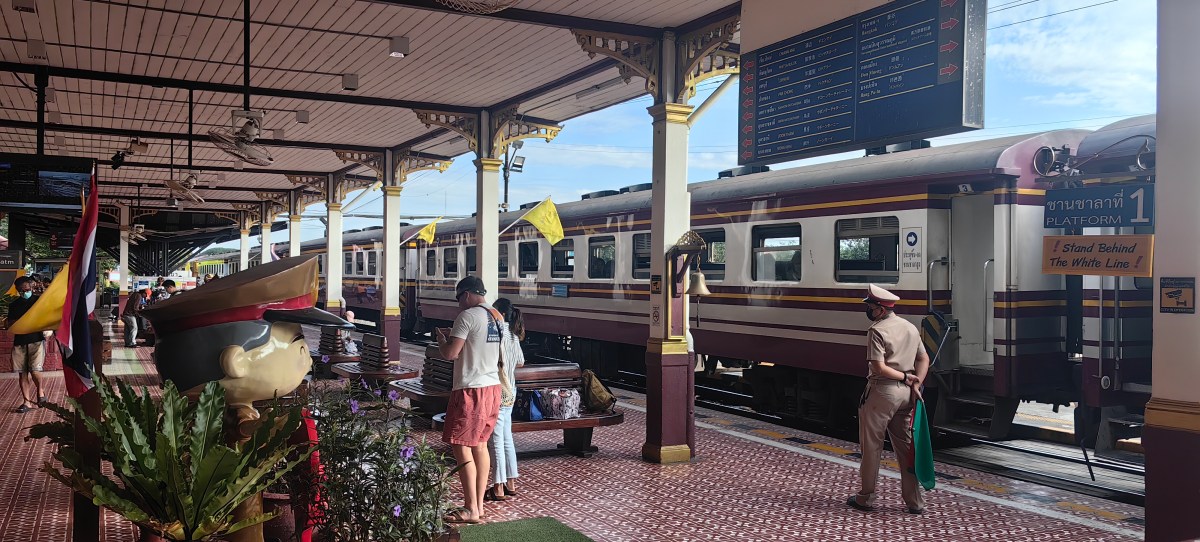
I took the train connecting Bangkok to Chiang Mai from Bang Sue Station in Bangkok to the Ayutthaya train station on December 4th, 2023. There is no highspeed train in Thailand. The speed of train is around 80-90km/ hour and each tram of the train has many open windows for ventilation. It is a short trip taking around 1.5 hours.

我于2023年12月4日从曼谷的Bang Sue 火车站乘坐连接曼谷到清迈的火车抵达大城府火车站。泰国没有高速火车。普通火车的速度约为每小时80-90公里,火车的每节列车都有许多开放式的通风窗口。这是一段大约需要1.5小时的短途旅行。

Ayutthaya train station is very small station. Upon arrival, visitors can easily access the historical sites, either by renting a bicycle, or hiring a tuk-tuk stopped in front of the station. Tuk-tuks are three-wheeled motorized vehicles, usually in green or red colors, and typically open-air. It is a popular and iconic mode of transportation in Ayutthaya, offering a convenient and enjoyable way to explore this historic park.

大城府火车站是一座很小的车站。到达后游客可以通过租用自行车或者雇用一辆停在火车站前的突突车便可轻松抵达历史遗址。突突车是一种通常是绿色或红色敞篷的人力三轮车。这是大城府的一种流行标志性的交通方式,为游客提供了一种方便而愉快的方式来探索这座历史悠久的遗址公园。

Ayutthaya Historical Park represents the history of the ancient city of Ayutthaya. Founded in 1350 by King U Thong, Ayutthaya swiftly became the capital of the Kingdom of Siam and one of the most prosperous cities in Southeast Asia. For over four centuries, it thrived as a political, economic, and cultural hub until its destruction by the Burmese army in 1767. After that, the capital was moved to Bangkok. This is the entrance of the park, and the visitors need to pay 200 Baht to visit four major attractions in this park.

大城府历史公园代表了这座古城的历史。大城府由乌通国王于1350年建立,之后迅速成为暹罗王国的首都,它也是当时东南亚最繁荣的城市。四个世纪以来,它一直是一个政治经济和文化枢纽,直到1767年被缅甸军队彻底摧毁。此后泰国首都就搬到了曼谷。这里是公园的入口,游客需要支付200泰铢才能参观公园的四个主要景点。
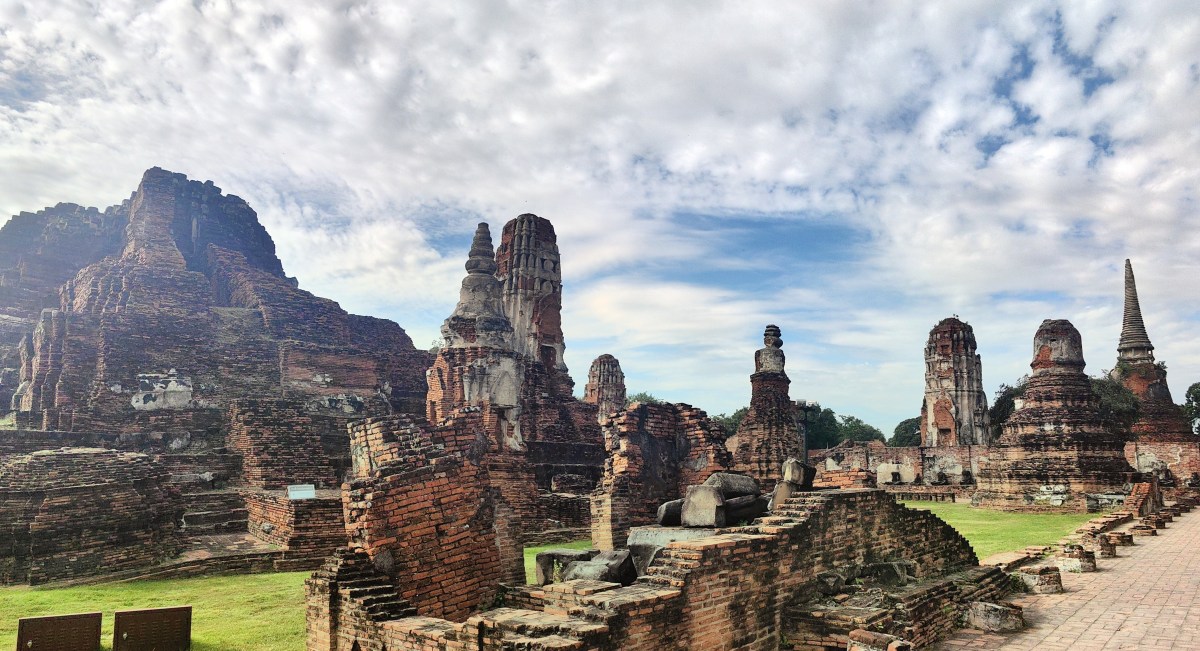
Recognized as a UNESCO World Heritage Site in 1991, Ayutthaya Historical Park includes the ruins of this once-magnificent city, offering visitors a glimpse into its storied past. The park covers an area of approximately 289 hectares and includes a multitude of impressive temples, palaces, and monuments, reflecting a blend of various architectural styles influenced by different cultures such as Khmer, Sukhothai, and Lopburi.

大城府历史公园在1991年联合国教科文组织列入世界遗产名录,这个曾经无比辉煌的城市遗址如今另游客能够一瞥它曾经的历史。该公园覆盖了大约289公顷的区域,其中包括许多令人印象深刻的寺庙,宫殿和古迹,反映了受包括高棉,素可泰等不同文化影响的各种建筑风格的融合。

The visual impact of my first sight of these relics was striking. The towering prangs and chedis, though weathered by time, stand majestically against the blue sky, their intricate details still visible despite centuries of exposure to the air. The golden hues of sunlight play on the ancient bricks and stone, casting long shadows that add to the sense of timelessness. I felt that I took a time machine and travelled back to the past.

看到这些文物的第一眼着实令人震撼。高耸的主塔和周围的小尖塔虽然随着时间的流逝而风化,但仍朝蓝天高傲矗立。尽管几个世纪漫长的磨损,它们表面的错综复杂的雕刻细节仍然可见。金色的晨光照耀在古老的砖石上,修长的阴影留下一种永恒的感觉让我觉得我仿佛乘坐时间机器回到了几百年之前的过去。

Wat Mahathat

The first place I visited was the Wat Mahathat, also known as the Temple of the Great Relic. It was a royal monastery and one of the most important temples in Ayutthaya. It was established during the reign of King Borommaracha I (1370-1388). It is characteristic of Khmer-style architecture.

我参观的第一个地方是马哈特寺(Wat Mahathat),也称为大遗物寺庙。这是一座皇家寺庙,也是大城府中最重要的寺庙之一。它是在国王Borommaracha 一世(1370-1388)统治期间建立的,也是经典的高棉风格建筑。
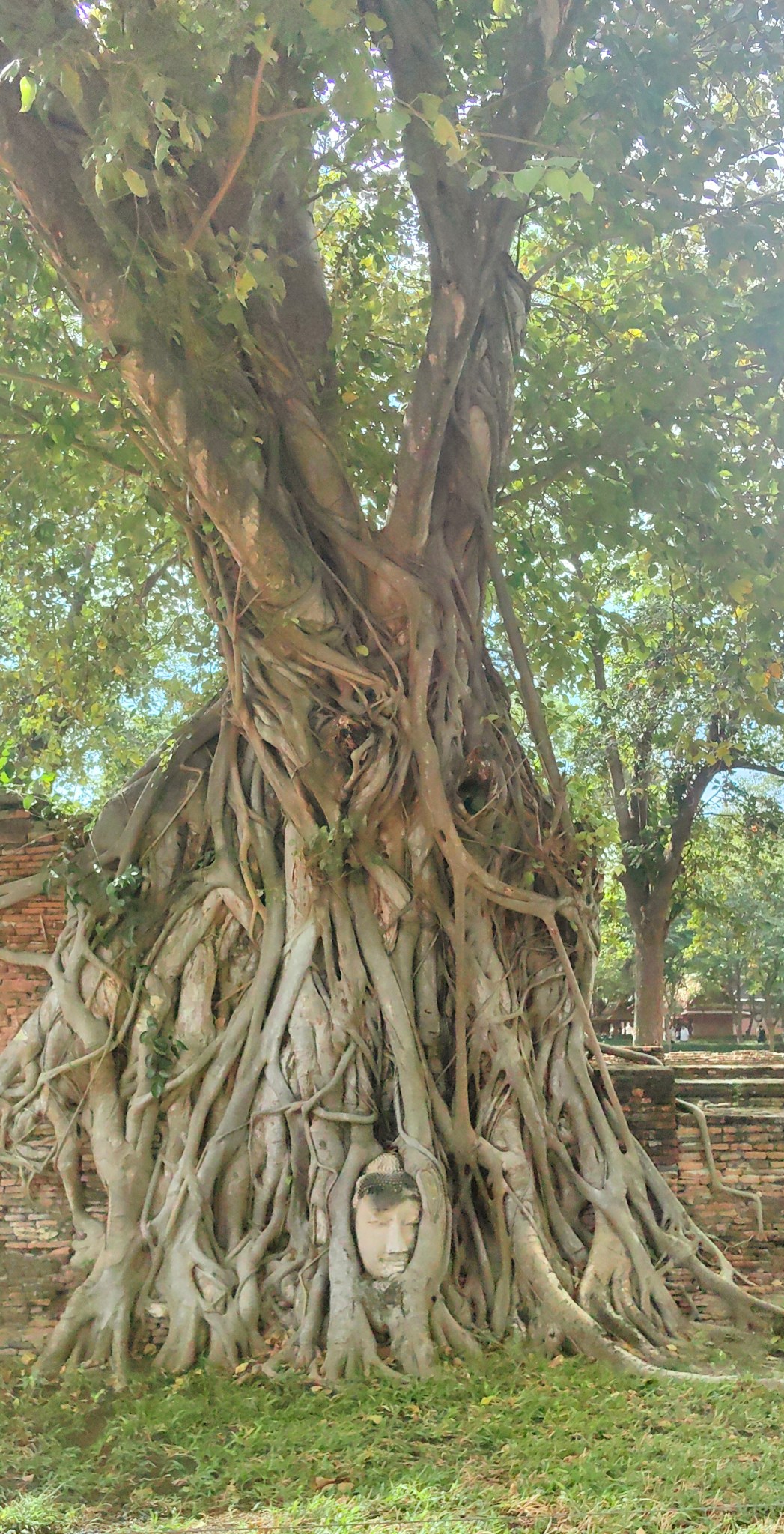
The iconic Buddha head entwined in tree roots at Wat Mahathat caught my eyes immediately, a poignant symbol of the enduring spirit of the place. This unique feature originated during the Burmese invasion when the temple was destroyed, and the head fell to the ground, later embraced by the tree’s roots.

这座寺庙里缠绕在树根中的标志性佛陀头立即吸引了我的目光,它也是这个地方历史悠久长存的象征。这一独特的景观起源于缅甸入侵时期,当寺庙被摧毁时,佛陀头部落在地面上,后来被树根所包围。

Each Buddha statue scattered throughout Ayutthaya Historical Park tells a story, reflecting different styles, periods, and the deep devotion of the people who created them. Ayutthaya style of Buddha statue combines elements of Sukhothai and Khmer styles. These statues often have a broad, smiling face and a distinctive flame-like finial atop the head. For me, the unique element of Buddhism was the most attractive point to be explored when travelling in Thailand.

每个散布在大城府历史公园中的佛陀雕像都讲述了一个故事,它们也反映了创造者的不同风格以及对佛教深厚的笃信精神。这里佛陀雕像的风格结合了素可泰和高棉的建筑元素。这些雕像通常具有宽阔的笑脸,头顶上有特别的火焰般的端饰。对我来说独特的佛教元素是泰国旅游最有吸引力的地方。

The prangs of Ayutthaya are among the most distinctive architectural elements in the ancient city. These prangs are characterized by their tall, tower-like structure, often built on a square or rectangular base. The surfaces of prangs are often decorated with intricate stucco work, featuring floral patterns, mythical creatures, and scenes from Buddhist mythology.

图中这种高塔是古城最独特的建筑元素之一。这些建筑的特征是它们高大的塔式结构,通常建在正方形或矩形底座上。它们的表面通常装饰有包括花卉图案,神话生物和佛教神话中的场景等复杂的灰泥制品。
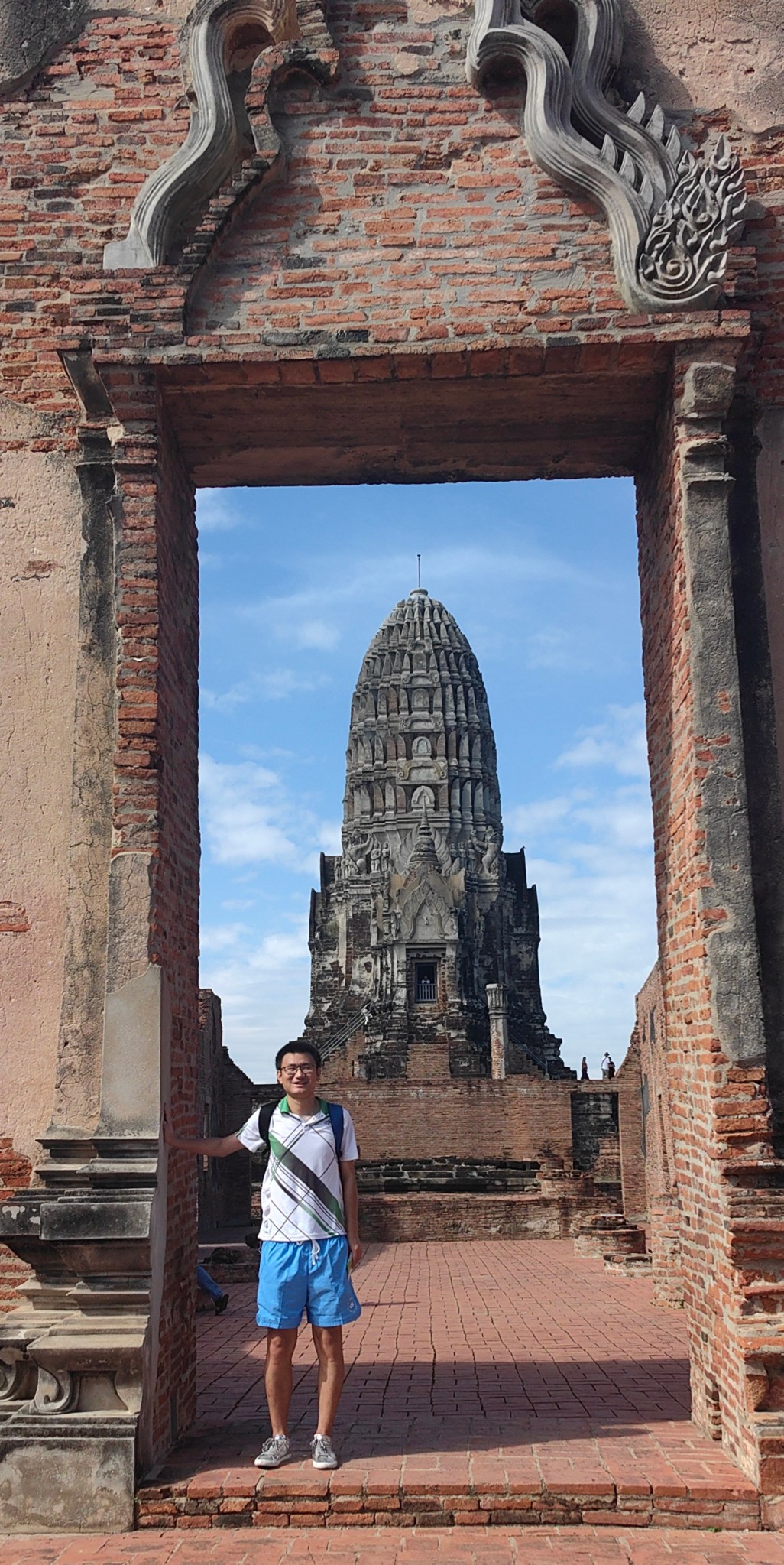
Wat Ratchaburana

The prangs of Ayutthaya are not just architectural wonders but also reflections of the rich cultural heritage and religious devotion of the Ayutthaya Kingdom. Wat Ratchaburana was one of the most impressive temple in this park. The prang at Wat Ratchaburana is one of the best-preserved in Ayutthaya. Wat Ratchaburana was established by King Borommaracha II in 1424 to honor his two elder brothers, Chao Ai Phraya and Chao Yi Phraya, who died in a duel for the throne.

大城府的高塔不仅是建筑奇观也是一种对Ayutthaya王国丰富文化遗产和宗教崇拜的传承。Ratchaburana寺庙是公园中最具有震撼力的寺庙之一。它的高塔也是这里保存最完好的。它是由Borommaracha 二世于1424年建立的,以纪念为了争夺王位决斗而死的两个哥哥Chao Ai Phraya和Chao Yi Phraya。
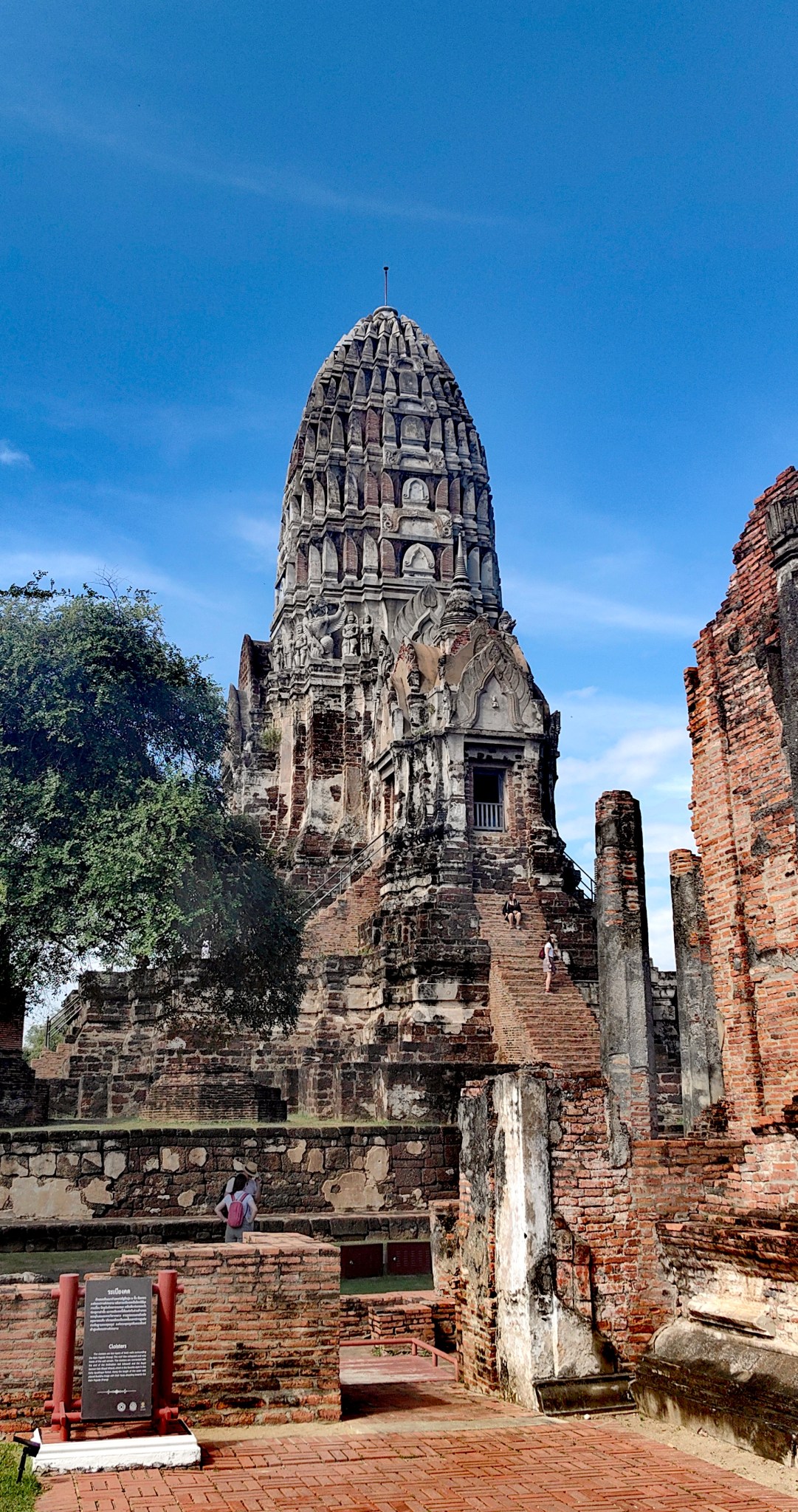
The prang is built in the traditional Khmer style, with a tall, tapering tower rising from a square base. It is adorned with stucco reliefs and ornamental details, showcasing the craftsmanship of the Ayutthayan artisans. The prang represents Mount Meru, the sacred mountain at the center of the universe in Hindu and Buddhist cosmology. It serves as a spiritual axis connecting the earthly realm with the heavens. Standing before this prang, I couldn’t help but feel a sense of awe and reverence. It dominates the landscape and serves as a visual and symbolic connection between the earthly and the divine.

图中的高塔以传统的高棉风格建造,是一座从正方形的底座上升而起的高锥塔。它装饰有灰泥的浮雕和众多建筑细节,展示了大城府工匠的工艺。这座高塔代表梅鲁山,它是印度教和佛教宇宙中心的圣山。也是将凡尘与高天神国联系起来的精神线。站在这个高塔之前,我不禁感到一丝敬畏和崇敬。它一览众世小,如同尘世与神之间的联系桥梁。
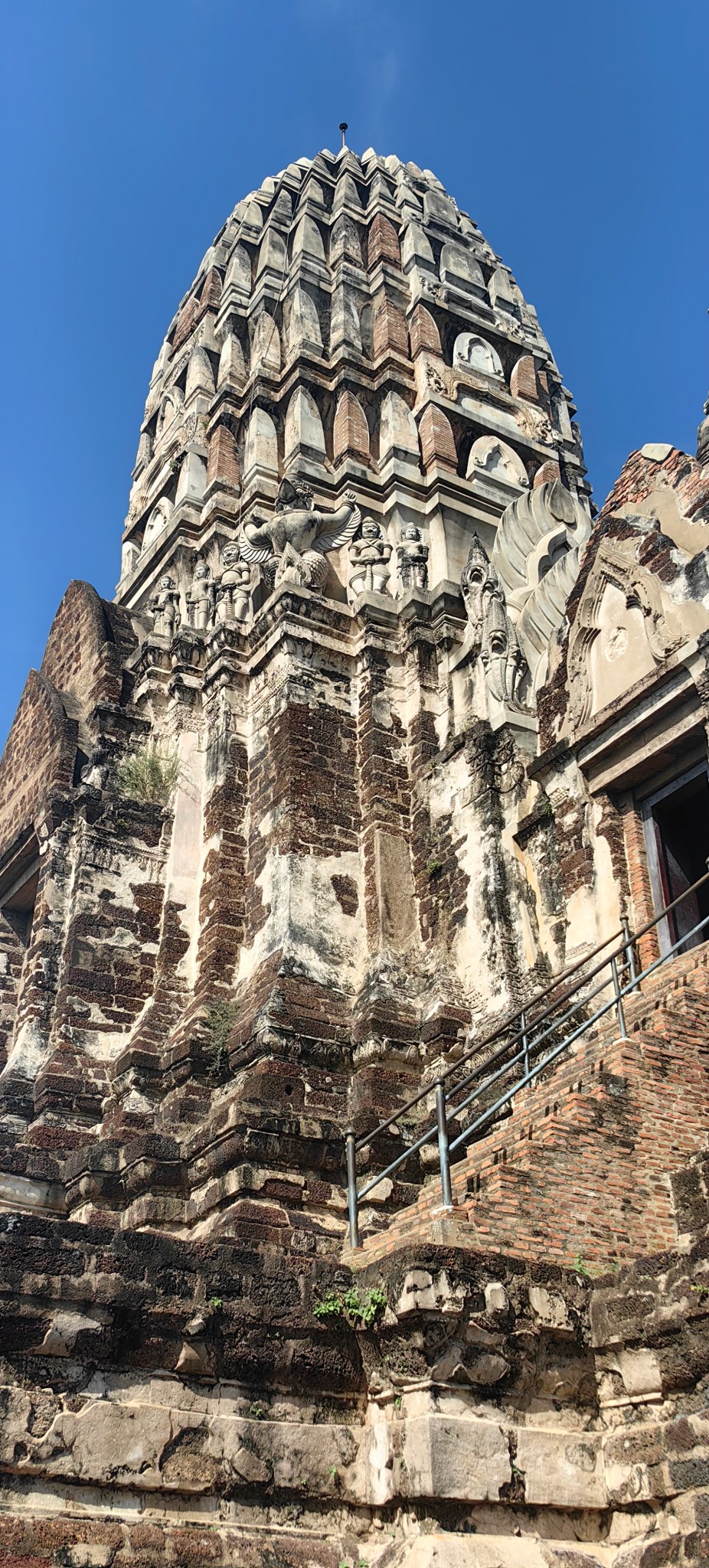
The prang of Wat Ratchaburana is adorned with a multitude of statues and sculptural elements that drew my attention when I climbed up the brick steps. I could see clearly the statues of dvarapalas. These statues are typically depicted in a standing position, holding weapons such as clubs or swords. They serve as protectors of the temple, warding off evil spirits and guarding the sacred space within. There are statues of devatas (deities) and thewada (celestial beings). These figures are often portrayed in elegant, flowing attire, with serene expressions and graceful poses. Devatas and thewadas represent divine beings who inhabit the celestial realms.

Ratchaburana寺庙的高塔还装饰着许多雕像和雕塑元素令人侧目,当我爬上砖制台阶时我可以清楚地看到德瓦拉帕拉斯的雕像。这些雕像通常以站立姿势呈现,手执拿着大棒或长剑等武器。他们充当圣殿的保护者,驱赶邪灵并守护着内在的神圣区域。这里还有devatas和Thewada的雕像。这些人物通常以优雅飘逸的服装造型进行描绘,有着镇静的表情和优美的姿势。 Devatas和Thewadas代表了居住在天神领域的神圣生物。

Ayutthaya Historical Park is super large. The lake in the center of Ayutthaya Historical Park is a tranquil and adds a natural element to the ancient city’s landscape. Surrounded by lush greenery and dotted with historical ruins, it is a good place to have a rest or stroll.

这个历史公园实在太大了。历史公园的中心有一个宁静的湖泊,在古城的历史景观中增添了自然的元素。周围都是郁郁葱葱的绿色植物,上面散布着历史遗迹,是休息或漫步的好地方。

Throne Halls

The Ayutthaya Palace has been destroyed totally in the war. Now I could only see the remnants of Throne Halls and ruins of residential areas. The whole area is covered by weeds. Standing among the ruins of the Ayutthaya Palace, I felt a profound sense of awe at the grandeur and historical transition of the ancient kingdom. The remnants evoke reflections on the speedy passage of time and the cruelty of wars.

大城府的王宫早已在战争中被彻底摧毁。现在我只能看到王座大厅废墟的残垣断壁。整个区域都被杂草覆盖。我站在这片废墟中,对古代王国的宏伟和历史变迁不由地深感敬畏。这些遗迹残骸令我感慨时间流逝的飞快和战争的残酷。

The Wat Phra Si Sanphet located within the palace grounds is well conserved fortunately. This temple served as the royal chapel. The temple was a central place for royal religious activities, highlighting the close connection between the monarchy and Buddhism.

位于宫殿区域内的Phra Si Sanphet寺所幸被完整保留。这座寺庙是皇家教堂,也是皇家宗教活动的中心地点,凸显泰国君主制与佛教之间的紧密联系。

Wat Phra Si Sanphet

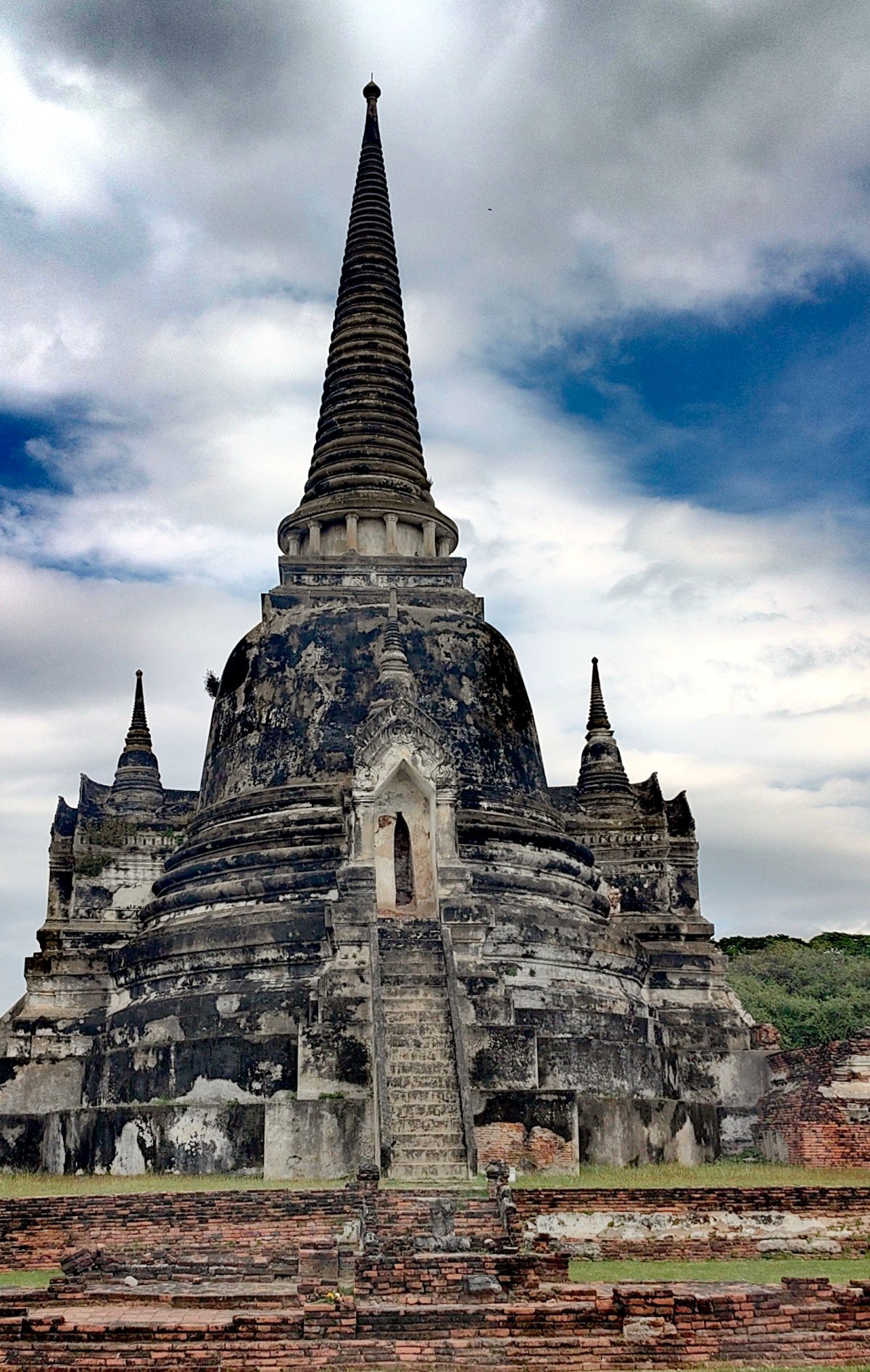
Established in the 14th century during the reign of King Ramathibodi I, it was part of the royal palace complex. Its three large chedis, which still stand today, housed the ashes of three Ayutthayan kings. The three large chedis perfectly aligned is the most impressive and iconic architectures in this historic park. The chedis are bell-shape with intricate stucco reliefs. They are surrounded by smaller stupas and other structures.

建立于14世纪拉马西博迪一世统治期间,这座寺庙是皇家宫殿的一部分。它的三个大尖塔(Chedis)如今仍然屹立不倒,分别保存了三个国王的骨灰。三个巨大的尖塔完美地对齐排列是这个历史悠久的公园中最令人印象深刻的建筑。这种大尖塔一般是钟形,装饰有复杂的灰泥浮雕。它们被较小的佛塔和其他建筑结构包围。

The architectural style of Ayutthaya is affected by both Sukhothai and Khmer. The Sukhothai architectures are characterized by the small stupas which are typically bell-shaped or in the form of miniature chedis. These structures mirror the design of the larger chedis but on a more modest scale. The stupas often feature detailed stucco reliefs depicting lotus motifs, mythological creatures, and religious motifs.

大城府的建筑风格受素可泰和高棉两种风格的影响。素可泰建筑的特征是这种钟形或类似于上图大尖塔(Chedis)形式的微型小佛塔。这些结构复制了的大尖塔(Chedis)的设计,但总体规模较小。这种佛塔经常呈现莲花图案,神话生物和宗教图案的细腻浮雕装饰。

Sukhothai is renowned for its elegant Buddha statues, characterized by a flame-like ushnisha (a protuberance on the top of the head symbolizing wisdom) and a serene, meditative expression. Ayutthayan Buddha statues often replicate the Sukhothai style, with smooth, flowing lines and a focus on the spiritual tranquility of the Buddha.

素可泰以其优雅的佛像而闻名,其特征是头顶上如同火焰般的象征着智慧的突起和冥思的表情。 大城府的佛像通常复制素可泰的风格,这里的佛像有着平滑流动的线条并且似乎全神专注于佛陀的精神宁静。

Some small stupas contain niches that once held votive tablets or small Buddha statues. These items were often placed as offerings or to gain spiritual merit. The small stupas are strategically placed around the larger chedis and main temple structures, contributing to the overall harmony and balance of the temple complex.

一些小佛塔还包含者收纳小佛陀雕像或者印有佛陀拓片的龛。这些物品通常被放置在这里以获得精神上的升华。这些小佛塔在建筑排列上一般布置在更大的尖塔和主庙宇周围,这有助于达到一种整体的和谐与平衡。

Visitors were able to take the time to closely inspect the small stupas scattered all around the historical park. Their intricate decorations and architectural details are best appreciated up close. They are typically bell-shaped, a common form in Thai Buddhist architecture. This shape symbolizes the union of heaven and earth. They have an octagonal base, representing stability and the foundation of the spiritual path. Intricate floral motifs, such as lotus flowers and vines, adorn the surfaces. The spire is typically multi-tiered, each tier representing the ascent through the realms of existence towards enlightenment. It often culminates in a small, gilded umbrella-like structure, symbolizing protection and honor.

游客可以花些时间仔细观察散布在历史公园各处的小型佛塔, 近距离欣赏它们精致的装饰和建筑细节。它们的整体轮廓通常是钟形的,这是泰国佛教建筑的常见形式,这种形状象征着天地合一。它们有一个八角形底座,代表着稳定和精神的基础。表面装饰着如莲花和藤蔓等复杂的花卉图案。塔尖通常是多层的,每一层都代表着从肉体存在走向精神开悟的飞升。塔顶通常以一个小的镀金伞状结构收尾,象征着保护和荣誉。
Wat Phra Ram

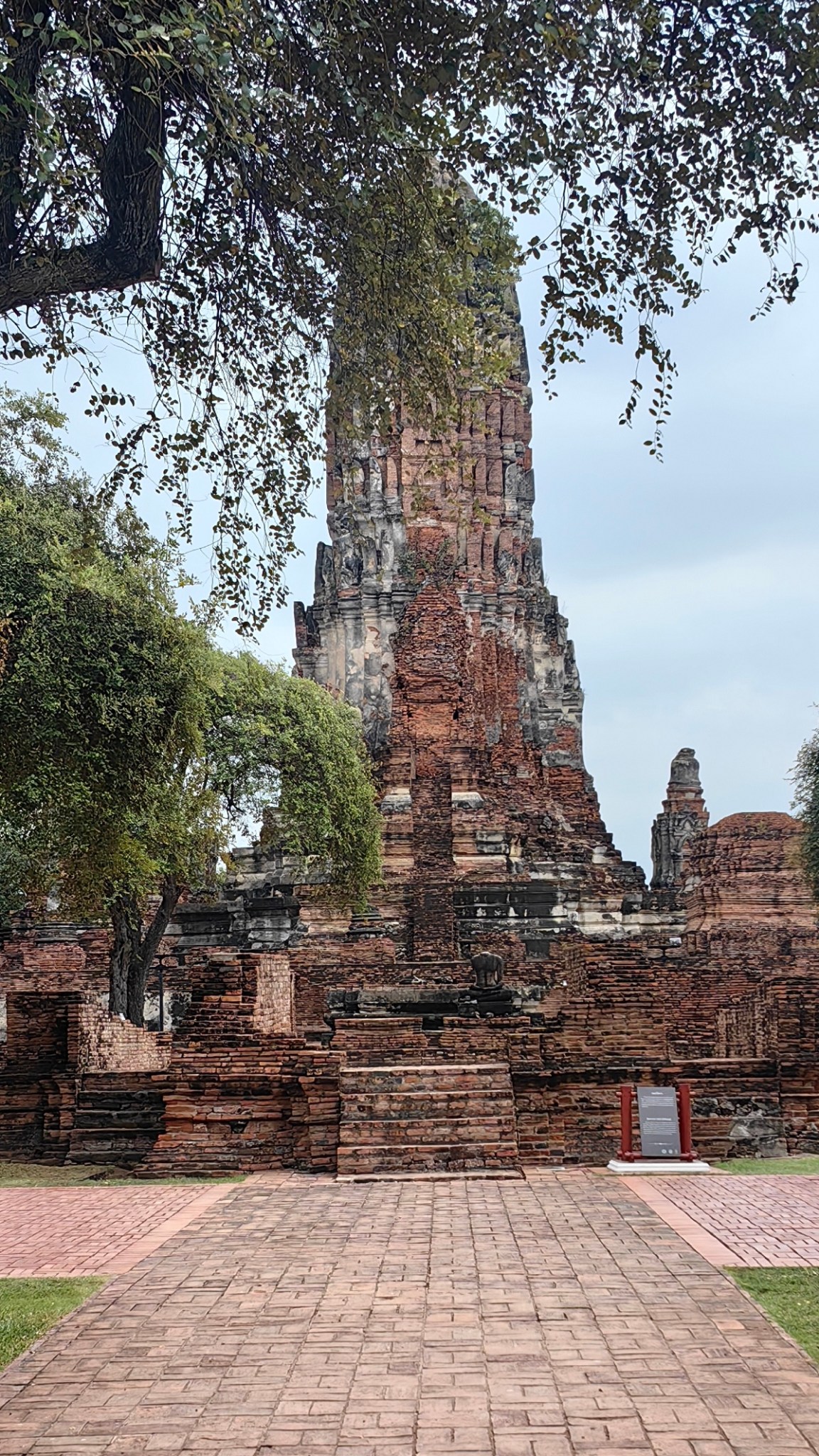
Wat Phra Ram is another significant temple which was constructed in the late 14th century by King Ramesuan on the cremation site of his father, King U-Thong, the first king of Ayutthaya. The towering central prang is the most prominent feature of Wat Phra Ram. I could see many this kind of Khmer-style tower here. The influence of Khmer architecture on the architecture of Ayutthaya is profound in several key features within the Ayutthaya Historical Park. The Khmer Empire, which flourished in Southeast Asia from the 9th to the 15th centuries, left a lasting impact on the region.

帕拉姆寺是另一座重要的寺庙,由拉梅苏安国王于14世纪末在其父亲乌通国王(大城府第一任国王)的葬礼所在地上修建。高耸的中央主塔是帕拉姆寺最显著的特征。我在这个公园里看到了很多这种高棉风格的塔。高棉建筑对大城府建筑的影响在大城府历史公园中体现得淋漓尽致。高棉帝国在9世纪至15世纪在东南亚实力强大,对该地区产生了持久的影响。

Khmer architects often used sandstone and laterite in their constructions, materials that were also adopted in Ayutthayan architecture. These materials are durable and suitable for intricate carvings and large-scale structures. The stucco reliefs on the prang of Wat Phra Ram and other temples in Ayutthaya feature detailed carvings that echo the artistic style of Khmer bas-reliefs found at Angkor.

高棉建筑师经常在建筑中使用砂岩和红土,大城府的建筑也借鉴采用了这些材料。这些材料经久耐用,适合制作精美的雕刻品和大型建筑。帕拉姆寺和大城府其他寺庙的灰泥浮雕雕刻精细,与吴哥窟的高棉浅浮雕艺术风格相呼应。

There is an artificial lake located adjacent to Wat Phra Ram. The calm waters of the lake create a stunning mirror effect, reflecting the nearby temples towers and greenery. The lake planted with blooming lotus flowers looked like the Western Lake of Hangzhou.

帕拉姆寺旁边有一个人工湖,湖水平静如镜般倒映着附近的高阁塔楼和绿植,湖中种满了盛开的莲花,仿若杭州西湖。
Walking through the trail covered with gravel, I could not help to contemplate the history of Thailand one thousand year ago. The first centralized country Sukhothai Kingdom was founded in 1238 by King Sri Indraditya, marking the beginning of what is considered the first independent Thai kingdom. Sukhothai was a mandala state, where the central power radiated outward, and local rulers paid tribute to the king. Sukhothai became a center for Theravada Buddhism, with the construction of numerous temples in this style.

走在铺满碎石的小径上,我不禁回想起一千年前悠久的泰国历史。历史上第一个集权国家素可泰王国由因陀罗帝王于1238年建立,标志着泰国第一个独立王国的开端。素可泰是一个曼荼罗国家,中央权力向外辐射,地方统治者向国王进贡。素可泰成为上座部佛教的中心,当时就建造了许多这种风格的寺庙。
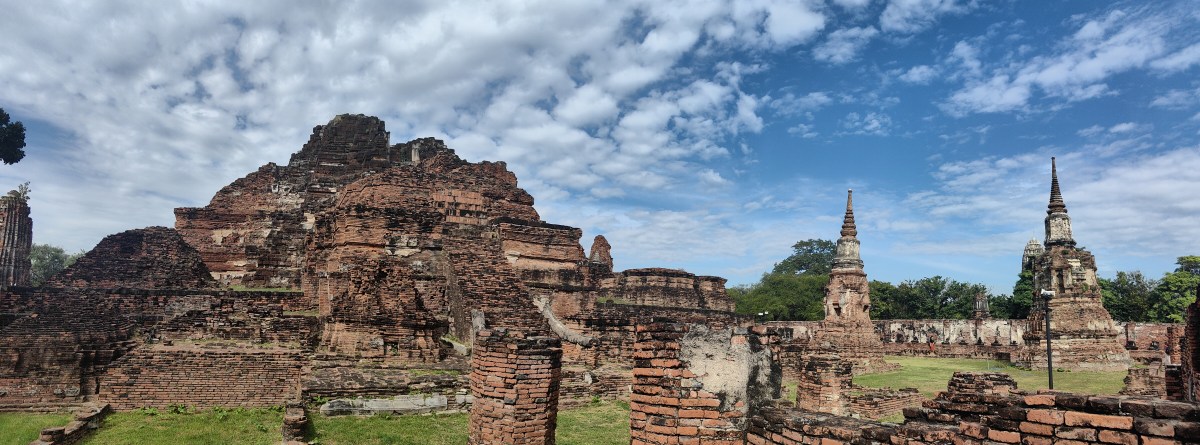
In 1438, Sukhothai was officially annexed by the Ayutthaya Kingdom. Ayutthaya was founded in 1350 by King U Thong. The kingdom expanded through military conquests and alliances, eventually controlling much of present-day Thailand, Laos, Cambodia, and parts of Myanmar. Ayutthaya continued to promote Theravada Buddhism. Ayutthaya engaged in numerous conflicts with neighboring states, particularly Myanmar. These wars were a source of eventual downfall. In 1767, after years of intermittent warfare, Burmese forces captured and sacked Ayutthaya, leading to the kingdom’s collapse. The whole city was destroyed, and many buildings were ruined.

1438年,素可泰王国被大城王国正式吞并。大城王国由乌通国王于1350年建立。王国通过军事征服和联盟不断扩张,最终控制了现在的泰国、老挝、柬埔寨和缅甸部分地区的大部分地区。大城王国继续推广上座部佛教并与邻国尤其是缅甸发生了多次冲突。这些战争最终导致了大城王国的衰落。1767年,经过多年的断断续续的战争,缅甸军队攻占并洗劫了大城王国,导致王国灭亡。整座大城府被摧毁,许多建筑物被毁。
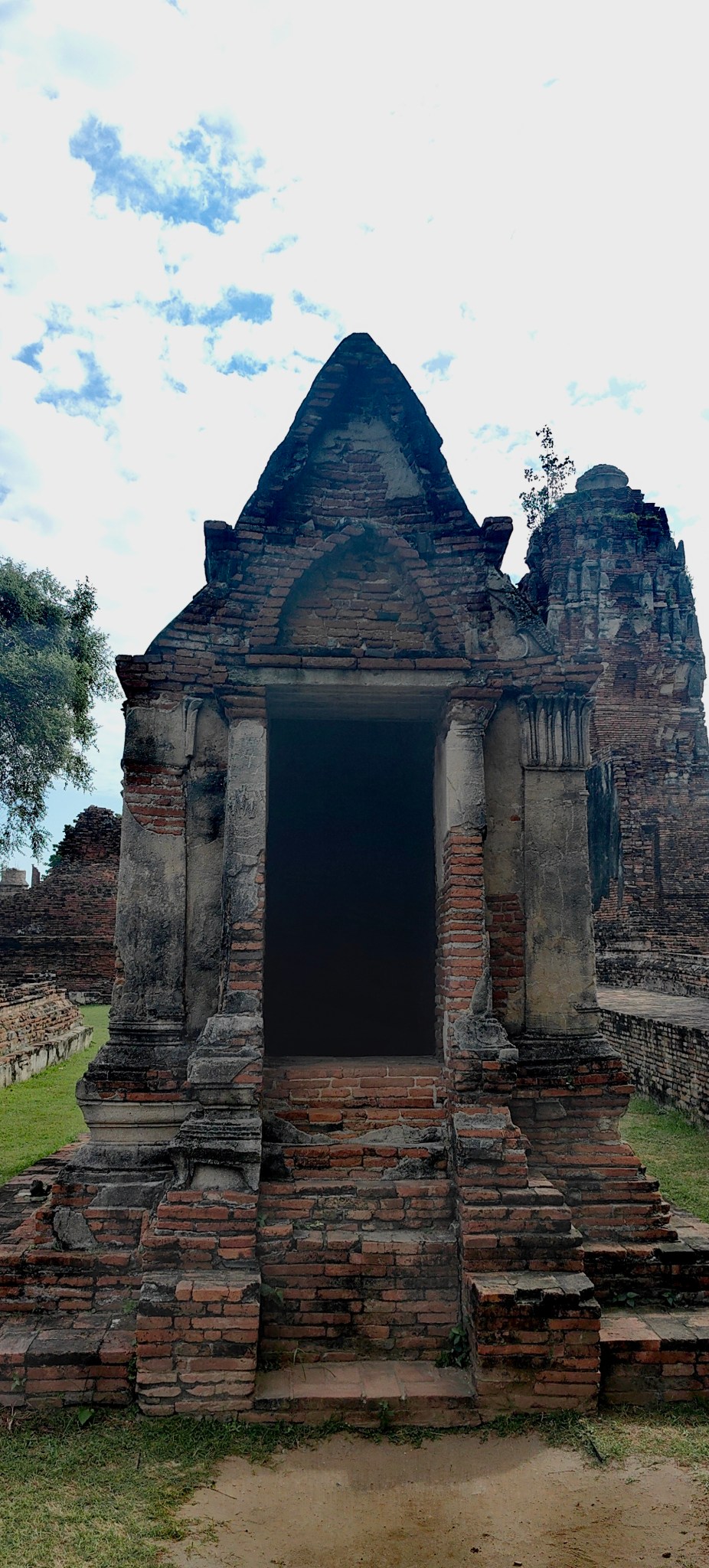
Wat Nok

Wat Nok is one of the lesser-known temples in Ayutthaya. It has a quieter presence, often overlooked by the mainstream tourist trail. Unlike other temples, its main building is well conserved. It is enclosed by a wall, with a gate serving as the entrance. It includes a courtyard and a tranquil garden area. Visitors could know how the complete temple of Ayutthaya looked like after visiting it.

诺克寺是大城府鲜为人知的寺庙之一。它比较安静,经常被大众游客忽略。与其他寺庙不同,它的主建筑保存完好。它被一堵墙包围,有一扇门作为入口,其中包括一个庭院和一个宁静的花园。游客参观后就能知道一座完整的大城府寺庙的概况。
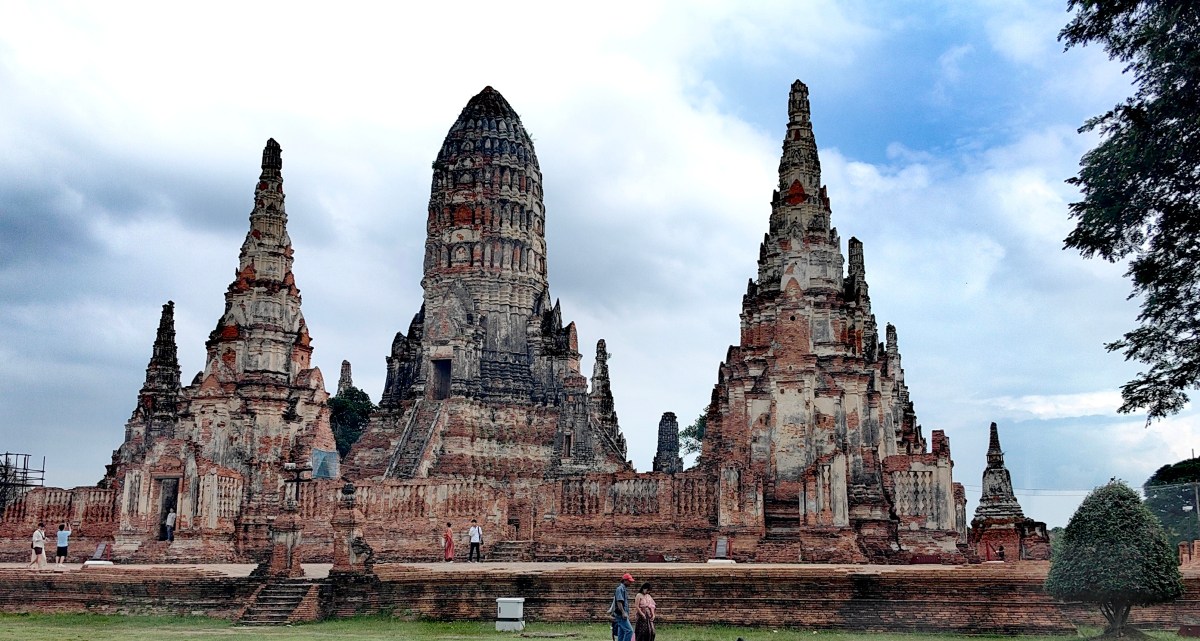
Wat Chaiwatthanaram

The last site visited was the Wat Chaiwatthanaram, which was built in 1630 by King Prasat Thong. It was constructed in honor of his mother and to commemorate his victory over the Khmer kingdom. It is a monument similar to the Arc de Triomphe and symbolizes the power and influence of the Ayutthaya Kingdom. Like the design of many temples in Ayutthaya, the central prang stands at 35 meters and is the most prominent feature of Wat Chaiwatthanaram. It is surrounded by smaller prangs and chedis. The three towers, standing majestically against the sky, inspired my appreciation for the historical and cultural achievements. There is a large piece of lawn behind the temple providing excellent panoramic photography opportunities, especially during sunset when the light enhances the details and colors.

这次旅行参观的最后一处景点就是柴瓦塔那兰寺,该寺由 Prasat Thong 国王为了纪念他的母亲和战胜高棉王国于1630年修建。它是一座类似于凯旋门的纪念碑,象征着大城王国的权力和影响。与大城府许多寺庙的设计一样,中央的塔高达35米,这是柴瓦塔那兰寺最突出的特征。它周围环绕着较小的佛塔。三座壮观的高塔巍然耸立在蓝天之下令我对泰国历史和文化成就感到由衷的赞赏。寺庙后面有一大片草坪,尤其是在日落时分,光线增强了景物的细节和色彩,为游客提供拍摄绝佳全景的机会。

Surrounding the central prang is a rectangular gallery lined with numerous Buddha statues. Most of the stuccos, bas-reliefs and architectures are well conserved. Continuous restoration and preservation efforts are undertaken by Thai government to maintain the structural integrity and aesthetic beauty of this temple. Such an impressive cultural heritage really needs people to protect it well in the long run.

中央佛塔周围是长方形的画廊,两旁摆放着许多佛像。大部分的灰泥浅浮雕和建筑如今都保存完好。泰国政府一直以来不断进行修复和保护工作,以保持这座寺庙的结构完整性和美感。如此令人印象深刻的文化遗产确实需要人们永远好好保护。

My trip in Ayutthaya historic park lasted a whole day. As the sun dipped low, casting golden hues across ancient stones, Ayutthaya this mystical land seemed to whisper tales of old stories and, kings and temples. Through ruins vast where echoes of history resided, I returned back to train station in wonder. Beneath tall and grand prangs, I felt the pulse of this sacred land. The memories of this journey will linger and always be etched in my mind.

我在大城府历史公园的旅行持续了一整天。当太阳渐渐落下,金色的光芒洒在古老的琢石上时,大城府这片神秘的土地似乎在低声诉说着古老的故事,讲述着国王和寺庙的依稀往事。穿过这片回荡历史的广阔遗迹,我满心惊奇地回到了火车站。在高大宏伟的佛塔下,我感受到了这片神圣土地的脉搏。这次旅行的记忆也将永远铭刻在我的脑海里。

Bangkok Unveiled: Discover the Gems of Thailand’s Capital

揭秘曼谷

Bangkok is the capital city of Thailand which a bustling metropolis but also a spiritual heartland for Buddhists. Before I traveled in this city, Bangkok is known to have numerous magnificent temples, or called “wats,” that reflect the city’s deep-rooted Buddhist heritage. The different culture of Buddhism attracted me to this country.

曼谷作为泰国的首都是一个繁华的大都市,也是佛教徒的精神圣地。在来到这个城市旅游之前,就曾了解曼谷以拥有众多宏伟的寺庙而闻名,这些寺庙在当地语言称为“wats”,体现了这座城市根深蒂固的佛教传统。具有佛教色彩的异域文化也吸引我来到这个国家旅行。
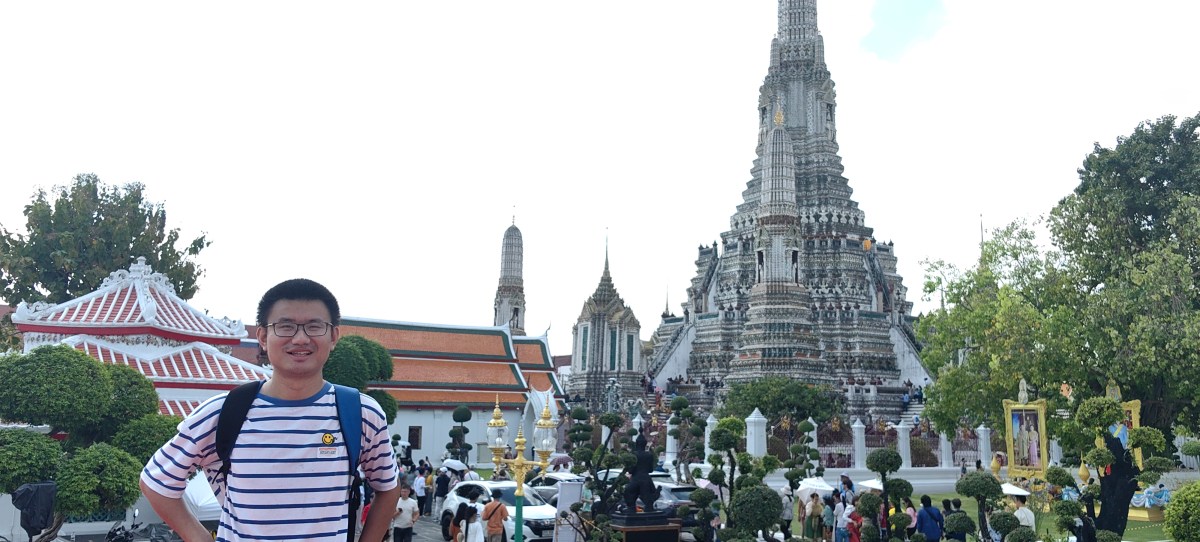
I visited this city on 2nd December 2023 and spent three days here. When I arrived at the city center from the Suvarnabhumi Airport, the sun has set, and evening came silently. The Grand Palace transformed into an enchanting spectacle, illuminated by a golden glow. The body of palace stood majestically against the night sky. Its intricate architecture was highlighted by the glaring lighting. The shimmering spires and rooftops, adorned with delicate carvings created a mesmerizing silhouette.

我于2023年 12 月 2 日参观了这座城市,并在这里待了三天。当我从素万那普机场抵达曼谷市中心时,太阳已经落山,夜幕悄然降临。大皇宫被金色的光芒照亮显得特别迷人。宫殿的主体在夜空中雄伟地矗立着。建筑群在耀眼的灯光下显得格外突出。闪闪发光的尖顶和屋顶上装饰着精致的雕刻,在光芒下映出神秘的轮廓剪影。

As I strolled around the perimeter, the reflections of the illuminated structures danced on the tranquil waters of nearby fountains. The surrounding gardens and temples, bathed in the gentle light, offered a serene contrast to the bustling city beyond the palace walls. Wandering through the tranquil streets at night, my eyes were always attracted by these illuminated temples and their golden spires.

当我漫步在宫殿周围时,这些灯火通明的建筑倒映在附近喷泉的宁静水面上。周围的花园和寺庙也沐浴在柔和的灯光下,这种宁静与宫墙外的繁华城市形成了一种对比。夜晚漫步在曼谷的街道,目光不由地被这些灯火通明的寺庙和金色的尖顶吸引。

The iconic skyline of Bangkok, dominated by towering skyscrapers and the Chao Phraya River, sparkled with countless lights. Viewed from any bar across the river, the sight of the famous temple Wat Arun at night is truly breathtaking. The Wat Arun, known as the Temple of Dawn, is a beacon of elegance as its spires reflected on the Chao Phraya River. The lights transform the temple adorned with colorful porcelain into a luminous masterpiece.

曼谷标志性的天际线当属高耸的摩天大楼和灯光闪耀的湄南河。从河对岸的任意一家酒吧望去,著名的黎明寺的夜景令人叹为观止。黎明寺的尖塔倒映在湄南河上,如同一座优雅的灯塔。灯光将装饰着彩色陶瓷的寺庙装点成一件熠熠发光的艺术杰作。

Khao San Road, located in the heart of Bangkok, is renowned for its vibrant nightlife. The road is lined with a variety of street bars and clubs. The atmosphere is lively and energetic, with neon lights and colorful signs creating a festive ambiance. Amidst the nightlife buzz, street food vendors set up stalls offering different kinds of Thai delicacies from pad thai and mango sticky rice to grilled skewers.

考山路位于曼谷市中心,以其丰富多彩的夜生活而闻名。路边遍布各种街头酒吧和俱乐部。这里的气氛热闹而充满活力,霓虹灯和色彩缤纷的招牌营造出节日氛围。在夜生活的喧嚣中,街头小吃摊贩摆出各种摊位,提供从泰式炒河粉、芒果糯米饭到烤串等各种泰国美食。

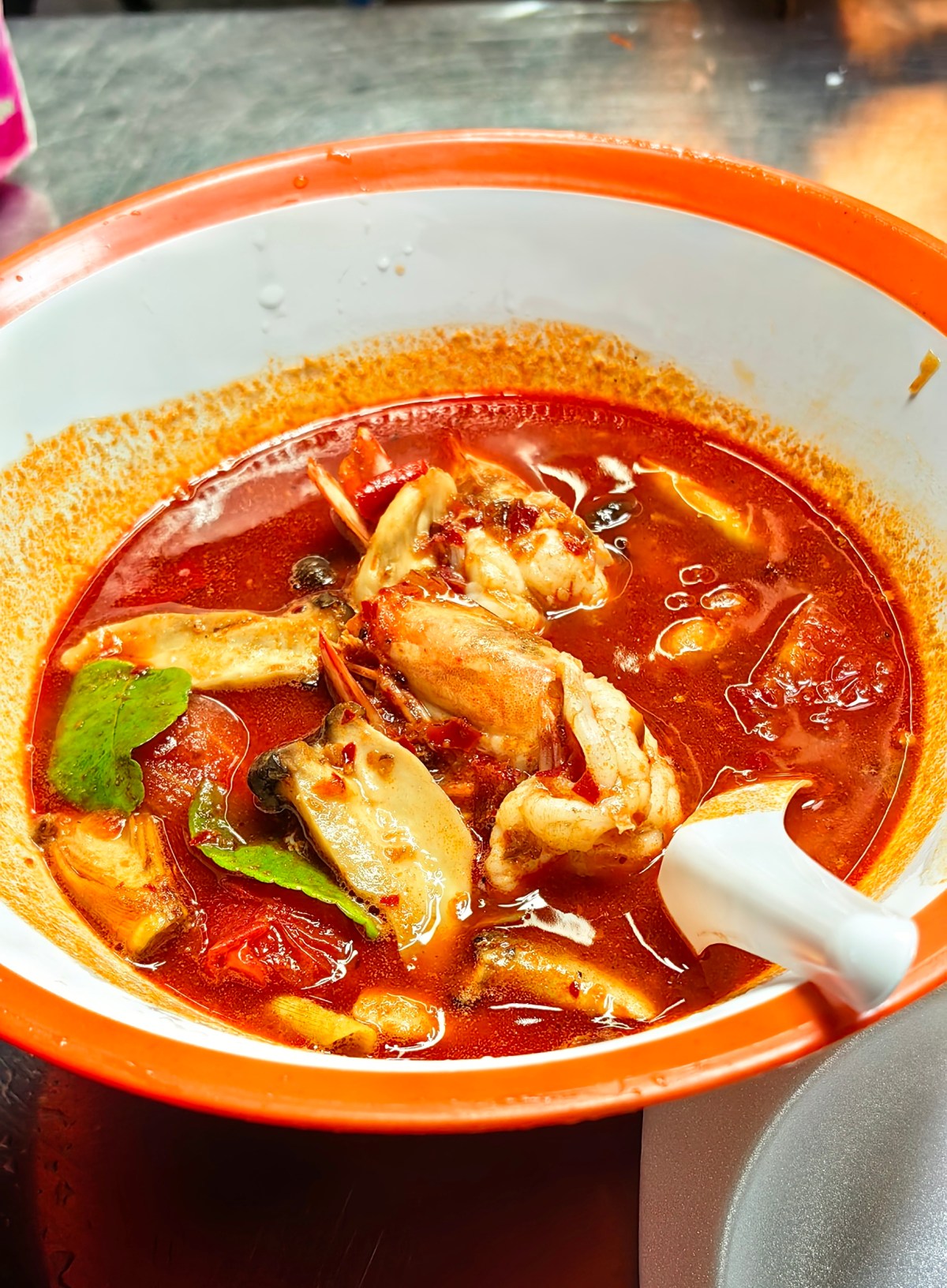
I tried Tom Yum Soup in one of the stalls of this street. It is a famous Thai soup known for its spicy, sour, and aromatic taste. The soup is usually made with a clear broth (often chicken or shrimp-based) that forms the foundation of its flavor. Lemongrass, galangal (similar to ginger but with a more peppery flavor), and kaffir lime leaves are essential aromatics. Some chili pastes are added to give the soup its characteristic spiciness. Fresh lime juice or tamarind paste provides the special sour element. The soup often includes mushrooms, tomatoes, and shrimps. I really liked spicy food so Thai cuisine suite my taste well.

我在这条街上的一家摊位上品尝了冬阴功汤。这是一道著名的泰式汤,以其辛辣、酸涩和芳香的味道而闻名。汤通常用清汤(通常以鸡肉或虾为原料)制成,这是汤的底味。柠檬草、高良姜(类似于姜,但具有更浓的胡椒味)和柠檬叶是必不可少的增香剂。加入一些辣椒酱使汤具有独特的辛辣味。新鲜的柠檬汁或罗望子酱则提供了特别的酸味。汤中通常配有蘑菇、西红柿和虾。我特别喜欢辛辣的食物,所以泰国菜很适合我的口味。

My trip started from the early morning in the next day. My first place to visit was the Wat Pho which is one of the oldest and largest temples in Bangkok. It is famed for its stunning architecture, historical significance, and as the birthplace of traditional Thai massage. In the early morning, there are not so many tourists, it was quite a nice trip.

我的旅程从第二天清晨开始。我首先参观就的是卧佛寺,它是曼谷最古老最大的寺庙之一,以其令人惊叹的建筑、历史地位和传统泰式按摩的发源地而闻名。清晨这里游客并不多,是一次相当不错的旅行。

The architecture style of Wat Pho is a perfect example of traditional Thai temple architecture, characterized by intricate details and vivid colors. Thai temples often include ornate wood carvings, golden statues, ceramic tiles, and glass mosaics depicting religious motifs, mythical creatures, and floral patterns. The use of gold leaf symbolizes spiritual richness and devotion. This kind of architecture can be seen in many temples of Thailand.

卧佛寺的建筑风格是典型的泰国传统寺庙建筑,其特点是细节精致、色彩鲜艳。泰国寺庙通常装饰华丽的木雕、金色雕像、瓷砖和玻璃马赛克,以及描绘宗教的图案、神话动物和花卉图案。金叶的使用象征着精神富足和虔诚。这种类型的建筑在泰国的许多寺庙中都可以看到。

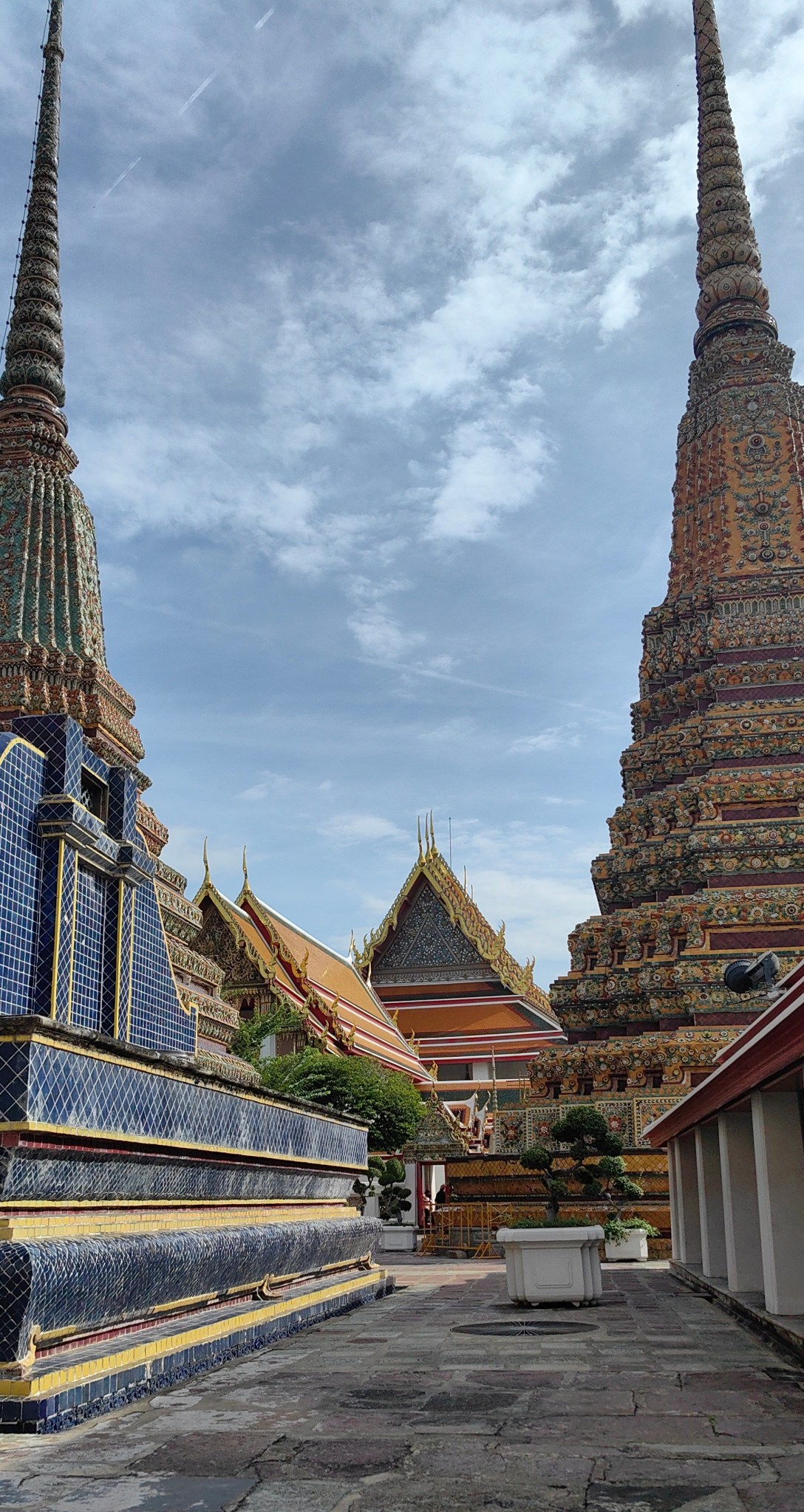
Throughout Wat Pho, I could always find these groups of smaller stupas known as “Chedi Rai.” These chedis contribute to the temple’s grandeur and serve various religious and symbolic purposes. Each chedi is adorned with ceramic tiles, floral patterns, and ornamental details that reflect traditional Thai craftsmanship. The tiered structure typically tapers gracefully towards the top, crowned with a spire.

在整个卧佛寺,我总能发现这些被称为“Chedi Rai”的小型佛塔群。这些佛塔为寺庙增添了宏伟气势,并发挥着各种宗教象征作用。每座佛塔都装饰有瓷砖、花卉图案和装饰细节,体现了泰国的传统工艺。这种分层结构通常向上逐渐变细,顶部是一个细细的尖顶。

The Chedi Rai at Wat Pho enshrine relics of the Buddha or important religious texts. They serve as focal points for worship, symbolizing the presence of the Buddha’s teachings and the spiritual aspirations of the devotees. These Chedi Rais are strategically placed around the main structures of Wat Pho, including the central chedi and the ubosot (ordination hall).

卧佛寺的佛塔里供奉着佛祖的遗物或重要的宗教经文。人们来此纷纷膜拜这个象征着佛陀教义和信徒的精神的圣物。这些佛塔被精心安置在包括中央佛塔和授戒堂等卧佛寺主要建筑周围。

The surfaces of the Chedi Rai are often covered with colorful glazed tiles and decorated with intricate floral motifs, reflective of both Thai and Chinese artistic influences. The use of vivid colors like yellow and orange enhances the visual appearance of these chedis, making them standout features within the temple complex. The exterior surfaces are covered also with stucco and painted in bright colors.

佛塔的表面通常覆盖着彩色釉面瓷砖,并装饰着泰国和中国的艺术共同影响下复杂的花卉图案。黄色和橙色等鲜艳色彩的使用增强了这些佛塔的视觉效果,使它们成为寺庙建筑群中的突出元素。佛塔外表面也覆盖着灰泥,并涂上鲜艳的颜色。

One typical example of them is the Phra Maha Chedi Sri Sanphetdayarn constructed in the reign of King Rama I. The Chedi was lacquered with green glazed china mosaic tiles as green represents Wednesday, the birthday of King Rama I. It was decorated with Singha and lotus. In Buddhism, the Singha is lion which symbolizes strength, courage, and protection; and lotus represents purity and spiritual awakening. This Chedi is 16 meters long and 42 meters high.

这种佛塔的典型例子是图中拉玛一世时期修建的 Phra Maha 塔。这座佛塔用绿色釉面瓷质马赛克瓷砖覆盖表面,绿色代表拉玛一世的生日星期三。佛塔上装饰着 狮子和莲花。在佛教中狮子象征着力量、勇气和保护;莲花代表纯洁和精神觉醒。这座佛塔长16米,高42米。

The ubosot is the main prayer hall where important religious ceremonies and rituals take place. It typically features a multi-tiered roof with intricate gables adorned with mythical creatures and decorative elements. The interior houses the principal Buddha image and is often embellished with murals depicting scenes from the Buddha’s life or Buddhist teachings.

这座佛殿是主要的进行祈祷的大厅,重要的宗教仪式和典礼在此举行。佛殿通常采用多层屋顶,山墙错综复杂,上面饰有神话动物和佛教装饰元素。佛殿内部供奉主佛像,并装饰有描绘佛陀生平或佛教教义的壁画。

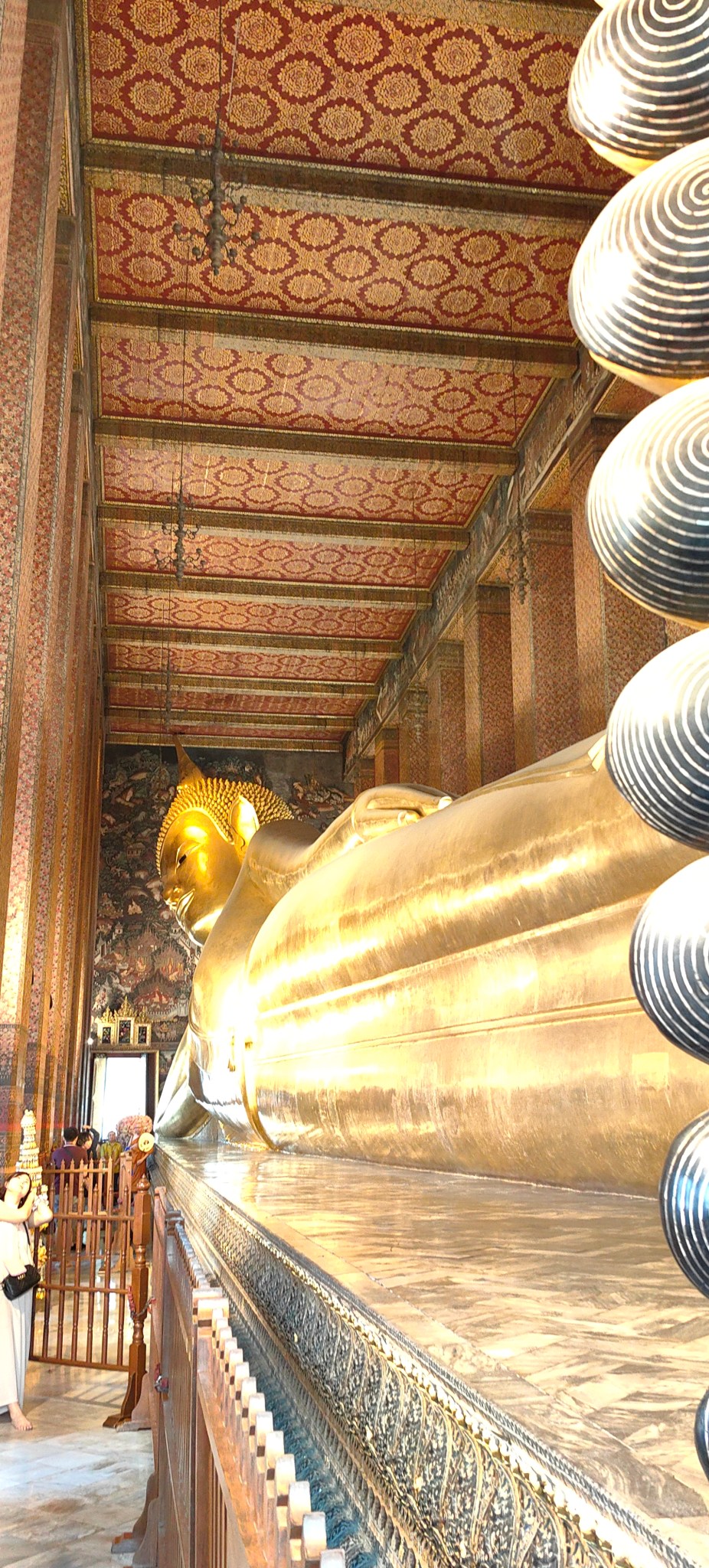
The Reclining Buddha is one of the most iconic attractions of Bangkok. It is an immense statue measuring 46 meters in length and 15 meters in height. The statue is primarily made of brick and stucco and is covered in gold leaf, giving it a radiant appearance. The reclining posture represents the Buddha’s final moments before entering Parinirvana, a state of ultimate liberation and release from the cycle of birth, death, and rebirth. The statue is housed in a specially constructed viharn surrounded by many chedis, and other smaller Buddha statues.

卧佛是曼谷最具代表性的景点。这座巨大的雕像长46米,高15米。雕像主要由砖和灰泥制成,表面覆盖着金箔,看起来光彩夺目。卧佛的姿势代表佛陀进入涅槃前的最后时刻,涅槃是佛陀从生死轮回中得到最终解脱的状态。这座雕像被安置在一座特制的佛殿中,周围环绕着许多佛塔和其他较小的佛像。

Next, I continued to walk towards the grand palace which is not far from the Wat Pho. It is one of Thailand’s most famous landmarks. Constructed in 1782, the Grand Palace served as the official residence of the Kings of Siam for over 150 years. It was also the administrative and religious center of the country. This is the entrance of the palace. It is required to dress trousers when visiting the Grand Palace.

接下来,我继续步行前往离卧佛寺不远的大皇宫。它是泰国最著名的地标。大皇宫建于1782年,作为暹罗国王的官邸已有150多年历史。它也是泰国的行政宗教中心。这里就是景区的入口,参观大皇宫时必须穿长裤。

The Grand Palace complex covers an area of over 218,000 square meters and is surrounded by walls built in 1782. The complex is divided into several courtyards and buildings, including the Outer Court, Middle Court, and Inner Court. The Temple of the Emerald Buddha is located at the Outer Court and it is considered the most sacred Buddhist temple in Thailand. It houses the Emerald Buddha, a highly revered statue carved from a single block of jade.

大皇宫建筑群占地面积超过 218,000 平方米,四周环绕着 1782 年修建的城墙。该建筑群分为包括外廷、中廷和内廷几个庭院。玉佛寺位于外廷,被认为是泰国最神圣的佛教寺庙。寺内供奉着一尊备受尊崇的玉佛,这尊佛像由一整块玉石雕刻而成。

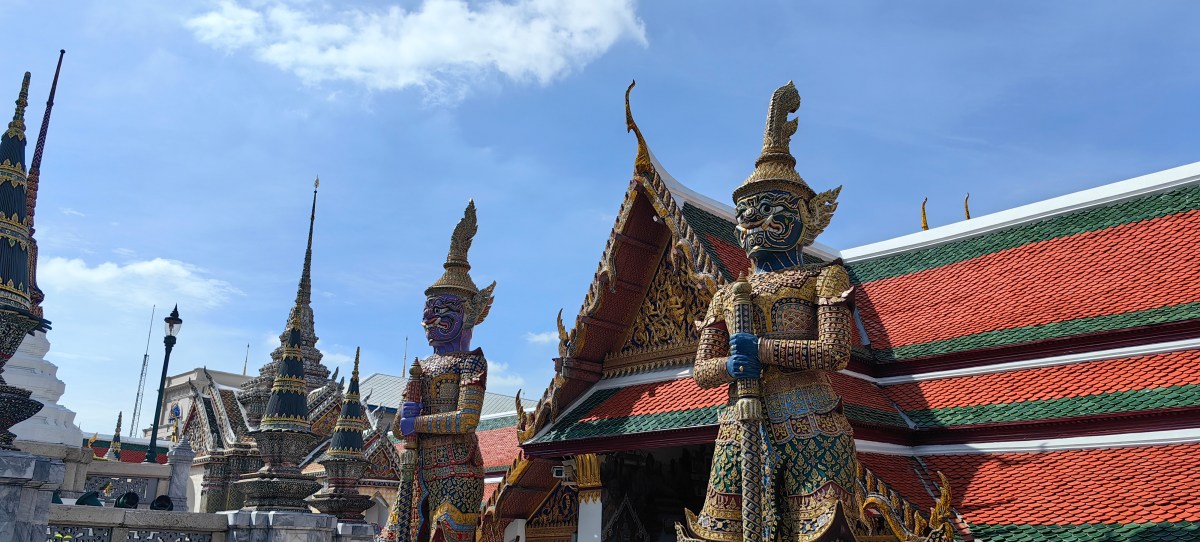
At the entrances of the temple, visitors are greeted by imposing yakshas. These statues are typically depicted with fierce expressions, large eyes, and ornate armor. Each yaksha stands over six meters tall and is brightly colored with intricate designs. They often hold a mace or a club. The yakshas are believed to protect the temple from evil spirits and ensure the sanctity of the Emerald Buddha.

在寺庙的入口处,游客们会看到气势汹汹的夜叉。这些雕像表情凶狠,双眼圆睁,身者华丽的盔甲。每尊夜叉高达六米多,色彩鲜艳,图案复杂。它们手持狼牙棒或大棍。当地人们相信夜叉可以保护寺庙免受恶灵侵扰,并确保玉佛的神圣。

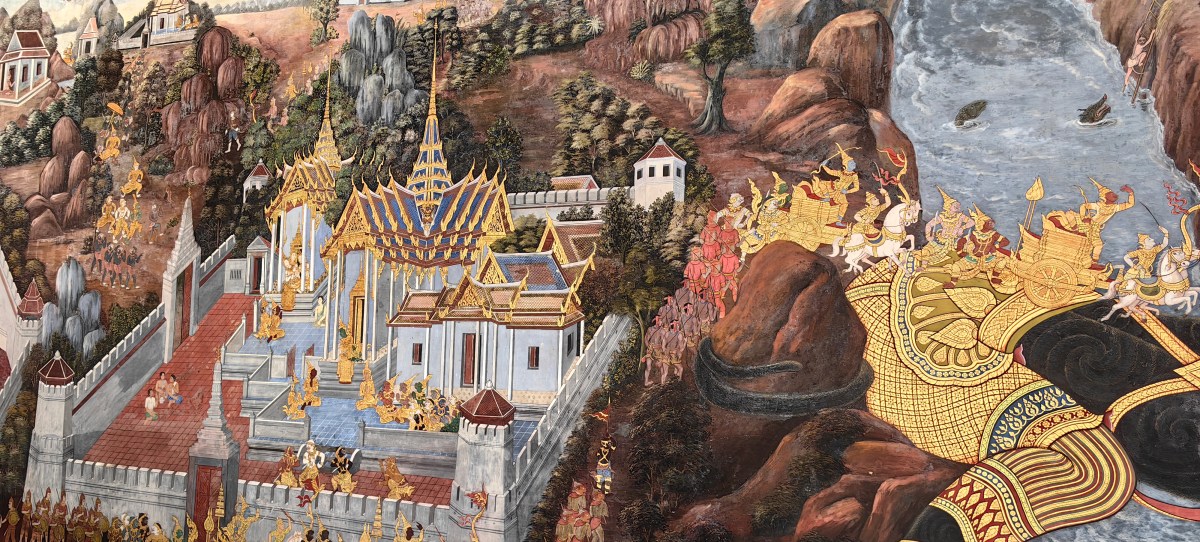
The frescoes of the Temple of the Emerald Buddha (Wat Phra Kaew) are among the most exquisite and detailed artworks in Thai religious architecture. They adorn the interior walls of the temple’s cloister, narrating historical, mythological, and religious stories. The frescoes prominently depict scenes from the Ramakien, the Thai version of the Indian epic Ramayana. This series of murals narrates the story of Prince Rama, depicting his adventures and battles against the demon king Ravana. The frescoes are arranged in a sequential manner, allowing visitors to follow the stories as they walk along the cloister.

玉佛寺的壁画是泰国宗教建筑中最精美细致的艺术品。它们装饰着寺庙回廊的内墙,讲述着历史神话和宗教故事。壁画主要描绘了泰国版的史诗《罗摩衍那》中的场景。这一系列壁画讲述了拉玛王子的故事,描绘了他与魔王拉瓦那的冒险和战斗。壁画按顺序排列,让游客在沿着回廊行走时可以一览故事的来龙去脉。

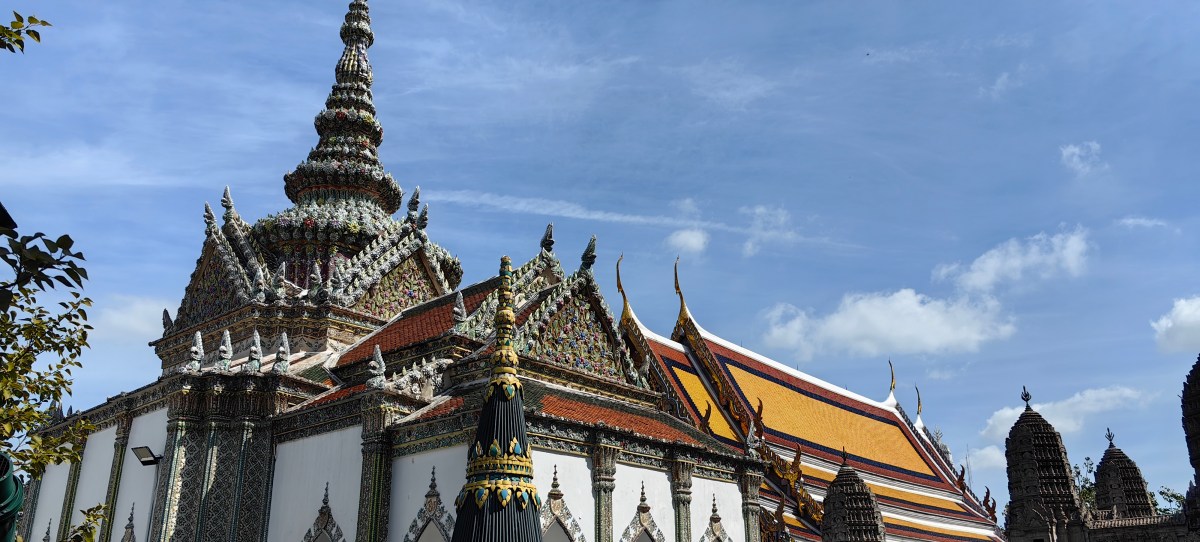
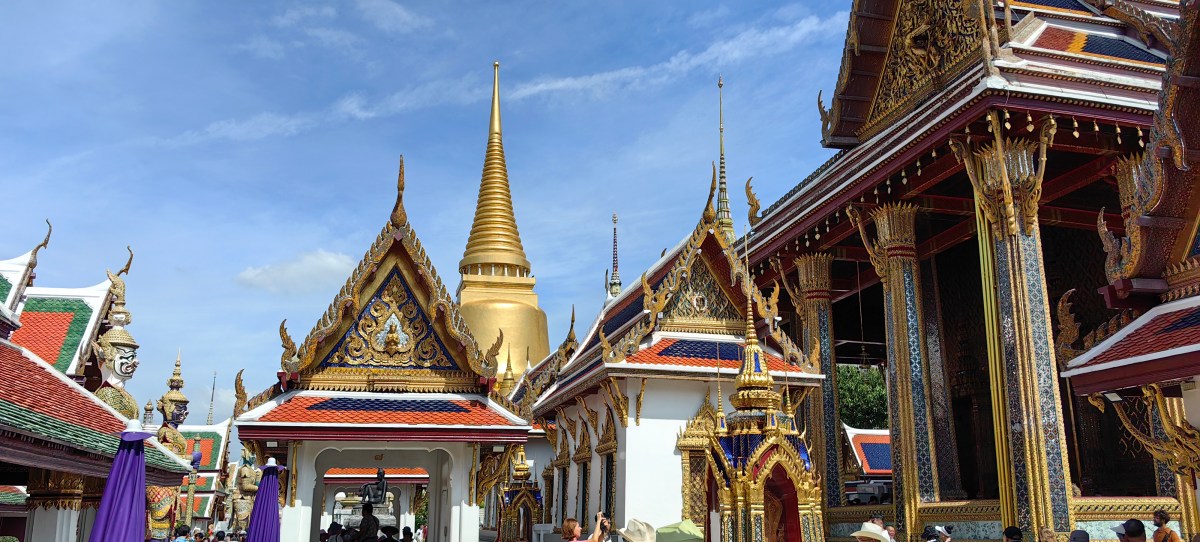
The Phra Ubosot is the main hall and the most sacred building in the temple. It is where the Emerald Buddha is housed. The hall is surrounded by eight boundary stones that demarcate the sacred area for ordination ceremonies. The roof is adorned with multi-tiered layers, featuring elegant chofahs (finials) at the gable ends, resembling the shape of a bird’s tail. The outer walls are decorated with intricate gold leaf patterns and colorful glass mosaics that shimmer in the sunlight. The whole body is really impressive, like a golden treasure.

这座大殿是寺庙的主殿,也是供奉着玉佛的最神圣的建筑。大殿四周有八块界石,划定了受戒仪式的神圣区域。屋顶采用多层装饰,山墙末端饰有形似鸟尾的优雅的尖顶。外墙装饰有复杂的金箔图案和色彩缤纷的玻璃马赛克,在阳光下闪闪发光。整个建筑令人印象深刻,就像一座金色珍宝。

There are some huge golden stupas in the temple. It is a prominent feature within the temple complex, representing the Buddha’s enlightened mind. It is built in the Sri Lankan-style, with a bell-shaped dome and a spire that reaches towards the sky. The stupa is entirely covered in gold tiles, giving it a radiant appearance that symbolizes purity and spiritual wealth. It is surrounded by mythical guardian statues, ensuring its sanctity and reverence. The golden statue in this photo is Kinaree which is mythical creature with the body of a bird and the torso of a human. It represents beauty, grace, and the harmony between the earthly and heavenly realms.

寺庙里有几座巨大的金色佛塔。它是这种寺庙建筑群中一个明显特征,佛塔代表着佛陀的开悟心灵。它采用斯里兰卡风格建造,有一个钟形圆顶和一个直抵苍穹的尖顶。佛塔表面完全覆盖着金色的瓦片,使其看起来光芒四射,象征着纯洁和精神财富。它周围环绕着神话中的守护雕像,确保了它的神圣地位。这张照片中的金色雕像是名为Kinaree,是一种神话生物,有着鸟的身体和人的躯干。它代表着美丽优雅以及人间和天界之间的和谐。

The Royal Pantheon is really impressive, it is a tall, elegant well decorated building with a central spire, surrounded by smaller spires, embodying the traditional Thai architectural style. It serves as a shrine for statues of past kings from the Chakri dynasty. The structure is richly adorned with intricate carvings, golden ornaments, and vibrant glass inlays.

皇家万神殿也令人印象深刻,它是一座高大优雅、装饰精美的建筑,中央有一个尖塔,周围环绕着较小的尖塔,体现了传统的泰国建筑风格。它是存放查克里王朝历代国王雕像的神殿。该建筑装饰华丽,有复杂的雕刻、金色饰品和鲜艳的玻璃镶嵌。

In this temple, I could see many statues of garudas, nagas (serpents), and other mythological beings, each symbolizing different meanings. Garuda is a mythical bird-like creature that appears in both Hindu and Buddhist mythology. It is often depicted as having the body of a bird with human features. It has large wings with a powerful beak, and human-like arms and legs. In Buddhism and Hinduism, Garuda is known as the mount of Lord Vishnu. In Thai culture, Garuda is a symbol of the monarchy and is often seen in royal emblems.

在这座寺庙里,我看到了许多迦楼罗、那伽和其他神话生物的雕像,每个雕像都象征着不同的意义。迦楼罗是一种神话中的鸟类生物,出现在印度教和佛教神话中。它通常被描绘成拥有鸟的身体和人类的特征。它有巨大的翅膀和强有力的喙,还有像人类一样的手臂和腿。在佛教和印度教中,迦楼罗被称为毗湿奴神的坐骑。在泰国文化中,迦楼罗是君主制的象征,经常出现在皇家徽章上。

The ticket of Grand Palace is 500 Baht, and it is worthy to visit it. Most of the time is spent in the temple of the Emerald Buddha It is a real masterpiece of Thai architecture, where each structure and decorative element contributes to the temple’s sacred atmosphere and historical significance. The unique architecture style is absolutely different from what I have seen in Europe and China.

大皇宫的门票是500泰铢,非常值得一游。我在这里大部分时间都花在玉佛寺。这是泰国建筑的真正杰作,每一个结构和装饰元素都为这座寺庙增添了神圣气氛和历史意义。这种独特建筑风格与我在欧洲和中国看到的完全不同。

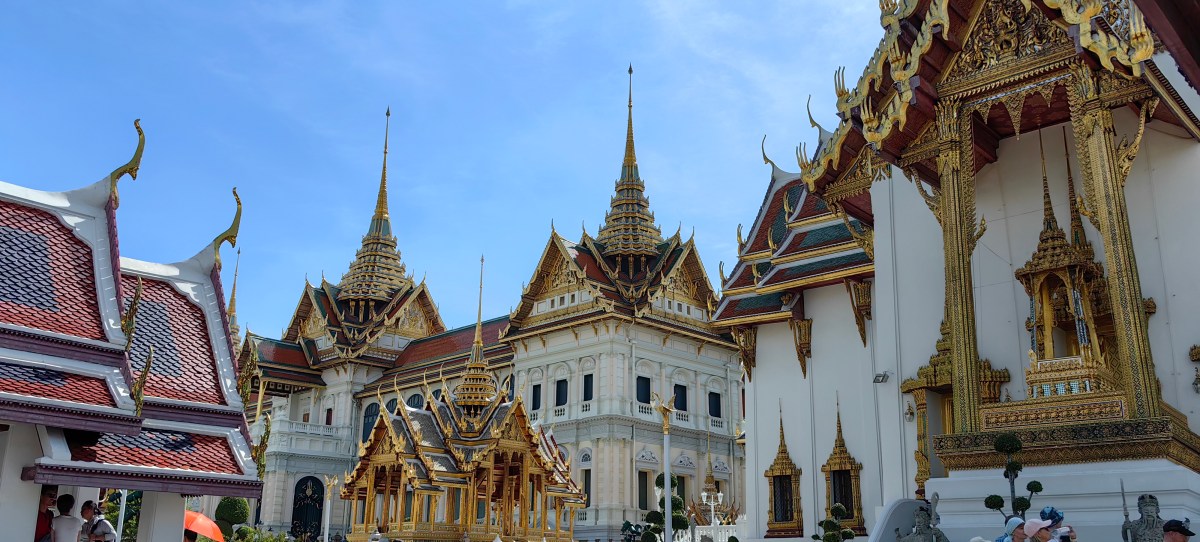
The Middle Court is the heart of the Grand Palace, where the king’s official residences and important state buildings are located. It was the primary area for royal ceremonies and state functions, including coronations and official banquets. The Chakri Maha Prasat Throne Hall is a remarkable structure blending Thai and Western architectural styles. It was commissioned by King Rama V and built between 1876 and 1882. It served as a venue for the king to receive foreign dignitaries and host important state functions. Its facade is designed in the Renaissance and Neo-Classical styles, characterized by columns, arches, and symmetrical layouts. The roof is adorned with intricately decorated gables and chofahs, which are bird-like ornaments commonly found in Thai architecture.

中庭是大皇宫的中心,国王的官邸和重要的建筑都位于此。这里是举行皇家仪式和包括加冕典礼和官方宴会等政府活动的主要场所。查克里玛哈普拉萨王座大厅是一座融合了泰国和西方建筑风格的建筑,由拉玛五世国王下令建造,建于1876年至1882年间。它是国王接见外国政要和举办重要国家活动的场所。其外观采用文艺复兴和新古典主义风格,以柱子拱门和对称布局为特点。屋顶装饰着精美的山墙和鸟形装饰,这些鸟形装饰在泰国建筑中很常见。

The Phra Thinang Dusit Maha Prasat at the right side of the photo was commissioned by King Rama I in 1790, soon after the establishment of Bangkok as the new capital of Thailand. Originally built as a throne hall for various royal ceremonies, it is also used for the lying-in-state of deceased members of the royal family, where the body is displayed for public homage before the royal cremation. It is a classic example of Rattanakosin architectural style, characterized by its elevated platform, multi-tiered roof. The exterior walls are adorned with intricate stucco reliefs and gilded ornaments, showcasing traditional Thai craftsmanship.

这张照片右侧的 Phra Thinang Dusit Maha Prasat 是1790年曼谷成为泰国新首都后不久,由拉玛一世下令修建的。它最初是作为各种皇家仪式的王座大厅而建,也用于安放已故皇室成员的遗体,在皇家火葬之前,遗体会在这里供公众瞻仰。它是拉达那哥欣建筑风格的经典范例,其特点是高台、多层屋顶。外墙装饰着复杂的灰泥浮雕和镀金装饰,展现了泰国传统的工艺。

The area in the background is the Inner Court which was the residential area for the king’s consorts, daughters, and female attendants. It was a highly private and restricted area. The gardens of the Grand Palace are meticulously designed and maintained. Lush and well-maintained lawns are interspersed with flowerbeds. The extensive use of topiary, with various plants and shrubs carefully trimmed into shapes such as animals, mythical creatures, and geometric patterns add varieties of colors to this palace.

这个区域背景是大皇宫内院,是国王的妃子、女儿和女侍从的居住区。这是一个高度私密和游客受限制的区域。大皇宫的花园经过精心设计和维护。郁郁葱葱、维护良好的草坪上点缀着花坛。花园大量使用修剪过的植物,各种植物和灌木被精心修剪成动物、神话生物和几何图案等形状,为这座宫殿增添色彩。

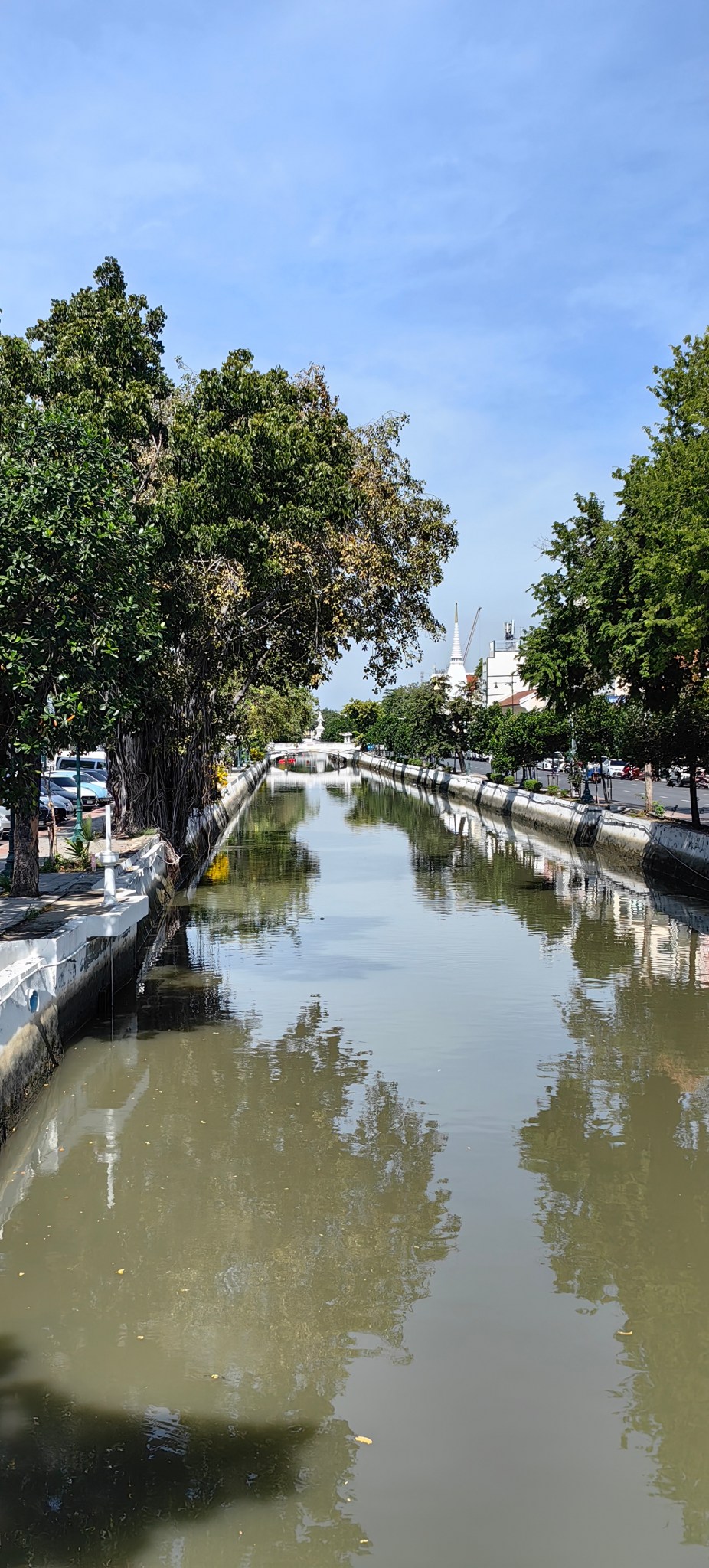
After I quitted the Grand Palace, I took some time to take some street view of Bangkok. This city often referred to as the “City of Water,” is a metropolis interwoven with an extensive network of canals, known locally as “khlongs.” The network of canals play a vital role in transportation.

离开大皇宫后,我花了点时间拍了拍曼谷的街景。这座城市通常被称为“水城”,是一座被当地人称为“khlongs”的众多运河交织在一起的大都市。运河网络在交通运输中发挥着至关重要的作用。

There are some charming public parks that offer a tranquil retreat from the hustle and bustle of the city. Saranrom Park was originally part of the Saranrom Palace, built in the mid-19th century during the reign of King Rama IV. The palace served as a residence for royal family members. The surrounding gardens were later transformed into a public park, opened to the public in the early 20th century during the reign of King Rama V.

曼谷街头有一些迷人的公园,是远离城市喧嚣的宁静休憩之所。萨兰隆公园最初是萨兰隆宫的一部分,建于19世纪中叶,拉玛四世统治时期。这座宫殿曾是皇室成员的住所。周围的花园后来被改造成公园,并于20世纪初拉玛五世统治时期向公众开放。

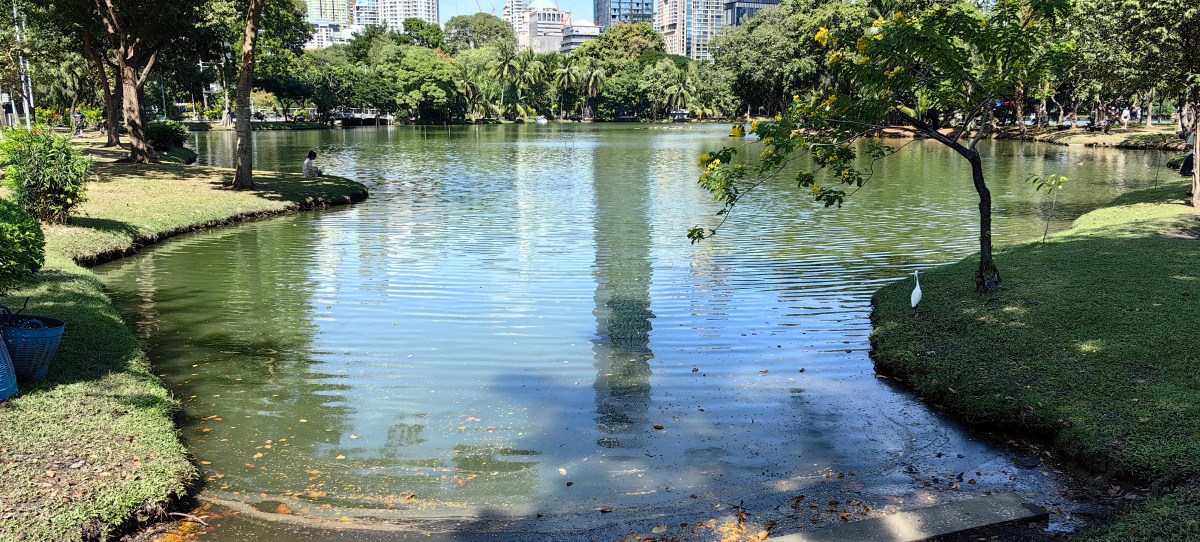
The afternoon of Bangkok was scorching and not suitable for travel. I took the metro to the Lumphini Park and had some short rest here before back to hotel. The monument of King Rama VI is a prominent landmark situated at the entrance of Lumphini Park. The statue of King Rama VI is a bronze sculpture that depicts the king in full military uniform, symbolizing his role as a modernizer and a leader of the nation. King Rama VI, who reigned from 1910 to 1925, is celebrated for his efforts to modernize Thailand, promote education, and support cultural development.

曼谷的下午炙热难耐,不适合出行。我坐地铁去了伦披尼公园,在这里稍事休息后就回酒店了。伦披尼公园入口处有一座拉玛六世国王的纪念碑。拉玛六世国王的雕像是一尊青铜雕塑,描绘了国王身着军装的英姿,象征着他作为现代化的推动者和国家领袖。拉玛六世国王于1910年至1925年在位,他致力于泰国的现代化,推动教育,支持文化发展。

Lumphini Park, often referred to as the “green lung” of Bangkok, is one of the largest public parks in the city. The park spans over 142 acres, offering vast lawns, tree-lined pathways, and a variety of plant species. It has a large artificial lake where visitors can rent paddleboats and rowboats. The park is home to various wildlife species, including lizards, turtles, and numerous birds.

伦披尼公园通常被称为曼谷的“绿肺”,是曼谷最大的公园之一。公园占地 142 英亩,拥有宽阔的草坪、绿树成荫的小径和各种植物。公园内有一个大型人工湖,游客可以在那里租用脚踏船和划艇。公园里栖息着各种野生动物,包括蜥蜴、乌龟和众多鸟类。

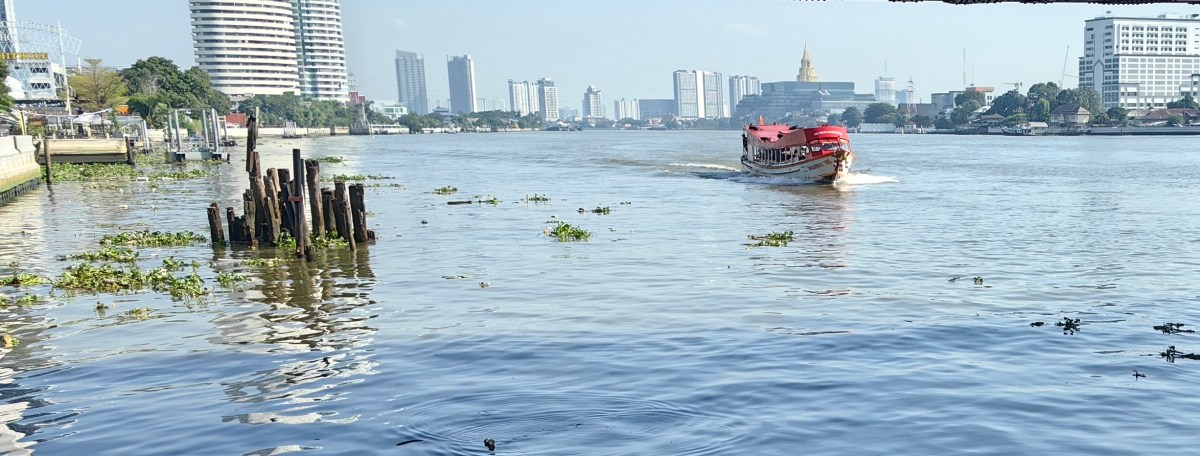
After a night’s rest, I started the trip of second day. My hotel is located at a pier. Similar to Venice and Rotterdam, Bangkok has a public transport system of boats which play a crucial role in navigating the city’s extensive network of waterways, offering both locals and tourists a convenient and scenic way to travel between various destinations. The Chao Phraya Express Boat is one of the most popular modes of public transport in Bangkok. It operates on the Chao Phraya River and has several routes that connect different parts of the city.

经过一晚的休息,我开始了第二天的行程。我的酒店位于码头边。与威尼斯和鹿特丹类似,曼谷的公共交通系统由船只构成,船只在广泛的水道网络中起着至关重要的作用,为当地人和游客提供了一种便捷且风景优美的交通方式。湄南河快线是曼谷最受欢迎的公共交通工具之一。它在湄南河上运行,有多条路线连接城市的不同地区。

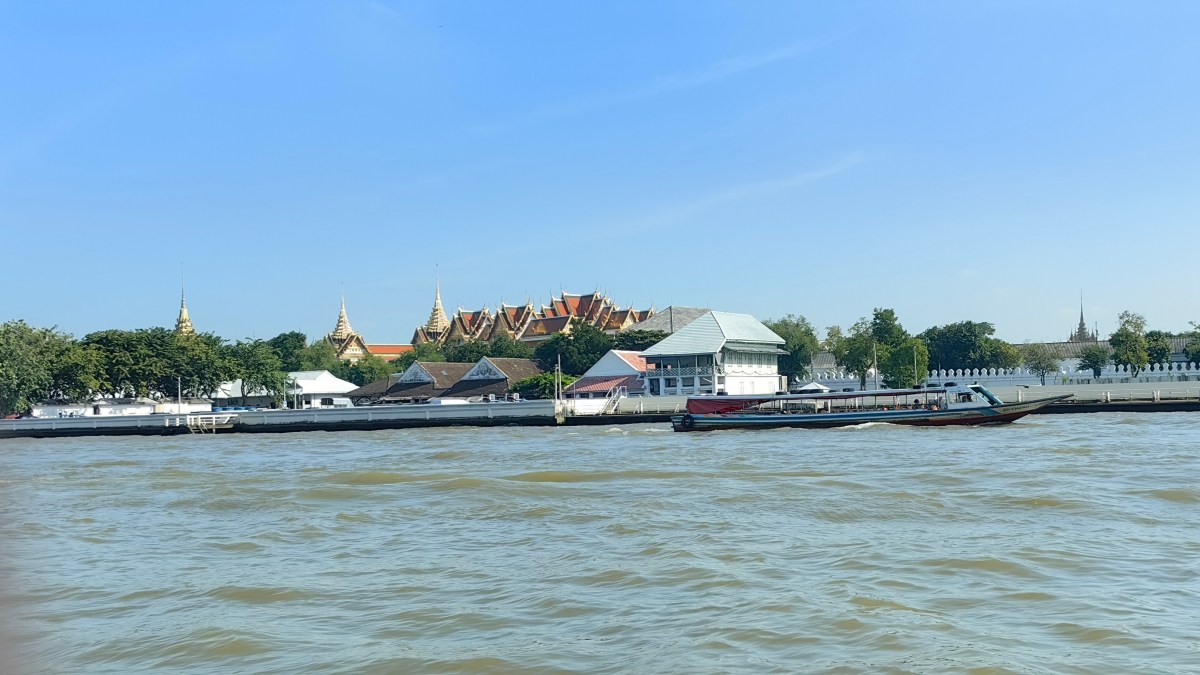
On the boat I could get a panoramic view of the city. The landscape along the Chao Phraya River offers a blend of modern skyscrapers, historic temples, bustling markets, and traditional Thai architecture. Such a boat trip is really a relaxing activity that relieved my fatigue of work.

在船上我可以一览整个城市的风景。湄南河沿岸的风景融合了现代化的摩天大楼、历史悠久的寺庙、繁华的市场和传统的泰式建筑。这样的乘船旅行确实身心放松可以有效缓解工作的疲劳。

Along the Chao Phraya River, I could see the facade of Phra Sumen Fort easily. The fortress is an octagonal structure made of brick. It has three levels with battlements and embrasures designed for cannons and other defensive artillery. It was constructed in 1783 during the reign of King Rama I, the founder of the Chakri Dynasty. The fort was strategically located along the Chao Phraya River to guard the city against naval attacks and to control river traffic. Tourist could explore a piece of Bangkok’s past by visiting it.

沿着湄南河可以一眼看到这座Phra Sumen城堡的外墙。这座堡垒是由砖制成,八角形结构。总共有三层其中包括为大炮和其他防御性火炮设计的发射孔。它于1783年在查克里王朝的创始人国王拉玛一世统治期间建造。这座堡垒的战略地位非常重要,防止曼谷免受海军袭击并扼守湄南河河流交通。游客可以通过参观它了解曼谷的过去。

As Bangkok has developed rapidly in the 20th century, modern skyscrapers have emerged along the banks of the Chao Phraya River. Areas such as IconSiam and Sathorn feature sleek office towers, shopping malls, and residential complexes that reflect the city’s rapid economic growth and urbanization these years. The scenery here is similar to the Singapore river.

随着曼谷在20世纪的迅速发展,现代摩天大楼沿着湄南河的河岸如雨后春笋般出现。 Iconsiam和Sathorn等地区的办公大楼,购物中心和公寓大楼鳞次栉比,这些地区反映了曼谷近年内的高速经济增长和城市化。这片河岸的风景特别类似新加坡河沿岸。

The Chao Phraya River is lined with some of Bangkok’s most famous temples including Wat Arun. Wat Arun, also known as the Temple of Dawn, is one of Bangkok’s most iconic landmarks and a significant cultural and religious site. It is believed to have been founded in the 17th century during the Ayutthaya period, but major renovations and expansions took place during the reign of King Rama II and King Rama III of the Rattanakosin Kingdom. The temple’s name translated to “Temple of Dawn,” is named after Aruna, the Hindu god of dawn.

湄南河沿岸分布了诸多曼谷最著名的寺庙,其中包括黎明神庙,它是曼谷最具标志性的地标之一,也是重要的文化宗教遗址。它是在17世纪阿瑜陀耶王朝时期建立的,并在拉玛二世和三世统治期间进行了重大翻新和扩大。这座寺庙的名字被翻译成“黎明神庙”,以黎明之神阿鲁纳(Aruna)的名字命名。

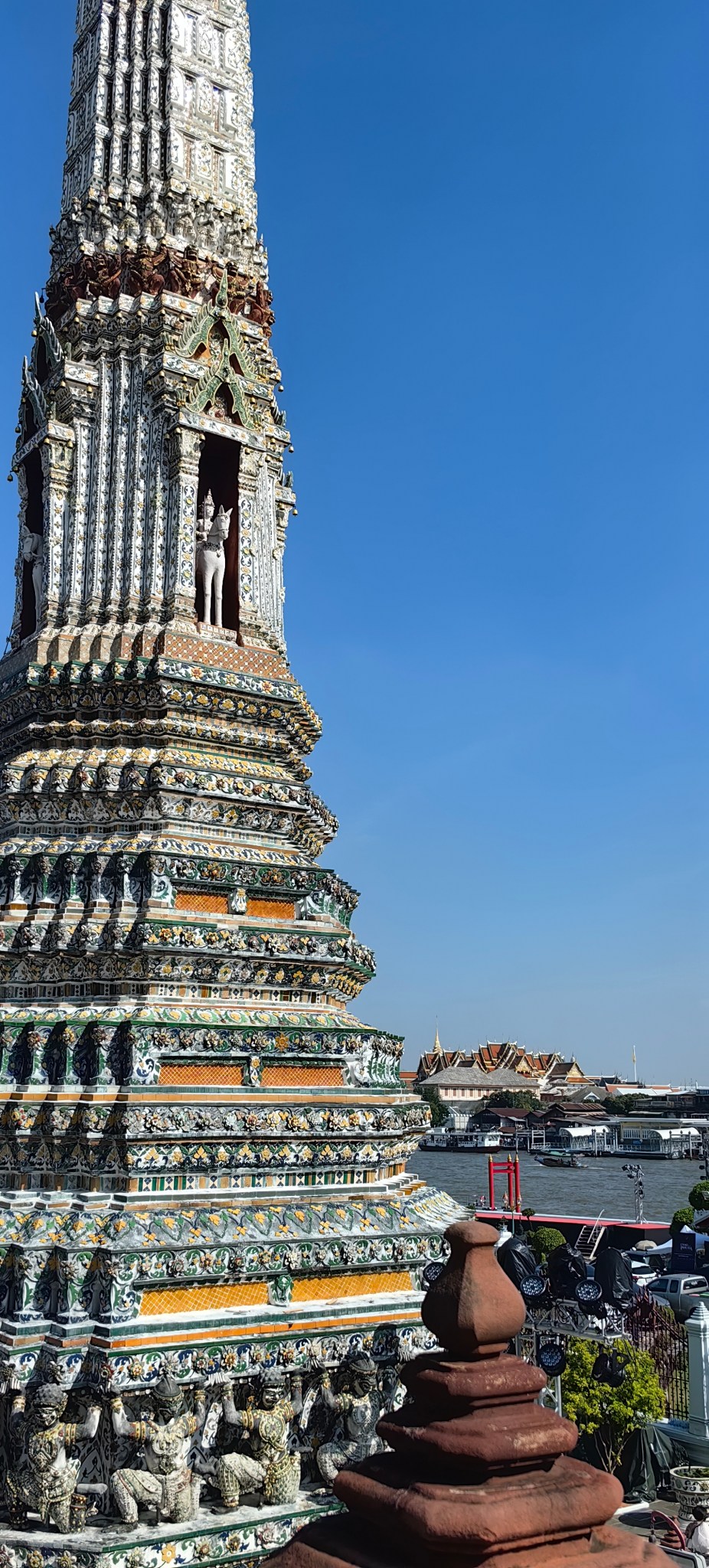
The most distinctive feature of Wat Arun is its central prang, a towering spire that rises over 70 meters high. The prang is decorated with intricate ceramic tiles and fragments of Chinese porcelain, giving it a shimmering appearance. The prang is surrounded by four smaller satellite prangs, each adorned with ornate sculptures and colorful patterns that depict mythical figures and stories from Buddhist cosmology.

黎明寺最显著的特征是中央的高塔,这是一座高达70多米的尖塔,塔顶上装饰着精美的瓷砖和瓷器散片,看起来闪闪发光。高塔周围有四个较小的小塔,每个小塔都装饰着华丽的雕塑和色彩鲜艳的图案,描绘了佛教宇宙观中的神话人物和故事。

One of the most striking features of Wat Arun’s prang is the use of colorful ceramic tile mosaics. These tiles are arranged in floral patterns and intricate designs, incorporating shades of blue, green, yellow, and white. The tiles form a shimmering surface that catches the sunlight, giving the prang its distinctive appearance observed from faraway. The ceramic tiles also depict symbols and stories from Thai mythology such as heavenly beings, mythical creatures, and scenes from the life of the Buddha.

黎明寺的佛塔最引人注目的特色就是其使用了色彩缤纷的马赛克瓷砖。这些瓷砖以花卉图案和复杂的设计排列,融合了蓝绿黄白色的色调。这些瓷砖形成了一个闪闪发光的亮面,远远看去仿佛具有独特的外观。瓷砖上还描绘了例如天神、神话生物和佛祖生平的场景等泰国神话中的符号和故事。

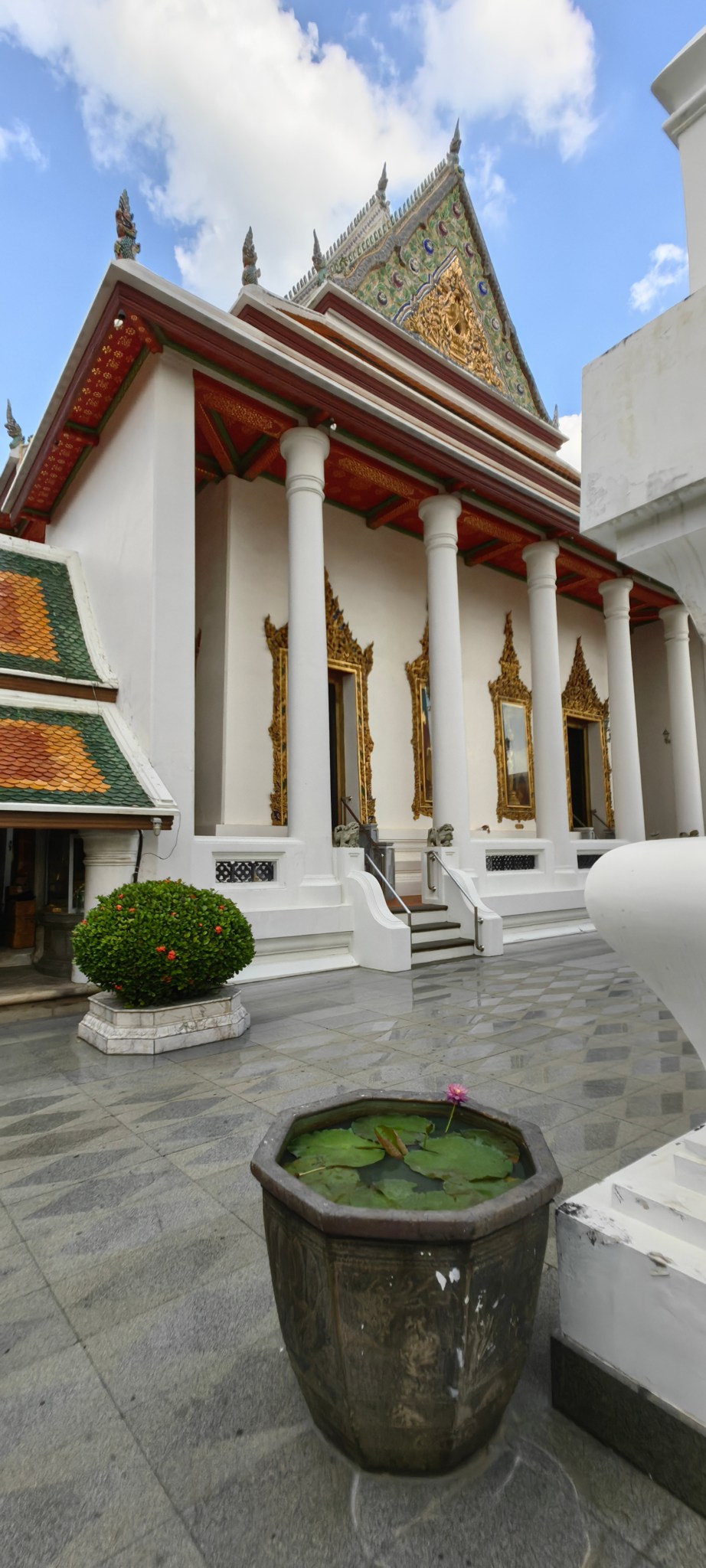
The temple complex includes an ubosot, or ordination hall, where religious ceremonies and rituals are conducted. It follows traditional Thai temple architecture, characterized by its rectangular shape and multi-tiered roof structure. The roof is adorned with intricate gables (chofah) and tiered finials (lud khan mai). Similar to the prang, the ubosot is constructed primarily of brick and covered with stucco. The exterior walls are embellished with delicate floral and geometric patterns rendered in stucco relief.

寺庙建筑群包括图中的授戒堂,用于举行宗教仪式和典礼。它遵循传统的泰国寺庙建筑风格,其特点是矩形和多层屋顶结构。屋顶装饰有复杂的山墙 和分层的尖顶。与主塔类似,授戒堂主要由砖块建造,并覆盖有灰泥。外墙上装饰有精致的花卉和几何图案,这些图案以灰泥浮雕呈现。

Surrounding the central prang are various smaller structures, pavilions, and small towers called Phra Prang which is a Khmer-style tower built to house relics of the Buddha. Wat Arun has long been associated with the Thai monarchy. It has received royal patronage over the centuries, highlighting its importance in Thai cultural and religious life. This temple and the Grand Palace are the two most famous sites in Bangkok, overcrowded by tourists from different countries.

中央的佛塔周围有各种较小的建筑、亭子和称为Phra Prang 的小塔,这是一座高棉风格的塔,用来存放佛祖的遗物。黎明寺长期以来一直与泰国皇室紧密相连。几个世纪以来,它一直受到皇家赞助,凸显了它在泰国文化和宗教生活中的重要性。这座寺庙和大皇宫是曼谷最著名的两个景点,人山人海挤满了来自不同国家的游客。

On the street of Bangkok, I can always see many temples and Buddhism related building. In Thai culture, temples are more than just places of worship. They serve as community centers where people gather for festivals, and ceremonies. The Thai monarchy has historically been a strong patron of Buddhism. Many temples in Bangkok were built under royal sponsorship.

曼谷的街道上,随处就能看到许多寺庙和与佛教有关的建筑。在泰国文化,寺庙不仅仅是礼拜场所。它们也是人们聚集在一起庆祝节日和举行仪式的社区中心。泰国皇室历来是佛教的坚定支持者。曼谷的许多寺庙都是在王室的赞助下建造的。

In many temples of Bangkok, I could find lotus planted in a large water jar. According to Buddhist lore, when the Buddha was born, lotus flowers bloomed wherever he stepped. This association makes the lotus an especially sacred flower in Buddhism. In Buddhist teachings, the lotus is not only a decoration but represents spiritual purity, resilience, and enlightenment.

曼谷的许多寺庙里,我都能看到大水缸里栽种的莲花。根据佛教传说,佛陀诞生时,他所到之处,莲花盛开。这种关联使得莲花在佛教中成为一种特别神圣的花。在佛教教义中,莲花不仅是一种装饰品,还代表着精神的纯洁、坚韧和启蒙。

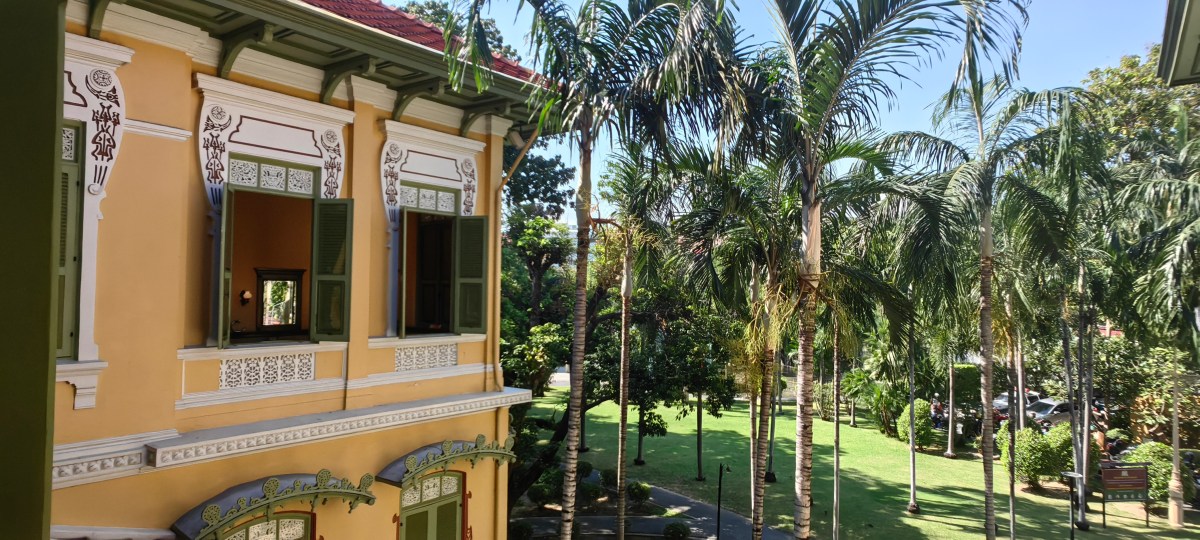
Apart from the temples, I have visited some historic sites and landmarks. This Parutsakawan Palace has played an important role in Thai history and politics. It is not so well-known for the tourists, and I was the only visitors on that day. It was constructed in 1904 during the reign of King Chulalongkorn (Rama V). The palace served as the residence of Prince Paribatra and his family. Following the 1932 Siamese Revolution, which transitioned Thailand from an absolute monarchy to a constitutional monarchy, Parutsakawan Palace was confiscated by the government. The palace was repurposed for various governmental uses and has since housed different government offices and institutions.

除了寺庙,我还参观了一些著名的历史遗迹和地标。这座帕鲁萨卡万宫在泰国历史和政治中扮演着重要角色。对游客来说它显得默默无闻,那天我是唯一的游客。这座建筑建于1904年拉玛五世(朱拉隆功国王)统治时期。这座宫殿是帕里巴特拉王子及其家人的住所。1932年暹罗革命后,泰国从君主独裁制转变为君主立宪制,帕鲁萨卡湾宫被政府没收。这座宫殿被改作各种政府用途,此后曾设有不同的政府办公室和机构。

The architecture of Parutsakawan Palace reflects a blend of European and Thai styles, which was common during the reign of King Chulalongkorn. The design incorporates elements of neoclassical and Renaissance architecture, which were popular in France at the time.

帕鲁萨卡万宫的建筑融合了欧洲和泰国风格,这种风格在朱拉隆功国王统治时期非常普遍。其设计融合了当时在法国流行的新古典主义和文艺复兴时期的建筑元素。

The palace is a symbol of the transition from absolute monarchy to constitutional monarchy and the associated socio-political transformations. Today, it serves as a cultural and educational resource. It is a site where visitors can learn about Thailand’s history, architecture, and cultural heritage.

这座宫殿是君主专制向君主立宪制过渡的象征,也是当时社会政治变革的象征。如今,它已成为一个文化和教育资源。游客可以在这里了解泰国的历史、建筑和文化遗产。

Despite the European influence, the palace also incorporates traditional Thai architectural elements. These include the use of traditional Thai rooflines, decorative motifs, and intricate woodwork. The integration of Thai and European styles reflects the cultural exchange and modernization efforts of King Chulalongkorn.

尽管受到欧洲的影响,但宫殿也融入了传统的泰国建筑元素。这些元素包括使用传统的泰国屋顶线条、装饰图案和复杂的木工手艺。泰国和欧洲风格的融合反映了朱拉隆功国王为了文化交流和泰国现代化的努力。

Opposite to the palace is the Plaza of King Chulalongkorn. The plaza was established to honor King Chulalongkorn’s legacy and his contributions to the nation. The centerpiece of the plaza is a grand equestrian statue of King Chulalongkorn which was created by the French sculptor Georges Saulo and erected in 1908. The plaza is surrounded by important governmental buildings, which could not be visited by tourists.

宫殿对面是朱拉隆功国王广场。广场是为了纪念朱拉隆功国王对国家的贡献而建立的。广场的中心是一座宏伟的国王骑马雕像,由法国雕塑家乔治·索洛创作,于1908年竖立在广场中心。广场周围是重要的政府建筑,游客均不能参观。

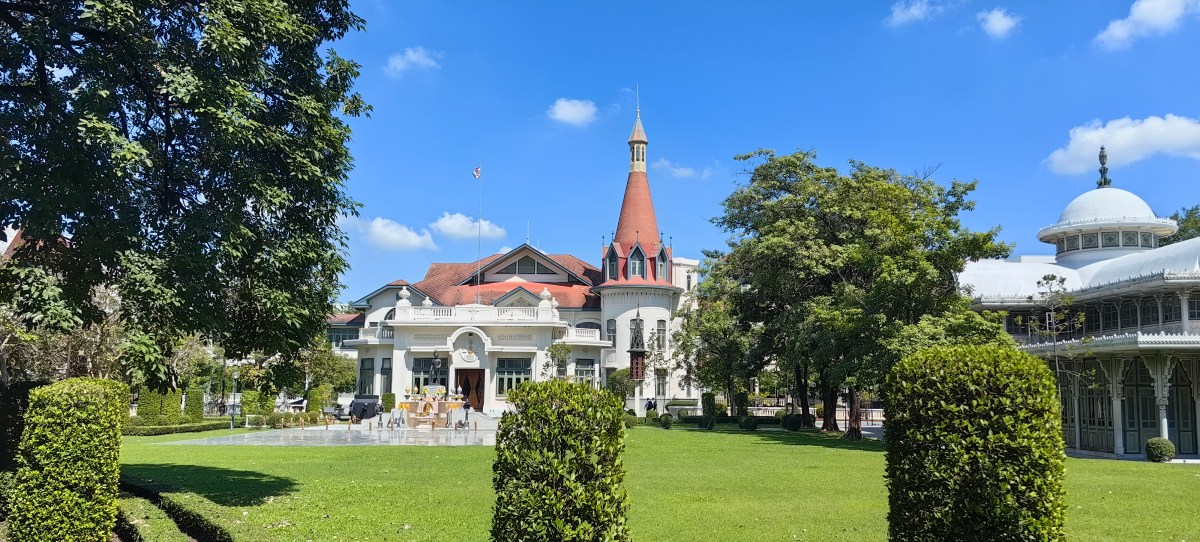
Another historical site with significant cultural, architectural, and historical value is the Phaya Thai Palace. It was built in 1909 during the reign of King Chulalongkorn. It showcases a blend of European and Thai architectural styles as well which is a symbol of Thailand’s transition into the modern era. There is a beautifully landscaped gardens in front of the main buildings, which include ornamental plants, fountains, and pathways. Today, Phaya Thai Palace serves as a cultural and educational site. It offers visitors insights into Thailand’s royal history.

另一个具有重要文化、建筑和历史价值的遗迹是披耶泰宫。它建于1909年朱拉隆功国王统治时期,向游客展示了欧洲和泰国建筑风格的融合,亦是泰国向现代过渡的象征。主楼前有一个风景优美的花园,里面有各种观赏植物、喷泉和小径。如今,披耶泰宫是一个文化和教育场所,令游客能够充分了解泰国皇家历史。

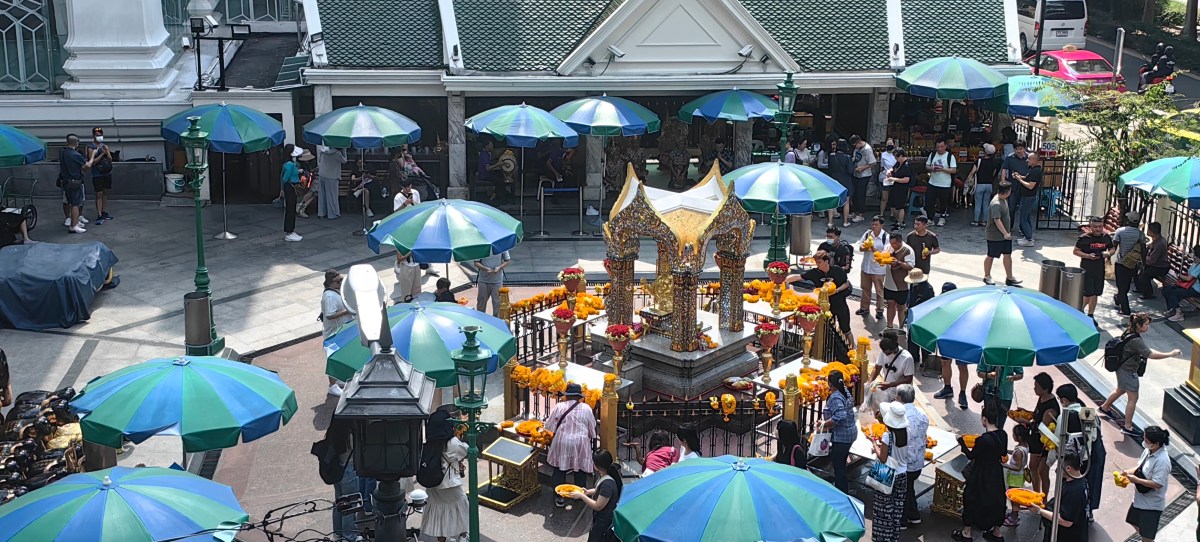
Before I left Bangkok, the last place to visit was the Erawan Shrine. It is one of Bangkok’s most famous religious landmarks. Located near the bustling shopping Central World, this shrine is dedicated to Phra Phrom, the Thai representation of the Hindu god Brahma. The Erawan Shrine features a statue of Phra Phrom (Brahma) with four faces, each representing different aspects of life: peace and health, good fortune, prosperity, and protection against evil. The statue is adorned with intricate gold leaf and is positioned in a small, open-air pavilion that allows worshippers to walk around it and make offerings from all sides. Visitors from all over the world came here to pray for good fortune, success, and health.

离开曼谷前,最后一个参观的景点就是四面佛神社。它是曼谷最著名的宗教地标之一。这座神社位于繁华的购物中心Central World附近,供奉着四面佛,即泰国版本的印度教梵天。四面佛的梵天雕像面朝四个方向,每个方向代表着生活的不同方面:健康、财富、事业和平安。雕像装饰着精致的金箔,位于一个小型露天亭子里,信徒们可以绕着雕像走一圈,从四面进行供奉。来自世界各地的游客都会来到这里祈福。

CentralWorld in Bangkok is one of the largest shopping malls in Thailand and Southeast Asia. It has hosted numerous events, including concerts and fashion shows. On the day of my visit, there are many Pikachus that attracts fans of all ages. Before I took Metro to the airport, I had a lunch here. I really enjoyed the Thailand food with spicy and sour taste.

曼谷的 CentralWorld 是泰国和东南亚最大的购物中心之一,曾举办过包括演唱会和时装秀等许多活动。我旅游的当天,这里有很多皮卡丘玩具,吸引了各个年龄段的粉丝。在乘地铁去机场之前,我在这里吃了午饭,特别很喜欢酸辣口味的泰国菜。

Green Papaya Salad (Som Tum) is a classic Thai dish known for its mixing flavors and refreshing taste. It’s a popular street food and is often enjoyed as a side dish. The salad is a perfect blend of spicy, sour, sweet, and salty flavors. Its spicy taste is from the bird’s eye chilies. The sour taste is from the fresh lime juice. The sweet taste is from the palm sugar. The salty taste is from the fish sauce. It is a must-try dish for anyone interested in experiencing authentic Thai cuisine.

青木瓜沙拉(Som Tum)是一道经典的泰国菜,以其混合口味和清爽口感而闻名。它是一种受当地人欢迎的街头小吃,经常作为配菜。沙拉完美融合了辣酸甜咸四味。它的辣味来自鸟眼辣椒。酸味来自新鲜的酸橙汁。甜味来自棕榈糖。咸味来自鱼露。对于任何有兴趣体验正宗泰国美食的人来说,这都是一道必尝的菜肴。

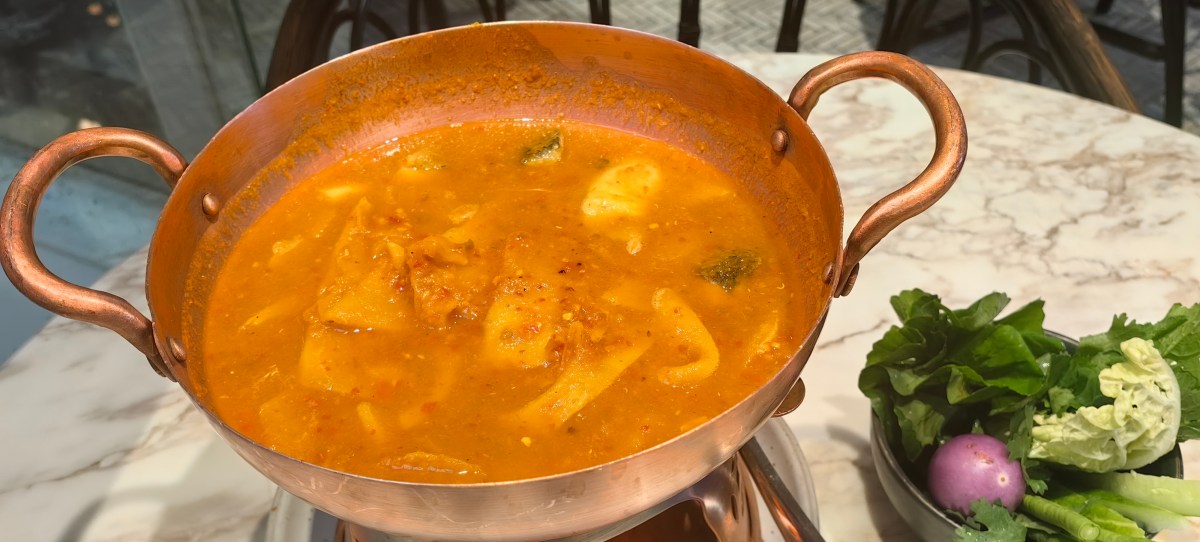
Yellow Curry Fish( Kaeng Kari Pla) is a Thai dish with tender fish fillets like cod, snapper, or tilapia simmered in a rich and aromatic yellow curry sauce. Yellow curry is made from a blend of turmeric, coriander, cumin, lemongrass, galangal, garlic, and shallots. Coconut milk is used to add richness and creaminess to the curry. Vegetables like potatoes, bamboo shoots, carrots, and onions are used as additions. Yellow curry is less spicy compared to red or green Thai curries and suitable for most people.

黄咖喱鱼(Kaeng Kari Pla)是一道将鳕鱼、鲷鱼或罗非鱼等嫩鱼片放入浓郁芳香的黄咖喱酱中炖煮的经典泰国菜。黄咖喱由姜黄、香菜、小茴香、柠檬草、高良姜、大蒜和青葱混合制成。椰奶则用于增加咖喱的浓郁和奶油味。土豆、竹笋、胡萝卜和洋葱等蔬菜可作为配料。与红咖喱或绿咖喱相比,黄咖喱的辣味较淡,适合大多数人。

As my journey through Bangkok drew to a close, I could find that this city is a tapestry woven with cultural treasures, bustling street life, and culinary delights. From the tranquil temples to the busy markets, every corner of this city reveals a new adventure. The city’s modern skyline seamlessly blends with its historical roots, creating a dynamic contrast that mirrors Thailand’s journey from past to present. Whether navigating the maze of waterways in a traditional longtail boat on the Chao Phraya River or savoring the explosion of spicy flavors in dishes, Bangkok offers me an immersive experience that is worthy and unforgettable.

在我的曼谷之旅即将结束之际,我发现这座城市就像一幅汇聚了丰富文化、繁华的街头生活和美食的织锦。从宁静的寺庙到繁忙的市场,这座城市的每个角落值得游客去探索。它的现代天际线与历史完美融合,形成了反映了泰国从过去到现代的滚滚红尘。无论是乘坐传统的长尾船在湄南河上穿越迷宫般的水道,还是品尝菜肴中辛辣的味道,曼谷都为我提供了非常值得并且难忘的沉浸式体验。