Echoes from the old towns of Lijiang

丽江古城之回响

In the embrace of the majestic Jade Dragon Snow Mountain, Lijiang is perfect travel place where the past dances gracefully with the present. As a UNESCO World Heritage site, this ancient town is a living canvas of culture and history, with its cobblestone streets, winding alleys, and traditional wooden houses steeped in stories of centuries gone by. Lijiang’s charm is undeniable, its picturesque beauty capturing the hearts of all who wander its enchanting pathways.

丽江坐落于雄伟壮丽的玉龙雪山怀抱之中,是一处古今交融的旅行胜地。作为联合国教科文组织旗下的世界遗产,这座古城如同一幅鲜活的历史画卷,各处鹅卵石街道、蜿蜒曲折的小巷和传统的木屋都承载着几个世纪的沧桑。丽江的魅力毋庸置疑,如画的美景俘获了所有漫步其中的游客的心。

For lovers, Lijiang is a dream come true. The town’s romantic allure is woven into the gentle flow of the canals, the blooming flowers, the soft glow of lantern-lit evenings, and the whispers of ancient melodies that linger in the air. Stroll hand-in-hand through the winding streets, where every turn reveals a new vista of beauty.

对情侣来说,丽江是充满爱意的地方。潺潺流水、繁花似锦、夜色下灯影摇曳,萦绕在空气中的古老旋律,交织着这座城市的浪漫魅力。情侣携手漫步在蜿蜒的街道上,每一次转角,都能发现新的美景。
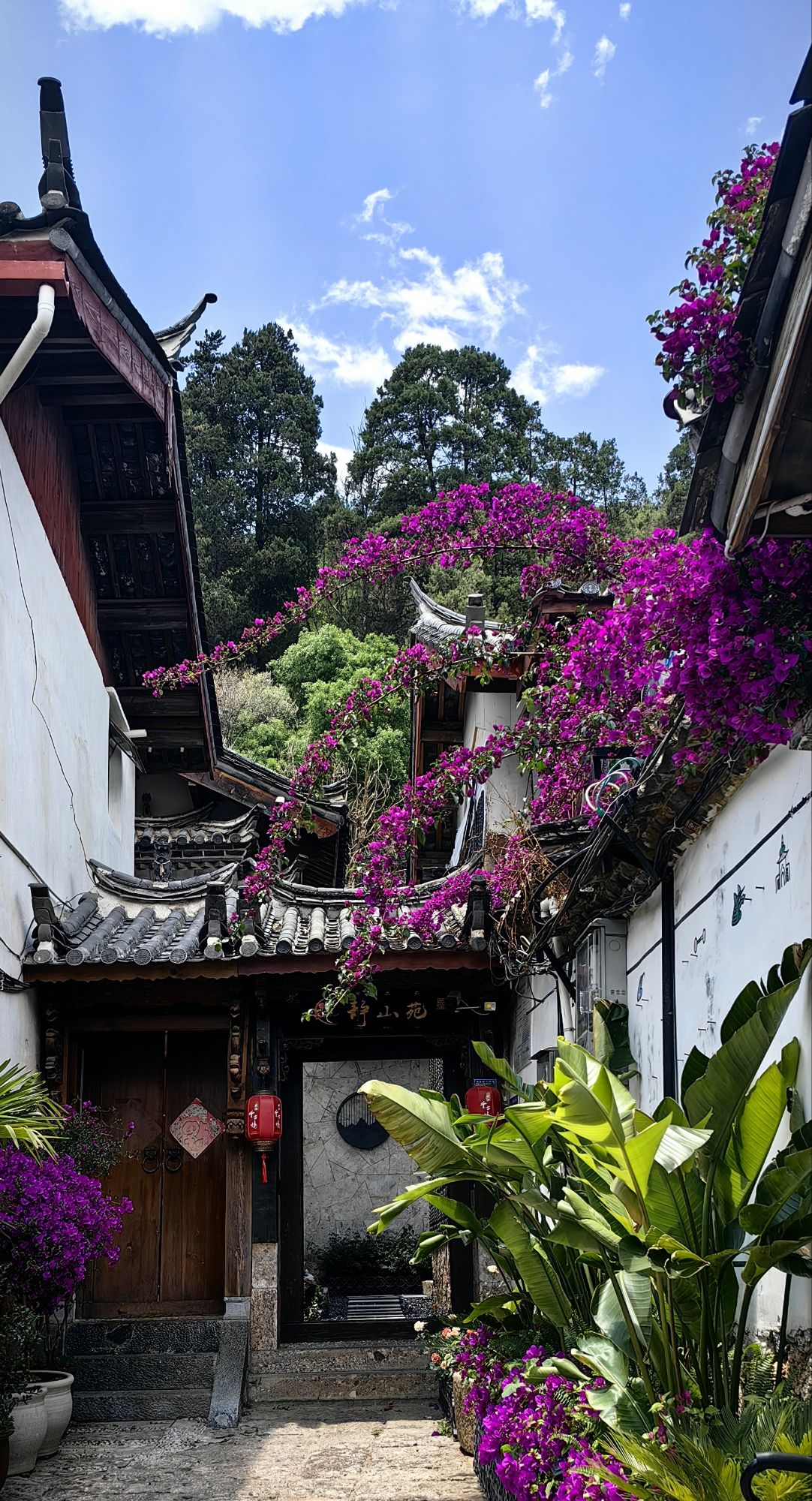
Lijiang is the historical homeland of the Naxi people, an ethnic minority whose culture is beautifully reflected in the town’s buildings. The Naxi people lived in Lijiang for more than one thousand years. Their houses typically include timber-framed structures with intricate carvings and flower-filled courtyards. The courtyards have sloped tiled roofs with upward-curving eaves reminiscent of Han Chinese design, but often adorned with local Naxi symbols like Dongba scripts and plum blossom. Carved wooden doors and lattice windows, showcases craftsmanship that passed down through generations.

丽江是纳西族的故乡。纳西族是中国的一个少数民族,其文化在丽江的建筑中得到了完美的体现。纳西族在丽江生活了超过一千年。他们的房屋通常为木结构建筑,雕刻精美,庭院内鲜花盛开。建筑体现为倾斜的瓦片屋顶,向上弯曲的屋檐,不由地令人想起汉族的建筑设计。不过这些建筑通常饰以比如东巴文字和梅花等纳西族的本土符号。而雕花木门和格子窗则展现了代代相传的工艺。

Unlike the rigid grid systems seen in many ancient Chinese cities, Lijiang’s street layout follows the natural topography of the land. Its streets are designed to flow with the natural slope of the terrain and the course of its canal network. Winding alleys, gentle inclines, and interwoven pathways are cobbled with smooth, dark stone.

与许多中国古代城市缺乏变化的网格系统不同,丽江的街道布局遵循自然的地势。街道的设计顺应着地形的自然坡度和运河网络的走向。蜿蜒的小巷、缓坡和交错的小路都以光滑的深色鹅卵石铺成。

The environment in this town attracted me a lot. It is often described as the “Venice of the East”, owing to its intricate network of crystal-clear canals and over 300 small stone bridges. Water from the Jade Dragon Snow Mountain flows into the town, guided by an ingenious water management system dating back to the Yuan Dynasty.

这座古镇的环境氛围深深吸引着我。错综复杂的水网,清澈见底的运河和300多座小石桥使它被誉为“东方威尼斯”。玉龙雪山的潺潺溪水流入小镇,其水源的管理源于元朝时期的精妙水利系统。
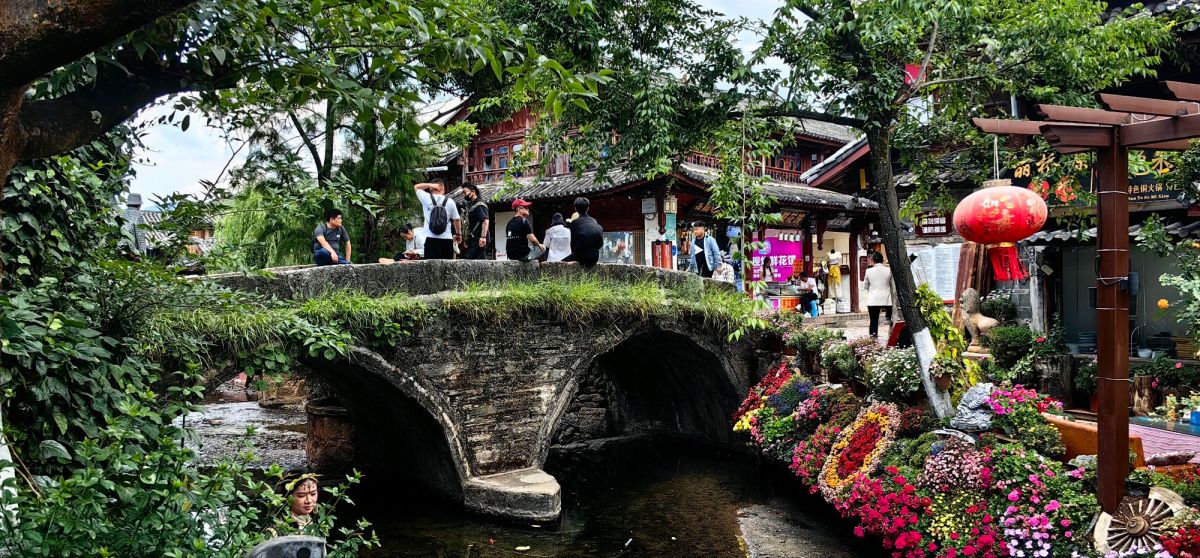
The famous Big Stone Bridge spans one of the main canals that meander through the Ancient Town called Dayan, gracefully connecting the bustling market streets and quiet residential alleys. Built from finely chiseled gray stone, the bridge features a gentle and elegant arch that rises just enough to allow water and small boats to pass beneath. Stone slabs of the bridge have been polished by time and reflect the town’s poetic beauty and deep-rooted history.

著名的大石桥横跨蜿蜒流经大研古镇的主水道,优雅地连接着熙熙攘攘的市街和静谧的民居小巷。桥身由精雕细琢的灰色石材砌成,优雅小巧的拱形恰好能让水流和小船从桥下穿行。桥面的石板历经岁月的风霜,向游客讲述着古镇的诗意和深厚的历史底蕴。

In summer, Lijiang Ancient Town bursts into a quiet, poetic splendor, with flowers blooming like brushstrokes across its cobblestone streets. Hanging flower baskets overflow from carved wooden balconies and tea house windows. Potted blooms line the narrow stone alleys, framing doorways and open courtyards with bursts of color. Green vines and creepers climb gracefully along tiled roofs and traditional wooden beams. The brillant summer flowers of this city left me a deep impression of a living scroll of color and scent.

夏日的丽江古城,静谧而诗意,繁花盛开,点缀鹅卵石铺就的街道。精雕的阳台和茶室窗外,悬挂的花篮里盛放着绽放的鲜花。色彩缤纷的盆栽花卉排列在狭窄的石巷两旁,点缀着门廊和庭院。绿油油的藤蔓和攀缘植物优雅地附着在瓦片屋顶和传统的木梁上。这座城市的绚烂夏花给我留下了深刻的印象,仿佛一幅色彩与芬芳交织的画卷。

The canals that run through Lijiang become floral mirrors. Willows dip their green tendrils into the water, and wildflowers peek through the stone edges. Floating petals drift along the surface, carried by the mountain-fed streams that wind through the town like silver threads.

丽江蜿蜒流淌的运河,仿若清澈的镜面。垂柳低吟,将柔绿的柳丝轻轻探入水中。野花在石缝间悄然探头,犹抱琵琶半遮面。山泉汇成的溪流,如银线般穿城而过,溪流中漂浮的花瓣随水无边曼舞。

The streets are narrow, winding, but it’s the color that captures my heart first. Strings of bright red lanterns sway gently overhead, casting warm light in the evenings and glowing softly against aged wooden walls. Shopfronts are adorned with vivid Naxi embroidery, batik fabrics, and handwoven scarves in deep blue, scarlet, and purple. The handmade paper umbrellas are more than beautiful objects—they are icons of romance and tradition. The hand-carved bamboo frame is lightweight. A young woman holding a paper umbrella is a traditional image of grace and refinement, common in Naxi and Han aesthetics.

街道狭窄蜿蜒,首先俘获我心的是那一抹色调。一串串鲜红的灯笼在头顶轻轻摇曳,在夜晚散发出温暖的光芒,在古老的木墙上泛着柔和的光芒。店面装饰着鲜艳的纳西刺绣、蜡染布,以及深蓝、猩红和紫色的编织围巾。手工制作的纸伞不仅仅是美丽的物品,更是浪漫和传统的代名词。这些手工雕刻的竹制伞架轻盈灵动。在纳西族和汉族的审美中撑着纸伞的年轻女子是优雅美女的传统象征。

Sifang Street (四方街) is a living square where history, culture, and daily life converge in a graceful, harmonious rhythm. It was an open plaza which served as the center of commerce, social life, and cultural exchange for centuries. Roads from all directions meet here, making it the natural gathering point of the town. The surrounding two-story timber buildings with tiled roofs and carved eaves are classic Naxi architecture.

四方街是一个充满活力的广场,历史文化和日常生活在此交汇,形成优美和谐的韵律。几个世纪以来,这里曾是一个开放的广场,是商业、社交和文化交流的中心。四面八方的道路在此交汇,使其成为小镇的聚集点。周围的两层瓦片屋顶和雕花屋檐的木制结构建筑是典型的纳西建筑风格。
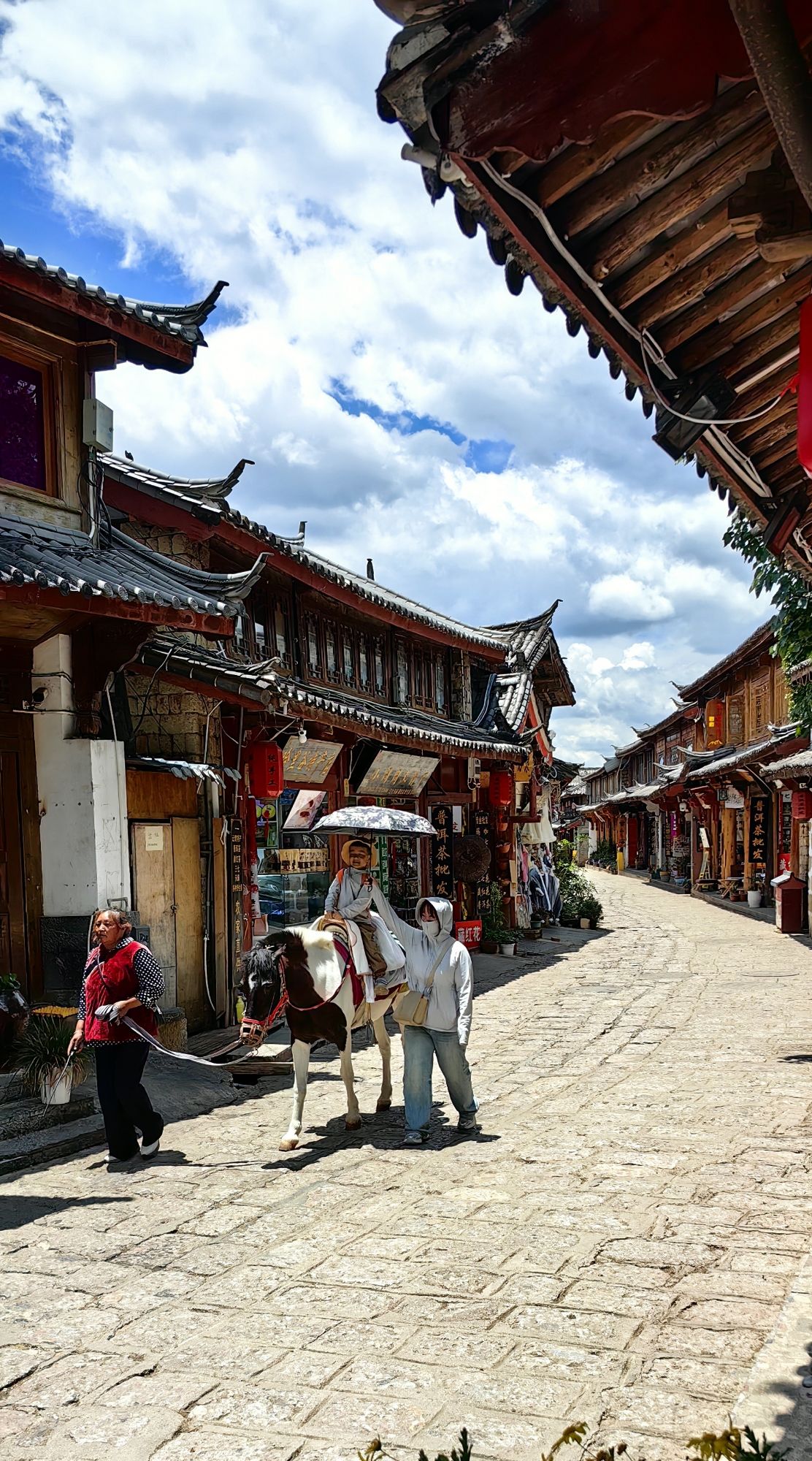
Historically, Lijiang was a vital hub on the Ancient Tea Horse Road, and the ancient city layout reflects its past as a trading center. Roads led toward gates and plazas that were once used for commerce transportations. The urban design ensured easy navigation and security while allowing for the smooth flow of goods and people. The Ancient Tea Horse Road was a vast network of trade routes that once linked the tea-growing regions of southwestern China with Tibet and eventually extended into India. Puer tea from Yunnan were traded out and strong Tibetan horses were traded to the Chinese for use in the military.

历史上,丽江是茶马古道上的重要枢纽,古城布局反映了它作为贸易中心的历史。条条道路通向曾经用于商业运输的城门和广场。城市设计确保了便捷的通行和安全,同时也促进了货物和人员的流通。茶马古道是一个庞大的贸易路线网络,连接着中国西南的茶区和西藏,并最终延伸到印度。来自云南的普洱茶被出口,强壮的西藏军用马则被进口到中国。
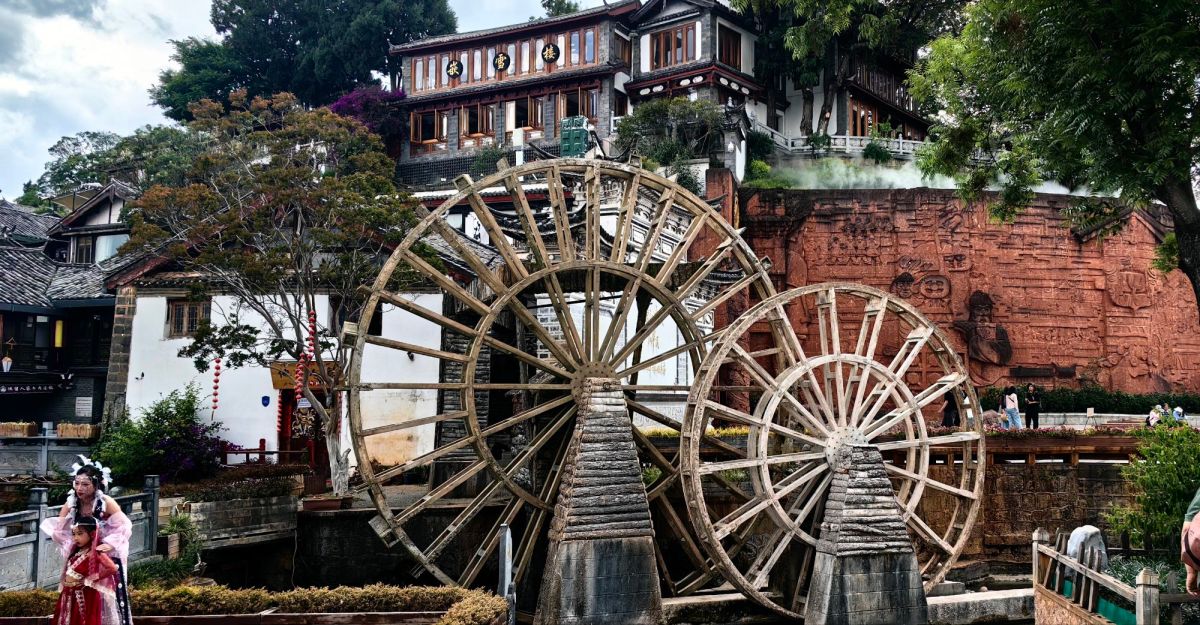
The big water wheel at the entrance of Lijiang Ancient Town is one of its most iconic landmarks—a symbol of tradition, harmony, and the town’s deep connection with water. It draws water from the flowing canals and uses the current to rotate continuously. Traditionally, water wheels were used in grinding grain or irrigation, and nowadays this big wheel in Lijiang is only symbolic. Visitors often take photos in front of the water wheel. It’s also a common backdrop for traditional Naxi dress photography and wedding shoots.

丽江古城入口处的大水车是最具标志性的地标,象征着传统以及这座城市与水的深厚渊源。它从流动的运河中汲水,并利用水流持续旋转。传统的水车用于磨坊或灌溉,如今,丽江的这辆大水车只是具有象征意义。游客们通常在水车前拍照。它也是游客身着纳西族传统服饰摄影和婚纱拍摄的常见背景。
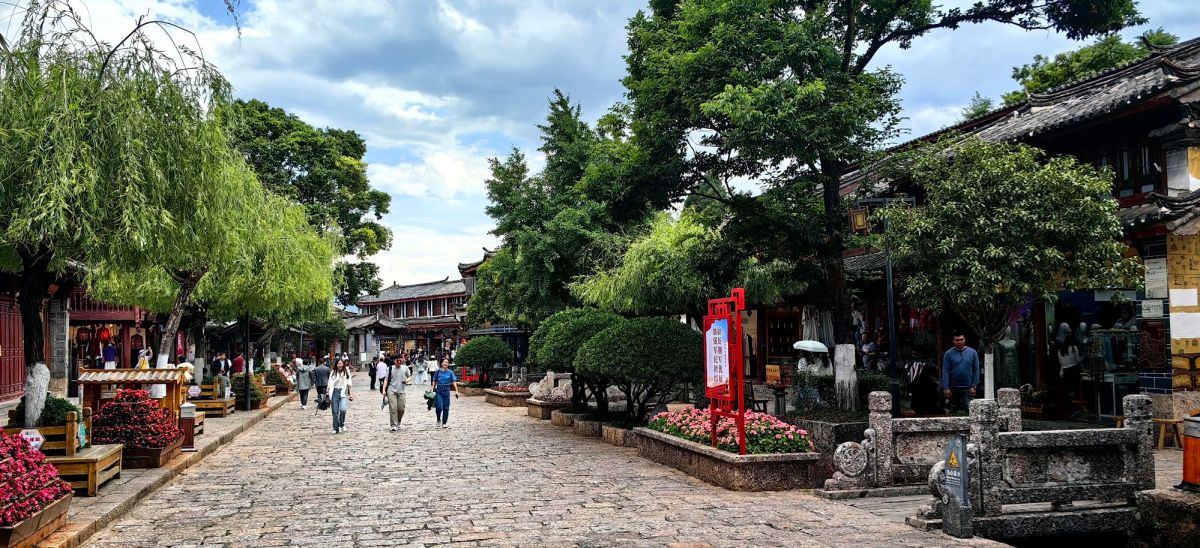
As I walked from the big water wheel, I entered the broad main street. It is a stone-paved roads, polished smooth over centuries by footsteps and time. The street is lined with a rich mix of traditional and contemporary experiences. There are tea houses with open balconies and live Naxi or modern music drifting into the air. Also everywhere there are shops selling handmade crafts, from silver jewelry and Dongba scrolls to embroidered scarves.

我从大水车旁走进了宽阔的主街。这是一条石板路,几个世纪以来,它已被人们的脚步和岁月磨得光滑平整。街道两旁,传统与现代交织在一起。这里有带开放式阳台的茶馆,现场演奏的纳西或现代音乐在空中悠然飘荡。此外,随处可见出售手工艺品的商店,从银饰、东巴卷轴到刺绣围巾,应有尽有。
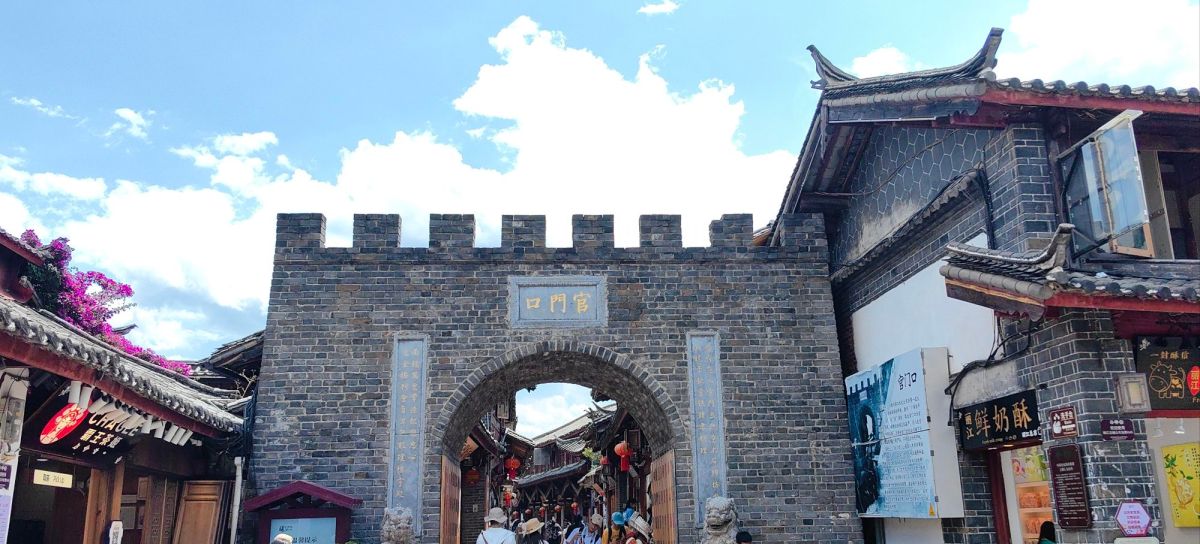
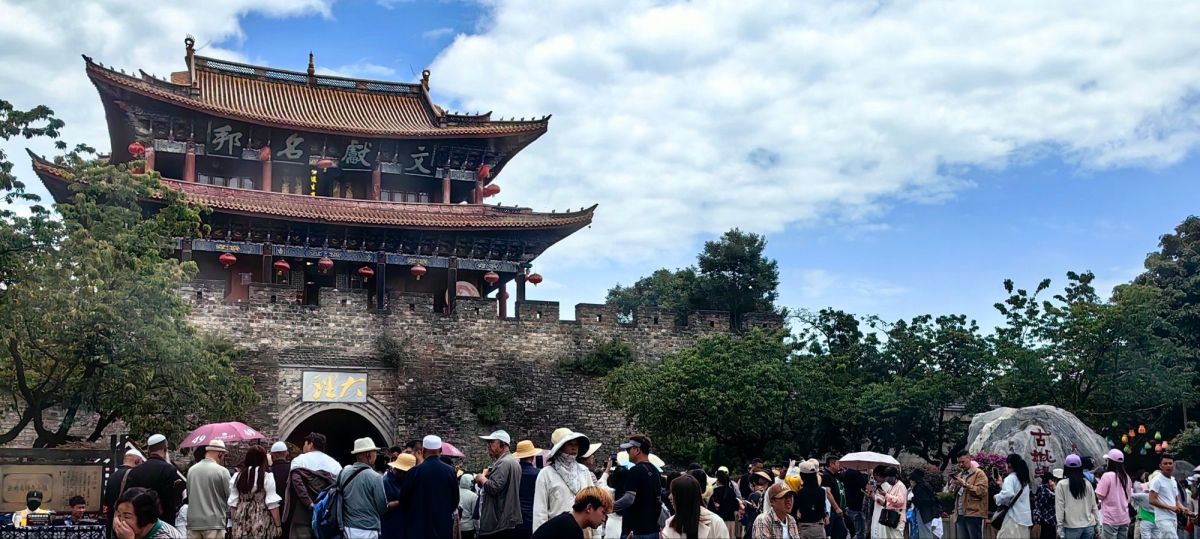
Unlike many ancient Chinese towns, Lijiang Ancient Town has no city wall. It is located in a relatively remote, mountainous region, protected by natural barriers like the Jade Dragon Snow Mountain and surrounding terrain. This reduced the need for defensive walls. The Naxi people, the main ethnic group of Lijiang, believe in openness, flow, and harmony with nature. This short section of wall called Guan Men Kou marked the entrance to the administrative and residential district of local government officials during the Ming and Qing dynasties.

与许多中国古城不同,丽江古城是没有城墙的。它地处相对偏远的山区,受到玉龙雪山等天然屏障和周围地形的保护。这自然减少了修建防御性城墙的必要性。而且丽江当地的主体民族纳西族崇尚开放自由,并与自然和谐相处。这段短墙被称为官门口,是明清两代地方政府官员行政和居住区的入口。
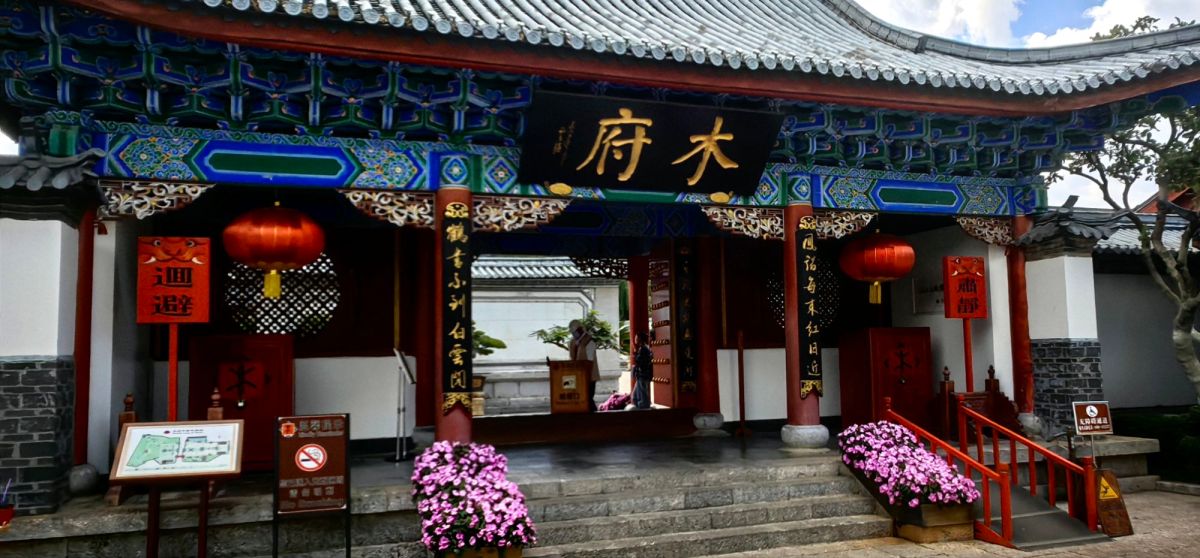
It was connected to the Mu Residence (木府)—home of the Mu family, hereditary Naxi chieftains who ruled the region for centuries. The Mu Residence is often called the “Forbidden City of Lijiang” — a grand, elegant architectural complex that was once the political and cultural center of Lijiang Ancient Town. The whole ancient city of Lijiang is ticket free, but visitors need to pay 20 RMB yuans to visit this building.

它与木府相连,木府是统治该地区数百年的纳西族世袭首领木氏家族的居所。木府常被称为“丽江紫禁城”,是一座宏伟典雅的建筑群,曾是丽江古城的政治和文化中心。丽江古城全城免门票,但参观木府需支付20元人民币。
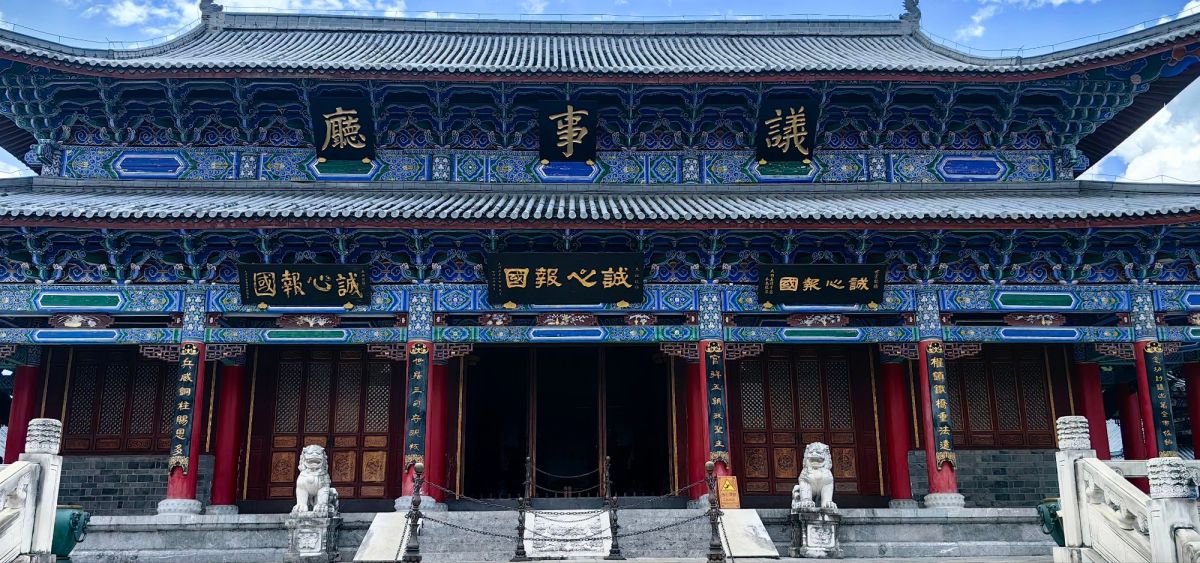
The Mu clan governed Lijiang for over 470 years, from the Yuan dynasty (13th century) through the Ming and Qing dynasties. As imperial-appointed Tusi (local rulers), they enjoyed considerable autonomy while serving as intermediaries between the central government and local ethnic groups. This is the majestic central ceremonial hall, where the Mu rulers met guests and conducted administrative duties.

木氏家族从元朝到明清两代统治丽江超过470年。作为皇帝任命的土司,他们享有相当大的自治权,同时充当着中央政府与当地民族之间的桥梁。这里是庄严的中央议事厅,木氏统治者在此接见宾客并行使行政职权。

There is a tranquil garden with stone paths, bamboo groves, and koi ponds—perfectly illustrating harmony between architecture and nature. The layout and detail express Confucian order, Daoist balance, and Dongba spiritual heritage.

庭院内静谧清幽,石径蜿蜒,竹林环绕,锦鲤池点缀,完美诠释了建筑与自然的和谐统一。庭院布局和细节处处体现着儒家的秩序、道家的平衡,以及东巴的精神传承。

From the higher vantage points of Mu residence, I saw a rippling expanse of traditional, gray-tiled rooftops stretching in every direction. These rooftops are curved and upturned at the edges, reflecting classic Chinese architectural style. They are arranged tightly together, each with its own courtyard-centered home, forming a labyrinthine patchwork.

从木家宅邸的较高位置向远望去,我看到一片片传统的灰​​瓦屋顶,层层叠叠,向四面八方延伸。这些屋顶呈弧形,边缘上翘,体现了中国古典建筑风格。它们紧密相连,每栋房子都以庭院为中心,构成了一座错落有致的迷宫。
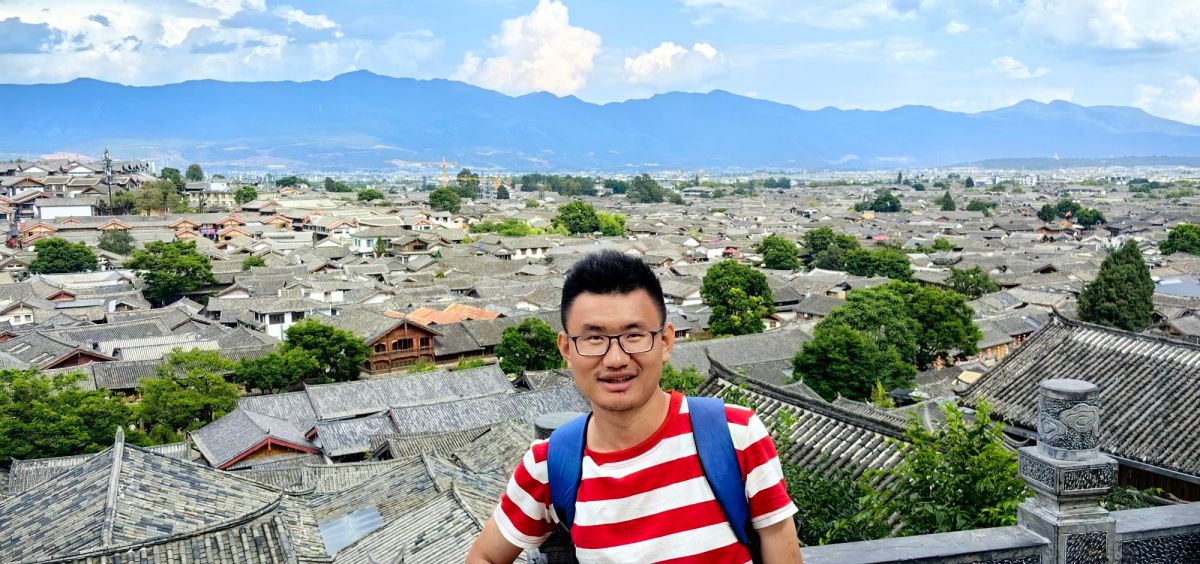
The panoramic view of the town in the sunny afternoon is overwhelming. Under the sunlight, golden light is cast across the rooftops, revealing layers of texture and age. The curved tiles, weathered by centuries of wind and rain, catch the light at different angles, creating a mosaic of shadows. The gray roof tiles reflect not just the light of the sun, but the light of a thousand yesterdays. In Lijiang, the clouds are rarely static. They move like dancers across the sky. Sometimes thunderous storm clouds rolling in from the mountains, suddenly turned the blue sky into a canvas of deep gray.

阳光明媚的午后,小镇的全景令人叹为观止。阳光下,金色的光芒洒落在屋顶上,展现出层层叠叠的纹理和岁月的痕迹。历经百年风雨的弧形瓦片,以不同的角度捕捉着天空光线,形成一幅光影交织的马赛克画。灰色的瓦片反射的不仅仅是阳光,更是无数个昔日的光辉。在丽江,云朵很少静止不动,它们像舞者一样在天空中摇曳流动。有时,雷鸣般的乌云从山间滚滚而来,将蔚蓝的天空瞬间染成一片深灰色。
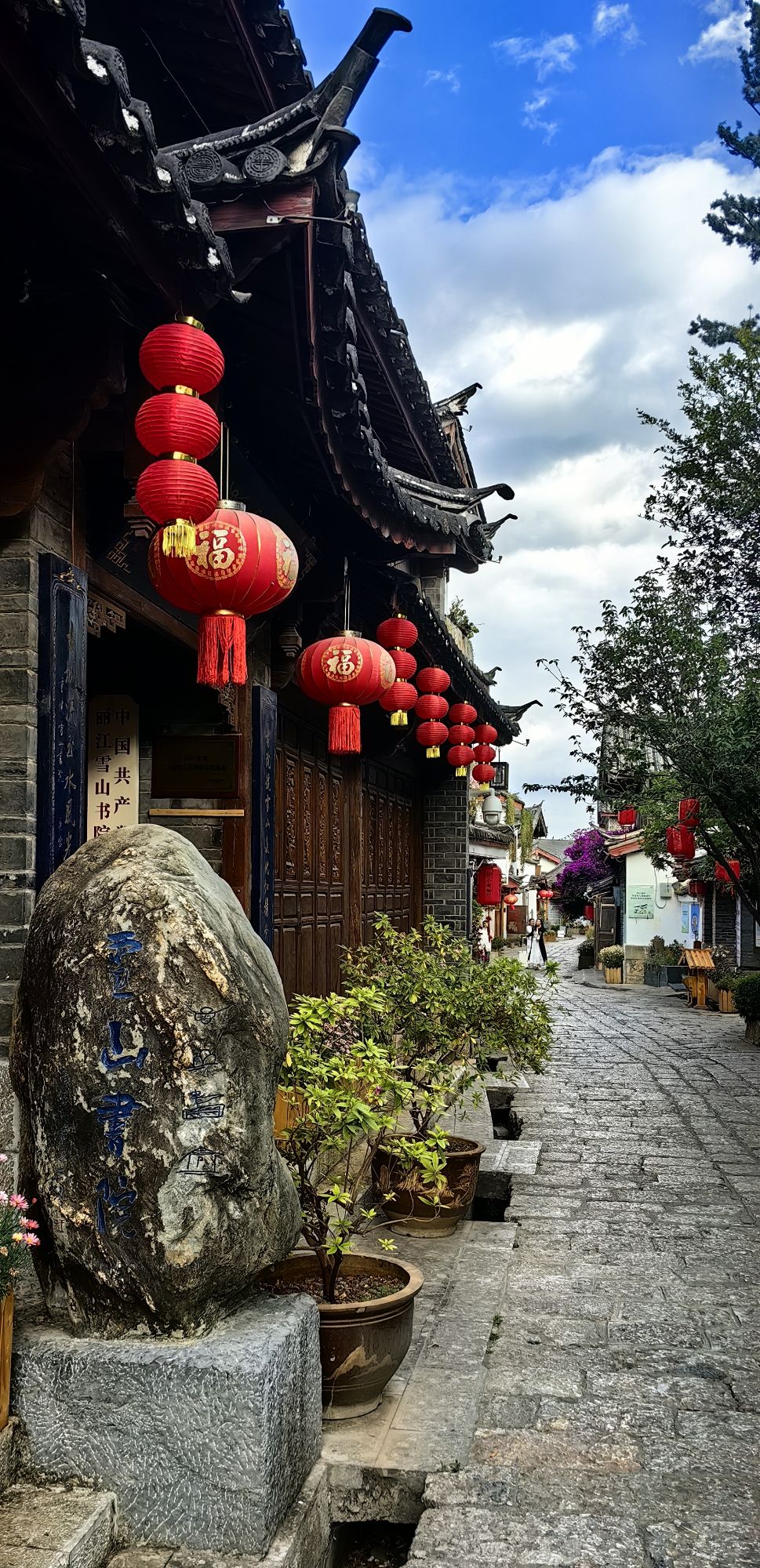
Snow Mountain Academy is a place for cultural exhibitions of preservation and promotion of Dongba culture. It has traditional Naxi and Han Chinese architecture with wooden pavilions with gracefully curved roofs and carved eaves and latticed windows, stone courtyards, and koi ponds. There are inscriptions of Dongba symbols and poetic couplets on the entrance.

雪山书院是保护和弘扬东巴文化的文化展览场所。书院拥有纳西族和汉族传统建筑风格,包括木结构凉亭、优美的弧形屋顶、雕花屋檐和格子窗、石砌庭院和锦鲤池。入口处刻有东巴文字和对联。

Small pavilions scattered throughout Lijiang Ancient Town. They are typical Chinese architecture elements. They have intricate wooden latticework, carved with floral patterns like phoenixes and red columns and painted beams, with calligraphy quoting poetry. Many are open on all sides, allowing gentle breezes to pass through and refreshing the visitors.

丽江古城里散落着许多小亭阁,它们是典型的中式建筑元素。亭阁拥有精致的木格,雕刻着凤凰等花卉图案,红色的柱子和彩绘的横梁上还刻有诗句和书法。亭阁四面敞开,微风轻拂,令人心旷神怡。
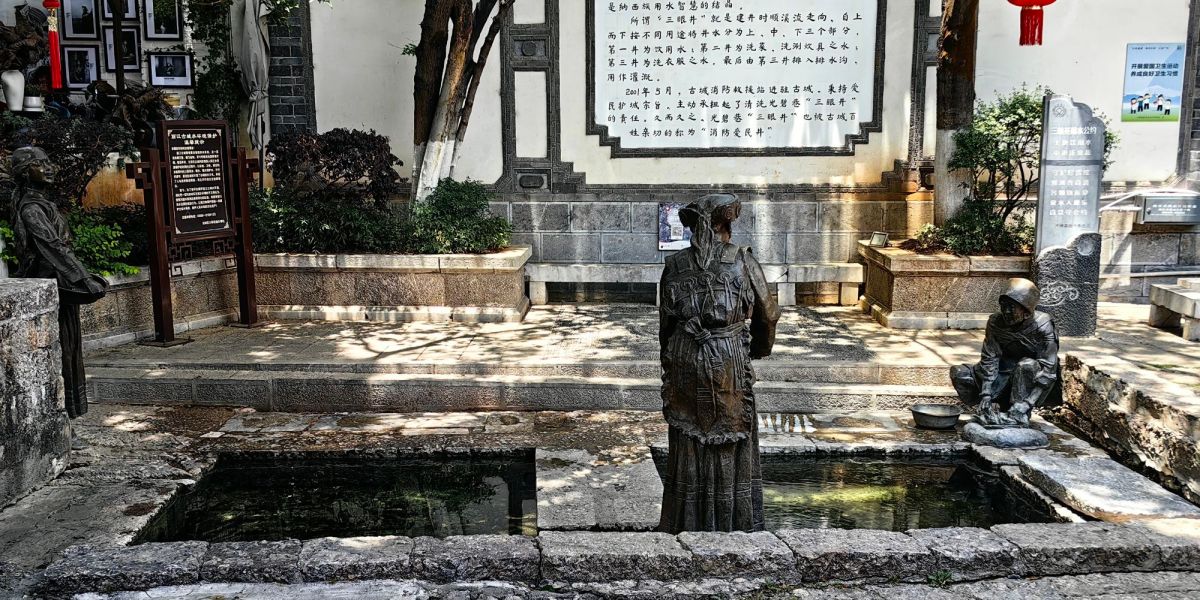
In Lijiang, I always found this traditional water system called The Three-Eyed Well. It consists of three connected stone basins or wells that are arranged in a tiered system. Spring water flows from the uppermost well to the lowest. Top basin contains drinking water and is reserved strictly for drinking and cooking, ensuring the cleanest, freshest water being protected. Middle basin is used for washing vegetables and rice. The water comes directly from the top and flows out again, it remains relatively clean. The bottom level was used for washing clothes or cleaning items, where the water, now used multiple times, would finally exit the system.

在丽江,我总能发现一种名为“三眼井”的传统水利系统。它由三个相连的石盆或井组成,呈阶梯状排列。泉水从最上层的井流到最底层。最上层的石盆盛有饮用水,仅供饮用和烹饪,以确保水源保持最洁净、最新鲜的状态。中间的石盆用于洗菜和洗米。水直接从顶层流出,进入中层后保持相对洁净。底层用于洗衣服或清洁物品,水经过多次使用后,最终会从石盆底部流出整个系统。
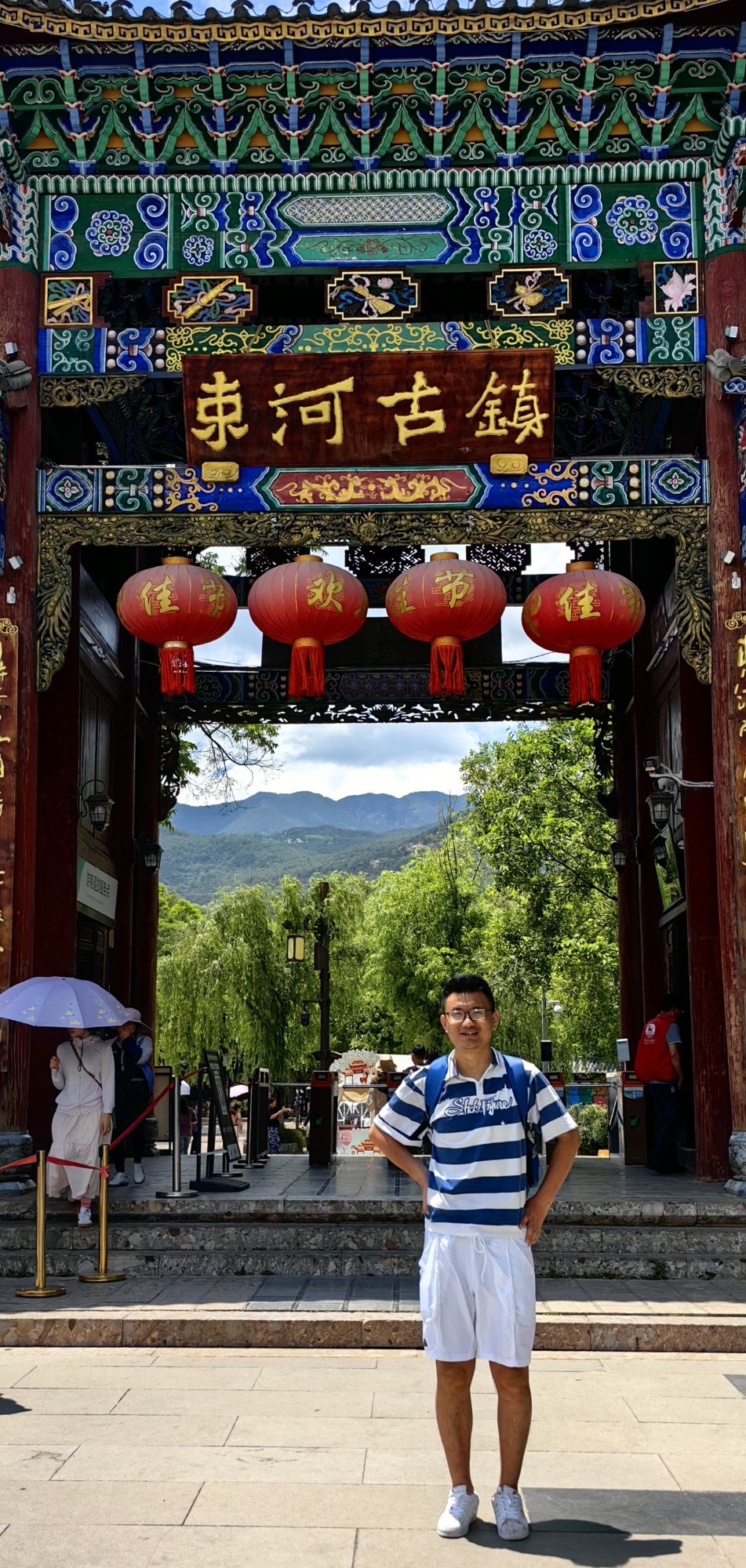
Shuhe Old Town is one of the three old towns in Lijiang worthy of visit. It was one of the earliest Naxi settlements in the Lijiang area, dating back more than 1,000 years. It was once a vital stop on the Ancient Tea Horse Road, that linked Yunnan with Tibet. This town has lush greenery of cypress and camphor trees.

束河古镇是丽江值得一游的三座古镇之一。它是丽江地区最早的纳西族聚居地,距今已有一千多年历史。它曾是连接云南和西藏的茶马古道上的重要驿站。古镇上柏树和樟树繁茂茂盛,绿树成荫。

Shuhe retains its original village charm, with stone-paved lanes that wind through traditional Naxi courtyard homes. There are clear canals running through small stone bridges, fed by mountain spring water. In one unnoticed corner, I found some sculpted animal heads—of oxen, horses, dragons, and tigers. The twelve Chinese zodiac animal heads are sculpted with fine attention to detail. They represent the Chinese cultural heritage.

束河保留着原始的村落韵味,石板小巷蜿蜒穿过传统的纳西式庭院。清澈由山泉滋润的溪水流经小石桥。在一个不起眼的角落里,我看到了一些牛、马、龙和虎的兽首雕塑。这些十二生肖兽首雕塑细节精致,代表着中华文化遗产。
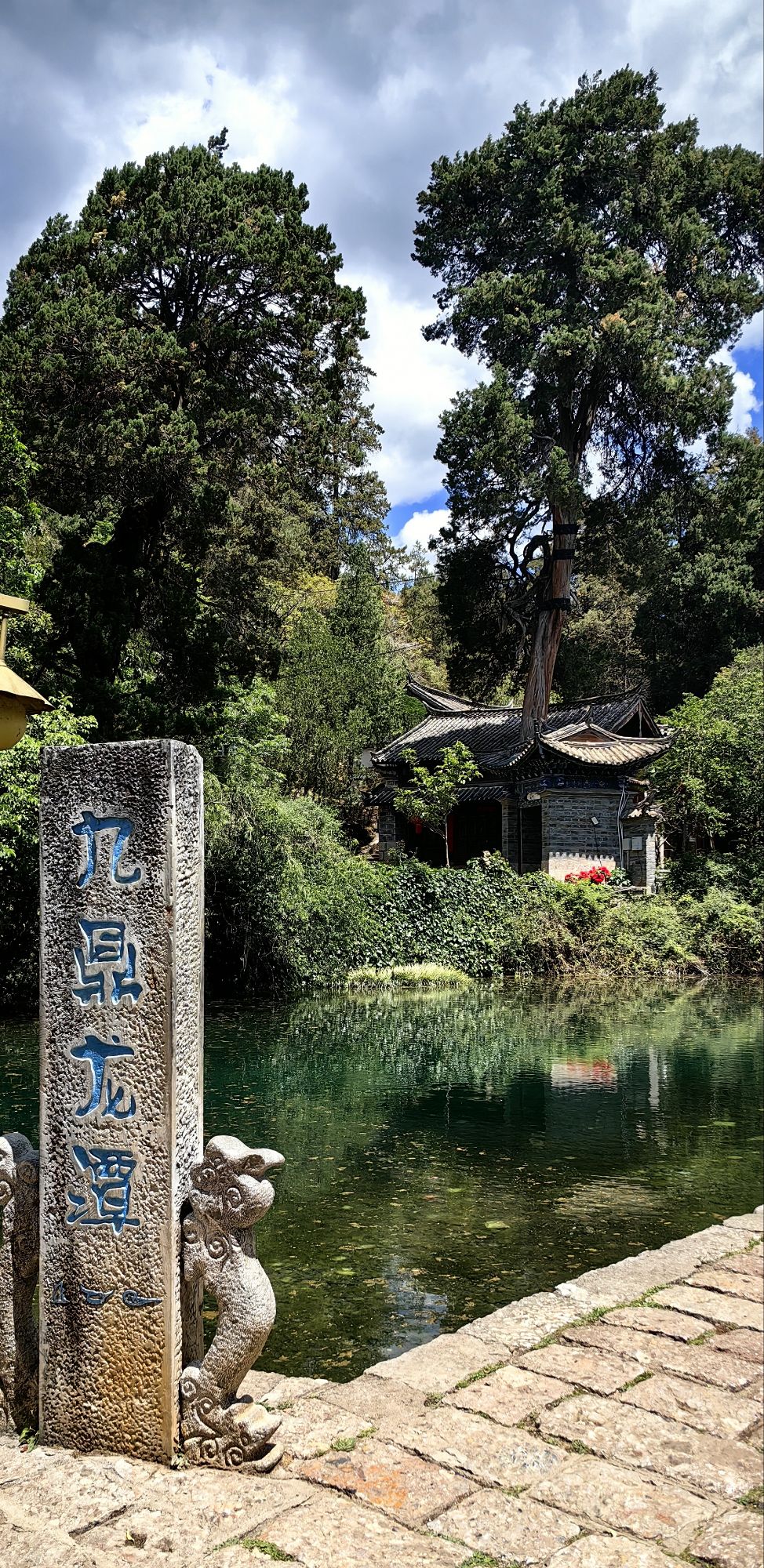
Water is the soul of Shuhe. The town is laced with fresh mountain springs and gentle canals, which flow from the nearby mountains and provide life to the land and people. The Qinglong River and a network of small canals run through the town, and water accumulated in the Nine Tripod Dragon Pool in this photo. The water is remarkably clear, with a deep jade-green hue, reflecting the sky and surrounding trees like a perfect mirror.

水是束河的灵魂。小镇遍布清澈的山泉和蜿蜒的运河,它们从附近的群山中流淌而出,为这片土地和人民提供生机。青龙河和纵横交错的小运河贯穿全镇,照片中的九鼎龙潭汇聚了丰富的水量。潭水清澈见底,呈现出深邃的碧绿,如同一面完美的镜子,映照着天空和周围的树木。
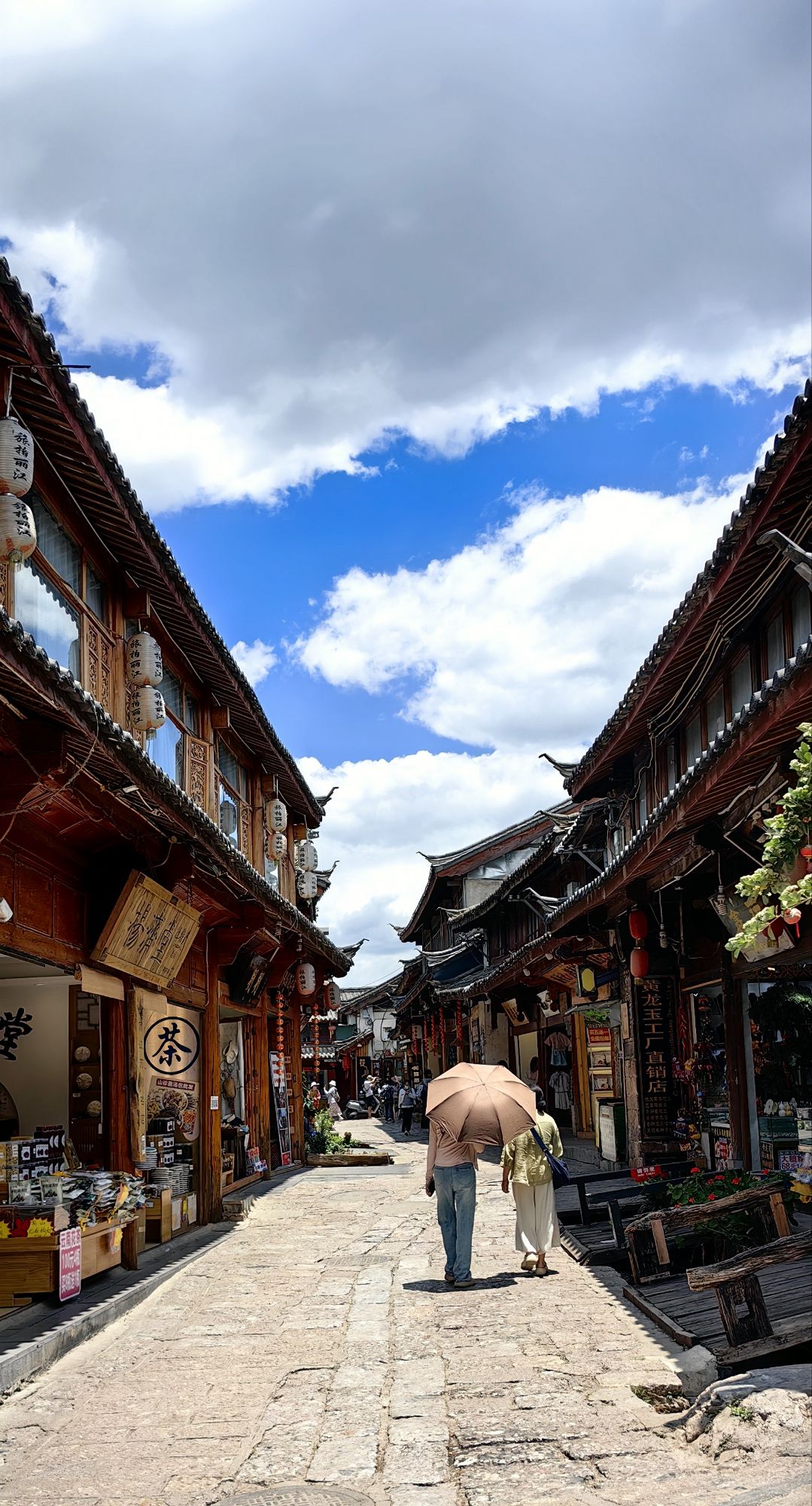
I enjoyed the feeling of walking along the cobbled street. The surface was smooth from centuries of footsteps, yet still retained the natural texture and rhythm of each stone. On sunny days, the cobblestones glisten softly. They were telling the long story of this city. These streets have guided caravans of horses, carried pilgrims and poets, and today, lead visitors like me.

我享受着沿着鹅卵石街道漫步的感觉。这些路面因数百年的磨损而变得光滑,却依然保留着每块石头的自然纹理和韵律。阳光明媚的日子里,鹅卵石泛着柔和的光泽。它们诉说着这座城市悠久的历史。这些街道曾引领着马队,承载着朝圣者和吟游诗人的希望,如今引领着像我这样的游客一路向前。
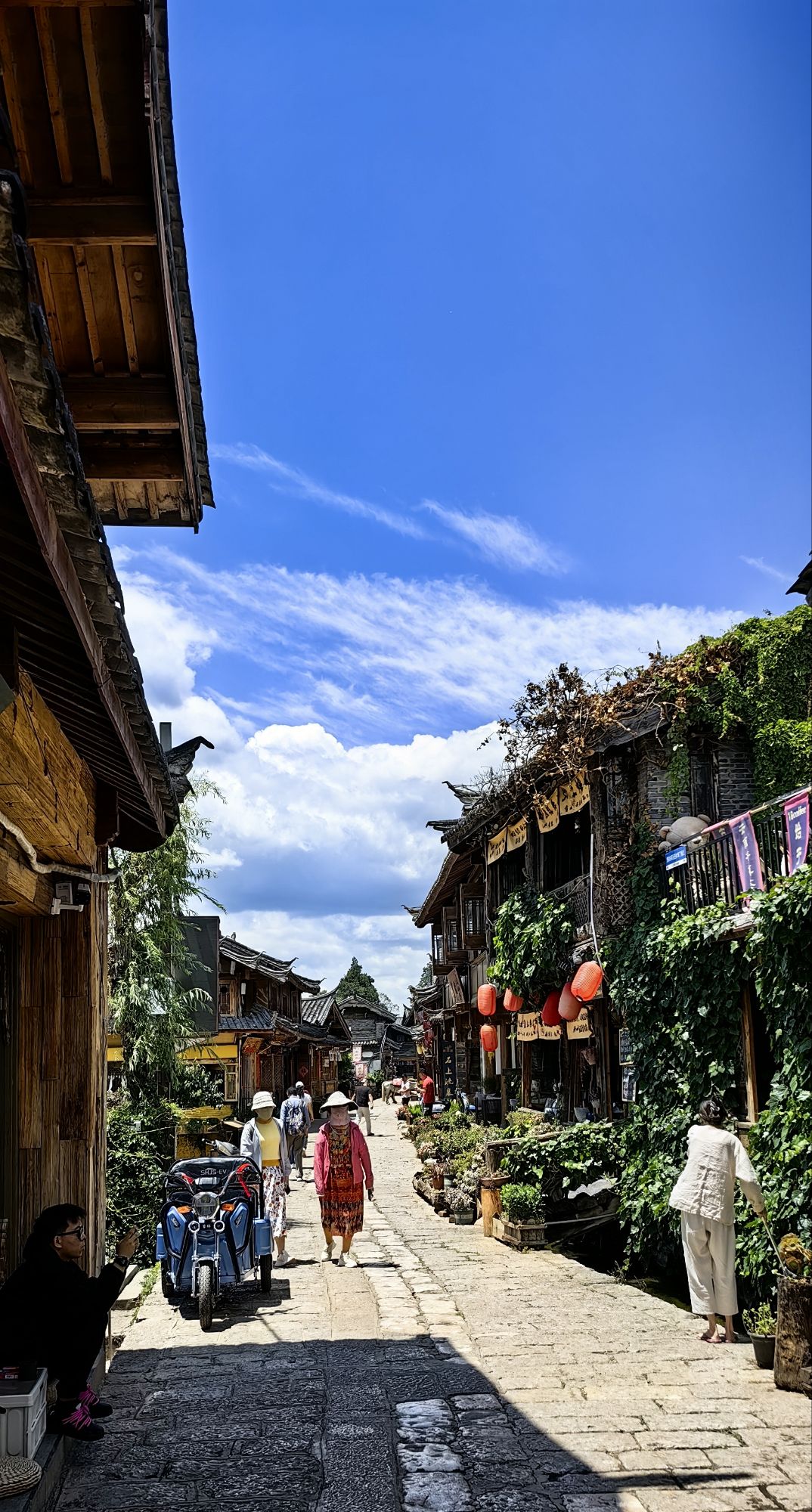
Similar to the towns (Eguisheim) I have visited in France, the timber walls of old houses are adorned with an enchanting array of climbing plants and blooming flowers. Creeper plants and grapevines twist gracefully up stone and brick walls. The combination of floral color, carved window frames, and creeping green creates a storybook atmosphere.

与我去过的法国小镇埃吉桑相似,老房子的木墙上装饰着各种迷人的攀缘植物和盛开的鲜花。攀缘植物和葡萄藤优雅地盘绕在石砖墙上。色彩缤纷的花卉、雕花窗框和蔓生植物的组合,营造出一种童话般的氛围。

The Baisha ancient town was a peaceful town in the north of Li Jiang. The town’s buildings are made of mud bricks, timber, and stone, featuring whitewashed walls, grey rooftiles, and Naxi-style wooden carvings. Unlike more commercial towns, Baisha retains an authentic, almost rustic character—every weathered beam and faded wall tells a story. It is less touristy, making it ideal for travelers seeking a more immersive experience.

白沙是丽江北部一个安静的小镇。古镇的建筑由泥砖、木材和石材构成,白墙黛瓦,还有纳西风格的木雕。与商业气息浓厚的其他城镇不同,白沙古镇保留着一种近乎质朴的原始风貌——每一根饱经风霜的梁柱和每一面褪色的墙壁都诉说着一个个故事。这里游客较少,非常适合寻求沉浸式体验的游客。
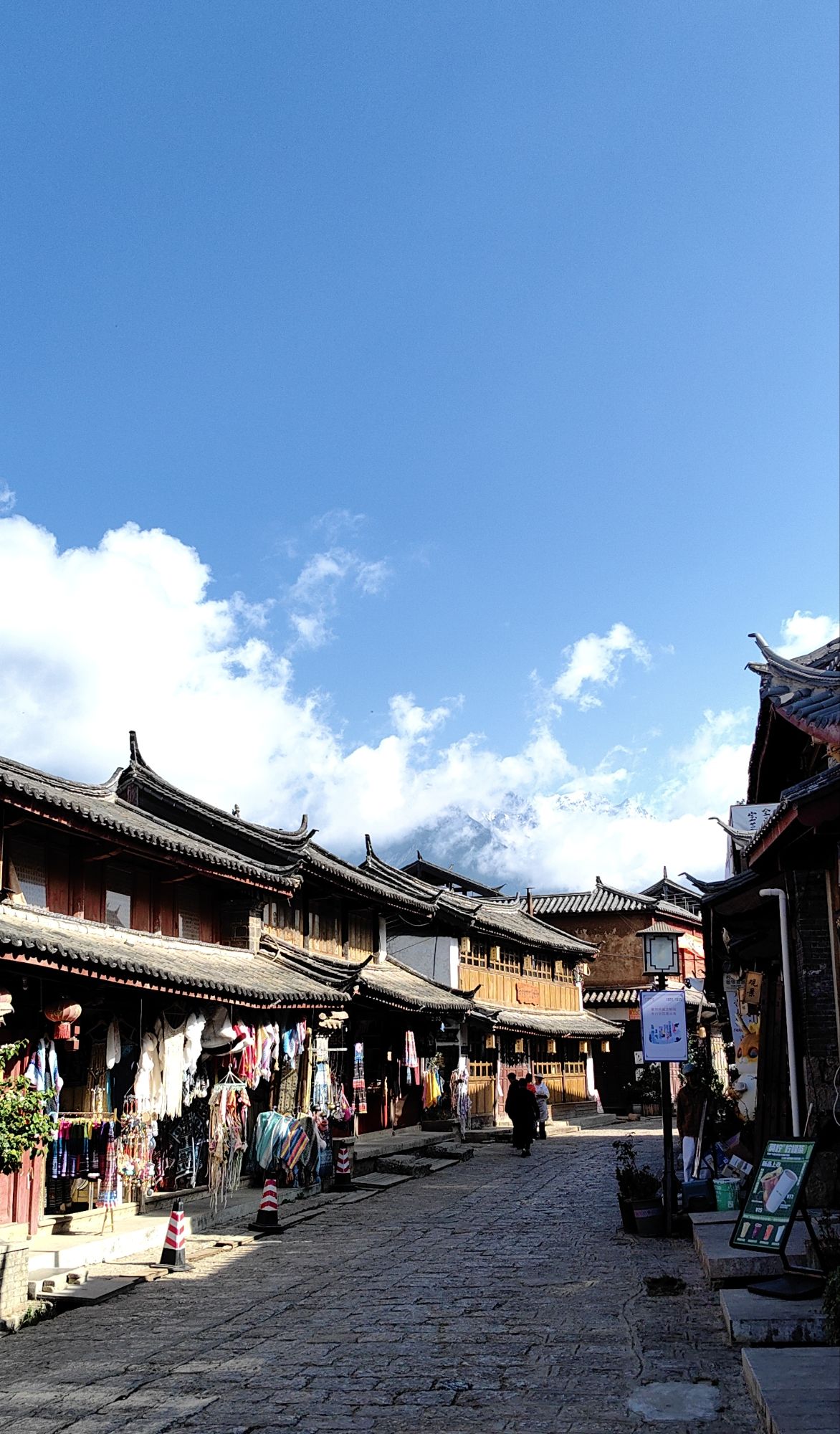
Located at the foot of Jade Dragon Snow Mountain, this town is a place where time lingers gently and tradition breathes in every small lane. I felt unhurried and myself seemed to be wrapped in the cool breath of Jade Dragon Snow Mountain. The morning is tranquil, with soft light spilling across stone paths, roosters calling in the distance. Elderly Naxi women in traditional blue garments sit by doorways, chatting quietly beneath overhanging eaves.

这座小镇就坐落在玉龙雪山脚下,时光静静地流淌,每条小巷都弥漫着传统的气息。我感觉自己仿佛置身于玉龙雪山清凉的气息之中,悠闲自在。清晨宁静祥和,柔和的阳光洒落在石板路上,远处传来公鸡的鸣叫。身着传统蓝色服饰的纳西族老妇人坐在门边,在屋檐下轻声交谈。
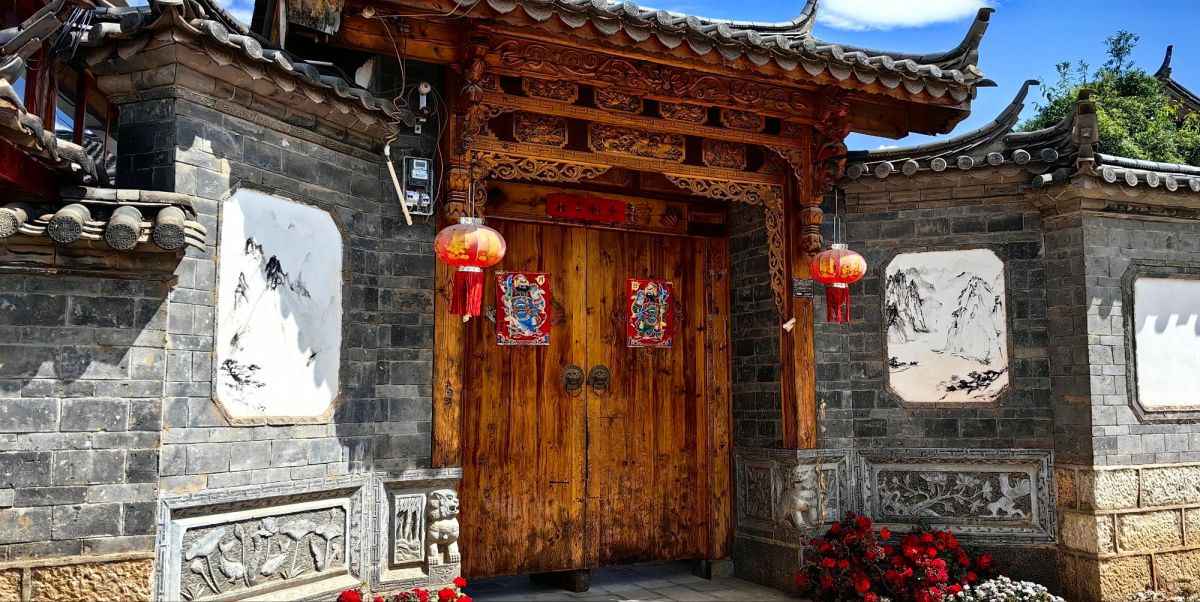
I noticed some traditional houses of courtyard in this town. During the day, warm light and shadow dance across the walls, and in the evening, red lanterns cast a soft glow over the polished stones. The doorway features stone or brick inlays at the base, with engraved patterns of waves, clouds, and animals to ward off bad luck. Flower pots and stone lions are set up along the doorway. The paintings on wooden doors flanking the entrance represents the god of doorways and are designed to welcome good fortune and ward off evil. If traveller has free time, it is a good choice to stay in this town for several days experiencing the Naxi life here.

我在这座小镇里看到了一些传统的院落民居。白天,温暖的阳光投撒在墙上;夜晚,红灯笼在光滑的石柱上投下柔和的光芒。门框底部嵌有石块或砖块,上面雕刻着海浪、云朵和动物的图案,以驱除厄运。门边摆放着花盆和石狮。入口两侧的木门上画着门神,象征着招财辟邪。如果游客时间充裕,在这个小镇住上几天,体验一下纳西族的生活,亦是个不错的选择。

The UNESCO World Heritage Site of Lijiang Ancient Town consists of four key parts, three ancient towns Dayan, Baisha, and Shuhe, and the ancient water system called Black Dragon Pool. The park of Black Dragon Pool was the last place I visited in Lijiang. The pool is fed by springs from the foot of Elephant Hill and serves as the headwaters of Lijiang’s ancient canal system, which winds through Dayan Old Town. The elegant white marble bridge arcs across the water drew my attention. Towering in the horizontal of sky, the snow-covered ridges gleamed silver under the sun.

丽江古城被联合国教科文组织列为世界遗产,由四个主要部分组成:大研、白沙和束河三个古镇,以及名为黑龙潭的古老水系。黑龙潭公园是我在丽江的最后一站。黑龙潭的水源来自象山脚下的泉水,是丽江古运河的源头,蜿蜒流经大研古镇。优雅的白色大理石桥横跨水面,吸引了我的目光。白雪皑皑的山脊高耸入云,在阳光下闪着银光。

Surrounded by willows, cypress trees, and seasonal blooms, the park is a haven for travelers seeking tranquility. The greenery creates picturesque scenes against the backdrop of traditional architecture. The mirror-like surface reflects the majestic Jade Dragon Snow Mountain, creating a postcard scene.

公园四周柳树、柏树环绕,四季鲜花盛开,是寻求宁静的游客的世外桃源。绿树成荫,在传统古建筑的映衬下,构成了如画的风景。镜面般的湖面倒映着雄伟的玉龙雪山,宛如明信片上的风景。

There is a museum here displaying the Naxi script of Dongba characters. They are pictographs and ideographs—symbols that visually represent ideas, objects, and actions. Each symbol can represent a word, a sound, or a meaning. Although no one use these characters now, they are cultural heritage of this land, and were used to pass down religious stories and cosmology.

这里有一座博物馆,展示纳西文字——东巴文。它们是象形和表意文字,用符号直观地表达思想、物体和行为。每个符号可以代表一个词、一个声音或一个含义。虽然如今已无人使用这些文字,但它们是这片土地的文化遗产,曾被用来传承纳西人的宗教故事和宇宙观。

I have stayed in Lijiang for three days. As I took my final steps of the ancient town, the echoes of rushing water and soft chimes from wind bells lingered in my heart like the fading notes of an old melody. In these days, I lost time among the painted doorways, the fragrance of fresh flowers and the cobbled ancient streets. As I left, I carried the lingering memories with me like a lantern glowing softly long after the sun has set.

我在丽江总计待了三天。当我踏上古城的最后一段旅程时,潺潺的流水声和轻柔的风铃声如同一首古老旋律萦绕在我的心头。这些日子里,我迷失在彩绘门楼、鲜花的芬芳和古老的鹅卵石街道之间久久不能自拔。离开时这些挥之不去的回忆就如同一盏在日落后依然柔和发光的灯火一般依然熠熠生辉。

Where Snow Meets Sky: Jade Dragon Snow Mountain

雪落玉龙冲云霄

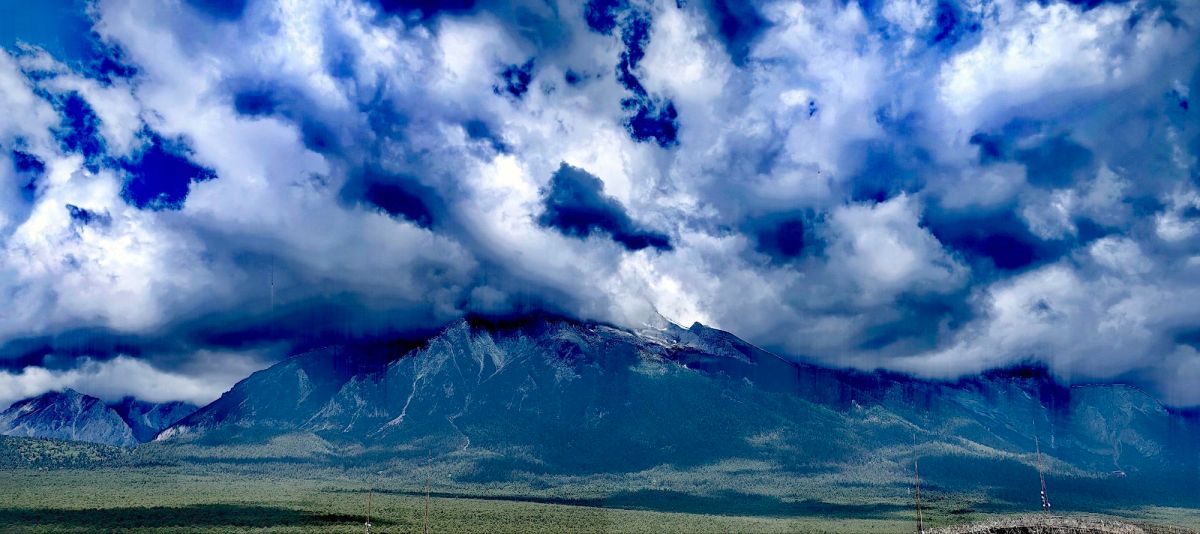
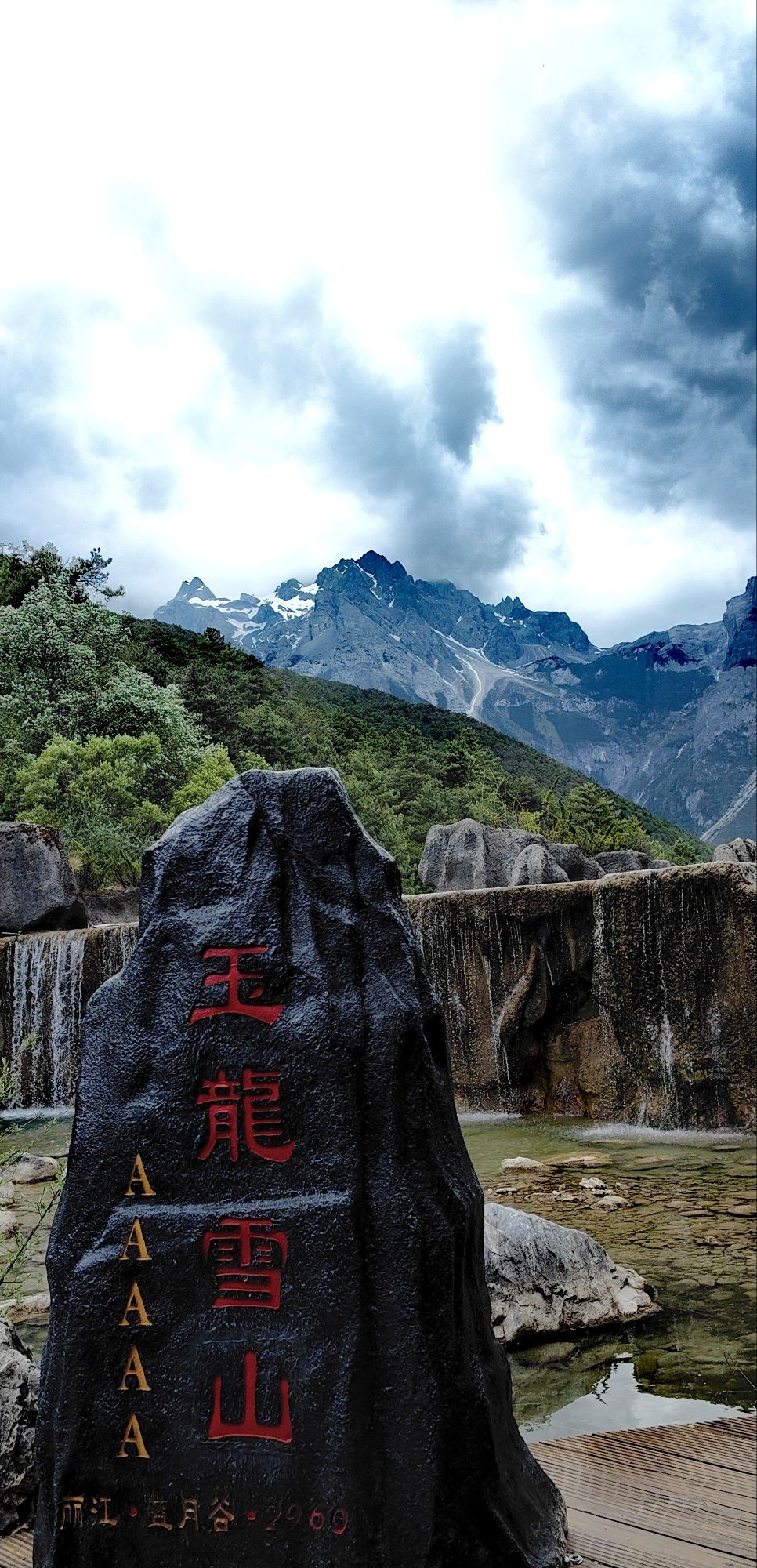
Jade Dragon Snow Mountain or called Yulong is a breathtaking mountain located just north of Lijiang in Yunnan Province. Towering at 5,596 meters, it’s the southernmost snow-capped mountain in the Northern Hemisphere and a sacred peak in Naxi culture, often associated with the guardian deity Sanduo. The mountain is named for its resemblance to a jade dragon lying gracefully among the clouds.

玉龙雪山是一座位于云南省丽江北境的壮丽山峰。它海拔5596米,是北半球维度最南的雪山,也是纳西族文化中的一座圣山,常与守护神三多联系在一起。这座山因其形似一条优雅地盘踞在云雾中的玉龙而得名。

In the sunny morning of June, standing on the charming cobblestone streets of Baisha Old Town, I could observe the majestic Jade Dragon Snow Mountain rising dramatically into the clouds. Beyond the tiled rooftops and faded murals of this ancient Naxi village, the sacred snow mountain showed its snow-covered peaks glowing in the sunlight. The journey from Lijiang to the mountain usually takes about 1.5 hours by bus, winding through scenic countryside and small villages. As I left the city behind, the snow-capped peaks began to dominate the horizon gradually.

六月阳光明媚的清晨,在白沙古城迷人的鹅卵石街道上,我注视着远方雄伟的玉龙雪山,它巍峨地耸立在云霄之中。在古老纳西村落的瓦屋顶和褪色的壁画映衬下,这座神圣的雪山向游客展现出白雪皑皑的主峰,在阳光下熠熠生辉。从丽江到玉龙雪山通常乘坐巴士大约需要一个半小时,一路上蜿蜒穿过风景秀丽的乡村,当我彻底离开城市时,白雪皑皑的山峰逐渐笼罩了整个地平线。

As I arrived at the entrance of scenic spot and gazed upwards, the mountain emerged like a silent colossus, its jagged, snow-dusted peaks piercing through a veil of drifting mist. The clouds curled around the mountain’s flanks like flowing silk, revealing glimpses of gleaming ice and ancient rock. Sunlight filters through the clouds, casting a silvery glow on the snow-covered ridges. The contrast between the dark pine forests at the base and the glittering whiteness above is striking, heightening the sense that this is a place touched by the divine.

当我抵达景区入口,抬头仰望,山峰宛如一座安静的巨人,嶙峋的雪峰在层层云雾中若隐若现。云雾缭绕,宛如飘逸的丝绸环绕在山腰,闪闪发光的冰块和古老的岩层在云彩的遮掩下犹抱琵琶半遮面。阳光透过厚厚的云层,在白雪皑皑的山脊上洒下一层银色的光芒。山脚下深邃的松林与山顶晶莹的白雪形成了鲜明的对比,更让人感受到仿佛置身于一片神圣的土地。

The snow mountain is not only known for its towering snow-capped peaks but also for its rich variety of scenic spots like Spruce Meadow, Blue Moon Valley, and Yak Meadow. Separate from the Glacier Park cable car towards the peak, the cable car at mid-level altitude leads visitors to forested trails and open meadows, where they can stroll under tall evergreens with the snowy peaks in the distance.

这座雪山不仅以其巍峨的雪峰而闻名,还拥有例如云杉坪、蓝月谷和牦牛坪等丰富多样的景点。与通往山顶的冰川公园大索道不同,中海拔的缆车引导游客前往山脊中间的森林小径和开阔的草地,在那里,游客可以漫步在高大的常青树下,远眺白雪皑皑的山峰。

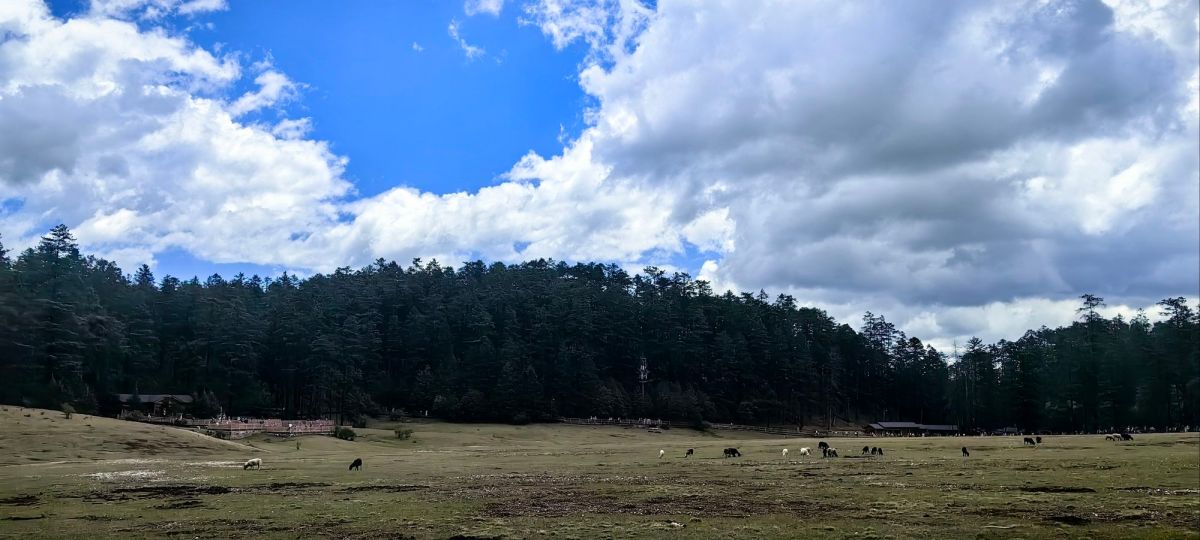
Spruce Meadow, is a serene alpine pasture nestled on the eastern slope of Jade Dragon Snow Mountain, about 3,240 meters above sea level. Surrounded by towering spruce trees and backed by the majestic snow-capped peaks, it is often described as a “natural oxygen bar”.

云杉坪是一片安静的高山牧场,坐落在玉龙雪山东坡,海拔约3240米。云杉坪周围环绕着高耸的云杉树,背靠雄伟的雪峰,被誉为“天然氧吧”。

Spruce is a type of coniferous evergreen tree that belongs to the genus Picea. These trees are commonly found in cool or mountainous regions of the Northern Hemisphere. The tall and straight trees have sharp, four-sided needles that grow individually from the branches and keep their green needles year-round, making them a symbol of endurance and vitality.

云杉是一种常绿针叶树,属于云杉属,常见于北半球的高山或气候凉爽的地区。这种树木高大挺拔,枝干坚实,树叶呈针状,四面分布,独立生长,终年常绿。它不仅展现出顽强的生命力,也象征着坚韧与生机。

This peaceful meadow holds deep cultural significance for the local Naxi people, who believe it to be a sacred land—a place where lovers pledge eternal devotion and spirits find peace. The area is shrouded in mystery mist. A wooden boardwalk allows me to wander gently through the forest and meadow, soaking in the crisp mountain air.

这片宁静的草甸在当地纳西族人心中有着深厚的文化与精神意义。他们视其为一片圣地——恋人曾在这里立下永恒的誓言,逝去的灵魂也在这里得以安息。薄雾轻笼,山林静谧,为这里增添了一层神秘的氛围。沿着蜿蜒的木栈道,我悠然漫步在苍翠的森林与广阔的草甸之间,呼吸着清冽纯净的山间空气,仿佛走进了一个遗世独立的净土。

Spruce Meadow

As I wandered through Spruce Meadow, it’s not just the towering spruces and misty mountain backdrop that captured my heart. It’s the quiet presence of the animals that call this alpine pasture home. Grazing cattle and gentle lambs moved slowly across the open fields, their dark silhouettes a peaceful contrast against the soft green of the grass and the distant silver peaks. I was totally immersed in the beaty of nature and forgot the elapse of time.

当我漫步在云杉草甸上,吸引我心灵的,不仅是巍峨挺拔的云杉和缭绕在山峦之间的云雾,还有那些悠然栖息在高山牧场上的动物们。成群的牛儿低头吃草,温顺的羊羔轻盈地穿行在开阔的草地上,它们深色的身影与柔软的绿草、远处银白色的雪山交相辉映,构成一幅静谧而生动的高原画卷。此刻,我仿佛与自然融为一体,忘却了时间的流转。

Life moves at a slower and more peaceful rhythm—not just for visitors, but for the local cattle that roam freely through the open fields and forest edges. These animals, often a mix of local mountain breeds and Tibetan yak hybrids, are well adapted to the high-altitude environment and cooler climate. These animals live in harmony with the land, tended by local Naxi herders who have practiced traditional grazing here for generations.

这里的生活节奏变得缓慢宁静——不仅对游客如此,对那些在开阔的草地和林缘间自由徜徉的牛群也是如此。这些牛大多是本地山地牛与藏牦牛的杂交品种,体型结实,适应高海拔和凉爽的山地气候,显得格外沉稳。它们由世代居住于此的纳西族牧民放养,与这片土地建立起深厚而和谐的关系,成为雪山脚下这片宁静天地的一部分。

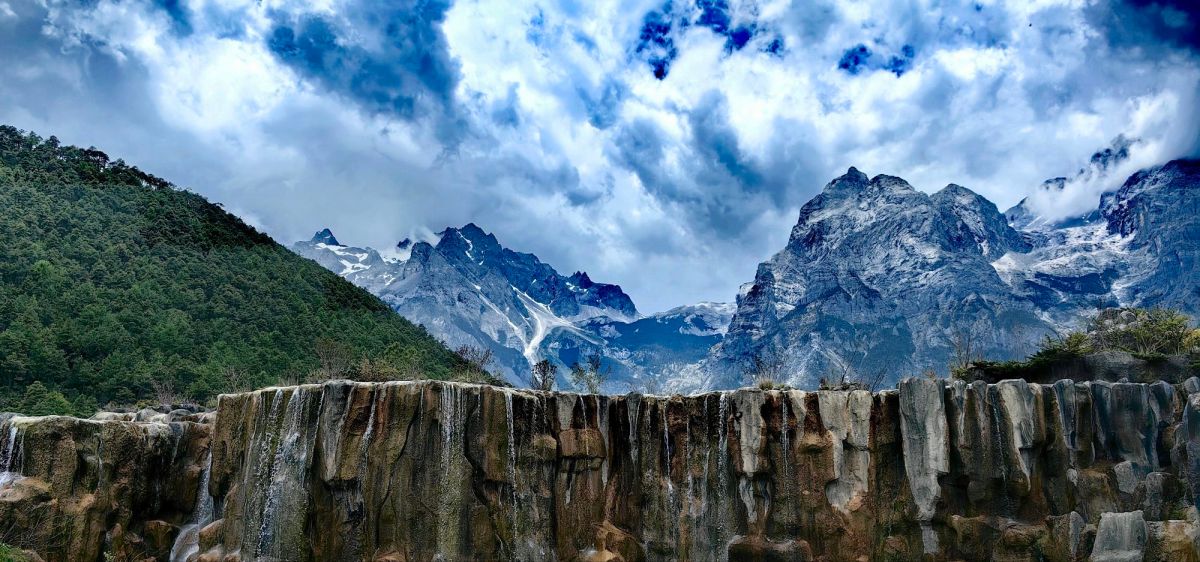
At the foot of Jade Dragon Snow Mountain, Blue Moon Valley is a place of breathtaking, otherworldly beauty. Its scene mixed of mountain and water is similar to Jiu Zhaigou. With its turquoise-blue glacial waters, terraced limestone pools, and surrounding forests, the valley looks like a scene lifted from a fairy tale—or a moonlit dream, which is exactly how it got its name.

蓝月谷静静地坐落在玉龙雪山脚下,美得令人屏息,仿佛遗世独立的人间仙境。山与水交织的画面,如同九寨沟般梦幻迷人。碧蓝如玉的冰川融水,层层叠叠的石灰岩水潭,在阳光下泛着神秘的光泽,四周被茂密的森林环抱,营造出一个仿佛只存在于童话中的世界。而当夜色降临,月光洒落水面,整片山谷宛若沉入一场幽蓝的梦境——“蓝月谷”这个名字,便由此得来。

The pure color of the water comes from the mountain’s glacial runoff. Water tumbles down a series of natural white stone steps, forming gentle waterfalls and quiet lagoons. The cleanness of the water is due to its content rich in calcium carbonate, which gives the pools their signature jade and sapphire hues, really mesmerizing.

纯净澄澈的水色源自雪山冰川的融水,沿着天然的白色石阶缓缓流淌,汇聚成轻柔的瀑布与静谧的湖泊。这清凉的泉水富含碳酸钙,赋予湖水如翡翠般的碧绿与蓝宝石般的湛蓝光泽,梦幻如画。

Blue Moon Valley

On clear days, the lagoon reflects the sky like a mirror, creating a glowing crescent shape that resembles a blue moon resting in the valley. Its surface is so still and clear that it reflects clearly the surrounding forests and cliffs like a painting, creating a perfect blend of sky, mountain, and water. I really enjoyed the gentle sound of cascading water. The natural environment made me relax.

晴朗的日子里,泻湖如同一面晶莹剔透的镜子,倒映着湛蓝的天空,勾勒出一道闪耀的新月,仿佛一轮蓝色的月亮静静地依偎在山谷之间。湖水平静澄澈,四周的森林与悬崖清晰倒映在水面上,仿佛天地与湖泊在此完美交融,构成一幅天然的山水画卷。我沉浸在潺潺流水的轻柔声中,心灵被这片纯净的自然抚慰,感受到久违的宁静与放松。

The astonishing sapphire hue of the water really captured my breath. It was so vivid and felt almost unreal. The color glowed under the sunlight, a deep, crystalline blue that shifted and shimmered with every ripple. It’s not the ordinary blue of lakes or rivers, but a gem-like brilliance, as if someone had poured liquid sapphire across the land, giving it eternal glory.

看湖水那令人惊叹的蓝宝石色泽,仿佛能瞬间将我的呼吸凝固。它如此鲜艳纯洁,令人几乎怀疑自己的眼睛是否陷入了一场梦境。阳光洒落在湖面上,湖水泛起深蓝色的光辉,每一次微风吹过,涟漪荡漾,波光闪烁,犹如璀璨星空。这不仅仅是普通湖泊的蓝色,而是如宝石般绽放的光芒,仿佛大自然亲手将液态蓝宝石倾洒在这片大地上,赋予它永恒的光辉。

The calm water became a flawless mirror—so smooth and undisturbed like polished glass. What’s most striking was the sharp, almost surreal line that divides the reflection—the point where blue met green, where sky and forest kissed across the water’s face.

平静的水面如同一面完美无瑕的镜子,光滑如抛光玻璃,静谧无波。最为引人注目的是那条几乎超现实的分界线——蓝色与绿色交织之处,天空与森林在水面上交相辉映。

Walking around the lake was definitely an enjoyable trip like stepping into a living watercolor painting. A well-kept path wound gently along the shoreline, guiding me past a series of glacial-blue pools and cascading waterfalls. The only sounds were the soft murmur of water and the occasional rustle of wind through the trees. As I circled the lake, I passed some scenic viewing platforms where I could stop to take in the full grandeur of the valley and experience the miracle of the nature.

环湖漫步绝对是一段令人陶醉的旅程,我仿佛步入了一幅生动的水彩画中。一条小径沿着湖岸蜿蜒而行,精心维护的步道引领我穿越一片片湛蓝的湖水和轻盈垂落的瀑布。四周弥漫着细水潺潺的声音,偶尔风吹过树梢,带来一阵沙沙的低语。随着我绕湖一圈,沿途经过了几个风景如画的观景台,每一处都让我驻足,深深吸一口清新的空气,陶醉于山谷的宏伟景色中,与大自然的奇妙邂逅永远镌刻在心间。

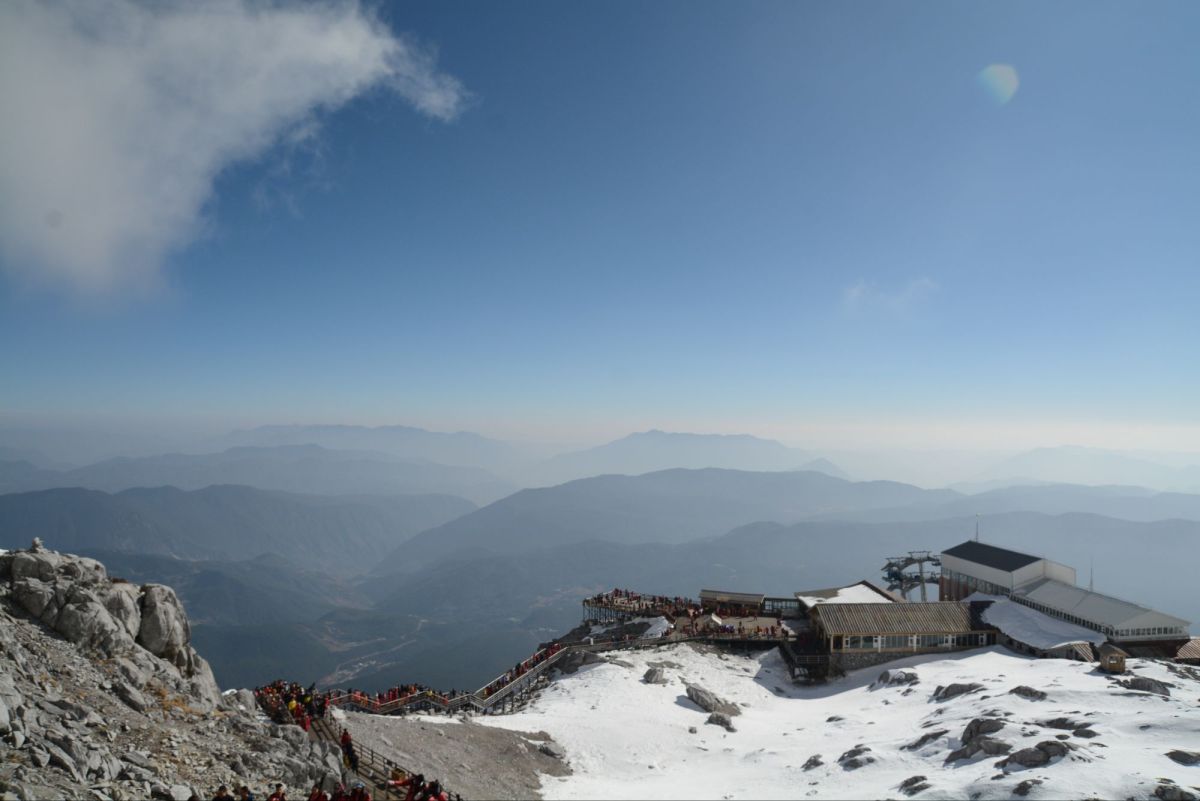
On the top of Jade Dragon Snow Mountain, Glacier Park offers one of the most thrilling and unforgettable encounters with alpine beauty. Reached via a dramatic cable car ride that lifts visitors to an altitude of 4,500 meters, the park is a realm of icy wonder—where jagged peaks pierce the clouds and ancient glaciers glisten under the open sky. Standing in this vast world of ice and snow, it feels like entering an isolated world. The surroundings are silent, with only the fresh air and the whistling cold wind. It reminded me of the lyric from’ Let it go’ : The snow glows white on the mountain tonight /Not a footprint to be seen/A kingdom of isolation.

玉龙雪山的山顶上,冰川公园为游客提供了最惊险刺激、最令人难忘的高山美景体验。乘坐缆车,游客将直达海拔4500米的冰川公园,这里宛如一片冰雪奇境——嶙峋的山峰直插云霄,古老的冰川在湛蓝的天空下闪闪发光。站在这片广袤的冰雪天地中,仿佛进入了一个人迹罕至的秘境,周围寂静无声,只有清冽的空气和呼啸的寒风。这一刻,我不禁想起了动画片《Let it go》中的歌词:“今夜山上积雪皑皑,不见一丝足迹,宛如与世隔绝的王国。”

Glacier Park

The landscape spread out in a vast expanse of white. Glacial formations, frozen crevices, and snow-covered cliffs create a powerful, otherworldly scene. The high altitude and low temperature make every step feel like a small triumph—and each pause offers breathtaking panoramic views of the surrounding peaks and valleys. Visitors of the park commonly experience high altitude sickness symptoms like dizziness and shortness of breath. It is recommended to carry a portable oxygen canister, which is widely available in Lijiang and at the mountain entrance and wear or rent a thick down jacket. It’s a place where we stand face-to-face with the irresistible power of nature.

眼前的白雪皑皑,蔚为壮观,延绵不绝,仿佛天地间的一片纯净无垠的白色世界。冰川的痕迹、冻结的裂缝以及悬崖峭壁上积雪的层层覆盖,共同编织成一幅气吞万里、如同世外桃源般的画卷。高海拔的空气稀薄与低温的严酷,令每一步都像是一次小小的挑战,每一次驻足,便能收获四周群峰与深谷的壮丽全景。

在这里游客常会感受到高原反应,轻微的头晕与呼吸急促非常常见。为了确保安全,携带便携氧气罐(丽江及山口地区随处都在售卖)与穿戴厚实的羽绒服成为了游玩必需的功课。在这片天地之间,我们与大自然的无敌力量不期而遇,感受到那份纯粹的力量与震撼。

As I descended from the towering heights of Jade Dragon Snow Mountain, I felt as though I was stepping out of a dream. This journey wasn’t just about breathtaking views or stunning photos—it was about the raw, humbling power of nature. The quiet reflections on sapphire waters and the clouds dance around the peaks both left me a deep impression. I could embrace nature closely. Standing in the shadow of the snow-capped ridges, I was reminded how small we are, and how deeply we can feel when nature opens its arms.

从巍峨的玉龙雪山缓缓下山,我仿佛离开了一场缥缈的梦境。此行的意义,远不止于那些壮丽的景色和令人惊叹的照片,更在于深切感受到大自然那股原始震撼心灵的力量。湖面如镜,波光粼粼,山巅的云雾缥缈飘逸,所有的一切都深深刻印在我的记忆中。我可以近距离拥抱大自然。站在雪峰的阴影下,面对那巍峨的山脊,我忽然意识到大自然面前人类是多么的渺小,那份无言的震撼是如此深刻而强烈!

The romance hidden between Cangshan’s Peaks and Erhai’s Shores

苍山洱海间的浪漫

Between the misty peaks of Cangshan and the shimmering waters of Erhai, Dali is a place where time slows down, and nature whispers stories of the past. With its ancient town’s cobblestone streets and the scent of jasmine tea in the air, Dali exudes an eternal charm that captivates the wandering soul. Here, the mountains breathe tranquility, and the lake reflects the poetry of the blue sky. Whether strolling along Erhai’s shores, hiking Cangshan’s winding trails, or simply sipping tea in a sun-drenched courtyard, Dali invites travelers to embrace its leisurely rhythm, where every moment feels like a verse in a lyric poetry.

云雾缭绕的苍山山峰和波光粼粼的洱海水畔之间,大理是一个绝对慢节奏的地方,在这里大自然低声细语陈述着过去的故事。大理古镇的鹅卵石街道和空气中弥漫的茉莉花茶香味,散发着永恒的魅力,吸引着四海为家的灵魂。群山静谧安详,湖泊倒映着蓝天的诗意。无论是漫步在洱海岸边,徒步穿越苍山蜿蜒的小径,还是简单地在阳光普照的庭院里品茶,游客都以悠闲的节奏在品味生活,这里的每一刻都像一首抒情诗。

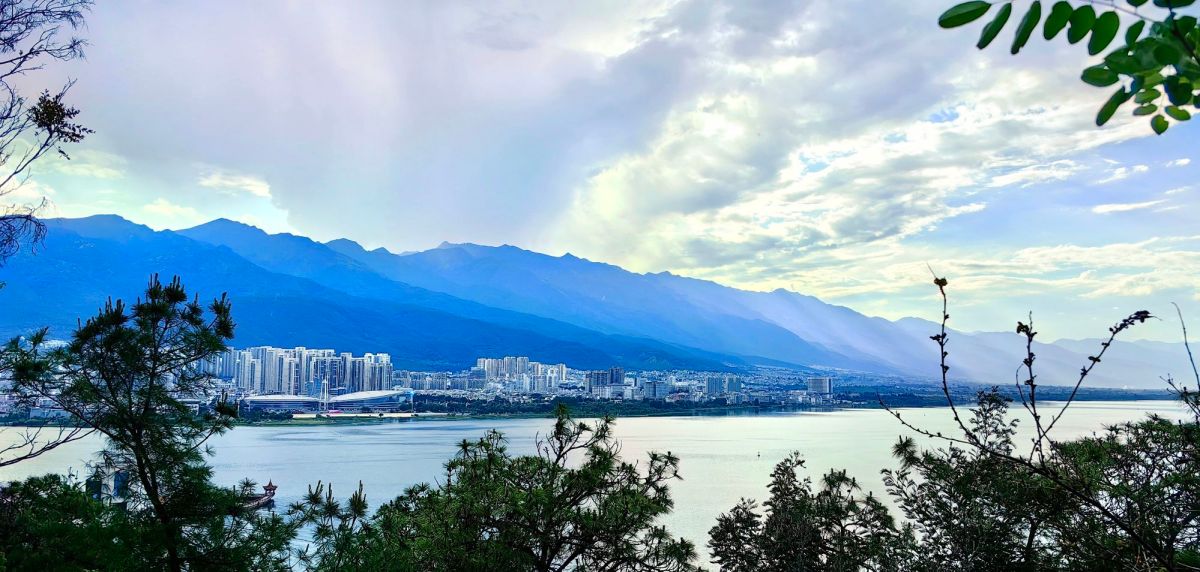
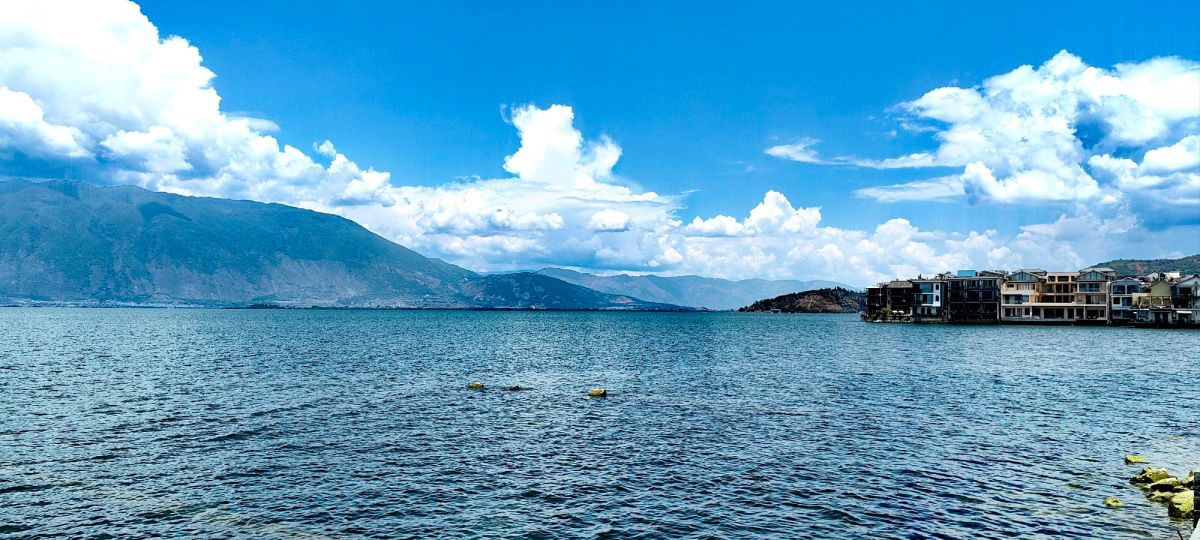
Dali has a mild, spring-like climate year-round due to its location on a plateau in Yunnan Province. I spent three days in this romantic and poetic city in May 2024. The spring of Dali has pleasant temperatures ranging from 10–22°C, with blooming flowers and clear skies. The day of my arrival was a cloudy day with occasional showers. My first destination is the Jinsuo Island where visitors can take the travel boat around the island. The photo taken in the cloudy day can not show the beauty and charm of this city at all.

大理位于云南高原,气候温和,四季如春。2024年5月,我在这座浪漫诗意的城市度过了三天美好的假期。大理的春天气温宜人,一般是10-22°C,百花盛开,万里无云。我到的那天是阴天,偶尔有阵雨。我的第一个目的地是金梭岛,游客可以在那里乘坐游船环岛。大理阴天拍摄的照片完全不能展现这座城市的美丽和魅力。

Erhai Lake was veiled in soft mist that blurred the boundaries between water and sky. The lake’s vast expanse shimmered under the delicate drizzle, its surface rippling like silk brushed by the wind. As the mist thickened, the distant shores faded into a gloomy haze. In the background, Cangshan Mountain rose like a frozen ocean waves crashing against the sky. The interplay of mist and mountain created a shifting and alternating landscape, where peaks appeared and vanished like illusions.

洱海笼罩在薄雾中,水天交界,一片茫茫无际。细雨濛濛,湖面波光粼粼,如丝般被风拂过。雾气渐浓,远处的湖岸渐渐隐入一片阴霾之中。苍山耸立在云雾中,犹如冰冻的海涛拍打着天空。雾气与山峰交相辉映,山峰时隐时现,犹如幻影一般。

In the afternoon, when the sun got rid of gloomy clouds and clear blue sky showed its bright face to the visitors, the Erhai was like a dream land. Under the golden embrace of the sun, Erhai Lake sparkled like a vast sapphire, stretching endlessly beneath the boundless blue sky. Its crystal-clear waters shimmered with gentle waves, reflecting the sunlight and blue sky like a mirror.

午后,当太阳驱散阴霾,湛蓝的天空露出灿烂的面容时,洱海仿佛置身于梦幻之地。在金色光芒的怀抱下,洱海像一块巨大的蓝宝石一样闪闪发光,在无边无际的蓝天之下绵延千里而不绝。清澈的湖水泛着柔波,像镜子一样反射着阳光和蓝天。

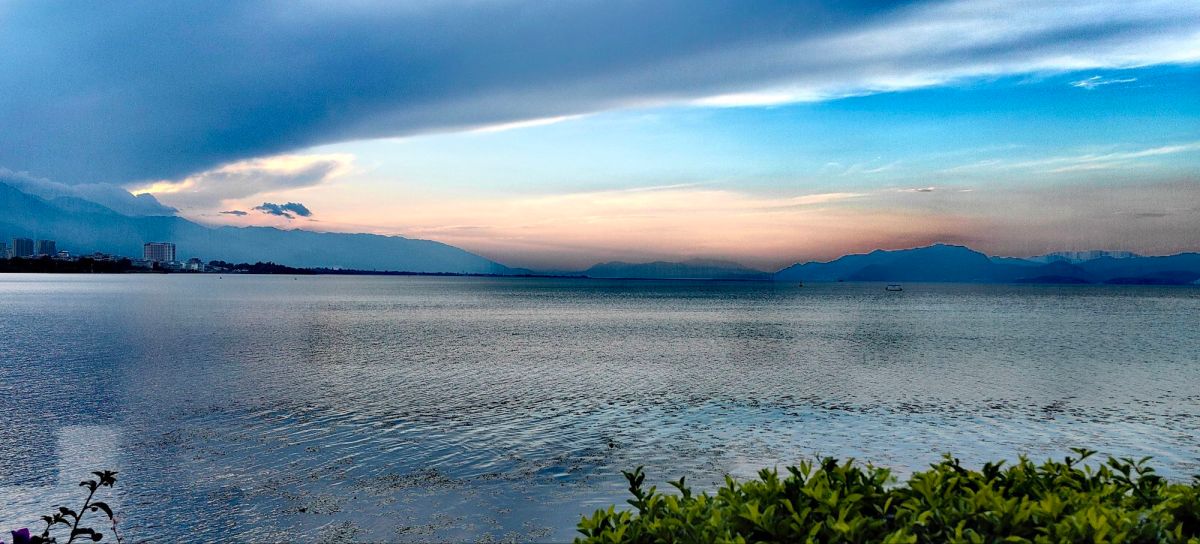
Erhai Park

The photo was taken in the Erhai Park before the sun set. The horizon was painted with soft hues where the lake seems to meet the sky at the limit of earth. It created an illusion of infinity—a landscape where nature’s brilliance unfolded in its purest form. I always dreamed of visiting Dali. At this moment, what struck me most was how the landscape existing in my mind felt alive now.

这张照片是在日落之前在洱海公园拍摄的。遥远的地平线此刻被涂上了柔和的色调,湖水似乎在尽头与天空相接。它营造出了一种天地无限的幻觉—将大自然的灿烂光辉以最纯粹的形式展现出来。我曾经一直梦想着去大理旅行。此刻,最让我震撼的就是曾经脑海中臆想的风景如今在眼前变得生动活现起来。

When I walked on the promenade along the south of Erhai, I could enjoy the most beautiful scene of this city. Along the lake’s shores, colorful flowers bloomed in dazzling arrays, their petals swaying in the breeze like delicate strokes on a painter’s canvas. Cherry blossoms, azaleas, and wild daisies burst into color, the pink, purple, and yellow petals forming a striking contrast against the deep blue of Erhai.

漫步在洱海南岸的步行大道上,满眼都是这座城市最美的风景。湖畔盛开着五颜六色的鲜花,令人眼花缭乱,花瓣在微风中摇曳,就像画布上精致的笔触。樱花、杜鹃花和野雏菊色彩缤纷,粉色、紫色和黄色的花瓣与洱海的深蓝色形成鲜明对比。

Gazing at the opposite side of lake, Cangshan Mountain stood majestically in the distance, its towering peaks stretching toward the heavens like a guardian of Dali. Cloaked in emerald forests and rugged cliffs, the mountain exuded an air of grandeur and mystery, its ridges undulating like the ocean waves. As the sun set, golden light spilled over the peaks, casting long shadows. There is no doubt it is an iconic symbol of Dali’s natural beauty.

遥望洱海对岸,远处苍山巍峨耸立,高耸的山峰直冲云霄,犹如大理的守护者。苍山掩映在翠绿的森林和险峻的悬崖之间,散发着雄伟而神秘的气息,山脊起伏如浪。夕阳西下,金色的光芒斜洒在山峰上,投下修长的剪影。毫无疑问,它是大理自然美景的标志象征。

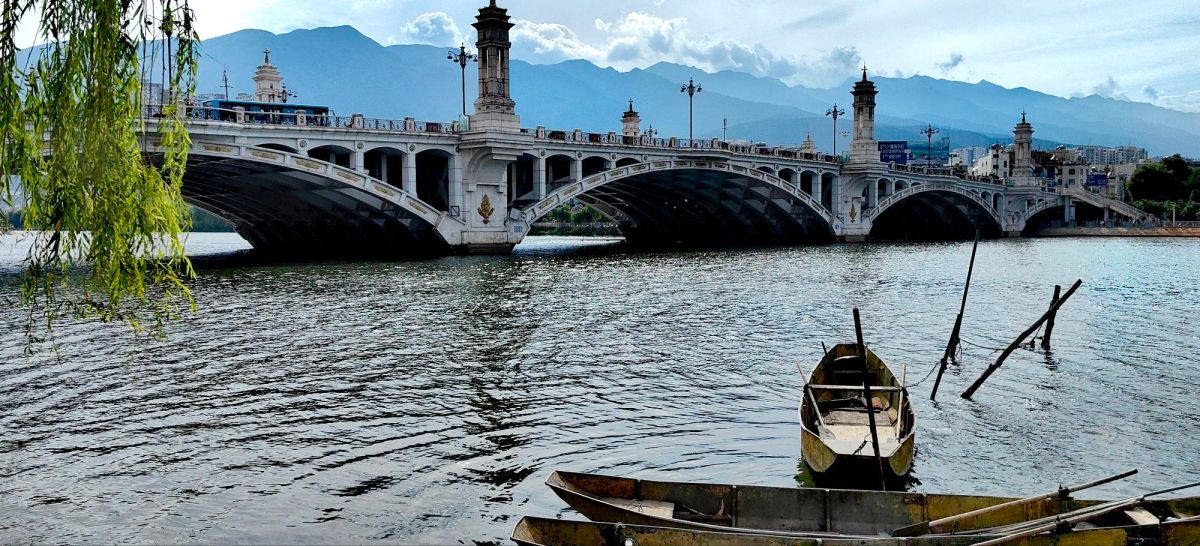
Xingsheng Bridge

Spanning the shimmering waters of Erhai Lake, this sleek and elegant Xingsheng Bridge connects the two shores, offering breathtaking panoramic views of the surrounding landscape. Its streamlined structure and sturdy pillars reflect in the tranquil waters below, creating a mirror-like image. At dusk, golden hues bathe it in a warm glow, making it a stunning sight against the distant silhouette of Cangshan Mountain.

这座造型优美、横跨波光粼粼的洱海的兴盛大桥将两岸连接起来,桥上可欣赏到周围壮丽的全景。其流线型结构和坚固的桥柱倒映在平静的水面上,形成如镜般的画面。黄昏时分,金色的阳光使它沐浴在温暖的光芒中,与远处苍山的轮廓形成鲜明对比,令人叹为观止。

It was a short trip across the bridge to view the scenery along the both sides of Erhai. Traditional Bai-style pavilions and elegant lakeside buildings dot the shoreline, their white walls and dark-tiled roofs reflecting in the tranquil waters like an ink painting. As I stood on the bridge hearing the whisper of wind, I felt an unexpected sense of calm, as if the lake was inviting me to just be—no rush, no worries just the quiet rhythm of nature unfolding around me.

游客可以很快穿过大桥欣赏洱海两岸的风景。传统的白族风格亭台楼阁和优雅的湖畔建筑零星散布在岸边,白色的墙壁和深色的瓦片屋顶倒映在平静的水面上,就像一幅水墨画。站在桥上聆听风语,我的心中感到一种意想不到的平静,仿佛洱海在邀请我静静地享受这一切—没有匆忙没有烦躁,只有大自然的宁静。

The Bai style pavilion has intricate wood carvings adorning its pillars, and delicate blue-and-white motifs. Beneath the pavilion, a young couple posed for a photograph, dressed in exquisite traditional Chinese attire. The woman wore a flowing hanfu, its silk fabric embroidered with delicate floral patterns, fluttering gently in the breeze. Her long sleeves draped elegantly and were adorned with pearls and gold filigree. The man, dressed in a dignified robe with intricate patterns, gazed at her with admiration. Dali is really a place where love lingers in the air, where romance is woven into the fabric of nature and tradition.

这座白族风格的阁楼柱子上装饰着精美的木雕,还有精致的蓝白图案。亭子下面,一对年轻夫妇穿着精致的中国传统服装在摆拍。女方身着飘逸的汉服,丝绸面料上绣着精致的花卉图案,在微风中轻轻飘扬。她的长袖优雅地垂落,上面装饰着珍珠和金丝。男方身着一件带有复杂图案的庄重长袍,用爱慕的目光凝视着她。大理确实是一个爱情洋溢的地方,天然的浪漫融入了自然和传统中。

As the day faded, the sunset over Erhai was an unforgettable sight—flaming red and golden streaks reflected in the water, turning the lake into a glowing masterpiece. It was really a pleasant experience to go on a holiday at the lakeshore of Erhai. That was a memorable moment when I gazed at the expanse of Erhai, where fishing boats drifted lazily and gentle waves lap against the shores slowly. The soft wind, cool and refreshing, carries the delicate scent of the lake. When the darkness fell gradually, a sense of eternal tranquility washed over my heart and all the worries seemed to dissolve into the vast and open sky.

黄昏时分,洱海的落日景象令人难忘,火红的霞光和金色的光纹倒映在水面上,让整个湖面成为一幅光彩夺目的绚丽杰作。在洱海畔度假真是一次回忆满满的经历。凝望着广阔的水面以及悠闲地漂浮着的渔船,温柔的波浪缓慢拍打着岸边,那一刻着实令人难忘。轻柔的夜风,凉爽而清新,带着一丝湖水的清香。当夜幕逐渐降临时,一种永恒的宁静涌上心头,所有的烦恼似乎都消散在广阔的天际中。

Dali Ancient City

Dali is a place with rich history. The Ancient City stands as a testament to centuries of history, and culture. With its well-preserved architecture, and stone-paved streets, Dali is more than just a scenic town—it is a living chronicle of the past. Dali’s history dates back over 1,000 years, flourishing as the capital of the Nanzhao Kingdom. Later, the Dali Kingdom, ruled by the Duan family, continued this legacy, spreading Buddhism and fostering a golden age of art, philosophy, and architecture. In 1253 AD, the Mongols, conquered the Dali Kingdom, integrating it into the expanding Yuan Dynasty.

大理是一个历史悠久的地方。这座古城见证了数个世纪的历史和文化变迁。大理古城拥有保存完好的建筑和石板街道,不仅仅是一个风景秀丽的小镇,更是一部活生生的编年史。大理的历史可以追溯到 1000 多年前,作为南诏国的首都而繁荣昌盛。后来,由段氏家族统治的大理国继承了这一传统,传播佛教,并开创了艺术、哲学和建筑的黄金时代。公元1253年,蒙古人征服了大理国,将其并入不断扩张的元朝。

The ancient city is enclosed by brick walls. It is a masterpiece of traditional Bai architecture. The Bai ethnic group is one of China’s 56 officially recognized ethnic minorities, with a population of over two million. Renowned for their rich cultural heritage and deep connection to tea, the Bai people have lived in harmony with the stunning landscapes of Cangshan Mountain and Erhai Lake for centuries.

这座古城四周环绕着砖墙,是白族传统建筑的杰作。白族是中国56个官方认可的少数民族之一,人口超过200万。白族以其丰富的文化遗产和与茶的深厚渊源而闻名,几个世纪以来这个民族一直依偎在苍山和洱海之畔与之相伴。

Dali thrived as a major stop on the Ancient Tea Horse Road, where merchants traded Pu’er tea and silk with Tibet and India. The Three-Course Tea Ceremony is a unique and deeply symbolic tradition of the Bai ethnic people in Dali. More than just a tea-drinking ritual, it embodies the philosophy of life, teaching that one must experience bitterness, sweetness, and reflection—just like the journey of life itself. The first tea is strong, bitter, brewed from local roasted tea leaves in an earthenware pot, symbolizing the hardships and struggles that everyone faces at the beginning of their journey. The second tea is brewed with walnuts, rock sugar, and milk, creating a creamy, sweet flavor, symbolizing the rewards of hard work—happiness, love, and the sweetness of life. The final tea is the most complex, made with honey, Sichuan peppercorns, and cinnamon, creating a mix of spicy, numbing, sweet, and bitter flavors, symbolizing life’s wisdom and reflections.

大理曾是茶马古道上的重要一站,商人们在这里与西藏和印度进行普洱茶和丝绸贸易。三道茶是大理白族人民独特而具有深刻象征意义的传统。它不仅仅是一种饮茶仪式,还体现了人生哲学,教导人们必须经历苦涩、甜蜜和反思—茶道就像人生旅途一样。第一道茶味道浓烈,苦涩,用当地烤茶在陶罐中冲泡而成,象征着每个人在旅途开始时所面临的艰辛和挣扎。第二道茶用核桃、冰糖和牛奶冲泡而成,呈现出奶油般甜美的味道,象征着辛勤工作的回报以及幸福、爱情和生活的甜蜜。最后一道茶是最复杂的,用蜂蜜、花椒和肉桂制成,创造出辛辣、麻、甜和苦的混合味道,象征着人生的智慧和对生活的反思。

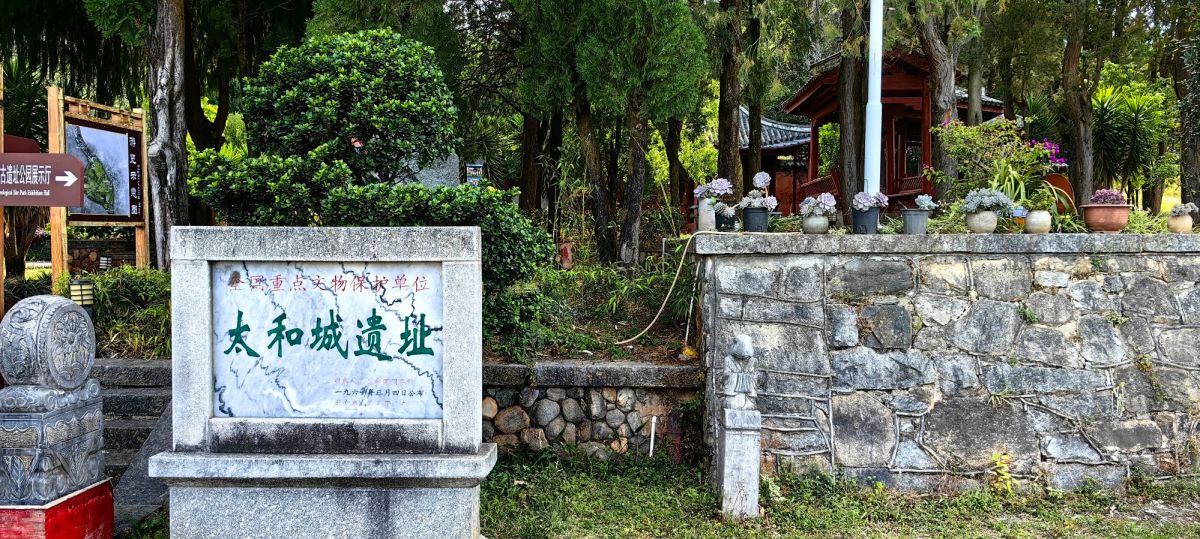
This is the relic of Taihe City which is the first capital of the Nanzhao Kingdom. During the Tang Dynasty, a powerful Bai leader named Piluo Ge united the tribes of Bai ethnic groups and established the Nanzhao Kingdom, choosing Taihe as its first capital. This marked the beginning of a golden age for the region, as Nanzhao developed into a formidable kingdom that engaged in trade. In the 750 AD, the Tang Dynasty launched a massive military campaign against Nanzhao, aiming to reassert Chinese control over Yunnan. The Tang army, led by the general Xianyu Zhongtong marched toward Taihe City. The harsh conditions, combined with Nanzhao’s effective tactics, led to heavy Tang casualties. After this battle, Nanzhao emerged as a fully independent kingdom, no longer under Tang influence.

这是太和城的遗址,太和城是南诏国的第一个都城。唐朝时期,一位名叫皮罗阁的强大白族领袖统一了白族部落,建立了南诏国,并选择太和作为其第一个都城。这也标志着该地区黄金时代的开始,南诏发展成为一个从事贸易的强大王国。公元750年,为了重新确立中国对云南的控制,唐朝对南诏发动了大规模的军事行动。由剑南节度使鲜于仲通率领的唐军向太和城进军。恶劣的自然条件加上南诏的有效战术,导致唐军伤亡惨重。此战之后,南诏成为一个完全独立的王国,不再受唐朝的制约。

Nanzhao Dehua Stele

The Nanzhao Dehua Stele is one of the most significant historical inscriptions in the Taihe city. It is 3.3 meters tall and 1 meter wide, featuring over 3,000 Chinese characters inscribed on a stone slab. The stele traces the history of the Bai people and the founding of the Nanzhao Kingdom. It emphasizes the divine right of Nanzhao’s rulers and their contributions to the stability of the region. It acknowledges the past conflicts between Nanzhao and the Tang but portrays Nanzhao as a loyal vassal state. The wording of the stele presents Nanzhao as a civilized and benevolent kingdom rather than a rebellious power. This reflects the political strategy of King Shilong, who sought to maintain diplomatic ties with the Tang while solidifying Nanzhao’s regional dominance.

南诏德化碑是太和城中最重要的历史碑文。碑高3.3米,宽1米,石板上刻有3,000多个汉字。碑文追溯了白族的历史和南诏王国的建立。它强调了南诏统治者的神圣权利及其对该地区稳定的贡献。它承认了南诏与唐朝之间的过去冲突,但将南诏描绘成一个对大唐忠诚的藩属国。碑文将南诏塑造成一个文明仁慈的王国,而不是一个叛逆的军事强国。这反映了世隆国王的政治策略,他寻求与唐朝保持积极的外交关系,同时巩固了南诏在该地区的优势地位。

Three Pagodas of Chongsheng Temple

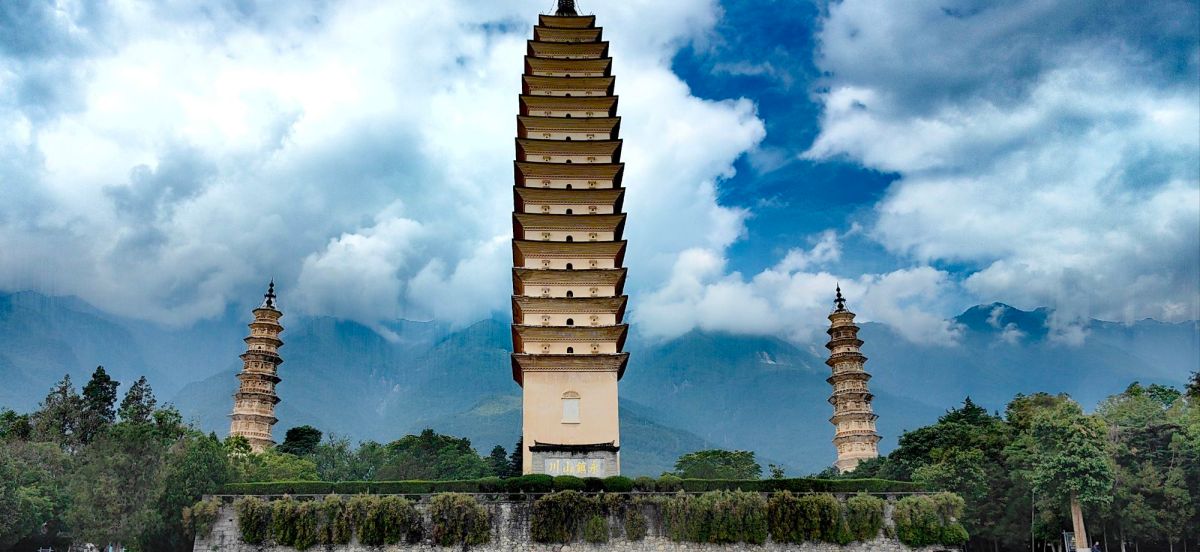
Outside the city, the Three Pagodas of Chongsheng Temple, built over 1,000 years ago, stand as enduring symbols of Dali’s Buddhist heritage. When I was young, I enjoyed reading the martial arts novel written by Mr Jin Yong. In the novel Tianlong Babu, the Three Pagodas are not only a historical landmark but also a place of martial arts encounters. Dali is portrayed as a Buddhist kingdom, where the ruling Duan family possess the Six Meridians Divine Sword (六脉神剑), an extreme powerful martial art based on internal Buddhist energy. This martial art allows the user to project sword-like energy from their fingertips, capable of slicing through metal and stone. The script of this martial art is said to be stored in this temple. That is why I was so excited to visit it.

城外的崇圣寺三塔建于一千多年前,是大理佛教文化遗产的象征。年幼时特别喜欢拜读金庸先生的武侠作品。在小说《天龙八部》中,崇圣寺三塔(小说里为天龙寺)不仅是历史地标,也是武林风云际会之地。大理被描述为一个佛教王国,统治者段氏家族世代拥有六脉神剑,这是一门基于佛教内功的极其强大的武艺。这门武术的使用者从指尖发射出类似剑芒的能量,能够切金断石。据说这门武功的原本就存放在这座寺庙里。这也是我对这个景点特别神往的原因。

The Three Pagodas were built during the Nanzhao Kingdom as part of Chongsheng Temple, which was once the royal Buddhist temple of Dali. Despite earthquakes and wars, the Three Pagodas have stood for over 1,000 years, making them one of the most durable ancient structures in China. The Three Pagodas are arranged in a triangular formation. The central tower called Qianxun Pagoda is similar to the Giant Wild Goose Pagoda in Xi’an. It is made of bricks covered in white mud, giving it a bright, elegant appearance against the green Cangshan Mountain.

三塔始建于南诏国时期,是崇圣寺的一部分,崇圣寺曾是大理的皇家寺庙。尽管经历了地震和战乱,三塔仍然屹立了一千多年,是中国最坚固的古代建筑之一。三塔呈三角形排列。中央塔称为千寻塔,与西安的大雁塔相似。它由砖块砌成,表面覆盖着白泥,在苍山翠绿的映衬下显得明亮优雅。

The two side towers were built about 100 years after Qianxun Pagoda. Unlike the main pagoda, these two have an octagonal shape and Bai ethnic architectural influences. They are slightly tilted due to centuries of natural shifting.

两座侧塔建于千寻塔之后约 一百年,与主塔不同,侧塔为八角形,具有白族建筑风格,因历经数个世纪的自然移动而略有倾斜。

Inside the pagodas, archaeologists have discovered Buddhist scriptures, statues, and relics, revealing the deep spiritual connection between Dali and Buddhism. Ancient Bai people believed that dragons and evil spirits caused floods, so the pagodas were built to suppress them. Despite multiple earthquakes in Dali, the pagodas have survived, strengthening their reputation as a divine guardian of the region.

考古学家在宝塔内发现了佛经、雕像和古迹,揭示了大理与佛教之间深厚的联系。古代白族人认为龙和恶灵会引起洪水,因此建造了宝塔来镇压洪水。尽管大理多次发生地震,但宝塔仍然完好无损,这进一步巩固了它们作为该地区守护神的地位。

From the Three Pagodas, the view of green Cangshan Mountain immersed in a sea of clouds is a sight of breathtaking beauty. Standing tall in the distance, Cangshan’s emerald-green peaks rise above the mist, their rugged slopes veiled in layers of shifting clouds. The mist rolls like gentle ocean waves. The scene is one of serene grandeur, where nature and history blend seamlessly. When I gazed at the mountains shrouded by clouds, I could not stop to have a sense of awe.

从三塔望去,苍山云海掩映,景色美得令人窒息。远处翠绿的山峰耸立在云雾中,崎岖的山坡被层层云雾笼罩。雾气翻滚,犹如温柔的海浪。这里的景色宁静而壮丽,自然与历史完美融合。当我凝视着云雾笼罩的群山时,我不禁心生敬畏。

Cangshan Mountain

The beautiful Cangshan must be another icon of this city. I can observe its grand and extended silhouette in every corner of Dali. Under the vast azure sky, it stands like a majestic guardian, draped in a robe of emerald green. Looking up, the sky is a boundless canvas of brilliant blue, where fluffy clouds drift lazily. The scene is a portrait of pure serenity and romance painted by Pierre-Auguste Renoir, as if nature itself has woven a love story between the sky and the mountains, where every leaf and every gust of wind sings a tender ballad of eternal beauty.

美丽的苍山一定是这座城市的又一个地标。我甚至可以在大理的每一个角落看到它雄伟而绵延的轮廓。在蔚蓝的天空下,苍山像一位威严的守护者一样屹立着,身披翠绿色的长袍。抬头望去,天空宛如一幅无边无际的湛蓝画布,蓬松的云朵懒洋洋地飘浮在天空中。这幅景象就如同雷诺阿笔下一幅纯粹宁静而浪漫的画作,仿佛大自然本身在天空和群山之间编织了一个爱情故事,每一片树叶和每一阵风都在吟唱一首永恒的温柔歌谣。

At the foot of Cangshan Mountain, white-walled, blue-tiled Bai-style houses stand in harmony with the surrounding lush greenery. Winding stone paths lead through the ancient villages, shaded by ancient camphor trees, their leaves whispering softly in the wind. Crystal-clear streams, fed by Cangshan’s pure mountain springs, weave through the fields, nourishing rice paddies and tea plantations. I aimlessly walked through the small trek and smelled the aroma of soil and experienced the tranquility of rural life.

苍山脚下,白墙青瓦的白族民居与周围郁郁葱葱的绿植相映成趣。蜿蜒的石板路穿过古老的村落,古樟树成荫,树叶在风中轻轻摇曳。清澈的溪水由苍山纯净的山泉滋润,蜿蜒流过原野,滋润着一片片稻田和茶园。我惬意般穿过一条条小径,泥土的芳香入木三分,乡村生活的宁静是如此美好。

Longkan Wharf

At the end of the villages, the Longkan Wharf is a serene and picturesque spot on the western shore of Erhai Lake, just a short distance from Dali Ancient City. It is one of the best places to experience the tranquil beauty of Erhai.

龙龛码头位于村落尽头,是洱海西岸一处宁静而风景如画的地方,距离大理古城不远。它是体验洱海宁静之美的最佳地点之一。

At Longkan Wharf, the crystal-clear waters of Erhai Lake stretch out endlessly, mirroring the blue sky and drifting clouds. Traditional Bai-style pavilions and arched stone walkways extend gracefully over the water, offering spots to sit and watch the gentle ripples, white egrets gliding across the lake. Here, many couples wore wedding dress to take perfect photos representing their eternal loves.

龙龛码头清澈见底的湖水一望无际,映照着蓝天和飘浮的云朵。传统的白族风格亭台楼阁和拱形石道优雅地延伸在水面上,人们可以坐下来欣赏湖面的涟漪和白鹭在湖面上滑翔。这里众多情侣身着婚纱拍摄代表他们永恒爱情的完美照片。

Shuanglang old town

It is recommended to spend one day in this old town Shuanglang if visitors spent multiple days in Dali. Known as the “Pearl of Erhai,” this ancient lakeside village is a blend of Bai ethnic charm, and stunning water landscapes, making it one of the most romantic destinations in Dali. It was my last stop in Dali.

如果游客在大理逗留多日,建议在双廊古镇停留一天。这座古老的湖畔村庄被誉为“洱海明珠”,融合了白族风情和迷人的水景,勘察大理最浪漫的目的地。这也是我在大理的最后一站。

I took the local bus towards the Shuanglang old town which is quite far from the city area of Dali. The scenery on the way reminded me of one Chinese poem ‘ 绿树村边合,青山郭外斜’. It combined a unique blend of natural beauty and cultural charm. Faraway, a small and traditional village nestled against the backdrop of rolling and green hills. The lush and dense greenery of the trees stretched along the edges of the village, their dense leaves shimmering in the sunlight, creating a green canopy.

我乘坐当地巴士前往距离大理市区较远的双廊古镇。沿途的风景让我想起了一句古诗“绿树村边合,青山郭外斜”。这句诗结合了自然之美和文化魅力。远处一个个小而传统的村庄坐落在连绵起伏的绿色山脊中。郁郁葱葱的树木沿着村庄的边缘延伸,茂密的树叶在阳光下闪闪发光,形成一片翠绿的伞盖。

Shuanglang is blessed with breathtaking views of Erhai Lake and Cangshan Mountain. The town’s white-walled, blue-roofed Bai-style houses line the waterfront, their reflections shimmering on the lake’s surface. Small stone alleys wind through the town, leading to hidden courtyards and tea houses. I enjoyed the atmosphere here. It is really a wonderful place where time slows down, and beauty lingers in every breeze.

双廊镇坐拥洱海和苍山的壮丽美景。小镇的白墙蓝顶房屋排列在湖边,倒映在湖面上,熠熠生辉。小石巷蜿蜒穿过小镇,通往静谧的私家庭院和茶馆。这里令人陶醉的氛围实在折煞人也,时间在这里仿佛被定格,微风吹拂,美景萦绕心头。

The feeling in Dali especially alongside Erhai was really magnificent and unparalleled. Like Manarola, it was a dreamy escape where the sound of waves, the scent of blooming flowers, and the slow rhythm of village life create an atmosphere of romance and nostalgia. Whether I was watching the sunrise from a lakeside pavilion, exploring the charming alleys, or simply soaking in the peaceful elegance of Erhai, Dali is definitely a place that lingers in the heart long after I left.

大理,尤其是沉浸于洱海之侧的感觉真是无与伦比,千言万语难以形容。如同马纳若拉一样,这是一个梦幻般的度假胜地,海浪涛声、盛开的鲜花和乡村生活的缓慢节奏营造出别样的浪漫而怀旧的氛围。无论是在湖边凉亭看日出,探索迷人的小巷,还是全身心沉浸在洱海的宁静优雅中,大理绝对是离别后仍久久萦绕在我心中的完美旅游地!

The Geological Wonders of the Stone Forest

喀斯特地址奇迹石林

The Stone Forest, located in Yunnan Province, is a breathtaking natural wonder renowned for its towering limestone formations that resemble a vast forest made of stone. Formed over 270 million years ago through erosion and geological activity, this UNESCO World Heritage site is rich in history and culture. The local Sani people, a branch of the Yi ethnic group, add to the forest’s allure with interesting folklore. Exploring labyrinth-like pathways and dramatic rock pillars was really an extraordinary experience for every traveler.

云南省的石林是一个令人惊叹的自然奇观,以其高耸的石灰石地层而闻名。这些大量的石灰岩类似于一片巨大的石制森林。这处世界自然遗产因水土侵蚀和地质活动形成于2.7亿多年前,拥有丰富的历史和文化价值。当地的撒尼人是彝族的一个分支,他们有趣的民间传说为这片区域增添了别样的魅力。探索迷宫般的小径和穿行于独特的石柱间对每位旅行者来说都是一次非凡的体验。

The Stone Forest was classified as a UNESCO World Heritage site in 2007 because of its outstanding geological significance and unique karst landscape. It’s one of the world’s best examples of karst formations with limestone pillars shaped by millions of years of erosion and tectonic activity. The site is part of the South China karst, a vast region recognized for its exceptional biodiversity, intricate cave systems, underground rivers, and limestone features.

石林因其突出的地质和独特的喀斯特地貌于2007年被列为联合国教科文组织列入世界自然遗产。它是世界上绝佳的喀斯特地貌,其石灰岩柱经过数百万年的侵蚀和地质运动而形成。石林也是华南喀斯特地貌的一部分,这一广阔地区以其非凡的生物多样性、错综复杂的洞穴系统、地下河流和钟乳石灰岩特征而闻名。

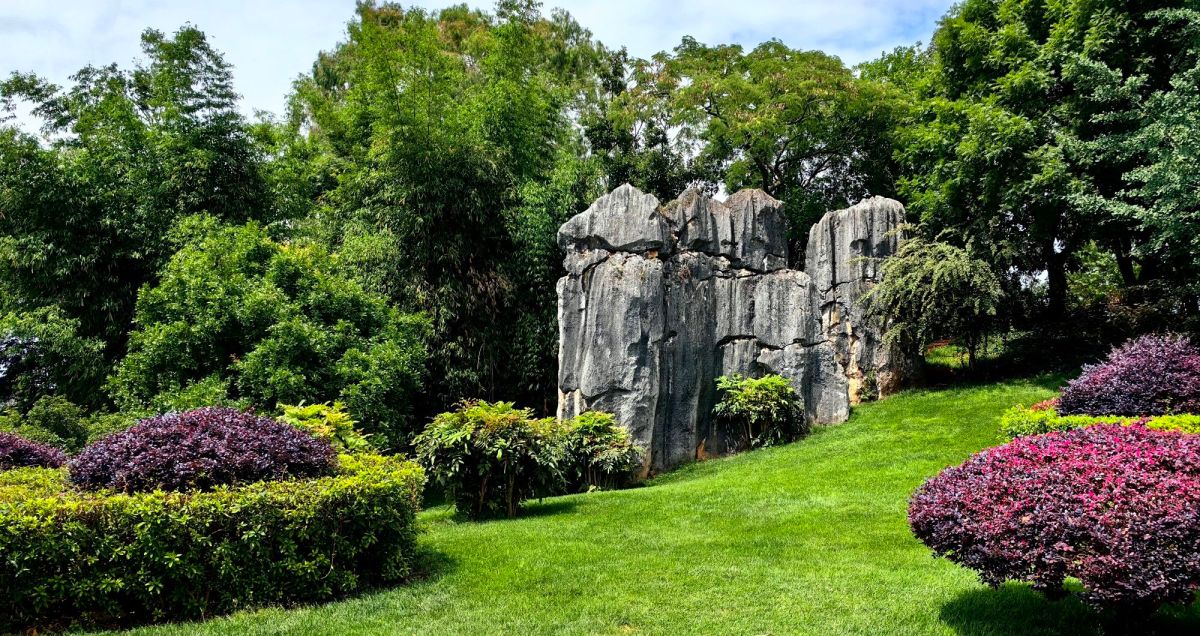
I visited this famous scenic point on May 19th, 2024, during my summer trip in Yun Nan. Upon arrival of the entrance, I was attracted by the numerous stones of different forms. Despite its rugged, rocky landscape, the Stone Forest is home to a rich variety of plant life that thrives in the crevices and soil within the limestone formations. Begonias, bamboos, and Yunnan Pine can be seen in every corner of this park.

2024 年 5 月 19 日,我在云南的夏季旅行中参观了这个著名的景点。刚抵达入口,我便被各种形状的石头所吸引。尽管地势崎岖,岩石密布,但石林里也有丰富多样的植物,这些植物在石灰岩地层的缝隙和土壤中茁壮成长。在这个公园内的每个角落都可以看到秋海棠、竹子和云南松。

All visitors need to cross one bridge on the Shilin Karst Lake. It is a tranquil and elegant lake which still waters create a mesmerizing mirror effect, reflecting the limestone pillars that surround it. The lake is fringed with unique rock formations, some of which seem to rise directly out of the water like natural sculptures. There are some viewpoints allowing visitors to wander along the shore, offering peaceful spots to rest.

所有游客都需要穿过石林湖上的一座桥抵达景区。这是一个安静而优雅的湖泊,平静的水面呈现出迷人的镜面效果,倒映着周围的石灰岩柱。湖边两岸布满了独特的岩层,它们从水面中升起,如同浑然天成的雕塑一样。湖畔有些观景点可供游客沿着湖岸漫步,提供安静的休息地点供游客享受慢生活。

During the Permian Period, the area that is now the Stone Forest was covered by a shallow tropical sea.
Over millions of years, marine organisms like corals, shellfish, and algae thrived in this environment, leaving behind thick layers of limestone as they died and accumulated on the seabed. Due to tectonic movements, the seabed gradually rose above sea level, exposing the limestone deposits to air.

在二叠纪时期,现在的石林地区被浅浅的热带海洋覆盖。数百万年来,珊瑚、贝类和藻类等海洋生物在这种环境中繁衍生息,它们死亡后堆积在海底,留下厚厚的石灰岩层。由于地壳运动,海床逐渐上升到海平面以上,石灰岩沉积物暴露在空气中。

Karst landscapes are formed through a process of erosion, where soluble rocks, like limestone are gradually dissolved by water over long periods of time. The presence of soluble limestone is made primarily of calcium carbonate (CaCO3). Rainwater is slightly acidic due to dissolved carbon dioxide and forms carbonic acid (H2CO3), which chemically erode the rock. Over time, the acidity of rainwater or groundwater slowly reacts with the calcium carbonate, creating small cracks in the rock. Over long periods of time, the Karst landscape can evolve into a complex system of geological features, including limestone plateaus, sharp peaks, isolated columns, and underground caverns.

喀斯特地貌是通过可溶性岩石(如石灰岩)在很长一段时间内逐渐被水溶解而侵蚀的漫长过程形成的。可溶性石灰岩的主要成分是碳酸钙 (CaCO3)。由于雨水溶解了二氧化碳产生碳酸 (H2CO3)导致雨水呈弱酸性,从而对岩石进行化学侵蚀。随着时间的推移,雨水或地下水中的酸会慢慢和碳酸钙反应,在岩石上形成小裂缝。经过漫长的时间,喀斯特地貌可以演变成一个包括石灰岩高原、尖峰、封闭的立柱群和地下洞穴等复杂的地质特征系统。

Many huge stones are composed of various layers of limestone, which have eroded over millions of years. This erosion has created unique shapes and textures, from sharp edges to smoother, rounded forms. The intricate patterns on the stone surfaces resemble layers of barky and natural folds, and some wrinkles. At times, I felt like an explorer uncovering hidden treasures, each new path revealing a different formation that sparked my imagination—some stones looked like a giant’s face, while others resembled delicate spires rising toward the sky.

许多巨型石头由多层石灰岩组成,经过数百万年的侵蚀形成了独特的形状和从锋利的边缘到更光滑的圆形纹理。石头表面的复杂图案类似于树皮般的皱纹和自然褶皱。我甚至感觉自己就像一个探索宝藏的探险家,石林的每条新路径都导向不同构造的石头,激发出我的想象力。这里有些石头看起来像巨人的脸,而另一些则像尖顶直指苍穹。

Between the stone columns, there are small gaps, crevices, and caves, some of which visitors can explore. These openings form narrow passageways and hidden corners, creating a sense of mystery and discovery. Visitors can rest on the stone stools for a while when they felt tired. Over a long time, moss, lichen, and other small plants have grown on the stones, adding a touch of green to the monotonous grey and brown landscape.

石柱之间,有裂缝、洞穴,可供游客探索。这些开口形成狭窄的通道和隐蔽的角落,营造出一种神秘的感觉,勾起游客的探索欲。游客走累了,也可以在石凳上休息一会儿。随着时间的流逝,光秃秃的石头上长出了苔藓、地衣和其他小植物,为整体单调的灰褐色的景观增添了一抹绿。

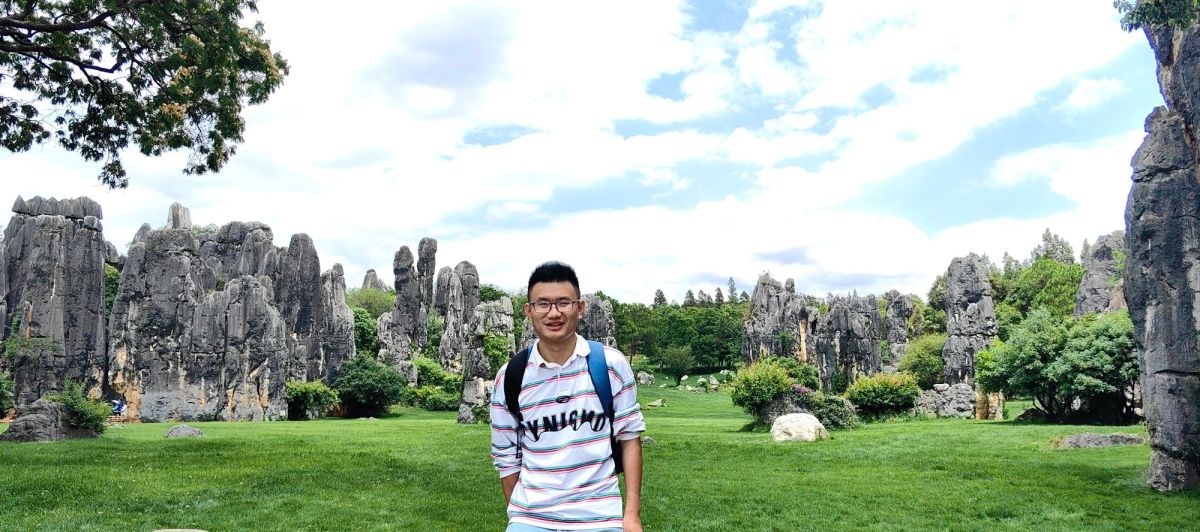
The Major Stone Forest is the main and most famous scenic point, attracting numerous visitors. It is a labyrinth of jagged rock formations, shaped over millions of years by the forces of wind and water. The limestone pillars, some towering as high as 30 meters, stretch in all directions, creating a dense, maze-like environment where it’s easy to lose yourself in the twists and turns of the landscape.

大石林是这里最主要著名的景点,吸引了众多游客。这里是一座由锯齿状岩层组成的迷宫,经过数百万年的风力和水力作用而形成。石灰岩柱向四面八方延伸,有些高达30米,形成了一个密集的迷宫般的环境,游客很容易迷失在这曲折回绕的景观中。

The limestone spires are thin and elongated, resembling tall spikes. These formations reach upward, as though they are trying to touch the sky. Walking through these sections feels like wandering through a vast, jagged city of stone, with towering buildings rising up from the ground on all sides. The stone pathways can be uneven and rocky, so it’s important to wear sturdy, comfortable shoes for walking.

石灰岩尖顶又细又长,形似高耸的尖刺。这些岩层向上延伸,仿佛要触及天空。穿过这些区域,感觉就像漫步在一座巨大而崎岖的石头城中,四周都是在地面上平地而起的高耸建筑。这些石路不平坦且多石,因此穿着结实舒适的鞋子特别重要。

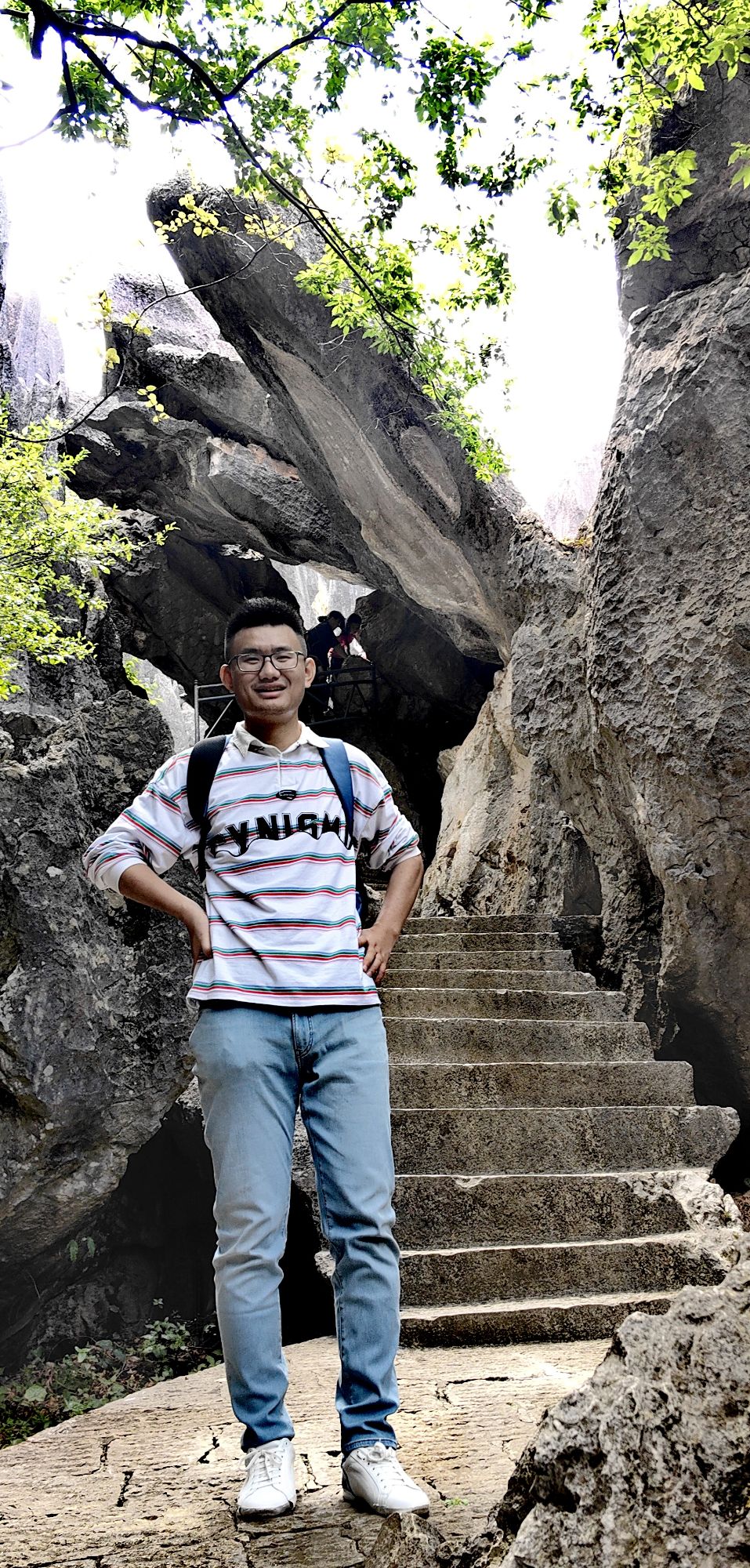
Narrow paths wind through the stone pillars, leading visitors on a journey of discovery. These winding routes allow me to get up close to the stones and appreciate their unique shapes and textures closely. Stone steps leading up to the top of stones, are worn smooth by countless visitors. I liked to think deeply during my trip. Walking through these paths in the labyrinth made me think the meaning of life. Our life is like a labyrinth and we are always looking for the exit which path is the journey of our life.

狭窄的小路蜿蜒穿过石柱,引领游客踏上探索之旅。这些蜿蜒的小路让我可以近距离接触这些巨石,近距离欣赏它们独特的形状和纹理。通往石柱顶部的石阶早已被无数游客磨得光滑。我喜欢在旅途中深入思考。走在迷宫般的小路上,不由地令我思考起人生的意义。其实我们的生活就像一座迷宫,我们总是在寻找出口,而寻找出口这条路就是我们人生的旅程。

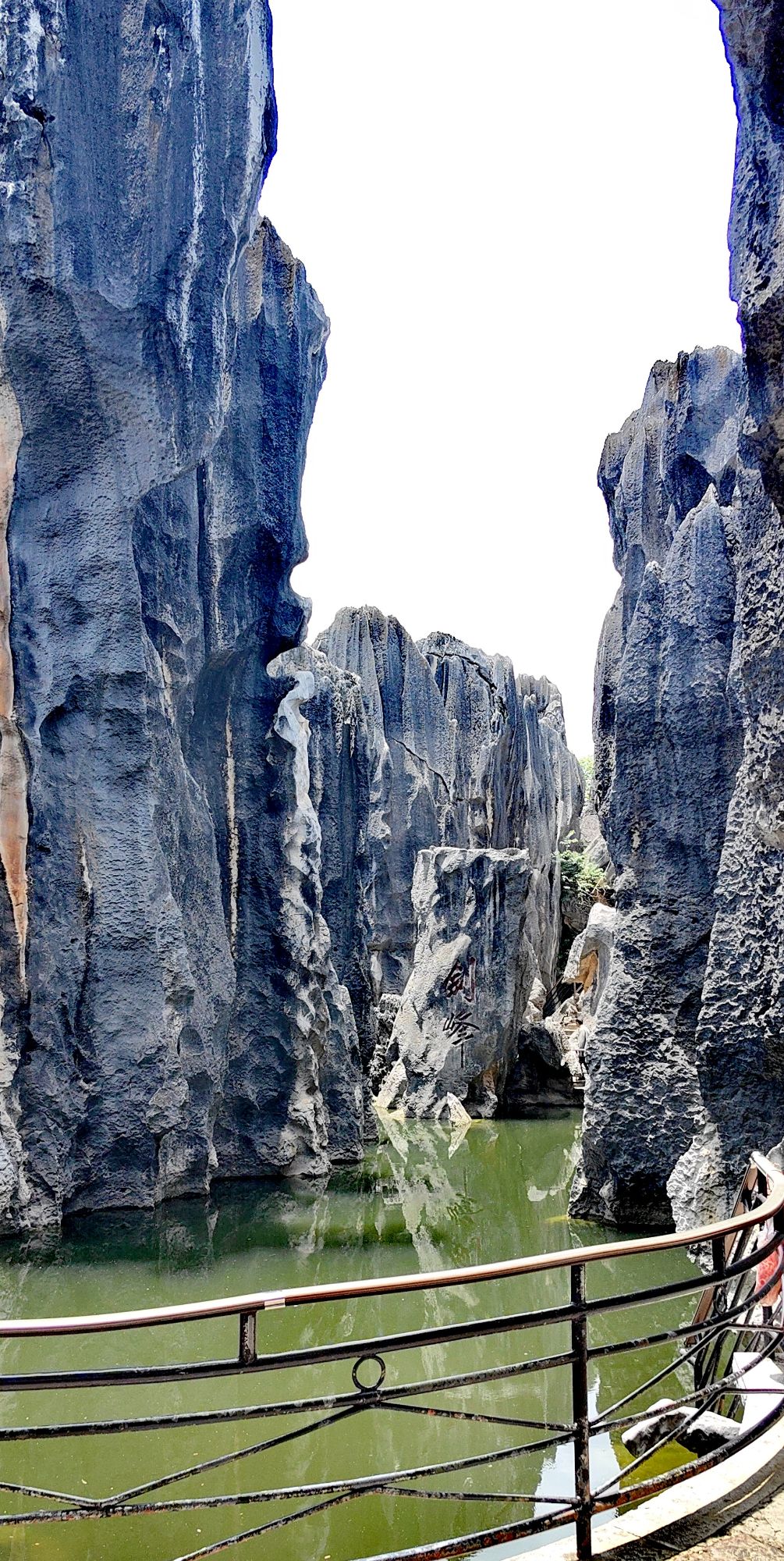
Sword Peak Pool is a beautiful, tranquil spot known for its stunning natural scenery and crystal-clear waters. The name refers to the shape of the surrounding peaks that resemble the sharp edge of a sword. It reflects the surrounding stone peaks, creating a picturesque view. It is a result of millions of years of natural erosion and geological processes.

剑峰池是一个美丽而宁静的地方,以其令人惊叹的自然风光和清澈的池水而闻名。剑峰潭因周围山峰的形状类似锋利的出鞘剑锋而得名。它倒映着周围的石峰,形成了如画的风景。这里也是数百万年的自然侵蚀和地质运动的结果。

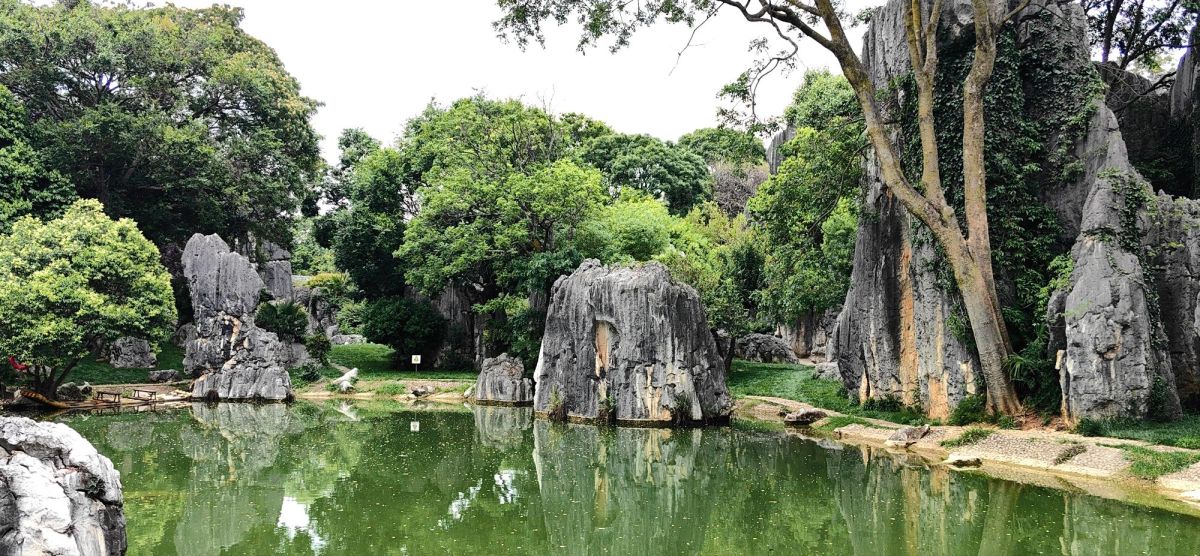
The Stone Forest is interspersed with various smaller pools and streams that dot the landscape, each with its own charm. Some of these are tucked into crevices between rocks, while others sit in open clearings. I really marveled at these stone erected in the water, which silently create an almost fortress-like setting, giving the pond a hidden and mystical feel. It looks like an isolated environment far away from the mundane world.

石林中散布着各种较小的水塘和溪流,点缀着整个景观,每个都有自己的魅力。其中一些溪流隐藏在岩石之间的缝隙中,而另一些水塘则坐落在开阔地上。这些屹立在水中的石头令人浮想联翩,它们默默的创造出一种如同堡垒一样的环境,蕴涵一丝若隐若现的神秘感。看起来就像一个远离世俗世界的独立环境。

The whole park of stone forest is super large, and most visitors only have time to visit the Major and Minor Stone Forest within one day. The Minor Stone Forest consists of a smaller yet equally intricate collection of karst limestone formations. Unlike the towering 30-meter pillars of the Major Stone Forest, the rock formations here are relatively shorter and more clustered together.

整个石林公园非常大,大多数游客一天只能游览完大石林和小石林两个景区。小石林由较小但同样复杂的喀斯特石灰岩构成。与大石林高达30米的石柱不同,这里的岩层相对较矮小且更密集。

Unlike the more crowded Major Stone Forest, this area is quieter and less touristy, making it an ideal spot for visitors who prefer a more serene experience. The stones here are weathered into unusual shapes, resembling animals and mythical creatures, sparking the imagination of visitors. Every jagged rock peak with smooth, eroded surfaces tells a story of millions of years of natural sculpting. The scenes in this area have more greeneries and look more spacious and poetic.

与人潮涌动的大石林不同,这一带比较安静,人烟稀少,是喜欢静谧体验的游客的理想之地。这里的石头被风化成奇形怪状,形似动物和神话中的生物,充分发挥游人的想象力。每一块锯齿状的岩石山峰,表面光滑,记述着数百万年大自然的鬼斧神工。这一带的景色更加绿意盎然,看起来宽广辽阔、富有诗情画意。

The Minor Stone Forest is deeply connected to the Yi ethnic group, particularly the Sani people. This area is associated with local myths and legends, and some rocks are believed to be sacred, linked to ancient spirits and ancestors. Perhaps the most iconic rock is this stone which resembles a young woman in traditional Yi dress. According to local legend, it represents Ashima, a young and beautiful girl who fell in love with a man named Ahei, but their love was forbidden by Ashima’s family, who had arranged for her to marry a wealthier suitor. Desperate to be together, Ashima and Ahei fled and looked for their love. In the legend, Ashima was tragically turned into stone by the gods as a symbol of her devotion and sacrifice. Nowadays, the stone is a symbol of eternal love and unwavering faith which is rare in our society with fast rhythm.

小石林与彝族的撒尼人有着深厚的渊源。该地区与当地的神话传说息息相关,有些岩石被认为是神圣的,并与古老的神灵和祖先有关。也许最具代表性的岩石就是图中这块石头,它形似一位身着传统彝族服饰的年轻女子。根据当地传说,它象征着年轻貌美的女孩阿诗玛。她爱上了一个名叫阿海的男人,但他们的爱情遭到了阿诗玛家人的反对,他们安排她嫁给一个更富有的追求者。阿诗玛渴望和阿海在一起,于是两人私奔追寻他们的爱情。在传说中,阿诗玛被众神悲惨地变成了石头,作为她忠诚和对爱情牺牲的象征。如今,这块石头象征着永恒的爱情和坚定不移的信念,这种纯洁的爱情在我们这个快节奏的社会中已然不复存在。

The trip in the stone forest needs half days’ time. As the sun set and ligntened the towering limestone spires of the Stone Forest, it’s hard not to feel a sense of awe and wonder. It was indeed a wonderful place where the natural world and ancient myths came together. When I was on the way of leaving the park, I took with me more than just memories of the stunning landscape — also carried the echoes of legendary sad love stories touching my heart.

石林之旅共需要大半天时间。当太阳落山余晖照耀在石林高耸的石灰岩尖顶之际,我很难不感到敬畏和惊叹。这里确实是自然世界和古老神话交汇的奇妙之地。当我依依惜别时,随我心而去的不仅仅是对壮丽景观的回忆还有触动心弦的悲伤爱情故事的回响。

Discovering the Beauty of the City of Eternal Spring

寻觅春城之美

Nestled in the heart of Yunnan Province, Kunming is a city where spring never fades away. Known as the “City of Eternal Spring” for its mild climate and blooming flowers year-round, this fascinating destination offers a perfect blend of natural beauty, rich history, and diverse culture. Beyond its scenic charm, Kunming is a gateway to Yunnan’s ethnic diversity, home to 26 ethnic minorities whose traditions and cuisine add a unique flavor to the city.

昆明位于云南省的中心,是一座春意常驻的城市。这个吸引无数游客的旅游地因其温暖的气候和全年盛开的鲜花而被赞为“永恒的春城”,它完美融合了自然美景、丰富的历史和多元文化。除了风景魅力之外,昆明还是领略云南民族多样性文化的门户,这里是 26 个少数民族的家园,各式各样的文化传统和美食为这座城市增添了独特的风味。

I arrived at the Kunming airport in the morning of 15th May 2024 and started my summer holiday in Yunnan province. Upon arrival, this skeleton of dinosaur displayed at the arrival hall drew my attention immediately. Yunnan is one of the richest places in China for dinosaur fossils. During the Jurassic and Cretaceous periods, Yunnan had a warm, humid climate with vast lakes, rivers, and lush vegetation. This environment provided an ideal habitat for dinosaurs to thrive. This is the model of skeleton of Lufengosaurus, one of China’s earliest known dinosaurs.

我于2024年5月15日上午抵达昆明机场,开始了我的云南之旅。机场到达大厅展示的这具恐龙骨架瞬间引起了我的注意。云南是中国恐龙化石最丰富的地方之一。侏罗纪和白垩纪时期,云南气候温暖湿润,湖泊河流广阔,植被茂盛。这种环境为恐龙的繁衍生息提供了理想的栖息地。图中这是中国已知最早的恐龙之一禄丰龙的骨骼模型。

This was one photo of street view taken on the way to the Dianchi lake. There is one Chinese poem verse’ 春城无处不飞花 ‘ which means ‘Blossoms drift in every corner of the Spring City’ . It could best describe how Kunming’ street looks like. Kunming’s streets in spring and summer are a breathtaking sight, where blossoms cascade like pink falls, painting the city in soft and romantic hues. Lush trees, heavy with bougainvillea and jacarandas, line the sidewalks, their petals swirling gently in the breeze. When the wind stirs, a shower of petals flutters down, covering the ground in a delicate floral carpet.

这是去滇池途中拍的一张街景照片。中国有一首诗春城无处不飞花最能形容昆明的寻常巷末。春夏天的昆明街道景色令人叹为观止,鲜花如粉红色的瀑布般倾泻而下,为这座城市涂上了柔和浪漫的色调。人行道两旁种满了茂密的九重葛和蓝花楹树,花瓣在微风中轻轻旋转飞舞。微风掠过,花瓣纷纷飘落,为地面铺上一层精致的花毯。

Located on the northeastern shore of Dianchi Lake, Haigeng Park is one of Kunming’s most beautiful natural spots, offering stunning lake views, lush greenery, and a peaceful retreat from the city’s bustle. Often called “the lakeside garden of Kunming”, this park is famous for its willow-lined walkways, golden sunsets, and flocks of migratory seagulls in winter.

海埂公园位于滇池东北岸,是昆明最美丽的自然景点,这里拥有令人叹为观止的湖景、郁郁葱葱的绿色植物以及远离城市喧嚣的宁静休憩之所。这里堪称昆明市的湖畔花园,以其柳荫步道、金色夕阳和冬季成群的候鸟海鸥而闻名于世。

Dianchi Lake

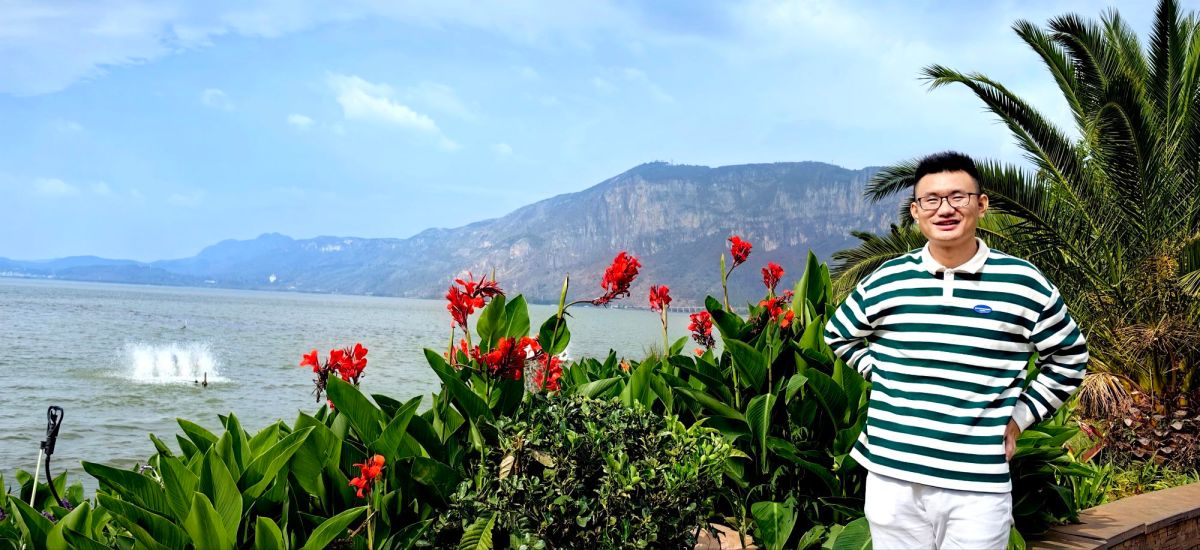
The park stretches along the edge of Dianchi Lake. Walking along its banks, visitors can enjoy reflections of the Western Hills lying beside the water. Dianchi Lake, often called the “Pearl of the Plateau”, is the largest freshwater lake in Yunnan Province. It is the most representative scene spot in Kunming. Huge amounts of visitors came here to take a perfect photo beside the lake. The deep blue of Dianchi Lake contrasts beautifully with the emerald green of Western Hills. Gentle waves ripple under the light breeze, and migratory seagulls soar between the lake and the hills. This is the most memorable memory in my trip of Kun Ming.

公园沿着滇池的边缘延伸。沿着河岸行走,游客满眼皆是映在水边的西山倒影。滇池,素有“高原明珠”之称,是云南省最大的淡水湖,也是昆明最具代表性的景点。大批游客慕名而来,在湖边拍下心目中完美的照片。滇池水的深蓝色与西山的翠绿相映成趣。微风徐徐,波光粼粼,海鸥在湖光山色间翱翔。这也是我此次昆明之行最难忘的回忆。

Shaded paths lined with weeping willows and vibrant flowers make Haigeng Park an ideal place for a leisurely stroll, jogging, or cycling. The gentle swaying of willow branches over the water adds a poetic charm. Across the shimmering waters of Dianchi Lake, it is the Western Hill rising on the opposite shore, their green slopes gently rolling like the silhouette of an elegant sleeping beauty resting beneath the sky.

海埂公园绿树成荫的小道两旁垂柳茂盛,鲜花盛开,是休闲散步、慢跑或骑自行车的理想场所。水面上柳枝轻轻摇曳,增添诗情画意。隔着波光粼粼的滇池湖水,对岸就是拔地而起的西山,翠绿的山坡轻柔起伏,如同一位在天空下小憩的优雅睡美人的剪影。

Yunnan Military Academy

Kun Ming is an ancient city full of history. I stayed here for three days. In the first day afternoon, I visited the Yunnan Military Academy which was one of China’s most prestigious military institutions during the late Qing Dynasty and early Republic of China. Founded in 1909, the academy played a crucial role in shaping modern Chinese military history, producing many influential military leaders who contributed to key historical events, including the Xinhai Revolution (1911), the War of Resistance Against Japan (1937-1945), and the Chinese Civil War.

昆明是一座充满历史的古城。我在这里总共待了三天。游玩的第一天下午,我参观了云南讲武堂,它是清末民初中国最负盛名的军事院校。该学院成立于1909年,在塑造中国现代军事史方面发挥了至关重要的作用,培养了许多有影响力的军事领导人,这些人物在辛亥革命、抗日战争和国共内战等重大历史事件中产生了重大影响。

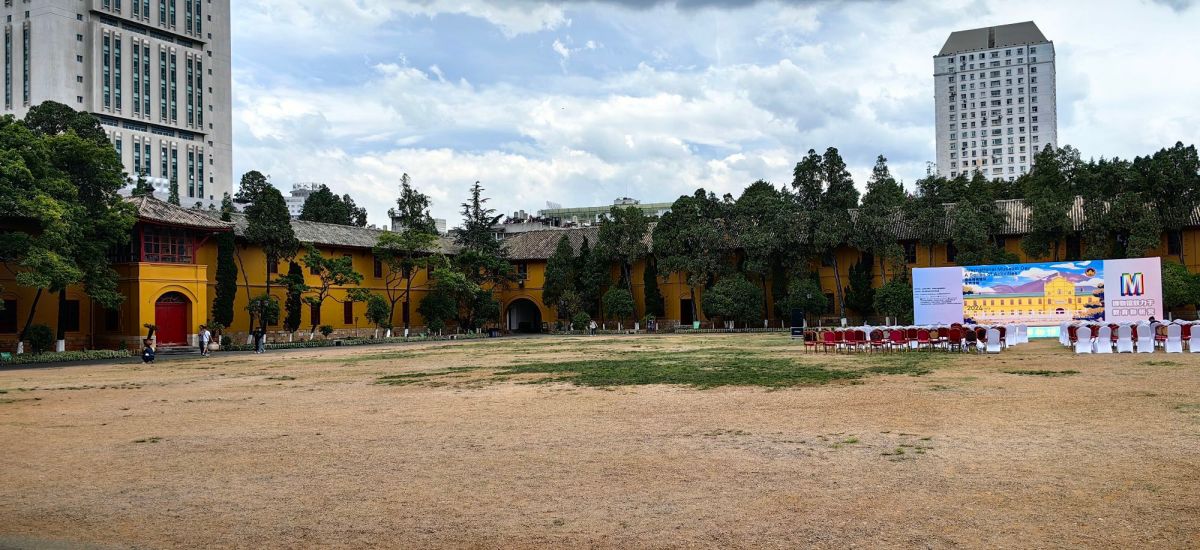
Often referred to as the “Cradle of Generals”, the academy trained thousands of officers, including notable figures like Zhu De and Ye Jianying. This is the training ground of soldiers in the history. Today, the Yunnan Military Academy Museum preserves its rich history. The well-preserved European-style architecture, along with exhibitions of historical documents, weapons, and uniforms, offers visitors a glimpse into the military evolution of contemporary China.

讲武堂被称为“将军的摇篮”,培养了数千名军官,其中包括朱德和叶剑英等著名人物。图中这里是历史上士兵的训练场。如今,这座博物馆保留了讲武堂丰富的历史以及保存完好的欧式建筑,众多历史文献、武器和制服的展览也让游客可以一睹中国近代军事史的演变。

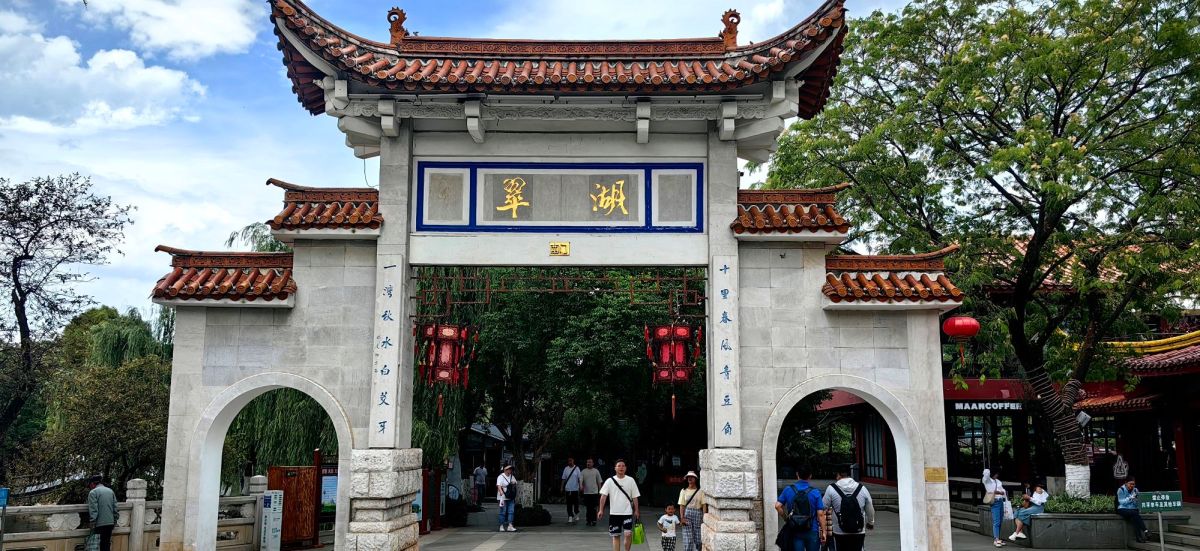
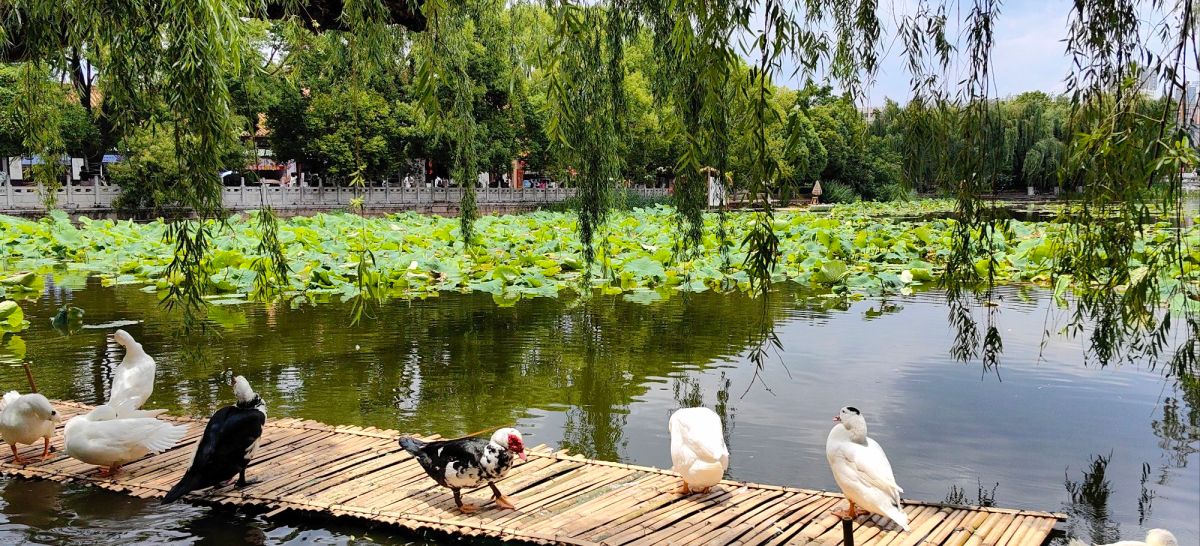
Opposite to the Yunnan Military Academy, it is the Cui Lake which is one of Kunming’s most beautiful and historic parks. Often called the “Jade of Kunming”, this scenic lake is famous for its lush willow trees, lotus-covered waters, and flocks of migratory red-beaked seagulls in winter. Originally part of Dianchi Lake, Cui Lake was formed over centuries as water levels receded, leaving behind a collection of smaller interconnected lakes and ponds. During the Yuan and Ming Dynasties, it became a favored spot for scholars and poets, who often gathered here for inspiration. In the Qing Dynasty, Cui Lake was expanded and developed into a formal park with pavilions and gardens, further enhancing its beauty.

讲武堂对面就是翠湖,是昆明最美最具历史意义的公园。这个风景秀丽的湖泊被称为“昆明的翡翠”,以其郁郁葱葱的柳树、荷花覆盖的水域和冬季成群迁徙的红嘴海鸥而闻名。翠湖最初是滇池的一部分,几个世纪以来随着水位下降而留下了一系列较小的相互连接的湖泊和池塘。元明时期,这里成为文人墨客的胜地,时常聚集于此,汲取灵感。清代,翠湖得到扩建,发展为亭台楼阁花园点缀的公园。

Stepping into Cui Lake Park, I was greeted by a scene of serene beauty. The emerald-green waters of the lake gently rippled under the breeze, reflecting the swaying weeping willows that line its banks. Their delicate branches trailed over the water, forming a natural curtain that dances with the wind. As I strolled along the stone bridges and wooden pavilions, I could find traditional bonsai trees and flowering plants arranged in elegant pots, showcasing the artistry of Chinese gardening. The cozy air was filled with the light fragrance of camellias and azaleas.

步入翠湖公园,映入我眼帘的是一幅宁静美丽的景象。翠绿的湖水在微风的吹拂下轻轻荡漾,倒映着岸边摇曳的垂柳。它们纤细的枝条拖曳在水面上,形成一道随风舞动的天然帷幕。漫步在石桥、木亭之间,传统的盆景和花卉植物优雅地摆放在盆中,展现了中国传统的园林艺术。宜人舒适的空气中弥漫着山茶花和杜鹃花的淡淡清香。

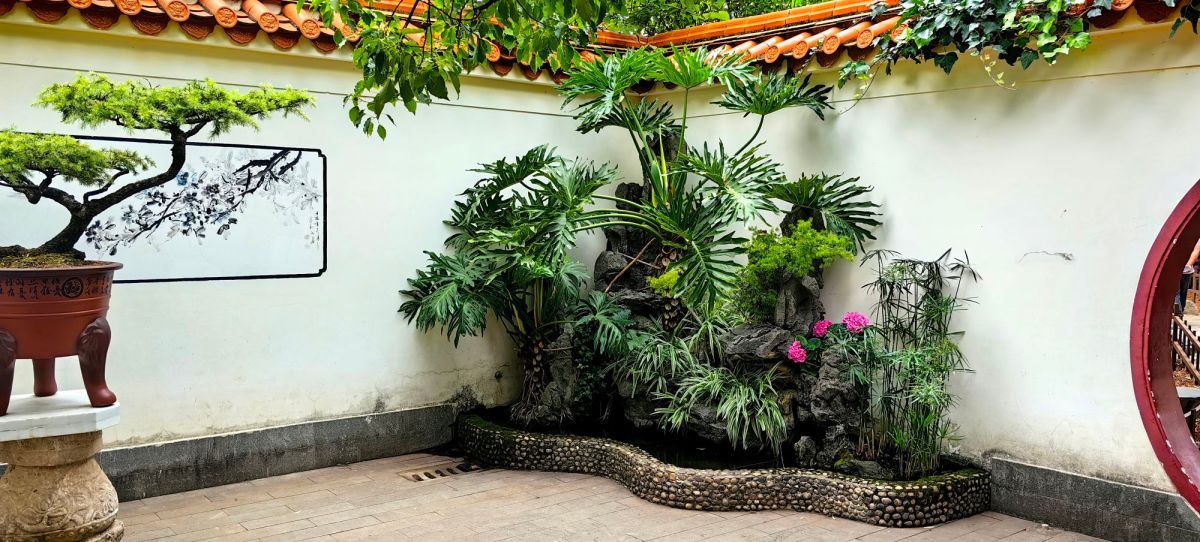
The gardens surrounding Cui Lake are not only famous for their serene landscapes and willow-lined pathways, but also for their exquisite traditional potted plants. These miniature landscapes, meticulously cultivated by skilled gardeners, reflect the elegance of Chinese horticulture and Kunming’s mild, spring-like climate that allows a rich variety of plant species to thrive. Lucky Bamboo is arranged in artistic formations, with intricate rock carvings, symbolizing peace, harmony, and prosperity.

翠湖周围的花园不仅以其宁静的风景和柳荫小径而闻名,其精美的传统盆栽也是一大特色。这些微缩景观由技艺高超的园丁精心打理,体现了中国园艺的优雅。丰富的植物物种在这里得以繁衍生息这也体现了昆明温和如春的气候。盆栽里的富贵竹排列整齐,石刻雕刻精美,也象征着平安和繁荣昌盛。

In summer, lotus flowers bloom across the lake’s surface, their pink and yellow petals contrasting against the deep green leaves. I took this poetic photo with super macro lens. This kind of lotus is called Nelumbo lutea, also known as the American Yellow Lotus. It is a rare species of lotus with soft pale-yellow petals. In the quiet after the rain, dragonflies hover above the water. A light breeze stirs the willow trees along the shore, sending tiny ripples across the lake. The lotus remains a symbol of purity and resilience, standing gracefully in the water.

夏季湖面上盛开着荷花,粉色和黄色的花瓣与深绿色的叶子形成鲜明对比。我用超微距镜头拍下了这张富有诗意的照片。这种荷花又名美国黄荷。它是一种稀有的莲花,花瓣柔软,呈淡黄色。雨后的寂静中,蜻蜓在水面上盘旋。微风吹拂岸边的柳树,湖面上泛起阵阵涟漪。莲花优雅地矗立在水中,是纯洁和坚韧的象征。

The birds hopped and fluttered across the park, pecking at the crumbs scattered by visitors. Some sat serenely beneath the willows, ruffling their feathers as they relaxed in the warmth of the sun. Their soft and rhythmic calls blended with the sounds of rustling leaves. There was a quiet beauty in watching the birds cozily eating together, as they were savoring the simple pleasures of life.

鸟儿在公园里跳跃飞舞,啄食着游客散落的面包屑。它们安静地栖息柳下,在温暖的阳光下梳理羽毛享受鸟生。轻柔而有节奏的叫声与树叶沙沙作响的声音交织在一起。目睹鸟儿们舒适地一起进食,享受着生活中简单的乐趣,有一种自然平和的美感。

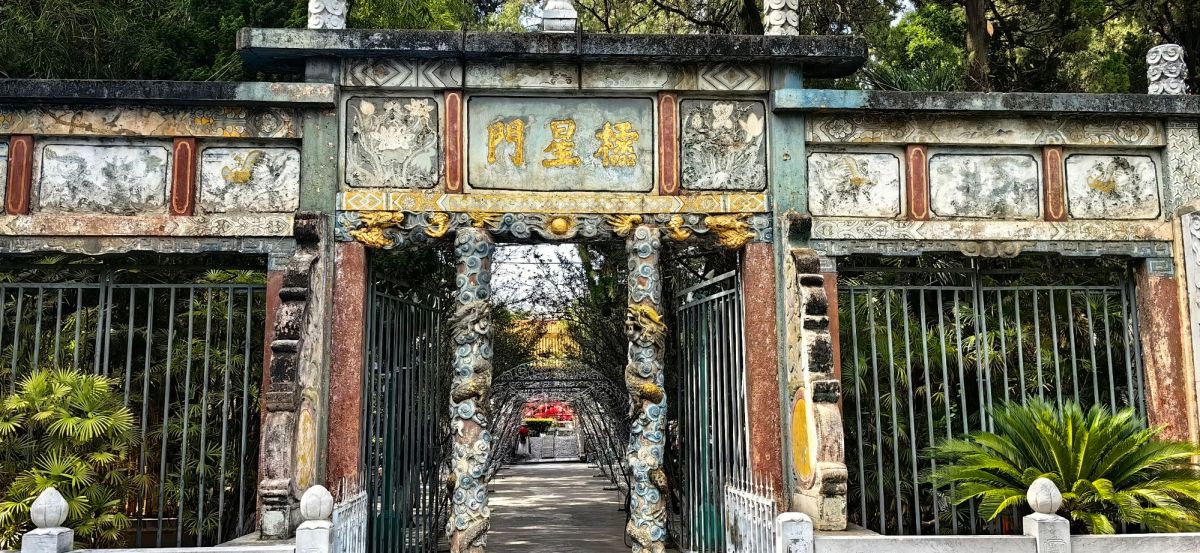
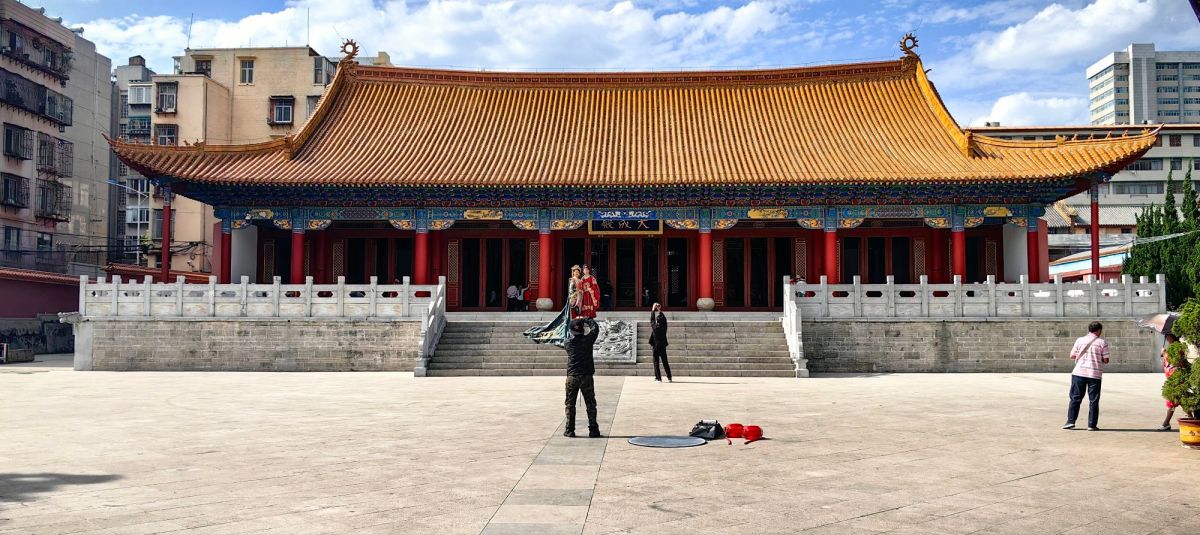
When I walked through the street of Kunming, I passed several ancient buildings which were not tourist sites but having some historic meaning. The Confucious temple was originally built during the Yuan Dynasty and later expanded in the Ming and Qing Dynasties. The Lingxing Gate serves as the grand entrance to the Confucius Temple, embodying both spiritual significance and architectural beauty. As the first structure one encounters when approaching the temple, this ornate gate symbolizes respect for knowledge, wisdom, and Confucian ideals. Lingxing originates from ancient Chinese astronomy, referring to a mythical star believed to govern wisdom and intellect.

漫步在昆明的街道,我还经过了几座古老的建筑,它们虽然不是旅游景点,但具有一些历史意义。昆明文庙始建于元代,后来在明清时期进行了扩建。图中的棂星门是文庙的大门,兼具精神意义和建筑美学。作为走近文庙的必经之路,这座大门象征着对知识智慧和儒家思想的尊重。棂星起源于中国古代天文学,指的是一颗掌管智慧和才智的星神。

Confucius Temple

Kunming’s Confucius Temple served as an important educational and ceremonial center, where scholars and students would gather to study Confucian classics and take imperial exams in the history. The temple reflects the deep respect for Confucianism, embodying principles of morality, discipline, and scholarly pursuit. Dacheng Hall in this photo is the main hall, dedicated to Confucius, features elegant wooden beams, golden inscriptions, and a solemn statue of the Confucius. Many girls studying in school came here to take beautiful photos wearing traditional Chinese clothes, characterized by wide sleeves, layered robes, crossed collars and delicate embroidery.

昆明孔庙是历史上重要的教育和礼仪中心,文人学子们聚集在这里研习儒家经典,参加科举考试。孔庙体现了对儒家思想的尊崇,以及对道德、纪律和学术追求的原则。照片中的大成殿是供奉孔子的正殿,有优雅的木梁、金色的碑文和庄严的孔子雕像。许多上学的女孩身着宽袖、多层长袍、交叉领和精致的刺绣为特点的汉服来这里拍摄美丽动人的照片。

This monument near a simple street is very small but it recorded the most miserable and sore history for Chinese. Usually, people will not notice it even if pass by. However, I visited it purposely and took this photo. Everyone who is familiar with Chinese history will feel a stabbing pain in the chest when visiting this monument.

图中的这个永历帝纪念碑位于一条简陋的街道旁,规模很小,却记载了汉人最悲惨痛苦的历史。通常游人即使路过也不会注意到它。然而我特意去参观并拍下了这张照片。每个熟悉中国历史的人看到这个纪念碑都会感到胸口一阵刺痛。

Three hundred years ago, the last Dynasty led by Chinese – Ming fell when the Manchu-led Qing Dynasty captured Beijing in 1644. However, remnants of the Ming loyalists like Zheng Chenggong, refusing to accept Qing rule, formed a series of Southern Ming governments across the south, with Zhu Youlang becoming one of the last claimants to the Ming throne. Finally, the military force of Qing pushed deep into Yunnan which was the last territory of Ming and the emperor Yongli was strangled with a bowstring near the Cui Lake, marking the end of the Ming imperial bloodline. This monument stands as a solemn reminder of the fall of the Ming Dynasty and the resistance against the Qing conquest in the 17th century. Afterwards, the whole China was under the control of Manchu until the revolution in 1911.

1644 年满族人建立的清朝攻占北京,历史上最后一个由汉人领导的王朝明朝悲惨灭亡。然而许多像郑成功这样的明朝死忠拒绝接受清朝统治,在南方建立了一系列南明政权,永历帝朱由榔成为明朝皇室的最后遗珠。后来清朝的军队深入南明最后的领土云南,永历皇帝在昆明翠湖附近被弓弦勒死,标志着明朝皇室血脉的终结。这座纪念碑如今仍然提醒游客明朝的灭亡和 17 世纪反清的斗争。至此后,直到 1911 年辛亥革命胜利, 整个中国一直处于满族的控制之下。

When I read this story, I felt a deep sorrow since Ming dynasty had controlled a larger piece of territory and how did they lose? I think that there are several reasons. Firstly, The Ming Dynasty had been facing serious internal problems by the early 17th century. Corruption, economic mismanagement, and factionalism of Donglin party weakened the central authority. Secondly, the Ming military was weakened seriously by inadequate funding since the central government could not collect enough tax from local authorities. Thirdly, the emperor Chongzhen was really a poor leader and could not believe candidly in his generals like Yuan Chonghuan and every prime ministers. Finally, the fall of the Ming was caused by a combination of internal decay, poor leadership, and external pressures. In contrast, the Qing were more unified, militarily superior, and able to rule the whole China.

以史为鉴可以知得失,这段历史着实令我感到深深的悲哀,明朝控制了如此大的一块领土,他们是如何最终失败的呢?我认为有几个原因。首先,在17世纪初,明朝已经面临严重的内部问题。腐败、经济管理不善和东林党的派系斗争削弱了中央权力。其次,由于中央政府无法从地方当局征收足够的税收,明朝军队的战斗力因资金不足而被严重削弱。第三,崇祯皇帝着实是一个糟糕的领导者,他一直不相信也不能坦诚对待他任命的大将,比如袁崇焕以及各位内阁首相。最后,在我看来明朝的覆灭是内部衰败、领导不力和外部压力共同造成的。相比之下,当时的清朝更加团结一心,军事上更强大,所以能够最终统治整个中国。

Of course it is important keep a better mood during travel. Afterwards I got rid of the bad memory immersed in the history three hundred years ago and continued my travel of second day in the old town of Guandu. The earliest historical records of Guandu date back to the Nanzhao kingdom. Guandu acted as a ferry and also a linking point in the region. I liked the paifang at the entrance. It could best represent the Chinese culture. The roof is curved with eaves that flare upwards and the columns of the paifang are adorned with detailed carvings, depicting dragons.

旅行中保持好心情当然是最重要,接下来我将沉浸在三百年前历史的伤痛回忆抛之脑后,继续第二天在官渡古镇的旅行。这个古镇最早的记载可以追溯到南诏国。官渡这个渡口是当时这个区域的集散地。我很喜欢入口处的牌坊,它最能代表中国的文化。牌坊顶呈弧形,檐向上张开,牌坊的柱子上装饰着精细的龙雕刻。

Miaozhan Temple

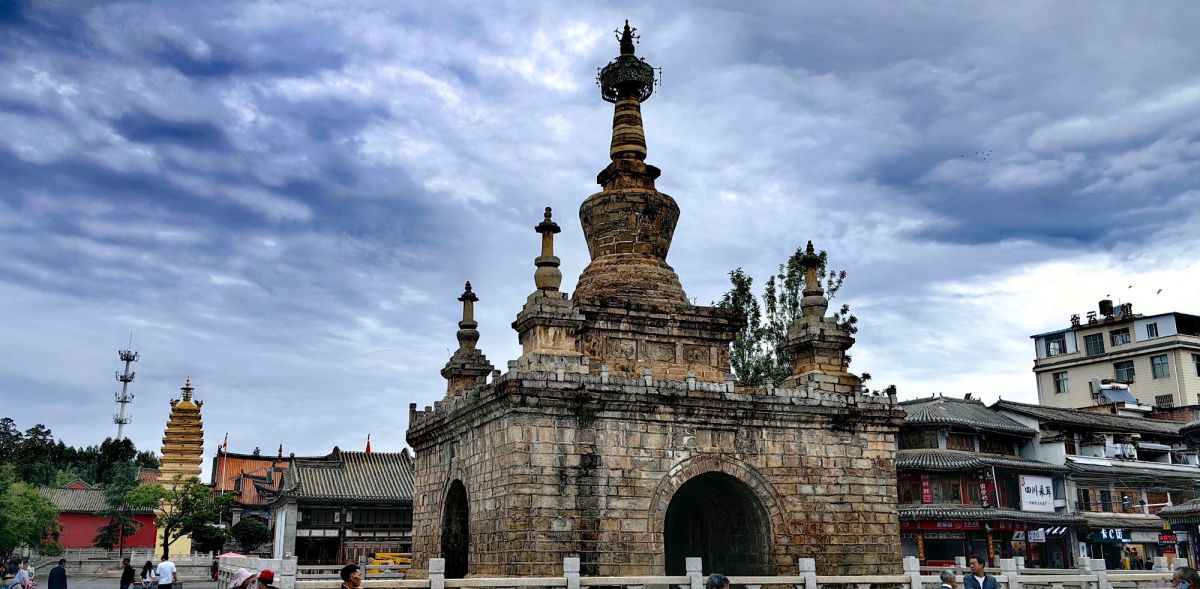
When I arrived at the town in the morning, this historic building of unique style drew my attention. The Vajra Pagoda at Miaozhan Temple is really a historically significant Buddhist structure. The Vajra meaning “diamond” is a sacred symbol in Buddhism, represents indestructible strength and spiritual power. The Vajra Pagoda is over 700 years old. Its construction reflects the fusion of Han Chinese and Indian Buddhist architectural styles, which is spread along the ancient Tea Horse Road. The layout of the pagoda includes its central tower surrounded by smaller stupas.

早上抵达小镇时,这座风格独特的历史建筑吸引了我的注意。妙瞻寺的金刚塔是一座颇具历史意义的佛教建筑。金刚是佛教中的神圣象征,代表着坚不可摧的力量和精神。金刚塔已有700多年历史。它的建造反映了汉族和印度佛教建筑风格的融合,这种风格在古老的茶马古道上广为流传。这座金刚塔的布局包括中央的大塔,以及周围环绕着较小的舍利塔。

Many restaurants in this old town sells the local delicacies and street food. Among them the most famous food must be Yunnan’s signature dish, crossing-the-bridge noodles.

古镇里有很多餐厅出售当地特色小吃。其中最著名的美食当属云南的招牌美食——过桥米线。

The dish’s poetic name comes from a heartwarming folk tale. Long ago, a scholar studied in seclusion on an island pavilion, preparing for the imperial exams. His wife brought him meals daily, but the food often turned cold by the time she crossed the bridge to reach him. One day, she discovered that boiling chicken fat could seal the heat of the broth. She carried the hot soup, noodles, and ingredients separately, assembling the dish on-site so her husband could enjoy a fresh, hot meal. Afterwards, the dish was called “Crossing-the-Bridge Noodles”, symbolizing love, dedication, and nourishment.’

这道菜的诗意名字来自一个温馨的民间故事。很久以前,一位书生在一座岛上的亭子里闭门读书,准备科举考试。他的妻子每天会给他送饭,但当她过了桥后,饭菜往往都已经凉了。有一天,她发现煮沸的鸡油可以封住汤的热度。于是她把热汤、面条和配料分开给丈夫带来,在当场把它们混合,这样她的丈夫就可以享用一顿热腾腾的饭菜了。后来,这道菜被称为“过桥米线”,它也象征着爱情和奉献。

The soul of the dish is the scalding broth, often made from chicken bones, pork bones, and ham, simmered for hours. Soft, silky rice noodles are served separately and added to the soup just before eating. A variety of ingredients like chicken, pork, fish, quail eggs, tofu skin, bean sprouts, spinach, Chinese chives, lettuce are served raw on small plates, ready to cook in the hot broth.

这道菜的灵魂在于滚烫的汤,汤头通常由鸡骨、猪骨和火腿熬制而成,再炖上几个小时。柔软丝滑的米粉单独上桌,食用前加入汤中。鸡肉、猪肉、鱼、鹌鹑蛋、豆腐皮、豆芽、菠菜、韭菜、生菜等各种食材都盛放在小盘子里,随时准备下入热汤中煮熟。

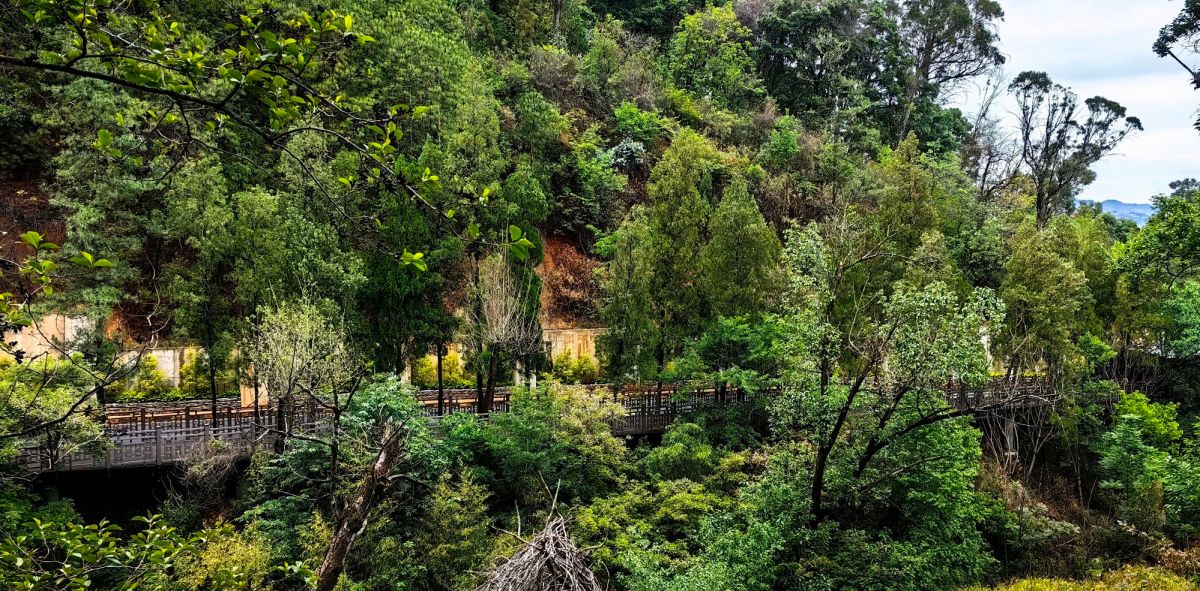
In the afternoon, I had a trek in the Western Hill Park. The park is a green paradise with dense forests, winding trails, and vivid wildflowers. This hill is not so tall. This kind of scenic paths made of wood wound through the forest, leading me to temples and caves uphill. It was a cloudy day, and the temperature is suitable for hike in the mountains.

下午,我选择在西山公园徒步。公园里是一片绿色天堂,森林茂密,小径蜿蜒曲折,野花盛开。这座山海拔并不高。这种用木头制成的观景小路蜿蜒穿过森林,引导我上山前往各处寺庙和洞穴。这一天是阴天,气温非常适合在山上徒步。

Taihua Temple

Travelers can choose to take bus or walk towards the top of hill. However, if they take bus, they will miss the beauties along the hill way. For me, I tried to discover every point on the way. The Taihua Temple founded in Yuan Dynasty in the photo is a tranquil Buddhist sanctuary. Surrounded by ancient trees, blooming flowers, and misty mountain air, Taihua Temple offers visitors a serene escape from the city’s bustle.

游客可以选择乘坐巴士或步行前往山顶。不过如果乘坐巴士,他们会错过山路沿途的美景。对我来说不会错过探索沿途的每一个景点。照片中建于元朝的太华寺是一座宁静的佛教圣地。太华寺周围环境古树环绕,鲜花盛开,山间空气迷蒙,为游客提供远离城市喧嚣的宁静之地。

Taihua Temple is famous for its beautiful courtyard gardens. Walking through the temple grounds feels like stepping into a living painting. Towering cypresses and pines, some over 600 years old, shade the stone pathways. Small pools with lotus flowers and koi fish add to the temple’s sense of tranquil harmony.

太华寺以其美丽的庭院花园而闻名。漫步在寺庙内,仿佛在观摩一幅生动的画作。院里高耸的柏松有些已有600多年的历史,为石板路遮荫。小水池里盛开着莲花,养着锦鲤,为寺庙增添了宁静和谐的气息。

I enjoyed the gentle rustle of leaves and chirping of birds. When I gazed at the lotus in the pond, my minds were scattered like the droplets of rain sprinkled on the leaves. My brain was filled by one famous Chinese poetry: 骤雨过,似琼珠乱撒,打遍新荷。人生百年有几,念良辰美景,休放虚过。It means: After the sudden rain, like scattered jade pearls, beating upon the fresh lotus leaves. In a fleeting life of a hundred years, how many such moments remain? Treasure these beautiful times — let them not slip away in vain.

我欣赏着树叶沙沙作响和鸟儿叽叽喳喳的声音。当我凝视着池塘里的荷花时,我的思绪像雨滴一样散落在叶子上。我的脑海里涌现出了一首元曲:骤雨过,似琼珠乱撒,打遍新荷。人生百年有几,念良辰美景,休放虚过。人生短暂百年,能有多少这样的瞬间?珍惜这些美好的时光,不要让它们白白逝去。

For me, travel is like a way of relaxation after tedious work. Treasure these beautiful moments on the way of travel and treasure what I have owned is so important.

对我来说,旅行就像是繁琐工作之后的一种放松方式,珍惜旅行途中这些美好的瞬间,珍惜自己当下所拥有的一切,这很重要。

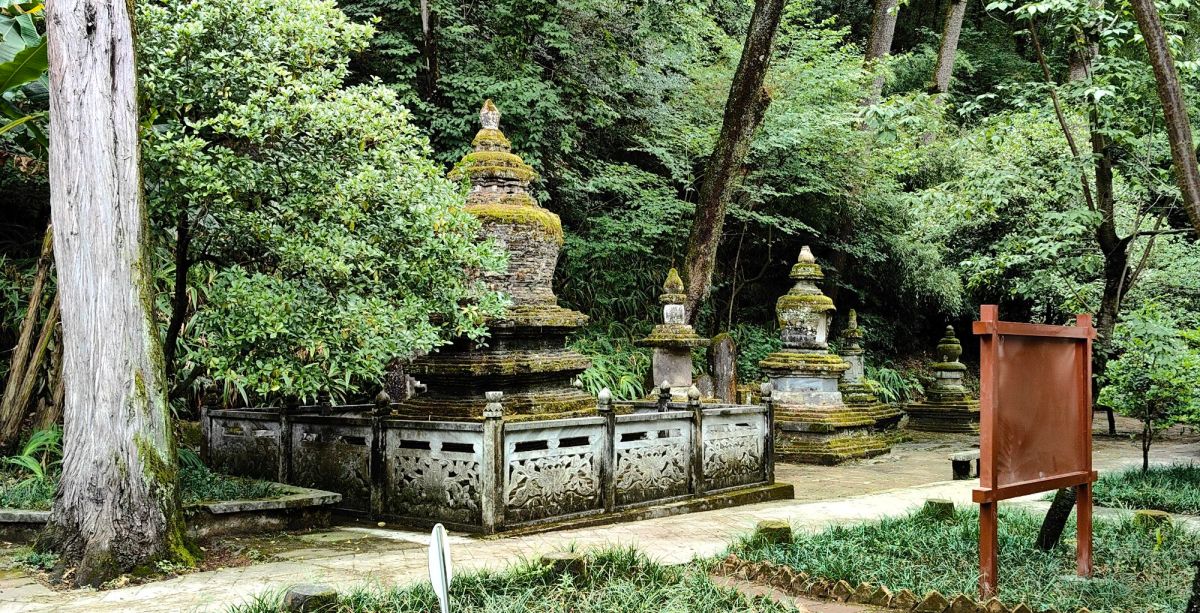
Hidden among the ancient trees and serene courtyards of Taihua Temple, a cluster of weathered stupas rises quietly, their surfaces draped in soft green moss. Overhanging ancient pines and cypress trees filter the sunlight, casting a dappled glow on the stupas. Dewdrops after rain bead on the moss, shimmering like pearls. The moist air fills with the earthy fragrance of soil, stabbing my nose.

太华寺古树成荫,庭院幽静,一簇饱经风霜的佛塔静静耸立,塔面覆盖着柔软的绿色苔藓。高耸的古松古柏透入一缕阳光,在佛塔上投下斑驳的光辉。雨后的露珠落在苔藓上,像珍珠一样闪闪发光。潮湿的空气中弥漫着泥土香气,扑鼻而来。

Perched high on the summit of Western Hills, the Dragon Gate is a breathtaking stone-carved grotto and archway. This was the destination of my trip. The path to Dragon Gate is an adventurous climb, with steep staircases and stone steps hugging the cliff. I took this memorable photo on the narrow passageways winding along the cliff, and behind me it was the inscription of two words Dragon Gate.

龙门位于西山最高处,是一座令人叹为观止的石窟和拱门。这是我此行的最终目的地。通往龙门的路是一条冒险之路,陡峭的楼梯和石阶紧贴悬崖。我在沿着悬崖蜿蜒的狭窄通道上拍下了这张令人难忘的照片,我的身后就是“龙门”两字的铭文。

Dragon Gate

Stepping through the Dragon Gate feels like walking into the sky. The ledge juts out over the mountainside. Dianchi Lake at the bottom stretches out like a giant mirror, reflecting the changing hues of the sky. The landscape seems to merge with the horizon, making it feel as if I was standing at the edge of the world.

穿过龙门,仿佛就像在天空中漫游。岩架在西山山腰上突兀而出。山脚的滇池就像一面巨大的镜子一样向远方延伸,反射出天空不断变化的色调。远处的风景似乎与地平线融为一体,让我感觉自己此刻就站在世界的边缘。

Yuantong Temple

For my trip of third day, I visited this Yuantong temple which is the oldest and largest Buddhist temple in the city, with a history spanning over 1,200 years. I liked its tranquil atmosphere, ornate architecture, and harmonious integration with nature. Located in the city center, it is a nice place for relaxation.

昆明之行的第三天,我参观了圆通寺,它是这座城市最古老规模最大的佛教寺庙,拥有1200多年的历史。我喜欢它宁静的氛围、华丽的建筑以及与自然的和谐融合。它位于市中心,亦是一个放松的好地方。

Unlike many temples built on mountain peaks, Yuantong Temple sits at a low point. The landscape here left me a deep impression. A large pond with blooming lotus flowers surrounds the main hall, connected by stone bridges that lead visitors over the water. The temple courtyards are adorned with ancient trees, meticulously pruned bonsai, and stone lanterns. Like other places in Kunming, the temple is adorned with many beautiful flowers of different colors.

与许多建在山顶上的寺庙不同,圆通寺地势较低。这里的风景给我留下了深刻的印象。大殿周围是盛开莲花的大池塘,池塘由石桥连接引导游客继续前行。寺庙庭院里种满了古树、装饰这精心修剪的盆景和石灯笼。和昆明的其他地方一样,寺庙里也种满了各种颜色的美丽花朵,尽显春城本色。

Yuantong Temple has blend of architectural styles, where traditional Chinese temple design meets the graceful elegance of Thai influences. This fusion reflects Yunnan’s historical connection with Southeast Asia through trade, religion, and cultural exchange. The intricate carvings on the walls and mutiple upward-curving eaves, resembling the multi-tiered roofs of Thai temples.

圆通寺的建筑风格融合了多种风格,传统中国寺庙设计与泰国风格的优雅融合在一起。这种融合反映了云南与东南亚在贸易、宗教和文化交流方面的历史联系。墙壁上精雕细琢,向上弯曲的多层屋檐类似于泰国寺庙的屋顶。

There is a natural rock formation located within the grounds of Yuantong Temple. Its poetic name means screen embracing the sunset. The Danxia-style cliffs behind the main hall serve as a natural backdrop, glowing in colorful hues as if the mountain itself is a celestial canvas capturing the changing colors of the sky. Danxia Landform is a kind of red sandstone formations shaped by millions of years of weathering and erosion, creating steep cliffs, layered ridges, and vivid colors. The landscape is extraordinary with the colors of nature blended seamlessly with the calm elegance of this temple.

圆通寺内有一块天然形成的岩石。其诗意的名字纳霞屏意为拥抱日落的屏风。主殿后面的丹霞悬崖是天然的背景,散发着五彩缤纷的色彩,仿佛山峰本身就是一幅天体画布,捕捉着天空变幻的色彩。丹霞地貌是一种红色砂岩地貌,经过数百万年的风化和侵蚀,形成了陡峭的悬崖、层层叠叠的山脊和鲜艳的色彩形成了非凡的景色,大自然的色彩与这座寺庙的宁静优雅完美地融合一体。

The weather of Kun Ming is capricious, with clear skies turning into thunderstorms within minutes. Sometimes it is common to see the sky being split, with half bathed in golden light and half shadowed by drifting clouds. This photo was taken in the park of Daguan Tower which was the last scenic spot visited in Kun Ming.

昆明的天气变化无常,常常晴空万里后转眼间就雷雨交加。这种天气下的天空仿佛被分成两半,一半沐浴在金色的阳光中,一半被飘浮的云彩所笼罩,这张照片是在大观楼公园拍摄的,这也是昆明之旅的最后一个景点。

Daguan Tower

The Daguan Tower is a historical pavilion standing proudly on the shores of Dianchi Lake. It was first constructed during the Kangxi reign in the Qing Dynasty. Sun Ranweng, a Qing Dynasty scholar, wrote a 180 characters couplet that immortalized the tower in Chinese literary history.

大观楼是一座屹立在滇池之畔的古楼阁,始建于清康熙年间,清代文人孙染翁曾为大观楼题撰写了一副180字的对联,使大观楼在中国文学史上永垂不朽。

The content of couplet is :

这幅对联的内容是:

五百里滇池奔来眼底,披襟岸帻,喜茫茫空阔无边。看:东骧神骏,西翥灵仪,北走蜿蜒,南翔缟素。高人韵士何妨选胜登临。趁蟹屿螺洲,梳裹就风鬟雾鬓;更苹天苇地,点缀些翠羽丹霞,莫辜负:四围香稻,万顷晴沙,九夏芙蓉,三春杨柳。

数千年往事注到心头,把酒凌虚,叹滚滚英雄谁在?想:汉习楼船,唐标铁柱,宋挥玉斧,元跨革囊。伟烈丰功费尽移山心力。尽珠帘画栋,卷不及暮雨朝云;便断碣残碑,都付与苍烟落照。只赢得:几杵疏钟,半江渔火,两行秋雁,一枕清霜。

Couplet is a form of traditional Chinese literature, a pair of lines in poetry that usually rhyme and have the same or similar length and rhythm. This couplet is known as the first long couplet in the long history of 3000 years. It captures the grand scale of the landscape, while also reflecting on the rise and fall of previous dynasties — blending natural beauty of Kun Ming with historical contemplation.

对联是中国传统文学的一种形式,是一对押韵的诗句,长度和韵脚相同。这副对联被称为3000年来历史上的第一长联。它描述了风景的宏伟,同时也反映了前朝的兴衰——将昆明的自然美景与历史沉淀融为一体。

The tower offers a sweeping view of the lake’s shimmering waters, with boats gliding across the surface. The gardens surrounding the tower are dotted with lotus ponds, which bloom in summer. Graceful willow trees hang over the stone-paved paths, their branches dipping into the water, creating a poetic atmosphere. It is a perfect place where poets mused, scholars sighed, and travelers pondered life’s impermanence.

大观楼眺望滇池风景,湖水波光粼粼,船只穿梭其间。周围的花园里点缀着荷花池,夏季荷花盛开。优美的柳树垂悬在石板路上,枝条垂入水中,营造出诗情画意。这里是诗人沉思冥想、学者感叹历代兴亡和旅行者思考人生无常的绝佳场所。

As the sun set over Dianchi Lake, casting golden reflections on the water, and the Western Hills faded into soft silhouettes, it’s hard not to feel a gentle tug at the heart. Now when I write this blog, every photo is more like a souvenir of beauty and wonder of this extraordinary voyage. This is the meaning of travel, snapshot of every moment of passing with memorable photo. Kunming, with its blossoming flowers, ancient histories, and amazing landscapes, is a city that lingers in my soul long even after I have left.

夕阳西下,在滇池水面上投下金色的倒影,西山的轮廓的剪影渐渐暗淡,很难不感到内心一阵温柔的牵动。现在当我写这篇博客时,每一张照片都更像是这次旅程的一段美好鲜活的回忆。这就是旅行的意义,用令人难忘的照片记录下每一个过往的回忆。昆明,繁花似锦,历史悠久,风景秀丽,是一座在我别离后仍久久萦绕在我灵魂中的城市。