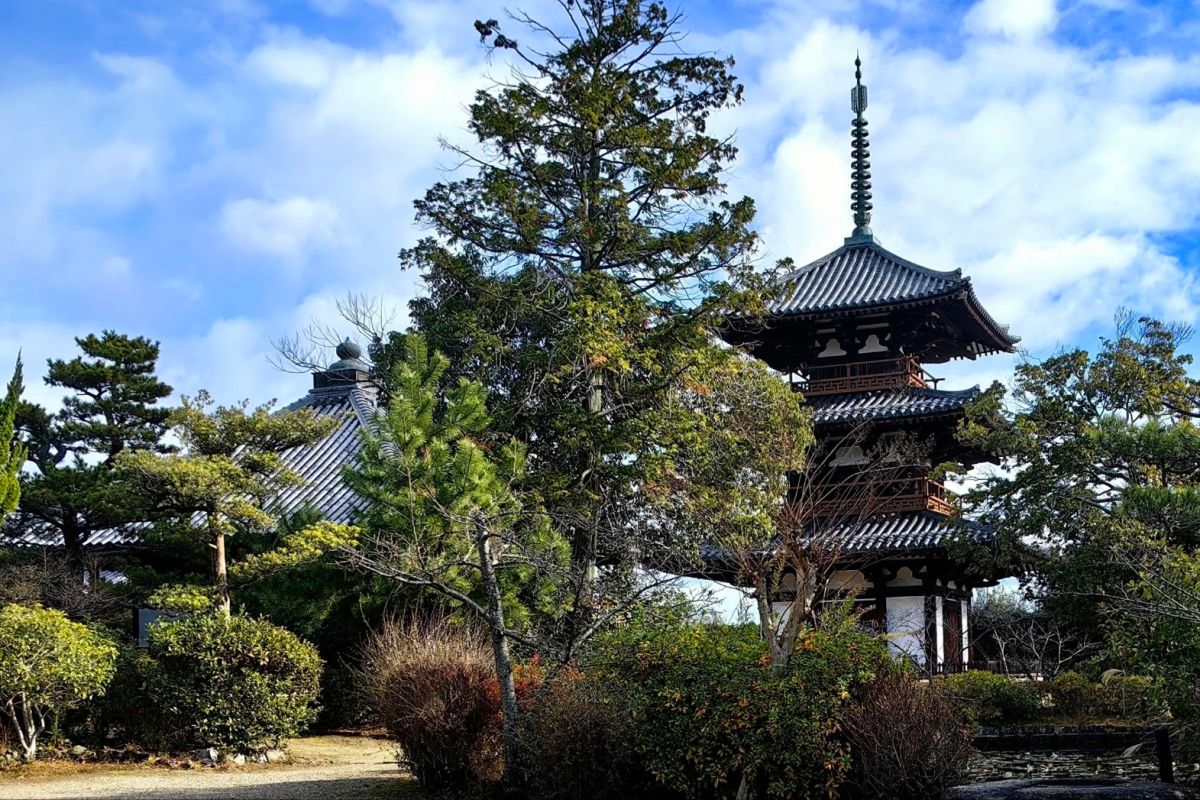
古日本的回响:斑鸠町寺院之旅
Ikaruga is a historic town near Nara, known for its important role in the early development of Buddhism and Japanese culture. At the heart of the town stands Hōryū-ji, one of Japan’s most significant ancient Buddhist temples. Founded in the early seventh century and closely associated with Prince Shōtoku, Hōryū-ji preserves some of the oldest surviving wooden structures in the world. In 1993, the Buddhist Monuments in the Hōryū-ji Area were inscribed on the UNESCO World Heritage List, recognizing the site for its exceptional wooden architecture, its importance in the history of Buddhism in Japan, and the way its buildings reflect the adaptation of Chinese Buddhist architectural traditions to the Japanese context.
斑鸠町是奈良附近一座历史悠久的小镇,在日本佛教与文化早期的发展过程中扮演着重要角色。这里坐落着日本最重要的古代佛教寺院之一法隆寺。法隆寺始建于7世纪初,与圣德太子有着密切的渊源,至今仍保存着世界上现存最古老的一批木结构建筑。1993年,法隆寺地区的佛教古迹被列入联合国教科文组织世界遗产名录。其入选不仅因为这里保存了杰出的木结构建筑,也因为它在日本佛教发展史上的重要地位,以及寺院建筑所展现出的中国佛教建筑传统传入日本后,与日本本土文化相融合的独特过程。
Yet Ikaruga is more than a place of ancient temples and historical monuments. Walking through its quiet lanes and open countryside, with mountains on the horizon and old temples appearing unexpectedly among the trees, it is possible to sense how deeply the past remains woven into the landscape.
然而,斑鸠并不只是一个由古老寺院和历史遗迹构成的地方。漫步在小镇安静的街巷与开阔的乡野之间,远处山峦静静铺展在地平线上,古老的寺院不经意间隐现在树木之间,游客会渐渐感受到,这里的过去依然深深融入这片土地的风景之中。
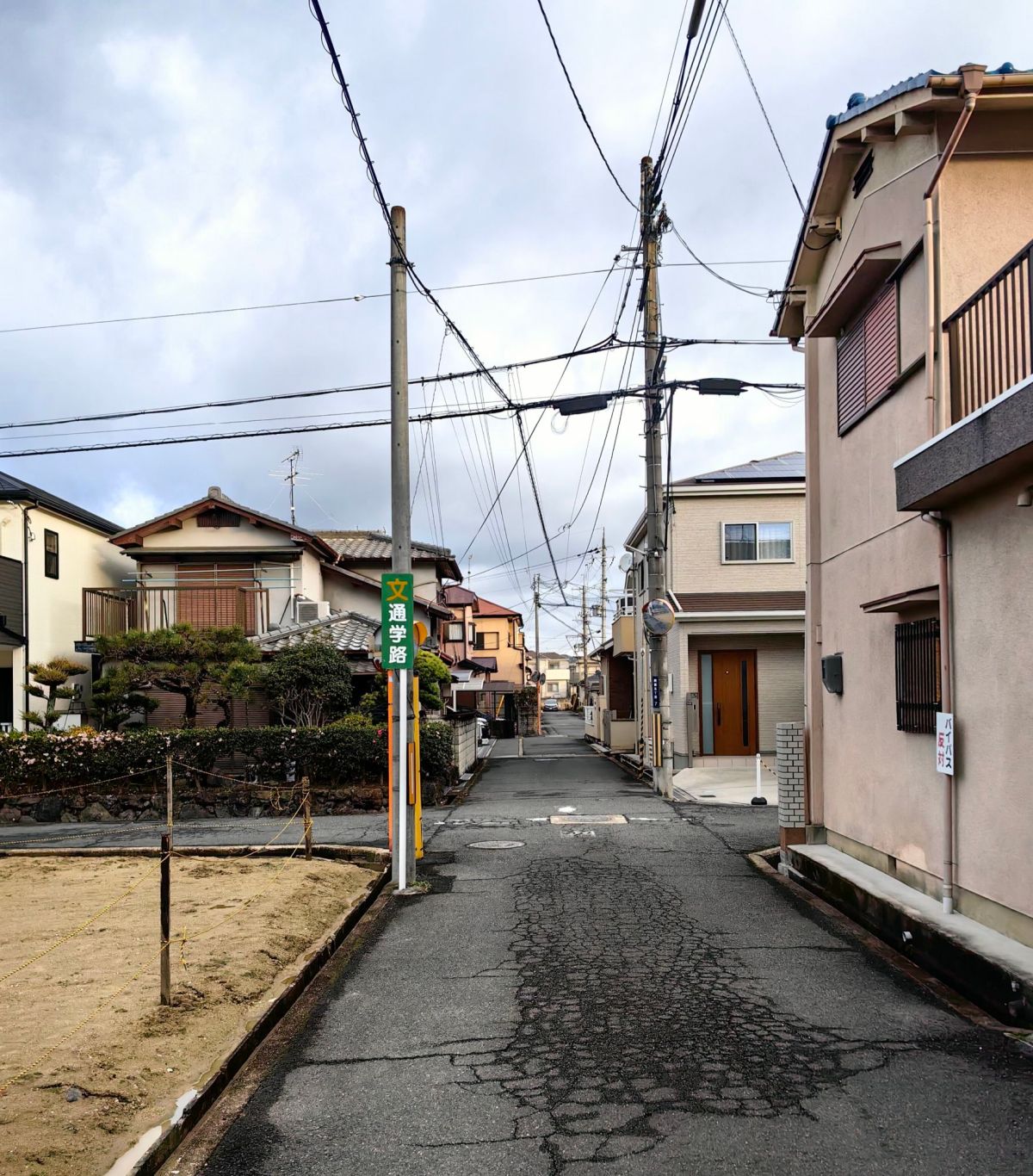
I travelled to Ikaruga in the early morning of December 2025, arriving while the town was still wrapped in the quietness of the beginning of the day. Unlike the busy streets of Osaka, Ikaruga felt almost completely removed from the rhythm of a modern tourist city. There were few people on the streets, little traffic, and hardly any of the noise. The town itself was modest and unassuming. Small, individually built houses stood closely along narrow streets, their tiled roofs and weathered walls softened by the pale winter light. Some houses had small gardens enclosed by low walls or wooden fences.
2025年12月的一个清晨,我来到斑鸠町。抵达时,小镇还笼罩在一天初始的宁静之中。与大阪繁忙的街道不同,这里仿佛完全脱离了现代旅游城市的节奏。街上行人寥寥,车辆也很少,几乎听不到什么喧闹的声音。小镇本身朴素而低调。狭窄的街道两旁,错落排列着一栋栋独立修建的小屋,铺着瓦片的屋顶与略显斑驳的墙面,在冬日苍白的晨光中显得格外柔和。有些房屋前还围着低矮的石墙或木栅栏,里面藏着小小的庭院。
Rather than broad roads leading dramatically towards Hōryū-ji, there were small residential streets and narrow lanes, turning gently between houses and disappearing from view. The December morning air was cool and clean. The trees had largely lost their leaves, leaving bare branches silhouetted against a soft winter sky, while patches of evergreen remained around gardens and temple grounds. The low morning sunlight fell gently across the walls and rooftops, leaving some shadows of winter.
这里没有那种笔直而宽阔、气势恢宏地通向法隆寺的大道,取而代之的是一条条穿行于民居之间的小街与狭窄巷道。道路在房屋之间轻轻转折,时而向前延伸,时而又在视线尽头悄然消失。十二月清晨的空气清凉而洁净。树木大多已经落尽叶子,光秃的枝桠映衬在柔和的冬日天空下;而在庭院与寺院周围,仍有一些常青树保留着深深的绿色。低低的晨光温柔地洒在墙面与屋顶上,为整个小镇披上一层淡淡的冬日光影。
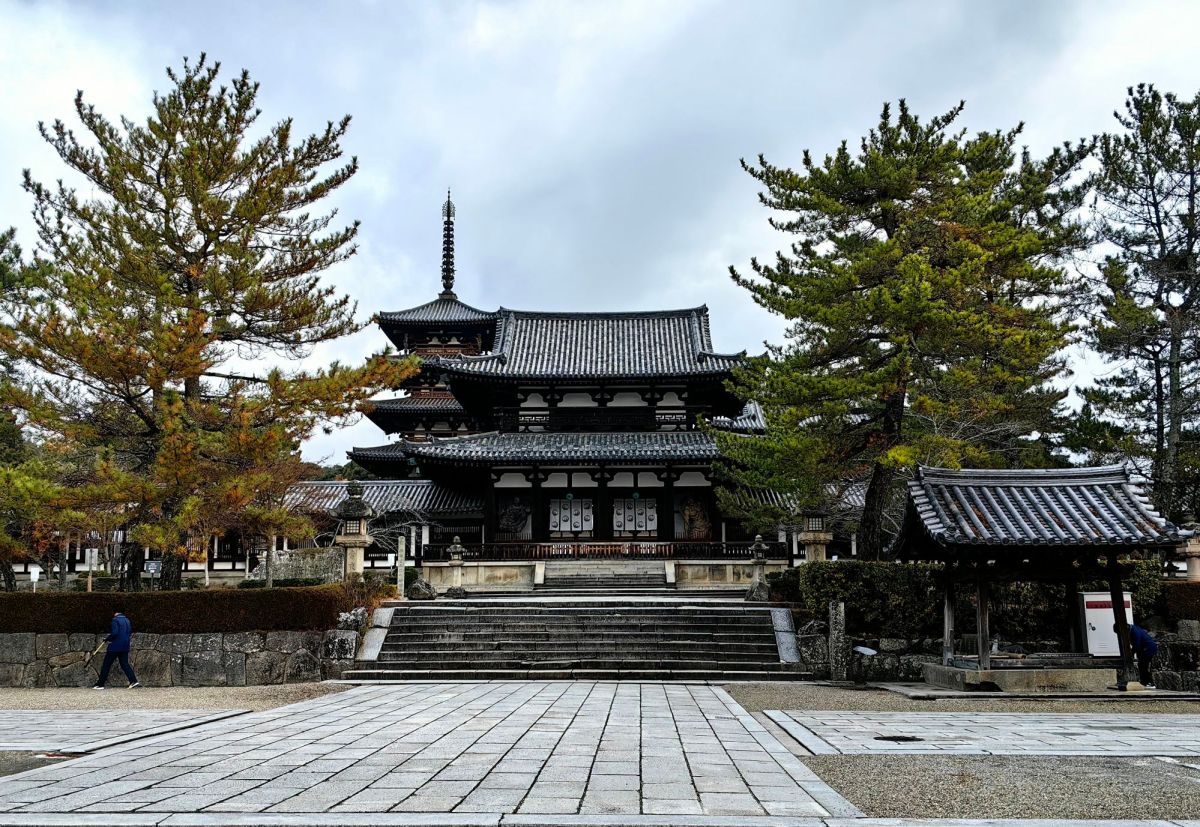
There was something beautiful about approaching Hōryū-ji in this way. At the end of the quiet road, the South Gate of Hōryū-ji suddenly came into view. After walking through the small residential lanes of Ikaruga, the sight of the great wooden gate felt almost like crossing a threshold into another age. It was imposing yet remarkably graceful. Its dark, weathered timber had been softened by centuries of exposure to sun, rain and wind, giving the wood a deep brown color and a texture that seemed to carry the weight of time. The massive wooden pillars rose firmly from the stone pavement, supporting the broad tiled roof whose gently curved eaves extended outward in the characteristic manner of traditional Japanese temple architecture.
以这样的方式走近法隆寺,本身便有一种难以言喻的美。在一条寂静小路的尽头,法隆寺的南大门忽然映入眼帘。穿过斑鸠那些安静的住宅小巷之后,眼前这座巨大的木门,仿佛让人跨过了一道通往另一个时代的门槛。它庄严而令人敬畏,却又有着一种出人意料的优雅。历经数百年日晒、风吹与雨淋,深色的木材早已褪去了最初的色泽,呈现出深沉的棕褐色。木头表面留下岁月侵蚀的纹理,仿佛承载着漫长时光本身的重量。粗大的木柱稳稳地立在石铺地面上,向上支撑起宽阔的瓦顶;微微上扬的屋檐向外舒展,呈现出日本传统寺院建筑特有的优美曲线。
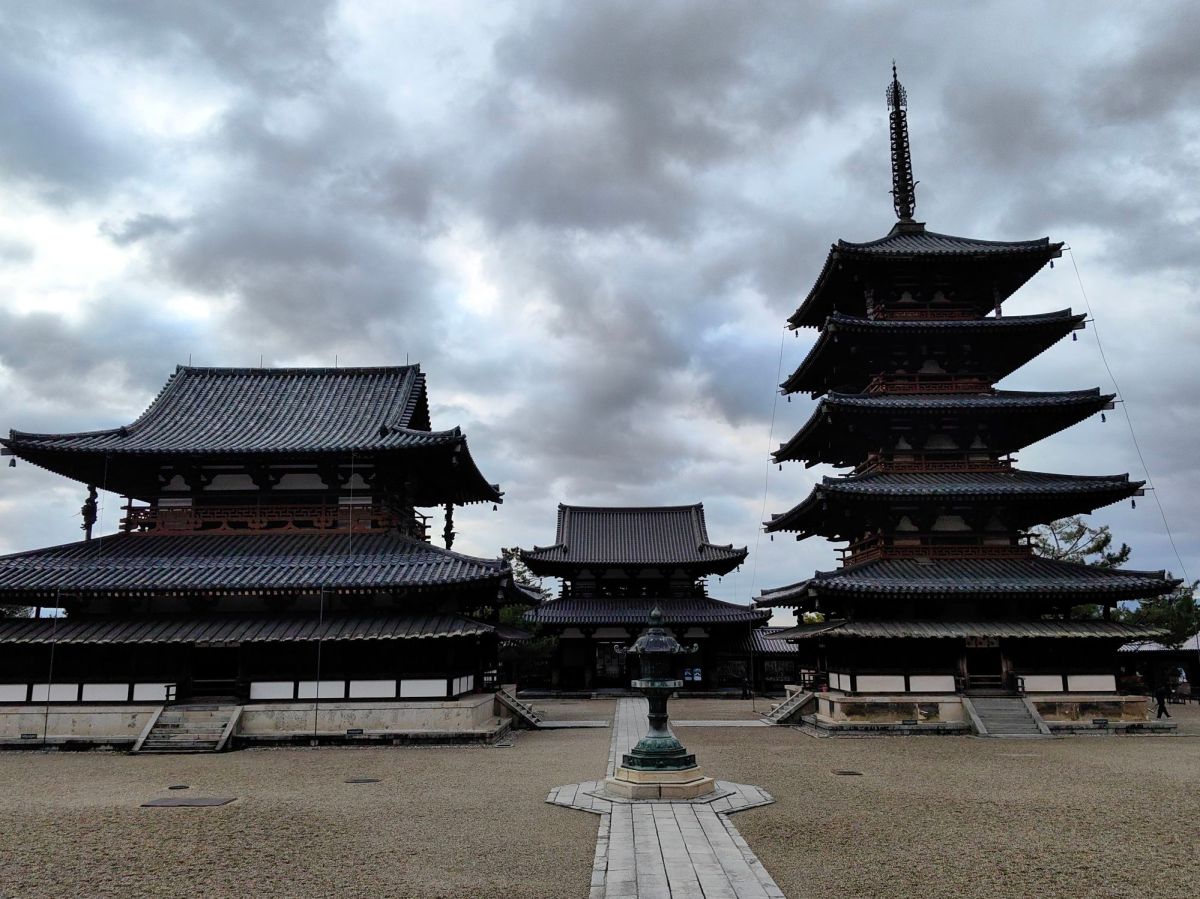
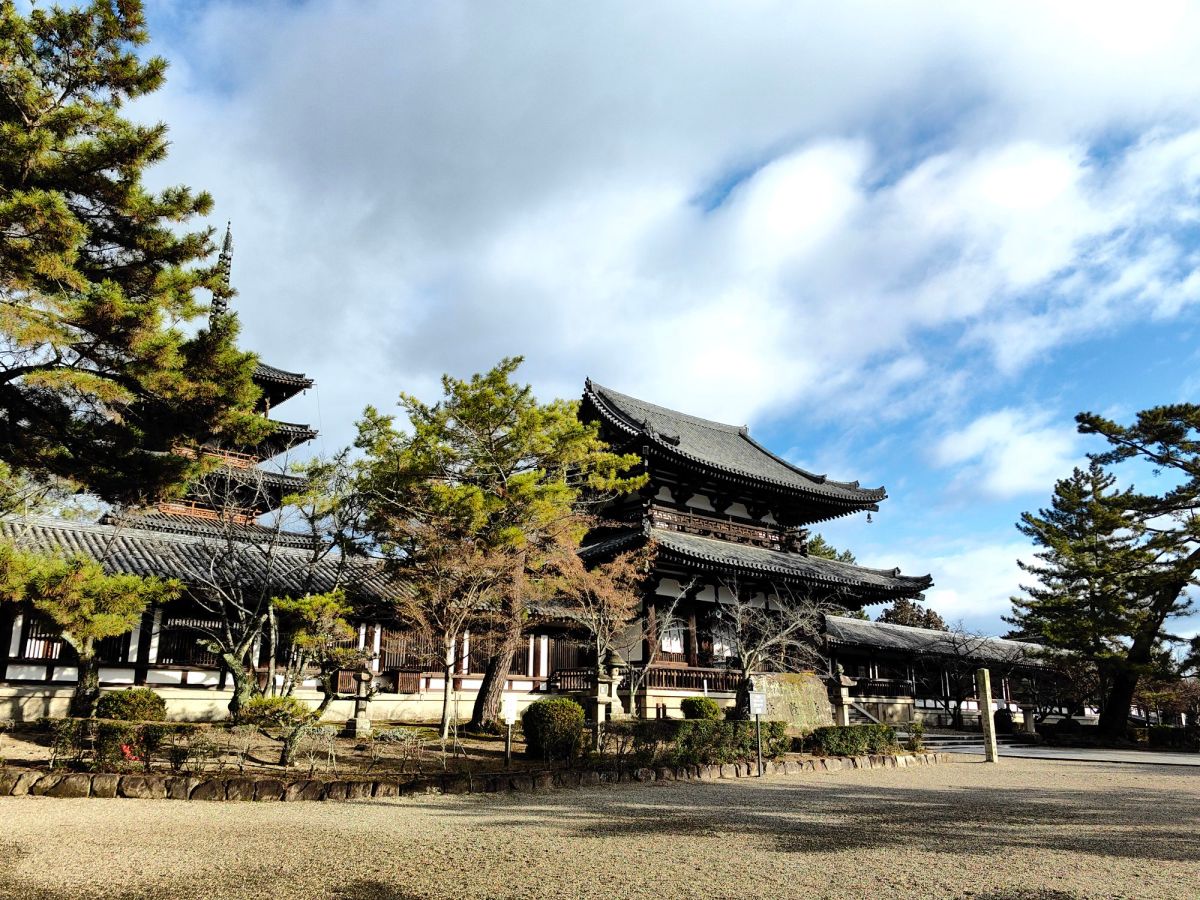
Beyond the gate, my first glimpse of Hōryū-ji opened gradually. The Five-Story Pagoda rose prominently in the distance, its dark wooden tiers becoming smaller and smaller as they climbed towards the sky. Its silhouette was remarkably elegant—five carefully balanced roofs stacked one above another, each projecting outward beneath the next. Beside it stood the Main Hall (Kondō), lower and broader, with its own sweeping tiled roof and rows of ancient wooden columns. This place showcases the rustic beauty of 7th-century Japanese architecture.
穿过大门之后,法隆寺的景象在眼前徐徐展开。远处,五重塔巍然耸立,深色的木质塔身层层向上延伸,随着高度的增加,塔层逐渐收窄,直指天空。它的轮廓格外优雅,五层屋顶彼此叠置,比例匀称,每一层的屋檐都向外舒展。五重塔旁边,便是金堂,与高耸的塔身相比,它显得低矮而宽阔。宽大的瓦顶舒展于建筑上方,古老的木柱整齐排列。这里展现出7世纪日本建筑的古朴质感的美。
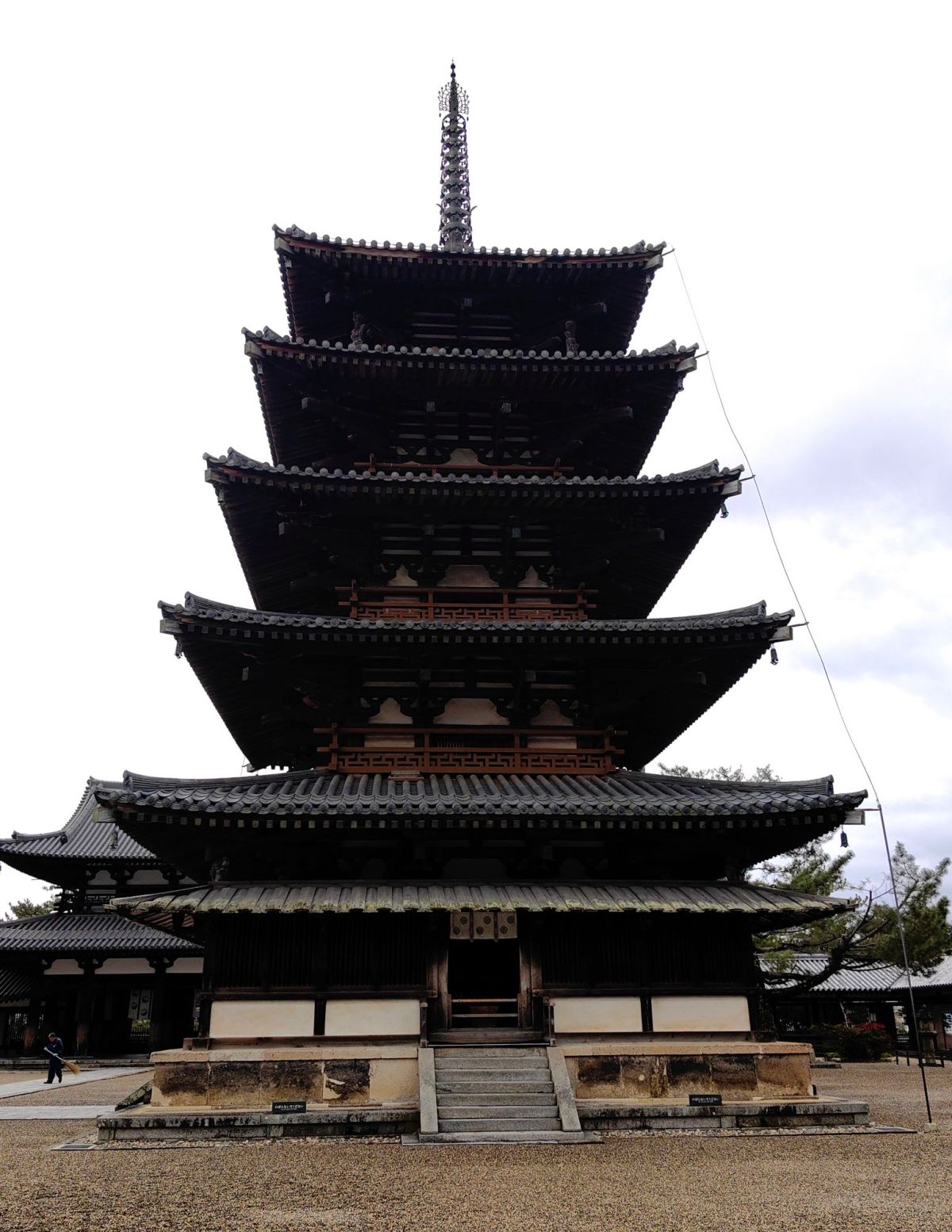
What struck me most was the pagoda under the pale winter sky. It was not brightly coloured or freshly polished. Their surfaces had been naturally darkened by age, and the weathered timber seemed almost black from a distance. Yet this subdued appearance made the architecture feel even more ancient. The courtyard was spacious and remarkably quiet that morning, recalling a poem ‘All sounds have faded into silence; Only the temple bells linger in the air’. The stone pavement, the aged timber, the tiled roofs and the towering pagoda formed a composition of extraordinary simplicity. I seemed to be the first visitor to arrive at Hōryū-ji that morning. The temple grounds were almost completely empty. A few monks were already at work.They moved quietly across the temple grounds, each holding a simple broom of straw and slowly sweeping the stone paths and courtyard. The gentle, rhythmic sound of the bristles brushing against the ground was almost the only sound in the morning.
最令我印象深刻的,是苍白冬日天空下的五重塔。它没有鲜艳的色彩,也没有经过刻意修饰的光亮。岁月早已自然地改变了木材的颜色,远远望去,那些饱经风霜的木质结构几乎呈现出深黑色。然而,正是这种沉静而深沉的色调,让整座建筑显得更加古老。那天清晨,寺院的庭院宽阔而格外安静, 另我想起名句“万籁此都寂,但余钟磬音”。石铺地面、历经岁月的木材、层层铺展的瓦顶,以及高高耸立的五重塔,共同构成了一幅极其简朴却令人难忘的画面。我似乎是当天第一个抵达法隆寺的游客。偌大的寺院几乎空无一人,只有几位僧人已经开始了一天的工作。他们各自拿着一把简单的稻草扫帚,缓缓走过寺院的庭院与石板小径,默默地清扫着地面。扫帚的草丝轻轻拂过石面的声音,带着一种柔和而规律的节奏,几乎成了整个清晨唯一可以听见的声响。
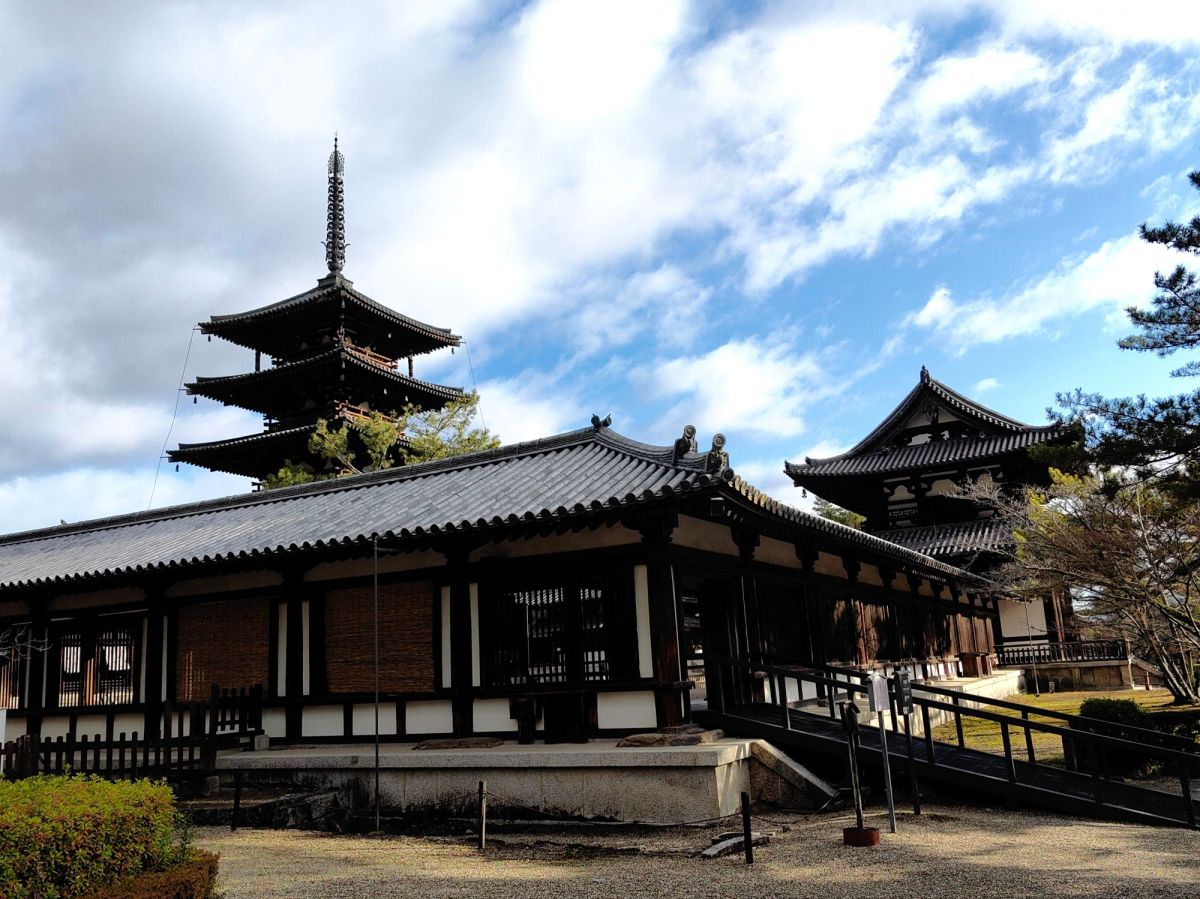
For a moment, its history was not only preserved in ancient timber, tiled roofs or priceless Buddhist sculptures. It was also preserved through small actions repeated day after day: opening the gates, sweeping the paths, tending the grounds, and beginning another morning in the same sacred place. Perhaps this was one of the most beautiful things about arriving so early. Before the temple became a destination for visitors, it was simply a temple beginning another day. There were no crowds and no voices around me. Only the soft sound of the brooms moved across the stone accompanied by the faint winter air.
那一刻,我忽然意识到,法隆寺的历史并不仅仅保存在那些古老的木材、层层铺展的瓦顶,或珍贵的佛教雕塑之中。它也延续在那些日复一日、年复一年重复着的细微日常里:开启寺门,清扫石径,打理庭院,然后在同一片神圣的土地上,迎来又一个清晨。或许,清晨早早参观这里才能体验到它的美妙。在寺院成为游客纷纷前来探访的目的地之前,它首先只是一座寺院,如往常一样,安静地开始新的一天。四周没有拥挤的人群,也没有交谈声。我独自置身于这片宁静之中,耳边只有扫帚轻轻拂过石面的细微声响,以及冬日那若有若无的晨风。
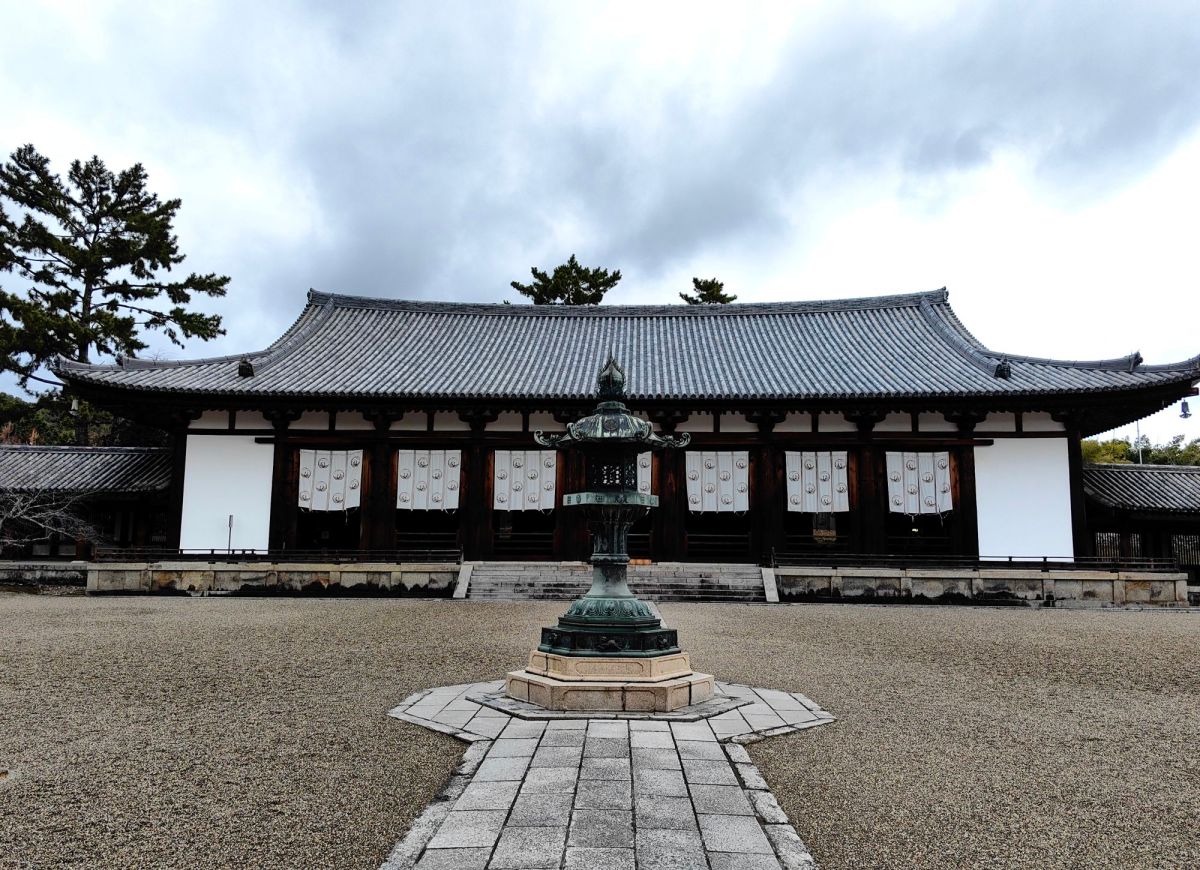
The Daikōdō stands at the northern end of Hōryū-ji’s central courtyard, its broad horizontal form creating a striking contrast with the towering Five-Story Pagoda. With its deep tiled roof and dark, weathered wooden columns, the hall has a dignified yet peaceful appearance. Traditionally associated with Buddhist teaching and study, it was a place where monks gathered to learn and contemplate Buddhist teachings. Inside, the tranquil wooden interior houses Yakushi Nyorai, the Buddha of healing, accompanied by attendant bodhisattvas.
大讲堂坐落于法隆寺中庭的北端,宽阔而横向舒展的建筑形态,与高高耸立的五重塔形成了鲜明的对比。深色的瓦顶以及历经岁月洗礼的木柱,共同赋予这座殿堂一种庄严而宁静的气质。大讲堂传统上是僧侣讲经、学习与研习佛法的场所,僧人们曾在这里聚集,聆听教诲、钻研佛教义理,并在静思中寻求对佛法更深的领悟。堂内供奉着象征疗愈与救度的药师佛,两侧有侍奉的菩萨像相伴。
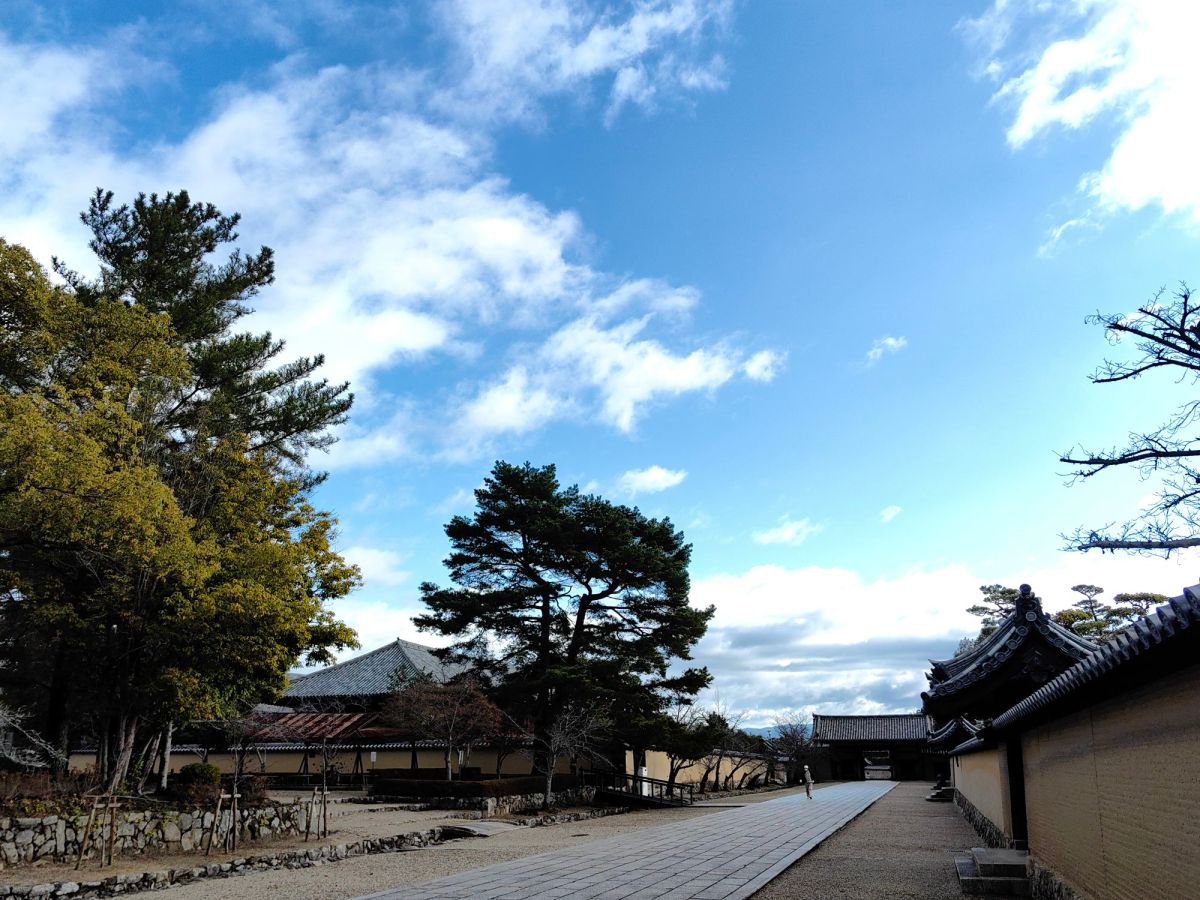
Outside the main temple buildings, Hōryū-ji opened into a much wider and more tranquil landscape outside the courtyard. The atmosphere here was completely different from the enclosed courtyards. It has lost some of the solemnity and grandeur of the palaces, but brought a sense of ease and tranquility in harmony with nature. Green trees were scattered throughout the grounds, their foliage standing out against the muted colors of the December landscape.
走出寺院的主要建筑群,法隆寺的景致渐渐向外延伸,眼前展现出一片更加开阔、宁静的天地。这里的氛围与围合的庭院截然不同,少了几分殿堂之间的庄严肃穆,多了一份与自然相伴的舒展与安宁。寺院的空地上点缀着一株株绿树,在十二月略显素淡的冬日景色中,依然保留着鲜明的色彩。
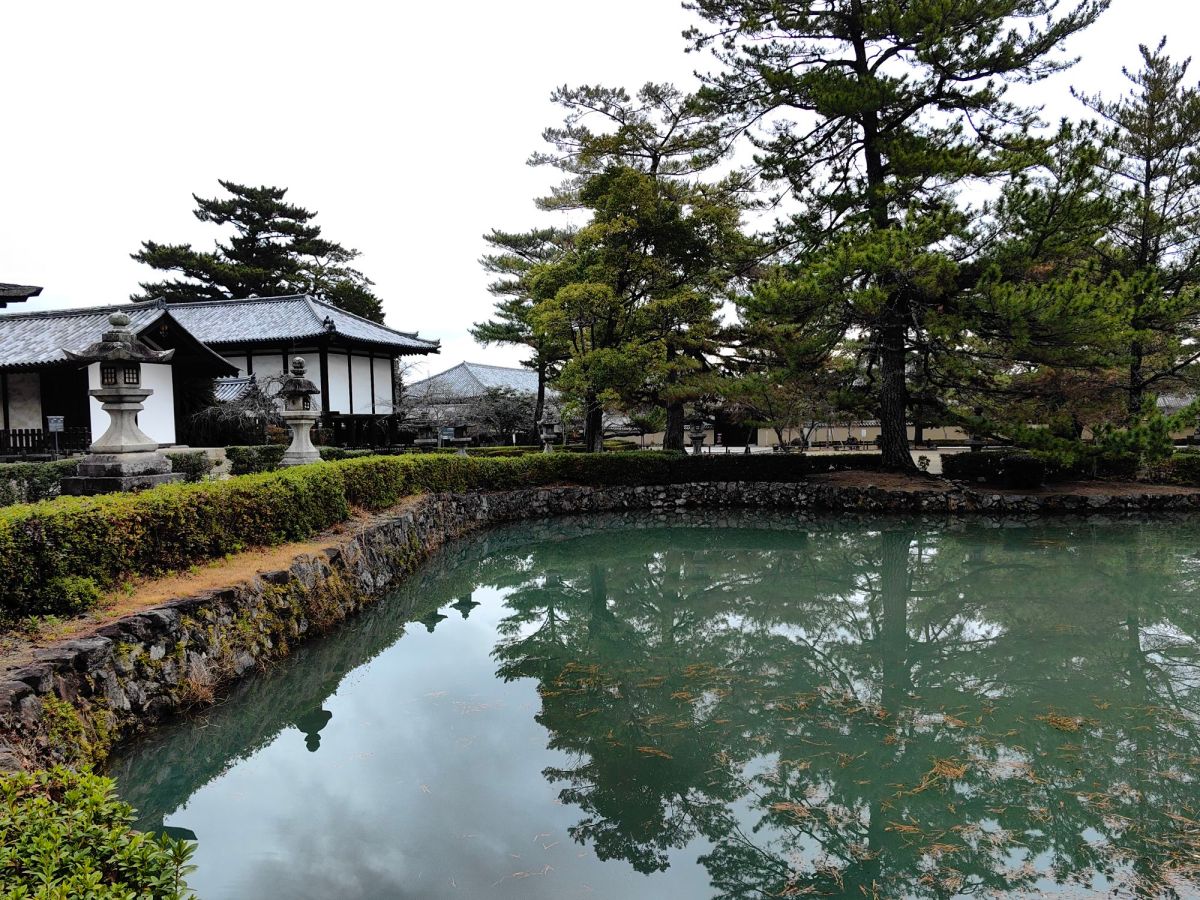
Small ponds appeared among the trees, their still surfaces reflecting fragments of the sky, branches and surrounding greenery. The wide paved paths stretched gently between the trees and temple buildings, leaving plenty of open space. Walking there alone, I felt no need to hurry from one attraction to another. The peaceful surroundings invited me simply to slow down, wander among the shadows of the trees and the water in the pond, occasionally stopping to quietly appreciate the scenery before me.
树木之间,点缀着几处小小的池塘。平静的水面倒映着天空的一角、枝桠的轮廓,以及四周深浅交错的绿意。宽阔的石铺小径在树木与寺院建筑之间缓缓延伸,沿途留有大片开阔的空间,让人感到舒展而自在。独自漫步其间,我不再觉得自己需要匆忙赶往下一个景点。这里的宁静让我自然而然地放慢脚步。比起追寻某个特定的景点,随心而行,在树影与池水之间漫步,偶尔停下来,静静欣赏眼前的风景。
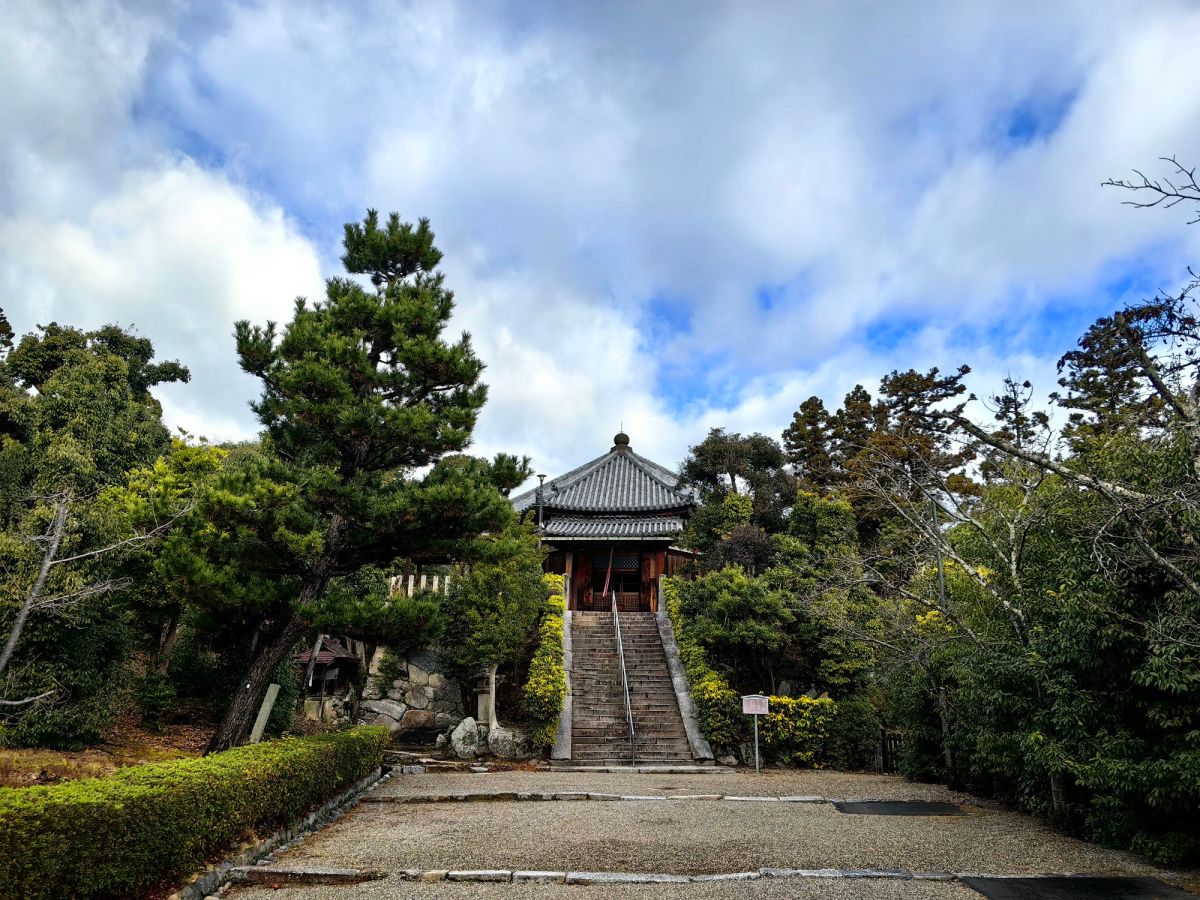
On the western side of Hōryū-ji, away from the more famous Five-Story Pagoda and Main Hall, I came to the Saien-dō, a smaller and more secluded temple hall standing quietly among the trees. The approach itself felt different from the grand central precinct. Instead of arriving at another monumental gate or an imposing courtyard, I followed a quieter path that gradually led upward through the greenery. Saien-dō has a much more modest presence than the great buildings of Hōryū-ji. Its circular form gives it an unusual appearance among the predominantly rectangular halls of the temple complex.
在法隆寺西侧,远离著名的五重塔与金堂,我来到了西圆堂。这是一座规模较小、位置幽静的寺院建筑,静静地隐身于树木之间。通往西圆堂的道路,也与寺院中央建筑群的氛围截然不同。这里没有通向宏伟大门的庄严大道,也没有气势恢宏的庭院等待着来访者。取而代之的是一条安静的小径,沿着绿意渐渐向上延伸,引领我一步步走向这座隐于林间的殿堂。与法隆寺那些气势恢宏的主要建筑相比,西圆堂显得朴素而低调。尤其引人注目的是它独特的圆形建筑,与寺院建筑群中大多数方正、规整的殿堂形成了鲜明对比。
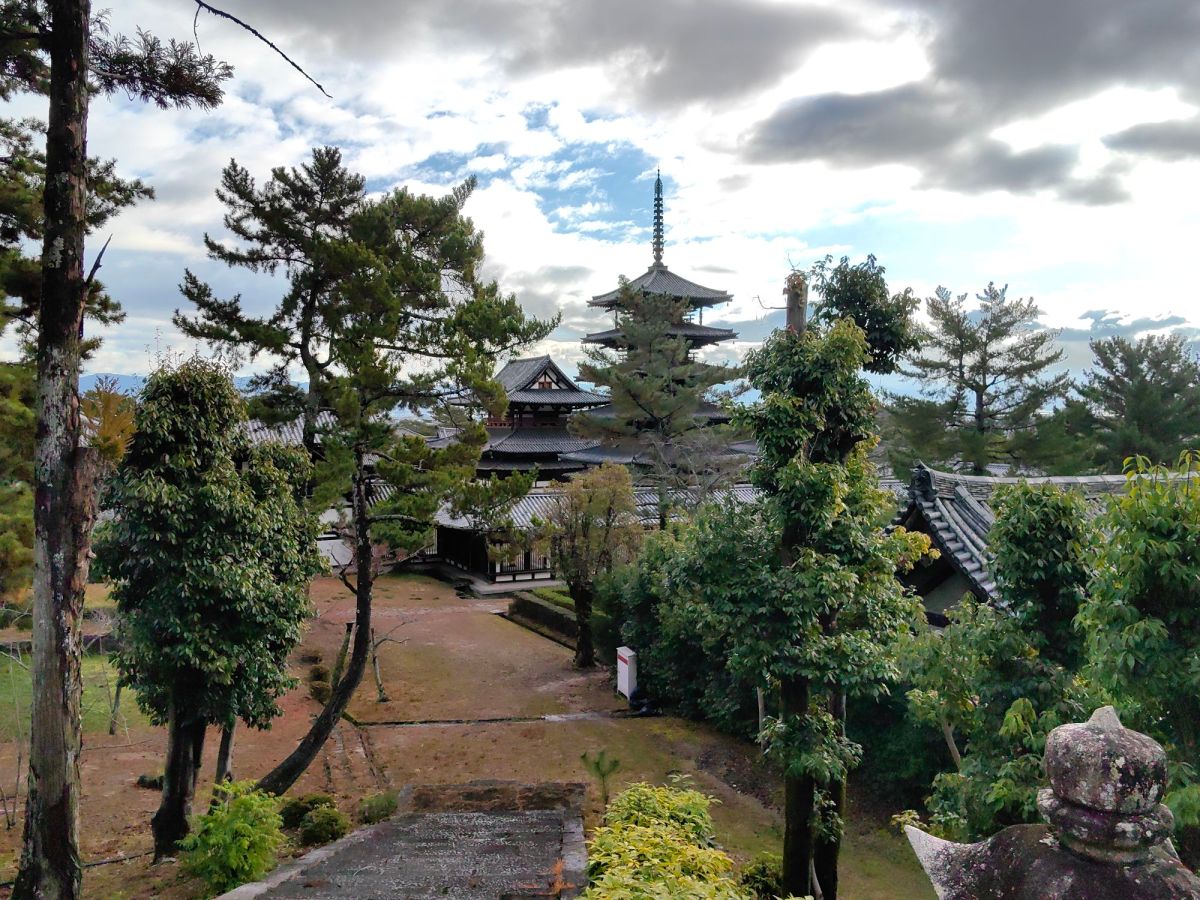
Standing before it, I found myself surrounded by the aged wooden surfaces, the ancient roof tiles, the wooden railings and the shadows cast beneath the eaves. The surrounding trees added greatly to its atmosphere. The fallen leaves lay scattered along the ground. The December landscape had a subdued beauty, with patches of green remaining among the bare branches and the soft light filtering through the trees.
站在西圆堂前,四周尽是饱经岁月洗礼的木质墙面、古老的瓦片、木制栏杆,以及屋檐下投落的深浅交错的阴影。周围的树木更为这座殿堂增添了几分独特的韵味。飘落的枯叶则零星散布在地面上。十二月的景色有一种含蓄而内敛的美。光秃的枝条之间,仍有片片绿意点缀其间,柔和的光线则穿过树木的缝隙。
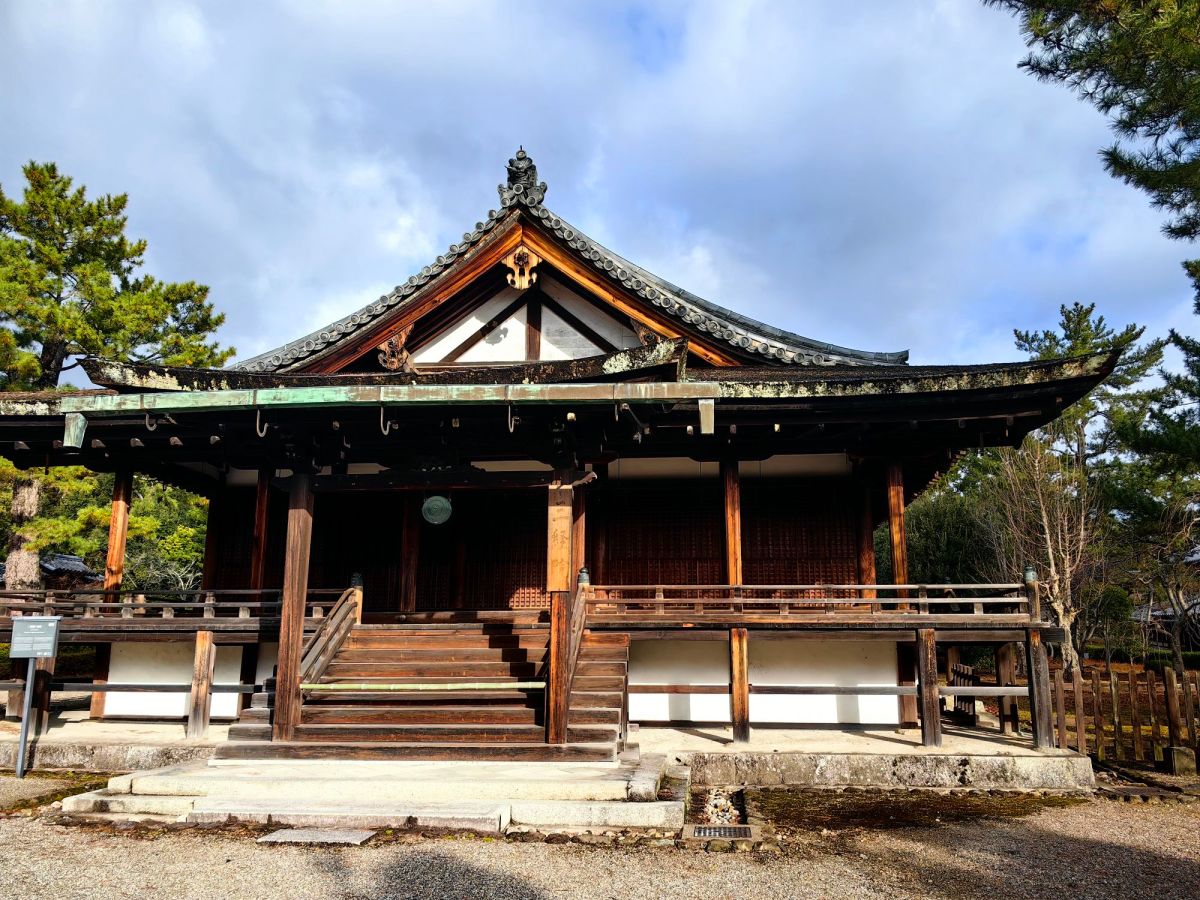
In this temple, I have observed many similar buildings of this style. The Nishimuro is a long, relatively low wooden building, associated with the living quarters and activities of monks. Its architectural specialty is its early Japanese Buddhist timber construction. The building demonstrates the characteristic techniques of the Asuka–Nara architectural tradition which marks the introduction and early development of Buddhism and Buddhist architecture in Japan. It is characterized by timber construction with post-and-lintel structures, large timber columns supported horizontal beams, complicated bracketing systems supporting large tiled roofs, symmetrical temple layouts. Like other buildings at Hōryū-ji, it is especially significant because it preserves some of the oldest surviving wooden architecture in the world.
在法隆寺内漫步时,我还留意到许多风格相似的古老建筑。其中,西室是一座横向延伸、整体较为低矮的木造建筑,与僧侣的生活起居及日常活动有关。这类建筑最引人注目的,是它所体现的早期日本佛教木构建筑传统。西室展现了飞鸟至奈良时代的典型建筑技艺,这一时期也正是佛教传入日本并逐渐发展、佛教建筑开始在日本扎根的重要阶段。这些建筑通常采用传统的木构架结构,以柱与梁相互连接,由粗大的木柱支撑横梁,并通过复杂的斗栱构造承托屋顶,寺院整体布局则讲究对称与秩序。与法隆寺的其他建筑一样,西室也具有重要的历史价值,至今仍保存着世界上现存最古老的一批木结构建筑。
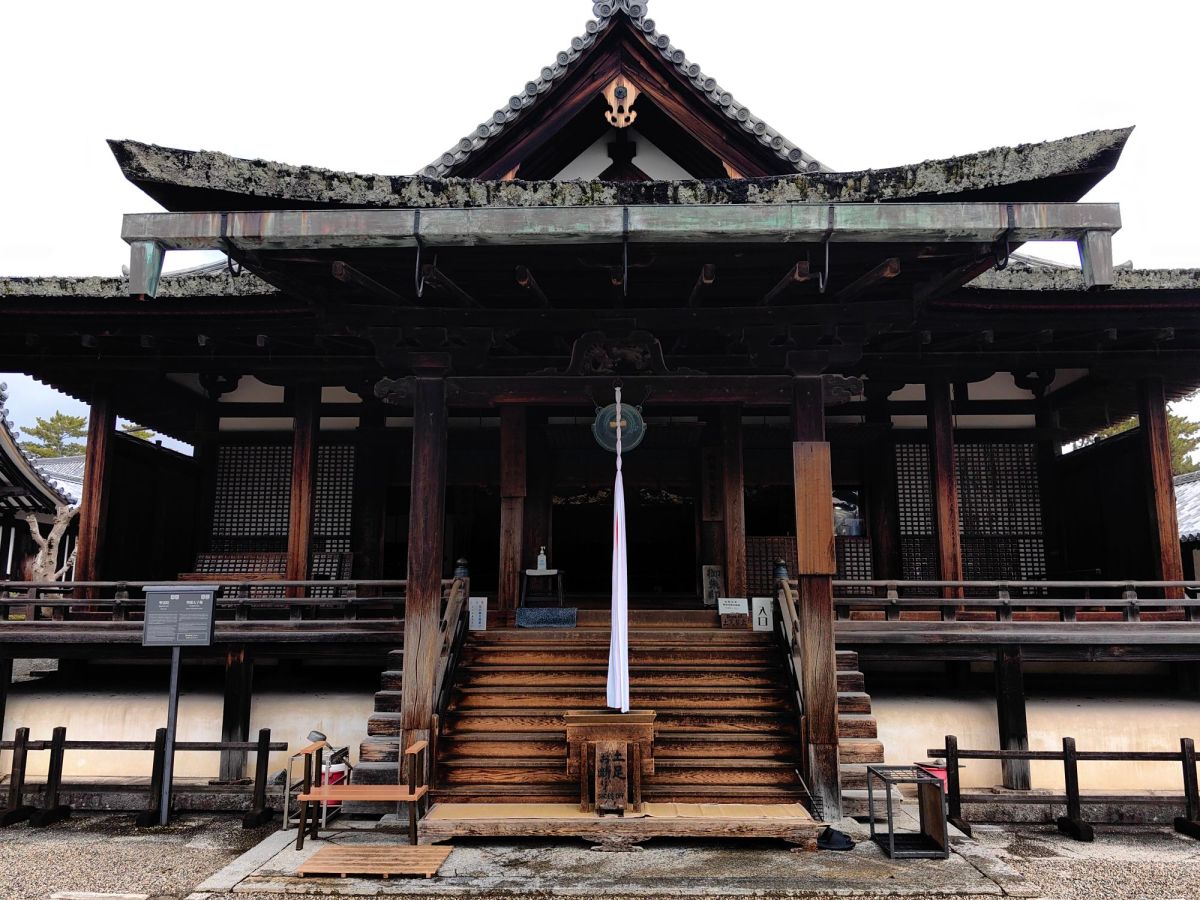
After wandering through the ancient temple grounds, I came to the Daihōzō-in, the Gallery of Temple Treasures. The collection inside is extraordinary in its variety. There are Buddhist statues, bodhisattvas, guardian figures, paintings, ritual objects, textiles and other works of religious art. Many of them are extraordinarily old, reaching back to the Asuka and Nara periods. Looking at them, I was struck by how different their appearance was from the familiar Buddhist images of later Japanese temples.
在古老的寺院建筑群中漫步了一段时间后,我来到了大宝藏院,也就是法隆寺珍宝馆。馆内收藏的文物种类之丰富,令人惊叹。从佛像、菩萨像、护法神像,到佛教绘画、宗教仪式用品、纺织品,以及其他各类宗教艺术作品,展品涵盖了佛教艺术的诸多面向。其中不少文物年代极为久远,可以追溯到飞鸟时代与奈良时代。凝视这些古老的造像时,最令我感到惊讶的,是它们与后来日本寺院中那些更为熟悉的佛教造像之间,竟有着如此鲜明的差异。
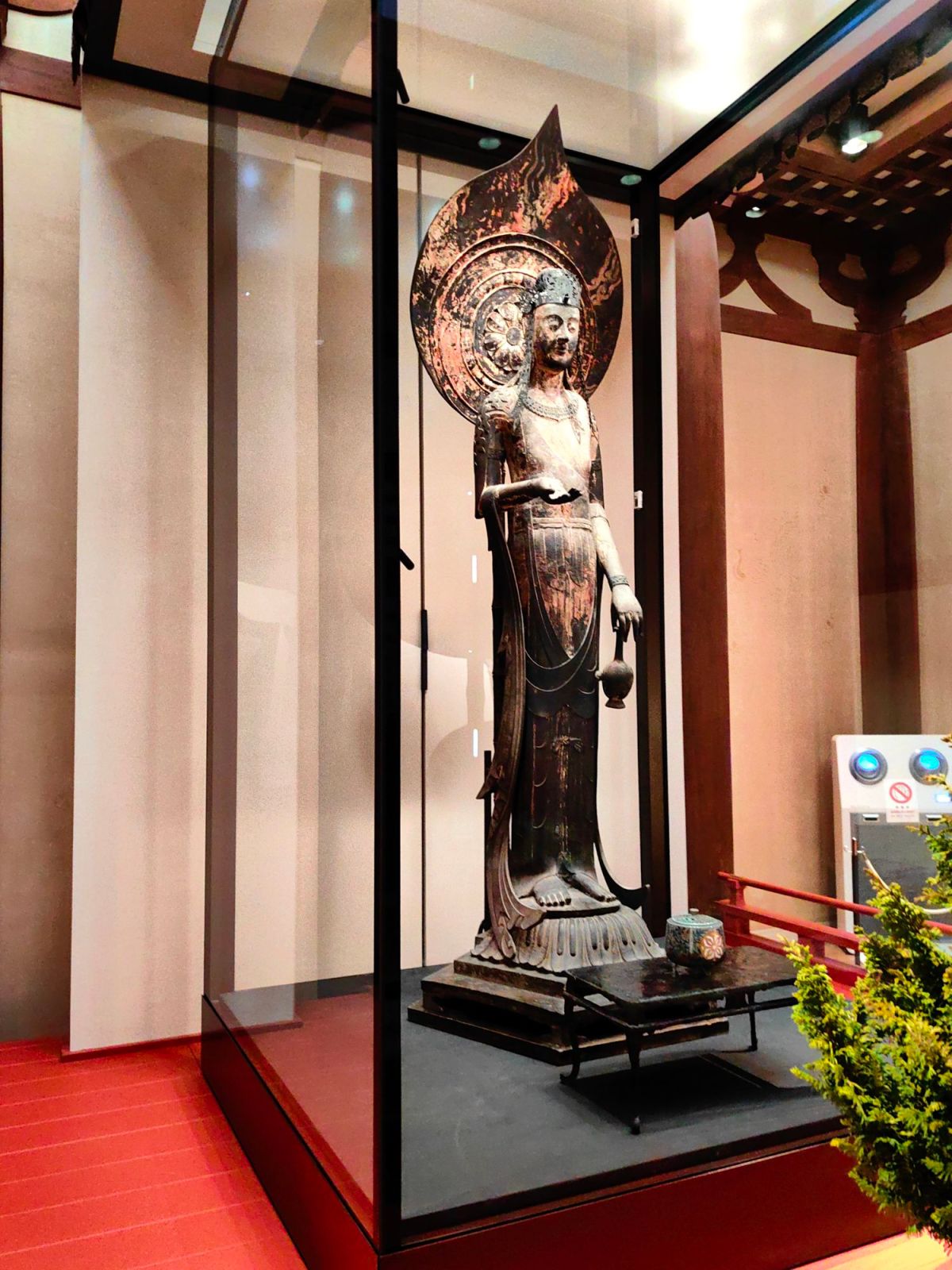
One of the most remarkable treasures associated with Hōryū-ji is the Kudara Kannon, a tall wooden image of Kannon traditionally associated with Baekje Korea. Its extraordinarily slender proportions and serene expression give it an almost otherworldly presence. The sculpture does not have the massive physicality of many later Buddhist statues. Instead, it seems to rise lightly and vertically, its elongated body creating an impression of extraordinary elegance.
法隆寺最引人注目的珍宝之一,便是百济观音。这尊高挑的木雕观音像,传统上被认为与朝鲜半岛的百济王国有着密切的渊源。它修长得近乎不可思议的身形,以及安详平和的面容,赋予了整尊造像一种超脱尘世的气质。与后来许多体量厚重的佛教造像不同,百济观音身躯纤细而修长,仿佛轻盈地向上延伸,在垂直的线条中呈现出一种难以言喻的优雅。
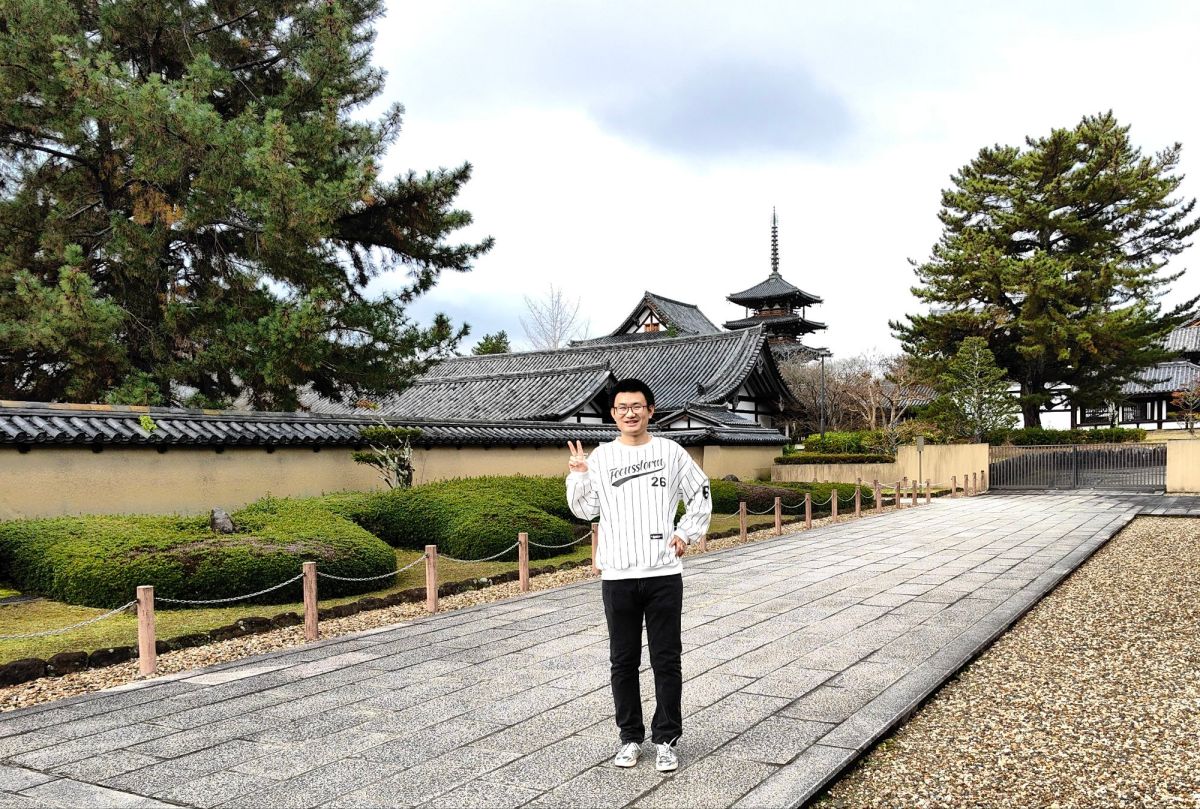
The complex of Hōryū-ji is very large and needs around 1.5 hours to go through all the areas. It is worthy to visit it because I could experience one of the world’s most important surviving collections of early wooden Buddhist architecture in its original temple setting. It gives me a physical way to understand the transition from the Asuka period (538–710) into the Nara period (710–794) and the growing influence of Buddhism on Japanese culture.
Of course, everyone will take a photo with the iconic five-story pagoda which is a classical memory of Japanese travel.For me, this ancient tower holds more significance than just a treasured travel photograph. Seeing it standing silently beneath the winter sky, feeling the marks of time etched on its dark wood, made this trip truly special.
法隆寺的寺院建筑群规模相当庞大,若想走遍各个区域,细细欣赏其中的建筑与文物,大约需要一个半小时。这里绝对值得专程造访,置身于寺院环境之中,游客可以亲身感受世界上现存最重要的早期木造佛教建筑群。与单纯在书本或图片中了解历史不同,漫步在这些历经千年风雨的殿堂之间,让我能够以一种更直观、更真切的方式,了解日本从飞鸟时代(538—710年)迈向奈良时代(710—794年)的历史变迁。
当然,来到法隆寺,每个人大概都会与那座标志性的五重塔合影留念,这是日本旅行中一幅经典而难忘的画面。对我而言,这座古塔的意义却不止于一张值得珍藏的旅行照片。亲眼看见它静静矗立在冬日的天空下,感受深色木材所沉淀的岁月痕迹,更让我体会到这趟旅行的特别之处。
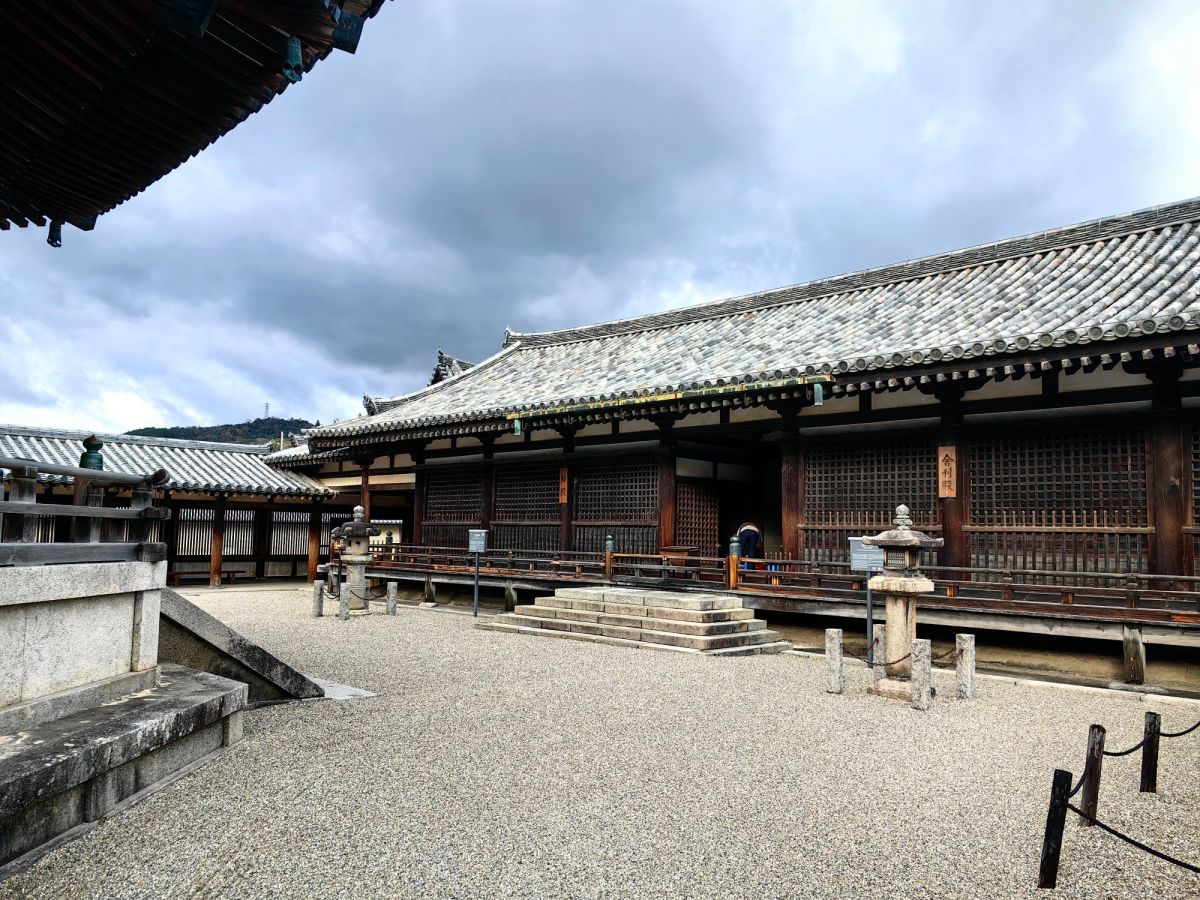
The Eastern Precinct (Tō-in) of Hōryū-ji is especially famous for the Yumedono (Hall of Dreams). Compared with the Western Precinct, which is associated with some of Japan’s oldest surviving Buddhist buildings, the Eastern Precinct has a somewhat different character: it is a memorial complex connected with Prince Shōtoku who was an influential Japanese prince, political leader, and patron of Buddhism during the Asuka period. He served as regent for Empress Suiko and is traditionally credited with helping strengthen the central government through the Seventeen-Article Constitution. According to temple tradition, he established the original temple, known as Wakakusa-garan, in the early 7th century.
法隆寺的东院以梦殿而闻名。与以日本现存最古老的一批佛教建筑著称的西院相比,东院有着不同的历史气质。这里是一处与圣德太子密切相关的纪念性寺院建筑群,承载着人们对这位日本飞鸟时代重要历史人物的追忆。圣德太子是日本早期历史上一位颇具影响力的皇族、政治领袖,也是佛教的重要支持者。他曾担任推古天皇的摄政,并通过制定《十七条宪法》,为加强日本中央政权作出了重要贡献。根据寺院的传统记载,圣德太子于7世纪初创建了最初的寺院,名为若草伽蓝,后来,这片土地逐渐发展成为今天的法隆寺东院。
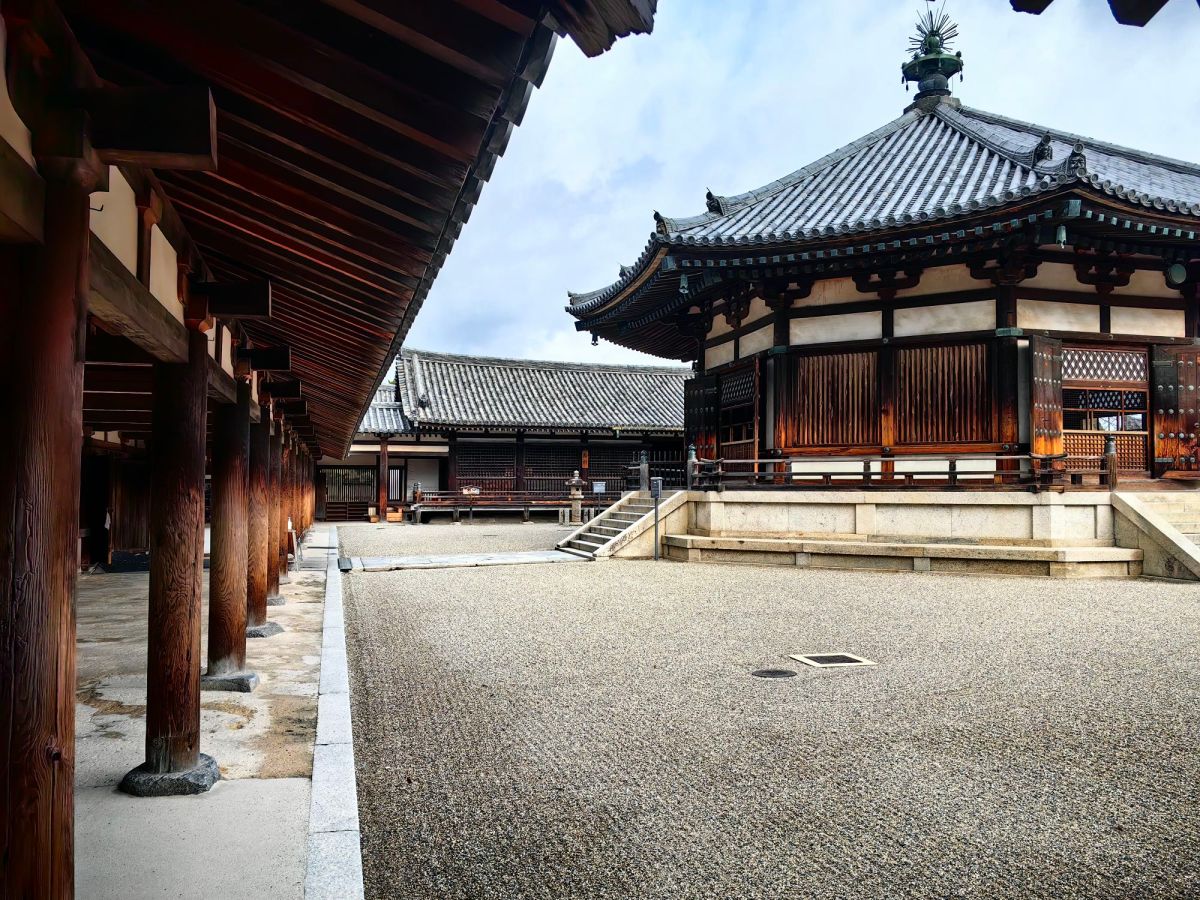
The Eastern Precinct was established later, around the 8th century. Its centre is the famous Yumedono. It functions as a place where Prince Shōtoku’s spiritual legacy is commemorated. It stands at the centre of the Eastern Precinct, surrounded by a cloister. The name Yumedono, translated as “Hall of Dreams,” is connected with traditions about Prince Shōtoku receiving a vision or divine revelation at this location. The octagonal form makes the building visually distinctive.
东院的建立时间较晚,大约可追溯至8世纪。整个建筑群以著名的梦殿为中心,这里是纪念圣德太子精神遗产的重要场所,承载着后人对这位日本早期佛教发展重要推动者的追思与敬仰。它坐落于东院的中央,四周由回廊环绕,形成一个相对独立而宁静的空间。梦殿这个名字与有关圣德太子在此获得梦境启示或神圣显现的传说有关。它的建筑形态显得格外独特,最引人注目的特点,便是八角形的设计。
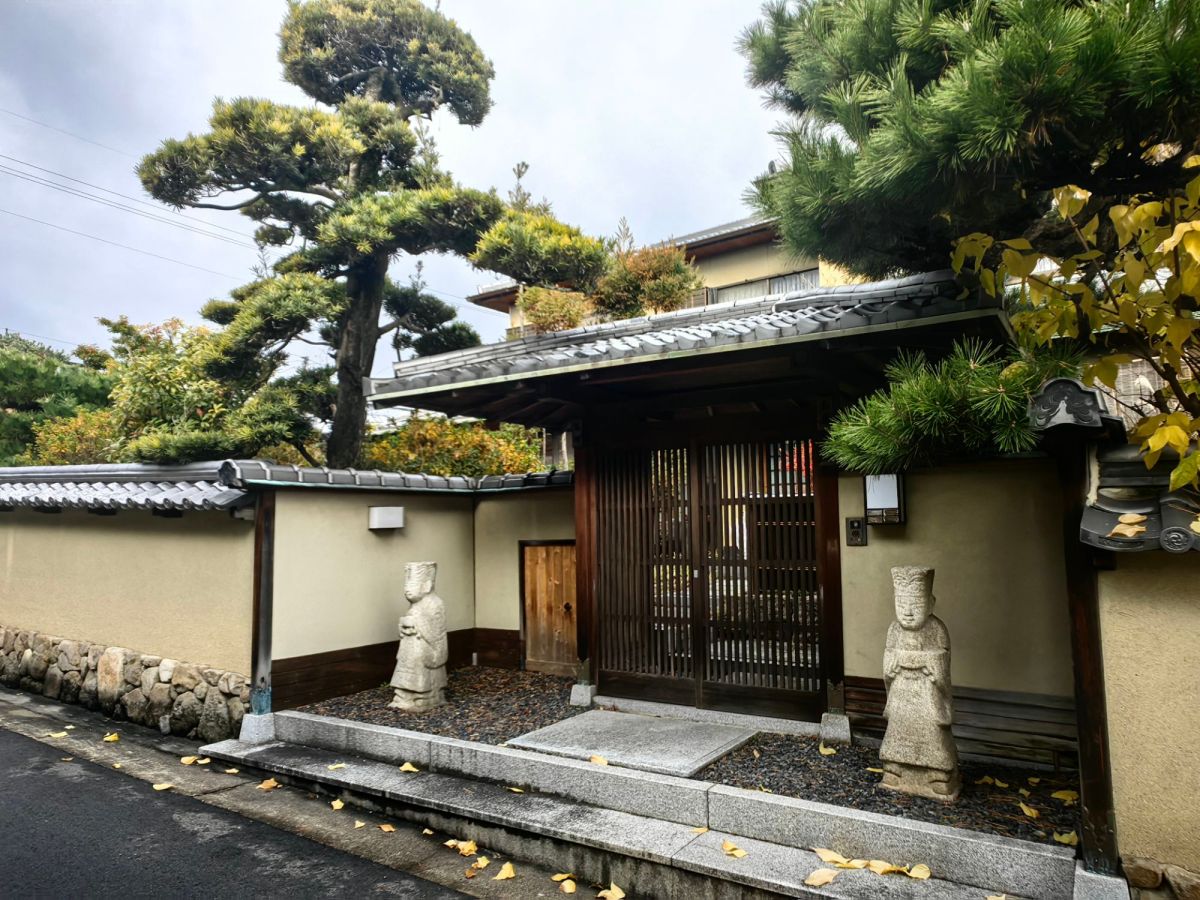
After I left the Hōryū-ji, I passed a traditional Japanese private residence tucked along the quiet road toward Hōrin-ji. Its entrance is set behind a stone-walled courtyard, where green plants grow naturally around the edges, giving the property a secluded and peaceful character. A wooden entrance door forms the focal point, with two stone statues placed in front as quiet guardians. The combination of weathered stone, dark wood, and greenery gives the house a simple beauty typical of the traditional Japanese landscape with a sense of harmony, simplicity, and tranquility.
离开法隆寺后,沿着通往法轮寺的那条安静道路前行,我经过了一座隐于路旁的日本传统民居。房屋入口位于一方石墙围起的小庭院之后,墙边自然生长着几丛绿植,为这处住宅增添了几分幽静与隐秘的气息。木质大门是整个入口最醒目的部分,门前摆放着两尊石像,静静地守护着这座宅院。斑驳的石墙、深色的木门与自然生长的绿意相互映衬,构成了日本传统景观所追求的和谐、简约与宁静。
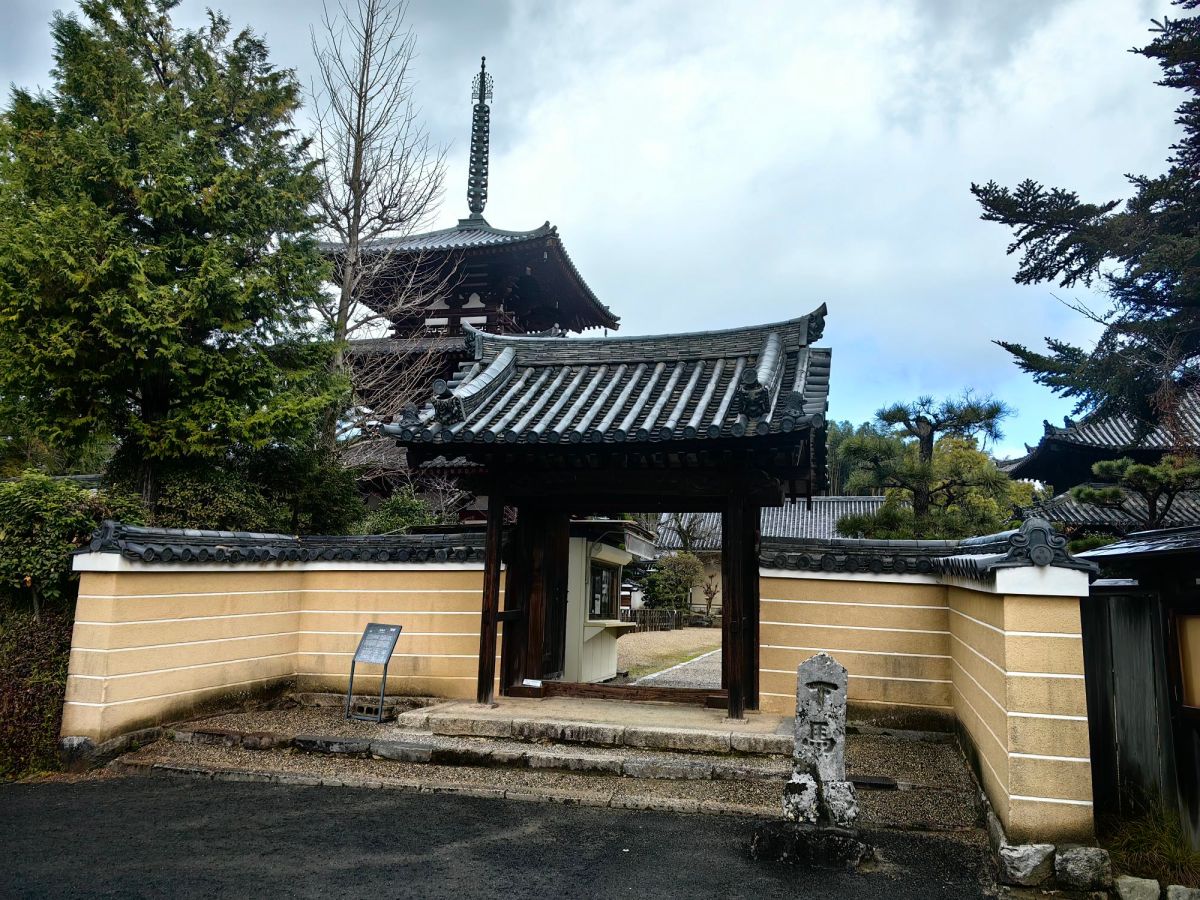
Ikaruga was a center of the early Buddhist and political world around Prince Shōtoku. His religious establishments were concentrated in this area. After his death, other members of his family continued establishing temples connected with him and his legacy. That’s why I could find many temples with the similar names. Hōrin-ji is a small and peaceful temple, just north of Hōryū-ji. It has a more rustic atmosphere than the larger Hōryū-ji complex.
斑鸠町曾是日本早期佛教与政治世界的重要中心,这里与圣德太子有着密切的渊源。他在这一地区建立了多处与佛教相关的寺院。圣德太子去世后,他的家族成员继续兴建与他相关的寺院。这也解释了为什么漫步这片区域时,我会发现许多名称相似、彼此又有联系的寺院。法轮寺便是其中一座。它坐落于法隆寺以北,是一座规模不大、氛围宁静的寺院。与法隆寺宏大的建筑群相比,法轮寺少了几分庄严恢宏,多了一份质朴而自然的气息。
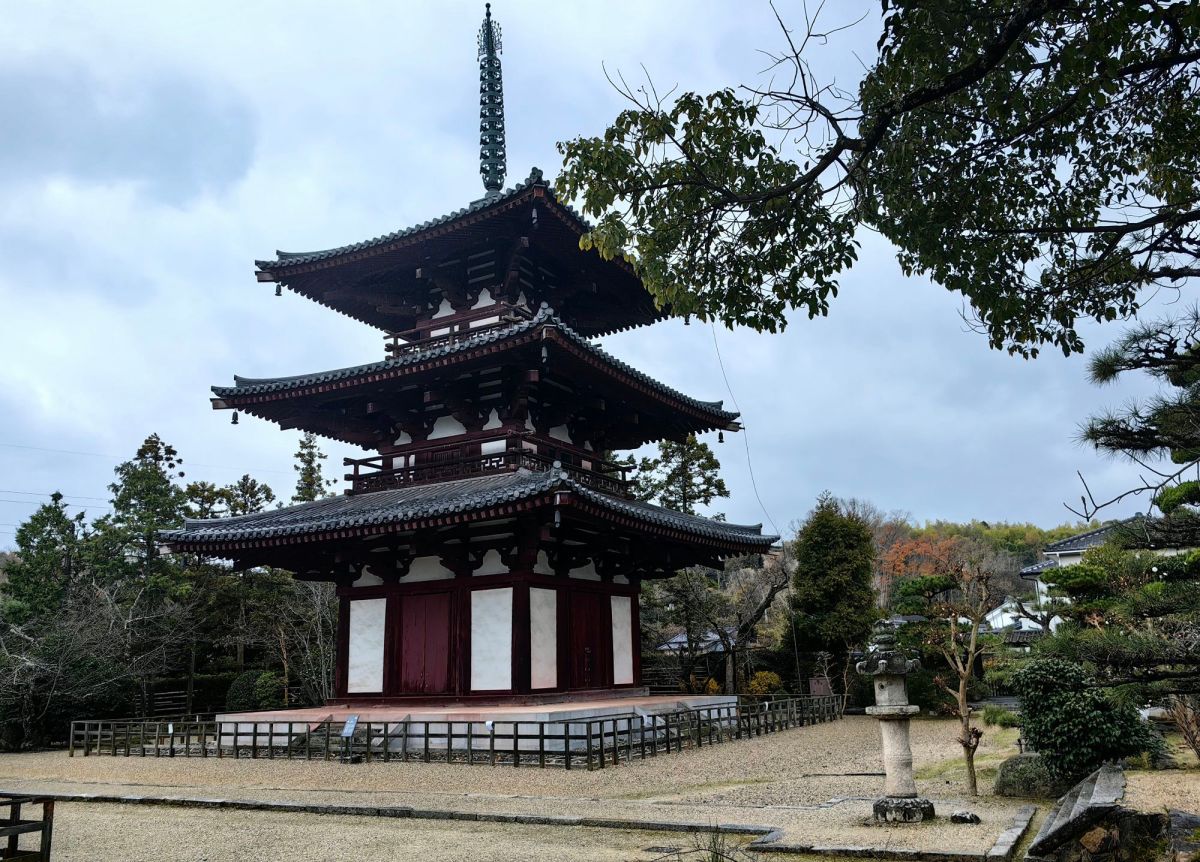
Similar to Hōryū-ji, it has a three-story pagoda rising above the surrounding trees, which is one of the distinctive landmarks of Ikaruga. Traditional wooden temple buildings, with dark timber, tiled roofs, and restrained architectural decoration surrounded by stone features and garden vegetation present the unique architectural style of ancient Japanese temples. Its name means “Temple of the Dharma Wheel.” which symbolize the spread and operation of Buddhism. Tradition says it was founded by Prince Shōtoku’s son, Prince Yamashiro, to pray for his father’s recovery.
与法隆寺相似,法轮寺也有一座高耸于周围树木之上的三重塔,这是斑鸠町颇具代表性的地标之一。深色木材构成的传统寺院建筑、覆着瓦片的屋顶,以及克制而简朴的装饰,点缀着石制景物与庭园绿植,共同呈现出日本古代寺院特有的建筑风格。法轮寺的名字意为「法轮之寺」,象征佛法的传播与运转。根据传统记载,这座寺院由圣德太子的儿子山背大兄王创建,目的是为祈求父亲早日康复。
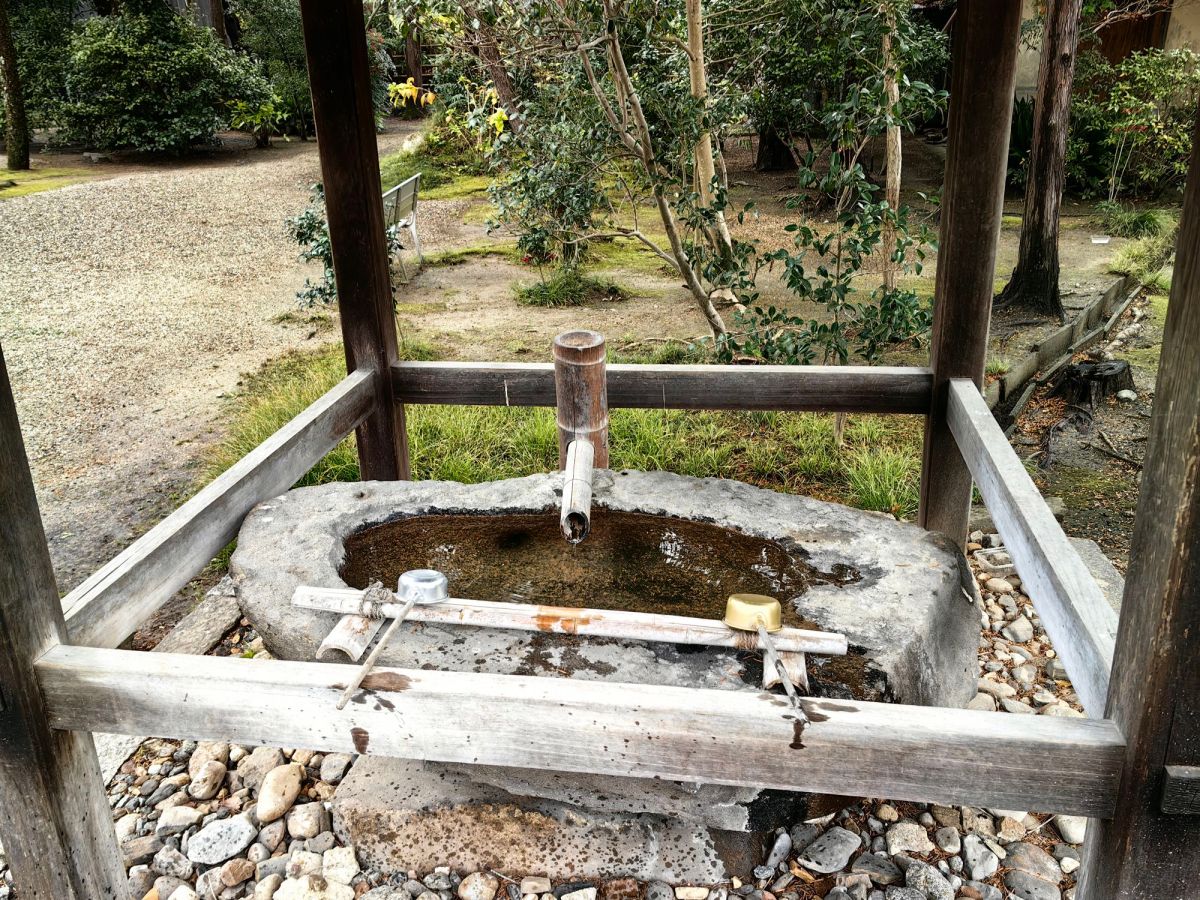
Near the temple buildings stands a large stone temizu basin filled with clear water. A small ladle rests beside it, inviting visitors to scoop the water and purify themselves before continuing through the temple grounds. This kind of device can be seen in many temples in Japan. It may be a symbolic act of purification before approaching sacred spaces.
寺院建筑旁,摆放着一座大型的石制手水钵,里面盛满了清澈的水。一旁放着一把小巧的长柄水勺,供来访者舀水净手,在继续参观寺院之前,先完成一道简单而庄重的净身仪式。这样的手水设施在日本的许多神社与寺院中都能见到。它也承载着传统宗教文化中的净化意义,人们象征性地洗去身上的尘埃,以更加洁净、恭敬的心境接近神圣的空间。
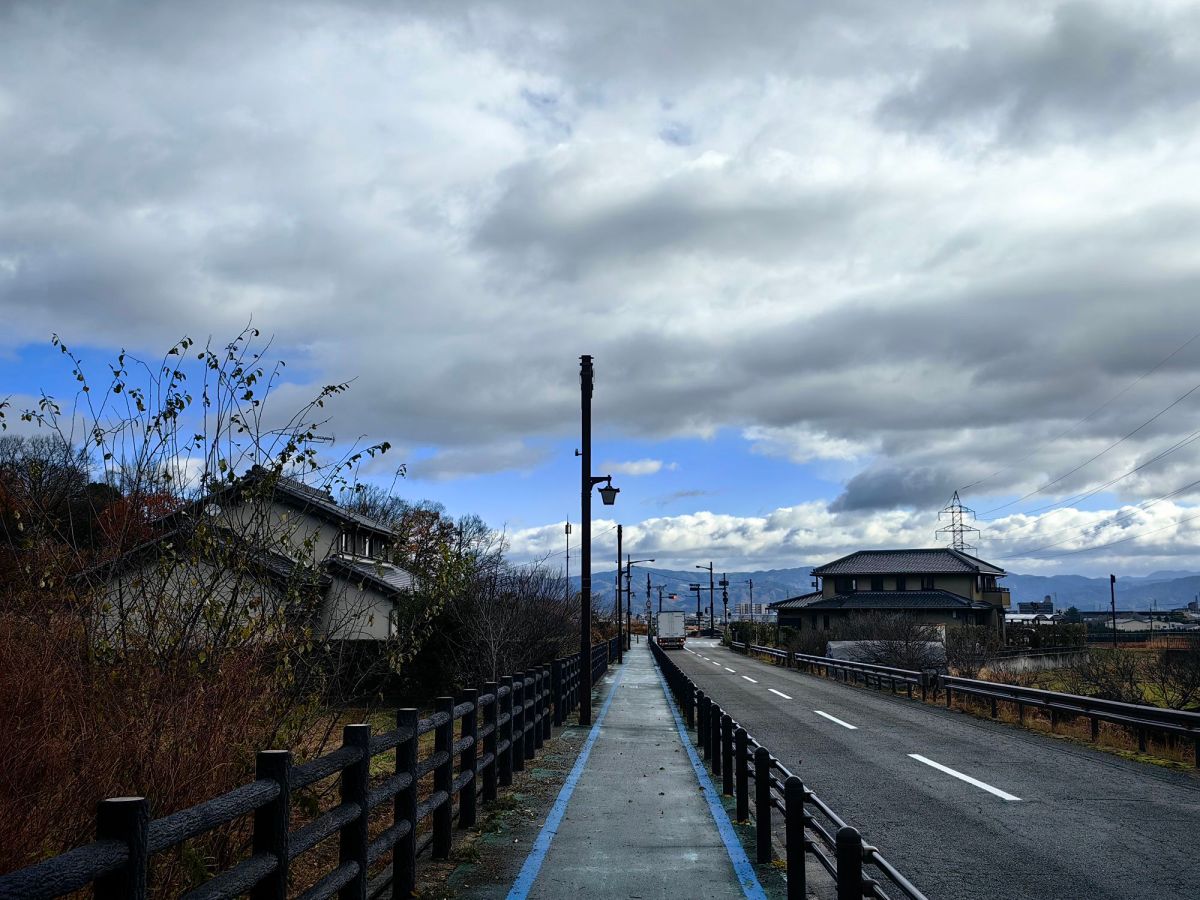
The walk I took from Hōryū-ji to Hōrin-ji to Hōkki-ji is actually passing through one of Japan’s most concentrated landscapes of 7th-century Buddhist history. The ordinary houses, stone walls, fields, and narrow roads between the temples are inalienable part of that historic Ikaruga setting rather than simply being a modern neighborhood around three temples.
从法隆寺出发,途经法轮寺,最后走向法起寺,我穿行于日本最集中保存着七世纪佛教历史遗迹的地区。沿途所见的寻常民居、石墙、田野与狭窄的乡间道路,并不只是环绕着三座古寺的现代街景,而是斑鸠町这片历史土地不可分割的一部分。
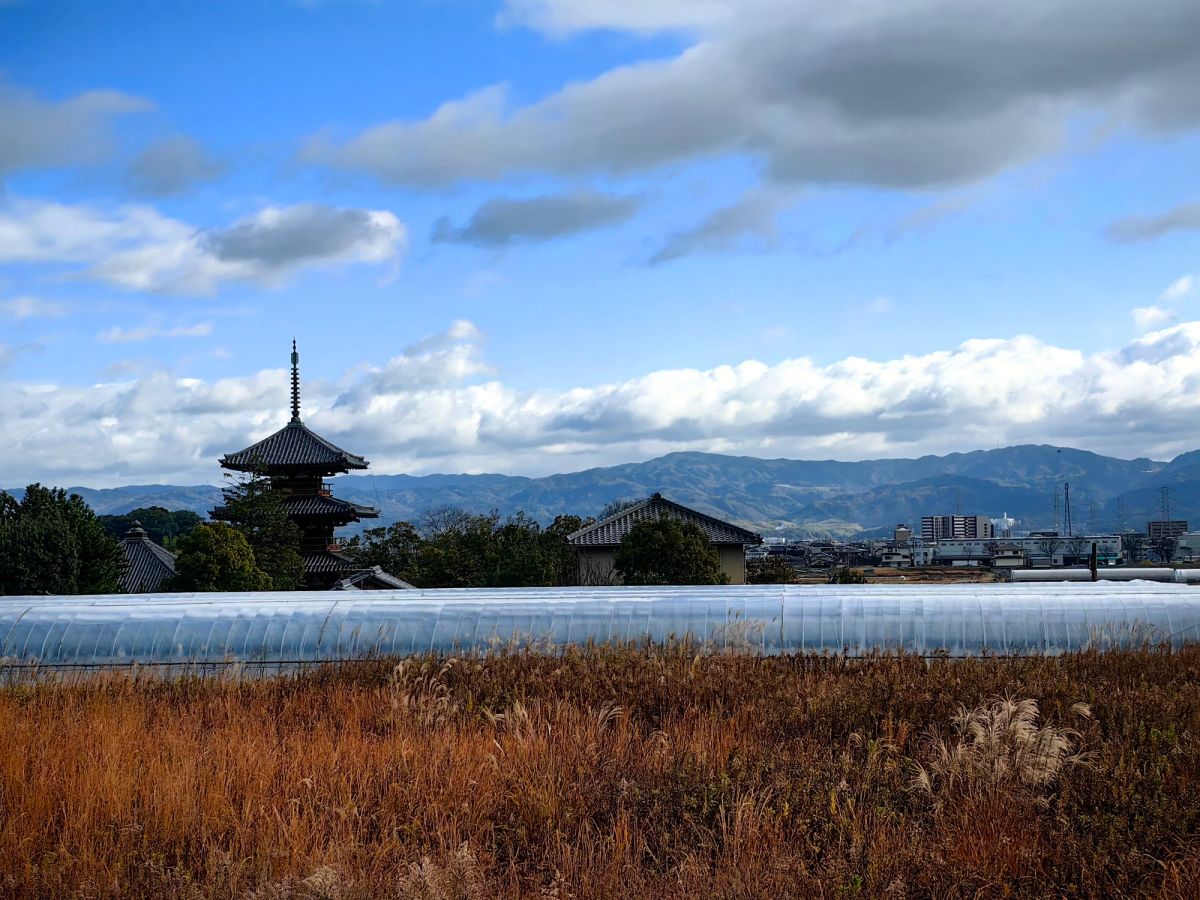
The wide fields, distant mountains and an expansive sky, create a peaceful rural horizon. Standing there with the fields stretching out before me, I stopped and took a photograph of the landscape. Many Japanese towns are framed by mountains, particularly toward the north, because much of Japan’s interior is mountainous. Even places densely populated often have mountains quietly appearing beyond the buildings. In Ikaruga, however, there were few structures to interrupt the view, so the town, the fields and the surrounding mountains was especially clear.
开阔的田野、远处连绵的山峦,以及辽阔的天空,共同构成了一幅宁静的乡村天际线。站在这里,望着眼前一望无际的田地,我忍不住停下脚步,拍下了这片风景。日本内地多山的地形决定了许多城镇的北面都被山峦环绕。即使在人口密集的城市里,有时也能越过层层建筑,看见远处静静伫立的群山。然而,在斑鸠町没有多少高大的建筑遮挡视线,田野、城镇与远山之间也少了许多阻隔,原本容易被城市景观掩盖的自然轮廓,在这里得以完整地展现出来。
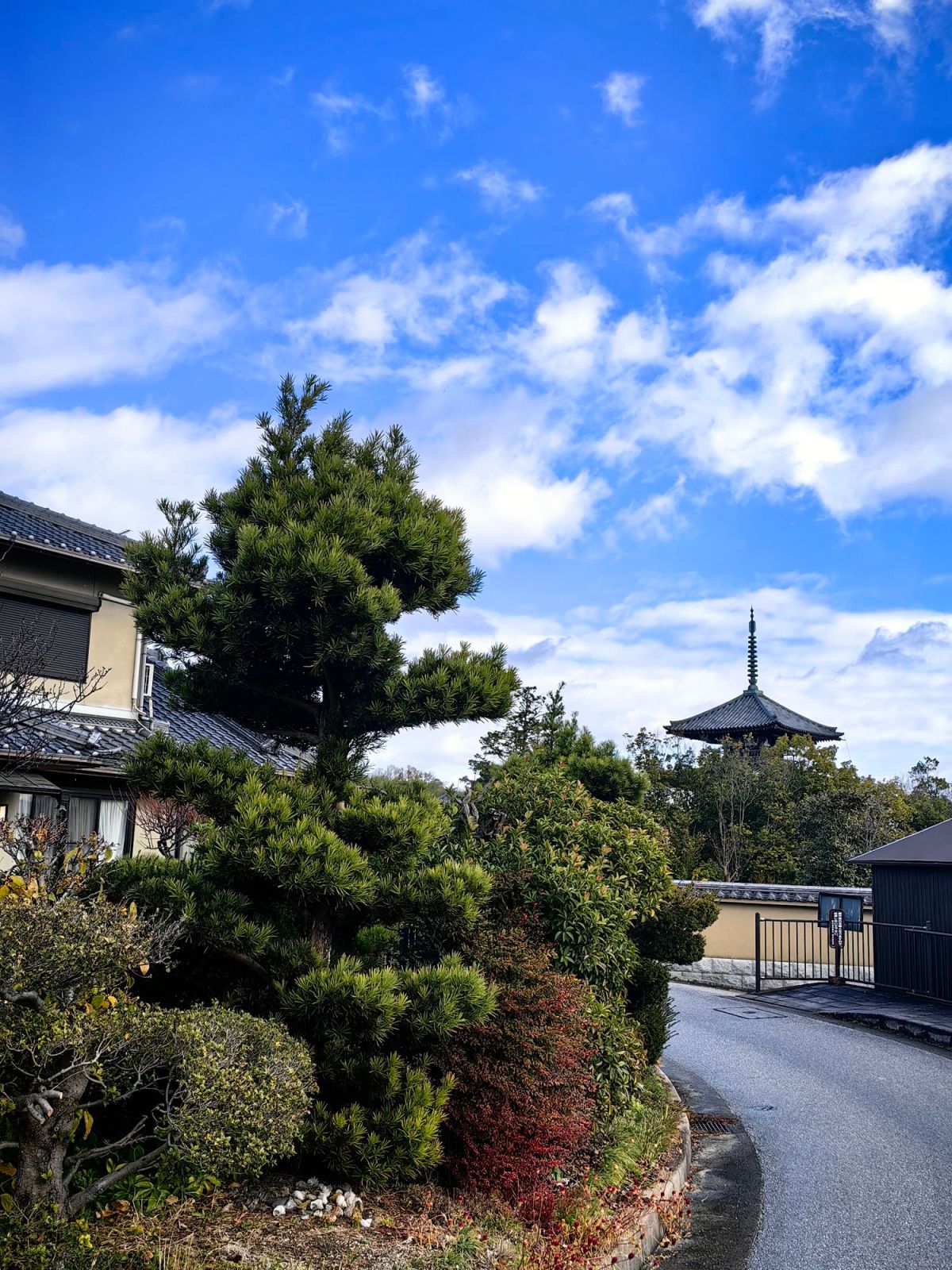
At a quiet corner of the country road, I unexpectedly encountered my last destination, Hōki-ji. It was almost hidden from view, tucked away in a small patch of woodland at the edge of the fields. Through the trees I caught my first glimpse of the classical three-story pagoda, rising quietly above the surrounding greenery. This temple is also deeply connected with the early history of Japanese Buddhism. Tradition associates it with Prince Yamashiro no Ōe, the son of Prince Shōtoku.
在乡间小路一个安静的转角处,我意外地遇见了此行的最后一站法起寺。它几乎隐没在视线之外,静静地藏身于田野边缘的一小片树林之中。透过树木的枝叶,我第一次望见了那座经典的三重塔,塔身从周围的绿意间悄然升起。法起寺同样与日本早期佛教的历史有着深厚的渊源。根据传统记载,这座寺院也与圣德太子的儿子山背大兄王(Yamashiro no Ōe)有关。
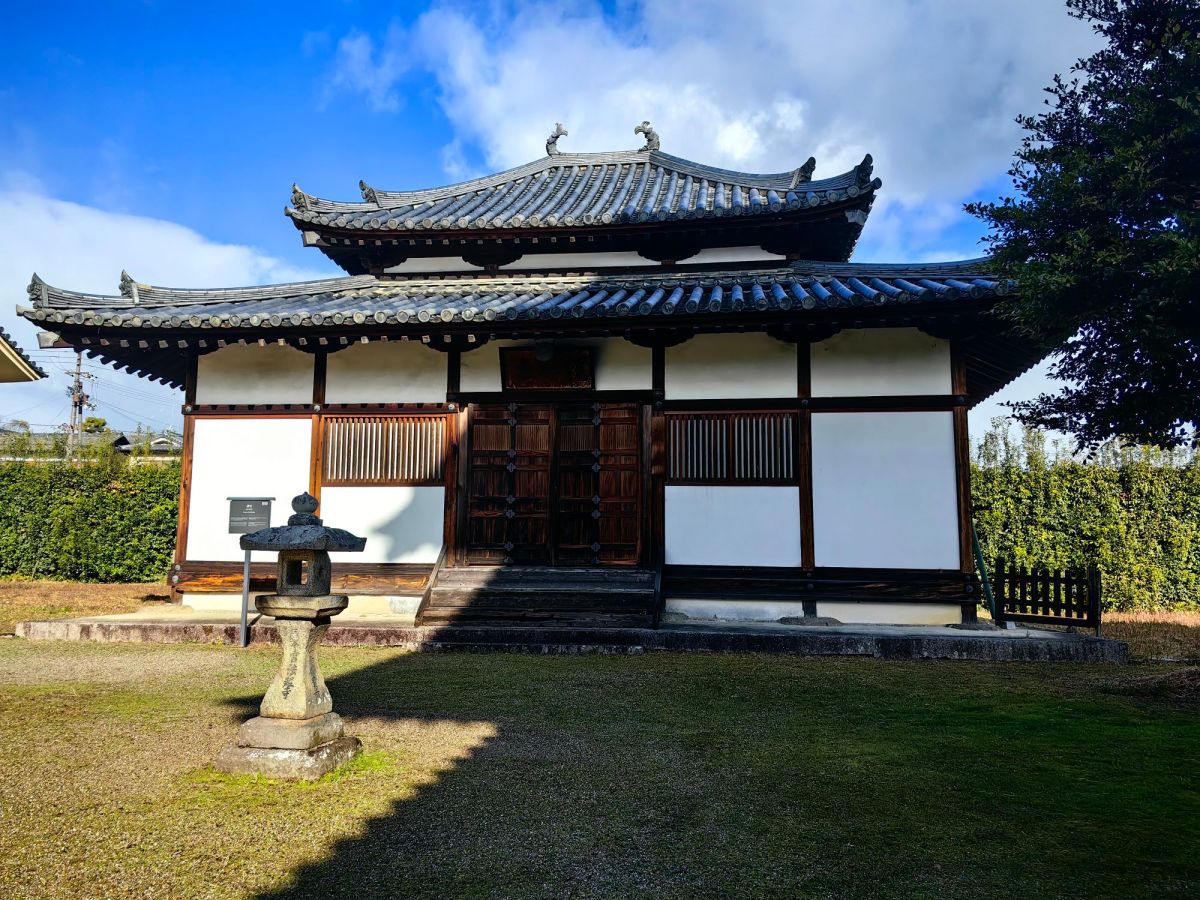
The main hall, although much less imposing than the great halls of Hōryū-ji was modest with traditional tiled roofs, and the surrounding grounds were simple and uncluttered, no extra decorations. The three-Story Pagoda was built in the seventh century; one of the oldest surviving three-story pagodas in Japan and the oldest surviving pagoda in the country. Its dark wooden structure stood beautifully against the open sky, each successive roof becoming smaller as the tower rose upward.
法起寺的本堂远不如法隆寺那些宏伟的殿堂般气势恢宏,却显得朴素而端庄,传统的瓦屋顶在宁静中透出古老的韵味。寺院四周的庭院也十分简洁,没有繁复的装饰。那座建于七世纪的三重塔是日本现存最古老的三重塔之一,也是日本现存年代最早的古塔。深色的木质塔身在开阔的天空映衬下显得格外优美,三层塔檐随着塔身向上逐渐收窄,层层递进。
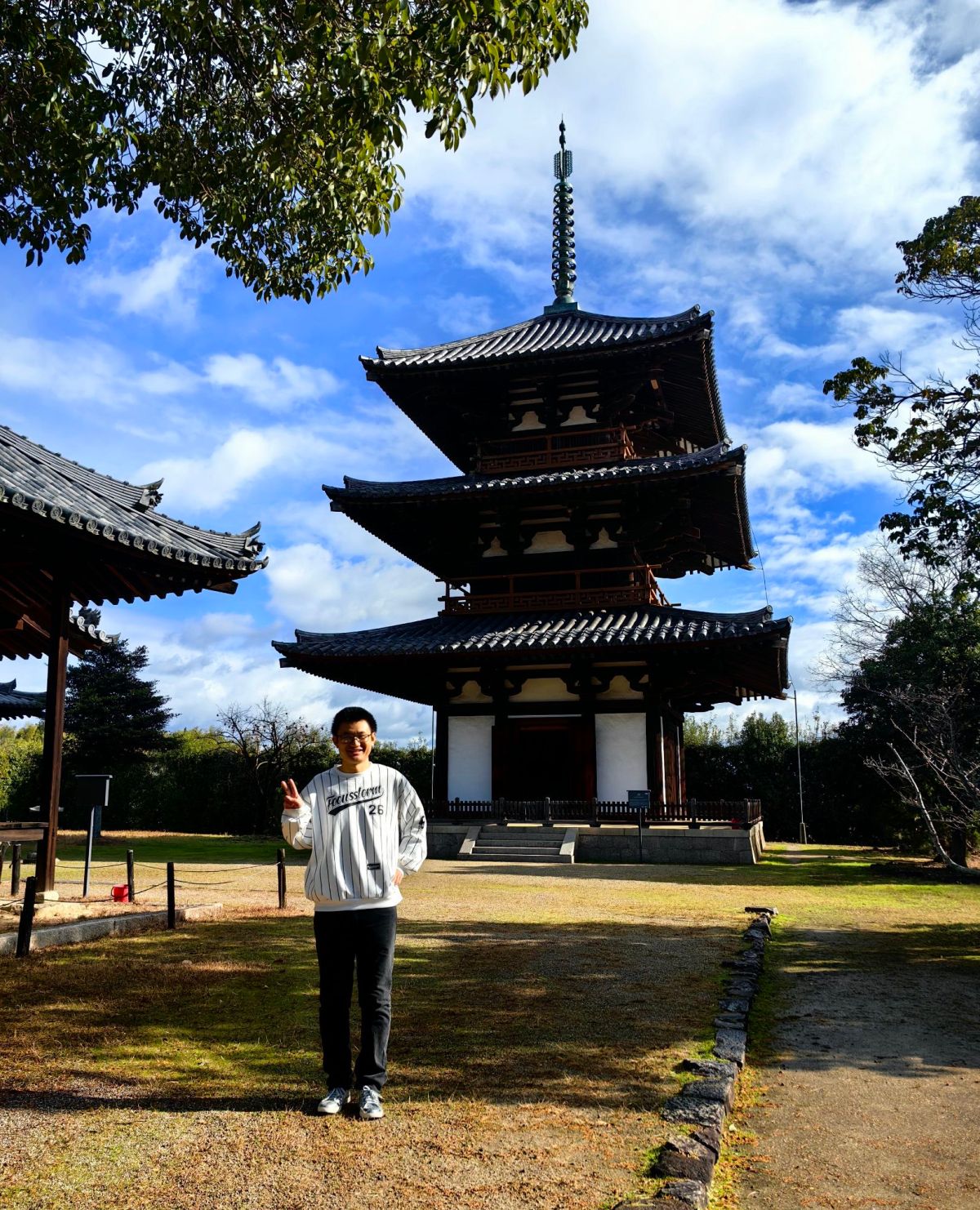
By the time I reached Hōki-ji, I had spent the day walking through the small lanes of Ikaruga, visiting ancient temples and gradually moving farther into the countryside. The temple felt like a fitting conclusion to the journey. What moved me most was that history here did not feel like something preserved only for tourists; it remained quietly rooted in everyday life and in the corner of country landscape. After so many centuries, history in Ikaruga does not seem to shout for attention. It was simply waiting for those who are willing to slow down and notice it.
抵达法起寺时,我已经在斑鸠町的小巷间走了大半天,探访了一座又一座古老的寺院,也随着脚步渐渐远离城镇,走进了更为宁静的乡野。法起寺仿佛恰好为这段旅程画上了一个圆满的句号。最令我感动的是,这里的历史并不只是为了迎接游客而被保存下来的古老遗迹。它依然静静地扎根于人们的日常生活之中,也融入了乡间这一隅平凡而宁静的风景里。历经千百年的岁月,斑鸠町的历史似乎从不需要刻意引人注目,它只是静静地留在那里,等待着那些愿意放慢脚步、用心观察的旅人。

