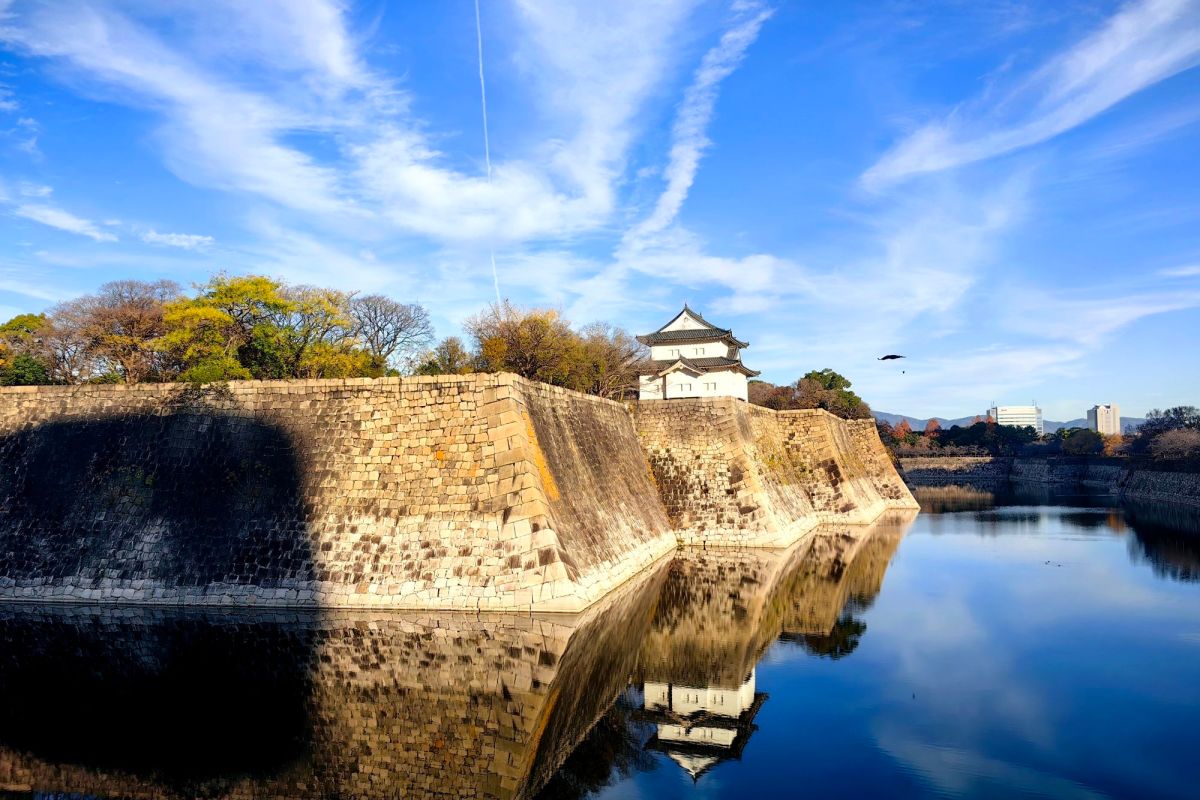
大阪:开启一段属于我的日本故事
In December 2025, I embarked on my very first journey to Japan. For years, I had dreamed of exploring a country where ancient traditions coexist with cutting-edge modernity, and the Kansai region was the destination I chose to begin that dream. As the largest city in western Japan and the gateway to the Kansai region, Osaka was the perfect introduction to the country and was the perfect place to experience my first glimpse of Japan. when I arrived, the city welcomed me with its vibrant energy, dazzling streets, and warm, down-to-earth atmosphere.
2025年12月,我开启了期待已久的日本之旅。多年来,我一直梦想着探索这个古老传统与现代科技交融的国度,而关西地区正是我实现这一梦想的起点。作为日本西部最大的城市,也是通往关西地区的门户,大阪不仅是了解日本的绝佳起点,更是我初次领略日本风情的理想之地。抵达大阪后,这座城市以蓬勃的活力、璀璨的街景和热情友好的氛围迎接了我的到来。
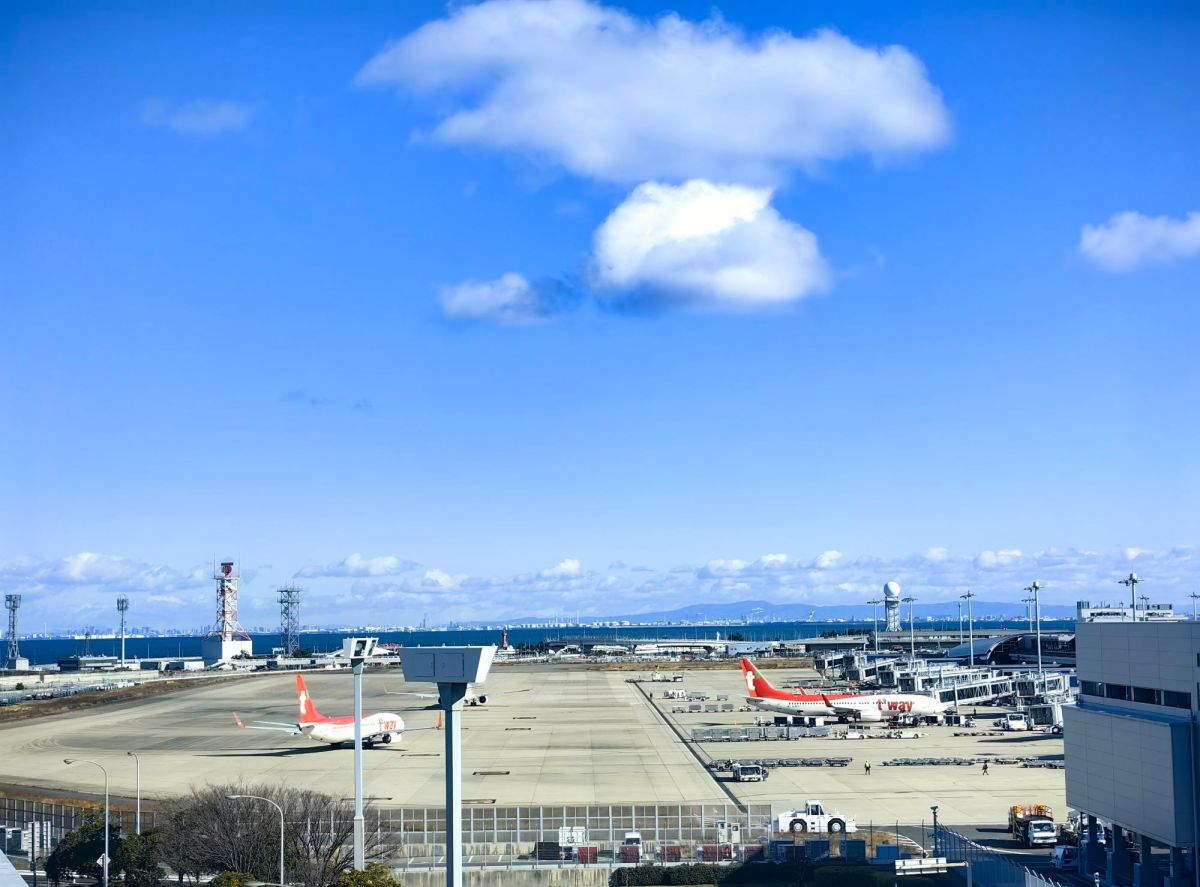
On 19 December 2025, I arrived at Osaka’s Kansai International Airport, the gateway to my first journey in Japan. Even before stepping outside the terminal, the airport itself left a lasting impression. Built entirely on a man-made island in the heart of Osaka Bay, it appears to rise gracefully from the sea, surrounded by water in every direction. As the aircraft began its descent, I gazed out of the window and watched the long, slender runway emerge from the shimmering bay, linked to the mainland by a bridge that seemed to stretch endlessly across the water.
2025年12月19日,我抵达大阪关西国际机场,正式开启了我的日本之旅。甚至还未走出航站楼,机场本身便给我留下了深刻的印象。它完全建在大阪湾中央的一座人工岛上,宛如优雅地从海面升起,四周碧波环绕。飞机开始下降时,我透过舷窗望向窗外,只见一条狭长的跑道从波光粼粼的海湾中延伸而出,一座仿佛望不到尽头的大桥横跨海面,将机场与陆地紧紧连接在一起。

Stepping out of the airport, I was filled with a quiet sense of excitement and anticipation. For my stay in Osaka, I chose a hotel within walking distance of Dotonbori, the city’s most iconic entertainment and shopping district. Staying in the heart of the city meant that everything was only a short stroll away from lively shopping arcades and elegant department stores to countless restaurants serving Osaka’s celebrated local specialties.
迈出机场,我心中涌起一股难以言喻的兴奋与期待。为了这次大阪之行,我特意选择了一家步行即可抵达道顿堀的酒店。作为大阪最具代表性的娱乐与购物区,道顿堀汇聚了这座城市最热闹的街景与最浓厚的烟火气息。住在市中心,一切都近在咫尺,我尽情品尝大阪闻名遐迩的特色美食。
The canal that winds through the district was first excavated in the early Edo period, and over the centuries it has grown into one of Osaka’s most recognizable landmarks. Today, people from every corner of the world gather along its lively waterfront, soaking in the city’s infectious energy and colorful street life. Standing beside the historic canal on my very first evening in Japan, I felt that there could hardly have been a better place to begin my journey.
蜿蜒流经此地的运河最早开凿于江户时代初期,历经数百年的岁月,已发展成为大阪最具代表性的地标之一。如今,来自世界各地的游客汇聚于这条充满活力的河畔,感受着这座城市蓬勃的生机与缤纷多彩的街头风情。在日本的第一个夜晚,我静静地站在这条历史悠久的运河边,心中不禁觉得这里正是开启我日本旅程的最佳地方。

No visit to Osaka would be complete without tasting takoyaki, the city’s most iconic street food and a dish that perfectly captures its lively culinary culture. As I wandered through the bustling streets of Dotonbori, the irresistible aroma of batter sizzling on hot iron griddles filled the air, drawing people towards the countless food stalls lining the streets. Freshly prepared before my eyes, the takoyaki emerged as perfectly round, golden-brown balls with a crisp, lightly toasted exterior. Each one was filled with tender pieces of octopus, finely chopped green onions and crunchy tempura flakes, then generously topped with savory takoyaki sauce, creamy Japanese mayonnaise, a sprinkle of seaweed powder, and delicate bonito flakes that danced in the rising heat. It looked really delicious.
来到大阪,怎能错过章鱼烧?这道堪称大阪最具代表性的街头美食,完美展现了这座城市充满活力的饮食文化。漫步在熙熙攘攘的道顿堀街头,空气中弥漫着铁板上面糊滋滋作响的诱人香气,吸引着络绎不绝的人们走向街边数不胜数的摊位。刚出炉的章鱼烧个个圆润金黄,外皮微焦酥脆,令人垂涎欲滴。每一颗章鱼烧都包裹着鲜嫩弹牙的章鱼块、翠绿的葱花和香脆的天妇罗碎,再淋上浓郁的章鱼烧酱汁与香滑的日式蛋黄酱,撒上细细的海苔粉,最后点缀几片在袅袅热气中轻轻舞动的鲣鱼片,让人尚未入口,便已食欲大开。
From the very first bite, I understood why takoyaki has become synonymous with Osaka. I instantly fell in love with it. The crisp outer layer has a soft, creamy centre that was almost molten. The tender octopus added a satisfying chewiness, while the savory sauce and fragrant toppings brought every bite together in a perfect harmony.
从第一口开始,我就明白了为什么章鱼烧会成为大阪的代名词。我瞬间就爱上了它。酥脆的外皮包裹着柔软绵密的内馅,入口即化。鲜嫩的章鱼带来令人满足的嚼劲,而鲜美的酱汁和香气四溢的配料则将每一口都完美融合,带来和谐的味觉体验。
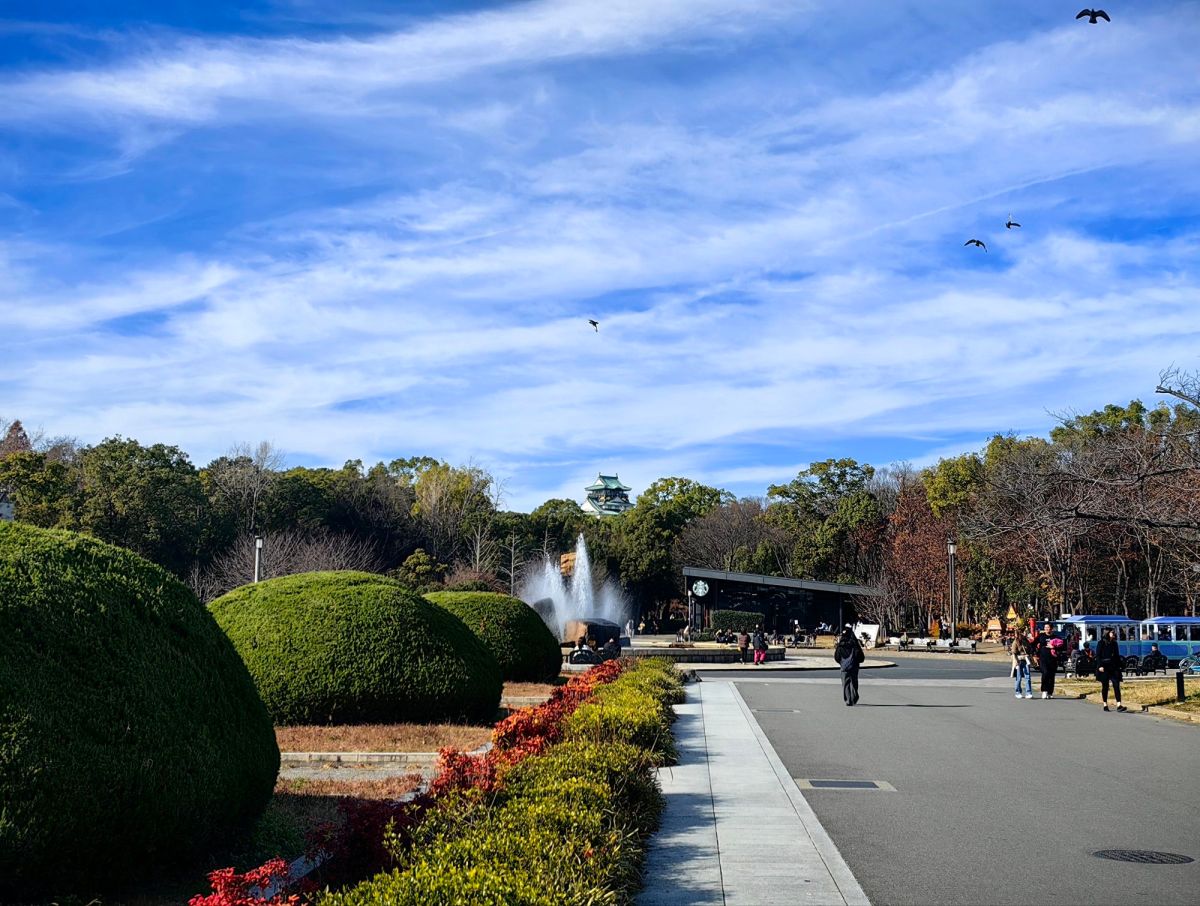
One of the highlights of my journey was my visit to Osaka Castle Park, a vast green oasis surrounding one of Japan’s most celebrated landmarks. In the heart of the bustling city, the park offered a welcome sense of tranquility. Although it was winter, the park possessed a quiet charm of its own. The crisp air, the stillness of the grounds, and the gentle rustle of bare branches invited me to slow my pace and savor the moment. As I approached the castle, the magnificent white-and-green keep gradually emerged above the treetops. Framed by the surrounding greenery and rising proudly above its massive stone foundations, it was an unforgettable sight.
此次旅程的一大亮点,便是游览大阪城公园。这片广阔的绿色公园环绕着日本最著名的地标之一大阪城。在熙熙攘攘的都市中心,公园带来了一份难得的宁静。即便正值冬季,这里依然散发着独特而静谧的魅力。清冽的空气、幽静的园林,以及寒风吹过光秃树梢时发出的沙沙声,都让我不由自主地放慢脚步,细细品味这难得的宁静时光。当我一步步走近城堡时,雄伟的白绿相间的天守阁渐渐从树梢间映入眼帘。它傲然矗立在巨大的石基之上,被四周苍翠的绿意环绕,构成了一幅令人难以忘怀的景象。

The exterior of Osaka Castle is both elegant and majestic, making it one of Japan’s most recognizable landmarks. Rising above its immense stone foundations, the castle’s brilliant white walls stand in striking contrast to its emerald-green roofs, which are adorned with shimmering gold decorations that gleam in the sunlight. Perched at the corners of the rooftops are magnificent gilded shachihoko (mythical creatures with the head of a tiger and the body of a carp). According to Japanese tradition, these legendary guardians possess the power to summon water and protect buildings from fire.
大阪城外观优雅而雄伟,是日本最具代表性的地标之一。城堡巍然矗立于巨大的石基之上,洁白的城墙与翠绿的屋顶相映成趣,屋顶上点缀着金光闪耀的饰物,在阳光照耀下熠熠生辉。屋脊两端矗立着精美的金鯱(Shachihoko),这是一种虎头鱼身的日本神话生物。相传,它们能够召唤水源,守护城堡免受火灾侵袭。
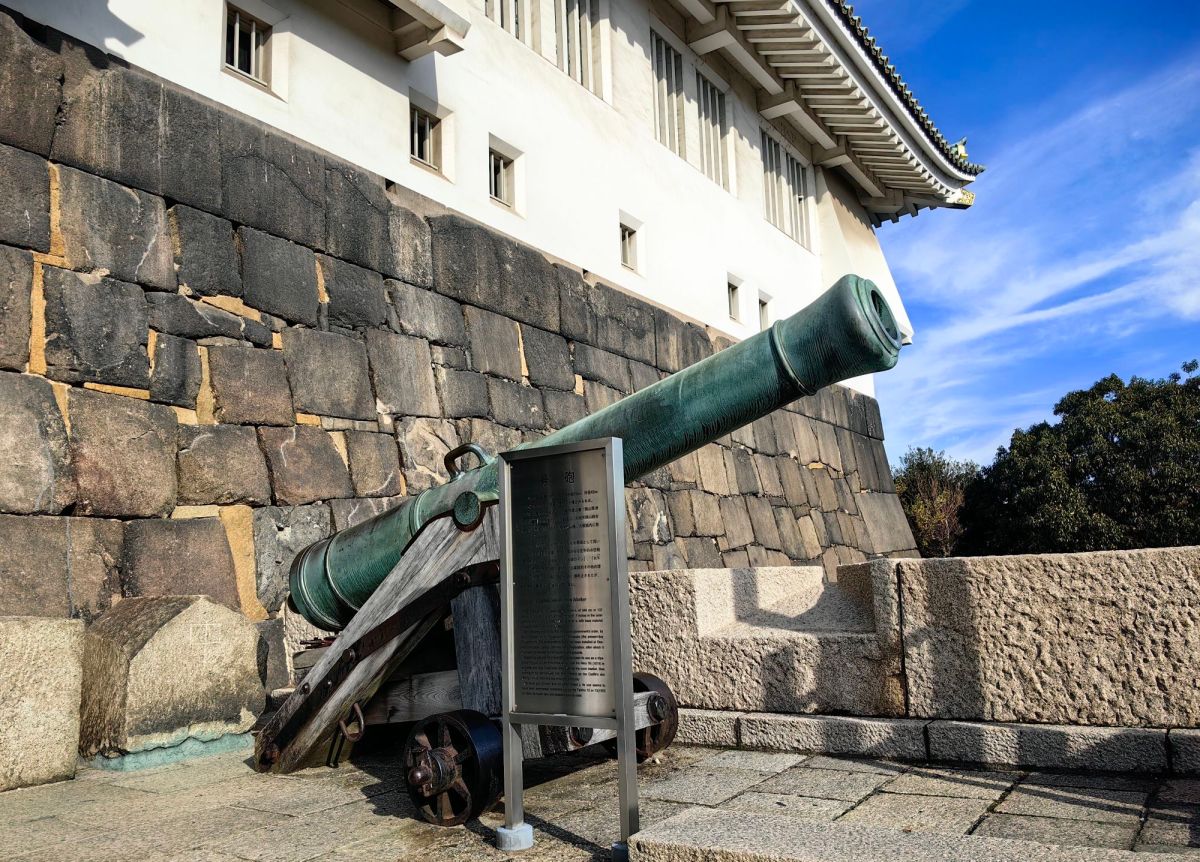
Beyond its beauty, Osaka Castle occupies a central place in Japanese history. It was originally built in 1583 by the powerful warlord Toyotomi Hideyoshi, who sought to unify Japan after more than a century of civil war during the Sengoku Period (1467–1615). Designed as the political and military headquarters of the Toyotomi clan, the castle became one of the largest and most formidable fortresses in the country. Its massive stone walls, broad moats, and strategic location reflected Hideyoshi’s ambition to establish a unified Japan under his rule. Although the present castle is a modern reconstruction completed in 1931 and later restored, it faithfully preserves the appearance of Toyotomi Hideyoshi’s original masterpiece.
除了秀丽的景色,大阪城在日本历史上也占据着举足轻重的地位。它最初由战国时代最具影响力的大名丰臣秀吉于1583年开始建造。当时,秀吉刚刚结束了战国时代长达一个多世纪的内战,逐步完成日本的统一。作为丰臣政权的政治与军事中心,大阪城一度成为日本规模最大、最坚固的城堡。高耸的石墙、宽阔的护城河以及优越的地理位置,无不彰显着丰臣秀吉统一天下的雄心壮志。虽然今天的大阪城天守阁建于1931年,并在此后经过多次修复,但它依然忠实再现了丰臣时期的建筑风貌。

The castle now becomes a museum displaying the model of this castle and the history of that period and narrating the ebb and flow of that period. I like to play games like Nobunaga’s Ambition and familiar with the history of Sengoku Period so I really enjoyed the immersive travel experience here as if I visited that period by myself. The castle also witnessed the dramatic conclusion of the Sengoku era. Following Hideyoshi’s death, tensions between the Toyotomi clan and Tokugawa Ieyasu escalated into the Siege of Osaka in 1614 and 1615. Standing on this castle, I could observe clearly the outline of the whole war field around this castle. I imagined the decisive battle determining Japan’s fate, once took place fiercely here.
如今,大阪城已成为一座博物馆,馆内陈列着城堡模型和丰富的史料,生动地讲述着这座名城跌宕起伏的历史。我一直很喜欢《信长之野望》这类以日本战国时代为背景的历史策略游戏,对战国时代的历史也颇为熟悉,因此参观这座城堡时格外投入,仿佛亲身走进了那段波澜壮阔的岁月。然而,这座城堡不仅见证了丰臣氏的辉煌,也见证了战国时代最后的大戏落幕。丰臣秀吉去世后,丰臣氏与德川家康之间的矛盾不断激化,最终爆发了1614年至1615年的大阪之战。站在天守阁上俯瞰四周,我仿佛仍能辨认出当年环绕大阪城的战场轮廓,想象着那场决定日本命运的决战曾在这里激烈上演。
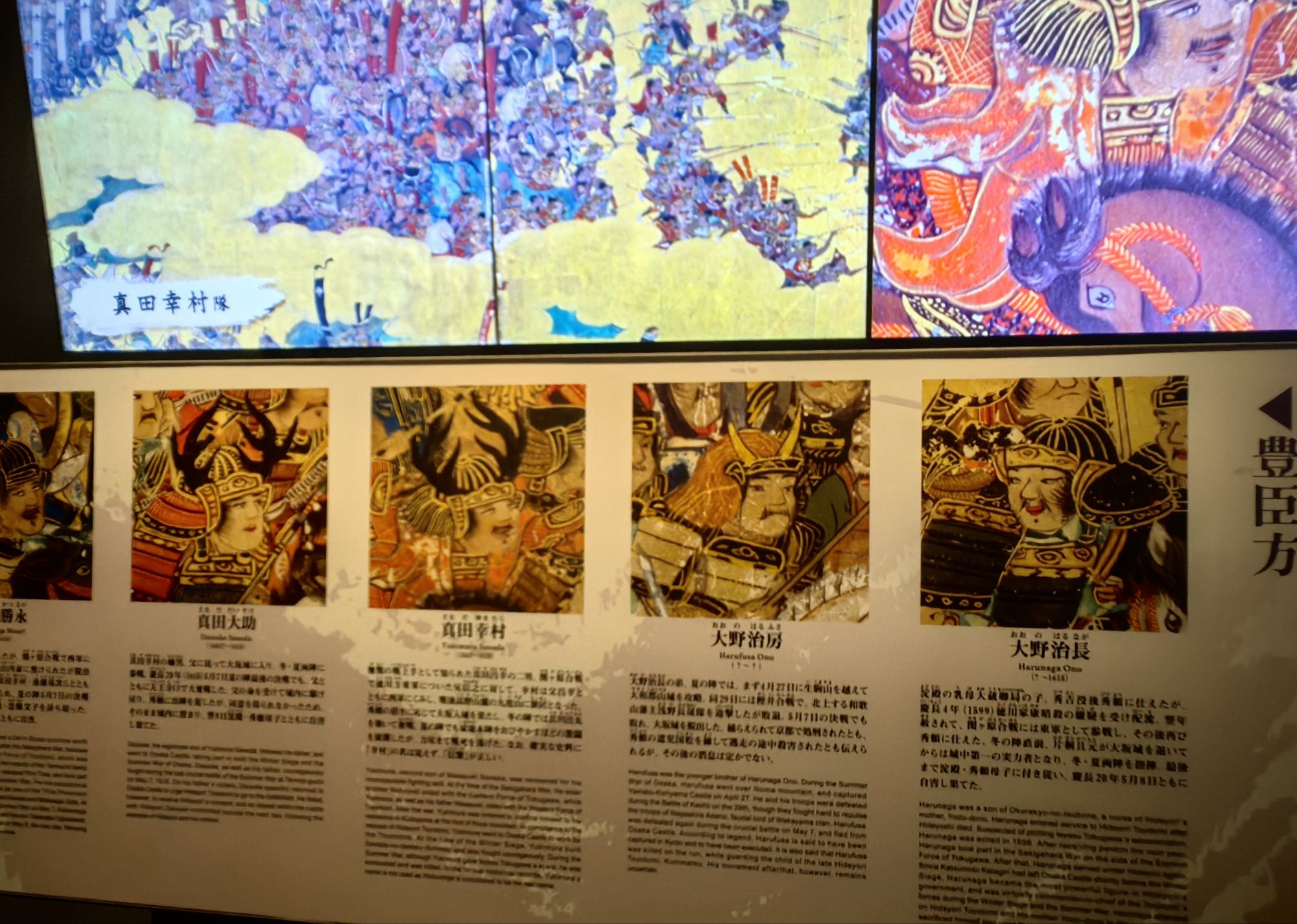
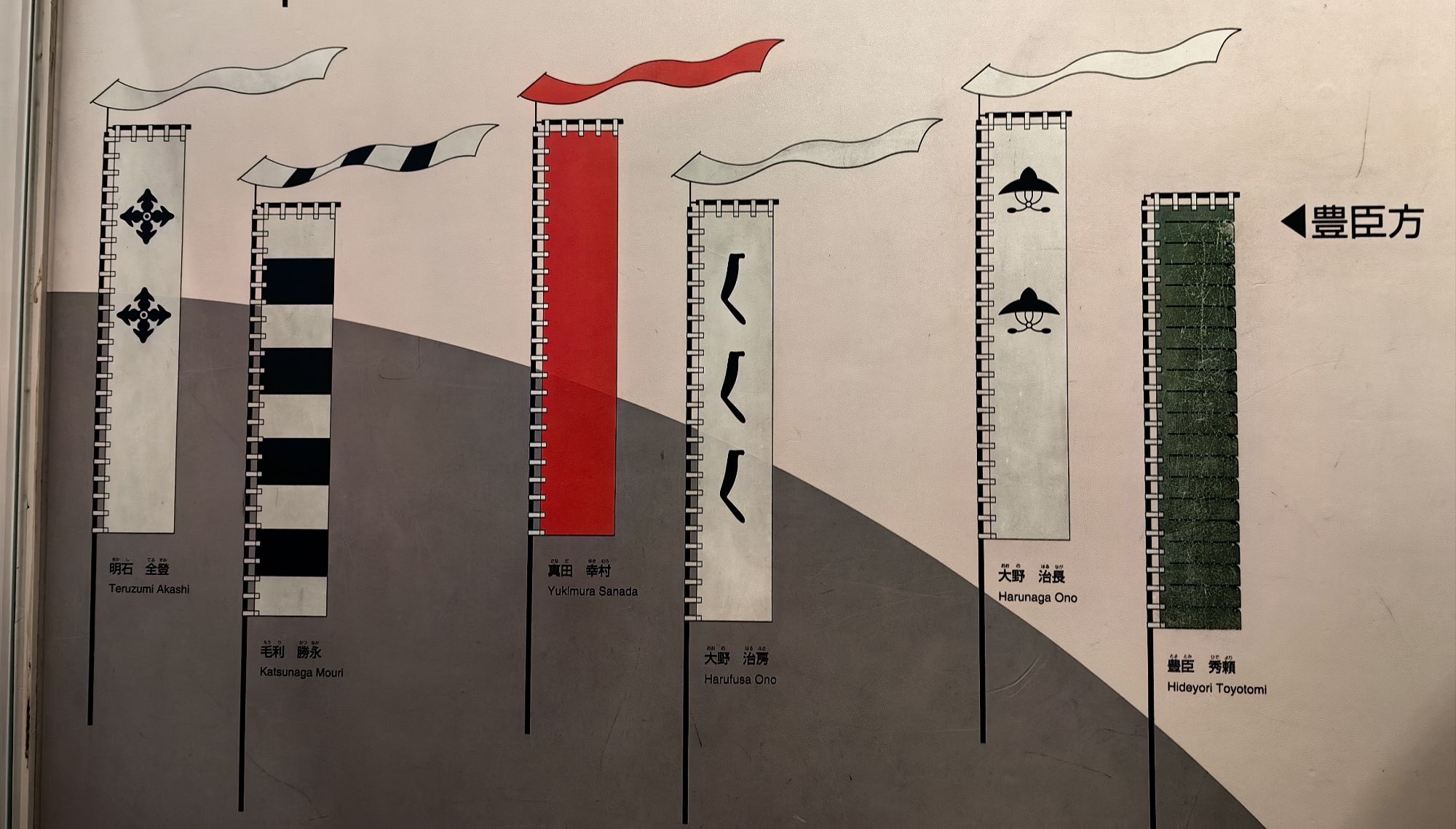
Following the death of Toyotomi Hideyoshi, his young son and heir, Toyotomi Hideyori, remained in Osaka Castle, while Tokugawa Ieyasu, victorious at the Battle of Sekigahara in 1600, had already emerged as the most powerful political figure in Japan. Although the Toyotomi clan still possessed immense wealth and the formidable defences of Osaka Castle, Ieyasu regarded them as the final obstacle to bringing the entire country under Tokugawa rule. This rivalry would ultimately culminate in the Siege of Osaka, one of the most decisive conflicts in Japanese history, marking the end of the Toyotomi clan and the beginning of more than two and a half centuries of Tokugawa shogunate rule.
丰臣秀吉去世后,其幼子兼继承人丰臣秀赖继续留守大阪城,而在1600年关原之战中获胜的德川家康,则成为日本最具权势的政治人物。尽管丰臣氏依然拥有雄厚的财富和固若金汤的大阪城防御体系,德川家康仍将其视为完成全国统一的最后一道障碍。双方之间日益加深的权力斗争,最终演变为大阪之战。这场战争不仅导致了丰臣氏的覆灭,也为德川幕府长达两个半世纪的统治奠定了基础,成为日本历史上最具决定性意义的战役。
Today, the castle serves not only as one of Osaka’s most famous landmarks but also as a fascinating museum that brings this dramatic chapter of history to life. As I explored its galleries, I found detailed exhibits dedicated to Hideyori’s loyal generals, their armour and weapons, and the distinctive battle standards that once identified their armies on the battlefield.
如今,这座城堡不仅是大阪最著名的地标之一,更是一座引人入胜的历史博物馆。馆内陈列着丰富而精美的展品,详细介绍了丰臣秀吉麾下的忠臣名将,以及他们曾使用的盔甲、兵器和战场上用于辨识军队的各式战旗。
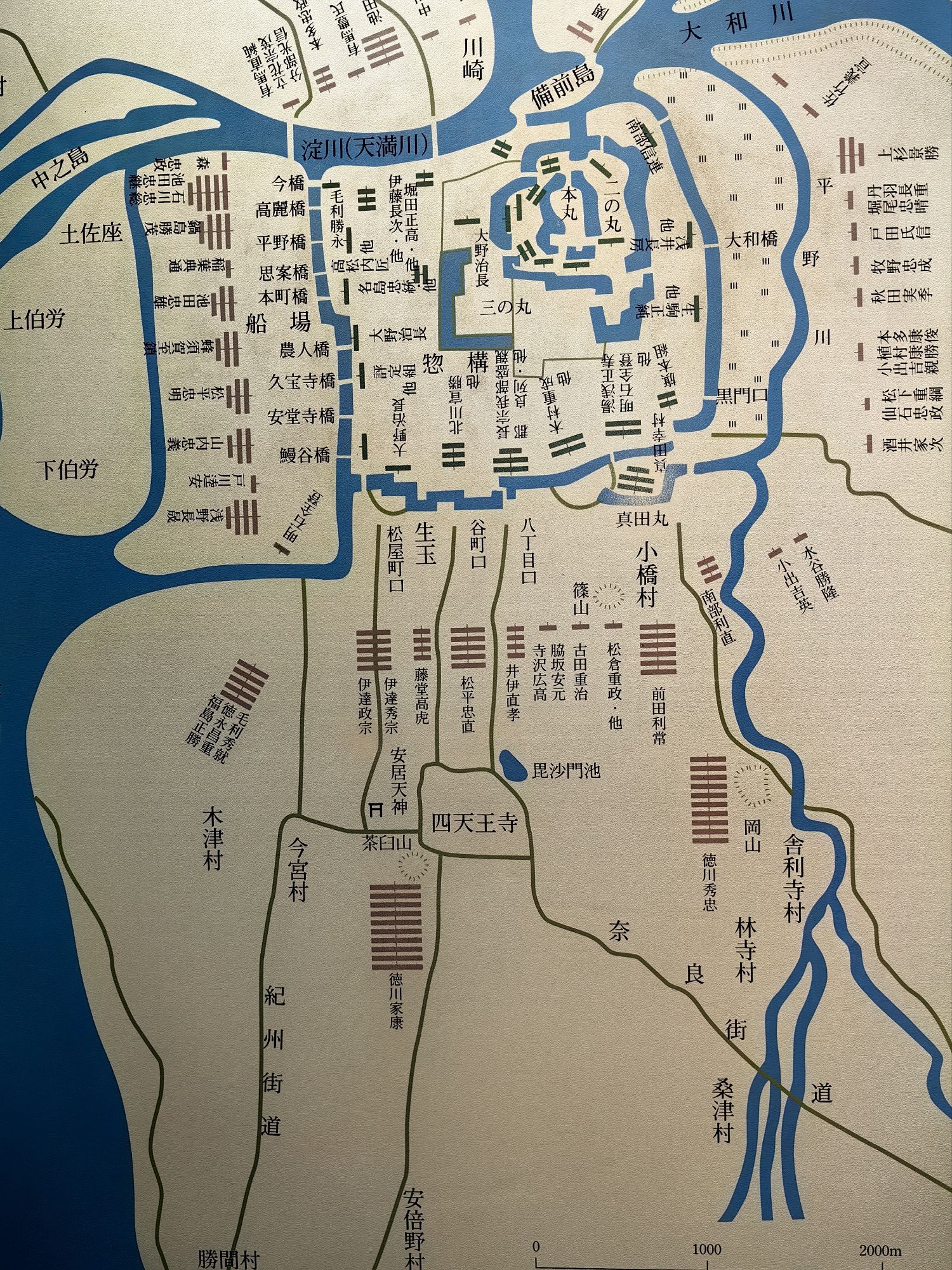
In the winter of 1614, Tokugawa Ieyasu personally led a vast army to lay siege to Osaka Castle. Rather than relying solely on brute force, he combined overwhelming military strength with calculated strategy to break down the defenders’ resistance. The Winter Campaign ended in a negotiated truce, but the agreement came at a heavy cost for the defenders. Under its terms, the Tokugawa forces dismantled much of the castle’s outer fortifications and filled in large sections of its protective moats, leaving what had once been an impregnable fortress dangerously exposed.
1614年冬,德川家康亲自率领大军围攻大阪城。他并未一味依靠兵力优势,而是将压倒性的军事力量与周密的战略部署相结合,逐步瓦解守军的抵抗。冬之阵最终以双方议和告终,但大阪城却为此付出了沉重的代价。根据和议条款,德川军拆除了大阪城的大部分外部防御工事,并填平了大部分护城河,使这座曾经固若金汤的堡垒失去了最重要的防御屏障,变得岌岌可危。
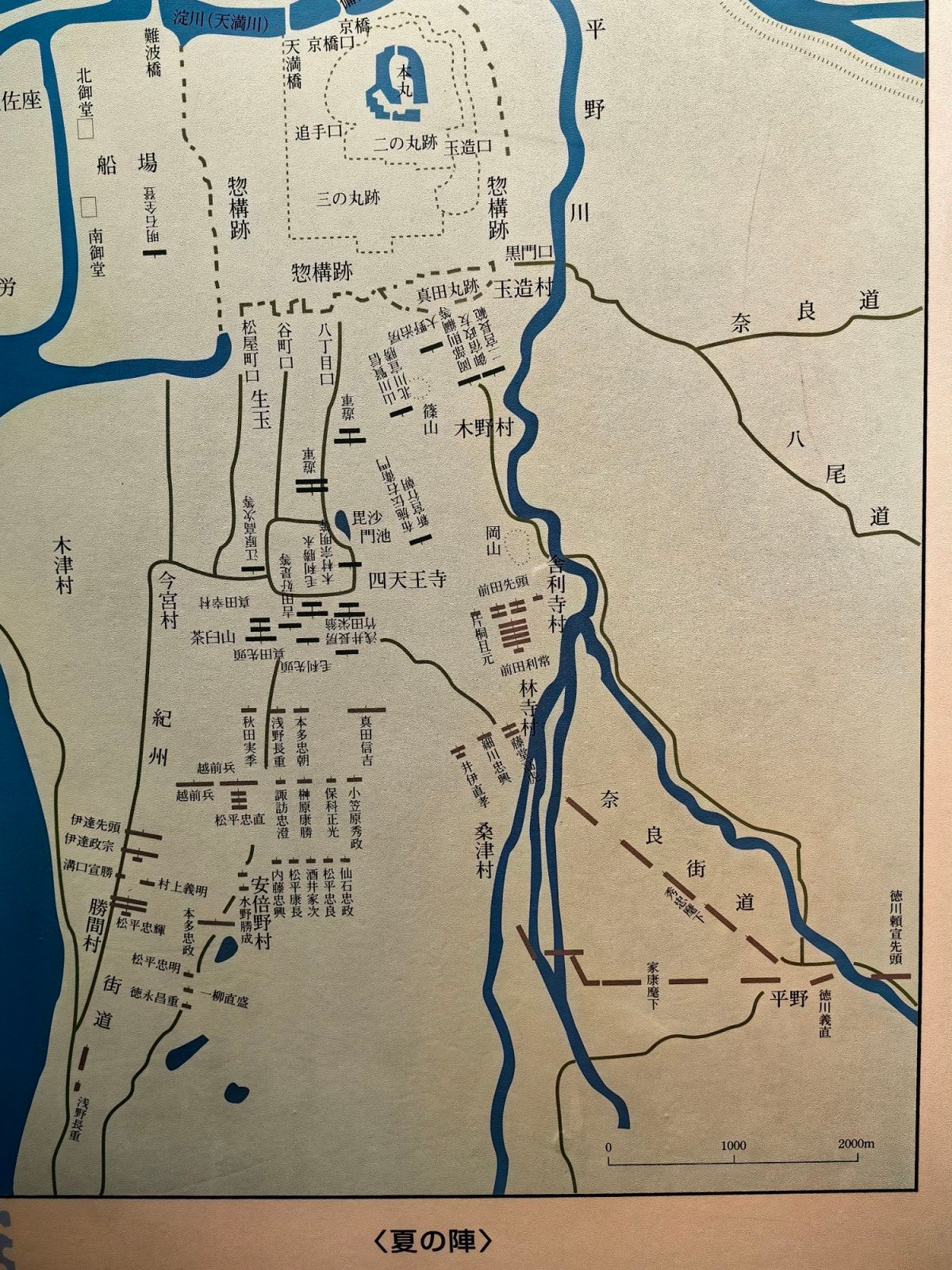
When hostilities resumed during the Summer Campaign of 1615, the balance of power had shifted decisively. Tokugawa’s forces launched a final offensive that overwhelmed the Toyotomi defenders. Osaka Castle fell, and Toyotomi Hideyori died within the castle, bringing the Toyotomi lineage to an end. With that victory, Tokugawa Ieyasu secured control of Japan, ushering in more than 260 years of peace and stability under the Tokugawa shogunate.
1615年夏之战期间,战事重燃,此时力量对比已发生决定性转变。德川家康的军队发动最后一攻,彻底击溃了丰臣家的守军。大阪城陷落,丰臣秀赖在城内身亡,丰臣家就此终结。凭借这场胜利,德川家康巩固了对日本的控制,开启了德川幕府长达260余年的和平与稳定。
The third floor of the castle museum vividly recounts these two historic campaigns. Through detailed battle maps, scale models, and illustrated displays, I could follow the movements of both armies and understand how the siege unfolded step by step. The historical maps depicted Osaka as it appeared more than four hundred years ago, yet many familiar place names have survived to the present day. Among them was Shitennō-ji, one of Japan’s oldest Buddhist temples. Seeing a name that still exists on a map from the early seventeenth century made history feel remarkably tangible.
城堡博物馆三楼生动再现了大阪冬之阵与夏之阵这两场决定日本命运的战役。通过详尽的战役地图、精致的比例模型以及图文并茂的展品,我得以一步步追踪双方军队的行军路线,深入了解这场围城战的整个过程。展出的历史地图描绘了四百多年前的大阪城及其周边地区,许多熟悉的地名至今依然沿用。其中就包括日本最古老的佛教寺院之一四天王寺。看到这个跨越四个世纪依然未曾改变的名字出现在十七世纪初的地图上,我仿佛感受到历史是如此地触手可及。
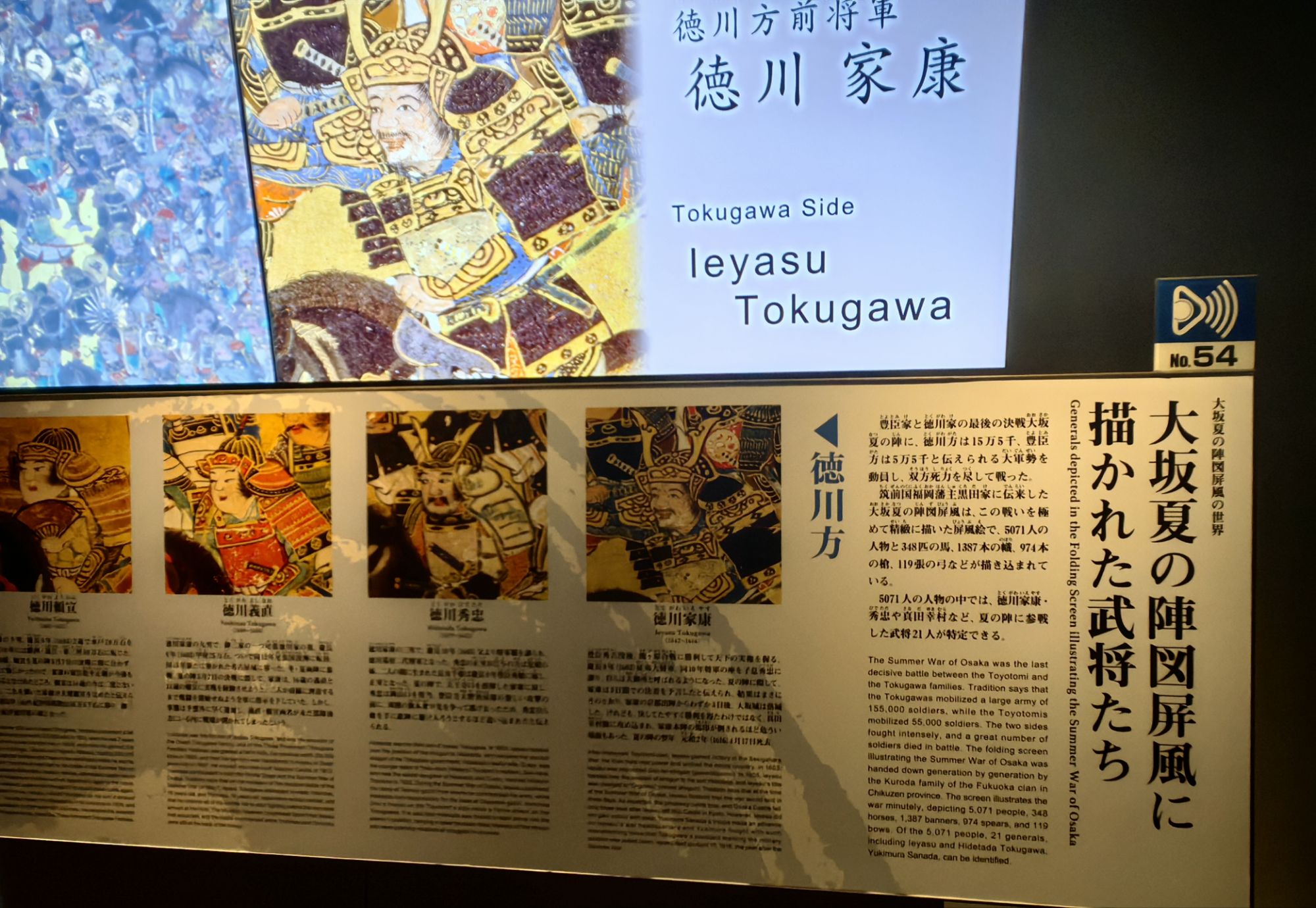
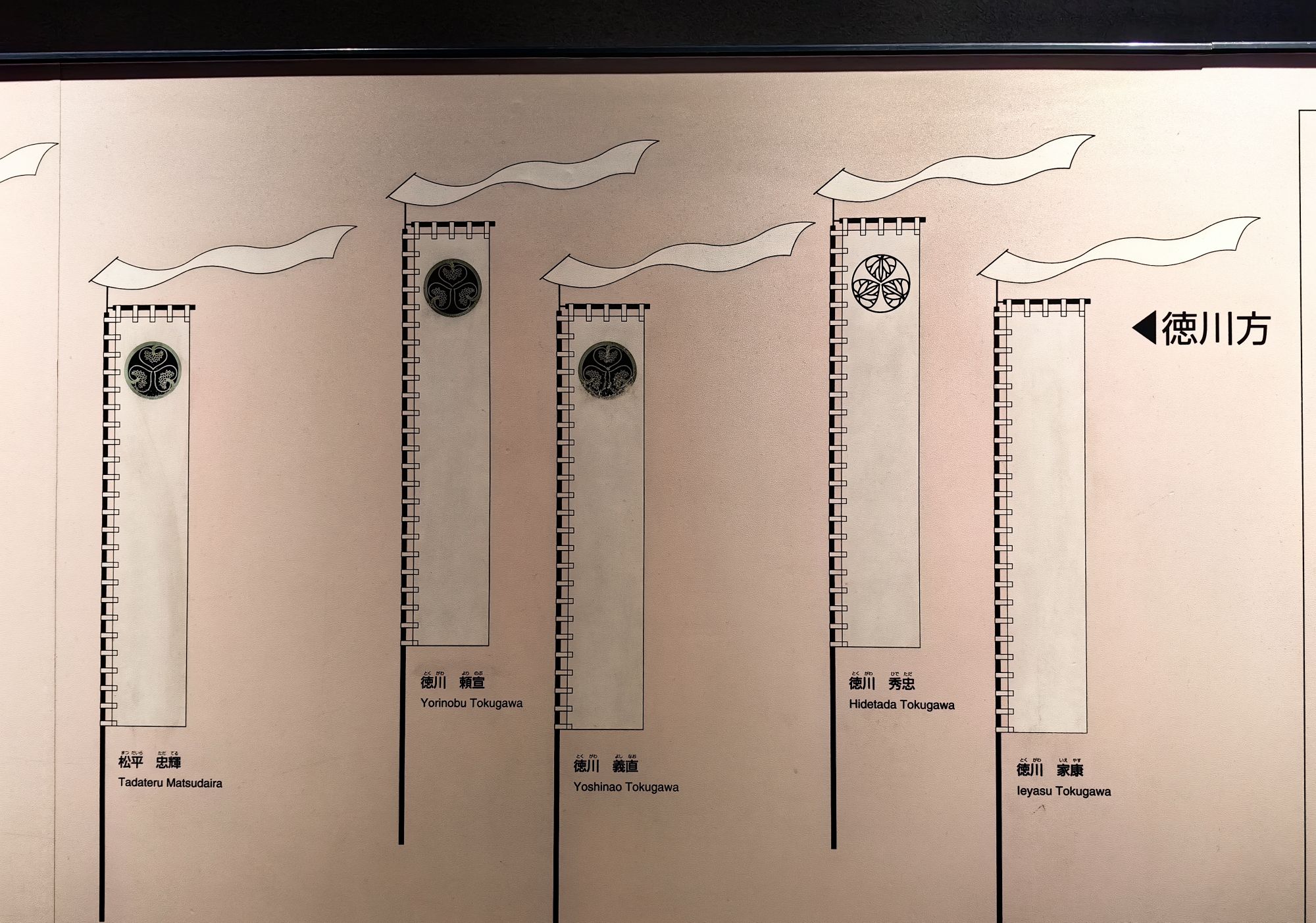
Several renowned Tokugawa commanders played pivotal roles in the Siege of Osaka. Among them was Ii Naotaka, commander of the legendary “Red Devils” cavalry. Famed for the striking crimson armor worn by his warriors, he led his troops with distinction during the campaign and later became one of the Tokugawa shogunate’s most trusted daimyō. Another prominent figure was Honda Tadatomo, the son of the celebrated warrior Honda Tadakatsu, who was widely regarded as one of the greatest generals of his age. Tadatomo earned recognition for his courage and capable leadership on the battlefield, continuing the military legacy of his distinguished family.
在大阪之战中,多位德川幕府的著名将领都发挥了举足轻重的作用,其中就包括有“赤备”之称的名将井伊直孝。他率领麾下身披醒目深红色铠甲的赤备部队奋勇作战,屡立战功,战后更成为德川幕府最受倚重的大名之一。另一位杰出的将领是本多忠朝,他是被誉为“德川四天王”之一的本多忠胜之子。大阪之战中,本多忠朝凭借非凡的勇气与卓越的指挥才能赢得了广泛赞誉,延续了本多家族赫赫有名的武家传统。
Also fighting on the Tokugawa side was Date Masamune, the powerful lord of Sendai. Easily recognized in portraits by his distinctive crescent-moon helmet, Masamune contributed a substantial force to the Tokugawa coalition while maintaining his reputation as one of the most charismatic and influential daimyō of the era. Seeing these familiar names in the museum exhibits brought the history of the siege vividly to life, transforming what I had once known only from books into the stories of real people who chose their fate in the course of Japan’s history.
伊达政宗统率的仙台藩也加入了德川阵营,参与了大阪之战。他头戴标志性的弯月形头盔,在众多历史画像中极具辨识度。政宗不仅为德川联军提供了强大的兵力,也凭借卓越的军事才能和独特的人格魅力,成为战国时代最具传奇色彩和影响力的大名之一。在博物馆里看到这些耳熟能详的名字,这段尘封四百多年的历史仿佛重新鲜活起来。我不再只是从书本中认识这些历史人物,而是真切地感受在历史的滚滚红尘里他们的抉择与命运。

This is the portrait of Tokugawa Ieyasu who was the winner of this war. The victory at Osaka eliminated the final military challenge to Tokugawa authority. With the Toyotomi clan destroyed, Tokugawa Ieyasu secured the foundation of the Tokugawa Shogunate, which would govern Japan for more than 250 years. Walking through Osaka Castle today, it is remarkable to think that these peaceful grounds once witnessed the battle that ended the Age of Warring States and ushered in one of the longest periods of peace in Japanese history.
这是大阪之战最终胜利者德川家康的肖像。大阪之战的胜利彻底消除了对德川政权的最后一次军事挑战。随着丰臣氏的覆灭,德川家康进一步巩固了德川幕府的统治基础,开启了长达两个半世纪的江户时代。如今漫步于大阪城,令人难以想象,这片宁静祥和的土地曾是硝烟弥漫的古战场,见证了战国时代的终章,也迎来了日本历史上持续时间最长、最和平稳定的时代。
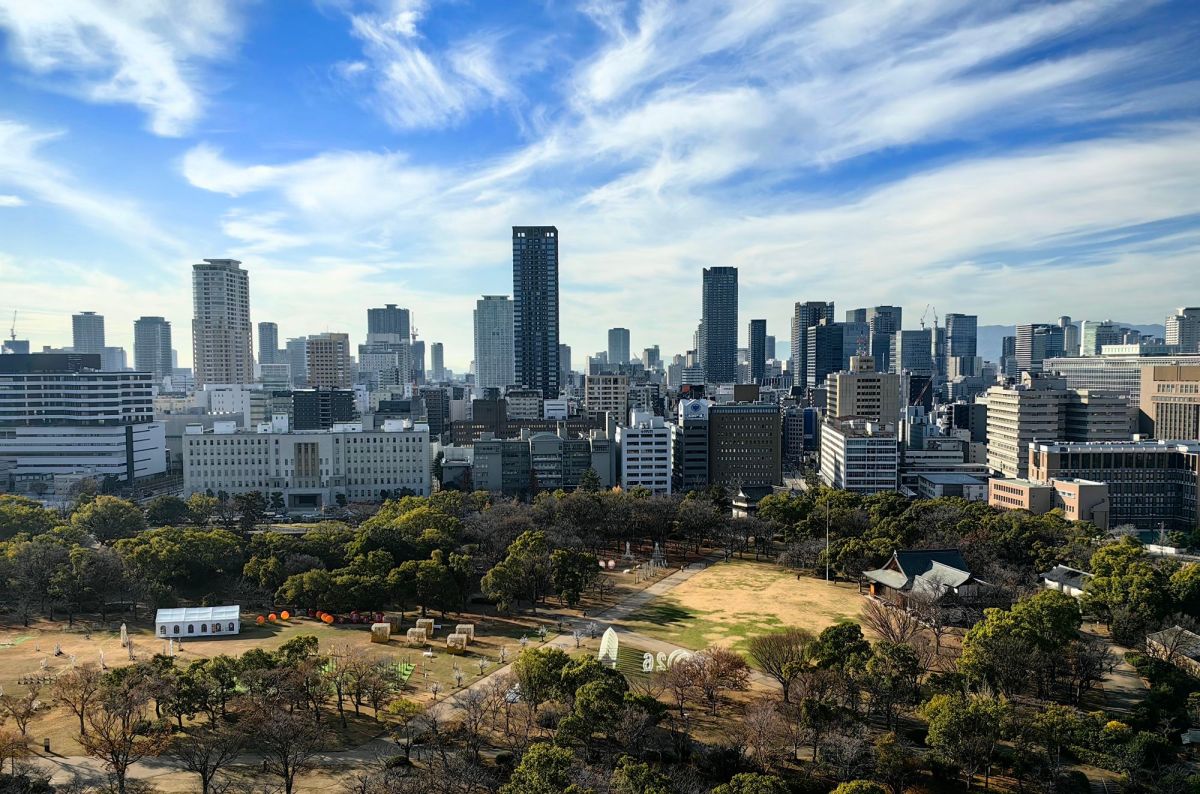
After exploring the castle museum, I made my way to the observation deck at the top of Osaka Castle. From there, a breathtaking panorama unfolded in every direction. The skyline stretched endlessly towards the horizon, where countless skyscrapers, office towers, apartment blocks, and commercial buildings formed a vast sea of steel and glass. The city seemed to pulse with life, its modern skyline standing in striking contrast to the centuries-old castle beneath my feet.
参观完城堡博物馆后,我前往大阪城顶端的观景台。从那里,令人叹为观止的全景尽收眼底。天际线绵延至天际,无数摩天大楼、办公楼、公寓和商业建筑构成了一片浩瀚的钢铁与玻璃海洋。这座城市仿佛充满了活力,现代化的天际线与脚下这座拥有数百年历史的古堡形成了鲜明的对比。
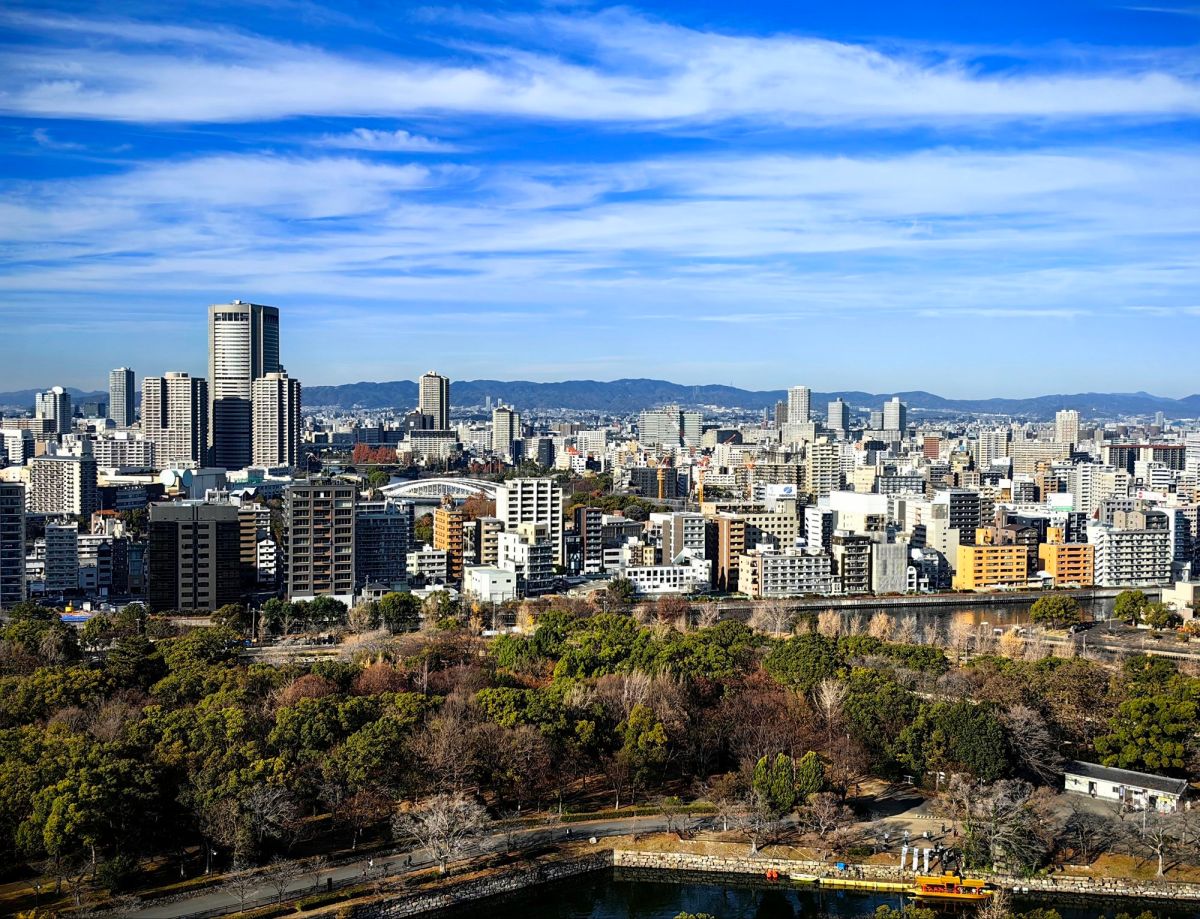
Looking out across the sprawling cityscape, I could truly appreciate how Osaka has evolved over the centuries. What was once a castle town of samurai residences, merchant quarters, and narrow streets has grown into one of Japan’s largest and most dynamic metropolitan centres, home to millions of people. Yet despite its remarkable transformation, Osaka Castle still stands proudly at the heart of the city, serving as a timeless reminder of the events that shaped its history.
眺望着绵延不绝的城市天际线,我才真正体会到大阪数百年来的沧桑巨变。曾经环绕城堡的武士宅邸、商铺林立的街市和纵横交错的狭窄街道,如今早已发展成为日本规模最大、最具活力的都市中心之一,生活着数百万居民。尽管城市面貌已发生翻天覆地的变化,大阪城依然傲然屹立于城市中央,静静见证着这座城市的兴衰更迭。

Standing within Osaka Castle Park today, it was difficult to imagine that these peaceful grounds had once witnessed some of the most decisive battles in Japanese history. I also walked around the outer grounds of the castle, where its immense scale became even more apparent. The keep rises from an enormous stone foundation encircled by broad moats that once formed a formidable line of defence. Many of the granite blocks used to construct the massive walls are among the largest ever quarried, transported, and assembled in Japan.
今天漫步于大阪城公园,很难想象这片宁静祥和的土地,曾经是日本历史上一些最关键战役的战场。我继续沿着城堡外围漫步,近距离欣赏这座雄伟的城池。天守阁高高矗立于巨大的石砌地基之上,四周环绕着宽阔的护城河。这些护城河曾构成大阪城最重要的防御屏障。支撑城墙的花岗岩巨石更令人叹为观止,很多都是日本有史以来开采、运输和组装过的最大石块。
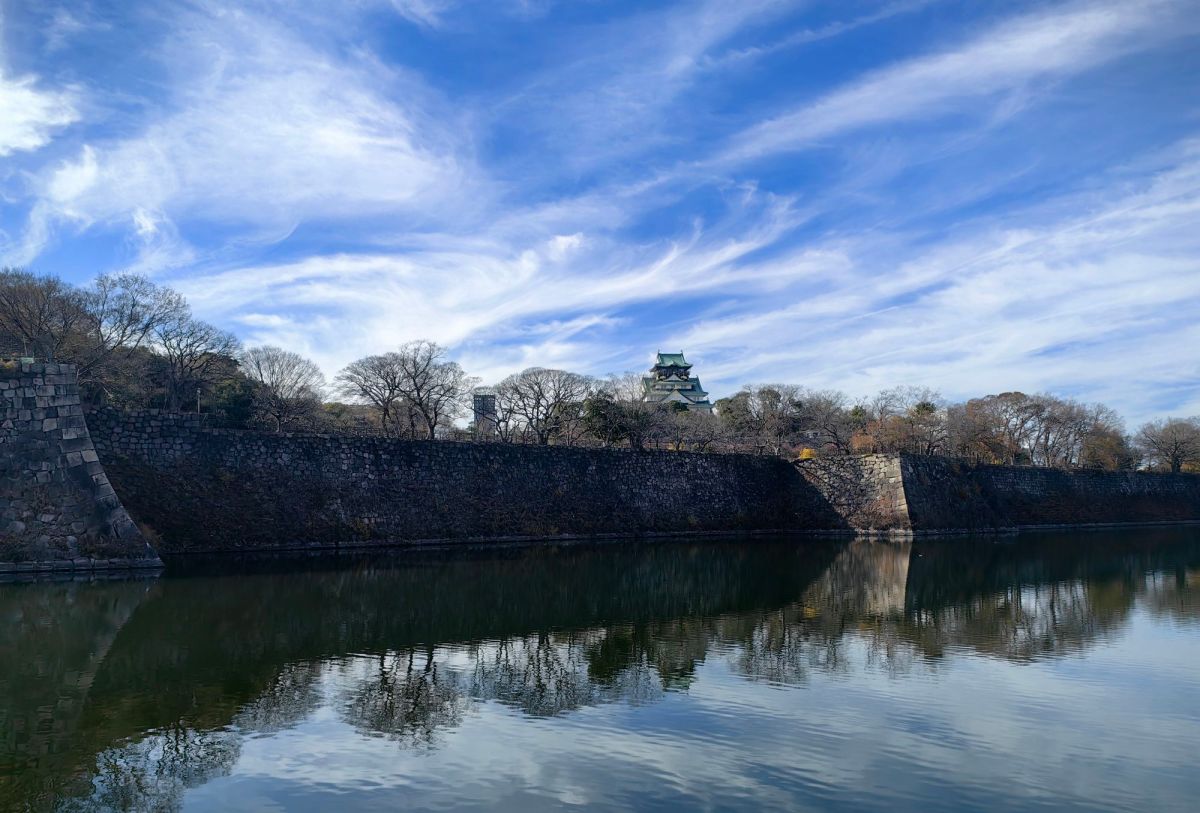
Viewed from across the moat, the castle appeared especially magnificent. It seemed to emerge naturally from its colossal granite base, while its brilliant white walls and emerald-green roofs, adorned with gleaming gold ornaments, shone vividly beneath the pale winter sky. The calm water reflected the castle’s graceful silhouette, creating a scene of quiet beauty.
从护城河对岸望去,城堡显得格外雄伟壮丽。它仿佛从巨大的花岗岩基座中脱颖而出,洁白的城墙和翠绿的屋顶,点缀着闪闪发光的金饰,在冬日苍白的天空下熠熠生辉。平静的河水倒映着城堡优美的轮廓,构成了一幅静谧而美丽的画卷。

A short walk from Osaka Castle stands Hokoku Shrine, a peaceful Shinto shrine dedicated to Toyotomi Hideyoshi. In front of the shrine stands a striking bronze statue. He is portrayed in formal samurai attire, standing confidently with one hand resting on the hilt of his sword and the other holding a military command baton, symbolizing his authority as one of Japan’s greatest strategists and unifiers. Toyotomi Hideyoshi is a real legend in Japanese history. He rises from humble origins as the son of a peasant to become the most powerful man in Japan. Few figures in Japanese history experienced such a remarkable ascent and obtained such an achievement.
从大阪城步行不远,便可来到丰国神社。这座宁静祥和的神社供奉着丰臣秀吉。神社前矗立着一尊气势恢宏的青铜雕像。雕像中的秀吉身着庄重的武士礼服,神态从容,一手轻扶刀柄,一手执握采配,尽显一代统一者的威严与气度。丰臣秀吉是日本历史上最具传奇色彩的人物。他出身贫寒,据说年轻时只是农民之子,却最终成为统一日本的领导者。在日本漫长的历史中,能够像他这样从平民跻身国家最高权力中心,并完成统一大业的人物,可谓凤毛麟角。
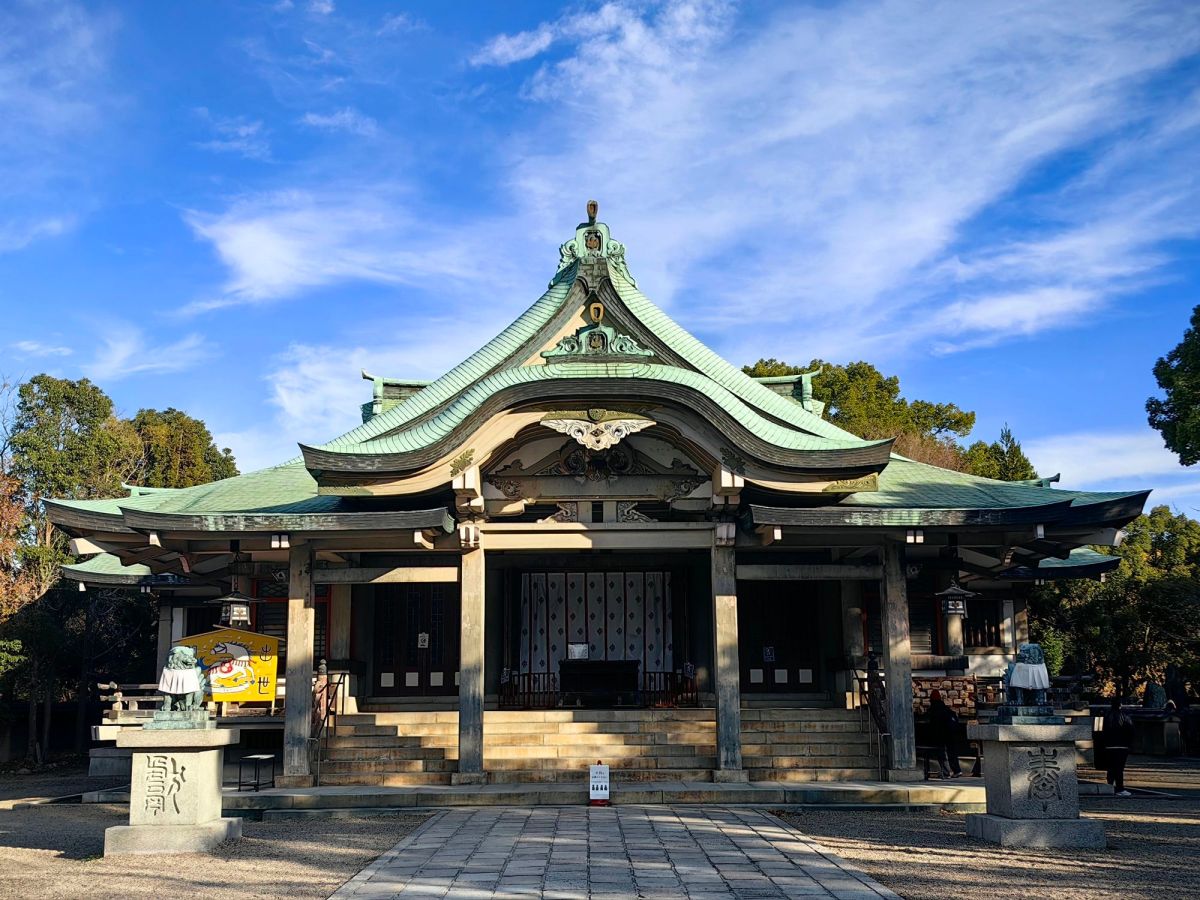
The shrine commemorates not only Toyotomi Hideyoshi, but also members of the Toyotomi family whose efforts contributed to the unification of Japan. Although the Toyotomi political legacy came to an end with the fall of Osaka Castle during the Siege of Osaka, Hideyoshi’s influence on the course of Japanese history remains profound. His military achievements brought an end to more than a century of civil war and laid the foundations for the peaceful Edo period that followed. As I stood before the shrine, I found myself reflecting on the fate of the Toyotomi clan.
这座神社不仅纪念丰臣秀吉,也纪念为日本统一做出贡献的丰臣家族成员。虽然丰臣的政治遗产随着大阪城在大阪之战中的陷落而终结,但秀吉对日本历史进程的影响依然深远。他的军事成就结束了长达一个多世纪的内战,并为随后的江户时代奠定了和平的基础。站在神社前,我不禁对丰臣家族的命运陷入沉思。
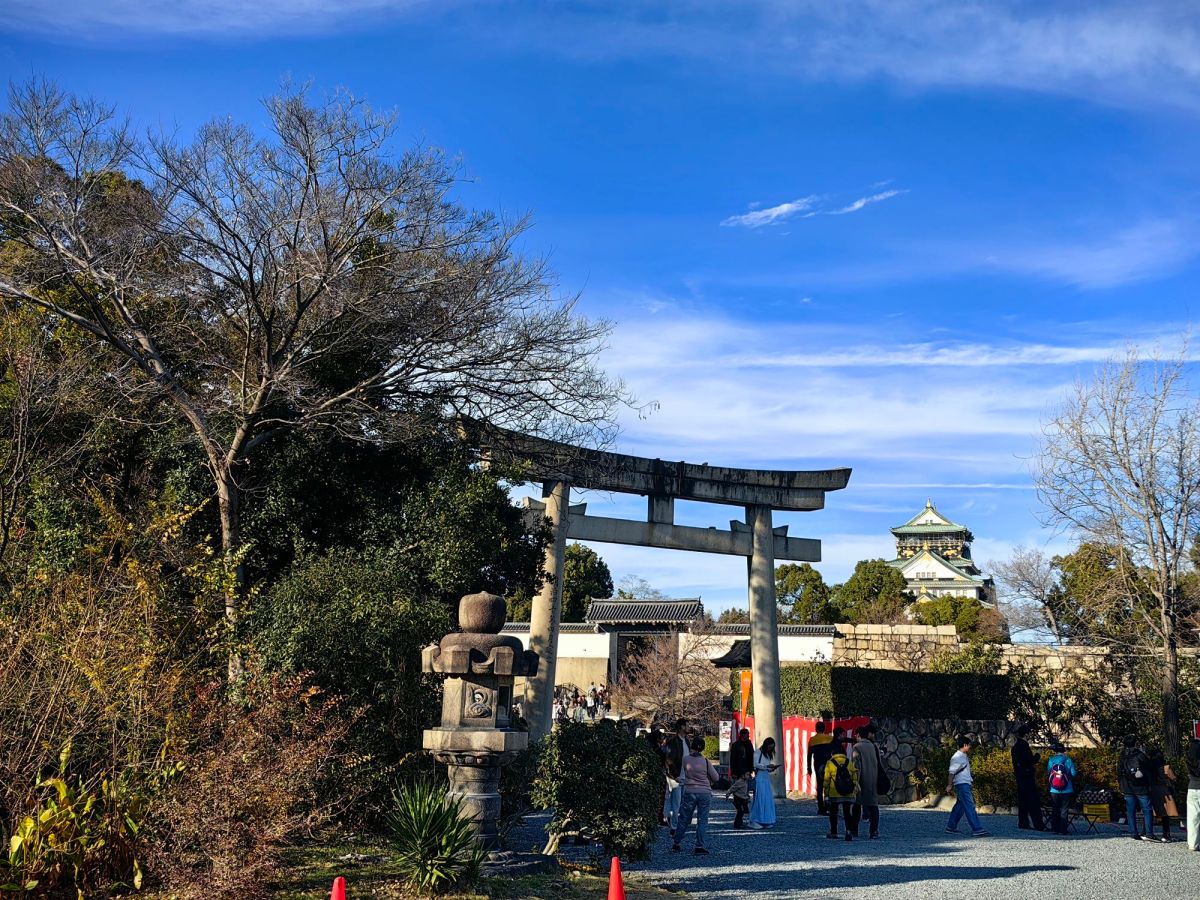
In my view, Toyotomi Hideyori’s defeat was not simply the result of a single mistake made during the Siege of Osaka. Rather, its roots can be traced to decisions made years earlier by his father. Although Hideyoshi succeeded in unifying Japan, he did not establish a political system strong enough to endure after his own death. His heir, Hideyori, was still a child and lacked an effective institutional framework to protect his position. At the same time, Tokugawa Ieyasu remained the most powerful daimyō in the country, commanding unrivalled military resources and political influence. Hideyoshi’s costly invasions of Korea also placed a heavy burden on the nation and weakened support for the Toyotomi government. Finally, the stability of his regime depended largely on the personal loyalty of the Council of Five Elders rather than on enduring political institutions. Once Hideyoshi was gone, those personal bonds quickly unraveled, allowing Ieyasu to consolidate power.
在我看来,丰臣秀赖的失败并非仅仅是大阪之战中一次失误的结果,其根源可以追溯到他父亲多年前做出的决策。尽管秀吉成功统一了日本,但他并未建立起一套足以在他死后延续的政治体系。他的继承人秀赖当时年幼,缺乏有效的制度框架来巩固其地位。与此同时,德川家康仍然是日本最强大的大名,拥有无可匹敌的军事资源和政治影响力。秀吉发动对朝鲜的入侵也给国家带来了沉重的负担,削弱了民众对丰臣政府的支持。最后,丰臣政权的稳定很大程度上依赖于五长老的个人忠诚,而非稳固的政治制度。秀吉死后,这些个人羁绊迅速瓦解,使得家康得以巩固自身权力。
History rarely turns on a single battle or a single decision. As I left the shrine, I felt that the fall of the Toyotomi clan was the culmination of choices made over many years. It’s a reminder that lasting political success depends not only on military brilliance, but also on building a mature institution capable of surviving the ambitions and lifetimes of individual leaders.
历史很少由一场战役或一个决策而左右。离开神社时,我感到丰臣氏的覆灭是多年来一系列选择的最终结果。这令人警醒,持久的政治成功不仅取决于军事才能,还取决于建立起一套足以超越个人抱负与生命有限性的成熟体制。

After leaving Osaka Castle Park, I made my way to Sankō Shrine, a quiet shrine best known for its association with the legendary samurai Sanada Yukimura, one of the most celebrated warriors of Japan’s Sengoku era. The shrine is dedicated to the Shinto deities Amaterasu, Tsukuyomi, and Susanoo. Yet for many visitors, its greatest attraction is the “Sanada’s Escape Tunnel.” According to local tradition, this mysterious underground passage once connected the Sanada Maru which is the fortified stronghold defended by Yukimura during the Siege of Osaka.
离开大阪城公园后,我前往三光神社。这座宁静的神社因与日本战国时代最著名的武将之一真田幸村的传奇故事而闻名。神社供奉着天照大神、月读命和须佐之男命三位日本神道的重要神祇。然而,对许多游客而言,这里最引人注目的并非神社本身,而是著名的“真田拔穴”。根据当地流传的传说,这条神秘的地下通道曾与真田丸相连。真田丸是大阪冬之阵期间真田幸村负责防守的重要外围堡垒。
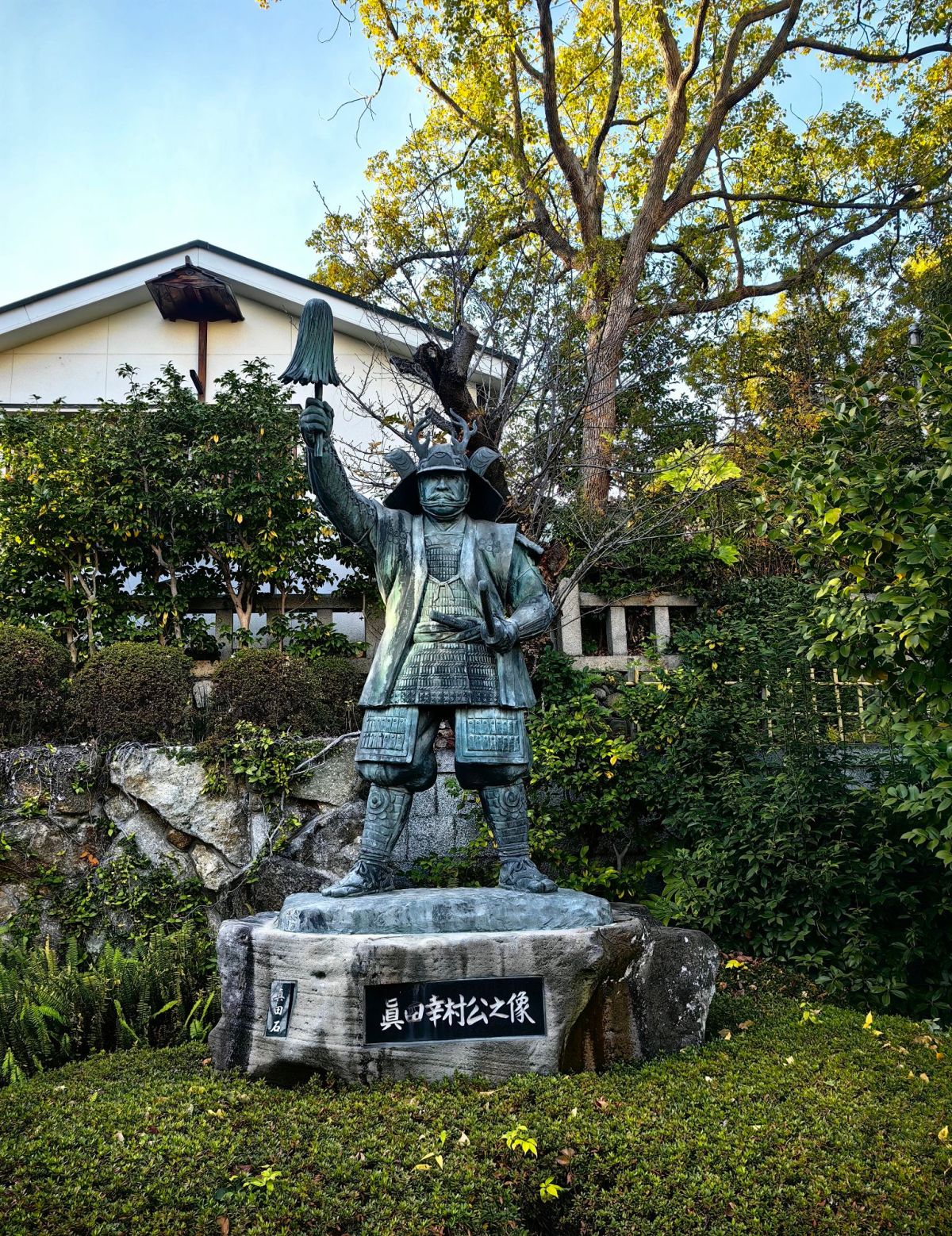
The shrine also features a bronze statue of Yukimura and is a popular destination for visitor like me who is interested in Japan’s Sengoku-era history. Born into the Sanada clan, Yukimura was the son of Sanada Masayuki, a skilled strategist. After the decisive Battle of Sekigahara in 1600, Yukimura was defeated for supporting the Western Army (Toyotomi clan) and were exiled to Kudoyama at the foot of Mount Koya, where they spent more than ten years in seclusion.
神社内还矗立着真田幸村的铜像。对于像我这样喜爱日本战国时代历史的游客而言,这里无疑是一处不可错过的朝圣之地。真田幸村出身于真田氏,父亲是真田家的当主、素有智谋之称的真田昌幸。1600年关原之战后,真田昌幸与真田幸村因支持西军而战败,被流放至高野山麓的九度山,在那里度过了十余年的幽居生活。
In 1614, the Siege of Osaka broke out. At the invitation of Toyotomi Hideyori, Sanada Yukimura left his exile and entered Osaka Castle, joining the Toyotomi army and shouldering the heavy responsibility of resisting Tokugawa Ieyasu. In the Siege of Osaka from 1614 to 1615, he led the defending troops in valiant fighting, becoming one of the most representative heroes of the Toyotomi clan’s last resistance against the Tokugawa Shogunate.
1614年,大阪冬之阵爆发,真田幸村应丰臣秀赖之邀离开流放地,进入大阪城,加入丰臣军,担负起抵抗德川家康的重任。在1614年至1615年的大阪之战中,他率领守军奋勇作战,成为丰臣氏最后抵抗德川幕府最具代表性的英雄人物之一。
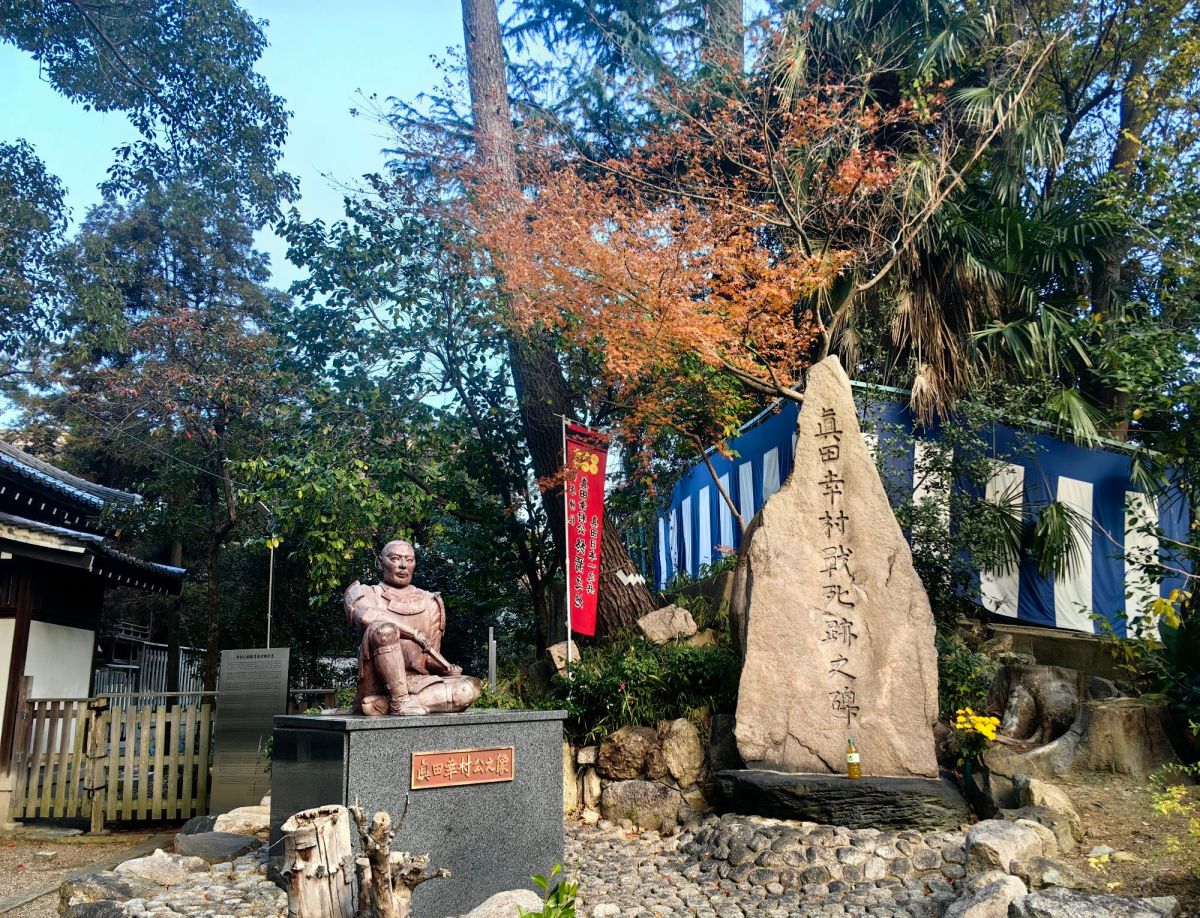
This photo was taken in the place near Yasui Shrine where Yukimura Sanada lost the final battle. He earned lasting fame through his brilliant leadership during the Siege of Osaka. He designed and defended the Sanada Maru, a fortified outwork that successfully repelled repeated Tokugawa attacks during the Winter Siege of 1614. During the Summer Siege in 1615, he led a bold and desperate cavalry charge that came close to reaching Tokugawa Ieyasu himself before being overwhelmed and killed in battle.
这张照片拍摄于安井神社附近,真田幸村在此地战败身亡。他在大阪之战中展现了卓越的指挥才能,名垂青史。他设计并守卫了真田丸,这座坚固的防御工事在1614年冬之阵中成功击退了德川家康的多次进攻。1615年夏之阵中,他率领骑兵发起了一场勇猛而孤注一掷的冲锋,几乎逼近德川家康本人,最终却寡不敌众,战死沙场。
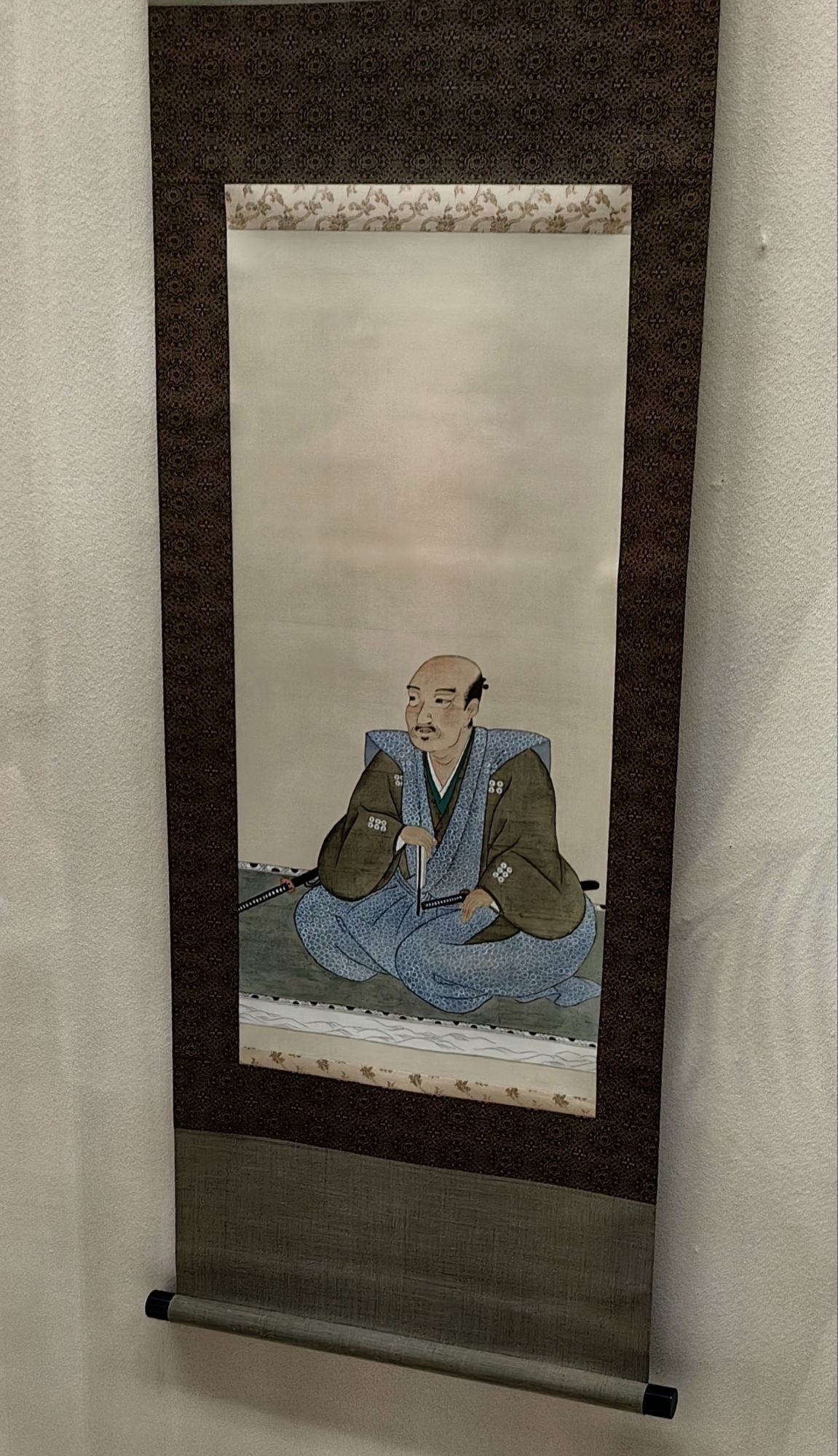
I found his portrait in the Osaka castle museum. Although the Toyotomi forces supported by Yukimura were finally defeated, his courage, tactical skill, and unwavering loyalty turned him into a legendary figure. Often called “the greatest warrior in Japan”, he has been immortalized in literature like ‘The Sanada Gunki’, television dramas like ‘Sanada Maru’, video games like Nobunaga’s Ambition, and local legends, making him one of the most famous and admired samurai in Japanese history.
我在大阪城博物馆里看到了他的画像。虽然幸村支持的丰臣方最终战败,但他的勇气、战术才能和坚定不移的忠诚使他成为了传奇人物。他常被誉为“日本最伟大的武士”,其事迹被写入《真田军纪》等文学作品、《真田丸》等电视剧、《信长之野望》等电子游戏以及各地传说中,使他成为日本历史上最著名、最受敬仰的武士之一。
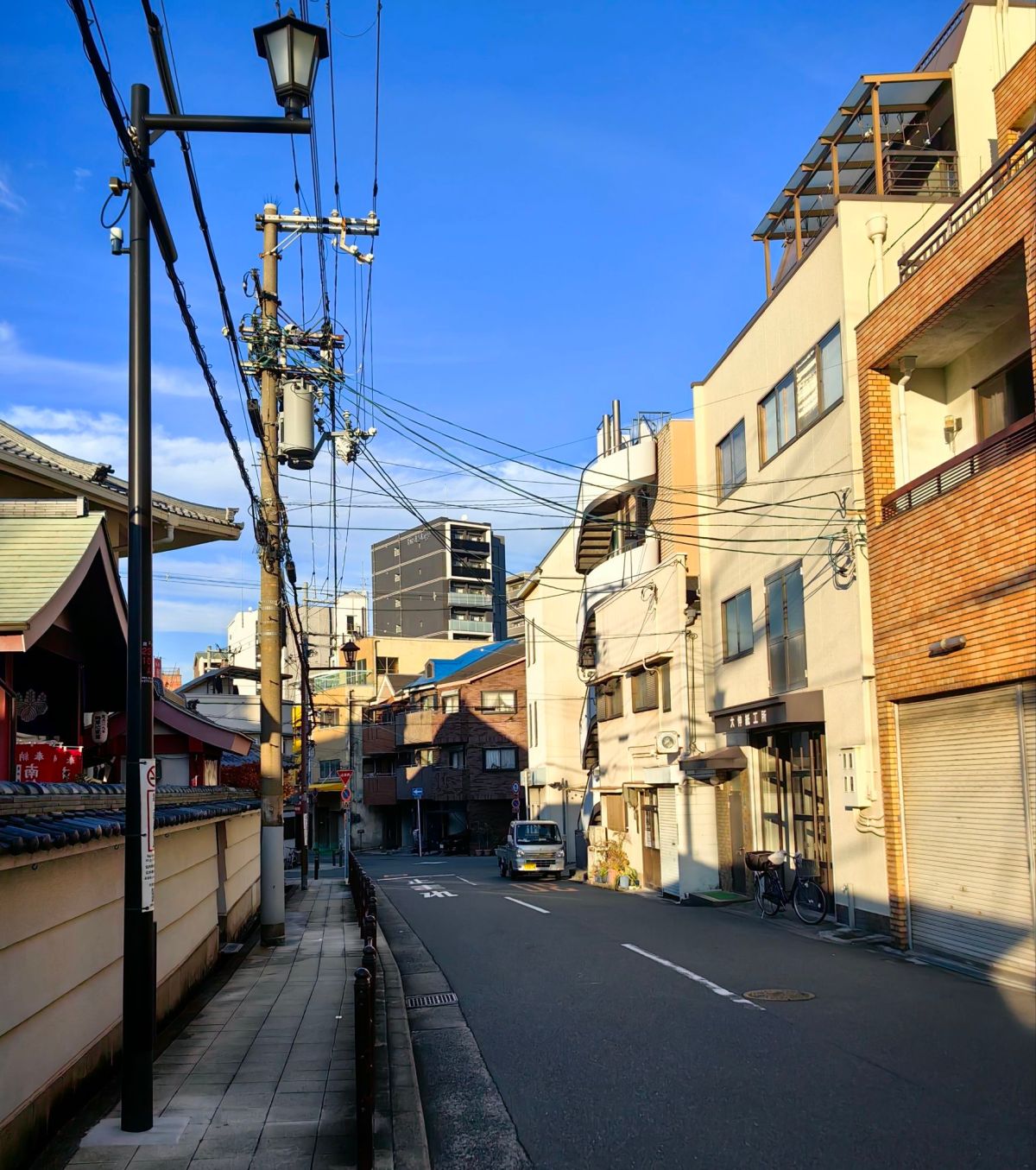
As I wandered through the suburban streets of Osaka, I discovered a quieter side of the city, where everyday life unfolded at an unhurried pace. A network of narrow lanes, often barely wide enough for a single car, wound between rows of modest three-storey houses standing shoulder to shoulder. Small balconies were decorated with potted plants, bicycles rested casually against walls, and neatly arranged entrances reflected the quiet routines of daily life.
漫步在大阪郊区的街道上,我发现了这座城市宁静而真实的一面。这里没有市中心的喧嚣与繁华,生活节奏显得舒缓而悠闲。狭窄的巷道纵横交错,往往仅容一辆汽车缓缓通过,蜿蜒穿梭于一排排紧密相连的三层民居之间。小巧的阳台上摆放着各式盆栽,自行车随意停靠在屋前墙边,整洁的玄关和门前空间流露出平凡而安逸的日常生活气息。
Walking through them felt like catching a glimpse of the Osaka that local residents experience every day, far removed from the bright lights and bustling crowds of the city centre. Towering utility poles lined the streets, forming one of the most distinctive features of Japanese residential neighborhoods. Countless power lines stretched from pole to pole, hanging in gentle curves overhead and weaving an intricate pattern against the sky. At first, the dense web of cables seemed almost chaotic, but the longer I looked, the more it became part of the city’s unique visual identity.
漫步其中,我仿佛得以一窥大阪居民最真实的生活景象,远离了道顿堀的灯火璀璨和商业区的人潮汹涌。街道两旁,高高耸立的电线杆构成了日本住宅区最具代表性的景观之一。无数电线从一根电线杆延伸至另一根,在头顶纵横交织,勾勒出一幅错综复杂的几何图案。初见时,这密密麻麻的电缆网似乎显得有些杂乱无章;然而驻足细看,渐渐便会发现,它们早已成为日本城市一种独特而富有辨识度的视觉特征。
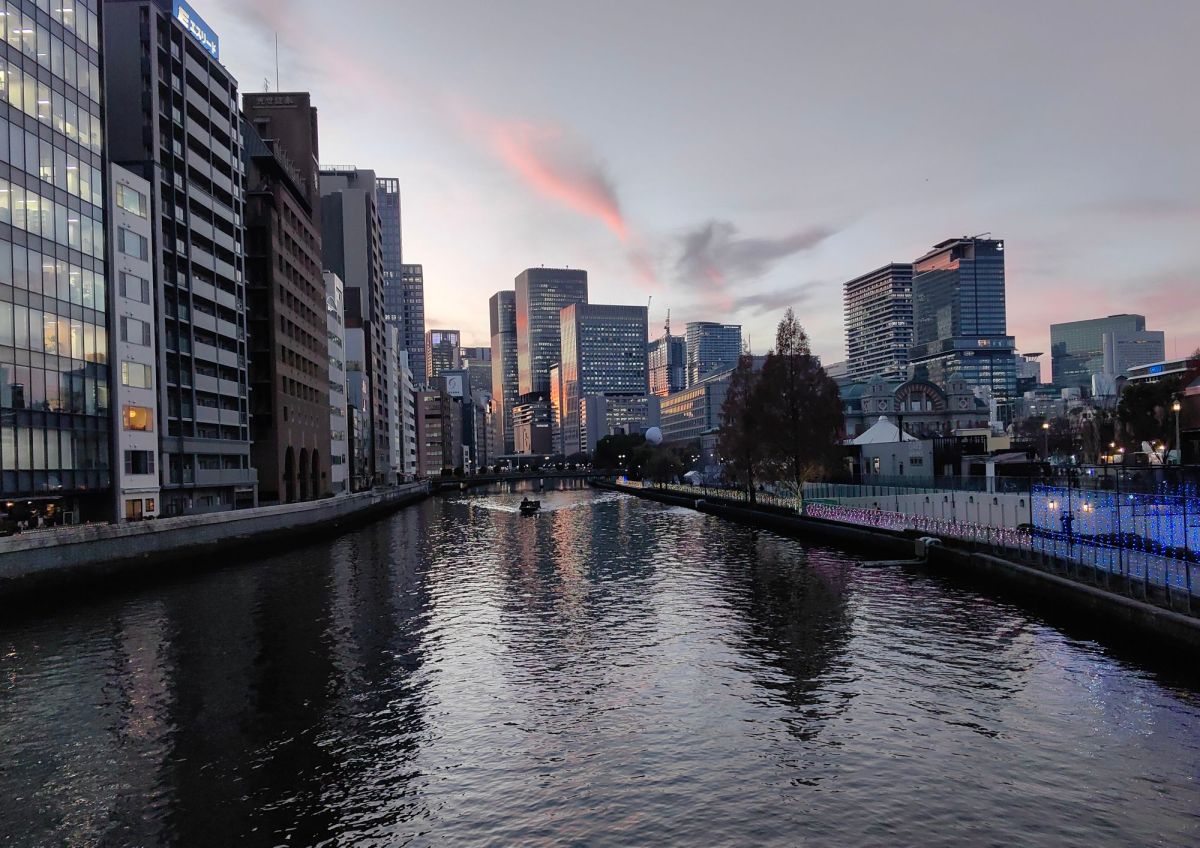
As evening approached and I made my way back to my hotel, Nakanoshima revealed a strikingly different side of Osaka from the quiet residential neighborhoods I had explored earlier. Situated on a long island between the Dojima and Tosabori Rivers, Nakanoshima is one of the city’s principal business and cultural districts, where broad boulevards, graceful bridges, and sleek skyscrapers combine to create a sophisticated urban skyline. Towering glass office buildings rose above the waterfront, their façades reflecting the fading colors of the winter sky as daylight gradually gave way to evening. The rivers mirrored the city lights, while the silhouettes of bridges stretched elegantly across the water, lending the district a calm yet cosmopolitan atmosphere.
夜幕降临,我返回酒店。中之岛展现了大阪截然不同的一面,与我之前探索过的宁静住宅区截然不同。中之岛位于堂岛川和土佐堀川之间的一座狭长岛屿上,是大阪主要的商业和文化区。宽阔的林荫大道、优雅的桥梁和时尚的摩天大楼交相辉映,构成了一幅精致的都市天际线。高耸的玻璃幕墙办公楼矗立在水岸之上,随着白昼渐逝,夜幕降临,它们的立面倒映着冬日天空的斑驳色彩。河面倒映着城市的灯光,桥梁的轮廓优雅地横跨水面,为这片区域增添了一份宁静而又国际化的氛围。
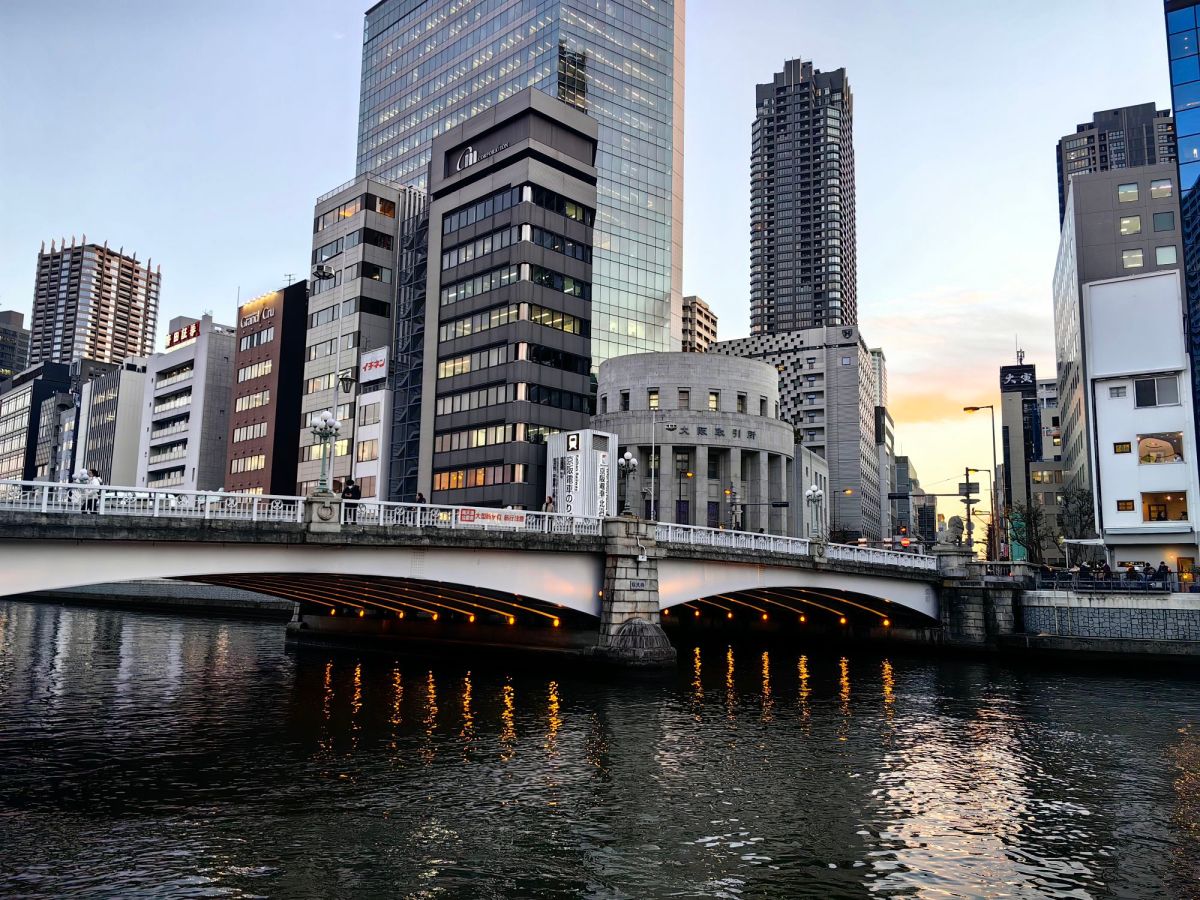
Unlike the narrow lanes of the suburbs, Nakanoshima offered wide, tree-lined promenades and spacious riverside parks that invited me to slow down and enjoy the scenery. I strolled along the riverbanks, watching office workers, joggers, and couples passing by as the city settled into the evening. Within a single day, I had experienced the city’s historic heart, its peaceful residential streets, and its modern financial centre. Each revealed a different character of Osaka.
与郊区狭窄的巷道不同,中之岛拥有宽阔的林荫大道和河畔公园,让我不禁放慢脚步,欣赏美景。我沿着河岸漫步,看着上班族、慢跑者和情侣们来来往往,城市渐渐步入夜幕。短短一天之内,我体验了这座城市的历史区、宁静的住宅区,以及现代化金融中心。每一处都展现了大阪不同的风貌。
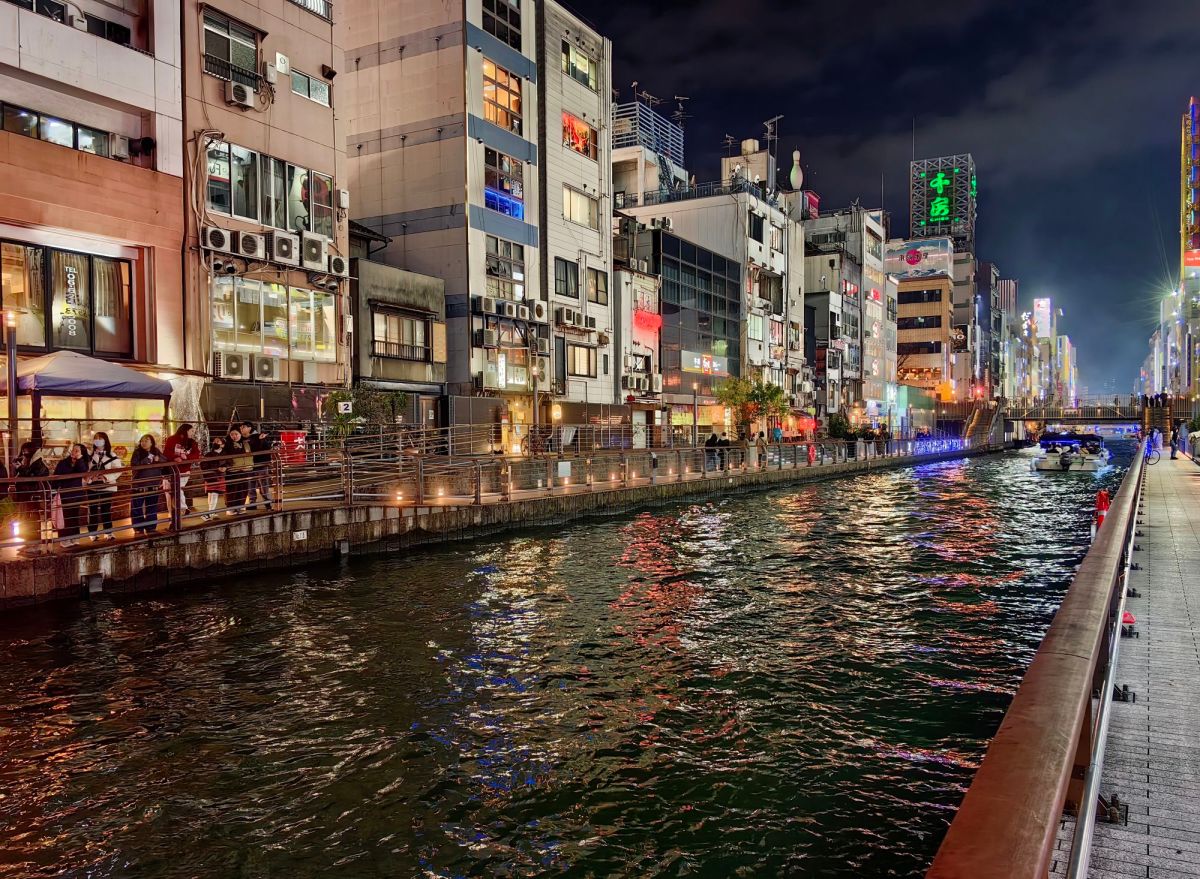
At night, the Dōtonbori Canal became one of Osaka’s most vibrant and recognizable urban landscapes. The waterway was bordered by a continuous wall of illuminated buildings, where enormous LED billboards, animated signs, and colorful advertisements reflected across the gently rippling surface of the canal. Both banks of the canal are lined with wide pedestrian promenades crowded with locals and visitors. Restaurants, izakayas and cafés spilled light and laughter onto the waterfront, while the enticing aromas of grilled seafood, ramen and freshly made takoyaki drifted through the air.
夜幕降临,道顿堀运河摇身一变,成为大阪最具活力和辨识度的都市景观之一。运河两岸林立着灯火辉煌的建筑,巨大的LED广告牌、动态招牌和色彩缤纷的广告倒映在波光粼粼的河面上。运河两岸宽阔的步行道上熙熙攘攘,挤满了当地居民和游客。餐厅、居酒屋和咖啡馆灯火通明,欢声笑语弥漫在河畔,烤海鲜、拉面和新鲜出炉的章鱼烧的诱人香气扑鼻而来。
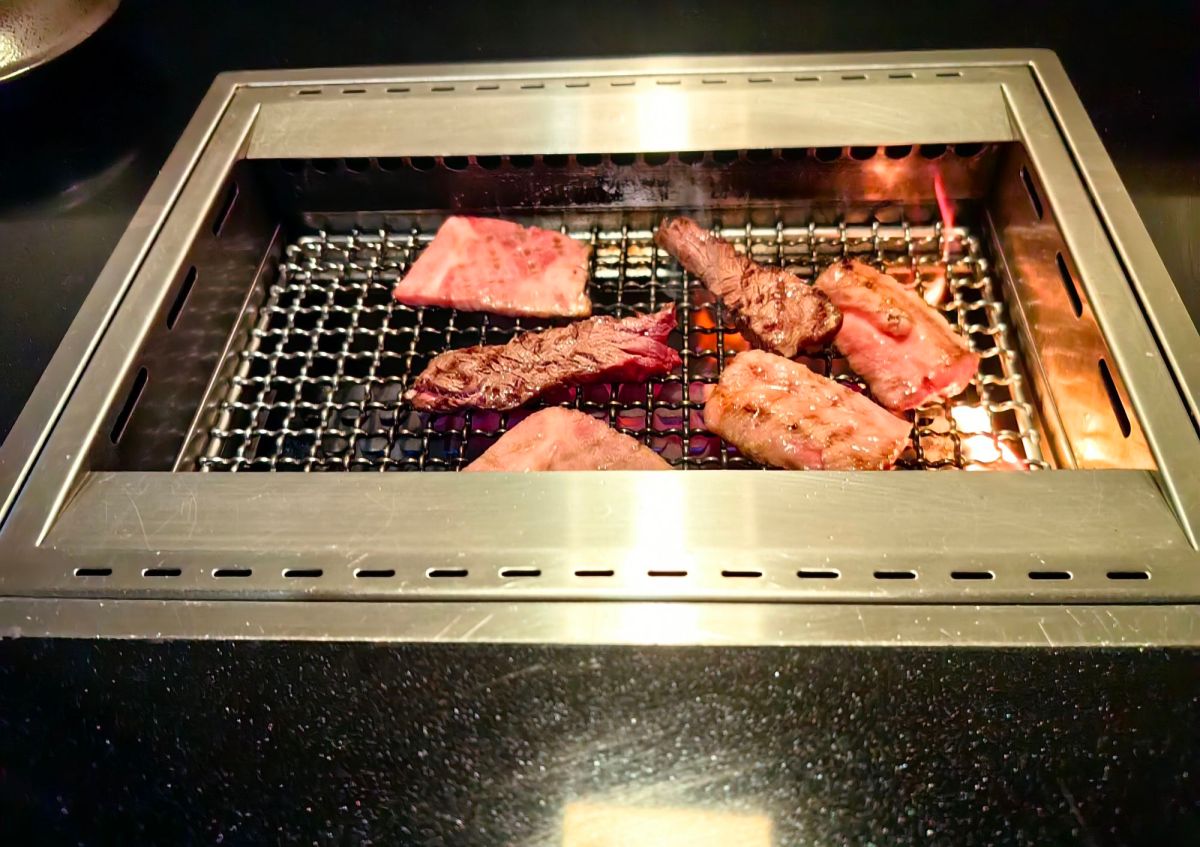
I enjoyed dinner at a restaurant by the canal, savoring Japan’s famous Wagyu beef yakiniku. Wagyu is renowned for its fine and marbling, melt-in-mouth tenderness, and rich, full-bodied flavor. Unlike Western steaks, Wagyu yakiniku is typically not served in whole, but rather sliced into thin pieces or bite-sized chunks, which diners grill themselves slowly over charcoal at their tables.
我在运河边的一家餐厅享用了晚餐,品尝了日本著名的和牛烤肉。和牛以细腻均匀的大理石纹油花、入口即化的鲜嫩口感和浓郁醇厚的风味闻名于世。与西式牛排不同,和牛烤肉通常不会整块上桌,而是切成薄片或一口大小的肉块,由食客亲自在餐桌上的炭火烤炉上慢慢烤制。
As the beef sizzled on the charcoal, the fine fat gradually melted, giving the slices an enticing sheen and releasing a rich aroma. When the outer layer slightly caramelized and turned golden brown, the inside remained tender and juicy. The grilled Wagyu, served with garlic, onions, and other vegetables, and dipped in a flavorful Japanese yakiniku sauce, offered a multi-layered and unforgettable experience with every bite.
随着牛肉在炭火上滋滋作响,细密的油脂逐渐融化,肉片表面泛起诱人的光泽,浓郁的香气也随之弥漫开来。当外层微微焦糖化、呈现出金褐色时,内部依然保持着鲜嫩多汁的口感。烤好的和牛搭配大蒜、洋葱等蔬菜,再蘸上香浓的日式烧肉酱,每一口都层次丰富,令人回味无穷。
Sitting by the canal, admiring the city lights reflected on the water’s surface while enjoying the steaming Wagyu yakiniku, I found a perfect way to conclude one day’s trip. On a cold winter night, this warm and sumptuous dinner became one of my most unforgettable culinary experiences upon arriving in Japan.
坐在运河边,一边欣赏着夜色中倒映在水面的城市灯火,一边品尝着热气腾腾的和牛烤肉,为这一天的大阪之旅画上了一个完美的句号。在寒冷的冬夜里,这顿温暖而丰盛的晚餐,也成为我初到日本最难忘的美食体验。
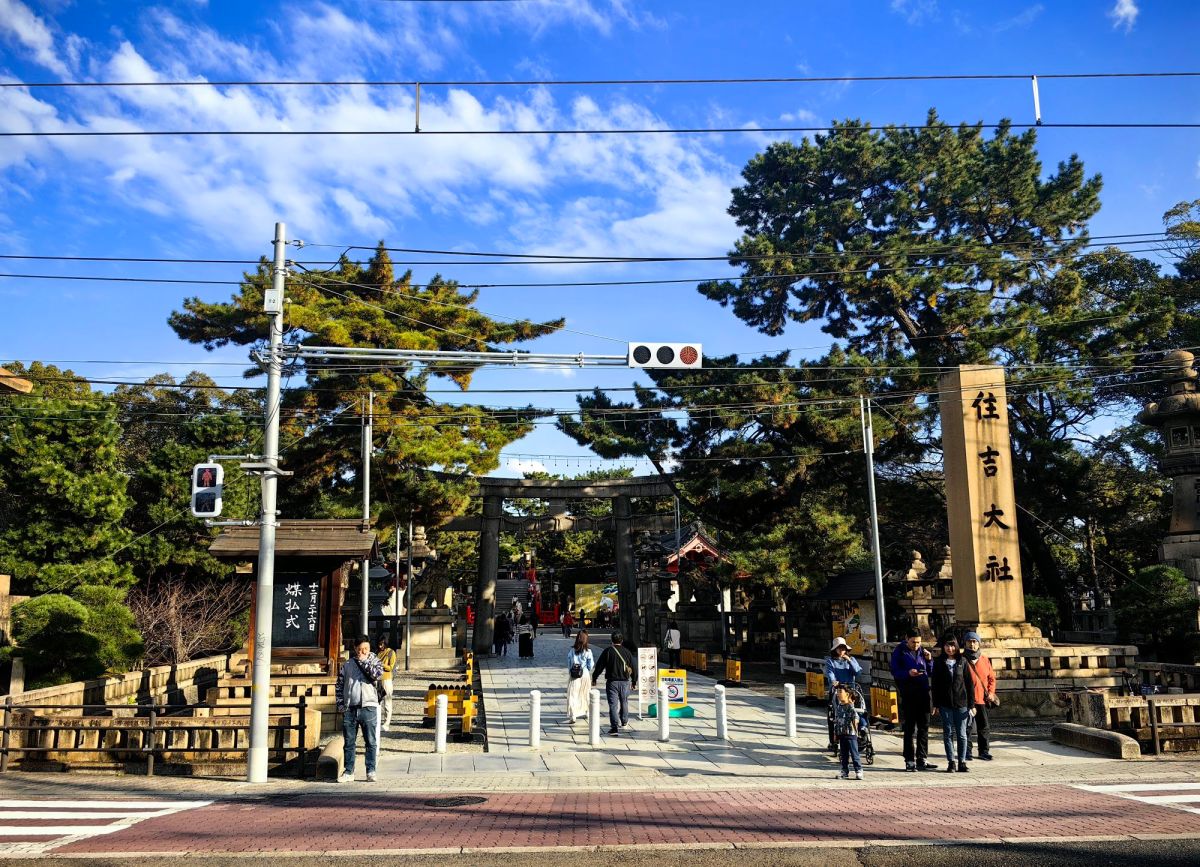
I stayed in Osaka for two days and visited several cultural places on the second day. Sumiyoshi Taisha is one of Japan’s oldest and most revered Shinto shrines. Founded in the 3rd century, before the introduction of Buddhism to Japan, the shrine is dedicated to the Sumiyoshi Sanjin, three deities believed to protect travelers, sailors, fishermen, and all who journey by sea. Because Osaka developed as an important port city, Sumiyoshi Taisha became a spiritual guardian for merchants, seafarers, and imperial envoys. Today, it remains the head shrine of more than 2,000 Sumiyoshi shrines across Japan.
我在大阪总计待了两天,第二天参观了几个历史文化景点。住吉大社是日本最古老、最受尊崇的神社之一。它始建于公元3世纪,早于佛教传入日本。这座神社供奉着住吉三神,这三位神祇被认为能够庇佑旅行者、水手、渔民以及所有海上航行者。由于大阪发展成为重要的港口城市,住吉大社也成为了商人、海员和皇室使节的精神守护神。如今,它仍然是遍布日本各地2000多座住吉神社的总本社。

The shrine is internationally renowned for its distinctive Sumiyoshi-zukuri architectural style, one of the oldest surviving forms of Japanese shrine architecture. Unlike many later shrines that incorporated Chinese and Buddhist influences, Sumiyoshi-zukuri preserves a purely indigenous and simple Japanese design. The four main sanctuary buildings stand in a straight line at the central axis, with elevated wooden floors, straight gabled roofs covered in cypress bark, crossed finials (chigi) projecting above the roof, and horizontal log weights (katsuogi) running along the ridge. The simple lines, natural wood, and elegant colors combine to create a rustic and dignified aesthetic, making one feel as if they have traveled back to the beginning of Japanese Shinto culture.
住吉大社以其独特的住吉造建筑风格闻名于世。住吉造是现存最古老的日本神社建筑样式之一。与许多后来受到中国建筑和佛教文化影响的神社不同,住吉造保留了古代日本神道建筑朴素而纯粹的设计风格。神社的四座本殿沿中轴线依次排列。每座本殿都建于架高的木质地板之上,屋顶覆盖着桧树皮(桧皮葺),采用笔直的人字形山墙屋顶。屋脊两端竖立着交叉的千木,屋脊上整齐排列着水平的鲣木。简洁的线条、天然的木材与素雅的色彩,共同营造出一种古朴而庄重的美感,让人仿佛穿越回日本神道文化诞生之初。
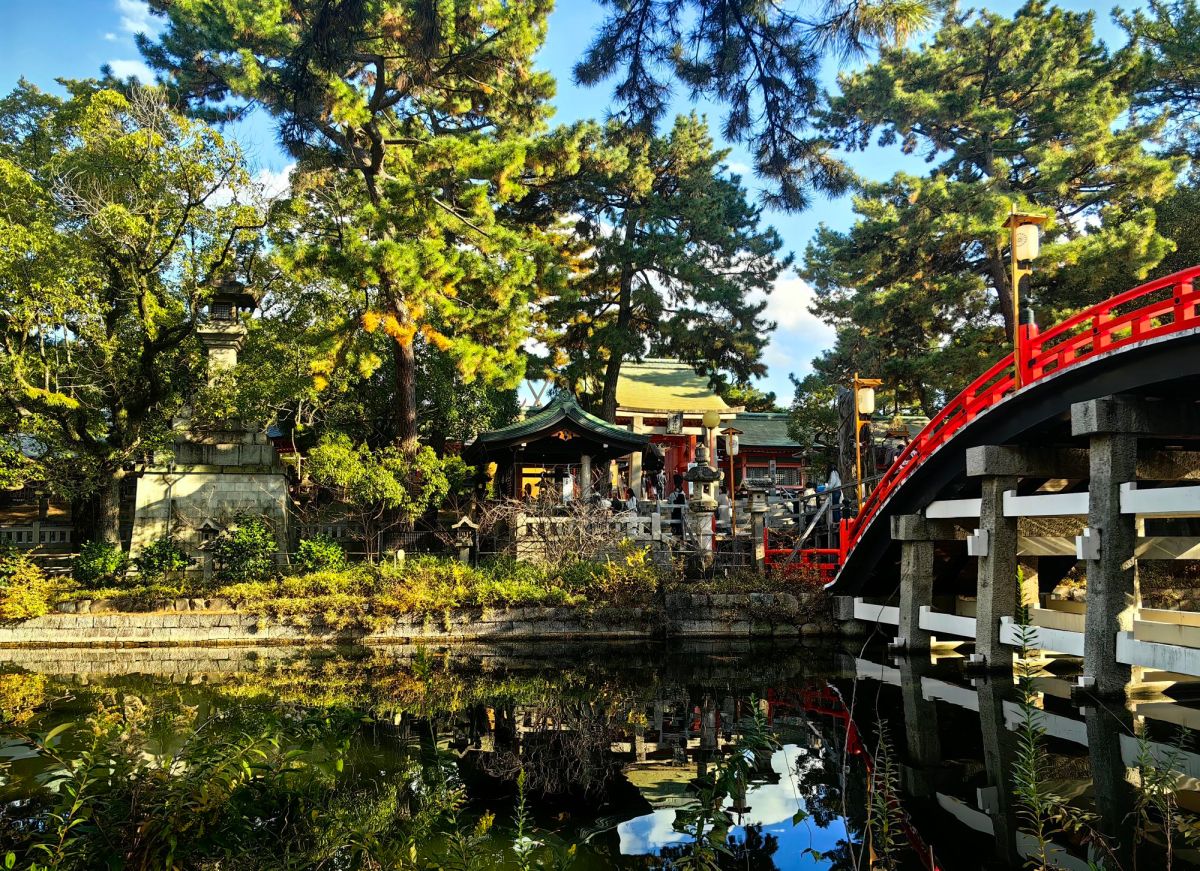
Among the shrine’s most recognizable landmarks is the graceful Sorihashi Bridge, often known as the Taiko Bridge because its elegant arch resembles the curved profile of a traditional Japanese drum. Spanning a tranquil pond before the shrine entrance, the bridge forms one of Osaka’s most picturesque and frequently photographed scenes. Its vivid vermilion railings stand in beautiful contrast to the surrounding greenery and the still waters below, creating a composition of remarkable balance and serenity. As I paused to admire the bridge, its gentle curve seemed to invite visitors to leave the bustle of the outside world behind and enter the sacred precincts of the shrine with a calm and reflective mind.
神社最引人注目的地标之一便是优雅的反桥,又称太鼓桥。它优美的拱形宛如日本传统太鼓的弧线,因此得名。石桥横跨神社入口前宁静的神池,构成了住吉大社最具代表性、也最常被拍摄的景观之一。鲜艳的朱红色栏杆与周围的绿植和下方平静的湖面形成鲜明对比,构成了一幅和谐宁静的画面。当我驻足欣赏这座桥时,它柔和的弧线仿佛在邀请游客们放下尘世的喧嚣,以平静沉思的心态步入神社的神圣境域。
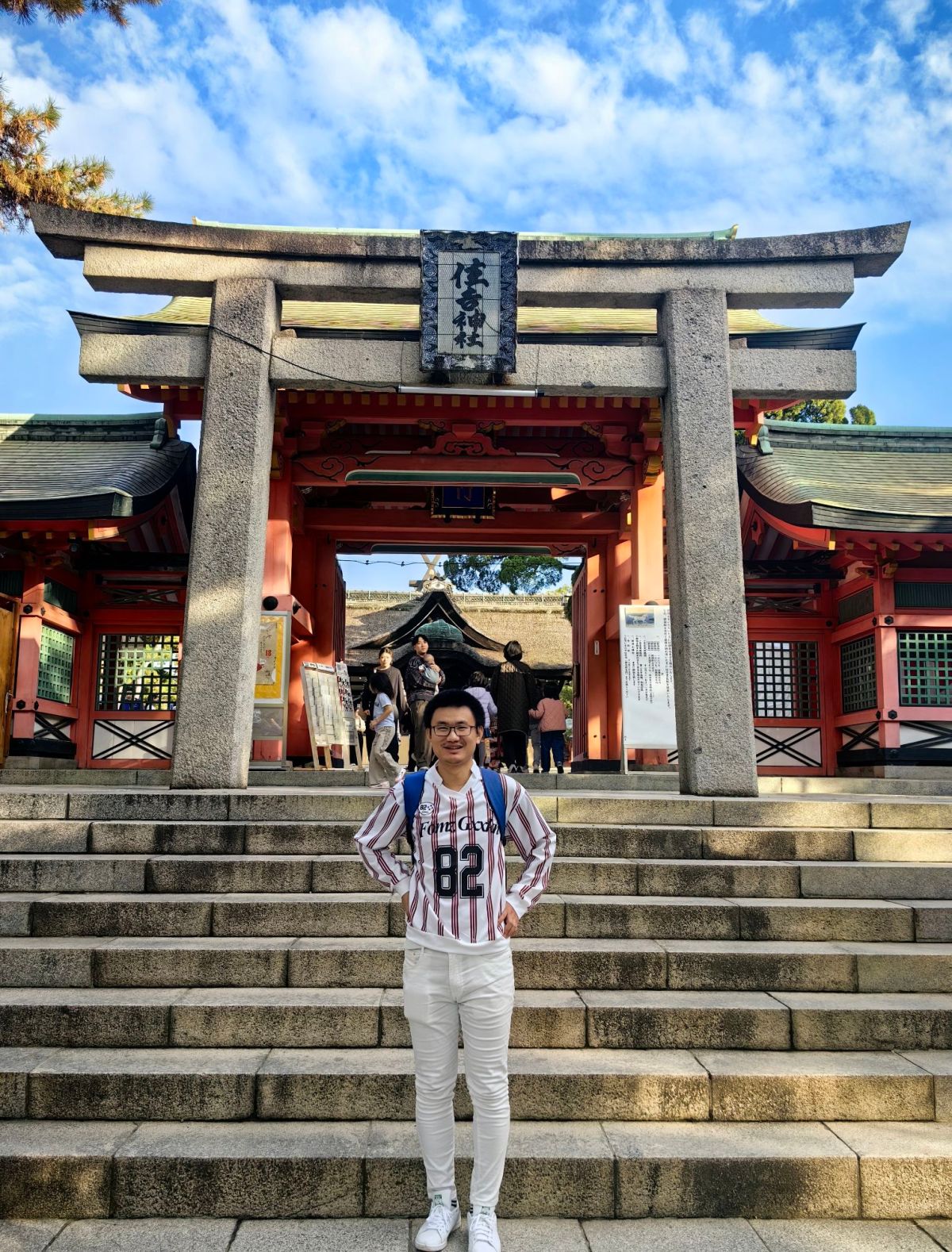
Culturally, Sumiyoshi Taisha has played a central role in Japanese religious life for nearly two millennia. Throughout its long history, emperors, samurai, merchants, sailors, and ordinary citizens have come here to offer prayers for safe journeys, prosperous businesses, family well-being, and good fortune. As one of Japan’s oldest and most revered Shinto shrines, it continues to be a place where ancient traditions remain an active part of everyday life. When I visited, the shrine was filled with local worshippers with devout solemn expressions, quietly making their way from one shrine building to another. Some people bowed gently before the worship hall, threw incense money, and rang the bell rope according to the shrine’s etiquette, the crisp sound of the bell echoing in the courtyard; others put their hands together and prayed silently, hoping to convey their wishes to the Sumiyoshi Sanjin.
从文化角度来看,住吉大社近两千年来始终在日本宗教生活中占据着重要地位。在漫长的历史岁月里,无论是天皇、武士、商人、水手,还是普通百姓,都曾来到这里祈求旅途平安、航海顺利、生意兴隆、家庭和睦与诸事顺遂。作为日本最古老、最受尊崇的神社之一,住吉大社至今仍是传统信仰与现代生活交汇的重要场所。我到访时,神社内聚集着许多前来参拜的当地居民。他们安静地穿行于神社各处,神情庄重而虔诚。有人在拜殿前轻轻鞠躬、投下香火钱,依照神社的礼仪摇动铃绳,清脆的铃声在庭院中回荡;有人双手合十,默默祈愿,希望将心中的愿望传达给神明。
The shrine is also deeply woven into Japanese literature, poetry, and classical art, often appearing as a symbol of longevity, protection, and divine blessing. The main hall is also one of the most sought-after venues for traditional Japanese Shinto wedding ceremonies. Many Japanese couples choose the shrine because marriage in Shinto is regarded as a sacred union witnessed by the kami (deities), with the blessings extending not only to the couple but also to their families and future generations.
神社在日本文学、诗歌和古典艺术中也占据着举足轻重的地位,常常象征着长寿、庇佑和神灵的祝福。神社正殿也是举办传统日本神道婚礼的热门场所。许多日本夫妇选择在神社举行婚礼,是因为在神道教中,婚姻被视为由神明见证的神圣结合,其祝福不仅惠及新人,更会惠及他们的家庭和子孙后代。

I spent nearly an hour at the shrine observing the wedding ceremony, fascinated by this important expression of Japanese culture and tradition. Unlike the grand celebrations often seen elsewhere, the ceremony unfolded with quiet dignity and there was not loud music, nor any grand ceremony. A traditional Shinto wedding at Sumiyoshi Taisha typically begins with a solemn procession led by Shinto priests, followed by purification rituals to symbolically cleanse the couple before the gods. Afterwards, the bride and groom then make offerings to the deities, exchange cups of ceremonial sake in the ancient san-san-kudo ritual, recite their wedding vows, and present sacred evergreen branches, known as tamagushi, as offerings of gratitude and sincerity.
我在神社驻足了近一个小时,静静观看了一场传统神道婚礼,深深地被这种承载着日本文化与传统的仪式所吸引。与许多地方热闹盛大的婚礼庆典不同,这里的婚礼没有喧闹的音乐,也没有隆重的排场,取而代之的是庄严、宁静而充满仪式感的氛围。住吉大社里的传统神道婚礼通常以神职人员引领新人与亲属缓缓步入神社的参进仪式开始。随后,神职人员会为新人举行净化仪式,象征在神明面前洗净尘世的污秽。接着,新郎新娘向神明献上供品,并按照古老的“三三九度”仪式交换清酒,共饮三杯酒,以缔结婚姻的誓约。随后,新人宣读誓词,并向神明奉献称为“玉串”的常青树枝,以表达对神明的敬意、感恩与诚挚的祈愿。
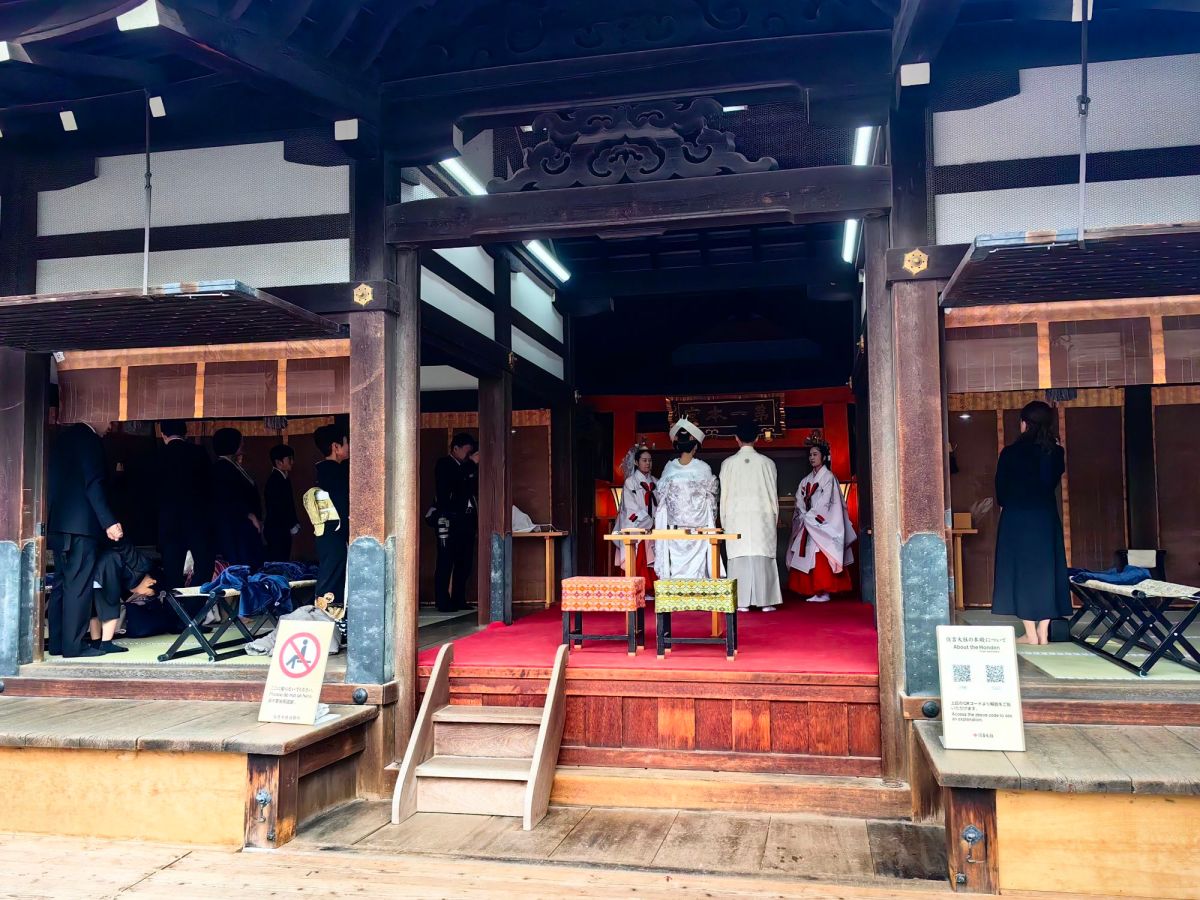
The bride was dressed in an elegant white silk shiromuku, the traditional bridal kimono whose pure white color symbolizes purity and sincerity. Beside her, the groom wore a formal white montsuki haori hakama, the classic ceremonial attire reserved for important occasions. Surrounded by close family members, the couple exchanged their vows in an atmosphere of quiet reverence. Their presence highlighted an important aspect of Japanese culture: marriage is regarded not only as the union of two individuals, but also as the coming together of two families. The ceremony emphasized harmony, mutual respect, and the bonds that extend beyond the bride and groom themselves. As I quietly watched the ceremony unfold, I realized that I was witnessing more than a wedding. It was a living tradition that has been passed down through generations.
新娘身着优雅的白色丝绸白无垢,这件传统的新娘和服,纯白象征着纯洁与真挚。新郎则身着正式的白色纹付羽织袴,这是只有在重要场合才会穿着的经典礼服。在至亲好友的环绕下,这对新人在静谧而庄重的氛围中交换了爱之誓言。他们的婚礼让我深刻体会到日本文化中的一个重要理念:婚姻不仅意味着两个人携手共度一生,更象征着两个家族之间建立起新的联系。仪式强调和谐、互相尊重,以及超越新郎新娘本身的深厚情谊。我静静地注视着这一切,意识到自己所见证的不仅仅是一场婚礼,更是一项跨越千年、至今仍鲜活延续的传统。
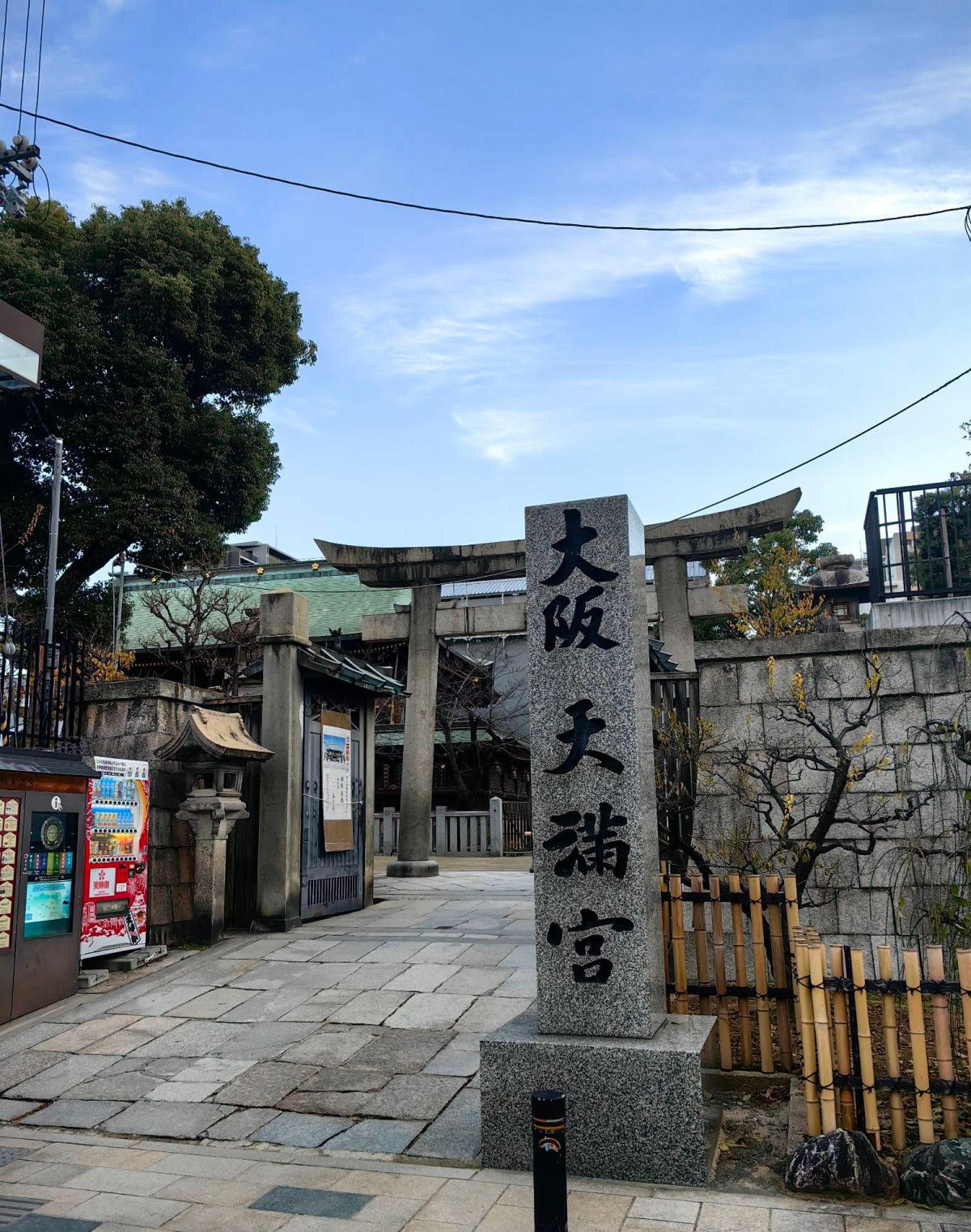
Ōsaka Tenman-gū is another shrine that I visited. It is one of Osaka’s most important religious and cultural landmarks. While Sumiyoshi Taisha is dedicated to the deities who protect travelers and the sea, Ōsaka Tenman-gū is dedicated to Sugawara no Michizane, the Heian-period scholar, poet, and statesman who was later deified as Tenjin, the Shinto deity of scholarship, learning, and the arts.
大阪天满宫是我参拜的另一座神社,也是大阪最重要的宗教和文化地标之一。住吉大社供奉的是守护旅行者和大海的神明,而大阪天满宫则供奉着平安时代的学者、诗人兼政治家菅原道真,他后来被奉为天神,即掌管学问、知识和艺术的神祇。
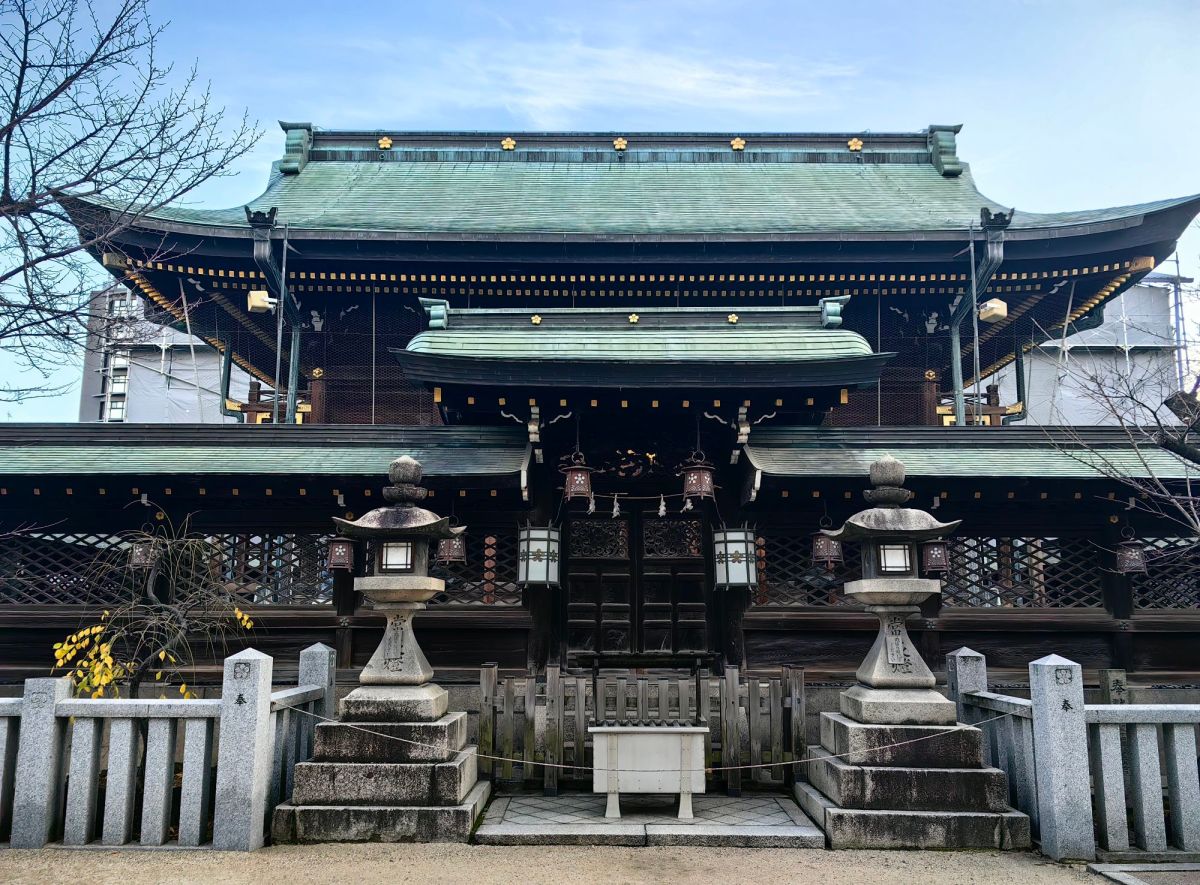
Osaka Tenmangu Shrine’s architecture perfectly embodies the elegant charm of Edo-period shrine architecture. Although the shrine has been destroyed by fire and war multiple times, and most of the current buildings are reconstructed. The exquisitely decorated halls, intricately carved wooden components, vibrant vermilion architecture, and tranquil gardens still perfectly preserve the solemn and rustic atmosphere of a traditional Japanese shrine. The plum trees within the shrine are also renowned. This is because Sugawara no Michizane, who was enshrined here, was deeply fond of plum blossoms, and the plum blossom thus became one of his symbols. It is a legend when Michizane was exiled from Kyoto, the plum tree in his home, longing for its master, flew to his side overnight. This is the famous Japanese legend of the “Flying Plum Blossom.”
大阪天满宫的建筑风格充分展现了江户时代神社建筑的典雅韵味。尽管神社曾多次毁于火灾与战乱,如今的大部分建筑都是后来重建的,但装饰精美的殿宇、雕刻细腻的木构件、鲜艳的朱红色建筑以及宁静雅致的庭院,依然完整地保留了传统日本神社庄重而古朴的氛围。神社内的梅树同样享有盛名。这是因为祭祀于此的菅原道真生前酷爱梅花,梅花也因此成为象征他的标志之一。相传,道真被贬离京都时,家中的梅树因眷恋主人而一夜之间飞到他身边,这便是日本著名的“飞梅传说”。
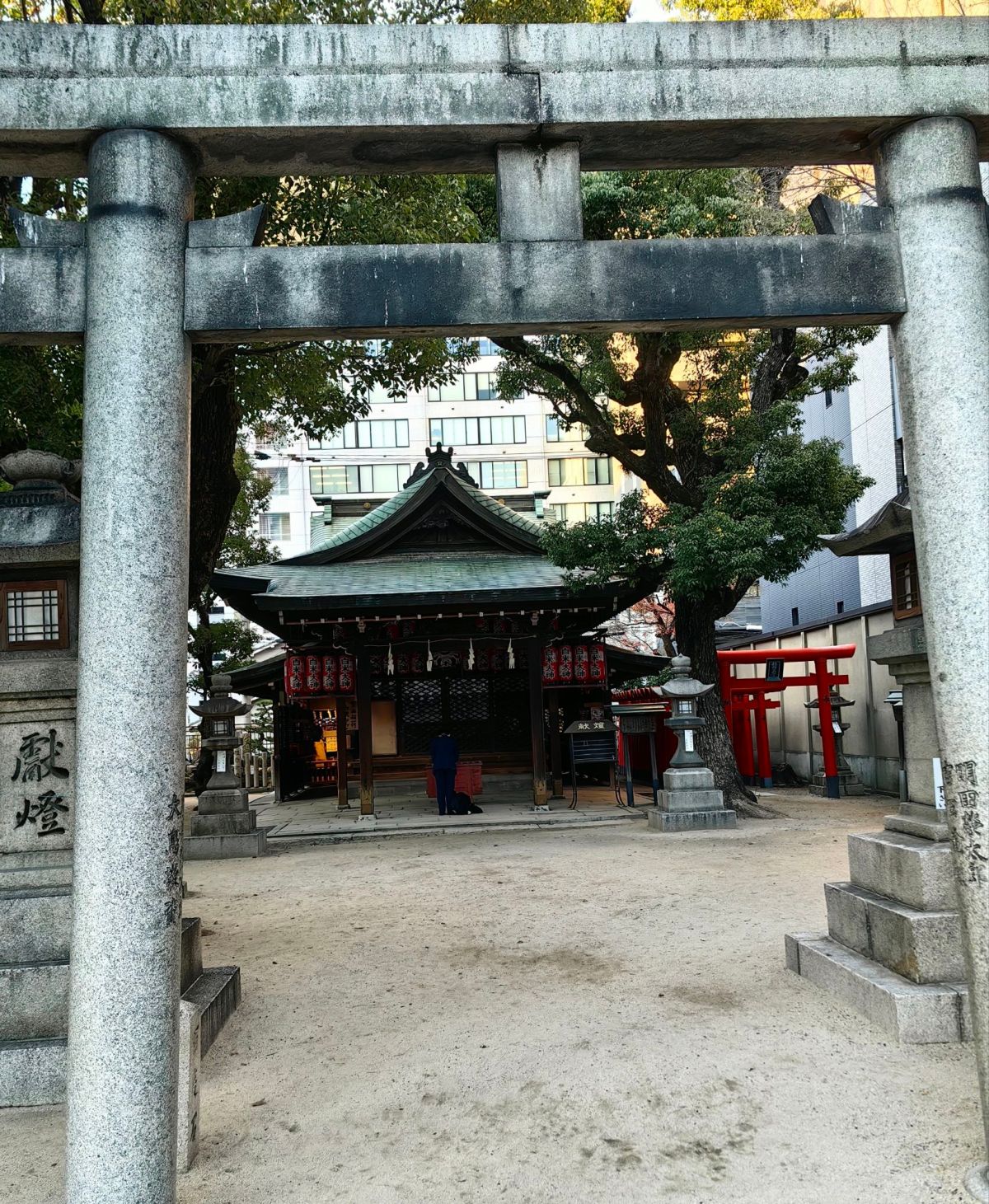
It plays an especially important role in the lives of students. Before school entrance examinations, university admissions, or professional certification exams, thousands of people visit the shrine to pray for success. Many purchase ema (wooden prayer plaques) on which they write their academic wishes, or protective amulets (omamori) believed to bring good fortune in examinations. This tradition has made the shrine one of Japan’s most significant centers for educational blessings.
对于日本学生而言,大阪天满宫具有格外重要的意义。每逢入学考试以及各类资格考试来临之前,都会有成千上万的学生和家长来到这里参拜,祈求学业有成、考试顺利。许多人会购买绘马(木制祈福牌),在上面写下自己的学业愿望,或者购买护身符(御守),相信它能带来考试好运。这一传统使这座神社成为日本最重要的求学祈福中心之一。

Hidden among the bustling streets of central Osaka, Namba Yasaka Jinja is relatively small compared with Osaka’s more famous historical sites. As I approached the shrine, I was attracted by its extraordinary Shishiden, an enormous lion’s head standing approximately twelve meters high. Its fierce golden eyes, flared nostrils, and wide-open mouth created a dramatic and unforgettable sight. According to local tradition, the lion’s open mouth is believed to swallow evil spirits and bad fortune while attracting good luck, prosperity, and success.
难波八坂神社隐匿于大阪市中心熙熙攘攘的街道之中,与大阪其他更著名的历史遗迹相比,规模相对较小。当我走近神社时,首先映入眼帘的是那尊气势恢宏的狮子头,高达约十二米。它那锐利的金眸、张开的鼻孔和宽阔的大嘴,构成了一幅令人难忘的震撼景象。当地传说认为,狮子张开的大嘴能够吞噬邪灵和厄运,同时带来好运、财富和成功。
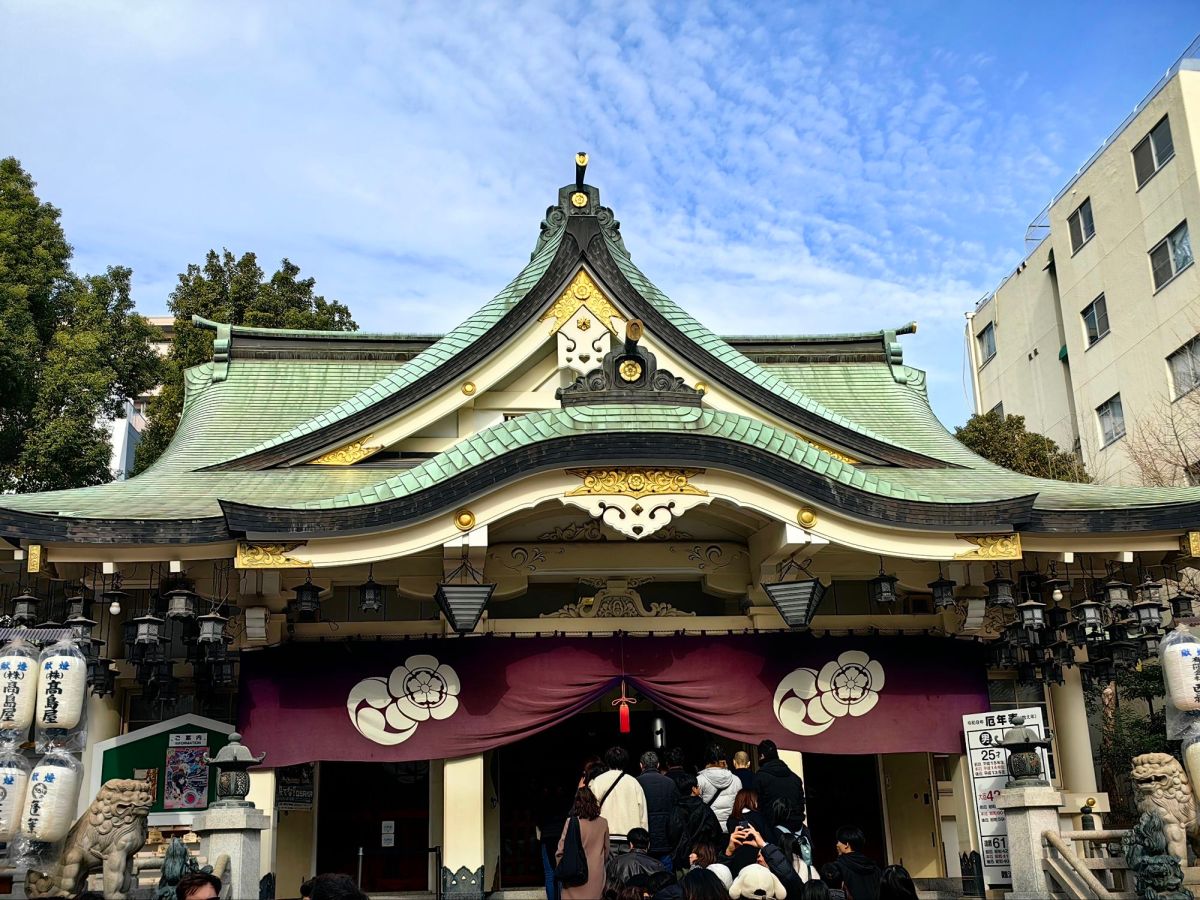
Although it is in the city center, the wooden shrine buildings, stone lanterns, and carefully maintained grounds reflect the quiet elegance of traditional Shinto architecture. The contrast between the ancient shrine and the surrounding high-rise buildings perfectly captures the character of Osaka, where centuries-old traditions continue to thrive within a vibrant modern city.
尽管地处大阪中心,但这座木质神社建筑、石灯笼和精心维护的庭院,处处体现着传统神道建筑的静谧优雅。古老的神社与周围高楼林立的建筑群形成鲜明对比,完美地展现了大阪的独特魅力。在这座充满活力的现代都市中,传承数百年的传统依然生机勃勃。

Osaka is a very modern city but there are still some traditional houses and gardens for me to visit. Within Tennoji Park, Keitakuen Garden is one of Osaka’s finest examples of a traditional Japanese landscape garden. Originally completed in 1908 as part of the residence of the distinguished merchant Sumitomo Kichizaemon, the garden was designed according to the principles of traditional Japanese landscape architecture, recreating the beauty of nature in miniature. Every winding path, carefully placed stone, tranquil pond, and gently shaped hill was arranged with meticulous care to evoke the scenery of mountains, rivers, and forests within a relatively compact space. The concept of miniature landscapes is to encompass an infinite range of mountains and rivers within a limited space.
大阪是一座高度现代化的城市,但这里依然保留着许多传统庭园和历史建筑,值得细细探访。其中,位于天王寺公园内的庆泽园便是大阪最精美的传统日式庭园之一。庆泽园始建于1908年,最初是著名实业家住友吉左卫门宅邸的一部分。整座庭园依循日本传统庭园的造园理念而建,通过巧妙的布局,将自然山水浓缩于有限的空间之中。每一条蜿蜒的小径、精心摆放的石头、静谧的池塘和缓坡都经过精心布置,在相对紧凑的空间内营造出山川河流森林的景致。以有限之地,纳无限山水,这就是缩景的理念
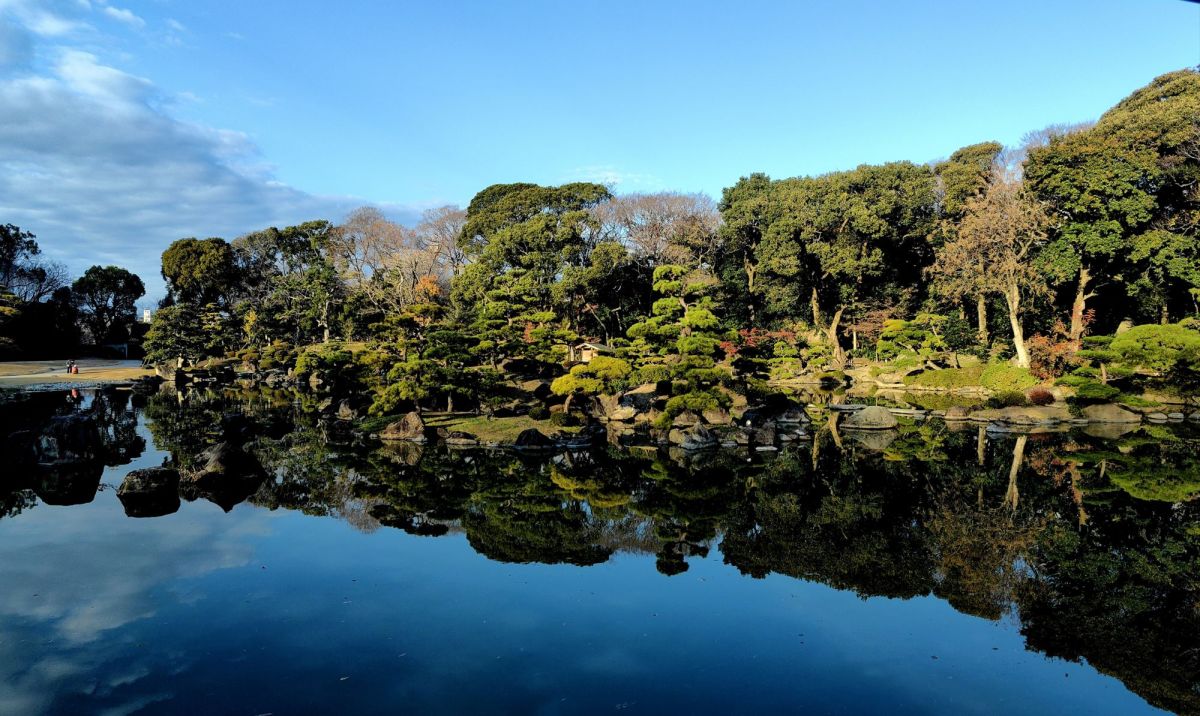
At the heart of the garden lies a tranquil pond, its surface reflected the surrounding pines, maples, and carefully sculpted shrubs. Winding paths led me around the water, revealing a different perspective at every turn. Small stone bridges span narrow inlets, while natural rock formations and gentle slopes are arranged to resemble mountains and valleys. Every element has been meticulously positioned to create a balanced composition.
花园中心是一处静谧的池塘,水面倒映着周围的松树、枫树和精心修剪的灌木。蜿蜒的小径环绕着池塘,每转一个弯,景色都焕然一新。小石桥横跨狭窄的河湾,天然的岩石和缓坡排列成山峦叠嶂、峡谷幽深的模样。每一个元素都经过精心布局,营造出和谐的美感。
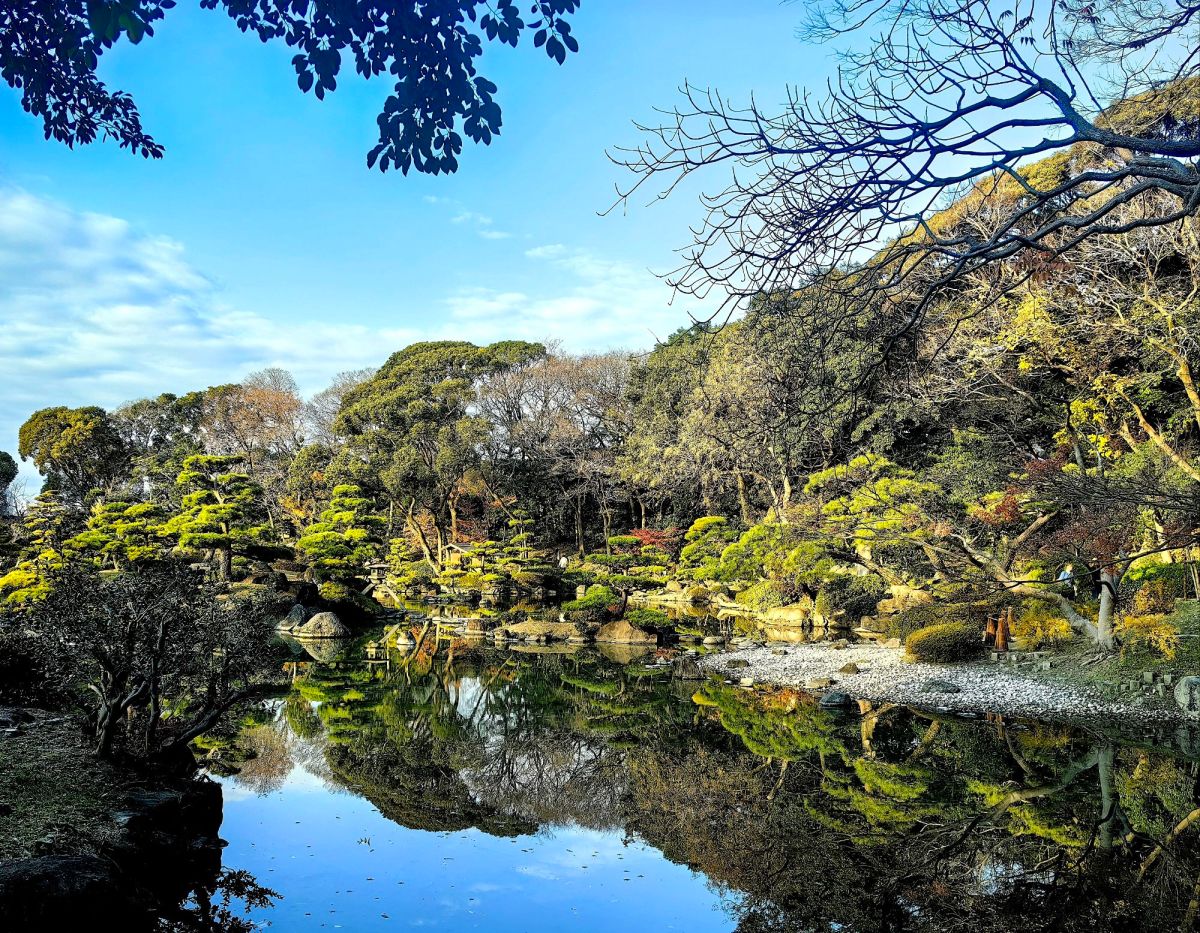
Keizei-en Garden was the last stop on my trip to Osaka. There, I sat in a traditional wooden house built beside a pond, quietly admiring the garden view from the wooden-framed window. Ripples spread across the pond, a gentle winter breeze rustled the trees, and a serene tranquility enveloped me. Sitting there quietly, savoring this moment of peace, I couldn’t help but reflect on my journey.
庆泽园是我在大阪旅程中的最后一站。园中有一座临池而建的传统木屋,我坐在木框窗前,静静欣赏眼前的庭园景色。池塘泛起层层涟漪,冬日微风轻轻拂过,树木随风摇曳,四周一片静谧安详。我静静地坐在那里,享受着这片刻的宁静,不禁回想起这段旅程。
Just the day before, I had arrived at Kansai International Airport, embarking on my first trip to Japan with anticipation; and now, I found myself in a traditional garden that embodies over a century of garden art and Japanese aesthetics, experiencing a completely different side of Japan. In just two days, I witnessed the Sengoku Period history of Osaka Castle, strolled through the vibrant streets and alleys, wandered through the dazzling nightscape of the modern city, and experienced the traditional culture that continues to this day in shrines and gardens. That peaceful winter afternoon ultimately became one of my most precious memories of Osaka. I gradually understood that what truly moves me is not just its world-famous landmarks, but also the moments that allow me to slow down and quietly feel the passage of time.
就在前一天,我才刚刚抵达关西国际机场,怀着期待踏上人生中的第一次日本之旅;而此刻,我却置身于一座凝聚着百余年造园艺术与日本美学的传统庭园之中,感受着另一种截然不同的日本。短短两天时间,我见证了大阪城承载的战国历史,漫步于充满生活气息的街巷,穿行于现代都市的璀璨夜景,也在神社与庭园中体会到延续至今的传统文化。那个宁静的冬日下午,最终成为我在大阪最珍贵的回忆之一。我渐渐明白,一座城市真正打动人的,并不仅仅是那些闻名于世的地标建筑,更是那些能够让人放慢脚步、静静感受时光流淌的瞬间。

