走进平城京,聆听千年回响
More than a thousand years have passed since Nara stood at the heart of Japan as the imperial capital of Heijō-kyō. In the Man’yōshū, the poet praised the ancient city: “Beautiful Nara, the ancient capital, flourishes now like flowers in full bloom.” Those words conjure Nara in the height of its splendor, when its palaces, temples, and streets were filled with the life and ambition of a flourishing new capital. Today, much of that city has disappeared, leaving only fragments scattered across the landscape. Yet walking through Nara, the passage of time does not feel distant. It lingers in the weathered stones, the ancient wooden halls, the quiet forests, and the deer wandering beneath the trees. The capital that once flourished like flowers has faded, but something of its spirit remains.
一千多年过去了,曾经作为日本帝都的平城京,早已隐入岁月深处。《万叶集》中,诗人曾赞叹这座古都:“美丽的奈良,古老的都城,如盛放的花朵般繁茂。”短短一句话,仿佛将人带回那个辉煌的时代。宫殿、寺院与街道交织在初建的都城之中,人们怀抱着对新都的憧憬与雄心,整座城市正如春日盛放的花朵,充满生机与光彩。而今,那座曾经繁华的都城大多已经消失,只留下零散的遗迹,静静散落在今日奈良的山林与街巷之间。然而,当我真正走在奈良,却很难觉得时间已经远去。它并没有消失,只是留在被岁月磨蚀的石阶上,古老木构建筑斑驳的梁柱间,幽深而寂静的林木之中,也留在树影下缓缓踱步的鹿群身上。那座曾如繁花般盛放的都城,或许早已凋零于历史深处;但千年的风雨并没有将它的一切褪去,它的灵魂悄然留在这片土地之上。
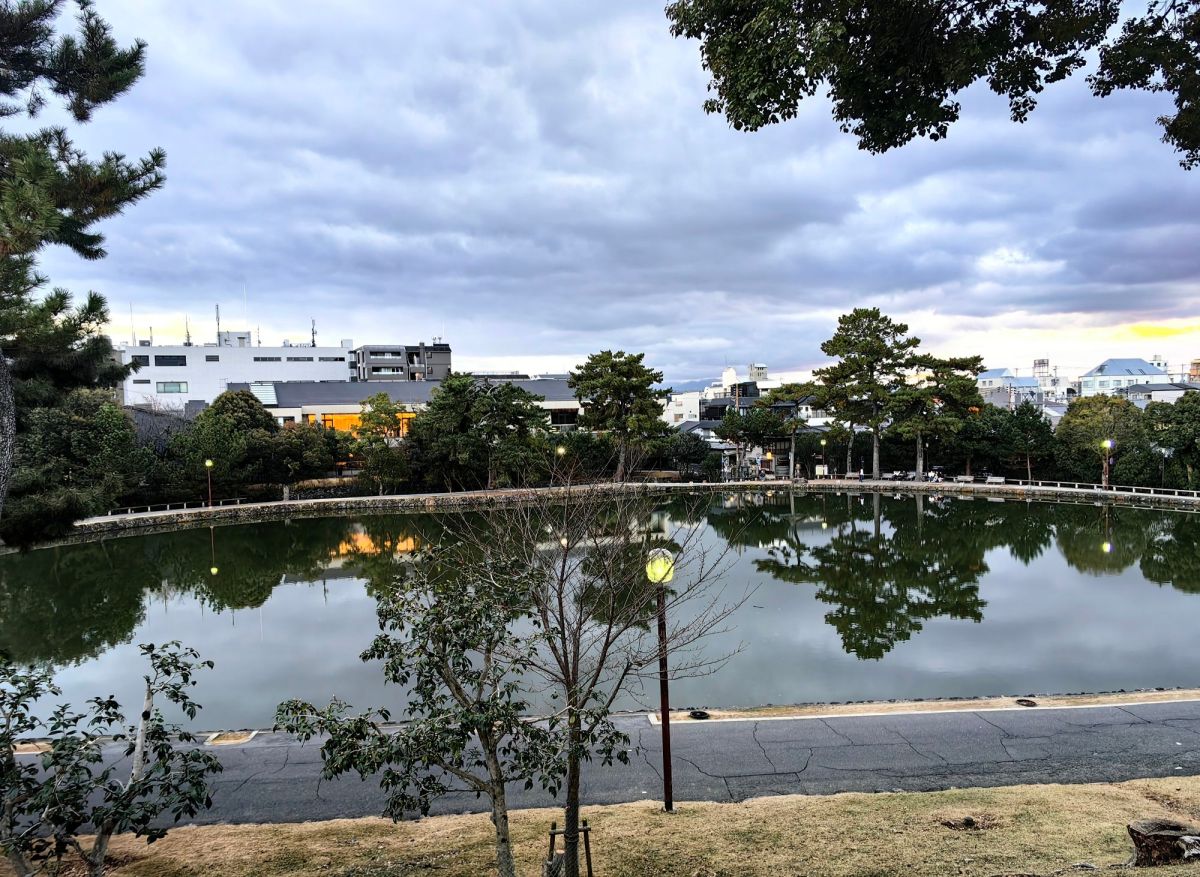
I continued my journey from Osaka to Nara on December 21st 2025 and stayed near the Sarusawa Pond, a peaceful and scenic spot in the heart of the city. The pond is famous for its beautiful views of Kōfuku-ji’s five-story pagoda, which rises above the surrounding trees and traditional streets. Walking around the area, I could enjoy the calm water, historic atmosphere, and glimpse of Nara’s historic scent. It felt like a perfect place to experience the quiet, traditional side of Nara while still being close to the city’s many historic attractions which are parts of the UNESCO World Heritage Site ‘Historic Monuments of Ancient Nara.’
2025年12月21日,我从大阪继续向东,踏上了前往奈良的旅程,并住在猿泽池畔。这里位于奈良市中心,却有着难得的宁静与古意。池水静静铺展,倒映着天空,也映照出兴福寺五重塔高高的身影。沿着这片区域缓缓漫步,我欣赏着平静的水面,感受着四周沉静而悠远的历史气息。猿泽池仿佛是一扇通往奈良旧时光的窗口。虽然身处城市中心,却能够如此自然地靠近散落在城市中的历史遗迹,这些古寺古塔共同构成了联合国教科文组织旗下的世界文化遗产 “古都奈良的历史遗迹”。
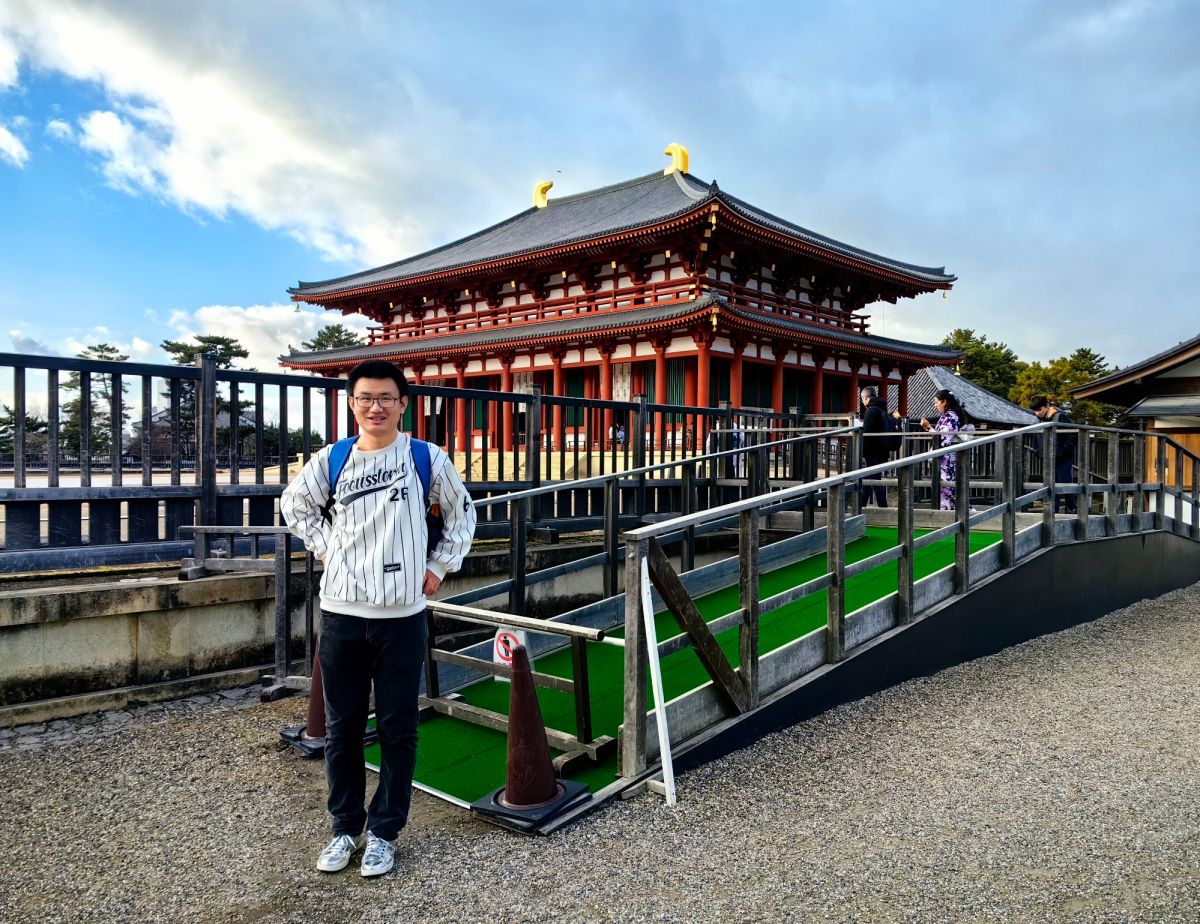
My first point of attraction in Nara was Kōfuku-ji, one of the city’s most famous and historic Buddhist temples. As I walked through the temple grounds, I was surrounded by beautiful traditional architecture and a peaceful atmosphere. Kōfuku-ji’s long history and impressive buildings gave me my first glimpse into Nara’s rich cultural and religious heritage. Kōfuku-ji has a long and fascinating history dating back to 669 AD. It was originally founded in Kyoto by Kagami no Ōkimi to pray for the recovery of her husband, Fujiwara no Kamatari, the founder of the powerful Fujiwara clan. In 710, when the capital was moved to Nara, the temple was relocated to the city and became one of the most important Buddhist temples in Japan.
我在奈良的第一处游览地便是是兴福寺。它是这座古都最著名、也最具历史底蕴的佛教寺院之一。走入寺院的境内,古朴典雅的传统建筑映入眼帘,四周弥漫着一种宁静而悠远的气息。兴福寺悠长的历史与恢弘的建筑,也成为我初次触摸奈良深厚文化与宗教传统的一扇窗口。其历史可以追溯至公元669年。最初,它并不在奈良,而是由日本飞鸟时代的著名女性和歌诗人镜王女(Kagami no Ōkimi)建立于京都,为祈求丈夫藤原镰足(Fujiwara no Kamatari)早日康复。藤原镰足后来成为强大的藤原氏始祖,而这座寺院也由此与日本历史上最具影响力的家族之一结下了深厚的渊源。公元710年,日本迁都奈良,兴福寺也随之迁至这座新都。在此后的岁月里,它逐渐成为日本最重要的佛教寺院之一。
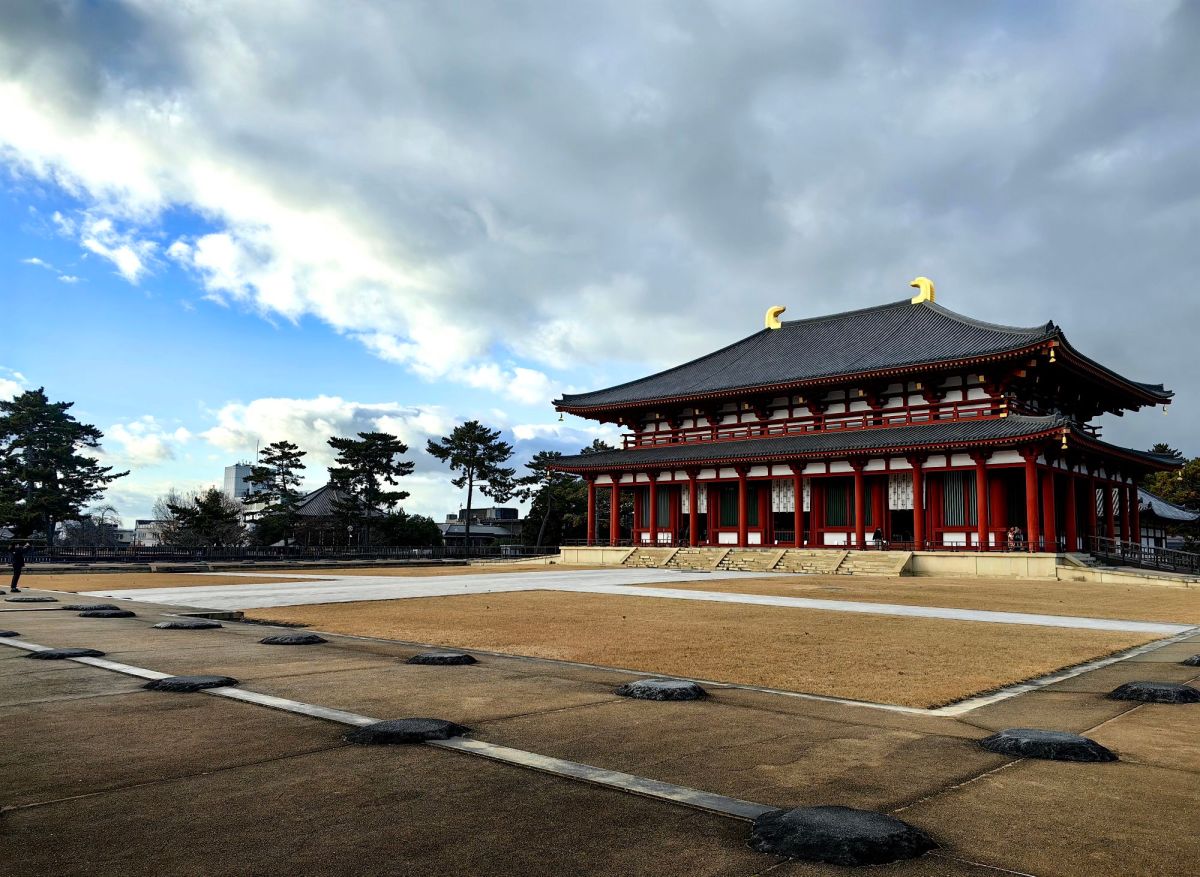
The Central Golden Hall (Chū-Kondō) stood at the heart of Kōfuku-ji, its vermilion columns and broad tiled roof giving the temple precinct a dignified and symmetrical appearance. Although the present hall is a modern reconstruction, its design follows the traditional character of the ancient temple, allowing the historic layout of Kōfuku-ji to emerge once again. Kōfuku-ji has endured repeated fires and destruction throughout its long history, and many of its buildings have been rebuilt over the centuries.
中金堂矗立于兴福寺的核心位置,朱红色的柱廊与宽阔的瓦屋顶相互映衬,使整个寺院显得庄严而端正。如今所见的中金堂虽已是现代重建之作,但其建筑风格依然遵循古寺传统,延续着昔日兴福寺的形制与神韵,使那段久远的历史在今日的奈良重新显现。兴福寺漫长的历史并非一帆风顺。千百年来,寺院曾屡遭火灾与战乱的毁坏,许多建筑也因此一次又一次地重建。
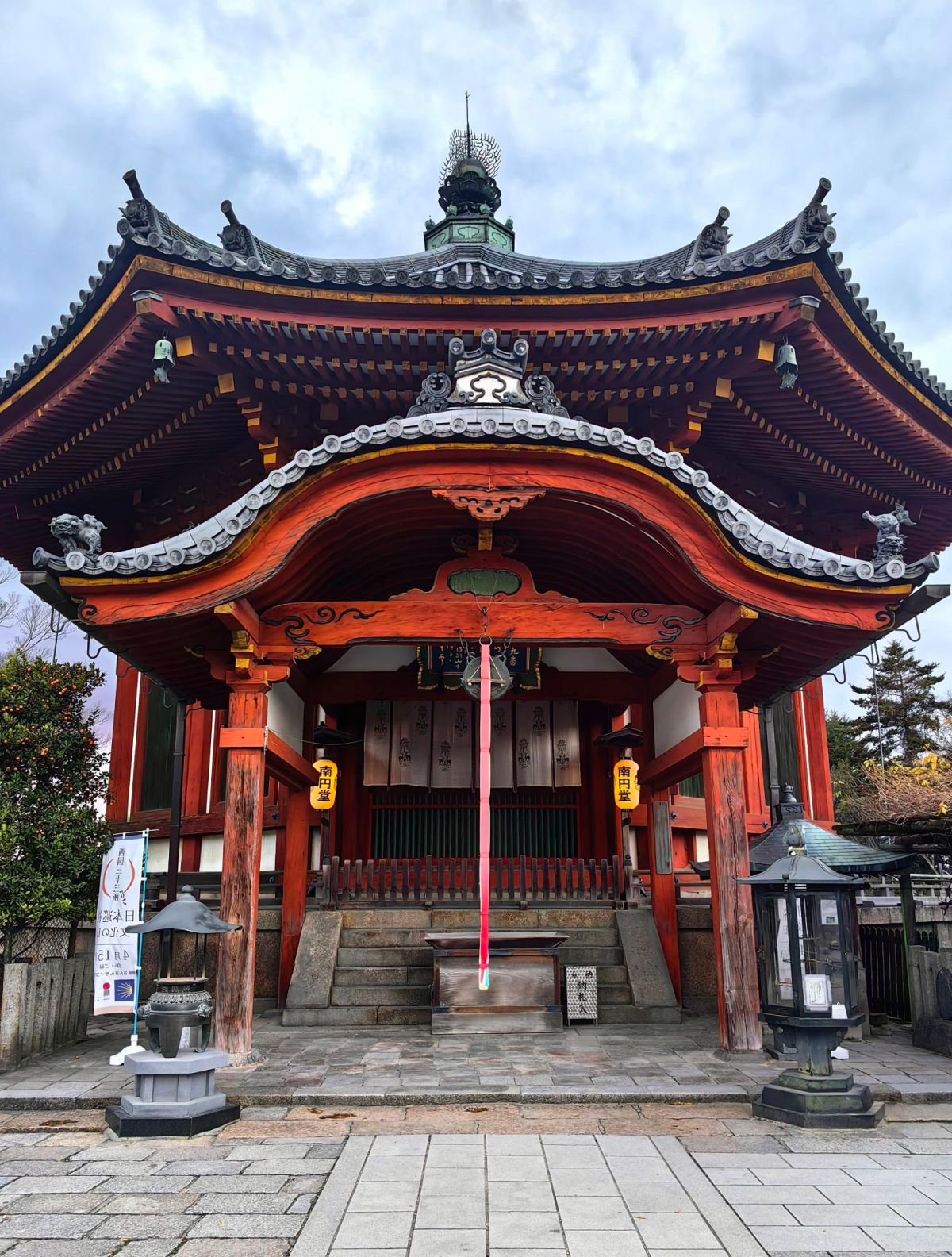
Nanen-dō is a small but historically significant Buddhist hall within Kōfuku-ji. It is especially famous for being the 9th temple on the Saigoku Kannon Pilgrimage, a pilgrimage route connecting 33 temples dedicated to Kannon, the Buddhist bodhisattva of compassion. Built in 813 by Fujiwara no Fuyutsugu, Nanen-dō was originally established as a place of prayer for the Fujiwara family. The present building dates from 1789, after the earlier structure was destroyed by fire. Its simple, octagonal design contrasts with the larger and more elaborate buildings elsewhere at Kōfuku-ji.
南丹堂是兴福寺境内一座规模不大,却有着深厚历史意义的佛堂。它最为人所知的身份,是西国三十三所观音灵场的第九番札所。这条绵延于日本古寺之间的朝圣之路,由三十三座供奉观音菩萨的寺院相连,而观音正是佛教中慈悲与救苦救难的象征。公元813年,藤原冬嗣创建南丹堂,最初作为藤原家族祈愿的场所。如今所见的建筑则建于1789年,此前的堂宇曾毁于火灾。与兴福寺其他宏伟而繁复的建筑相比,南丹堂显得格外朴素,八角形的堂宇线条简洁,规模也并不宏大。
The influence of Fujiwara family is deeply woven into the history of Nara. It rose to prominence in the 7th century through Nakatomi no Kamatari, who helped Emperor Tenji carry out the Taika Reforms. In recognition of his service, he was given the surname Fujiwara in 669. His descendants gradually became one of the most influential families at the imperial court. Their greatest political strength came not from becoming emperors themselves, but from controlling the imperial court through marriage. Fujiwara men frequently served as regents and senior court officials, while Fujiwara women married emperors and became mothers of future emperors. Through this network, the family could exercise enormous political influence while remaining behind the imperial throne. Kōfuku-ji became the testimony of this history, it was the family temple of the Fujiwara, functioning not only as a religious institution but also as an important symbol of the family’s status and power.
藤原氏的身影,深深交织在奈良漫长的历史之中。这个后来显赫一时的家族,其崛起可以追溯到七世纪的中臣镰足。他曾辅佐天智天皇推行“大化改新”,参与推动日本政治与社会秩序的重大变革。公元669年,为表彰他的功绩,天智天皇赐姓“藤原”,中臣镰足也由此成为藤原氏的始祖。此后,他的后代逐渐在成为日本皇室身旁最具影响力的家族。藤原氏最强大的政治力量,并不在于自己登上皇位,而在于始终站在皇权身后,通过婚姻将家族与皇室紧密相连。藤原氏的男性成员常常担任摄政、关白以及朝廷中的重要官职;而藤原氏的女性则频繁嫁入皇室,成为天皇的皇后,并生育未来的天皇。就这样,藤原氏无需亲自坐上皇位,却能够长期站在皇权身后,掌握朝廷政治的重要力量。而兴福寺,正是这段历史最鲜明的见证。它不仅是藤原氏的家族寺院,也是这个家族身份与权势的象征。
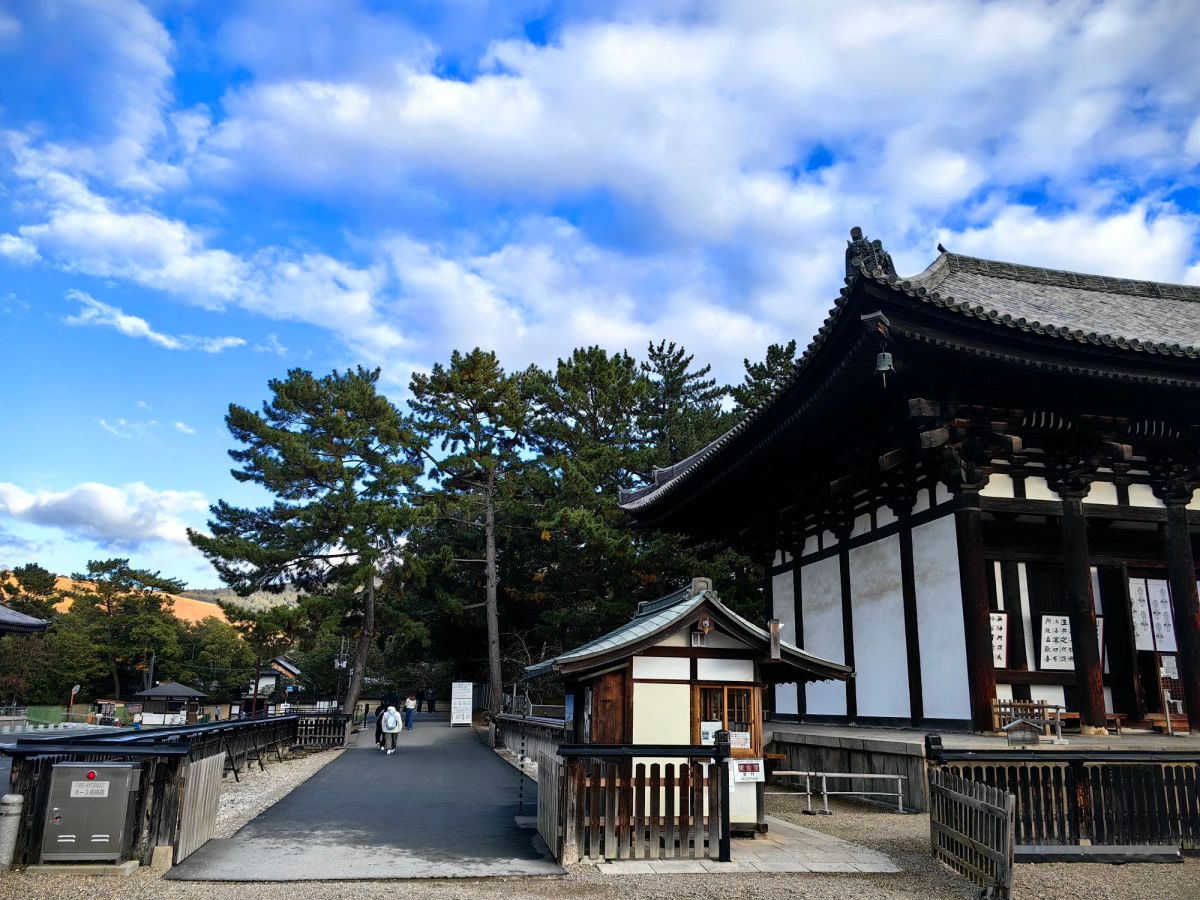
Tōkondō is called Eastern Golden Hall because it belongs to the group of Kon-dō (Golden Halls) that once formed the heart of the temple complex. Its elegant traditional architecture, with its dark wooden structure, copper bells and distinctive tiled roof, gives it a dignified and timeless appearance. It was originally built in 726 by Emperor Shōmu to pray for the recovery of his father, Emperor Genmei. The present building dates from 1415.
东金堂属于兴福寺昔日金堂建筑群的一部分。在古代金堂曾是寺院建筑群的核心,而东金堂则坐落于其东侧。如今走近殿堂,深色木结构、铜铃与独特的瓦顶交相映衬,古朴典雅的建筑线条赋予它一种庄严而恒久的气韵。东金堂最初建于公元726年,由圣武天皇为祈求父亲元正天皇早日康复而创建。而今天所见的东金堂,则重建于1415年。
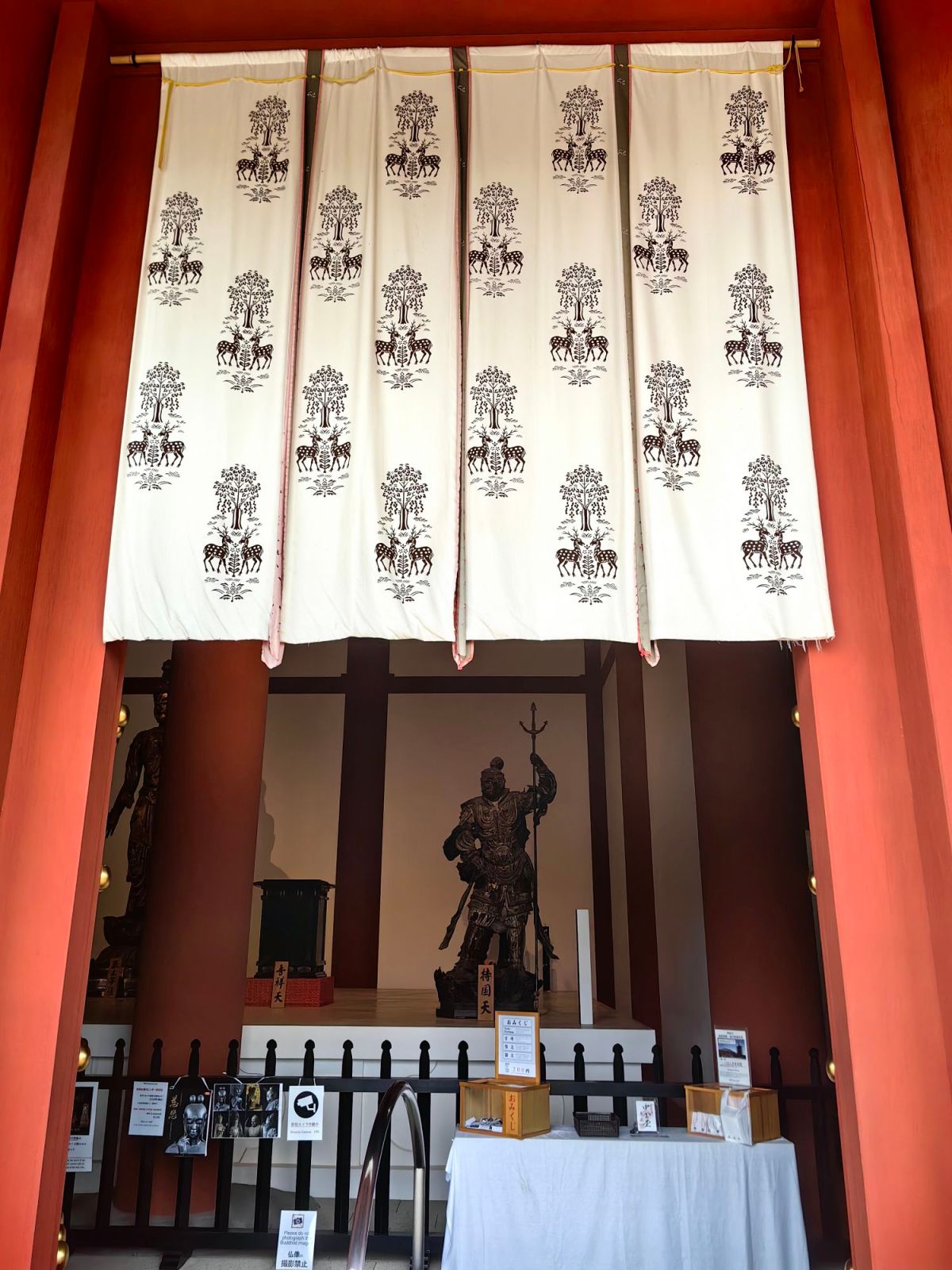
Inside, Tōkondō is particularly important for its collection of Buddhist statues and religious treasures which made me feel the religious atmosphere. Among them is a revered statue of Yakushi Nyorai, accompanied by other Buddhist figures. The hall provides a peaceful space to appreciate the artistic and spiritual traditions of medieval Japanese Buddhism. At the entrance, I noticed the hanging curtain with a particularly beautiful detail. The curtain features a traditional pattern of two deer under a tree, reflecting the strong connection between Nara and its sacred deer. Deer have long been regarded as sacred messengers of the gods, particularly because of their association with Kasuga Taisha. Seeing the deer motif on the curtain connects the Buddhist temple with the wider spiritual traditions of Nara.
走进东金堂,殿内的佛像与佛教珍藏,才真正让人感受到这座古堂深沉的宗教气息。其中,最受尊崇的是药师如来佛像,与其他佛教造像一同静静安坐于堂内。庄严的佛像、幽静的殿堂让这里成为感受日本中世佛教艺术与精神传统的一处宁静所在。而在入口处,我却被一处细节吸引了目光。垂挂在门前的帘幕上,绣着一幅十分雅致的图案:树下两只鹿相依而立。鹿是奈良最具象征性的存在。自古以来,鹿便被视为神明的使者,尤其因为它们与春日大社之间悠久而神圣的联系。于是,当我看到鹿纹时,便觉得它仿佛将东金堂与奈良更广阔的精神世界悄然连接起来。
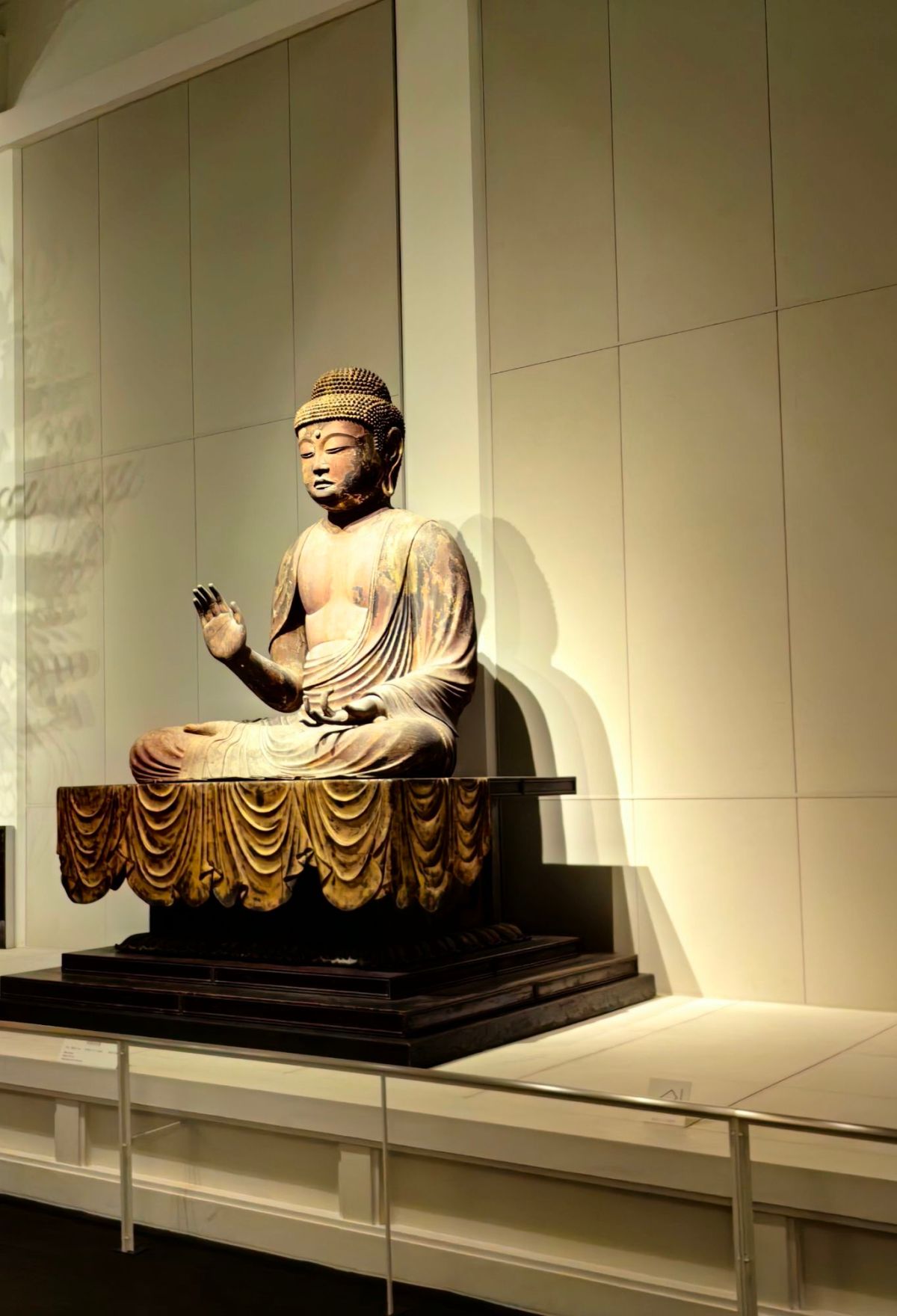
Kōfuku-ji National Treasure Museum is one of the highlights of a visit to Kōfuku-ji, especially for anyone interested in Japanese Buddhist art and history. The museum houses an impressive collection of Buddhist statues, paintings, and other cultural treasures that were preserved by the temple over many centuries. The artworks and statues made the history of the temple feel more personal and tangible.
兴福寺国宝馆,是参观兴福寺时不可错过的一处所在。对于喜爱日本佛教艺术与历史的人而言,这里尤其值得停留。馆内珍藏着兴福寺历经数百年保存下来的佛教造像、绘画以及其他珍贵文化遗产。走在馆中,那些沉默的佛像与古老的艺术作品,让原本遥远的历史忽然变得具体而亲近。
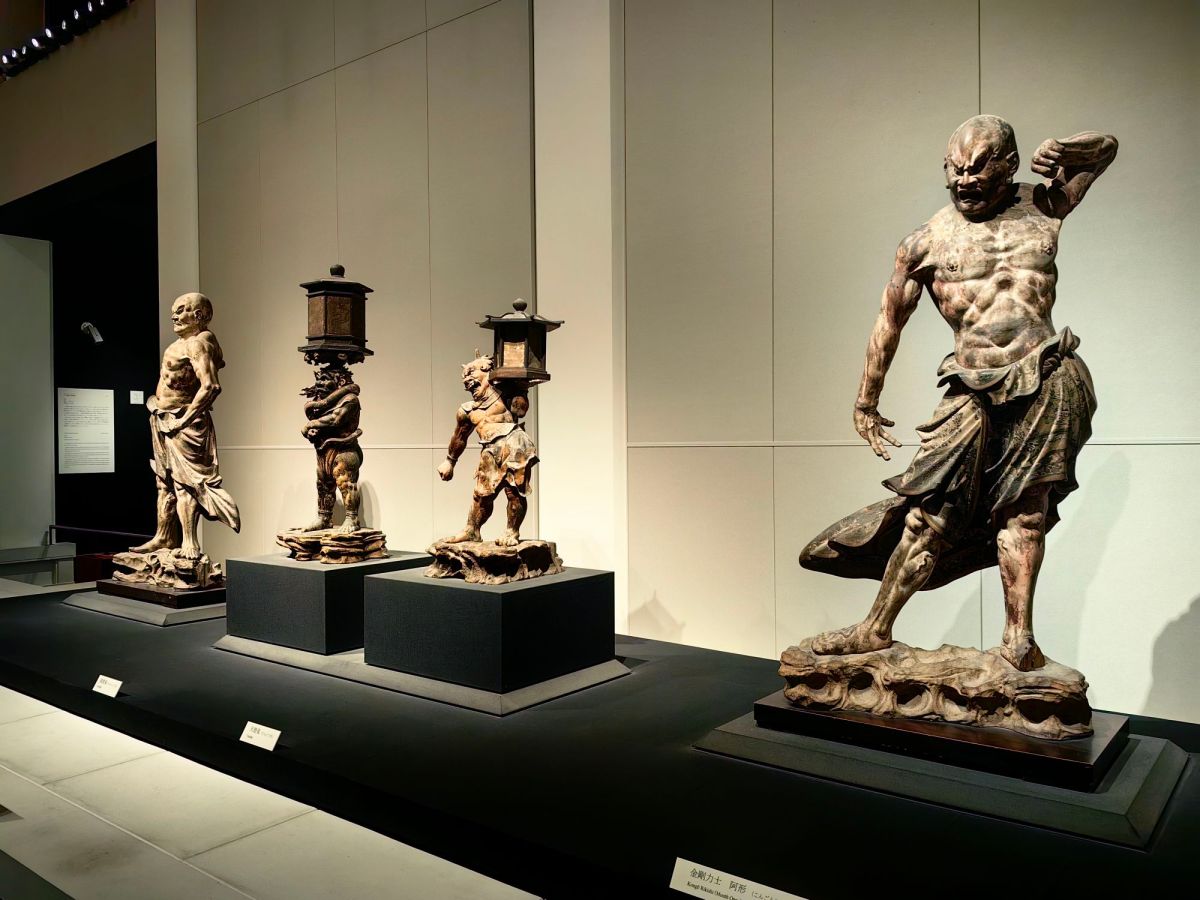
The Kongō Rikishi are among the temple’s remarkable Buddhist guardian sculptures and are designated National Treasures of Japan. They represent powerful protective deities who guard Buddhist teachings and sacred spaces from evil and harm. The two guardians are traditionally depicted as muscular, dynamic figures with fierce expressions. Their dramatic poses, bulging muscles, flowing robes, and intense facial expressions create a striking contrast with the calm and compassionate appearance of Buddha and bodhisattva statues. What makes the Kongō Rikishi especially impressive is the exceptional craftsmanship of their wooden sculpture. The sculptors captured movement and emotion with remarkable detail, from the tension in the bodies to the expressive faces and flowing garments.
金刚力士,是兴福寺众多佛教护法雕像中最令人震撼的作品之一,也被列为日本国宝。他们是守护佛法与寺院圣域的护法神,以强大的力量阻挡邪恶与灾厄。传统的金刚力士总是一对出现,他们身躯魁梧,肌肉隆起,脸上带着令人敬畏的威严与怒容。与佛陀和菩萨造像所呈现的宁静、慈悲不同,他们仿佛将力量凝聚在身体的每一处: 紧绷的肌肉、跃动的姿态、翻飞的衣袍,以及极具张力的面部表情,共同构成了一种强烈而震撼的视觉力量。真正令人惊叹的,是这些木雕所展现出的精湛技艺。身体的力量、面部细微而鲜明的情绪、衣袍随动作而翻卷的褶皱,都被一一刻画出来。
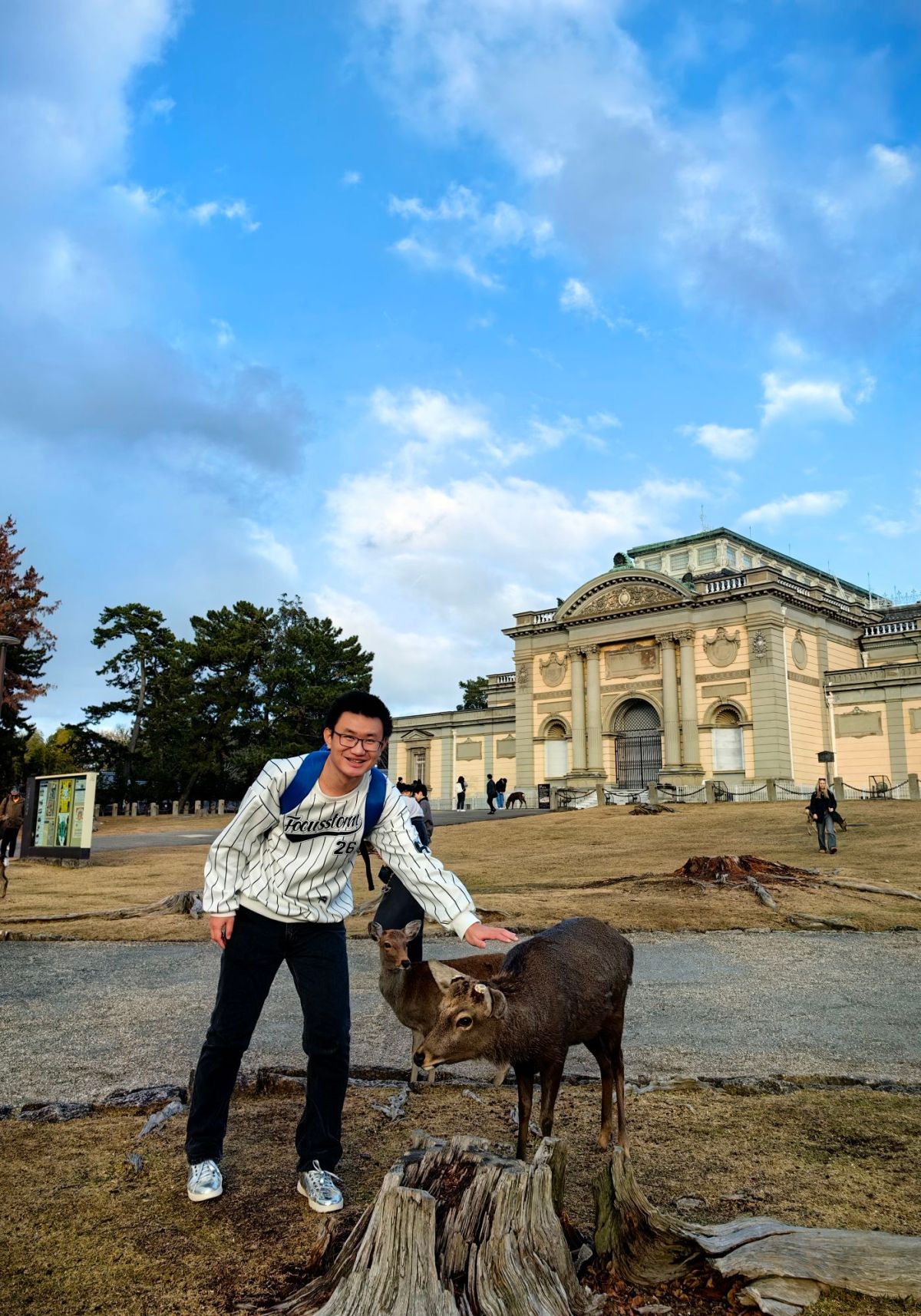
Nara left a deep impression on me, not only because of its rich history and beautiful temples, but also because of its peaceful natural environment and abundance of deer. As I walked through the city, especially around Nara Park, the presence of deer made the experience feel unique and almost magical. They wandered freely among the trees, pathways, and historic temples. Here, the deer seemed to be part of everyday life. They would cross the roads freely, and cars would patiently stop to let them pass. I was amazed by how comfortable they were around people and close to people. Some of the deer came close enough for me to touch their soft fur. They showed little fear of human beings and simply stood there quietly, occasionally lifting their heads to glance at me, before continuing on their way as if nothing had happened.
奈良留给我的深刻印象,并不只是千年的历史与古老而美丽的寺院,更来自这座城市宁静的自然环境,以及随处可见的鹿群。漫步在奈良的街道上,尤其是走进奈良公园之后,鹿的身影几乎无处不在,让奈良显得格外独特,甚至带着几分梦境般的气息。它们悠然穿行于树林、石径与古寺之间,仿佛从来就是这片土地的一部分。它们会毫不在意地穿过马路,车辆也会耐心地停下来,等候它们从车前走过。看着这一幕,我不禁惊叹于人与鹿之间那份自然的默契以及它们对人的亲近。偶尔有鹿慢慢走到我身边,近得几乎可以伸手触摸到它们柔软的毛发,它们真的并不畏惧人类,只是安静地站在那里,偶尔抬起头看我一眼,然后又若无其事地继续向前走去。
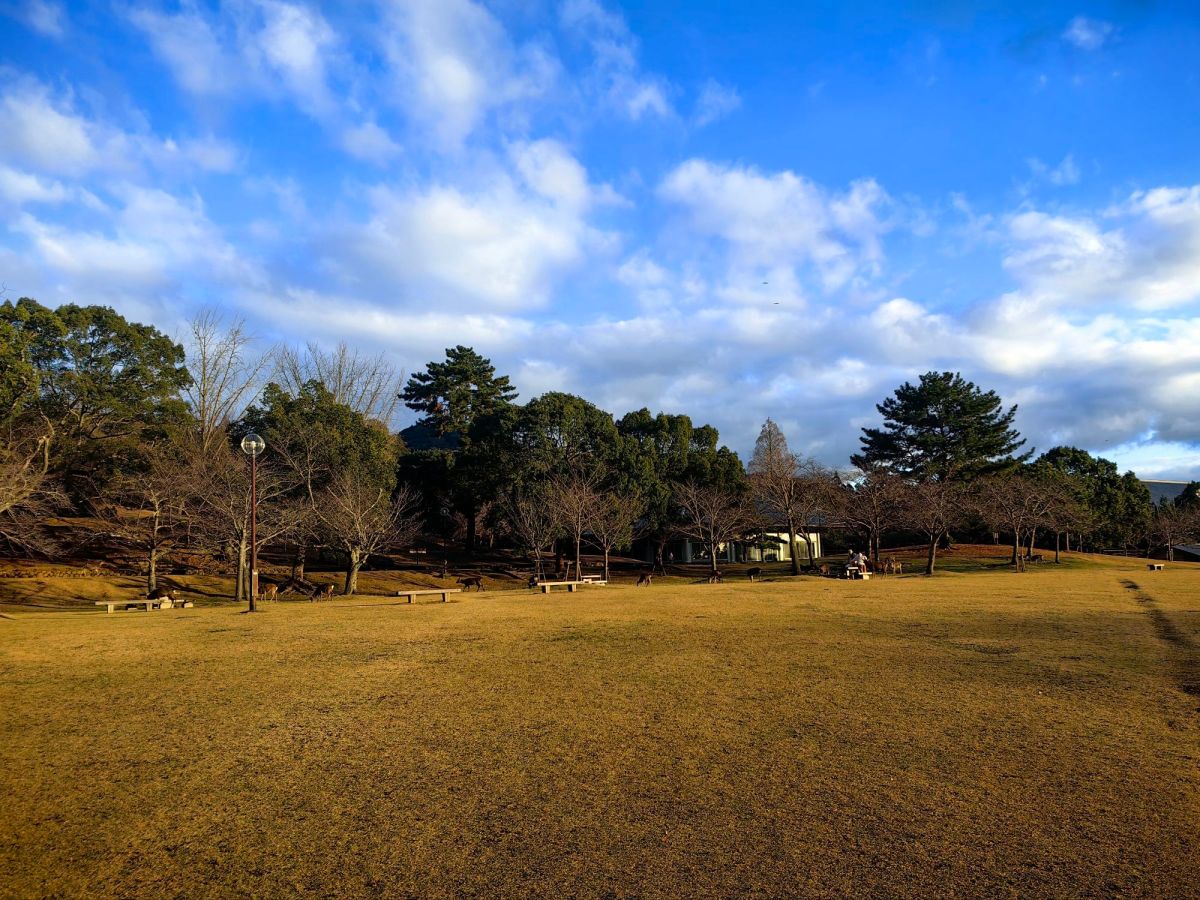
The calm surroundings, fresh greenery, and gentle presence of the deer offered a refreshing contrast to the busy atmosphere of Osaka. I slowed down and felt the city’s clamor gradually receded behind me, leaving only the shadows of trees, the gentle breeze, and the light, graceful footsteps of the deer. The experience made my visit feel more than just a sightseeing trip. It was a chance to experience the harmony between nature and history that makes Nara so special.
奈良的宁静环境、清新的绿意,以及鹿群温和而从容的身影,与大阪繁忙喧闹的城市气息形成了鲜明的对比。走在奈良公园里,我仿佛也随着周围的景色慢了下来,城市的喧嚣渐渐退到身后,只剩下树影、微风,以及鹿群轻盈的脚步。这次奈良之行对我而言,已经不再只是一次简单的观光。也正是在这里,我如此真切地感受到自然与历史之间那种安静而和谐的共存。或许这正是奈良最令人难忘的地方。
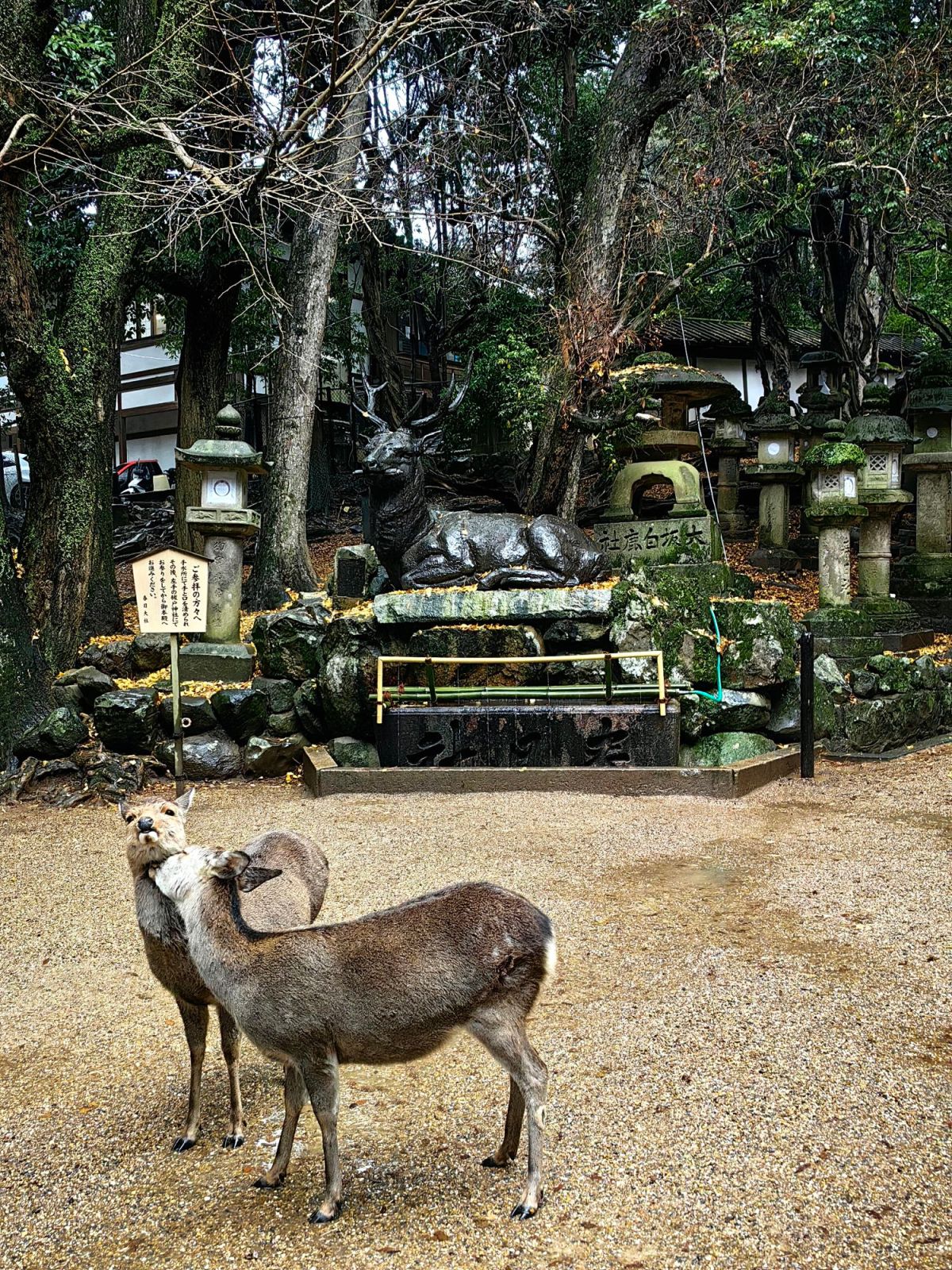
Nara has so many deer because they have been protected there for more than 1,300 years, and they are deeply connected to the city’s religious history. The story goes back to Kasuga Taisha, where deer were traditionally regarded as sacred messengers of the gods. According to legend, the deity Takemikazuchi-no-Mikoto arrived at Mount Mikasa on a white deer. Because of this, deer in the Nara area came to be treated as sacred animals and were protected rather than hunted. Over the centuries, this tradition continued. The deer gradually became an important part of Nara’s cultural identity. Today, the deer roaming freely around Nara Park, Kasuga Taisha, and the surrounding temple grounds. They have become accustomed to human presence, although they remain wild animals, rather than domesticated pets.
奈良之所以拥有如此众多的鹿,与一段延续了一千三百多年的历史有关。鹿与这座城市之间的联系深深植根于奈良古老的宗教传统之中。故事要从春日大社说起。在古老的信仰里,鹿被视为神明的使者。传说中,神祇建御雷(Takemikazuchi-no-Mikoto)骑着一头白鹿来到御笠山访问人间,自此,鹿便被赋予了神圣的意义。奈良一带的鹿因此受到保护,人们不再将它们视为可以随意捕猎的野生动物,而是将其视作神圣的存在加以守护。这样的传统延续了漫长的岁月。千百年来,鹿渐渐融入奈良的城市生活,成为这座古都最鲜明的文化象征。如今,鹿依然自由地漫步在奈良公园、春日大社以及周围的寺院境内。经过长久的相处,它们早已习惯了人类的存在,却依然保持着野生动物的本性。
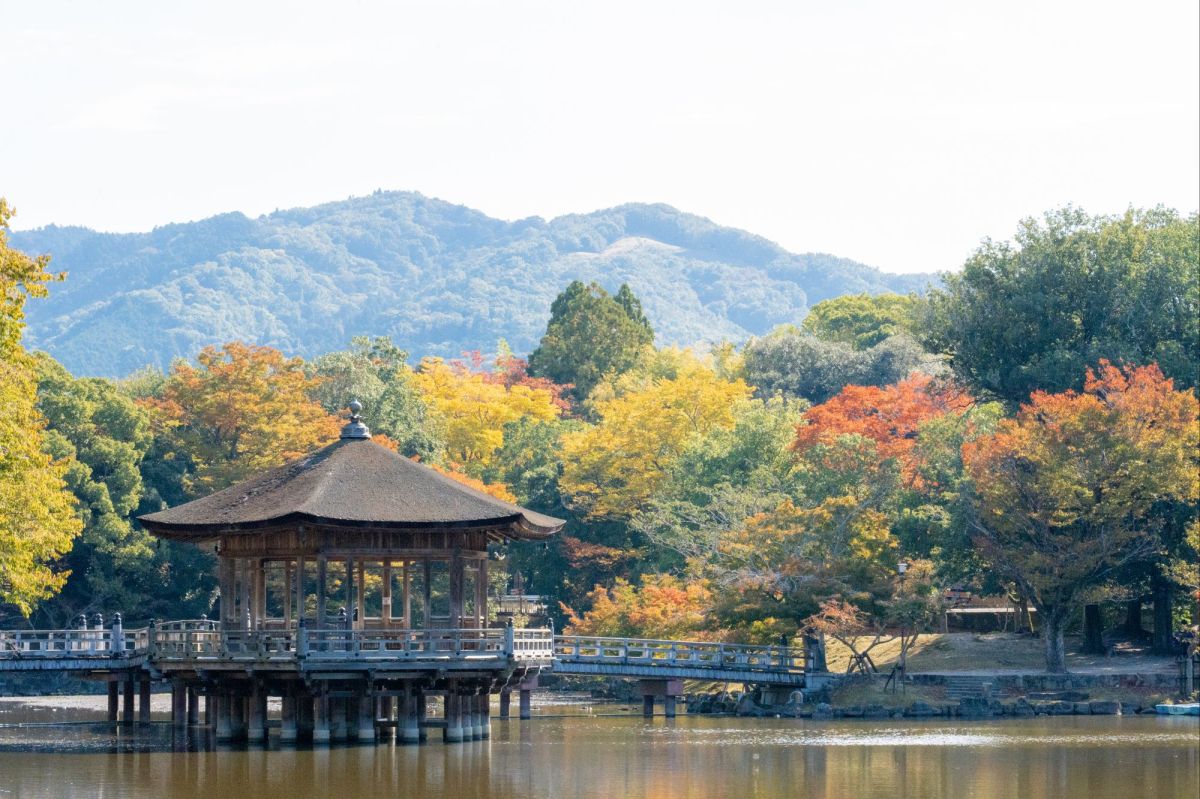
The Ukimido Pavilion is one of the most tranquil and picturesque places in the south of Nara Park.The present pavilion was constructed in 1916 and has a distinctive hexagonal shape with a traditional cypress-bark roof.The surroundings are just as beautiful as the pavilion itself. The pavilion seemed to float on the Sagiike Pond which is enclosed by trees and greenery. The area around the pond forms part of Asajigahara, a quiet, gently hilly section of Nara Park near Kasuga Taisha. I enjoyed the amazing wide landscapes of Nara Park. The vast green forests were filled with deer wandering freely among the trees and along the quiet pathways. In the distance, Mount Kasuga provided a beautiful natural backdrop.
浮见堂,是奈良公园南部最宁静也最富诗意的所在之一。如今所见的浮见堂建于1916年,呈独特的六角形,屋顶覆盖着传统的桧皮葺。它本身已经足够雅致,而真正让人难忘的,却是环绕着它的景色。浮见堂静静地立在鹭池之上,四周被葱郁的树木与绿意环抱。鹭池周围的这一片区域属于浅茅原,是奈良公园南部一处安静而微微起伏的山林地带,靠近春日大社。我很享受这里开阔的景色,大片森林铺展在眼前,鹿群自由地穿行于树影与小径之间。远处,春日山静静地伫立在天际,成为这片绿色世界天然的背景。
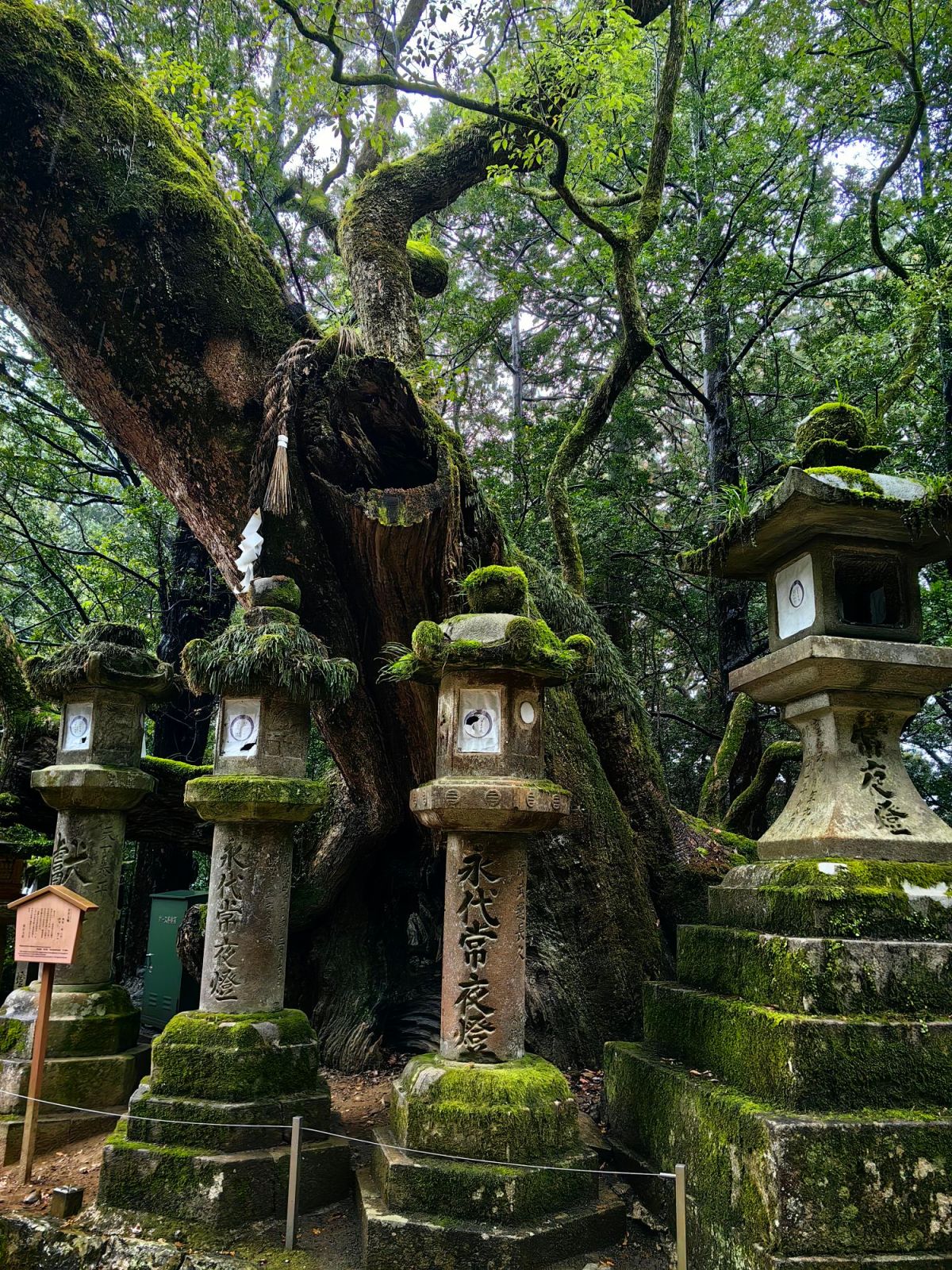
After walking along a stone-paved path lined with rows of perpetual stone lanterns(Eitai Jōyatō), I arrived at the famous Kasuga Taisha in the south of Nara. The path itself was an unforgettable part of the journey. Hundreds of stone lanterns stood quietly among the trees, creating a mysterious and sacred atmosphere as they guided me deeper into the forest. These stone lanterns, known as tōrō, were donated by worshippers over the centuries as offerings to the shrine. Many are covered with green moss, weathered by time, and blend beautifully into the surrounding forest. Seeing so many lanterns standing along both sides of the path made me feel as though I were travelling through a passage connecting the present with Nara’s ancient past.
沿着一条铺着石板的道路缓缓前行,两旁排列着一盏盏永夜灯笼,我最终抵达了奈良南部著名的春日大社。对我而言,这条通往神社的道路本身,便已经成为旅途中难以忘怀的一段风景。数百盏石灯笼静静伫立在树林之间,营造出一种神秘而庄严的气息,引领着我步步深入。这些石灯笼是信徒们在漫长岁月中捐献给神社的供奉之物。经过数百年的风雨,它们有的已经布满青苔,石面也留下了岁月侵蚀的痕迹,却因此更加自然地融入周围的森林。当我看见如此众多的灯笼沿着道路两侧静静排列时,就像是游历了一条连接奈良前世今生的时间通道。
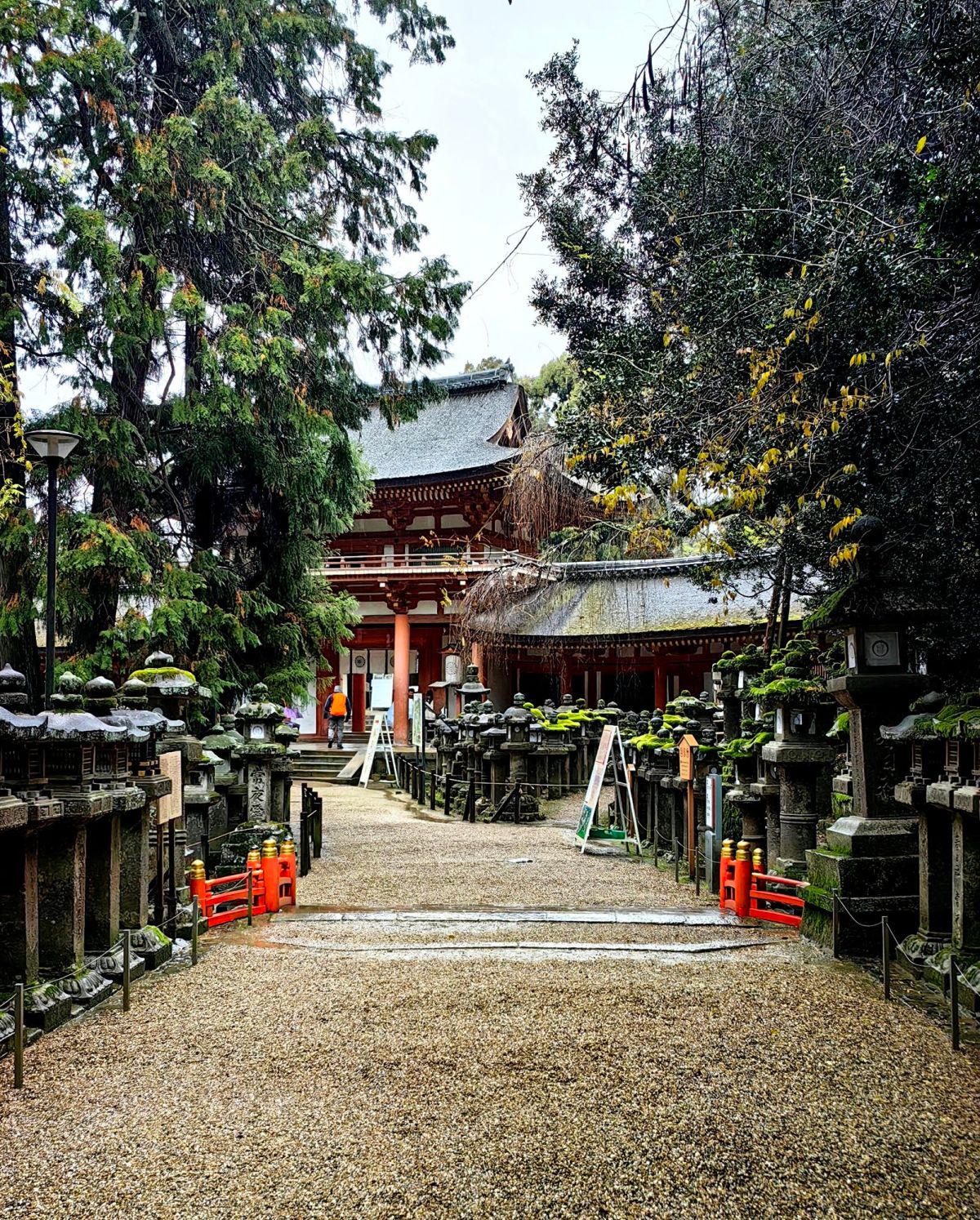
The red main gate of Kasuga Taisha was one of the most striking sights along my journey. Rising about 12 meters high, it is the largest gate of the shrine and serves as the important entrance to the inner shrine precinct. As I approached the red gate, the weathered stone lanterns seemed to form a natural procession leading me toward the sacred grounds. The contrast between the bright vermillion gate, grey stone lanterns, and lush green trees created an unforgettable scene.
春日大社的朱红大门,是这一路上最令我印象深刻的景象之一。这座大门高约十二米,是春日大社规模最大的门,也是通往神社内殿区域的重要入口。当我一步步走近这座朱门时,两旁那些饱经岁月的石灯笼,仿佛自然而然地排列成队列,引领着我向神圣的境域走去。它们斑驳的石面与青苔,和朱门鲜明的色彩形成的对照令人难忘。
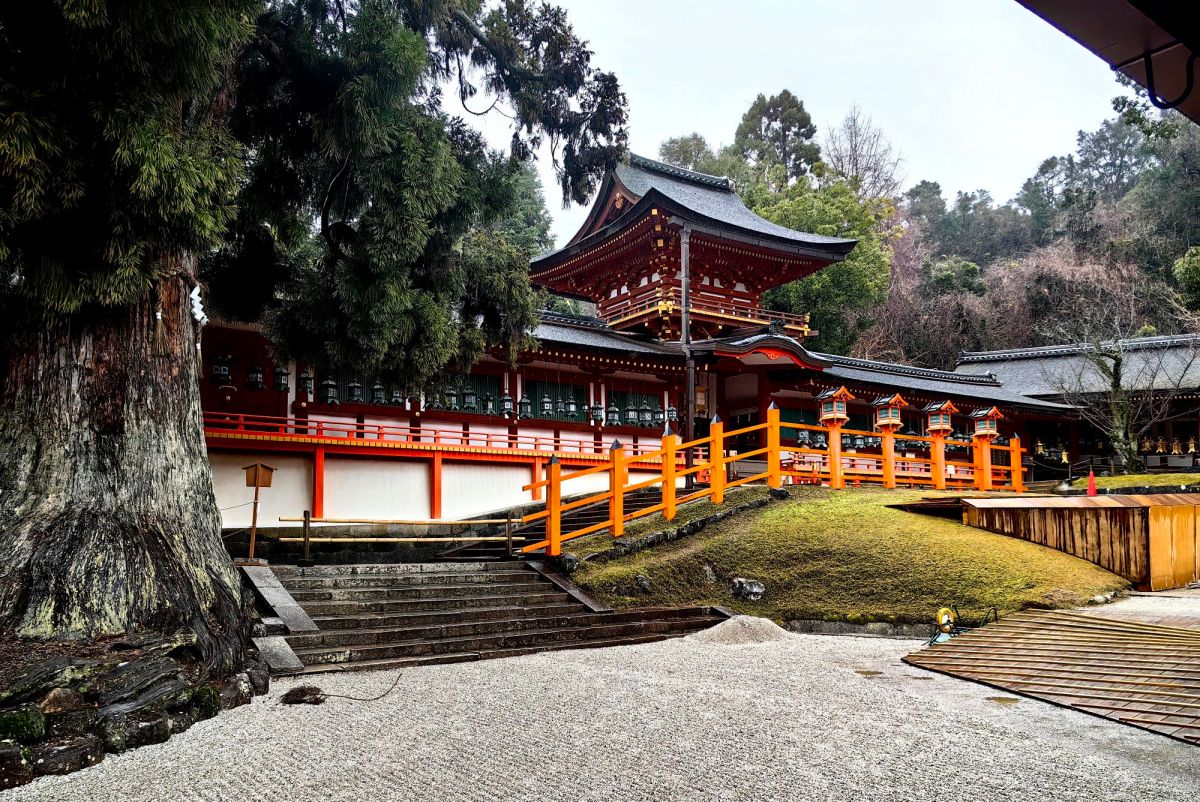
Kasuga Taisha is the most famous and beautiful Shinto shrines in Nara. It was officially established in 768, when the Fujiwara family established the shrine to enshrine their ancestral and tutelary deities and to protect the ancient capital. The Main Sanctuary is the most sacred and architecturally distinctive part of the shrine. Its architecture style ‘the Kasuga-zukuri ‘ is a distinctive form of Japanese Shinto architecture. Each small shrine has a steeply curved gabled roof covered with layers of Japanese cypress bark, with the entrance positioned beneath the gable. A small projecting roof shelters the entrance and staircase. Surrounding the sanctuary is the Oro which is an open veranda whose shape resembles a bird spreading its wings. The surrounding corridors are decorated with numerous hanging ancient bronze lanterns.
春日大社,是奈良最著名、也最具魅力的神道神社。公元768年,藤原氏正式创建了这座神社,将家族世代信奉的祖神与氏神奉祀于此,同时也寄托着守护这座古都的愿望。神社最神圣、也最具建筑特色的部分,是内院中的本殿。这里采用独具一格的“春日造”(Kasuga-zukuri),是日本神道建筑中极具代表性的形式之一。一座座小巧的本殿排列其中,屋顶高高隆起,呈陡峭而优美的切妻形,覆盖着层层铺叠的日本桧皮。正门设在山墙之下,门前又伸出一方小巧的屋檐,为入口与阶梯遮挡风雨。环绕本殿的是“御廊”(Oro),一圈开放式的回廊舒展开来,整体形态宛如一只展开双翼的鸟。回廊之上悬挂着一盏盏古朴的青铜灯笼。
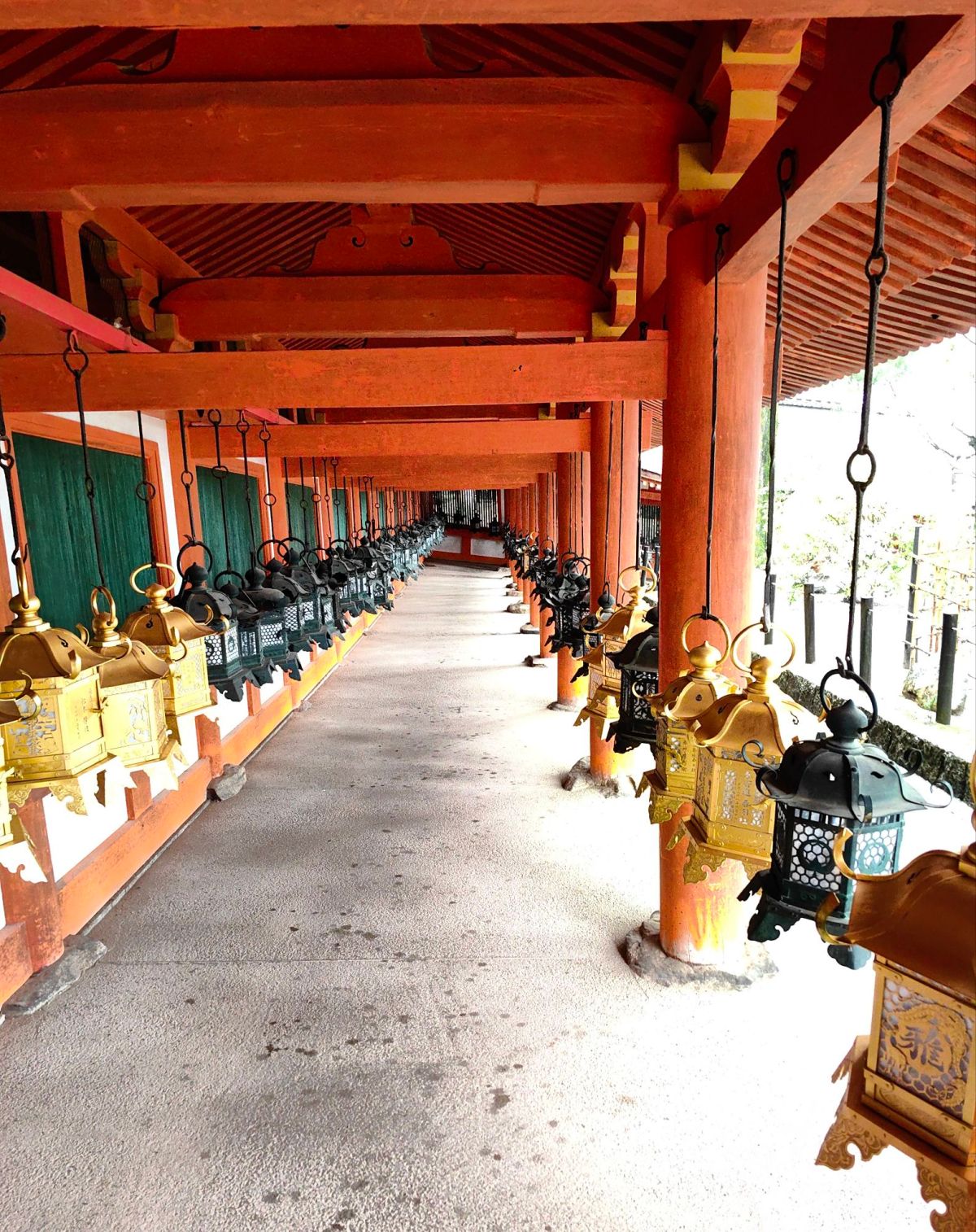
Along the corridor of Kasuga Taisha, there are roughly 1,000 bronze hanging lanterns, called tsuri-dōrō. They were donated by worshippers as offerings to the Shinto deities, representing their prayers, gratitude, and wishes. They were like a physical expression of a person’s devotion. The grey or greenish-black color comes largely from the natural patina that develops on bronze over time. For me, walking beneath the long rows of bronze lanterns was almost like passing through a corridor of thousand prayers.
沿着春日大社的回廊行走,可以看到大约一千盏悬挂的青铜吊灯笼。它们并非单纯的装饰,而是历代信徒献给神明的供物,寄托着人们的祈愿、感恩与心愿。每一盏灯笼,仿佛都承载着一个人的信仰。岁月在这些青铜灯笼上留下了自己的痕迹。如今所见的灰色与青黑色,很大程度上来自青铜经过漫长时间后自然形成的铜绿。对我而言,在一排排青铜灯笼之下穿行如同穿过一条由千百人的祈愿铺成的长廊。
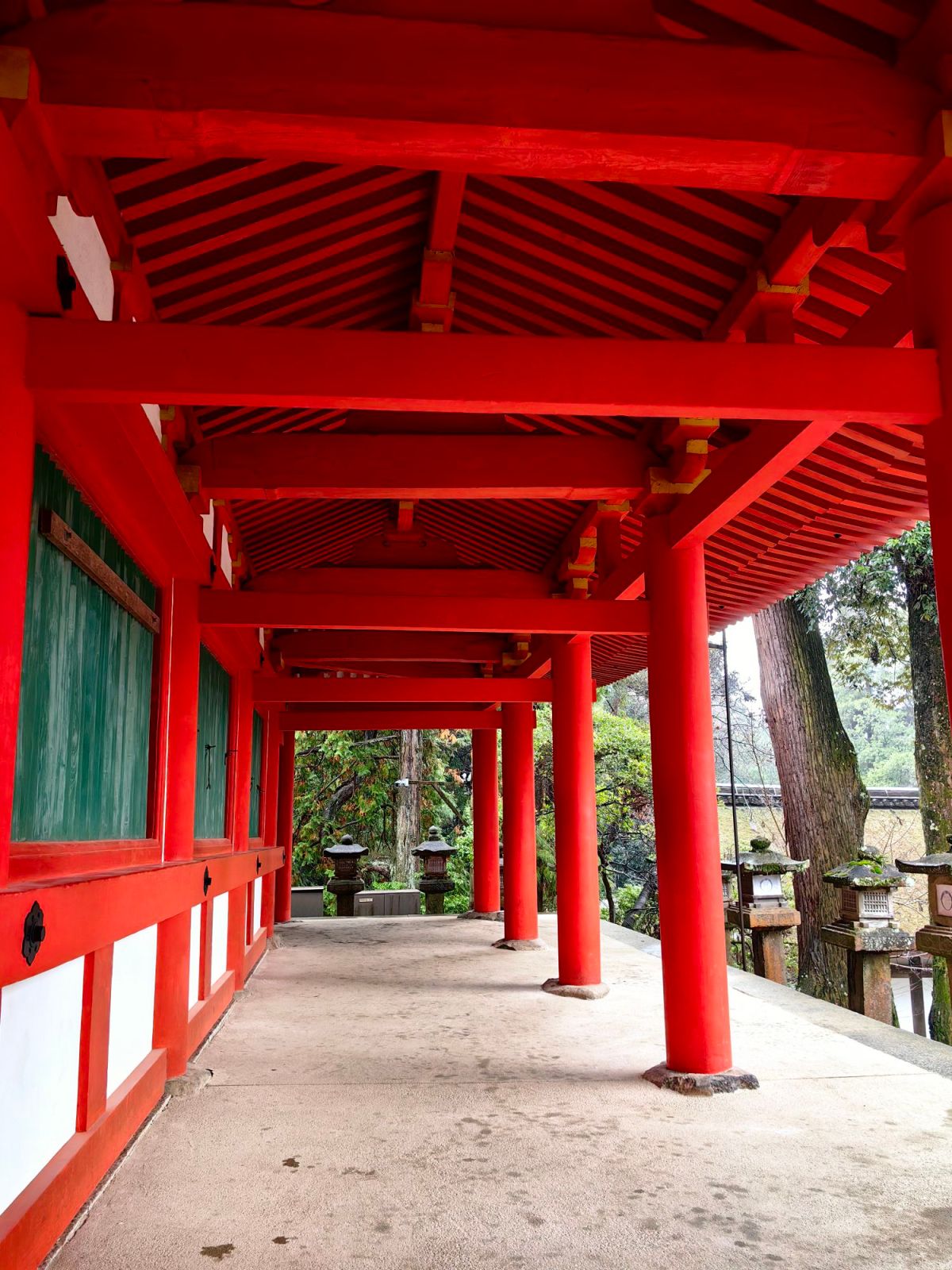
The main sanctuary is famous for its vivid vermilion columns in the long corridor. As the corridor receded into the distance, the repeating columns and lanterns created a graceful rhythm, drawing my eyes deeper into the far end. The brilliant red of the wood, the muted bronze of the lanterns, and the shadowy forest seemed to bring me back to the passing centuries.
春日大社的本殿以长长的回廊中鲜艳的朱红色柱子而闻名。随着回廊向远处延伸,一根根排列整齐的朱红立柱与悬挂其间的灯笼交相呼应,也将我的目光一路引向回廊的深处。鲜亮的朱红木柱、沉静古朴的青铜灯笼,以及回廊之外幽暗深邃的森林仿佛共同构成了一幅穿越时空的画面。
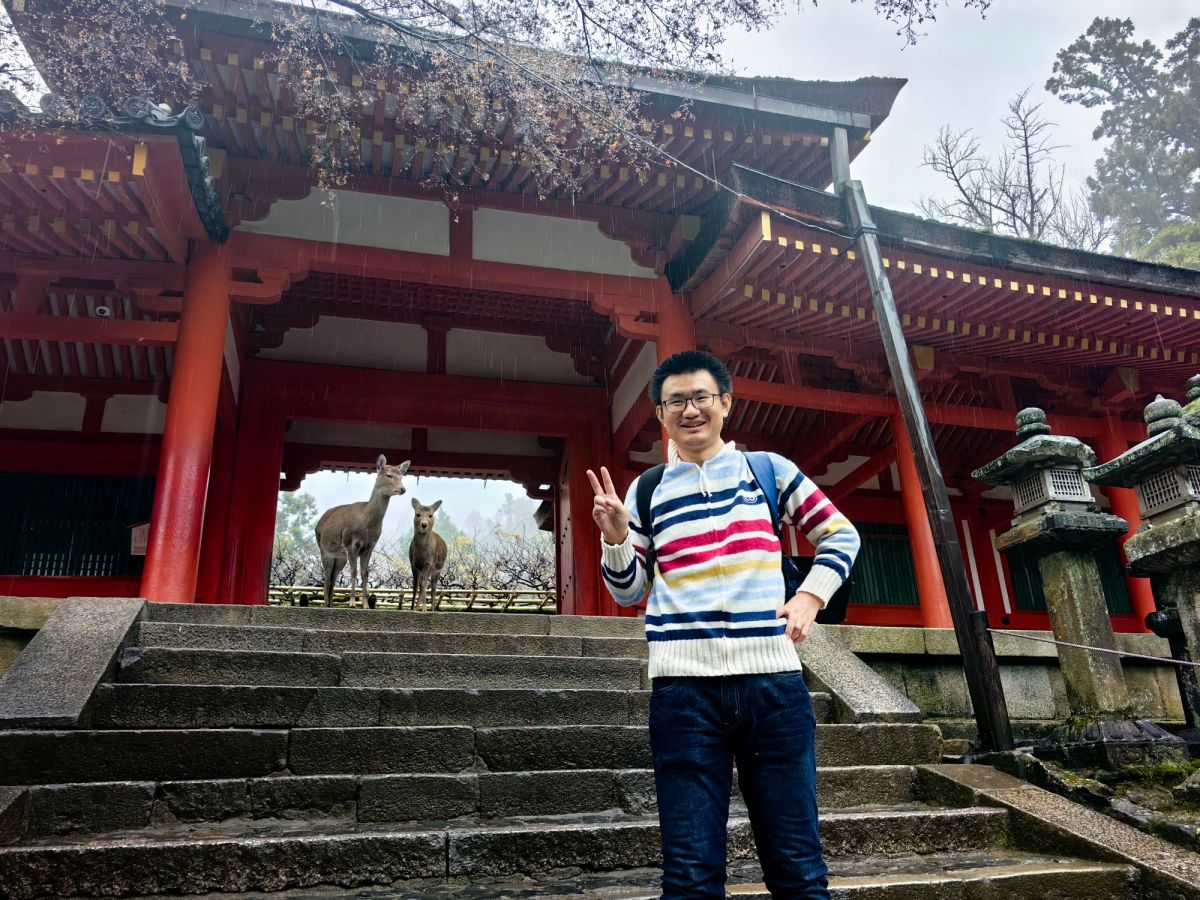
At the side door of the sanctuary, I unexpectedly came upon two deer standing quietly together. They stood there and turned their heads toward me, watching with gentle curiosity, as though wondering what had brought this stranger into their ancient forest. For a moment, we simply stood there looking at one another. Their quiet presence made the shrine feel as if the sacred and the natural seemed to exist side by side.
在神社本殿的一侧门旁,我意外遇见了两只并肩静立的鹿。它们安静地站在那里,忽然转过头来看着我,眼神里带着温和而好奇的神情,仿佛也在打量这个不知从何处闯入古老森林的陌生人。那一刻,我们只是静静地注视着彼此。由衷地感受到一种奇妙的和谐。
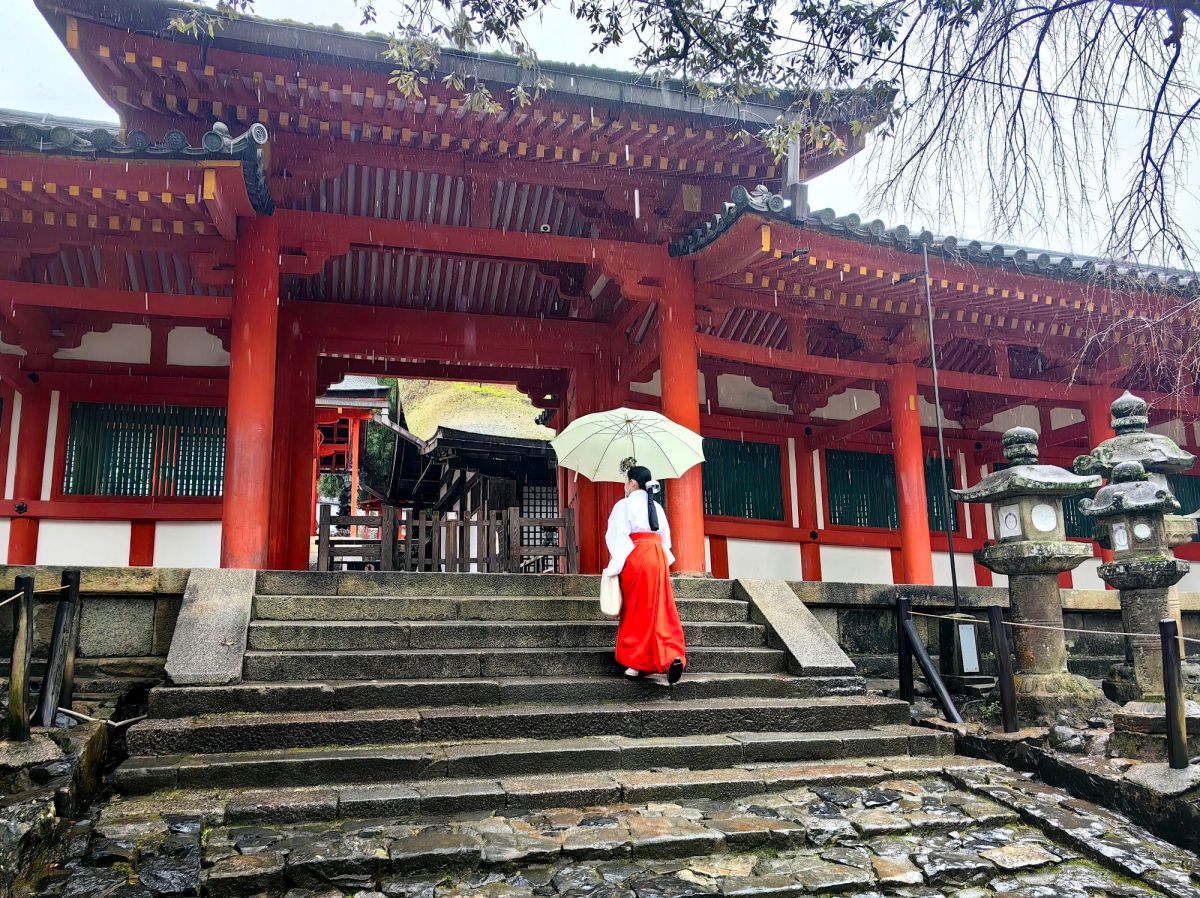
Before I left, a gentle rain fell over Kasuga Taisha, veiling the ancient forest in a soft mist and lending the shrine an almost otherworldly stillness. The vivid vermilion columns glistened with rain, their colors deepening against the moss-covered trees. Beneath a simple umbrella, a shrine maiden appeared in her traditional white and vermilion robes, walking quietly through the rain. For a fleeting moment, the scene felt suspended between past and present. The ancient forest, the sacred shrine, the falling rain, and the solitary figure moving through the vermilion corridor seem to allow a fragment of old Nara to quietly reappear before my eyes.
临别之前,一场细雨轻轻落在春日大社。雨雾笼罩了古老的森林,为四周蒙上一层朦胧的薄纱,也让整座神社陷入一种近乎超现实的寂静。鲜艳的朱红色柱子沾满雨水,在湿润的空气中微微闪烁;与覆满青苔的树木相映之下,那抹朱红显得更加深沉而浓烈。就在这时,一位巫女撑着一把素雅的雨伞,身着传统的白衣与朱红色服饰,静静地从雨中走来。那短暂的一刻,过去与现在交叠在一起。古老的森林、神圣的大社、从天而降的细雨,以及那个独自穿行于朱红回廊中的身影,共同构成了一幅不属于今日的画面,仿佛旧日的平城京重新浮现在我的眼前。
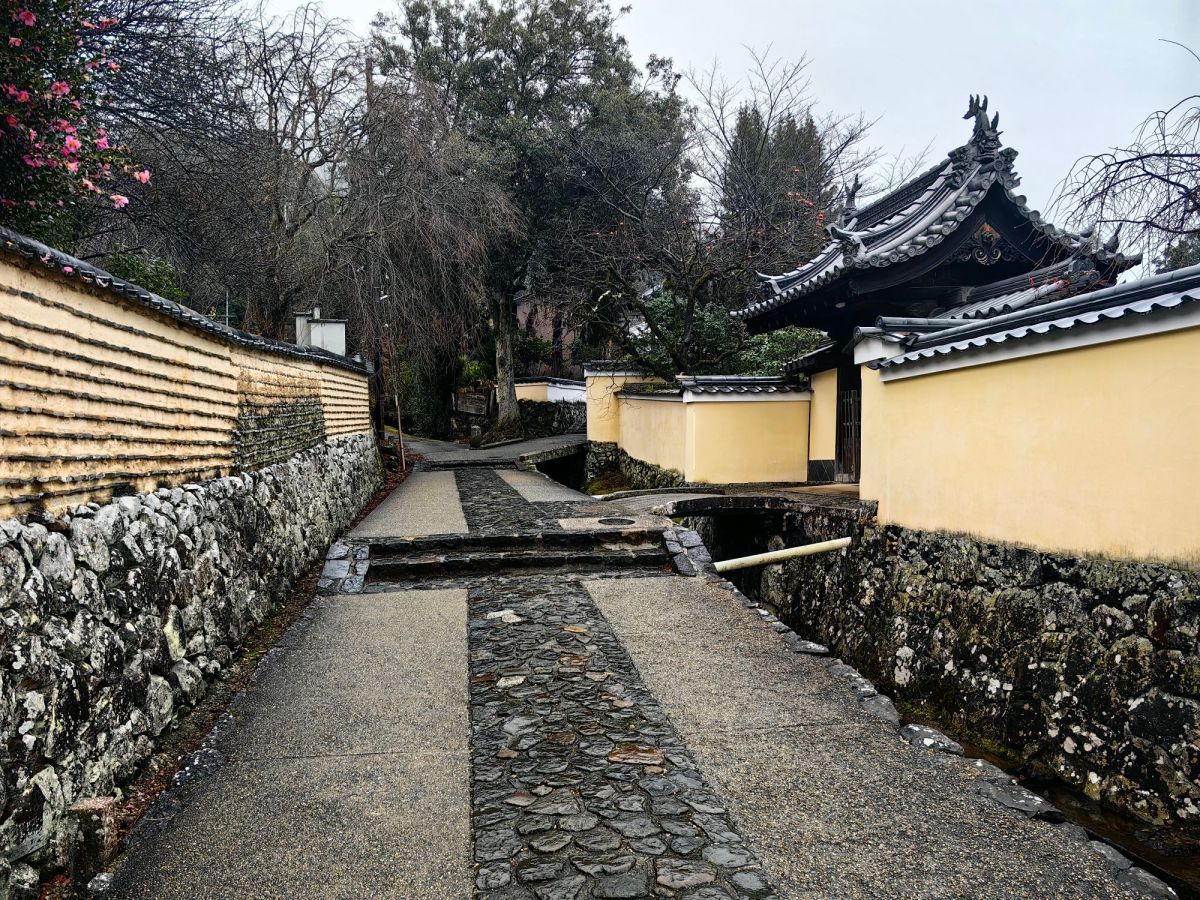
Nara is a place where the passage of time can still be felt, not only in its ancient temples and shrines, but also in the quiet streets that lie beyond the well-trodden paths. In the northern part of the city, narrow stone-paved lanes wind between old houses, many of them sheltered beneath deep, gracefully curved eaves reminiscent of the architectural traditions brought from Tang Dynasty China more than a thousand years ago. Along the walls painted in muted yellow and white, small streams flow quietly beside the streets, their clear water slipping past moss-covered stones as it has done for generations.
奈良是一座仍然能够让人感受到时间流逝的城市。时间不仅留存在那些古老的寺院与神社之中,也藏在远离游人喧嚣的小巷深处。城市北部,狭窄的石板小路在一栋栋老屋之间蜿蜒穿行。许多房屋依然保留着深深的、优美弧度的屋檐,让人不禁想起一千多年前从中国唐代传入日本的建筑传统。沿着淡黄色与白色的墙壁缓缓走去,街边还有细小的水渠静静流淌。清澈的水流从长满青苔的石块旁悄然经过,流淌了数代人的岁月。
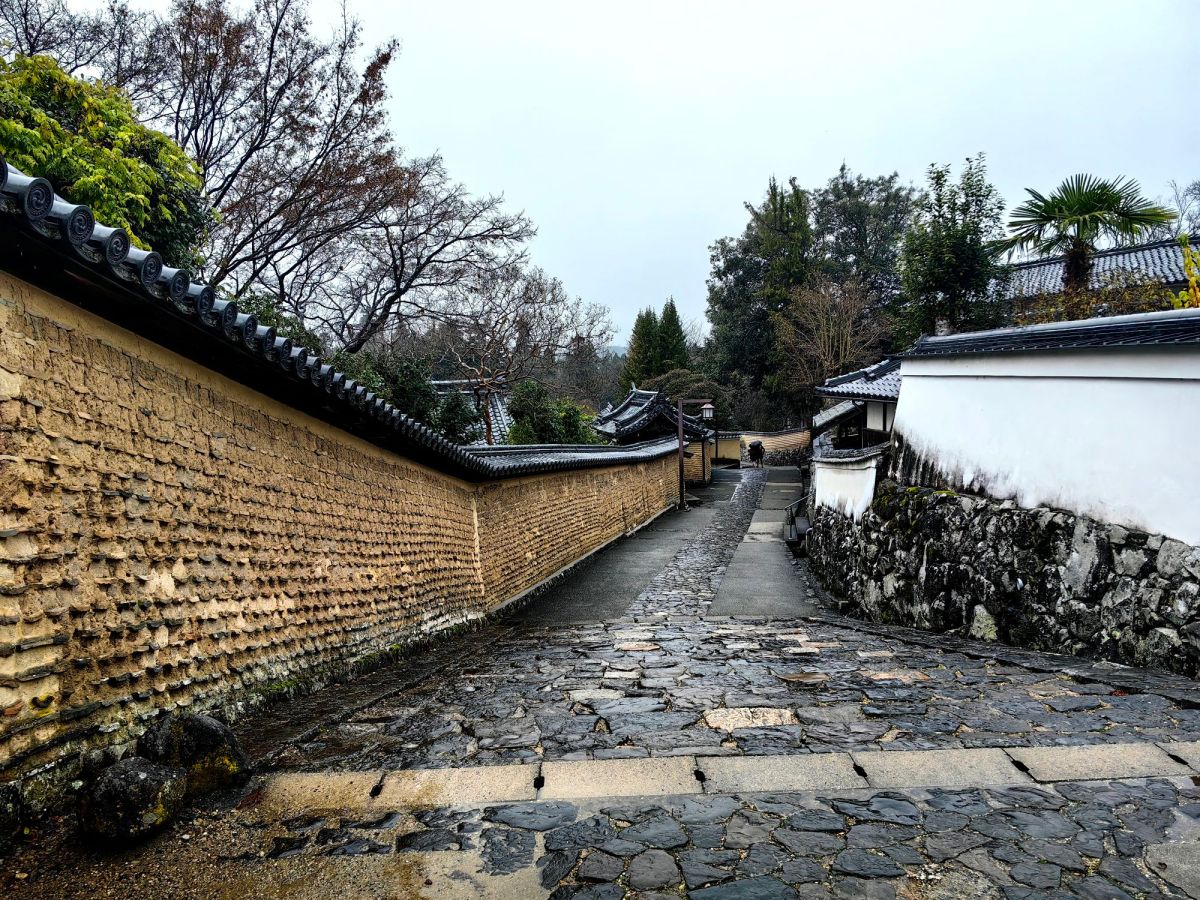
The weathered walls, wooden facades, tiled roofs, and the soft sound of running water … Yet perhaps this is where the age of Nara can be felt most intimately. Walking through these unassuming lanes, I imagined that the centuries have not entirely passed, but have simply settled gently into the landscape, leaving behind a quiet world where the present continues to live alongside the memory of the ancient capital. Here I could touch the most authentic essence of Nara. It was not a past story preserved within a museum, but an ancient memory that remains alive in everyday life.
斑驳的墙面、古朴的木质外墙、层层铺叠的瓦屋顶,以及耳边那一声声轻柔的流水……也许,正是在这样的地方,奈良的古老才最贴近地触动人心。漫步在这些并不起眼的小巷里,让我产生一种错觉:那些漫长的世纪并没有真正离去,而只是悄悄沉淀进了眼前的土地与风景。此处我仿佛能够触摸到奈良最真实的触感,它们不是博物馆里被封存起来的过去,而是一种仍然存在于日常生活中的古老记忆。
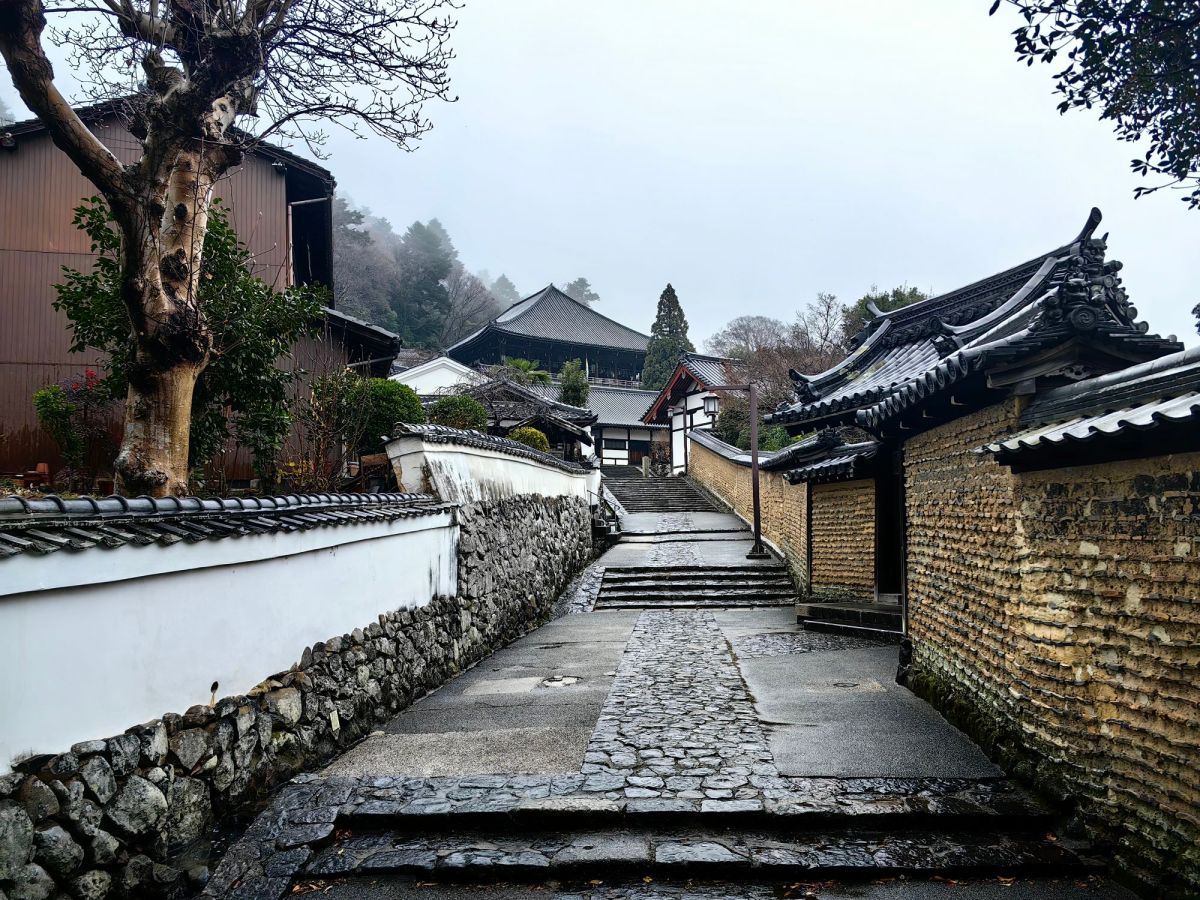
I walked slowly uphill along the Urasando beneath a gentle rain, with no other visitors in sight. The path was quiet and almost entirely my own, winding through the greenery in a peaceful solitude that felt far removed from the crowded streets and well-known sights of Nara. The rain softened the sounds of the surrounding forest, leaving only the faint rustling of leaves and the occasional trickle of water along the path. I loved this quieter side of Nara, where nature seemed to take precedence over everything and every corner invited a slower pace.
我沿着二月堂裏参道缓缓上坡,细雨轻柔地落下,四周看不到其他游客。小径十分安静,几乎成了我独享的道路,蜿蜒穿行于一片葱郁的绿意之间,幽然寂静,让我感觉已经远离了奈良那些熙熙攘攘的街道和众所熟知的景点。雨水削弱了周围森林里的声响,只留下树叶轻轻沙沙作响,以及偶尔沿着小路流淌而过的细微水声。我很喜欢奈良这样宁静的一面,在这里自然超然一切,而每一个转角,都让人不由自主地放慢脚步去欣赏。
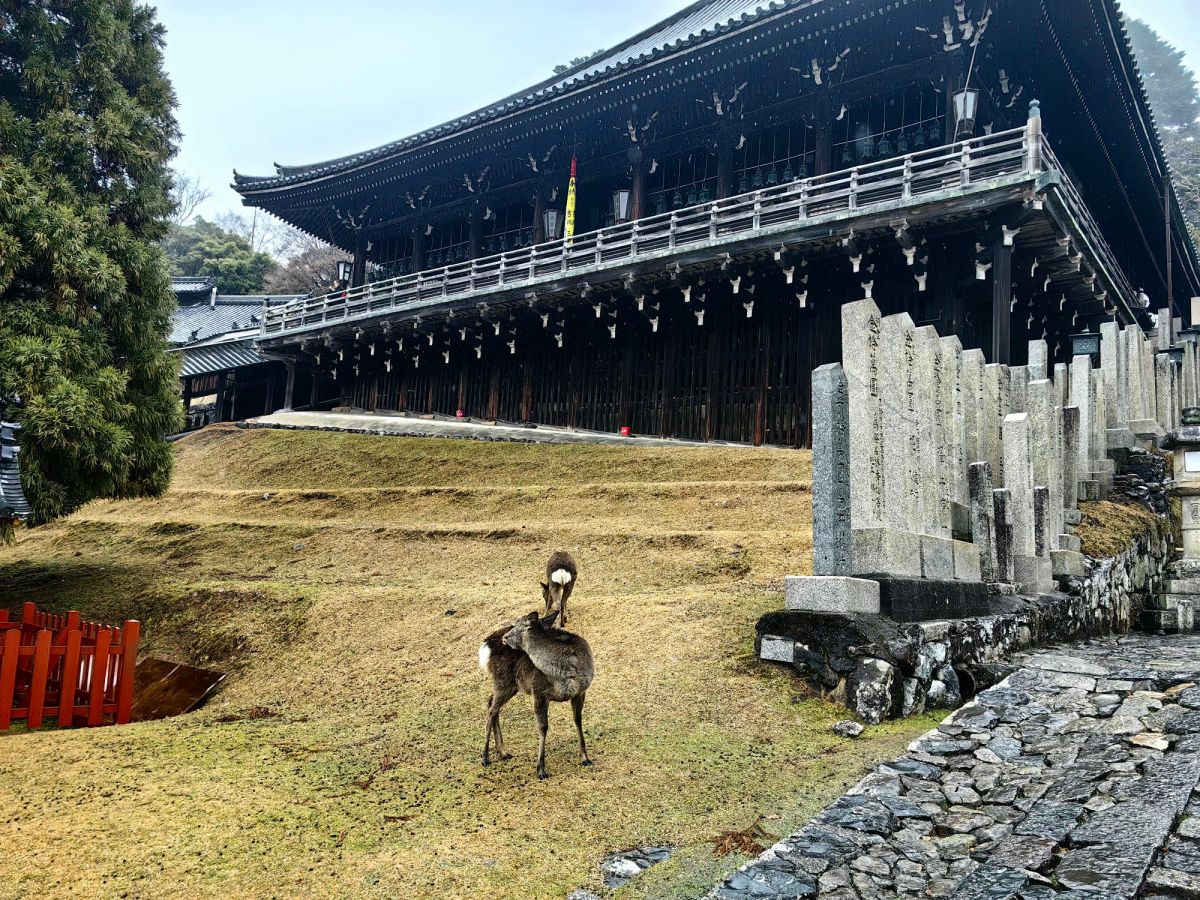
With no crowds to hurry me along, I could pause whenever I wished, observe the details of the landscape, and simply wander without a destination, allowing the ancient atmosphere of Nara to reveal itself gradually. It made me thought of a poem of Song Dynasty: Beside the village shrine, the old thatched inn lies as before; turning past the stream and bridge, it suddenly appears before my eyes. The Nigatsu-do is a small temple on my way. The weathered wooden structure, stone lanterns, ancient trees, and quiet hillside create an leisurely atmosphere quite different from the grandeur of Tōdai-ji below.
没有拥挤的人潮催促着我赶路,我可以随心所欲地停下脚步,细细观察沿途景致中的每一处细节,也可以漫无目的地随意走走,让奈良那份古老的气息在不经意间一点一点地展现在眼前。颇有一种旧时茅店社林边,路转溪桥忽见的感觉。路上,我经过了一座小小的寺庙二月堂(Nigatsu-do)。斑驳的木质建筑、石灯笼、古老的树木,以及安静的山坡,共同营造出一种怡然自得的氛围,与山下方东大寺的宏伟壮丽截然不同。
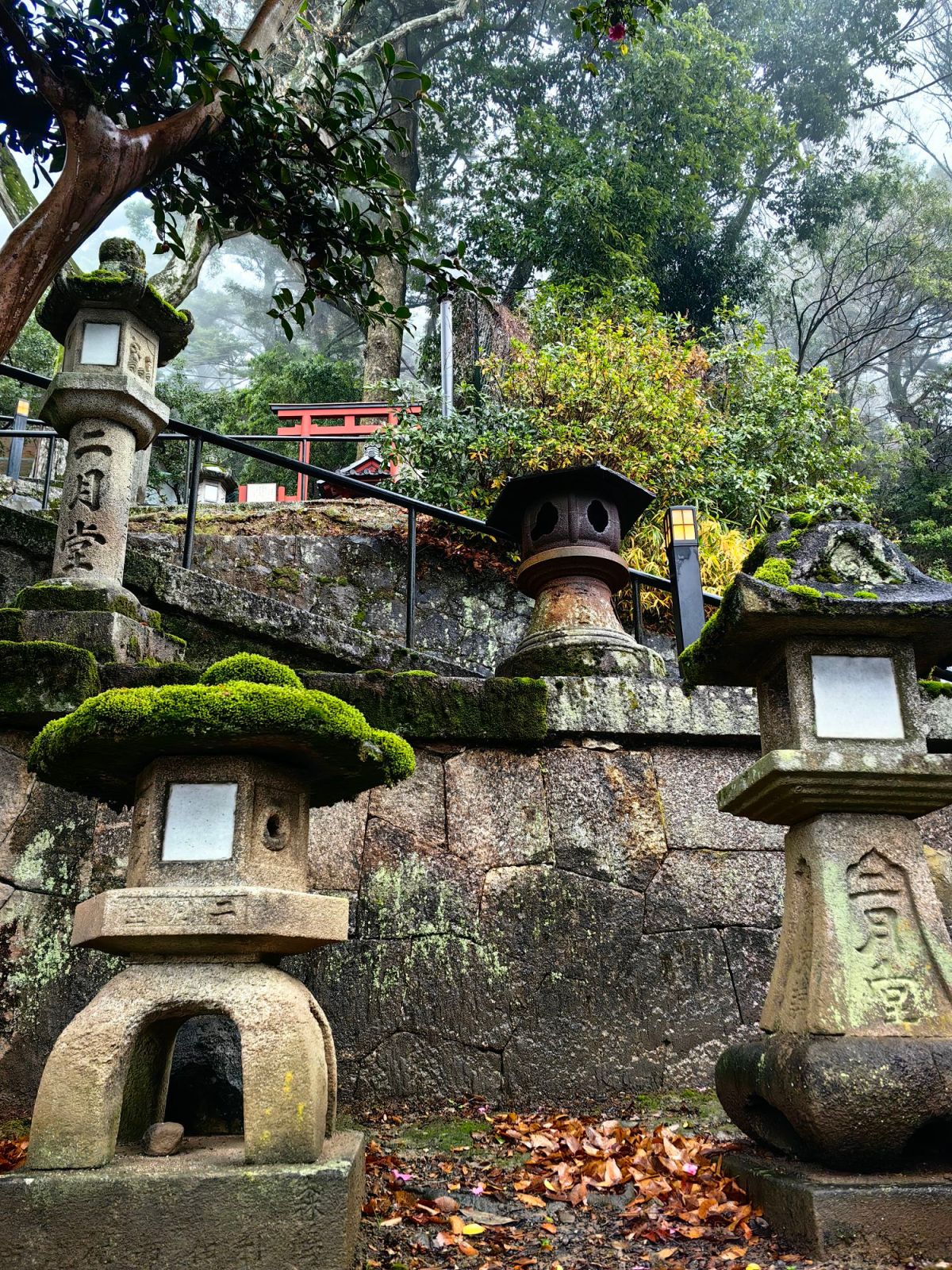
The old wooden hall is raised high on sturdy pillars. Its weathered timbers darkened by the rain. Stone lanterns stood silently along the steps, softened by moss and years of weather, while the broad veranda opened toward the distant roofs and streets of Nara. On the rainy day, the wood darkened with moisture and the surrounding forest becomes veiled in mist, making the place feel even more secluded.
古老的木质殿堂高高架在坚实的木柱之上。斑驳的木梁被雨水打湿,颜色也变得更加深沉。石灯笼静静地伫立在石阶两旁,经过岁月与风雨的侵蚀,表面覆上了柔软的青苔。宽阔的回廊向外敞开,远处奈良的屋顶与街道尽收眼底。在这样的雨天里,木头因水汽而显得更加深暗,周围的森林也笼罩在朦胧的雾气之中,让整个地方显得更加幽静,也更加远离尘嚣。
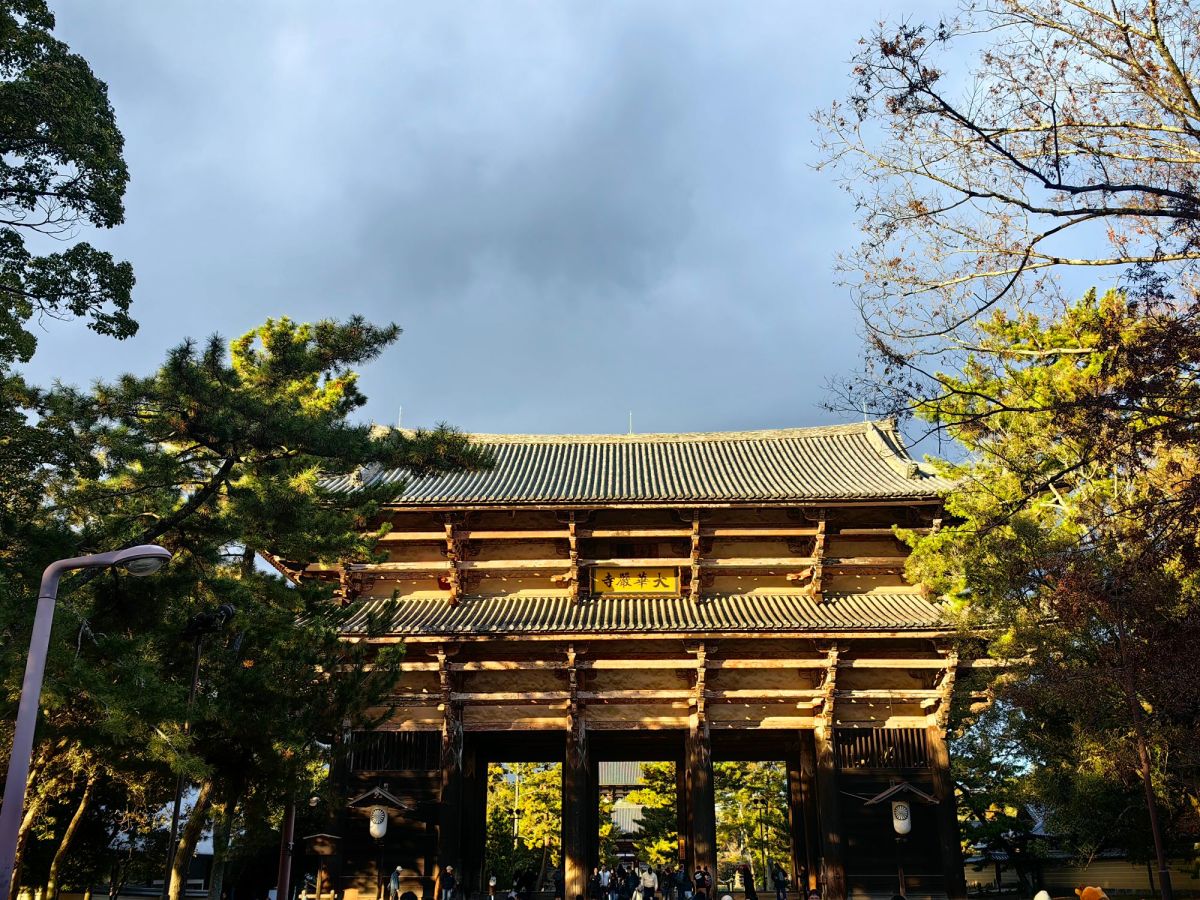
After some time, the Nandaimon Gate of Tōdai-ji rose before me like a monumental gateway. Its enormous wooden pillars, darkened and weathered by centuries of rain and sunlight, seemed to possess a strength that belonged to another age. Beneath the great tiled roof stood the two fierce Niō guardians with powerful bodies and they had been watching over the temple for centuries. Walking beneath the immense gate, I felt small beside the towering timbers and massive statues. More than simply an entrance to Tōdai-ji, it felt like a threshold between the present and the ancient world of Nara.
前行一段时间后,东大寺的南大门出现在我眼前,它宛如一座巍峨的巨型门楼。巨大的木柱历经数百年的风吹日晒与雨水侵蚀,颜色深沉而斑驳,仿佛蕴含着一种属于遥远时代的力量。在宏伟的瓦顶之下,两尊威严有力身躯强健的仁王像伫立于门中。它们已经守护这座寺院数百年之久。当我从这座巨大的门楼下走过时,面对高耸的木柱和庞大的佛像,我不禁感到自己的渺小。这里不仅仅是通往东大寺的一道入口,更像是一道连接现实与古老奈良的门槛。
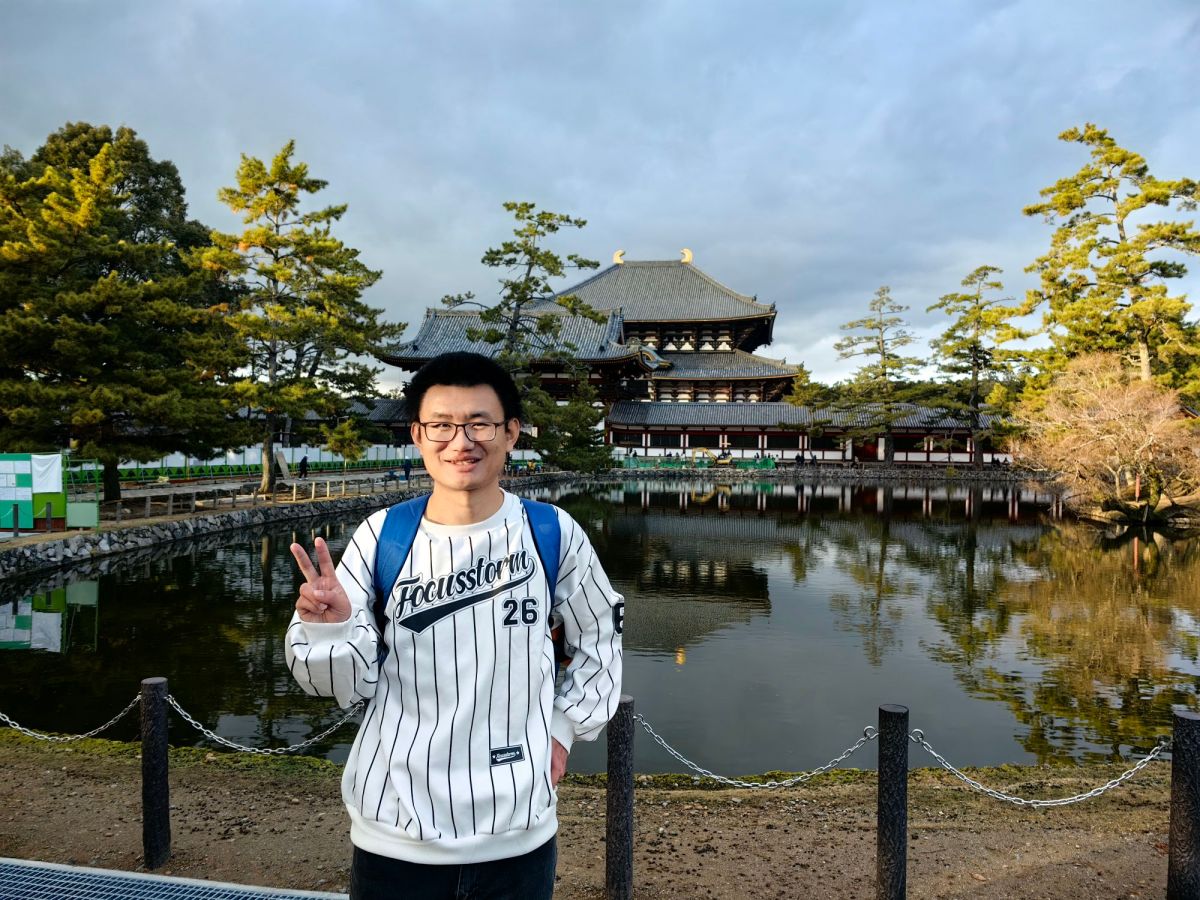
I continued walking through the temple grounds and soon arrived at Kagami-ike Pond, the quiet body of water lying before the entrance to the famous Tōdai-ji. Its still surface reflected the surrounding trees, temple roofs, and muted sky, creating an elegant scene. The gentle rain added another layer of tranquility, softening the outlines of the ancient buildings and turning the pond into a mirror of the misty landscape.
我继续沿着寺院的庭院向前走,不久便来到了镜池(Kagami-ike)。这是一片宁静的水面,静静地坐落在著名的东大寺入口前。平静的池水倒映着四周的树木、寺院的屋顶,以及阴沉柔和的天空,构成了一幅优雅的画面。细细的雨丝为这份宁静又增添了一层朦胧的气息。雨水柔化了古老建筑的轮廓,也让镜池仿佛化作一面映照着雾霭景色的镜子。
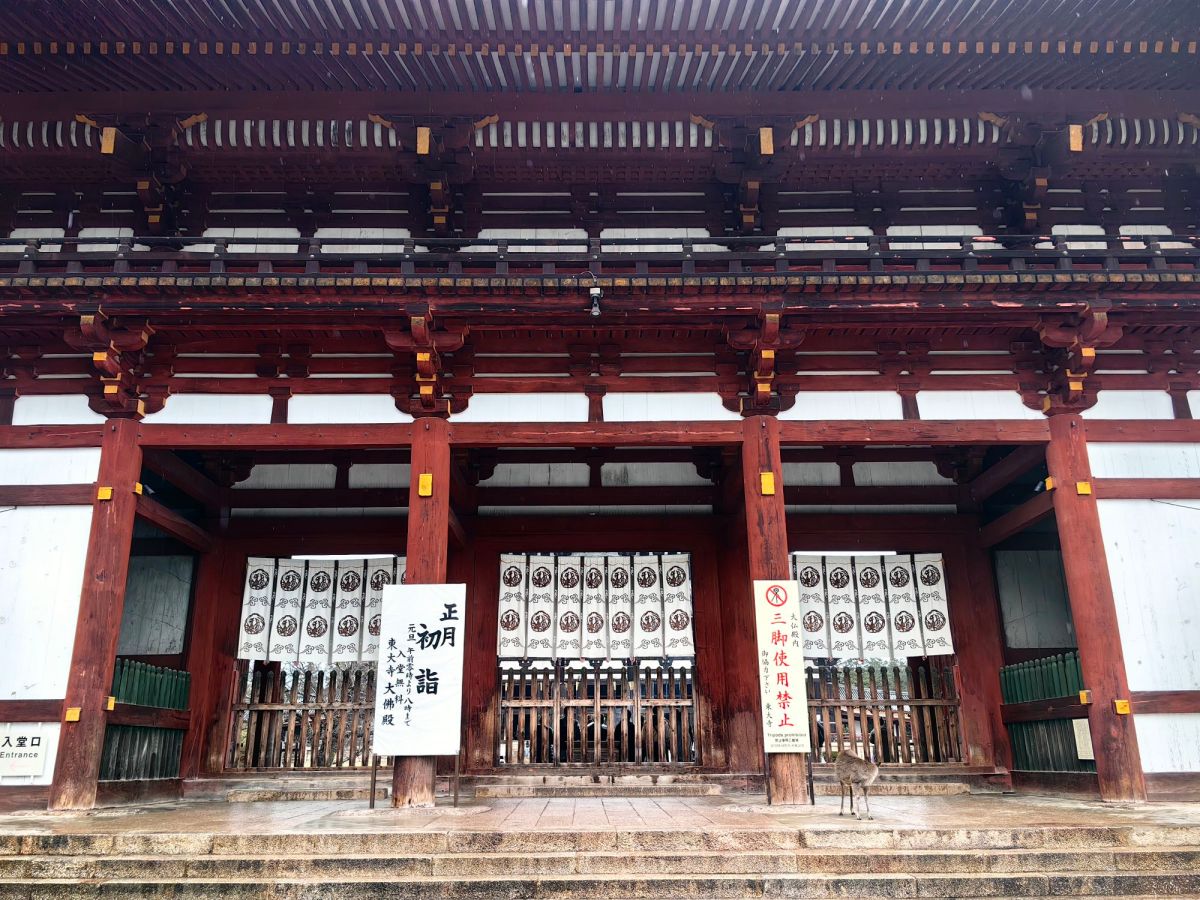
Beyond Kagami-ike Pond, I continued toward the Chūmon, the Central Gate of Tōdai-ji. Its graceful vermilion-and-white structure stood quietly beneath the broad tiled roof, framed by the surrounding trees and the vast temple grounds. After the monumental Nandaimon, the Chūmon felt more restrained and serene, it carried a sense of ceremony. Through the gate, the enormous Great Buddha Hall could be glimpsed beyond, its immense wooden form rising at the heart of the temple precinct.
越过镜池之后,我继续向东大寺的中央门走去。朱红与白色相间的典雅建筑静静地矗立在宽阔的瓦顶之下,四周被树木和广阔的寺院境地环抱。与气势恢宏的南大门相比,中门显得更加内敛而宁静,却带着一种庄重的仪式感。透过门楼,可以望见远处那座巨大的大佛殿,庞大的木质建筑矗立在寺院的中心,伟岸的身姿隐约映入眼帘。
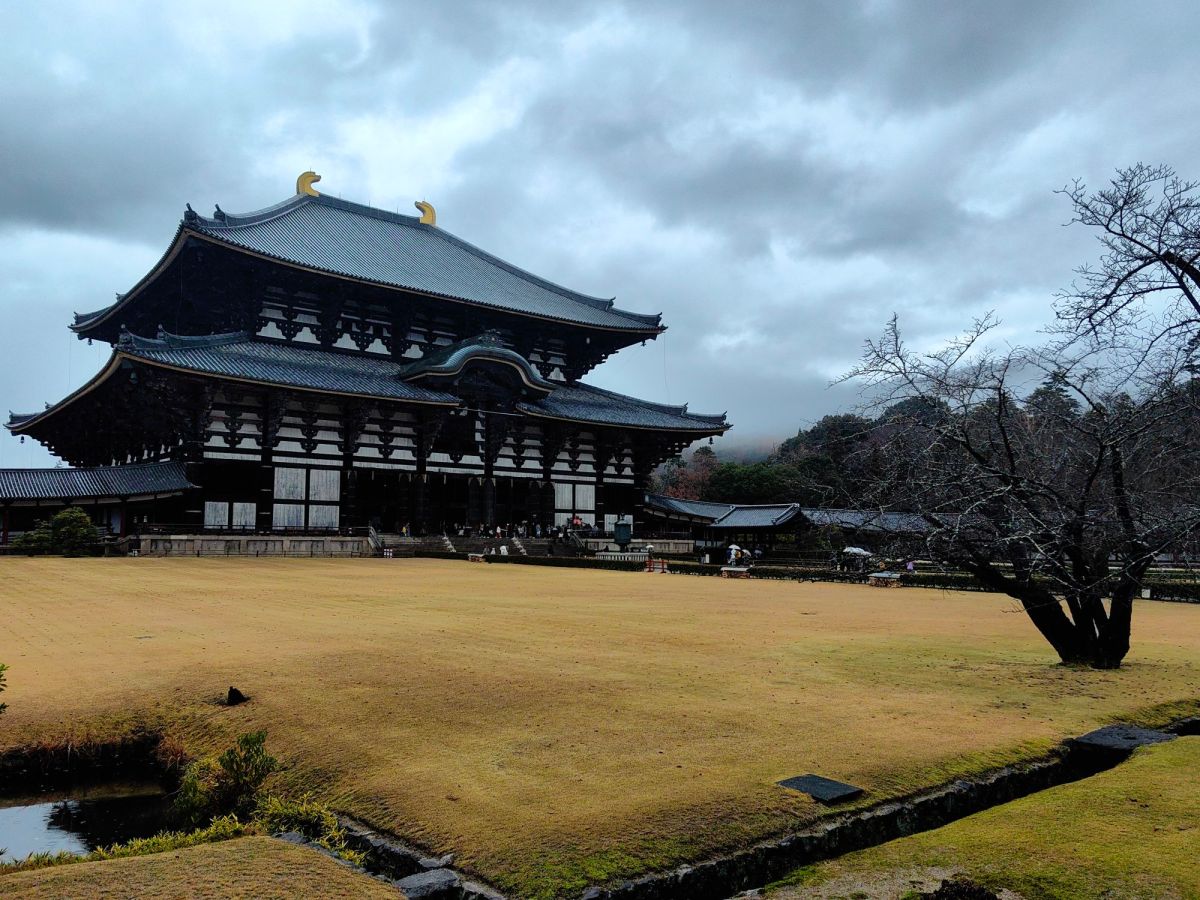
From the entrance, the Great Buddha Hall rose before me with an overwhelming sense of height and scale. Its immense tiled roof seemed to stretch across the sky, while the vast wooden structure beneath it appeared almost impossibly tall and monumental. Standing at the entrance, I could only look upward, gradually taking in the enormous proportions of the building.
从入口处望去,大佛殿巍然耸立在我面前,那种高度与规模带来的震撼感几乎令人屏息。巨大的瓦顶仿佛冲向天空延伸开去,而下方那座宏伟的木质建筑高大得近乎不可思议,充满了令人敬畏的气势。站在入口处,我只能仰头向天,一点一点地感受这座建筑庞大的尺度与比例。
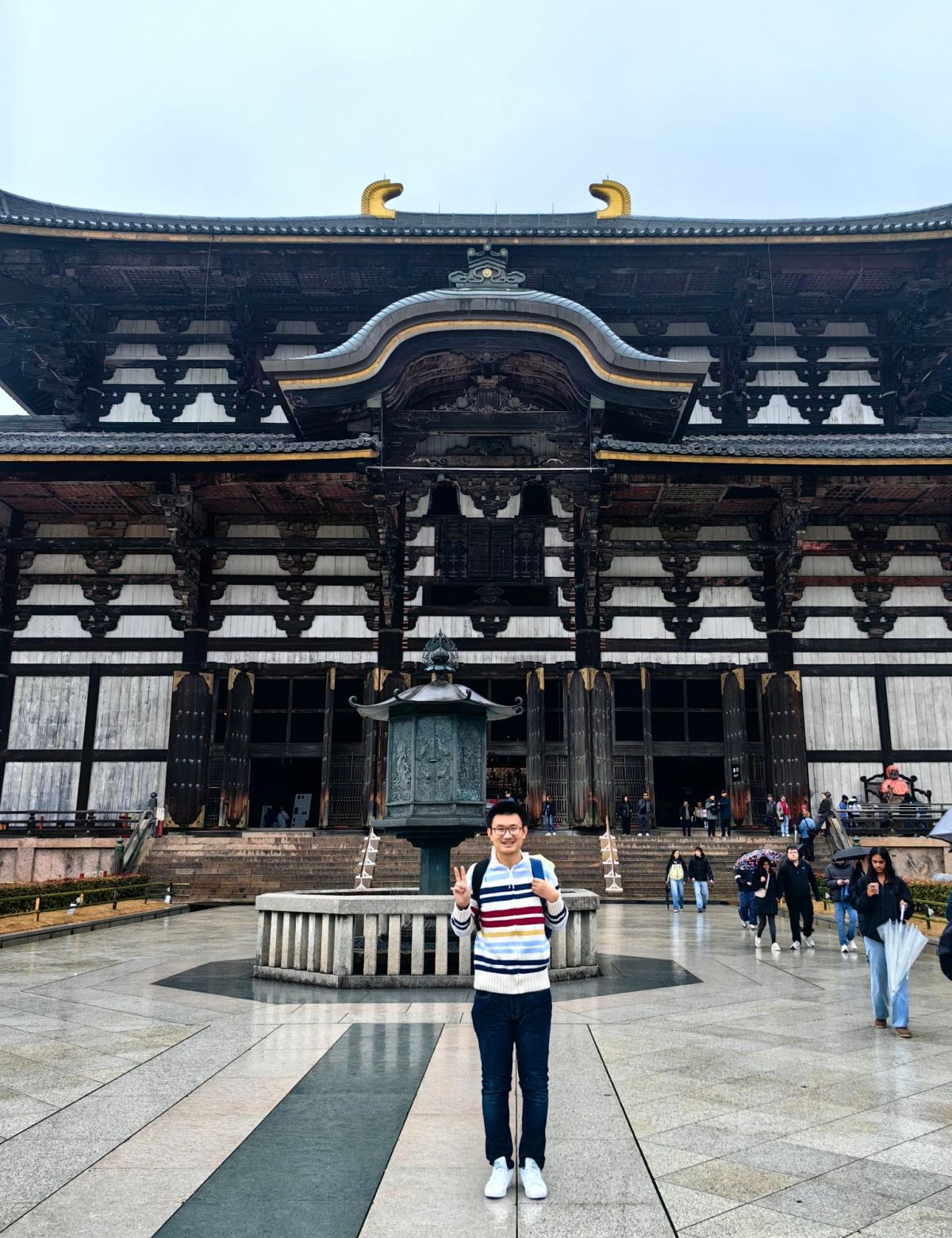
Tōdai-ji is perhaps the most representative monument of Nara, embodying the city’s identity as Japan’s ancient capital. Built in the eighth century, when Nara was known as Heijō-kyō, the temple reflected the enormous political and spiritual ambitions of its age. Standing there, I felt that Tōdai-ji was really a surviving expression of Nara’s golden age, where architecture, faith, and history had remained intertwined for more than a thousand years. A bronze octagonal lantern rose quietly in the open space before it. Known as the Kondō Hakkaku Tōrō, the lantern which is one of the relatively few surviving objects from the original Nara-period is a national treasure. In Buddhist tradition, the light of a lantern represents the wisdom of the Buddha, dispelling the darkness of ignorance.
东大寺或许是最能代表奈良的地标之一,它承载着这座城市作为日本古都的历史身份。寺院始建于八世纪,当时的奈良就是平城京,东大寺也映照出那个时代宏大的政治抱负与精神追求。站在那里,我感到东大寺仿佛正是奈良黄金时代留存至今的一种见证。在这里,建筑、信仰与历史彼此交织,并延续了一千多年。大佛殿前方开阔的空间里,一盏八角形青铜灯笼静静地矗立着,是奈良时代原物中为数不多保存至今的遗存之一,并被列为日本国宝。在佛教传统中,灯笼所散发的光明象征着佛陀的智慧,能够驱散无明的黑暗。
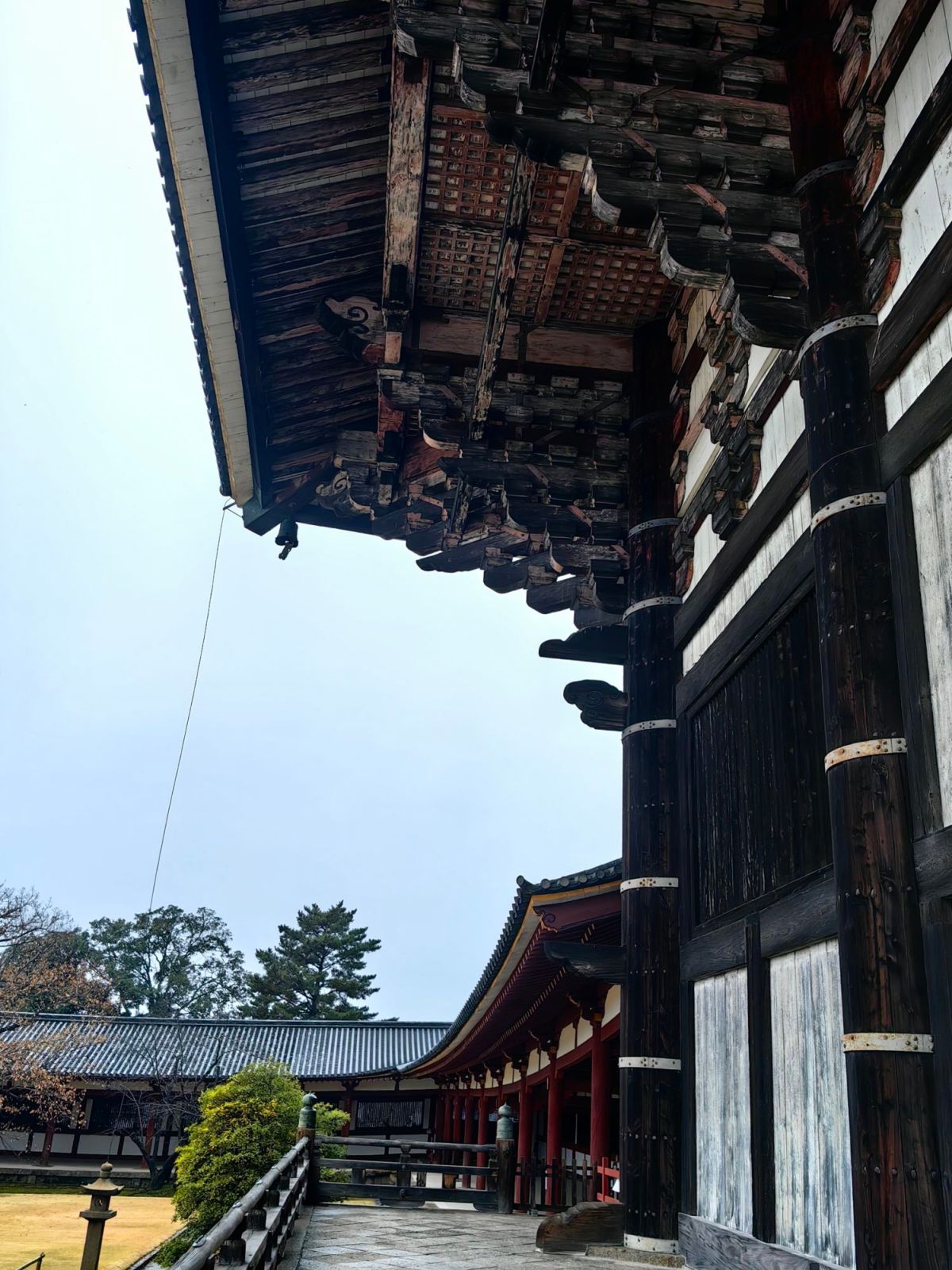
Tōdai-ji’s architecture was strongly influenced by Tang-dynasty China. During the Nara period, Japan actively adopted Chinese institutions, Buddhism, urban planning, and artistic styles. Nara itself was modeled partly on the Tang capital Chang’an. The broad tiled roof, monumental timber framework, bracket systems, and proportions all belong to an architectural tradition that Japan inherited and adapted from China. Standing beneath the vast roof of the Great Buddha Hall, I could almost sense the ancient cultural exchange that had once connected Nara with the distant Tang China.
东大寺的建筑深受中国唐代建筑风格的影响。奈良时代,日本积极吸收来自中国的制度、佛教文化、城市规划以及艺术风格,而奈良本身也在一定程度上仿照唐代都城长安建造。宽阔的瓦顶、宏伟的木结构、复杂的斗拱体系,以及整体建筑的比例,都属于一种日本从中国继承并在本土加以发展和融合的建筑传统。站在大佛殿巨大的屋檐之下,我仿佛能够感受到那段久远的文化交流。曾经的奈良,正是通过这样的交流,与遥远的唐代彼此相连。
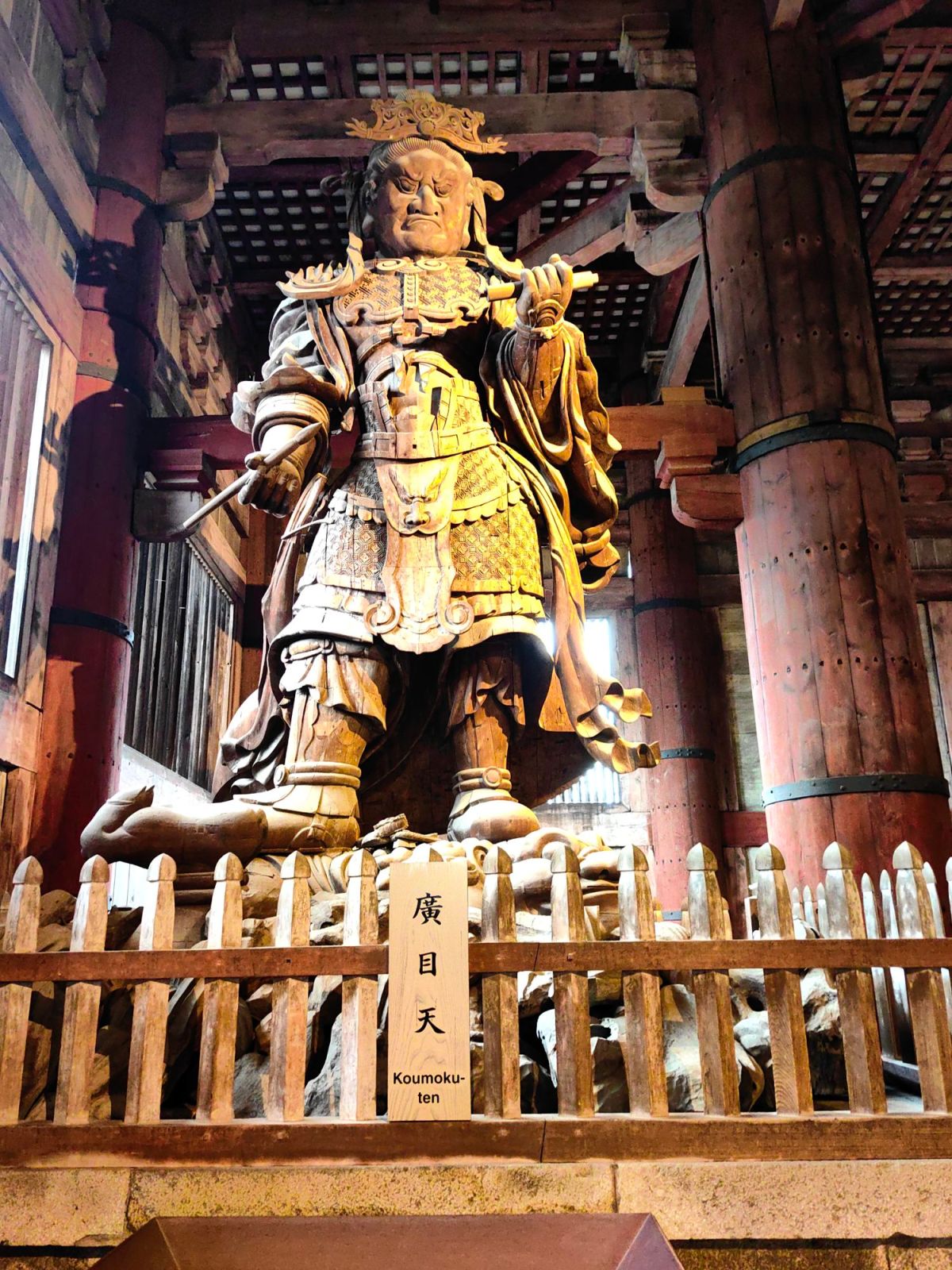
Inside the Great Buddha Hall, I encountered Komokuten, the Heavenly Guardian of the West, standing watch beside the Great Buddha. One hand held his traditional weapon and the expression was full of majesty and power. The central figure in the hall is the Great Buddha (Daibutsu), a colossal bronze statue of Vairocana Buddha. It represents Vairocana, the Cosmic Buddha whose wisdom and light are understood to permeate the entire universe. Buddhism arrived in Japan from the Korean Peninsula in the sixth century. By the Nara period, it had become closely connected with the imperial court and the state, and Emperor Shōmu envisioned Buddhism as a force that could protect and unite the country.
走进大佛殿内部,我一眼就认出了广目天,也就是镇守西方的护法天王。他伫立在大佛身旁,一只手握着宝物法器,神态威严而充满力量。大佛殿中央供奉的是一尊巨大的毗卢遮那佛青铜像。它所代表的毗卢遮那佛,是佛教中的宇宙佛,其智慧与光明被认为遍及整个宇宙。佛教于六世纪经由朝鲜半岛传入日本。到了奈良时代,佛教已经与皇室和国家政权紧密相连。圣武天皇曾寄望佛教成为一种能够护佑国家、凝聚全国的力量。
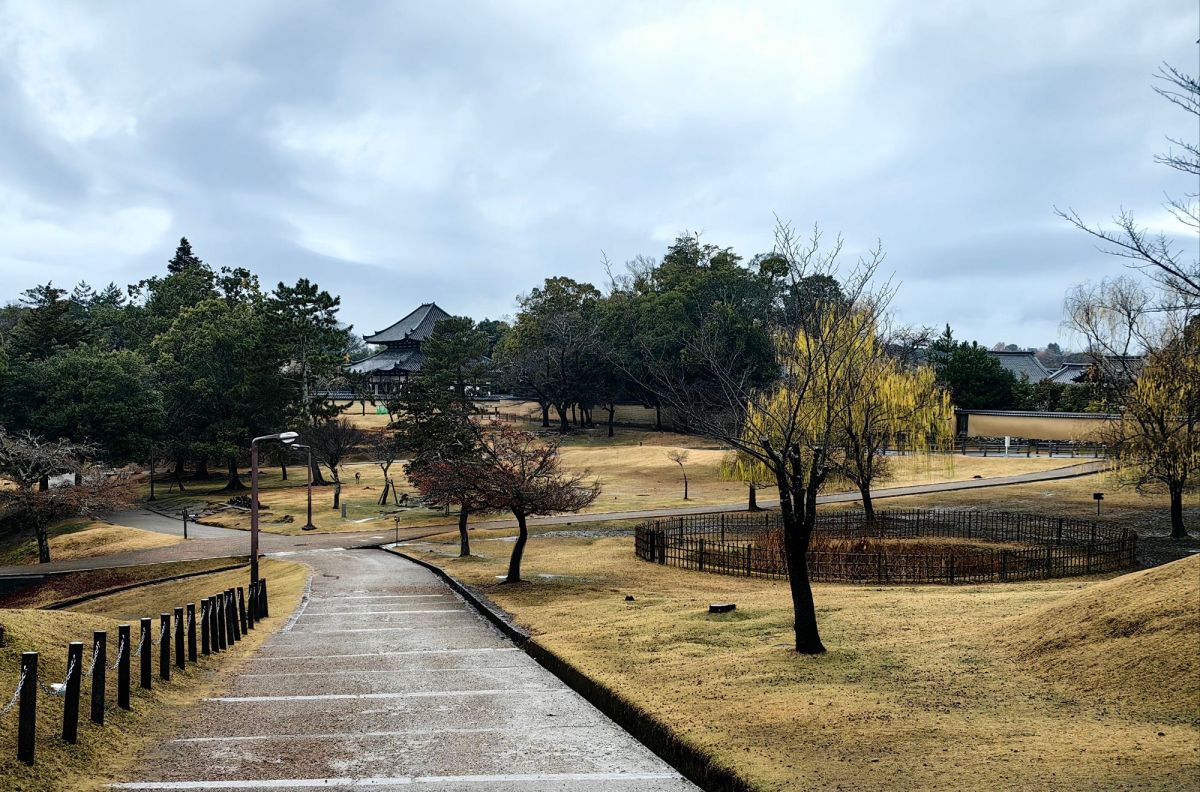
Behind Tōdai-ji, the monumental temple gradually gave way to a broad expanse of green, scattered with mature trees and quiet paths. There were very few tourists here, and the atmosphere was completely different from the busy areas around the Great Buddha Hall. The trees stood peacefully across the open grass, their branches moving gently in the breeze, while the sounds of the temple grounds faded into the distance.
在东大寺后方,一片开阔的绿色空间逐步取代了宏伟的寺院建筑。苍翠的草地间散落着一棵棵大树,几条幽静的小径穿行其中。这里的游客寥寥无几,与大佛殿周围熙熙攘攘的景象截然不同。树木静静地伫立在开阔的草地上,枝叶随着微风轻轻摇曳,而寺院里的喧闹声也渐渐消失在远方。
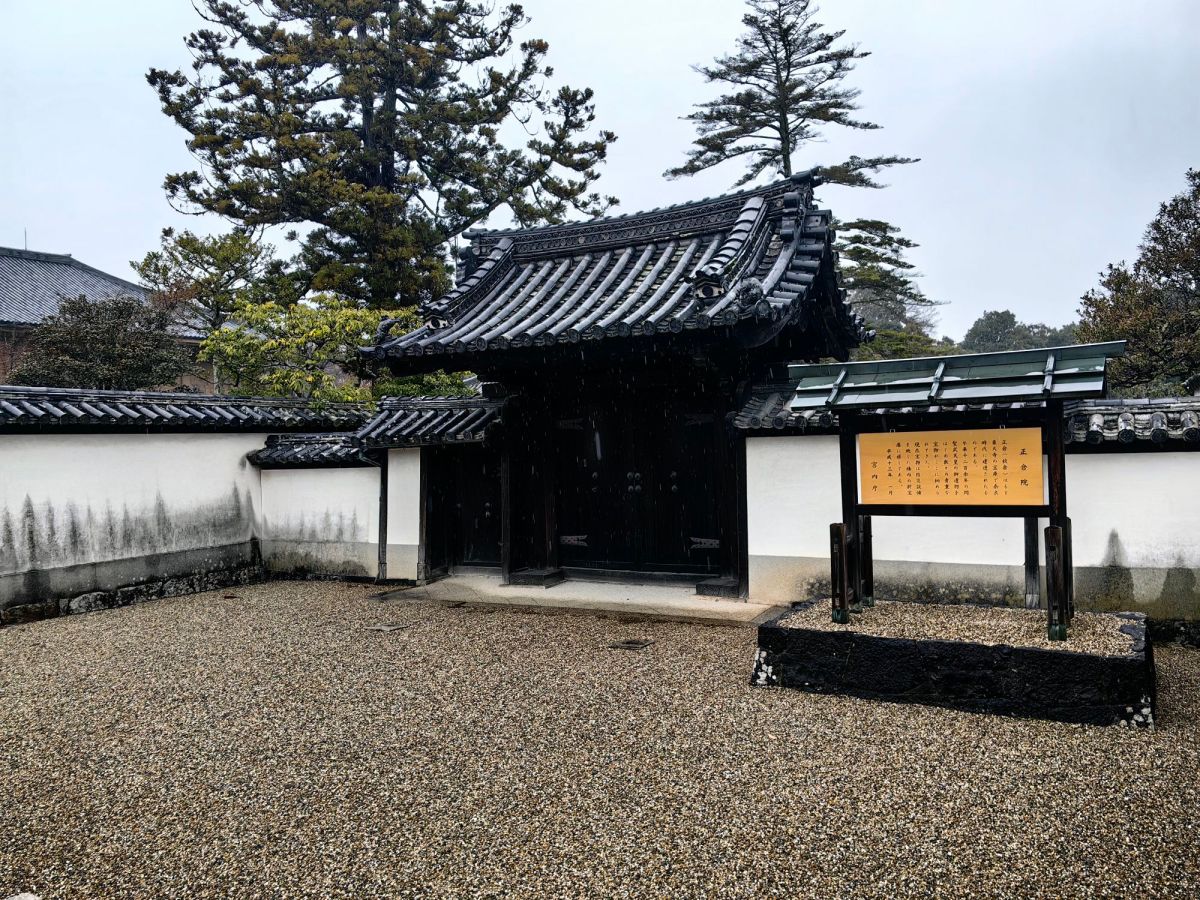
Among these queit buildings, I came upon the Shōsō-in Repository, an ancient wooden storehouse that has preserved treasures from the world of eighth-century Nara. Unlike the monumental Great Buddha Hall, which expresses the grandeur of imperial Buddhism, Shōsō-in seemed almost modest, its walls built from rows of natural timber logs in the distinctive azekura style. Yet within this unassuming structure lay an extraordinary record of the ancient world—Buddhist objects, musical instruments, textiles, manuscripts, and precious belongings associated with Emperor Shōmu and the people of his age.
在这些宁静的建筑之间,我偶然来到了正仓院。这是一座古老的木造仓库,保存着许多来自八世纪奈良世界的珍贵宝物。与展现皇室佛教宏伟气势的大佛殿不同,正仓院显得格外朴素低调。它的墙体由一排排天然木材堆叠而成,采用了独具特色的校仓造(azekura)建筑风格。然而,正是这座看似不起眼的建筑内部,却保存着一段非同寻常的古代历史,其中包括佛教器物、乐器、纺织品、手稿,以及与圣武天皇和那个时代人们有关的珍贵遗物。这些保存至今的物品,仿佛让八世纪的奈良重新出现在眼前,也让人得以窥见那个遥远时代的生活、文化与精神世界。
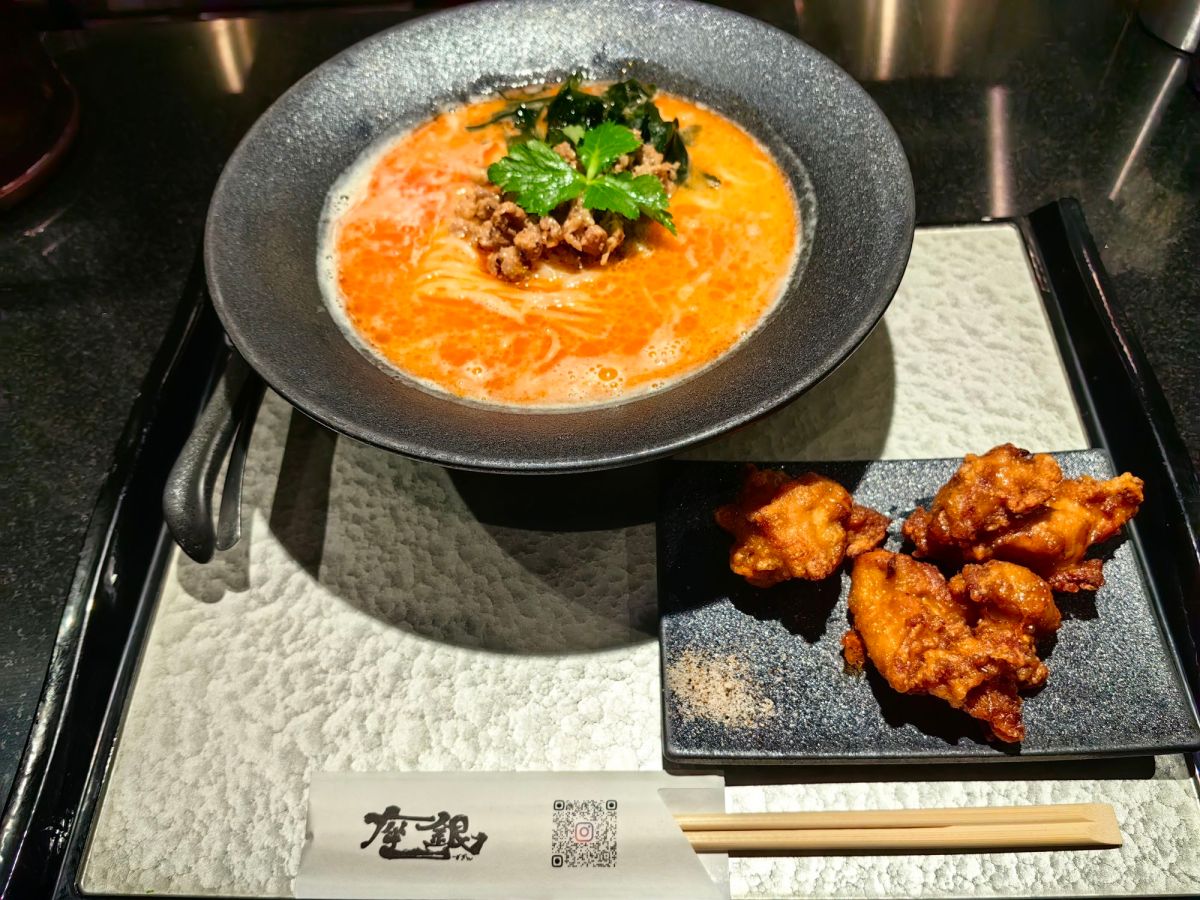
After wandering through Nara’s main sights, I finally brought my first day in the ancient capital to an end. As evening settled over the city, I stopped at a small local restaurant and ordered a simple bowl of ramen. After a long day of walking, the steaming broth and warm noodles were more than enough to satisfy me. Travelling in Japan had also taught me that a memorable meal does not have to come from an expensive or fashionable restaurant. Sometimes, the simplest places like a small shop with a few seats, a steaming bowl of ramen could offer exactly what I need at the end of a long day.
逛完奈良的主要景点后,我终于结束了自己在这座古都的第一天。夜幕渐渐降临,我在一家当地的小餐馆停下脚步,点了一碗简单的拉面。奔波一整天后,一碗热气腾腾的汤和温暖的面条已经足以让我感到满足。这次日本之行也让我明白,一顿令人难忘的饭菜,并不一定要来自昂贵的网红餐厅。有时候,最简单的地方反而最能带来满足感。几张桌椅、几个座位,一间不起眼的小店,再加上一碗冒着热气的拉面,就能在漫长的一天结束时,恰好给予我所需要的温暖与慰藉。
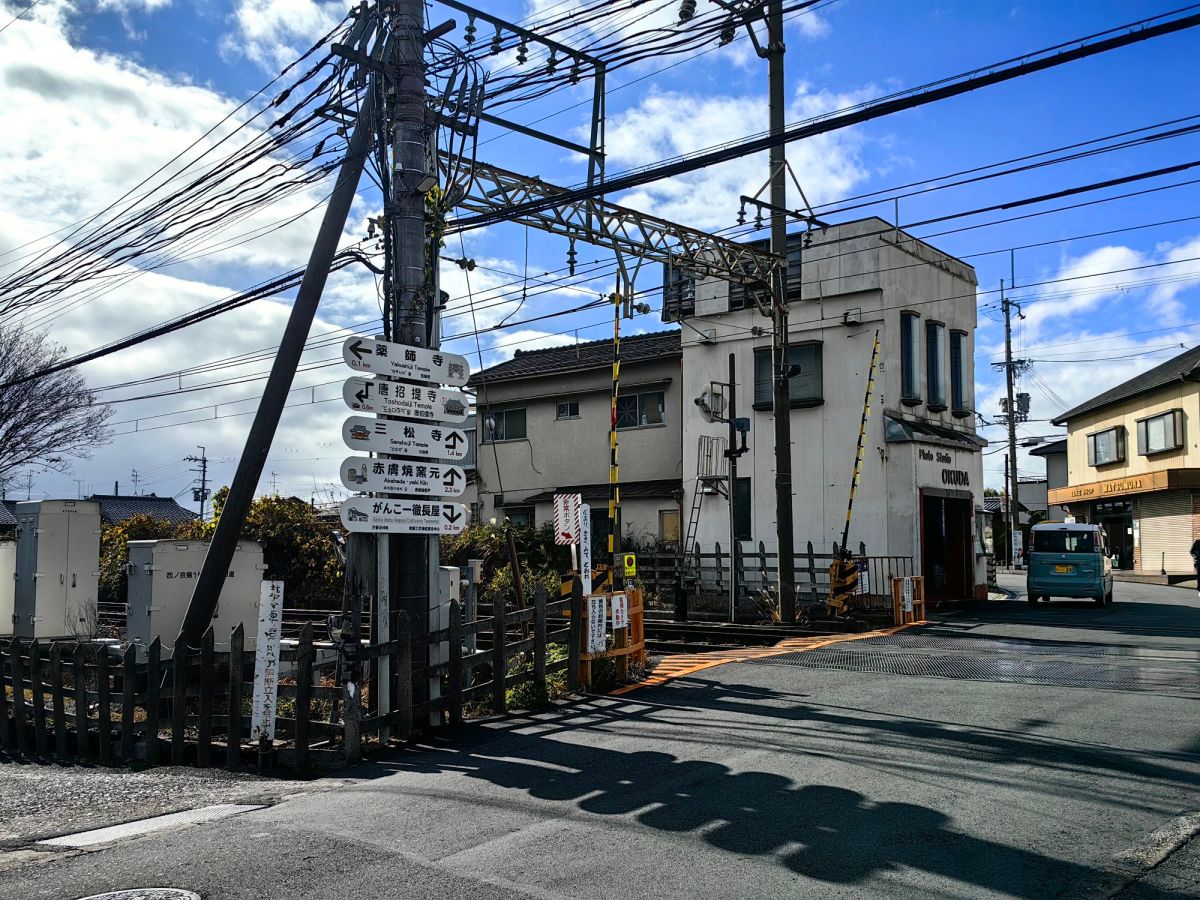
My second day in Nara took me to Nishinokyō, meaning the “Western Capital,” an area west of the ancient Heijō-kyō. Away from the center of modern Nara, this quieter district preserves some of the most important remnants of the city’s eighth-century Buddhist heritage. Two remarkable temples awaited me there: Yakushi-ji and Tōshōdai-ji, both deeply connected with the history of Nara’s ancient capital. Reaching them was remarkably easy. Japan’s railway system is exceptionally convenient, with trains and local lines connecting cities, neighborhoods, and even places far from the main tourist routes.
我在奈良的第二天来到了西京地区(Nishinokyō),这里位于古代平城京的西侧,远离现代奈良的市中心,这片较为宁静的地区至今仍保存着这座城市八世纪佛教文化遗产中一些最重要的遗迹。有两座令人印象深刻的寺院等待着我:药师寺(Yakushi-ji)和唐招提寺(Tōshōdai-ji)。两座寺院都与奈良古都的历史有着深厚的联系。前往这里也出乎意料地轻松。日本的铁路系统十分便利,各种列车和地方线路将城市街区,甚至那些远离主要旅游路线的地方连接起来。
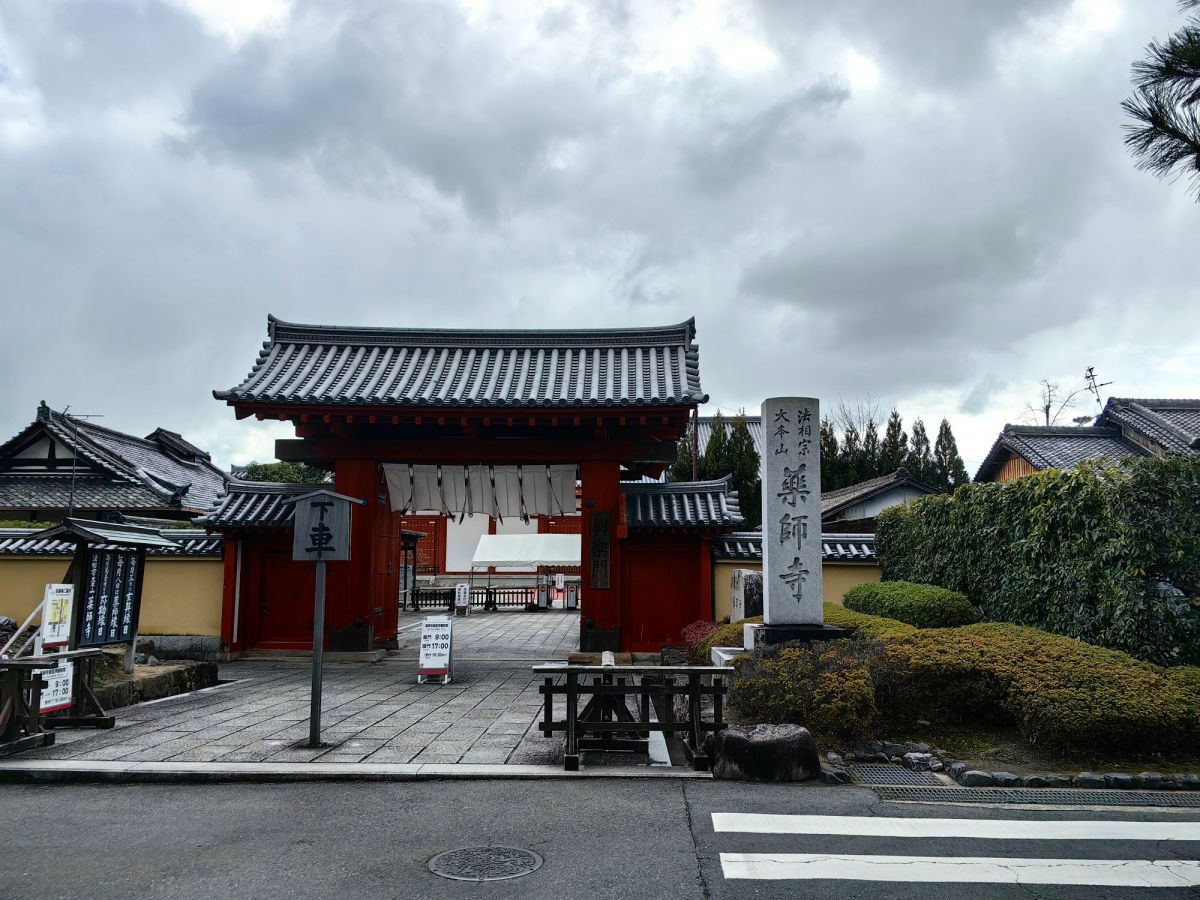
Following the directions, I made my way to my first destination, Yakushi-ji. Even before entering, I was intrigued by its long and fascinating history. It carries a history almost as old as Nara itself. The temple was first founded in 680 by Emperor Tenmu, who prayed for the recovery of his ailing wife and dedicated the temple to Yakushi Nyorai, the Buddha of healing. Originally built at Fujiwara-kyō, it was moved to Heijō-kyō when the capital was transferred to Nara in the early eighth century, becoming one of the great Buddhist temples of the new imperial city.
按照指示,我前往了第一个目的地药师寺。甚至在参观寺院之前,它悠久而引人入胜的历史就已经让我产生了浓厚的兴趣。药师寺的历史几乎与奈良本身一样悠久。这座寺院最初由天武天皇于680年创建。当时,为祈求患病的皇后早日康复,天武天皇将寺院奉献给象征治愈的佛药师如来。药师寺最初建于藤原京,8世纪初都城迁至平城京后,寺院也随之迁移,并成为这座新帝都中最重要的佛教寺院之一。
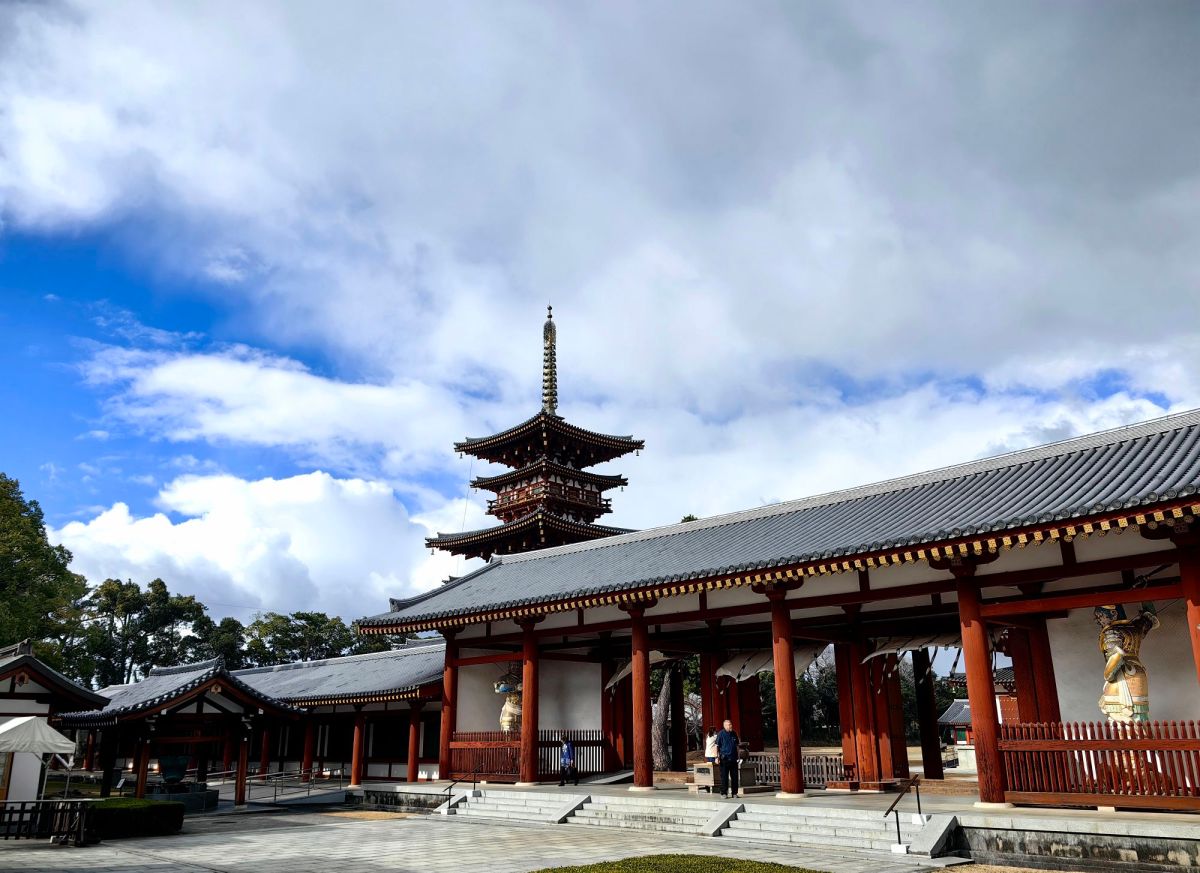
The whole temple was an immense and symmetrical complex, reflecting the sophisticated temple architecture and continental influences of the Nara period. Yet the temple’s long history was marked by repeated fires, wars, and destruction. Much of its ancient architecture disappeared, leaving the East Pagoda as its most remarkable survivor, still standing in its original form from 730.
整座寺院规模宏大,布局对称,体现了奈良时代精湛的寺院建筑技艺以及深受中国文化影响的建筑风格。然而,寺院悠久的历史也伴随着一次又一次的火灾、战争与破坏。许多古老的建筑因此消失,唯有东塔成为最引人注目的幸存者,至今仍以730年建成时的原貌屹立于此。
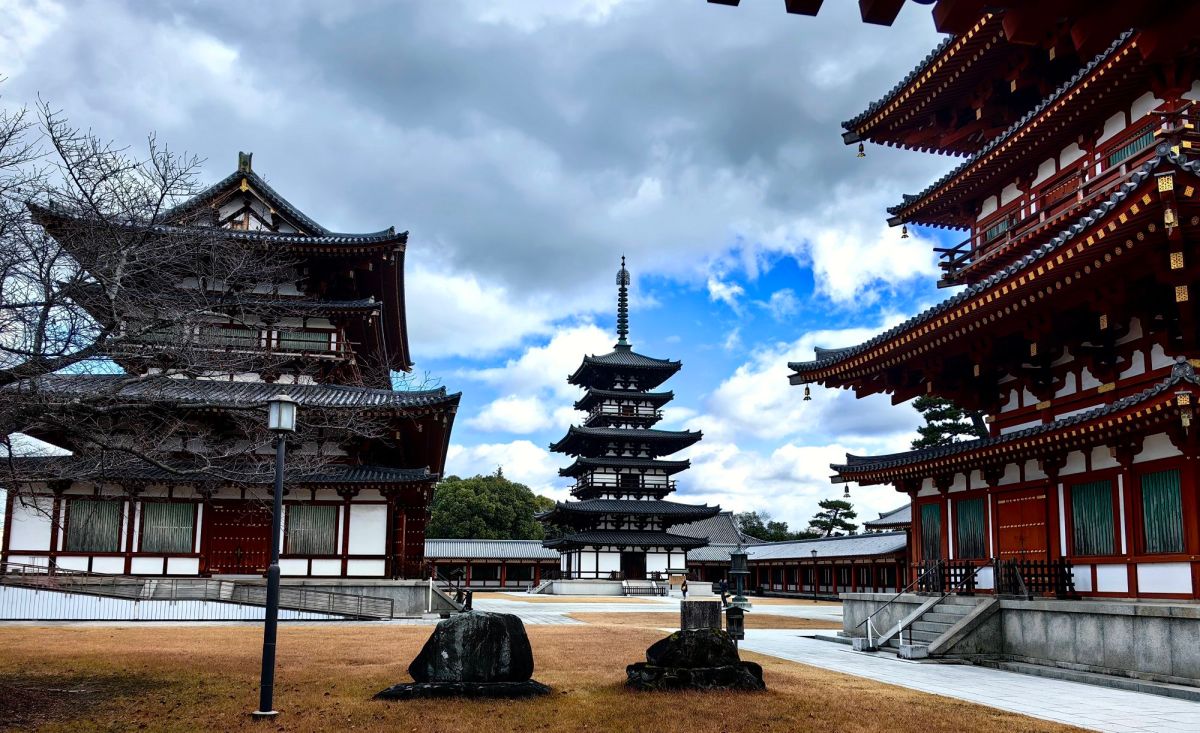
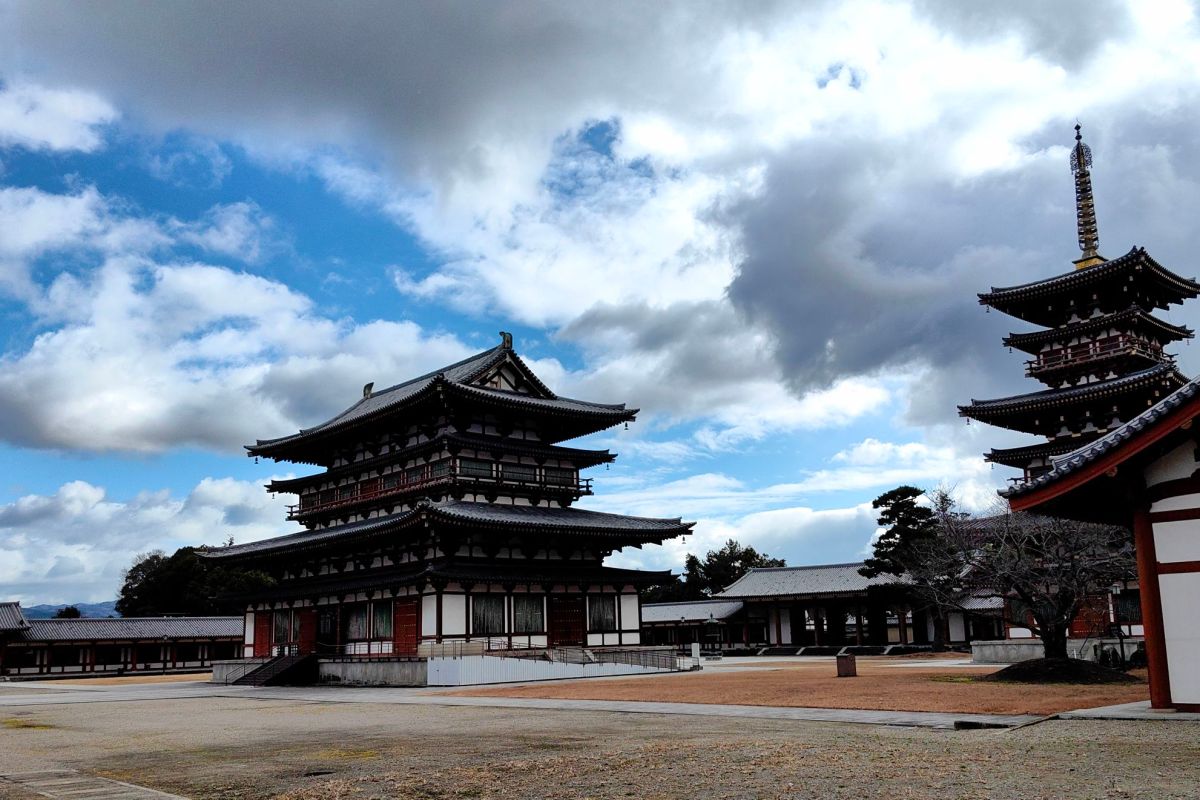
Under the brilliant blue sky, the East Pagoda of Yakushi-ji rose gracefully above the temple grounds, its dark wooden tiers standing in striking contrast to the clear expanse of sky behind it. It is the only surviving original structure of Yakushi-ji from that age. Although only three stories in structure, the smaller roofs between the main levels give the pagoda the appearance of six stories, creating a distinctive rhythm as the eaves rise one above another. Sunlight traced the edges of its sweeping roofs and delicate wooden details, while the deep tones of the aged timber revealed the passing of more than twelve centuries.
在灿烂的蓝天下,药师寺东塔优雅地矗立在寺院之中,深色的木制塔层与身后澄澈辽阔的天空形成了鲜明的对比。东塔是药师寺在那个时代遗留下来的唯一一座原始建筑。虽然东塔实际上只有三层,但每个主要楼层之间较小的屋顶,使整座塔看起来仿佛有六层。层层飞檐向上延伸,形成了独特而富有节奏感的视觉效果。阳光勾勒出舒展的边缘以及精巧的木质细节,而古老木材深沉的色泽,则无声地诉说着一千两百多年岁月的流逝。
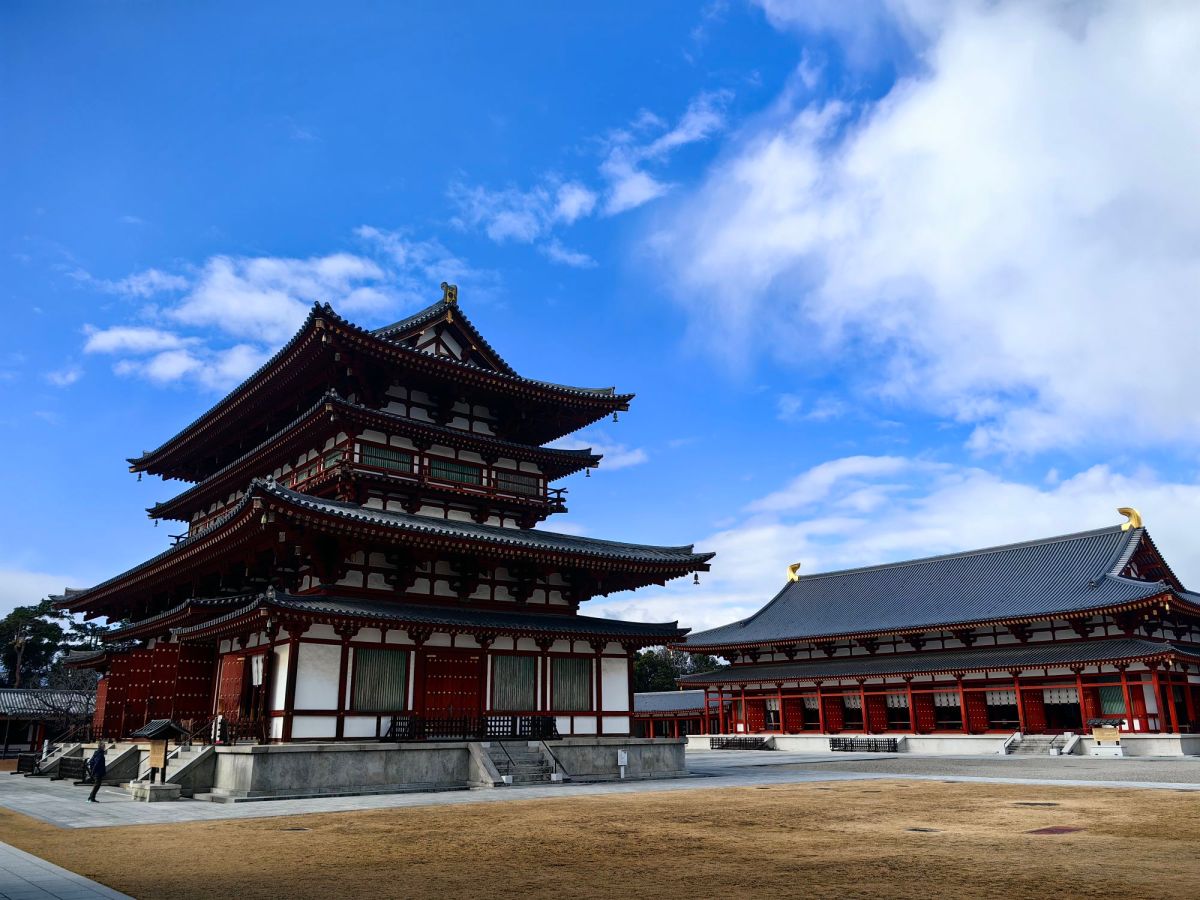
The temple complex of Yakushi-ji unfolded before me in a graceful and carefully ordered arrangement. The buildings including the Golden Hall and the Grand Lecture Hall stood along a central axis. Vermilion pillars and white walls stood vividly against the blue sky, while the dark tiled roofs and wooden details gave the complex a more solemn character.
药师寺的寺院建筑群以优雅而井然有序的布局展现在我眼前。包括金堂和大讲堂在内的建筑沿着中央轴线依次排列。朱红色的柱子与洁白的墙壁在蓝天下显得格外鲜明,而深色的瓦屋顶和木质细节,则为整个建筑群增添了一份庄严肃穆的气息。
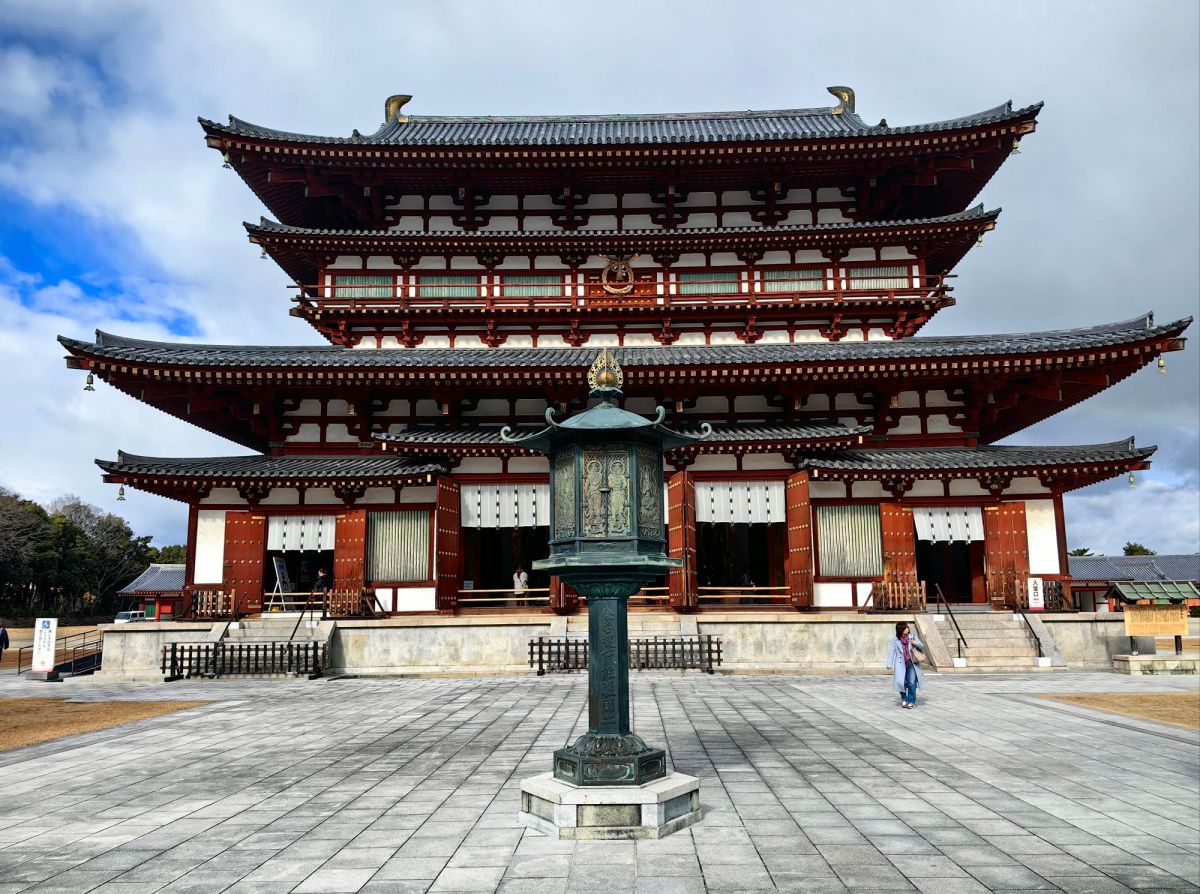
At the heart of Yakushi-ji stood the magnificent Golden Hall. In front of it stood a solitary stone lantern (tōrō), which is modest in size. In Japanese Buddhism, the light of a lantern symbolizes the wisdom of the Buddha, illuminating the darkness of ignorance and guiding those who seek enlightenment. I could always see such a decoration in the Japanese temple. A lantern placed before the main hall helps create a sacred approach, marking the space between the ordinary world and the Buddha’s realm.
药师寺的中央矗立着宏伟的金堂。金堂前立着一盏孤独的石灯笼,虽然体量并不大,却格外引人注目。在日本佛教中,灯笼所散发的光象征着佛陀的智慧,照亮无明的黑暗,并为寻求觉悟之道的人指引方向。在日本的寺院里,我总能看到类似的装饰。将一盏石灯置于主殿之前,不仅营造出一种神圣而庄严的入殿空间,也象征着从世俗世界通往佛陀境界之间的过渡。
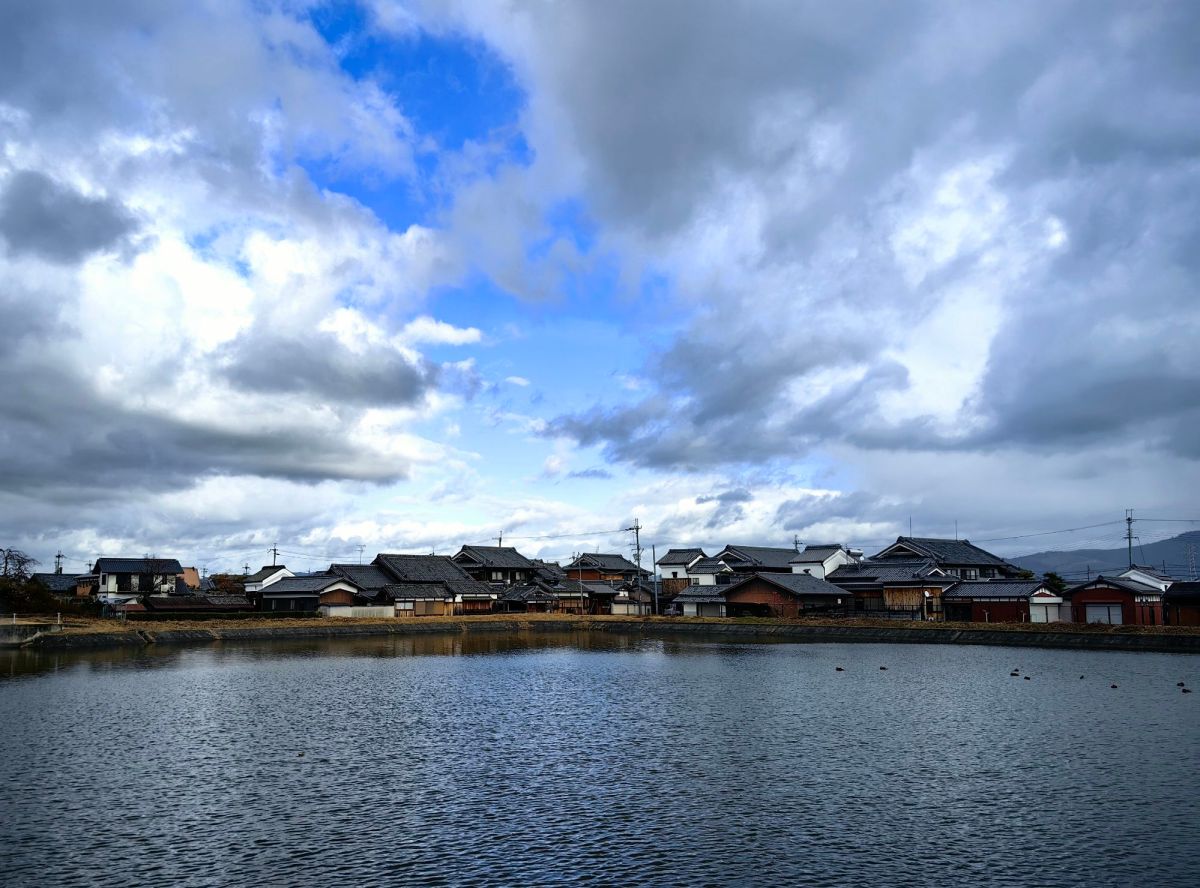
Outside Yakushi-ji, Kannon-ike Pond nearby offered a rustic scene far removed from the grandeur of the temple buildings. The quiet water reflected the surrounding trees and the changing sky, while along its edge stood traditional Japanese wooden houses. Their restrained appearance seemed to belong naturally to the old landscape, as though they had been standing beside the pond for generations. The scene felt like a small corner of old Nara that had escaped the rush of modern life, preserving the simplicity of the past.
药师寺外的观音池呈现出一派乡野景象,与寺院建筑的宏伟气势截然不同。平静的池水倒映着周围的树木和变幻莫测的天空,池畔则坐落着传统的日本木屋。它们朴素而内敛的外观,仿佛天然属于这片古老的景致,像是已经在池边静静伫立了数代之久。眼前的景色仿佛是奈良古老风貌中的一处小小角落,避开了现代生活匆忙的脚步,保留着属于过去的宁静与质朴。
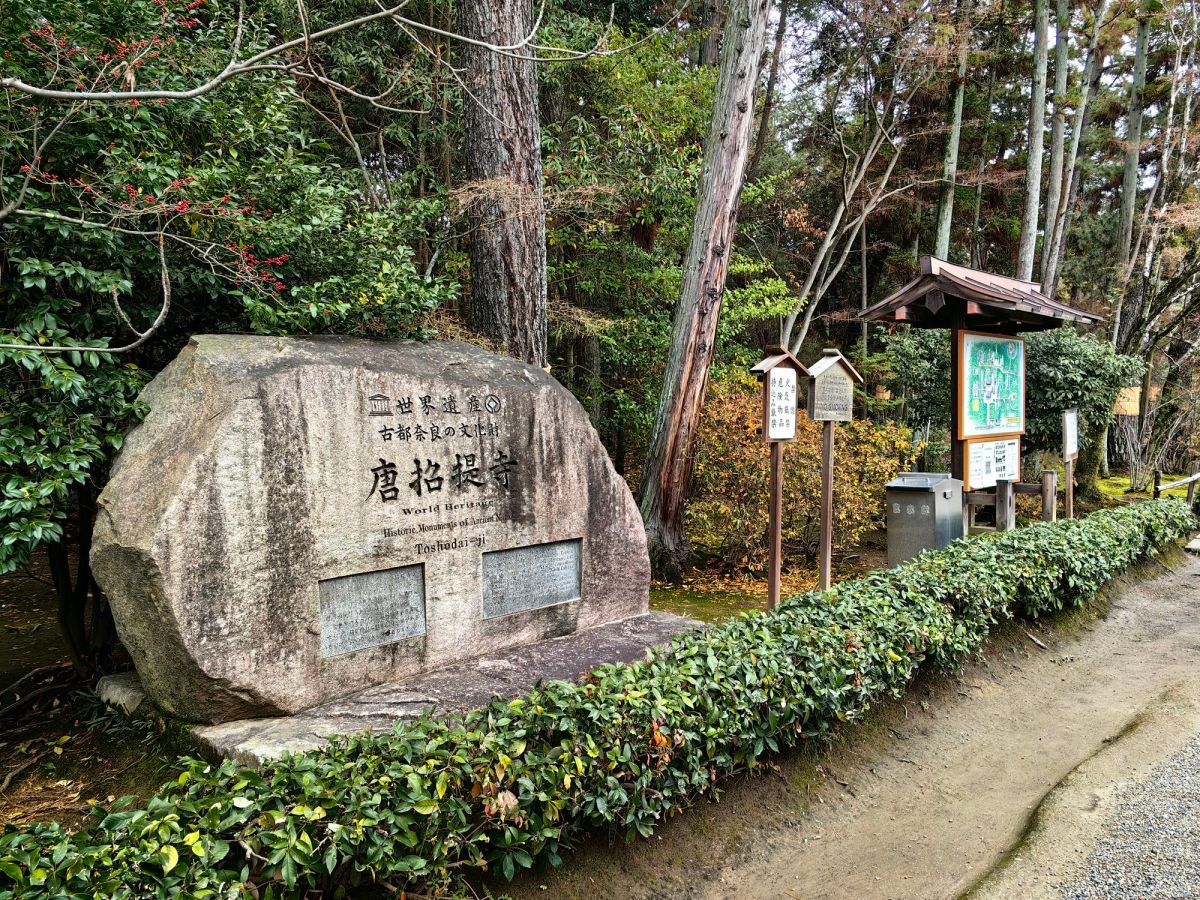
From Yakushi-ji, I continued toward Tōshōdai-ji, another important temple of Nara’s ancient Nishinokyō district. Both temples form part of UNESCO’s World Heritage property, the “Historic Monuments of Ancient Nara,” inscribed in 1998. The temple was nearby, but even its name immediately transported me to a much more distant world. Written as 唐招提寺, the first character, 唐, refers to the Tang dynasty, while 招提 is an ancient Buddhist term connected with a monastic community, giving the name the sense of a temple associated with monks invited from Tang China. For a Chinese speaker, the characters were immediately familiar, creating a curious feeling of recognition across more than a thousand years of history.
离开药师寺后,我继续前往唐招提寺。这是奈良古老的西京地区另一座重要寺院。两座寺院都属于联合国教科文组织世界遗产“古都奈良的文化遗产”的一部分,该遗产于1998年列入世界文化遗产名录。唐招提寺距离药师寺并不远,但仅仅看到它的名字,我的思绪便仿佛立刻被带到了一个遥远的时代。寺名写作“唐招提寺”,其中第一个字“唐”自然指的是唐朝,而“招提”则是一个与僧团、寺院共同体有关的古老佛教用语,因此这个名字也带有“与从中国唐朝受邀而来的僧侣有关的寺院”之意。对于一个中文使用者来说,这些汉字显得格外熟悉。在相隔一千多年的历史长河之间,游客竟产生了一种奇妙的似曾相识之感。
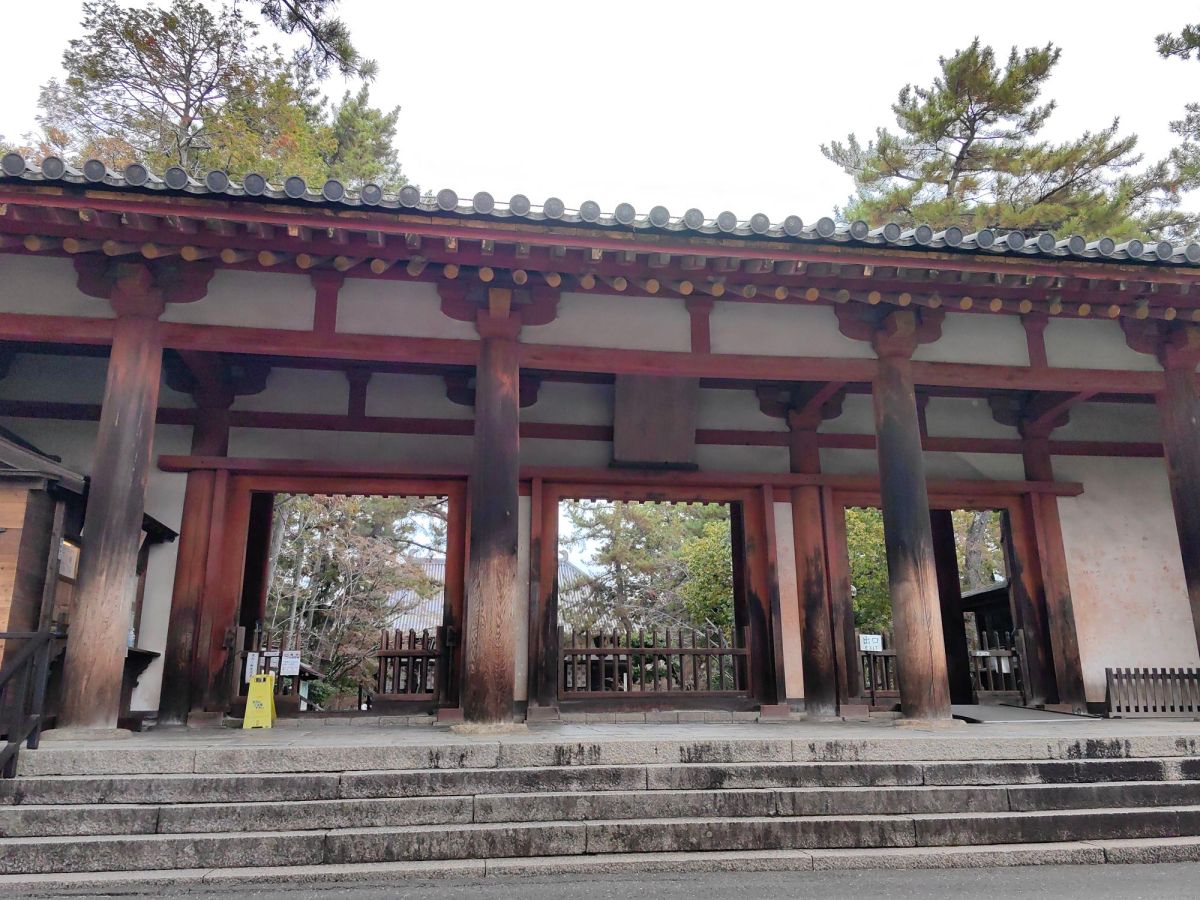
The Nandaimon of Tōshōdai-ji stood quietly at the entrance to the temple grounds, welcoming visitors into one of Nara’s most important Buddhist sites. Compared with the enormous Nandaimon of Tōdai-ji, this gate was more restrained and elegant, with a simple wooden structure, dark tiled roof, and graceful proportions. Its understated appearance seemed perfectly suited to the reserved character of Tōshōdai-ji. Passing through the gate, I felt a subtle transition from the ordinary streets outside into a quieter world of ancient trees, weathered wooden buildings, and long Buddhist history.
唐招提寺的南大门静静地矗立在寺院入口处,迎接着前来参访奈良这座重要佛教圣地的游客。与东大寺气势恢宏的南大门相比,这座门显得更加内敛而雅致,简朴的木质结构、深色的瓦屋顶以及匀称优美的比例,共同营造出一种含蓄的气质。穿过这座大门时,我感受到了一种微妙的空间转换,从外面寻常的街道,进入了一个更加静谧的世界。古老的树木、饱经岁月洗礼的木质建筑,以及深厚的佛教历史,都让这里仿佛与外界隔开。
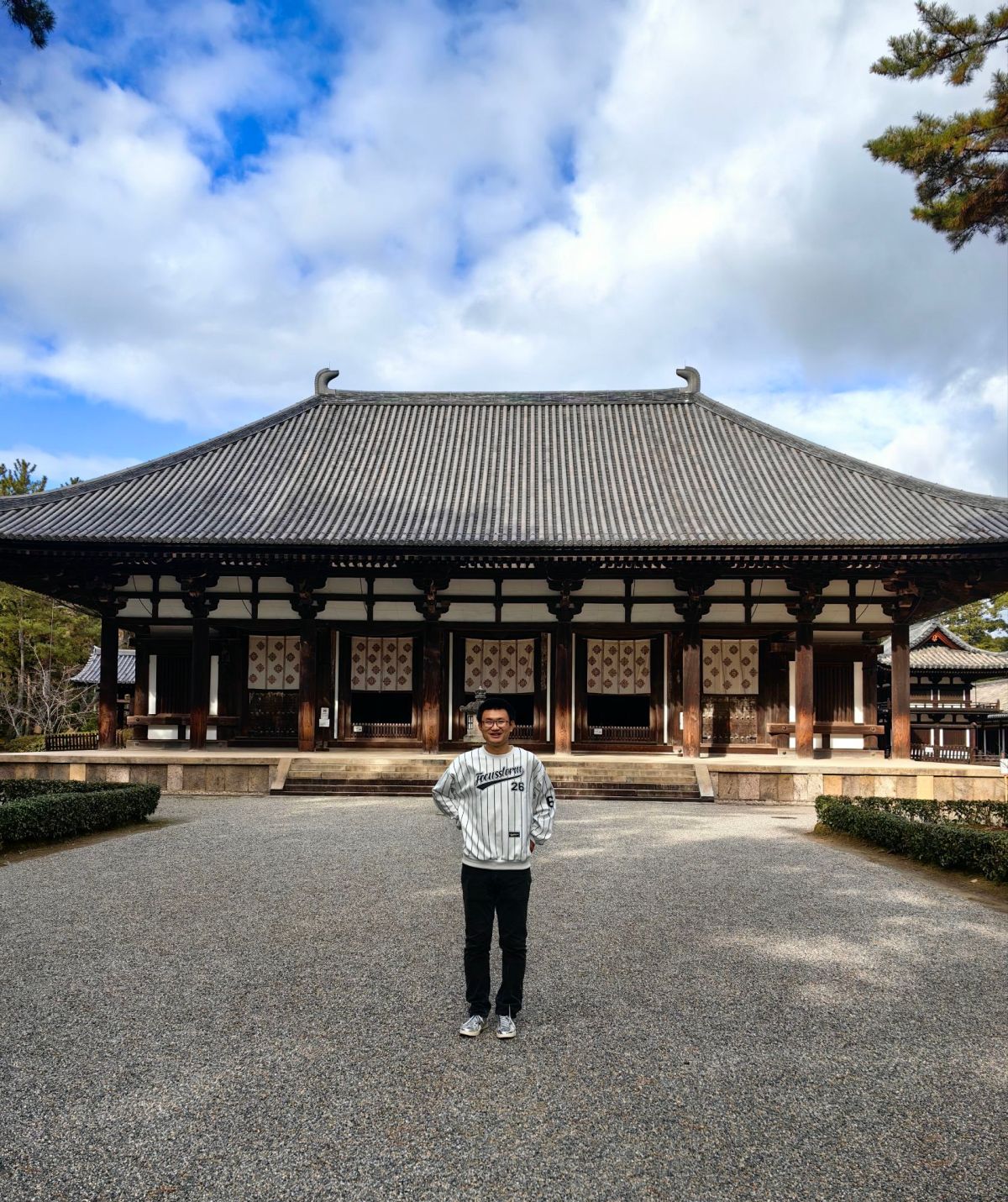
At the heart of Tōshōdai-ji stood the magnificent Golden Hall, the hall completed in Nara period has survived for more than twelve centuries and remains one of the finest expressions of ancient Japanese Buddhist architecture. There was little unnecessary decoration, allowing the elegant proportions, dark timber, and sweeping roofline to speak for themselves. Standing before it, I could see the influence of the Tang Dynasty that had shaped so much of Nara’s early architecture: the ordered symmetry, monumental wooden construction, deep eaves, and sophisticated roof structure. Over centuries, these imported ideas had been absorbed into the Japanese landscape and transformed into something uniquely Japanese.
唐招提寺的中央矗立着宏伟的金堂。这座建于奈良时代的殿堂历经一千两百多年依然保存至今,至今仍是古代日本佛教建筑最杰出的代表之一。建筑本身几乎没有多余的装饰,因此优雅的比例、深色的木材以及舒展的屋顶线条得以充分展现。站在金堂前,我能够清晰地感受到唐朝文化对奈良早期建筑所产生的深远影响:井然有序的对称布局、宏伟的木结构、深远的出檐,以及精巧复杂的屋顶构造。经过数百年的发展,这些源自中国的建筑理念逐渐融入日本的自然与文化景观之中,并最终演变成了独具日本特色的建筑风格。
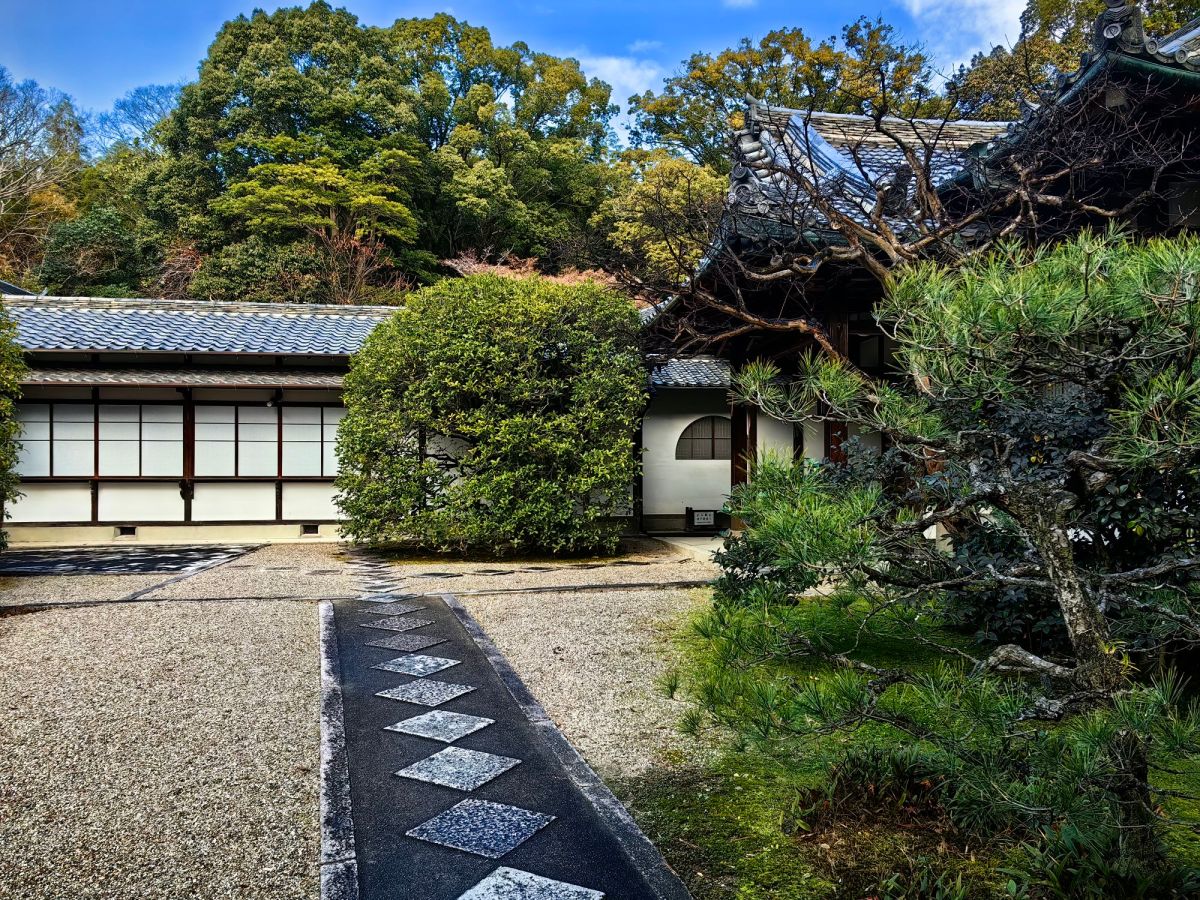
Walking deeper into this temple, I came upon the Kōdō, or Lecture Hall. Built in the late eighth century, the hall originally belonged to the imperial palace of Heijō-kyō before being moved here and transformed into a Buddhist lecture hall. The timber had witnessed more than twelve centuries of changing seasons, while the hall had passed from the world of the emperor into the world of Buddhist learning. It seemed to embody the continuity of Nara’s history, where buildings themselves could carry their stories from one age into another.
继续深入寺院,我来到了讲堂。这座建于8世纪后期的建筑,最初属于平城京的皇宫,后来被迁移至此,并改建为佛教讲堂。这些木制建筑见证了超过一千两百年的四季更迭,而这座建筑本身也经历了从皇室世界到佛教修习之地的转变。它仿佛承载着奈良历史的延续。在这里,建筑本身也能够将属于一个时代的故事,从一个时代延续到另一个时代。
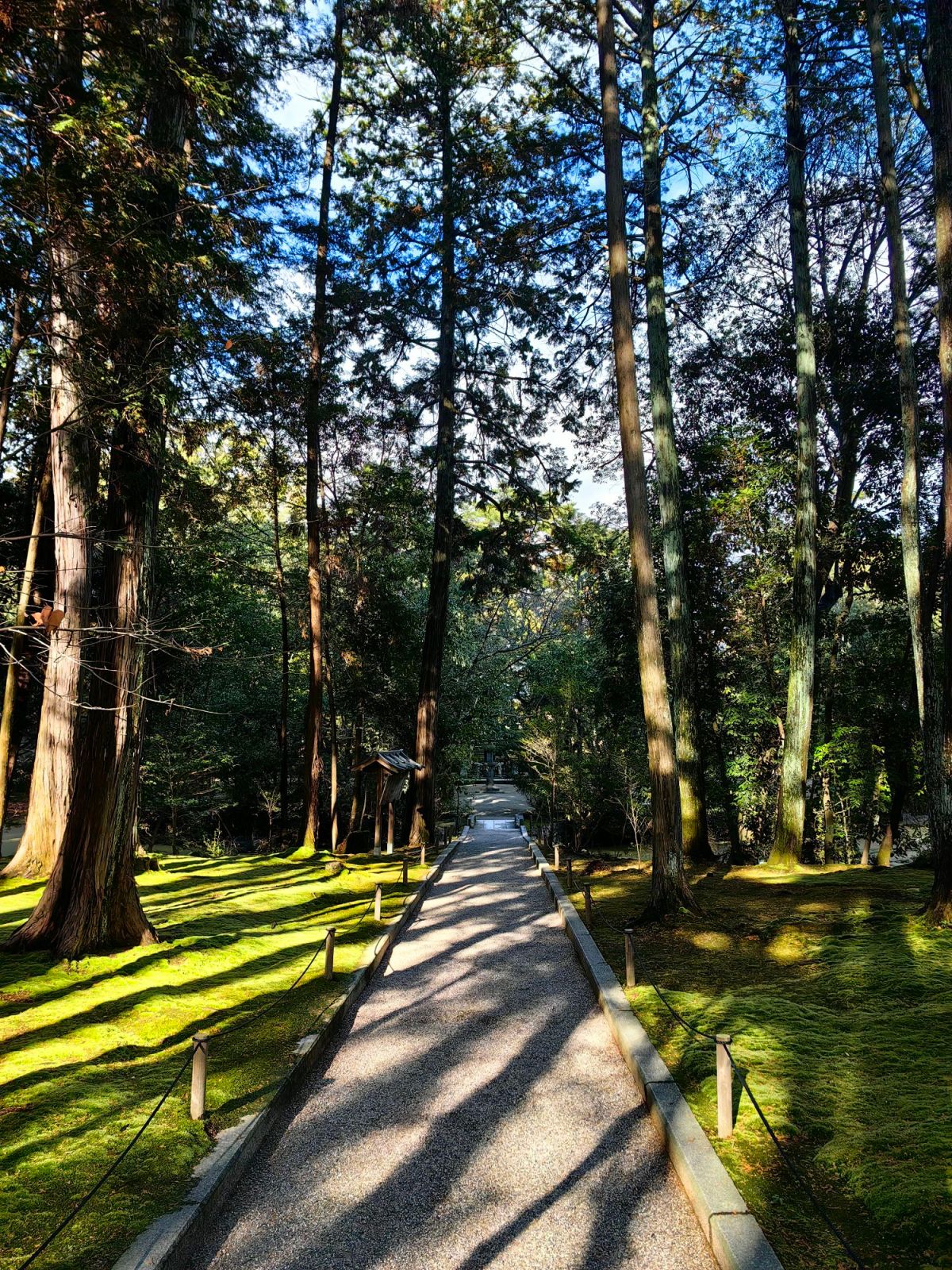
The atmosphere here was very quiet. Narrow paths wound gently through the temple grounds, shaded by tall trees whose branches formed a cool green canopy overhead. Sunlight filtered through the leaves in scattered patches, falling softly across the old stone paths and moss-covered ground.
这里的氛围特别宁静。狭窄的小径蜿蜒穿过寺院,参天的树木为道路撑起一片清凉的绿色树冠。阳光透过层层叶片洒落下来,在古老的石板路和覆满青苔的地面上留下斑驳而柔和的光影。
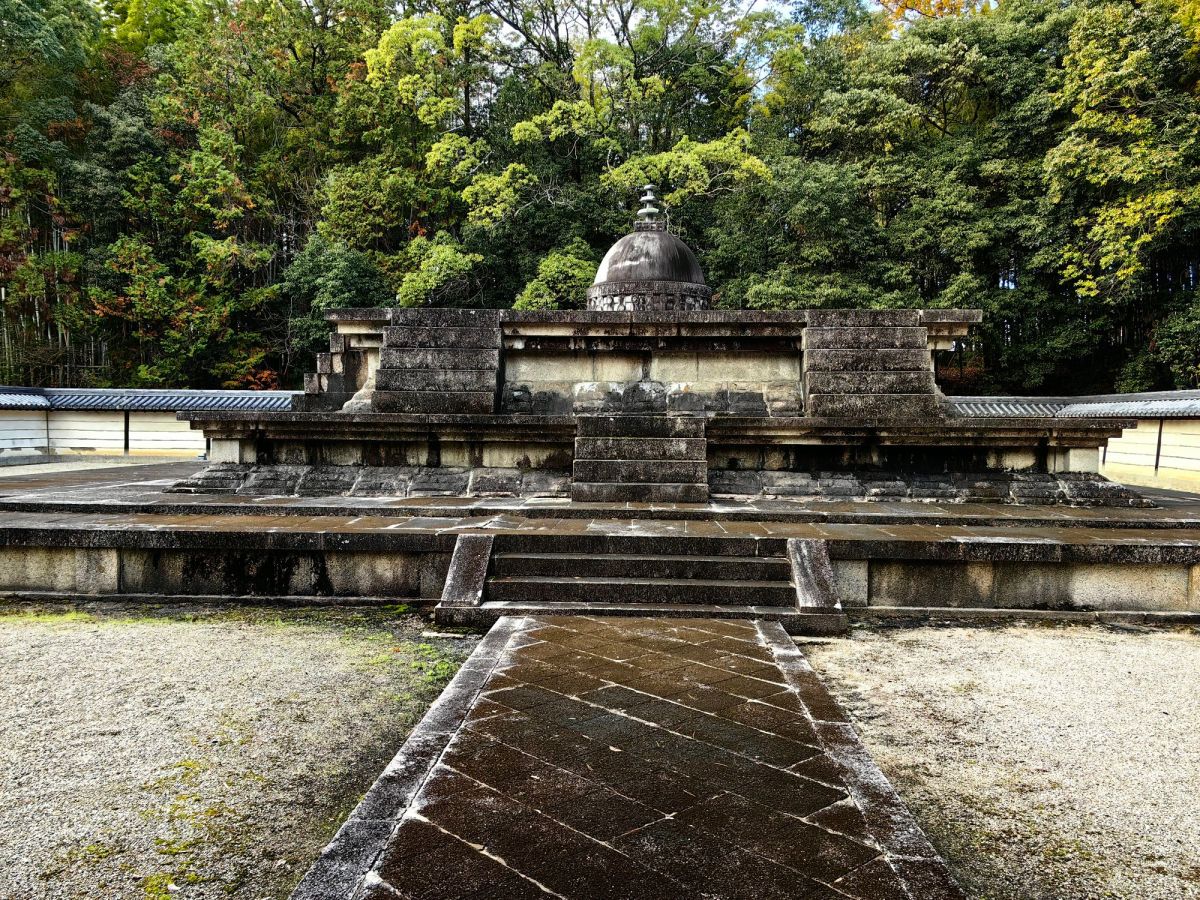
Tōshōdai-ji was founded by the Chinese monk Jianzhen, who travelled to Japan in the eighth century, bringing with him Buddhist teachings, religious practices, and knowledge from the Tang Dynasty. He had attempted to travel from Tang China to Japan five times, enduring storms, shipwrecks, illness, and eventually losing his eyesight. Even after all these hardships, he continued his journey and finally reached Japan in 754. The Ganjin Wajō Gobyō is the mausoleum of Jianzhen. It lies at the end of a quiet, wooded path within the temple grounds. As I stood in front of it, I felt that I was not simply moving from one Nara temple to another, but following an ancient cultural bridge that once connected Nara Japan with Changan China.
唐招提寺由中国高僧鉴真创建。8世纪时,他远渡日本,将佛教教义、宗教仪轨以及唐朝的文化与知识带到了日本。在从唐朝前往日本的过程中,他曾五次尝试渡海,经历了暴风雨、海难和疾病,最终甚至失去了视力。然而,即使经历了如此多的磨难,他依然没有放弃,继续踏上前往日本的旅程,并于754年最终抵达日本。鉴真和尚墓所位于寺院内一条幽静的林荫小径尽头。当我站在墓前时,我感觉自己并不只是在从奈良的一座寺院走向另一座寺院,而是在沿着一座古老的文化桥梁前行。这座桥梁曾经连接着日本的奈良与中国的长安。
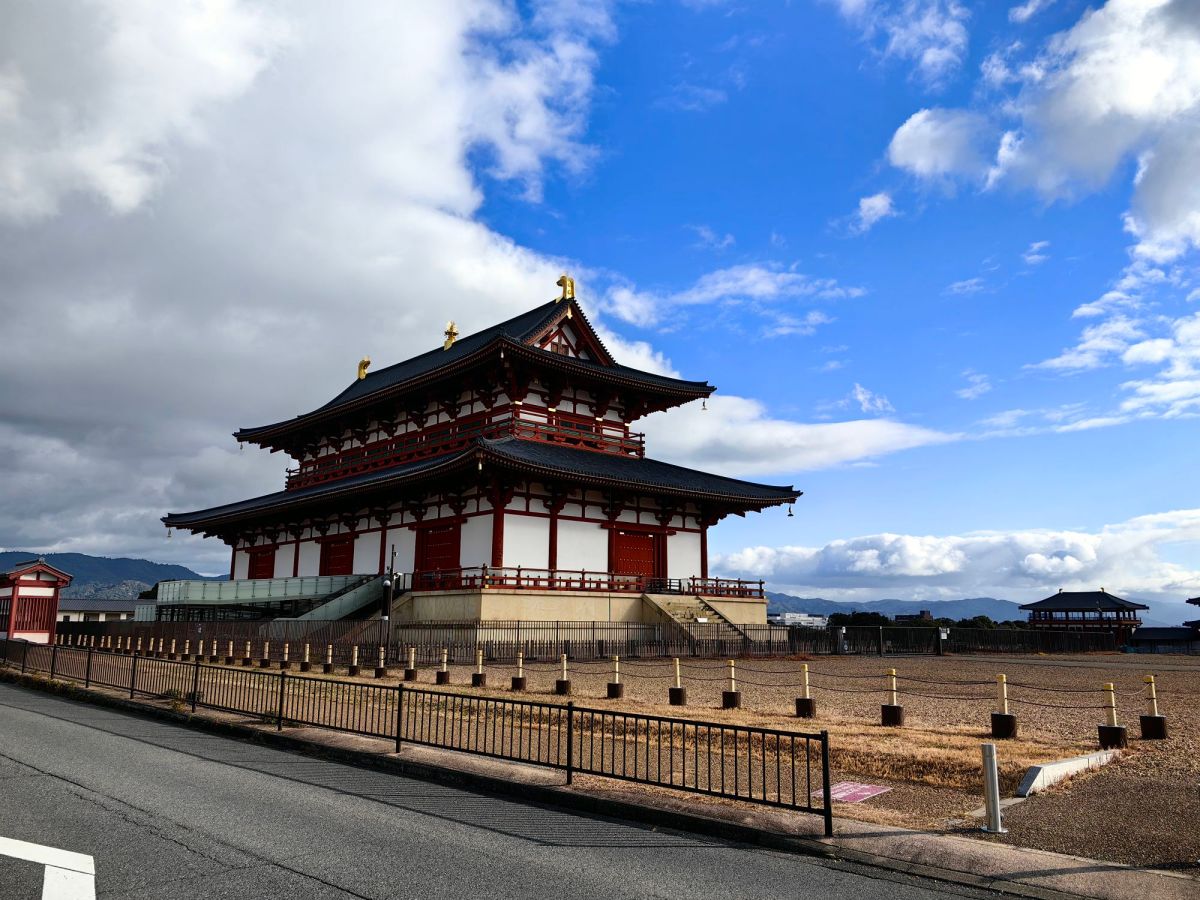
Afterwards, I took the train to the Heijō Palace Site Historical Park, the final major attraction of my Nara journey. After spending the day among ancient temples, I was curious to see the place where the political heart of eighth-century Nara had once stood. I entered the vast site from the northern side, beginning at the First Daigokuden, the reconstructed Great Audience Hall. The enormous open landscape was strikingly different from the shaded temple grounds of Yakushi-ji and Tōshōdai-ji.
之后我乘坐火车前往平城宫遗址历史公园,这里是我此次奈良之旅的最后一个景点。在古老的寺院之间度过一天之后,我很好奇并想亲眼看看那个曾经作为8世纪奈良政治中心的地方。我从北侧进入这片广阔的遗址,首先来到复原后的大极殿。眼前开阔的景观,与药师寺和唐招提寺幽深、荫凉的寺院环境形成了鲜明的对比。
As I learned more about the history of Nara, I began to see that the city was the result of a much larger transformation in Japan. One of the important turning points came in 645 with the Taika Reforms. The reforms sought to strengthen the authority of the imperial court and create a more centralized system of government, drawing in part on political and administrative ideas from the continental world. This new political order eventually found its physical expression in the capital of Heijō-kyō, established in Nara in 710. The city was carefully planned, with a great imperial palace, government offices, temples, and broad avenues arranged along a formal grid. All these interesting historic events happened thousand years ago in the place in front of me.
随着对奈良历史了解得越来越深入,我意识到这座城市其实是日本历史上一场更大规模转型的结果。这个重要的转折点出现在645年的大化改新。大化改新这场政治改革加强朝廷的权力,并建立更加中央集权的政府体系,它同时也部分借鉴了来自中国的政治思想。随着这一系列新的政治秩序逐渐形成,它的成果最终在平城京这座都城中得到了具体体现。平城京于710年在如今的奈良建立,城市经过精心规划,设有宏伟的皇宫、政府官署、寺院以及按照规整棋盘式布局延伸的宽阔街道。此刻在我眼前的这片土地上曾经发生过这些令人着迷的历史事件,而那一切,已经是千年以前的故事了。
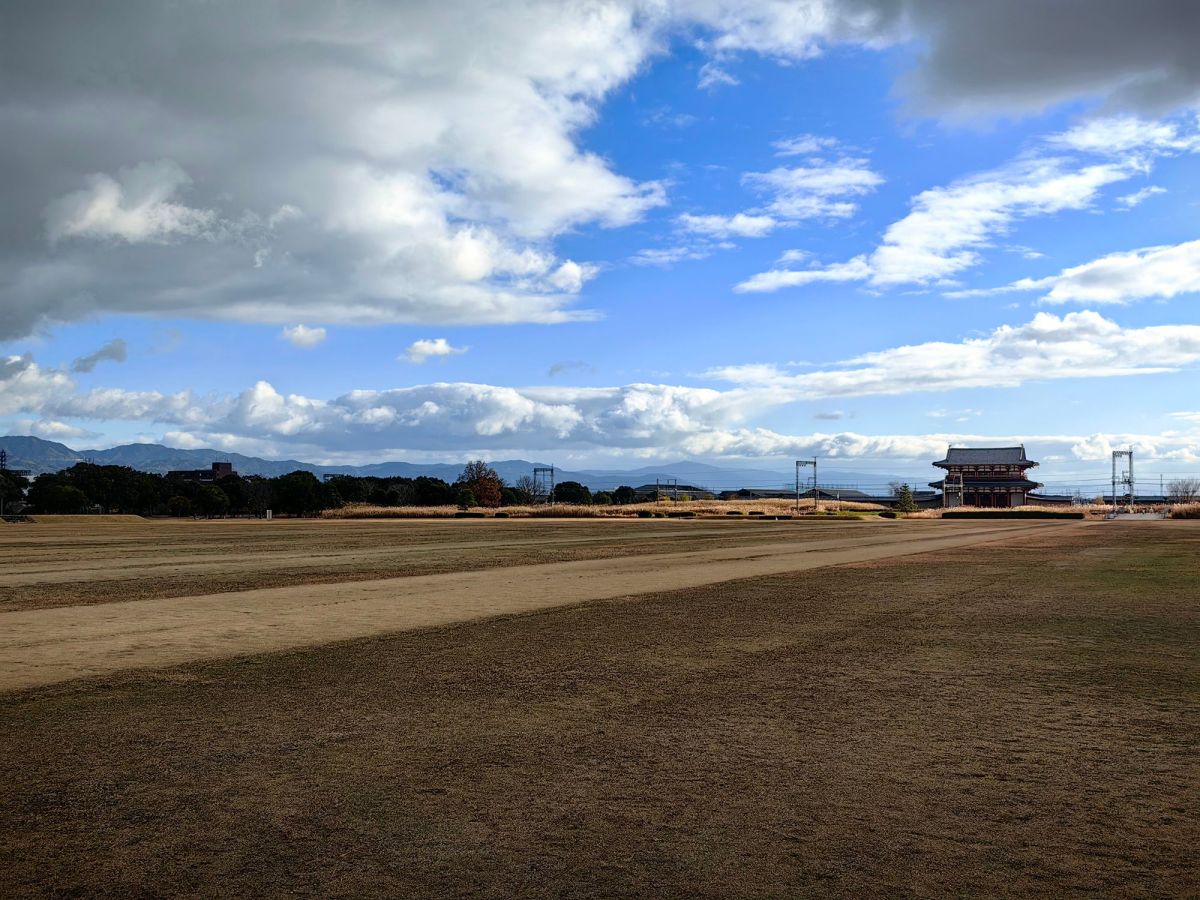
Here, there were broad expanses of grass and sky, with the remains and reconstructions of the ancient palace scattered across the former capital. There were few tourists. As I walked through the grounds, it was easy to imagine the imperial city that once stood here—the ceremonies, officials, and daily activities of a capital that flourished more than twelve centuries ago. Yet much of the original city has disappeared, leaving only traces beneath the open landscape. Perhaps this absence made the passage of time feel even more tangible.
这里是一片开阔的草地与天空,昔日都城的遗迹和复原后的宫殿建筑散落在这片古老的土地上。游客并不多。漫步在遗址之间,我很容易想象出曾经矗立于此的帝都,那些盛大的仪式、往来的官员,以及一座繁荣于一千两百多年前的都城中所发生的日常活动。然而,往昔城市的大部分建筑早已消失,只留下些许痕迹隐藏在这片开阔的景观之下。或许正是这种缺憾,让时间流逝的痕迹变得更加真实而触手可及。
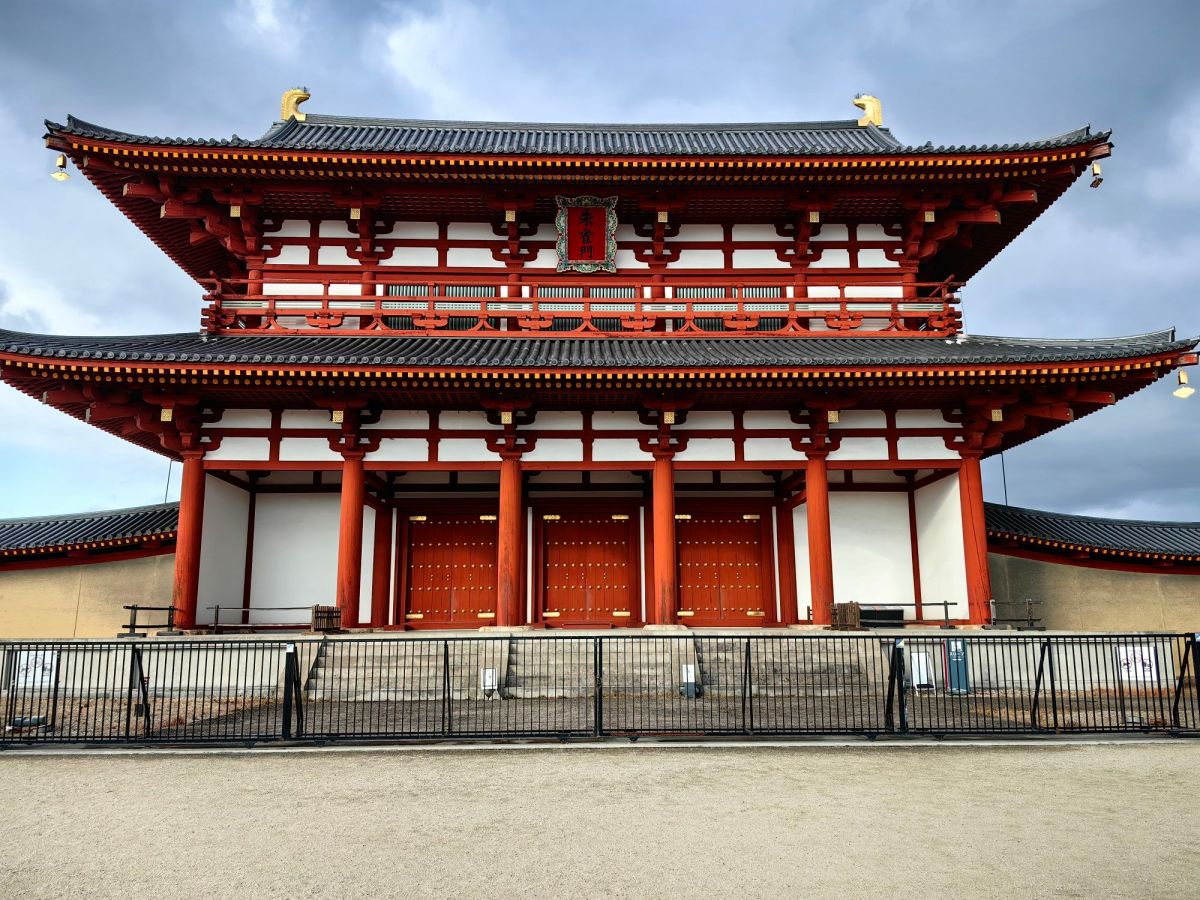
Standing before the magnificent Suzakumon Gate, I was reminded that Nara was once much more than an isolated Japanese capital. The gate was the southern main entrance to the Heijō Palace, opening onto Suzaku Avenue, the great north-south axis of Heijō-kyō. The avenue was once an enormous ceremonial road, about seventy metres wide, running straight through the ancient capital. The name itself carried a connection to China: 朱雀, “Vermilion Bird,” was the sacred creature associated with the south in the traditional East Asian cosmological system. More strikingly, the same name appeared in the great Tang capital of Chang’an, where Zhuque Avenue formed the city’s central north-south axis.
站在宏伟的朱雀门前,我再次意识到,奈良曾经远不只是一个孤立的日本都城。朱雀门是平城宫南侧的正门,正对着朱雀大街。这条道路构成了平城京南北贯通的主要中轴线,它曾是一条规模极为宏大的礼仪大道,宽约70米,笔直地贯穿整座古代都城。它的名字本身便与中国有着深厚的联系:“朱雀”是传统东亚宇宙观中象征南方的神圣灵兽。同样的名称也出现在当时伟大的唐朝都城长安。长安的朱雀大街同样构成了城市南北向的中央轴线。
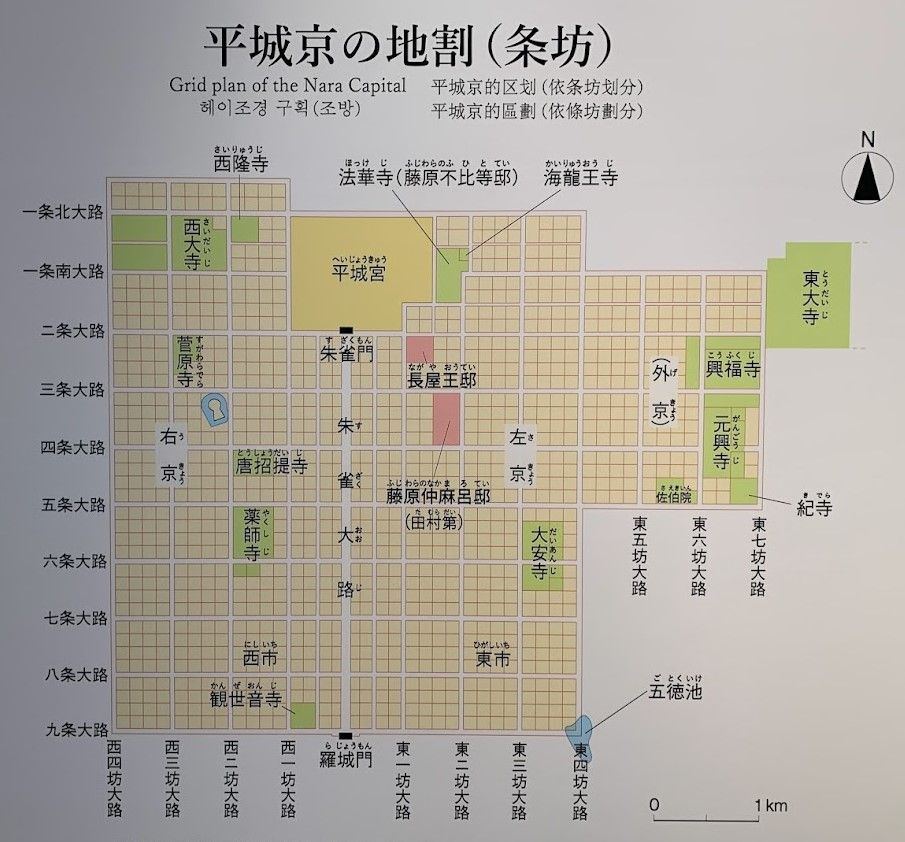
This is the map of Heijō-kyō which had been planned with Chang’an as one of its important models, adopting the continental idea of an orderly city arranged around a powerful central axis. From the map, I could see names of many famous attraction sites like Tōdai-ji, Toshodai-ji and Yakushi-ji. Standing before Suzakumon, I could therefore imagine the ancient avenue stretching straight ahead, with the palace behind the gate and the city unfolding symmetrically to either side. The connection becomes even more fascinating because Zhuque Avenue has not completely disappeared in China. In present-day Xi’an, the modern city still has a major thoroughfare called Zhuque Street, preserving the name and much of the historical north-south axis of Tang Chang’an.
这是一幅平城京的地图。平城京在规划时,以长安作为重要的参考范本,借鉴了唐朝城市规划中井然有序的布局理念,将整座城市围绕一条强大的中央轴线展开。从地图上,我可以看到许多著名景点的名称,例如东大寺、唐招提寺和药师寺。站在朱雀门前,我因此能够想象出古代的朱雀大路笔直地向前延伸,宫殿坐落在大门之后,而整座城市则以对称的方式向道路两侧展开。而这段联系之所以令人神往,正是因为中国的朱雀大街并没有完全消失。在今天的西安,现代城市中依然有一条重要的道路被称为朱雀大街,完美保留了这个名称,也在很大程度上延续了唐长安城历史上的南北向城市轴线。
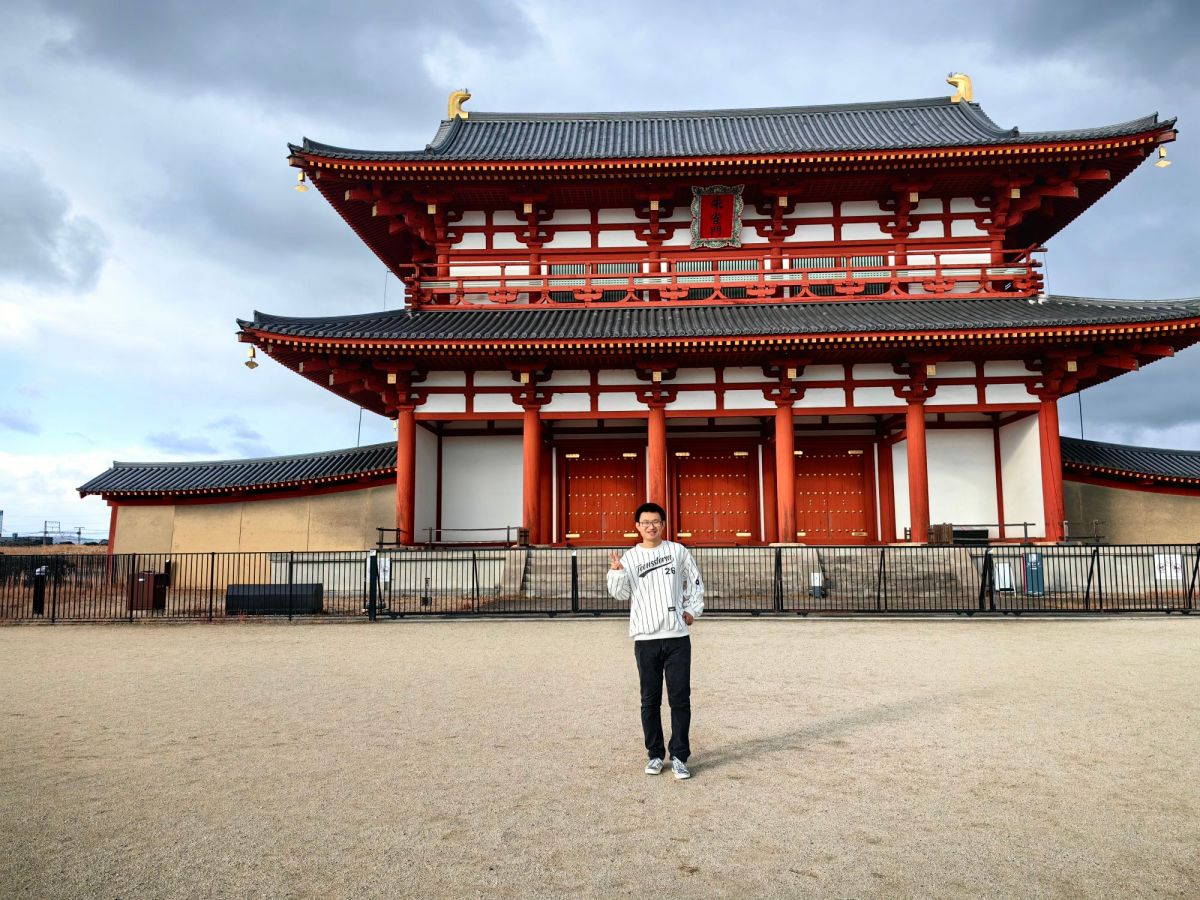
This was one of the most fascinating moments of my journey: history was no longer something I had only read about in books. I felt as though two ancient capitals, separated by the sea, were briefly connected through a single name. More than twelve centuries ago, ideas of urban planning, architecture, government, and culture travelled from the Tang world to Japan. Today, the reconstructed gate in Nara and the surviving name of Zhuque Street in Xi’an offer two distant echoes of that extraordinary period of cultural exchange. This is what makes travelling to historical places so rewarding for me: a name, a building, or a street can suddenly bring something I once encountered in a history book to life. For a moment, the past no longer felt distant, and it was standing directly in front of me.
这是我这次旅程中最有趣的地方:历史不再只是我曾经在书本上读到过的内容。我仿佛感觉到,两座隔海相望、距今千年的古都,竟因为同一个名字而在这一刻短暂地连接在了一起。一千两百多年前,城市规划、建筑学、政治制度与文化思想从唐朝传播到了日本。如今奈良重建的朱雀门与西安至今保留的“朱雀大街”这一名称,仿佛成为那个璀璨文化交流时代遥远的两声回响。这也对我而言打卡这些历史名城如此有意思的原因:一个名字、一座建筑,或者一条街道,都可能在某个瞬间,让我曾经在历史书中读到的故事突然变得鲜活起来。那一刻,过去仿佛不再遥远,而是真真切切地展现在了我的面前。
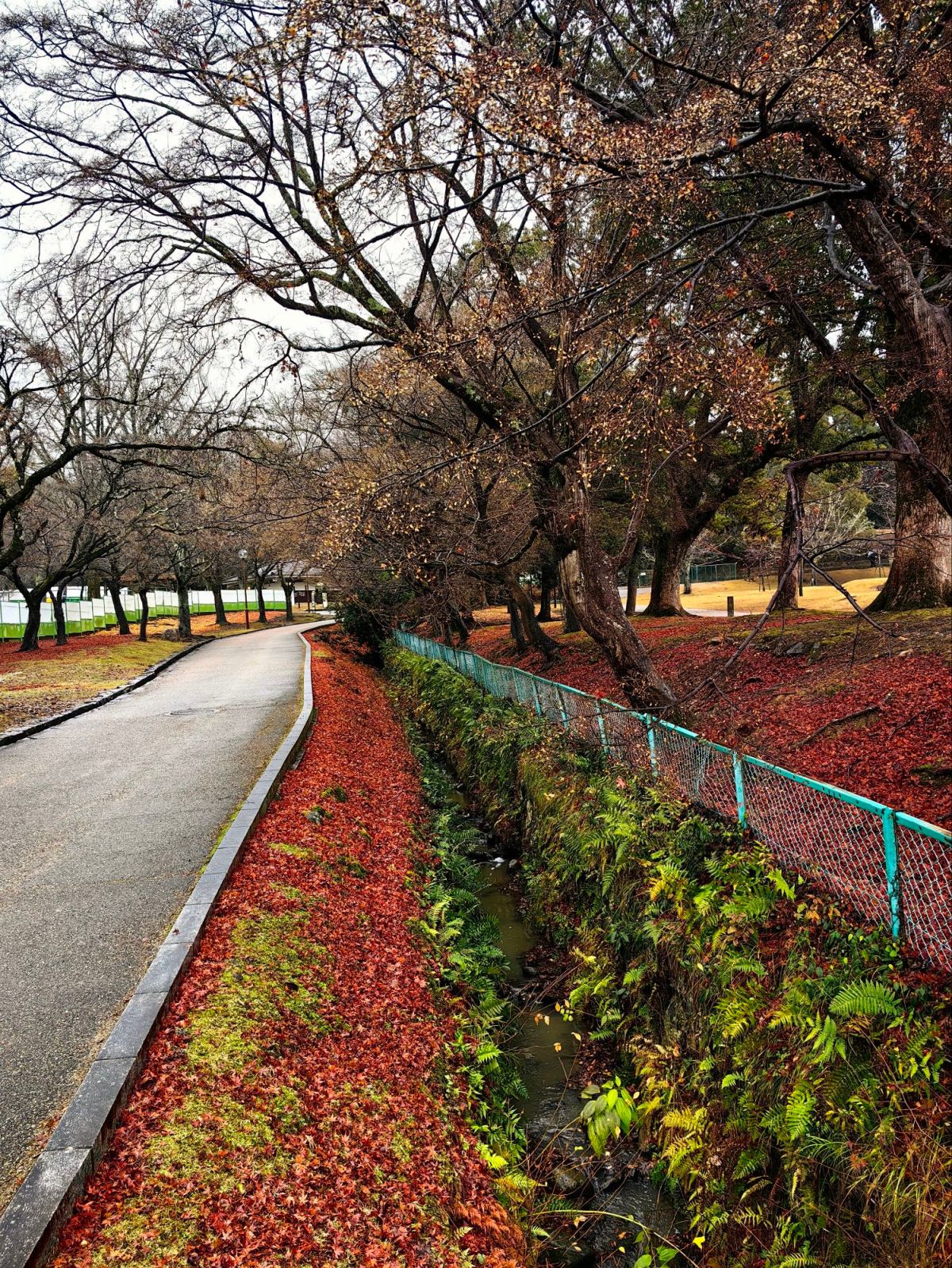
After completing a full day of exploring Nara, I still had some time before sunset, so instead of returning directly to my hotel, I wandered freely along the small lanes around the city. There was no particular destination and no need to follow a schedule. The narrow paths were lined with forests, with fallen red leaves scattered across the green grass and occasional patches of sunlight filtering through the trees. The late afternoon light softened the landscape.
结束了一整天的奈良文化之旅后,距离日落还有一些时间,所以我没有直接回酒店,而是随意漫步在城市周围的小巷中。没有特定的目的地,也不需要赶着行程。狭窄的小路两旁是茂密的树林,零散飘落的红叶铺在绿色的草地上,偶尔有几缕阳光穿过树梢洒落下来。午后将近傍晚的光线让整个景色变得柔和起来.
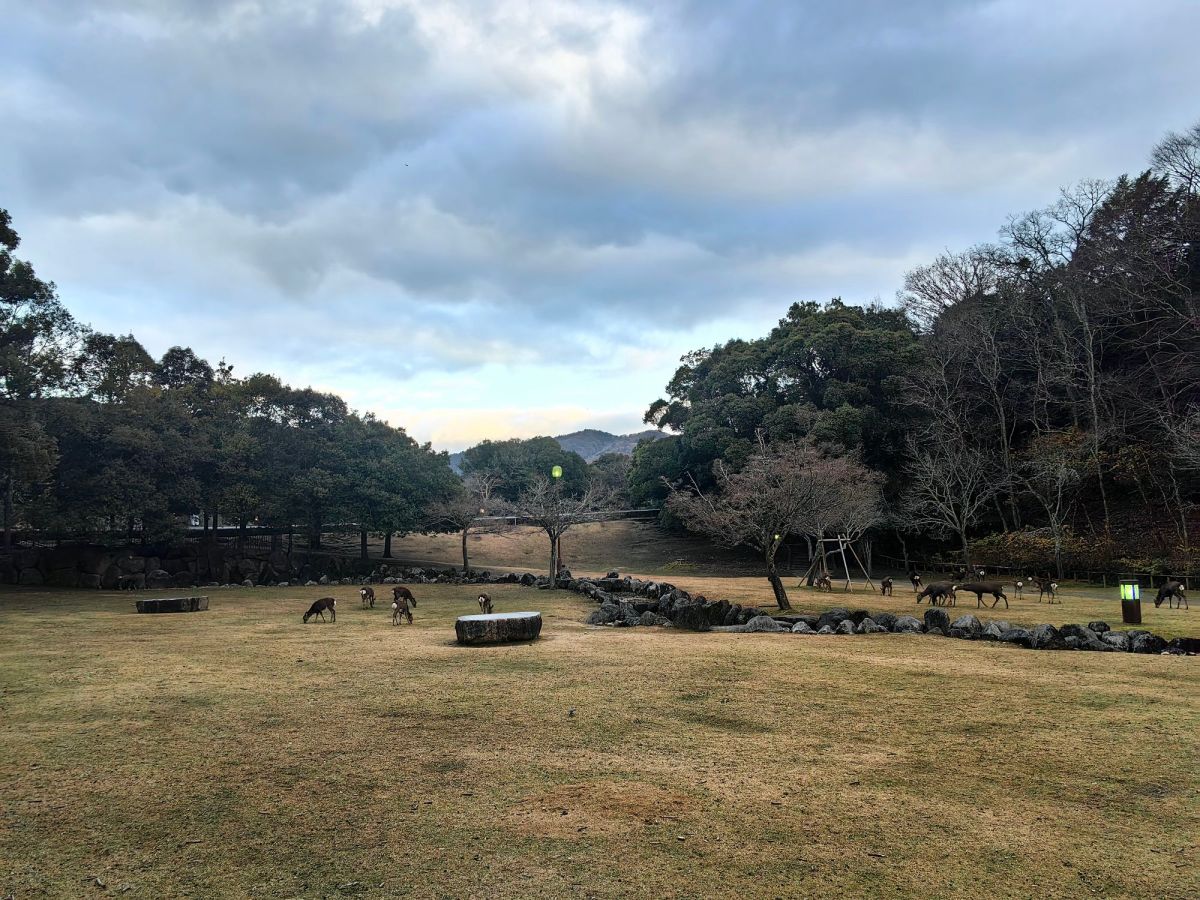
As the afternoon slowly gave way to sunset, many deer lay lazily on the grass, completely undisturbed by the people passing nearby. The soft evening light gradually illuminated the Noborioji park, casting a warm glow over the green landscape. In the distance, Mount Wakakusayama appeared faintly beyond the open fields, its gentle slopes partially hidden by clouds and the fading light of the sunset. I lingered there for a longer time. The deer resting on the grass, the open green space, the distant mountain disappearing into the clouds, and the quiet atmosphere created one of the most treasured moments of my journey through Japan. It was a rare feeling of being completely free and undisturbed, able to admire nature and let time pass without hurry.
随着日暮缓缓来临,许多鹿慵懒地躺在草地上,对从身旁经过的人们毫不在意。柔和的灯光渐渐照亮了奈良公园,温暖的光线洒在一片翠绿的景色之上。远处,若草山隐约出现在开阔的原野尽头,平缓的山坡部分隐没在云层以及逐渐褪去的夕阳余晖之中。我在此处逗留了很久。草地上悠闲休息的鹿、开阔的绿色空间、渐渐消失在云雾中的远山,以及四周宁静的氛围,共同构成了我这次日本之旅中最珍贵的时刻。那是一种难得的自由与宁静,没有任何打扰,也没有任何催促,我只是在不紧不慢的时间流逝中静静地欣赏着眼前的自然美景。
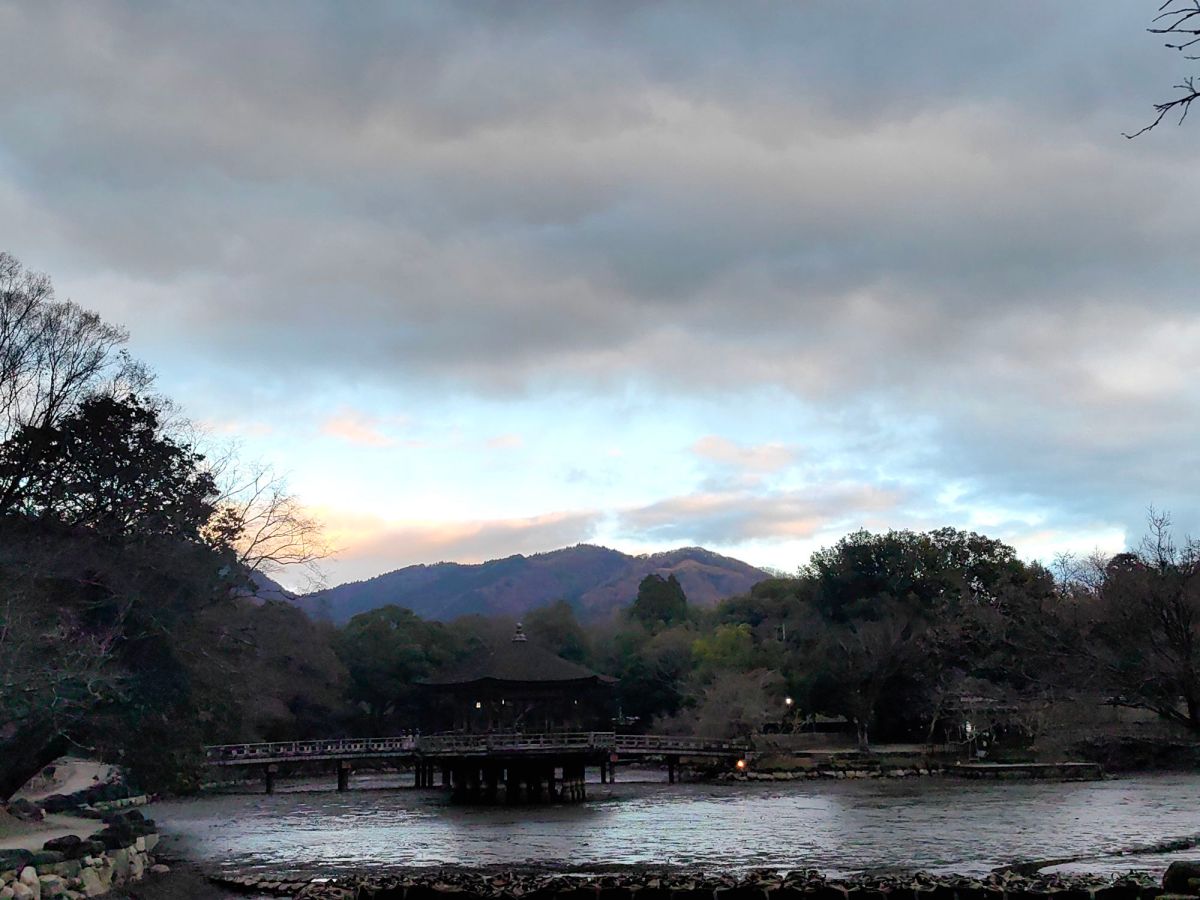
Looking back on my journey, this quiet evening in the Noborioji Park left the deepest impressions on me. Nara had given me magnificent temples, ancient architecture, cute deer, and a remarkable sense of history, but it was perhaps this simple landscape at sunset that stayed with me most strongly. Among all the places I visited in Japan, Nara became my favorite. It is a place where history, natural environment, and everyday life seemed to exist together in perfect harmony.
回顾这次日本之旅,这个宁静夜晚给我留下了最深刻的印象。奈良带给我宏伟的寺院、古老的建筑、可爱的鹿群,以及令人难以忘怀的历史感,但或许正是夕阳下这片简单而宁静的景色,最深地留在了我的记忆中。在我游览过的日本众多地方中,奈良最终成为了我最欣赏的地方。这里是一个历史、自然环境与日常生活和谐共存的地方,三者之间形成了一种近乎完美的平衡。

