
箕面的水声与树影
After spending time in the lively streets of Osaka, I decided to take a break from the crowds and travel to Minoh, a peaceful town surrounded by forested hills just outside the city. Compared to the vibrant streets of Namba and Dotonbori, it felt like another world. My pace slowed, the air became fresher, and the city noise gradually faded away, replaced by the rustling of leaves in the wind and the tranquility of nature.
在大阪熙熙攘攘的街头漫步之后,我决定暂时远离城市的喧嚣,前往箕面。箕面是一座宁静的小镇,坐落在大阪城郊,四周被森林覆盖的山丘环抱。与难波、道顿堀的繁华街道相比,这里仿佛是另一个世界。脚步慢了下来,空气也变得更加清新,耳边的城市喧嚣渐渐远去,取而代之的是风吹树叶的沙沙声和大自然宁静的气息。

After I get off from the train, I arrived at this small town in the north of Osaka. What I particularly enjoyed about Minoh was its tranquility. Compared with Osaka’s famous tourist attractions, Minoh receives far fewer international travelers, and even the popular walking trail can feel surprisingly peaceful. There were moments when I could simply walk along the forest path without being surrounded by tour groups or crowds, but only the swaying shadows of the trees and the rustling sound of foot accompanying me.
下了火车,我便来到了大阪北部的这座小镇。箕面最让我心旷神怡的,便是它难得的宁静。与大阪那些著名的旅游景点相比,这里接待的国际游客少得多,就连热门的徒步路线也显得格外安静。有时,我甚至可以独自沿着林间小路漫步,四周不见旅行团的喧闹,也没有熙熙攘攘的人群,只有树影婆娑和脚下的沙沙声相伴。

The journey to Minoh was not about checking off famous landmarks. Instead, it was about enjoying the simple experience of walking through the forest, listening to the flowing water, watching the leaves move gently in the breeze, and taking my time to appreciate the scenery. Sometimes, the most memorable places on a journey are not the ones filled with people, but the quiet ones where I can slow down and truly feel my surroundings.
箕面之旅并非为了打卡名胜古迹,而是为了享受漫步林间的简单乐趣。聆听潺潺流水,欣赏微风轻拂树叶,放慢脚步,细细品味沿途的风景。有时,旅途中最令人难忘的地方并非人潮涌动之处,而是那些静谧的角落,在那里我可以放慢脚步,真正感受周围的一切。

By December, I had already missed the best time to see Minoh’s famous maple leaves. The brilliant reds and oranges of autumn had largely disappeared from the trees, leaving only memories of the season that had just passed. The ground was covered with a thick carpet of fallen leaves, their faded reds, oranges and browns scattered across the forest path.
到了十二月,我已经错过了观赏箕面著名红叶的最佳时节。秋日里绚丽的红、橙色彩大多已经从枝头褪去,只留下些许对那段绚烂时光的回忆。取而代之的,是铺满地面的厚厚落叶,褪去鲜艳色彩的红、橙与褐色交织散落在林间小路上。
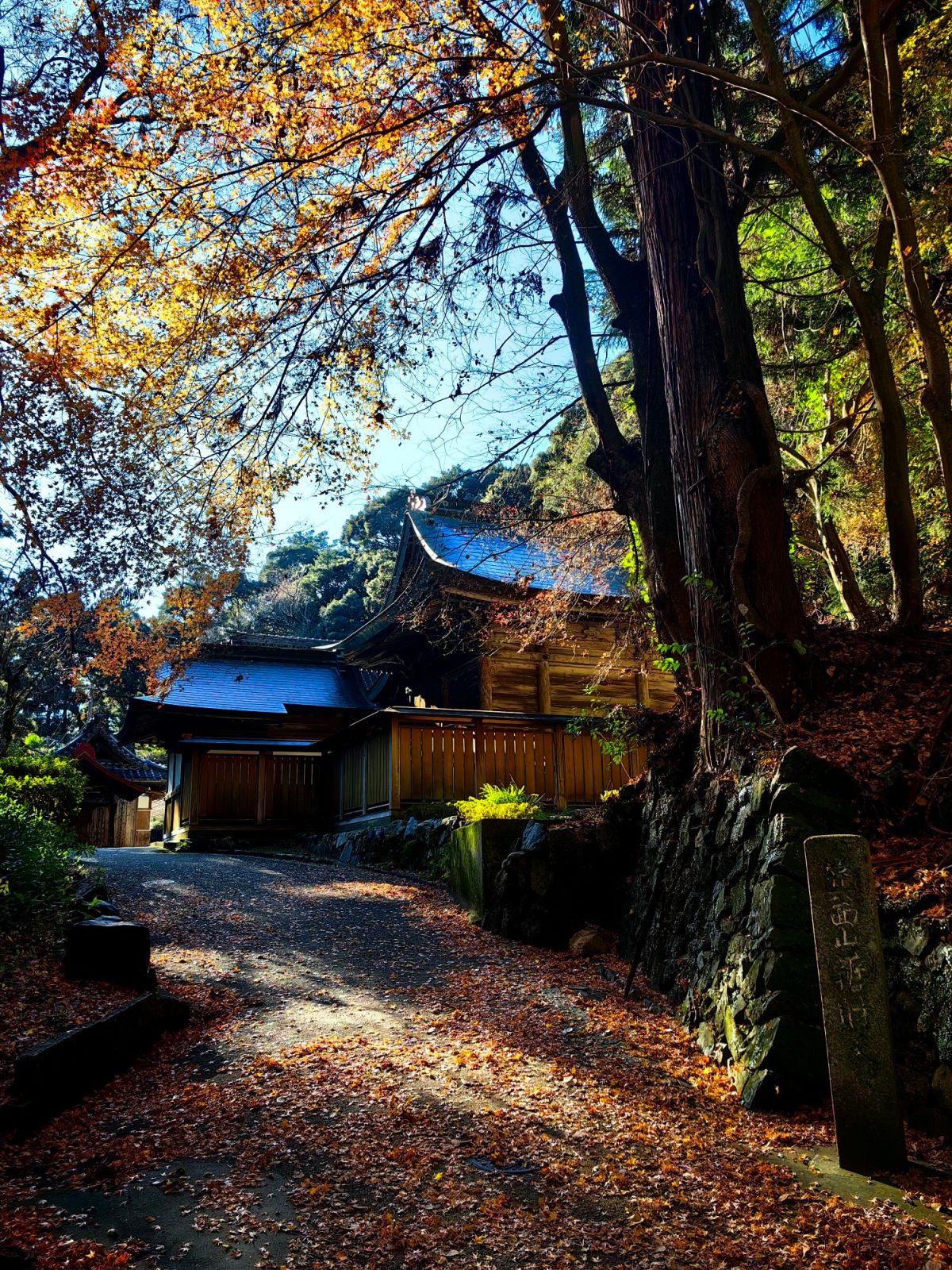
The December morning was a little cold. I could feel the crispness of winter in the air, but the sunlight was warm. Golden rays filtered through the remaining green leaves above me, falling softly onto the path and warmed my face. Looking down at the leaves beneath my feet, I felt that each step made a soft, gentle sound, as if the forest was quietly accompanying my walk. Without the crowds of the autumn season, I could walk slowly and listen to the water, the rustling leaves and the occasional sound of birds.
十二月的清晨有些寒意。空气中弥漫着冬日的清冽,但阳光却温暖宜人。金色的阳光透过头顶残存的绿叶,轻柔地洒落在小径上,温暖着我的脸庞。低头看着脚下的落叶,我感觉每一步都发出轻柔的声响,仿佛整片森林都在静静地陪伴着我。没有了秋季熙熙攘攘的人群,我可以放慢脚步,聆听潺潺的流水声、沙沙的落叶声和偶尔传来的鸟鸣。
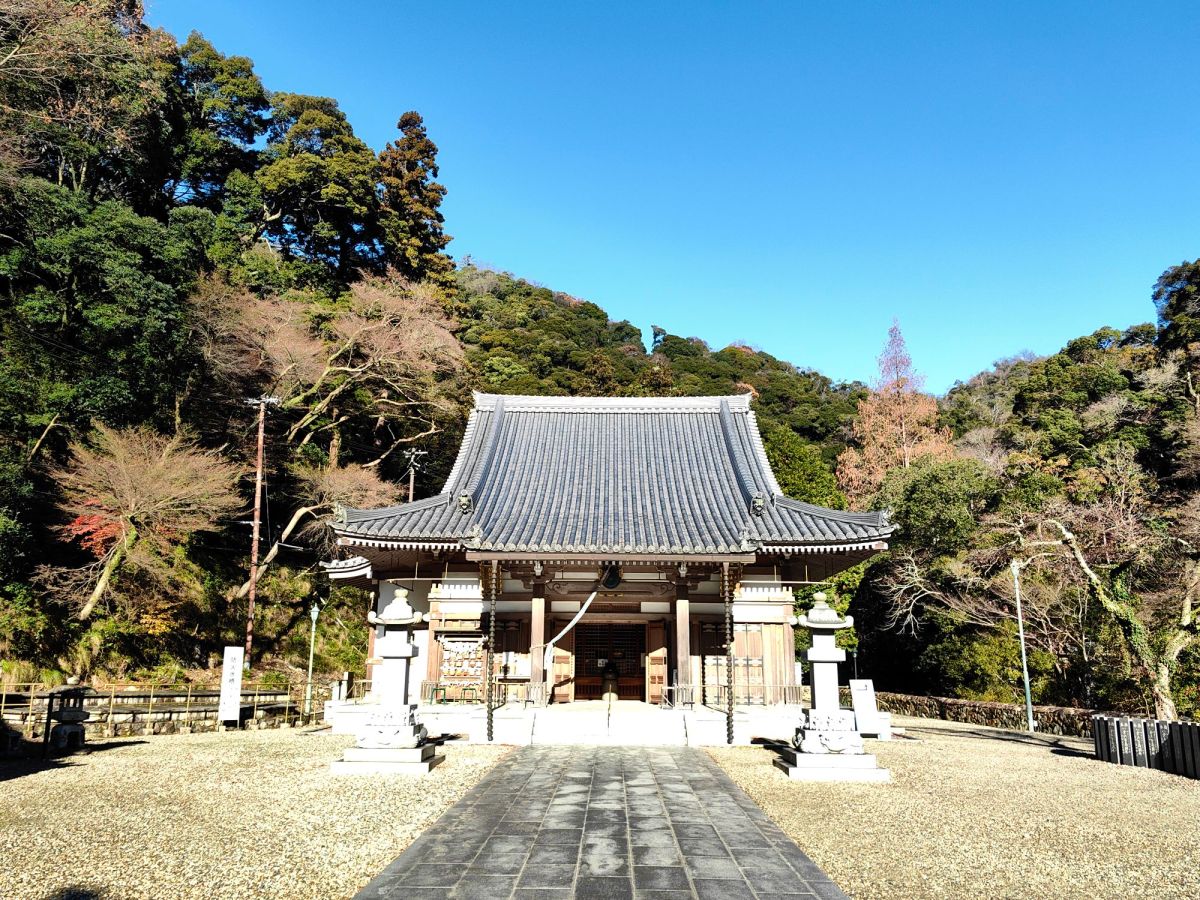
As I walked through Minoh Park, I passed several old temples that were quiet and almost empty, with very few tourists around. The peaceful surroundings made the journey feel unbothered and unhurried. Being able to walk alone through the temples and forest gave me a sense of solitude and allowed me to fully appreciate the beauty of nature.
漫步箕面公园,我经过了几座古老的寺庙。寺庙静谧而空旷,几乎看不到人影,游客也寥寥无几。这样的宁静,让整个旅程多了一份悠闲与从容,没有匆忙赶路的感觉。独自一人穿行于古寺与森林之间,也让我能够静下心来,尽情领略箕面自然之美。

Hidden deep within the forest, the ancient temple seems to belong to an isolated world. The weathered wooden beams, etched by time, stood silently beneath the pale winter sky. Moss-covered stones were scattered throughout the woods, quietly disappearing into the dense undergrowth. A thin mist swirled among the treetops and blurred the boundary between heaven and earth, immersing the entire forest in a tranquil and mysterious atmosphere.
隐匿于森林深处的古老神庙,仿佛属于另一个与世隔绝的世界。斑驳的木梁历经岁月侵蚀,泛着深沉而幽暗的色泽,静静伫立在苍白的冬日天空下。覆满青苔的石块散落林间,悄然隐没于茂密的灌木丛中。薄雾缭绕在树梢之间,朦胧了远近的景物,也模糊了天地的界限,整个山林仿佛沉浸在一片静谧而神秘的氛围之中。
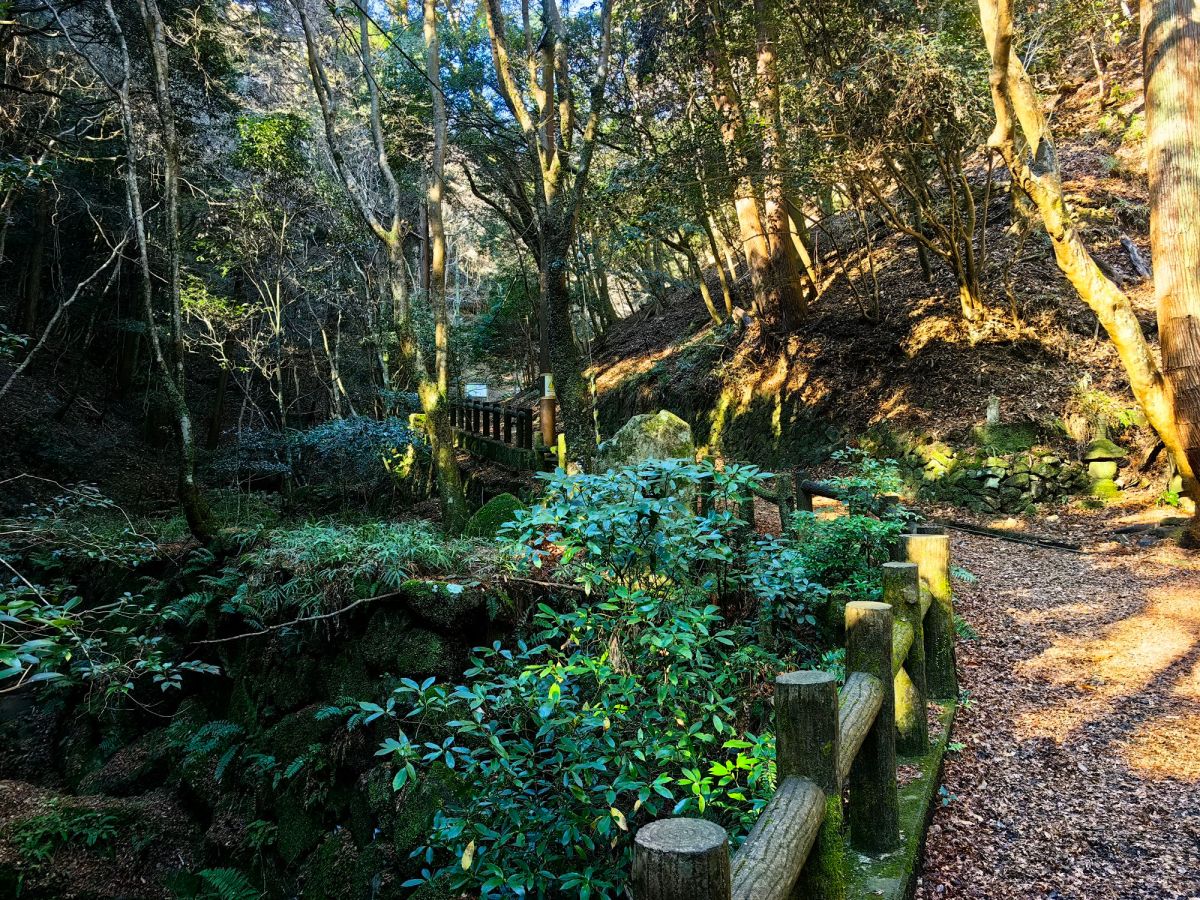
I walked all through the main walking route follows the Minoh River through the forest. The path was gentle and enjoyable, making it possible to appreciate the scenery without the feeling of a difficult mountain hike. Along the way, the sound of running water accompanied the walk, while tall trees created a cool and refreshing canopy overhead.
我沿着主步道一路走完,这条步道沿着箕面川穿过森林。步道平缓易行,让人可以尽情欣赏沿途美景,而不会感到是在进行艰苦的登山活动。一路上,潺潺的流水声伴我前行,高大的树木在头顶形成一片凉爽宜人的树荫。

Along the forest trail in Minoh Park, there is a remarkable giant rock known as Himeiwa. Unlike an ordinary boulder, Himeiwa looks as though it has been dramatically cut in half by a giant blade. A narrow passage runs between the two enormous pieces of rock, just wide enough for a person to squeeze through. There is also a charming local belief associated with Himeiwa. Passing through the narrow opening is traditionally said to bring the blessing of children, giving the rock a spiritual meaning beyond its unusual appearance.
在箕面公园的林间小径上,矗立着一块名为“姬岩”的奇特巨石。与寻常岩石不同,它仿佛被一把巨刃从中劈开,分成两半。两块巨石之间留下一道狭窄的缝隙,仅容一人侧身通过。关于姬岩,当地还流传着一个颇为迷人的传说:据说穿过这道狭窄的通道,便能得到子嗣的祝福。这段古老传说也为它增添了几分神秘色彩。
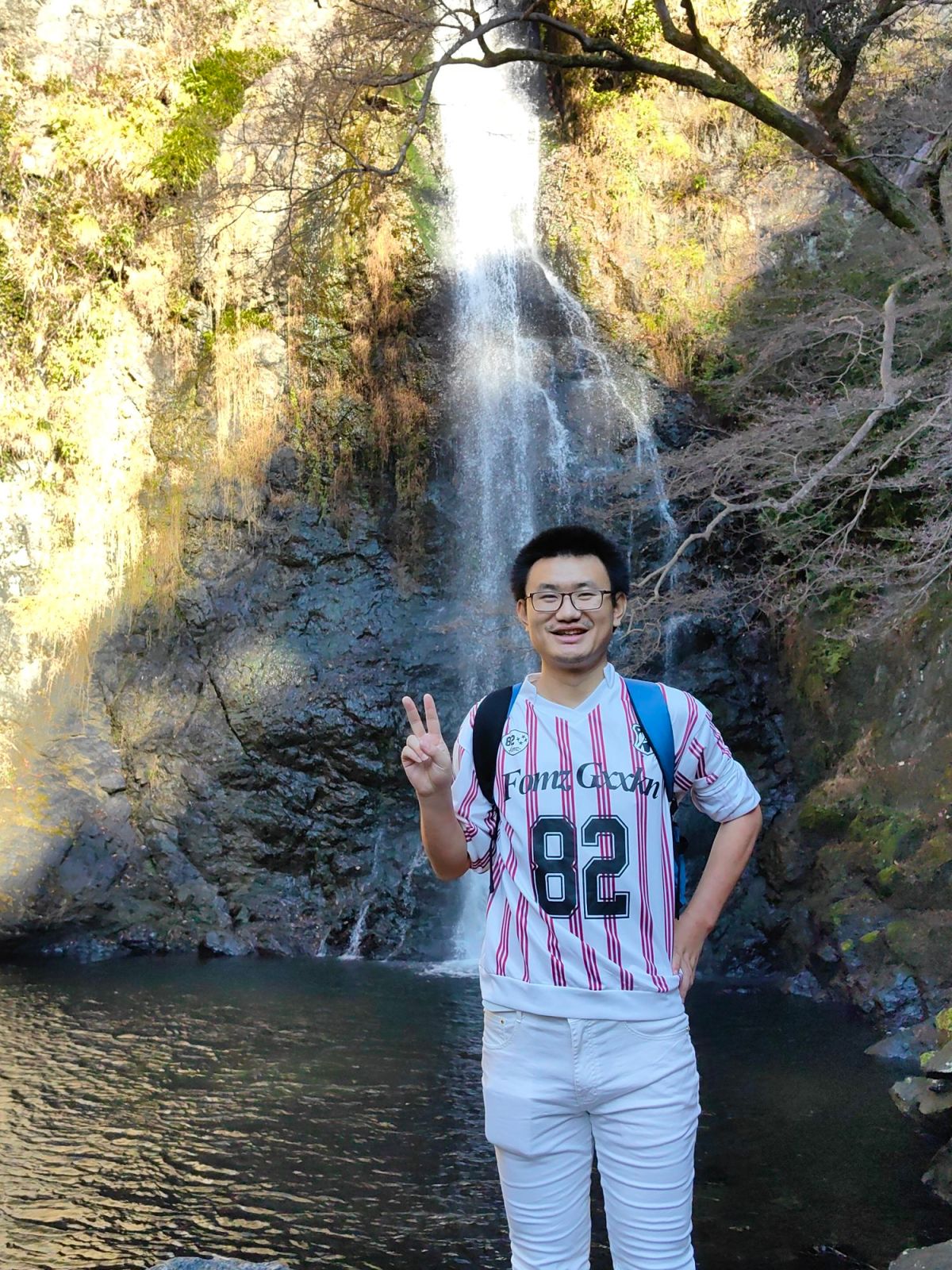
One of the highlights of Minoh Park is Minoh Waterfall, a beautiful 33-metre cascade at the end of the trail. The waterfall is especially impressive after walking quietly through the forest for some time. It is not an enormous waterfall, but its setting makes it particularly beautiful. Surrounded by tall trees and steep forested slopes, the falling water was perfectly integrated into the landscape rather than standing apart from it. I stood there for a while, listening to the continuous sound of water falling over the rocks. The walk through the forest made the waterfall feel like a natural reward at the end of the trail.
箕面公园的一大亮点,便是位于步道尽头的箕面瀑布,落差达33米。在森林中静静漫步了许久之后,眼前的瀑布显得格外令人印象深刻。它或许算不上气势恢宏,却因周围的自然环境而别具魅力。瀑布被高大的树木和层层山林环绕,与四周的景色融为一体,而不是突兀地出现在山间。我在瀑布前驻足良久,静静聆听水流倾泻而下的声音。一路穿过森林的旅程,也让眼前的瀑布更像是一份藏在山林深处的天然馈赠。

After spending some time at Minoh Waterfall, I continued my journey toward Katsuoji Temple, one of the most famous temples in the Minoh area. Instead of returning along the same forest trail, I climbed up from the steps of waterfall toward the main road. The change in scenery was gradual. The narrow forest path gave way to a wider mountain road lined with tall trees. The road gradually led me deeper into the mountains toward Katsuoji. Although the walk was uphill in places, I enjoyed taking my time and appreciating the changing landscape.
在箕面瀑布稍作停留后,我继续前往箕面地区最著名的寺庙胜尾寺。我没有沿着原路返回,而是从瀑布的台阶拾级而上,来到主路。沿途的景色逐渐变化。狭窄的林间小路变成了一条两旁绿树成荫的宽阔山路。这条路引领我深入群山,最终抵达胜尾寺。虽然有些路段是上坡,但我很享受这段悠闲的旅程,细细品味着沿途不断变化的风景。

Eventually, I arrived at the Sanmon of Katsuoji Temple, famous for its thousands of Daruma dolls and its long history of being associated with victory and good fortune. Surrounded by dense forest and carefully landscaped gardens, the temple felt peaceful and secluded, despite being one of the best-known places to visit in the Minoh area.
最终,我抵达了胜尾寺的山门,这座寺庙以数千尊达摩不倒翁以及象征胜利和好运的悠久历史而闻名。寺庙四周环绕着茂密的森林和精心设计的花园,尽管是箕面地区最著名的景点,却依然给人一种宁静幽僻的感觉。
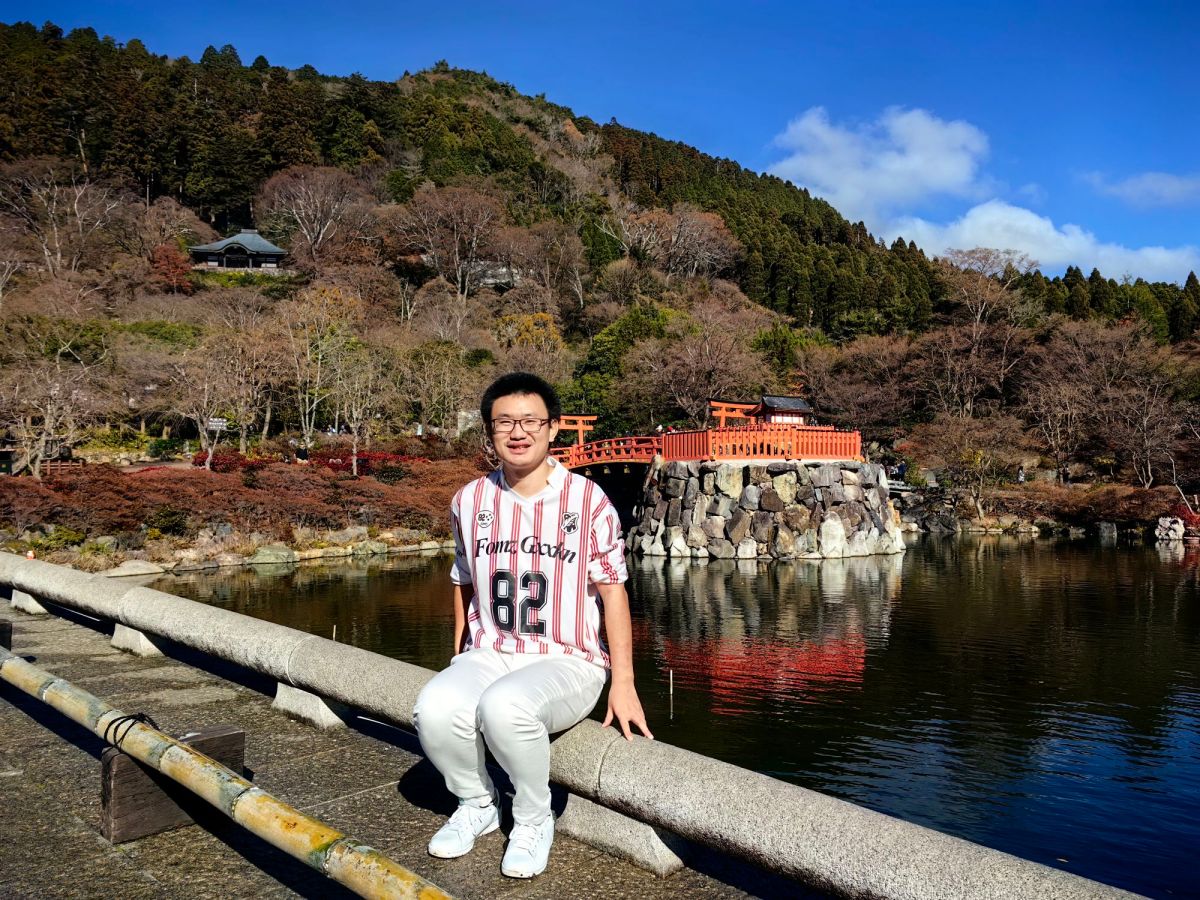
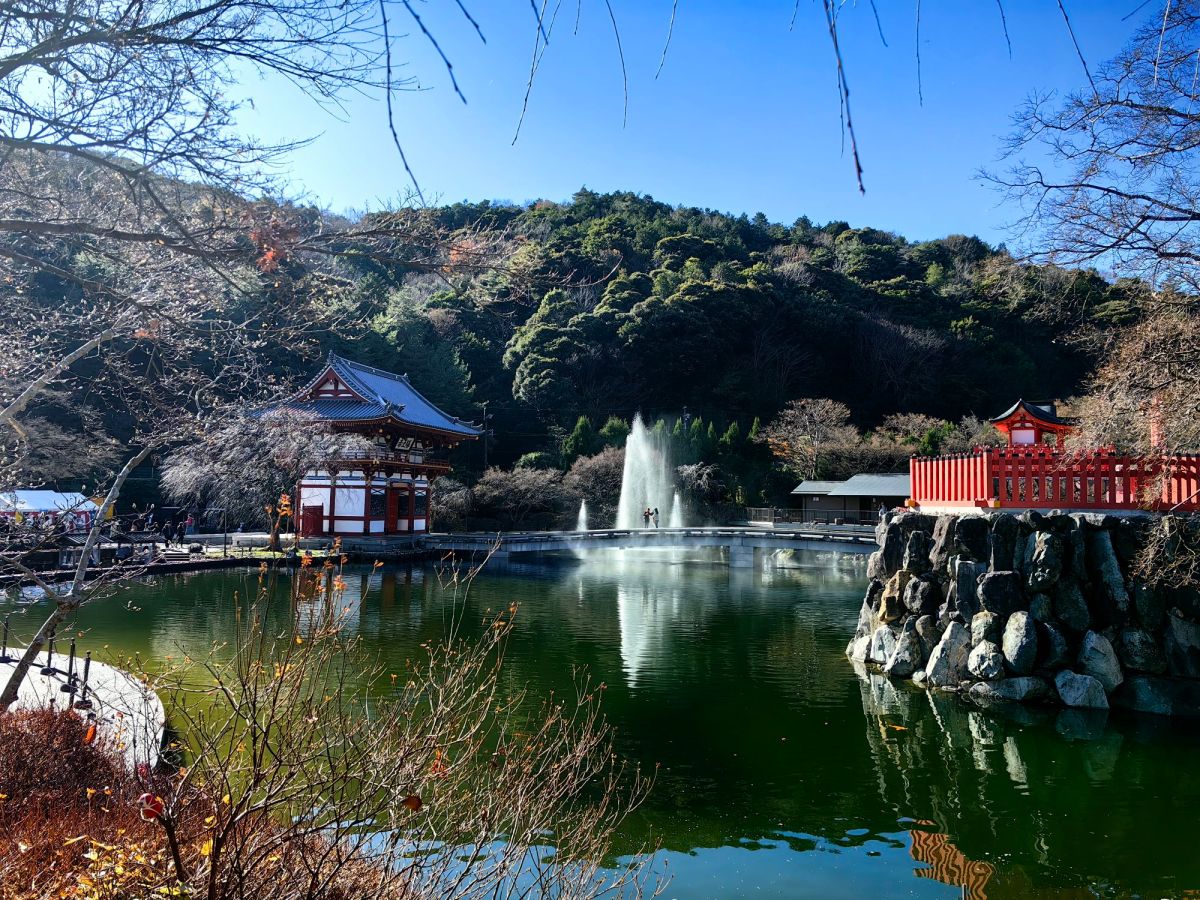
Ponds, bridges, stone paths and carefully maintained gardens blend naturally with the forested mountains. In December, the atmosphere was particularly peaceful. Many of the maple leaves had already fallen, covering the ground with a layer of autumn color. According to temple tradition, the temple was founded in 727 by two brothers, Zenchū and Zensan, who built a small hermitage in the mountains. The temple’s connection with victory also has an interesting origin. During the reign of Emperor Seiwa, the emperor was seriously ill, and prayers were offered at the temple for his recovery. According to tradition, the emperor eventually recovered, and the temple’s spiritual power became associated with victory and overcoming difficulties.
池塘、桥梁、石径与精心维护的庭园巧妙地融入山林之中,浑然天成。十二月的胜尾寺格外宁静祥和。许多枫叶已经飘落,为大地铺上一层淡淡的秋色。据寺院传说,胜尾寺由善秋与善山两兄弟于公元727年创建。两人在山中修建了一座小小的隐修所,也成为这座寺庙最初的起点。胜尾寺与“胜利”的渊源同样颇为有趣。清和天皇在位期间,天皇身患重病,人们纷纷来到寺庙祈福,希望天皇能够早日康复。传说天皇最终痊愈,自此,胜尾寺的灵验便逐渐与“胜利”以及战胜困难联系在一起。
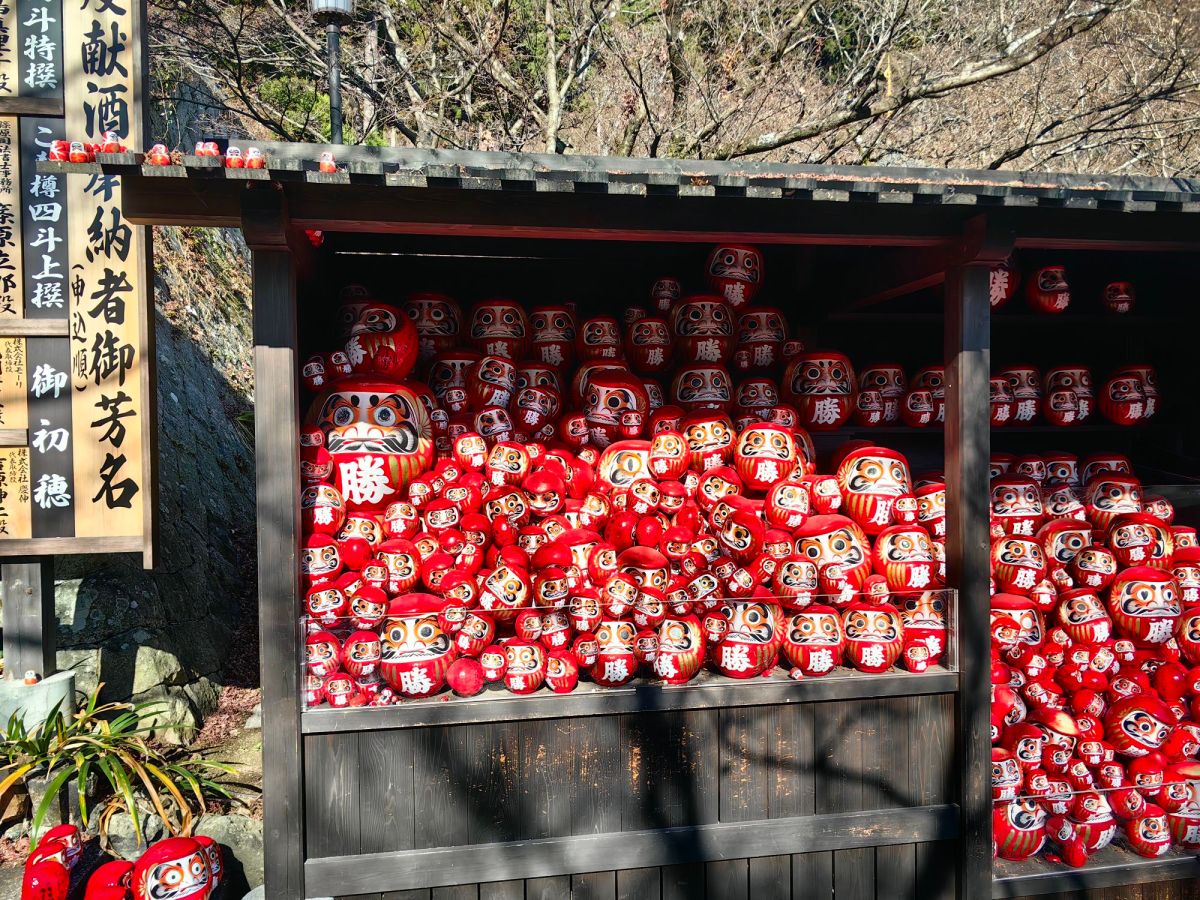
What immediately caught my attention was the extraordinary number of Daruma dolls throughout the temple grounds. These traditional Japanese dolls are symbols of determination and perseverance. Their round bodies and striking faces can be seen sitting on steps, beside pathways, on shelves and among the gardens. Some are large and impressive, while others are tiny enough to fit in the palm of a hand. Walking through the temple grounds felt almost like entering a world of Daruma. Instead of seeing just a few traditional ornaments, I encountered them everywhere I looked. Their presence gave the temple a playful character that contrasted beautifully with its quiet mountain setting.
最先吸引我目光的,是寺庙里随处可见的达摩不倒翁。这些传统的日本人偶象征着坚韧不拔、百折不挠的精神。它们圆滚滚的身躯配上栩栩如生的表情,几乎遍布寺院的每个角落:有的坐在台阶上,有的摆放在小路旁,有的整齐地排列在架子上,还有一些小巧玲珑,甚至可以握在掌心。漫步在寺院之中,仿佛走进了一个充满达摩的世界。它们并非只是点缀庭院的零星装饰,而是随处可见、形态各异地出现在我的视线里。这些达摩为古老寺院增添了一份活泼的气息,也与周围幽静的山林形成了有趣的对比。
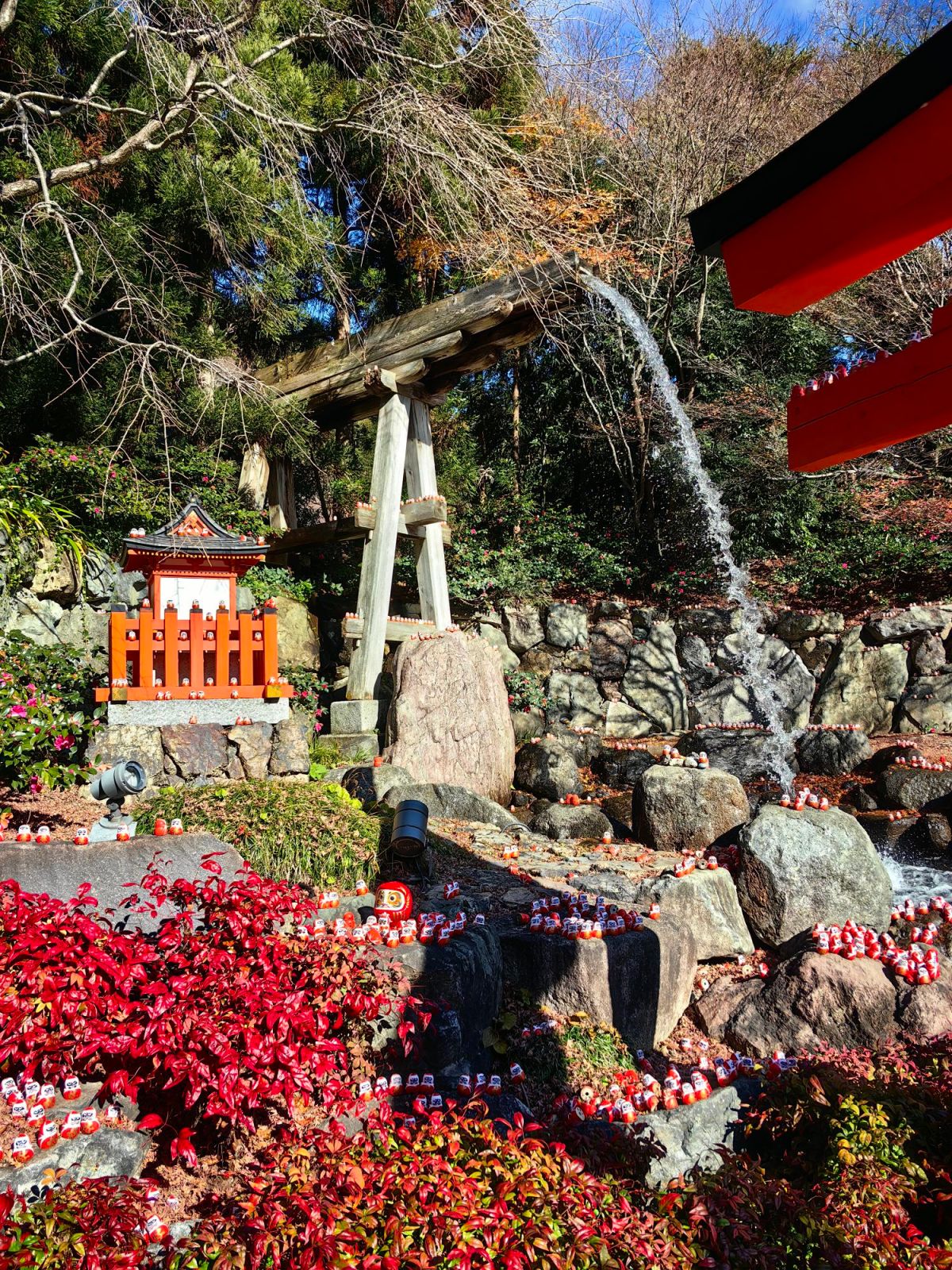
The Daruma has large eyes, thick eyebrows and moustache which are traditionally associated with Bodhidharma (Daruma). At Katsuoji Temple, it has a special connection with the temple’s reputation for victory and success. Visitors often buy Daruma when praying for success in an examination, or a competition. What makes Katsuoji particularly fascinating is the sheer number of Daruma scattered throughout the temple grounds. Visitors offered Daruma in designated areas, so the dolls gradually accumulate across the gardens, steps and temple buildings. This creates a very distinctive scene: hundreds or even thousands of red Daruma seemingly watching over the temple from every corner. It is one of the things that makes Katsuoji unlike most other traditional temples in Japan.
达摩不倒翁有着醒目的大眼睛、浓密的眉毛和胡须,这些特征传统上都与菩提达摩,也就是“达摩祖师”联系在一起。在胜尾寺,达摩不倒翁更与寺庙保佑胜利与成功的传统紧密相连。许多游客会在考试、比赛之前购买达摩不倒翁,祈求获得好运与胜利。而胜尾寺最令人印象深刻的,莫过于寺内数量众多、无处不在的达摩不倒翁。游客会将许愿后的达摩供奉在寺内指定的地方,随着时间推移,这些不倒翁逐渐聚集在花园、台阶和寺庙建筑的各个角落。放眼望去,成百上千个红色达摩不倒翁仿佛从寺庙的每个角落守护着它。这也是为什么胜尾寺与其他传统日本寺庙显得截然不同。

One of the other things that caught my attention at Katsuoji was the vivid red colour of its traditional architecture. Against the deep green of the surrounding mountains, the vermilion buildings, gates and bridges stood out with remarkable intensity, creating a scene that felt both elegant and almost dreamlike. I particularly enjoyed the way Katsuoji combines architecture with nature. The buildings are not isolated monuments surrounded by concrete; they are woven into the mountains, gardens, ponds and forests.
胜尾寺最吸引我目光的,莫过于传统建筑那一抹鲜艳的朱红色。在周围苍翠的群山映衬下,朱红色的建筑、鸟居和桥梁显得格外醒目,营造出一种既典雅又如梦似幻的景象。我尤其欣赏胜尾寺将建筑与自然完美融合的方式。这里的建筑并非孤立的混凝土建筑,而是巧妙地融入山峦、花园、池塘和森林之中。

Among the rocks and greenery, I noticed a miniature vermilion shrine surrounded by red railings. A series of bright red traditional torii gates led toward it, creating a striking contrast with the natural landscape. This was Benzaiten Shrine, dedicated to Benzaiten, a deity associated with water, wisdom, music and the arts. I have found many similar things in the garden. Torii are traditionally associated with Shinto shrines, while Katsuoji itself is a Buddhist temple. Historically, however, Buddhism and Shinto were deeply intertwined in Japan for centuries. Before the Meiji period, it was common for Buddhist temples to contain Shinto shrines and for Buddhist and Shinto practices to coexist.
在岩石与绿意之间,我注意到一座小巧的朱红色神社,四周围着鲜红的栏杆。一连串鲜艳的朱红色鸟居向神社延伸,在苍翠的自然景色映衬下格外醒目。这便是弁财天社,供奉着与水、智慧、音乐和艺术相关的神祇弁财天。在胜尾寺的庭园里,我还发现了许多类似的景象。鸟居通常与神道神社联系在一起,而胜尾寺本身却是一座佛教寺院。明治时代以前的日本,佛教与神道长期相互交融,许多佛寺内设有神社,佛教与神道的信仰和仪式也常常共存。
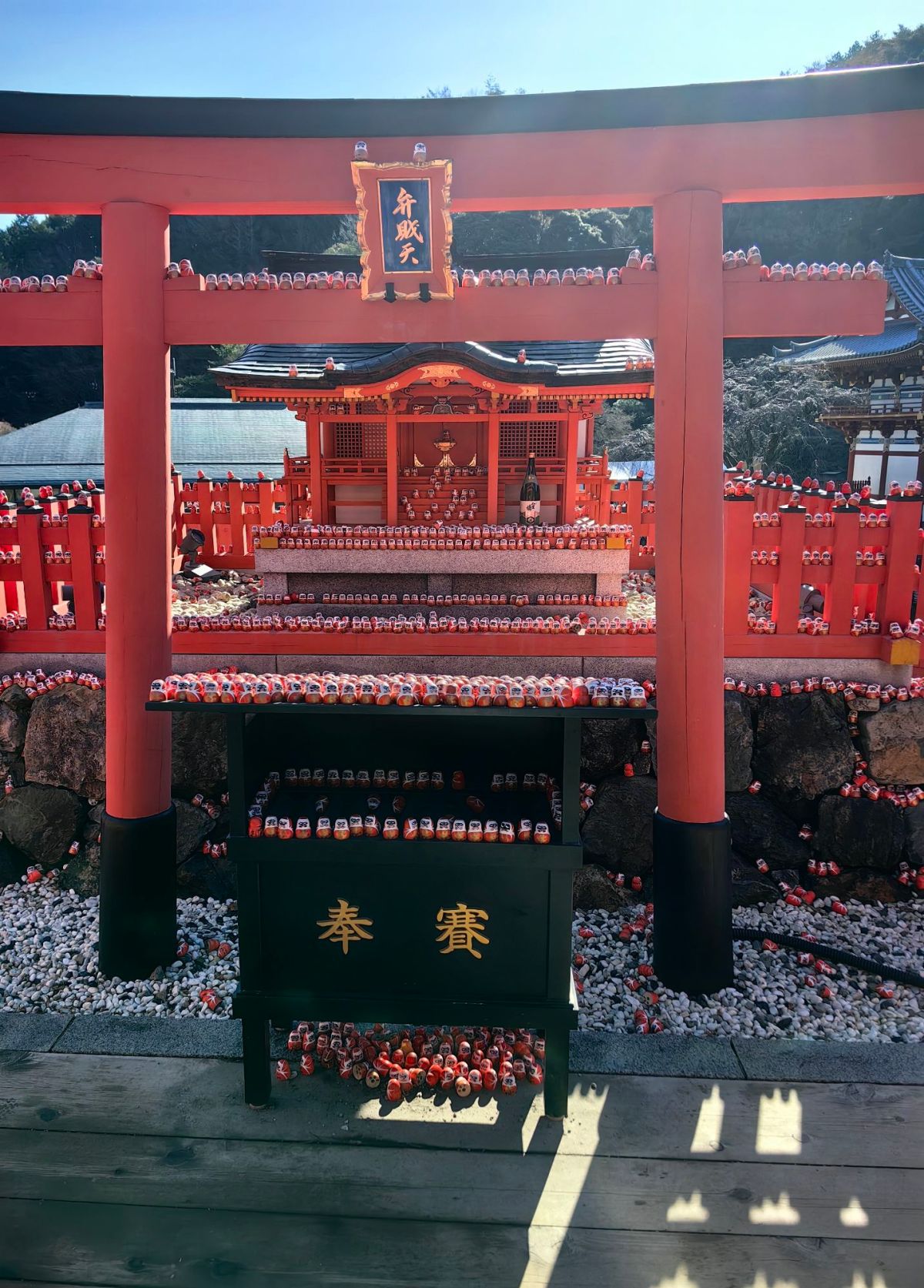
Benzaiten has a fascinating origin. She developed in Japan from Saraswati, an ancient Indian goddess associated with water, knowledge, music and the arts. When Buddhism spread to Japan, this deity was incorporated into Japanese religious traditions and gradually took on additional associations. She is worshipped in many different forms across Japan. Some places have grown into large religious complexes devoted to her, while other, like this little shrine at Katsuoji, was simply a small sacred corner within a much larger temple.
弁财天有着一段颇为有趣的历史渊源。她最初源自古印度掌管水、知识、音乐和艺术相关的女神萨拉斯瓦蒂。随着佛教传入日本,这位神祇也逐渐被融入日本的宗教传统,并在长期的发展过程中获得了更多不同的象征。如今,弁财天国以各种不同的形式受到日本各地的供奉。有些地方甚至逐渐发展成为专门供奉弁财天的大型宗教场所,而像胜尾寺里的这座小小神社,则只是隐匿于一座规模宏大的佛教寺院之中的一方宁静圣地。正是这种大小不一、形式各异的存在,也让我感受到弁财天信仰在日本传统文化中的广泛影响。
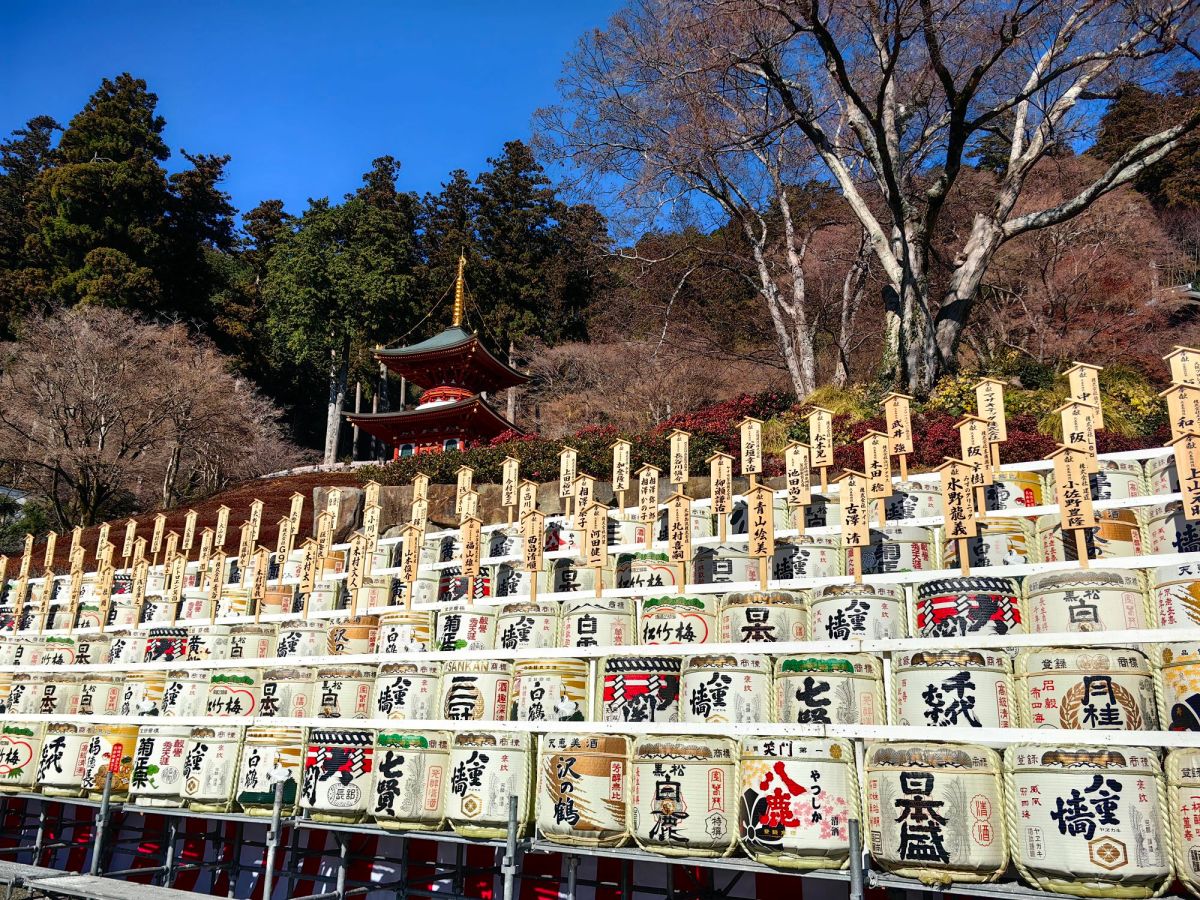
As I walked through Katsuoji, I came across a remarkable display of sake barrels stacked in rows along the hillside. Each barrel carried different Japanese characters, names and colorful logos, representing different sake breweries and producers. These were not simply decorations; sake has long played an important role as a religious offering in Japan, and breweries often donate sake to temples and shrines. The scene was particularly striking at Katsuoji. Hundreds of barrels formed a wall of white, black and red, while the elegant vermilion pagoda rose above them among the trees. This creates a scene with a distinctly Japanese character.
漫步胜尾寺时,我在山坡一侧发现了一幅颇为壮观的景象:成排的清酒酒樽层层堆叠,沿着山坡延伸开来。每只酒樽上都印着不同的日文字符、酒造名称和色彩鲜明的标志,代表着来自不同酒藏和酿酒商的清酒。这些酒樽并不仅仅是装饰。清酒在日本的宗教传统中有着悠久的历史,长期以来被作为供品献给神明和寺社,许多酒造也会向寺庙和神社捐赠清酒。而在胜尾寺,这样的景象尤其令人印象深刻。数百只酒樽层层排列,白色、黑色与红色交织在一起,树木之间,一座典雅的朱红色塔楼从酒樽上方高高耸起,构成了一幅极具日本特色的画面。
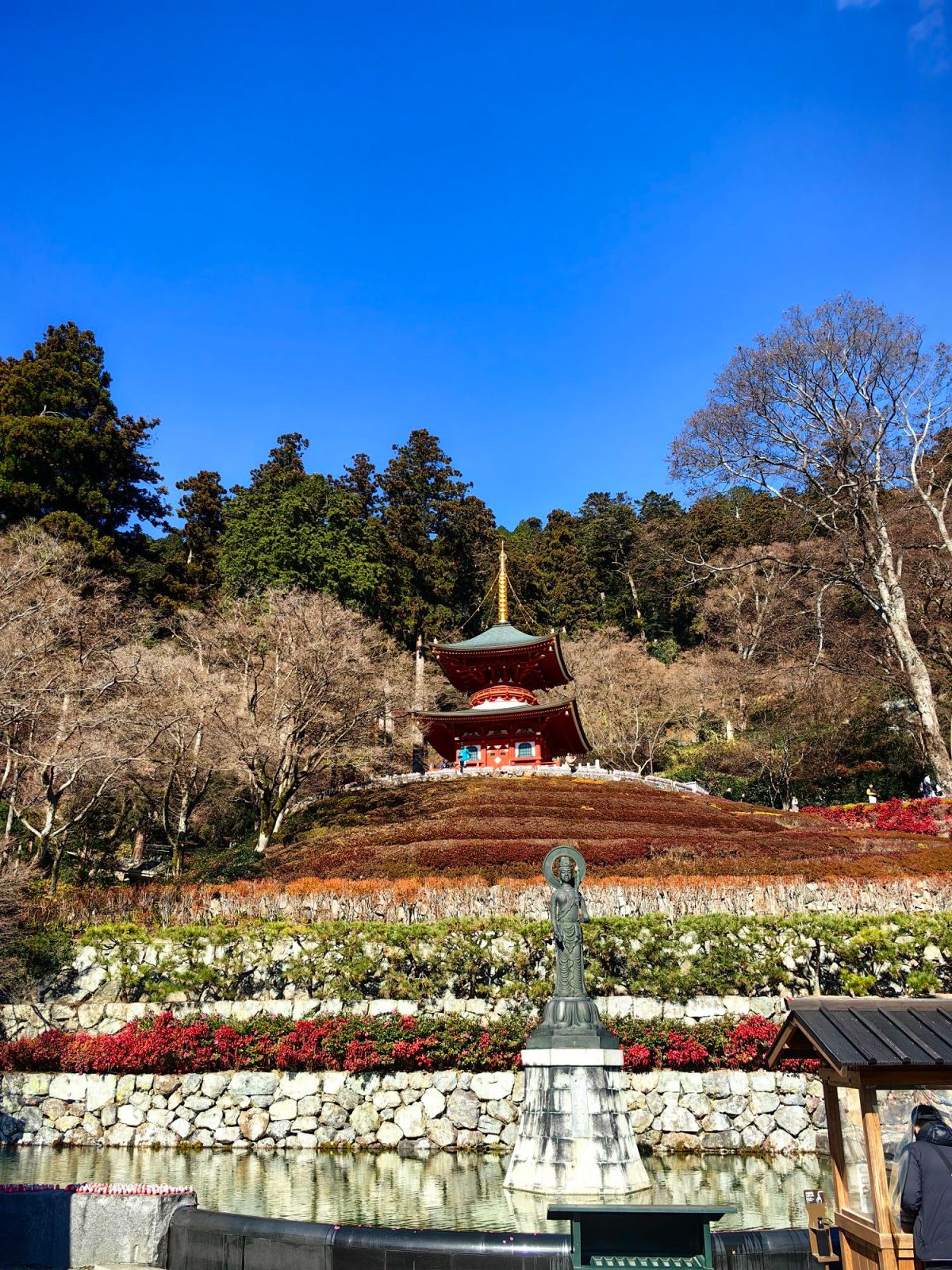
The pagoda called Tahōtō originated in ancient India as the stupa, a structure associated with the Buddha and used to preserve sacred relics. As Buddhism spread through Asia, the stupa gradually evolved into different architectural forms. Japanese pagodas are usually built with three or five storeys, with the five-storey pagoda being particularly iconic. The number five has Buddhist and cosmological significance, traditionally representing the five elements: earth, water, fire, wind and space.
胜尾寺的多宝塔有着悠久而深远的历史渊源。它的建筑形式可以追溯到古印度的窣堵坡(stupa),最初是与佛陀相关的宗教建筑,用于供奉和保存佛教圣物。随着佛教逐渐传播到亚洲各地,窣堵坡的建筑形式也不断演变,并在不同地区发展出各具特色的佛塔样式。日本的佛塔通常建有三层或五层,其中五重塔尤为经典和醒目。五这个数字在佛教思想和传统宇宙观中也具有特殊意义,通常象征构成世界的五大要素:地、水、火、风与空。

During my trip, I noticed a series of unusual stone towers standing beside the old pilgrimage route. These were Gorintō, not simply memorial stones but Chōishi, distance markers for pilgrims and it shew directions for the pilgrims. The oldest surviving ones date back to 1247, to the Kamakura period. Standing beside them with hundred years history, I imagined the pilgrims who had walked this same route more than seven hundred years ago. They would have passed these stones one by one like me. The stones therefore felt like more than historical objects. They were silent witnesses to generations of journeys, prayers and footsteps.
沿着古老的朝圣路线行走时,我注意到路旁矗立着一排造型独特的石塔。这些是五轮塔,但它们并不仅仅是用于纪念或供奉的石碑,其中一些还属于“丁石”(Chōishi),是古代为朝圣者设置的距离标记,用来指引和标示沿途的路程。现存最古老的一批石碑可以追溯到1247年,也就是日本的镰仓时代。站在这些历经数百年风雨的石塔旁,我不禁想象,七百多年前,那些前往寺院参拜的朝圣者也曾沿着同一条道路缓缓前行。他们或许像我一样,一块一块地经过这些石头。这些石塔对我而言已经不只是冰冷的历史遗物。它们更像是一群沉默的见证者,见证了数百年来一代又一代人的旅程、祈愿与脚步。

In this temple, I have seen many ancient-looking Buddhist monuments. A weathered stone pagoda rose on one side, while a tall inscription pillar stood like a silent marker beside the path. The large structure on the left is a stone pagoda, built in the traditional Buddhist architectural form. It has multiple levels with projecting roofs, giving it the appearance of a miniature stone version of pagoda. It is quite different from the Tahōtō behind it. The large stone pillar is an inscription monument with the Japanese name of the mountain Ocho-san (応頂山) and the Japanese name of the temple Katsuō-ji(勝尾寺). Japanese character is similar to the Chinese character even I don’t know any Japanese but I could still recognize them. This sense of familiarity that transcends language and culture makes my travels particularly enjoyable.
在这座寺院里,我还看到了许多带有古朴气息的佛教石造遗迹。一侧矗立着一座饱经风霜的石塔,另一侧则是一根高大的石碑,静静地立在道路旁,仿佛无声地守望着来往的行人。左侧这座大型石塔采用传统的佛教塔建筑形式,层层叠起,每一层都带有向外伸展的屋檐,看起来就像是一座以石头雕刻而成的微型塔。它与后方的多宝塔有着明显不同的建筑风格。旁边高大的石柱则是一座铭文碑,上面刻有这座山的名称応頂山以及寺院的名称勝尾寺。虽然我完全不懂日语,但看到这些汉字时,却有一种熟悉的感觉,仍然能够认出其中许多字。这种跨越语言与文化的熟悉感,也让我在旅行中感到格外有趣。
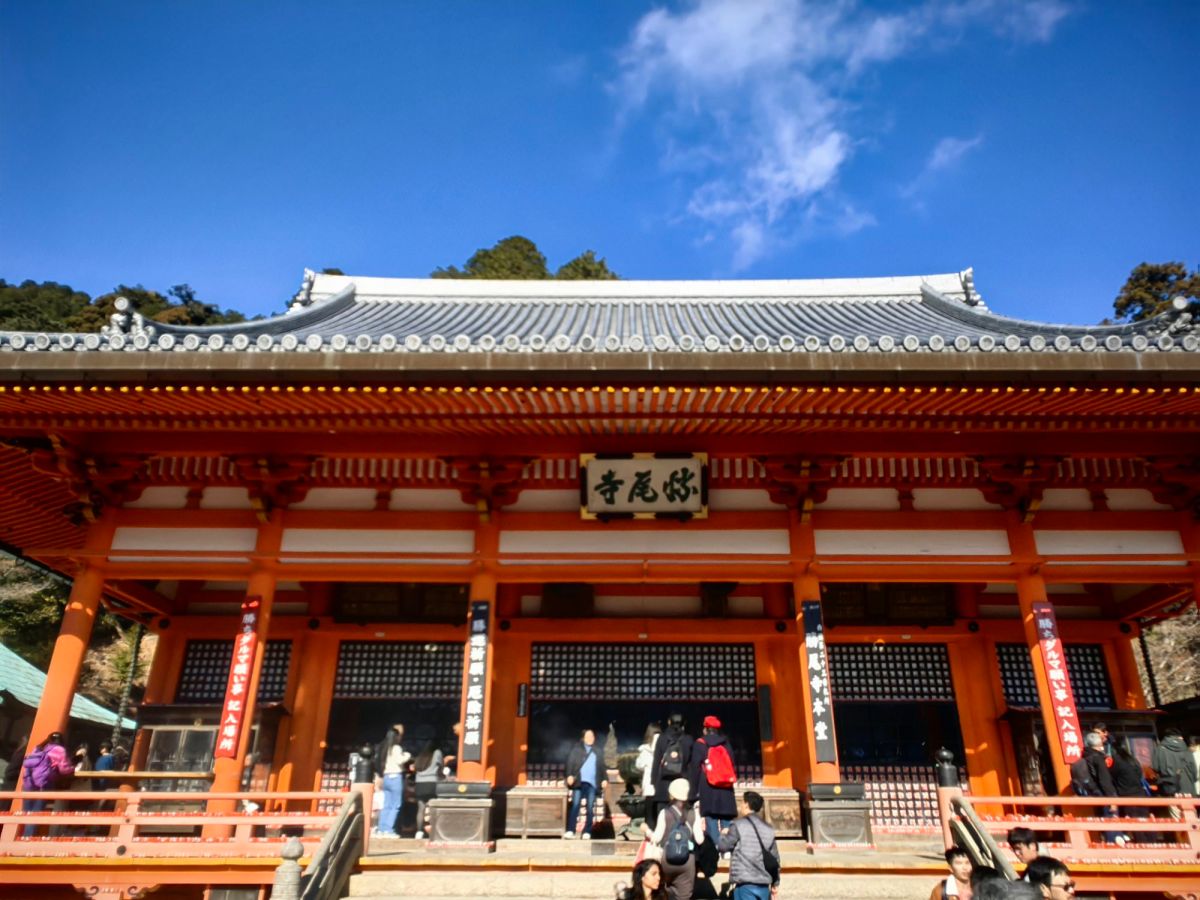
The Hondō(main hall) of Katsuō-ji is a traditional wooden Buddhist main hall characterized by its broad tiled roof, deep eaves, and simple wooden structure. The structure is mainly natural wood, with dark brown and muted tones that blend into the mountain setting. Many people visit the Hondō to pray for success, good fortune, and the fulfillment of their wishes. Standing in front of it, I could feel a solemn and peaceful atmosphere.
胜尾寺的本堂(Hondō)是一座典型的日本传统木造佛堂,以宽阔的瓦屋顶、深深伸出的屋檐以及简朴的木质结构为主要特色。建筑以天然木材为主,整体呈现深棕色和沉静的色调,与周围的山林环境自然地融为一体。许多游客和信众来到这里,祈求事业成功、好运降临以及愿望实现。站在本堂前,我能感受到一种庄严而宁静的气氛。

In winter, Katsuō-ji offers a peaceful panoramic view of the surrounding mountains and forests. The bare trees and evergreen foliage create a quiet, subdued landscape immersed in the clouds, giving the scenery a calm and misty appearance. From the elevated temple grounds, I could appreciate the beauty and tranquility of the winter mountains.
冬日的胜尾寺展现出一幅宁静而开阔的山林全景。远处的群山与森林笼罩在淡淡的云雾之中,光秃的树木与常青的枝叶交错其间,使整个景色显得朦胧而宁静。站在地势较高的寺院庭院中,我可以远眺四周,欣赏箕面山间的冬日之美。
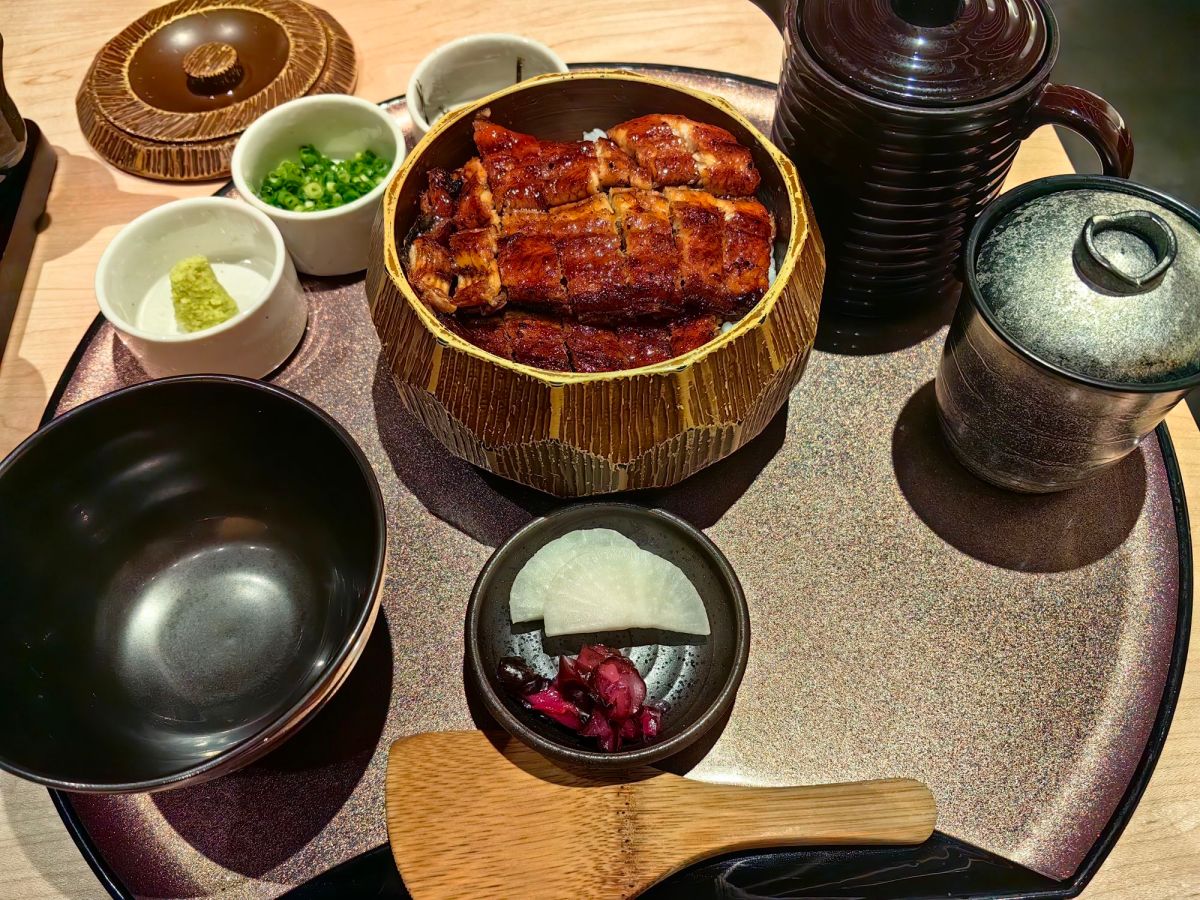
After leaving Katsuō-ji, I stopped at a small local restaurant and had unadon for lunch. The dish consisted of tender grilled eel served on a bowl of warm, fluffy rice and covered with a rich, sweet and savory sauce. The plating of the Japanese food was beautifully arranged and visually appealing. It looked simple, but I could feel the chef’s attention to details. The ingredients were carefully placed in the dish, creating a balanced combination of colors, textures, and shapes. The eel had a slightly smoky flavor from the grilling, while the sauce added a delicious balance of sweetness and saltiness. The simple presentation and cozy atmosphere of the small restaurant made the meal feel especially authentic and comforting after visiting the temple.
离开胜尾寺后,我在附近一家小巧的当地餐馆停下来,享用了一份鳗鱼饭作为午餐。热腾腾、松软的米饭上铺着鲜嫩的烤鳗鱼,再淋上浓郁的酱汁,甜咸交织的味道令人十分满足。日本料理不仅讲究味道,也十分注重食物的摆盘。这份鳗鱼饭看似简单,却能感受到厨师对细节的用心。鳗鱼整齐地铺在米饭上,色泽、质感和形状彼此协调,让人还未品尝便已感受到一份视觉上的愉悦。鳗鱼经过明火烤制,带着淡淡的焦香,而酱汁则为鱼肉增添了丰富的甜味与咸香。小餐馆简单而温馨的氛围,也让参观寺庙后的这顿午餐显得格外惬意。
By the time I returned to Osaka, I felt refreshed by my brief escape to Minoh. Although it was only a short journey, the quiet forests, mountains, hidden temples, and crisp winter air created a peaceful distance from the bustle of the city. Walking alone through the tranquil landscape, pausing at old temples, enjoying the scenery and a simple Japanese meal, I found myself slowing down and appreciating the moment. Minoh reminded me that a journey does not have to be long to be meaningful; sometimes, a few hours surrounded by nature are enough to relax, clear the mind, and continue my jourmey with a renewed sense of calm.
回到大阪时,这趟短暂的箕面之行已经让我重新找回了一份轻松与平静。虽然只是短短几个小时的旅程,但幽静的森林、层叠的山峦、隐匿其中的古寺,以及清冽的冬日空气,都让我暂时远离了城市的喧嚣。独自漫步在宁静的山林之间,偶尔停下来参观古老的寺庙,静静欣赏沿途的风景,再坐下来享用一顿简单的日本料理,我的脚步不知不觉慢了下来,也开始更加专注于眼前的风景与当下的感受。箕面让我明白,一段旅程并不需要很长才会留下意义。有时候,只需几个小时置身于大自然之中,就足以让身心得到放松,也带着焕然一新的心情继续前行。

